Category Archives: Uncategorized

FFOZ TV Review: Son of David

ffoz_tv5_1Episode 05: In Jewish thought one of the most important titles for Messiah is “Son of David.” Episode five will explore the title “Son of David” in depth. Viewers will learn that the term “Son of David” is a title for the promised messiah, the anointed king, who will come from the house of David. Jesus needed to be of the line of David because if he was not, he could not qualify to be Messiah. By the Scriptures referring to Jesus as the Son of David it solidifies that he is the promised messiah.

-from the Introduction to FFOZ TV: The Promise of What is to Come
episode 5: Son of David

The Lesson: What Does the Title “Son of David” Mean?

As you might expect if you’ve read my previous reviews of the earlier episodes of this series, Episode 5 builds on the material that came before it. Today, Toby explores the Mystery of the “Son of David,” investigating the meaning of this title.

Jesus was called by a wide variety of names and titles, but none more commonly than “Son of David.” People from Prophets to the demon-possessed referred to Jesus this way. But why? What does it mean? Why is it significant to understand?

In ancient and even sometimes in modern Judaism, a male is known by his father’s name. A Jewish man named Jacob who had a father named Abraham, would be known as “Yaakov ben Avraham.” This name would be commonly used when calling Jacob up for a Torah reading in synagogue on Shabbat. Otherwise, he might be known as “Jacob Silverstein” or “Jacob some other last name”. However in the days of Jesus, men were commonly referred to by their given name and then by their father’s name.

But Jesus would have been known by the name Yeshua ben Yosef, since most people would commonly believe Joseph was his biological as well as legal father. Why call him Yeshua ben David? Interestingly enough, Joseph was also known as Yosef ben David, even though his father was actually named Jacob. Why would this be? The answer comes later in the program with Aaron Eby’s portion.

Toby begins by addressing the genealogy of Jesus starting in Matthew 1:1 as read from the DHE Gospels:

The book of the toledot of Yeshua the Mashiach, son of David, son of Avraham.

If the Hebrew words threw you, here’s the same verse from the NASB translation (when Toby isn’t reading from the DHE Gospels, he uses the ESV Bible):

The record of the genealogy of Jesus the Messiah, the son of David, the son of Abraham.

The mention of Jesus as the Son of Abraham summons the connection between the Messiah and a promise God made to Abraham as part of the covenant between them.

And I will bless those who bless you, And the one who curses you I will curse. And in you all the families of the earth will be blessed.

–Genesis 12:3 (NASB)

Hopefully, that part is obvious. Messiah is Abraham’s “seed” through which the nations are blessed. But why “Son of David?”
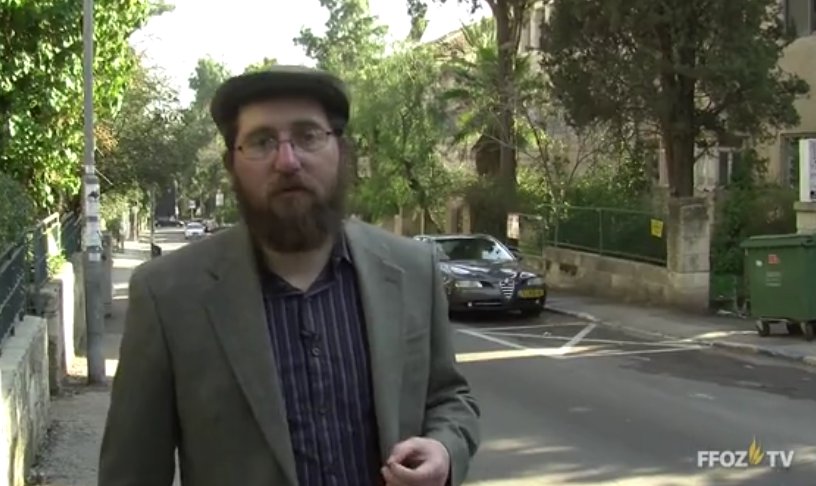
ffoz_tv5_aaronThe question introduces the “mystery” that Toby presents the audience and of course, we now proceed to seeking “clues.”

Toby introduces a problem with the genealogies of Jesus, particularly comparing Matthew 1:6 and Luke 3:31. While Jesus’s family line is traced back to David, Matthew traces it through Solomon and Luke traces it through Nathan. How can both be right?

There are a number of theories about what is happening here. Toby presents an explanation I’ve heard before but repeatedly forget. I’ll offer a clue to the answer to you at the end of my review (to find out the complete solution, you’ll have to watch the episode), but it’s an important piece of information, because without being able to accurately show that Jesus is from the Davidic line, we cannot establish him as Messiah.

Clue 1: Yeshua was a direct descendent of King David.

The lineage of Jesus to David is connected to the title “Son of David,” but as we have seen, even though Jesus is described as the Son of God, his human legal father was Joseph. How can Jesus be Son of David?

The answer lies in part with Aaron Eby in Jerusalem.

He describes the complexities involved in the Hebrew word for son which is “Ben”. I won’t describe everything he said, but the key part is that “Ben” doesn’t just mean “Son of” your immediate biological father, but it describes the connection to any of your male ancestors. My father’s father’s name was Jesse, so even though my father’s name is James, I could also be known as James, son of Jesse. If I had a male ancestor hundreds or even thousands of years removed, let’s say his name was Samuel, I could also be known as “James, son of Samuel.” The person doesn’t have to literally be my Dad as long as he’s one of my male ancestors from whom I am directly descended.

But so what if Jesus is descended from the line of David?

Blessed be the Lord God of Israel, For He has visited us and accomplished redemption for His people, And has raised up a horn of salvation for us in the house of David His servant—As He spoke by the mouth of His holy prophets from of old…

–Luke 1:68-70 (NASB)

Zechariah, the father of John the Baptist, is talking about the Messiah being equivalent to the Son of David.

And that’s the next clue:

Clue 2: Son of David is a title for Messiah.

But Zechariah also gives us the final clue with which we can solve the mystery.

Clue 3: It was prophesied that the Messiah would come from the line of David.

It’s like I said before, if we can’t establish that Jesus is a legitimate heir of the line of David, it’s impossible for him to be the Messiah.

ffoz_tv5_geneologyToby reads from a list of various prophesies establishing that the Messiah must come from the tribe of Judah and the family of David including Genesis 49:10, 2 Samuel 7:14-16, and Jeremiah 33:22. However he shows the viewers where we hit a bit of a snag in scripture and in history. Samuel speaks of there always being a descendent of David on Israel’s throne forever, but Jeremiah is prophesying at a time when there was no Davidic King on the throne. Israel had been exiled to Babylon, and although the Davidic line continued, Israel had no King. Was Samuel wrong? How could he be wrong?

The answer is found in Isaiah 11:1-2, and 11:10 in the phrase “stump of Jesse.” Out of that cut off stump, a Davidic King would one day rise who would be Messiah, a King who would rule not just over Israel, but over the entire world. Messiah would be Israel’s King forever.

But although Messiah has come, his physical reign is yet to begin. That is the promise of what is to come.

What Did I Learn?

It’s more what did I remember? I had heard the explanation about Yeshua’s lineage through two different sons of David but I don’t always retain the details. This time, I’ve got access to a video recording of the explanation to help cement it in my brain, or at least a place to go when I need a reminder. However, none of us would have even that if, as Toby said, we didn’t have access to an oral history from Yeshua’s family in the Galilee which explains it to us.

This is important information, as I said, because by linking Jesus to his “father” David, we see he is eligible to be Messiah. This is an answer not only for Christians but for any critics who deny that Jesus could possibly be the Messiah because of a poorly understood meaning of scripture. Jesus is Messiah and is worthy to rule and reign is King of Israel and King of the World. May be come soon and in our day.

I’ll review the next episode very soon.

Addendum: I found a question that directly relates to Toby and Aaron’s teaching about the “Son of David”: Can Jesus Inherit Lineage from his Adoptive Father Joseph?

My Chumash Visits Sunday School

Path of TorahSome people believe the 4 spring holidays (Passover, Unleavened Bread, Firstfruits, and Feast of Weeks/Pentecost) were fulfilled in Messiah’s 1st coming and that the 3 autumn holidays (Feast of Trumpets, Day of Atonement, and Feast of Booths/Tabernacles) will be fulfilled at his 2nd coming.

-from Sunday School study notes
for August 4th, “Leviticus 23, Feasts of Israel: God’s Picture of Things to Come”

Addendum, August 8, 2013: Derek Leman wrote an excellent blog post building on my theme called Jesus Did Not Fulfill the Feasts. Have a look.

I first talked about anticipating this lesson last week, and confessed feeling somewhat unsettled about facing the sermon and especially Sunday school. As it turned out, there was a mirror operating between Pastor Randy’s sermon and the Sunday School class I attended a few days ago. Both of them provided an image of Jesus “fulfilling” Passover, Unleavened Bread, and First Fruits during his first coming, Pentecost between his comings by the giving of the Holy Spirit, and “fulfilling” the Feast of Trumpets, the Day of Atonement, and Tabernacles when he returns (I’m using the more “Christianized” terms for the appointed times recorded in Leviticus 23).

But in Christian parlance, “fulfilling” something is just another way of saying “terminating.” I came to church on Sunday with my Christian Bible, my Chumash, my Siddur, and a notebook full of paper. In other words, I was “loaded for bear.” I didn’t know exactly what to expect from the sermon, but I was a little surprised to find Pastor Randy taking the “fulfilling” route, although he did stop short of saying that “fulfilling” meant “permanently doing away with.” I was also surprised, given that Pastor lived in Israel for fifteen years, that he used the term “Yahweh” as a substitute for the Tetragrammaton, the four letters in the Hebrew language that represent the most Holy Name of God (which is usually translated in Christian Bibles as “The Lord.”).

Frankly, I’m just stunned that the theology presented by the image I’ve posted titled “Biblical Holidays” (see the chart below) even exists (the chart in this blog post is almost identical to the one in Pastor’s study notes for last Sunday’s sermon). No one seems to be able to tell me where this chart and this doctrine comes from but it obviously is common. I don’t agree with it at all. It reduces the moedim to a set of bookmarks in the Bible that have no intrinsic value of their own but that simply exist to “point to Jesus,” and once they do, they’re history.

Actually, Pastor spent most of his sermon focused on Shabbat and only mentioned the rest of the moedim (eight in all if you include Shabbat) to provide some background. He again emphasized the necessity of a Shabbat (he spoke about Shabbat last week, too) but said that it didn’t really matter what day of the week it is. His Shabbat happens to be on Monday. He also emphasized that it’s the Biblical pattern for providing rest and relaxation, but he didn’t mention that at least for non-Jews, it is also a way to acknowledge God as sovereign Creator (Genesis 2:2, Exodus 20:11).

Certainly Jews take an additional meaning from Shabbat as a sign commandment related to their liberation from slavery in Egypt (Deuteronomy 5:15). While relative to the Ten Commandments, I don’t think Christians are obligated to keep a Saturday Shabbat, there’s nothing really preventing us from doing so (and I can see many advantages for us if we did), but I don’t think it’s just a day of kicking back. Jewish observance of Shabbat emphasizes focus on and devotion to God. While Pastor doesn’t believe that Sunday could ever be his day of rest because it’s the day when he works the hardest, I have to wonder how Rabbis experience Shabbos, since they too are working but don’t have the luxury of assigning Shabbat to a different day of the week.

Don’t get me wrong. I think my Pastor is a terrific guy. He’s intelligent, well-read, well-educated, and a man of God. However, we do have points of disagreement.

After I was done twisting in my seat during the sermon, I confronted something similar in Sunday school. Fortunately, I had the opportunity to talk with the teacher before class began and to express my concerns. That “defused” me enough to reduce all of my questions and comments to just a few. I discovered that no one in class knew that Jews commemorate Shavuot (Pentecost) as the anniversary of the giving of the Torah at Sinai. The linkage between God’s revelation to the Jewish people through giving the Torah at Sinai, and then again much later in history, God’s revelation through the giving of the Holy Spirit, was really new.

I also managed to ask why Christians don’t Count the Omer (Leviticus 23:15-16) and forgot that no one there probably knew anything about it, even though it’s right in the text for the section of Leviticus we’re studying.

Jesus-Jewish-Feasts-FulfilledI keep forgetting just how different of a Christian I really am.

But actually the best part of the class happened after class. I got to talking to a few folks who were interested in this line of discussion and all of the pent-up “me” that I’d been holding back was able to be unleashed for twenty minutes or so. We finally had to leave when we realized that the lights in the church were being turned out (the place really empties out once classes are over).

I’m still trying to figure out where this theology of Jesus fulfilling certain “feasts” during his first coming and then fulfilling the rest at his second comes from. I found charts similar to the one I posted above only at three websites, none of which seem to be exactly “Christian kosher:”

Pastor is pretty conservative so I’d expect him to rely on conservative Christian sources for his information and graphics, but this one is throwing me for a loop. Where does it come from, who conjured it up, and how did anyone arrive at this “pattern?”

I thought I heard someone say that we get the list of festivals the first coming fulfilled by what Jesus quoted of Isaiah 61 in Luke 4 and the list of festivals his second coming will fulfill by the portions of Isaiah 61 he didn’t recite on that occasion. But does that make sense?

And the book of the prophet Isaiah was handed to Him. And He opened the book and found the place where it was written,

“The Spirit of the Lord is upon Me,
Because He anointed Me to preach the gospel to the poor.
He has sent Me to proclaim release to the captives,
And recovery of sight to the blind,
To set free those who are oppressed,
To proclaim the favorable year of the Lord.”

And He closed the book, gave it back to the attendant and sat down; and the eyes of all in the synagogue were fixed on Him. And He began to say to them, “Today this Scripture has been fulfilled in your hearing.”

–Luke 4:17-21 (NASB)

I must be mistaken though, because I don’t see the mapping between the Luke 4 passages and the three festivals cited in the diagram. Here’s the larger section of Isaiah 61:

The Spirit of the Lord God is upon me, Because the Lord has anointed me To bring good news to the afflicted; He has sent me to bind up the brokenhearted, To proclaim liberty to captives And freedom to prisoners; To proclaim the favorable year of the Lord And the day of vengeance of our God; To comfort all who mourn, To grant those who mourn in Zion, Giving them a garland instead of ashes, The oil of gladness instead of mourning, The mantle of praise instead of a spirit of fainting. So they will be called oaks of righteousness, The planting of the Lord, that He may be glorified.

Then they will rebuild the ancient ruins, They will raise up the former devastations; And they will repair the ruined cities, The desolations of many generations. Strangers will stand and pasture your flocks, And foreigners will be your farmers and your vinedressers. But you will be called the priests of the Lord; You will be spoken of as ministers of our God. You will eat the wealth of nations, And in their riches you will boast. Instead of your shame you will have a double portion, And instead of humiliation they will shout for joy over their portion. Therefore they will possess a double portion in their land, Everlasting joy will be theirs. For I, the Lord, love justice, I hate robbery in the burnt offering; And I will faithfully give them their recompense And make an everlasting covenant with them. Then their offspring will be known among the nations, And their descendants in the midst of the peoples. All who see them will recognize them Because they are the offspring whom the Lord has blessed.

–Isaiah 61:1-9 (NASB)

I stopped copying and pasting after nine verses because I can’t see the mapping. I wanted to be thorough, but I can’t see a connection between this and the various “feasts” that are supposed to be fulfilled.

moshiach-ben-yosefMy Sunday school teacher offered a more simple explanation. Christ was crucified on Passover, was buried during the Unleavened Bread festival (which may not be true since he was buried before sunset…if he died on Pesach, it was still Pesach when he was buried), and rose as First Fruits from the dead. I’m sorry, but that seems like a pretty thin set of connections upon which to build an entire doctrine. Did I mention that the Feast of Trumpets is supposed to symbolize the Rapture, the Day of Atonement is supposed to symbolize the Return and Final Redemption, and Tabernacles is the Millennial Reign of Christ?

I can sort of see how some Christians might make those kinds of associations, but I have never, ever read any Jewish commentary that said the Messiah’s coming somehow “fulfills” any of those things. From a Jewish point of view, the Messiah comes, defeats Israel’s enemies, returns the exiles to their Land, restores Israel as the head of nations, rebuilds Jerusalem and the Temple, re-institutes the Temple service with Levitical Priests, and rules over Israel and the rest of the nations as King, establishing world-wide peace and tranquility.

It’s all pretty straightforward really with no theological hoops to jump through. Messiah does what he was expected to do back in Acts 1:6 and what Jewish people throughout history have been waiting for Messiah to come and do for thousands of years.

This week was the first of an eight-week series of sermons on Leviticus 23 that Pastor will be giving. Sunday school will be taking a different direction during those weeks, but I have a feeling I’ll be challenged at church for the next couple of months between how Pastor sees the function of the moedim and how I do. Fortunately, as I mentioned before, this did inspire an interesting conversation after class. I’m hoping that I’ll be able to share a little more about who I am and how I see things, not because I think I’m such a big deal, but because I just can’t help but believe there is a lot more to the Bible than what many Christians get out of it. I’d like the opportunity to offer a different perspective and ideally, a paradigm shift.

We’ll see how things go.

The Gentile Believer’s Obligation to the Torah of Moses Revisited

Apostle-Paul-PreachesAt the same time, believers sometimes assume that HaShem’s Torah applies only to Jews and not to Gentile disciples at all. Nothing could be further from the truth. Despite the fact that the apostles “loosed” the Gentiles from these sign commandments, for the most part they are bound to the rest of the Torah’s mitzvot. It should be emphasized that Gentiles in Messiah have a status in the people of God and a responsibility to the Torah that far exceeds that of the God-fearer of the ancient synagogue and that of the modern-day Noachide (Son of Noah). Through Yeshua, believing Gentiles have been grafted in to the people of God and become members of the commonwealth of Israel. While membership has its privileges, it also has its obligations.

-by Toby Janicki
“The Gentile Believer’s Obligation to the Torah of Moses”
Messiah Journal
Issue 109/Winter 2012, pg 45
First Fruits of Zion (FFOZ)

That’s how I started my previous review of Toby’s article eighteen months ago. I mentioned on Friday that I would be “re-reviewing” Toby’s write-up on non-Jewish obligation to the Torah. This is also something of a consequence of my review of Boaz Michael’s “Moses in Matthew” seminar (I didn’t attend the 2011 event, but I did listen to an audio recording on CD). Boaz very aptly presented the Bible, specifically the Gospel of Matthew, as a densely packed document that contains far more information than what a surface reading of the text would suggest.

That’s how I feel about the entire Bible including the Torah, and specifically that’s how I feel about this:

“Since we have heard that some of our number to whom we gave no instruction have disturbed you with their words, unsettling your souls, it seemed good to us, having become of one mind, to select men to send to you with our beloved Barnabas and Paul, men who have risked their lives for the name of our Lord Jesus Christ. “Therefore we have sent Judas and Silas, who themselves will also report the same things by word of mouth. “For it seemed good to the Holy Spirit and to us to lay upon you no greater burden than these essentials: that you abstain from things sacrificed to idols and from blood and from things strangled and from fornication; if you keep yourselves free from such things, you will do well. Farewell.”

–Acts 15:24-29 (NASB)

This is generally known as the “Jerusalem Letter” which contains what we call “the Four Prohibitions:”

  1. Things Contaminated by Idols
  2. Sexual Immorality
  3. Things Strangled
  4. Blood

Seems like a pretty anemic list. I won’t go into the whole process of James and the Apostolic Council issuing the halakhic ruling regarding the admission of Gentiles in to the Jewish movement of “the Way.” I already covered that in some detail in my six-part series Return to Jerusalem. I do want to communicate why I think studying the Torah is as vital to Christians as it is to Jewish people.

For Moses from ancient generations has in every city those who preach him, since he is read in the synagogues every Sabbath.”

–Acts 15:21 (NASB)

This is probably one of the most deeply misunderstood sentences in the entire Bible, especially by those in the Hebrew/Jewish Roots movement. Even I used to believe that this single string of words provided not only permission but the commandment for Gentile believers to learn and observe the Torah of Moses in a manner identical to the Jewish people (nevermind that even observant Jews don’t always agree with each other about how to observe the mitzvot).

Actually, the sentence doesn’t directly say that Gentiles must attend synagogue and learn Torah but it’s heavily implied. Here’s Toby’s explanation for this.

At first glance it appears that the Gentiles have very few commandments to deal with, but upon closer examination each of these four prohibitions becomes, in a sense, an overarching category which contains many sub-category commandments. This may be one of the reasons the Apostle James adds the phrase about Moses being read in the Synagogue every Sabbath. The new Gentile believer would need to attend the local synagogue to learn how each of these four prohibitions plays out practically in everyday life.

-Janicki, pg 46

jews-and-gentilesActually, those Gentiles we call “God-fearers” were already attending the synagogue and were indeed learning Torah. We see an example of such a synagogue of born-Jews, righteous converts, and God-fearing Gentiles in Pisidian Antioch as recorded by Luke in Acts 13:16-52. However, as the Messianic gospel message continued to reverberate outward from Jerusalem and into the furthest corners of the diaspora, an increasing number of pagan Gentiles would hear the message and turn to the Messiah. These pagans, like the men and women we read about in Acts 14:8-18, would have no knowledge of Torah, Judaism, or ethical monotheism, and the message of the good news that makes so much sense to modern Christians (though most get only a truncated version) would likely be completely misunderstood without a basic knowledge of the teachings of Torah to provide context. New Gentile believers, having just recently been worshiping in pagan temples, would not only miss the meaning of the lessons of Jesus, but they would have no idea how to lead a Holy life or why they should even do so.

As far as the Four Prohibitions are concerned, many have suggested that these are just starting points for new Gentile believers, designed to facilitate “table fellowship” with Jews until the Gentiles learned the full extent of the mitzvot and how to become completely observant. Except that describes a Gentile on the fast track to converting to Judaism, not a God-fearer or (recently) former pagan transitioning into becoming a Gentile disciple of the Jewish Messiah.

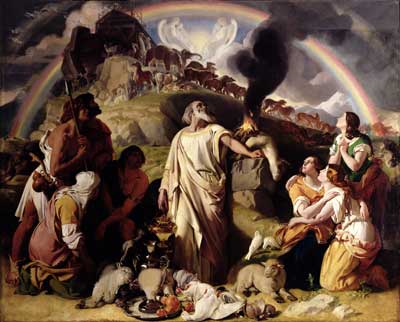
The “unpacking” of the Four Prohibitions can be compared to the “unpacking” of what is known as the Seven Noahide Laws. These laws, as we understand them today, didn’t exist in Paul’s day (though it is debatable if some version or versions were being circulated even then) but they are derived from Genesis 9 and the covenant God made with Noah:

Every moving thing that is alive shall be food for you; I give all to you, as I gave the green plant. Only you shall not eat flesh with its life, that is, its blood. Surely I will require your lifeblood; from every beast I will require it. And from every man, from every man’s brother I will require the life of man.

“Whoever sheds man’s blood,
By man his blood shall be shed,
For in the image of God
He made man.

“As for you, be fruitful and multiply;
Populate the earth abundantly and multiply in it.”
Then God spoke to Noah and to his sons with him, saying, “Now behold, I Myself do establish My covenant with you, and with your descendants after you; and with every living creature that is with you, the birds, the cattle, and every beast of the earth with you; of all that comes out of the ark, even every beast of the earth. I establish My covenant with you; and all flesh shall never again be cut off by the water of the flood, neither shall there again be a flood to destroy the earth.”

–Genesis 9:3-11 (NASB)

Only seven laws were extracted from the text but again, that number is deceptively small. The link I provided above from auburn.edu/ actually extracts a longer list of laws from each individual prohibition. A total of sixty-seven laws are presented at this particular source and I’ve heard of other sources that have created even longer lists based on the so-called “seven laws.”

The website AskNoah.org is dedicated to providing information and services to modern “Noahides” who worship alongside observant Jews in Orthodox synagogues.

noah-rainbowI don’t say all this to directly compare Noahides with non-Jewish disciples of Messiah. Far from it. I only bring this up to say that, just as the Seven Noahide Laws actually make up a much longer and more complex list of mitzvot, so too, do the Four Prohibitions of Acts 15. That’s Toby’s whole point. He wrote fifteen heavily footnoted pages in a magazine format to just scratch the surface of the meaning of the Jerusalem Letter and to unpack its contents so we could understand that who we are as Christians is so much more than a four bullet point list of “Torah” directives and tons and tons of “grace.”

In January of 2012, I was caught off guard by the article and started wondering if some change in philosophy had come over FFOZ. Boaz graciously commented on my original review to say that nothing had changed in their intent.

On the contrary, from the outset (Messiah Journal 101), we made it clear that the “invitation” and non-obligatory type of language applies only to the specific sign-commandments and markers of Jewish identity: “specifically to aspects of the Torah which comprise Jewish identity: circumcision, dietary standards, festivals, calendar, Sabbath, etc.”

Toby’s article simply continues the process of fleshing out and defining the apostolic position regarding Gentiles and Torah. The only new material here involves the logical application of Acts 15 which is where we have been pointing people all along. Toby already presented some of this material in HaYesod.

A lot of this was just starting to gel after I attended FFOZ’s 2012 Shavuot Conference in Hudson, Wisconsin and it’s been steadily percolating within me for the past fifteen months or so. I realize that just as Boaz said his ministry has progressively been “fleshing out and defining the apostolic position regarding Gentiles and Torah,” this type of steady progression is what I’ve been going through as well, within my thoughts, spiritual development, and self-study.

I’m not writing this to re-review the actual content of Toby’s article, but rather how I am receiving its meaning, comparing the person I was a year-and-a-half ago to who I am now. As I said nearly two weeks ago, I’m Not Who I Was. Hopefully, none of us are. Hopefully, we are all striving to move forward, to learn, to experience, to draw nearer to God by the study of His Word.

Bible scholarship is always moving forward. Like any other type of academic endeavour, research and investigation never stops. Theologians, linguists, historians, archaeologists, and other professionals in their fields continually produce new insights into our understanding of God’s Word and how it is to be applied in our lives. As believers, we have a responsibility to also continue to study, to learn, to strive for a more refined understanding of the available information as guided by the Holy Spirit.

Luke only gives us a summary of the Acts of the Apostles, so while the Bible may be sufficient, that doesn’t mean it’s exquisitely complete. We can’t simply read Acts 15 once and say we understand it. We can’t read our favorite interpretation of the meaning of Acts 15 a month ago, a year ago, or a decade ago, and say we are sticking with that understanding, ignoring newer information that might modify our comprehension in important ways. The original text is unchanging, but how we read and understand it isn’t.

Who am IWho are we in Christ? What was the original intent and impact of the letter sent out to the believing Gentiles by James and the Council of the Apostles? How does that affect our lives as Christians today? What is a Gentile believer’s obligation to Torah? What does “Torah” even mean in our modern lives?

I can’t definitively answer all of those questions for you, but if you start by downloading and reading Toby’s article and continuing to unpack and unfold the text and your understanding of it, I’m hoping and praying you’ll find out. I pray we all discover who we really are in the pages of God’s Word and then live out the lives God intends for us.

Did Ancient Christianity Perform Same-Sex Marriages?

SameSexNot since Boswell’s Christianity, Social Tolerance, and Homosexuality (Univ. of Chicago Pr., 1981) have Christians of all creeds confronted a work that makes them look so closely at their notions of the relationship between the church and its gay and lesbian believers. Diligently researched and documented, this immensely scholarly work covers everything from the “paired” saints of Perpetua and Felicitas and Serge and Bacchus to lesbian transvestites in Albania. Examining evidence that the early church celebrated a same-sex nuptial liturgy, Boswell compares both Christian same-sex unions to Christian heterosexual unions and non-Christian same-sex unions to non-Christian heterosexual unions. Appendixes contain, among other things, translations and transcriptions of cited documents. Whether or not minds are changed on the matter will probably fall along sectarian lines, according to current attitudes on homosexuality. However, the work will provoke dialog. A groundbreaking book for academic, public, and theological libraries.

-Lee Arnold, Historical Society of Pennsylvania., Philadelphia
as quoted on Amazon.com’s description of John Boswell’s book
Same-Sex Unions in Premodern Europe

Recently on Facebook, someone referred to Boswell’s 1995 book and posted a link to a recent article commenting on this work called Gay marriage in the year 100 AD. I had no idea there was such a book in existence or that anyone had done any serious investigation on the status of same-sex marriages in different, ancient cultures. As a Christian who takes a more or less conservative interpretation on the Bible, I tend to believe that both the Old and New Testaments take a dim view of homosexual activities, at least between males (Lev. 18:22, Lev. 20:13, Rom. 1:26-27, 1 Cor. 6:9-11, 1 Tim. 1:8-11, Rev. 22:15-21). However, as I said in DOMA, Prop 8, and a Guy Named Moshe, Christians (I can’t speak from the Jewish standpoint) can only hold accountable other Christians, that is, those people who have voluntarily entered into a covenant relationship with God through faith in Jesus Christ, to any prohibitions regarding homosexual activity.

Paul didn’t attempt to lead a social revolution in the ancient Roman empire, demanding that laws be changed for the general population in the diaspora nations ruled by Rome to become more consistent with the teachings of Christ. He was only concerned with taking the good news of Messiah to the Jews and Gentiles and then guiding the religious communities (churches) he founded into correct behavior based on the standards of God. That means, I’m not going to go off on some big harangue against “marriage equality” in the 21st century.

I don’t have a massive agenda about the LGBT community or same-sex marriage, but I do have an interest in any historical and cross-cultural data that could possibly establish that same-sex relationships might have been “normalized” among different people groups in the past. I can’t ignore the vast amount of (admittedly anecdotal) information regarding how gays describe their experience, nor the desire of same-sex couples to enter into legal relationships that reflect their emotional commitment. Although this is in contradiction to the tenets of my faith (as I understand them), I want to be fair and to listen to voices that aren’t always in accord with mine.

There’s a tremendous surge of support in the modern, western world to equalize homosexual relationships with heterosexual relationships and liberal and progressive political, social, and media venues don’t seem to bat an eye. And yet, if gays, lesbians, bisexuals, and transsexuals are “born that way” and have always comprised a certain minority percentage of the general population world-wide, then you’d expect to see some sort of historical record of same-sex relationships, not as a social aberration, but as a recognized and accepted practice.

Supposedly, Boswell’s book establishes this record. If that were the end of it, I probably wouldn’t comment, since societies “normalize” all manner of behaviors and lifestyles that are contrary to the standards of God we see in the Bible, but Boswell takes it one step further (and it’s an important step). He believes that same-sex marriages were officially sanctioned and accepted in the Christian church as early as 100 CE and up through about 1000 CE.

That’s a pretty astonishing claim.

As you can imagine, when this information hit Facebook, it acted as a bold declaration that modern Christianity must now accept same-sex marriages because there was historic validation, and the ancient conditions that spawned these unions in past times were automatically and anachronistically accepted by the social media audience and applied to modern social imperatives.

Again, if this were just a matter of secular commentaries taking this stand, it would be one thing, but liberal religious people, including congregational leaders (not sure of the original Facebook poster’s exact clerical status), supporting Boswell’s book as an endorsement of “marriage equality” in the community of believers in Jesus is something else altogether.

I was curious just how “iron clad” Boswell’s research was and why it’s becoming such a big deal now (the book was published almost twenty years ago). Of course, in 1995, the idea of same-sex marriage was nowhere near being achieved as a social reality as it is in 2013, so that’s one reason and probably the biggest one. Even if one by one, the various States in our union make legal the marriage bond between same-sex partners, it’s seems important for liberal Christianity to also make it acceptable in the wider church body across the board.

But does Boswell’s research hold water?

Roman Archaeologist here, but this area isn’t my specific field. From my very limited knowledge (ie. a single book [:P]), homosexual relations between two male Roman citizens was frowned upon. It’s kind of interesting, actually.

This is because it was alright if a male Roman was the one doing the ‘penetration’, but it was illegal for a male citizen to be ‘penetrated’. So homosexual relations were fine only if the citizen was the ‘dominant’ one, and a non-citizen was on the ‘receiving-end’ so to speak. Homosexuality between citizens was essentially illegal and frowned upon. It seems to be more of a power/dominance thing, than a revulsion towards sodomy in all it’s forms. I’m not sure about gay-marriage in ancient Rome though – as far as I’m aware, Roman marriage was about producing children. Again, not my field so I can’t state it with certainty.

Abrahamic revulsion towards sodomy and homosexuality to me looks like it springs from a different source than Roman traditions. Greek homosexuality is also different from the Roman tradition – as much as we like lumping the two together, the Greeks considered the Romans to be barbarians. They were two different worlds really.

Edit: Ooops, that didn’t answer your question at all [:P] Just a hopefully interesting side blurb! I thought Abrahamic anti-gay sentiment came from the Old Testament though? As far as I’m aware, Christianity was just one of the many eastern cult religions swirling around at the time of the empire. I’ve always seen it as a fad religion that stuck and went mainstream in a major way. The Paleochristian period isn’t my field either though!

-ABF’s comment, Monday 3:58pm
io9.com

boswellOK, ABF is only one person but he/she is at least familiar with the topic from the point of view of a Roman Archaeologist, so he/she has more information about this than almost every one else. I’m looking for one or more responses to Boswell’s position to either support it or refute it in as scientific and neutral manner as possible (good luck, right?) Almost everyone weighing in on this matter has strong personal feelings for or against “marriage equality,” so I’m forced to set aside 95% or more of the responses being provided in the various online venues commenting on the Boswell book.

I suppose I could just buy and read the book (used copies are cheap), but if Boswell has done bad research, how would I know? It’s not my area of expertise. But in the eighteen years since this book has been published, someone who knows what they’re talking about must have written something about it.

But this is not really a book of history, the author’s protestations to the contrary. Boswell insists that his purpose in writing the book is only “to reflect accurately” on what has happened in the past, but it is clear that the book has a contemporary social agenda. “Recognizing that many- -probably most–earlier Western societies institutionalized some form of romantic same-sex union gives us a much more accurate view of the immense variety of human romantic relationships and social responses to them than does the prudish pretense that such ‘unmentionable’ things never happened.” By claiming to discover a historical basis for “same-sex unions” within Christian tradition, Boswell wishes to legitimate the introduction of “gay-marriage” ceremonies in the contemporary Christian church. This gives the historical and philological discussions an immediacy, but also a poignancy. Underneath the argument there is a quiet plea for acceptance.

But the price Boswell exacts from sympathetic readers is high. To make his case he must impose on the texts meanings they cannot bear and wrench them out of their context in medieval Christian society. Only if one loads words and terms–for example, marriage, love– with overtones that are alien (and derived from contemporary Western speech), can one begin to envision what Boswell imagines. No doubt this is why there is so much throat clearing and redefinition in an introductory chapter titled “What’s in a Name?: The Vocabulary of Love and Marriage.”

-Robert L. Wilken
“Procrustean marriage beds”.., Vol. 121, Commonweal, 09-09-1994, pp 24.
quoted at fordham.edu

Robert L. Wilken is the William R. Kenan, Jr., Professor of the History of Christianity, University of Virginia, and the author, most recently (at the time his review was written), of The Land Called Holy: Palestine in Christian History (Yale).

I realize this pits one “expert” against another and you just have to decide which one to believe, but it prevents Boswell’s book from scoring a “home run” on the field of marriage equality and the church. According to Wilken, Boswell’s entire argument hinges on the following:

The term “same-sex union” used in the title of this book is a translation of a Greek phrase (adelphopoiia) which if translated literally would be rendered “making into a brother” or “adopting as a brother.” The term is used in medieval Christian manuscripts written in Greek and Slavonic to identify an ecclesiastical rite.

Can we take “making into a brother” or “adopting as a brother” as equivalent to “marriage” between two men? That’s how Boswell is interpreting “adelphopoiia” but his interpretation isn’t the only one possible. Rather than copy and paste large sections of the Wilken article into this blog post, you can click the link I provided and read the review for yourself. In short though, Wilken states that Boswell’s interpretation is far from likely and reasonable.

I also found a much more recent commentary on Boswell’s book at the Roads From Emmaus blog. While the blogger doesn’t seem to have any special qualifications as a historian or linguist, he has done his research and provided links to a number of other criticisms of Boswell’s work that are available for your consideration.

I can’t say that the conclusions presented in Boswell’s book are invalid but I can say that there is enough of a reason based on some scholarly response to not accept said-conclusions out of hand, and such reflexive (knee-jerk) acceptance of the Boswell conclusions is exactly what is happening in online social networking (and this is worrisome since it substitutes fulfilling popular social agendas and emotion, for reason and scientific inquiry).

I present this not because I’m “homophobic,” but rather as a cautionary tale. As the saying goes, if something seems too good to be true, then it probably is. Just because one historian wrote a book that arrived at conclusions seemly fitting into modern social/sexual imperatives in our world does not necessarily make said-conclusions automatically accurate, correct, unquestionable, or “bulletproof.”

I don’t doubt Boswell was sincere (he passed away in 1994, prior to the publication of the book in question) although not unbiased (but as I’ve said, it would be difficult to find an unbiased opinion regarding “marriage equality”), but that doesn’t mean we should accept his position regarding the first thousand years of church history relative to homosexual marriage rites. Those unions, as Boswell’s critics state, are just as likely or more than likely describing a financial or other (non-sexual/non-marital) legal relationship between two men.

I can’t say unequivocally that Boswell’s conclusions are wrong, but there seems to be enough disagreement from credible sources to indicate that he may not have been right. In other words, barring further research, the jury is still out on whether or not we have a record of the ancient Christian church performing (romantic, love, sexual) marriage ceremonies between two men.

two-spirit-dualitySo far, Boswell is just about the only source for this type of information about the ancient church, so my hopes at finding a strongly substantiated history of the normalization of homosexuality cross-history and cross-cultural are fading. The only other book I was able to find was edited by Sue-Ellen Jacobs, Wesley Thomas, and Sabine Lang called Two-Spirit People: Native American Gender Identity, Sexuality, and Spirituality. It’s also not a “slam dunk” since the book is a series of scholarly essays describing the occurrence of “sexually ambiguous” members of native American peoples who held unique roles within their people groups, perhaps as shaman or other religious or mystic leaders. This was actually something suggested by sociobiologist E.O. Wilson back in the 1970s (I wrote a paper on some of his research when I was an undergrad). However, the phenomenon of “two-spirit people” is non-conclusive and in any case, has no bearing on the matter of marriage equality, especially within the Christian church.

I can only imagine the criticism I’m going to receive as a result of writing this and the various labels and names I’ll be called. I’m sorry, I really am. I’m not trying to hurt anyone and in fact, quite the opposite. As I said, as far as the secular world is concerned, Christianity and individual Christians (including me) don’t have the right to impose our covenant standards on the societies in which we live. However, I have to draw the line with people who call themselves believers and disciples in Messiah (Christ) and who choose to accept a single publication as rock-solid evidence that Christianity has accepted and endorsed same-sex marriage in the past and thus must be compelled to do so now.

The work of a single individual without corroborating scientific investigation and peer review is does not provide sufficient and compelling reasons for Christianity as an institution to change its current interpretation of the Biblical prohibitions regarding homosexual behavior, let alone to begin officiating over same-sex marriages across the board.

Addendum: After I wrote this blog, I came across an article at the Washington Post called Trading yarmulke for blond wig, Israeli Orthodox gay Jew becomes drag queen. I know it doesn’t have a direct application to the specifics of my missive, but it’s related enough that I thought it was important to share.

Wednesday Night in My Pastor’s Office

iron-sharpens-iron-hotWhat then? Are we better than they? Not at all; for we have already charged that both Jews and Greeks are all under sin; as it is written, “There is none righteous, not even one; There is none who understands, There is none who seeks for God…”

–Romans 3:9-11 (NASB)

There is no person on earth so righteous, who does only good and does not sin.

–Ecclesiastes 7:20

Reading the suggestions for ridding oneself of character defects, someone might say, “These are all very helpful for someone who has character defects, but I do not see anything about myself that is defective.”

In the above-cited verse, Solomon states what we should all know: no one is perfect. People who cannot easily find imperfections within themselves must have a perception so grossly distorted that they may not even be aware of major defects. By analogy, if a person cannot hear anything, it is not that the whole world has become absolutely silent, but that he or she has lost all sense of hearing and may thus not be able to hear even the loudest thunder.

In his monumental work, Duties of the Heart, Rabbeinu Bachaye quotes a wise man who told his disciples, “If you do not find defects within yourself, I am afraid you have the greatest defect of all: vanity.” In other words, people who see everything from an “I am great/right” perspective will of course believe that they do no wrong.

When people can see no faults in themselves, it is generally because they feel so inadequate that the awareness of any personal defects would be devastating. Ironically, vanity is a defense against low self-esteem. If we accept ourselves as fallible human beings and also have a sense of self-worth, we can become even better than we are.

Today I shall…

…be aware that if I do not find things within myself to correct, it may be because I am threatened by such discoveries.

-Rabbi Abraham J. Twersky
“Growing Each Day, Av 25”
Aish.com

Iron sharpens iron, So one man sharpens another.

–Proverbs 27:17 (NASB)

Last night I met with Pastor Randy for the first time in several weeks. He has been away in Southern California as part of his Ph.D program and just returned late last week. Prior to our meeting, he sent me two PDFs as email attachments, one was a chart he had drawn as a graphic representation all the covenants, and the other was a text description of the covenants. I have to admit, I was intimidated. He was responding to something I had blogged earlier in the week. I wasn’t sure what to expect.

In response and to prepare for the meeting, I sent him a link to my blog post Abraham, Jews, and Christians, since I suspected we’d be discussing the differences between how Jews and Christians are connected by covenant to God and specifically why I believe that the Torah, the conditions pertaining to the Sinai covenant, still apply to the Jewish people today.

AbrahamI hadn’t slept well the night before, so I was running on three hours rest and as much chutzpah as I could summon. All I wanted to do was to go to bed (our meeting was scheduled for 6:30 p.m., so as you can imagine, I must have been really tired), but I wanted to have this meeting, too. Armed with my hardcopy printouts and my Bible, I went to church.

Actually, it was a blast. I had a great time. When we started talking, I forgot completely about being tired. Pastor gifted me with Thomas Schreiner’s book 40 Questions About Christians and Biblical Law, which I’ll start as soon as I finish the Septuagint book. I suspect Schreiner’s book is going to be a “challenge” to me, but that’s almost always a good way to learn. During our conversation, he suggested half a dozen other books for me, which I’m not going to reference here, so I suspect my reading list has been reserved for the next few months.

We actually agreed on most of the details of the covenant connection Christians have through Abraham and why that results in the Gentile church “bypassing” the Sinai covenant, but following a series of links from Abraham, to the New Covenant, to the “Last Supper,” to Paul’s commentary on Abraham in Galatians 3:16. The only link we Christians have through the Abrahamic covenant is stated in Genesis 12:1-3 which is the Messianic blessing on all the peoples of the earth. This was stated before the portion of the covenant requiring circumcision (which links the rest of the Abrahamic covenant directly through Isaac, through Jacob, and then to Jacob’s sons, the Patriarchs, and then the twelve tribes of Israel, and ultimately the Jewish people).

Where we disagreed was familiar territory: the duration of the Sinai covenant. Pastor believes that it should have ended at the cross with a “transitionary period” lasting until the close of the Biblical canon. My opinion is that it extends much further, well past our current age and through the Messianic Era, finally terminating at what we could consider “the end of time” as we understand it.

I saw no temple in it, for the Lord God the Almighty and the Lamb are its temple. And the city has no need of the sun or of the moon to shine on it, for the glory of God has illumined it, and its lamp is the Lamb. The nations will walk by its light, and the kings of the earth will bring their glory into it. In the daytime (for there will be no night there) its gates will never be closed; and they will bring the glory and the honor of the nations into it; and nothing unclean, and no one who practices abomination and lying, shall ever come into it, but only those whose names are written in the Lamb’s book of life.

–Revelation 21:22-27 (NASB)

temple-prayersAs long as there’s a Temple in Jerusalem or the promise that it will be rebuilt (which we have in the promise of Messiah’s return), then the Torah cannot pass away from existence and neither can Israel and the Jewish people (Jeremiah 31:35-36, Matthew 5:17-19). The best one can say is that certain portions (the Laws pertaining to the Temple, the Priesthood, the Sanhedrin, and certain other ordinances regarding the Land of Israel itself) go into abeyance, a state of being temporarily set aside. When Hebrews 8:13 talks about the “Old Covenant” passing away, it describes the process of currently passing away, not having already passed away. I just happen to think that “passing away” process doesn’t end until the coming of New Jerusalem (Revelation 21:10).

We also agreed on one thing that will make a lot of Christians a little nervous. We agreed that the New Covenant isn’t yet a “done deal.” In other words, not all the work was finished “on the cross.”

“But this is the covenant which I will make with the house of Israel after those days,” declares the Lord, “I will put My law within them and on their heart I will write it; and I will be their God, and they shall be My people. They will not teach again, each man his neighbor and each man his brother, saying, ‘Know the Lord,’ for they will all know Me, from the least of them to the greatest of them,” declares the Lord, “for I will forgive their iniquity, and their sin I will remember no more.”

–Jeremiah 31:33-34 (NASB)

Pastor used another term, but the way I see it, God’s finger is still in the process of writing the Law within us and on our hearts. If He had already finished it with the first coming of Messiah, we would all “Know the Lord” and we don’t yet. The moving finger has not yet “writ” and thus has yet to move on. Link the still writing finger of Jeremiah 31 with the slowly passing away of the Old Covenant in Hebrews 8:13 and I think you’ll see the Torah as it currently exists will be with us for quite some time.

We still went ’round a bit on the purpose and reason for the Law and finally agreed that how it is applied is largely situational (which I mentioned a few days ago). Pastor again tried to tell me that the Torah was given to show the Israelites that it was too hard for anyone to obey His Law and that they needed Messiah. I pointed to Deuteronomy 30, and he replied, Romans 4. I pointed out that one part of the Bible doesn’t cancel another and that only certain parts of Torah have been temporarily set aside as I mentioned above. I also referred back to Psalm 19 and Psalm 119 to illustrate that the Israelites didn’t experience Torah as a burden or a hardship but instead, their foremost joy.

Reading_TorahHe says the Torah does not provide salvation. I know that and I agree. It never did. When Israel violated the conditions of Torah they were ultimately exiled. And they were ultimately called back to God and restored to their Land. Why? Because of God’s love and grace. He never let them go. In that, we Christians are no different, though the nations are not corporately linked to God as is Israel. When we are disobedient, we are not abandoned but instead disciplined. When we become humbled and cry out, God brings us back, even as He has Israel. The Torah doesn’t save. It works as a specific set of conditions indicating the Jewish people are set aside for God, and the conditions apply to them alone on top of the obligations Torah applies to we Gentile believers.

Like I said in the quotes above, no one is righteous, no not even one. The Torah doesn’t confer righteousness, only our faith and God’s grace does that.

I don’t think he’s convinced, but I did the best I could to illuminate my end of the conversation. Part of the problem is Pastor’s perception of “Rabbinic Judaism,” but right then, I was only trying to show that during New Testament times, Torah continued to apply and the Torah moves forward across history. I didn’t want to even comment about the post-Biblical Rabbinic period until I created a bridge that started at Sinai and moved past the crucifixion, burial, resurrection, and ascendance, with the Torah moving across that bridge and forward, spanning the history of the Jewish people. Jesus didn’t just observe the Law because he was born on the “wrong side of the cross,” he did so because that’s the obligation and the joy for all Jews under covenant. His death didn’t change that.

Boaz Michael puts things is proper perspective, I think:

This may sound counterintuitive to many, but the gospel—the story of Jesus’ first coming, his earthly life, his death and resurrection—is not the fulfillment or even the climax of Israel’s story. It does not complete or resolve the narrative that begins with the call of Abraham in Genesis 12. It does not fulfill God’s promises to David in the books of the early prophets. It does not fulfill the promises of the later prophets concerning Israel’s final destiny. It does not even fulfill the Torah itself, in which God promises certain things to his people Israel after their return from exile.

The completion or resolution of Israel’s story does not and will not occur until she is redeemed from her exile, planted firmly in the land God has promised to her, and returned to a state of loving obedience to the Torah under the leadership of the Son of David, Yeshua the Messiah.

I mentioned the example of 19th century Rabbi Isaac Lichtenstein who came to faith in Yeshua past the age of sixty; a person who was wholly Jewish before and after coming to Messianic faith who found that Torah was illuminated, expanded, and possessed of great joy by the Messiah. When Messiah “fulfills” the Torah, it doesn’t end, but it is shown to be truly perfect in Moshiach! Observance goes on for the Jewish believers, but it is Torah observance with much greater meaning, something that as a Gentile Christian, I can hardly even imagine.

Pastor surprised me a bit. My opinion has been that the population of Jews in Messiah dwindled more or less steadily past the Biblical period and finally extinguished completely sometime between the fourth and seventh centuries CE, and then finding a slow resurgence in the past several centuries.

Pastor contradicted me and said he believes that across the past two-thousand years, there has always been a remnant of Messianic Jews. I’d love to believe that but I need to see some evidence. He pointed me to a book called Our Jewish Friends by Louis Goldberg, which I’ll certainly have to read to see the validity of such a claim and how it could possibly be substantiated. Does Goldberg mean Jewish converts to Christianity? To me that’s not the same thing as people who live fully Jewish lives realized in Messiah. Now that would be a thrill to discover.

first-baptist-churchIn many ways, last night’s talk was one of our most productive conversations, at least for me. We won’t be able to meet again for another couple of weeks, but I’m looking forward to it. I mentioned to Pastor that the following day’s “meditation” would be called On Being a Good Christian and was based on his sermon from last Sunday. That led to my angst on ever being able to officially join a local church and the dilemma of “denominationalism” for me. We know that Paul frowned on such divisions in the church (1 Corinthians 1:10-17) but he told me (surprising me again) that we can’t anachronistically apply Paul to our modern church.

We agreed that at the heart of all disciples in Messiah, we must all contain a set of core beliefs, without which, we cannot call ourselves “Christians” (which in this case, would include “Messianics”). Beyond that, denominations provide additional dimensions based on social, cultural, and sometimes even ethnic similarities. I had a brief epiphany and said that denominations were not unlike the evolution of the different streams of ancient and modern Judaism including the addition of elements of culture and tradition. I don’t think Pastor expected that comparison and hopefully it will be food for thought in subsequent conversations.

But since I opened the door, our next conversation in two weeks will be on the differences in Christian denominations. I actually need this since my grasp on the topic is extremely weak. I don’t know if I’m learning to be a better Christian, but I hope I’m growing and learning to be a better child of God.

Blessings on my Pastor for his patience, his intelligence, his passion, and his friendship.


On Being a Good Christian

churchesAfter they had preached the gospel to that city and had made many disciples…

–Acts 14:21a (NASB)

Last Sunday, Pastor Randy preached on Acts 14:21-28 in a sermon he called, “What Makes a Good Missionary (Part 3)?” In many ways, the title could be expressed as “What Makes a Good Christian” since it is Pastor’s opinion that all believers are responsible for preaching the Good News of Jesus Christ, whether we’re formally called missionaries or not. Pastor spent most of his adult life as a missionary and his parents were missionaries, so it’s completely understandable why his perspective would be as it is.

When he was teaching about what a disciple is, he used several different phrases to describe them/us. I want to focus on one of those phrases:

A good Christian is a person who places himself/herself under a local church authority as a member.

Whoa!

Yeah, I even wrote “whoa” in my notes during the sermon. A member?

Pastor listed a number or reasons for this including giving the person a sense of accountability, opportunities for service, both to the other members of the church and to the larger world, and displaying commitment to the body of believers.

I know what you’re thinking? Aren’t we all as believers, part of the body of Christ anyway, what Pastor called “the universal church?”

Yes, but he used Paul’s model of “planting churches” (I can’t imagine Paul actually used that term) to emphasize how we can’t really function effectively in the body unless we join with a local church and display a commitment to that body as one of the operational parts. The sense of community would also contribute to the individual growing in “Christ-likeness” and, as I said before, providing a platform to allow the individual to minister to God’s people.

I’ve been campaigning to completely redesign the church’s website, which currently looks like a throwback to the ancient web of the 1990s. I’ve gotten some traction, but there’s a bottleneck in the process and until that bottleneck is cleared (which I’m told will be soon), I can’t actively begin my redesign project. Most of the information on the current site is obsolete, however, I did manage to pull this from the “Beliefs” page:

Because the Bible is the complete, true and sufficient Word of God, holding absolute authority for the church and the individual, we believe and teach the following:

  • Jesus Christ as the one and only begotten Son of God, is fully Jehovah God (the second person of the trinity) (John 1:1-14). In Mary’s womb, He joined to His divine nature, a human nature and was virgin born, thus becoming ‘God-man’ (Philippians 2:5-7 / Hebrews 10:5-10).
  • Jesus was tempted by Satan but remained sinless because He was and is God, and it is impossible for God to sin (Deuteronomy 32:3-4). Still, the temptations were both valid and real to the God-man. Oh, how he can sympathize with us (Hebrews 4:15-16).
  • Christ was literally crucified on the cross, His blood becoming the sufficient cleansing for our sins. He died and was buried. Then on the third day, He physically arose in victory over sin and death (1st Corinthians 1-5). He who truly believes that Jesus is the Christ, the Son of God is rescued from eternity in hell and given eternal life (Salvation – John 20:31).
  • The next prophetic event will be the taking up into heaven of all believers, ‘The Rapture,’ (1st Thessalonians 4:15-17). Then following the tribulation, Christ will return to the earth with us, His glorified saints, to establish His literal rule over all the earth for 1,000 years (The Millennial Kingdom), and we will rule with Him (Jude 14-15). This is our destiny as Sons of God (Romans 8).
  • Saving faith is by grace alone and not by works of merit that we can do (Ephesians 2:8-9).

churchmembershipI object to the use of “Jehovah” as if that were the actual pronunciation of the Tetragrammaton, and I’m not crazy about the “rapture” doctrine. Becoming an actual church member means taking some classes and then signing on the dotted line that you buy all of their doctrine, dogma, and theology hook, line, and sinker.

I’ve had enough conversations with my Pastor to realize our points of disagreement and, if being a member of my church or some other local church is a requirement for being a “good Christian,” then I have a problem.

Sunday afternoon, I had coffee with my good friend Tom. Tom’s been a Christian for over forty years and he and I have both been through the Hebrew Roots “wringer” as well. We have a good many attitudes in common, but he agrees with my Pastor that I will never be truly effective in my community until I formally become a member. Tom’s been a member of his church for about three years now. I asked him what he does about the bits and pieces of church doctrine with which he disagrees. He’s discussed it with his Pastor and his Pastor’s response is, “We’ll work on that.”

I’d interpret that statement to mean that Tom’s Pastor will try to convince Tom of the correctness of whatever Tom currently has issues with. I guess that situation is a work in progress.

But what about me? Frankly, I don’t think any church has their understanding 100% correct. How am I supposed to pretend that the church I attend does? I’m already anticipating a major disagreement next week in Sunday school class over the “symbolic” meaning of the moadim.

By the way, I took a closer look at the study notes for next week’s class and my blood ran cold. I’m actually kind of nervous about this. The notes mainly describe how the primary purpose of all of the Festivals just point to the reality of Jesus Christ. In other words, they had no value of their own to draw the Israelites closer to God (never mind that the word “sacrifice” in Hebrew is “korban” which gives the meaning of “drawing closer to” God). Dispensationalism isn’t supposed to be inherently supersessionistic but this part of it is getting close.

But anyway…

Since Pastor is anachronistically applying the “missionary journeys” of Paul to modern Christian missionary work anyway, let’s apply that process to “church membership.” When Paul “planted churches,” and appointed leaders, how did Gentiles join the community? Besides professing faith in Messiah, was there some additional process of agreeing to the specific conditions and rules of that community in order to join? Maybe, but remember, there weren’t “church denominations” in those days. Yes, there were different streams of Judaism, and “the Way” was the Jewish stream that contained the Jewish and Gentile disciples of Messiah. However, within the Way, were there different and competing variations? Did you have to choose one and forsake all others or could you just be a “generic” Jewish or Gentile disciple of the Jewish Messiah?

Actually, it looks like there were some divisions:

Now I exhort you, brethren, by the name of our Lord Jesus Christ, that you all agree and that there be no divisions among you, but that you be made complete in the same mind and in the same judgment. For I have been informed concerning you, my brethren, by Chloe’s people, that there are quarrels among you. Now I mean this, that each one of you is saying, “I am of Paul,” and “I of Apollos,” and “I of Cephas,” and “I of Christ.” Has Christ been divided? Paul was not crucified for you, was he? Or were you baptized in the name of Paul? I thank God that I baptized none of you except Crispus and Gaius, so that no one would say you were baptized in my name. Now I did baptize also the household of Stephanas; beyond that, I do not know whether I baptized any other. For Christ did not send me to baptize, but to preach the gospel, not in cleverness of speech, so that the cross of Christ would not be made void.

–1 Corinthians 1:10-17 (NASB)

broken-crossOn the other hand, it looks like Paul took a dim view of these divisions and urged unity in Messiah, not in the name of some “leader” or “teacher” (or “denomination”).

I know, I know. I can’t anachronistically apply conditions as they existed in Paul’s day to the modern “church” because after all, the “church” isn’t a unified entity, at least at the level of human organizational meaning. Times have changed significantly in the past twenty centuries or so, and being a “good Christian” now means different things to different streams of Christianity.

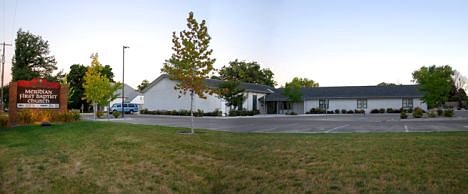
I currently attend a small, Baptist church in Southwestern Idaho. They have definite standards and a formal process of baptism and education leading to entry into membership. I suppose I could attend and worship there forever as unaffiliated, but then, I wouldn’t meet the qualifications of a “good Christian.”

It’s not that I object to being committed to a community, having affiliation, accountability, and opportunity for service, but it’s the albatross being hung around my neck of all the specific doctrine and dogma to which I object (and if taking Calvinism on board is a requirement, then it’s an absolute “showstopper”). I can’t lie about believing stuff when I don’t believe it, so how can I ever join any church anywhere? How can I, as Pastor puts it, be a “good Christian?”

Oh, and apparently Pastor isn’t alone in his opinion about joining a church. Another collision between the principals outlined in Boaz Michael’s book Tent of David and the reality of “going to church.”