Category Archives: Uncategorized

Shalom Aleichem

Shalom_AleichemShalom aleichem is a greeting version in Hebrew, meaning “peace be upon you” (literally: “peace to you”). The appropriate response is “aleikhem shalom” Yiddish: עליכם־שלום , or “upon you be peace”.

This form of greeting is traditional among Jews throughout the world. The greeting is more common amongst Ashkenazi Jewish. It first found in Bereishit (Genesis) 43:23 and occurs six times in the Jerusalem Talmud. Only the plural form is used even when addressing one person. A religious explanation for this is that one greets both the body and the soul, but Hebrew does occasionally use the plural as a sign of respect (e.g. a name of God is Elohim אלוהים literally gods).

-from Wikipedia.

I was sitting in my Sunday school class getting ready for the discussion and mentally dissecting the sermon given by one of the Associate Pastor’s half an hour before when I woman I’d never met before walked up to me and said, “Shalom aleichem.” I was momentarily taken aback, but I returned the same greeting and we struck up a conversation. I started talking about how “Jewish” the Messiah would be upon his return and that a lot of people would be surprised when he returned as the Jewish King, ruling with a rod of iron from Jerusalem. We discussed how “every knee will bow” in acknowledgement of the King, not because they reasoned it out or even because their hearts became soft to God, but because Messiah is King! He will rule the world. It will be obvious.

Strange conversation but it’s not the point of this missive.

We got back around to her interesting way of greeting me. I told her I had assumed that she said it because she knew my wife and kids were Jewish. That wasn’t it. She had no idea who I was and who my family is. She isn’t Jewish either and doesn’t speak Hebrew, so that’s not it. In fact, she’s a fairly traditional Christian. I’m not sure Kathy (that’s her name) really knew why she greeted me with “Shalom aleichem.” Understanding that, I assumed it was something God had to say to me in relation to my recent cultural and spiritual hollowness. I think it was God’s way of saying to me that I’m not as disconnected and isolated as I think.

That said, Sunday school class was “interesting” but sometimes in an almost dismaying way. That’s only because of something called Bible Study Fellowship and a fellow named John MacArthur, whose interpretation of the Bible is heavily leveraged by our Sunday school teacher Dean.

Dean’s a nice guy. I like him. He’s not always very flexible, though. He tends to take MacArthur and run with him, so to speak, forgetting that Bible interpretation isn’t the same thing as established and immutable fact. How Dean tied 1 Peter 3:18-20, Chapter 12 of Revelation and the “demon possessed humans” in Genesis 6:1-4 made me almost chew my tongue right off (metaphorically…my tongue is quite intact, thank you very much).

Shalom aleichem vs. the “culture” of Bible Study Fellowship. Oh my.

But I was reminded that a significant portion of our class time was spent praying for others. For people with cancer. For people who are out of work. For people who are old and slowly dying. And more than that, we talked and planned how we, as human beings, would be the answer to the prayers we could answer (we can’t cure cancer, but we can offer other assistance). Part of the lesson from 1 Peter 3 was all about being people designed to help others, how God would enable us to do what we thought we couldn’t do, how we should be eager to do good, how we would be blessed and yes, how we would be sometimes punished, just for doing good.

seeking-peaceOne guy gave a reasonable description of Tikkun Olam without ever having heard the term before. Really, he reminded me of a Rabbinic commentary I’d read recently. Something about how we are all created in the image of God and in His image, we are designed to do good. Only the “brokenness” of the world and our own “brokenness” get in the way.

At the end of class, Charlie, the guy sitting next to me, said he admired my ability to keep quiet when I obviously had something to say (good thing I don’t play poker). That helped to defuse some of my frustration at MacArthur and how he was being applied. Yes, there are other opinions besides MacArthur’s, but the flip side to some of these little puzzles we discuss is that what we are really supposed to be doing as children of God and disciples of the Master isn’t hard to figure out. Charlie also reminded me that we have this sign out in the foyer to the church:

He has told you, O man, what is good; and what does the LORD require of you but to do justice, and to love kindness, and to walk humbly with your God?

Micah 6:8

God is listening to me after all, He’s paying attention…and He responded to me today.

Shalom aleichem.

157 days.

Introduction to Messianic Judaism: The Troubled Ekklesia

jewish-repentanceJewish repentance is not the same as repentance for Gentiles. R. Kendall Soulen highlights a pivotal distinction intrinsic to the Bible but almost entirely ignored by the church:

Christians should recover the biblical habit of seeing the world as peopled, not by Christians and Jews, but by Jews and gentiles, by Israel and the nations…. The Bible, including the Apostolic Witness, presents the distinction as an enduring mark of the one human family, still visible in the church and even in the consummated reign of God.

Human sin is never merely the sin of the creature against the Creator-Consummator. Human sin is also always the sin of Jew and Gentile, of Israel and the nations.

This insight has profound implications for our understanding of Jewish repentance. If departure from Torah living is the measure of Jewish sin, should not a return to the paths of Torah be a sign of Jewish repentance?

-Stuart Dauermann
“Chapter 7: Messianic Jewish Outreach” (pg 95)
quoting R. Kendall Soulen, “The Grammar of the Christian Story” and “The God of Israel and Christian Theology”
Introduction to Messianic Judaism: Its Ecclesial Context and Biblical Foundations

I chose the paragraph’s quoted above from Dr. Dauermann’s chapter in Rudolph’s and Willitts’ book largely to highlight the struggle of understanding between the Messianic Jewish and Gentile Christian perspectives. Certainly Dauermann’s and Soulen’s descriptions of sin and repentance, and especially differentiating them between Jews and Gentiles, flies in the face of how Protestant Christianity defines those concepts. In normative Protestantism, sin is sin, regardless of the individual involved being Jew or Gentile. It’s personal, never national. But therein lies the rub.

I might as well tackle this rather difficult topic since lately, I’ve been pursuing unpopular causes. No, that’s too cynical, even for me. It’s just been a rough week, and I know how much people struggle with the interactions I’m trying to explore.

Whenever I try to describe (let alone understand) the relationship between Messianic Judaism and Christianity, I typically am criticized for my “lack of understanding” of Messianic Judaism. I’m generally told that my error is in defining Messianic Judaism as a “Judaism.” Although my critics aren’t Jewish, they do accurately describe the problem between Messianic Jews and the other Judaisms, both historically and in the modern sense.

Messianic Judaism and its antecedent movement, Hebrew Christianity, first emerged as attempts to reconfigure the relationship between the Christian Church and the Jewish people. The Hebrew Christians of the nineteenth and twentieth centuries were for the most part evangelical Protestants who saw the Church as an invisible and universal body of “true believers” that was expressed concretely but imperfectly in the local Christian congregation – a community constituted by the regenerated individuals who voluntarily joined it.

-Mark Kinzer
“Chapter 11: Messianic Jews and the Jewish World” (pg 126)
Introduction to Messianic Judaism

Although I doubt Dr. Kinzer intended this paragraph to be received in such a manner, when I read it, I could only be reminded of a long-standing argument between Messianic Jewish and Hebrew Roots perspectives. In the situation described by Dr. Kinzer, Jewish people accepted Jesus as Lord and Savior, set aside all “Jewish” types of religious observance, self identified as Christians, and joined the larger body of the church, being absorbed into their ranks. The Hebrew Christians, except for a string of DNA and the self-awareness of being “Jewish,” were indistinguishable from their Gentile Christian counterparts. People “knew” they were “Jewish” but that knowledge was beside the point. They were first and foremost Christians and anything that distinguished their national and covenant identity as Jews was swept away.

By contrast, to accept (in general since there are a number of variations on this theme) the Hebrew Roots perspective of Gentile “obligation” to Torah observance and full covenant identity as “Israel” as wholly shared with Jewish believers effectively does the same thing to Messianic Jews. Jews and Gentiles in the Hebrew Roots movement look, act, and identify identically. Except for a string of DNA and the cognitive awareness that certain members are Jewish, both Gentile and Jewish participants are indistinguishable from one another. While Jewish covenant observances and behaviors are not “swept away” as such since the Jewish members remain Torah observant, the distinction becomes irrelevant, since everyone looks and acts “Jewish.”
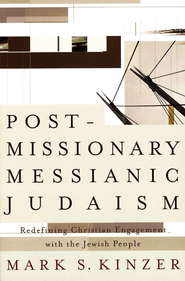
kinzer-postmissionaryHebrew Christians within evangelical Protestantism become invisible and absorbed by the church as a whole. In Hebrew Roots, it is the same for Messianic Jews.

But this is so hard for most Christian Hebrew Roots practitioners to understand.

And why is it so important for Messianic Jews to maintain their distinctiveness from Gentile Christian populations?

The term “postmissionary” was chosen to make an ecclesiological rather than a missionological point – namely, that Messianic Jews are not called to be representatives of the Christian community operating within another religious community (i.e., the Jewish people) but to be fully part of the Jewish world in both religious and national terms. In fact, they are to represent the Jewish community in relation to the Church, rather than the reverse.

-Kinzer, pg 132

Dr. Kinzer is describing material from his book Postmissionary Messianic Judaism: Redefining Christian Engagement with the Jewish People, a work that is at once revolutionary, controversial, wildly applauded by many but not all Messianic Jews, and frequently criticized by various branches of Christianity.

But it, and Dr. Kinzer, describe the need for Messianic Jews to be disciples of the Messiah first and foremost as Jews. The Hebrew Christianity and Hebrew Roots solutions to Jewish Messianic discipleship both require the surrender of that unique covenant identity and role from the Jewish people, in both cases, isolating Messianic Jews from larger Judaism and larger Jewish practices (while Hebrew Roots Gentiles generally support Torah observance in one sense or another, they usually disdain and reject much or all of the historic Jewish traditions which have identified Jewish communities for the past twenty centuries). The Hebrew Roots solution, like Hebrew Christianity, “absorbs” the Jewish population of believers into the wider “ekklesia,” diluting their identity and eventually, causing them to “disappear” within the masses.

But as has been pointed out to me time and again, even the largest and most robust of Messianic Jewish synagogues still have a majority of Gentiles as its members. However, as I have learned time and again, those are Gentiles who have chosen to come alongside Messianic Judaism in order to dialog with and to support the Jewish disciples of the Jewish Messiah King in Torah observance, identification with national Israel, and forming the ekklesia made up of (Jewish) Israel and (the believers of) the nations that will once day herald the Messiah’s return.

Together the Messianic Jewish community and the Christian Church constitute the ekklesia, the one Body of Messiah, a community of Jews and Gentiles who in their ongoing distinction and mutual blessing anticipate the shalom of the world to come.

“Defining Messianic Judaism”
UMJC.org

In quoting the Hashivenu core values, Dr. Kinzer states:

The expanded core value continues by expressing appreciation for the religious life of the wider Jewish world: “When we say that Messianic Judaism is ‘a Judaism,’ we are also acknowledging the existence of other ‘Judaisms.’ We do not deny their existence, their legitimacy, or their value.”

Never before had a group of Messianic Jewish leaders sought to differentiate their movement so definitively from evangelicalism and to identify it so radically as a branch of Judaism.

-Kinzer, pg 131

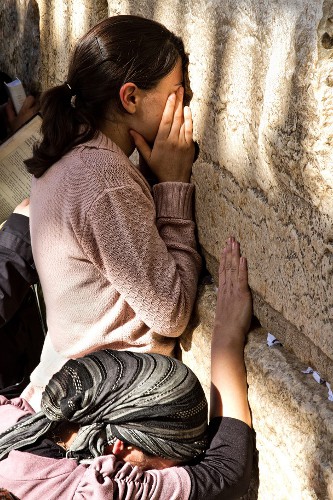
women_praying_at_the_wallI suppose you have to be Jewish to really understand the perspective Dr. Kinzer is describing, but being married to a (non-believing) Jewish spouse, I think I have some idea why it’s intensely important for her to be, not just genetically or generically Jewish, but culturally, ethnically, religiously, traditionally, and right-down-to-the-bone Jewish.

Obviously, her requirement has not been the “swan song” for our marriage because I’m a Gentile Christian since we’re still together after over thirty years, but it comes with a few additional challenges. In terms of the wider Messianic Jewish-Christian interface, those challenges are magnified.

Messianic Jews regard Gentile Christians as their brothers and sisters in the Lord and at the same time experience significant tension with the Gentile Christian world.

-Daniel Juster
“Chapter 12: Messianic Jews and the Gentile World” (pg 136)

That’s pretty much it in a nutshell. “You’re my brother and I love you, but you also drive me crazy.” That’s what family members do to each other, sometimes.

Oh, it gets even more “interesting:”

According to this statement, the Messianic Jewish community is united with the “Christian Church” in forming the ekklesia, the Body of Messiah. The term “Christian Church” is used here in a more delimited way to describe the “Gentile wing of the Church.” This is in keeping with the connotation of the word “Christian” in the wider Jewish world. For Jews, Christian = not Jewish, i.e., Gentile. This is why Messianic Jews do not self-identify as “Christians.” It would imply to fellow Jews that they are no longer Jews.

-Juster, pp 136-7

I can imagine that many Christians will take Juster’s words as an insult, but again, I think you have to be Jewish to understand the dissonance being experienced. For the vast majority of the last two-thousand years, Christianity has demanded that Jews surrender every last bit of their Jewish identity and practice in order to become disciples of the Jewish Messiah King. Go figure. For the vast majority of the last two-thousand years, the larger, normative Judaisms have considered any Jew who believes that Jesus is the Messiah is no longer Jewish but instead, a “Christian.”

But what if, like James, and Peter, and Paul, and all of the other first-century CE Jewish apostles and disciples (thousands upon thousands of them) you, as a Jew, wanted to be a disciple of the Moshiach and continue a fully lived and observant Jewish experience? Where’s the problem in that?

Old habits die hard. The church will need to learn to accept Jews who identify as “Messianic” as Jews, not just in terms of DNA and a cognitive awareness that the Jew in question had Jewish parents and other family members, but that the Messianic Jew is really, really Jewish in every observable, identifiable, and covenantal sense.

But what about those Gentiles who self-identify as “Messianic?” Not all of them are, as I previously described, Hebrew Roots Christians who aspire to the same identity as the Jews in the Messianic movement, thus claiming what is not their’s. I mentioned in my review of the First Fruits of Zion television series, that narrator and teacher Toby Janicki introduces himself as a Gentile who practices Messianic Judaism. Do Gentiles who come alongside Jews in Messianic Jewish synagogues practice Messianic Judaism (as distinctly different from Christianity)?

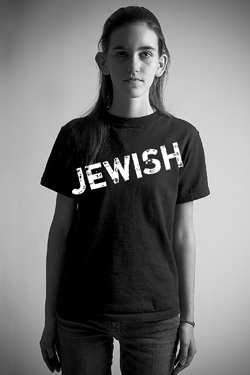
jewish-t-shirtI’ve laid out a case, based on chapters in the Rudolph-Willitts book, that describes why Messianic Jews need to identify separately from Christianity, even as Messianic Jews and Christians must be unified within the body of Messiah to form the Ekklesia, but where to “Messianic Gentiles” fit in, if at all?

I could make a case for Christian/Jewish intermarried couples to identify as “Messianic” and whose religious practice is within that context for what I hope are obvious reasons. What about the large number of non-Jews attracted to the Messianic movement who aren’t intermarried or otherwise connected to the Jewish community? I can’t really describe the attraction except I know it’s there. I have the same attraction, which is evidenced by what I write on this blog. Even if I weren’t intermarried at this point, the drive to see God, the Messiah, and the Bible through that particular lens would not go away. For some reason, it’s hardwired to my soul.

But that drive can’t be used to justify the diluting or elimination of Jewish identity and covenant distinctiveness from within the larger Ekklesia of Messiah. Juster, in describing the initiative Toward Jerusalem Council II, speaks of coming together to “heal historic wounds and repudiate ancient decisions by the Church against Messianic Jews.” I believe this should be applied to the overarching relationship of Messianic Jews and believing Gentiles, both within the Messianic Jewish worship framework and between Messianic Jews and all believing Gentile worship groups including the Church and other variant branches of Christianity (even if they choose not to self-identify as “Christianity”).

Juster’s conclusion of Chapter 12 is the hopeful note within the continual struggle between believing Jewish and Gentile communities.

This notwithstanding, the Messianic Jewish community views itself as united with the Gentile wing of the Church in a partnership that is intended by God to reflect interdependence and mutual blessing (emph. mine). Such interdependence and mutual blessing can come about only through close relationship. Therefore, Messianic Jews invest in Christian groups and organizations that welcome a Messianic Jewish presence, even as Paul wrote, “Welcome one another, therefore, just as Messiah has welcomed you, for the glory of God” (Rom 15:7 JNT).

Christian theology emphasizes that God is unfolding his great plan for the redemption and transformation of the cosmos through the work of the Church. As Messianic Jews, we have added a significant corollary to the traditional Christian narrative: the work of the Gentile Christian world cannot be accomplished without being in right relationship with Israel and the Messianic Jewish community in particular.

-ibid, pp 142-3

Most Gentile believers aren’t going to accept this message, at least at first. Some never will at all, for a variety of reasons, some of which I’ve already mentioned. But Christianity in all its forms has traditionally rejected the Jewish people from the worshipers of Messiah except on the condition that they give up being uniquely Jewish in any demonstrable and experiential sense. That is no longer a sustainable position for the church or any believing Gentile organization or individual.

When King Messiah returns in power and glory, the Church will be in no position to demand that he surrender his Jewish identity as a condition of ascending the Throne of Israel. That being the case, how can we dare to make such a demand of his Jewish subjects?

157 days.

The Hollow Man

clickedIt clicked when I saw this photo. I realized what’s been bothering me all along. I finally got why I was counting time down. Why I was waiting for it all to end. Why I didn’t believe my life in the community of faith was ever going to last. I realized I didn’t belong. I wasn’t part of the whole. No matter how hard I tried, I’d always be on the outside looking in.

Let me explain.

In reading the Rudolph and Willitts book Introduction to Messianic Judaism: Its Ecclesial Context and Biblical Foundations, I found a confirmation of what I believed about Jewish/Christian relations on so many levels. It all made so much sense. Chapters 17, 18, and 19, written by Craig Keener, William Campbell, and Scott Hafemann respectively, all spoke of Jewish and Gentile interdependence within the body of Messiah, specifically accessing Paul’s letter to the Romans. I’ll write about those chapters in more detail some other time, and I believe that there is an interdependence between believing Jews and Gentiles, but there’s a puzzle to solve, at least for me. The contributors to the Rudolph/Willitts book universally present the Messianic Jewish movement as one that is a home to believing Jews who are ethnically, culturally, religiously, and experientially Jewish. You cannot separate the lifestyle of being Jewish from the person who is Jewish, regardless if they have come to faith in Jesus as Messiah or not.

However, for the vast amount of Gentiles who are believers, their culture is the church. I know there are multiple expressions of the Christian church in our world, but they all have one thing in common. Their culture isn’t even remotely Jewish. Jewish religious and lived culture isn’t even remotely Christian. It’s like two different worlds that are trying to intersect and as interrelated as they are in Messiah, I’m not sure how they’re ever going to fit together.

And then there’s me.

No matter who you are as a believer, you “fit” somewhere. There are Gentiles, just tons and tons of them, who fit extremely well in the church. I’m anticipating seeing a lot of them tomorrow morning, Sunday morning at the church I attend. They are all very comfortable where they are. I’m the only one who sticks out like a sore thumb.

No, don’t tell me to go to a Jewish religious venue. None are accessible to me and even if they were, I don’t fit in there, either. Even if I fit in, that wouldn’t “fit in” with my wife. She’d feel extremely uncomfortable with my being a square peg trying to fit into a round hole. And that’s what I’d be. My past participation in pseudo-Jewish Hebrew Roots wouldn’t even come close to preparing me for an actual Jewish cultural encounter.

I like to think of myself as a person with a foot in each of two worlds but the fact is, I am only standing in between them. I’m not in contact with either one. I don’t belong in either one. That isn’t to say I don’t believe, but faith and religion and worship don’t exist in a vacuum, they exist in community, and I don’t belong in any of them.

It’s like someone tried to transplant a heart into my chest, but my body is rejecting it. It doesn’t belong. It’s alien. Without it, I’ll die (metaphorically speaking, of course), but I’m not being nourished by it, either.

A friend of mine once said, don’t seek Christianity and don’t seek Judaism, but rather, seek an encounter with God. But how do I meet God without a context and a culture? People can’t experience God in raw, unshielded contact. We need an interface, layers of abstraction so we can make sense of what’s happening to us, so we won’t be obliterated by connecting to God. For Jews, that interface is Judaism, cultural, Talmudic, tradition-based Judaism. For Christians, that’s the church and all the culture and traditions that are attached to the various “Christianities” in our world.

But I don’t connect to either one. I don’t belong. That’s the problem. I can read the Bible, but if I read it in a Jewish or Christian framework, it seems alien. Only just plain reading it makes any sort of sense to me, but then I’m limited to my own experience. To access the sages and the experts, I have to apply a context, which puts me in contact with denomination, with doctrine, with theology, with culture, and while that seems to work for everyone else, it doesn’t work for me because their doctrine, theology, culture, and context doesn’t belong to me and I don’t belong to them.

Classic approach-avoidance syndrome or as put more plainly, can’t live with it and can’t live without it.

That’s why doing my homework for Sunday school seems like an exercise in emptiness. It’s a culture that I don’t relate to, a perspective that seems hollow. If I’m ever going to experience God, it will be somewhere outside religion and culture, but that’s impossible for a human being. So where does that leave a “hollow man?”

157 days.

How to Love Your Neighbor as Yourself

love-your-neighborWhy an “extra meditation” so late in the day? Why so close to Shabbos, when many of my readers east of me have already gone offline or are preparing to do so? Because I can, I suppose. More accurately, because I read something that touched me and I want it to touch you as well.

Many of us could write up a list of rules for how we’d like to be treated by our friends. Most don’t have a physical list to hand out to people (although it might reduce some painful guesswork if we did), but this is how the list might look:

  1. Be sincere — no acting.
  2. Respect me, always.
  3. Check up on me to see how I’m doing.
  4. Be supportive when I’m in pain.
  5. Greet me warmly when I visit.
  6. Give me the benefit of the doubt.
  7. If I need some help, be ready to lend a hand.
  8. Don’t act overbearing or disdainful towards me.

In our eyes these expectations are within reason. We don’t delude ourselves to think our friends would give us full access to their bank accounts, or sign their house or car over to us, nor do we want them to.

We’re obliged to “Love your friend like yourself” (Lev. 19:18). The obvious question is: how can we be obligated to love others as we love ourselves? Even for someone who naturally loves people, there’s no way such love could equal the devotion they have to themselves!

We come back to our list of expectations. That’s all we really want from others, and it’s really all they want from us. Just treat others as you expect them to treat you — that’s the obligation. Are we able to demonstrate that level of love? We must be, for we couldn’t reasonably expect of others more than we’re capable of doing ourselves! (HaKsav VeHaKabalah, R’ Yaakov Tzvi Mecklenburg, 1785–1865)

Good Shabbos!
Rabbi Mordechai Dixler
Program Director, Project Genesis – Torah.org

I love that list but am also accused by it. I know I don’t always treat my family and friends in the way the list suggests (do I ever?). My heart also pines because I’d love to be treated that way by my family and friends as well. I am not assigning blame. If I don’t treat others this way, how can I expect the treatment to be returned?

And yet, it’s not just our friends and family who are involved.

“You have heard that it was said, ‘You shall love your neighbor and hate your enemy.’ But I say to you, Love your enemies and pray for those who persecute you, so that you may be sons of your Father who is in heaven. For he makes his sun rise on the evil and on the good, and sends rain on the just and on the unjust. For if you love those who love you, what reward do you have? Do not even the tax collectors do the same? And if you greet only your brothers, what more are you doing than others? Do not even the Gentiles do the same? You therefore must be perfect, as your heavenly Father is perfect.”

Matthew 5:43-48

I’m sure you saw that one coming from a mile away.

Hillel the Elder once said, “That which you hate, do not do to your friend [the negative picture of “love your fellow as yourself”]―that is all the Torah and all the rest is commentary. Go and study it.” Our Master Jesus said the same thing expressed positively, linking love of God and love of neighbor:

And he said to him, “You shall love the Lord your God with all your heart and with all your soul and with all your mind. This is the great and first commandment. And a second is like it: You shall love your neighbor as yourself. On these two commandments depend all the Law and the Prophets.”

Matthew 22:37-40

I’ve already written on the Torah’s greatest principle but I find that I need to repeat myself, not just for your sake, but for my own.

We can’t stop everything that’s wrong in the world. As I’m writing this, a terrorist has all but shut down the city of Boston and the surrounding area. An uncounted number of people are huddling in their homes in fear for their lives. Where will “the suspect” be found? Will he be found? Will he kill again? Who will be his next victim? Will it be me?

Hardly the sort of thoughts and feelings that usher in a peaceful Shabbos.

And we can’t do anything about it. But we can do something else. We can be sincere with our family, friends, and others we come in contact with. We can always treat them with respect. When we haven’t seen a friend for a while, we can call and see how they’re doing. We can be supportive when they’re sick or in pain. When they come to visit, we can greet them warmly and act sincerely glad to see them. When there’s a disagreement, we can strive to give them the benefit of the doubt. If they need help, we can offer them assistance. And even when we’re tempted to or we feel that we are in the right, we can deliberately avoid behaving overbearing or disdainful toward them.

And if we did all that, and if we did all that to everyone we encounter, and if we did that all of the time, we probably wouldn’t stop even a single act of terrorism, stop even one bomb from exploding, prevent even one gun from being fired at another human being, or inhibit the next natural disaster from devastating another city somewhere in the world.

But we would still make the world a better place and we would make ourselves better people.

159 days.

Love Loses: The Aftermath of Terrorism and Humanity

starfish“You must not lose faith in humanity. Humanity is like an ocean; if a few drops of the ocean are dirty, the ocean does not become dirty.”

―Mahatma Gandhi

Two bombs exploded near the crowded finish line of the Boston Marathon on Monday, killing three people and injuring more than 140 others in a terrifying scene of broken glass, smoke and severed limbs, authorities said.

CBS Boston station WBZ-TV reports one of the three who died from the attack was an 8-year-old boy.

“Deadly bombs rock Boston marathon”
CBSNews.com

Normally I can bounce back from the impact of events like this one but not this time. I wrote about the Sandy Hook Elementary School shootings more than once, and managed to recover my balance, my relationship with God and humanity, and keep on going, but somehow, this time is different. I don’t think that the specifics of the Boston Marathon horror are different, I just think all these events are cumulative. They’re piling up inside of me and crowding out my soul.

In every human being there is only so large a supply of love. It’s like the limbs of a starfish, to some extent: if you chew off a chunk, it will grow back. But if you chew off too much, the starfish dies. Valerie B. chewed off a chunk of love from my dwindling reserve … a reserve already nibbled by Charlotte and Lory and Sherri and Cindy and others down through the years. There’s still enough there to make the saleable appearance of a whole creature, but nobody gets gnawed on that way without becoming a little dead. So, if Cupid (that perverted little motherf**ker) decides his lightning ought to strike this gnarly tree trunk again, whoever or whatever gets me is going to get a handy second, damaged goods, something a little dead and a little crippled.

-Harlan Ellison
from “Valerie: A True Memoir” (1972)

Ellison doesn’t leave his commentary on personal tragedy and untimely death like that and continues by saying, “Don’t close yourself off, but jeezus, be careful of monsters with teeth.”

Harlan Ellison used to be one of my favorite authors about thirty to thirty-five years ago or so, but eventually, the anger, abrasiveness, and lawsuits that characterized his life began to take their toll on mine and I had to move on. However in moving on, I failed to take into consideration that Ellison just writes as a reflection of our human environment, and the cynicism, dissatisfaction, and out-and-out rage at life he expresses is merely the sea we’re all swimming in. That sea is full of hungry sharks and they smell blood.

Oh, these thoughts and feelings aren’t new to me and in fact, I wrote my own starfish story not too long ago.

Since this latest act of terror, two predictable messages have dominated the news and the social media outlets: encouragement and blame. Gandhi is only one example of the encouragement type message that you can find on Facebook lately. In fact, after Newtown, I based one of my meditations on something attributed to Fred Rogers:

When I was a boy and I would see scary things in the news, my mother would say to me, “Look for the helpers. You will always find people who are helping.”

I’m sure that’s true, but there seems to be only a few helpers left. The rest of us are just “helping ourselves,” usually to things that don’t belong to us.

defeated-boxerI actually wrote on this theme, disappointment in the human race, days ago, and that “meditation” will appear on Friday morning as my commentary on this week’s Torah Portion. But the sinking feeling that we are all sinking won’t leave me and I’m not going to wait until Friday to complain about it. I slept pretty well last night, but the night before was consumed with dreams of death, blood, kidnapping, and violence. I finally woke up at 3 a.m. and was glad to do so. Sometimes sleep is the only escape I can find from the battering life dishes out, but not always.

Sometimes living is a battle and the only thing you can do is fight back, maybe hoping to win, or maybe hoping just to survive the defeat.

In the clearing stands a boxer
And a fighter by his trade
And he carries the reminders
Of ev’ry glove that layed him down
Or cut him till he cried out
In his anger and his shame
“I am leaving, I am leaving”
But the fighter still remains

-Paul Simon (recorded by Paul Simon and Art Garfunkel)
from the song “The Boxer” (1968)

In answering a question about “why bad things happen to good people” related to natural disasters, the Aish Rabbi replied:

Thank you for your thoughtful question. It is really a formulation of the classic: “Why do bad things happen to good people?” Let me try to explain:

The story is told of the king who commissioned a tapestry to be woven. In the middle of the work, someone came upon the weaver and saw a mish-mash of different colored threads, loose threads and, in general, a very messy piece of work. A complaint was issued to the king who then confronted the artist. The artist pleaded with the king for a few days to prepare his defense. After those few days he came before the king with a wrapped package and told the king, “Here is my defense.” Inside the package was the completed tapestry.

The moral is that we cannot judge the work until it is completed. Moses asked to see God’s face. That request was denied, but he was allowed to “see” God’s “back.” It is explained that Moses wanted to understand how God runs the world. The response was that it is beyond human comprehension until you see the “back.” That is, until we can see the whole picture; then in hindsight it will all make sense.

While this answer may seem a “cop-out,” it prevents us from trying to understand God’s actions from our very limited perspective. In order for us to be able to “judge God,” we need to consider God’s “ground rules” for existence. Using this premise, it becomes very difficult to judge God. Why? Because we are stuck in a finite perspective of time and space, and we can therefore never be sure which rules God is employing at any given moment.

In order to begin to make sense of this, one thing we must understand is that God is in control, and there are no accidents. There has to be intrinsic meaning in our lives; otherwise we are just a random collection of molecules whizzing through space, with no real direction or purpose.

We are living in a very complex world, and in such a world, God doesn’t only deal with individuals, he also deals with nations.

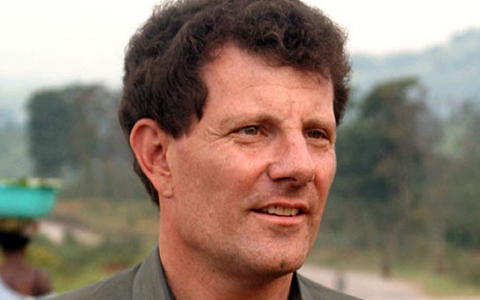
nicholas-kristofOK, I get it. God is a “big picture” kind of guy and I can’t see the forest for the trees, if you’ll forgive the mixed metaphor.

But when is enough enough? When do the encouraging messages and the happy platitudes become tiresome and ineffective? Is that why New York Times columnist Nicholas Kristof blamed the GOP for the Boston Marathon explosions or why the Westboro Baptist (so called) Church is threatening to picket the funerals of the three people killed as a protest against the LGBT community?

That isn’t fighting back against injustice, that’s insane cruelty. It’s insane to hope that the bomber turns out to be an Arab Muslim or an ultra-conservative white American. The only person to blame for the explosions is the person to planted the bombs, just like the only person to blame for the Newtown School shootings is the person who pulled the trigger.

But if I truly believed that, then I could be like Gandhi, seeing these horrific acts as aberrations among a much larger humanity I can be proud to be a part of, and I could dismiss a few drops of dirty moisture as insignificant amid a sea of refreshing, life-giving water.

But it’s not just a few drops, it’s an endless flood, not of water but of gushing blood, ripped and torn flesh, and the screams and cries of the wounded and dying.

Reddit hosts specialty pages including one on Atheism which is used to make fun of religion and religious people. I guess that sort of thing floats their boat.

Anyway, I saw a photo a “redditer” posted the day after the Boston Marathon explosions of a person donating blood. The story that went along with the image said that the blood donor had been reading a lot of messages (presumably on Facebook and twitter) from Christians saying how they were praying for the victims of the explosions. He decided to do something a little more helpful by donating blood.

I couldn’t help but agree with him, not that I believe prayer ineffective, but the answer to prayer is to actually do something about it, like giving blood. Those type of people, Christians, Atheists, or otherwise, are the “helpers” Fred Rogers’ mother was talking about.

But, to recall Gandhi, are the helpers the ocean or the few drops of “clean” water that are left amid a sea of blood, mud, and fecal matter?

Jesus once lamented, “However, when the Son of Man comes, will He find faith on the earth?” (Luke 18:8 NASB). Rabbi Tzvi Freeman wrote, “One who does good brings in more light. One who fails, feeds the darkness.” I am more than aware that I am currently feeding the darkness but I’m hardly alone. For every ten people who are willing to donate blood for people who need it, the world summons ten-thousand who will be glad to shed more blood. If a hundred people hold candles in the night to defy the darkness, a million will extinguish the light, and then rape and murder the terrified victims trying to hide in the shadows.

drowningThere’s no one left to blame except ourselves, so we might as well stop pointing fingers at everyone else besides us. Our group, our political party, our religion, our gender identity, our race, our ethnic type is no more pure than anyone else’s and the one equalizing factor is that we are part of the grubby, trashy, filthy ocean of the human race. We all planted the bombs. We all pulled the trigger. We all spilled blood. We are all drowning in the pain and the death, submerged, begging for air, begging for mercy, begging for life.

Encouraging messages such those uttered by Mahatma Gandhi and Fred Rogers are meant to lift us up out of that ocean so that we can, by resisting discouragement and depression, rise above and lead others to be agents of change and optimism.

But Gandhi and Mr. Rogers are both dead. All of the heroes are dead. The world we live in now looks up to people like Honey Boo Boo, Snooki, and Kim Kardashian. Welcome to the “progressive” age of humanity. The Prophet Isaiah was correct when he said that in the last days good would be called evil and evil would be called good. The apostle Paul expanded on this:

But understand this, that in the last days there will come times of difficulty. For people will be lovers of self, lovers of money, proud, arrogant, abusive, disobedient to their parents, ungrateful, unholy, heartless, unappeasable, slanderous, without self-control, brutal, not loving good, treacherous, reckless, swollen with conceit, lovers of pleasure rather than lovers of God, having the appearance of godliness, but denying its power.

2 Timothy 3:1-5 (ESV)

Paul wisely advised those reading his letter to avoid such people, but how is that possible when they are the only people in the world (or so it seems)? In Arkansas, groups are suing the state for the “right” to abort babies up until birth rather than banning abortions after twelve weeks gestation (as if killing a baby at any time could be considered a “good” thing to do). People are obsessed with American Idol and couldn’t care less about any suffering that CNN and the New York Times doesn’t deem worthy of attention. We greave now for the eight-year old boy who was killed in the Boston explosions, but next week, he’ll be replaced by the latest “reality TV show.” And this piece of obvious bigotry didn’t help.

The Joker, played by Heath Ledger is the film The Dark Knight (2008) was right: “When the chips are down, these… these civilized people, they’ll eat each other.”

And we will. Rob Bell (infamously) wrote a book called Love Wins. He was wrong.

161 days.

Introduction to Messianic Judaism: Reading the Bible in Flux

Talmud Study by LamplightMessianic Jews accord Scripture a unique status as the inspired and authoritative Word of God. They study it, use it liturgically, and base their life and practice on it. However, Messianic Jews grapple with certain issues involved in biblical interpretation that are particularly relevant to Jewish followers of Yeshua. In the first two parts of this essay I will focus on how Messianic Jewish interpretation of Scripture is affected by interpretive traditions and how this leads to the task of shaping a post-supersessionist canonical narrative. In the third part I will focus on unique uses of Scripture in Messianic Judaism.

-Carl Kinbar
“Chapter 4: Messianic Jews and Scripture” (pg 61)
Introduction to Messianic Judaism: Its Ecclesial Context and Biblical Foundations

In my conversations with Pastor Randy at the church I attend, the core of our conversations are on interpretation of the Bible. Pastor says that the first step in any proper interpretation is understanding the literal meaning of the text in its original language and within its context. I can hardly argue against that, but there are two additional steps: “what the text means” and “what the text means to me.” The former is an application of the text in its original context and the latter is an application of the text today.

Hyper-literalists would say that the application of all Biblical text is uniform across time, being the same both the day it was written and right now in 21st century America. I don’t think I can go that far, since, for instance, many portions of scripture in Tanakh (Old Testament) and New Testament addressing slavery are not particularly applicable in today’s world, whether in Israel or the rest of the nations.

But Dr. Kinbar suggests a finer degree of application depending, in this case, on whether one is or is not a Messianic Jew. We do know that, depending on whether one is an observant Jew or a Gentile Christian, certain passages of the Tanakh, specifically those often understood as “Messianic,” are interpreted differently, with the latter population seeing Jesus in the text and the former group seeing the future Messiah or sometimes national Israel instead.

Even when both populations interpret the same text in terms of its literal meaning within its original context, the application, especially in the present age, differs radically because it is being interpreted by two different populations, each with a different “agenda.”

It’s what I keep trying to explain to Pastor Randy. Even multiple parties who are honest and who seek truth can arrive at different interpretations of the Bible depending on who the parties are and how they’ve been “programmed” to interpret the Bible, sometimes just based on who they are (the ultimate arbiter of scripture may be the Holy Spirit, but that doesn’t prevent many people of good faith and character from interpreting scripture quite differently from one another, sometimes even within the same church).

But Christians will always see Jesus in Messianic texts. Religious Jews, not so much.

Now Kinbar is factoring Messianic Jews into the equation in his article. What can we expect?

Perhaps no one specific application.

Mark Kinzer, another Messianic Jewish thinker, approaches the interpretation of Scripture from a different direction. He argues that the Bible must be interpreted in the context of interpretive traditions, which consist of “the accumulated insights of a community transmitted from one generation to the next. In a Messianic Jewish context, tradition represents the understanding of Scripture preserved through the generations among the communities – Jewish and Christian – within which Scripture itself has been preserved. If we are connected to these communities, then we are also heirs of their traditions.”

-Kinbar, pg 62

jewish-handsThat’s something of an adaptation to how Orthodox Jews see Biblical interpretation. My wife occasionally quotes our local Chabad Rabbi as saying that the Bible cannot be interpreted correctly except through tradition, which in this case, means the traditions of Orthodox Judaism. According to Kinbar, Kinzer includes Jewish and Christian traditions as part of the requirement for correct Biblical interpretation, but Jewish and Christian interpretive traditions (and make no mistake, Protestant Christianity does have traditions for interpreting the Bible) are often at odds with each other, including the rather critical element of identifying the Messiah. Establishing the particulars of which traditions to use from each religious perspective must be an enormous challenge.

But there’s more than one way Messianic Jews look at this matter.

(Daniel) Juster argues for a more cautious approach toward Jewish tradition, asserting that “only biblical teaching is fully binding, whereas other authorities might be followed because we perceive wise application or respect community practices.” In other words, Scripture is the measure of tradition, never the reverse. Juster does not address the claim of traditionalists that the cumulative weight of centuries of interpretation is necessarily of greater weight than the judgment of the individual.

The positions of Juster and Kinzer on the place of tradition in the interpretation of Scripture represent the views of two branches of Messianic Judaism and are emblematic of broader disagreements in the movement over the place of traditional practices in Messianic Jewish life.

-Kinbar, pp 62-3

How I define Messianic Judaism is fairly conservative, and possibly closer to how the contributors of the Rudolph/Willitts book see the definition as opposed to how Hebrew Roots identifies the movement. I see Messianic Judaism as a “Judaism” (most or all of the other “Judaisms” in the world will disagree), that is, a religious, cultural, and ethnic group made up primarily or exclusively of Jewish people who are desiring to establish and nurture a Jewish cultural and religious community for the purpose of worshiping the God of Israel and having “fellowship” with other Jews. The distinction of “Messianic Judaism” is the centrality of Yeshua (Jesus) as the Jewish Messiah King in accordance with his revelation in the Apostolic Scriptures.

I’ve periodically encountered Hebrew Roots congregations (including the one I once attended and taught at) that have defined themselves as “Messianic Judaism,” in spite of the fact that few halachically Jewish people made up their membership and even fewer Jews within that group were born and raised in an ethnically, culturally, and religiously Jewish family. Few of the Jewish people within a Hebrew Roots “Messianic Jewish” group have any more familiarity with Jewish halachah and worship practices than the non-Jews in attendance. I base that statement on personal experience, and since I have little to no equivalent experience in more “authentic” Messianic Jewish congregations, I cannot comment on the membership demographics of their groups. I can only say that the ideal of Messianic Judaism is to provide Jewish communities for Jewish worshipers of God and disciples of Yeshua the Messiah, with some Gentile believers attending to “come alongside” their Jewish brothers and sisters.

prayer-synagogue-riga-latviaBut as we’ve seen, relative to Biblical interpretation, even Messianic Judaism as I define the movement, isn’t a single entity. If Kinzer and Juster represent two different perspectives in this arena, then there are two different expressions of Messianic Judaism based on how scripture is interpreted and subsequently applied. I’m not saying this to throw a monkey wrench into anyone’s machine, but to point out that these issues of religious identification and affiliation aren’t as simple as they may appear on the surface. Many Christians in the church see “Messianic Judaism” as a single container, and when visiting Hebrew Roots congregations, assume that all groups are identical in composition and practice and erroneously believe that all Hebrew Roots groups are “Messianic Judaism.”

Obviously this isn’t the case.

But returning to Messianic Judaism and interpretation of scripture, there are a few important matters to address.

Kinzer remarks that Christian theology generally ignores the eschatological character of Israel’s holiness and accentuates the “discontinuity between Israel’s covenant existence before Yeshua’s coming and the eschatological newness that Yeshua brings. Messiah is thus exalted by the lowering of Moses and Israel.” To the contrary, God’s presence with Israel is an ongoing reality that always anticipates the time of consummation. Kinzer agrees with (R. Kendall) Soulen’s argument that the death and resurrection of Yeshua anticipates what will be achieved for Israel and the nations at the time of the consummation of all things…Israel’s vocation is thus not occluded but brought to a new height in Yeshua, the one-man Israel. The person and work of Yeshua may thereby be seen in the context of Israel’s ongoing life and vocation and not its replacement.

-Kinbar, pg 65

In other words, the coming of Jesus didn’t do away with Israel and the Jewish people but insured their continuation into the future Messianic age. A rather radical thought for many Christians to absorb. But it’s not just Israel’s continuation as a wholly Jewish nation and people, but their ascendency to the head of the nations and the core of Christ’s Kingship on Earth that is being presented. Israel isn’t replaced by Christianity but rather, placed at the head of the table, so to speak. The Jews not only have a future, but an exalted and glorious future.

This is a unique interpretation of the Bible, not so much for religious Jews in general, but for Jews who believe that Jesus is the Messiah and who see him in both the prophesies of the Tanakh and the words of the New Testament.

There’s just one more unique Biblical interpretation attributed to Messianic Judaism I want to point out.

Among the Scriptures, the Torah (the five books of Moses) holds a primary place in the history and affections of the Jewish people as the record of the progenitors of Israel and the formation of Israel as a community bound to God by the commandments (also called collectively “the Torah”). Mainstream Messianic Jews, especially those who adhere to Jewish tradition, depart from the classic Christian teaching that the Torah was made obsolete in Messiah. Rather, they see that Yeshua has affirmed the Torah as the basis for life of covenant faithfulness in keeping with their calling as Jews (Matt 5:17-19).

-Kinbar, pg 69

a-long-way-to-go-pathPastor Randy and I go back and forth on this particular issue, and I continue to maintain, in agreement with Kinbar, that Torah observance for Messianic Jews remains in force if, for no other reason, than such observance defines Messianic Jews as Jews. There may be a variety of other reasons for the continuation of Torah observance within the Messianic Jewish community, but if we believe that Yeshua and subsequently the Apostles, including Paul, supported such observance (and I’ve been writing a good deal lately about Paul’s life of Torah observance) as a life long pattern for Jews in the Messiah, then these are compelling reasons not only for Messianic Jews to interpret scripture in this manner, but to continue to live their lives in accordance with the commandments, as do other Jews in other branches of religious Judaism.

But this is just the beginning, and Messianic Judaism, relative to scripture and a good many others elements, has a long way to go.

The Messianic Jewish construal of the relationship between Scripture and tradition is in flux. Messianic Judaism is still in need of a canonical narrative that is clear and comprehensive, accounting for Israel’s ongoing vocation as a holy people.

-Kinbar, pg 70

The dynamic between scripture and tradition is at the heart of many arguments regarding how a Jew is supposed to relate to the Messiah. For some observers and even some practitioners of Messianic Judaism, observance of Torah is not the issue but observance of “the traditions” very much is. As Dr. Kinbar said, the debate is “in flux” and Messianic Judaism is in many ways, still a “diamond in the rough.”

Of all of the contributors to the Rudolph/Willitts book, only Carl Kinbar (as far as I know) regularly (or periodically) reads this blog and occasionally comments on it, so if I’ve gotten anything wrong in my analysis of his article, I can expect he’ll come by to correct me. While this is slightly intimidating on one hand, on the other, it is rather comforting since it is part of the expected and required dialogue between Messianic Judaism and Gentile Christianity that David Rudolph expressed earlier in the book.

If, as I believe, Gentile Christians have a major role in supporting Israel and encouraging Messianic Jews in taking up and observing the Torah mitzvot as part of the process of a returning Messiah, then conversation and cooperation between our two populations within the body of Yeshua brings us one step closer to repairing our broken world and anticipating the return of the King.

161 days.