Category Archives: Uncategorized

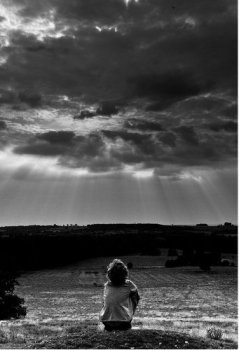
12 Days: Staring at the Clouds

staring-at-the-clouds“On the twelfth day of Christmas, my true love gave to me…”

OK, stop right there. It’s twelve days until the end of the year and less than a week until Christmas. There are only twelve days left in my arbitrary “countdown to oblivion” (yeah, I think it’s overly dramatic, too) or at least my countdown to “church or not church.”

I still haven’t made up my mind.

I didn’t go to church last Sunday. I suppose I could have gone, but every Sunday morning, I have to get up at around 4 a.m. so I can drive my daughter to work (she has to be there by 5 a.m.). Afterwards, I get to go back to sleep and last Sunday, sleep I did. I very deliberately didn’t set my alarm so I could get up in time to make it to church. I did periodically wake up, peek at the clock, briefly have an internal dialogue about whether to get up or not, and then I went back to sleep.

And I kept doing that until I determined that it was too late to make it to church on time.

Oh sure, I could have gotten there late. It’s not like anything depends on me being at church on time. But I decided that once it was too late to make it to church before services began, it was just plain too late.

And sleeping in was glorious. I enjoyed it tremendously.

My wife didn’t realize that I wasn’t going to church at first. At about 10 a.m. she mentioned it and I said I decided not to go that morning. That was the end of the conversation.

But I’ve been feeling guilty. I’m not exactly sure why, since my connection to anyone and anything at church is so tenuous. Of course, I already found out that if I miss a Sunday at church people notice. On the other hand, I also discovered that my primary (current) motivation for going to church is a sense of obligation. It’s sort of like the obligation I feel to go to the dentist for regular teeth cleaning. In fact, I’d prefer to go to the dentist to have my teeth cleaned than go to church because I only have to go to the dentist every so many months, and I at least have a long-standing relationship with my dentist and his staff, so we are very familiar with each other.

It’s only a community if you belong and as I also said recently, I don’t have that sense of belonging at church. If predictions are correct, any sense of belonging at all will take about a year.

365 days and counting?

Twelve days left. That’s two more Sundays, one right before Christmas and one right afterward.

I know I should go, I know I should go, I know I should go.

But I don’t want to.

There’s just nothing for me to do there. There’s no one to talk to, at least beyond a friendly, casual, and superficial conversation. The one sort of transaction that would engage me is exactly what I must avoid if I am to have any hope of establishing relationships at all.

More’s the pity, because without the ability to converse and interact, going to church is a really boring way to kill three hours or so.

I’m sure there are Christians out there who are shocked and appalled to read those words.

I started this series at 78 days, made the final determination to return to church at 62 days, and had a private meeting with Pastor Randy at the church I now attend at 57 days (you can see what a cautious fellow I am, slowly sneaking up on an objective).

And it was at 57 days that I went back to church…45 days ago.

Now I only have twelve days left, unless I choose to reset the clock once I reach zero days. I was hoping that I could have a chance to review Boaz Michael’s book Tent of David within the context of a church experience, but I don’t know now. Maybe this effort represents a failure on my part or maybe getting “cold feet” is part of the developmental process of returning to church.

I don’t know.

As I see it, I have two basic choices. One: I can let the twelve days elapse, with or without returning to church for one or both of the Sundays left. Then that is that. Church is no longer an option for fellowship and community. Endgame. Two: I can let the twelve days elapse, with or without returning to church for one or both of the Sundays left, then reset the clock to 365 days. That would mean letting 2013 be “the year of church.” I’d give myself a full calendar year to explore “the church experience.”

Option one seems like a relief and option two seems like a long haul to face, particularly alone. But if I haven’t been giving church a fair chance, then option two is the only one that lets me be fair.

When I look back boy I must have been green
Bopping in the country, fishing in a stream
Looking for an answer trying to find a sign
Until I saw your city lights honey I was blind

You better get back honky cat
Living in the city ain’t where it’s at
It’s like trying to find gold in a silver mine
It’s like trying to drink whisky from a bottle of wine

from “Honky Cat” (1972)
music by Elton John
lyrics by Bernie Taupin

I’ve got a scant twelve days to make up my mind. Until then, I’m staring up at the clouds looking for an answer.

A Human Heart…and Courage

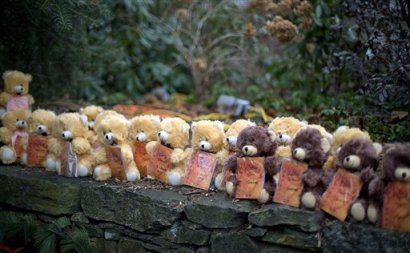
vicki-sotoWhen a crazed gunman opened fire inside a Connecticut elementary school – murdering 26 children and adults – first grade teacher Vicki Soto responded with an astonishingly selfless act.

Upon hearing the first rounds of gunfire in an adjacent classroom, the 27-year-old teacher went into lockdown mode, quickly ushering her students into a closet. Then suddenly, as she came face to face with the gunman and the bullets flew, she used her body to shield the children.

Vicki Soto was found dead, huddled over her students, protecting them.

We all mourn this unspeakable tragedy.

Yet where did this young woman get the strength and conviction to perform such an extraordinary act of bravery?

-Rabbi Shraga Simmons
“A Hero in Connecticut”
Aish.com

The world we live in is certainly broken. This broken state is causing us to ask questions on ways to begin to fix it. The issues are complex and go way beyond single issues or problems like guns, video games, violence in movies, etc. The generational problems and patterns have brought us to this place. It will take new behaviors and patterns to eventually repair it. It will not come fast, or easy.

I think the world has become increasingly rude and mean. This has devastating effects on our culture—and leads to permanent scars and horrifying behaviors.

I recently read an article by Dr. Douglas Fields entitled, Rudeness is a Neurotoxin, where he states, “A disrespectful, stressful social environment is a neurotoxin for the brain and psyche, and the scars are permanent.”

-Boaz Michael
“Why are Some People so Rude?”
boazmichael.org

Boaz wrote about one of my “favorite themes” on his personal blog earlier today, but in light of the shootings at Sandy Hook Elementary School in Newtown, Connecticut (which he was obviously alluding to) and the resulting verbal response (onslaught) in the news media and on the web, he probably didn’t take it far enough.

I don’t mean to say that rude people are potentially dangerous and violent people, but on the other hand, the Master had this today about both situations.

“You have heard that it was said to those of old, ‘You shall not murder; and whoever murders will be liable to judgment.’ But I say to you that everyone who is angry with his brother will be liable to judgment; whoever insults his brother will be liable to the council; and whoever says, ‘You fool!’ will be liable to the hell of fire.

–Matthew 5:21-22 (ESV)

Does anger equal murder? Certainly anger and jealousy has led to murder, including the first one ever recorded, but in adding rudeness to this discussion, am I taking things too far? Am I exaggerating my issues with rudeness? And what does any of this have to do with Vicki Soto and her courageous and selfless act of heroism?

One of the definitions of “rude” or “rudeness” at The Free Dictionary is “Ill-mannered; discourteous.” When we think of a rude person, it’s difficult not to think of someone who is more focused on their own emotional gratification than on the well-being of others. A rude person shoves and cuts in line. A rude person at a shared meal, takes the largest portion. A rude person reveals an embarrassing detail about a friend in public.

In other words, a rude person cares more about themselves than about others.

Kind of the opposite of 27-year old teacher Vicki Soto who purposely put herself in harm’s way and gave her life for the care and safety of small children. She literally used herself as a human shield, taking the bullets that would have otherwise penetrated the bodies of the tiniest, most cherished ones; our children (and they are all our children).

Boaz says on his blog, Rude people are not godly people. Then he continues:

A reminder from a biblical source:

“Love is patient and kind; love does not envy or boast; it is not arrogant or rude. It does not insist on its own way; it is not irritable or resentful …” (1 Corinthians 13:4-5 ESV)

A reminder through Jewish wisdom:

It is a mitzvah for every person to love every Jew as himself, as it is written “And you shall love your neighbor as yourself.” Therefore we must relate his virtues. To be concerned about his property the way we are about our own, and about his honor the way we are about our own. If a person glorifies himself in the shame of his neighbor even if his neighbor is not there, and the shame does not reach him, and is not embarrassed, but he compared his good deeds and his wisdom to compare with the good deeds, and wisdom of his neighbor, so that from this it may appear that he is a very honorable person and his neighbor a despicable person. This person has no share in the world to come, until he repents with complete repentance. (Kitzure Shulchan Aruch 29:12)

A reminder through apocryphal literature:

Yeshua said, “Love your brother like your soul, guard him like the pupil of your eye.” Gospel of Thomas 25

Rabbi Simmons summed up the life of Vicki Soto and her inspiration to us in this way.

Vicki Soto’s great act of devotion should inspire us to take 10 minutes today and ponder: “What am I living for?”

Finding the answer is a big project. But there’s no better use of our time and energy. Because if we don’t know what higher purpose we’re pursuing, then we’re living like zombies, just going through the motions.

Vicki Soto was up to the challenge. “She didn’t call them her students,” her sister Carlee told NBC. “She called them her kids. She loved those students more than anything.”

She loved her students so much that she referred to them as her “little angels.” In reaching the ultimate level of devotion and saving their lives, Vicki Soto reached beyond the angels.

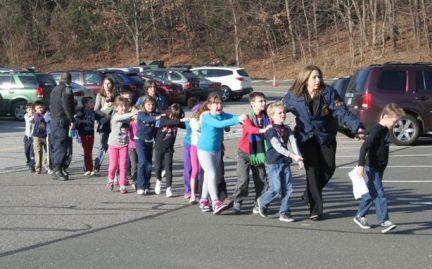
APTOPIX Connecticut School ShootingWhen we get into our little “Internet spats” in the blogosphere, in discussion boards, or in social networking applications such as Facebook, we often believe we are fighting for what is really important to us. Somehow, we use that as a way to internally justify our rudeness. But as Rabbi Simmons points out, when we find something or someone, some small collection of “little angels” who really are important, then exhibiting behaviors indicative of selfishness and self-gratification doesn’t even enter the picture. Quite the opposite. Courage, like love, is selfless, patient, and kind. Like Vicki Soto, love and courage bears all things and endures all things.

And it never ends even though life may end.

But everything else we do ends. As Paul says, “As for prophecies, they will pass away; as for tongues, they will cease; as for knowledge, it will pass away. For we know in part and we prophesy in part, but when the perfect comes, the partial will pass away. “ (1 Corinthians 13:8-10 ESV)

I have been trying to stop being so foolish as to participate in online interactions with human attack dogs. Vicki Soto’s remarkable self-sacrifice has provided me another reason not just to cease such fruitless activities, but to strive to become a better person, both in my private life and in my “blogging persona.”

Nothing I can say, no goal I could ever achieve, both professionally as a writer or in any personal sense could equal Vicki’s greatest qualities, which writer Archie Goodwin once described as:

“A human heart…and courage.”

Most of us will never find ourselves in a situation where we have to choose between our life and someone else’s, but as Rabbi Simmons suggests, we can take a few minutes out of our busy day to ask ourselves, “what am I living for?” If you want to give Vicki’s life and the lives of all who have suffered and died for the sake of love, caring, and compassion any sort of meaning, let your answer be to help another human being in some way, great or small.

And, to go Paul McCartney one better, in the end, may the love you make be greater than the love you take.

Seeking Helpers

fred-rogersAll the ways of a person are pure in one’s eyes.

–Proverbs 16:2

As a rule, people do not do anything that they believe to be wrong. Those who do wrong have somehow convinced themselves that what they are doing is in fact right. They justify themselves with ingenious rationalizations.

If we are so susceptible to our minds playing tricks on us and deluding us that what is wrong is right, what can we do to prevent improper behavior? Solomon provides the answer: Direct your actions toward God, and your thoughts will be right (Proverbs 16:3).

The distortion is greatest when the motivation is, “What do I want?” If we remove ourselves from the picture and instead ask, “What does God want?” the possibility of distortion shrinks.

While there is less distortion in the latter case, we cannot say that distortion is completely absent. Some people have strange ideas about what God wants. However, if we take ourselves out of the picture and are motivated to do what God wants, there is greater likelihood that we might consult someone in a position to give us an authoritative opinion as to the will of God. While this is not foolproof, there is at least a chance of escaping the distortions of rationalization that are dominant when one seeks to satisfy primarily oneself.

Today I shall…

try to dedicate myself to doing the will of God, and try to learn what His will is by studying the Torah and accepting guidance from Torah authorities.

-Rabbi Abraham J. Twerski
“Growing Each Day, Tevet 4”
Aish.com

The Almighty loves those who constantly find merit in others.

Right now, think of someone you have been critical of. Now find something meritorious about that person.

-Rabbi Zelig Pliskin
“Daily Lift #671, Find Merit in Others”
Aish.com

It’s not easy to find merit in some people, particularly when we perceive that their primary character traits and behavior are particularly “unmeritorious.” The recent tragedy in Connecticut has mobilized a great deal of emotion in our nation, and as a people, we are divided as to how we should respond. There have been many comments on the web over the past several days where it is obvious that people are not trying to discover merit in their “opponents.”

On the other hand, I saw a quote on Facebook attributed to Fred Rogers (yeah, that Mister Rogers).

When I was a boy and I would see scary things in the news, my mother would say to me, “Look for the helpers. You will always find people who are helping.”

That seems more like trying to find people who are already meritorious in a difficult situation rather than finding merit in a person who may be a “difficult” individual, but I think it’s a step in the right direction.

What about finding merit within ourselves? According to Rabbi Twerski, that could lead us to self-deception, since we all have a tendency to justify our behavior, spinning it toward being good and not finding fault with ourselves. The Rabbi’s answer is to first seek God’s will in all things rather than our own, which is a point I tried to make in yesterday’s morning meditation.

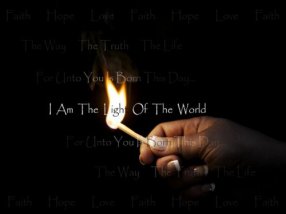
light-of-the-worldSeeking God’s will and God’s standard for doing good helps us avoid self-deception, but as Rabbi Twerski pointed out, we still must be careful. Many, many religious people believe they have sought out and successfully received the will of God, and then proceed to justify the most evil and hurtful actions based on their “sketchy” understanding of what God wants (and who could possibly call themselves a child of God and yet take advantage of the extreme grief of others for their own personal or organizational benefit?).

I guess those last few sentences weren’t exactly reflective of looking for merit in others. See how hard it can be sometimes?

I agree with Mister Rogers’ mother that even in the darkest place, we should look for the light that is shining from the helpers. If we can’t find it, then I think we’re obligated to be the helper and to shine with a light for others to see.

Never forget that your true place is a place of light. Even when you find yourself in the midst of darkness and sorrow, know that this is not your home.

Where is your home? Where does your true self live?

It lives absorbed within the very origin of light. From there, a glimmer of itself escapes and splashes below.

All it takes is that glimmer to transform the darkness, that it too should shine.

-Rabbi Tzvi Freeman
“Staying Above”
Based on letters and talks of the Rebbe
Rabbi M. M. Schneerson
Chabad.org

I admire Rabbi Pliskin in his ability to seek out the merit of others, particularly those “difficult” people and groups who exist in our world. While I believe his advice is sound, there are just some folks I will always struggle with because what is most obvious about them is also extremely hateful or at least “challenging.” If I can’t always see past the problem to get to that glimmer of merit that is possessed by another, may I look to God and ask that I exhibit some small piece of Him in myself that can be an inspiration instead.

Separating Good from God

returning-the-torahThe campaign of the Greeks was aimed to “make them forget Your Torah and violate the decrees of Your will” (Sidur p. 59); as the Midrash (Bereishit Raba 16) puts it, (the Greeks demanded) “Write…that you have no share in the G-d of Israel.” It was a war against G-d. “Let them study Torah,” the Greeks implied. “Let them practice the justice-mitzvot and the ‘testimonial’ observances. But they must not mention that the Torah is G-d’s Torah and the mitzvot are the decrees of His will. Torah and mitzvot must be severed from G-dliness.”

“Today’s Day”
Thursday, Tevet 2, Seventh Day of Chanuka, 5703
Compiled by the Lubavitcher Rebbe
Translated by Yitschak Meir Kagan
Chabad.org

Why should any religion get the credit for people doing good, but not get the credit for people doing bad?

I think it should be consistent either way, don’t you? Either the church gets all the credit or none of it. You can’t just give it the good and ignore the bad.

-comment from NotAScientist
on my blog post
When Christians Do Good

Typically, one of the criticisms non-religious people level against Christians and other people of faith is that we need some sort of excuse to do the right thing. We use our faith and our religion as an external motivator to do good when, as human beings, we should just know how to do good and do the right thing because it’s the right thing.

This gets muddied up further when definitions about what “right” happens to be differ between religious and non-religious populations and certain social priorities and “causes” become involved. Then too, the matter of the “supernatural” vs. the “rational” is also injected into the argument, with rational, scientific atheism and secular humanism weighing in on the side of “thinking” as opposed to “believing”.

In doing a little research into “atheist advertising” for this blog post, I found a number of clever slogans that atheists use to promote their particular viewpoint. One was on the side of a New York City bus and read…

“You don’t have to believe in God to be a moral or ethical person”

The ad then provided the URL to the New York City Atheists website (see the story at The New York Times for details).

But that takes us back to the “Today’s Day” quote at the top of this blog post and interestingly enough, Chanukah.

As you’re reading this, Chanukah has just ended (at sundown Sunday night) but the lessons it teaches us are still fresh in my mind. Why would the Greeks be content to continue to allow the Jews to perform the Torah mitzvot and to do justice, as long as they divorced those moral and ethical deeds and the Torah itself from the God of Israel? If you donate food to your local food bank because you believe that helping others is the right thing to do, and I perform the same act in response to the will of God, what difference does it make? Hungry people are still fed either way, right?

atheist_christmas_adWell yes, hungry people are still fed either way. Someone can enjoy a donated meal without wondering about the motivation of the person who provided it. Their belly will be just as full and they can feel just as grateful to the person who helped them out. I can understand why an atheist would make such a statement, but why would the ancient Greeks, who had no end of gods of their own, want to say something like that about the Jews? Why separate the good deed from the ultimate author of the good deed, God?

Pinchas arose and wrought judgment, and so the plague was checked.

–Psalms 106:30

The word tefillah, or “prayer,” has its origin in the word pallel, which means “to seek justice.” Prayer should therefore be an activity whereby one seeks justice. The first recorded prayer in Jewish history is that of the Patriarch Abraham. He sought justice for the people of Sodom and pleaded with God to spare them (Genesis 18:23-33). Thus, when we pray, whether for ourselves or for others, it should be with the understanding that we are seeking justice.

How, then, can we ask of God to grant our various requests? Are we deserving of this? Do we deserve them? Are they within the realm of justice?

Two answers come to mind. If, as part of our prayers, we admit the wrongs we have done, sincerely regret them, and commit ourselves not to repeat them, then we may indeed be deserving. We therefore do not make our requests on the basis of what we are, but on the basis of what we will be. Second, if we extend ourselves by forgiving people who have offended us and acting with kindness toward them, then God’s acting accordingly toward us can in itself be considered justice.

Thus, teshuvah (the process of regret and return) and gemilas chasadim (acts of kindness) are the foundations of prayer.

Today I shall…

try to do teshuvah, and to act toward others in a way that I wish God to act toward me.

-Rabbi Abraham J. Twerski
“Growing Each Day, Tevet 1”
Aish.com

I don’t have some wise commentary or a learned sage to draw from to answer the question I posed above, but there seems to be one difference between the atheist’s motivations and the reason a person of faith does good: the definer and creator of good.

If man is the final arbitrator of what is good and evil, then good and evil changes over time, changes between nations and cultures, and changes from one individual to the next. What I may consider good, another person may see as evil. What I can justify within my own conscience may be considered tremendously heinous within another’s moral structure.

But God is God. He does not change and thus what is good does not change.

And what is good?

And Jesus said to him, “Why do you call me good? No one is good except God alone.”

–Mark 10:18 (ESV)

OK, it’s not that simple. I’ve mentioned before that religion and how we understand God evolves over time. Besides that, even just within Christianity, various denominations and even individuals who go to the same church can differ on a number of political and social issues in terms of what is “good” and “evil.” Should you pray for the well-being of President Obama or pray against his health and safety? You may believe the answer to that question is clear, but I promise you that no matter what your answer may be, there is a believer out there who has the opposite answer, and yet both of you believe you are in the right because of God and the Bible.

But even though we have that monkey wrench in the machine, I still believe it is better to seek out God in matters of right and wrong than to universally rely on our own judgment and feelings. I’ve been writing recently about the Sandy Hook school shootings and it is only the most recent of the many debates you will find on how to address violence in our society. What is the right thing to do? What is the ethical and moral thing to do in response to the death of 26 people, including 20 small children?

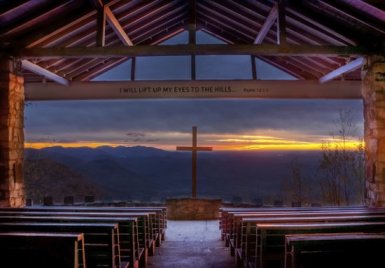
symmes_chapel_churchI don’t know.

I do know that even those of us who turn to the God of the Bible for our strength and our hope don’t always agree on the answer. How much more must a secular world with only the standard of public opinion dispute each other, disagree, and contend?

I don’t know the answer. But I am thankful that when I have to ask the question, I don’t have to ask another human being who is just as hurt, sorrowful, and angry as I am.

If my sense of right and wrong became detached from God, even if my basic behavior and my concept of what is good did not change, I would be at the mercy of the opinion of whatever group of people I chose to listen to or worse, I would have to depend upon the voice of my own personal thoughts and feelings.

I lift up my eyes to the hills. From where does my help come? My help comes from the Lord, who made heaven and earth.

–Psalm 121:1-2 (ESV)

It was God who took a family and made them a people and a nation too numerous to count. If the Greeks had succeeded and caused the Jews to detach the Torah from God, Israel too would become detached and ultimately lost. It is God who redeems the soul of every living person and from whose hand we receive what each of us needs at its proper time. Without God, we too would be lost.

Asking for Help in the Aftermath of Death

joseph-and-pharaohIn this week’s reading, the time for Yosef’s redemption finally arrives. Pharoah has dreams, his sommelier (wine butler) suddenly remembers Yosef, and Yosef is hastily pulled from jail, given a haircut, and sent to interpret the dreams of Pharoah.

Two weeks ago, I spoke about the need to make our own efforts, while knowing that in the end it is G-d who determines the results. But I closed with a question: what was wrong with Joseph’s efforts? Why was he punished for asking the sommelier to remember him?

It’s clear that is what happened. Last week’s reading concludes with the verse, “and the sommelier did not remember Yosef, and he forgot him.” Rabbi Shlomo Yitzchaki explains that he did not remember him that day, and forgot him afterwards — because Yosef had placed his trust in the sommelier rather than G-d. That is a startling indictment of the only one of Yaakov’s sons who was the forefather of two tribes. For someone of his exalted standard, we are told, what Yosef did was wrong. But why — what was wrong with trying?

-Rabbi Yaakov Menken
Commentary on Chanukah and Torah Portion Mikeitz
Director, Project Genesis

2 dead after shooting at Las Vegas hotel Gunman Wounds 3 at Ala. Hospital 28 Dead, Including 20 Children, After Sandy Hook School Shooting

–Brent Spiner on twitter

I am angry/disgusted. Amazing that some think the solution is more guns. Madness. Even NRA members want more control. LLAP

–Leonard Nimoy on twitter

Late Friday I said a prayer for the victims of the horrible shootings at Sandy Hook Elementary School in Newtown, Connecticut. On the same day, 22 school children were attacked by a man with a knife in China but thank God, none of them were killed. As Actor Brent Spiner’s “tweet” on the micro-blogging site twitter indicates, there have been other tragedies in the world as well. Actor Leonard Nimoy laments the response to these events among some elements of our society to take control, in this case by replying to gun violence with gun violence.

And according to midrash, Joseph condemned himself to additional prison time by desiring to take control of his situation (asking the “chancellor of cups” to remember him to Pharaoh, King of Egypt) rather than relying solely upon the King of the Universe.

But as Rabbi Menken asked above, what’s wrong with trying to take control of a situation with our own efforts, especially when the situation, the world we live in, seems to be totally out of control? Rabbi Menken’s commentary continues.

I saw an interesting explanation attributed to Rabbi Moshe Feinstein, a world-renowned religious leader who passed away barely 25 years ago. He said that Yosef’s high standard was very much part of the issue. Yosef, being who he was, should have recognized immediately that the peculiar circumstance of his being imprisoned together with Pharoah’s personal sommelier and baker, and them having dreams, and him knowing exactly what to tell them — all of that was clearly not coincidence. It should have been obvious to him that G-d’s Plan was already in motion. As we see this week, he was rushed from prison to tell Pharoah that fat cows mean times of plenty, and starving cows mean times of starvation, and was instantly appointed second in command over the whole country. With “20/20 hindsight” it’s obvious that this was all planned out — and enough signs were there that Yosef should have seen it coming.

But we, alas, are not Yosef. Very rarely could we be confident that we are in a situation where our efforts aren’t needed, before the gift of hindsight. We always have to do our best. When should we be idle? When we have done everything humanly possible.

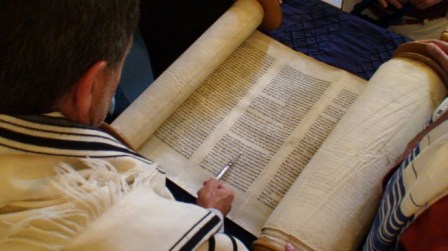
reading-torahWe can read last week’s Torah portion and as we review each word, we know in advance what’s going to happen, because we’ve read and studied these pages many, many times over the years. The story of Joseph’s redemption and rise to Messiah-like authority and position is like an old friend to me. But while Joseph, at his exalted spiritual level (according to midrash), should have known better than to forget to rely on God alone, as Rabbi Menken wisely points out, that is hardly ever the case for you and me.

We are faced with an insurmountable problem, a terrible tragedy, children have been injured and murdered, and what are we going to do about it? The blood of the victims cries out to us, demanding that we respond. Should we ban private ownership of all firearms in this nation? Should we pour more tax dollars into mental health research and treatment? What can we do to prevent this from ever happening again? What could we have done to prevent the deaths of those 20 small lives in Newtown, Connecticut?

Experts of every type, from political pundits, to psychologists, to the clergy are all weighing in with their opinions. Some people feel that the strict separation of church and state in our nation, which “bans God from our schools” is to blame, but for others, that response seems cheap, shallow, and hurtful. Other people and groups want to arm school officials with firearms so that, should such a situation happen again, teachers and school counselors could fire back, protecting the children.

To be perfectly honest, I haven’t the faintest idea what to do. I don’t know if these sorts of attacks are happening more frequently or if we just react as if they are every time something like this happens.

Joseph’s situation and Rabbi Menken’s commentary on it doesn’t seem to help, but then again, neither one was facing what we are facing right now as a nation…as a world. It is said that everything is in the hands of Heaven except fear of Heaven. Christians are fond of saying that God is in control. Tell that to the parents of the 20 dead children in Newtown and see how they answer you…if you dare.

No one knows what the right thing to do is but everybody has an opinion about what they think the solution should be. We people of faith rely on God but it is a bitter thing to lose a child and if I were the father of one or more of the dead children, I would be asking where God was when they died. Rabbi Menken reminds us that faith is not blind, but while that makes for interesting intellectual discussion, how does it help when a parent’s heart is being torn to shreds as they cry bitterly over the loss of a son or daughter?

Don’t look for my opinion or my answer to this disastrous mess. I don’t have one to give. I’m still too angry and too sad and too miserable to render one, and even when I manage to tame my emotional response, my intellect and wisdom will still fail me here. Like Joseph, I want to take control. I want to do something. I want to prevent even one more child from dying. I don’t have the power to even begin to make such and effort and as I’ve already said, I wouldn’t know what to do if that power were mine.

school_shooting_in_connJoseph rose to a position where he had power to save a starving world. His authority was second only to the greatest King who ruled over the most civilized and prosperous nation of his day. Joseph saved Egypt, and he saved Canaan, and he saved everyone who came to him, and he saved his family. He finally reunites with them, provides for them, takes care of them, and sees his aging father before he dies.

And yet, Joseph died just like all men must.

And none of us is like Joseph…or like Jesus…or like God.

God is in control but He rules over a broken world. We broke it. Only God can fix it. But as I’ve mentioned numerous times over the years, according to Jewish thought, human beings are partners with God in tikkun olam, repairing the world. That may mean our human desire to want to act when disaster strikes is built into us by God and part of who we are as His “partners.”

God, what can we do to help? What can any of us do in the face of such an unimaginable pain? I don’t know. All I know how to do is ask for help. Help us. I’m not the only one asking for help.

Please.

A Prayer for Newtown

school_shooting_in_connFor those who suffer, and those who cry this night, give them repose, Lord; a pause in their burdens.

Let there be minutes where they experience peace, not of man but of angels.

Love them, Lord, when others cannot.

Hold them, Lord, when we fail with human arms.

Hear their prayers and give them the ability to hear You back in whatever language they best understand.

–Margaret A. Davidson

I can’t think of a worse nightmare for a parent than the death of a child. My children are all adults and I continue to pray daily that God will watch over their lives. I can’t imagine what the parents of the child victims of the Sandy Hook Elementary School shootings in Newtown, Connecticut are going through right now and, coward that I am, I don’t want to know.

This isn’t the first time I’ve talked about a child’s death and sadly, I’m sure it won’t be the last. 8-year old Leiby Kletzky was murdered over a year ago in Brooklyn, and several Jewish children were killed at their school in Toulouse, France by a heartless terrorist.

I’m reminded of the final words of John Donne’s very old, very famous poem No Man is an Island:

Therefore, do not send to know
For whom the bell tolls
It tolls for thee

In truth, no matter where a child dies in the world or how he or she is taken, the child is taken from all of us. They are all our children. When someone’s precious son or daughter is killed, they’re taken from all of us and we all grieve.

I know I grieve.

Glorified and sanctified be God’s great name throughout the world which He has created according to His will. May He establish His kingdom in your lifetime and during your days, and within the life of the entire House of Israel, speedily and soon; and say, Amen.

May His great name be blessed forever and to all eternity.

Blessed and praised, glorified and exalted, extolled and honored, adored and lauded be the name of the Holy One, blessed be He, beyond all the blessings and hymns, praises and consolations that are ever spoken in the world; and say, Amen.

May there be abundant peace from heaven, and life, for us
and for all Israel; and say, Amen.

He who creates peace in His celestial heights, may He create peace for us and for all Israel; and say, Amen.

-Mourner’s Kaddish