Category Archives: Uncategorized

17 Days: They’re Not Me

like-a-prayerQuestion:

I’ve been repeatedly approached by Jews for Jesus guys near the campus of UCLA. The pamphlet that they hand out alleges that “Messianic Jews” are Jews who believe that Jesus was the Messiah. That didn’t make sense to me. I would label a person “Christian” if they believed Jesus was the Messiah. But my friend claimed there are a great number of Jews who believe that Jesus was the Messiah – yet do not consider themselves Christians. I had never heard of this.

The Aish Rabbi Replies:

No matter how disconnected a Jew may be from Judaism, he is still likely to be appalled by the idea of worshipping Jesus. And that poses a great problem for Christian missionaries seeking to convert Jews.

Given this, some missionaries got the idea to try a backdoor tactic. They invented “Jews for Jesus,” which uses a whole lexicon of Jewish-sounding buzz words in order to make Jesus more palatable to Jews.

For example, members of Jews for Jesus don’t go to church, they go to a “Messianic Synagogue.” Prayer is not held on Sunday, but on Saturday, the Jewish Sabbath. They say that by accepting JC, you’re not converting to Christianity, you’re instead becoming “a fulfilled Jew.” The New Testament is called “Brit Chadasha” (Hebrew for New Covenant). It’s not the cross, it’s “the tree.” Not baptism, but “the mikveh.” Not a communion wafer, but “matzah.” Congregants wear a tallit and kippah, and bring a Torah scroll out of the Holy Ark – just like every other synagogue. After all, they proudly proclaim, Jesus himself was a Jew!

These missionary campaigns are well-funded and relentless. Jews for Jesus has been spending millions of dollars in print and radio advertising, and has run a campaign of banner ads in New York City subways and on major web sites. If you see one of these ads, you should write a letter of protest to the host organization.

It is the responsibility of all Jews to take a stand. Comedienne Joan Rivers started screaming on the air after a commercial for Jews for Jesus aired on her radio show. The ad featured two Jewish men arguing over whether JC is the Jewish messiah, while the Jewish song “Hava Nagillah” played in the background. “Do not proselytize on my show,” Rivers ranted. “I was born a Jew and I plan to die a Jew. How dare you advertise on my show. I find this disgusting, I find this offensive, and I find this ridiculous!”

Jews for Jesus is a subversive organization. The missionaries’ approach to ensnare unsuspecting people includes quoting Torah verses out of context and gross mistranslations. These deceptions are most successful with Jews who have no knowledge of their own Jewish heritage. In Russia, for example, where Jewish education had been suppressed for 70 years, missionaries sponsor “Jewish revival meetings,” where a tallit-clad clergyman asks throngs of unsuspecting Russian Jews to “accept Jesus into your heart.” The sad thing is that tens of thousands of Jews (including an estimated 50,000 in Israel today) have fallen for this falsehood.

Ironically, Jews really could be called “Messianic Jews.” One of Maimonides’ classical “13 Principles of Faith” is: “I believe with complete faith in the coming of the Messiah, and even though he may delay, nevertheless I anticipate every day that he will come.” In a sense we are all “Messianic Jews” – expecting the Messiah to gather the Jews back to Israel, usher an era of world peace, and reestablish the Temple. Though Jesus achieved none of this.

There are two excellent organizations which counteracts missionary activities and have succeeded in attracting “converts” back to Judaism. You can find them online at www.jewsforjudaism.org and www.outreachjudaism.org.

“Jews-for-J”
from the “Ask the Rabbi” series
Aish.com

This is a very traditional Jewish response to any suggestion that it might be appropriate for a Jew to consider Jesus as the Messiah. It’s also typical that much of religious and secular Judaism confuses Jews for Jesus, which works to convert Jews to Christianity and then direct them to the church, and Messianic Judaism, which maintains that faith in Jesus as the Messiah is a valid expression of Judaism, much as the Chabad consider that the Rebbe will be reincarnated as Moshiach.

jewish_holocaust_childrenNevertheless, the Aish Rabbi has a point. For nearly 2,000 years, the Christian church and the world it has influenced has been working very hard to destroy Jews and Judaism, all for the glory of the Christian Jesus, trying to “save” the Jews from their “carnal religion.” If someone were trying to kill you or at least completely destroy your way of life and your unique personal and cultural identity, chances are you’d resist; you’d fight back.

So even if Messianic Judaism is a valid Judaism, and even if there is validity in considering Jesus as the Jewish Messiah, most Jews, including secular Jews who have no attachment to a Jewish religious expression, are going to act the way Joan Rivers reacted as described above.

But if I didn’t know some Jewish people who live as halalaic Jews and who are Messianic, people who are intelligent, faithful, and highly credible, I would have my doubts, too. But I also know a few of these intelligent, faithful, and highly credible Jews who have previously identified themselves as “Messianic” and who are now unsure of their faith in Messiah Yeshua. I know that my wife in particular has adopted the opinion of the Aish Rabbi regarding Messianics and believes only uneducated, secular Jews can be swayed by Christian missionaries to “fall for” Jews for Jesus/Messianic Judaism.

It’s part of what I was trying to say yesterday. It’s part of the reason why both Jews and Christians involved in the Messianic movement are forsaking Jesus and either (in the case of halalaic Jews such as my wife) adopting a traditionally Jewish cultural and religious lifestyle or (in the case of non-Jews) converting to some form of Judaism, usually Orthodox.

It removes the dissonance between attraction to a Jewish lifestyle and faith in Jesus by removing faith in Jesus. The alternative is to remove attraction to Judaism, which is disastrous for a Jew and sometimes troubling for the Judaically-aware Christian. But it does bring a sort of peace with those Jews who make a very convincing argument against “Messianic Judaism.”

Many of my critics who oppose my support of Messianic Judaism as a Judaism cite examples such as the Aish Rabbi and the anti-Messianic article written for the Atlantic, saying that it’s impossible for Messianic Judaism to be accepted as a Judaism. Paradoxically, these critics believe the valid alternative is to support a “One Law” theology that offers a manufactured “inclusiveness” of both Jews and Christians as members of the Mosaic covenant and equal citizens in Israel (thus “destroying” Israel and Jewish distinctiveness by making everybody Israel).

I can only imagine what the Aish Rabbi and Jewish reporter Sarah Posner would say to them and their suggestion. Probably nothing “inclusive.”

The sins of Israel in the time of the Greeks were: Fraternizing with the Greeks, studying their culture, profaning Shabbat and Holy Days, eating t’reifa and neglecting Jewish tahara. The punishment-tribulation was the spiritual destruction of the Sanctuary, death, and slavery in exile. Through teshuva and mesirat nefesh, that great, miraculous Divine salvation – the miracle of Chanuka – came about.

“Today’s Day”
Tuesday, Keslev 29, Fifth Day of Chanuka, 5703
Compiled by the Lubavitcher Rebbe
Translated by Yitschak Meir Kagan
Chabad.org

Add to that the fact that the Bible isn’t the simple, straightforward document we have been taught it is…that it’s not something that God just dictated to dozens of people under His Divine influence, and that it forms a perfect, flawless, inspired “Word of God.” We have complete faith in God but we shouldn’t necessarily have complete faith in the Bible because the Bible is full of flaws, is internally inconsistent, and we don’t know who wrote all of the words, verses, chapters, and books it contains.

As you can see, religious and cultural identity, let alone a simple faith, is a lot more difficult to maintain once you start reading, studying, discussing, and thinking.

You can blunder around in the dark, carefully avoiding every pit. You can grope through the murky haze for the exit, stumbling and falling in the mud, then struggling back to your feet to try again.

Or you can turn on the light.

Without a doubt, inside your heart, the light switch awaits you. Even if the light it brings is ever so faint, even that will be enough. For the smallest flame can push away the darkness of an enormous cavern. And then you will make yet more light.

-Rabbi Tzvi Freeman
“Stop Groping”
Based on letters and talks of the Rebbe
Rabbi M. M. Schneerson
Chabad.org

I can see why some Jews who formally had faith in Yeshua (Jesus) as Messiah have abandoned that position. I can see why some Judaically-aware Christians have forsaken Jesus and converted to Judaism. It can be very confusing establishing a sense of identity and belonging. A Jew is always a Jew, regardless of belief, regardless of faith, regardless of what he or she understands about the origin of the Bible. A Christian is only a Christian because of what they (we) believe. Add doubt to that mix and Christian faith dissolves like an alka seltzer in a swimming pool.
jews_praying_togetherThat’s why community is important to faith. If the world is your community, almost the entire population is going to continually challenge what you believe as a Christian. If Jews are the majority population, it’s the same thing. To some degree, faith requires that you stop listening to the world around you except for your community of “like-minded believers.” You have to ignore the atheists and if you are specifically a Judaically-aware Christian, you have to ignore Jewish anti-missionaries who define Judaism as wholly inconsistent with Jesus in any form.

The irony, besides converting to Judaism, is that the only other place for the Christian to go is back to church. Well, that’s ironic for me, anyway.

“Quitters are losers!”

This is frequently true, but not always. Of course it’s a mistake to quit prematurely. But at times, quitters will be winners since they devote their newfound time, money, and energy on a project that seems more likely to succeed.

Weigh the entire picture to figure out your best course of action. But don’t let fear of quitting lead you in the wrong direction.

-Rabbi Zelig Pliskin
“Daily Lift #668, Quitters can be Winners”
Aish.com

I can see why Pastors discourage the members of their churches from exploring Judaism. I can see why Rabbis are totally against Jews marrying non-Jews. The collision of worlds is just devastating. But when you’re intermarried, you have no choice but to be part of the mix. There is no place you can hide, no community that can shelter you. Each day is lived at the raw edge, running on a razor blade, trying to keep your balance, hoping you won’t fall, praying you can keep your balance.

sitting-on-a-razor-bladeBut each moment on the edge is cutting and there’s blood everywhere. Falling off seems like it would be so peaceful. But no one can help me with that kind of decision.

I am going in the way of all the land (all mankind), and you shall strengthen yourself and be a man.

I Kings 2:2

These were the last words of King David to his son and successor, Solomon. David is essentially saying, “I am no longer able to struggle. My strength is failing, and I must now go in the way of all humans. But you are young and vigorous. You must be strong and be a man.” Implied in this message is that Solomon was to be strong enough not to go in the way of all men, but to be his own man.

Being a non-conformist is not virtuous in itself. Behaving in a manner similar to others in our environment is not wrong, as long as we know that our behavior is right and proper. In this case, we are acting according to our conscience. What is wrong is when we abdicate our right to think, judge, and decide for ourselves. It is easy for us to allow ourselves to be dragged along by the opinions and decisions of others, and thereby fail to act according to our conscience.

The expression “I am going in the way of all mankind” does more than euphemize death; it actually defines spiritual death. It states that true life exists only when we actively determine our behavior. A totally passive existence, in which the body is active but the mind is not, may be considered life in a physical sense, but in a spiritual sense it is closer to death.

No wonder the Talmud states that “wrongdoers are considered dead even during their lifetime” (Berachos 18b). Failure to exercise our spiritual capacities and instead relegating the mind to a state of passivity, allowing our physical and social impulses to dominate our lives, is in reality death.

Today I shall…

try to engage my mind to reflect on what I do, and think things through for myself rather than submitting to a herd mentality.

-Rabbi Abraham J. Twerski
“Growing Each Day, Tevet 2”
Aish.com

If there is an answer for my life, it rests with God and hopefully, as Rabbi Twerski suggests, with me. No group, Christian or Jewish, has the answers I seek. They are within themselves and of themselves and united as completely compatible units inside their containers. They are not me, and I am not like anything I’m supposed to belong to, not the church, and not even my family.


18 Days: The Christian in the Middle of the Room

elephant-in-the-living-roomThis week, we learned of 23,000 people in England and Wales classified as having “Mixed Religion.” This news comes from the United Kingdom’s Office on National Statistics, which just released new numbers on religious identity from the 2011 government census.

-Susan Katz Miller
“‘Mixed Religion’ as Identity: Who Are These People?”
Blog posted 12/13/2012 1:25 pm
huffingtonpost.com

OK, let’s stop right there. I “get” being part of an interfaith family since I’m a Christian and my wife is Jewish. However, I have one religious identity and my wife has a different religious (and cultural) identity. Our children don’t have two religious identities. Of course, our family’s religious identity “split” came rather late in the game. We all started out as atheists, all came to faith as Christians at one point (even though my wife and children are halachically Jewish), and then through a long, drawn out process, I self-identified as Christian while my wife and kids proceeded to move away from Christianity and identified as more traditionally Jewish (to varying degrees of religiosity all the way down to zero).

My wife and daughter seem to have the clearest Jewish identities, one son is halachically Jewish but otherwise secular, and the other self-identifies as Jewish but will at least discuss his views on Christianity with me.

But I don’t think, based on my personal experience, that you can be both Christian and Jewish in a religious sense. Oh sure, you can worship in both a church and a synagogue, but you are very unlikely to feel completely at home in both. You are more likely to primarily identify with one religious identity and form of worship and be “OK” with the other, usually for the sake of your spouse and possibly the kids.

To me “interfaith marriage” means two people who are married, each one with a different religious identity, and those identities co-exist side-by-side with each other. There could be some overlap and usually is (I tend to be more “OK” with the overlap than my wife is), but it’s not like you can have a person who is equal parts Christian and Jewish (or any one religion and the other…and no, I’ve not yet read the book or watched the film Life of Pi).

I know what you’re thinking.

Sid: You’re never gonna impress Ellie like that.
Manfred: I don’t want to impress her.
Sid: Then why are you trying so hard to convince her she’s a mammoth?
Manfred: Because that’s what she is! I don’t care if she thinks she’s a possum. You can’t be two things.
Sid: Au contraire, mon “fered”. Tell that to the bullfrog, the chickenhawk, and the turtledove.

-dialog from the film
Ice Age: The Meltdown (2006)

Well, maybe that’s not what you were thinking. You may be thinking more along the lines of Susan Katz Miller:

The discovery of a cohort of “Mixed Religion” adherents in the U.K. serves as a reminder that the demographic reality of religious double-belonging among adults can no longer be ignored. Most religious institutions continue to urge interfaith couples to pick one religion for children, to beware of confusion, to stop blurring boundaries. The reaction to dual-faith adherence is too often panic and disapproval, and the attempt to close borders. But for the individual, especially an individual like me who was born into a family with more than one religious heritage, crossing borders can be exhilarating and bring great joy. Our celebration of both faiths goes beyond Hanukkah and Christmas, beyond all the history of tragic conflict and religious violence, to a place where love prevails over dogma. In this spirit, and in the season of light in darkness, I send greetings across the Atlantic to those who celebrate Christmas and Yule, Hanukkah and Diwali, all of the above, or none of the above.

All of that sounds wonderful, but I still agree with Manny. You can’t be two things. You can be one thing and participate in other things, but that participation does not necessarily work its way into your permanent, defining identity as a spiritual, religious, and ethnic human being. My wife and daughter have been kindling the Chanukah lights every night this week but while I’ve been present (and after all, it is my home), that doesn’t make me co-Christian/Jewish.

Judaism very strongly discourages intermarriage and does not believe that a person can have dual religious identities the way some individuals have dual national citizenship.

Honestly, I don’t think this can work. On many levels, you cannot have both a christening and a Bris. Because as nice as it would be for intermarried parents to be able to “cover both bases,” not have to make any big decisions just yet, and provide something for all of the grandparents, having a child brought into the Church of Jesus as well made part of the covenant of the Jewish people is not being honest to either tradition.

As “exclusionary” as this sounds, this position is based on common sense, respect for the integrity of both Judaism and Christianity as religions with particular and distinct messages as well as what has been found through years of experience as being in the ultimate best interest of the child.

Religiously speaking, children need to know who they are. They need to have a solid, unambiguous faith identity which gives them a place in the world, a spiritual tradition through which to experience the important times of life and a community of meaning, not just to know about, but to be a part of and to feel at home in. This means that, when it comes to religion, one is better than none and better than two.

“Intermarriage and Dual Religion”
from the “Ask the Rabbi” series
Aish.com

elephant_in_the_room_talkIn any intermarriage that produces children, sooner or later those children are going to have to make a decision as to who they are. In my family’s case, the choices are Christian, Jewish, or non-religious (or other religious). Halachically of course, my children will always be Jewish, regardless of their religious choices. I should say, in their case, they also have the option of self-identifying as Messianic Jewish (and as far as I know, none of them have made this choice) which, from my perspective, would be a completely halachically Jewish religious lifestyle that accepts Jesus (Yeshua) as the Moshiach and which is not the same thing as being a “Jewish Christian” or a Christian of any type (see Rabbi Dr Michael Schiffman’s blog post Messianic Judaism and Christianity: Two Religions With The Same Messiah for details).

For the sake of clarity, I must say that my wife would be the first to disagree that Messianic Judaism is a true Judaism, as would most secular and religious Jews in the world. A recent article written by Jewish Journalist Sarah Posner called Kosher Jesus: Messianic Jews in the Holy Land very thoroughly describes the Jewish perspective on the Messianic Jewish movement.

While I certainly respect Susan Katz Miller as a writer and an interfaith parent, her perspective and mine are different. My family doesn’t choose to celebrate both Christmas and Chanukah. I’m perfectly happy not celebrating Christmas and feel a great sense of freedom in not having to feel bound to the stress, pressure, and expense of either a commercial or religious demonstration of the holiday (Chanukah is much more low-key and even for a goy like me, more spiritually meaningful).

I may be a Christian but I don’t do Easter and I don’t do Lent, and I don’t even think of Shavuot as Pentecost. There is no “mixing” of religious expressions in our home. There are mezuzot on virtually every entry way in my home and the bookshelves in the living room are lined with siddurim, Talmudic commentary, copies of the Chumash, Tanakh, and even The Jewish Book of Why (the “Christian” books including Christian Bibles are either on the bookshelves in the study or in my “book closet”).

Even our “interfaith home” isn’t equally interfaith as you can see. As far as reading material, wall art, decorations, and halachah are concerned, it is primarily Jewish (although the kitchen isn’t kashered in the slightest) with the Christian aspects tucked away here and there. I suppose that’s fair since I’m the only Christian in evidence around the place.

You can’t be two things. Two things can co-exist in an environment but as you see, even the environment isn’t equally supportive of those two things. It’s like on the starship Enterprise in the TV show Star Trek, the Original Series (1966-1969). The ship’s life support settings favored the majority population on board, which were human beings, and the minority species on the ship (Vulcans, for instance) just had to put up with it and could tailor the environmental settings in their personal quarters to more closely fit their requirements.

I hadn’t really given it much thought before this, but I think the “duality” of religious/ethnic/cultural expression in my home is part of why I started the “Days” series. Although no one in my family opposes my pursuing a Christian identity in the slightest, the fact that I am a minority in my own home is abundantly evident. There are conversations we have when I suddenly become very aware that I’m a Christian (alone) and they are Jewish (together). There are times when I realize that I cannot have a detailed conversation about my faith with anyone I live with or any of those people I love the most without potentially crossing some very serious barriers.

If I were a religious none, I’d still be “different” in my home, but I wouldn’t be so “religiously” different from my family (culturally and halachically I would always be different). Given the less-than-comfortable history between Christianity and Judaism, I might even have a somewhat less “problematic” relationship in the home. If I were “nothing in particular,” while I wouldn’t be able to relate to my family on a “Jewish” plane, I at least wouldn’t clash with them religiously and spiritually.

Could I give up my faith for my family? I’ve considered that question carefully and believe me, there’ve been days… But no, I couldn’t do that, even for them. The “best” I could do would be to go “underground,” so to speak, not reading the Bible at home (or at all), not going to church, not calling myself a “Christian” in their presence or in the presence of others (particularly “Jewish” others). My faith would necessarily have to become isolated from the world, locked in a container that holds only God and me.

Running out of timeRight now, my “Days” countdown is focused on whether or not I continue to go to church beyond December 31st but it could easily expand to include ceasing any personal religious expression. But then, that would put me right back at the point of pulling the plug on this blog and I’ve already decided not to do that.

My recent “Days” blog posts have been on topics such as relationship (or lack thereof) and self-identity. An identity that includes faith and spirituality is composed of a life of decisions between options. Those decisions, and I write about them in abundance, are not easy, but they are decisions. There’s no way to fuse “left” and “right” or “up” and “down.” You can’t go in two opposite directions simultaneously.

Like Manny said, you can’t be two things. Ellie had to choose between being a possum and a mammoth. There wasn’t really a contest of course. She was unmistakably designed to be a mammoth and so physically, she made a lousy possum. She just needed another mammoth to show her who she was and how to live like a mammoth, even if they decided not to go with the herd…even if they decided just to be mammoths together.

Would that the choices were so obvious for me.

Tales of the Early Church and Judaism

early_judaismWhile the apostles in Jerusalem debated about whether or not to receive Cornelius the God-fearer and his household into the Way, the message was already spreading to Gentiles in other places. Gentiles in the faraway kingdoms of Adiabene and Osroene were learning about the God of the Jews and His Messiah.

The Syriac-speaking kingdom of Adiabene, with its capital at Arbela (modern Arbil, Iraq), straddled the highlands of what is today the Kurdish areas of Iraq, Armenia, and northern Iran. Adiabene was part of the Assyrian province of the Parthian Empire.

Torah Club, Volume 6: Chronicles of the Apostles from First Fruits of Zion (FFOZ)
Torah Portion Miketz (“From the end”) (pg 259)
Commentary on Acts 11:19-20
Additional Reading: Josephus, Antiquities 20:17-96/ii-iv; Eusebius, Ecclesiastical History 1.13

One of the objections I read about Volume 6 of Torah Club recently was its use of non-Biblical information sources. Apparently, this is a big deal for some people who previously found the Torah Club material very illuminating. I guess author D. Thomas Lancaster isn’t supposed to consider other historical documentation when writing about the late Second Temple period and the events surrounding the early church.

That’s pretty strange, since all competent historians and historical theologians review a wide variety of documents and artifacts when studying a specific topic and those documents are frequently referenced by such scholars when they publish their findings. All you have to do is read blogs by theologians such as the one maintained by New Testament scholar Larry Hurtado to see this process in operation. (Additionally, there are many scholars and students who caution us regarding taking everything we read in the Bible as literal fact)

King Abennerig welcomed the young prince into his court and the capital city of Charax Spasinu. Izates quickly won the affection of his host who gave him his daughter Samachos (Sumaqa, Aramaic for “Red”) in marriage and appointed him governor of one of his provinces.

Izates soon learned that Samachos had fallen under the influence of a Jewish teacher. She introduced him to a Jew named Ananias (Chananyah) and the religion of Judaism.

-Lancaster, pg 250

The conversion of Izates to Judaism is a rather well-known story , and it occurred more or less at the same time the Jewish apostle Paul was spreading the Gospel among the Jews and Gentiles in the diaspora. We know that Izates became a God-fearer and student of Judaism and eventually became circumcised and converted to Judaism, however, according to Lancaster, there is some speculation as to whether or not Ananias might have been a disciple of Jesus and a member of the Way. Some have even thought that Ananias might have been the same person we find here.

Now there was a disciple at Damascus named Ananias. The Lord said to him in a vision, “Ananias.” And he said, “Here I am, Lord.” And the Lord said to him, “Rise and go to the street called Straight, and at the house of Judas look for a man of Tarsus named Saul, for behold, he is praying, and he has seen in a vision a man named Ananias come in and lay his hands on him so that he might regain his sight.”

Acts 9:10-12 (ESV)

But unless there’s something more compelling than these two individuals having the same name, I’m not inclined to automatically believe they are the same person. Lancaster seems to take the reader down a particular road, not presenting it as fact, but rather as interesting speculation.

Readers of Josephus have often wondered if Ananias might not have been a believer. His type of active and aggressive proselytism seems more consistent with the disciples of Yeshua than it does with the rest of first-century Judaism. Like the Pauline school of thought, Ananias did not encourage Izates or any of his converts to undergo a formal conversion to become Jewish. He counseled Izates against doing so and encouraged him to remain uncircumcised.

Robert Eisenman speculates that Ananias the merchant is the same as Ananias of Damascus whom Paul encountered. Eisenman also mentions Armenian Christian sources that claim Izates and his mother converted to Christianity – not Judaism. At that early time, “Christianity” was still a sect of Judaism, not an independent religion that could have been defined outside of Judaism. Josephus would not have made the distinction.

Even if Ananias was not a believer or one of the apostles, he taught a type of Judaism for Gentiles similar to the teaching of the apostles.

Like Paul’s converts, Izates became an adherent of Judaism but not Jewish – not a proselyte either. He became a God-fearer.

-Lancaster, pg 250

ancient-rabbi-teachingThis certainly throws a monkey-wrench into the machine. Was Ananias a follower of the Way or not? Even if he wasn’t, he (apparently) was not converting Gentiles to Judaism but instead, going out of his way to make God-fearers and to teach them Judaism.

Again, and I can’t stress this strongly enough, all this is speculation and should be taken with more than a grain of salt. But then again, we have a lack of information regarding the “early church” and the spread of the various Judaisms of that day through their “apostles,” so when operating in a vacuum, we tend to fill the gap with our imagination, stringing the bits of scattered facts together with the thread of our personalities.

Izates ultimately ascended to the throne and his mother also became a student of Judaism (actually, before Izates did and without his knowledge). But while Ananias was content and even insistent that the King and his household not convert to Judaism, other Jews were not.

Sometime later, however, a certain Galilean Jew named Eleazar arrived in Adiabene. He was a sage and Torah scholar. King Izates heard about the arrival of the sage and invited him to visit the royal court. When Eleazar entered the palace, he found Izates seated, reading the Torah of Moses. Like Paul’s theological opponents, Eleazar of Galilee dismissed the God-fearer status as illegitimate. He had some sharp words for the uncircumcised king:

Have you never considered, O King, that you unjustly violate the rule of those laws you are studying, and you are an insult to God himself by omitting to be circumcised. For you should not merely study the commandments; more importantly, you should do what they tell you to do. How long will you continue to be uncircumcised? But if you have not yet read the law about circumcision, and if you are unaware of how great an impiety you are guilty of by neglecting it, read it now.

The king sent immediately for a surgeon. Izates completed his formal conversion to Judaism at Eleazar’s behest and under his supervision. His mother did so as well.

-Lancaster, pg 251

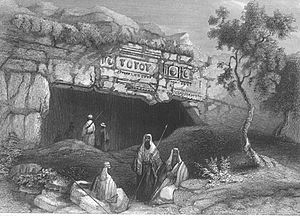
According to Lancaster’s sources, Izates and his mother Helena built palaces for themselves in Jerusalem as well as preparing tombs for themselves so after their eventual demise, they could be interned in the holy city. In fact, some part of this has been substantiated, as the “Tomb of the Kings” in East Jerusalem, north of the Old City walls, has been identified as the tomb of Queen Helena and her sons.

In reading this Torah Club commentary…

Helena submitted herself completely to the authority of the sages. Izates and Helena contributed vast sums toward the Temple…(Queen Helena) also had a golden tablet made and inscribed with the words of the vow of the bitter water for the woman suspected of adultery.

-Lancaster, pg 252

All of this is interesting to be sure, but what does it have to do with us? Even if we choose to buy the speculation that Izates and Helena were followers of the Way and converted to that particular sect of Judaism, since that time, Christianity and Judaism have diverged into radically different trajectories so that one has little to do with the other.

Tomb_of_the_KingsIn the Hebrew/Jewish Roots movement and its variants, there is a particular interest in just how non-Jews were integrated into that sect of Judaism that eventually became known as “Christianity.” I mentioned in Part 1 and Part 2 of my previous commentary on the Torah Club that the “conversion” of Cornelius and his household omitted any actual conversion to Judaism. Like Izates, Cornelius was taught Judaism but not circumcised. There’s no evidence that Peter deliberately discouraged Cornelius from a full conversion, but we don’t know what sort of decision making process occurred among the apostles between Peter’s encounter with Cornelius and Ananias’ encounter with Izates (and we have no real reason to assume that Ananias was also an apostle of the Way).

What we do know is that Izates did keep significant portions of Torah, adhering to Jewish customs and practices which we assume could have included keeping kosher, observing Shabbat, and performing the daily prayers. We certainly have evidence that Izates and Helena, before and after formal conversion, were generous to the Jews and donated to the Temple. This includes Helena purchasing vast quantities of grain and paying for it to be transported on ships to feed the hungry among Israel when she discovered a famine in Jerusalem and Judea (I can’t help but recall Joseph in Egypt in this instance).

Cornelius was also a devout man who observed the set times of prayer, donated funds for the benefit of the Jews, and that these acts were considered by God as a memorial (sacrifice) before him (see Acts 10:1-4). Given that Peter and the other Jews in his party spent several days in the home of Cornelius and likely ate with him and his household, Cornelius probably had kosher food available and maybe even kept a form of kosher himself.

In all this we can construct a model of what it was like (though facts are sparse) to be an early Gentile participant in the sects of Judaism including the Way. We have examples of Gentiles studying Torah and observing some of the mitzvot and either being discouraged when they expressed a desire to convert (Izates) or the option of conversion simply never arising (Cornelius). As we saw above, even Josephus was unlikely to have considered “the Way” as anything separate from the other Jewish sects of the late first century in which some Gentiles were partaking. It is on this basis that many 21st century Gentile believers are adopting some of the modern expressions of the mitzvot, including forms of observing Shabbat, keeping kosher, and davening at the set times of prayer.

Although 2,000 years have passed, there seems to be a hunger among some believers to try to recapture the flavor of the early Gentile disciples of the Way in order to access something they believe is more authentic about their faith. But while observing some of the mitzvot made perfect sense in a religious practice that was completely Jewish in the days of Peter and Paul, does it make any sort of sense now?

I don’t know. Theologically, I don’t think we can really say “no,” since we have precedent in the Bible and other sources, but on the other hand, the Bible and these other sources do not give us a clear picture of Gentiles who had not undergone full conversion observing the mitzvot in the same manner as the born-Jew. In fact, we see in the example of Izates and Eleazar, a definite Jewish objection to an uncircumcised Gentile studying the Torah without actually obeying it by converting to Judaism. This certainly suggests that some sects of Judaism required a Gentile to undergo full conversion prior to observance of the mitzvot, which apparently included even studying the Torah of Moses.

But as I’ve said repeatedly, information is sketchy. We’re not that certain of our facts. Which is a very, very good reason for people who believe they are certain that modern Christians must observe the full Torah mitzvot like a born-Jew or Jewish convert to re-examine their material and their assumptions. I believe Lancaster in this Torah Club commentary took liberties with his information and made certain assumptions to stimulate the imagination of his audience and to get us thinking “outside of the box.” But that’s a long way from saying that his assumptions are facts and that we must treat them as such, altering our faith and our observance accordingly.

pathIt’s interesting and even fun to take what little information we have available to us about the early church and to play a game of “what if.” It’s erroneous and even dangerous to forget that we’re just imagining and to believe the stories we’re building for ourselves. A life of faith is a life of exploration and discovery, but determining the difference between a bit of iron pyrite and a gold nugget is quite a bit harder than we might think.

A final word. If you are a Christian who feels drawn to certain of the mitzvot, if you are inspired by davening with a siddur, by observing the set times of prayer, by lighting the Shabbos candles, by giving tzedakah to the poor among Israel, I can see no reason to object to this. It is what Cornelius would have done. It is what Izates and Helena would have done. But unless you undergo formal conversion through a recognized Jewish authority (which includes circumcision if you are male), it does not make you Jewish nor does it obligate you to keep all of the Torah mitzvot.

While history records that King Izates and his mother fully converted to Judaism and accepted a life of Torah upon themselves, we have no knowledge that Cornelius or any of his household also did so. While Cornelius and his household observed certain of the mitzvot, we have no information that he considered this observance an “obligation” or a “right” but simply a matter of drawing nearer to the God of the Jews, who he came to know as the One God. If we choose to look at our own religious practice as a “drawing nearer” so that we may know God rather than something that is “owed” to us, then perhaps God will hear our prayers and bring us into His Presence in peace.

19 Days: Church in the Short Run

symmes_chapel_churchI have seen so much good come out of the church I am in. Depending on how far you want to stretch the idiom, I have seen “the blind see, the lame walk, the lepers are cured, the deaf hear, the dead are raised to life, and the Good News is being preached to the poor.”

Have people left? Yes. Have people gotten hurt? Yes. Welcome to communal life…

Several families come here now that used to be part of tiny Hebrew Roots congregations. No one has found that they had to compromise their level of observance to go to church here. We don’t even really stand out all that much. Anything we wanted to do – starting chavurot, starting Torah study groups, keeping Sabbath and dietary laws, whatever – we could do and still come here and live under the umbrella of Christianity. Sunday worship? Of course. Come on, Shacharis is every morning. It’s not like you can take a day off.

-Pastor Jacob Fronczak
“Why I Go to Church”
Hope Abbey

I decided that I needed to review Jacob’s blog post, almost a year old now, to help bolster my own commitment (which, if you read yesterday’s extra meditation, you know is flagging). It helped, but only a little. Jacob was already well-integrated into his church and into the church culture in general as he developed a “Hebraic awareness” (for lack of a better term). I still feel like a fish out of water, desperately searching for a pond, a tide pool, or even a wee bucket of the wet stuff to hop into for the sake of survival.

After originally reading Jacob’s blog post, I responded with one of my own called Why I Don’t Go To Church. Obviously, a few things have changed since I wrote it. Of course, when I wrote my blog post last January, one of my primary concerns about returning to the church was “supersessionism.”

I admit to living with a certain amount of apprehension that if I ever started attending a church again, someone, a Pastor or Bible Teacher or just one of the parishioners, would spout off something about the church replacing Jews. Then I’d feel my blood pressure rise along with my temper, and I’d either just walk out, or I tell that person what I thought of their ill-considered “theology” (and then walk out or be thrown out).

Not that it would really be their fault. After all, the church has been teaching supersessionism as Biblical “fact” ever since the days of the early Gentile “church fathers.” That still doesn’t make it right nor does it mean I have to tolerate a way of understanding the New Testament that requires Judaism and every living, breathing Jew (including my wife and three children) to be deleted from religious, spiritual, and historical significance, not to mention permanently removing them from God’s love and, in at least a historical sense, removing the Jews from their very lives.

But none of that has happened. I haven’t encountered a single statement denigrating Judaism or Jewish people. I think some people are a little fuzzy on whether or not there’ll be a third Temple, and one gentleman made some statements regarding the specific clothing worn by Orthodox Jews and praying at the Kotel as “putting God in a box,” but by and large, active anti-Jewish and anti-Israel attitudes never appeared.

Jacob mentioned some of the concerns people have had that have resulted in them leaving the church.

I understand that a lot of Hebrew Roots people have had bad experiences in church. I have had a lot of bad experiences in church. Yet I had most of them before I became a Hebrew Roots person. When you get into a community with other living breathing people you will eventually encounter conflict and you will have to learn to deal with it.

Have people left? Yes. Have people gotten hurt? Yes. Welcome to communal life…

I had some unpleasant experiences in the first church I attended as a Christian, but that was some time ago. There were also a lot of really nice folks who attended that church at that time. However, that church isn’t the church I attend now, so my past experiences really don’t apply. I’ve heard all kinds of stories about the “bad stuff” that’s happened to some people in some churches, but it really depends on the people and the churches involved and after all, as Jacob says, communal life isn’t always a bowl of cherries.

mens-service-jewish-synagogueThat goes for synagogue life, and life in just about any group of religious people or just people in general. Your religious tradition or whatever variant movement you are attached to probably won’t see much of a difference. The fellow I had coffee with last Sunday afternoon and his wife have been “burned” by “the church” before, but they’ve been attending a church in our community for the past four years with apparently good results. The people at their church seem to be everything I’d ever want in and expect out of Christians as far as generosity, kindness, and “tzedakah.” The church community can be very good.

More recently, I’ve been vocal about the good the church does in the environment around us and in the entire world. It’s not so much the church that’s at issue, it’s just being “me” in church and trying to get used to the church venue and context.

I still feel purposeless, useless, and aimless at church. I don’t look forward to simply attending the service and then sitting in Sunday school for an hour before going back home. It’s not that I am concerned about “not getting fed,” which seems to be a complaint I’ve heard from other Christians about other churches over the years, it’s about lack of connectedness. I’ve gone back to church to try to fulfill a Biblical (Hebrews 10:25) or Christian expectation for community, it would be nice to actually have some “community.”

In his defense of the church, Jacob wrote:

God forbid that I should disparage the Internet as a means of communication; the irony would be a bit sickening. But realistically, all the activity out here is nothing – nothing! – compared to what is going on in real churches, with real people talking face to face. Real, honest dialogue with other people who bear God’s image and are trying just as hard as we are to understand and interpret the Bible.

The Internet is an amazing way to communicate information. However it is of extremely limited value in building relationships, real relationships with trust and accountability and blood and tears and the things that make us human. And it is in the context of these relationships that people change, minds change, spiritual growth happens.

Apparently, that is yet to come and the potential for that sort of relationship and dialogue is just about the only thing that’s keeping me where I am for the moment. I keep expecting someone to kick me out because I don’t celebrate Christmas (and fortunately, no one has asked what I’m doing for Christmas yet) or because I’m not doing something besides occupying space (make a suggestion…I’ll probably do it). I also keep wondering what will happen if they don’t.

Maybe, as my friend says, in a year, things will be different, perhaps even dramatically different and in a positive way. I hope so. In the short run, it’s hard to look forward to church each Sunday. It isn’t bad. But it could be a lot better.

20 Days: Nosce te ipsum

jewish-t-shirtA convert who converted while among the gentiles.

-Shabbos 68b

Our Gemara introduces the concept of a convert who became Jewish on his own accord, without being informed of the mitzvah of Shabbos. We must understand, though, in what way can we consider this person to be a Jew, and responsible to bring a sin-offering for his unintentional violation of Shabbos, when he has no knowledge of mitzvos? How is this conversion valid?

Reb Tzadok HaKohen of Lublin points out that we see from here that one’s basic identity as a Jew comes from his being known as “a Jew”. The verse (Yeshayahu 44:5) states: “This one will say I belong to Hashem…and he will refer to himself as Yisroel”. The very connotation of being called a Jew is tantamount to being associated with belonging to Hashem.

Accordingly, Reb Tzadok notes that if one is forced to accept Islam, he must resist to the supreme degree of יהרג ואל יעבור Even though we might not consider Islam as being avoda zara, being that their basic belief is monotheistic, nevertheless the very fact that the Jew is being coerced to abandon his identity as being called a Jew is enough of a reason to resist, even if the consequences are severe (see Radva”z, Vol. 4 #92). Even in earlier generations, when a Jew would compromise his mitzvah observance, he nevertheless maintained his distinctive identity as being Jewish.

The verse (Hoshea 4:17) describes this condition, as we find, “Even as Ephraim is bound up…and he follows idols, let him alone.” From here we learn that because they remained bound up with the nation, and they did not assimilate with the surrounding nations, this saved them despite the fact that they were involved with idols.

Daf Yomi Digest
Distinctive Insight
“What is a Jew?”
Commentary on Shabbos 68b

I’m not writing this to try to answer the question “What is a Jew” but to illustrate how difficult it is to even address such a question from a Christian point of view. As I make my attempt to “assimilate” back into a more traditional Christian context, I discover that I may never understand the answer to questions like the one posed regarding Shabbos 68b. The discussion of Jewish identity involves the concept of a Jew who is Tinok SheNishbeh (Hebrew: תינוק שנשבה, literally, “captured infant”) which, according to Wikipedia, “is a Talmudical term that refers to a Jewish individual who sins inadvertently as a result of having been raised without an appreciation for the thought and practices of Judaism. Its status is widely applied in contemporary Orthodox Judaism to unaffiliated Jews today.

This naturally leads me to thinking about the Chabad and their primary mission to attract “unaffiliated Jews” and make them more familiar with Jewish thought and practices. Whatever else you may think of the Chabad (and like any other community, they have their faults, some of them significant), they are “out there,” extending themselves, reaching out to Jews who might otherwise completely assimilate and disappear into the surrounding Gentile culture and environment.

In today’s morning meditation, I addressed the issue of Christian evangelism and how the church, in spite of the many faults we may find in it, is doing all of the “heavy lifting” in terms of reaching out to the would around it and introducing that world to the teachings and grace of Jesus Christ. One of the comments I received is that “spreading the Good News” isn’t really what Jesus had in mind, but rather making disciples of the nations, which is a more involved, intricate, and in-depth process and relationship.

And I agree.

public-menorah-lightingUnfortunately, Christianity and Judaism tend to collide rather disastrously relative to these two imperatives. I liked Tsvi Sadan’s “solution” to this problem as he presented it in his article “You Have Not Obeyed Me in Proclaiming Liberty” (written for Messiah Journal) by using the concept of keruv to bring the Jewish people closer…

…to God and to one another, first and foremost through familiarity with their own religion and tradition…the Jewish people, as taught by Jesus, cannot comprehend his message apart from Moses (John 5:46)…Keruv is all about reassuring the Jewish people that Jesus came to reinforce the hope for Jews as a people under a unique covenant.”

As I learned recently, it may take me a good deal longer than I originally anticipated to make even the tiniest headway into the church. If I’m to make a go of it, I may have to dedicate myself to the “long haul” of “going to church” at the cost of just about everything else. How am I to begin to “understand church” and yet remain on my current educational trajectory relative to Jewish learning and education (such as it is since I’m pretty much self-taught)?

There’s this idea in some churches as well as within Judaism that requires one to acquire a “mentor.” I’ve previously mentioned how difficult it is just to find someone to talk to in the church beyond the simple “hi” and “bye.” Acquiring a mentor seems like an insurmountable task. And yet acquiring a mentor within a church context means necessarily setting aside any learning one might consider “Jewish.” Can I travel in two (apparently) opposite directions at the same time?

I ask that question with a certain sense of irony. Although my Jewish family is anything but strictly observant, my wife and daughter have been diligent to light the Chanukah candles, say the blessings, and to at least play some Chanukah music on each night. It reminds me of how we used to light the Shabbos candles, pray the prayers and sing songs of joy, welcoming the “Queen” into our home. It’s the most “Jewish” experience I’ve had in our house for a long, long time. Man, did that feel good.

And yet here I am, boarding a ship, and sailing the seas toward a “Christian” destination.

I know that my friend Boaz Michael has told me on more than one occasion that the Torah is taught in the church, and we can learn its lessons if only we are open to it. I guess he should know since he and his wife Tikvah attend a church in a small town in Missouri every Sunday that Boaz isn’t traveling.

And yet he and his family still keep Shabbos, keep kosher, and observe the other mitzvot.

But (as far as I know) they’re not intermarried and I’m not Jewish so I have to go somewhere and do something.

Frankly, as much as synagogue life would be alien to me at this point, I’d still rather go to shul with my wife on Shabbos than to church alone on Sunday if I felt I had a choice. But I won’t embarrass my wife by suggesting that she try to find a way to introduce me to her Jewish friends under those circumstances.

lost-in-an-angry-seaThe rationale of returning to church, at least in part, is defined by Boaz’s soon to be released book, Tent of David: Healing the Vision of the Messianic Gentile. I’ve been speaking of “mission work” for the past few days. According to Boaz and relative to his new book…

Mission is broader than theology and stronger than a personal identity. Mission allows one to stay focused on the goal while facing challenges, needing to be flexible, and always showing love. A deep and shared sense of mission and kingdom identity allows one to be shaped by their spiritual growth, gifts, desires, etc. yet stay focused on the greater goal.

I don’t know that I have a “mission” or even a purpose in going to church, particularly since at this church, the Pastor seems sufficiently aware of the Christian’s need to support the Jewish people. But here I am because I feel like I shouldn’t be alone and that I might actually have something to share belong a daily blog posting.

I feel like a person in a lifeboat somewhere out in the ocean. The waves lift me up and the waves dip me back down. I have higher days and lower days (today being “lower”). Do I want to invest a year just to explore the possibility that I might fit into a church and that I might have something to offer besides a few dollars in the donation plate and adding my body heat to a chair in the sanctuary?

Well, in spite of what I want, is it worthwhile? Is it what God wants? How do I know what God wants? I know what “feels” better to me and what doesn’t, but that’s hardly a litmus test that yields reliable results. 20 days and counting. The clock is ticking.

Bless Someone Today

ancient_journeyAnd there arose on that day a great persecution against the church in Jerusalem, and they were all scattered throughout the regions of Judea and Samaria, except the apostles. Devout men buried Stephen and made great lamentation over him. But Saul was ravaging the church, and entering house after house, he dragged off men and women and committed them to prison.

Now those who were scattered went about preaching the word. Philip went down to the city of Samaria and proclaimed to them the Christ. And the crowds with one accord paid attention to what was being said by Philip when they heard him and saw the signs that he did. For unclean spirits, crying out with a loud voice, came out of many who had them, and many who were paralyzed or lame were healed. So there was much joy in that city.

Acts 8:1-8

As I mentioned in yesterday’s extra meditation, the theme of last Sunday’s sermon and Sunday school teaching, based on the above-quoted scripture, was evangelism; the declaring of the Good News of Jesus Christ to the world around us. This is a significant mission among most churches and is carried out to one degree or another by Christians around the world. Not every Christian stands on a street corner with a Bible in one hand and a bunch of leaflets in another preaching to everyone who passes by, but based on the Master’s initial directive in Matthew 28:18-20, all believers understand that we have a mandate to, in one way or another, announce the Gospel to people in our world.

As I mentioned, this is a significant mission among the church, but there are bodies of believers where this mission isn’t apparently being enacted.

If you’ve been reading my blog for very long, you know I separate Messianic Judaism and Hebrew Roots (One Law, Two House, Sacred Name) as distinctly different religious traditions, although they have some superficial areas of overlap. And yet, these two movements seem to talk to each other quite a lot, if the blogosphere is any evidence, while all but ignoring (with certain exceptions I’ll explain in a moment) the much larger body of believers that exist on the earth today: Christians.

Beyond this, (although there may also be exceptions) there is another large population of human beings both of these movements fail to engage: everybody else.

I’ve mentioned in prior blog posts an article written by Tsvi Sadan for Messiah Journal called “You Have Not Obeyed Me in Proclaiming Liberty.” In his write up, Sadan provides a small history of how Israeli Jews have come to faith in Yeshua (Jesus) as the Messiah through the Evangelical church. That process is changing and more recently, other Messianic Jews are spreading the message of the Messiah to their fellow Jews in the Land, but these Jews continue to operate largely from an “evangelical” mindset. This has resulted in what we see described in a recent news article for the Atlantic as “Messianic Jews…assiduously attempting to, essentially, redeem Israel from its Jewishness.”

The “good news” of Jesus Christ is being preached to the Jews but with the Jewishness of their faith omitted or significantly watered down.

Fortunately, Sadan offers an alternative as I recently mentioned but that doesn’t address the issue of Gentiles. Then again, in today’s age, are Messianic Jews obligated to spread the “good news” to the nations as a duty with which they were charged in ancient days?

I asked that question, perhaps as long as two years ago, and received an answer that, in terms of the dynamics of the different believing communities today, the most reasonable response is “no.” Given Sadan’s article, I can see that it might be a better idea to allow actual Messianic Jews who live a completely halakhic, ethnic, and religious Jewish lifestyle to employ keruv as the method of bringing Jews near to the Moshiach. Does that mean only the church speaks to the Gentile unbelievers?

jewsI mentioned Hebrew Roots before, which is primarily a Christian/Gentile owned and operated movement within larger Christianity (although many Hebrew Roots congregations refuse to claim the church as their own and prefer to bill themselves as “Messianic Judaism,” though most of their groups cannot be defined as “Jewish” by any reasonable halakhic standard). Who do they talk to? Besides the inevitable debates between Hebrew Roots and Messianic Judaism, Hebrew Roots rarely if ever engages in what we would typically think of as “evangelism.”

This was a source of frustration to me when I was involved in the One Law movement, but the whole system of One Law seems to be designed to approach people who are already Christians and who are, in one way or another, disillusioned with their churches. Once accessed, One Law proceeds to convince these Christians that they must take on board the total mitzvot of Torah and redefine themselves as “Messianic.” If anything, One Law, Two House, Sacred Name, and so on, are dedicated to “evangelizing” Christians to “convert” to their particular variation of “Christianity,” rather than performing the task Jesus commissioned his Jewish disciples with in Matthew 28:18-20 and doing what the Jewish disciples were doing in Acts 8:4-8.

It’s not like this hasn’t occurred to me before and it’s not like this topic hasn’t been discussed in the blogosphere before, so why am I bringing it up now?

In my Sunday school class, we talked about the general reluctance of Christians to fulfill the evangelical mission in their (our) personal lives. Sure, not all of us are going to go into the “foreign mission field” and preach the Gospel in places like the Congo, but we all live in the world, and the world is filled with people who, while they’ve heard of Jesus Christ, do not honor God and have no real awareness of His Presence. A traditional Christian might say, the world is full of “unsaved” people, but to me, salvation is just the beginning of the journey, not the whole point of existence.

If I can accept that Messianic Jews have a specific mission to address Jewish people and not the general population, and if I can accept that the church has a specific mission to address the general population, what mission does Hebrew Roots have? Do they just “feed” their own internal desires and consume their own theology and doctrine, or should they be reaching out as well? I don’t mean necessarily reaching out to take traditional Christians and recreate them in their own image, but to actually try to communicate the core message of the Gospel (Torah or non-Torah observance aside), and to “make souls for the Kingdom,” so to speak (if you can excuse the “churchy” language here).

As much as many Hebrew Roots groups denigrate and disdain the church, they seem to have left it to the church to do the “heavy lifting” of spreading the Gospel message. After all, how many One Law or Two House groups send missionaries into the Congo, to Tonga, to the Philippines, or anywhere else? How many Hebrew Roots congregations and organizations sent relief teams to Haiti after their devastating earthquake?

OK, I understand that Hebrew Roots groups are rather small and resources are limited. For that matter, the same can be said for Messianic Jewish groups. The traditional church as a whole is much larger, more organized, and better designed to render the sorts of assistance I’m talking about. I’m sure you must also be aware that Israel traditionally renders aid to other nations when disasters occur and Jewish groups provide tzedakah as a matter of course.

making_ripplesBut rather than pick on any one religious group (as I have been up until now), I’d like to suggest that whoever you are reading this and whatever sort of context you worship in, what are you actually doing for people, both in the area of giving aid and charity, and in sharing your faith with those who have no faith and hope in the world? The church sends the members of its body to visit the sick, provide clothing, medical supplies, and food to the needy and the suffering, and to spread the good news of Jesus Christ to the four corners of the earth. Are your groups and your people doing that too? If not, why not?

Rabbi Noson Tzvi Finkel of Slobodka would sometimes sit near the window of his house and quietly bestow blessings and prayers on all those who passed by.

Once when Rabbi Finkel was walking down the street, he turned toward a house and said, “Good morning.” Rabbi Finkel explained: “Most people only wish someone a good morning when they see them face to face. But even when we do not see them, we should still develop good will toward them.”

-Rabbi Zelig Pliskin
“Daily Lift #663, Bless Others”
Aish.com

I’ve mentioned many times before that I believe we Christians have a specific responsibility to bless the Jewish people. However, I also believe that all of us are duty and honor bound to bless the world.

Bless others. Bless someone today.