Category Archives: Uncategorized

Attack Dogs

Jennifer Bristol recently lost one of her oldest friends—thanks to a Facebook fight about pit bulls.

The trouble started when she posted a newspaper article asserting that pit bulls were the most dangerous type of dog in New York City last year. “Please share thoughts… 833 incidents with pitties,” wrote Ms. Bristol, a 40-year-old publicist and animal-welfare advocate in Manhattan.

Her friends, many of whom also work in the animal-welfare world, quickly weighed in. One noted that “pit bull” isn’t a single official breed; another said “irresponsible ownership” is often involved when dogs turn violent. Black Labs may actually bite more, someone else offered.

Then a childhood pal of Ms. Bristol piped up with this: “Take it from an ER doctor… In 15 years of doing this I have yet to see a golden retriever bite that had to go to the operating room or killed its target.”

That unleashed a torrent…

“It was ridiculous,” says Ms. Bristol, who stayed out of the fight. Her old buddy, the ER doctor, unfriended her the next morning. That was eight months ago. She hasn’t heard from him since.

-Elizabeth Bernstein
“Why We Are So Rude Online (October 1, 2012)
The Wall Street Journal

People can have diverse opinions. They can have different personalities. They can have different goals and objectives. Even so, they can choose to interact in peaceful ways, and discuss their differences with mutual respect. At times they will work out solutions to their mutual satisfaction, and at times they will not. Nevertheless, they can be calm, and think clearly about the wisest course to take.

-Rabbi Zelig Pliskin
“Disagree Respectfully”
Today’s Daily Lift, #586
Aish.com

I recently posted a meditation about this very topic, and having to take the extreme action of banning someone from commenting on my blog. While I suppose I could assign the “blame” for the whole difficult experience to the person in question, in fact, the subject of Elizabeth Bernstein’s news article deserves some “credit.”

Why are people so rude online? People will say all kinds of things to other people online that they’d never dream of saying (most of the time) in person. Part of me is amazed that this tendency spills over into the religious blogosphere, but then, I find religious people possess just as wide a variety of character traits (and flaws) as the general population, rudeness included.

One of the reasons for online rudeness cited in Bernstein’s story is anonymity. When you can hide behind a fake screen name and avatar, there’s no sense of personal accountability because your statements aren’t easily traced back to your actual identity (nevermind that we’re not as anonymous as we think online, particularly on Facebook, or to someone with sufficient technical skills). There’s even a suggestion that the effect of being online reduces our inhibitions in the same way as alcohol.

Most of us present an enhanced image of ourselves on Facebook. This positive image—and the encouragement we get, in the form of “likes”—boosts our self-esteem. And when we have an inflated sense of self, we tend to exhibit poor self-control.

“Think of it as a licensing effect: You feel good about yourself so you feel a sense of entitlement,” says Keith Wilcox, assistant professor of marketing at Columbia Business School and co-author of the study. “And you want to protect that enhanced view, which might be why people are lashing out so strongly at others who don’t share their opinions.” These types of behavior—poor self control, inflated sense of self—”are often displayed by people impaired by alcohol,” he adds.

A sense of entitlement, boosting poor self-esteem, reducing self-control, I don’t think this just happens to people who use Facebook.

The Bernstein article also states that, according to Sherry Turkle, psychologist and Massachusetts Institute of Technology professor of the social studies of science and technology, our inhibitions are lowered because we can’t see the reactions of the people we’re addressing with our comments. Because we can’t “see and focus on what we have in common, we tend to dehumanize each other,” Dr. Turkle states.

I’ve heard there are two topics that can guarantee you will immediately become involved in an enraged conversation, both online and in-person: politics and religion. Here’s an example of both happening at the same time:

Over the past few months, Mr. Bolcik lost two real-life friends because of online political spats. The first friend got mad at him after he posted a status update asking people to debate whether Mormons are Christians. (“You are so off base you don’t know what you are talking about,” she wrote on his page, followed later by: “You’re an idiot.”) Mr. Bolcik blocked her from his page. “I will allow free discussion until you irritate me,” he says. Sometimes, he erases entire conversation threads.

Cause, effect, and consequence all rolled up into a single paragraph. Post something controversial on your blog, or on Facebook, twitter, or some other social networking platform. Someone will invariably react rudely or even in a (verbally) violent matter. Then, as Mr. Bolcik stated, “I will allow free discussion until you irritate me.” And I’ve also seen people eliminate entire conversations on Facebook before.

Sometimes a “battle” will start between two people and then others will be dragged into it, sort of like calling up reinforcements:

…he says—he privately messages one of his “attack dog” friends and suggests he or she join the discussion. “I will say, ‘Gee, this discussion doesn’t seem right to me, what do you think?’ ” he says. “Then they will go on there and berate the person who is upsetting me, and I will look like the good guy.”

Taken to an extreme, this could be sort of like a miniaturized version of a flash mob, at least if you have a popular blog and a lot of online friends with similar points of view and an equal capacity for responding aggressively.

Most of us don’t have really popular blogs (I mean thousands or even tens of thousands of regular readers) or very large numbers of online associates who are willing to fly into a rage at a moment’s notice, but we can marshal what resources we have to be, if not a menace, then at least a nudnik.

What can be done about this unfortunate tendency to lose our sense of compassion and courtesy once we sit down in front of a keyboard (or when we are on our mobile) and start browsing various social networking venues? It’s no secret and I suppose the answer is what we euphemistically refer to as “common sense.”

Stop being rude. Exercise self-control. Speak with humility. Most importantly, if you are a religious person, behave consistently with your stated values.

Learn to disagree without creating an unpleasant argument.

A mature disagreement is when two people both listen carefully to the other’s position in order to understand the position and why the person feels that way.

The Torah obligates us to treat each person with respect – even if you disagree.

I’m not sure Rabbi Pliskin is basing his commentary on Internet conversations, but I certainly hope so. It would mean that there’s hope for those of us in the religious online space, and that we are not condemned by our human nature or the dynamics of web communications to behave like a group of jackasses.

Religious people present themselves, their faith, and their God online and, especially Christians, say stuff like, “Jesus is the answer.” Then when someone disagrees, the religious person proceeds to call their opponent every name in the book except a “child of God.”

“There was a time when I used to say: that man’s a Turk, or a Bulgar, or a Greek. I’ve done things for my country that would make your hair stand on end, boss. I’ve cut people’s throats, burned villages, robbed and raped women, wiped out entire families. Why? Because they were Bulgars, or Turks. ‘Bah! To hell with you, you swine!’ I say to myself sometimes. ‘To hell with you right away, you ass.’ Nowadays I say this man is a good fellow, that one’s a bastard. They can be Greeks or Bulgars or Turks, it doesn’t matter. Is he good? Or his he bad? That’s the only thing I ask nowadays. As I grow older – I’d swear this on the last crust I eat – I feel I shan’t even go on asking that! Whether a man’s good or bad, I’m sorry for him, for all of ’em. The sight of a man just rends my insides, even if I act as though I don’t care a damn! There he is, poor devil, I think; he also eats and drinks and makes love and is frightened, whoever he is: he has his God and his devil just the same, and he’ll peg out and lie as stiff as a board beneath the ground and be food for worms, just the same. Poor devil! We’re all brothers! All worm meat.”

-Nikos Kazantzakis from his novel
“Zorba the Greek”

We can do this better. We need to do this better. Angry religious people are not just discrediting themselves, they are dragging God’s Name and reputation through the mud along with them. We can either sanctify the Name of the Holy One or desecrate it. It’s your choice. It’s my choice. What will you do next time you read something on Facebook, twitter, or on someone’s blog (or a comment on your own blog) and then feel the anger rise within you like an enraged, blazing Phoenix boiling and then vaporizing the calm, cool waters of your spirit?



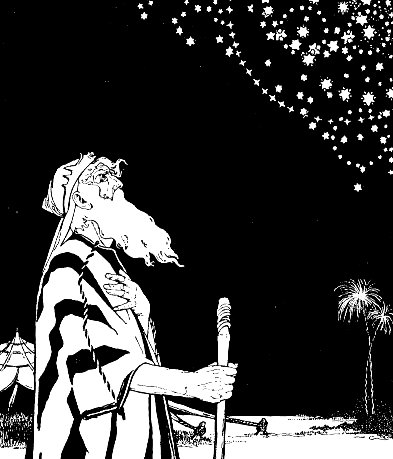
Sharing with Abraham

The Land of Israel is central to Judaism. It is an intrinsic part of the covenant that God promised to Abraham and his descendants (Genesis 12), and most events recorded in the Bible took place in Israel.

The mitzvah to live in Israel is based on the verse, “You shall possess the Land and dwell in it” (Numbers 33:53). The Talmud states that “every 4 amot (about 7 feet) that a person walks in Israel is another mitzvah.”

The question, however, is whether this mitzvah is compulsory in our times when the Holy Temple is not standing. This is the basis of a dispute between two great Talmudic commentators, Maimonides and Nachmanides. A leading 20th century sage, Rabbi Moshe Feinstein, concludes that living in Israel is a “mitzvah kiyuma” – while it is a great mitzvah, there is no absolute obligation to do so.

from Ask the Rabbi
“Mitzvah to Live in Israel”
Aish.com

I used to want to live in Israel. I gathered together various reading materials related to making aliyah. I often imagined what it would be like to permanently move to the Holy Land. It was a rather romantic notion and it wasn’t beyond the realm of possibility. I’m not Jewish, but my wife is. If she made aliyah, it’s not like the state of Israel would deny her just because she was married to a goy. I’d “go along for the ride,” so to speak.

As the years passed, my passion cooled and reality settled in for the long haul. I realized that my wife had no desire to actually live in Israel (though she and my daughter have visited). According to the Ask the Rabbi quote from above, there’s not an absolute obligation for a Jew to live in the Land, so I guess Jews can still choose to live where ever it pleases them.

But reading the article about the mitzvah of living in Israel reminded me of what I wrote yesterday about Abraham, Jews, and Christians. (I decided not to make this blog post part of The Jesus Covenant series since it’s more of a “side note” on the covenant than a direct investigation, however the relationship between this and the “covenant” series is obvious) The giving of the Land of Israel to the Jewish people in perpetuity is part and parcel of the Abrahamic covenant (see Genesis 12). As I outlined in my previous blog post, while one of the conditions of said-covenant provides a blessing to the nations through Abraham’s seed; through the Messiah, that is the only condition of the covenant that applies to Christianity.

In other words, the Land is promised to Israel through the Abrahamic covenant, but that doesn’t translate into Israel also “belonging” to Christians. My wife, as a Jew, has the perfect right to request and receive legal citizenship in Israel while I, a non-Jew, do not, even if I really, really want to live there.

This is sort of a metaphor for a larger set of obligations and permissions vs. human desires that I experience in my little corner of the blogosphere. As much as I may have wanted to live in the Land of Israel at one point in time, that would only have been accomplished in my case, if I accompanied my Jewish wife when she made aliyah. If she never makes aliyah, then I’m staying in the good ol’ U.S. of A. with her. She has the right to make aliyah to Israel. I can only live in Israel because of her being Jewish.

That covers so many other things. We Christians may see the many advantages the Jews have (see Romans 3:1-2) and we tend to want them for ourselves. That’s probably the desire that is at the heart of supersessionism in Christianity. We’ve been taught that every promise God made to the Jewish people has been taken from them and transferred to us, so when we see the beauty of the various aspects of Judaism, the lighting of the shabbos candles, praying the Shema, reading from the Torah scroll in the synagogue (another form of aliyah), we, or at least some of us, want them, too.

Nevermind that a “want” is not a “deserve,” we still want, much like a child in pre-school sees a playmate who has a cool toy, we want it for ourselves. It doesn’t matter if that toy belongs to our playmate. At that age, kids don’t have a terrific understanding of empathy, boundaries, and distinctions. They are very egocentric. If they want something, they take it. It doesn’t matter that the toy belongs to someone else. That’s why pre-school age children need adults to remind them that they can’t have everything they want, even when they see other kids playing with a really cool toy.

When you’re a small child, you think and feel like a small child and there are many things that you don’t understand. We adults are tolerant of this in our children and grandchildren because we know this behavior is a normal stage of development. We gently provide correction and eventually, the child grows and learns. The problem is when people grow up and they don’t learn, and they still keep thinking like children.

When I was a child, I spoke like a child, I thought like a child, I reasoned like a child. When I became a man, I gave up childish ways.

1 Corinthians 13:11 (ESV)

If we don’t develop properly and we cling to childish ideas, we grow up continually mistaking wants for needs and privileges for rights. In the western nations, we are taught to stand up for our rights, and then we believe that everything is a right. Our Constitution guarantees the right to pursue happiness but that’s no promise that we’ll actually attain it. There are a million things in the world we can have and a million things we can’t. It’s no fun facing that fact, but that is the reality of our existence. Some Christians may want all of the advantages of being a Jew, but it is not our right to take them. Taking something that doesn’t belong to you is called stealing.

The Land of Promise was given to the direct, physical descendents of Abraham, Isaac, and Jacob. Jacob was the father of the twelve tribes of Israel and those tribes eventually became the Jewish people. The promises were handed down like a baton in a relay race, from older to younger, down, down across the long generations and to this present day. But each of those runners is a Jew, not a Christian.

That does not mean, in an ultimate sense, that if a Christian finds beauty in Judaism, they are barred from any of the Jewish practices. Many Christians visit their local synagogues and respectfully worship with the Jewish congregation. Many classes are available at those synagogues and anyone, Jew or Gentile, is allowed to attend. No one will object if you choose to light the Shabbos candles on Friday night, or construct a small sukkah in your backyard at this time of year.

It’s like the two metaphorical pre-school children I was talking about before. We can’t just reach out and take what belongs to the other child and pretend that it is ours by right. But we can say something like, “Cool toy. Can I play with it for a little bit?” There is much beauty and joy in the mitzvot of the Jews that can also belong to us. We can feed the hungry, give a thirsty person a drink of water, visit the sick and the prisoner, give to worthy charitable causes, stand out of respect when an elderly person enters the room, and many other things. For those things that belong only to the Jews, some would be ridiculous for a Christian to perform, such as referring to ourselves as “Israel” while davening with a siddur. But there are many others that, even if they don’t belong to us, we can politely ask to share.

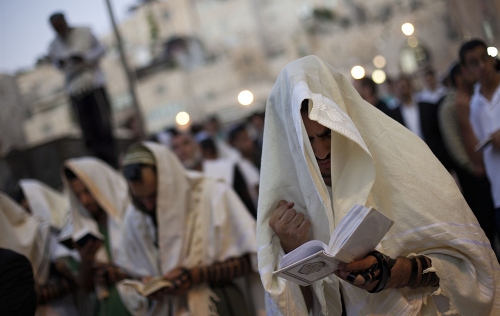
I will never live in Israel as a citizen, but someday before I die, I hope to visit and perhaps share in the experience of praying at the Kotel.

The Jesus Covenant, Part 8: Abraham, Jews, and Christians

Now the Lord said to Abram, “Go from your country and your kindred and your father’s house to the land that I will show you. And I will make of you a great nation, and I will bless you and make your name great, so that you will be a blessing. I will bless those who bless you, and him who dishonors you I will curse, and in you all the families of the earth shall be blessed.”

Genesis 12:1-3 (ESV)

To give a human example, brothers: even with a man-made covenant, no one annuls it or adds to it once it has been ratified. Now the promises were made to Abraham and to his offspring. It does not say, “And to offsprings,” referring to many, but referring to one, “And to your offspring,” who is Christ.

Galatians 3:15-16 (ESV)

For the past several installments of this series including Part 7, I’ve been focusing on aspects of the New Covenant, mainly because the little bits and pieces that relate to Christianity can only be tracked down in different parts of the New Testament. However, recent conversations have shown me that I should probably return to the foundation of my understanding for a bit to illustrate its solidity, or at least describe the trail of reasoning that I’m pursuing.

As you have probably guessed, it all goes back to Abraham and the covenant God announced to him in Genesis 12. But what exactly did God promise Abraham and what does it have to do with us, that is, with Christians?

Here’s my understanding:

  1. Genesis 12:1-3 – God promises to make Abraham into great nation, bless those who bless him and curse those who curse him, and all peoples on earth would be blessed through Abraham.
  2. Genesis 15:18–21 – God promises to give Abraham’s descendants all the land from the river of Egypt to the Euphrates, and this area is later referred to as the Promised Land or the Land of Israel.
  3. Genesis 17:2–9 – God promises to make Abraham a father of many nations and of many descendants and the land of Canaan as well as other parts of Middle East will go to his descendants.
  4. Genesis 17:9-14 – God declares that circumcision is to be the sign of the covenant for Abraham and all his male descendants and that this will be an eternal covenant.

This covenant is then reaffirmed to Isaac in Genesis 21:12, and again reaffirmed to Jacob in Genesis 26:3-4. (the New Covenant as recorded in Jeremiah 31 and Ezekiel 36 affirms and expands upon this and the Mosaic covenant) God confirmed that the promise of the covenant is specifically for the descendants of Abraham, Issac, and Jacob, the Children of Israel, in many places in the Torah, not the least of which is in Deuteronomy 34:4 (ESV):

And the LORD said to him, “This is the land of which I swore to Abraham, to Isaac, and to Jacob, ‘I will give it to your offspring.’ I have let you see it with your eyes, but you shall not go over there.”

As far as the land of Israel goes, there is no provision in the covenant to give it to anyone or any other people group besides the Children of Israel and their descendants forever, the Jewish people.

That takes care of the Land. But what about us?

We learn from Galatians 3:15-16 which I quoted above, that through Abraham’s seed, through his offspring (singular) we among the nations would be blessed. Paul declares that the offspring in question is specifically the Jewish Messiah, Jesus Christ. Our blessings that issue from the Abrahamic covenant are directly transferred to us through the Messiah.

So far, of the four items in the above-referenced list, only one of them seems to apply to Christians, the blessings of the Messiah.

What else do we know about the Messianic blessings in the Abrahamic covenant?

Is this blessing then only for the circumcised, or also for the uncircumcised? For we say that faith was counted to Abraham as righteousness. How then was it counted to him? Was it before or after he had been circumcised? It was not after, but before he was circumcised. He received the sign of circumcision as a seal of the righteousness that he had by faith while he was still uncircumcised. The purpose was to make him the father of all who believe without being circumcised, so that righteousness would be counted to them as well, and to make him the father of the circumcised who are not merely circumcised but who also walk in the footsteps of the faith that our father Abraham had before he was circumcised. –Romans 4:9-12 (ESV)

We see that it was Abraham’s faith that was counted to him as righteousness, and this was before the sign of the covenant was placed upon Abraham. We too, the “uncircumcised” of the nations, are called “righteous” because of our faith. Thus Abraham Avinu is our father, according to Paul, not just the father of the Hebrews. No, that doesn’t mean we are Hebrew (Jewish) too, nor does it mean we inherit the total body of covenant blessings and responsibilities that are incumbent upon the Jews, but it does make us connected to Abraham as the father of our faith, and through his covenant and the Messiah, with God.

This is kind of a delicate trail to negotiate, and we have to be careful that we don’t slip off the path and fall into erroneous thinking. The promise of the Land, and I believe the other specific promises, including the covenantal sign of circumcision, are for the physical descendants of Abraham and of Isaac, and of Jacob. That’s not the rest of us. That’s just the Jewish people.

In other words, all of the conditions of the Abrahamic covenant, including the blessings of the Messiah, flow to the children of Abraham, Isaac, and Jacob. The single blessing that we can be attached to through the Messiah is attached to Abraham alone, as he was before his circumcision, as he was before Isaac; a man of faith and righteousness before God.

That’s the split, the demarcation line between Christian and Jew, the slender thread of “covenanthood” by which we Gentile Christians are connected to Abraham, the Abrahamic covenant, and thus, to God.

So what do we get out of it? Well, first of all, a cautionary tale:

But if some of the branches were broken off, and you, although a wild olive shoot, were grafted in among the others and now share in the nourishing root of the olive tree, do not be arrogant toward the branches. If you are, remember it is not you who support the root, but the root that supports you. Then you will say, “Branches were broken off so that I might be grafted in.” That is true. They were broken off because of their unbelief, but you stand fast through faith. So do not become proud, but fear. For if God did not spare the natural branches, neither will he spare you. Note then the kindness and the severity of God: severity toward those who have fallen, but God’s kindness to you, provided you continue in his kindness. Otherwise you too will be cut off. And even they, if they do not continue in their unbelief, will be grafted in, for God has the power to graft them in again. For if you were cut from what is by nature a wild olive tree, and grafted, contrary to nature, into a cultivated olive tree, how much more will these, the natural branches, be grafted back into their own olive tree.

Romans 11:17-24 (ESV)

Paul seems to be toggling back and forth between addressing the Jewish believers and the Gentile believers. “You wild olive branches, you Gentiles,” Paul is saying. “Don’t get cocky just because you were grafted in. Remember, it’s the root that nourishes you, not the other way around. You think you are so hot just because a few Jews were knocked off the root to make room for you Gentiles? So what,” he might be saying. “If you fall away from the kindness of the Messiah, you can be knocked off and the Jews can be put back twice as fast!”

So to the Jews, don’t be arrogant to the Gentiles because they’re “newbies.” To the Gentiles, don’t be arrogant because some Jews were removed from the root to which you are now attached. Nothing is necessarily permanent. Anyone can be “ungrafted.”

That’s a terrific lesson for many non-Jewish believers to learn because, through one process or another, we have come to feel superior to the Jewish people who God, in the end, will reattach to the root, all of them. Remember, any of you out there who are not physical descendants of Abraham, Isaac, and Jacob, (apart from legitimate converts to Judaism) don’t get cocky. God not only didn’t get rid of the Jews, it is through them that your salvation and covenant connection to God is established and nourished in the first place.

And for those of you who feel that being “grafted in” has whitewashed any physical and covenant distinctions between you and the “natural branches,” think again:

Then what advantage has the Jew? Or what is the value of circumcision? Much in every way. To begin with, the Jews were entrusted with the oracles of God. What if some were unfaithful? Does their faithlessness nullify the faithfulness of God? By no means! Let God be true though every one were a liar, as it is written,

“That you may be justified in your words, and prevail when you are judged.”

But if our unrighteousness serves to show the righteousness of God, what shall we say? That God is unrighteous to inflict wrath on us? (I speak in a human way.) By no means! For then how could God judge the world? But if through my lie God’s truth abounds to his glory, why am I still being condemned as a sinner? And why not do evil that good may come?—as some people slanderously charge us with saying. Their condemnation is just.

Romans 3:1-8 (ESV)

Being Jewish is not beside the point just because we Gentiles have been grafted in. There remains much advantage to being Jewish. Even those Jews today who do not acknowledge Christ as Messiah are not permanently condemned as many Christians seem to believe. They are not discarded and cast aside.

Israel will be saved:

Lest you be wise in your own sight, I do not want you to be unaware of this mystery, brothers:a partial hardening has come upon Israel, until the fullness of the Gentiles has come in. And in this way all Israel will be saved, as it is written,

“The Deliverer will come from Zion, he will banish ungodliness from Jacob”; “and this will be my covenant with them when I take away their sins.”

As regards the gospel, they are enemies for your sake. But as regards election, they are beloved for the sake of their forefathers. For the gifts and the calling of God are irrevocable.

Romans 11:25-29 (ESV)

I’ve probably wandered from the strictly Abrahamic path, but with good purpose. The purpose is to illustrate that just because Jews and Christians share the Messianic blessings that are part of the wider Abrahamic covenant through faith, that does not mean we share all of the blessings attached to that covenant. Paul was extremely clear that there is a distinction between Jewish (native) and Gentile (wild) olive branches. They all didn’t “morph” into a single type of branch with no way to tell them apart.

Also, Paul was extremely clear that there were many advantages to being a Jew. Further, he said that even if some of the Jews were temporarily removed from the root for the sake of we Gentile Christians, in the end, God’s promises to the Jewish people are irrevocable; they cannot be revoked!

The really interesting thing about all of this is that a Christian must choose to become part of the covenant with God through Jesus and Christians can also “unchoose” Christianity for another religion or no religion at all. Not so with the Jewish people. If you are born a Jew, you are automatically born into the covenant (actually covenants, but I’m only talking about Abraham for the moment). God has temporarily turned His face away from His people Israel in the past, and He has temporarily exiled them in the past, but as “temporarily” implies, He always takes them back and He always will take them back.

In spite of the fact that this missive is longer than I intended, I didn’t get to say everything I could have said about Christianity and the Abrahamic covenant. Hopefully, I’ve said enough for now.

Freedom

Seven days shall you dwell in boothsLeviticus 23:42

… and you shall only be rejoicingDeuteronomy 16:15

Succos is the festival designated as the season of our gladness. Yet the commentaries state that one of the symbolisms of the succah, a temporary hut, is that we dwell in it for seven days to symbolize man’s temporary sojourn on earth for his average life span of seven decades (Psalms 90:10).

Human mortality is a rather sobering thought; it is hardly conducive to rejoicing. Most often we do not think about our mortality, and when circumstances force us to face it, we quickly dismiss it from our minds and go on acting as though we will live forever.

How different Torah values are from secular values! The Torah teaches us that there is an eternal life, a wholly spiritual life, whose bliss is far greater than the human mind can imagine. We are placed on this planet for our ephemeral earthly existence only to give us an opportunity to prepare for the eternal life.

The Torah teaches us to enjoy life, and if it restricts some pleasures, it is because we should enjoy life in a manner that befits a human being. Furthermore, our joy of living should not be diminished by the awareness of our mortality, nor need we deny it. The succah – the symbol of our temporary stay on earth – is beautifully decorated, and we enjoy our festive meals therein. Even our temporary existence can be beautiful and happy, and our faith in the eternal life should enhance that happiness.

Today I shall…

try to enjoy life as befits a spiritual person, knowing that the true life of man is not the fleeting one, but that of eternity.

-Rabbi Abraham J. Twerski
“Growing Each Day, Tishrei 15”
Aish.com

Throughout life people will make you mad, disrespect you and treat you bad. Let God deal with the things they do, cause hate in your heart will consume you too.

-Will Smith, American actor

I probably take myself too seriously. Sometimes my wife tells me that. I know it’s certainly true of me in my “online persona.” I guess that comes from being a professional writer. Writing is what I do, so it’s important to me. It’s pretty much my first, best expression of who I am. Not that I’m perfect at it of course. But I don’t paint, and I don’t play music, and I’m not that good a public speaker, and I don’t dance worth anything, so I’ve got to have one way of expressing myself that’s better than all the others.

For me, that is writing. I’ve said before that writing this blog has a therapeutic aspect to it. It helps for me to pound out my thoughts and feelings, to “wear my heart on my sleeve,” so to speak. I can better describe how I feel and think about God, Jesus, Christianity, Judaism, and lots of other things when I write. Not that everyone will agree with me, but then, not everybody has to agree with me.

In this season of joy, during Sukkot, I need to be reminded about the difference between what’s real and important and what’s more or less beside the point. A lot of what happens online is beside the point. No, it’s not that I don’t take my writing seriously, and it’s not that I don’t take the people who I interact with online seriously, but beyond a certain point, I have to let things go.

Some people steal joy, as if joy were something you have and they don’t. As if joy were something they’ll never have and they can’t stand that you have some. They steal it, even if they can’t use it themselves, just so you can’t use it, either.

No one can do that to you unless you let them. In real life, it’s harder to combat, especially if the person stealing your joy is important to you, especially if it’s someone you love. While I get hurt by people I love sometimes, no one I love steals my joy. I’d probably let them if they wanted to, because I love them, but they don’t do it because they love me and they know that stealing joy is wrong.

Online, there are no end of people who steal joy. They may not think of it in those terms, but that’s the net result of their interaction with others. It’s easier to try to steal someone else’s joy online because you can’t see them and they can’t see you. You are depersonalized. They can’t see that they’re hurting you, and so, if they have no empathy, compassion, or grace, they don’t have to care if they’re hurting you. They can verbally harangue you, insult you, make fun of you, and feel well justified in doing so, because you aren’t even human to them. You’re just an anonymous “thing” that they can attack and defeat. I guess that’s what it takes to make themselves feel better.

You’d think that it would be easy to let go of someone like that online. All you have to do is pull the plug on whatever communication conduit they use to connect to you. Stop visiting their blog. Ignore or delete their comments on your blog or even block their IP address. But it’s not that easy. It’s like slamming the door in someone’s face. Even when they’re hostile, and even when they’re abusive, if you’re a decent human being, it still feels rude to (metaphorically) slam the door in their face.

Most hostile and abusive people are usually victims of some kind. Most bullies and trolls online have a history of being bullied themselves. I guess that’s why I put up with some folks as long as I do. I realize that even when they’re in your face, making demands of you, telling you what to do, that it’s really their defense against how hurt they are inside. They’ve never dealt with their pain and never resolved their conflicts. The only way they know how to live inside their own skin is to project all of their “stuff” onto others.

So I was dumb, and I was foolish. I (mentally) cut someone loose but let them back in because I thought maybe there was hope that, though we’d always disagree, we could disagree with a sense of mutual respect. I was taking a risk, but you have to do that sometimes. Sometimes it’s worth it. This time it wasn’t.

You can’t really hate a victim because in many ways, they just can’t help themselves. In order to feel powerful, they have to be hostile. These sorts of people, especially guys, mistake anger and aggressiveness for power, not realizing that true power isn’t hostile or aggressive at all. True power is love, compassion, forgiveness, mercy, graciousness, and tenderness. Some people think the only power is intelligence, education, superiority, winning the argument, devastating twists of irrefutable logic, how well they halalachally perform a mitzvot. That’s the stuff they push in your face to show you that they’re not a victim, that they’re “winning,” that they’re better than you. Then they can feel better about themselves.

But they’ve missed the point. Paul was extremely clear about which gifts are more important. In fact, there’s one gift, one attribute that we can all possess and exercise if we choose to, that trumps all the rest.

If I speak in the tongues of men and of angels, but have not love, I am a noisy gong or a clanging cymbal. And if I have prophetic powers, and understand all mysteries and all knowledge, and if I have all faith, so as to remove mountains, but have not love, I am nothing. If I give away all I have, and if I deliver up my body to be burned, but have not love, I gain nothing.

Love is patient and kind; love does not envy or boast; it is not arrogant or rude. It does not insist on its own way; it is not irritable or resentful; it does not rejoice at wrongdoing, but rejoices with the truth. Love bears all things, believes all things, hopes all things, endures all things.

Love never ends. As for prophecies, they will pass away; as for tongues, they will cease; as for knowledge, it will pass away. For we know in part and we prophesy in part, but when the perfect comes, the partial will pass away. When I was a child, I spoke like a child, I thought like a child, I reasoned like a child. When I became a man, I gave up childish ways. For now we see in a mirror dimly, but then face to face. Now I know in part; then I shall know fully, even as I have been fully known.

So now faith, hope, and love abide, these three; but the greatest of these is love.

1 Corinthians 13:1-13 (ESV)

Really. Read that again. What is Paul saying? He’s not saying that “winning” in some Charlie Sheen fashion is the whole point. He’s saying that, even if you’re fabulous in speaking tongues, are an amazing prophet, even if you have faith that literally can move mountains, but you don’t have love, you have nothing.

GardeningLove is like a small, fragile, budding plant you nurture inside of you. If you don’t take care of it, the love will wither, and you will wither along with it. Love takes a lot of special attention but if you don’t care for the love inside of you, you’ll never be able to show it to others, especially those who really need to be loved. It almost seems paradoxical to say that in order to preserve your love, there are some people you have to let go. But those are the people who suck joy directly from your soul, murdering your love, blackening your heart, and damaging, not only you, but everyone around you who needs and depends on you.

Author C. JoyBell C. said, “You will find that it is necessary to let things go; simply for the reason that they are heavy. So let them go, let go of them. I tie no weights to my ankles.” Sometimes toxic people are the weights that hold us down. And even if it feels like giving up on another human being, it’s better to let go of the weight so that you can rebound and fly, than to keep hanging onto it and letting it; letting that person drag you down into hostility, hopelessness, and despair along with them.

I hope and pray that my “toxic person” finds his way and learns to let go of his own unneeded weights, but he’ll have to learn love, the kind of love Paul was talking about, first. That’s something you can’t teach someone, especially against their will and especially if they equate humility, compassion, forgiveness, and love with being humiliated and being weak.

This is the season of joy. This is the time to rediscover love, love of your fellow person and love of God. To soar up to the source of our flame, we have to unburden ourselves sometimes. In order to fly, you have to break free from the people and things that hold you down.

“Woe to him who does not feel that this life and the next are but one!”

-Nikos Kazantzakis from his novel
“Zorba the Greek”

My Hope Comes From The Lord

Worry is self-humiliation. Trust is dignity.

To worry is to worship the world. To fall on your knees in dread and grovel before it.

To trust is to lift up your eyes and stand as tall as the heavens. To live with nothing else but the bond between G‑d above and you below.

-Rabbi Tzvi Freeman
“Just the Two of You”
Based on letters and talks of the Rebbe, Rabbi M. M. Schneerson
Chabad.org

OK, I need to review my own lessons on trust. Being human, I sometimes forget that reality exists on more than just a human level. As a person of faith, I believe in God, but it takes a person of trust to actually rely on God to do, if not the impossible, then the highly improbable. I speak of the topic I chronicled recently as Vain Hopes.

Yes, it’s no fun when your spouse tells you that the most important single aspect of your existence, your faith, is embarrassing to her, but that’s hardly something I can change. So what’s next?

Understanding. I can’t change who I am (well, I can, but that would involve not being a Christian anymore and I’m not willing to do that), but I can try to better understand who she is. Maybe that will be some comfort.

So who is she? Expanding on the question somewhat, what is being “Jewish?”

In a very real sense, I’m totally unqualified to answer that question since I’m not Jewish. Even if I received documentation tomorrow that proved beyond a shadow of a doubt that my mother was Jewish (which I’m sure would come as a complete shock to her) and that all of her ancestors were Jewish in a long line going back as far as could be recorded, thus establishing that I’m Jewish, it still wouldn’t give me something I would sorely lack: an actual, lived, experiential, Jewish life. So how can I describe something I’m not and that I have no experience in being?

Really, I can’t. You would think Jewish people could, but actually, it’s more complicated than it seems.

I’m just out of college and struggling to forge my identity. I have strong Jewish feelings, but am meeting some really nice non-Jewish women and am having trouble articulating why Judaism is so central to my identity.

Can you tell me why I should hang in there with the Jewish people?

“Why be Jewish?”
Ask the Rabbi
Aish.com

Please click the above link and read the Rabbi’s answer, but personally, I found his response rather disappointing. What the Rabbi outlines as the advantages of Judaism, living a moral life, specific Jewish values, and so on, could as well be applied to just about any person who follows the lessons of what God gave to the world, “a set of ‘instructions for living’ – the Torah.”

However, the answer to another Ask the Rabbi question may prove more illuminating.

To categorize Judaism “only” as a religion is a misunderstanding. The Jewish people are a nation, who share a common land (Israel), a common religion (Judaism) and a common history (dating back to Abraham).

What is amazing is how the Jews have maintained their distinct national identity having been scattered to the four corners of the globe. This achievement was possible only because of our adherence to the Torah, the “constitution” of the Jewish people. The Torah lays out the scope of personal rights and obligations, as well as laws covering lifecycle, business practice, medical ethics, parenting, married life, etc. Observance of the Torah was thus the thread which kept the Jewish people alive, and thriving, in every place and time.

Judaism cannot be classified as a race, because anyone can become a Jew by converting. The convert is considered a Jew in every regard, and his relationship with God is the same level as that of every other Jew. Come to Israel and you will find black Jews, oriental Jews, Indian Jews, etc.

This is what Christianity lacks. We can enter into a covenant relationship with God through Jesus Christ, and draw close to his covenant community Israel, but we don’t become what the Rabbi describes above; a nation, a people, a unified whole that transcends the boundaries of religion, and if you include those few who convert, ethnicity and race.

Well, that’s not quite true. Anyone, regardless of national origin, race, color, ethnicity, gender, or any other attribute, can come to Christ and worship the God of Israel. But we are of the many nations and the Jews, regardless of where they were born, what secular citizenship they may possess, and whether or not they were born of a Jewish mother or converted from the nations, are uniquely of Israel, and though scattered across the planet, form a united nation before God.

Chief Rabbi Lord Sacks, in his commentary on Torah Portion Nitzavim, said:

As the commentators point out, the phrase “whoever is not here” cannot refer to Israelites alive at the time who happened to be somewhere else. That cannot be since the entire nation was assembled there. It can only mean “generations not yet born.” The covenant bound all Jews from that day to this. As the Talmud says: we are all mushba ve-omed me-har Sinai, foresworn from Sinai (Yoma 73b, Nedarim 8a). By agreeing to be God’s people, subject to God’s laws, our ancestors obligated us.

Hence one of the most fundamental facts about Judaism. Converts excepted, we do not choose to be Jews. We are born as Jews. We become legal adults, subject to the commands and responsible for our actions, at the age of twelve for girls, thirteen for boys. But we are part of the covenant from birth. A bat or bar mitzvah is not a “confirmation.” It involves no voluntary acceptance of Jewish identity. That choice took place more than three thousand years ago when Moses said “It is not with you alone that I am making this sworn covenant, but with … whoever is not here with us today,” meaning all future generations including us.

But how can this be so? Surely a fundamental principle of Judaism is that there is no obligation without consent.

Please read the full commentary by clicking the link above, but the reality of the Jewish people and Judaism, is that it exists and is obligated to God beyond the simple will of the individual. When you are born a Jew, the mitzvot are yours, whether you want them or not. In the best of all possible circumstances, you are taught to live a Jewish life and you learn to love that life as a Jew before the Throne of Hashem. Judaism chooses the Jew, not the other way around (apart from converts).

In Exodus 4:22, God directly refers to Israel as “My child, my firstborn, Israel.” Whoever and whatever we are as Christians, we do not enter into the presence of God except through Israel.

You worship what you do not know; we worship what we know, for salvation is from the Jews.

John 4:22 (ESV)

If we consider the Jewish Messiah as the firstborn of Israel, this point becomes even more specific.

Jesus said to him, “I am the way, and the truth, and the life. No one comes to the Father except through me.

John 14:6 (ESV)

The irony for me is that my closest Jewish relative is my wife, and not for a split second would she consider Jesus as the Jewish Messiah, nor see herself and her people as the authors of my salvation through Christ.

More’s the pity, and I pray that it won’t always be that way.

None of this is doing a very good job of defining who a Jew is or what Judaism is, at least down to the finest details. In fact, it gets a little more confusing when you consider the Ask the Rabbi answer to Definition of a Jew:

Torah methodology is universal – for Jews and non-Jews, religious and secular, Israel and the Diaspora, left and right. The Torah is alive and relevant for today. And for the Jewish people, the ability to effectively communicate this message is our single most important undertaking.

Simchat TorahThis makes it seem like what the Torah contains, at least at its core, is a set of instructions that applies to all of humanity, not just the Jewish people, but it is the responsibility of the Jews to “effectively communicate this message.” That sounds almost evangelical, until you realize the mission of Judaism isn’t to make the people of the nations into Jews, but to teach them/us about the One true God of Israel. In modern traditional Judaism, that extends no further than the level of the Noahide, but from Christianity’s point of view, we enter a whole new world when we know God by accepting Christ.

Where that world takes us is a journey beyond imagination, and one that is unique, in many ways, to each individual. In some ways, as is in my case, it actually leads somewhat away from its source; away from Judaism, at least at the personal level, since most Jews cannot tolerate a great deal of Christianity in their lives. But while faith is easy, trust comes very hard, especially in the presence of disappointment.

However, as Rabbi Freeman stated at the beginning of this “meditation,” “To trust is to lift up your eyes and stand as tall as the heavens. To live with nothing else but the bond between G‑d above and you below.”

Please forgive me if I take the liberty of applying those words of wisdom to all of us and not just to the Jewish people.

I lift up my eyes to the hills. From where does my help come? My help comes from the Lord, who made heaven and earth.

Psalm 121:1-2 (ESV)

When you’re in the middle of the journey and it all seems so futile and hopeless, then the path has reached its end, regardless of what actually lies before you. But when there is hope, when you lift your gaze out of the dust and darkness and raise your head up to see the light, the journey begins again as if you had just taken your first step.

Vain Hopes

“Cast your burden upon Hashem, and He will sustain you.”

Psalms 55:23

Everyone in the world has burdens. Some are heavier than others – some are lighter. You cannot always tell how heavy someone else’s burden is; you only have the subjective experience of your own. But know, with clarity, that just as you have burdens, so does everyone else.

Here we have the ultimate advice on how to handle your burdens: do not do it alone. You never have to do it all yourself. As a matter of fact, it’s impossible to do it all yourself. You can call upon the Almighty, your Father, your King, Creator and Sustainer of the universe to help you. Our verse tells us that you can give over your entire load of baggage to Hashem, and He will sustain you.

-Rabbi Zelig Pliskin
Casting Your Burdens, Daily Lift #595
Aish.com

I had a most illuminating conversation with my wife a few weeks ago. Actually, it wasn’t so much illuminating as it was confirming. I don’t know how we got on the subject. We were home alone, just the two of us. We were talking at the kitchen table. I can’t remember exactly the words that were used but I discovered, or rather confirmed, the reasons that I will never be part of my wife’s Jewish life. She’s embarrassed that I’m a Christian.

I guess that’s why she never invites her friends over to our house. She always meets them for coffee or something. I think it’s just awkward to acknowledge me in front of other Jews. She said during our conversation, “What am I supposed to do? Introduce you as my ‘Messianic husband’?”

I corrected her and said that I’m a Christian and that I walked away from the “Messianic” life, in part, just for this reason. I don’t think it helped. I think, in her eyes, it’s just as bad for a Jew to be married to a Christian as to a “Messianic Gentile.”

At any rate, the end result, which is now finally in the open, is that I will not be attending shul with her, nor any classes at synagogue, nor any public festivals such as Sukkot. I even wonder if this is why she stopped lighting the Shabbos candles in our home. For all I know, she doesn’t go to synagogue anymore because people there know she’s got a Christian husband. For all I know, tongues wag about this misfortune of my wife’s.

That last part is my imagination, but again, who knows?

I never wanted my faith to come between us. For over a year, I’ve done everything I could think of to minimize the “impact” of my Christian faith in her Jewish life. Now I know that nothing I did worked. I’m embarrassing. I recall a situation that happened some months ago when my wife and I were shopping at our local Costco. We had just checked out and were about to leave when my wife ran into a friend from synagogue. They chatted for several minutes and then parted. All during their conversation, at no time did my wife pause to introduce me to her friend. It was as if I wasn’t even there. I guess I know why now.

“I came to cast fire on the earth, and would that it were already kindled! I have a baptism to be baptized with, and how great is my distress until it is accomplished! Do you think that I have come to give peace on earth? No, I tell you, but rather division. For from now on in one house there will be five divided, three against two and two against three. They will be divided, father against son and son against father, mother against daughter and daughter against mother, mother-in-law against her daughter-in-law and daughter-in-law against mother-in-law.”

Luke 12:49-53 (ESV)

This compares to Matthew 10:34-39 which also quotes Micah 7:6. I thought I recalled a variant on the Gospel verse that specified “husband against his wife,” but I can’t find it.

Close enough, I guess.

But I don’t want to be against my wife, nor do I want her to be against me.

Tough luck, eh?

I used to say that “in a created universe, there’s no such thing as luck,” but just how closely does God control circumstances? Were my wife and I truly fated to be married, or did God allow random chance to take charge? What about our decisions of faith? I might never have become a Christian if not for a long and what seemed to be, highly orchestrated and unlikely series of events that occurred over several month’s time. My wife became a Christian at almost the same time and for a while, we had similar ways of looking at God, Christ, faith, and marriage.

Then, through another set of long, unlikely occurrences, we have found ourselves where we are now: at opposite ends of the identity of the Messiah, a Jew and a Christian searching for God while living in two very different worlds. And thereby hangs our tale. I could stand to have the rest of the world be the enemy of my faith as long as my wife was by my side. Now, I realize that such a wish is vain and foolish. If “God is in control” as the Christians like to sing in church on Sundays, then what he’s planning to do with all of His control is beyond my comprehension.

Or, as Paul Simon sings:

God only knows
God makes his plan
The information’s unavailable
To the mortal man
We work our jobs
Collect our pay
Believe we’re gliding down the highway
When in fact we’re slip slidin’ away

Or is that too cynical?

And he said, “Naked I came from my mother’s womb, and naked shall I return. The Lord gave, and the Lord has taken away; blessed be the name of the Lord.”

Job 1:21 (ESV)

I suppose that could be coupled with:

Though he slay me, I will hope in him; yet I will argue my ways to his face.

Job 13:15 (ESV)

Argue? Argue about what? Shall I adopt Adam’s argument?

He said, “Who told you that you were naked? Have you eaten of the tree of which I commanded you not to eat?” The man said, “The woman whom you gave to be with me, she gave me fruit of the tree, and I ate.”

Genesis 3:11-12 (ESV)

No, that’s as ridiculous now as it was the minute Adam said it. There’s no blame to be assigned, either to God or to my wife. I can’t even blame myself for being a Christian, since I must be convinced that this part of my experience was and is within the purposeful will of God.

So what do I do? Of late, I had been considering going back to a church. My son David told me he’d talked to a Pastor of a local Baptist church who had lived in Israel for fifteen years (not as a Pastor, but before being called into the ministry). No, he’s not Jewish, but this Pastor did tell my son that he didn’t consider himself “usual” for a Baptist Pastor.

But now I don’t know if it’s a good idea. The wedge is there between my wife and I and if I cannot bridge the gap and heal the wound that gapes wide and bleeding between us, I certainly don’t want to rip it open any further. Right now, I’m just one Christian alone in our house with no direct connection to any larger group of Christians. If I started going to church, how much worse would it be for the both of us?

My wife doesn’t invite her Jewish friends over because she’s embarrassed by me. She removed any pictures and other items from our home that were obviously communicating a faith in Christ (we once had a framed copy of the Lord’s Prayer written in Hebrew on the wall of our formal dining room), but unless she’s willing to give me the boot, my very presence (though I wouldn’t speak a word) is a glaring inconsistency to her faith and her life as a Jew.

Conversely, I couldn’t bring any Christian friends home, couldn’t host a Bible study, couldn’t have a few church friends around for coffee, not because I’m embarrassed that my wife is Jewish, far from it. No, but because it would be very difficult for her to tolerate.

Of course, she would say that I’m within my rights to practice whatever faith I choose in whatever manner I choose. She would never deny me that. But exercising my rights is still an embarrassment to her, at least in the presence of anyone she knows who is Jewish. Add this to my list of reasons why I can’t go to church.

I cannot do what logic would suggest, though, even for the sake of peace in the home:

So everyone who acknowledges me before men, I also will acknowledge before my Father who is in heaven, but whoever denies me before men, I also will deny before my Father who is in heaven.

Matthew 10:32-33 (ESV)

I sometimes envy those Christians out there in the “Messianic” space for whom faith is just an intellectual exercise. Those folks who are almost obsessed with their sometimes unique take on “Judaism” in terms of personal doctrinal statements, systematizing theologies, categorizing the Jewish mitzvot, and other arcane pursuits, and yet who never actually feel and live a life immersed in pools of infinitely deep faith, transcending the written word and living between life and death, between love and despair, between God and the emptiness of the abyss.

There are all manner of interfaith marriages and many are able to make their way across the differences and to share the commonalities. My wife and I too share many commonalities between us, but our lives of faith and our vision of God are not among them.

As I was “mentally composing” this missive some hours ago (as I write this), I couldn’t help but be reminded of Solomon and Ecclesiasties:

For what happens to the children of man and what happens to the beasts is the same; as one dies, so dies the other. They all have the same breath, and man has no advantage over the beasts, for all is vanity.

Ecclesiastes 3:19 (ESV)

(My son and I built the sukkah in my backyard on Sunday afternoon, just hours before Sukkot began and I suppose the experience is what brought all this to the surface with such force…after all, what business do I have performing the mitzvah of building a sukkah…and notice that I’m blogging during the first two days of Sukkot…however, my son is Jewish so I guess that covers it)

With all of this in mind, I have been examining time, the past, the future, marriage, life, faith, as if they were all in a sealed box that I am turning over and over in my hands. God made the box, inserted all that it contains, locked it tight, and gave it to me. No, that’s not fair. I’ve certainly contributed the vast majority of the items the box contains. We all take the basic materials God gives us at birth and make them into what we are today. I can’t blame God or argue with Him, tempting though that might be.

Maybe that’s why Solomon wrote Ecclesiasties…because no matter what we do, we’re born, we live through whatever happens, and then we die. In the end, what will it matter? Why do some of us who are unworthy live, and others who are very worthy die? (you’ll need a Facebook account to open that last link). It’s a mystery. Who can know the vastness of the mind of God?

I quoted Psalms 55:23 at the beginning of this blog post, but as I’ve been reminded periodically, not everything that is written in the Jewish texts, including the Psalms, can automatically be applied to we non-Jewish Christians. Perhaps my desire to cast my burdens on God is merely vanity as well.

If you are ever feeling sad or dejected, there is a faster and better way to create a more positive feeling that to simply wait until the feelings change through happenstance. There are a few basic choices with a multitude of variations. You can take positive actions. Perform a mitzvah and experience joy for the good deed you are doing. Also, you can remember the good in your life and the positive things that have happened to you in the past. If need be, you can find a positive lens through which to see your present distress.

-Rabbi Zelig Pliskn
Creating Positive Feelings, Daily Lift #594
Aish.com

Alone in silenceI can’t stop being a Christian and so I can’t stop being an embarrassment in the home. If I can’t openly express my faith, except in the blogosphere where she never travels to, then the mitzvah I must perform is to try to stay out of the way of her being Jewish. That’s kind of hard since we live in the same home, but I can only encourage her to do all that she can and must do as part of her Jewish community.

And as for me? I originally created this blog, this “morning meditation,” to chronicle my anticipated journey of faith with my wife into her Jewishness. Now that I realize my ambitions were only vanity and foolishness, what is there left to accomplish?

I have several projects related to this blog that are in process. Once those processes have reached their conclusion, the results may well dictate the continuation or dissolution of this experiment. As always, you’ll be the first to know of my decision.