Category Archives: Uncategorized

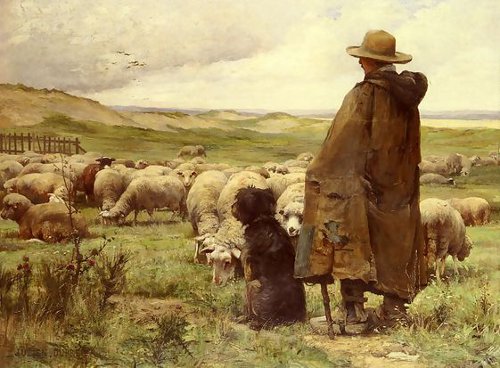
Our Teacher Moshe the Shepherd

The Baal Shem Tov was once shown from heaven that a certain simple man called Moshe the Shepherd served G‑d, blessed be He, better than he did. He longed to meet this shepherd, so he ordered his horses harnessed to his coach, and traveled, with a few of his disciples, to the place where he was told the shepherd lived.

They stopped in a field at the foot of a hill, and saw, on the hillside above them, a shepherd who was blowing his horn to call his flock. After the sheep gathered to him, he led them to a nearby trough to water them. While they were drinking, he looked up to heaven and began to call out loudly, “Master of the world, You are so great! You created heaven and earth, and everything else! I’m a simple man; I’m ignorant and unlearned, and I don’t know how to serve You or praise You. I was orphaned as a child and raised among gentiles, so I never learned any Torah. But I can blow on my shepherd’s horn like a shofar, with all my strength, and call out, ‘The L-rd is G‑d!’” After blowing with all his might on the horn, he collapsed to the ground, without an ounce of energy, and lay there motionless until his strength returned.

Then he got up and said, “Master of the world, I’m just a simple shepherd; I don’t know any Torah, and I don’t know how to pray. What can I do for You? The only thing I know is to sing shepherds’ songs!” He then began to sing loudly and fervently with all his strength until, again, he fell to the earth, exhausted, without an ounce of energy.

-Yitzchak Buxbaum
“The Shepherd”
from his book, Light and Fire of the Baal Shem Tov
quoted from Chabad.org

You shall love the Lord your God with all your heart and with all your soul and with all your might.Deuteronomy 6:5 (ESV)

Buxbaum goes on to describe the shepherd’s further efforts to love and please God, some which may sound almost ludicrous, such as standing on his head and waving his feet wildly in the air, but we can learn a lesson from this shepherd and this tale of the Baal Shem Tov.

In all likelihood, no such shepherd ever existed and God never showed the Baal Shem Tov how to find him, but that’s not the point. The point is to learn something about us and about God and about how we’re supposed to connect our lives to Him. That’s what Chassidic tales are all about.

In our tale, the shepherd, who God tells the Baal Shem Tov worships Him better than the venerated Chassidic sage, is a Jew who was raised among Gentiles and who has absolutely no grasp of Torah, Talmud, or even the most basic understanding of halachah. He has no formal education in any of the mitzvot and although the shepherd knows he is to honor, worship, and give glory to God, he doesn’t know the first thing about how a Jew is supposed accomplish this.

Interesting, isn’t it.

This isn’t to say that we shouldn’t study and learn and strive to comprehend what God expects of us, but the information seems to be secondary to the desire, the will, and the intent of the person in worship. Moshe the Shepherd knew nothing but in a sense, he knew everything. He knew to take care of his sheep just as shepherds such as Moshe the Prophet, David the King, and our “good shepherd” Jesus the Rabbi knew how to take care of their sheep, even to the point of laying down their lives.

Moshe the Shepherd called to his sheep by blowing his horn which he compared to a shofar, and since the sheep responded by going to him, it shows he had certainly earned their trust. He gathered his sheep and watered them, and while watering them, cried out to God, blew his horn for Him, sang shepherd’s songs for Him, acknowledged God’s might and glory in the loudest voice he could muster, and he did all this with such zeal and energy that he collapsed, exhausted upon the ground.

And after seeing Moshe the Shepherd do this over and over again to the point of total collapse, we reach the dramatic conclusion of our tale:

What more can I do to serve You?” After pausing to reflect, he said, “Yesterday, the nobleman who owns the flock made a feast for his servants, and when it ended, he gave each of us a silver coin. I’m giving that coin to You as a gift, O G‑d, because You created everything and You feed all Your creatures, including me, Moshe the little shepherd!” Saying this, he threw the coin upward.

At that moment, the Baal Shem Tov saw a hand reach out from heaven to receive the coin. He said to his disciples, “This shepherd has taught me how to fulfill the verse: ‘You shall love the L‑rd your G‑d with all your heart, with all your soul and with all your might.’”

What does God want from you? The answer is amazingly simple:

He has told you, O man, what is good; and what does the LORD require of you but to do justice, and to love kindness, and to walk humbly with your God? –Micah 6:8 (ESV)

Without studying the Bible, Moshe the Shepherd knew what pleased God and he worshiped and pleased God with all his strength. How much more should we who study the Bible know and then do what pleases God. But do we try to please Him with all our might as did Moshe the Shepherd?

Torah is not about getting to the truth. When you are immersed in Torah, even while pondering the question, even while struggling to make sense of it all, you are at truth already.

Torah is about being truth.

-Rabbi Tzvi Freeman
“The Process”
Based on letters and talks of the Rebbe
Rabbi M. M. Schneerson
Chabad.org

The Light from Within

It used to be a burning issue for religious Jews, and for many it still is a quandary: may one daven in a non- Orthodox shul? The main underlying question is regarding whether a mechitzah is an absolute halachic requirement.

When the Chazon Ish, zt”l, was asked regarding whether a mechitzah is a halachic requirement, he affirmed that it is. “Mechitzah is a halachic obligation. Gazing into the women’s section of a shul is absolutely forbidden. Those who heed this halachah an put up a halachically acceptable mechitzah will be blessed with everything good.”

When the Machaneh Chaim, zt”l, was asked about davening in a shul without a mechitzah, he replied that this is forbidden. “It is a very serious sin to look at women in a shul; even more serious than in other places. For this reason it is preferable to daven at home than to daven in a shul without a mechitzah, even on Rosh Hashanah or Yom Kippur.”

A certain rabbi was offered a position in a prominent liberal shul. He wondered whether he was permitted to accept it, since he believed that he could influence the community towards greater commitment to Torah..

When this question reached Rav Yosef Shalom Eliyashiv, shlit”a, he explained that this question had already been put to the Chazon Ish long ago, and been well answered. “Rav Yitzchak Hutner, zt”l, asked the Chazon Ish this question. The Chazon Ish replied that it depends. If the rabbi felt certain that he could influence the community to accept a mechitzah within a year, he could be their rabbi for this time. If not, he may not.”

Rav Eliyashiv added, “But since this rabbi is a talmid chacham, he must avoid making a chilul Hashem. He does this by informing the public that he is accepting this position because he hopes that the situation will change within a fairly short time.”

Daf Yomi Digest
Stories Off the Daf
“Proper Separation”
Middos 35-1

This “story off the daf” brings up a lot of issues for me in terms of comparisons of different faith communities. I scarcely know where to begin but I have to start somewhere (I also have to stop somewhere, so I’m not going to cover everything I’m thinking of..yet).

I know most Christians will take one look at this commentary and wonder what the big deal is about looking at women in a congregation. After all, I can’t think of a single Christian church I’ve been in that required separation between men and women during worship. What’s the problem? Of course, Christianity, even among the more conservative churches, doesn’t have the same sense of modesty that Orthodox Judaism employs. But let’s take a look at this for a moment (and no, I’m not suggesting separating men and women in the church).

My wife made an interesting observation, more than once actually, when we were regularly attending a Christian church over a decade ago. During services in the sanctuary, she remarked on how husbands and wives seemed to be “all over each other” during worship. What she’s describing is the hugging, cuddling, and leaning on each other of married couples in church, primarily during the Pastor’s message.

This is just a thought, but what are you going to be focusing when holding your beloved spouse closely in church, worship or your beloved spouse? I suppose it’s just a matter of different “cultural values” between the church I attended (I can’t say this sort of “cuddling” goes on in all churches everywhere) and Orthodox Judaism. I’m kind of a conservative guy, so I’d probably not engage in a lot of affectionate touching with my wife in worship (assuming we ever worship together in one place again).

That’s not really the main point I want to make, though.

For one brief moment, when reading the story, I started injecting the various Judaisms into the situation, including Messianic Judaism. Look at this particular phrase again:

If the rabbi felt certain that he could influence the community to accept a mechitzah within a year, he could be their rabbi for this time.

Earlier, I mentioned the cultural differences between the church and the Orthodox synagogue but of course, there are a number of cultural and halakhic differences between different branches of Judaism. We see here that it would be permitted for an Orthodox Rabbi to accept an appointment to a more liberal synagogue, but only if the Rabbi felt “he could influence the community to accept a mechitzah within a year.”

This is addressing a very specific situation; the separation of men and women in the synagogue for purposes of promoting modesty and proper respect to God during worship. Now I’m going to turn the issue on its head, so to speak, and put it back on Hebrew Roots and the Messianic movement.

I have been considering a suggestion I’ve heard recently, that “Messianic Gentiles” might best serve the Messianic Jewish movement, not by attending a Messianic or Hebrew Roots worship community, but by worshiping in the church instead. This is probably a radical idea to some Messianics who may be reading my blog. After all, a lot of Christians in the Hebrew Roots movement deliberately left the church because they felt the church wasn’t meeting their needs or worse, because they felt the church was pagan and apostate.

Gentile Christians in the Hebrew Roots movement, at least some of them, have given the church a lot of “bad press” and much of it is undeserved. Sure, there are things in the church that could and should improve, but we have to remember that for the past nearly 2,000 years, the church has been the sole custodian and transmitter of the Good News of Jesus Christ to the rest of the world. During the past century or so, many of the Jews who have discovered Jesus is the Jewish Messiah have done so through the church. What we think of as “Messianic Jewish synagogues” are a very recent expression of Jewish faith in the Messiah. For the most part, historically, Messianic Jews have come about as “Jewish Christians” worshiping in the Christian church.

The church isn’t going to go away and be replaced by Messianic synagogues, at least not anytime in the foreseeable future. Do people in the Hebrew Roots movement then just intend to ignore Christianity as irrelevant and pray for the day when it no longer exists?

That’s insane. That’s like saying you want 90% or more of the body of Christ on earth to simply vanish.

But as a staunch opponent of supersessionism, I’m the first to admit that the church could do a lot better in terms of how it perceives Jews and Judaism (Messianic or otherwise) and the state of the Torah in relation to the New Testament. The response of many in Hebrew Roots/Messianism, is to blame the church for betraying them, to dismiss the church, and to even revile the church. These behaviors aren’t likely to promote an atmosphere of cooperation and a mutual exchange of ideas and perspectives.

What will?

Perhaps more people attending church who have a “Hebrew Roots” perspective.

Gasp!

There are a lot of barriers separating the idea from the actuality, but as we see from our example off the daf, it is not unheard of to compromise your personal comfort and convenience for the sake of “promoting change from within.”

I’m going to cover this idea in much more depth in the near future, but for now, I’m asking you folks within your various areas of Hebrew Roots to consider what the best option might be for combating antisemitism and supersessionism in the church (and just to throw a monkey wrench in the machine, both of these elements exist even within some Hebrew Roots congregations). You aren’t going to change anyone’s mind by arguing with them and by insulting them. You are more likely to make a positive impact, not by pretending to be their friend, but by really being their friend and showing them how things can be otherwise. God never intended to throw his people Israel under a bus. We can be examples of how to understand the Bible outside the (church doctrine) box.

Our Master taught among his Jewish people who spanned the spectrum from sincere but confused to almost hopelessly corrupt. He showed his Jewish disciples (and not a few of the Gentiles) how to be a light by being a light himself. He called all of his disciples, including us today, to be a light among the nations. If our understanding of the “Jewish Jesus” and the current and future relationship between God and the Jews is of value, then we should shine that light in the church rather than hiding it under a bowl.

The ascent of the soul occurs three times daily, during the three times of davening. This is particularly true of the souls of tzadikim who “go from strength to strength.” It is certain that at all times and in every sacred place they may be, they offer invocation and prayer on behalf of those who are bound to them and to their instructions, and who observe their instructions. They offer prayer in particular for their disciples and disciples’ disciples, that G-d be their aid, materially and spiritually.

Hayom Yom
Iyar 29, 44th day of the omer
Compiled and arranged by the Lubavitcher Rebbe
Rabbi Menachem Mendel Schneerson, of righteous memory, in 5703 (1943)
from the talks and letters of the sixth Chabad Rebbe
Rabbi Yosef Yitzchak Schneersohn, of righteous memory
Chabad.org

Twelve Gates: Where Do the Nations Enter, A Book Review

The book of Revelation describes New Jerusalem as having twelve gates named after the twelve tribes of Israel. Through which gate will you enter?

The Two-House movement teaches that many modern Christians are in reality descendants of the ten lost tribes. Its followers consider themselves ethnic Israelites. The idea that anyone might be the biological descendant of Abraham, Isaac, and Jacob, and therefore entitled to the promises of God, is inherently attractive. The emotional and apocalyptic appeal of Two-House theology is obvious.

Boaz Michael, a leading voice in Messianic Judaism, looks at the history of the movement and examines the key biblical texts under dispute. Using the most recent scholarship about Gentile identity in apostolic theology, his book introduces a balanced alternative to Two-House theology. Twelve Gates welcomes Gentiles into the commonwealth of Israel, the New Jerusalem, and the Messianic Jewish movement.

from the promotional page for the book
Twelve Gates: Where Do the Nations Enter?
First Fruits of Zion

This is one of the “secret, unpublished books” I quoted from but couldn’t talk about before. Now I can, so I’m publishing my review. This book is really interesting, but probably not for the reason you think it is.

First off, the book was written by Boaz Michael, the Founder and President of First Fruits of Zion (FFOZ). I’m only drawing attention to this fact to say that I will not accept any comments made on this blog post that are for the specific purpose of “Boaz bashing.” If you want to comment about my review and the potential implications of this book, please be thoughtful and respectful. As the blog owner, I will remove any comment I deem offensive. Thank you.

On the surface, this is a book providing a critical analysis of the foundations of the two-house movement. For those of you unfamiliar with this perspective, here’s what Wikipedia has to say about it:

Two House Theology comes from the idea that the “House of Judah” in scripture refers to Jews, and the “House of Israel” refers to the Ten Lost Tribes of Israel, or Ephraim. Where scripture states the House of Israel and Judah will again be “one stick” (Ezekiel 37:15–23), it is believed to be referring to the End Times, right before Jesus returns, that many of those descended from Israel will come back to Israel. This theology postulates that the reason why so many so-called gentiles are coming into Messianic Judaism is that the vast majority of them are really Israelites and just don’t know it yet. They believe a majority of the people who considered themselves as gentiles coming into Messianic Judaism are those of the Lost Ten Tribes of Israel. Like One Law groups, the Two House movement appears at first glance to have much in common with Messianic Judaism because of their belief in the ongoing validity of the Mosaic Covenant. While much of the Two House teaching is based on interpretations of Biblical prophecy, the biggest disagreements are due to inability to identify the genealogy of the ten lost tribes.

What I really love about this book though, isn’t its coverage of the two-house movement, but its treatment of a topic near and dear to my heart: the identity of non-Jews in discipleship to the Jewish Messiah. In other words, “me,” or to be more complete, everyone out there who is like me, Non-Jewish people who are drawn not only toward the God of Israel, but the perspective of Israel on God. This is crystallized in the conclusion of Boaz’s book:

The prophets of Israel recognized that when the Gentiles began to attach themselves to Israel and to Israel’s God, not as members of Israel or usurpers of Israel’s destiny but as sympathetic worshippers of the God of Abraham, it was a sign of the coming redemption (Zechariah 8). It was a boon for the Jewish people. Paul understood that if he was successful in his ministry to the Gentiles, it would cause the Jews to see his ministry in this light, and they would, as a result, accept Jesus as the Messiah of Israel and initiate the resurrection from the dead (Romans 11:12, 15). Paul could taste the closeness, the imminence of this event even in his day; how much more should it ignite our hearts with passion today!

Messianic Jews and Christians who are sensitive to their Jewish roots stand at two ends of a great bridge across which Christians receive the greatness of the Torah and the centrality of the Jewish people in God’s redemptive plan, and across which the Jewish people can see, for the first time in untold centuries, Jesus as a legitimate Messianic candidate. When everyone on both sides of the bridge understands their role and the eschatological significance of their very existence, this interchange can benefit everyone.

The majority of Twelve Gates is devoted, not to the two-house perspective a such, but to the matter of Gentile identity. To the casual reader, it may seem as if the book is unbalanced and loses its focus halfway through its own narrative, but I know from talking to Boaz that the emphasis on Gentile identity is deliberate. It’s impossible to talk about two-house without addressing the Gentile identity issues because, if we non-Jews who are drawn to the Torah and Judaism are not “the lost ten tribes,” then who are we and why are we swimming against the current of traditional Christianity?

Boaz’s answer is simple, elegant, and thoroughly satisfying, at least to me. No, I won’t reveal it here, but instead, I encourage you to purchase this book and discover it for yourself. It surprised me that Boaz took this particular direction in his writing and addressing two-house, and I’m very glad he did, because it quiets some of the disturbing voices I’ve been hearing about who I can and can’t be in relation to the King of the Jews and to God.

For those of you who support or are sympathetic to the two-house movement, rest assured that this isn’t a “two-house bashing” book. Knowing Boaz as I do, I didn’t think he would write it that way, but I’m sure there are a few folks who are thinking that Twelve Gates is just a way for FFOZ to discount and disrespect the sincere beliefs of those Gentiles out there who claim the spiritual and ethnic inheritance of Ephraim and Manasseh.

That’s not to say what Boaz writes will be popular among two-house proponents. Certainly, there will be those who will deny Boaz’s assertions and people who will feel wounded by this book, even though its approach is quite gentle.

But if you’re looking for a straightforward and honest treatment of two-house from a “Messianic Jewish” perspective, I really think you should read Twelve Gates. As I said before though, for me, the two-house content is secondary to what the book really says to me.

The Bible teaches that in Jesus, “the Gentiles are fellow heirs, members of the same body” with the Jewish people (Ephesians 3:6), and “fellow heirs with Christ” Himself (Romans 8:17). The point of the vision of the New Jerusalem is not to exclude the non-Jews from the city; rather the gates of Israel stand open to the Gentiles, beckoning them to enter into the eternal reward that God has prepared for His people. The vision of New Jerusalem is not one of exclusion but inclusion, as it says, “the kings of the earth will bring their glory into it, and its gates will never be shut by day…They will bring into it the glory and the honor of the Gentiles.”

It says that though we are not all the same in function and purpose, we will all walk into New Jerusalem together as fellow disciples of the Master and fellow heirs of the Kingdom of God. It’s a book carrying the message, not of division, but of unity and the love of God. I said before that Boaz’s book pleasantly surprised me. Maybe it will surprise you, too.

A Christian at Shauvot

the-joy-of-torahLast week, I had the opportunity to speak with a visitor to our website, a woman in her mid-50s. Sarah* was baptized as a child and grew up “in the church,” but always felt an affinity to the Jewish People. She even recalls mentioning to her parents that she wished she were Jewish, which they dismissed despite her maternal grandparents’ very Jewish-sounding last name.

Later in life, she developed an interest in genealogy, and began to research her family tree. Slowly but surely, the evidence became incontrovertible: she was, in fact, a Jew all along. It turned out that her grandparents had barely escaped the Holocaust, and with her parents had conspired to hide their Jewish identity from her siblings and cousins.

What is most remarkable about this story is not merely her discovery, but that her desire to learn more about Judaism had in fact preceded it. Now it is truly a journey of self-discovery as well. Her Jewish soul was calling to her, and over time it became impossible to ignore.

In just a week’s time, we will celebrate the holiday of Shavuos, which commemorates the giving of the Torah. But because Judaism teaches that the spiritual energies of each holiday return to the world each year at that time, it is by no means merely a commemoration, but a time uniquely appropriate for receiving the Torah, for increasing our knowledge and understanding.

-Rabbi Yaakov Menken
“Is it Time for More?”
ProjectGenesis.org

In less than a week, I’ll be attending the First Fruits of Zion 2012 Shavuot Conference in Hudson, WI. In my case, it will be an interesting experience but not one like the situation described by Rabbi Menken. It is true that I am “attracted” to Judaism, its customs and traditions, its teachings and philosophy, but at the same time, I’m very conscious of how “alien” an environment it is. While I “borrow” a great deal of my source material from Chabad.org, I am aware, primarily through my wife, of how much of a “goy” I am, particularly in relation with my brief, periodic contacts with our local Chabad community.

So what am I doing here?

Believe it or not, I ask myself that question a lot. The simple and straightforward answer is that I have no where else to go. When I stop for a moment on my particular journey, and take stock of how far I’ve come and where I am now, I find that I’m swimming in some strange lagoon or tide pool off to the side of traditional Christianity and Judaism. Though you may not believe it, in many ways that body of water is fed more by Christianity, at least culturally, than by Judaism.

I was made particularly aware of that this morning when I read the part of Rabbi Menken’s missive that said:

So please take this as an invitation. The reason why we have these chat and e-mail services are so that people in distant locations, and people who are not ready to walk into a class, can make contact and get some guidance as to the next steps they might take. Rather than replying to this email, the best ways to reach us are via chat on Torah.org, or a question on JewishAnswers.org… or perhaps a comment, which you can tell us is not to be published!

I’ve met more than a few non-Jewish people in the Hebrew Roots movement who felt that their story was, or should be like, the one described by Rabbi Menken and, the fact that they were attracted to Judaism meant that they were some sort of “crypto-Jew” with hidden Jewish relatives lurking somewhere in their distant history. For the woman Rabbi Menken describes, this was actually true, but for most of us who lean more toward Jewish educational resources than the latest devotionals found in the local Christian bookstore, it is not.

So what’s the story for the rest of us?

I have no idea.

Oh, I can weave theories and engage in guesswork, but that’s all it is…theories and guesswork.

As I was reading this morning, I imagined that at the upcoming Shavuot conference, I would be doing this with the others in attendance:

Give thanks to Hashem, declare His Name, make His acts known among the peoples. Sing to Him, make music to Him, speak of all His wonders. Glory in His Holy Name, may the heart of those who seek Hashem be glad. Search out Hashem and His might, seek His Presence always. –Psalm 105:1-4 (Stone Edition Tanakh)

And yet given the mixed crowd of Jews and non-Jews present to give honor and glory to the Jewish Messiah, I wondered if the following was also part of the reason for me being there:

Thus said Hashem, Master of Legions; In those days, it will happen that ten men, of all the [different] languages of the nations, will take hold, they will take hold of the corner of the garment of a Jewish man, saying, “Let us go with you, for we have heard that God is with you.” –Zechariah 8:23 (Stone Edition Tanakh)

I’ve recently written on more than one occasion that “salvation is from the Jews” (John 4:22), which are the Master’s own words. Given the amount of “push back” that I’ve received from the traditional Christian perspective, it’s hard to imagine a time when the prophesy of Zechariah 8:23 will come to pass, unless none of those ten men are Christian.

On the other hand, the prophet may have been speaking of a time when we will all realize that Christianity can no longer afford to be divorced from Judaism, and that Jews and Gentiles who are devoted to God and particularly those who are disciples of the Master, must find times to join together and “give thanks to Hashem, declare His Name, (and) make His acts known among the peoples.”

ShavuotAs for now, there are still many barriers between human beings and this kind of unity and peace. We should take advantage or those rare times when we, who have different backgrounds and traditions, can join together “in spirit and in truth” and give thanks to the glory of God together. I join my Jewish brothers and sisters, along with many other believing Gentiles on Shavuot, not to seek my Jewish soul or to imagine I’m someone that I’m not, but to summon some slender thread at the corner of the garment of Zechariah’s prophesy, take hold of it, and to allow the barriers that separate us to become the walls of the corridors that lead us all to Messianic peace and fellowship.

Nothing limits you, no force that holds you captive—other than a fiction of your imagination.

So you will say, “What, then, of the forces of nature? Of the constraints of a human body? Of the hard reality that slams against me when I attempt to stride through the barriers of life?”

Yes, they are there. But they are not what they seem to be.

They are not there to oppose you, but to carry you. As your soul pulls forward, those barriers force her inward, towards her deepest, strongest self.

-Rabbi Tzvi Freeman
“Pushed From Behind”
Based on letters and talks of the Rebbe
Rabbi M. M. Schneerson
Chabad.org

Gift of the Firstborn of Israel

Firstborn (bechor) as one of the names of the Messiah is seen in the heavenly conversation found in Psalm 89:27. There God himself says of the Messiah, “I will make him My firstborn. The highest of the kings of the earth.” The Bible gives to the firstborn a significance that goes far beyond the laws regarding earthly inheritance. Commenting on the verse, “Consecrate to me all the firstborn” (Exodus 13:2), the midrash says, “God said to Moses, ‘Just as I have appointed Jacob firstborn – as it says, “Israel is my firstborn son” (Exodus 4:22), so will I appoint King Messiah firstborn,’ as it is said, ‘I will appoint him firstborn'” (Exodus Rabbah 19:7).

-Tsvi Sadan from his book
The Concealed Light, pg 16
Firstborn (bechor)

A few days ago, on one of my meditations, I said:

The Master said that Salvation is from the Jews,” (John 4:22) but then, so is peace. This is another reason why we Christians, and indeed, the entire world, owes the Jews a debt that can never be repaid. It is their King who will finally come and bring peace for everyone, not just the nation of Israel, but the nations of the earth.

However, I had neglected to anticipate that this might be seen as offensive or at least inaccurate from a traditional Christian point of view. By way of explanation, I offered an additional comment:

Israel was always meant to the the beacon that would lead the rest of the world to God. Consider Isaiah 49:6 and Isaiah 51:4. By extension, Jesus said of himself that he was (and is) the light to the world (John 8:12) and he passed that torch (if you’ll pardon the obvious pun) to his disciples, including us, when we said that we are a light to the world (Matthew 5:14).

There’s an unbroken chain in the transmission of God’s Word from God Himself, to His people Israel, and to Israel’s firstborn son of Creation and the firstborn of the dead Jesus Christ. Jesus is called the King of the Jews, which hardly divorces his work of salvation from the Jewish people. We thank, praise, and honor God for our salvation and redemption from sin, however He chose to provide those gifts through the birth of Jesus and the light of His nation Israel, which was always to be our guiding light, since the very beginning.

God is God alone, but Jesus doesn’t exist in isolation. He was born, lived, died, and was resurrected within a specific context so that “The law will go out from Zion, the word of the LORD from Jerusalem.” (Micah 4:2)

(To be fair, I must say that the conversation that was started on my own blog post was continued at Steven’s blogspot, http://washedfeet.wordpress.com/)

To me, the connection between God, Israel as firstborn, and Jesus as firstborn is pretty self-evident, but apparently not everyone shares this view. In an attempt to be fair and check my thinking and perceptions, I decided to explore the names of the Messiah and how they reveal his character and relationship to God and Israel. Part of the result is that I found the above-quoted passage from Sadan’s book. It seems that not only does midrash confirm the near interchangeability between the Messiah and Israel but the Torah does too. If we feel we owe a debt of gratitude to Jesus Christ for being saved by the grace of God through the blood of the Messiah, then by inference, we are offering that gratitude to Israel as well; which is also God’s firstborn.

I know this will probably not sit well with some and it’s not like I’m going out of my way just to be a pest, but I do feel honor-bound to point out the truth of the Bible as best as I can understand it in defense of not only Israel but of God’s intent in choosing Jacob’s children as his own treasured, splendorous people. I do not believe the nature, character, and purpose of Messiah can be separated from Israel as a people or a nation, either in function or in prophesy.

The one who has “borne our griefs” and who has “carried our sorrows” that we Christians see in Isaiah 53:4 is viewed as the “Suffering Messiah,” Jesus Christ. The church can scarcely begin reading this passage before envisioning Jesus on the cross. However, from a Jewish point of view, it is Israel who is suffering, as a people, rather than Messiah:

“If the Holy One, blessed be He, is pleased with a man, He crushes him with painful sufferings. For it is said: And the Lord was pleased with [him, hence] He crushed him by disease (Isa. 53:10). Now, you might think that this is so even if he did not accept them with love. Therefore it is said: “To see if his soul would offer itself in restitution”. Even as the trespass-offering must be brought by consent, so also the sufferings must be endured with consent. And if he did accept them, what is his reward? “He will see his seed, prolong his days”. And more than that, his knowledge [of the Torah] will endure with him. For it is said: “The purpose of the Lord will prosper in his hand”. It has been taught: R. Simeon b. Yohai says: The Holy One, blessed be He, gave Israel three precious gifts, and all of them were given only through sufferings.. These are: The Torah, the Land of Israel and the World To Come.”

sourced from Talmud – Brachot page 5a

I’m hardly an expert, but is it so hard to imagine that Isaiah may have been referring to both Israel and Messiah? I’ve never been a big fan of always applying a prophesy to a single event or person. I believe it’s possible for Isaiah to have been giving a “multi-layered” message that to his immediate audience may have meant one thing, and to an “extended audience” may mean something else.

Admittedly, this is a dangerous thing to do and I’m stretching the limits of Bible interpretation quite a bit here, but for a good purpose. I’m trying to illustrate that Jesus is not only (in some mystical fashion) the personification of the Divine, but the living personification of Israel as a people. To say that we are “saved by Jesus” in some way is to say that “salvation is from the Jews.” (John 4:22 ESV)

The link between Jesus and the well-being of Israel wasn’t lost on Paul either, and he went out of his way to communicate that message to the non-Jewish disciples in Rome. Apparently the non-Jewish disciples didn’t have a problem with this understanding:

For they (the Gentile believers) were pleased to do it, and indeed they owe it to them. For if the Gentiles have come to share in their spiritual blessings, they ought also to be of service to them in material blessings. –Romans 15:27 (ESV)
More than a few non-Jews in the Messianic movement have been accused of worshiping Judaism rather than God and sad to say, that’s true in many cases. I suppose in my comments, I could be accused of “the glorification of the flesh of Israel,” (though I’ve never been comfortable with some of the stereotypical Christian phraseology) but that is not my intent. What I am trying to communicate is not the exalting of Israel as a people above God or above the Messiah. The Master himself said that no servant is greater than his master (John 13:16) and certainly Israel serves God and not the other way around. On the other hand, Israel serves God and the living, breathing, walking, talking, expression of the ideal Israel is the Messiah, the Savior, Jesus Christ, King of the Jews.

The rest of Sadan’s commentary on “firstborn” (bechor) as a name for the Messiah links these ideas together with how we disciples of the Master tend to see his most outstanding act on behalf of the world:

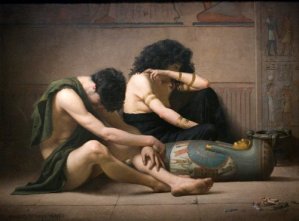
Reference to Messiah in connection with the command to consecrate all the firstborn is highly significant. Moses gives two reasons for the injunction: remembrance of the Exodus by celebrating Passover and remembrance of the death of the Egyptian firstborn. Exodus 13 appears to suggest that Israel’s freedom is achieved through the Passover lamb and the Egyptian firstborn. In addition to the classic clash over the rights of the firstborn, here the decisive divine act reveals that the right of the firstborn belongs not to Pharaoh but to Jacob. In a manner of speech, this massive human death is responsible for Israel’s redemption; in a sense, the death of the Egyptian firstborn was a sacrificial death.

The rather shocking idea that the death of the firstborn brings about redemption is found in the very command to consecrate all of Israel’s firstborn. The translation, “You shall set apart to the LORD all that open the womb, that is every firstborn” (Exodus 13:12), fails to reveal the true meaning. The Hebrew for “set apart” here actually signifies “sacrifice.” Israel, accordingly, was to sacrifice their firstborn. It is only in verse 15 that we learn that the death of the firstborn is replaced by the process of ransoming. Further still, it is the tribe of Levi that becomes the substitute for the firstborn (Numbers 8:18), since the Levites have no inheritance in Israel…

By appointing Messiah as the Firstborn, God thus sets him up to be the preeminent Firstborn, the ultimate Lamb. As such, he has no substitute; no one can pay the ransom for him. Rather, he is bound to pay the ultimate price to redeem Israel by sacrificing his own self.

Sadan, pp 16-17

There doesn’t appear to be a reasonable and legitimate way to separate Messiah as the firstborn, from Israel as the firstborn. Further, the ultimate and “preeminent Firstborn” must sacrifice himself as the “price to redeem Israel.” That was and is the great purpose of the Messiah as the sacrifice of the firstborn, to act as the substitute for firstborn Israel, much in the matter that the Levites were “sacrificed” for the sake of each firstborn child of the other tribes. It was Messiah’s purpose to die for the redemption of all Israel.

Most Christians are probably asking right about now, “but what about us?” That’s where God’s grace comes into play and where our gratitude should be expressed. Up until this point, everything is happening within the context of Israel’s relationship with God. Up until this point, the Gentiles; the rest of the world, haven’t been involved except in the role of conquerors and persecutors of the Jews. Except for Israel, up to this point, all of the other people groups on earth have been pagan, polytheistic, idol worshipers.

Period.

But the endlessly bountiful graciousness of God (and this was always part of His plan) opened the doors of salvation for the rest of us, too. Though from a Jewish perspective, this was completely “out of scope” for the plan, God allowed the sacrifice of the ultimate Firstborn to redeem not only Israel, God’s firstborn, but the entire human population of the earth.

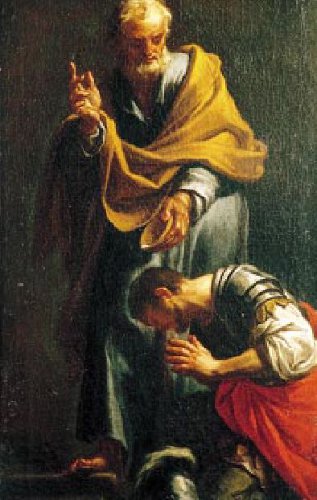
I can’t even begin to express how amazingly HUGE this is. The Jewish disciples couldn’t have possibly understood the fantastic impact of the Master’s words in Matthew 28:18-20 when he commanded them to “make disciples of all nations.” I’m not even sure that they “got it” until nearly two decades later when Peter, seeing the Roman Centurion Cornelius and his household receiving the Holy Spirit, exclaimed:

While Peter was still saying these things, the Holy Spirit fell on all who heard the word. And the believers from among the circumcised who had come with Peter were amazed, because the gift of the Holy Spirit was poured out even on the Gentiles. For they were hearing them speaking in tongues and extolling God. Then Peter declared, “Can anyone withhold water for baptizing these people, who have received the Holy Spirit just as we have?” And he commanded them to be baptized in the name of Jesus Christ. –Acts 10:44-48 (ESV)

I think this must have been the moment when it truly dawned upon Peter what God had in mind and the staggering and mind-blowing impact the Messiah’s sacrificial and redemptive death and resurrection would have in the world. Not only would all Israel be saved (Romans 11:26) but “that the world might be saved through him.” (John 3:17 ESV)

The Jewish Pharisee Paul (also known as Saul among the Jews) was specifically commissioned by the Master (Acts 9) to be the emissary to the Gentiles and to carry the Good News of salvation offered by God through the Jewish Messiah to the nations. I promise you, the Gentiles had no idea what was about to happen to them, how their lives would be changed, and how the entire fabric of the next two-thousand years of human history would be inexorably altered by the will of God, all thanks to the grace of the Creator of the Universe and His choice of the Israelites as His “light to the nations” (Isaiah 49:6).

This entire debate started when I tried to describe Jesus as the Minister of Peace to the entire world. This point was entirely lost on my audience (apparently) and so, employing Sadan’s book once again, I’ll conclude with part of his commentary on another name for the Messiah: “Prince of Peace” (sar shalom):

Rambam very likely based his interpretation on the opinion of Rabbi Yose Haglili, who lived shortly after the destruction of the Temple and who is recorded as saying, “The name of Messiah is Shalom, as it is said, ‘Everlasting Father, Prince of Peace'” (Masechtot Ketanot, Derech Eretz II).

…The Prince of Peace therefore, is greater than Moses, Isaiah, Ezra, and the rest of Israel’s prophets, for none of them were able to establish lasting peace.

Sadan, pg 239

Pray for the peace of Jerusalem (Psalm 122:6) and the security of Israel, for in praying for Israel’s peace, you are praying for your own, thanks to Jesus Christ, our Lord, King, Master, and Savior.

Amen.

Behar-Behukotai: Seeking Crowns

The majority of this Torah reading focuses on the rewards granted for observance of the Torah, and the punishments ordained for failure to observe. One might ask: When a person has internalized the self-transcendence of Bechukosai, of what interest is reward? As the Alter Rebbe would say: “I don’t want Your World to Come. I don’t want Your Gan Eden. All I want is You alone.” (As quoted in Derech Mitzvosecho, Shoresh Mitzvos HaTefillah, ch. 40. See also Rambam, Hilchos Teshuvah, ch. 10.)

In truth, however, only a person who genuinely “wants You alone” can appreciate the full measure of reward G-d has associated with the Torah and its mitzvos. As long as a person is concerned with his individual wants and desires, he will interpret the reward received for observance in that light. When, by contrast, a person has transcended his individual will, instead of these petty material concerns, he will appreciate the essential good and kindness which G-d conveys. (See Likkutei Sichos, Vol. XV, p. 312)

This will create a self-reinforcing pattern, for the purpose of the rewards granted by the Torah is to enable an individual to further his study and observance. (Rambam, Mishneh Torah, Hilchos Teshuvah 9:1.)

As this pattern spreads among mankind, we will merit the full measure of blessings mentioned in the Torah reading, with the return of our people to our land, led by Mashiach. Then “Your threshing season will last until your grape harvest…. You shall eat your bread with satisfaction…. I will grant peace in the land, and none shall make you afraid.” (Leviticus 26:5-6.)

-Rabbi Eli Touger
In the Garden of the Torah
“Real Growth”
Commentary on Torah Portion Behukotai
Leviticus 26:3-27:34
Chabad.org

“Blessed are you when others revile you and persecute you and utter all kinds of evil against you falsely on my account. Rejoice and be glad, for your reward is great in heaven, for so they persecuted the prophets who were before you.Matthew 5:11-12 (ESV)

What we get out of our relationship with God is a matter of perspective. As Rabbi Touger illustrates, how we perceive our “reward” depends on how we perceive ourselves. I’ve written a number of commentaries on Rabbi Joseph Soloveitchik’s book The Lonely Man of Faith including my most recent missive, Burning the Plow. Soloveitchik presents “two Adams” using the two depictions of the creation of the first man in Genesis to show us two sides of the person of faith, the material and the spiritual. How we function in relation to God is how we see what God can do for us.

That probably sounds selfish, and it’s meant to be, at least in part.

The material man sees his relationship with God in terms of the world of here and now. He prays for success in business, good weather for planting crops, health for his family, and so on. There’s nothing wrong with this of course, but it is the general limit of the material man’s vision of his relationship with God. Man is the majestic steward of the world God created, and in return, he desires that God reward him with the benefits related to that creation.

It is written in Pirkei Avot Chapter 4, Mishna 2, that “the reward of a mitzvah is a mitzvah” (quoting Rabbi Dovid Rosenfeld). Thus the continued cycle I have described in the previous paragraph is self-perpetuating as long as the perspective of the material man does not change.

And for many people of faith, it never does.

However, Rabbi Touger’s commentary, quoting the Alter Rebbe, shows us a different path:

“I don’t want Your World to Come. I don’t want Your Gan Eden. All I want is You alone.”

On an emotional level, most of us can more or less understand this desire. We want to “feel” closer to God, to love Him with great zeal and to pour our heart and our life into pools of mystic wonder where only God exists. However, such a desire is difficult to grasp for very long for most of us, and we tend to believe that only saints or holy men or mystics who live in caves or monasteries can truly exist in a sustained state of “All I want is You alone.”

It’s hard for most Christians to imagine that Jews might express such a desire to want to walk with God alone, since Judaism is seen as a largely “behavioral” religion. An observant Jew tends to be defined by the mitzvot, by Torah study and obedience to the commandments. By contrast, Christians see their faith as more metaphysical, residing in the realm of belief and pure faith and grace, than in the raw mechanics of feeding a hungry person or donning tallit and tefillin before prayer.

But what about the Jews who first came to the realization that Jesus was and is the Messiah? Where is the meeting point between classic Judaism and traditional Christianity? Where did it all begin before man artificially split the two faiths (or was that split all part of God’s plan as Paul describes in Romans 11:25)?

For I am already being poured out as a drink offering, and the time of my departure has come. I have fought the good fight, I have finished the race, I have kept the faith. Henceforth there is laid up for me the crown of righteousness, which the Lord, the righteous judge, will award to me on that Day, and not only to me but also to all who have loved his appearing. –2 Timothy 4:6-8 (ESV)

What is this “crown of righteousness” of which Paul speaks? Is it a literal crown he wears in the Heavenly court? Is it the sheer experience of bliss and wonder in God’s “Gan Eden” (Garden of Eden or Paradise)? Or could it be “God and God alone?”

Around the throne were twenty-four thrones, and seated on the thrones were twenty-four elders, clothed in white garments, with golden crowns on their heads. –Revelation 4:4 (ESV)

And whenever the living creatures give glory and honor and thanks to him who is seated on the throne, who lives forever and ever, the twenty-four elders fall down before him who is seated on the throne and worship him who lives forever and ever. They cast their crowns before the throne… –Revelation 4:9-10 (ESV)

The passages from Revelation 4 certainly seem to indicate real, physical crowns as the rewards, but this could be deceptive, since John’s vision of the Heavenly court and the events he witnessed is highly mystical and may not represent actual, literal actions. But look at what the twenty-four elders do with their crowns when they “give glory and honor and thanks to him who is seated on the throne.” They “cast their crowns before the throne” and say:

“Worthy are you, our Lord and God,
to receive glory and honor and power,
for you created all things,
and by your will they existed and were created.”

In addressing “the Lord God Almighty” (v 8), what does it mean to cast your crowns before His throne?

I’m no theologian so it’s impossible for me to say with any authority what John was really witnessing in this act of supreme worship of the Ein Sof God Almighty, “who was and is and is to come.” But let’s pretend what they were/are all doing was/is fulfilling this desire:

“I don’t want Your World to Come. I don’t want Your Gan Eden. All I want is You alone.”

When I was a child and I tried to imagine Heaven, I thought it sounded pretty boring. There was nothing to do there except constantly worship God. I thought it sounded like one, infinitely long church service where you had to sit in a hot sanctuary in sticky, itchy clothes, and be quiet, and listen to organ music, and pray and recite stuff, and endlessly say:

“Holy, holy, holy, is the Lord God Almighty,
who was and is and is to come!”

Didn’t anybody ever have fun in Heaven? What kind of reward was all this “holy, holy, holy” stuff anyway?

Most children tend to be “material man,” lacking the ability to see beyond their immediate, temporal needs and desires. Many adults, even in the community of faith are like this, too.

Beyond majestic, material man is the person seeking to simply walk with God; who perceives his path as illuminated by an ineffable light. When we desire “God alone” there is no way we can truly understand what we are asking for. Who could possibly imagine what the crowns of Paul or the elders in John’s vision actually were, and if they existed materially or not? I choose to believe that there is so much more to the rewards awaiting covenantal, spiritual man and that, attempting to imagine them from the viewpoint of the material human being, we miss the point completely.

Pray not for Heaven or for Paradise or for crowns of gold. Let your only desire for reward be God Himself.

Then let awe and wonder in every corner of your existence take hold and realize that He is already here. Life is a miracle and your soul is the soul of your Creator. Once you know this, the mitzvot will take care of themselves for they will be inseparable from the ineffable light of God.

He could have made a world where the nature of each thing may be deduced from its parts. A predictable, orderly world. A world devoid of wonder. And then we would say, “Things are this way because they must be this way.” G-d would be a stranger in His own world.

Instead, at each step a whole new world emerges, one we could never have predicted from anything we knew before. Until we must conclude that our finite world somehow contains infinite possibilities, that both nothing and everything is possible, that things are the way they are only because He desires they be that way.

He has made our world wondrous, so that it has room for Him.

-Rabbi Tzvi Freeman
“The Unnatural Nature of Things”
Based on letters and talks of the Rebbe
Rabbi M. M. Schneerson
Chabad.org

Good Shabbos.