Over the past several weeks, we have learned that the Obama administration believes it is at war with Israel. The war is not a shooting war, but a political war. Its goal is to bring the government to its knees to the point where Prime Minister Benjamin Netanyahu loses power or begs Obama and his advisers to shepherd Israel through a “peace process” in which Israel will renounce its rights to Jerusalem, Judea and Samaria.
This pretty much makes my blood boil. Anyone who knows me knows I’m not any sort of Obama fan, but the fact that he’s playing political games to establish his so-called legacy by risking the lives of every Israeli Jewish man, woman, and child is reprehensible and vile.
President Obama
Naomi Ragan wrote about her encounter with a liberal Jewish woman during a short car ride here in America to highlight the chasm existing between Israeli and American Jews.
She was silent for a moment, then shook her head. “He [Netanyahu] shouldn’t have come to America. He shouldn’t have addressed Congress. It polarized American Jews, politicizing the support for Israel,” she said emphatically.
“I think it’s been politicized for a long time,” I answered drily. “Democrats voted for Obama. Republicans didn’t.”
That seemed to surprise her. “So, Israelis don’t like Obama?”
“They hate his guts.”
She shrugged. “Yes, I can understand that. What do you think happened to him?” She seemed honestly bewildered.
“Nothing happened to him. Anyone who did the slightest bit of research understood that he had been a member of an anti-Semitic church for twenty-five years; a church that gave an award to Louis Farrakhan.”
Ragen pulls no punches and takes no prisoners. It also seems quite true that Israeli Jews have a lived experience many American Jews (or Americans period) are clueless about.
The Ragen article continued:
If I’d had any doubts, her reaction put them to rest. She had been one of the 70 percent of American Jews to vote Democrat and elect Obama. Twice.
“You know, American Jews vote for the things that are important to them. Those are not always the same things that are important to Israelis.”
I looked surreptitiously at my watch, calculating how much more time we would be locked into this conversation. Too long to say nothing. So I ventured mildly: “What is important to you?”
“Well, women’s rights, reproductive rights. The environment. And fighting the evangelicals.”
I suddenly remembered something my Harvard-educated son recently told me: “Many American Jews will blindly follow any agenda created by the Liberal establishment because it makes them feel virtuous and like part of the in-crowd.”
“So,” I said unwisely, my temperature rising, “let me get this straight. You’re worried about abortions, climate change and being converted to Christianity?” I didn’t let her answer. “And those things are more vital, more important to you, than whether Israel’s greatest enemy gets an atom bomb to blow the next six million Jews off the face of the earth?”
Naomi Ragen
And the article ended…
Just at that moment, the hotel loomed into view. I thanked her for the ride, opening the door and stepping out as swiftly as possible. Before I closed the door, I turned back and looked at her.
“Please,” I begged her. “Don’t vote for Hillary.”
It was the last straw. “She’s better than Trump!”
“I don’t think so,” I told her with full confidence.
She rolled her eyes. I rolled mine.
And then the door slammed shut, and she disappeared in one direction, and I in another.
But then, why should you care about all this?
Here’s why.
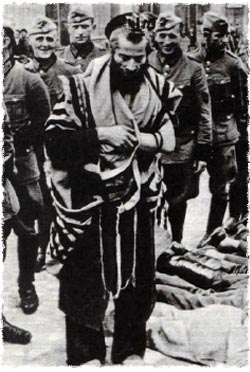
The question shouldn’t be “Why are you, a Christian, here in a death camp, condemned for trying to save Jews?” The real question is “Why aren’t all the Christians here?”
-Joel C. Rosenberg, The Auschwitz Escape
I’m going to assume that the majority of people reading this blog aren’t Jewish but rather, American Christians or perhaps what I call Gentile Talmidei Yeshua, non-Jewish disciples of Rav Yeshua (Jesus).
My experience in various Messianic Jewish and (largely Gentile) Hebrew Roots groups is that their members, Jewish or Gentile, tend to be pro-Israel politically. Of course, I live in Idaho, which is a pretty “red” state, so folks here are generally conservative about a lot of things.
I have to believe that when Ragen says Israelis hate President Obama’s guts, it’s because they see Obama all but handing Muslim Iran the keys to a nuclear arsenal and showing them how to aim it at Israel.
Caroline Glick
Caroline Glick’s article outlined the nuts and bolts of Obama’s (not-so) covert war against Israel in less passionate but no less disturbing terms. The country we’re citizens of (I’m assuming most of you live in the U.S.) is deliberately acting against the Israeli people, putting all their lives in jeopardy. It’s terrifying to think that the other people I share this nation with voted to elect a man into the office as President twice who is capable of such heinous acts.
Naomi Ragen complains about the liberal Jews who are more worried about “abortions, climate change and being converted to Christianity” than “whether Israel’s greatest enemy gets an atom bomb to blow the next six million Jews off the face of the earth.”
What about the rest of us?
If you’re religious and you’re a political conservative, you’re probably pro-Israel and in some fashion, oppositional to abortions and the idea of human created climate change. You may indeed want to “share the Gospel” with Jewish people, but if you’re Gentile Talmidei Yeshua, that might seem a somewhat different process to you than how Evangelicals might approach it.
Whoever you are, if you say you are pro-Israel, how far does that go?
I’m not a big fan of non-Jews wearing traditionally Jewish apparel, but in this case, Ljungggren had a good reason. It makes me wonder if we all shouldn’t start donning kippot, not to imitate Jews but to stand in solidarity with them and with Israel.
Maybe we’d just feel social pressure like this young fellow, or maybe we’d experience a whole lot more.
Millions of human lives are at stake. Millions of Jewish Israeli lives are at stake. We happen to be living in a nation that’s at least contributed to if not acted as the direct cause of the danger to Israel.
If the Jews were once again rounded up and sent to the camps tomorrow would we Gentile disciples of Rav Yeshua (or just regular Christians) go with them?
I have a question that has bothered me/intrigued me for years. What was Jesus’ true name? What was the name his mother called him? His disciples? The name that he told them that you can do all things “in my name.” I thought ya’ll may have something in your archives that would point to an answer.
I was a little surprised to read such an article at My Jewish Learning, but I guess I shouldn’t be, since the “About Us” page for this site states:
MyJewishLearning.com is the leading transdenominational website of Jewish information and education. Offering articles and resources on all aspects of Judaism and Jewish life, the site is geared toward adults of all ages and backgrounds, from the casual reader looking for interesting insights, to non-Jews searching for a better understanding of Jewish culture, to experienced learners wishing to delve deeper into specific topic areas.
The word “transdenominational” suggests a somewhat more liberal perspective relative to Judaism and perhaps other religious streams. But it wasn’t just that Rabbi Bregman considered the question, but the answer she gave that interested me. Here’s part of it:
This is from a real email I received.
I am a rabbi in a small city on the coast of Georgia; as the only rabbi in a 75-or-so-mile radius, I get many emails and phone calls with all kinds of questions from folks in the Christian community. This one is a favorite for several reasons.
First of all, there is a place where Judaism and Christianity intersect, and that place is Jesus. I love how the writer is looking to me, the local go-to expert on all things Jewish, to help him navigate that intersection. For his sake and for ours, I wish there was an archive of Jewish stuff , where we could look there to not only help our Christian, Muslim and other-faith friends understand their religions better but to also gain deep insight into our own. I mean, a great way to understand the tensions around Jewish religious practice at the time of the Second Temple is to read the Gospels.
By the way, Bregman never gets around to attaching a Hebrew name to Jesus, but she did end her brief blog post with this:
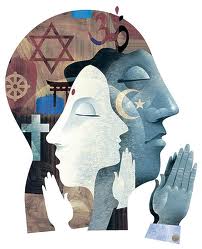
I don’t know any other names for Jesus, or for Allah or Buddha or Brahman, or for God. But what I learned from this man’s email is that many of us are seeking that name, and by sharing the search with one another we enhance the journey for us all.
Rachael Bregman – Photo: jacksonville.com
I think what I was impressed with the most was that Bregman seemed completely unthreatened by the question and didn’t mind taking a stab at the answer that wasn’t in some way dismissive of the Christian questioner. Even in my own home, bringing up certain subjects with my Jewish wife (the Apostle Paul being one of them) is likely to be met with a rather icy response.
So I decided to find out what I could about Bregman.
Rachael Bregman knows she doesn’t fit most people’s concepts of a rabbi, at least as seen on TV.
“They’re always old men with earlocks. They’re called peyas,’’ she said of the strands of uncut hair in front of the ears. “That’s spelled p-e-y-a-s … maybe. I know how to spell it in Hebrew.”
Bregman is a 36-year-old divorcee who left Atlanta three weeks ago with her rambunctious 8-month-old dog Safi, a pit bull-ridgeback-Lab mix, at least those are the breeds Bregman thinks she has identified.
Bregman knows big-city life, having grown up in Boston and lived in Atlanta, but she was drawn to Brunswick by the size of Temple Beth Tefilloh, a Union of Reform Judaism congregation chartered 127 years ago.
-Terry Dickson, July 24, 2013
“Woman is Temple Beth Tefilloh’s first rabbi in 50 years” jacksonville.com
She also has a Facebook page that’s pretty accessible as long as you’re logged in to Facebook.
I know some people, both Jewish and otherwise, who have issues with female Rabbis (or with female authority in general), Reform Judaism, and liberal political and social viewpoints, but at least she seems approachable, even if asking a Rabbi about Jesus’s name might be somewhat awkward.
Daniel C: I’ve been following MJL for quite awhile and this is the first I’ve seen posted on the matter. If they now have Messianic Jewish leanings then they’ve become a Christian organ and I will no longer be following them.
Carol C: Agreed. Jesus has nothing to do with Judaism. We do not study him or ever mention him in our learning. But since the inception of Christianity his followers have used his name to persecute and murder us. Can’t deny that.
D.E: My Jewish Learning is not a JEWISH resource but a trans-denominational collaboration of mostly misinformed christians and URJ adherents. That it exists does not make it authoritative.
Lori F: Has this become a “jews for jesus” site now?
And the beat goes on. Actually, these responses are pretty predictable, although nothing I read in the original article seemed to support the idea of a Jew having any sort of “approach” to Jesus.
A number of Christians and “Messianic” folks also commented in a more direct attempt to answer the question, but that didn’t go over well. One Jewish fellow even called “Messianic Judaism” an “oxymoron,” but I can’t locate the specific entry anymore.
I certainly don’t blame any Jew for experiencing some sense of threat at the idea of a Christian “incursion” into Jewish historical, social, and religious space, but from my particular point of view, it is occasionally frustrating. However, even my highly unusual theological and doctrinal viewpoint won’t earn me any points within normative Judaism anymore than it does with my long-suffering wife.
Still, as a Gentile, once you’ve accepted a certain “Judaicly-aware” consciousness regarding the central message of the Bible, particularly the New Covenant, and how the nations of the world even have a place in a wholly Jewish document, it’s difficult to not want to build some sort of “interface.”
But there are limits, sometimes rather severe ones. Having acknowledged to the Jewish people, including those within Messianic Judaism that what’s yours is yours, whether within Jewish community or standing outside of it, we non-Jewish yet “Judaicly-aware” Talmidei Yeshua struggle to find a place where we belong.
I sometimes suspect that’s why many/most/all of the non-Jews associated with the ancient Jewish community of Yeshua followers in the early decades and centuries of the common era finally broke away from their mentors and teachers in what I’ve previously termed a rather ugly divorce, in order to create a brand new religious entity (Christianity) where the Gentile might feel more at home.
That “solution” has worked out, albeit in a very uneasy (gross understatement) manner, for nearly twenty centuries now, but for a few of us on the fringes of both Christianity and Judaism, that’s not good enough anymore.
Of course, normative Judaism’s response to someone like me is to give up Christianity in any form and become a Noahide or “righteous Gentile”. Judaism maintains that the rest of the world doesn’t need to convert in order to be “saved,” so it doesn’t actively seek converts. In fact, it tends to discourage conversion for a variety of reasons.
Maybe it’s the centuries of living under Christian and Muslim rule. Maybe it’s the history of forced conversion. Maybe it’s that there’s no religion requirement for the Jewish afterlife.
Whatever the reasons, Jews have traditionally been uncomfortable proselytizing.
But a Maryland foundation is flouting the taboo by funding outreach programs to non-Jews in an effort to bring them into the fold.
I read an article years or even a decade or so ago (so I can’t remember the source) suggesting that Jews attempt to convert Gentiles to Judaism as a matter of Jewish survival, since except among Orthodox Jewish communities, Jewish families are in a decline.
But again, this effort is not without its Jewish critics:
Eli W: If these people weren’t so ignorant of Jewish law they would realize that soliciting converts if prohibited and that the conversion process they’re advocating wouldn’t result in valid conversions anyway.
Of course if these people weren’t so ignorant of Jewish law the attrition rate from their movements wouldn’t be so shockingly high and there would be no need for conversions to replenish dwindling numbers.
So maybe a proper Jewish education for Jews might be a better idea than trying to recruit non-Jews?
Mark J: when was it ruled that soliciting converts is prohibited? Before or after Moshe Rabenyu married his shiksa? The ban on soliciting conversions was made under duress as was the end of polygamy and I am sure many other rulings by ersatz rabbis who ruled out of fear of gentiles…
Eli W: Did you ever hear of work called the Shulchan Aruch? That and predecessor works like the Tur and Maimonides Mishna Torah have defined normative Jewish law for centuries. They preceded the crackpot websites that seem to be your source for Jewish law.
Photo: OU.org
Dave M: Eli, you are very right on may of your comments. Except, my friend, many many groups are doing kiruv work eg. Chabad, Aish etc. but still the total result has been sadly very little. I am not sayng to stop. I am just saying let’s just ALSO put the information out there on the internet ie. information about Judaism in terms a non-Jew who knows nothing about Judaism can understand. Let’s spread the light of Torah around the world by talking about Judaism not by hiding it under a bushel basket.
There are voices that potentially could be involved in this debate that I’ve left out, mainly because I didn’t stumble across any convenient articles about them. Certainly Evangelical Christianity would have an opinion about Jews proselytizing Christians. Imagine an individual Jew or Jewish family going door to door in a largely Gentile/Christian neighborhood passing out booklets citing the social and spiritual advantages of becoming a Jews.
I don’t see that happening and I do believe that the Church would probably push back pretty hard if it ever did (also keep in mind that occasionally, converts to Judaism become vulnerable to abuse within Jewish community).
Then, of course, there’s what people in the Messianic Jewish and Hebrew Roots movements would have to say about it. Periodically, non-Jews involved in either movement decide to shoot out the other side and convert to (usually Orthodox) Judaism, mistaking becoming a Jew as the primary means of having a relationship with God.
In many ways, it would be so much easier to accept that Jews are Jews and Christians are Christians and that they are separate communities with nothing in common. If Christians would just mind their/our own business and keep their/our noses out of Jewish community, everyone would be happy.
So being “Judaicly-aware” and a self-described “Talmid Yeshua” is a somewhat risky venture. Many non-Jews have felt the necessity to convert to (non-Messianic) Judaism because of such an awareness, remain Gentile and claim the Torah as belonging to them anyway, or gone the two-house, “I’m a member of a lost tribe” route, essentially saying that they’re already Jewish and thus the Torah is theirs, too.
I have another solution. How about learning to be comfortable in your own skin?
That doesn’t mean you, as a Gentile, have to learn to be comfortable in a church. I tried that for a couple of years and it didn’t work out.
So, you either live near enough to a religious community that is accepting of Jews and non-Jews who are “Talmidei Yeshua,” or you just admit to yourself that you are who you are and that you don’t fit into someone’s pre-conceived identity category.
That has the disadvantage of meaning that you, more often than not, will have no community to which you relate, unless you can find one online. However, it has the advantage of meaning you don’t have to constantly argue with people, since you aren’t claiming anything that belongs to any other person or group.
The double-edged sword is building an identity for yourself that’s consistent with what the Bible says about righteous people of the nations who become disciples of Rav Yeshua. If you’ve been reading this blog for any length of time, you know that’s not such an easy thing to do. On the other hand, at least you have the freedom to create yourself.
If you are a Talmid Yeshua and are in a church (and you’re open with your opinions and beliefs), you are liable to butt heads with clergy and worshippers. The same if you are in a normative synagogue. So you either keep your mouth shut (easier for some people more than others), find a more compatible community, or believe that God accepts you as you are, even if most people don’t.
From Judaism’s point of view, anytime a non-Jew expresses an interest in Judaism the question is, “What do we do with these Gentiles?” Certainly the Apostle Paul (Rav Shaul) faced that question on many occasions. It’s the whole point of the events Luke recorded in Acts 15 relative to the legal proceeding establishing Gentile status in ancient Jewish community, and the resultant “Jerusalem letter.”
As you’ve read above, these aren’t issues contained only within Messianic Judaism and Hebrew Roots. They’re spilling over into many other Jewish venues as well. They probably always have. And normative Judaism doesn’t seem to have any better answer to this question than the rest of us do, and we have the rather gruesome history of how the Church has treated the Jewish people and Judaism to thank for it.
I know that there are all kinds of religious pundits in a wide variety of camps who think they have the definitive answer. I think it’s much more interesting to explore the question and to keep creating a better “me,” whoever that happens to be and whatever that means to God.
No, not all religions or all religious people “taste of crazy,” but the ones who do really stand out. Consider:
A well-known, though already controversial, Israeli rabbi recently released a video encouraging his followers that Messianic Jews sharing the Gospel deserve the “death penalty.”
-Israel Today Staff, October 25,2015
“Rabbi Threatens: Messianic Jewish Evangelists Deserve Death” Israel Today
I found the link to the above-referenced news article at yesterday’s edition of the Rosh Pina Project. It’s a little bit terrifying that this Rabbi makes such public statements and teaches at a yeshiva. Unfortunately, his opinions can add fuel to how many Christians, at least covertly, feel about Jewish people and Judaism.
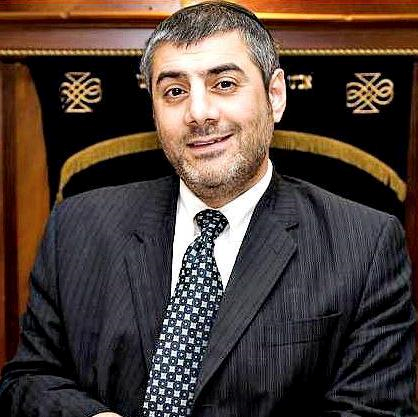
I don’t know how popular Rabbi Yosef Mizrachi’s opinions are, either here in America or in Israel. I hope he’s something of an “edge case” and doesn’t represent mainstream religious Jewish thought. Yes, I know that the idea of Jews “believing in Jesus” pretty much goes against what normative Judaism is able to accept, but the whole “death penalty” thing seems over the top.
Rabbi Yosef Mizrachi
While it would be easy to start saying bad things about the ultra-Orthodox or just Rabbis and Rabbinic authority in general, it’s important to remember that “loose cannons” can exist in just about any religious environment.
Steve Anderson, the anti-Semitic pastor of the Faithful Word Baptist Church in Tempe, Arizona, denies the Holocaust in a video he posted to YouTube last week, claiming that the millions of Jews who were gassed and burned in ovens simply died of hunger and disease due to forced labor and war.
-from “Anti-Semitic Pastor Steve Anderson Promotes Holocaust Denial” blog.adl.org, June 1, 2015
We like to believe that “the Church” has come a long way since the “bad old days” when they used to torch volumes of Talmud, Torah scrolls, and burn the occasional synagogue to the ground. There’s even been some recent talk about a partnership between Christianity and Orthodox Judaism. But that doesn’t mean that all Christians and all Jews are on board with this.
Anderson goes on to say:
Anderson warns that the “real Holocaust” for the Jews will occur if they don’t accept Jesus as the Messiah. He says, “The real burnt offering is going to be when all of these Jews that don’t believe in Jesus Christ go to hell for eternity. That’s the oven that they ought to be worried about.”
So this Baptist Pastor has his own idea of a “death sentence” for Jews who don’t accept Jesus, he just figures Jesus is going to be the executioner. I find this disturbing because this “burnt offering” he proposes, in his eyes, would include my Jewish wife. I’m glad his church in Tempe, Arizona is far away from here.
But while Anderson is “gunning” for all Jews who don’t believe in Jesus, Rabbi Mizrachi has a more specific target:
Mizrachi was referring specifically to Eitan Bar and Moti Vaknin, the Israeli Messianic Jews behind the One For Israel project that exists primarily to share the Gospel via the Internet.
In one of their more recent videos, Bar and Vaknin exposed several of Mizrachi’s false teachings regarding Yeshua and the promises about Messiah.
Mizrachi warned that “if they dare to speak up again, these two clowns, I will strike them down.”
Pastor Steve Anderson
That’s a pretty bold statement. I suppose Rabbi Mizrachi could have just been blowing smoke, but I think Bar and Vaknin took the threat seriously.
The irony in all this is that, even though Mizrachi and Anderson would consider each other mortal enemies, they have some things in common. They both believe they are sincerely serving God in calling for (in one way or another) the destruction of those they believe are opposed to God. They are both Holocaust deniers (amazingly enough), and they both aren’t afraid to go on record saying some pretty inflammatory things.
I suppose scary or crazy people can be in any religion, even as Rabbis and Pastors.
By the way, I found Anderson just by Googling “anti-semitic pastor” and his name was returned at the top of the list. I’m sure there are others, maybe many others, most of whom don’t publicly admit to their opinions. For all I know, there may be plenty of Rabbis who covertly agree with Mizrachi but for the sake of peace don’t give voice to their thoughts.
It’s enough to make you want to give up on religion altogether.
That’s why I have to believe that these two individuals are somewhat rare. I have to believe that most Rabbis and most Pastors don’t desire the destruction of Messianic Jews and non-believing Jews respectively.
But even if most or all of them did, that doesn’t change God. Some Christians like to say that “It’s not a religion, it’s a relationship.” I completely disagree. Christianity in its various forms is just as much a tradition-driven religion as the numerous branches of Judaism. Where the relationship comes in, at least from my point of view, is between the individual and God.
I suppose I could say “between the community and God,” but the community isn’t responsible for your “walk” with the Almighty, you are. That people like Pastor Anderson call themselves “Christian” in no way obligates me to agree with any of their nonsensical notions.
If I were stuck on the proverbial desert island with the means to survive in the long haul, and my only companion were God, I wouldn’t give men like Mizrachi and Anderson a second thought. I probably still shouldn’t. After all, I don’t depend on either of them for my ability to connect (or disconnect as the case may be) with Hashem.
And that’s the beauty of it. No matter how many religious “nutjobs” there are in the world, they don’t speak for me and they have exactly zero impact on what God thinks of Christians and Jews relative to Moshiach or anything else.
I can only hope and pray that God will protect anyone Mizrachi and Anderson have influence over.
On Facebook, I found a link to a YouTube video titled Can a Noahide/Non-Jew Keep Shabbos? and naturally I was intrigued. I should say that I have a pretty good idea how an Orthodox Rabbi would answer that question, but I watched the video anyway.
Afterward, I looked up the source, EmunahChannel.com, and discovered that the Rabbi answering the question on the video is Rav Dror Moshe Cassouto. According to the site’s About page:
Rav Dror Moshe Cassouto brings to us rare honest pure Emuna principals of Rabbi Nachman. Our hope is that our Torah Videos will bring you closer to the Bore Olam (Creator of the Universe) and to serve Him with joy, faith, and trust (Simcha, Emunah and Bitachon).
Learn the real meaning of life, the real purpose in life available to you today! Find Fulfillment, Acceptance, Purpose for your life. Discover the good points in yourself and others, and Finding how to serve God with every aspect of your being: Your mind, Your talents, Your emotions.
There’s more, but you can click the link I provided above and read all of the content for yourself.
Recently, I wrote a blog post called Not a Noahide, in which I was reminded in the comments section, I probably should have called “More than a Noahide.” I also wrote a companion piece titled Talmidei Yeshua which addresses what we Judaicly-aware Gentiles in Yeshua (Jesus) should call ourselves and what that’s supposed to mean (an ongoing process of self-definition).
They both were inspired by a source that attempts to draw parallels between Noahides and we non-Jewish “Talmidei Yeshua,” or a population that’s more commonly known as Messianic Gentiles.
I mentioned the “ongoing process of self-definition” above, but this is also a process of trying to understand the role of the non-Jew in Jewish religious and communal space. A Noahide’s role is well-defined by the various branches of Judaism, but not so the role of the “Talmidei Yeshua” in Messianic Jewish space.
But, unless you’ve already looked at the nearly seven minute video of Rav Cassouto’s response to the question at hand, you probably want to know what he said. Here are my rough notes, which I typed into notepad as I was listening to the Rav speak.
Halachically no. Must violate some portion of shabbat.
Any Gentile who does observe Shabbos must be punished horribly.
Not that they don’t want us to keep shabbos, but it was a gift to Israel from Hashem.
To do so, they must convert to Am Yisrael and the converts are loved in six ways, and born Jews are loved in five.
The purpose of our life is to be humble and me must be humble that we are not Am Yisrael. A Gentile can believe in the One God, but may still not believe that God chose the people of Israel as the chosen nation and they have certain priorities and privleges that other nations don’t have.
We can enjoy shabbos but need to violate Shabbos in a minor way like turning on a light. Not allowed to receive the Shabbos like Am Yisrael. The purpose is to be humble.
Be humble and crown Hashem and to serve Him. Gentiles level of doing this is less than Am Yisrael. If you convert, your level is elevated to Am Yisrael.
Rav Dror Moshe Cassouto
These are rough notes, so they may seem a tad disjointed. The bottom line is that halachically, Gentiles are not to observe the Shabbat in the manner of Am Yisrael because we are not Am Yisrael. We cannot claim to have fulfilled the mitzvah of Shabbat observance in the manner of the Jews.
However, if we not only acknowledge the existence of the One God but also that He is the God who chose Am Yisrael to be elevated above the nations, then we can appreciate the Shabbat in a similar manner to Am Yisrael, as long as we violate the Shabbat in some sense, such as turning on and off a light switch. Seems simple enough as far as it goes.
To truly be able to observe Shabbos and fulfill the mitzvah, a Gentile must convert to Am Yisarel. The Rav also said that Hashem loves the convert even more than the born Jew, which is interesting.
But I don’t believe Gentile Talmidei Yeshua are only Noahides by another name. I believe we are more. If I didn’t, then I’d have to admit that faith and trust in Yeshua is meaningless. If that were true, why did the Apostle Paul (Rav Shaul) approach the Gentile God-Fearers in the synagogues of his day and reveal to them the good news of Rav Yeshua? They were already God-fearers. What would have been the point?
The matter of halachah and Shabbos observance by the Gentile Talmidei Yeshua has been a hotly debated topic in the Messianic blogosphere and many other venues over the years. I’ve commented on this many times, including in Messianic Jewish Shabbat Observance and the Gentile.
I doubt we can draw a direct parallel between Rav Cassouto’s commentary and the various opinions on the same topic in the Messianic realm. It’s difficult to reconcile this with what we read in Isaiah 56, although I’ve certainly tried.
For a variety of reasons I’ve written about at length previously, I don’t particularly keep a Shabbat of any sort. I certainly don’t want to attempt anything that would approach the level of observance of my Jewish spouse, and her’s isn’t what you’d call “Orthodox” (and I’ve been chided by her in the past for trying).
As I write this, she’s preparing to go to shul for Shabbos services, which pleases me.
I suspect that in Messianic Days, the people of the nations will likely keep some sort of Shabbos, but how that will compare to Jewish observance, I cannot say. In spite of the opinions of many and what they teach, I think the specific details aren’t definitively available.
That said, I suspect that, just as the Acts 15 Jerusalem letter to the ancient Gentile “Talmidei Yeshua” defined a less stringent level of observance than that incumbant upon Am Yisrael, our Shabbat observance, even in the Kingdom of Heaven, will still not be quite the same as that of the Jews.
So perhaps in the present age, we have a bit of latitude as to how we choose to honor Hashem on Shabbos. I know when I say that, I drive certain people nuts. Especially in religious terms, we like to have our lives well-ordered and highly specified. We want the rules and then we want to either obey those rules as Holy edicts from Heaven, or to adapt those rules and then say to ourselves that our adaptation is the Holy edict from Heaven (as opposed to the “man-made rules” of the Rabbis, who we are nonetheless sourcing).
We are more than Noahides, but what we are remains indistinct, at least as an overarching set of standards for we “Talmidei Yeshua.” According to the Nanos and Zetterholm volume Paul Within Judaism, there may not have been a definitive set of standards and roles, even for our ancient counterparts.
That’s also something that drives people nuts, but we can’t reasonably fill in the gaps in our knowledge with our imagination (although a great deal of theology and doctrine in certain circles does this to one degree or another).
All I’m doing here is attempting an honest (however brief) examination of the topic from the perspective of an “average guy”. Face it. I’m no scholar, leader, teacher, or pundit. I’m just a person trying to figure it all out who happens to write about that journey.
What does that mean to you as the non-Jewish disciple of Rav Yeshua (Jesus Christ)? Right now, it can mean whatever you want it to mean in terms of your own conscience and your understanding of the message of the Bible.
The Bible is highly biased toward Israel and the Jewish people, so we only have certain portions that directly speak to the nations. Interpreting those correctly, particularly within a Jewish document defining a Jewish context and covenant relationship with Hashem, is no small task.
Neither is our individual relationship with God. We progress one step at a time with the understanding that our movement is not at all linear. We learn by doing.
Learn to do good. Seek justice. Aid the oppressed. Uphold the rights of the orphan. Defend the cause of the widow.
I saw the B.C. comic strip and it reminded me of the angst that is often expressed by both secular and religious people this time of year. “Christmas is pagan!” “Christmas is offensive!” “I celebrate Kwanzaa and Christmas offends me!” “I celebrate Festivus and everything offends me!”
As my long-suffering wife might say, “Oy!”
This is more a blog post about memes than any extended narrative or profound commentary. A message to the easily offended in the secular and religious blogosphere…chill out.
I’ve been monitoring a couple of conversations on various blogs, basically debates between Jewish and non-Jewish disciples of Yeshua and a Jewish anti-missionary who is on a mission, so to speak.
In the midst of all this, I’m pondering the recent death of six U.S. troops in Afghanistan, killed by a suicide bomber. I’m pleasantly surprised that a McDonald’s restaurant in Nashville has received such a positive response to painting a nativity scene on its windows. No, I don’t eat fast food nor do I celebrate Christmas, but I believe others have the right to do so.
I also believe those six soldiers had the right to live, but that was taken from them because they are at war. If any of their families celebrate Christmas, then this year, there will be grief and mourning adorning their trees instead of lights and ornaments. Christmas dinner will be ashes rather than turkey or goose.
I hadn’t actually realized this, especially after Hamas took control, but there’s been a Christian community in Gaza for nearly 2,000 years which only now is disappearing, being driven extinct by relentless terrorism.
You may think your faith traditions are threatened by other religious holidays, by secularism, by the government, or whoever you want to blame. Try being a Christian in Gaza. I can only imagine it’s a bit more of a struggle than the “problems” we face as people of faith in the U.S.
Christmas, whatever you think of it, arrives on Friday this year. A little over a week later, most folks will start taking their festive lights down and they’ll deposit their evergreen trees by the curb for orderly disposal.
Christmas, along with every other December holiday, will fade along with 2015 and the buzz about the latest Star Wars movie, and we’ll move on to other topics that offend us.
Every year at about this time, the Aish website runs a story called The Christmas Tree. It’s relatively short and a wonderful illustration of how best to react when we confront a religious holiday that isn’t compatible with us for whatever reason. I’d like to think we are mature enough to respond to each other’s differences and distinctiveness the way the Rabbi in the story reacted to the loving but mistaken act of kindness bestowed upon the Rav’s family by their Irish maid.
When we can not only understand but practice sympathy instead of anger and offense, then we will truly have learned what it is to be a Kiddush Hashem, to sanctify the Name of the Almighty.
Yesterday when I was making a small purchase at a local store, the cashier wished me “Merry Christmas.” I returned the sentiment. How could I be offended at her sincere well wishes toward me? If “Merry Christmas” offends you, then I graciously invite you to deal with it.
Actually Questor made the suggestion for a proper term by which to call Judaicly-aware non-Jewish disciples of Rav Yeshua in coining the phrase תָלְמִדִם שׁל יֵשׁוּע – Talmidim shel Yeshua – Disciples of Yeshua, however ProclaimLiberty suggested:
Nice label suggestion, “Q”, but the phrase requires the possessive contraction as: “תָלְמִדִי יֵשׁוּע” (Talmidei Yeshua) rather than as merely a descriptive or explanatory phrase.
Of course, referring to people like me as “Talmidei Yeshua” is going to draw a lot of blank stares from Christians or just about anyone else.
Just the other day, I got a knock on my door, and when I answered, the fellow asked if I was a Christian. I said “yes,” but pointing at the mezuzah on the door frame, I said my wife was Jewish. If I had told him something “I’m Talmidei Yeshua,” he might have given me a much less predictable response.
For as many years as I’ve been involved in the Hebrew Roots and Messianic Jewish movements, there’s been a struggle as to what to call ourselves. OK, Jewish disciples of Messiah can call themselves Messianic Jews, but even early on, there was some resistance to applying the word “Messianic” to non-Jews, the idea being that “Messianic” belonged to the Jewish people.
A lot of Gentiles in Messiah don’t like being referred to or like calling themselves “Christians” because of the implications of replacement theology, denial of the applicability of the Torah as a requirement of God’s for Jews in general and Messianic Jews in particular, and the whole church on Sunday, Christmas, Easter, eating ham at the drop of a hat deal that seems so anti-Jewish and thereby anti-Messiah.
Some folks hedge their bets and say they’re “believers” which is acceptable as an alternate “Christian-ese” word that still doesn’t peg the non-Jewish Messianic as “Christian” specifically.
However, in spite of all this, Messianic Gentiles as a proper term, has risen to the top of the list in being the most accurate representation of who we rather odd non-Jewish disciples of the Jewish Messiah King are in our theology, doctrine, and praxis.
That said, Q and PL may have a point in addressing us as “Talmidei Yeshua” since “Yeshua’s disciples” is both accurate and generic. I even mentioned to PL that we could refer to both Jews and Gentiles in Messiah by that title and still be correct.
Yes, it could refer to both, though Jewish disciples might prefer ‘Hasidei Yeshua. Or, as someone in my local ‘havurah suggested last week, Jewish disciples might do well to forego any distinctive label altogether, being satisfied to be simply Jews without any such label that could suggest separatist factionalism or “minut”. Just as Rav Shaul was content to identify himself simply as a Pharisee or a Binyamini (tribal designator), without any other qualifier specifically associated with Rav Yeshua, so could modern Jewish disciples do in modern terms. Distinctive terms such as “Nazarene” did not appear until later, and were used primarily to distinguish Jewish messianists as individuals to be avoided or forced out of the Jewish community. That sort of social dis-interaction needs to be countered as Jewish messianists re-integrate within the wider Jewish community, bringing what they’ve learned from Rav Yeshua with them.
For gentile disciples, on the other hand, a label could have a positive function to emphasize that such individuals have “drawn close” to the Jewish community and embraced the principles and values of the Torah covenant.
Rabbi Stuart Dauermann
And that Reminded me of Rabbi Stuart Dauermann’s article “The Jewish People are Us — not Them,” published in Messiah Journal, which I reviewed a couple of years back.
Historically, converting to Christianity has been seen as drawing the convert out of his or her former life and associations and into the Church. This has been true whether the convert were a Jew or anyone else. Sometimes, the convert’s Jewish family and friends don’t even acknowledge this person as Jewish anymore.
However, as Dauermann correctly pointed out and as I interpret him, being Messianic is a very Jewish thing to do. All religious Jews eagerly await the coming of Messiah. The only difference between a Messianic Jew and any other religious Jew, is that the Messianic acknowledges the specific revelation of Messiah as Rav Yeshua (I’m sure there are Jews who would strongly debate this point).
Accepting the revelation of our Rav as Moshiach, if anything, should increase and enhance the observance of a Jew and ideally, draw the Jew nearer to his/her fellows and to Jewish devotion and praxis.
That’s why there probably isn’t any real need to call a Messianic Jew anything other than a Jew. PL rightly points out that Paul didn’t create a special designation for himself after the events of Acts 9. So why should any other Jewish disciple of the Rav do so?
However, it always seems to come back to “what do we do with the Gentiles?” If being “Messianic” is such a Jewish thing to do, then it must be a pretty strange thing for a non-Jew to do. Who are we? What do we call ourselves? How do we define our praxis? Once we enter this world, as distinguished from the more traditional Church, we find ourselves in an indistinct, foggy, no-man’s-land, being neither fish nor fowl, still Gentile but located, even tangentially, in Jewish space because we have declared ourselves as disciples of the Jewish Rav.
Calling ourselves Talmidei Yeshua may not change a great deal, but it does give us some small sense of identity, or at least what to call ourselves, that shouldn’t be objectionable in Jewish religious and social space. Of course, it’ll rather put off most Christians who consider the title “Christian” to be more than sufficient, but then again, anyone who’s been reading this blog for a while knows that people like me don’t think, speak, teach, write, or believe in precisely the same things you’ll find preached in the average Evangelical Church on Sunday morning.
Of course, those other pesky questions remain unanswered for the most part. Yet I think each person has created his or her own answers out of necessity. Some let themselves be defined by the standards of accepted praxis for Gentiles in their congregations. Some, like me who have no congregation or group, self-define. However, there remains no single standard to which the Talmidei Yeshua can consult and emulate.
This is probably why so many of the non-Jewish Talmidei Yeshua look to their Jewish counterparts with envy since Jewish halachah is well-defined.
My Jewish wife would be perplexed by all this. From her point of view, and from the point of view of the Jews attending the two synagogues in my community, I’m considered a Christian and that’s that. All the little spins and twists that I derive from Jewish literature in understanding my faith are moot to them.
Photo: theshirtlist.com
This isn’t a problem really if we don’t factor community into the equation. Besides my name, I have no idea how God refers to me, how He categorizes me (besides “human” or “Goy”), how He thinks of me, if He has to have categories at all. None of this probably matters to Him. He doesn’t see titles or labels, He sees the heart and the relationship.
In the end, that’s all there is. Maybe we live in community or at least family, but we die alone and only God receives us. He calls us by whatever name He wills.
"When you awake in the morning, learn something to inspire you and mediate upon it, then plunge forward full of light with which to illuminate the darkness." -Rabbi Tzvi Freeman




 I’m not a big fan of non-Jews wearing traditionally Jewish apparel, but in this case, Ljungggren had a good reason. It makes me wonder if we all shouldn’t start donning kippot, not to imitate Jews but to stand in solidarity with them and with Israel.












 Morning Meditations