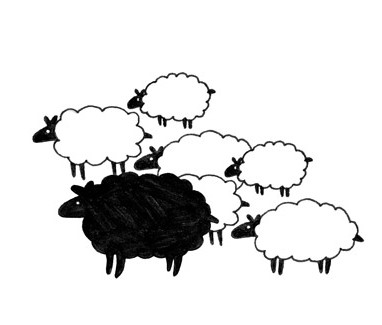
I saw the B.C. comic strip and it reminded me of the angst that is often expressed by both secular and religious people this time of year. “Christmas is pagan!” “Christmas is offensive!” “I celebrate Kwanzaa and Christmas offends me!” “I celebrate Festivus and everything offends me!”
As my long-suffering wife might say, “Oy!”
This is more a blog post about memes than any extended narrative or profound commentary. A message to the easily offended in the secular and religious blogosphere…chill out.
I’ve been monitoring a couple of conversations on various blogs, basically debates between Jewish and non-Jewish disciples of Yeshua and a Jewish anti-missionary who is on a mission, so to speak.
In the midst of all this, I’m pondering the recent death of six U.S. troops in Afghanistan, killed by a suicide bomber. I’m pleasantly surprised that a McDonald’s restaurant in Nashville has received such a positive response to painting a nativity scene on its windows. No, I don’t eat fast food nor do I celebrate Christmas, but I believe others have the right to do so.
I also believe those six soldiers had the right to live, but that was taken from them because they are at war. If any of their families celebrate Christmas, then this year, there will be grief and mourning adorning their trees instead of lights and ornaments. Christmas dinner will be ashes rather than turkey or goose.
I hadn’t actually realized this, especially after Hamas took control, but there’s been a Christian community in Gaza for nearly 2,000 years which only now is disappearing, being driven extinct by relentless terrorism.
You may think your faith traditions are threatened by other religious holidays, by secularism, by the government, or whoever you want to blame. Try being a Christian in Gaza. I can only imagine it’s a bit more of a struggle than the “problems” we face as people of faith in the U.S.
Christmas, whatever you think of it, arrives on Friday this year. A little over a week later, most folks will start taking their festive lights down and they’ll deposit their evergreen trees by the curb for orderly disposal.
Christmas, along with every other December holiday, will fade along with 2015 and the buzz about the latest Star Wars movie, and we’ll move on to other topics that offend us.
Every year at about this time, the Aish website runs a story called The Christmas Tree. It’s relatively short and a wonderful illustration of how best to react when we confront a religious holiday that isn’t compatible with us for whatever reason. I’d like to think we are mature enough to respond to each other’s differences and distinctiveness the way the Rabbi in the story reacted to the loving but mistaken act of kindness bestowed upon the Rav’s family by their Irish maid.
When we can not only understand but practice sympathy instead of anger and offense, then we will truly have learned what it is to be a Kiddush Hashem, to sanctify the Name of the Almighty.
Yesterday when I was making a small purchase at a local store, the cashier wished me “Merry Christmas.” I returned the sentiment. How could I be offended at her sincere well wishes toward me? If “Merry Christmas” offends you, then I graciously invite you to deal with it.
Actually Questor made the suggestion for a proper term by which to call Judaicly-aware non-Jewish disciples of Rav Yeshua in coining the phrase תָלְמִדִם שׁל יֵשׁוּע – Talmidim shel Yeshua – Disciples of Yeshua, however ProclaimLiberty suggested:
Nice label suggestion, “Q”, but the phrase requires the possessive contraction as: “תָלְמִדִי יֵשׁוּע” (Talmidei Yeshua) rather than as merely a descriptive or explanatory phrase.
Of course, referring to people like me as “Talmidei Yeshua” is going to draw a lot of blank stares from Christians or just about anyone else.
Just the other day, I got a knock on my door, and when I answered, the fellow asked if I was a Christian. I said “yes,” but pointing at the mezuzah on the door frame, I said my wife was Jewish. If I had told him something “I’m Talmidei Yeshua,” he might have given me a much less predictable response.
For as many years as I’ve been involved in the Hebrew Roots and Messianic Jewish movements, there’s been a struggle as to what to call ourselves. OK, Jewish disciples of Messiah can call themselves Messianic Jews, but even early on, there was some resistance to applying the word “Messianic” to non-Jews, the idea being that “Messianic” belonged to the Jewish people.
A lot of Gentiles in Messiah don’t like being referred to or like calling themselves “Christians” because of the implications of replacement theology, denial of the applicability of the Torah as a requirement of God’s for Jews in general and Messianic Jews in particular, and the whole church on Sunday, Christmas, Easter, eating ham at the drop of a hat deal that seems so anti-Jewish and thereby anti-Messiah.
Some folks hedge their bets and say they’re “believers” which is acceptable as an alternate “Christian-ese” word that still doesn’t peg the non-Jewish Messianic as “Christian” specifically.
However, in spite of all this, Messianic Gentiles as a proper term, has risen to the top of the list in being the most accurate representation of who we rather odd non-Jewish disciples of the Jewish Messiah King are in our theology, doctrine, and praxis.
That said, Q and PL may have a point in addressing us as “Talmidei Yeshua” since “Yeshua’s disciples” is both accurate and generic. I even mentioned to PL that we could refer to both Jews and Gentiles in Messiah by that title and still be correct.
Yes, it could refer to both, though Jewish disciples might prefer ‘Hasidei Yeshua. Or, as someone in my local ‘havurah suggested last week, Jewish disciples might do well to forego any distinctive label altogether, being satisfied to be simply Jews without any such label that could suggest separatist factionalism or “minut”. Just as Rav Shaul was content to identify himself simply as a Pharisee or a Binyamini (tribal designator), without any other qualifier specifically associated with Rav Yeshua, so could modern Jewish disciples do in modern terms. Distinctive terms such as “Nazarene” did not appear until later, and were used primarily to distinguish Jewish messianists as individuals to be avoided or forced out of the Jewish community. That sort of social dis-interaction needs to be countered as Jewish messianists re-integrate within the wider Jewish community, bringing what they’ve learned from Rav Yeshua with them.
For gentile disciples, on the other hand, a label could have a positive function to emphasize that such individuals have “drawn close” to the Jewish community and embraced the principles and values of the Torah covenant.
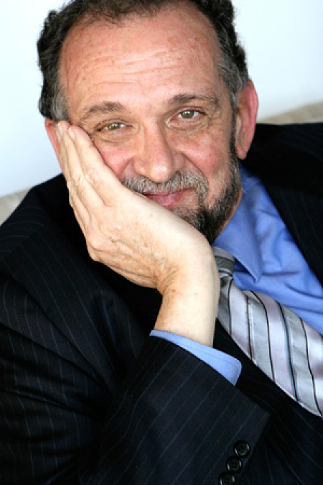
Rabbi Stuart Dauermann
And that Reminded me of Rabbi Stuart Dauermann’s article “The Jewish People are Us — not Them,” published in Messiah Journal, which I reviewed a couple of years back.
Historically, converting to Christianity has been seen as drawing the convert out of his or her former life and associations and into the Church. This has been true whether the convert were a Jew or anyone else. Sometimes, the convert’s Jewish family and friends don’t even acknowledge this person as Jewish anymore.
However, as Dauermann correctly pointed out and as I interpret him, being Messianic is a very Jewish thing to do. All religious Jews eagerly await the coming of Messiah. The only difference between a Messianic Jew and any other religious Jew, is that the Messianic acknowledges the specific revelation of Messiah as Rav Yeshua (I’m sure there are Jews who would strongly debate this point).
Accepting the revelation of our Rav as Moshiach, if anything, should increase and enhance the observance of a Jew and ideally, draw the Jew nearer to his/her fellows and to Jewish devotion and praxis.
That’s why there probably isn’t any real need to call a Messianic Jew anything other than a Jew. PL rightly points out that Paul didn’t create a special designation for himself after the events of Acts 9. So why should any other Jewish disciple of the Rav do so?
However, it always seems to come back to “what do we do with the Gentiles?” If being “Messianic” is such a Jewish thing to do, then it must be a pretty strange thing for a non-Jew to do. Who are we? What do we call ourselves? How do we define our praxis? Once we enter this world, as distinguished from the more traditional Church, we find ourselves in an indistinct, foggy, no-man’s-land, being neither fish nor fowl, still Gentile but located, even tangentially, in Jewish space because we have declared ourselves as disciples of the Jewish Rav.
Calling ourselves Talmidei Yeshua may not change a great deal, but it does give us some small sense of identity, or at least what to call ourselves, that shouldn’t be objectionable in Jewish religious and social space. Of course, it’ll rather put off most Christians who consider the title “Christian” to be more than sufficient, but then again, anyone who’s been reading this blog for a while knows that people like me don’t think, speak, teach, write, or believe in precisely the same things you’ll find preached in the average Evangelical Church on Sunday morning.
Of course, those other pesky questions remain unanswered for the most part. Yet I think each person has created his or her own answers out of necessity. Some let themselves be defined by the standards of accepted praxis for Gentiles in their congregations. Some, like me who have no congregation or group, self-define. However, there remains no single standard to which the Talmidei Yeshua can consult and emulate.
This is probably why so many of the non-Jewish Talmidei Yeshua look to their Jewish counterparts with envy since Jewish halachah is well-defined.
My Jewish wife would be perplexed by all this. From her point of view, and from the point of view of the Jews attending the two synagogues in my community, I’m considered a Christian and that’s that. All the little spins and twists that I derive from Jewish literature in understanding my faith are moot to them.
Photo: theshirtlist.com
This isn’t a problem really if we don’t factor community into the equation. Besides my name, I have no idea how God refers to me, how He categorizes me (besides “human” or “Goy”), how He thinks of me, if He has to have categories at all. None of this probably matters to Him. He doesn’t see titles or labels, He sees the heart and the relationship.
In the end, that’s all there is. Maybe we live in community or at least family, but we die alone and only God receives us. He calls us by whatever name He wills.
A group of prominent Orthodox rabbis in Israel, the United States and Europe have issued a historic public statement affirming that Christianity is “the willed divine outcome and gift to the nations” and urging Jews and Christians to “work together as partners to address the moral challenges of our era.”
-Thomas D. Williams, Ph.D
“Orthodox Rabbis Issue Groundbreaking Declaration of Affirming ‘Partnership’ with Christianity” BreitBart.com
Actually, I heard about this a few days ago but according to one Jewish source, this is to be dismissed as a “bunch of interfaith liberal rabbis” attempting to mollify Christians (and Muslims) by (hopefully) having everyone “make nice” wi one another.
I didn’t think anymore about it until I saw the BreitBart.com article on Facebook, however, since BreitBart isn’t known to be unbiased, I thought I’d look for other news sources covering the story.
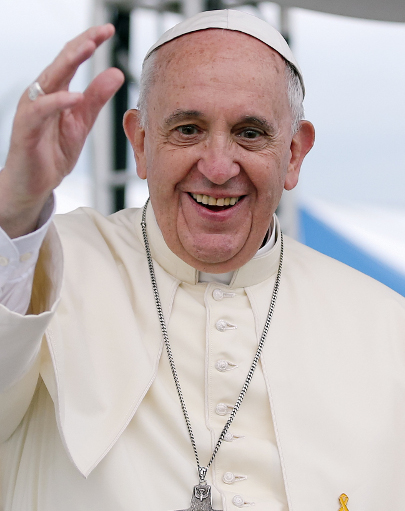
2014 Pastoral Visit of Pope Francis to Korea
Apparently, this is associated with something I wrote recently regarding how the Vatican has changed it’s stance on converting Jews. It’s not that the Roman Catholic church has ceased all efforts to share their version of Jesus Christ with Jewish people, it’s simply that they state they no longer have a specific mission to the Jews. They also (apparently) now believe that Jews have a covenant relationship with God without first having to acknowledge Jesus Christ as Savior and Messiah.
In its statement, “To Do the Will of Our Father in Heaven: Toward a Partnership between Jews and Christians,” the rabbis who signed the statement “seek to do the will of our Father in Heaven by accepting the hand offered to us by our Christian brothers and sisters.”
“It is a groundbreaking statement,” Rabbi Dr. Eugene Korn said. “It’s the only statement I know of by an international Orthodox body that talks about the practical and theological relationship with the Roman Catholic church after Nostra Aetate.”
Rabbi Korn, who lives in Teaneck and Jerusalem, was one of the drafters of the statement, which was published by the Center for Jewish-Christian Understanding and Cooperation, an interfaith center in Israel founded by Rabbi Shlomo Riskin. Rabbi Korn is the center’s academic director.
Of course, an organization called The Center for Jewish-Christian Understanding and Cooperation (CJCUC) would have a vested interest in promoting good Jewish-Christian relations, so this statement can’t be a complete surprise.
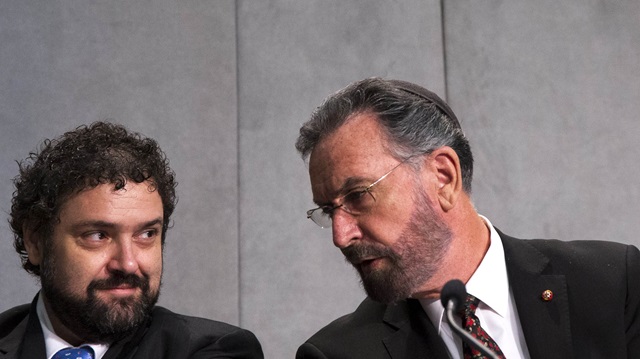
Image: Alessandra Tarantino / AP Images / Rabbi Claudio Epelman and Rabbi David Rosen
But just as the Catholic statement previously issued does not represent formal policy of the Vatican, the Christianity Today (CT) story made this observation:
While the Jewish statement is a signpost of improving Jewish-Christian relationships, it shouldn’t be interpreted as a consensus among Jewish rabbis, Orthodox rabbi Yehiel Poupko told CT.
“No major Jewish Halachic (Jewish legal) authority has signed the statement,” he said. “And Jewish thought has, for centuries, emerged not from individuals signing letters but from a long, slow process of scholarship that builds communal consensus. This statement did not do that. In addition, complex theological issues do not readily lend themselves to full expression in short sentences presented in brief public statements.”
In other words, steps are being taken in the right direction (seemingly), but nothing is official. This won’t change things as much as some folks wish it would. However, the CT story added:
But it isn’t meaningless.
“The statement is a very real indication that the Orthodox rabbinate is grappling with how to understand Christianity in an era when Christianity is reaching out to Judaism and has repented of its sins against us,” he said.
The warm relationship between Jews and evangelicals is still in its infancy, Poupko said. “We are feeling our way, and this statement should not be viewed as a consensus, let alone a final statement. Rather, it’s an indication of the theological and intellectual ferment in the Orthodox rabbinate about Christianity.”
Christianity—and Islam, for that matter—are actually Jewish success stories, he said, “because Christianity and Islam use the Torah, and as a consequence, people who would now be pagans have knowledge of and are in relationship with the one God.”
By the way, Maimonides states that the popularity of Christianity and Islam is part of God’s plan to spread the ideals of Torah throughout the world. This moves society closer to a perfected state of morality and toward a greater understanding of God. All this is in preparation for the Messianic age.
But as the CT article points out:
Experts told CT that neither statement wipes out the significant theological differences between Christians and Jews.
David Brickner – Jews for Jesus
Not only that, but as you might imagine, a number of Christian evangelical organizations are rather put out by both the Vatican’s statement and that of (possibly) CJCUC:
Jews for Jesus executive director David Brickner was more forceful, calling the Vatican’s position “egregious.”
And…
Jim Melnick, international coordinator of the Lausanne Consultation on Jewish Evangelism (LCJE), agreed.
However, the CT article ended with a quote from Jason Poling, a “co-convener of the national Evangelical-Jewish Conversation:”
But the theological divide shouldn’t stop the Jewish-Christian conversation, he said. “Jewish-Christian relations can only be enriched by the participation of colleagues like these Orthodox rabbis who recognize theological pluralism as a phenomenon without embracing it as doctrine.”
Curious, I went to the CJCUC site to read the actual statement. The statement includes seven somewhat lengthy points so I won’t quote them here. You can click the link and read them for yourself, along with a list of the Orthodox Rabbis who signed it (electronically).
The bottom line? I’m not sure there is one, at least nothing particularly dramatic. At best, I’d have to say this is part of the slow evolution the Christian and Jewish worlds are experiencing as we enter into the “birthpangs of the Messiah,” anticipating the events that will lead to war and destruction which will bring Israel to the brink of non-existence before the Messiah returns to bring victory, redemption, restoration, and justice.
I periodically “lurk” in a private Facebook group for “Messianic Gentiles.” I was actually surprised to have access to this group, but discovered that a friend of mine, who was already a member, added me as a member as well (I guess ordinary group members can add anyone they want without having to go through a moderator).
Anyway, I peek in every now and then to see what people are talking about. As it turns out, there are a lot of comparisons being made there between these Messianic Gentiles and Noahides. Some of the recent references have been posts originating at the Noahide World Center, specifically a free e-book download of a Siddur for Noachides as well as the same siddur as an app for Android.
I too have wondered in the past if there’s a favorable connection between being a non-Jewish disciple of the Jewish Messiah King and being a Noahide, at least relative to a non-Jews’s status and role in Jewish religious and communal space.
To that end, I began to peruse the AskNoah.org forums and even, at one point, exchanged messages with a Rabbi.
That didn’t end well and I concluded that my journey into considering myself a “Ger Toshav” with an unusual Messianic twist had hit a brick wall.
I took another look at their forums just now but can’t quote anything because each one displays the disclaimer:
All material posted to this forum becomes the exclusive copyright property of Ask Noah International Inc., and may not be published or re-used elsewhere without the express permission of Ask Noah International Inc.
OK. I’ll respect that.
So let’s go to the source:
Then God spoke to Noah and to his sons with him, saying, “Now behold, I Myself do establish My covenant with you, and with your descendants after you; and with every living creature that is with you, the birds, the cattle, and every beast of the earth with you; of all that comes out of the ark, even every beast of the earth. I establish My covenant with you; and all flesh shall never again be cut off by the water of the flood, neither shall there again be a flood to destroy the earth.” God said, “This is the sign of the covenant which I am making between Me and you and every living creature that is with you, for all successive generations; I set My bow in the cloud, and it shall be for a sign of a covenant between Me and the earth. It shall come about, when I bring a cloud over the earth, that the bow will be seen in the cloud, and I will remember My covenant, which is between Me and you and every living creature of all flesh; and never again shall the water become a flood to destroy all flesh. When the bow is in the cloud, then I will look upon it, to remember the everlasting covenant between God and every living creature of all flesh that is on the earth.” And God said to Noah, “This is the sign of the covenant which I have established between Me and all flesh that is on the earth.”
–Genesis 9:8-17 (NASB)
According to numerous sources including Jewish Virtual Library, the seven general laws for all of humanity derived from this portion of Genesis 9 are:
Do Not Deny God
Do Not Blaspheme God
Do Not Murder
Do Not Engage in Incestuous, Adulterous or Homosexual Relationships.
Do Not Steal
Do Not Eat of a Live Animal
Establish Courts/Legal System to Ensure Law Obedience
Whether or not God holds the entire human race to these standards in the final judgment we’ll just have to wait and see. However, is this applicable to the non-Jewish disciple of Rav Yeshua (Jesus)? Does our devotion to our Rav not distinguish us at all from a non-believing world of secular atheists?
Granted, a non-Jew who becomes a self-declared Noahide is not an atheist, since he or she is professing faith in the God of Israel, but then again, the seven basic standards a Noahide adopts are also the standards that the rest of humanity will be judged by. No difference in expectation, except the Noahide voluntarily acknowledges those expectations while the non-Noahide either couldn’t care less or has some other moral/ethical/religious orientation that may or may not embrace some or all of the Noahide laws.
To be fair, I don’t think the private Facebook group I mentioned above sees non-Jewish Messianic disciples as wholly equivalent to Noahides in all respects. I think it’s a model for attempting to construct a relationship between (Messianic) Gentiles and Jews in (Messianic) Jewish religious and communal space.
It may also be an attempt to equip said-Gentiles with a set of tools and resources that are at once consistent with (Messianic) Judaism and also specifically crafted for the Judaicly-oriented non-Jew (hence the siddur for Noahides).
However, I think we need to be exceptionally clear that we take on board more as disciples of Yeshua than what the Noahide receives. While we non-Jews are not named participants in the New Covenant (see Jeremiah 31:27), through Hashem’s great grace and mercy, we non-Jewish devotees of our Rav are granted access to many of the blessings of the New Covenant, which includes the indwelling of the Spirit, the forgiveness of sins, and the resurrection into the world to come.
These are blessings identical to what the named participants of the New Covenant, that is, the Jewish people…Israel, will receive in Messianic Days. God made the covenant with them, but He also is “not wishing for any to perish but for all to come to repentance” (2 Peter 3:9).
The plain text of Genesis 9 really only promises that God won’t destroy all life by flooding again. It’s not even made exclusively with human beings, but with every living species. There’s no mention of attaining a spiritual knowledge of Hashem through His Spirit dwelling within us. Nor does this covenant speak of forgiveness of sins, and certainly not of everlasting life in the Kingdom of Messiah.
However, these blessings are all well documented in the New Covenant language we find in Jeremiah 31, Ezekiel 36 and elsewhere in the Tanakh (what Christians call the “Old Testament”).
I prefer to think that being a disciple of our Rav gives us a different role and status than the Noahide, although there certainly can be some overlap.
I’ve been approached online, both in the comments section of this blog and privately by email, to “come over to the Noahide side, we have cookies.” Both Jews and Noahides have attempted to induce me to abandon Rav Yeshua, and while I don’t doubt their motives are sincere, I have asked them to respect my wishes and my faith and desist.
I know there are non-Jews who consider themselves Noahides in the two synagogues in my local community. More power to them. We don’t interact, mainly because I don’t have a connection to local (or remote for that matter) Jewish community.
But even in isolation, once we have declared our devotion as disciples of our Rav, we have an obligation to stay the course, regardless of the personal difficulties involved. Who said a life of faith was easy? Who said you’d be accepted by everyone or anyone?
If I were a “standard” Christian, going to church each week and being in Christian community would serve my needs (but not my family’s needs), however those of us who view God, Messiah, and the Bible through a more “Jewish-focused lens,” are really neither fish nor fowl. We don’t fit in the Church and it would be disingenuous of us to attempt to enter Jewish community in the guise of a Noahide.
The aforementioned Facebook group is an attempt to offer the “Messianic Gentile” some sort of interface into Jewish community on their own grounds and using their own resources to define their roles, both among Jews and among themselves. That’s probably a good thing, though no one group can meet the needs of everyone who may identify as one of them (or something similar).
However, at the end of the day, you need to know who you are in relation to God and what that means (and doesn’t mean) for your life. Assimilating into a church as a Christian might be the easy way out, but it’s not who we are. Assimilating into a synagogue (Messianic or otherwise) as a Noahide might be the easy way out, but it’s not who we are (and forget about converting to Judaism, Orthodox or otherwise…the people of the nations are to have a role in the Kingdom).
Whether the rest of the Christian and Jewish world likes it or not, we were granted a unique place and role in relation to God and his plan of redemption, first for Israel, and then for the rest of us. Our particular perspective takes into account the primacy of Israel, the Jewish people and nation, in God’s plans, but it also acknowledges the special and specific place Rav Yeshua has as the mediator of the New Covenant and what that means to both Israel and the nations.
Traditional Christianity does (somewhat) the latter but not the former, while Noahides in Jewish community do the former but not the latter.
A tenured Wheaton College professor who, as part of her Christian Advent devotion, donned a traditional headscarf to show solidarity with Muslims has been placed on administrative leave.
-Manya Brachear Pashman, December 16, 2015
“Wheaton College suspends Christian professor who wore a hijab” Chicago Tribune
Photo: Chicago Tribune
Actually, she never wore a hijab, just a scarf, but her actions probably won’t endear her to a lot of Christians and Jews. However, it’s important to take a moment to understand why she did what she did.
Larycia Hawkins, a political science professor at the private evangelical Christian college in Chicago’s west suburbs, announced last week that she would wear the veil to show support for Muslims who have been under greater scrutiny since mass shootings in Paris and San Bernardino, Calif.
“I stand in religious solidarity with Muslims because they, like me, a Christian, are people of the book,” she posted on Facebook.
Hawkins, 43, planned to wear the hijab everywhere she went until Christmas, including on her flight home to Oklahoma, where voters in 2010 overwhelmingly approved a constitutional amendment banning Islamic Sharia law.
She said it’s “a time of real vitriolic rhetoric by fellow Christians sometimes and people who aren’t Christian who conflate all Muslims with terrorist — and that saddens me — so this is a way of saying if all women wear the hijab we cannot discriminate. If all women were in solidarity, who is the real Muslim? How is TSA going to decide who they really suspect?”
I’m probably going to take a lot of heat for even writing this blog post, but I think Hawkins may have a point. My wife periodically shops at a Muslim owned food store here in Boise. As a Jew, she says she has no reason to fear or be suspicious of the owner, who seems like a really nice guy, but there’s some part of her that’s wary anyway.
I particularly enjoyed having coffee with a friend periodically at Kahve Coffee, which if I’m correct, was owned and operated by two brothers who, in all likelihood, are Muslims.
Granted, I can’t read minds and automatically know the motivations of everyone I encounter, but as far as I could tell from casual conversation, Kahve Coffee and the other family owned businesses in the Market, represented people who came to this country to build a better life and become part of our community.
Of course, these refuges were from all over the Middle East, Africa, and Central America, so probably they weren’t all Muslims, but I’m not sure it really mattered one way or the other. What mattered, is that the Market wasn’t just a place to eat, drink coffee, and buy various other goods and services, it was a gathering place for all of these families and probably their second home.
There were always children playing between the shops, the kids of the business owners. Everyone watched out for everyone else’s kids. It wasn’t always a venue conducive to quiet conversation. It was more like having coffee or a meal in someone’s living room while their children were playing.
I’m writing all this to say that, religious and political differences aside, at the end of the day, the people who ran the Market were people, parents, uncles and aunts, grandparents, children. They were people just like we’re people.
I hear they’re rebuilding (website under construction). I hope so. Not just for the sake of some of the best coffee I’ve ever consumed, or the ability to have a meal that isn’t mass-produced American pap, but for the sake of people who, like all of our ancestors who came to this country at some point in the past, just want to make a living, support their families, and be friends and neighbors who happen to live in my little corner of Idaho.
As far as Professor Hawkins is concerned, Wheaton College chose to look at things differently:
“While Islam and Christianity are both monotheistic, we believe there are fundamental differences between the two faiths, including what they teach about God’s revelation to humanity, the nature of God, the path to salvation and the life of prayer,” Wheaton College said in a statement.
Makes me wonder what Wheaton College would have done if Hawkins decided to dress frum to support Israel and the Jewish people.
Granted, Wheaton is a private Evangelical Protestant Christian liberal arts college, and they can make decisions based on their understanding of being Christian vs. being Muslim, but they might have handled this differently. Was what Hawkins did so radical and her reasoning so out-of-balance?
Wheaton administrators did not denounce Hawkins’ gesture but said more conversation should have taken place before it was announced.
“Wheaton College faculty and staff make a commitment to accept and model our institution’s faith foundations with integrity, compassion and theological clarity,” the college said in a statement. “As they participate in various causes, it is essential that faculty and staff engage in and speak about public issues in ways that faithfully represent the college’s evangelical Statement of Faith.”
The Wheaton College administrators are within their rights to take such an action, and after all, as faculty, Hawkins does represent the college, but not everyone agrees with Wheaton’s decision.
Last week, a coalition of student leaders at Wheaton drafted an open letter calling on evangelical Christian leaders to condemn recent remarks by Liberty University President Jerry Falwell Jr. that students armed with guns can “end those Muslims.”
Gene Green, a professor of the New Testament, said what motivated Hawkins is the same concern many faculty at Wheaton share about the unfair scrutiny facing the Muslim community.
(Renner) Larson (communications director for CAIR’s Chicago chapter), who attends a Unitarian Universalist church, said he was dismayed to hear that some view Hawkins’ gesture as compromising Christianity.
“It’s disappointing that showing solidarity means that you are somehow sacrificing your own identity,” he said. “I do what I do not to be closer to Islam but because it makes me closer to my identity as an American who believes in American ideals.”
Boise International Market
I can only imagine that what I’m expressing may seem radical to some of my readers, but as Larson pointed out, it’s an American ideal to accept people who are different from you into our local communities. The vast majority of American citizens have ancestors who came here from other parts of the world. That some Muslims have committed terrible crimes here and elsewhere on our planet doesn’t make your Muslim neighbor a terrorist.
In fact, having just read a story from Arutz Sheva, I discovered the most unlikely people (at least from my uninformed point of view) can be heroes or criminals.
You can’t tell by looking.
First they came for the communists, and I did not speak out – because I was not a communist;
Then they came for the socialists, and I did not speak out – because I was not a socialist;
Then they came for the trade unionists, and I did not speak out – because I was not a trade unionist;
Then they came for the Jews, and I did not speak out – because I was not a Jew;
Then they came for me – and there was no one left to speak out for me.
For the past decade, “How Great Is Our God” has been one of the most popular worship songs in the United States.
The song’s success helped to make Chris Tomlin the world’s top worship leader, and turned his co-writer Ed Cash into one of the most sought-after Christian music producers in Nashville.
It also helped launch what former members are calling a cult.
-Bob Smietana, December 14, 2015
“I Am Called a Cult Leader. I Really Don’t Care” Christianity Today
I recently heard a pastor of a large American church say matter-of-factly that the average person in his church attended one out of three Sundays. Sadly, he wasn’t saying it was a problem. He was simply making an observation.
It’s an observation that stands in stark contrast to the admonition in Hebrews 10:24-25: “And let us consider how to stir up one another to love and good works, not neglecting to meet together, as is the habit of some, but encouraging one another, and all the more as you see the Day drawing near.”
–Bob Kauflin, December 15, 2015
“Why Church Isn’t Optional for Christians” On Faith
You may be wondering what these two stories have to do with one another. The former (a very long but worthwhile article) describes what most of us would call a “cult,” a domineering religious community run by a single individual who allegedly demands absolute control over his followers’ lives, and the latter, espousing the value in believers regularly gathering with one another to worship God and for mutual edification.
Photo: Christianity Today
I recently wrote about the good and the bad of religious community. Actually, that blog post was mainly about the bad. The first story about Wayne “Pops” Jolley, “a prosperity gospel preacher with a history of alleged spiritual and sexual abuse,” and sole owner/operator of The Gathering International, is much, much (allegedly) worse than the two Pastors I described in my previous write-up.
He’s (allegedly) a monster and, if the facts in the story are accurate, he should be in prison.
In reading that story, I found myself amazed that anyone would fall for Jolley’s lines and allow themselves to come under his control. The first “red alert” should go off for any Christian right here (on page 2 of the 10 page “Christianity Today” article):
Jolley’s followers are asked to make a lifelong covenant with him and God, where they pledge their obedience and financial support to him as their spiritual father. In exchange, he pledges to pass on God’s messages and blessings. (emph. mine)
Lifelong commitment to God I can understand, but lifelong commitment to obey and throw money at Jolley in exchange for him passing along what God has to say and His blessings to me? That’s outrageous.
There’s a popular meme I sometimes see on Facebook: “Jesus didn’t say ‘follow Christians’ He said ‘follow me’.”
You can click the link I posted above to read all about what “Christianity Today” has to say about Jolley and find out why he (allegedly) makes my skin crawl.
The blurb on the book’s Amazon.com page says in part:
Nothing is more essential than knowing how to worship the God who created us. This book focuses readers on the essentials of God-honoring worship, combining biblical foundations with practical application in a way that works in the real world. The author, a pastor and noted songwriter, skillfully instructs pastors, musicians, and church leaders so that they can root their congregational worship in unchanging scriptural principles, not divisive cultural trends.
Bob Kauflin from his twitter account
I especially took note of the line, “can root their congregational worship in unchanging scriptural principles…” True, a lot of churches are very “program” oriented and seem to be searching for ever more ways to make going to church “popular” if not a thrill-a-minute, but I react to the phrase “unchanging scriptural principles” as written by a Christian, the same way as I do to “sound doctrine”. What you believe the Bible says depends a great deal on your interpretive traditions rather than (necessarily) on objective analysis.
I know that probably sounds harsh, but then again, I’ve participated in the eisegesis wars more than once.
And while I don’t doubt that Kauflin is a good, sincere, devoted, and compassionate disciple of Jesus, he definitely is writing from a highly specific point of view; a very traditionally Evangelical Christian point of view.
You can read his eight reasons why Church attendance isn’t optional by clicking this link. I’ll present my responses here.
1. Jesus came to save a people, not random individuals.
Well, sort of. Jesus came (it’s a lot more complicated than a simple Christian understanding of the purpose of Christ relates) for the “lost sheep of Israel” (Matthew 15:24) to call them to repentance because of the “nearness” of the Kingdom of Heaven (Matthew 4:17).
To expand on this a bit, he came at that place and that time to show Israel (the Jewish people) that God’s New Covenant promises (Jeremiah 31; Ezekiel 36) were indeed going to come true. He did this by being a living (and dying and then living again) example of the indwelling of the Holy Spirit (Matthew 3:13:17), the forgiveness of sins (Romans 11:25-27), and the resurrection (Colossians 1:18).
Bottom line, Jesus came to herald the emergence of the Messianic Kingdom into our world, dramatically unveiling the redemption of all of Israel. He didn’t so much talk about the rest of the world. Of course, post-ascension, he commissioned Paul with that task (Acts 9).
That means the reason Jesus came had little or nothing to do with going to church each week. That said, in late second Temple Israel, there were the moadim or the times when Israel was to gather in Jerusalem (Rosh Hashanah, Yom Kippur, Sukkot, and so on), there were specific occasions for offering additional korban at the Temple, and Jews regularly prayed and studied at the Temple and at their local synagogues and study halls. Being a Jew was and is a corporate experience, and Paul did gather the Gentiles together to also worship as specific local groups.
2. We need to rehearse and be reminded of the gospel.
I’d probably expand this to include regularly attending places where the Bible is preached and taught. I love a good sermon, although I have a tendency to write copious notes and then blog my reviews of them, and certainly there is a great advantage to attending Bible classes and being able to discuss views and insights on the scriptures, including the Gospels and other Apostolic Writings.
If I understand Kauflin correctly, he’s also recommending that believers come together to encourage each other to practice the good news by living out lives that reflect the teachings of our Rav and the promises that are sure to come.
3. God’s Word builds us together.
It seems like this is strongly related to item 2 if not just a rewording of the previous rationale for meeting regularly.
Maybe I’m missing something.
4. We were made to serve and care for one another.
I agree that we can serve each other in corporate gathering, but there are just tons and tons of other occasions and venues in which to do this, sometimes ones that are better than church. After all, how better to serve someone than to visit them when their ill in the hospital, when they’re depressed and alone in their homes, when they’re bereaved, and under many other circumstances? You don’t need to regularly meet in church to do this.
5. We become more aware of God’s presence.
I’d agree with this with the caveat that some people have a greater awareness of God when they are alone. Yes, I have felt the presence of God both in church and in the synagogue, but I have also felt it when praying alone, so church isn’t the only place you’ll find God. Sometimes you’ll find him in the most unlikely places.
Also, I find Kauflin’s use of “the Church” being the “new temple in Jesus Christ” to be somewhat limited. We know that Messiah will re-build the actual, physical Temple in Jerusalem and re-establish worship there (Jeremiah 33:18), and Paul referring to the “body of believers” as a “temple,” is more or less metaphor, just as we are also referred to as individual bricks in that temple.
One does not replace the other. I think many Christians take poetic language and try to make it a literal thing in order to map to prevailing Church doctrine which historically, was created to remove the Jews and Judaism from any association with Rav Yeshua (I’m sure Kauflin isn’t deliberately “dissing” Jews and Judaism, merely teaching what he was taught).
We demonstrate our unity in the gospel.
This is basically correct, at least in principle. As I mentioned above, Judaism, both in Rav Yeshua’s day and now, has a strong corporate worship and study component (although today, the home is always the center of a Jews worship of and devotion to Hashem). As Jewish community defines its distinct covenant relationship with the Almighty, you can also say that Christian community defines the non-Jewish disciples of our Rav as those who, even as we are not named participants in the New Covenant (see Jeremiah 31:27), are nonetheless by God’s grace and mercy, granted many of the blessings of the New Covenant. We also have the promise of the forgiveness of sins, the indwelling of the Spirit, and the resurrection in the world to come.
However, I do object to the following:
Most of us instinctively (sinfully?) like to be with people who are a lot like us — people who like the same music, eat at the same restaurants, and shop at the same stores. But God is glorified when people who have no visible connection or similarity joyfully meet together week after week. They do it not because they’re all the same, but because the gospel has brought them together (Romans 15:5-7).
At least in my experience, Christians actively seek out churches that are composed of people who are just like them socially, politically, economically, “denominationally,” and in most other ways. It’s not like you could take 100 random Christians gathered from across the country, put them together in a building every Sunday, and have them automatically form a cohesive community of believers. Depending on their theology, doctrine, politics, and such, they’d probably split in a dozen different directions, and heaven help the poor Pastor who tries to preach to this eclectic bunch.
People choose churches in part because the majority of the members/attendees have many interests and perspectives in common.
Of course, this isn’t just a Christian trait, it’s a human trait. In a municipality with a sufficiently large Jewish community, the following joke is applicable:
A [Jewish] man is rescued from a desert island after 20 years. The news media, amazed at this feat of survival, ask him to show them his home.
“How did you survive? How did you keep sane?” they ask him, as he shows them around the small island.
“I had my faith. My faith as a Jew kept me strong. Come.” He leads them to a small glen, where stands an opulent temple, made entirely from palm fronds, coconut shells and woven grass. The news cameras take pictures of everything – even a torah made from banana leaves and written in octopus ink. “This took me five years to complete.”
“Amazing! And what did you do for the next fifteen years?”
“Come with me.” He leads them around to the far side of the island. There, in a shady grove, is an even more beautiful temple. “This one took me twelve years to complete!”
“But sir” asks the reporter, “Why did you build two temples?”
“This is the temple I attend. That other place? Hah! I wouldn’t set foot in that other temple if you PAID me!”
My opinion on the Lord’s Supper or Communion is conflicted at best (I’m being polite), and my thoughts on baptism or immersion is that it’s more appropriate and Biblically sustainable when done in a river or other flowing body of water or, if it needs to be conducted indoors, in a mikvah-like environment.
It might be more appropriate to say that Number 7 is to share common ceremonies and traditional praxis. For instance, with Christmas fast approaching, churches all over the U.S. and in other nations are gearing up for their big Christmas presentations and worship services.
There’s nothing wrong with this, but Christmas is a tradition, not a Biblical event. Yes, I am aware that the Rav’s birth is recorded in the Bible, but how the Church celebrates Christmas today, both in individual Christian homes and in corporate assembly, little resembles the scriptural record, nor do we see anything like a directive to actually observe or celebrate Christ’s birth.
8. We magnify God’s glory.
Corporate assembly to lift up our God and to give glory to His Name. I can’t object to this one.
Of course, Kauflin’s bio describes him as “a songwriter, worship pastor, and the director of worship development” (and you can find out even more about him at his blog), so it would seem corporate worship has a special place in his heart. He couldn’t do a lot of what he does without a church full of people.
Also, as I previously mentioned, he wrote a book on the topic, so he’s invested in promoting corporate practice.
Why am I posting a comparison between two widely different men and radically distinct worship venues?
In spite of what Kauflin said in his article, you can’t always find appropriate community just by popping into the first church you see as you’re driving down the street. Certainly doing so by going into Jolley’s group would (allegedly) be a recipe for disaster. There are some places that should never be called a “church”.
But even under more optimal circumstances, in places of worship truly devoted to Christ, it doesn’t mean you’re going to fit in. I can only imagine that Kauflin and I would have a “spirited conversation” if we got together and started talking about the Bible. I’ve already outlined in some detail how I see his reasons for going to church every Sunday to not always hold water.
Also, I’m kind of wary of famous Christians and their books because being a well-known Christian writer just means you’re communicating a popular message to the majority of Evangelicals, Fundamentalists, Charismatics, or whatever subculture of Christians to which the author belongs.
Which goes right back to what I said before about how Christians will tend to associate with other Christians with whom they have the most in common. I’m not sure how this would have initially played out when the Apostle Paul was “planting churches” in the diaspora, but it’s pretty evident today, at least in the western hemisphere.
I’m not entirely sure why I felt compelled to write all this. The world would go on just fine if I didn’t give expression to these thoughts. I’ve certainly got other things to occupy my time.
I suppose I’m continuing to be a voice for the outliers, the ones who don’t quite fit in to a church…any church. While I find myself sometimes missing certain aspects of going to church (I said I loved a good sermon and I enjoy discussing/debating the Bible, though this almost always gets me in trouble), in addition to how my being a church-goer impacts my Jewish family, even after my two-year sojourn in a church, I never fit in, and both church and I decided to get a semi-amicable divorce.
Kauflin says worship matters. For some of us, it’ll have to matter alone. The alternative spans the range from awkward to ghastly.
"When you awake in the morning, learn something to inspire you and mediate upon it, then plunge forward full of light with which to illuminate the darkness." -Rabbi Tzvi Freeman



 I also believe those six soldiers had the right to live, but that was taken from them because they are at war. If any of their families celebrate Christmas, then this year, there will be grief and mourning adorning their trees instead of lights and ornaments. Christmas dinner will be ashes rather than turkey or goose.
 Every year at about this time, the Aish website runs a story called The Christmas Tree. It’s relatively short and a wonderful illustration of how best to react when we confront a religious holiday that isn’t compatible with us for whatever reason. I’d like to think we are mature enough to respond to each other’s differences and distinctiveness the way the Rabbi in the story reacted to the loving but mistaken act of kindness bestowed upon the Rav’s family by their Irish maid.