A Case For Rosh Ha-Hodashim As The First Of The Year

I periodically receive emails from Hannah Weiss at Restorers of Zion. I probably haven’t personally emailed Hannah is years, but I’m still on the Restorers’ mailing list. I think my friend Tom keeps in touch with her, and I believe his perspectives on Judaism, the Bible, and Messiah more mirror Hannah’s than my own viewpoint.

As I understand it, many modern expressions of Messianic Judaism seek to identify and emulate modern religious and cultural Judaism. I hope I’m not being too presumptuous in saying that Restorers seeks to discover Judaism in the ancient Biblical texts as they were interpreted in the days of Yeshua’s earthly “ministry” and before, rather than as they are understood by modern Rabbinic Judaism in our day.

The beginning of Hannah’s most current email stated:

Rosh Ha-Hodashim is arguably the most neglected of the LORD’s “appointed times” for Israel… receiving less attention from the Torah-observant community than even marginal holidays like “Tu B’Shvat” and “Lag B’Omer”.

In 2012, RZ set out to investigate what happened to the New Year originally commanded by the LORD.

We discovered unexpected treasures: scriptural truth, spiritual wealth, and even buried wisdom from ancient Jewish sages – all connected to this very first commandment given to Israel as a nation.

A great deal of the Forgotten Milestone points to Yeshua, which hints that the rabbinic decision in 90 CE to move away from earlier rabbinic custom was conscious and calculated.

So what exactly is “Rosh Ha-Hodashim?” Well, you can find it’s source here:

Now the Lord said to Moses and Aaron in the land of Egypt, “This month shall be the beginning of months for you; it is to be the first month of the year to you.”

–Exodus 12:1-2 (NASB)

Torah platesThere are four “new years” spoken of in the Torah, but Rosh Hashanah or the “head of the year” that occurs on Tishrei 1 is the most well-known today. Hannah and Restorers argue that there is a mystery as to why Rosh Ha-Hodashim has been “hidden” since 90 CE.

Now I was really curious and followed the link in the email to Restoring the Real “Rosh Hashana”.

On that webpage, you can find seven articles in Microsoft Office Word format. They are freely available for download. I downloaded all seven plus their “sources” paper and started reading and taking notes.

Is there a mystery behind Rosh Ha-Hodashim, one that points to the resurrected Yeshua as Messiah? Hannah Weiss and the people at Restorers seem to think so. However, from a plain reading of the text of Exodus 12:2, at least in English (Hannah renders the verse in Hebrew and explains problems with how it’s been historically translated), this “new year” is only mentioned in a single verse, and only then to instruct the Children of Israel, being held as slaves in Egypt, in how to prepare the Passover lamb and the related rituals that would allow them to live while all of the firstborn of Egypt would die.

What if Rosh Ha-Hodashim is nothing more than to commemorate the escape of the Children of Israel from slavery as well as physical and spiritual death, and their eventual coming together as a nation and receiving the Torah at Sinai? Is there really a “Messianic connection” that’s been hidden for over two-thousand years?

Here’s a summary of what I discovered in reviewing the Restorers’ Rosh Ha-Hodashim papers. The seven papers are not only study guides but “meditations” to be pondered over, beginning on Nissan 1 and concluding on Nissan 7 in preparation of Pesach and celebration of the resurrected King.

I can only briefly quote from each paper and hopefully, I’ve selected representative portions that make the Restorers’ point, as well as my own, clear.

Unlike the Tamid, it is not written anywhere that the Passover lamb brought atonement. Nevertheless, it was understood to provoke the compassion aroused within G-d for His people: “Of all of God’s creations, the lamb possesses the innate ability to arouse mercy by its voice.” (Sefer HaYetzirah, a Hasidic work commenting on the month of Nisan)

This idea becomes quite profound when we remember that G-d brought Israel redemption before they called on His name. They were simply groaning because of their troubles, and yet this was enough for G-d to remember His covenant:

And the sons of Israel sighed from the bondage, and they cried out; and their cry for help rose up to G-d from the bondage. And G-d heard their groaning; and G-d remembered His covenant, and Abraham, and Isaac, and Jacob. And G-d saw the sons of Israel, and G-d knew. (Exod.2:23-25, from the Hebrew)

-Meditations for Rosh Ha-Hodashim, the New Year
2: Jewish Tradition with Messianic Potential, page 3

MessiahThis begs the question, was Yeshua’s symbolic sacrifice meant to bring redemption to Israel before they call on the Lamb of God?

“Jerusalem, Jerusalem, who kills the prophets and stones those who are sent to her! How often I wanted to gather your children together, the way a hen gathers her chicks under her wings, and you were unwilling. Behold, your house is being left to you desolate! For I say to you, from now on you will not see Me until you say, ‘Blessed is He who comes in the name of the Lord!’”

–Matthew 23:37-39 (NASB)

Other significance (meditations, page 4)

What are we to learn from these widely different events occurring on Rosh Ha-Hodashim? What do they all have in common, besides the date itself? We see here new beginnings, historical turning points… but mostly a theme of “cleansing and closure”. The earth emerged freed from an irreversible corruption, a Jewish leader left behind his life of exile, disobedient Jews were made accountable to the Covenant, G-d rewarded a king who had carried out His judgment, and three different sanctuaries were (or will be) made ready for pure worship.

While born-again Christians often relate to Redemption as an individual experience that unfolds in private communion with G-d, in Jewish understanding it is a communal experience with world-changing impact. These different views are emphasized by Jewish antagonists to Messianic faith, claiming that an experience of personal Redemption is not a Jewish concept.

How closely is that opinion connected to the following, which reflects a more modern Orthodox Jewish interpretation?

The special attitude to Tishre and Nissan as two very significant points in the annual cycle, both connected to new beginnings, is voiced in the dispute between R. Eliezer and R. Yehoshua on the date of the Creation. While R. Eliezer’s opinion is that the world was created in Tishre (Bavli, Rosh ha-Shana, 10b), R. Yehoshua claims that Nissan is the first of months (ibid. 11a). For the Maharal, this dispute represents different approaches to the basics of life. He writes that Nissan and Tishre are the main months of the year, but while Nissan expresses the life force and vitality of the year at the emotional level, Tishre expresses the holiness and spirituality of the year at the intellectual level (Sifre ha-Maharal, Hiddushe Aggadot I, 94-97).

-Dr. Miriam Faust
Bar-Ilan University’s Parashat Hashavua Study Center
The Days of Awe – Renewal and Reassessment
Orthodox JewsThe main point of contention between this Messianic point of view on Rosh Ha-Hodashim and the more normative Orthodox Jewish approach is this:

In the orthodox community, the honoring of Rosh Hodesh Nisan consists of reading the Torah passage where the relevant command appears (Exod.12:1-20, called Parashat HaHodesh). A few additions to the daily prayers appear (a partial Hallel, Yaaleh V’yavo, the Musaf for Rosh Hodesh), while petitional prayers and public mourning customs are omitted, as mentioned in Meditation 2. Otherwise the day is treated like every other Rosh Hodesh (new moon), the observance of which is optional: “Many have the custom to mark Rosh Chodesh with a festive meal and reduced work activity. The latter custom is prevalent amongst women, who have a special affinity with Rosh Chodesh.” (Observances for Rosh Hodesh Nisan, Chabad.org)

This neglect leaves the field open for Yeshua’s disciples to construct Messianic traditions and customs, as the Holy Spirit teaches us about Rosh Ha-Hodashim. The potential is greater than we have explored so far, but here we offer a suggested observance as a starting point.

-Meditations for Rosh Ha-Hodashim, the New Year
3: Celebrating Rosh Ha-Hodashim, page 1

You will have to read the first three papers/meditations to get the entire context up to this point, but my question is, how much of Messiah is being read into this holiday by the Restorers of Zion author?

Granted, many groups, from the various expressions of Messianic Judaism and Hebrew Roots, to some denominations of normative Christianity see “Jesus in the Passover,” so the symbolism of the Passover seder elements is very familiar to Yeshua-believers, but is there a wider context related to Rosh Ha-Hodashim that we’ve all been missing?

The Mishnah describes the first of Nisan as “the new year for kings and festivals” (Rosh Hashana 1:1).

The “new year for kings” meant that counting the reign of Israel’s king was always dependent on Nisan.

Meditations for Rosh Ha-Hodashim, the New Year
4: Receiving the King, page 1

I’m sure you can see where this writer is going in connecting Nissan 1 with King Messiah. In this paper, the coronation of King Solomon (I Kings 1:39-40) is compared not only with Zechariah’s prophesy of the coming of Messiah (Zechariah 14:4) but with Yeshua’s entry into Jerusalem depicted in John 12:12-14 and Mark 11:10.

Also…

Only John’s gospel pinpoints the day when Jerusalem celebrated the arrival of her King. It was five days before the Passover (see John 12:1,12). Since the Pesach was slaughtered on the second half of the 14th day, this would have been the 10th of Nisan (in Jewish reckoning, partial days are counted as days). We now have a clue to the strange, unexplained command from G-d to choose the Pesach lamb on Nisan 10, even though it wouldn’t be sacrificed until Nisan 14:

Speak to all the congregation of Israel, saying: On the tenth of this month they are each one to take a lamb for themselves, according to their fathers’ households, a lamb for each household…. You shall keep it until the fourteenth day of the same month; then the whole assembly of the congregation of Israel is to slaughter it at twilight. (Exod.12:3-6)

-ibid, page 3
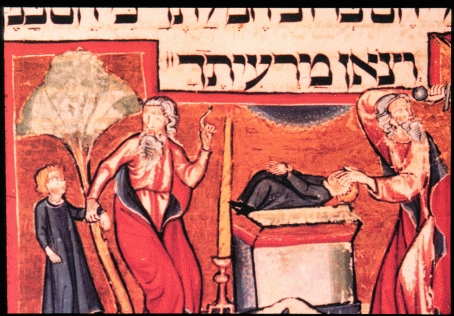
The AkedahIn the next paper, a further connection is made, this time between the Akedah or Binding of Isaac, and Nissan:

It’s universally accepted today that Akedat Yitzhak, the Binding of Isaac (Genesis 22), is associated with Tishrei 2 (the second day of Rosh Hashanah). This appeared fairly early in rabbinic history, and is supported by its mention in the Talmud (B. Megillah 31a). By the 3rd century, it was being explicitly connected with Yom Ha-Truah, the Feast of Trumpets (B. Rosh Hashanah 16a).

However, the original place of the Akedah in the Jewish calendar was Nisan 14, later to be designated by G-d as the day for sacrificing the Pesach. Following is some of the evidence (from “Torah Reading as a Weapon: Rosh Hashanah and the Akedah,” Rabbi Elie Kaunfer, Executive Director, Mechon Hadar).

-Meditations for Rosh Ha-Hodashim, the New Year
5: The Messiah, Our Passover, page 1

I don’t know how accurate this is as I lack the necessary education and references to verify it, but if true, it is a compelling parallel between the Akedah and the crucifixion of Rav Yeshua.

However, this connection isn’t recognized today. In fact, this is the first I’ve ever heard of it. Why?

According to Rabbi Kaunfer, the connection of the Akedah and Pesach was deliberately broken after the destruction of the Temple, in an effort to erase its powerful association with Yeshua’s sacrifice.

-ibid, page 2

However, according to this paper’s author, that dissociation was not universal, at least as early as the fourth century CE:

In that context, the 4th-century Mekhilta of Rabbi Ishmael further strengthens the association between Passover and the Akedah, and the similarity between Isaac and Yeshua. Commenting on Exodus 12:13, “When I see the blood [of the Pesach lamb] I will pass over you…” the Mekhilta states: “I see the blood of the binding of Isaac.” This was apparently relying on another tradition, handed down in the name of Rabbi Shimon bar Yochai (2nd c. CE), which said that although not actually sacrificed, Isaac gave a quarter of his blood as an atonement for Israel. (from “Vayera: What Happened to Isaac?” Israel National News, 21/oct/10 – http://www.israelnationalnews.com/Articles/Article.aspx/9768 )

-ibid, page 3
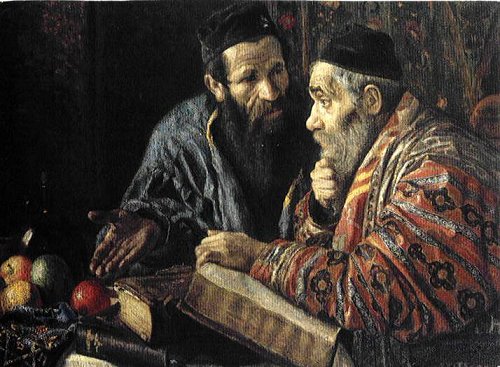
Talmudic RabbisFurther, early minority Rabbinic opinion suggests that Abraham actually did successfully sacrifice Isaac (although this contradicts the Biblical account) and that Hashem subsequently resurrected Isaac.

Of course, even if this occurred, the resurrection of Isaac wouldn’t be the same as Rav Yeshua’s since Isaac died in old age while Yeshua, once resurrected, will never die again. If he could, then our own promised resurrection would be questionable and even in vain, since our lives would not be eternal.

But Isaac, in this interpretation, is meant to “point” to Rav Yeshua, not be identical to him. He’s a signpost along the way and the goal is Messiah.

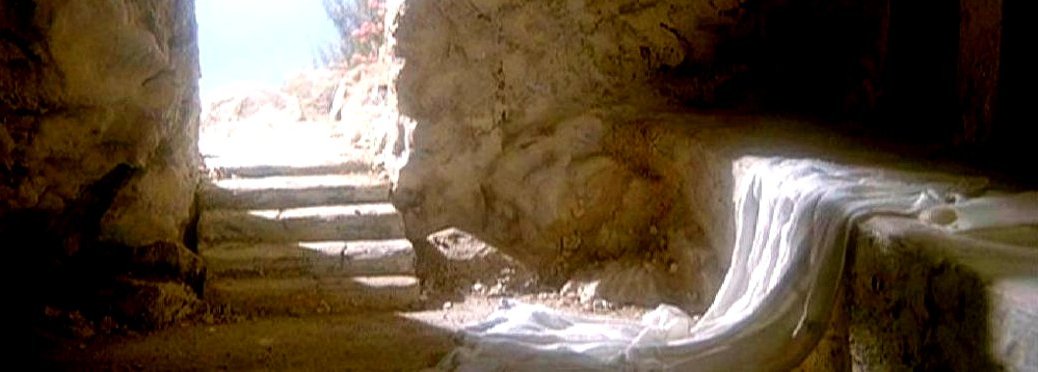
But Messiah did escape death and the tomb and, according to Gospel accounts, was seen by many witnesses. Now here’s something curious:

So the other disciple who had first come to the tomb then also entered, and he saw and believed. For as yet they did not understand the Scripture, that He must rise again from the dead.

–John 20:8-9

Some of those who were with us went to the tomb and found it just exactly as the women also had said; but Him they did not see.” And He said to them, “O foolish men and slow of heart to believe in all that the prophets have spoken! Was it not necessary for the Christ to suffer these things and to enter into His glory?” Then beginning with Moses and with all the prophets, He explained to them the things concerning Himself in all the Scriptures.

–Luke 24:24-27

These verses are quoted in “6: The Resurrection,” and in reading them, I’ve always wondered exactly what Yeshua said to these men from the scriptures that convinced them Moses and the Prophets really spoke of him being resurrected? Certainly Judaism of today doesn’t interpret Moses or the Prophets in this manner, and I’ve never been convinced that Christianity has been very successful in this area either. I’ve never found a “smoking gun” pointing directly from the Prophets to Yeshua.

This sixth paper quotes from Psalm 16:9-11, Hosea 6:1-3, and other scriptures (see the paper for details) as compelling evidence for the resurrection of Yeshua, and I don’t necessarily doubt that, but again, does that make Rosh Ha-Hodashim more relevant somehow?

According to the Restorers author, the answer to my question is this:

It is appropriate for Yeshua’s disciples to celebrate His Resurrection either on Nisan 17, in memory of that singular event; or on Nisan 16, the day designated for the Barley First-Fruits offering.

The offering itself was suspended after the Temple’s destruction, with no substitute customs ordained by the rabbinic community. All halachic discussion over the generations has focused on who should avoid eating newly sprouted grain before Nisan 16 every year.

Therefore, Yeshua’s followers have an open area on which to build a distinctly Messianic custom to celebrate the connection of His Resurrection with the Barley First-Fruits offering.

-Resurrection, page 5

I’ve skipped from quoting portions of the paper providing more details about the festival of first fruits and the Omer for the sake of length, but again, these papers are freely available online for you to read and download.

PassoverAm I convinced? I don’t know. As a non-Jewish disciple of Rav Yeshua, I’ve chosen to back away from celebrating most of the moadim or “appointed times,” since the vast majority of them have exclusive significance to Israel and the Jewish people. The most notable exceptions are Passover and Sukkot (Festival of Booths). I have a Passover seder in my home every year, largely because I have a Jewish wife and children.

I build a sukkah in my backyard every year, both because I have a Jewish wife and children, and because Sukkot seems to be that one moadim on the Jewish calendar that has applications to the people of the nations:

Then it will come about that any who are left of all the nations that went against Jerusalem will go up from year to year to worship the King, the Lord of hosts, and to celebrate the Feast of Booths. And it will be that whichever of the families of the earth does not go up to Jerusalem to worship the King, the Lord of hosts, there will be no rain on them. If the family of Egypt does not go up or enter, then no rain will fall on them; it will be the plague with which the Lord smites the nations who do not go up to celebrate the Feast of Booths. This will be the punishment of Egypt, and the punishment of all the nations who do not go up to celebrate the Feast of Booths.

–Zechariah 14:16-19

Passover is a little more questionable, even though many “Messianic Gentiles” and Hebrew Roots Christians, as well as more normative Christian churches hold some variation of a seder seeing “Jesus in the Passover”.

It’s possible that there has been an overlooked significance in Rosh Ha-Hodashim, and that in the Messianic future, we will all be rejoicing the “new year for the King” on Nissan 1. By the way, the first of Nissan or Rosh Chodesh Nissan occurs this year on April 9th, which is also Shabbat. Erev Pesach or the first evening of the Passover is on Nissan 14, which is Friday, April 22nd this year.

If any of this is interesting or even compelling to you, use the link I provided above, download the seven (eight, actually) papers and decide of some sort of observance or commemoration is appropriate for you. If nothing else, like me, you’ll learn something new.
An Easter Musing: Why I Consider the Church as “Them” and not “Me”

Something to ponder. If Jesus died on Passover and rose again a few days later (depending on your timetable), then why are most people celebrating his resurrection a whole month before Passover this year (and various other years as well)? Respectful responses are welcome. No witch hunting.

-Query from Facebook

No, this wasn’t directed at me. It was a general question tossed out into social media by a Facebook “friend” (I put that in quotes because we’ve never met face-to-face).

It’s an interesting question, but I must admit, it wasn’t the catalyst for today’s “morning meditation.” Easter was.

More specifically, my massive and total disconnect from Easter was the catalyst. For Easter, or perhaps more accurately expressed, for “Resurrection Day” three years ago, I crafted this little missive about my emotional disconnect from the event, even as I was attending Easter…uh, Resurrection Day services in a little, local Baptist church.

There were certain things I liked about the service. There were certain things I learned. But I wasn’t just gushing with joy like everyone else around me because “he is risen”.

Add to that, the memory of how my wife looked at me when I was walking out the door to go to Resurrection Day services, how crushed and betrayed she seemed, as if she found out I was cheating on her. I know I’ll never attend another Easter service in my life.

My regular readers are aware that my wife is Jewish and not a believer. More specifically, her viewpoint of Jesus, Paul, and Easter is what she learned from the local Chabad Rabbi. She would never stop me from expressing my faith in whatever way I choose, but I know it bothers her, at least on certain occasions…

…like Easter.

he-is-risenShe sometimes surprises me, though. She said that although she wouldn’t take me to Israel with a Jewish group, she does want me to go with a more appropriate (for me) Messianic group. I once had a passion to do that, but a lot of things dried up for me, including my sense of community.

I’ve been thinking about Rabbi Stuart Dauermann’s essay “The Jewish People are Us — not them” which you can find published here and which I reviewed a few years back.

Rabbi Dauermann was emphasizing that a Jewish faith in Yeshua shouldn’t result in Jewish “messianists” considering the wider Jewish community as “them” or as “the other,” the way most Christians consider “unbelieving” Jews. From his perspective (as I understand it), Jewish devotion to Rav Yeshua is very Jewish and should, if anything, result in Jewish Yeshua-disciples being drawn closer to larger Jewish community because, after all, Moshiach is the first-born of Israel’s dead, living proof that the New Covenant promise of the resurrection to Israel will indeed come to pass.

What’s more Jewish than that (and I know I’ll take “heck” from one or two Jewish critics of my blog for that question)?

But what about those of us, we non-Jewish “Christians” who stand on the Jewish foundation of the Bible, who feel a greater connection to Passover and Sukkot (Festival of Booths) than Christmas and Easter? What about those non-Jewish believers who feel more comfortable calling ourselves “Messianic Gentiles” or Talmidei Yeshua than Christians?

While Rabbi Dauermann may feel a lot closer to Jewish community than the Christian Church (and I agree, he should), does a “Messianic” perspective for a Gentile believer draw us closer to the Church or push us further away?

I admit, after this particular church experience and the consequences that resulted from my public disagreement with that church’s head Pastor, I realized I have no place in the Church. The ekklesia, yes. The Church, no.

Simply put, because Rabbi Dauermann is Jewish, he identifies with larger Jewish community, even those who are not disciples of Rav Yeshua (which just baffles the daylights out of most Christians I’ve spoken to about it). I have a Jewish wife, so I’ve seen that dynamic in action first hand, and any thought of my denying her or forbidding her to associate with Jews (not that I would, of course), is totally revolting to me, absolute anathema.

quitting churchBut to reverse the equation somewhat, being a Gentile disciple of Jesus does not automatically make me think of the Church as “us” or even “me”. In fact, on Easter, I feel more apart from “Church” than ever.

Going back to the previously mentioned Facebook commentary on Easter, there have been some interesting responses. There are others like me out there who also experience the disconnect from this Christian holiday, even those who remain in the Church. Some recognize Easter as a deliberate attempt by the early “Church Fathers” to co-opt the Passover/Resurrection event for Gentiles, divorcing it from its Jewish origins and context.

Others launched into “paganoia,” often a consequence of some Hebrew Roots teachings, saying that Easter was a deliberate attempt to introduce paganism, particularly worship of “Ishtar.”

I don’t think I’d take it that far.

But I am disturbed by one thing. The resurrection of Rav Yeshua is living proof that the New Covenant promises of God to Israel (Ezekiel 37:11-14) will indeed occur, and Yeshua is the “first fruits from the dead” (1 Corinthians 15:20).

Why don’t I feel connected to that?

Well I do, sort of, but it happens more on Passover and during the week of Unleavened Bread than it does at Easter, whether I’m in a church or not.

I know there are Hebrew Roots and Messianic Gentiles out there, those in their churches and elsewhere, who still have an emotional connection to Easter. These people were probably raised in a Christian setting by their Christian families or otherwise, spent enough time in a church to forge that visceral linkage.

I didn’t, not when my parents took me to church as a child, nor when I returned to Christian community as an adult.

Today being Easter punctuates for me that I consider normative Christianity as “them, not me.” I can’t say “us” because I don’t have an alternative “us” to relate to, at least not in an actual, physical form of community.

But that’s OK. Worshiping alone is OK, even though, in an absolute sense, we are never alone.

One of these things is not like the othersI’ve said before that I’ve given up the identity crisis that has seized so many non-Jews who are either in Messianic Jewish or Hebrew Roots community. As Popeye famously quipped, “I yam what I yam,” even if it doesn’t have a widely recognized name or label.

For those of you who are indeed emotionally and theologically attached and even thrilled by Easter or Resurrection Day, may you use your worship to strengthen your devotion to Rav Yeshua (Jesus Christ) and all he brings to us.

For those of you who are like me, any day is a good day to bring honor to our Rav and glory to the God of Israel. May the day come when we all merit the resurrection from the dead, and the life in the world to come.

A Christian’s Commentary on Jews and Messianic Judaism

Yesterday, the Rosh Pina Project (RPP), whose work in challenging those who support Arab terrorism against Israel I greatly respect, published a blog post called Messianic Jewish “Rabbis”: The New Testament is part of the Torah.

The blog post itself is a very short commentary on the Messianic Jewish Rabbinical Council’s decisions and self-definition of what it is to be a Rabbi in Messianic Jewish community.

However, what really got my attention occurred in the comments section of that blog post.

I’ve always been a little baffled when Jewish people willingly convert to (Gentile) Christianity, disdain the Torah, the mitzvot, the Shabbat, and the Biblical moadim (festivals) in favor of Christmas, Easter, and the “freedom” to eat ham sandwiches.

OK, I’m being a little snarky here, but remember, I have been married to a Jewish wife for over 30 years (although she hasn’t been “religious” all that time, and even now, her observance isn’t as full as I wish it was), so I have a rather unique perspective on what being Jewish means to her, including her special and precious covenant relationship with Hashem (God).

I don’t know the history or background of most of the people commenting at RPP, but it seems that at least some of them are believing Jews in the vein of “Hebrew Christians,” Jews who attend church along with their Gentile Christian counterparts, adopting the lifestyle and beliefs of the believing “Goyim,” and being Jewish in name and DNA only.

shabbosTo me (but who am I to talk?), a large part of being a Jew of faith is living a life of Jewish praxis, of lighting the Shabbos candles, davening with a minyan, attending the prayer and Torah services in synagogue on Shabbat, donning a tallit and laying tefillin to pray, and many other things that are inexorably intertwined with observing the Torah mitzvot and living life as a Jew.

Even as I’m writing this, one or more comments responding to the one I made at the aforementioned RPP blog post, are being published, so it’s going to be interesting writing this while commenting there.

I feel like I’m repeating myself in making my points, but to believe the traditional Christian view of Galatians 4 that the Torah is slavery or Hebrews 8:13 that the Torah is obsolete, and thus replaced rather than augmented by the New Covenant (Jeremiah 31; Ezekiel 36) means that God lied to Israel when He gave them the Torah at Sinai and when He promised to redeem Israel as Israel in the New Covenant promises.

I’ve written so much about the New Covenant, why it adds to and augments the Sinai and other covenants God made with Israel, why Israel, that is, the Jewish people, have been and always will be special and unique to God, even among the ekklesia of Jews and Gentiles who worship the God of Israel and bring honor to Yeshua, our Rav and King. I don’t want to write it all down again in a single blog post. It wouldn’t be an essay, it would be a small book (and believe me, I’ve thought of collecting certain of my blog series into a book, but who’d publish it?).

To understand my perspective on the nature of the New Covenant as summarized in a single blog post, read The Jesus Covenant Part 11: Building My Model.

I went through something of a crisis of faith a few years back when I realized that there is nothing whatsoever in the New Covenant language that promises salvation or a place in the world to come to non-Jewish, non-Israel people who believe in Jesus. The fact that Yeshua mentions the New Covenant in his blood in Matthew 26:28, Mark 14:24, and Luke 22:20 has no apparent connection to Jeremiah 31 and Ezekiel 36 at all.

new heartSo I spent somewhere around nine months or so complaining in the blogosphere, asking for help from anyone I thought would/should know how to make that connection. Ultimately, I made it myself through a lot of study and investigation. No wonder most Christians just take the “this is the new covenant in my blood” statement and how to interpret it for granted. If you really look at it, the statement is like a castle built on air if you don’t understand how all of the covenants work together. The Church doesn’t teach that part. You have to dig it out for yourself.

Recently, I wrote a blog post that clarified how we non-Jewish disciples do not have a covenant relationship with God at all, but rather, we rely on faith and trust alone to assure us that God’s great mercy and grace allows us to participate in blessings of the New Covenant without being named parties.

But for the Jews, it’s a different matter. Acts 15 makes it clear that our participation in God’s blessings does not require the same rigorous involvement in covenant mitzvot as God requires of the Jewish people and nation. Nothing in the New Covenant language states that it replaces the old.

Paul’s Hagar and Sarah midrash in Galatians 4 challenges the traditional Christian interpretation of Torah as slavery, and my review of D. Thomas Lancaster’s sermon Glory to Glory clarifies the meaning of a previous covenant becoming old and growing ready to disappear. It’s not the conditions and requirements of the Sinai covenant (Torah) that are disappearing, it’s the difference between the Torah being external and internal. In the Messianic Age, Jews will have the Torah written on their hearts; wholly internalized so it’s natural for them to be obedient to God in performance of the mitzvot, thus it will be humanly possible to serve God without sin.

I think I know where the fine folks at RPP are coming from. A month or so ago, I wrote Exploring Reformed Theology: The Fallacy of Covenant Equality Between the Church and Israel. Doing this investigation actually helped me understand why Christians think it’s logical and Biblical to believe that Jesus observing the Torah mitzvot perfectly “fulfilled righteousness,” and thus rendered it unnecessary for Jews to continue to be Torah observant, and eliminates the requirement for the Sinai covenant.

divorceI just happen to believe that interpretation is in error and was ultimately created as a consequence of the ugly divorce that happened between the Gentile novices and their Jewish teachers and mentors within the first century or less after Yeshua’s ascension, and ended up becoming the Christian Church’s two-thousand year old mistake.

I know from a traditional Christian point of view, the continued practice of Rabbinic Judaism for the past nearly twenty centuries, is considered to be the “mistake.” From that point of view, Jews should have abandoned Jewish praxis, if not Jewish identity, and converted to Christianity the way Paul did in Acts 9 (except he didn’t convert, he just changed Ravs and took on a more Judaically enlightened perspective and purpose based on his supernatural revelation).

To my way of reading the Apostolic scriptures, the Jewish disciples of Rav Yeshua did not cease Jewish practice, did not cease the traditional prayers, did not cease offering Korban at the Holy Temple, and did not renounce the Torah.

You see, brother, how many thousands there are among the Jews of those who have believed, and they are all zealous for the Law…

–Acts 21:20 (NASB)

I don’t have the time to pull in all the necessary quotes from the Bible to illustrate my points, which is why I’m peppering this blog post with links to many other of my essays. However, when Paul was falsely accused of “teaching all the Jews who are among the Gentiles to forsake Moses, telling them not to circumcise their children nor to walk according to the customs,” the thousands of Yeshua-believing Jews who were all “zealous for the Torah” doubted Paul because of these rumors. Paul had to do something to convince these Jews and their non-Yeshua-believing brothers, that he had never turned away from Torah or Temple and had never taught other Jews in the diaspora to do the same.

Unfortunately, that didn’t work out as planned, but if you follow the progression of trials Paul went through as depicted in Luke’s Book of Acts, you’ll see that Paul never agreed with the false accusations against him. He always maintained his innocence and repeatedly stated that he never committed a crime against Roman law or Torah.

Apostle Paul preachingAn excellent book describing Paul’s trials is John W. Mauck’s Paul On Trial: The Book Of Acts As A Defense Of Christianity which I reviewed in part in this blog post. Even Christianity Today published an article some years back stating that Paul was not anti-Judaism, and I’ve written a commentary on their viewpoint as well.

Last year, I wrote a response to challenges against the viability of Messianic Judaism as a Judaism, and a couple of years back, I championed the necessity of Messianic Jewish community as a fully-realized Jewish community.

I agreed with Rabbi Stuart Dauermann that the “Jewish people are ‘us’ not ‘them,'” meaning that Messianic Jews are part of the larger community of Jewish people, not “Christians in kippot” who see non-Yeshua believing Jews as something alien and apart.

While I’m throwing in links, let me direct you to the excellent volume compiled by Mark Nanos and Magnus Zetterholm called Paul within Judaism: Restoring the First-Century Context to the Apostle. There is a growing movement of Jewish and Christian New Testament scholars (and that’s a pretty amazing statement in and of itself) who are re-examining the writings of Paul without peering through traditional interpretive lens of the Church, investigating Paul’s intent and meaning as a Pharisaic Jew rather than a Christian convert.

The results are quite enlightening and, since we depend on Paul for much of our understanding of early “Christian” theology and doctrine, if we reconstruct him back into his Jewish environment and then re-read his letters, we get a very different view of the Apostle to the Gentiles and what he was actually trying to communicate.

Christianity, as we understand it today, was invented by a Gentile majority population within the ancient and short-lived Jewish religious stream of Yeshua believers once called “the Way”. Christianity had to occur in order for these Gentiles to “divorce” themselves, not only from their Jewish teachers, but from the wholly Jewish and Israel oriented message of the Messiah, re-interpreting the ancient Jewish writings to say what they were never intended to say. Only two-thousand years of Christian dogma make it seem as if replacement or fulfillment theology is at all reasonable, let alone Biblical.

Spirit, Torah, and Good NewsThe “good news” of Yeshua has always been about the coming of the New Covenant, the fulfillment of God’s promises to Israel, to restore them, to restore the Temple, to restore the Levitical priesthood (start reading at Jeremiah 31 and go forward through the subsequent chapters…it’s all there). It’s always been about good news for Israel first, and then because of that, also good news for the people of the nations, that is, the rest of us.

But if Jewish people, Jewish praxis, Jewish covenant connection with God, and Judaism as a lifestyle and expression of the covenants goes away and is replaced by Gentile Christianity and a Gentile Jesus, not only does Israel’s “good news” go up in a puff of smoke, so does ours. Gentile salvation and reconciliation to God only happens because of Israel’s covenants with God. If you replace them, then you drive the Jews away from God for all time and you destroy any hope the rest of the world has, because we depend on Israel’s covenant linkage to God to metaphorically link us (graft us in), too.

I’m sorry. I know there are many good and faithful Hebrew Christians in the Church and they really do believe the Torah is not only obsolete, but actually an error. It’s incredibly sad, because a Jew is the only person who is born into a covenant relationship with God, whether he or she wants to be or not. For them to be erroneously taught that their unique identity and relationship with God through the Sinai and other covenants, including the New Covenant, has been done away with, is to cause them to stumble in that relationship with Hashem and with Messiah.

It was this sort of Christian eisegesis that finally resulted in me leaving the Church.

In John 4:22, Yeshua famously said that “salvation comes from the Jews” and he wasn’t kidding. If the Church got her wish and converted 100% of the worldwide Jewish population to Gentile Christianity causing them to abandon the mitzvot and the covenants, we would not only be risking Israel’s future but our own.

synagogueThe Jewish people have been living out their covenantal lifestyle against the constant threat of genocide for thousands of years. Don’t let conversion and assimilation finish what Haman and Hitler started. There is another way, a better way for a Jew to accept the revelation of Yeshua as Rav and Messiah. That way is to accept Jewish devotion to Yeshua and worship of the God of Israel as a Judaism, not Christianity.

No, we non-Jews don’t exactly practice “Judaism,” even when we accept the Jewishness of Yeshua-faith, but we do recognize that Jewish people do have that obligation, even as we come alongside of them in the ekklesia. If you are a non-Jewish Christian, then it is your duty to support observance of the mitzvot among the Jewish disciples of Yeshua. If you are a Jewish disciple in the manner of the Hebrew Christians, at least consider idea that your connectedness to God is much more than what you’ve been taught, that you are more unique and precious to God as a Jew than the Church will ever be willing to admit.

If nothing else, right before the sun goes down this coming Friday evening, say the blessings and light the candles to welcome Shabbos into your home as a Jew. Judaism isn’t an all or nothing religion. It happens one mitzvah at a time. Turn your heart back to the Torah and thus back to God, and He will certainly turn His heart to you.

The Meaning of Purim and Easter

Our people have survived for the past 3,500 years … and not by accident. We did it against all odds — Crusades, Inquisition, Pogroms, Holocaust … There are perhaps 12 million Jews in the world today where by conservative demographic projections, there should be 400 million. However, they were lost to murder and assimilation. Why are we still Jews and how can we ensure our grandchildren will be Jewish?

There are questions all of us must ask ourselves: How important is it to me to be Jewish? What does it mean? Am I willing to die to remain a Jew? If I am willing to die as a Jew, am I willing to live as a Jew?

-Rabbi Kalman Packouz
-from “Shabbat Shalom Weekly” commentary
Aish.com

Somewhere between 90 to 96 of the present era, after the death of the last Apostle, John, we have a head-on collision as the Hebrew words of the Bible are assigned new meanings by the gentile church leaders who are products of the Greek/Roman culture. The leadership of the Church shifted from Jerusalem to Antioch and finally, Rome. By 311 CE when Constantine, the Emperor of Rome, issued the Edict of Toleration, the spiritual situation was already critical. Just think of it, Constantine, head of the greatest empire on the face of the earth at that time, became a Christian. Anything that was good enough for the Emperor was good enough for the subjects, so, Constantine began to award medals, prizes, and money to those who converted to Christianity. Would it surprise you to know that most who converted did so for the medals, prizes, and money?

-Dr. Roy Blizzard
“What Has Happened to the Church? Is it Pagan or Hebrew?”
BibleScholars.org

purim
Purim Parade in Hebron

Given that Purim begins this Wednesday (tomorrow) evening at sundown and concludes a little over 24 hours later, and Easter is this coming Sunday, the 27th, I thought their close proximity on the calendar this year justified some juxtaposition between Judaism and Christianity.

From Rabbi Packouz’s point of view, Jewish survival of a nearly endless stream of “Purim-like” genocidal events is due, not only to the love and mercy Hashem has for His covenant people, but because Jewish people throughout history have remained steadfast to community, Torah, and Talmud. It’s their dedication continuing generation after generation, to preserving Jewish life and traditions, to raising children and grandchildren to, not just be ethnically or DNA Jewish, but to have a lived Jewish experience through the mitzvot.

From Dr. Roy Blizzard’s perspective, the once united Church of Christ splintered very early in history, within less than 100 years of its inception, and since that time, has continued to fragment again and again until today we have 400+ denominations of Christianity, all vying for the right to say, “Lo, here’s Christ.”

OK, I’m being kind of negative where the Church is concerned, and I must admit that Judaism as a religious stream has also fragmented across the last two thousand years, and today is represented by multiple, competing communities. However, unlike Christianity (and to make matters worse), there are also an unnumbered population of secular and assimilated Jews who have no seeming connection to the God of their Fathers at all (obviously, a secular Christian is a contradiction in terms).

Where these two parallel trajectories across history meet, where Christianity and Judaism collide, is at the aforementioned (by Rabbi Packouz) “Crusades, Inquisition, Pogroms, Holocaust” as well as “murder and assimilation.”

You don’t see too many Christian Crusades against the Jewish people these days (unless you count evangelizing the Jews as a “crusade”), but you do see a great deal of assimilation. My Jewish wife’s siblings were all assimilated, and two of them are avowed Evangelical Christians.

Is that such a bad thing? Not according to this article at the Rosh Pina Project. However, if a Jew has to come to the Jewish Messiah King by renouncing Jewish religious and lifestyle praxis and assimilate into the churches of their historic adversaries and conquerors, then I must disagree that it’s a good thing, particularly given Dr. Blizzard’s assessment of the rather poor spiritual state of the Church today.

Rabbi Kalman Packouz

The way R. Packouz sees it, if Jewish families want to support not only the observance of the mitzvot and Jewish religious praxis, but the continuation of the Jewish people as a population, this is what must happen:

If parents want their children and grandchildren to be Jewish, the parents must be a role model for living Jewishly. Any person I met who has positive feelings about being Jewish has told me it’s because he remembers his father making Kiddush, his mother lighting Shabbat candles, the Passover Seder. Memories, emotions and values only transfer through actions; philosophy does not pass to the next generation — unless it’s lived. Remember, a parent only owes his child three things: example, example, example!

Do you want your grandchildren to be Jewish? Then today go and buy To Be a Jew by Rabbi Hayim Donin. Read it. Make your decision. And then institute a gradual program of change that will lead to your living a fuller Jewish life. Then your children will have something that they value and want for themselves and for their children!

We actually have a copy of that book in our home and I know my wife has read it, and frankly, I wish she were more observant…much more observant.

As far as Dr. Blizzard goes, he believes that the restoration of the Church into what the Apostle Paul (Rav Shaul) envisioned so many centuries ago, is possible in this manner:

I want to emphasize something before you misunderstand what I am talking about. Restoration is never going to be accomplished on a denominational level. It can only happen on an individual basis. If you are in the Baptist, Methodist, Presbyterian, Church of Christ, or whatever denomination, restoration can happen. It will happen as there is an increased hunger and desire on the part of God’s people for true factual information. It will happen as individuals begin to ask questions about their religious beliefs and test them against linguistic, cultural, and historical facts. The good news is that it is probably already happening to you.

I also think this is beginning to happen as small groups within their churches are becoming aware of a more Hebraic interpretation of their Bibles. Some remain in their church communities and become lone voices of restoration among their peers and the Pastoral staff, while others leave the Church altogether and either seek out like-minded souls, or lacking that, go on a solitary journey of discovery in the company of the Holy Spirit.

ChurchI wrote the blog post Standing on the Jewish Foundation of the Bible in November 2013 when I was attending a small, local Baptist church. I was having weekly private meetings with the head Pastor to discuss our relative points of view on the Bible, with him trying to turn me into a good Baptist, and me trying to enlighten him with the radically Jewish nature of the Messiah and his laser-like focus, not on the Church, but on the restoration of Israel.

Neither one of us were successful, in large part because of my conviction that the Church as it exists today, for all the wonderful things she has done, still represents a Two-Thousand Year old Mistake.

When the early non-Jewish disciples of Rav Yeshua (Jesus Christ) and their Jewish mentors and teachers each demanded an ugly divorce, the Gentile Christian Church rose out of the seeming ashes of its Jewish origins and began describing a drunken course through history much as Dr. Blizzard has described.

On the flip side of the coin, the number of Jews who retained fidelity to Rav Yeshua dwindled over the decades and centuries until Jewish devotion to Yeshua as the revealed Moshiach was extinguished.

This is what made it possible for the various incarnations of the Church to persecute the Jewish people, burn synagogues, burn volumes of Talmud, burn Torah scrolls, and burn the Jewish subjects of the Jewish King, all in the”Gentile-ized” name of that King; in the name of Jesus Christ.

But the Jewish people and lived Judaism have continued to survive, in spite of the persistent spirit of Haman which has followed them across the pages of history, attempting time and again to finish what he started as we read in the Scroll of Esther (see your Bible for details).

In a tiny handful of hours, Jews all over the world will be gathering together and celebrating Jewish survival from historical and modern genocide (represented today in part by ISIS, Iran, the PLO, Hamas, CNN, Barack Obama) by the observance of Purim. And on Sunday, in sunrise services around the world, Christians will be gathering together to celebrate the meaning of a risen Christ.

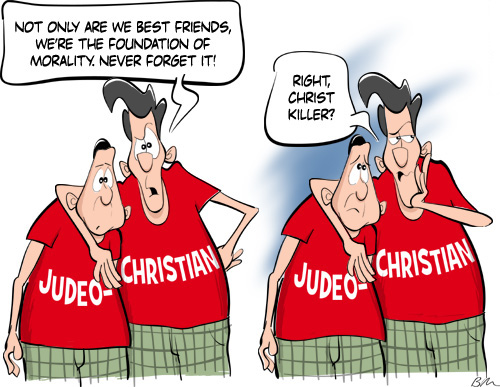
Unfortunately, a nasty side effect of Easter, again, at least historically, is that “after every passion play, there’s a pogrom.” In other words, while Easter is supposed to be a celebration of life, particularly eternal life in the Kingdom of God, the crucifixion of Christ, memorialized on Good Friday (and with supreme irony, Purim ends the evening before Good Friday this year) has been expressed in harassment of the Jews because “they killed Jesus.”

judeo-christianI used to believe that way of thinking had gone the way of the Dodo bird, until I read of an incident that happened earlier this year:

When Catholic Memorial School, an all-boys high school in Boston’s Roxbury neighborhood, played Newton North High School in a closely-fought basketball game last Friday, tensions were running high among the crowd.

Fans of Newton North High, which serves the suburb of Newton, a leafy suburb known for its high academic performance and its sizeable Jewish population, teased the Catholic Memorial School for its all-boy makeup, chanting, “Where are your girls?”

As the crowd got rowdy, a group of between 50 and 75 supporters of Catholic Memorial started a chant of their own. “You killed Jesus!” they yelled at Newton’s team and supporters, repeating the slur over and over through the gym.

The Newton students fell silent, shocked and upset.

This happened within the past few months, not the past few decades. These Catholic sports fans wouldn’t have known to taunt the Jewish basketball players and their families with such an insult if they hadn’t learned it somewhere.

Perhaps there are certain corners of the Christian Church that haven’t put their houses in order yet.

Dr. Blizzard believes that the restoration of the “Hebrew” Church is happening one individual at a time, and in the present age, I believe that’s true. I also believe that there’s a war coming; a terrible war.

I believe every nation on Earth is going to turn against Israel in an attempt to finally accomplish Haman’s mission and wipe every single Jew from the face of our planet. I believe the western nations, particularly the United States, will be among those standing against Israel. I expect my neighbors, co-workers, and people I’ve worshiped with in church will be among those supporting such a war (though I hope there will also be those who will join me in opposing it).

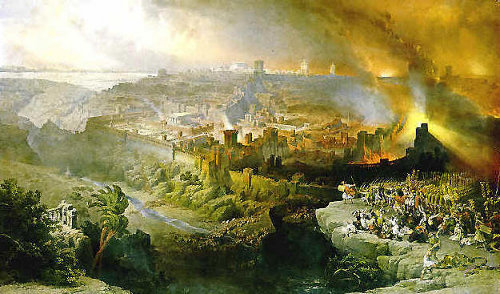
fall of jerusalemHowever, the Bible tells us that when all seems lost and Israel is about to be buried for the last time, Hashem Himself will fight for her and He will win. Messiah will restore Jerusalem, rebuild the Temple, return all of the Jewish exiles to their Land, and…

Then it will come about that any who are left of all the nations that went against Jerusalem will go up from year to year to worship the King, the Lord of hosts, and to celebrate the Feast of Booths. And it will be that whichever of the families of the earth does not go up to Jerusalem to worship the King, the Lord of hosts, there will be no rain on them. If the family of Egypt does not go up or enter, then no rain will fall on them; it will be the plague with which the Lord smites the nations who do not go up to celebrate the Feast of Booths. This will be the punishment of Egypt, and the punishment of all the nations who do not go up to celebrate the Feast of Booths.

–Zechariah 14:16-19 (NASB)

As such, I don’t think there will be a Church, at least as we understand the concept today, when King Messiah rules from his throne in Jerusalem. I believe there will be an ekklesia, a world-wide multi-national community of those devoted to the God of Israel, who are the disciples and servants of the Jewish Messiah King, made up of two basic people groups, Jewish Israel, and everybody else.

From Wednesday night to Thursday night, Jews around the world will celebrate continued Jewish survival in a way that looks like a cross between Halloween and April Fools Day. And without really understanding the significance from a Jewish point of view, on the very the next day, on Good Friday, Christians will commemorate the crucifixion of Christ, which has historically (and as we’ve seen, also in the current era) been used as an excuse to attempt to deprive some Jews of continued survival.

The Bible tells us the story of Purim and the meaning behind it throughout Jewish history, and in the end, Israel wins, and finally, all of Israel’s enemies, including us, will be made subservient to the nation we have forever attempted to destroy. Does this mean Purim wins over Easter, too? Well, sort of. But not actually.

Ironically, although this will elude a traditional Christian viewpoint, the resurrection of Rav Yeshua was originally supposed to be understood as the beginning of the restoration of Israel, the Jewish people, and the lived experience of Judaism through the Torah mitzvot. Only after all of that, will the rest of the world, we devoted ones from among the nations, be restored as well. Zechariah 14 paints this picture for us very clearly.

Fortunately for us, God is infinitely merciful, trustworthy, and kind. Although He could have assigned us inferior roles in the Kingdom of Messiah as a consequence of being from among the nations who declared (will declare) themselves as enemies of God’s Holy Nation of Israel, He did (and will do) this instead:

“Also the foreigners who join themselves to the Lord,
To minister to Him, and to love the name of the Lord,
To be His servants, every one who keeps from profaning the sabbath
And holds fast My covenant;
Even those I will bring to My holy mountain
And make them joyful in My house of prayer.
Their burnt offerings and their sacrifices will be acceptable on My altar;
For My house will be called a house of prayer for all the peoples.”

–Isaiah 56:6-7

For you are all sons of God through faith in Christ Jesus.

–Galatians 3:26

“And I will be a father to you, and you shall be sons and daughters to Me,” says the Lord Almighty.

–2 Corinthians 6:18

We will join ourselves to the Lord, minister to Him, love His Name, be His servants, be taken to His Holy Mountain (the Temple), be made joyful in His House of Prayer (the aforementioned Temple), our burnt offerings will be accepted, and we will all be privileged to call ourselves the sons and daughters of the Lord Almighty.

Up to JerusalemOur takeaway from both Purim and the Resurrection (though not necessarily the modern expression of Easter), is that we serve our Rav by celebrating the risen King Messiah who is the mediator of the New Covenant promises to provide for the continued survival of the Jewish people and the restoration of the Jewish nation as the head of all the nations (Jeremiah 31:7).

This year and every year, we non-Jewish disciples of our Rav (i.e. Christians everywhere) should celebrate Jewish survival and the Jewish state as signs of our risen King, who upon his return to us, will destroy the spirit of Haman once and for all and establish lasting peace not only for Israel, but for our contentious and weary planet. And in the end, we will finally be healed.

Then he showed me a river of the water of life, clear as crystal, coming from the throne of God and of the Lamb, in the middle of its street. On either side of the river was the tree of life, bearing twelve kinds of fruit, yielding its fruit every month; and the leaves of the tree were for the healing of the nations.

–Revelation 22:1-2

Are We Naaman or Ruth?

This may sound like a really stupid question (Are there still Jews and Greeks in Christ?), but I cannot tell you how many people over the years have cited to me one particular text from the only surviving correspondence of the first century Pharisee, Saul Paul. This text relates to the believers in Galatia, who thought that, since they now followed the Jewish Christ, it stood to reason that they should not simply be a part of the Jewish coalition (sojourners with Israel), but they should also adopt all the ancestral customs of the Jews (This is what was meant to convert to Judaism back then). It is to them, in this nuanced and commonly misunderstood letter that the beloved Apostle wrote: “There is neither Jew nor Greek… in Christ Jesus.” (Gal. 3:28)

-Dr. Eli Lizorkin-Eyzenberg
“Are there still Jews and Greeks in Jesus Christ?”
Jewish Studies Blog

I found a link to this article on a closed Facebook page a few days ago and have just gotten around to reading it. It’s short, easily consumable by most folks, and has a very interesting and, to me, relevant perspective.

The Jewish PaulAccording to Dr. Lizorkin-Eyzenberg (who I hear of from time to time, but don’t know a lot about), what we think of as converting to another religion, such as Judaism, today, wasn’t how it worked back when the Apostle Paul (Rav Shaul) was actively proclaiming the good news of Rav Yeshua (Jesus Christ) among the Goyim (Gentiles).

Conversions were widely attested in the ancient times. However conversions as they were practiced then, have little in common with conversions as we understand them today. Unlike in ancient times, “religion” today is seen as a category of its own – so someone can be Irish and Jewish, American and Jewish, Russian and Jewish, and so on. Ancient people, however, did not speak of conversion in terms of simply accepting another religion, while staying culturally the same. To them conversion to Judaism meant joining the people of Israel (especially its southern branch, “Judeans”, and hence “Judaism”) and adopting a set of ancestral customs which permeated every area of life. In other words, conversion to Judaism was a ‘package deal’. If one converted, he or she was expected to cut ties with their previous culture in every respect – not just accept a new divinity, but the entire package (God and people).

So in the minds of the Gentile Galatians, to follow the teachings of Rav Yeshua and to worship the God of Israel meant to not only become part if Israel in name, but to totally adopt all of the practices of born-Jews, being observant in every conceivable way. They would stop being citizens of their respective nations, and become Israelites.

ruth
Ruth the Moabitess

This has significant relevance to my previous blog post, The Non-Covenant Relationship with God, and particularly the discussion which (as I write this) is still going on in the comments section beneath. If we non-Jews are not Israel, who are we in terms of our faith and national citizenship, especially to Hashem?

As it turns out, Paul’s letter to the Galatians was intended to correct their mistaken belief that in order to be disciples of Rav Yeshua and devoted servants to the God of Israel, they had to become part of Israel and become Torah observant in exactly the same manner as the Jews.

However, this was only one paradigm of legitimate Gentile dedication to Israel’s God. There was another – I call this the “Naaman” paradigm, to distinguish it from the “Ruth” paradigm.

Notably, he did not say or do as Ruth did. He returned to his country and his own people and continued to worship Israel’s God there. In contrast to Ruth the Moabite, Naaman’s approach was more along the lines of: “Your God will be my God, but my people will still be my people”. Interestingly, in the end he receives from the prophet of God the greatest blessing of all – the blessing of Shalom (2 Kings 5:18-19).

You’re going to have to click the link I provided above to read all of Dr. Lizorkin-Eyzenberg’s article, but he poses the question of whether or not we non-Jewish disciples of Rav Yeshua (and all Christians) are more like Ruth or Naaman. Ruth underwent what we would think of as conversation, not only adopting the ‘religion’ of Judaism, but citizenship in Israel. Remember, in ancient times, one’s religion wasn’t a separate entity from one’s national affiliation or any other aspect of your life.

However, Ruth’s choice wasn’t Naaman’s choice. He acknowledged that only the God of Israel was God, and devoted the rest of his life to honoring Hashem, but he went back to his Land and he did not change his citizenship nor his cultural identity.

Apostolic DecreeFrom Dr. Lizorkin-Eyzenberg’s point of view, the First Century apostles and elders of the Jerusalem Council saw the Gentile disciples of Rav Yeshua joining their ranks as Naaman, not Ruth. There was never an expectation that they would obliterate their own nationality and cultural affiliation to become Israel, nor that they would take on a Jew’s obligation of Torah. That’s the whole point of the Jerusalem letter.

…so the apostles decided not to lay upon them any further burden. It seems from Acts 15:21, that it was assumed that Gentile believers would be attending synagogues wherever they lived, and hearing Moses read and presumably also hearing what Judaism taught about living a generally righteous life. In practical terms, observing these 4 laws would potentially enable Gentile believers to fellowship with Jews without offending them and being ostracized by them.

Acts 16:4-5 tells us that Apostle Saul Paul fully endorsed the decision of the “Jerusalem Council” and proclaimed its message with great joy as he traveled from congregation to congregation. Full Torah observance (proselyte conversion to Judaism) was unnecessary for any Gentile who joined the Jewish coalition by following the Jewish Christ. They too (as the Nations) were now first class-citizens in the Kingdom of God.

Look at that. “…now first class-citizens in the Kingdom of God.” First class, not second class.

And finally:

What Apostle Saul Paul meant by the phrase “there is neither Jew nor Greek” had to do, not with cessation of difference, but with cessation of discrimination. There is no discrimination with regard to race, culture, rank, or gender, for all are one in the Jewish Christ. Gentiles will no longer be discriminated against in the Kingdom of Israel’s God. They now will play an equally important rule in God’s redemptive plan. Their faith in the Jewish Christ alone qualifies and justifies them (just as it does the Jews) in every way to be first-class citizens in God’s Kingdom, without relinquishing their important identity as the “Nations of the World”.

kindnessWe don’t need to worry that because our people have no direct covenant relationship with Hashem, we or our nations are illegitimate. We are also important in God’s redemptive plan for the world just as people of our respective nations. Our closeness and “oneness” with Israel is a matter of reconciliation between Israel and the nations, not a fusing of national and covenant identities. As Dr. Lizorkin-Eyzenberg points out in Acts 16:4-5, the Gentile disciples received this news with great joy, not confusion or jealousy. Becoming a disciple of Rav Yeshua, worship of the God of Israel, and citizenship in the Kingdom of Heaven were and are available to everyone, making this branch of Judaism the most inclusive of all without the requirement to convert, adopt Israeli citizenship, and full obligation to the Torah of Moses.

Something has become terribly twisted that today we cannot experience that same joy, but must either declare ourselves as replacing the Jews in God’s promises and love, or claiming the Torah for our very own, complaining and fretting when others disagree with these very non-Biblical viewpoints.

I don’t know what else Dr. Lizorkin-Eyzenberg has written or what he teaches in general, but I have to agree with his conclusion that we Gentiles in Messiah are Naaman, not Ruth.

The Non-Covenant Relationship with God

One of the difficulties…that Christian theologies have not really grasped, is that Rav Yeshua’s gentile disciples don’t actually participate in any covenant whatsoever. Perhaps that is why they invent fictitious covenants. What they have instead of a covenant is an individually-based responsibility to rely on HaShem’s unchanging character and graciousness. They must trust HaShem Who wishes all humanity to be saved and come to the knowledge of the truth, as Rav Shaul wrote to Timothy in 1 Tim. 2:3-4. They, and their children, and their children’s children, each must approach HaShem as trusting individuals. They may pass to their children a heritage of knowledge about how to trust HaShem, but each must choose to embrace and employ that knowledge afresh in their own lives. They may form collective communities of faith-filled individuals, and they may covenant with each other to serve HaShem, but they do not possess a collective responsibility under a covenant with HaShem in which HaShem has bound Himself by His Oath.

-ProclaimLiberty
from one of his recent comments

I’ve written about the “connection” (or lack thereof) between Gentile believers and the New Covenant many times before, and I agree with ProclaimLiberty (PL) that we non-Jewish disciples of Rav Yeshua (Jesus Christ) are not named participants in the New Covenant (see Jer. 31, Ezek. 36), and thus we have no stake in those covenant promises.

That might come as a shock to some of you.

MessiahBut through Hashem’s grace and mercy for the human race, He has allowed any of us who attach ourselves to Israel through our Rav to benefit from some of the blessings of that covenant.

We know that Hashem wants all human beings, not just Israel, to come to a knowledge of Him, to become His servants, to worship Him alone as the God of Israel:

That to Me every knee will bow, every tongue will swear allegiance.

–Isaiah 45:23 (NASB)

For it is written, “As I live, says the Lord, every knee shall bow to me, and every tongue shall give praise to God.”

–Romans 14:11

This is good and acceptable in the sight of God our Savior, who desires all men to be saved and to come to the knowledge of the truth.

–1 Timothy 2:3-4

These are just a few scriptural examples illustrating God’s desire for all people, both Israel and the nations, to be devoted to Him.

But what PL wrote made me think. The Jewish people are collectively Israel, and the covenants apply to all Israel. Yes, each individual Jew has his or her own responsibilities to fulfill under covenant, but ultimately, God doesn’t covenant with each individual Jew, but with all of them, past, present, and future.

A Jew is the only person to be born into a covenant relationship with God whether he or she wants to.

Not so with the rest of us.

NoahExcept for the Noahide covenant, which Hashem made with all living things, we are born into no relationship with God at all. If we want a relationship with Him, we have to choose that for ourselves and then act on it (not that the Spirit of God can’t send us certain “prompts”).

Good thing we have free will to make that choice.

But then I thought about the “Church,” which is something of an artificial construct, so I dug back into the concept of the “ekklesia”.

Nearly two years ago, in a fit of insomnia, I started exploring the meaning of ekklesia:

noun, plural ec·cle·si·ae [ih-klee-zhee-ee, -zee-ee] Show IPA .

1. an assembly, especially the popular assembly of ancient Athens.

2. a congregation; church.

Origin: 1570–80; < Latin < Greek ekklēsía assembly, equivalent to ékklēt ( os ) summoned ( ek- ec- + klē-, variant of kal-, stem of kaleîn to call, + -tos past participle suffix) + -ia -ia

Also:

— n , pl -siae
1. (in formal Church usage) a congregation
2. the assembly of citizens of an ancient Greek state

[C16: from Medieval Latin, from Late Greek ekklēsia assembly, from ekklētos called, from ekkalein to call out, from kalein to call]

the crowdI tend to think of the ekklesia in its broadest sense, as that world-wide body of people, Jews and Gentiles, who have answered the call of Rav Yeshua to follow his teachings and draw nearer to Hashem. For Jews, this is the next “evolutionary” step or the next logical extension of their covenant relationship with Hashem, since Rav Yeshua is the mediator of the New Covenant.

For non-Jews, we are allowed to draw near to Israel and be “grafted in” (and being grafted in to the promises doesn’t make us Israel) to stand alongside Israel within the body of the ekklesia so that we can benefit from many of the blessings of the New Covenant.

Here’s where things get blurry.

PL describes we non-Jews as coming to Hashem through Rav Yeshua individually. It is true that in the Church it’s said that “God doesn’t have grandchildren.” This means that even if you are a Yeshua-disciple, your kids may not be. They don’t inherit a relationship with God  just because you have one.

This is the exact reverse of a Jew’s covenant relationship with Hashem. When Jewish parents have a child, that child does inherit a covenant relationship with Hashem by virtue of the fact that he or she has Jewish parents (or a Jewish mother in the case of my children).

As non-Jews, one-by-one, we come to faith and trust in Rav Yeshua and it is our custom to gather together with other individual non-Jewish believers in a congregation to worship and fellowship. In and of itself, a “church” is an expression of part of the world-wide ekklesia, the larger body of Jewish and Gentile believers.

PL said of we non-Jewish disciples:

They may form collective communities of faith-filled individuals, and they may covenant with each other to serve HaShem, but they do not possess a collective responsibility under a covenant with HaShem in which HaShem has bound Himself by His Oath.

synagogueI believe this is true, but it’s still difficult to reconcile with emotionally. Reading this statement, makes me feel disconnected and unattached.

I know my attachment is symbolic and metaphorical, even though it has real, tangible results, but it draws a sharp distinction of what happens when Jews gather together in a synagogue on Shabbos, and what happens when Christians come together in church on Sunday.

The former are bound not only to each other but to Hashem by covenant, a formal, specified, and direct relationship between Israel and their God. We “Christians” voluntarily covenant with each other and are beneficiaries of the kindness of the God of Israel, though we have no formal relationship with Him.

It made me realize just how fragile that relationship is.

Behold then the kindness and severity of God; to those who fell, severity, but to you, God’s kindness, if you continue in His kindness; otherwise you also will be cut off. And they also, if they do not continue in their unbelief, will be grafted in, for God is able to graft them in again. For if you were cut off from what is by nature a wild olive tree, and were grafted contrary to nature into a cultivated olive tree, how much more will these who are the natural branches be grafted into their own olive tree?

–Romans 11:22-24

I believe being born into a covenant relationship with Hashem has a cost. If you are Jewish and choose to disregard the covenants and your responsibilities relative to them (Shabbat, kosher, davening, tzedakah, and so on), I believe that at the judgment, there will be consequences. None of my children are even slightly religious and my wife’s observance is “so-so” and I worry about that.

As far as being “natural branches,” I don’t know their state at present. But I do know that even as they are, they are still members of the covenants simply because they’re Jewish.

ShabbatI’ve heard it said that Judaism isn’t an all or nothing religion, so every time my wife does go to shul, davens, lights the Shabbos candles, or observes other mitzvot, I’m pleased. But there’s always more to do.

Even a secular Jew is a Jew, and even being non-observant, has a relationship with Hashem (even if they’re totally unaware of it).

We non-Jews, on the other hand, though we don’t have a formal relationship with Hashem, also don’t have as many rights and responsibilities. We get a lot of the same benefits (the Holy Spirit, the promise of the resurrection in the world to come, the love of Hashem, prayer) without the obligations shouldered by collective Israel (and there’s no other way to think of Israel except “collective”).

But our “attachment” to that metaphorical olive tree isn’t as secure as is Israel’s. The covenants are a lock. They don’t go away just because Israel as a whole or any individual Jew is not observant. The only thing that changes are the consequences, one set for obedience, and another set for disobedience.

For the rest of us, we need to watch our “Ps and Qs” so to speak. As Rav Shaul (the Apostle Paul) wrote (Romans 11:18), if we are arrogant and put “the Church” ahead of Israel, we can easily be knocked off the root. The root (and I believe one way to look at the root is as Israel’s covenant relationship with God) supports us, not the other way around.

The root belongs to Israel by covenant right, and we Gentiles are merely “resident aliens” among Israel (metaphorically speaking). We have no rights. We are granted guest status just because God’s a “nice guy,” so to speak. Not that God would do it, but if any one of us gets out of line, God could blow us off the root with a (metaphorical) sneeze.

That should make you feel a little insecure. I feel a little insecure.

But that’s not the end of it. PL finished his comment this way:

Curiously enough, because HaShem is faithful to those who place their trust in Him, and because He values the voluntary commitment of people who cling to His precepts without the demands of a covenant (as described of the foreigners in Is. 56), gentile disciples may benefit practically in a manner that is very similar to the benefits promised to Jews under the covenant. The advantages possessed by Jews, which Rav Shaul described to the Romans in the third chapter of his letter, are still very much valid and effective, and “grafted-in” wild gentile olive branches have no reason to boast of their position relative to native acculturated Jewish branches on his metaphorical olive tree of faith, but the wild branches are no longer merely fodder to be fed into a fire. One does not require a covenant to accept HaShem’s benefits, but one should not be jealous merely because someone else (namely the Jewish people) does have one. In fact, one may be grateful that HaShem’s covenantal faithfulness toward Jews demonstrates that He may be trusted even without a covenant. And this enables gentile disciples also to pursue faithfulness in response to HaShem’s gracious provision of all manner of blessings.

interfaith prayerWe non-Jewish disciples are living proof that God can be trusted beyond the covenant promises to Israel. Covenants are highly formal and specific agreements between two parties, but every word the comes from the mouth of the living God is trustworthy, carved in stone, immutable, unchangeable, and utterly reliable.

We may only come to God one-by-one as non-Jews outside of the covenants, but we are more than just individuals. We are part of something greater. We voluntarily come to Hashem, and we may voluntarily covenant with each other when we gather together, but we are more than just a group of individuals. We are members of the ekklesia and we make up a huge portion of the ekklesia alongside of Israel. We are different from the sum of our parts because the grace of God has made us children and family of the Most High.

"When you awake in the morning, learn something to inspire you and mediate upon it, then plunge forward full of light with which to illuminate the darkness." -Rabbi Tzvi Freeman