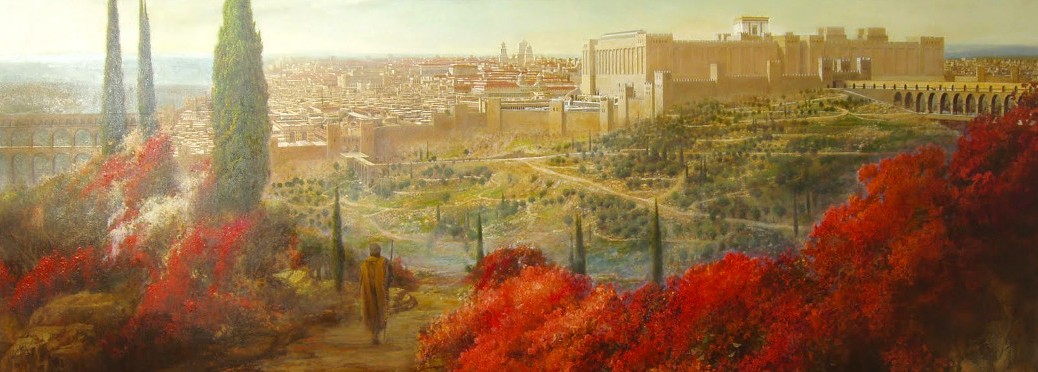
True, that particular parcel of land was later named Eretz Yisrael, but even then we saw not a small piece of land, but a polished mirror, reflecting the entire world. In this land will rise up the mount of the Lord “and to it shall flow all to the nations.” On this mount will stand the House of the Lord, “it shall be called a house of prayer for all the nations.”
-Rabbi Moshe Avigdor Amiel
Commentary on Lekh Lekha
Chapter 1: Abraham Recognized His Creator, p.135
Translated by Kadish Goldberg
Jews, Judaism, & Genesis: Living in His Image According to the Torah
As Christians (or “Messianic Gentiles” if you prefer), we have our own ideas of how God’s covenant promises to Abraham, Isaac, and Jacob somehow play in to attaching the non-Jewish people groups of the world to the God of Israel. It’s true that we disagree on many of the specifics of the New Covenant and how faith in the accomplished work of Messiah grafts us into the root, and we argue about those opinions day and night, typically by blogging.
Every so often, we employ the classic Jewish writings, not those found in the Bible, but those written afterward, sometimes many centuries afterward, to somehow prove our point. We conveniently forget that these Jewish sages and teachers would not have said or done anything they thought might give credence to the idea that the “founder of the Christian religion,” that is to say “Jesus” (Yeshua) could possibly be the Messiah, let alone of a Divine nature.
However, I believe that only by viewing the Bible through a “Jewish lens” and reading the sacred writings in as close an approximation as possible to how the original audience would have understood them, will we ever come close to capturing the true intent of not only the human writers, but of the Holy Spirit that inspired them. Thus, when I read Rabbi Amiel’s commentaries, which include his insights as to just how the rest of the world was supposed to be attracted to the God of Israel, I become interested.
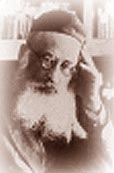
One caveat, though. We can’t read too much into these commentaries for, as I said above, R. Amiel and the sources he quotes would not be considering Jesus in any favorable light, given the long history of enmity that existed between our two faith groups. Nevertheless,I think by examining the Jewish perception of drawing the Gentiles near, we might gain some insights into how we Gentiles might better approach Hashem, God of the Hebrews.
“The Holy One, blessed be He, exiled Israel among the nations so that they would attract converts, as it is said, ‘and I shall plant her in the land’ — does one sow a se’ah unless he expects to reap several koor?” (Tractate Pesachim 87b.)
So it was with the first Jew, our father Abraham. His history, as described in the portion of Lekh Lekha, began in Galut, outside the Land of Israel. He, too, was exiled from his land and birthplace only in order to increase proselytes, as is written ‘and all the families on earth will be blessed through you.’
-Amiel
Chapter 2: Our Father Abraham’s Mission, p.141
Of course in Abraham’s day, Judaism, as such, did not exist. Abraham is noteworthy for coming to faith in the One God of all and acknowledging Him as his personal God. We do know from the Bible and midrash, that Abraham did “make souls” or taught his servants and others the ways of God, but would these people have “converted” to anything and if so, what?
His “converts” were not formally converted. Among the seventy souls who went down to Egypt, no mention is made of any converts. They were converted ideologically. They were influenced by Abraham’s noble spirit…
…Thus, the converts whom we are to attract through our exile among the nations are not formal converts — for “converts are as troublesome for Israel as is a skin affliction.” The converts referred to by the Rabbis are persons who are influenced in varying degrees by our sublime fragrance.
-ibid, pp.141-2
With the caveat I mentioned above in mind, how can we compare this to the actual result of the people of the nations being drawn to the God of Israel in the days of Messiah and afterward?
Go therefore and make disciples of all the nations, baptizing them in the name of the Father and the Son and the Holy Spirit, teaching them to observe all that I commanded you; and lo, I am with you always, even to the end of the age.”
–Matthew 28:19-20 (NASB)
“You see, brother, how many thousands there are among the Jews of those who have believed, and they are all zealous for the Law…
…But concerning the Gentiles who have believed, we wrote, having decided that they should abstain from meat sacrificed to idols and from blood and from what is strangled and from fornication.”
–Acts 21:20, 25
 Seemingly, there is a parallel between R. Amiel’s interpretation of the “mission of Abraham” to the nations and the mission to the Gentiles initiated by Yeshua and acted upon by Paul, James, and the Apostles. There’s a conversion without a conversion happening. Gentiles are added to the ranks of the ekklesia of Messiah without any formal conversion such as was typical of the proselyte rite in the late Second Temple period.
But how does R. Amiel and the Judaism he represents imagine this was to be done? Certainly not in the matter that the Christian believes.
“‘And I will make you into a great nation’ — therefore we say ‘God of Abraham.’ ‘And I will bless you’ — therefore we say ‘God of Isaac.’ ‘And I will make your name famous’ — therefore we say ‘God of Jacob.’ Are we then to conclude [the first blessing of the Amidah prayer] with all three? The verse specifies, ‘And you will be a blessing’ — we conclude with ‘you’ (singular), not with all three.
-Tractate Pesachim
Not only do the world’s three major faiths, our holy faith and those of the Christians and the Moslems, base themselves theologically upon our Holy Torah. Not only do they draw life-giving waters from our fountainhead, they also relate to us genealogically.
-Amiel
Chapter 3: God of Abraham, Isaac and Jacob, p.145
You may be aware that Abraham fathered both Ishmael, who became the father of the Arabs and is claimed by Islam, and Isaac, who, through his son Jacob, became the scion of the twelve tribes and finally the Jewish people. But how do Christians derive a genealogical connection to Abraham?
Esau, as you may have read, is Edom, a people who are thought to be the distant ancestors of the Romans, these are the Gentile nations from R. Amiel’s point of view, and thus the Christians, since Christians, by definition, are not Jewish (if that statement makes you uncomfortable when you think of “Hebrew Christians,” remember the Rav’s perspective on the matter is thoroughly Jewish and not easily adapted to Christianity’s framework of conceptualization).
But wait a minute. If both Islam and Christianity can be considered in some manner as physical descendants of Abraham, do we Christians then inherit all of the promises God made to Abraham including possession of the Land of Israel?
Hold your horses and remember your Bible. Even if the Gentile Christians are both “spiritual” and physical descendants of Abraham, there is this:
But God said to Abraham, “Do not be distressed because of the lad and your maid; whatever Sarah tells you, listen to her, for through Isaac your descendants shall be named.”
–Genesis 21:12
Now Abraham gave all that he had to Isaac; but to the sons of his concubines, Abraham gave gifts while he was still living, and sent them away from his son Isaac eastward, to the land of the east.
–Genesis 25:5-6
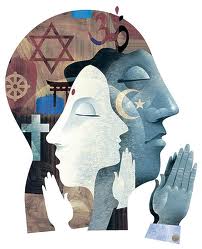 It is only through Isaac that the promises of God are carried on to the next generation and beyond, not through Ishmael or any of Abraham’s other children. Furthermore, of Isaac’s sons, only Jacob inherits both the birthright and the blessing of the first-born.
As it is written, God spoke to Jacob:
And behold, the Lord stood above it and said, “I am the Lord, the God of your father Abraham and the God of Isaac; the land on which you lie, I will give it to you and to your descendants. Your descendants will also be like the dust of the earth, and you will spread out to the west and to the east and to the north and to the south; and in you and in your descendants shall all the families of the earth be blessed. Behold, I am with you and will keep you wherever you go, and will bring you back to this land; for I will not leave you until I have done what I have promised you.”
–Genesis 28:13-15
Thus as we see in Tractate Pesachim, it is only through Abraham and through Isaac, and through Jacob that all of God’s promises are carried out. It is true that based on the commentary, we can consider Abraham the father to other nations, physically the Arab people, and midrashically the Christians, but that makes neither people or religion Jewish.
Expanding on his point, R. Amiel writes:
‘And all the families of the earth will be blessed through you.’ Of the End of Days, when ‘the Temple Mount shall be the highest of all, towering above the hills,’ it is written that ‘many nations will come streaming to it.’ This is to say that even though ‘the Lord shall be one and His name shall be One,’ all the nations of the world will not fuse into one nation. There will remain diverse peoples. National differentiation actually contributes significantly to human development, bringing not curses but blessings. But ‘many nations will come streaming to it,’ — all will flow to one central point, to the Mountain of the Lord which ‘shall be the highest of all, towering above the hills.’ Or, as the Torah says, ‘through you will be blessed all the families [plural!] of the earth.’ (emph. mine)
-Amiel, p.147
 As I said, the Rav isn’t going to take any Christian innovations regarding Biblical interpretation into account, so it would be easy to discount his comment above based on that. On the other hand, I think there’s some merit to the idea that, by viewing the Bible a bit more “Judaically,” we can get a more accurate picture not only of how Judaism sees the final resolution of the Gentiles to God, but perhaps how the original Jewish writers of the Bible saw this conclusion of human history.
For me, this does re-enforce my currently held belief that the peoples of all the nations remain distinct national groups differentiated from Israel and from each other, and yet all drawn to One God and One place, the Temple, to worship Him in the “House of Prayer for all peoples”.
I’ve said before that it is at least plausible to consider that when the Master issued his Matthew 28:19-20 directive, the Apostles likely believed they would comply by employing the traditional proselyte rite, bringing the Gentiles into discipleship by converting them to Judaism. This, though, violates prophesy as R. Amiel has pointed out. It is clear that the Gentiles were to be drawn near to God as Gentiles.
The Apostle Paul was the one to see this most clearly, but how does Judaism see it standing on the outside of the Apostolic Scriptures and looking in, so to speak?
What prevented their mass conversion was the law of brit milah, ritual circumcision, for they found that particular commandment to be the most difficult of all. The founder of the faith of the “New Testament” exploited this fear of circumcision and prevented the fulfillment of the promise ‘and I will make you a great nation.” Thus Israel is ‘the smallest of nations.”
-ibid, p.148
This is the Rav’s explanation for how Christianity “morphed” into its own, separate religious expression. Like the ancient Apostles, he believes the proper way to fulfill the prophesies is to convert Gentiles into Judaism, making Abraham’s descendants as numerous than the stars (Genesis 15:5). But this contradicts his view that the people of the nations will draw near to God as people of the nations and not as proselytes. R. Amiel’s only apparent option within his contextual framework, is to have the Gentiles “convert” in the sense of becoming Noahides, righteous Gentiles, which would satisfy the requirement of them retaining their national identity while still honoring the One God of Israel.
R. Amiel acknowledges that Abraham is the father of many nations and that the people of the nations are blessed through him, but the “nations inherited the legacy only partially; we (Jews) inherited it in its entirety.” (p.149)
My respectful response to the esteemed Rav is “yes and no.” I agree that we Gentile believers are not Israel and yet, we are not to be compared to the generic nations of the earth. Even if those nations comply with the Noahide Laws, that doesn’t provide those of us who are grafted in to the root through our faith in Messiah access to the New Covenant blessings. This is something that Rabbi Amiel could not anticipate, but we can. We can take what is valuable from the esteemed and honored sages, and in this case, look at it through a New Covenant lens in order to glean what is of value there.

I mean no disrespect to Rabbi Amiel, those other Rabbis who contributed to the publication of his book, or the long history of the Sages in Judaism, but even as they were inspired and even as they possess authority from God to make halachah for their generations, they were also men, and as men, given the struggles of the last twenty centuries, there were places they just could not see and knowledge they couldn’t assimilate. No one comes to God without the involvement of the Holy Spirit. To everyone else, the good news of the Messiah doesn’t make a lot of sense:
For indeed Jews ask for signs and Greeks search for wisdom; but we preach Christ crucified, to Jews a stumbling block and to Gentiles foolishness, but to those who are the called, both Jews and Greeks, Christ the power of God and the wisdom of God. Because the foolishness of God is wiser than men, and the weakness of God is stronger than men.
–1 Corinthians 1:22-25
All people, Jewish and non-Jewish, come with blind spots that can only be clarified through the Spirit of God. I suppose God could just re-write our programming and the entire world could wake up one morning all declaring faith in Christ and him crucified, but that’s not God’s plan. It would be easier if it were, but God left human free will intact. We have to be willing to hear the messages of the Gospel, and having heard them, we have to be willing to believe and then act on that belief.
The call of the Master is like hearing a knock on your front door. Is it a thief or a benefactor? We won’t know until we open the door, but if we’re wrong, then it’s too late to save ourselves of any threat that might enter. But if we take the risk and open the door, he will come in and with him…freedom.
May we all meet together one day on the Mountain of God, and may we join in prayer in His House.
‘And the souls which they had made in Charan.’
Reish Lakish said, “Whoever teaches his friend’s son Torah is considered by Scripture as though he himself had made [created] him, for it is said, ‘And the souls which they had made…'”
-Amiel
Chapter 4: Flesh and Soul, p.151