A Review of the Sinai Ethic: The Ethic of Election

In the third month after the sons of Israel had gone out of the land of Egypt, on that very day they came into the wilderness of Sinai. When they set out from Rephidim, they came to the wilderness of Sinai and camped in the wilderness; and there Israel camped in front of the mountain. Moses went up to God, and the Lord called to him from the mountain, saying, “Thus you shall say to the house of Jacob and tell the sons of Israel: ‘You yourselves have seen what I did to the Egyptians, and how I bore you on eagles’ wings, and brought you to Myself. Now then, if you will indeed obey My voice and keep My covenant, then you shall be My own possession among all the peoples, for all the earth is Mine; and you shall be to Me a kingdom of priests and a holy nation.’ These are the words that you shall speak to the sons of Israel.”

–Exodus 19:1-6 (NASB)

The Sinai Ethic was originally presented by Rabbi Russ Resnik, executive director of the Union of Messianic Jewish Congregations (UMJC), during the annual First Fruits of Zion (FFOZ) Shavu’ot Conference at Beth Immanuel Sabbath Fellowship in Hudson, Wisconsin. Shavu’ot, the anniversary of the giving of the Torah and the pouring out of the Spirit, is a holy and deeply spiritual time that provides a reverent connection with the people of God who heard the words of the LORD spoken from the fire at Mount Sinai. These teachings, given in three sessions during the festival, focus on the moral and ethical mandates that the giving of the Torah established for the Jewish people and all nations.

-from the back cover of the CD for the audio teaching, “The Sinai Ethic”

Session Two: The Ethic of Election

It’s been over three weeks since I reviewed Part One of Rabbi Resnik’s three-part series. I haven’t had much time to sit down and listen to the audio CD graciously provided by FFOZ but admittedly, I’ve been kind of dreading continuing with the series. Part One was difficult for me to get a handle on, and when I did, I found I didn’t always agree with what R. Resnik said.

Part Two was a pleasant departure from that experience, and I found The Ethic of Election to be straightforward, easy to follow, and to be what I expected it to be. It also provided me with some new perspectives on crucial parts of the Torah record and the story of Israel.

Resnik began his lecture with sort of a joke, kind of like a story about different siblings get together and find out they all thought that Mom loved them the best, as if each one of them were especially “chosen” or “elect” in relation to their Mom (“But I thought Mom loved me best”).

It gets uncomfortable when you think you’re the favorite in the family only to discover that all of your other family members think they’re the favorite, too. But more so, and especially in our egalitarian culture, where in order to avoid any losers having their feelings hurt, we’ve created a society where “everyone’s a winner,” Resnik says it’s a “scandalous idea” that any one person or group could be chosen, because it means other people and groups are not. It’s even worse when God made a choice and that choice of a people was an ethnic group. We don’t like any one ethnic group to be considered more, better, or special than any other group.

I quoted Exodus 19:1-6 above since Resnik read it to his audience, but he also read the following:

But you are a chosen race, a royal priesthood, a holy nation, a people for his own possession, that you may proclaim the excellencies of him who called you out of darkness into his marvelous light.

–1 Peter 2:9
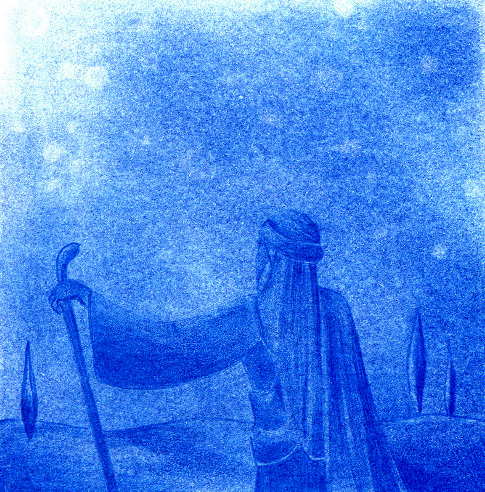
Landron Paule_Histoire Sainte_Première Alliance_Droguet Ardant_Limoges 1991This came up in a previous blog post some weeks ago when I naively thought Peter must have been addressing a non-Jewish audience using the “chosen” language of Exodus 19, but it was pointed out to me that the apostle could have been as easily addressing Jewish disciples of the Master.

That said, Resnik acts as if Peter were addressing Gentiles and he (Rabbi Resnik) was using the verse to highlight the dynamic tension between all Israel being chosen by God and a remnant of the people of the nations also being chosen by God, and their being no contradiction between these two choices.

Resnik referenced his previous lecture, particularly the part about conditional and unconditional covenant elements, to highlight that the nature of Israel being chosen is unconditional. Exodus 19:5 makes Israel’s being chosen seem conditional on whether or not they obey the Torah, which is how most Christians read it, but verse 4 tells us that Israel being chosen is totally unconditional. What’s conditional is the role Israel plays and whether or not they will live out that role in a completely realized way, which they can only do if they obey God by observing the conditions of the covenant, the Torah mitzvot.

So God doesn’t “unchoose” Israel when they stumble, they just lose key elements in their role, such as living in the Land of Israel, being free vs. being slaves, and so on.

Resnik compares God as impartial judge to God as father. We all think we want God to be an impartial judge because that eliminates any preference of a particular population over all the people on earth. But while that may sound like a good idea, it also eliminates a father’s love for his children. Yes, all fathers love all of their children, but truth be told, any father will admit when pressed, that he usually relates better to one of his children than to the others.

Do you see where this is going? Relating better to one child does not remove the father’s love from any of the other kids, but because he’s human (this is a metaphor so don’t get too literal on me), he’s naturally going to connect to one kid’s personality more than the others for some reason.

This is God the Father in relation to Israel, His chosen one.

Christianity, and particularly what we call “Hebrew Roots,” regularly struggles with Israel’s chosen and special status because they think it means “God loves the Jewish people best” and to the exclusion of the Gentiles, but that’s not what Resnik is getting at here.

Now then, if you will indeed obey My voice and keep My covenant, then you shall be My own possession among all the peoples, for all the earth is Mine… (emph. mine)

–Exodus 19:5

What a strange statement to stick in that sentence: “for all the earth is Mine.” What does it mean? According to Resnik, it could have one of two possible interpretations:

  1. It could mean “all the earth is mine anyway, so I’ve got every right to choose you (Israel) among all the nations.”
  2. It could also mean “all the earth is mine, and so I’m choosing you (Israel) on behalf of all the nations.”

Resnik prefers the second interpretation. It’s not a matter of Israel being chosen and the rest of the nations are out of luck, Israel is chosen for a unique role of service to the rest of the world and to God. It’s one way to understand the two most important commandments, loving God with all your (Israel’s) resources by loving your neighbor (the rest of the world) as yourself.

You ever wonder why the story of Joseph takes up so much of the book of Genesis? I never did until Resnik brought it up.

Now Jacob lived in the land where his father had sojourned, in the land of Canaan. These are the records of the generations of Jacob.

Joseph, when seventeen years of age, was pasturing the flock with his brothers while he was still a youth, along with the sons of Bilhah and the sons of Zilpah, his father’s wives. And Joseph brought back a bad report about them to their father. Now Israel loved Joseph more than all his sons, because he was the son of his old age; and he made him a varicolored tunic. His brothers saw that their father loved him more than all his brothers; and so they hated him and could not speak to him on friendly terms.

–Genesis 37:1-4

joseph-the-slaveThe “varicolored tunic” or “coat of many colors” doesn’t have a direct translation from Hebrew into English, but Resnik thinks of it as a “princely robe,” a sign of status, a sign of Joseph’s “election” by his father Jacob. It wasn’t that Jacob didn’t have a right to have a favorite among his sons. I mention above that this is kind of normal for human fathers (and for God). But his mistake, and Joseph’s, was rubbing the noses of the other brothers in it. While the brothers were supposed to support and endorse the election of Joseph, they never accepted it, so much so that when they got a chance, they tried to kill Joseph.

But first, they stripped off the sign of his election, ripped it to shreds, dipped it in blood, and threw it at their father’s feet as if to say, “This is what we think of your election of Joseph.” That’s not how it literally played out, but the symbolism is enough to give one pause, especially if we expand the metaphor into the history of the Jewish people in exile and how they have been mistreated and even murdered for the sake of our Gentile/Christian resentment of Israel’s election.

They say “the clothes make the man” and Joseph’s life seems to mirror that because his role changes as often as he changes clothes. He’s transformed from a slave into a prisoner when Potipher’s wife grabs his robe after her failed attempt to seduce him, and he is transformed from a prisoner to a prince when Pharaoh, King of Egypt, puts a signet ring on Joseph’s hand, clothes him in garments of fine linen, and puts a gold necklace around his neck (Genesis 41:42).

I never thought of Joseph subsequently testing his brothers as a test of whether or not they’d accept Jacob’s election of Benjamin as the favored son. After Joseph’s (perceived) death, all Jacob had left of Rachel was Benjamin. That’s why Jacob didn’t send Benjamin down to Egypt for food with the other brothers and why, when the brothers tell him what Joseph (as the Egyptian prince) did to them in demanding Benjamin’s presence, he resisted sending Benjamin to Egypt for months.

In the end, when given gifts of clothing and food by Joseph in Egypt, Benjamin always got bigger and better portions, and Judah passed the test on behalf of his brothers by guaranteeing his safety.

There’s an obvious comparison between Joseph and Yeshua (Jesus) in revealing the “mystery of election.” I said before that the clothes make the man, but it’s not just the clothes. Joseph didn’t really come into his own until he was stripped, not once but twice, and when he stopped being arrogant and learned to be a servant, only then were the robes of a King restored to him.

Jesus too was stripped and given the robes of a King and a crown (of thorns) but only to mock him. The Romans played at bowing to him, but it was to humiliate him. As a teenage boy, Joseph dreamed his brothers and father would bow to him and they resented it, but decades later it became the literal truth. We also know the literal truth that someday, every knee will bow to our King (Romans 14:11, Philippians 2:10).

Both Joseph and Jesus were chosen by their fathers, rejected by their brothers, handed over to Gentiles, went down into a pit (of literal death in Jesus’ case), were dressed as Kings (as a form of mocking in Jesus’ case). Yet we know that one day Messiah will come back and assume the throne as our King, as ruler, and as servant.

And that’s the secret, that’s the missing ingredient, that’s what it took Joseph many years to learn, and that’s the secret of Israel’s election as well.

While Jacob may have chosen Joseph as his elect and dressed him up for the role, the seventeen year old kid had a lot to learn. He thought of the robe as a status symbol and as long as he did, he failed. Only when he learned to be a servant to people and to God did he realize the “princely robe” is really a servant’s apron. Only when his life was transformed was he worthy of election. Our Master taught us the same thing:

“For even the Son of Man did not come to be served, but to serve, and to give His life a ransom for many.”

–Mark 10:45
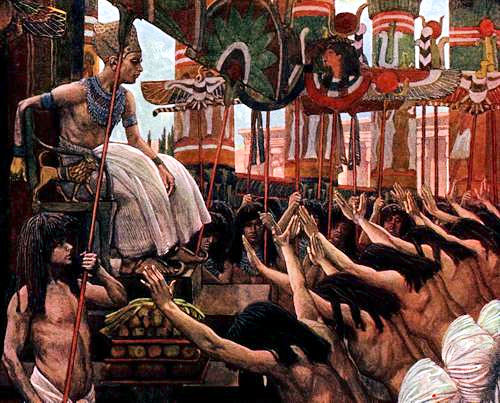
Joseph of EgyptWhen the chosen Israel is obedient to God and of service to the world, she prospers in her “servant’s apron,” chosen of God on behalf of the nations of the earth. She is special and she wears the robes indicating their status, not as rulers but as especially responsible to God and to the world. When she’s disobedient, she is not “unchosen,” but like Joseph, she experiences “reversals” such as being slaves or prisoners, and Israel’s history is replete with such experiences. When she sees the robes of her election as a status symbol, they become twisted around her, trapping her.

When she understands their true nature, she is free, free to serve God and to realize her role in the world.

What Do I Think?

R. Resnik didn’t take it this far, though I suspect he might in his third and final lecture, but let’s see if I can anticipate him a little. As we saw in Joseph’s example, simply dressing up in a “princely robe” doesn’t make you a prince. If you’re a spoiled brat before putting on the robe, you’ll be a spoiled brat after you put it on, too. If you think you are deserving, special, and it’s your right to have that robe, then you risk having it stripped from you and worse.

And He began speaking a parable to the invited guests when He noticed how they had been picking out the places of honor at the table, saying to them, “When you are invited by someone to a wedding feast, do not take the place of honor, for someone more distinguished than you may have been invited by him, and he who invited you both will come and say to you, ‘Give your place to this man,’ and then in disgrace you proceed to occupy the last place. But when you are invited, go and recline at the last place, so that when the one who has invited you comes, he may say to you, ‘Friend, move up higher’; then you will have honor in the sight of all who are at the table with you. For everyone who exalts himself will be humbled, and he who humbles himself will be exalted.”

–Luke 14:7-11

I quote these verses with some regularity and with good reason. There are plenty of well-meaning non-Jewish believers who are authentically convinced that they are equally chosen along with all Israel and that they deserve to wear the princely robe along with them. Problem is, they see it as a status symbol, sort of like the BMW of robes, rather than the clothing of servants who are expected to “go the extra mile,” so to speak, in the service of the world and of service to God.

It was God who gave, among the other Torah mitzvot, the commandment of the tzitzit to Israel. One might think of a tallit as Joseph’s “princely robe,” but then again, the Shabbat, which is the actual sign of the Sinai covenant, kosher, the festivals, they all could be considered as those robes of servanthood.

Joseph eventually revealed his true identity to his brothers and his father and they were all brought down to Egypt and given land on which to live. Pharaoh was excited to hear that Joseph had brothers. If one Joseph could save Egypt and the rest of the civilized world from famine, think what a dozen “Josephs” could do.

But they never did. None of Joseph’s brothers were elevated to a position anywhere near what Joseph had achieved. None of them became “princes in Egypt” or anywhere else. Joseph was Jacob’s elect and he served and ruled until his dying day. His brothers were pale shadows by comparison. Yes, Jacob loved all his sons, but he rightly recognized that Joseph was special and chose him accordingly as was his right.

God chose Israel as is His right, not because of any quality Israel possessed, but simply because it was God’s desire to do so. He doesn’t have to have a reason, at least one we understand.

Joseph was chosen on a larger scale to save his family (Israel) and the rest of the world from famine and he did it. Jesus was also chosen by his Father to save Israel and the rest of the world, and in one sense, it was accomplished on the cross. But in a larger sense, the process is still ongoing and won’t be complete until he returns. Israel, national Israel and all the Jewish people, are chosen to prepare the world for the redemption of their nation and through them, the entire world.

tallit-prayerIf we, like Joseph’s brothers, choose to reject that election, and metaphorically speaking, rip up Israel’s robes (or Messiah’s), dip them in blood, and throw the gory mess at the feet of God (and how often has that already happened?), we will also suffer as the brothers did. We’ll still be part of the family, but we will forfeit much of our special role in the service of God. You cannot say you love God if you hate Israel and the Jewish people and covet their princely robe.

You also can’t simply crawl under the robe with Joseph like a small child of yesteryear would crawl under his mother’s skirts.

I don’t know if this is anywhere near where Resnik is going, but it’s what came to mind as I was listening to the lecture.

I didn’t want to go here but it seems to be the inevitable destination of “The Ethic of Election.”

Addendum: I know my review and commentary is likely to inspire some pushback from “the usual suspects” (if you’ll pardon my rather tongue-in-check expression), but I read something written by NT scholar Larry Hurtado, just a brief sentence fragment, that I thought relevant:

“Scholars really can’t be expected to agree all the time, and he and I have disagreed occasionally on this or that… (but) I also have enormous respect for Bagnall’s work overall…”

If Bible scholars can’t be expected to agree all the time about the message of the Bible, at least in the details, how much more so can we expect some disagreement between different groups of believers in relation to observing mitzvoth and the distinctive differences between Jewish and Gentile disciples of the Master?

Sermon Review of the Holy Epistle to the Hebrews: A Great Cloud of Witnesses

The Bible says “we are surrounded by a great cloud of witnesses.” Are the biblical saints of old watching us live our lives like characters in a bad reality TV show?

Hebrews 11 presents the Bible’s hall of fame of faith: The book of faith and hope. The writer of the book of Hebrews refers to the biblical saints as “a great cloud of witnesses.” What does that term imply? Study Hebrews 12:1-4.

To hear more teachings from Hebrews 11, listen to “The Book of Faith and Hope.”

-D. Thomas Lancaster
Sermon Forty-one: A Great Cloud of Witnesses
Originally presented on February 1, 2014
from the Holy Epistle to the Hebrews sermon series

Therefore, since we have so great a cloud of witnesses surrounding us, let us also lay aside every encumbrance and the sin which so easily entangles us, and let us run with endurance the race that is set before us, fixing our eyes on Jesus, the author and perfecter of faith, who for the joy set before Him endured the cross, despising the shame, and has sat down at the right hand of the throne of God.

For consider Him who has endured such hostility by sinners against Himself, so that you will not grow weary and lose heart.

You have not yet resisted to the point of shedding blood in your striving against sin…

–Hebrews 12:1-4 (NASB)

In last week’s sermon review, Lancaster blew through Hebrews 11 faster than I imagined, especially given how detail-oriented he’s been in addressing the other chapters so far. Of course, he’s devoted an entirely different sermon series to that one chapter, but I’ll have to listen to those fourteen sermons another time.

This week the focus is on how Chapter 11 affects the current material, namely Hebrews 12:1-4, but let’s stay with Chapter 11 for a little bit longer, particularly verse 2:

Now faith is the assurance of things hoped for, the conviction of things not seen. For by it the men of old gained approval.

The New American Standard Bible translates the Greek word martus as “approval” and other English translations include “commended,” “their commendation,” “good report,” and “testimony.” The best word we could use in English though is “witness.”

legal witnessLancaster goes through the original meaning of this word which is where we get the English word “martyr.” Today, we all think of a martyr as someone who dies for his or her religion, but back when the Epistle to the Hebrews was being written, it meant a witness in a legal proceeding. You might think of the early believers being taken before a Roman tribunal and directed to renounce their faith, blaspheme the name of Jesus, and to worship a pagan idol. The actual testimony of the believing witness, if they were true to their faith, was to affirm their trust in Messiah and belief in the coming resurrection and Kingdom of God. The consequence for that affirmation was to be executed, hence the eventual change in meaning of the word “martyr” (so, no, some suicide bomber blowing himself up to kill a bunch of innocent people is not a “martyr”).

The readers of the Hebrews letter were in a similar position, but not relative to the Romans. The Sadducees, who were in control of the Temple, were after these Jewish disciples of the Master to renounce their faith in the resurrection and the life in the world to come, since Sadducees believed in none of that (see Acts 23:6-8).

This has applications for us today as disciples. First of all, the “witness” of our faith in terms of Evangelical Christianity is not really a witness at all. A bunch of teens from a church youth group ambushing people at a shopping mall with religious tracts is not a witness. Being a witness is being directly challenged to renounce your faith and yet holding fast to it anyway.

There are many Christians in atheist nations like China or in various Muslim countries who are witnesses, who can only save themselves from being put in prison or killed if they renounce their faith and, like the ancient believers before Roman tribunals, they hold fast and faithfully suffer and even die rather than betray Yeshua.

Compared to that, no one in the western nations, including the U.S., has their witness challenged significantly.

Or is that true?

Lancaster says our challenges are much more subtle:

  • Embarrassment
  • Social pressure
  • Moral relativism
  • Materialism
  • Sensuality
  • Self-indulgence

The world around us attempts to get us to renounce our faith by encouraging us to conform to progressive and politically correct standards. In fact, this manipulation is so subtle that you don’t even have to stop calling yourself a “Christian,” you can continue to go to church (at least certain denominations), and yet still conform to every single standard valued by progressive secular society.

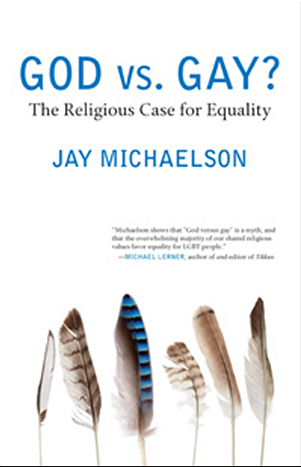
michaelsonI couldn’t help but think of Jay Michaelson’s book God vs. Gay? The Religious Case for Equality and the methods he employed to convince his readers that his understanding of the Bible, one that affirms and supports “loving same-sex couples” and “marriage equality” in the church and synagogue, is the correct and desired one.

If you remove the strong emotional components from the Michaelson book and look at it in terms of strategies and tactics, then it’s possible to view a parallel between the content of the book and what Lancaster says about how the Adversary seeks to remove, dilute, or delete our witness as Christians, to convince us to denounce Jesus so we can be just like everyone else.

Lancaster said in his sermon that one witness to our faith is lifelong, male-female, monogamous marriage, and he says the world laughs at this witness. Besides the issues involved in Michaelson’s book, how many couples, even Christian couples, have sexual relationships before marriage or outside of marriage, and have children outside of marriage? This is something of the norm in secular society and it seems the only people who actually want to get married are gays and lesbians, and that only because it’s still illegal in a dwindling number of states in our nation.

The world does work against us in many ways, challenging us, and demanding a witness to our faith. We need to look back to Hebrews 11, which is all about the many, many role models we have to look up to who were also challenged and yet never wavered:

…and others experienced mockings and scourgings, yes, also chains and imprisonment. They were stoned, they were sawn in two, they were tempted, they were put to death with the sword; they went about in sheepskins, in goatskins, being destitute, afflicted, ill-treated (men of whom the world was not worthy), wandering in deserts and mountains and caves and holes in the ground.

And all these, having gained approval through their faith, did not receive what was promised, because God had provided something better for us, so that apart from us they would not be made perfect.

–Hebrews 11:36-40

If we think we have problems living Holy lives, look at the people, in this case, the prophets of old, who suffered, were tortured, murdered, lived desperate and difficult lives, and all of them who had gained a good witness of their faith, even though they did not receive anything they were promised by God, so that we too could be included in the promises of the future resurrection.

What Did I Learn?

The sufferings of the faithful we read about in Chapter 11 were their witness, their faith testified about them and still does every time we read the Bible. The “great cloud of witnesses” doesn’t mean the saints are sitting around in Heaven spying on our lives as if we’re part of a bad reality TV show. They aren’t witnessing us, their lives are a witness to us.

long-distance-runnerWe are like runners in a race. Those faithful witnesses have already run that race and won. We are still facing the challenges they overcame. They are our heroes and our guides. Their lives are our inspiration.

The central message of the sermon is “Don’t give up. You aren’t alone. Others have crossed the finish line — you can too.”

When my kids were young, we used to watch a variety of different cartoons including one about a group of martial artists who trained in weighted clothing in order to increase their strength.

Verse one of Hebrews chapter 12 says, “let us also lay aside every encumbrance (weight) and the sin which so easily entangles us…” If you’re going to run a race and your life, your eternal life, depends on successfully crossing the finish line, you need to be as light and strong as you can. “Weighted clothing” or the weight of sin will just slow you (and me) down. We need to endure because it’s a long race, not a sprint. And there are many “stumbling blocks” along the way, which is why we need to keep our eye on Jesus, “the author and perfecter of faith.”

No one’s perfect. No one’s faith is perfect, but then again, it doesn’t have to be. We are broken, just like the world around us, but the perfecter of the world is also the perfecter of our faith. If we keep our eyes on him, we don’t need to be perfect, we just need to keep paying attention and not to waver.

That bullet point list I posted above is a list of items designed to distract us and to change our focus. If we start paying attention to all that and let our attention wander, it’s easy to become very discouraged and even to give up. Even if we don’t think we’ve given up, it’s easy to slip into some model of “Christianity” that says we’re doing the right thing by ignoring the standards of God, difficult as they seem to be, and embracing the standards of people and of the culture in which we live. We may still believe we’re part of the “community of faith” and that we are doing good and showing compassion, but in fact, we have exited Yeshua-faith and joined the ranks of a faithless society more concerned about present appearances than future and eternal glory.

burdenA life of faith seems to be very weighty sometimes. I’ve felt it pressing down on me, and often the tonnage seems triggered by religious rather than secular people. But they can really do nothing if faith is strong. If you feel discouragement and are tempted to give up or even just lighten up, don’t blame the world, look to your own heart, your own faith, and your own stamina. Call on God to strengthen you and to see you through to the end of the race.

My Personal Shabbos Project

This past Shabbat, thousands of people experienced the beauty of Shabbat for their first time. I’m sure many were touched, perhaps transformed by the experience. But it will fade unless we transform the inspiration into action.

-Sara Debbie Gutfreund
“After the Shabbat Project”
Aish.com

My husband and I spent the Shabbos Project in Venice. It was great to see a different community. Tali’s enthusiasm was great. Attached is a picture from candle lighting…

-Batsheva Jassinowsky, Johannesburg
from the Shabbos Project’s website

This is just a sample of the many commentaries available about last weekend’s Shabbos Project which I previously blogged about. I took some online criticism from well-meaning but less than compassionate individuals who believe that everything in the covenant conditions God gave to Israel at Sinai now belongs to any non-Jew who is a disciple of Yeshua (Jesus), including the Shabbat.

Of course, as I said before, I think there’s a certain amount of justification for non-Jews observing the Shabbat in some fashion based both on Genesis 2 in honoring God as Creator, and Isaiah 56 which predicts world-wide Shabbat observance in the Messianic Kingdom. Additionally, based on D. Thomas Lancaster’s interpretation of The Holy Epistle to the Hebrews, we disciples of the Master can and perhaps should behave as if the Messianic Era is already upon us, even though our world is still ruled by darkness; we can behave as partisans or freedom fighters, holding onto our own until the return of the King.

Thus there seems to be more than sufficient support for Gentiles in the present world participating in Sabbath observance. My personal caveat is that if you are not observing Shabbat in a Jewish environment by invitation or are not part of a Jewish family, as a Gentiles, please try not to behave in a heavy-handed manner and claim “all your Sabbaths belong to us,” to borrow from a popular meme.

I know a convenient excuse for anti-Semitism used by some folks is that the Bible says we don’t have to be respecters of men but only of God (Acts 4:19, 5:29). But we also know from the Master’s teaching not to usurp the place of honor at the banquet, but rather, we should wait to be invited before we are elevated and esteemed (Luke 14:7-15).

However, I’m not writing this to be (deliberately) provocative today. I have a unique opportunity in early November when I will be “home alone” for two Sabbaths. That means, among other things, that I can make 100% of the decisions about how I spend my time on those occasions, and I’ve decided to conduct a small, personal, “Shabbos Project” of my very own.

shabbatIt may surprise you to know that I’ve never really observed a proper Shabbat sundown to sundown, Friday to Saturday. My (Jewish) family has never been very observant, so about the best they do is lighting the Shabbos candles and even that doesn’t happen every week.

When we were all doing “Hebrew Roots” many years ago, even then, none of us were as observant as we liked to believe. We drove to the Hebrew Roots congregation, and while we often used crock pots for our food, a certain amount of turning on electrical devices occurred. Naturally, we turned lights on and off, we opened and closed refrigerator doors (causing the light to go on and off), we wrote, and no doubt we participated in some or most of the other thirty-nine melachah or types of work forbidden on the Shabbat.

It’s sort of like our “keeping kosher” was. We avoided specific types of food but that was that. The so-called “Biblical commandments” without the “man-made” interpretations of said-commandments.

But I wonder what it would be like, for me, the goy, to actually attempt to approach observing Shabbat for real. I have two weekends to try it out. I won’t be part of a “project” and in fact, I’ll be the opposite. Where the Shabbos Project attempted to bring together as many Jews as possible from all over the world, I’ll be flying solo, just me and the Shabbat.

I’m not a baker, so Challah will have to be purchased, and I think there’s a couple of local stores that sell it. Wine is not problem obviously since I can buy that anywhere. We’ve got plenty of Shabbat candles and the candlesticks on hand, and I have copies of The Sabbath Table and First Steps in Messianic Jewish Prayer to study in preparation.

This means no driving, no cooking, no watching TV, no using the computer (thus, no Internet), no opening the fridge (which will be interesting since I’ll probably need to keep some of the food I plan on eating cold), timing whatever cooking I do for Friday night such that it’s all done in time and there’s no clean up (or I can tolerate a mess until Saturday night).

It also means planning out my Friday night and Saturday. There are no services within walking distance of my house and in any event, I don’t think it would be appropriate to inflict myself on one of the two synagogues in town. That means I can stay at home and still pray the Sabbath prayers, read the Torah portion (which I do anyway), read Torah commentaries (which I do anyway) and so on.

I don’t read Hebrew and I sing like a cement mixer, so the prayers will be in English and I won’t be singing Shabbos songs after Erev Shabbat dinner.

Then there’s Havdalah to consider. I don’t have one of “those” candles lying around but I guess I can perform the rest of the rituals (assuming I can remember them, it’s been years).

I’m probably missing a lot. I could “Google” something like “how to observe Shabbos” and come up with the basics. In reading A Daily Dose of Torah, some sections mention the melachah, but the commentary seems so involved that I don’t think I could memorize all of the specifics. I think you have to live a lifetime of that level of observance to really “get it down” and as far as I know, there may be times when even a highly observant Jew misses a step or two.

Shabbat candlesOf course, as a goy, I don’t have to observe Shabbat to the level of an Orthodox Jew, so there’s no real pressure to do so. On the other hand, I would like to approach this and accomplish something I’ve never done before, not because I think it would make me a “big deal” and not because I’m somehow claiming my “rights” or “heritage,” but for the reasons I mentioned before, because I want to spend at least one Shabbat honoring God as Creator and summoning, at least in some tiny fashion, a taste of the Messianic future.

If you’ve got any ideas, now’s the time. I’ll have two shots at this. The first can be a trial run to help me work out all the kinks, so I can have a better Shabbat a week later. As you read this, I have about ten days until my first go at it. Suggestions?

Addendum: Relative to the differences in obligation to the mitzvot of Jews and non-Jews in Messiah (and this seems relevant given the topic is Shabbat observance), I found this excellent commentary at Aish.com:

Imagine two people who are very different from each other. This needn’t be a source of conflict. Rather, if each one focuses on how to help the other, then the differences between them will actually make their personalities complementary.

Not only will they like each other despite their differences, but rather, because of them. They will even become closer, because their differences provide more opportunities to be of service to each other.

Contrast this to those who focus on what he can take from the other. They will quarrel frequently and eventually end up hating one another.

(see Rabbi Eliyahu Eliezer Dessler – Michtav MaiEliyahu, vol.3, pp.33-4; Rabbi Pliskin’s “Consulting the Wise”)

God vs. Gay? The Religious Case for Equality: My Review of Part One

Why our fundamental values support, rather than oppose, equality for sexual minorities.

-Jay Michaelson
Introductory text for Part One of his book
God vs. Gay?: The Religious Case for Equality

I would suggest that you read the book “God vs. Gay by Jay Michaelson.” He’s a Jew and does a great job of exegeting the Hebrew scriptures.

-from a post on Facebook

Michaelson’s book is divided into two parts. Part One derives some basic principles from the Bible, such as love, fairness, compassion, and justice, to create a framework by which one can integrate people in “loving same-sex relationships” into the overarching intent if not the actual narrative of the Bible. Part Two is more about the “nuts and bolts” of the Biblical passages that speak of homosexuality, particularly those that appear to prohibit or condemn homosexual practices.

Today, I’m reviewing Part One.

First of all, I commend Mr. Michaelson as a writer. He’s clear, concise, easy to access, and even entertaining. If I were reading his book with an uncritical eye and had no particular viewpoint on the issues involved, I could see myself becoming convinced by him within about the first thirty pages or so of his book. I definitely can see those people who already possess attitudes like his or who tend to be sympathetic to the matters he raises being convinced pretty much right away. After all, who could possibly be against caring for vulnerable and injured human beings and standing up for the underdog?

On the other hand, to paint the proper portrait of the Bible establishing principles that support and even demand that same-sex partners in loving relationships belong in the Church and be accepted by Christianity (and also by Judaism), requires that he read and interpret Biblical passages from the broadest possible perspective.

Loneliness. “It is not good for the human being to be alone,” God says in Genesis 2:18. In context, this is a shocking pronouncement. Six times God has remarked how good everything is: light, heaven and earth, stars, plants, animals — all of these things are “good.” The entirety of creation is “very good.” Yet suddenly something is not good. Suddenly, God realizes there is something within the world as we find it that is insufficient, something all of us experience in our own lives and strive to transcend: the existential condition of being alone.

-Michaelson, p.5
Chapter 1: “It is not good for a person to be alone”

Michaelson’s treatment of scriptural quotes follows a pattern throughout the chapters in Part One of his book in that they are read from an overly broad viewpoint and often given an unusual or unique interpretation. After all, can God really be surprised? Did He not plan to form a counterpart for Adam from the very beginning? All of the created animals were created male and female. Were not human beings planned to be male and female as well? It seems rather odd that God should create Havah (Eve) as an afterthought and more odd still that, from Michaelson’s point of view, Eve, except for the part having to do with procreation, could easily have been replaced with a male. It’s a terrific stretch to say, as Michaelson seems to, that Genesis presupposes homosexual humanity.

What some folks don’t understand about the closet is that it’s not just a set of walls around sexual behavior. It’s a net of lies that affects absolutely everything in one’s life: how you dress, who you befriend, how you walk, how you talk. And how you love. How can anyone build authentic relationships under such conditions? And if you’re religious, how can you be honest with yourself and your God if you maintain so many lies, so many walls running right through the center of your soul?

-ibid, p.7

Jay Michaelson
Jay Michaelson

This is the other argument Part One presents. It’s not based on the Bible particularly but rather on the presentation of pain, isolation, and loneliness and the desire for companionship and community, including religious community.

On top of that, Michaelson declares “Sexual diversity is real” (p.10), and accesses some scientific evidence to establish that it is natural and normal for various creatures in the animal kingdom and for human beings to display said-diversity, inferring that since sexual diversity is (supposedly) in-born, it must be an intended creation of God’s and thus part of God’s plan for human beings.

However, this requires a tremendously skewed view of the Biblical text along with infusing popular opinion and modern progressive values on sexuality, both as it was considered in the ancient world and today, in order to come to this conclusion.

But he may have shot himself in the foot by stating the following (p.11):

…as I have remarked already, our current sexual categories are of relatively recent coinage.

It seems rather strange that all of recorded human history just “missed” this “coinage” and that “loving same-sex relationships” haven’t, in some sense, been the norm across all cultures across all time, but the terms and concepts associated with the modern LGBTQ community are only decades old (if that, in some cases). While, as Michaelson says, we have visual and textual evidence of homosexual practices in our history, their function, purpose, and meaning is hidden from us, or if not hidden, at odds with the current conceptualization of same-sex relationships being completely comparable to opposite-sex relationships.

But if Genesis is any guide, and if our conscience is any guide, then we must see that having people in love with one another, building homes and perhaps families together, is religiously preferable to its absence.

-ibid, p.12

Except I cannot derive this from anything in Genesis unless I read the chapter in the broadest and most allegorical sense. Certainly no literal or semi-literal reading of the text renders such a meaning, and no accepted exegetical praxis can automatically come to the conclusion Michaelson presents in his above-quoted words.

I could condense the next two chapters into the following statements and quotes.

What about Leviticus, Romans, and Corinthians? Love demands that we read them narrowly, just as we read narrowly the commandments to stone rebellious children to death, or to sell people into slavery. They are already marginal texts — homosexuality never appears in the teachings of Jesus, or the Ten Commandments, and love does not erase them. But it does limit them.

-ibid, p.27
Chapter 3: “Love your neighbor as yourself”

oppressionThere are exegetical and logical errors in the quote above but it communicates Michaelson’s understanding of how to read the Bible and find acceptance of LGBTQ people in the community of faith. Here’s one more:

One New Testament scholar has written that “any interpretation of scripture that hurts people, oppresses people, or destroys people cannot be the right interpretation, no matter how traditional, historical, or exegetically respectable.” This is a crucial point. If we approach “the question of homosexuality” as a legal, academic, or hermeneutical enterprise, we will get nowhere religiously. All the arguments work, and the anti-gay ones are just as clever as the pro-gay. No — to be responsible members of a faith tradition, we must first open our hearts, allow them to be broken by the heartrending stories of gays who have suffered from exclusion, plague, and self-loathing, and uplifted by inspiring stories of integration, love, and celebration.

-ibid, pp.28-29

I suppose I should add:

“All you need is love.”

-Lennon-McCartney (1967)

Sorry if that last bit sounded cynical, but Michaelson isn’t saying anything different from what I’ve read before. You’d think he’d want to bring out the “big guns” in the very beginning of his book to “hook” his doubting audience and cause them (us, me) to believe that the Bible has been so grossly misinterpreted due to cultural prejudice against gays that the “truth” has been hidden until now.

Unfortunately, he throws exegesis right out the window or at least replaces the complex matrix of interpretive methods we apply to the Bible with “all you need is love.”

If God doesn’t want people to suffer and we, as believers, don’t want to be unjust and cause needless suffering, then we must allow ourselves “to be broken by the heartrending stories of gays who have suffered from exclusion, plague, and self-loathing, and uplifted by inspiring stories of integration, love, and celebration.”

I’m sorry. I don’t want to be mean, cruel, and unfair, but the only thing Michaelson has established for me so far is that there is a fundamental incompatibility between the Bible and how gay people experience their own identity and sexuality.

Chapter 3 ends with:

No religious tradition tells us to close our eyes, harden our hearts, and steel ourselves against the demands of love. Though it may occasionally offer us shelter in an uncertain world, rigidity of spirit is not the way to salvation. On the contrary, our diverse religious traditions demand that we be compassionate, loving, and caring toward others, even others whom we may not understand. The Golden Rule demands reciprocity and compassion, and basic equality. Do unto others as you would have them do unto you; give them the same privileges, civilly and religiously, that you would want for yourself. These are core religious principles, found over and over again in the Bible and in thousands of years of religious teaching. Compassion demands that we inquire into the lives of gay people, and discover if the “other” is like us or not. Look for the truth, and you will find it, indeed, it will find you.

-ibid, p.29

BibleAs I said, Michaelson is a very talented, clever, and convincing writer. He also takes some general principles one can glean from the Bible and applies them to an arena that no Biblical scholar, saint, or tzaddik would have done at any point in the past. Where in the classic Christian commentaries or the judgments of the Talmudic sages is God’s intent expressed in the same manner as Michaelson’s? I can feel him attempting to tug at my heartstrings, but when I look back into the Bible or even into the secular historical record, I don’t find “sexual orientation,” “gender identity,” or “loving same-sex monogamous relationships” written anywhere on any of their pages.

Then, starting in Chapter 4: “By the word of God were the heavens made,” Michaelson throws something new into the mix.

Homosexuality is normal. The sentence is simple, honest, and supported by science — and yet, to many religious people it may seem surprising, even blasphemous, at first. Yet sexual diversity is part of the fabric of nature, and if we believe that fabric to have been woven by God, then it is part of the mind of God as well. Same-sex behaviors are found in over one hundred species, from apes to elephants, guppies to macaques. Put in stark religious terms, sexual diversity is part of God’s plan.

-ibid, p.30

If it weren’t so tragically wrong that paragraph would be almost laughable. According to this “logic,” if something, anything exists in the world, it must be part of God’s plan and part of the “mind of God.” Really? What else exists in our broken and damaged world? War, rape, child abuse, robbery, prostitution, birth defects, divorce, death. Did God intend all of that when He created the universe?

No.

Our world became broken the first time a human being disobeyed a commandment from God, and it’s been broken ever since. In Christianity, it’s called “Original Sin”. Judaism has no such concept, but it does have Tikkun Olam, or “Repairing the World.” The idea is that the world is imperfect and requires that people participate in its perfection. It is accompanied by the idea that only the Messiah will be able to complete the task of fully perfecting the world, even though each and every one of us has a part in the “repair job”.

Either way you slice it, the world we live in isn’t the world God intended. It’s the world we created by human disobedience and human ego. You cannot say that God intended everything that is “natural” because death and suffering are natural, and are also the result of people, not God. Yes, God permits it, but only because we’ve earned it. We’ve got free will. We can screw up a free lunch. Thus Michaelson’s argument of “if it’s natural, it’s part of God’s plan” is dead wrong.

Dennis Prager in his article Judaism’s Sexual Revolution: Why Judaism (and then Christianity) Rejected Homosexuality paints human nature with very different brush strokes:

It is probably impossible for us, who live thousands of years after Judaism began this process, to perceive the extent to which undisciplined sex can dominate man’s life and the life of society. Throughout the ancient world, and up to the recent past in many parts of the world, sexuality infused virtually all of society.

Human sexuality, especially male sexuality, is polymorphous, or utterly wild (far more so than animal sexuality). Men have had sex with women and with men; with little girls and young boys; with a single partner and in large groups; with total strangers and immediate family members; and with a variety of domesticated animals. They have achieved orgasm with inanimate objects such as leather, shoes, and other pieces of clothing, through urinating and defecating on each other (interested readers can see a photograph of the former at select art museums exhibiting the works of the photographer Robert Mapplethorpe); by dressing in women’s garments; by watching other human beings being tortured; by fondling children of either sex; by listening to a woman’s disembodied voice (e.g., “phone sex”); and, of course, by looking at pictures of bodies or parts of bodies. There is little, animate or inanimate, that has not excited some men to orgasm. Of course, not all of these practices have been condoned by societies — parent-child incest and seducing another’s man’s wife have rarely been countenanced — but many have, and all illustrate what the unchanneled, or in Freudian terms, the “un-sublimated,” sex drive can lead to.

Dennis Prager
Dennis Prager

Prager attributes Judaism and God’s insistence on monogamous male-female romantic/erotic relationships with the creation and sustainment of Western civilization. We don’t often think of heterosexual monogamous marriage as “revolutionary” but compared to what all of the pagan cultures before and after the establishment of Judaism and Christianity were practicing, it certainly was.

From Prager’s perspective, what is natural is actually contrary to rather than in compliance with the plan of God for humanity.

More from Chapter 4 of Michaelson, p.33:

Still other scientists have observed that, in animal species close to our own, sexuality performs many functions other than reproduction. Bonobo apes, for example, engage in sexual behavior to build all kinds of relationships, to establish power, and, apparently, for fun.

That’s supposed to counter the Christian/conservative argument that sex is exclusively or primarily for reproduction. Of course, most of us won’t argue that sex is also “fun,” but did God intend for us to imitate Bonobo apes? Sex to establish power is often called rape. In the Roman culture of time of the apostles, male Roman citizens would participate in same-sex sex, but only as the “penetrator” in order to establish power and control. Only non-citizens and slaves were to be the “receivers” of the “contact” with the Roman males.

Yes, sex can be used to establish all sorts of relationships as science and history testify, but this can hardly be mixed into God’s intent for human intimacy. Michaelson scrambles science and religion in a way that looks like a hot pan full of “failed omelet.”

Michaelson’s reliance on science includes results of various studies but what he fails to mention is that given the current political and social bias toward support of normalizing the LGBTQ community in western culture, no one is going to fund any scientific research that could even potentially come up with a result other than the desired one (that is, desired by social progressives). No scientific funding will ever be provided to discover why a small percentage (about 3 to 5 percent, although Michaelson says the figure could go as high as 10 percent) of the general human population is gay, including the possibility that this is not a “normal” and expected variance in human sexuality.

On page 40, Michaelson compares the diversity of human (and animal) sexuality to the differences in the colors of flowers. Just as God created flowers of different colors, He created people with different sexualities, which seems to be an extremely loose and dubious comparison.

In Chapter 5: “Thou shalt not bear false witness,” a Biblical statement prohibiting lying under oath in a legal proceeding, Michaelson grossly generalizes the scripture to being “in the closet,” a state in which all gay people must lie about every aspect of his/her life. Basically, being in the closet violates the word of God and “coming out” upholds being a “true witness”.

In the Jewish tradition, there’s a concept called “chillul hashem” — the profanation of God’s name. Anytime a religious person does something odious and it becomes public, it’s a chillul hashem: rabbis committing adultery, religious Jews convicted of bribery, and so on. Having spent a decade of my adult life in the closet, and a decade out of it, and having spent many years witnessing the effects of religiously justified hatred of gay people, I feel certain in my heart that the anti-gay distortion of religion is a great chillul hashem.

-ibid, p.43

It’s an interesting piece of logic. If lying or deceit is a desecration of God’s Name and truth sanctifies God’s Name, and if coming out of the closet is telling the truth, then “coming out” sanctifies God’s Name. Moreover, religious traditions that have historically contributed to the “bludgeoning, burning, and torturing of gay people, literally and figuratively for centuries” is a desecration of God’s Name.

Michaelson paints the reader into a corner, or he tries to, such that if the reader, for any reason whatsoever, is not completely supportive of the LGBTQ community being normalized within the local church and synagogue, then they are automatically committing “chillul hashem,” whether that is actually true from God’s point of view or not.

justiceDon’t get me wrong, I’m hardly supporting the “demonization” of gay people and certainly not contributing to verbal and physical harassment and injury of people based on sexual orientation, but I don’t think that the only other possible alternative is unconditional acceptance of all gay people everywhere into the ekklesia of Messiah without so much as a “by your leave.”

In most states, gay people can be fired from their jobs or denied housing because of their sexual orientation.

-ibid, p.48
Chapter 6: “Justice — justice you shall pursue”

True as far as it goes, but what does that have to do with religion and God? Well, as a principle, and especially in denominations and religious movements that emphasize social justice, it’s a call for Christians and Jews to support LGBTQ equal rights by advocating changes in the political arena, locally, statewide, and nationally.

Michaelson builds one concept upon the other so that, if the reader is convinced by his arguments up to this point, then as a kind and good person and a person of faith, they must take the next step and vote with their conscience, which means voting in support of all pro-gay initiatives.

After all, aren’t we to “love the stranger and not oppress him” (see Lev. 19:34)? Except the “stranger” or “ger” being referenced in that passage of scripture is the non-Israelite who, along with the widow and orphan, did not have an affiliation to a tribe and thus had few if any rights in Israelite society. It is a specific legal status that no longer exists as Israel is no longer tribal, and thus cannot be applied as Michaelson is doing.

He does make a good point on page 50 that, if we shun gays based on the Bible, why don’t we also shun people who are divorced for any reason other than marital infidelity (see Matt. 5:32)? It is true that Christians tend to treat “homosexual sin” differently than any other kind of sin. It would be better to be a convicted murder, have done your time, come out of prison and go to church than to be openly gay.

But having reached the end of Part One of Michaelson’s book, I hope you can see my problem with it. This author’s arguments are hardly iron clad and in fact, most of them are ephemeral and gossamer. Does this mean I hate gay people and want them to suffer? No, of course not. However, compassion does not presuppose unconditional acceptance of gays into the covenant community nor ignoring the fact that, even if Michaelson can possibly prove beyond a reasonable doubt and to a moral certainty that the Bible (and thus God) never, ever condemns homosexual erotic activity, he may never be able to establish that the Bible directly supports marriage equality, at least beyond “establishing” some exceptionally broad principles from various scriptures taken very far out of their original contexts.

I’ll write my review of Part Two once I’ve finished reading Michaelson’s book.

Addendum: I know from reading Michaelson’s book that like most (or all) other gays and most of their “allies,” he strongly opposes what has been called “reparative therapy” also called “conversion therapy,” which is designed to assist a homosexual individual change his/her sexual orientation to heterosexuality. This therapy is considered by the LGBTQ community to be at best useless and at worst torturous, shaming, and potentially lethal (driving some gay people undergoing the therapy to attempt suicide). I can’t argue against their perspectives and the apparent negative effects this treatment has had on numerous gay people, but then again, if sexual orientation can never be changed, what do I do with people like this one?

Also, in anticipation of Michaelson’s arguments in Part Two of his book, I’m saving a link to my previous blog post Leviticus, Homosexuality, and Abominations here.

Sermon Review of the Holy Epistle to the Hebrews: Ani Ma’amin (I believe)

What do Maimonides and the book of Hebrews have in common? Find out how the Talmud and the book of Hebrews intersect when it comes to the question of faith in Messiah. The book of Hebrews continues with a call to hold fast to faith in the coming of the Messiah.

References Hebrews 10:32-39; Isaiah 30:18; Habakkuk 2:3-4.

-D. Thomas Lancaster
Sermon Forty: Ani Ma’amin (I believe)
Originally presented on January 25, 2014
from the Holy Epistle to the Hebrews sermon series

Therefore the Lord longs to be gracious to you,
And therefore He waits on high to have compassion on you.
For the Lord is a God of justice;
How blessed are all those who long for Him.

–Isaiah 30:18 (NASB)

Lancaster’s sermon took a different route this week, the long way around to Hebrews 10:32-39 through the above-referenced prophets, the Talmudic writings, and Mosheh ben Maimon otherwise known as Moses Maimonides or the Rambam.

Lancaster states that the above verse from the prophet Isaiah is very important as a Messianic prophesy. The Talmud interprets “How blessed are all those who long for Him” or “wait for Him” as those among the righteous waiting for the redemption of the Messiah.

Verse 20 says “your Teacher will no longer hide Himself, but your eyes will behold your Teacher,” indicating that our Teacher, that is, Messiah, is currently hidden from us (or from Isaiah’s audience, the Jewish people) but that in the coming age, he will be revealed. Verse 21 continues “Your ears will hear a word behind you, ‘This is the way, walk in it,’ whenever you turn to the right or to the left,” speaking of walking in the Holy Spirit (the “word behind you”).

But when it says “therefore He waits on high to have compassion on you,” this isn’t speaking of Messiah, but of Hashem, of the God of Israel, for He waits for the Messiah, too…at least according to the Talmud.

Why would God have to wait? You’ll see in a bit.

Lancaster then shifted gears and started quoting from Tractate Sanhedrin about a 3rd century CE Rabbi who came across a Gentile who had discovered a scroll in the Roman treasury. Without going into all the details, the scroll seemed to likely have been looted from Jerusalem by the Romans, perhaps from the Temple itself.

The Rabbi, who believed the scroll to be an authentic Jewish Holy writing, purchased the scroll and discovered it predicted the end of the world and the coming of the Messiah in the year 4291 from Creation, with the final renewal of the world being accomplished in the year 7000.

ancient scrollsProblem is, the Jewish year 4291 corresponds to 531 C.E. which has long since come and gone.

The Talmud uses this story to issue a stern warning against attempting to calculate the dates related to Messiah coming and an admonition against those who insist on calculating such dates. Thus far, everyone who has attempted to predict the return (or coming) of Messiah has been wrong.

This is where Habakkuk comes in:

I will stand on my guard post
And station myself on the rampart;
And I will keep watch to see what He will speak to me,
And how I may reply when I am reproved.
Then the Lord answered me and said,
“Record the vision
And inscribe it on tablets,
That the one who reads it may run.
“For the vision is yet for the appointed time;
It hastens toward the goal and it will not fail.
Though it tarries, wait for it;
For it will certainly come, it will not delay.
“Behold, as for the proud one,
His soul is not right within him;
But the righteous will live by his faith.”

–Habakkuk 2:1-4

Within the context of Habakkuk, this does not seem to have anything to do with Messiah. Habakkuk had just heard from God that the destruction of Judah and Jerusalem was at hand because of their many sins. Habakkuk was upset, not that God had ordered the destruction, but that He had chosen an instrument for that destruction much more evil than Judah and Jerusalem. So he sat in a guard post and waited (probably for a long time) for God to answer his objection.

That said, the Talmudic sages interpret, especially verses 3 and 4, as very much having a Messianic application, and Lancaster agrees, specifically since the Talmud interprets this portion of scripture as stating the date of Messiah’s coming is hidden. I won’t go into the nuts and bolts of Lancaster’s explanation. The link to the recording is at the top of this missive so you can listen to the forty minute sermon for yourself.

But then we get back to why is even God waiting for Messiah? Why should God wait? Why not send Messiah now?

The Lord is not slow about His promise, as some count slowness, but is patient toward you, not wishing for any to perish but for all to come to repentance.

–2 Peter 3:9

God’s justice (and I believe mercy as well) demands that He wait because those of us who also wait receive a blessing by the merit of the act of waiting, for as it says “Though he tarries, wait for it” (the Hebrew pronoun can also be “him”), and again, “the righteous will live by faith”, and as it says in Isaiah, “Blessed are all those who wait for Him” (Isaiah 30:18 NKJV).

Rambam
Mosheh ben Maimon, the Rambam

Many have been born, lived, and died waiting for Messiah and he didn’t come, yet their waiting wasn’t in vain, for by the merit of their faith, they gained eternal life in the resurrection.

I mentioned the Rambam above. He codified what is known as The Thirteen Principles of Faith, the twelfth of which states:

I believe with a complete faith in the coming of Messiah, and even though he may delay, nevertheless every day I believe that he will come.

This is also known as Ani Ma’amin (I believe) and is traditionally sung at the conclusion of the Shacharit or Morning prayers. The Talmud states that such a lived faith in the coming of the Messiah equals performing all of the 613 commandments (and the version we have today was also organized by Rambam). Yes, it’s that important.

However, when Habakkuk says that “the righteous will live by faith,” he doesn’t just mean that they live a life of faith, but that they will merit life, eternal life in the resurrection, by clinging to their faith in the coming redemption of Messiah. This is an essential principle in Judaism, according to Lancaster, and not only do we see it in the prophets and the Talmud (and Hebrews), but the Apostle Paul referenced it in Romans 1 and Galatians 3. Instead of trying to figure out when Messiah will come (return) and only expecting him then, always expect him today and every day; always live a life of daily expectancy.

Then Lancaster (apparently) switches tracks and talks about how the passage from Habakkuk is very different in the Greek. Why is that important? Because Jewish teachers used the Greek translation of the Tanakh (Old Testament) or Septuagint, when teaching Greek-speaking Jews and Gentiles. The writer of Hebrews was addressing Greek-speaking Jews living in or near Jerusalem.

For yet in a very little while,
He who is coming will come, and will not delay.
But My righteous one shall live by faith;
And if he shrinks back, My soul has no pleasure in him.

–Hebrews 10:37-38 quoting Habakkuk 2:3-4

Especially the last line seems quite odd: And if he shrinks back, My soul has no pleasure in him.” Lancaster says this speaks of one who shrinks back or loses his faith, specifically in the coming of Messiah, for if one loses his faith in Messiah, he loses God’s favor.

But “My righteous one shall live by faith” in that even if Messiah does not come when expected or even in your lifetime or mine, we must live by faith so that we will live in the resurrection and not lose our place in the world to come. We must seek first the Kingdom as our focus.

Now (finally) Lancaster turns to Hebrews 10:32-39.

He gives a very brief summary of the Hebrews epistle, an exhortation to Jewish believers who because of their faith in Messiah, have been denied access to the Temple and the Priesthood, and who, for that reason, are strongly tempted to renounce their Messianic faith. The Hebrews writer is encouraging them to remain faithful because they always have access to the Heavenly Temple and Priesthood through Messiah as High Priest, and warning them of the consequences of losing faith.

“But remember in former days” is a reference to the early persecutions (read the beginning chapters of Luke’s Book of Acts including the stoning of Stephen (Acts 8) and the “murderous threats” of Saul (the beginning of Acts 9). They were persecuted in many ways and yet “accepted joyfully” those hardships, enduring in the faith. “Therefore, do not throw away your confidence” for in doing so, they would also throw away their reward. They needed to endure as they did before.

Hebrews then quotes the Greek version of Habakkuk, and you should see at this point how well it fits the flow of this part of the letter, and concludes (well, not really…it just concludes the artificial division of chapters):

But we are not of those who shrink back to destruction, but of those who have faith to the preserving of the soul.

–Hebrews 10:39

But there’s more. I didn’t expect Lancaster to cover Chapter 11 as well, but when he did, it clicked right into place:

Now faith is the assurance of things hoped for, the conviction of things not seen. For by it the men of old gained approval.

–Hebrews 11:1-2

faithThis is the so-called “faith chapter” of the Apostolic Scriptures and Christians often cite it as a “stand alone” definition of what “faith” is, without considering how it fits into the overall message of the epistle.

The writer of the epistle has been encouraging his readers to maintain their faith in the Messiah’s coming, to not abandon that faith, even under the tremendous pressure of not being able to offer korban in obedience to the commandments, for in renouncing Messiah, they would also be renouncing their reward in the Kingdom.

The rest of chapter 11 is a list of examples of people of faith who maintained that faith even though they never saw the promised rewards in their lifetimes. Abraham was promised the Land but died never receiving the promise. So too did Isaac and Jacob. Read the chapter for yourself and see what it looks like now that you have the context Lancaster constructed around it.

Lancaster concludes his sermon by reading verses 32 through 40, but I’ll just quote a portion:

And what more shall I say? For time will fail me if I tell of Gideon, Barak, Samson, Jephthah, of David and Samuel and the prophets, who by faith conquered kingdoms, performed acts of righteousness, obtained promises, shut the mouths of lions, quenched the power of fire, escaped the edge of the sword, from weakness were made strong, became mighty in war, put foreign armies to flight.

–Hebrews 11:32-34

“And what more shall I say? For time will fail me…” The list of the faithful is endless, or seemingly so. It’s not like the writer of Hebrews is asking for the impossible, as if no one who came before ever exhibited such a faith, maintaining it even to the death. While modern religious Judaism doesn’t emphasize the Messiah’s coming all that much, in ancient days, the days of the prophets, the days of the apostles, and the days of the writers of the Talmud, it was much clearer that faith in the coming (return) of Messiah was the lynchpin of Jewish faith in God and the coming New Covenant times.

What Did I Learn?

I’ll never be a Talmud scholar, so all of the tie-ins from Talmud back into scripture are a revelation to me. Lancaster said that the writer of Hebrews and the other apostles read Habakkuk exactly the same way as the sages of the Talmud. This is a very important point because it re-enforces my emphasis that you cannot know or understand having faith in the Messiah unless you study Judaism! This is why I study from within a Messianic Jewish framework.

I hate to slam Christian studies and teachings because I have high regard for those people I know in the Church, but traditional Christian doctrine compared to Messianic Jewish (and other Jewish) studies is like the difference between an eighty-year old frayed black and white still photo and the latest vibrantly colored 3D motion picture in surround sound.

I hope I’m not overstating the metaphor, but a lot of these teachings in Messianic Judaism hit me like someone opened up my skull and poured in a couple of quarts of “Ah Ha! That’s what that means!”

I was also pleasantly surprised when Lancaster mentioned having read the biography of Brother Yun, an evangelist in Communist China who suffered terribly for his faith. I also read the book at the urging of a friend, and as a reminder that I can get tremendously caught up in the “head knowledge” of the Bible at the expense of a living faith in Messiah.

The message of the epistle to the Hebrews is also a message to us nearly two-thousand years later. The Jewish believers reading this letter had a faith in the return of the Messiah who had died, was resurrected, and ascended to Heaven about thirty years prior, within the living memory of a generation, and yet they were tempted to abandon that faith. We have possession of the same faith almost twenty-centuries after the event, and no one alive on earth is a direct witness today. If they were tempted living so close in time to the flesh and blood Jesus, how much more so will we be tempted, especially in a culture of atheism, humanism, and progressiveness, to be lured into abandoning our faith in the return of Messiah?

Which is why we can’t. Which is why Hebrews 11 is so important to us as an example of living and dying and yet not receiving the promise of his return.

For if their being cast away is the reconciling of the world, what will their acceptance be but life from the dead?

–Romans 11:15

lightIf some of the Jews in Paul’s generation not coming to faith in Messiah is compared to death, but their coming to faith is compared to the resurrection. So it is with us. For those who have never come to faith and possibly never will, we can have pity, but we must mourn tragically for those who once had faith and deliberately set it aside for whatever they thought was better, perhaps under some form of social pressure to do so.

I mourn for those every day and I know more than one. Pray that they haven’t shut up their ears permanently, and that they will go from being “cast away” by their own decision, to “acceptance” once again and “life from the dead.”

What Does God Want From Gay People?

BOISE — After a roller coaster of court rulings, the wait is over for same-sex marriage supporters.

The Ada County Courthouse issued the first licenses to Andrea Altmayer and Sheila Robertson minutes after 10 a.m. Wednesday, to cheers from those waiting in line.

Altmayer and Robertson were among the four couples who brought a lawsuit challenging Idaho’s same-sex marriage ban.

The 9th Circuit Court ruled Monday that marriage licenses could be issued in Idaho beginning Wednesday morning. The order was the latest in a roller coaster of court decisions.

-Katie Terhune, 2:34 p.m. MDT October 15, 2014
“Same-sex marriage begins in Idaho”
KTVB.com

Love doesn’t always look like love.

When I published this blog post two weeks ago, I was prepared for some people to applaud it, and for others to condemn it. That’s what happens whenever you put an opinion out there.

I was fully prepared for the waves of both support and hostility that accompany any vantage point on anything, especially a controversial topic like sexuality.

What I was not prepared for in any way were the literally hundreds and hundreds of people who have reached out to me personally to thank me for bringing some healing and hope to their families. Parents, children, siblings, and adults have confided in me (some for the first time anywhere), telling of the pain, and bullying, and shunning they’re received from churches, pastors, and church members — from professed followers of Jesus.

Scores of people from all over the world have shared with me their devastating stories of exclusion and isolation, of unanswered prayers to change, of destructive conversion therapies, of repeated suicide attempts, and of being actively and passively driven from faith by people of faith.

-John Pavlovitz, Rogue Pastor and Writer
Posted 10/16/2014 1:20 pm EDT, edited 1:59 pm
“Distorted Love: The Toll of Our Christian Theology on the LGBT Community”
The Huffington Post

I don’t have a lot of use for the Huff Post. I read some of their articles, but because they are just as skewed to the left as Fox News is to the right, I can’t see any particular advantage of choosing one over the other, so I don’t consider either reliably credible sources of information.

But given that “marriage equality” has come even to Idaho, and since the Huff Post article was posted to Facebook by someone I admire and respect, I am once again revisiting this topic.

Oh, I’ve been here before. I’ve reviewed Matthew Vines’ book “God and the Gay Christian,” criticized controversial Pastor John MacArthur on his abysmal advice to parents of gay children, and otherwise commented on the intersection of faith and the LGBTQ community within their/our midst here, here, and here (and that’s only a partial list).

michaelsonIn my continued attempt to see what other people are seeing and how they resolve the apparent conflict of cleaving to the Bible as the Word of God and yet accepting actively gay couples into the community of faith, another in a long series of books as been recommended to me: Jay Michaelson’s God vs. Gay? The Religious Case for Equality. I don’t high hopes that Mr. Michaelson will be any more successful at showing me what I seem to be missing any more than anyone else has. All of the argument for supporting the acceptance of marriage equality within the Church and Synagogue must either drastically re-write (or at least radically reinterpret) the Bible or baldly insert what isn’t actually there.

I can’t find “loving gay couples” in the Bible, certainly not within the covenant community, nor is what we now call “sexual orientation” or “gender identity” even faintly presupposed in the Biblical text. I can purchase a used copy of Mr. Michaelson’s book for less than a dollar on Amazon, so I risk little in buying and reading what he wrote (and I risk even less because I just discovered his book is available at my local public library).

The core of every gay Christian’s (or ally’s) argument in support of gays participating in the Church while in same-sex romantic/erotic relationships (legally married or otherwise) is that “Jesus is love”. OK, I’m grossly oversimplifying the argument, but stripped down to its nuts and bolts, that’s it.

Pastor Pavlovitz’s article focuses on the damage done to various gay individuals when rejected by their churches and told that their actions and even their desires are sinful (which, by the way, was also a large part of Matthew Vines’ argument). The readers are meant to feel compassion for human beings who were born to desire members of their own sex rather than the opposite. The fault in all this is either God’s or in how we interpret the Bible.

I’m willing to accept the latter argument if you can convincingly show me where the error exists. I’m an advocate for (in theory) taking our understanding of Biblical exegesis “back to formula” and building it up from scratch, since two-thousand years of Christian and Jewish tradition have skewed how we define “sound doctrine” and obliterated how the original writers and readers of the Bible would have understood the message contained therein.

But what I see instead is the desire to not correctly understand the message of the Bible and then conform our lives to a behavioral standard set by God for humanity, but the requirement to fit the Bible into the current societal standards set by progressive cultural and political imperatives.

Besides the recent tide of Federal judicial decisions ordering various states to begin issuing marriage licenses to same-sex couples, Houston (Texas) Mayor Annise Parker and her administration’s subpoenas of the sermons of several local Pastors in relation to a lawsuit regarding the so-called “HERO” (Houston Equal Rights Ordinance ) legislation complicates the “war” between religion and the political structures supporting LGBTQ desires.

Parker
Houston Mayor Annise Parker

And I don’t know what to do with the overwhelming flood of anecdotal reports from people who say they were “born this way” and have never known any other way to relate romantically or sexually. I can’t say “no, that’s not how you feel” or “you are giving in to sinful impulses” when I have no ability whatsoever to experience that person’s reality. On top of that, most religious people who have the concept of sin know, at least on some level, when they’re sinning. But if what straight Christians consider sin is experienced only as love (or maybe sometimes just desire) by gay Christians, what am I to say to that?

I’m looking for an answer one way or the other. Unfortunately, Pavlovitz ends his article only with this:

We are losing credibility to those outside organized Christianity, not because we’re “condoning sin” but because when the rubber meets the road, we really don’t know how to “love the sinner” in any way that remotely resembles Jesus, and our “God is love” platitudes ring hollow.

Church, this is our legacy that we are building in these days to the LGBT community and those who love them, and I assure you it’s not a legacy of love.

I don’t know what the answer is for you, and I can’t tell you how your theology gets expressed in the trenches of real people’s lives. I only know that we as Christ’s church can do better, regardless of our theological stance. We have to do better.

This is where our faith is proven to be made of Jesus-stuff or not.

This is where the love of God we like to preach about is either clearly seen or terribly distorted.

I don’t really care about whatever credibility or lack thereof those outside the religious community see in Christianity since we are supposed to please God, not people. Also, in suggesting that Christianity doesn’t know how to “love the sinner,” he is at least hinting that there’s some sort of sin involved in homosexuality, though I doubt he meant to send that message.

While I agree that “demonizing” gay people is not how the Church should respond to them, I do agree that Jesus didn’t die to excuse or cover up sin but rather, to forgive it (once the sinner has sincerely repented). And again, I crash headlong into the issue of sin vs. (presumably) in-born orientation and behavioral expression of said-orientation.

If we are to respond to all sins as being “the same” with no one type of sin being better or worse than another, then I get it. We can’t react to a gay person in the Church any differently than a bank robber, embezzler, or drug abuser in the Church. Gay sin isn’t any more “icky” than embezzlement sin.

But that’s not the issue from Pavlovitz’s perspective or anyone else who supports wholehearted acceptance of the LGBTQ community within the covenant community. The issue is love equals acceptance and that being gay isn’t a sin, it’s a life. It’s built-in, and that being the case, God must approve since God made the person to be gay even as he made me to be straight.

But there’s no “smoking gun” in the Bible, and to the best of my knowledge, Adam, Eve, Noah, Abraham, Sarah, Isaac, Jacob, Moses, Aaron, Joshua, David, Solomon, Jesus, Peter, and Paul…well, none of them were gay nor were any of them in a “loving same-sex relationship”.

Despite the vast number of laws and commandments, both biblical and rabbinic, the rabbis insist that sometimes we are beholden to an even higher standard. This is the idea of lifnim mi-shurat ha-din, beyond the letter of the law. The sages recognize that one can observe the commandments and still engage in deplorable behavior, and they call one who does this naval b’reshut ha-torah, a scoundrel within the bounds of the law.

-from Walking with the Mitzvot, p.27
Edited by Rabbi Bradley Shavit Artson
and Rabbi Patricia Fenton
Published by the Ziegler School of Rabbinic Studies
aju.edu (PDF)

So who is observing the commandments and still engaging in “deplorable behavior” as far as the current debate goes, the Church or the gay Christians in it? I suppose that remains to be seen.

flag

I’m going to the library in a few minutes (as I write this, I’ve already started the book as you read this) to check out the Michaelson book. I’ll try again. I want to be fair. But more than that, I want to do what God wants me to do. I’m pretty lousy at that sometimes, but I’ve got to keep trying.

"When you awake in the morning, learn something to inspire you and mediate upon it, then plunge forward full of light with which to illuminate the darkness." -Rabbi Tzvi Freeman