Can You Help Us Find a Bible Study for the Coming Year?

The third month was chosen for the revelation because everything that is closely connected with the Torah and with Israel is triple in number. The Torah consists of three parts: The Pentateuch, The Prophets, and the Writings. The oral law consists of Midrash, Halakhah, and Haggadah… (Pesikta de Rav Kahana, ed. Buber pp. 186-187)

-quoted by Max Arzt in
Part 2: “The Day of Atonement (Yom Kippur),” p.285
Justice and Mercy: Commentary on the Liturgy of the New Year and the Day of Atonement

My friend Tom and I have been toying with the idea of studying Torah together for quite some time, but the recent events that have seen me leave (once again) church have added emphasis to the proposal. This past Sunday, Tom and I were talking over coffee and started to define some of the parameters for our study.

First of all, I’m not sure a study focused on Torah is the best way to go. Sure, the timing is right. We are very close to the end of the current Torah cycle, and the new cycle begins with Torah Portion Beresheet on October 18th, less than three weeks away.

But Tom said that he wants to have a study that specifically focuses on Messiah and what he means in our lives. I don’t know if I want to study the sidra for each Shabbat with the idea that I must find the Messiah within its pages. What if I don’t?

The second goal of our Torah study is that we might be able to see the Messiah clearly in its pages. Remember Luke 24. This chapter establishes for us one of the key hermeneutic principles of approaching Torah. Here Yeshua tells us specifically to look in the Torah in order to see Him. “And beginning with Moshe and with all the prophets, He explained to them the things concerning Himself in all the Scriptures” (Luke 24:27).

When we first started looking for Yeshua in every Torah Portion, we were concerned that we would not be able to find Yeshua anywhere. However, much to our surprise, after beginning the work we found it difficult to stop! We have discovered that the person and work of Messiah are evident in even the most technical sections of the Torah. And the more we see Him, the more we can worship Him.

-Ariel Berkowitz
“How to Study the Torah”
MessianicPublications

While I don’t always agree with everything presented at this website, I’ve found Berkowitz’s insights valuable in the past and, when I saw this link show up in my Facebook feed, I decided to have a go at it. Seems Berkowitz has no problem seeing the Messiah in the Torah, but maybe another approach would work better for Tom and me.

I started reading the Berkowitz article with an idea to base our Bible study upon its principles. I said I found Berkowitz valuable, but that doesn’t mean I always agree with him. In taking the text at face value (and not allegorizing), he says:

This also applies to what appear to be legal sections. If God said to put a fence around the top of our houses, for example, He does not mean to build fences to protect the Torah! Literally, what is being referred to is a protective enclosure being placed around the top of a house to prevent people from falling off. (In that part of the world, most dwellings had flat roofs, which facilitated people congregating on them.) We have no permission at this point to go beyond the literal face value of the text.

D. Thomas Lancaster
D. Thomas Lancaster

Well, yes and no. Yes, I can agree that it’s a bit of a stretch to create a midrash stating that the Torah commandment to build a fence around the edge of your flat roof also means building fences around the commandments, manufacturing additional barriers to keep the observant from getting too close to the “edge” of sin. I do however, think that we can take the particular commandment and infer a general principle from it (this isn’t my original idea, I got it from one of D. Thomas Lancaster’s Holy Epistle to the Hebrews sermons). I believe the specific commandment about building a fence around your roof can be expanded to the general principle of removing all physical hazards on your property that could potentially cause injury to family and guests. These would be acts of kindness and express concern over the well being of the people around you. I don’t think there’s too much of a stretch involved here, but it does require we think beyond the immediate situation described.

Berkowitz says:

Also associated with this principle is the necessity of determining the intended meaning of the passage. Since Moshe was the writer of the Torah, we must try to put ourselves in his shoes as he wrote it, even as we attempt to discern the Lord’s intent in giving each teaching. Moreover, we also need to put ourselves into the shoes of the people who first received the Scriptures and seek to know how they understood the text.

I agree with this wholeheartedly and I think many Bible students and scholars don’t take this far enough. Remember, almost without exception, all of the writers of the Bible are Jewish people and the Bible’s contents (with the exception of some of Paul’s letters and a few other portions) were intended to be read exclusively by Jews.

We have to at least attempt to understand what the writer was intending his readers to get out of the document, including any allusions, less than obvious references, traditions, and interpretive praxis that could be employed to derive meaning. The answers to all that are likely not easily gleaned from the plain meaning of the text and require some knowledge of the Judaism of the time period in which the document was authored.

A really good example of this is a lecture that Boaz Michael delivered some years ago called “Moses in Matthew”. I don’t think a recording of that teaching is available commercially, but I managed to get a copy of it and reviewed its contents in a blog post called “The Jewish Gospel”, Part 1 and Part 2. Rabbi Joshua Brumbach also reviewed it on his blog about three years ago.
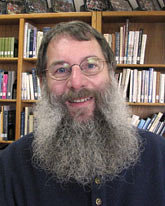
Ariel Berkowitz
Ariel Berkowitz

I don’t want to attempt to reinvent the wheel, so to speak, so for the details, you can click on the links I’ve provided. In brief though, Boaz aptly illustrated that without understanding the highly specific mindset of Jews living in occupied Palestine in the late Second Temple period, we sometimes misunderstand (sometimes to a great degree) what Jesus (Yeshua) was teaching, leading us to a far less than perfect comprehension of the message of Messiah to his people Israel and, across history, to us.

Berkowitz continues in his article making statements I believe are in support of what I just said above:

For example, it makes a difference to our understanding of the Torah if we know that each of the ten plagues was brought against one of the gods of Egypt. It changes our perception of the book of Deuteronomy if we are aware that its format virtually follows that of other middle to late Bronze Age suzerainty treaties and covenants. Moreover, are we aware that our knowledge of ancient Mesopotamian clay tablets can help us understand the structure of Genesis, as well as why Rachel stole the family idols from Laban? Finally, what is meant by the designations “Way of the Philistines” and “King’s Highway?”

Closely connected with this rule is the principle of studying the Torah in Hebrew, its original language. There are sometimes words, thoughts, or concepts in the Hebrew of the Torah that are almost impossible to express in a translation. For example, it is helpful to know that the Hebrew word sometimes translated into English as “sacrifice” is the word korban (קָרְבָּן), which has the same root as the word meaning “to draw close.” Hence, a sacrifice is that which helps us draw close to God. In addition, there are virtually no English equivalents for the Hebrew words tahor (טָהוֹר) and tamei (טָמֵא) (often rendered pure and impure, or clean and unclean, respectively).

Again, and specifically speaking to the teachings of Jesus, Paul, and the Apostles, we would also have to know how other Jewish teachers of that time period wrote, what common allusions and references they shared, the midrashic associations the readers were supposed to make, and so on. Reading Jewish texts of any time period requires knowledge of not only the religious and cultural Judaism of that point in history, but what it was to live as a Jew listening to or reading the teachings of the Rabbis.

This isn’t information always available to us.

But if we don’t always have the past at our fingertips, we do that the present:

Jewish practice and interpretation of the Torah began centuries ago—in many cases even before the time of Yeshua. Although we do not believe in the authority of the oral law, it nevertheless contains much that is useful for us today (such as an incredibly insightful periodic interpretation of the Torah). It is helpful for us, therefore, to read some of the best of the modern Jewish commentators (at least those of both the Rishonim and Akharonim), because in them we may find accurate interpretations of the most difficult passages of the Torah. Moreover, it can also be helpful to examine some of the rabbinic applications of the Torah, as some of these halachic teachings might shed some light for us on a given passage.

Jewish Man PrayingChristians don’t always take me seriously when I say that in order to understand the Bible, including (especially) the teachings of Jesus, you have to understand something about Judaism. However, this is true. Christianity has its interpretive traditions which, from their earliest inception, were designed to minimize if not outright delete any “Jewishness” from the Jewish texts. And yet, as I’ve seen time and again, ignoring a Jewish interpretation of the Bible, including the Apostolic Scriptures, has led to tremendous errors in the development of Christian theology and its resultant doctrine. This isn’t to say that Christianity has completely missed the boat. The Church grasps the principles of loving God and doing good to other human beings very well. They just don’t know what to do with Jewish people as having a unique covenant relationship with God, and especially have not a clue how to understand the Judaism of Jews in Messiah.

Unfortunately, Berkowitz had to employ this rather reductive list of the three rules of interpretation, which I’ve previously encountered:

  • First ask, “What does the passage say?”
  • Next ask, “What does it mean?”
  • Finally, ask, “What does it mean to me?”

Not to say that this list is bad, but if you didn’t understand that it must be expanded to include what I’ve described previously about comprehending the entire historical, cultural, linguistic, midrashic, and every other area of context in which a particular text of the Bible was written and read, then you’ve going to miss a lot.

And in describing interpretation, Berkowitz doesn’t mention that interpretation begins at translation. He admits that most people don’t have a sufficient command of the Biblical languages to read them, and thus tend to rely on translations, but he doesn’t say that some translations do heinous violence to the text. The English Standard Version, for example, changes Greek verb tenses in some of Paul’s letters and in the Epistle to the Hebrews to make the scriptures read as if the Old (Sinai) Covenant has already completely passed away and that it has totally been replaced by the New Covenant. However, the verb tenses in the actual Greek indicate that the old is in the process of still passing away, and there is no indication in the originals that the New is even here yet.

Berkowitz does say that there are a number of good study aids available and I would add to that list a variety of different translations and a lexicon to help with some of the problems modern translators have introduced.

Berkowitz states that the number one requirement in Bible study is to “rely on the Spirit of God to be our teacher.” I can agree, but I’ve argued with a few people here on my blog that the Spirit doesn’t have to exist in isolation from other resources and that we don’t have to “check our brains at the door,” so to speak.

In addressing the use of commentaries, Berkowitz says:

Some people simply will not use commentaries or study aids when studying the Bible. They say they want God to teach them, not man. The problem with this statement is that God has specifically blessed certain people in the body of Messiah with the gift of teaching. We are not disputing the fact that people can discover wonderful things in the Torah by themselves. But God’s usual method is to gift certain people who can, in turn, teach others the truths of His Word. Hence, we all need to rely on the God-gifted Torah teachers whom the Holy One places in our path.

Furthermore, we must also realize that most commentaries were originally sermons or verbal teachings before they appeared in print. If we are willing to ask another person his or her opinion about a given passage in the Bible, we should be willing to consult a commentary. There is no difference, other than the fact that one is a verbal opinion about the Torah and the other is written.

We are not islands unto ourselves. We are members of the body of Messiah, each equipped with certain areas of understanding which, when combined, help bring to all of us a more complete understanding of the Bible. Thus, we should not throw away all the books and say “we will just study the Bible.” God never meant for His people to function like that. In the resources section of this Web site we provide a continually growing list of Bible study aids, such as commentaries, that we recommend. There will undoubtedly be others, especially in other languages. But this is a good beginning for those who are new at Torah study.

TanakhI’ve come the long way around to ask a simple question. Tom and I (and whoever decides to join us) need a structure and format for our studies. We could just shoot from the hip or talk off the tops of our heads, but that’s rather self-limiting.

We need a study that is focused on the Messiah. We’d like to not have the study devolve into a “what’s right” and “what’s wrong” about theology and doctrine, which, for example, so many of these religious blogs tend to do. We would like the study to be specifically Messianic rather than traditionally Christian. If at all possible, we’d like the study not to be too expensive. Unfortunately, a lot of good teaching material out there also costs a proverbial arm and leg.

I’m open to suggestion (without the obligation of having to take everyone’s suggestions). Any ideas?

In advance, thank you for your help and insight.

Oh, and by the “coming year,” I mean within the next few weeks to a month or so, not the beginning of 2015. Thanks.

The Tradition of Rosh Hashanah

And all believe that He is the faithful God.

-from the Machzor

This ninth-century, twofold alphabetical acrostic has been ascribed to Yohanan ha-Cohen, but M. Zulay says that Yannai (ca.550 C.E.) may have been it’s author. Declaring that God holds in His hand the scales of justice, the piyyut affirms that He is merciful even as He fathoms our secret devisings.

-Max Arzt
Chapter 2: “The New Year (Rosh Hashanah), pp 175-6
Justice and Mercy: Commentary on the Liturgy of the New Year and the Day of Atonement

This morning (as I write this), I listened to part of an audio teaching by Aaron Eby called “The Shofar and the Signs of the Times: A Lesson for Rosh Hashanah” as I commuted to work. Since I can’t take notes and drive at the same time (my wife says that men can’t multitask), I can’t reference large portions of the content, but one thing Aaron said has stayed with me. He said that the Bible teaches us almost nothing about how to celebrate or commemorate Rosh Hashanah, which is more accurately called “Yom Teruah” (which literally means in Hebrew “Day of Loud Noise”). Almost everything we know about celebrating Rosh Hashanah was developed much later by the various Rabbinic sages across Jewish history.

I find this rather telling and even amusing in a way, since most Christians (including Hebrew Roots Christians) tend to believe the Talmud or Oral Traditions are wholly manufactured by people and have nothing to do with the Bible. But while traditional (church going) Christians are highly unlikely to have anything to do with Jewish observance, including the commemoration of Rosh Hashanah, Hebrew Roots devotees this year almost certainly marked the occasion through a form of observance that attempted to mirror that of religious Jews in the synagogue.

The “disconnect” in the behavior of the latter group is that they not only tend to dismiss Rabbinic authority in establishing binding methods of worship, but they rather avidly declare that Hebrew Roots believers follow only the written Torah and not the Oral Law.

And yet, the Rosh Hashanah services many of them attended a few days ago were largely established, not in Biblical times (and remember, the Bible contains few if any instructions on how to commemorate Rosh Hashanah), but by the later Rabbinic Sages.

I’m not trying to start another in a long, long series of arguments relative to Messianic Judaism and Hebrew Roots, but I do want to point out something that I think we all need to “get”.

But the very notion that the whole people [who received the Torah at Mt. Sinai] was the vehicle of divine revelation saved Judaism from an arid, literal biblicism. It gave rise to the belief that the “oral law” is the authentic and living interpretation of the “written law,” so that Revelation came to be regarded as a continuing process. The Rabbis seem to have grasped intuitively an idea akin to the modern concept of historical evolution, when they asserted that at Sinai both the oral and the written laws were revealed.

-ibid, p. 186

Further…

What was implicit in the rabbinic expansion of the concept of revelation must become an explicit principle in our day, when Jewish tradition faces the challenge of new ideas and of discoveries of major proportions. As a viable religion, Judaism must continue to be a vehicle of God’s continuous Revelation to His people, for the voice that Israel heard at Sinai “did not cease” (Onkelos on Deut., 5:19).

-ibid, pp. 186-7

Torah at SinaiOK, that’s not going to sit well with a lot of people. These statements presuppose that either a written Torah was given to the Israelites at Sinai along with an oral set of instructions on how to interpret the written texts, or that God gave an ongoing authority to the Jewish teachers of each generation to make binding interpretations of how to operationalize the written Torah and apply that to the Jewish people. The problem is that for most of Israel’s history, there has been no one apparent standard of interpretation. In the time of the Apostle Paul, for example, there were numerous streams of Judaism in existence, most of which contracted one another.

But perceiving that one group were Sadducees and the other Pharisees, Paul began crying out in the Council, “Brethren, I am a Pharisee, a son of Pharisees; I am on trial for the hope and resurrection of the dead!” As he said this, there occurred a dissension between the Pharisees and Sadducees, and the assembly was divided. For the Sadducees say that there is no resurrection, nor an angel, nor a spirit, but the Pharisees acknowledge them all.

–Acts 23:6-8 (NASB)

But then how can Jewish Rabbis and scholars say they have God-given authority to make binding halachah for the Jewish people when not only more than one standard exists, but these different standards are at odds with each other?

An even bolder extension of the idea of Revelation is implied in the statement that where scholars offer two mutually contradictory opinions on a legal problem or on the interpretation of a biblical verse, both opinions are considered to be “the words of the living God,” since both are equally the result of a reverent search for an understanding of the Torah (Erub. 13b).

-Artz, p. 186

Talmud Study by LamplightI have a tough time wrapping my brain around that one, but it does seem to be accepted in Judaism that the various sages and teachers for each community or stream of Judaism have the right to establish binding standards for their own groups.

This point is disputed, not only in traditional and Hebrew Roots Christianity, but in Messianic Judaism. In the comments section of this blog post which I quoted in part in the body of this article, such a debate between two Jewish men in Messiah is demonstrated.

Carl Kinbar said:

I would like to contend these thoughts, at least in the absolute way you have expressed them. You’ve drawn this from the story of Achnai’s Oven, in which God does miracles to support the opinion of Rabbi Eliezar over the opinion of the majority of rabbis. But they reject not only God’s miracles but his also voice, which declares “the halakhah is according to Rabbi Eliezer. The majority “defeated” Rabbi Eliezer and God by pointing out that the Torah is not in heaven but on earth. God’s opinion doesn’t matter. Then God laughs in delight that “my sons have defeated me.”

So, as a Jew, I can imagine myself standing before the majority of rabbis as a believer in Messiah Yeshua. God says, “Carl is right–Yeshua is the Messiah.” But the majority refuses to accept God’s voice and declares me a min (heretic). God then laughs, “My children have defeated me again!” God is pleased with them and displeased with me for rejecting the majority, even though he knows full well that Yeshua is his Messiah.

The identity of Messiah is just the beginning of areas in which the majority would overrule God. They do not recognize the Brit Hadashah and they do not recognize the joyous obligation of Jewish believers in Yeshua to love all our fellow Yeshua believers as Messiah has loved us. Should Jews accept the traditional majority in these matters, too?

Hopefully, one day I will find an opening to express the depth and beauty of my relationship with Torah and rabbinic tradition. For now, I just want to say that accepting the majority’s right to interpret and apply Torah is not absolute and God does not laugh when his voice is ignored.

ProclaimLiberty said:

I understand your contention and I share in your frustration with the unpleasant reality that the leaders of the Jewish people actually have the authority to be WRONG. However, for good or for ill, this is an irrevocable gift of authority, which only increases the responsibility borne by these authorities. I do not say that HaShem holds them guiltless for any divergence from His Torah in applying or interpreting the Torah. The episode of Aknai’s oven only underscores the degree of this awesome legal responsibility. It then becomes our responsibilty as Rav Yeshua’s hasidim to work toward opening the eyes of current authorities to the finer distinctions between the negative elements that previously were inveighed against with some statements, and the positive aspects of ourselves and Rav Yeshua’s approach to Torah.

Chazal reiterates some of Rav Yeshua’s Matt.23 criticism of the Pharisees (or a recognizably faulty subset of them), for example, illustrating that corrections and improvements are possible. I believe that the power lies within us (b’ezrat HaShem) to demonstrate that the modern MJ community is not defined by the characteristics that impelled earlier generations of rabbis to present a rejectionistic front. However, there is still much improvement required of the modern MJ community in the aggregate to support such a demonstration. Thus we should not wish for miraculous signs or voices from heaven to justify us in our appeal to these authorities. Rather, the miraculous signs should be evident in improving our behavior and our demeanor on earth as a community and as individuals, that we should be seen as walking examples of Torah whose positive contribution to the Jewish enterprise cannot be denied as sectarian or separatist.

debateI can’t pretend to have the ability to resolve this apparent dissonance within Messianic Judaism specifically and within larger religious Judaism as a whole, but as I said more recently, an adaptive dynamic to the interpretation of Torah for Jewish communities existing in different geolocations and across time is one of the requirements for the continuation of Judaism and the existence of the Jewish people. Without the ability of different streams of Judaism to be able to continually interpret their own scriptures, there either would be no Judaism at all or one that existed as a complete anachronism within the modern landscape, totally incapable of managing even the simplest elements of 21st Century life.

Interestingly enough, Christianity (and probably any other current religion with ancient origins based on ancient texts) engages in a similar dynamic. Imagine transporting a church leader or elder from some popular Christian community of five-hundred years ago into even the most conservative, Fundamentalist church in modern times. Would this person, even if they shared a common language with the modern believers he was placed among, understand what was going on around him? How would he view the modern attire being worn, especially of the women in the chapel? What would be his feelings about the music, about youth groups, about Sunday school, about all of those early 16th Century Christian practices and traditions he holds dear and true and Biblical that are likely not to be evident at all in any 21st Century church?

Christianity is as adaptive as Judaism. It has to be. If it wasn’t, if it took some ancient standard of practice and behavior and suspended it like a fly in amber, forever isolated, immobile, and ageless, its members most likely couldn’t manage modern life outside the church’s walls at all. The Church, as it were, operates with a sort of historically developmental “oral law” just as Judaism does. Only the “clothing” that process is dressed up in is different.

The Jewish people today could hardly be expected to know how to commemorate Rosh Hashanah and many other events and practices without its history of adaptive interpretation of the mitzvot. Whether an objectively existing Oral Law was given to Moses by God at Sinai, or whether it just became an accepted standard in Judaism that the Rabbis would be considered as having authority assigned them by God to make binding rulings, the effect is the same. Judaism has continued to exist for the past two-thousand years after the destruction of the Temple, the razing of Jerusalem, and the scattering of the Jewish people to the four corners of the Earth, because the Jewish people have allowed themselves the ability to progressively interpret Biblical canon as historic and geographic conditions have changed.

The secret to Rosh Hashanah isn’t in the Bible, it’s in Talmud.

Torah and the Gentile Believer

It is prohibited for a gentile to study Torah, and if he does so, he is [deserving of death] (see Sanhedrin 59a). A Jew is not allowed to teach him Torah, so as not to be the vehicle by which the gentile sins. What, then, is being added to this ruling in our Gemara from the verse in Tehillim?

According to ” ז ט we can say that the study of Torah which is prohibited for a gentile is the in-depth and careful study of its profundities. This includes the intricate aspects of Torah taught by Moshe to the Jewish people. However, the study of a simple listing of guidelines of Jewish law and general halachos would not cause a gentile to be liable for death. A Jew is, therefore, not in violation of עור לפני for exposing a gentile to such information. Our Gemara teaches that this is still prohibited, nevertheless, based upon the verse in Tehillim.

“Teaching Torah to a gentile”
from “Distinctive Insight” for Ghagiga 13
Daf Yomi Digest for September 21, 2014
Published by the Chicago Center for Torah and Chesed

Disclaimer: I suspect I may be misunderstanding the above-quoted text and it’s source. If anyone can offer clarification, I’d appreciate it. I can only base the following on my current understanding.

I suppose I take it for granted that I can read and study my Bible. I also take it for granted that all of the contents of the Bible, including the Apostolic Scriptures, are Jewish books, written by Jewish authors for Jewish readers. It was only with the advent of the New Covenant era which has yet to actually arrive, that large numbers of Gentiles were taught the Jewish scriptures as part of the grafted-in population of non-Jews into the First Century C.E. Jewish religious stream originally known as “the Way”.

Of course the prohibition cited in the above-quoted text didn’t exist at that time, at least not in a formal or written manner (and probably not at all as far as I know) and in fact, we see there was some expectation that the Gentile disciples of the Master were expected to learn and study Torah under the authority of Jewish teachers:

For Moses from ancient generations has in every city those who preach him, since he is read in the synagogues every Sabbath.”

–Acts 15:21 (NASB)

I interpret this rather cryptic verse to mean that the Gentiles, though by legal decision (Acts 15) obligated to observe only a subset of the full yoke of Torah incumbent on a Jewish disciple, were nevertheless to hear Torah read in the synagogue on Shabbat and most likely to learn and study Torah with their Jewish teachers and mentors. Such an informational background would be absolutely necessary if the Gentiles, especially those recently having been pagans (as opposed to the God-fearing Gentiles who regularly attended shul) were to make any sense at all of the teachings of the Master and to comprehend how the New Covenant blessings allow for the redemption of the people of the nations through God’s redemption of all of Israel.

But of course something happened between then and now. Gentile Christianity was formed out of the bosom of the early Jewish Messianic movement and proceeded, due to many events and circumstances, to remove itself from having anything to do with Judaism. I’ve said before that the actions and mistakes made by the first Gentile Christians in the Second and Third Centuries have been carried down in some manner or fashion into the current Church such that “studying Torah” is not on any believer’s radar (although there are exceptions which I will address presently).

No doubt a great deal of apprehension and even fear among Jewish people has been inspired by the decidedly nasty behavior of the Church toward the Synagogue over the long centuries, and has only been softened quite recently due to Hitler’s Holocaust.

About 350 years ago, someone asked Rav Avraham Amigo, zt”l, an interesting question. “A notzri who is connected to the authorities has been buying our books in an effort to complete a library of all the basic Torah texts. He has also offered to pay a certain Jew to teach him Torah. It is not clear whether this is preparatory to conversion or because he is seeking a way to undermine the Jewish community. Is it permissible to teach him or sell him seforim?”

The Gadol responded, “It is prohibited to teach him, as we find in the Gemara in Chagiga 13a. However, if there is a potential threat to Jewish life involved, it is definitely permitted to teach him, as we learn from the Gemara in Bava Kama 38b. If it does not appear that there is an element of danger in this case, I forbid teaching him or selling him books. Whether he truly intends to convert is difficult to ascertain because he could endanger himself by showing an interest in Judaism as the citizen of a Catholic country. In any case, the Gemara in Gittin 85a states that conversion is not likely, and we also find many references in Shas that prove that heretics often try to capitalize on whatever little learning they do have to defame the sages and undermine the Jewish community.”

The Rav continued, “In any event, we must guard against the possibility that he will travel where he is unknown and get the confidence of a Jew on the road. The Jew will trust him because he is learned. Once he wins his confidence he may very well kill him. This is the logic of the Gemara in Menachos 43a regarding the prohibition to sell a non-Jew techeiles. If he was wearing techeiles, he could easily fool a Jew on the road and kill him for his possessions!”

“The Torah of the Jewish People”
from “Stories off the Daf” for Chagiga 13
Daf Yomi Digest

PogromWhen I first read this story I thought it seemed ridiculous that homicide would be the only or primary motivation of a Gentile to desire Jewish learning. But apparently the fear originated somewhere and resulted in essentially blocking off any non-Jews from more than a superficial level of Torah study unless that Gentile person’s intent was to convert to Judaism.

This doesn’t seem very applicable today, though. I can go online and order any Jewish book that’s available for purchase from any number of Jewish or non-Jewish sellers. I can even order all manner of Judaica online including tefillin and a tallit and no one is going to require that I prove that I’m Jewish (which I’m not). Of course, accessing a knowledgable and authentic Torah scholar from which to learn and study might be a bit of a chore, especially within Orthodox Judaism, but on the other hand, I could take online classes through organizations such as the Messianic Jewish Theological Institute, and as far as I know, there’s no restriction on any class based solely on being Jewish or Gentile.

I really doubt there’s much of a chance that someone like me studying Torah, in whatever manner I’m able, will result in any physical (or any other kind of) harm coming to a Jewish person.

But notice something else.

“If he was wearing techeiles, he could easily fool a Jew on the road and kill him for his possessions!”

This statement assumes that the hypothetical homicidal Gentile being discussed not only appeared learned in Torah but that, based on a different Gemara, he could be mistaken for a Jew because he was wearing “techeiles” (which is the blue coloring originally commanded [Numbers 15:37-41] that Bnei Yisrael wear as a thread among the tzitzit on the four corners of their clothing). I have to assume that “techeiles” is another way of saying tzitzit in this instance, thus it is not only forbidden to teach a Gentile Torah but to sell him tzitzit (in modern times, probably a tallit with the tzitzit attached) as well for the sake of Jewish safety.

While in the modern era, it seems highly improbable that a Gentile would study Torah and wear tzitzit for the express purpose of waylaying and murdering a Jew for his possessions, that fear originated somewhere at some time in the past and I don’t doubt that such an apprehension “echoes” across the corridors of history and into the present day.

Ten years ago, I was sitting in our local Conservative/Reform synagogue on Shabbat. Mel Gibson’s film Passion of the Christ (2004) was about to be released in theaters across the U.S., and in the discussion was a very real fear of the consequences. Historically, after every passion play, there is a pogrom, and although our little corner of Idaho generally doesn’t see a great deal of anti-Semitism, a shared cultural and genetic fear rapidly filled the room.

While at least locally, nothing happened and the film came and went, that fear comes from somewhere and it persists.

Ever since there have been Jews or Israelites or Hebrews, the rest of the world has been trying to kill them. Two-thousand years ago, the Apostle Paul was actively recruiting Gentiles to enter into and participate in Jewish communal and religious space as co-equals and participants in the benefits of the New Covenant blessings, however, he received a great deal of pushback from Jewish communities and community leaders, even to the point of Paul suffering injury and risking death.

And yet, there were synagogues from Syrian Antioch to Rome where Jews and Gentiles co-mingled in relative peace, studying, worshiping, and associating together, and at least for at time, it seemed to work out.

But not in the long run.

The history would take too long to relate, but the net result is that Jews learned to distrust the Gentile Christians along with all of the other Gentiles in the diaspora, and Gentile Christians for their (our) part, learned to distrust Jewish people.

Hence rulings were issued such as it being forbidden to sell Jewish books and to teach Torah to a Gentile, and the seemingly irrational fear that a Gentile would leverage Jewish learning and a Jewish appearance to do harm to a Jew.

But now we have something interesting going on.

synagogueA significant minority population of Gentile Christians are experiencing a renewed interest in Judaism, specifically Messianic Judaism. On the surface, the Messianic Jewish movement seems to be an attempt to do what Paul was trying to do; to bring Gentiles into Jewish community for the mutual study of Torah and the mutual worship of God through faith in the work of Messiah Yeshua (Christ Jesus).

But that’s not exactly what’s happening. In the days of Paul, the Way was one of many Judaisms in ancient Judea and the diaspora nations, and if Gentiles wanted to join, they had to accept Jewish authority in the synagogue. Gentiles, by definition, were the learners since all knowledge of Messiah was Jewish knowledge. Gentiles were present in Jewish community by the invitation of the Jewish community, and that community defined Gentile legal status and all of the requirements for Gentile entry and participation.

Modern Messianic Judaism, given the past two-thousand years, is not an attempt to re-create the “churches” of Paul. Gentiles have plenty of Christian Churches and a long and rich tradition to draw from. Jewish people discovering the revelation of the identity of Messiah are attempting to maintain Jewish space and community and to carve out a niche for themselves in larger Jewry, one that allows for a fully experienced and realized Jewish lifestyle that acknowledges Messiah as mediator of the New Covenant God (Hebrews 9:15) made with the House of Israel and the House of Judah (Jeremiah 31:31).

And as I said above, a significant portion of Gentiles are leaving churches and are fascinated with a wholly culturally and religious Jewish take on who Jesus is and what it really means to be a disciple of the King of the Jews.

Do you see how confusing this could get (and has gotten)? Jews who don’t want to convert to Christianity and abandon what it is to be a Jew are attempting to develop Jewish communities for Jews in Messiah, but the Gentiles are knocking at the door asking (and sometimes demanding) to be let in and to study Torah. At some visceral level, I can see the old fears kicking in among the Messianic Jews. Can they be a Jewish community if Gentiles are present? What other motivation could some of these Gentiles have for wanting entry?

Even if those fears don’t appear rational to the rest of us, it’s possible the fear, or at least some degree of apprehension, is still there and feels very real.

I don’t know any of this as absolute fact, but I find myself wondering if Jewish opposition to Gentile participation in the larger body of the mitzvot up to and including donning a tallit, laying tefillin, davening with a siddur, and the rest of those behaviors that make a person look “Jewish” (whether they are or not), might have something to do with the same spirit that inspired Chagiga 13?

I don’t know. But if there’s even a hint of that historical fear incorporated in the desire for modern Messianic Jews to have exclusively Jewish community, then we “Messianic Gentiles” might want to take another look at what we’re doing and why we’re doing it.

I’m not saying it should be forbidden for Gentiles to study Torah. Far from it. I’m not saying that all Gentiles should be forbidden from having community with Messianic Jews. Far from it. I’m just saying that we should wait for an invitation to enter someone else’s house.

And He began speaking a parable to the invited guests when He noticed how they had been picking out the places of honor at the table, saying to them, “When you are invited by someone to a wedding feast, do not take the place of honor, for someone more distinguished than you may have been invited by him, and he who invited you both will come and say to you, ‘Give your place to this man,’ and then in disgrace you proceed to occupy the last place. But when you are invited, go and recline at the last place, so that when the one who has invited you comes, he may say to you, ‘Friend, move up higher’; then you will have honor in the sight of all who are at the table with you. For everyone who exalts himself will be humbled, and he who humbles himself will be exalted.”

–Luke 14:7-11

yom kippurYou’re probably reading this “meditation” in the “space” between Rosh Hashanah and Yom Kippur, that very critical ten day period in Judaism when many observant Jews are attempting to shift the scales of God’s justice toward mercy. It’s also the time when the new year is unfolded before us all shiny, new, and full of potential. After Yom Kippur is Sukkot, then Shmini Atzeret, Simchat Torah, and a new Torah cycle begins on October 18th.

There have been a number of changes in my life that occurred rather abruptly and I’m looking forward to pursuing my studies with renewed zeal and anticipation. Who I study with and how we pursue the Bible and the presence of God, I don’t know yet (as I write this). As with the other changes I’ve experienced like this one, I’ll wait and see what God has in mind.

Secular sources view history in perspectives of their own, predicated on economic, social, and political principals. By contrast, the Torah directs us to view history as the unfolding of the Divine Plan. History is the metamorphosis of man through the stages of destruction and redemption, continuing towards his final redemption in the days of Moshiach. And all such events, the redemptions and destructions, are perceived as fundamental testimony to the presence of the Almighty in this world, and are understood as experiential units in hashgachah pratis, the active force of the Hand of the Almighty. (Rabbi Mordechai Gifter; “Torah Perspectives,” pp.103-4)

-Rabbi Zelig Pliskin
from his commentary on Torah Portion Ha’azinu, pp.466-7
Growth Through Torah

Addendum: Having written all this, I find that Rabbi Dr. Stuart Dauermann’s FAQ called Responding to Some Questions About Messianic Jews and Torah does an excellent job of addressing matters of Torah for the Messianic Jew. I highly recommend it.

Sermon Review of the Holy Epistle to the Hebrews: Mediator of the New Covenant

In the New Covenant, Yeshua acts as priest, sacrifice, and mediator. Installment 36 in the Beth Immanuel Hebrews series finishes Hebrews 9 with a discussion on Hebrews 9:15-28 and the Messiah’s role as a mediator between Israel and God.

-D. Thomas Lancaster
Sermon Thirty-Six: Mediator of the New Covenant
Originally presented on December 28, 2013
from the Holy Epistle to the Hebrews sermon series

“Matchmaker, Matchmaker,
Make me a match,
Find me a find,
catch me a catch”

-from “Matchmaker” by Jerry Bock
from the play and film “Fiddler on the Roof”

Lancaster started off his sermon on a different note than usual this week, stating that he’d been reading a book called A Jewish Response to Missionaries produced by Jews for Judaism, which is an “anti-missionary” organization. According to something in the book, Lancaster said that Judaism has a prohibition against mediators since a mediator between a person and God violates the second commandment not to have any god before Hashem.

Except that’s not true.

Sure, we can pray as individuals, and in any event, God knows our every thought, so it’s not like we need someone to help us communicate to God what we’re thinking and feeling. On the other hand, if the Jewish people didn’t need a mediator, why was there a priesthood? Why were there sacrifices? Why was there a Holy of Holies in the Tabernacle? And why was there Moses?

Actually, Chasidic Judaism very much believes in mediators and relies on a tzaddik, their Rebbe, to act as mediator.

So the Jewish prohibition against mediators seems to only apply when combating Christianity, as Lancaster says.

Why the Law then? It was added because of transgressions, having been ordained through angels by the agency of a mediator, until the seed would come to whom the promise had been made. Now a mediator is not for one party only; whereas God is only one.

–Galatians 3:19-20 (NASB)

The Jewish PaulPaul himself said that the Torah was delivered to the Israelites through a mediator and would remain in effect until such time as “the seed” would come, meaning Messiah. This isn’t to say that the Old Covenant and the Torah are not in effect today. They still are. But we are still living in Old (Sinai) Covenant times. The New Covenant won’t fully arrive until the resurrection and return of Messiah (but I’m getting ahead of myself), but even then, the Torah remains as the conditions of the New Covenant, too.

What is a mediator? Someone who negotiates an arrangement between two parties. Paul said “God is only one,” so the other party to the Sinai Covenant must be Israel. Lancaster says that the midrash likens Moses to the friend of the bridegroom (God) so to speak, like a matchmaker arranging a “match” between a man and woman for marriage (think Fiddler on the Roof, which is what the image at the very top of the blog post references).

Picture Moses going up and down the mountain carrying messages between Israel and God and between God and Israel, like a friend carrying love notes between a man and a woman who are courting. And in Exodus 24 Moses even performs the ceremony as such. Oaths are exchanged, blood is splashed, and afterward, everybody gets together in the presence of the bride and groom for a covenant meal, like a wedding reception.

While they were eating, Jesus took some bread, and after a blessing, He broke it and gave it to the disciples, and said, “Take, eat; this is My body.” And when He had taken a cup and given thanks, He gave it to them, saying, “Drink from it, all of you; for this is My blood of the covenant, which is poured out for many for forgiveness of sins. But I say to you, I will not drink of this fruit of the vine from now on until that day when I drink it new with you in My Father’s kingdom.”

–Matthew 26:26-29

Lancaster says that the Last Supper, or Last Seder if you will, also functions like a covenant meal in the presence of both parties, with the Master in the role of the mediator, representing the groom (God the Father), and the Apostles representing Israel, just as the elders of the tribes at the first covenant meal represented Israel.

For there is one God, and one mediator also between God and men, the man Christ Jesus, who gave Himself as a ransom for all, the testimony given at the proper time.

–1 Timothy 2:5-6

Seems like a pretty pointblank statement to me. Jesus is the mediator of the New Covenant between man and God.

However, there’s a part of these verses that has always hung me up and I think Lancaster solves my problem.

For this reason He is the mediator of a new covenant, so that, since a death has taken place for the redemption of the transgressions that were committed under the first covenant, those who have been called may receive the promise of the eternal inheritance. For where a covenant is, there must of necessity be the death of the one who made it. For a covenant is valid only when men are dead, for it is never in force while the one who made it lives. Therefore even the first covenant was not inaugurated without blood.

–Hebrews 9:15-18

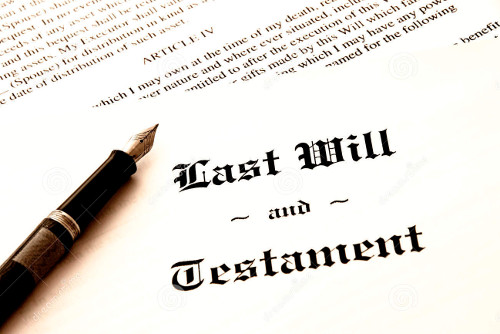
testamentDepending on the translation you have, you either see the word “covenant” being used or “testament” as in “last will and testament.” Except a covenant and a testament are not the same thing at all. It’s pretty confusing in English. But apparently, “covenant” and “testament” are the same word in Biblical Greek and Paul was using a bit of word play. It makes sense in Greek but is useless in English.

However, it’s really just a simple point as Lancaster says.

Just as a last will and testament doesn’t come into effect until a person dies, a covenant doesn’t come into effect until there’s been a sacrifice and shedding of blood.

That’s all the writer of the Book of Hebrews is saying here. Don’t get hung up on any deeper symbolism or meaning. It doesn’t exist except in the thoughts of theologians, scholars, or sometimes people who like to find what isn’t there.

Verses 19-22 describe the events of Exodus 24 with some minor variations, and then Lancaster goes on to compare Moses and Jesus, whereby Moses made the Sinai Covenant come into effect by splashing the blood of the sacrifice, Jesus inaugurated the New Covenant with his blood.

Lancaster was very careful to say that Jesus didn’t literally enter the Heavenly Holy of Holies carrying a bowl of his own blood, this is symbolic language and imagery. He entered the Most Holy Place in Heaven on the merit of his righteousness and sacrifice as the greatest tzaddik of his or any other generation, not because he was a literal human sacrifice.

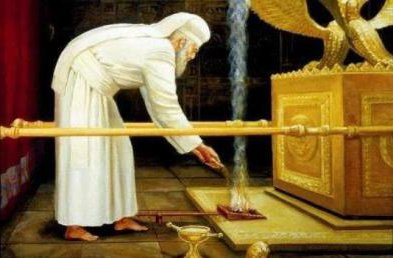
Verses 24 and 25 use the illustration of the Aaronic High Priest who every Yom Kippur, enters the Holy of Holies with blood to offer atonement for the people of Israel. He offers the blood of the sacrifice and he prays for the people. According to midrash, he was told not to pray too long because while the High Priest may be basking in the Holiness of God, the people outside, since no one can go in with the High Priest, are “freaking out” wondering what happened to him and if the act and prayers of atonement were successful.

So too are we waiting for our High Priest to return so that we know, so to speak, that his atonement for us was also successful (though we know it was and is). Yeshua, our High Priest, is tarrying in his prayers of atonement on our behalf. This is still a “virtual” Yom Kippur. He will emerge from the Heavenly Holy of Holies upon his return to us and then we will know.

Otherwise, He would have needed to suffer often since the foundation of the world; but now once at the consummation of the ages He has been manifested to put away sin by the sacrifice of Himself.

–Hebrews 9:26

Jesus said to him, “I am the way, and the truth, and the life; no one comes to the Father but through Me.

–John 14:6

Jesus as our High Priest, our sacrifice, and our mediator, is the way into the New Covenant through our faith in what his work accomplished, and that faith and acknowledgement of him as mediator is required for us to participate in the blessings of the New Covenant.

Verse 28 speaks of those who eagerly await Messiah’s return. That applies to us as we eagerly await him, await the resurrection, await the terrible and awesome days of the Lord, and await the establishment of his Kingdom and the life of the world to come.

What Did I Learn?

Just about all of this was an eye opener. I had some vague notion of Jesus being the New Covenant mediator as Moses mediated the Sinai Covenant, but Lancaster added a great deal of detail, putting flesh on the mere skeleton of information I possessed as far as Hebrews 9 is concerned.

high_priestI especially appreciated the comparison between the Aaronic High Priest in the Holy of Holies on Yom Kippur and Yeshua as the High Priest in the Heavenly Holy of Holies, which represents the Messianic Age to come, a place, like the earthly High Priest, where only he can go, and we can only anxiously wait for him on the outside, wondering what’s happening in there and how long it is going to be before he comes back for us. How long, Moshiach? How long?

Lancaster has a talent for taking what seems to be very mysterious portions of scripture and removing the disguise, so to speak, to give the words and passages a plain and understandable meaning. Reading all this before, I don’t know what I thought about it, but now it makes a lot more sense.

Only four more chapters to go in Hebrews, which will take nine more sermons, nine more weeks for me to review. I didn’t cover everything Lancaster taught in today’s sermon, so you might want to listen to it yourself. This one is fairly brief at just barely 29 minutes. You can find the link above.

Apologies and Farewell to Church

If the Shofar is sounded in the city, will the populace not tremble?

–Amos 3:6

The blow of a Shofar is a call to arouse us from the lethargy of routine in which we have been immersed and to stimulate us to teshuvah. But what if someone hears the Shofar and is not moved by it?

A village blacksmith’s assistant once visited a large city and sought out the local smithy. He observed that the workers there used a bellows to fan the flames in the forge. The bellows were much more efficient than the exhausting manual fanning which he did back in his master’s shop. He promptly bought a bellows, returned with great enthusiasm to his master, and informed him that there was no longer any need for them to exhaust themselves fanning the flames. He then set out to demonstrate the magic of the bellows, but alas, regardless of how vigorously he pumped, no flame appeared.

“I can’t understand it,” he said. “In the city, I saw with my own eyes the huge flame produced by the bellows.”

“Did you first light a small fire?” the master asked.

“No,” the assistant replied. “I just pumped the bellows.”

“You fool!” the blacksmith said. “The bellows can only increase the size of the flame when you begin it with a spark. When you have no spark or fire, all the pumping of the bellows is of no use.”

Like the bellows, the Shofar can only arouse us if we have in us a spark of teshuvah, just a rudiment of desire. If we feel ourselves unmoved by the Shofar, we had better try to light a spark of teshuvah within ourselves.

Today I shall…

…try to begin teshuvah, so that the service of the approaching High Holidays will have the desired effect on me.

-Rabbi Abraham J. Twerski
from “Growing Each Day” for Elul 26
Aish.com

I’m writing this on Sunday instead of going to church, though you won’t be reading this until Tuesday morning. Given what I wrote in last week’s “What I Learned in Church” blog and subsequent commentaries, I’ve come to the realization that I owe Randy and everyone who reads this blog an apology. Regardless of my reasons, I took my criticism of Randy’s sermon way too far and I probably shouldn’t have written anything public about it at all.

But that’s water under the bridge and the damage is done.

I emailed Randy on Shabbat after much consideration and prayer with my personal apology and asked him for forgiveness. As I write this, I haven’t heard back, and perhaps I shouldn’t expect to. In addition to writing him though, as I said, I need to make my apology public just as I made my criticism.

preachingAlthough I don’t think religious leaders should be “criticism-proof,” so to speak, they also should command a certain amount of respect, and just because we have a difference of opinion, even about the important matters of Biblical interpretation, the fact that we disagree doesn’t mean he did anything wrong. His sermon was well within the norms of Christian Fundamentalism and it is backed up by a great deal of research on his part. He has the right and responsibility to “feed his flock” with the “spiritual food” he believes is beneficial for them, and I have no right to stand in his way, not that I could really affect anyone’s viewpoint at church about his sermons.

But realizing what I’ve done and how often I’ve risked collapsing the Tent of David (with apologies to Boaz Michael), I feel that my time at Pastor Randy’s church has come to an end. It had been my hope that I would provide added value to discussions in Sunday school, my personal discussions with Randy, and anyone else who wanted to interact with me. Two years ago as I was approaching this path back to church, I had high hopes that I could live out Boaz’s vision as chronicled in his book, but I see now that instead of being a light in the church, all I’ve done (for the most part) was act as an irritant.

Even those few people who were interested in what I had to say, particularly about the New Covenant, once they fully realized what I was communicating, acted confused and hesitant. I guess I was asking far too much of the people around me and my basic theological foundation, which makes a great deal of sense to me, is a strange and alien land for most Christians, particularly Fundamentalists.

It’s my place to be an opportunity of sorts, an option, a door to another perspective, not a hammer hitting people over the head. Over the past two years, although I tried to make a niche for myself in the humble walls of that little Baptist church in Meridian, Idaho, I never truly found a place where I fit in. I look like everyone else and I go through the motions of singing the hymns and shaking hands during services, but what I understand about the Bible might as well be light years away from the people I’ve “fellowshipped” with.

Please understand, I bear no ill will toward Randy, the other Pastors, the board members, and the people I’ve worshiped and studied with. I regard them all with the warmest of feelings. That we disagree doesn’t mean I think they are bad or even wrong. We’re just very different and I have no desire to hurt anyone or get in the way.

I suppose I could still attend the church and just keep silent, but that wouldn’t work for two reasons. The first is that my very presence is likely to continue to irritate or annoy Randy because of the aforementioned offending blog post and my general disagreement with him. The second is I seriously doubt I could rein in my verbal and written responses to the sermons and Sunday school lessons, at least for very long. I’d be unhappy at my self-imposed censorship and when I finally opened my mouth, I could possibly say something unkind or at least unwanted.

I want it to be known that the only person responsible for these events and their outcome is me. It’s my responsibility to conduct myself as a true disciple of the Master both in church and everywhere else, both in my spoken word and in what I write.

Erev Rosh Hashanah is tomorrow at sundown (as you read this) and in the spirit of repentance and renewal, I must offer my sincere public apology to Randy, his church, and you readers, and also I believe it is the best choice now to end my sojourn at church.

The Results

It may sound strange, but in being inspired to return to church, in part by Boaz Michael’s aforementioned book, I’ve thought of my return to Christian worship as something of an “experiment,” and I don’t mean that unkindly or clinically. As I said before, I had hoped to be a light and to represent a particular viewpoint as illumination. Did I fail completely? Did I just waste the last two years of my life in church?

I would say not, although I think I gained more from the experience than the people at church gained from me. What I know about “formal Christianity” including the history of the Church as been quite lacking, and Randy opened all that up to me. He has an excellent command of Christian history and for a year or more, he guided me on a personal journey on what it means to be a believer, particularly from a Fundamentalist point of view. I also learned how friendly, kind, and generous the people around me were, and how patient and tolerant they could be to an “oddball” like me, especially Randy.

No, it was hardly a waste of time. I only regret that they could have as much of a benefit from my presence as I did being among them.

I can only hope that others like me in other churches have better outcomes in terms of the impact they have on their fellow congregants.

The Future

Once again, I’ll be without a congregation. What will this mean for my faith? I may not be going to church, but I haven’t left faith in God or discipleship under the Master behind.

HaYesod ResourcesWill I try to find another church to attend? Not at present. I don’t see it working out any better in another Christian venue than it did in the one I just left, and I have no intention of adding insult to injury, so to speak. Inflicting myself on another Pastor and another congregation will just make matters worse. I’ve heard stories about how well some Messianic Gentiles find it in some churches. They are invited to teach HaYesod and other related classes and, according to reports, the information is well received.

But that requires two things: the right kind of environment and the right kind of presenter. I know that the church I’ve attended just wasn’t ever going to be receptive of such a view of the Bible and certainly the perspective was not requested nor required. I was wrong to force it on anyone without being asked.

Also, since I know Randy’s views on what he wants taught at his church, the fact that I was speaking to anyone at all about my opinions was risking the integrity of the doctrine being taught and I can only guess from Randy’s point of view, represented “wrongheadedness” and even a potential threat to anyone who listened to me and took my words seriously.

So no, I’m not going to seek out another church. Even if an appropriate Messianic congregation was available in my area, as I’ve said numerous times before, I wouldn’t attend, at least regularly, out of consideration for my wife, who is Jewish and not in the least Messianic.

I’ve been talking with a friend about starting up a Torah study between the two of us. The only thing in the way is working out the timing in our schedules. Even he and I don’t see precisely eye-to-eye, but we have more in common than I have with most Christians.

I’ll keep blogging as usual, but this will be the last time I intend to mention Pastor Randy or anything about the church he shepherds. I wish them all success, peace, and the presence and blessings of God.

Since the New Year is upon us, I suppose this is the perfect time to retool my studies and rededicate myself to my understanding of what it is to be a Messianic Gentile.

Someone said in a comment on one of my recent blog posts that if “a Christian is truly repentant then he will extricate himself from an anti-Judaic religious system (i.e. Christianity) and cease to identify as a Christian.” I disagree. There are many fine Christians and many fine churches, including the one I used to attend, and they perform many kind and generous acts of “Torah” (though they don’t call it that), such as feeding the hungry, visiting the sick, and loving each other. I’m not ending my relationship with them because they are not good and kind people, but only because I’m not a good fit for them (nor sadly, they for me) and I have no desire to continue to be an irritant in their presence.

walking outI know that some people like me there and maybe would even be surprised if they read this blog post, but most of them don’t really know me. If they did, I’m not sure what they’d think. It’s better that they don’t find out. God doesn’t love them or me any less because of our divergent perspectives. In the resurrection, if not before, He will guide us all to a better understanding of all truth in Him through Messiah.

May he come speedily and in our day.

May you all be inscribed and sealed in the book of life for a good year.

To Randy and his church, I again offer my sincere apologies, beg for forgiveness though I don’t deserve it, and offer my fondest farewell to you all.

What I Learned from Moses This Week: The Torah is for Future Generations

The hidden [sins] are for Hashem, our God, but the revealed [sins] are for us and our children forever, to carry out all the words of this Torah.

–Deuteronomy 29:28 (Stone Edition Chumash)

Then Hashem, your God, will bring back your captivity and have mercy on you, and He will gather you in and from all the peoples to which Hashem, your God, has scattered you. If your dispersed will be at the ends of heaven, from there Hashem, your God, will gather you in from there He will take you. Hashem, your God, will bring you to the Land that your forefathers possessed and you shall possess it; He will do good to you and make you more numerous than your forefathers. Hashem your God, will circumcise your heart and the heart of your offspring, to love Hashem, your God, with all your heart and with all your soul, that you may live.

–Deuteronomy 30:3-6 (Stone Edition Chumash)

As I was reading and studying last week’s Torah portions (Nitzavim-Vayelech), I was reminded of recent events and felt challenged to reaffirm or refute my belief in the continuation of the Torah mitzvot as obligatory for Jewish people, both as the conditions of the current Sinai Covenant, as well as the emerging New Covenant.

The above-quoted verses are very revealing. Moses is speaking to assembled Israel for the last time. He will die very soon now, and Joshua will succeed him as leader and prophet for the people and take them across the Jordan to possess the Land of Promise. In many ways, he knows that one of the few things standing between his precious people and their downfall into idolatry and abandoning God, is devotion to the Torah as a way of life.

But as the first words I quoted from Deuteronomy 29 testify, God’s intent for the “words of…Torah” in Israelite lives is that it be carried out “forever.” Then later, in the following chapter, Moses says something I consider astonishing, because I tend to never think of him as a prophet who foretold of the New Covenant:

“Behold, days are coming,” declares the Lord, “when I will make a new covenant with the house of Israel and with the house of Judah, not like the covenant which I made with their fathers in the day I took them by the hand to bring them out of the land of Egypt, My covenant which they broke, although I was a husband to them,” declares the Lord. “But this is the covenant which I will make with the house of Israel after those days,” declares the Lord, “I will put My law within them and on their heart I will write it; and I will be their God, and they shall be My people. They will not teach again, each man his neighbor and each man his brother, saying, ‘Know the Lord,’ for they will all know Me, from the least of them to the greatest of them,” declares the Lord, “for I will forgive their iniquity, and their sin I will remember no more.”

–Jeremiah 31:31-34 (NASB)

For I will take you from the nations, gather you from all the lands and bring you into your own land. Then I will sprinkle clean water on you, and you will be clean; I will cleanse you from all your filthiness and from all your idols. Moreover, I will give you a new heart and put a new spirit within you; and I will remove the heart of stone from your flesh and give you a heart of flesh. I will put My Spirit within you and cause you to walk in My statutes, and you will be careful to observe My ordinances. You will live in the land that I gave to your forefathers; so you will be My people, and I will be your God. Moreover, I will save you from all your uncleanness; and I will call for the grain and multiply it, and I will not bring a famine on you. I will multiply the fruit of the tree and the produce of the field, so that you will not receive again the disgrace of famine among the nations. Then you will remember your evil ways and your deeds that were not good, and you will loathe yourselves in your own sight for your iniquities and your abominations. I am not doing this for your sake,” declares the Lord God, “let it be known to you. Be ashamed and confounded for your ways, O house of Israel!”

–Ezekiel 36:24-32 (NASB)

Moses at NeboMoses was a prophet foretelling what Jeremiah and Ezekiel also related, God’s ultimate plan of redemption for Israel, a plan which always included, not the “fulfillment” of the Torah through Jesus as in “the end,” but the continuation of Torah observance, only by having it written on the heart and through the Spirit, so that obedience to God would become natural and woven into the very fabric of human nature.

Messiah Yeshua (Christ Jesus) as the mediator of the New Covenant also affirmed this:

“Teacher, which is the great commandment in the Law?” And He said to him, “‘You shall love the Lord your God with all your heart, and with all your soul, and with all your mind.’ This is the great and foremost commandment. The second is like it, ‘You shall love your neighbor as yourself.’ On these two commandments depend the whole Law and the Prophets.”

–Matthew 22:36-40 (NASB)

Rather than replacing the many Torah mitzvot, Messiah as teacher and prophet, said that the heart and soul of Jewish observance and obedience to God was at the intent of the person, not out of rote habit or behavior. All of the commandments are dependent on loving God and loving your fellow human being. Without love of either, the actions themselves are nothing, but the Master did not nullify these commandments, rather, he confirmed that only by loving God and people did they have any meaning. That love for God and people are the two “containers” that hold the dear mitzvot of Moses in the Jewish mind, heart, and spirit, rather than just characters and words on a scroll.

Not with you alone do I seal this covenant and this imprecation, but with whoever is here, standing with us today before Hashem, our God, and with whoever is not here with us today.

–Deuteronomy 29:13-14 (Stone Edition Chumash)

The commentary on verse 14 in my Chumash is most revealing:

The covenant was binding even on unborn generations who were not present to enter into it, because parents and children are like trees and their branches. Just as the potential of all branches is contained in the parent tree, so future generations are contained, as it were, in the parents who will give birth to them, and are bound by the parental covenant. Alternately, all Jewish souls were present at this covenant, just as they were at Sinai when the Torah was given. Only the bodies were not yet born (R’ Bachya). According to Gur Aryeh, future generations were bound because of the principle that an inferior court cannot overrule a court greater than itself (Megillah 2a). So, too, the court of Moses and the nation entered into a covenant that no later generation can annul.

-Stone Edition Chumash commentary on Deuteronomy 29:14, p.1087

Although many Christians and not a few Hebrew Roots Gentiles take a dim view of Rabbinic commentary (or sometimes any human commentary), we see Jewish understanding reads this verse as intending the Sinai Covenant and its conditions, the Torah mitzvot, be binding not only on the generation that stood at Sinai, and not only on the generation that stood at the eastern bank of the Jordan hearing Moshe’s words, but on all subsequent generations of Israelites and their descendants, the Jewish people, in perpetuity.

To the degree that we see Yeshua affirming the Torah and we see the Apostle to the Gentiles Paul upholding and affirming the Torah, the Temple, and the Traditions (at his many trials in the latter portions of the Book of Acts including Acts 28:17), there is nothing from the transmitters of the New Covenant that contradicts the promises of God through Moses and the Prophets.

Hashem will make you abundant in all your handiwork — in the fruit of your womb, the fruit of your animals, and the fruit of your Land — for good, when Hashem will return to rejoice over you for good, as He rejoiced over your forefathers, when you listen to the voice of Hashem, your God, to observe His commandments and His decrees, that are written in this Book of the Torah, when you shall return to Hashem, your God, with all your heart and all your soul.

–Deuteronomy 30:9-10 (Stone Edition Chumash)

JerusalemThis sounds a great deal like what we read in the quote from Ezekiel 36:24-32 above. Different prophets but the same God and His unchanging intent and plan for Israel.

The Torah is in the New Covenant future for all generations of Jews. It could be said that the Jewish people are the only ones born into covenant with God whether they want to be or not. The exception is that all of mankind is also in covenant based on God’s promises to Noah in Genesis 9, but the covenant God made with Israel is unique, multilayered, and multidimensional. It is also everlasting.

But before faith came, we were kept in custody under the law, being shut up to the faith which was later to be revealed. Therefore the Law has become our tutor to lead us to Christ, so that we may be justified by faith. But now that faith has come, we are no longer under a tutor. For you are all sons of God through faith in Christ Jesus.

–Galatians 3:23-26 (NASB)

For Christ is the end of the law for righteousness to everyone who believes.

–Romans 10:4 (NASB)

I previously addressed what it is to be the “end of the law for righteousness” relative to the meaning of the Greek word “Telos” in my recent reflection on Romans 10, so I won’t go over old material again. I understand that this verse along with what Paul wrote in the above-referenced section of his epistle to the Galatians (see the link at the bottom of this blog post for more about how we misread Galatians) makes it seem as if the Torah was only applicable and efficacious until the life, death, resurrection, and ascension of Jesus, but if that is true, then Paul is in direct contradiction with Moses and the Prophets, and I find that difficult (actually impossible) to believe.

If the Torah was intended to be observed “forever” by the Jews both under the Sinai and New Covenants, how could Jesus be its termination (and replacement)?

For this commandment that I command you today — it is not hidden from you and it is not distant. It is not in heaven, [for you] to say, “Who can ascend to heaven for us and take it for us, so that we can listen to it and perform it?” Nor is it across the sea, [for you] to say, “Who can cross to the other side of the sea for us and take it for us, so that we can listen to it and perform it?” Rather, the matter is very near to you — in you mouth and in your heart — to perform it.

–Deuteronomy 30:11-14 (Stone Edition Chumash)

I’ve already mentioned my reflection on Romans 10 in which I saw a comparison between the above-quoted verses from Deuteronomy 30 and Paul’s commentary on Torah as applied to the Messiah. I believe that instead of Jesus replacing the Torah, he clarifies and amplifies its meaning, much as the Master’s own commentary on Torah did in Matthew 22, such that, like Rabbi Lichtenstein whom I mention in my other blog post, the broadest and even the most hidden meanings of Torah become apparent to the Jewish Messianic disciple living a life devoted to the Master and performing the mitzvot with love.

Verses 15-20 of Deuteronomy 30 urge the Israelites to “choose life.” Moses links the eventual redemption of all Israel, which occurs under the New Covenant, with the Torah being forever observed. Observance of the mitzvot is what it is for a Jew to listen to and obey the voice of God and this is a perpetual commandment.

The covenant with God that Israel entered into at the end of Moses’s life on the eastern banks of the Jordan was to be truly lasting, binding on the living who were present as well as on the unborn for generations to come. To span such diversity and longevity the covenant had to be endowed with both firmness and fluidity, stasis and growth, unchanging texts and ever new interpretations. The Torah would abound with polarities in balance: law and prophecy, halakhah and aggadah, a written foundation and an unwritten superstructure. Like any living organism, it needed to exhibit the dual capacity to preserve and accommodate, to reject and absorb, to turn inward and open outward.

-Ismar Schorsch
from “A Fossilized Chief Rabbinate,” pp. 626-27
Commentary on Nitzavim-Vayelekh
Canon Without Closure: Torah Commentaries

Talmud StudyAs I’ve mentioned already, Rabbinic commentary and authority to make binding halachah upon Jewish populations has always been at least uncomfortable if not downright offensive to Christians, and the Church has a long history of expressing that discomfort in rather dramatic and even violent ways. While we don’t burn volumes of Talmud anymore (hopefully), we do dismiss the Jewish right to view the Bible in a manner that upholds not only the continuation of the Jewish people, but of Judaism as a lived reality for all of Israel. Sadly, in doing so, we not only attempt to deny the Jewish people’s unique relationship with God but their very means of survival.

Interestingly, the penultimate mitzvah of the Torah is to assemble the nation of Israel once every seven years at the central sanctuary on Sukkot for a public reading of Deuteronomy. (Deuteronomy 31:19). That kernel would eventually germinate into our practice of weekly readings in the synagogue that cover the entire Torah in sequence in the course of a single year. Liturgy came to the aid of public instruction. Only an informed laity could make Judaism a lived reality. The advent of cantillation heightened the impact of the ritual, saving Hebrew from the fate of hieroglyphics.

Nothing is more important for the contemporary synagogue than to recapture the beauty and power of the Torah reading as a collective experience of revelation and an individual opportunity to internalize it.

-Ismar Schorsch
from “The Torah’s Final Mitzvah: To Internalize It,” pp. 630
Commentary on Nitzavim-Vayelekh
Canon Without Closure: Torah Commentaries

How the various Judaisms in our world conduct their affairs often appears confusing, conflicting, and baffling to those of us on the outside looking in. And as commentary in last year’s review of Torah Portion Pinchas attests, even two Jewish men in Messiah, both devoted to the mitzvot, have difficulty agreeing on what the authority of the Rabbis means, if anything at all, to modern Messianic Judaism. And yet it is the public reading of Torah in the synagogue on every Shabbat that recalls the commandment to publicly read Deuteronomy before all Israel on Sukkot as fulfillment of God’s desire that His Jewish people not only hear and obey, but internalize Torah as perhaps a foretaste of the days in which it will be written on the heart, truly internalized forever (and recall that Zechariah 14:16-19 predicts that representatives of the Gentile nations who attacked Israel and were defeated by her will also be obligated to observe Sukkot in Jerusalem, so we’ll be there, too).

In all their troubles, He was troubled, and an angel from before Him saved them; with His love with His compassion He redeemed them; He lifted them up and bore them all the days of the world.

–Isaiah 63:9 (Stone Edition Tanakh)

This is from last week’s Haftarah portion and is Isaiah’s commentary on how God will be with Israel and lift them up “all the days of the world,” which seems to mean as long as the Earth endures.

Let’s compare Isaiah to the following:

Do not imagine that I have come to violate the Torah or the words of the prophets. I have not come to violate but to fulfill. For, amen, I say to you, until heaven and earth pass away, not one yod or one thorn will pass away from the Torah until all has been established. Therefore the man who violates one of these small mitzvot and teaches sons of men to do like him will be called small in the kingdom of Heaven, but whoever does and teaches them will be called great in the kingdom of Heaven.

–Matthew 5:17-19 (DHE Gospels)

moshiach-ben-yosefFor all of those in Christianity who call for the end of Torah at the beginning of the risen Messiah, I still cannot comprehend how they get past the very words of the one in which we all place our hope. Jesus says pointblank that he has not come to abolish the Torah and that it will endure absolutely unchanged, just as it was given at Sinai, as long as the present Heaven and Earth remain. We know they remain until after the coming Messianic Age, and Heaven and Earth pass away only when we finally enter into eternity and the perpetual Gan Eden (Garden of Eden).

“Alas, you who lack knowledge and whose hearts are too heavy to believe all that the prophets have spoken! Did not the Mashiach have to bear all these things and be brought into his glory.”

Then he began with Mosheh and all of the Prophets and explained to them all of the Scriptures that spoke about him.

Then their eyes were opened and they recognized him, but he turned aside and passed from their eyes! They said to one another, “Were our hearts not burning within us as he spoke to us on the road and interpreted the Scriptures?”

–Luke 24:25-26, 31-32 (DHE Gospels)

I have longed to be one of the Master’s companions on that walk, to hear exactly what he said and to capture his precise explanation and proofs of the revelation of the identity of Messiah just as he spoke them. Alas, I will have to wait until the resurrection to comprehend through the Spirit all these things.

But as I was reading of this journey, I was struck by something he said, something I hadn’t noticed before.

Alas, you who lack knowledge and whose hearts are too heavy to believe all that the prophets have spoken!

Now compare the Master’s words to this:

Brethren, my heart’s desire and my prayer to God for them is for their salvation. For I testify about them that they have a zeal for God, but not in accordance with knowledge.

–Romans 10:1-2 (NASB)

Both the Master’s traveling companions and the Jewish people who are the object of Paul’s statement are accused of lacking knowledge. I think it is the same sort of knowledge being spoken of in both circumstances, knowledge of the revelation of Messiah from the Torah and the Prophets. In the former case, the Master provided that knowledge himself such that it caused the hearts of his listeners to “burn within them”. The latter group, Paul lamented over, that their zeal for God and the Torah erroneously resulted, through lack of that knowledge, in them mistakenly constructing a righteousness of their own bereft of faith, as if the mere doing of Torah without sincere love of God and man would be enough to justify anyone before the living God.

About Change

A person who lives with this attitude will not be thrown by difficult life situations. He views everything that happens to him in his life as a means of perfecting his character.

-Rabbi Zelig Pliskin
Commentary on Nitzavim, p. 453
Growth Through Torah

My studies which indeed reaffirm the Jewish covenant obligation to observe the mitzvot have not come without a cost. The cost was exacted by my own ego and presumptuous arrogance in publicly refuting the teachings of the Pastor I’ve spoken of before. I realize that as a United States citizen, the government cannot infringe upon my rights to free speech, nevertheless, I have a duty and responsibility to tame my tongue (and my fingers upon the keyboard) which I admit that I did not do, more to my shame.

About treating others with respect

Someone once came to the Chazon Ish’s house full of complaints and spoke to him with great insolence. Although that person spoke roughly, the Chazon Ish replied with complete serenity and extreme gentleness. In a very quiet manner he made a rebuttal to the person’s complaints. A Torah scholar who was standing nearby was greatly bothered by the disrespectful manner of the person. He was surprised, however, that when the person left the room, the Chazon Ish said to himself with pain and in a worried tone, “I am afraid that perhaps I didn’t speak to this person in a gentle enough manner.” (P’air Hador, vol.3, p.49)

The greater your awareness of our obligation to show respect to others, the more elevated will be your behavior.

-Rabbi Zelig Pliskin
Commentary on Nitzavim, p. 454
Growth Through Torah

HumbleIf I choose to adopt a fundamentally “Jewish” perspective on the Bible, including Jewish values and ethics, that should include a fundamental respect for all human beings. I admit, that’s not always easy for me to do, and the requirement to love other people (see Matthew 22:36-40) is sometimes drowned out by my “right” to express my opinion. But I cannot allow my so-called “rights” to overrule the directives and will of God. If I am a disciple and I call the Master “Lord,” then it is God who must come first, and I should be silent.

I’ll write more on this last point tomorrow, but in the meantime, you can read more about the specific issues of Torah as Paul understood them (and expressed them in his epistle to the Galatians) in last year’s commentary in the double-Torah Portion Nitzvaim-Vayelech.

"When you awake in the morning, learn something to inspire you and mediate upon it, then plunge forward full of light with which to illuminate the darkness." -Rabbi Tzvi Freeman