The High Holy Days for the Rest of Us

Some years ago, a prominent Protestant clergyman offered the suggestion that Rosh Hashanah and Yom Kippur could very well be adopted as religious occasions for people of all faiths. He was intrigued by the predominance of the theme of universalism in the Days of Awe. Passover, Shavuot, and Sukkot convey their respective messages of human freedom, of man’s duty as a moral being, and of the thanksgiving man owes to God, in the context of the historic vicissitudes and experiences of the ancient Israelites. Rosh Hashanah and Yom Kippur, however, are not related to any particular event in Israel’s past. They are, as Yehezkel Kaufmann characterizes them, “cosmic holidays” linked with the hopes and the destiny of mankind. The liturgy of Rosh Hashanah and Yon Kippur is indeed suffused with the spirit of universalism.

-Max Arzt
“The Liturgy: An Introduction,” p. 13
Justice and Mercy: Commentary on the Liturgy of the New Year and the Day of Atonement

I suppose I’m crazy to post this, since most Christians wouldn’t even begin to “resonate” with the High Holy Days that are rapidly approaching. And yet, as Arzt notes, an anonymous Protestant clergyman of some prominence in a past era undeniably saw a more universal application to God’s judgment and mercy.

Isn’t that because God will indeed judge all the earth? Aren’t we all under His authority. Does He not have the right to elevate or to condemn? Did He not love Jacob, heir to the covenant promises, but hate Esau who was a descendent of Abraham and Isaac but not in line to receive favor as a Patriarch?

And yet at the end of days, God will judge the descendants of Jacob and Esau both.

The persecution to which R. Yehudai Gaon alluded is the injunction issued by Justinian in 553 C.E. against teaching the deuterosis, the oral interpretation of the Torah. Scholars had therefore assumed that when Judaism “went underground,” certain piyyutim replaced the prescribed liturgy and that other piyyutim of a more legalistic content served as a means of circumventing Justinian’s prohibition against teaching the Oral Law.

-ibid, p. 19

burning talmud
Burning volumes of Talmud

While many Christians today boast a love of the Jewish people and the nation of Israel, we still bristle at the thought of the Oral Law, since it has long been a tradition in our own religious stream to love the Bible (and our own traditions) but disdain the traditions of other faiths, particularly Judaism. We may not physically burn volumes of Talmud anymore, but we continue to do so in our minds and hearts.

In America, Jews are free to practice their religious faith which includes Talmud study and worshiping according to the customs, but historically Judaism has survived, in part, by periodically going “underground” or at least maintaining a low profile. Some of the other Judaisms object to the behavior of the Chabad because they can be so “in your face” about being Jewish, and are very definitely “above ground”.

We like to remind people that America is a Christian nation (actually, it isn’t and never has been) but imagine how insecure that could make a Jew feel? Anti-Semitism isn’t extinct in America or any place else, it’s just waiting for the right environment in which to once again flourish.

It is generally agreed among scholars that the synagogue arose during the Babylonian exile and that it co-existed with the Temple in Jerusalem during the period of the Second Temple…

…Thus the Synagogue was well prepared to assume its post-exilic role as the center of Jewish education, worship, and communal welfare. That the people recovered so quickly from the traumatic effects of the destruction of the Temple was due to the fact that for some centuries before 70 C.E., the Synagogue had been a functioning institution with a reasonably well-established liturgy. The Rabbis tell us that God prepares the healing before the hurt (Song of Songs Rabbah, 4:5).

-ibid, “The New Year (Rosh Hashanah),” p. 43

I’ve maintained over the years that it was indeed the synagogue, the liturgy, and the Talmud that preserved the Jewish people in the centuries after the destruction of the Temple and the initiation of the longest exile they would ever endure, particularly after two failed rebellions against the Romans and the non-Jewish disciples of Yeshua (Jesus) betrayal of their Jewish counterparts. Apparently a Gentile sub-population could not be sustained within a Judaism in exile and under siege by the powerful nations around her scattered people.

I recently discovered that a medieval French philosopher and theologian named Peter Abelard was considered the “only pre-Holocaust Christian who related to Jews as to fellow humans.”

Martin Luther
Martin Luther

That’s quite a statement and an indictment against collective Christianity, but it might not be entirely unearned. While I’m not the student of history I wish I were, I do know that as much as modern Christianity depends on the work of the men of the Reformation, its chief architect, Martin Luther, toward the end of his life, was no friend to the Jews.

According to Jewish Virtual Library, an excerpt from Luther’s work “The Jews and Their Lies” states:

What shall we Christians do with this rejected and condemned people, the Jews? Since they live among us, we dare not tolerate their conduct, now that we are aware of their lying and reviling and blaspheming. If we do, we become sharers in their lies, cursing and blasphemy. Thus we cannot extinguish the unquenchable fire of divine wrath, of which the prophets speak, nor can we convert the Jews. With prayer and the fear of God we must practice a sharp mercy to see whether we might save at least a few from the glowing flames. We dare not avenge ourselves. Vengeance a thousand times worse than we could wish them already has them by the throat. I shall give you my sincere advice:

First to set fire to their synagogues or schools and to bury and cover with dirt whatever will not burn, so that no man will ever again see a stone or cinder of them. This is to be done in honor of our Lord and of Christendom, so that God might see that we are Christians, and do not condone or knowingly tolerate such public lying, cursing, and blaspheming of his Son and of his Christians. For whatever we tolerated in the past unknowingly ­ and I myself was unaware of it will be pardoned by God. But if we, now that we are informed, were to protect and shield such a house for the Jews, existing right before our very nose, in which they lie about, blaspheme, curse, vilify, and defame Christ and us (as was heard above), it would be the same as if we were doing all this and even worse ourselves, as we very well know.

If I had lived in those days and had been a devotee of Luther, how could I have possibly imagined that God loved the Jewish people, had plans to restore them to their Land, and was continuing to uphold His covenant relationship with them? How could I even believe the words of Jesus when he said “Salvation comes from the Jews” (John 4:22)?

Rabbi Nachum Braverman writes, “On Rosh Hashana we make an accounting of our year and we pray repeatedly for life. How do we justify another year of life? What did we do with the last year? Has it been a time of growth, of insight and of caring for others? Did we make use of our time, or did we squander it? Has it truly been a year of life, or merely one of mindless activity? This is the time for evaluation and rededication. The Jewish process is called “teshuva,” coming home — recognizing our mistakes between ourselves and God as well as between ourselves and our fellow man and then correcting them.”

-Rabbi Kalman Packouz
from his commentary on Nitzavim (Deuteronomy 29:9-30:20)
Aish.com

This leads us back to the “universalism” of Rosh Hashanah and Yom Kippur.

Contrary to popular belief, Yom Kippur or the Day of Atonement is not an exceptionally depressing for fearful day for most religious Jews. My wife explained to me one year that it’s actually an opportunity to hit the reset button of our lives, to repair faults and faulty relationships, and to take advantage of an opportunity laid at our feet to become better people and build a better future.

Yom Kippur prayers
Yom Kippur Prayers

While there’s been a great deal of improvement in the relationship between Jews and Christians since the Holocaust, there is still a lot of underlying tension. There’s still a lot of “unexamined baggage” both Jews and Christians are carrying around about each other. To be fair and given recent events, there’s also a lot of baggage I’m carrying around about other Christians that needs to be examined and cleaned up one way or another. I suppose the fact that Rosh Hashanah begins This coming Wednesday the 24th at sundown with Yom Kippur following at sundown on Friday, October 3rd could provide all of us the opportunity to do better and be better than we have been so far.

I know I need something like this. Sure, we can repent and draw nearer to God and to other people any time of year, but when do we have an engraved invitation from God to do so?

I’ve heard D. Thomas Lancaster call Yom Kippur a “dressed rehearsal” for the final judgment. Even if, as a Christian, you feel assured of your salvation, that doesn’t mean you are perfect. I know it doesn’t mean I’m perfect, not even close. Rehearsals are opportunities to practice an important event to make sure you get it right before the real thing happens. That’s a pretty good reason for all faiths, and truth be told, all human beings to observe the universalism of the Days of Awe, for indeed awesome days are coming and when they arrive, if we are not prepared, we never will be.

Christianity still has much to repent for about how we think, feel, and sometimes treat the Jewish people, particularly religious Jews. What have you done that you need to repent of?

May you be inscribed and sealed for a good year.

The Consequences of Disagreeing

Learn to disagree without creating an unpleasant argument.

A mature disagreement is when two people both listen carefully to the other’s position in order to understand the position and why the person feels that way.

The Torah obligates us to treat each person with respect – even if you disagree.

(For a series of probing questions on this topic, see Rabbi Pliskin’s “Gateway to Self Knowledge,” pp.125-7)

-Rabbi Zelig Pliskin
“Disagree Respectfully”
from “Today’s Daily Lift”
Aish.com

When I read this, I couldn’t help but think of my most recent What I Learned in Church Today blog post including Pastor Randy’s rebuttal to my comments. Though he may not believe this, I’ve been deeply concerned about how what I’ve written affects him and others. I was trying to communicate that in the aforementioned article but I’m not sure I was successful.

My problem is just how far to go in expressing my opinion, either in church itself or on my blog. I guess I could split the difference, since “church” doesn’t belong to me in the sense that I “own” the social and communal space, while I do “own” the communication conduit of my blog. I could keep mum at church and spew all of my thoughts and feelings out into the blogosphere (and I do the latter on a regular basis).

But I don’t exactly keep quiet in church, at least not in Sunday school. Granted, I don’t attempt to start a riot, and I do consciously limit the amount of interaction I allow myself to what I hope is a tolerable degree. I know I’m not always successful in this, however.

But as the quote from Rabbi Pliskin above suggests, the issue isn’t so much disagreement but whether or not respect is maintained. I don’t know if I’ve been doing this very well. When researching R. Pliskin’s write-ups on this topic, a few other entries came up in my search:

People can have diverse opinions. They can have different personalities. They can have different goals and objectives. Even so, they can choose to interact in peaceful ways, and discuss their differences with mutual respect. At times they will work out solutions to their mutual satisfaction, and at times they will not. Nevertheless, they can be calm, and think clearly about the wisest course to take.

(Growth Through Tehillim: Exploring Psalms for Life Transforming Thoughts, p. 92)

–Disagree Respectfully

When it comes to being assertive, the ideal is to be able to speak up whenever appropriate and to do so respectfully.

Think of some situations in the past when you were not as assertive as you wish you were. Imagine yourself being able to say anything to anyone (as long as it is appropriate). Then take action to assert yourself in a way that you have not done so before.

(For a series of probing questions on this topic, see Rabbi Pliskin’s “Gateway to Self Knowledge,”pp.131-3)

–Be Respectfully Assertive

SilenceAh, the words “When it comes to being assertive, the ideal is to be able to speak up whenever appropriate,” accuse me. Is it always appropriate to speak up? Isn’t “silence golden?” Shouldn’t I “go along to get along?”

I think people would be a lot more comfortable around me at church if I really did keep my mouth shut, and I can only imagine I’d cause Pastor Randy fewer headaches and gray hairs if I kept his sermons out of my blog. It’s going to come to that. Given the tone of the comments on the blog post in question, I don’t see any other reasonable choice on my part, especially if “respectfulness” is to be maintained rather than me just being “assertive” all the time. I’ve already taken it too far.

In exploring whether or not my pontificating about church is a sign of my personal arrogance, I consulted Rabbi Noah Weinberg’s series 48 Ways to Wisdom and specifically Way #29: Subtle Traps of Arrogance. Am I really all that smart or well-educated in theological knowledge that I always know better than trained and educated Pastors and Bible teachers? Am I infallible? Certainly not. Then where does this drive to learn more and express what I believe come from? You’d think I’d be smart enough to shut up, listen and learn.

Who is wise? He who learns from all people.

-Pirkei Avot 4:1

On the other hand, self-expression, particularly in writing, is how I process information and make sense out of it (which is what I’m doing right now). Until then, it’s just a bunch of thought fragments floating around in the global context of my mind or at best, scrawled and scribbled notes on torn and frayed pieces of paper. Dressing them up, so to speak, by blogging creates a framework within which I can organize that information and even respond to it in some fashion. It has the added (if sometimes dubious) benefit of eliciting responses from interested readers on the web.

R. Weinberg’s article ended with a bullet point summary:

  • If you’re busy patting yourself on the back for what you’ve achieved, you won’t make an effort to do more.
  • If you’re constantly defending your opinions, you’ll never be open to hearing new ideas.
  • If you are arrogant about your ideas, then you are limiting yourself.
  • If you’re grateful, you will grow.
  • If you experience pleasure in doing the right thing, then look for more pleasure.

I suppose the point stating “If you’re constantly defending your opinions, you’ll never be open to hearing new ideas” is the most applicable one since by the very definition of my “mediations”, I’m expressing opinions that are in need of defending, at least at the moment when someone disagrees. I guess turning it around, I’m the one disagreeing with traditional Church doctrine, and that has resulted in Pastor Randy having to comment on my blog to defend his position, something he wouldn’t have had to do if I’d have kept my hands off the keyboard and my opinions of his sermon to myself.

I suppose it also comes down to whether or not I’m limiting myself by being arrogant about my ideas.

study-in-the-darkBut these aren’t ideas I’ve cooked up out of “ham fat,” so to speak, but out of hours and hours of reading, listening to lectures and sermons online, and writing, and pondering, not in order to puff myself up, but to authentically read and understand the Bible as a single, unified document containing the single, unswerving intent and plan of God to redeem Israel and thus redeem all of Creation. For me, Christian theology and doctrine doesn’t provide the solution. No matter how I slice it, Christian doctrine forces the plan of God to “jump the tracks” at least once in the Bible, in order to take the plain meaning of Torah and the prophecies in the Tanakh (Old Testament) and make them fit traditional Christian beliefs as they have evolved in the centuries of the “post-Nicene Church”.

If the Bible is as Evangelical Christianity says it is, then both God and the Bible don’t make sense and further, they (in my opinion) pull a major bait-and-switch on Israel and the Jewish people.

I just want the Bible to make sense and from my current perspective, I believe it does.

But back to the question of what to do about this?

In general, writing little theological essays from my amateur’s point of view probably does little if any harm. According to one estimate, as of November 2013, there were over 152 million blogs in the Internet, and a new blog is being created somewhere in the world every half a second.

That’s a lot of blogs.

Among all of that, my one little blog is completely insignificant. Of course, I occupy a rather rarefied space in the blogosphere, not only as a religious blogger (plenty of those around), but one who specifically comments on non-Jewish participation in Messianic Judaism (or maybe it should be expressed as “Messianic Gentilism” or something like that).

Of course, the second I comment on a specific individual, such as a Pastor, or on the teachings of a particular church, things narrow down considerably in terms of the “influence” or at least the “impact” I can have on people’s lives.

I really don’t think I’m being arrogant in the sense that I’m always right and people had better see things my way or else, but that isn’t to say I couldn’t have done things better or have been more considerate. Where’s the fine line between being respectfully assertive and being arrogant? Where’s the line in the sand separating humble respect from passivity or censorship (even if self-imposed)?

The only solution that avoids hurting others in relation to church is to not talk at or write about church. Oh, I guess I can say “Hi, how are you,” but expressing a theological opinion in Sunday school will have to be a “no-no,” and certainly writing any commentary on sermons or Sunday school lessons must be taken off the table completely.

the-crossThat’s probably like closing the barn door after the horses have escaped but it’s better than continuing to hammer away at a nail that’s already been beaten flat (if you’ll pardon the mixed metaphor).

Better late than never.

What do I do from here? I have a pretty good idea about that but will let it cook for a day or two (or more — or less) longer just to make sure. Given a good enough reason, I can go off half-cocked but I’d like to avoid it if at all possible. I spent a long time praying and pondering before returning to church. I’ve made a nearly two-year investment in Christian community. In the aftermath of what I’ve done, I have to see just what is left…if anything.

Sermon Review of the Holy Epistle to the Hebrews: The Blood of Bulls and Goats

The writer of the book of Hebrews maintains that the animal sacrifices offered in the Temple cannot grant forgiveness for the world to come or the reward of eternal life. If so, why did God command the Israelites to offer sacrifices? What were the sacrifices supposed to accomplish?

This sermon marks one year in Beth Immanuel’s study of the epistle to the Hebrews, so it features a brief review of the first eight chapters of the book.

-D. Thomas Lancaster
Sermon Thirty-Five: The Blood of Bulls and Goats
Originally presented on December 21, 2013
from the Holy Epistle to the Hebrews sermon series

Since Lancaster delivered this sermon on the one year anniversary of starting this series on Hebrews, he spent the first fifteen minutes giving a summary of what he’d taught over the course of the past twelve months. I wish I could have taken notes fast enough to capture the review because it would have been a nice “in-a-nutshell” presentation to offer. You’ll just have to click the link I posted above and listen for yourself.

The Holy Spirit is signifying this, that the way into the holy place has not yet been disclosed while the outer tabernacle is still standing, which is a symbol for the present time.

–Hebrews 9:8-9 (NASB)

According to Lancaster, most Christians take away from the above-quoted verses the idea that the only way to get into the Holy Place, that is, the life in the world to come, is for the Temple (although the NASB translates the Greek as “tabernacle”) to be destroyed. This fits pretty well with traditional Church doctrine about the Temple in Jerusalem needing to be destroyed because the bodies of Christians are now the “Temple,” but Lancaster disagrees. Within the overall context, that interpretation makes no sense.

The way he sees it, what the writer of the epistle to the Hebrews is saying is that the Tabernacle or Temple, the outer holy place simply stands as a symbol for the present age, the Old Covenant age, since the New Covenant while inaugurated, has not actually come into our world yet. You’ll have to go over what last week’s sermon said about the symbolism involved in comparing the Holy Place with the Holy of Holies, that is, the present age and the age to come (or read my review to get the gist of Lancaster’s points) in order to make sense of what’s being communicated.

But when Christ appeared as a high priest of the good things to come, He entered through the greater and more perfect tabernacle, not made with hands, that is to say, not of this creation… (emph. mine)

–Hebrews 9:11 (NASB)

The NASB translates the words I emphasized in the above-quoted verse fairly accurately, but the NIV says “are now already here”, and the NLT and ESV (and a number of other translations) say “that have come,” seemingly indicating that when Christ appeared, the better promises of the New Covenant age arrived in their fullness. That’s not what the Greek actually says, and both the NASB and the KJV render that phrase correctly. They haven’t arrived yet.

As I’ve said before, interpretation begins at translation, and more than a few Bible translators have read their own theology and doctrine back into the Bible rather than letting the Bible in its original languages speak to them about how that theology is supposed to look.

What I Learned

The Sacrifice - detailThis next part was news to me but it makes a great deal of sense now, especially when compared to what Lancaster has previously taught in this series of lessons. He described the following scriptures as a Kal Vachomer or lighter to heavier argument. In this argument, you say something like, “if you think version 1 was fabulous, version 2 is even better”. The first statement about version 1 (or whatever) must be true in order for the statement about version 2 to be true.

…and not through the blood of goats and calves, but through His own blood, He entered the holy place once for all, having obtained eternal redemption. For if the blood of goats and bulls and the ashes of a heifer sprinkling those who have been defiled sanctify for the cleansing of the flesh, how much more will the blood of Christ, who through the eternal Spirit offered Himself without blemish to God, cleanse your conscience from dead works to serve the living God?

For this reason He is the mediator of a new covenant, so that, since a death has taken place for the redemption of the transgressions that were committed under the first covenant, those who have been called may receive the promise of the eternal inheritance.

–Hebrews 9:12-15

Christians don’t understand the meaning behind the sacrificial system initiated with the Tabernacle and continued with Solomon’s and Herod’s Temples. We’ve been taught that the Israelites had to make sacrifices for the forgiveness of sins and so they could get into Heaven when they died. Once Jesus came and made a single sacrifice on the cross once and for all, then there was no further need for the animal sacrifices or the Temple, since all we have to do is believe in Jesus for the forgiveness of sins.

But what Lancaster said next is no less than revolutionary.

The sacrifices in the Tabernacle and the Temple were never designed to take away sins at all. They were designed to provide purification for an Israelite (actually, anyone since even the sacrifices of Gentiles were accepted) so that he or she could physically draw nearer to the specific, Holy precinct where the physical manifestation of the Divine Presence dwelt. The mikvah, the ashes of the Red Heifer and so on, were to provide the body of a person with ritual purification so that their physical, material self could enter a physical structure considered Holy ground because it contained the manifestation of the Divine Presence of the Almighty. This is an effect of the Sinai (Old) Covenant.

Compare and contrast that to the sacrifice of Yeshua (Jesus) who made total atonement for the sins of all humanity by bringing his blood, not to the Holy of Holies in the Earthly Temple, but to the Heavenly Holy of Holies, so our sins really could be permanently forgiven and that our spiritual selves could approach God in a realm outside the physical universe, and we can serve Him. This is an effect of the New Covenant.

There will no longer be any curse; and the throne of God and of the Lamb will be in it, and His bond-servants will serve Him.

–Revelation 22:3

These two systems, two structures, two forms of sacrifice were made to operate like two sides of a coin, not for the latter to wholly replace the former, at least not until the end of the Messianic Era which will see us pass on through eternity when we’ll no longer need a Temple:

I saw no temple in it, for the Lord God the Almighty and the Lamb are its temple. And the city has no need of the sun or of the moon to shine on it, for the glory of God has illumined it, and its lamp is the Lamb. The nations will walk by its light, and the kings of the earth will bring their glory into it.

–Revelation 21:22-24

But none of that will happen while the current Heaven and Earth exist, which they will throughout the present age and the age of the Messiah.

For if the blood of goats and bulls and the ashes of a heifer sprinkling those who have been defiled sanctify for the cleansing of the flesh, how much more will the blood of Christ, who through the eternal Spirit offered Himself without blemish to God, cleanse your conscience from dead works to serve the living God? (emph. mine)

–Hebrews 9:13-14

PriestsYou can see the lighter and heavier ends of the argument on either side of the text I emphasized above. If the blood of goats and bulls and ashes of a heifer can purify your bodies to come within proximity of the physical manifestation of the Divine Presence in our material world, how much more will the blood of Messiah purify your eternal Spirit to cleanse you of dead works (that is, sin) so that you can serve the living God. Purifying your body vs. purifying your spirit. The Earthly sacrifices did one and the one Heavenly sacrifice did the other. The blood of Jesus didn’t replace the blood of animals. To believe it did would be like comparing proverbial apples and oranges.

Wow.

What comes next is the letter writer’s conclusion of the current argument:

For this reason He is the mediator of a new covenant, so that, since a death has taken place for the redemption of the transgressions that were committed under the first covenant, those who have been called may receive the promise of the eternal inheritance.

–Hebrews 9:15

So all that was written before is the reason why Jesus is the mediator of the New Covenant, because as you may recall, the New Covenant is all about replacing our stony hearts with hearts of flesh, and giving us a new Spirit, writing the Torah of God on our hearts, permanently atoning for all sins, and allowing us to know God in an unparalleled manner greater than the greatest prophets of old.

We committed sins that were defined and identified by the Sinai covenant and that covenant condemns unrepented sin. We will die if our sins are not atoned for because the wages of sin is death. But the New Covenant offers something the Old did not, a way to permanently atone for and be forgiven of all sins, so where the Old Covenant condemns, the New Covenant, which is already beginning to enter our world, sets free. They work together in the present age. We have access to this forgiveness through our faith in the work of the Messiah. This is how we receive the promise of the eternal inheritance.

What I Learned in Church Today: The Eisegesis of 1 Timothy 1:8-11

In church today, Pastor Randy preached on Deuteronomy 5 and 1 Timothy 1:8-11 but I want to preface this “meditation” by citing some of the notes from the Sunday school class, which taught on Deuteronomy 9.

What can cause us to not give God credit for our successes and blessings? Why is it important for us also to “remember and never forget” (citing Deut. 9:4-7) what God has done for us “in Christ”?

The obvious answer to that first question is “pride” and that plays into the next classroom question.

Have you or I been a source of frustration to someone in leadership responsibility over us? Give examples of our acts or omissions that make their job more difficult.

For me, the answer is “Well, yes, of course” and my examples would be most of my conversations with Pastor Randy over various theological issues, principally the issue of the continuation of the Jewish obligation to the Torah commandments.

Now I have to be very careful. Before the beginning of class, the teacher was telling me what a challenge putting together this week’s lesson was and later during class, he said that he prepares a full two-page lesson outline so we’ll have to study for several days before class and not just whip out our notes the night before.

Except I didn’t think his lesson was particularly challenging and I did complete the worksheet the day before in something under an hour.

To be fair, I have probably spent more time studying the Torah than most of my fellow students so grasping the essentials of the material seems a fairly straightforward affair, at least as my teacher presents them.

And I have to watch out for that “pride” thing. I had to keep stopping myself (my train of thought) in class and remind myself not to be so arrogant, which I’ve written about before. I thought I had successfully re-evaluated my role in church but I still find that I am struggling with some very difficult but very typical attitudes in Christianity.

One last question from Sunday school before I get started on the sermon.

In Deut. Chs. 9 and 10, God answers Moses’ prayer not to destroy the nation. He goes up for a 2nd written copy of the 10 Commandments. How easily do you and I give up on others?

As I’ve mentioned many times before, although Pastor and I don’t see eye-to-eye on very much in terms of theology and doctrine, I have a great deal of respect for him as a person, a scholar, and a Pastor. When he preaches, I usually am frantically taking notes and writing commentary and critique on the various points he makes, but this was the first time when, after he said something quite specific, I almost stood up and walked out in mid-sermon.

But let me back up a bit.

As I mentioned a few weeks ago, Pastor is taking several weeks to lay the foundation for a series on the Ten Commandments and his assertion that these specific commandments are universal, timeless, and apply to all Christians today. He’s lifting just the Ten Commandments out of the Torah and saying they are the only parts of the 613 Commandments that remain in force for the Church (although he has an interesting spin on the commandment to keep the Shabbat), and that the rest of the Law ended with Jesus (Romans 10:4, Galatians 3:19).

All this, I knew and it didn’t surprise me, but when he left Deuteronomy 5 and moved on to 1 Timothy 1, I was in for a surprise. I suppose I should insert the specific text for reference. Actually, it’s a little more than just verses eight through eleven.

As I urged you upon my departure for Macedonia, remain on at Ephesus so that you may instruct certain men not to teach strange doctrines, nor to pay attention to myths and endless genealogies, which give rise to mere speculation rather than furthering the administration of God which is by faith. But the goal of our instruction is love from a pure heart and a good conscience and a sincere faith. For some men, straying from these things, have turned aside to fruitless discussion, wanting to be teachers of the Law, even though they do not understand either what they are saying or the matters about which they make confident assertions.

But we know that the Law is good, if one uses it lawfully, realizing the fact that law is not made for a righteous person, but for those who are lawless and rebellious, for the ungodly and sinners, for the unholy and profane, for those who kill their fathers or mothers, for murderers and immoral men and homosexuals and kidnappers and liars and perjurers, and whatever else is contrary to sound teaching, according to the glorious gospel of the blessed God, with which I have been entrusted.

–1 Timothy 1:3-11 (NASB)

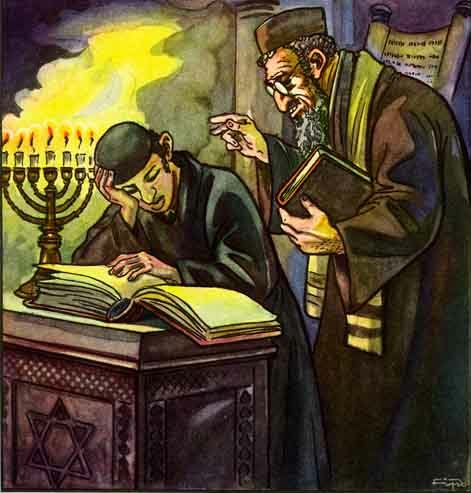
Talmud StudySo the issue, as I’m reading it, was that Paul was relating to Timothy how in Ephesus some men were teaching “strange doctrines” that had to do with “myths” and “endless genealogies” and giving rise to “mere speculation”. Apparently, these guys wanted to be “teachers of the Law” but according to Paul, they didn’t know what they were talking about.

It would seem to indicate that these men weren’t Jewish since it would be fairly likely that Jewish teachers would have some idea of how to teach the relevant essentials of the Law (Torah) to newly minted Gentile disciples of the Master. I suppose the “endless genealogies” could be indicative of Judaism since we find numerous genealogies in the Torah and later, when the Apostolic Scriptures were canonized, we find that the genealogy of Jesus (Yeshua) is included and considered important in establishing his credentials as Messiah. But I hardly think that Paul would consider anything related to the Torah, including Jewish commentary on the scriptures, would qualify as “myth”. This is more reminiscent of how I have experienced, at different times over the past ten years or so, some non-Jewish teachers have rendered their interpretations of the Torah, and more than a few theories have been rather fanciful.

So what “strange doctrines” were the fellows Paul describes trying to pass off on the disciples in Ephesus?

In verse eight, Paul says that the Law is good, if one uses it lawfully…” but while Pastor acknowledged the wordplay in Greek (“Law”, “lawfully”), he chose to translate the latter word as “properly”. Toward the end of his sermon, in his notes, he asked “What is the improper use of the law?”

One of the misuses, according to Pastor, is following speculations, controversies, and myths rather than “sound doctrine”. So who is engaging in these speculations, controversies and myths?

Although it would have been impossible for Paul to have meant this, Pastor is applying this “misuse of the Law” to Rabbinic Judaism with all their “man-made rules” (which most Rabbis consider the interpretation of the various mitzvot and their application across history and the differing requirements and circumstances that arise). He also cited the teachings of Seventh-Day Adventism as distracting from the doctrine that one is saved only through faith in Christ.

And then he mentioned Messianic Judaism as “speculative” and “controversial” with their proposition that a Jew can have faith in Jesus as the Messiah and still realize that the Sinai Covenant and its conditions, the statutes and laws of the Torah, remain obligatory for Jewish Jesus-believers.

I know all of the areas that Pastor and I disagree upon, but this is the first time, especially publicly, that he directly hammered on the theological and doctrinal platform which is the foundation of my understanding of the Bible.

Imagine being a Seventh-Day Adventist and listening to this part of the sermon. How would you feel? Or at different times, Pastor or others in the church have taken exception to Pentecostals, Catholics, and Mormons. Imagine being a member of one of those denominations or orientations and being a guest in Pastor’s church to listen to such sermons and teachings.

Like I said, my first impulse was to stand up and walk out. My second impulse was to wait until the sermon was over and then leave, skipping Sunday school.

I thought better of both actions and when I’m caught off guard, it’s usually a bad idea for me to go with the first thought that pops into my head.

So I’m writing about it instead.

I used the word Eisegesis in the title of this blog post, which is basically reading your theology and doctrine into the Biblical text, as opposed to Exegesis which is reading the Biblical text and allowing it to develop your theology and doctrine, and I never thought I’d say something like this about Randy.

Although we disagree on many things, I know that he’s an intelligent, well-educated and well-read, thoughtful, and honest researcher. I know, like most of us, that he comes from a particular theological tradition and that perspective colors how he reads the Bible. My perspective equally colors my interpretation of the Bible, and I don’t believe any human being can be perfectly objective, especially in the realm of religion.

However, I do believe that my theology is driven by a more straightforward view of what the Bible says and treats all of scripture as a single, unified document which doesn’t require suddenly “jumping the tracks” from one major version of God’s redemptive plan to another at Acts 2. But to equate Paul’s comments on speculations, controversies, and myths specifically to variants on religious Judaism, as well as a Christian denomination that is generally accepted by most other mainstream Christian denomination, is pure opinion and cannot be reasonably derived from the text.

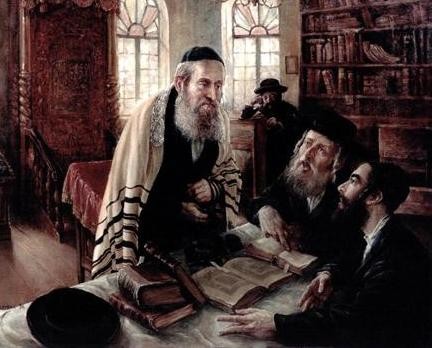
rabbis-talmud-debateI know that even Christians who say they love Jewish people and Israel, draw the line at Judaism as a religion, generally expressing at least some disdain at what is considered “the traditions of men” (and remember, it wasn’t that long ago in Church history when we were burning volumes of Talmud and calling said-volumes “obscene”), but I know that the “love” many Christians say they have for the Jews, once you throw religious Judaism into the mix, has a severe limitation.

I suppose this is just my opinion, but what if when Messiah returns, the way we will be worshiping and studying will be more like a Judaism than a Christianity? After all, “ekklesia” doesn’t mean “church”. I’ve written before that the word “church” didn’t come into existence for many centuries after the Bible was canonized.

Pastor himself said assembled Israel was referred to in Biblical Hebrew as “kahal” which is (interestingly enough) translated in the Septuagint as “synagogue”. The Apostolic Scriptures use the word “ekklesia” and they all (more or less) mean a gathering of people for a specific purpose.

I think it’s a shame that all English Bibles translate the word “ekklesia” as “church” not only because it’s anachronistic (although referring to the Children of Israel in Deuteronomy 5 as “synagogue” is as well) but because it sends the message that the Jews as Jews are out of the picture and replaced by Gentile (and Jewish) Christians.

Now to his credit, Pastor spent a significant amount of time saying that all of God’s promises to the Jewish people in the Bible are true and, if they aren’t, then we (Gentile) Christians have no assurance that God’s promises to us aren’t true as well (although all of God’s covenant promises are made with the House of Judah and the House of Israel…and only His covenant with Noah involves the rest of humanity…we’re just grafted into the blessings of the New Covenant).

But how can God’s promises to Israel all still be true if virtually all the conditions of the Sinai Covenant expired when Jesus died on the cross (something God never mentioned even once when He made the Sinai Covenant)? How can God’s promise that the Aaronic priesthood is an eternal covenant (Numbers 18:7) if, as Pastor says, the Priesthood of Melchizedek replaces the Aaronic? The Prophet Ezekiel says in no uncertain terms that the sons of Zadok, who are from the sons of Levi, will be the priests in the future Temple that will be built in Messianic times (Ezekiel 40:45-46).

It would be impossible for all of the Torah precepts except for the Ten Commandments to have ended permanently “at the cross.” If that were true, the Levitical priests in Ezekiel’s Temple wouldn’t know what to do with themselves since their duties are described down to the last detail only in the Torah.

That’s also why, when the New Covenant fully emerges into our world in Messianic Days, the Torah must continue as the conditions of that covenant, even as they remain the conditions of the Sinai Covenant, which is still incumbant on the Jewish people (including Messianic Jewish people) today.

Maybe in a later blog post, I’ll insert the diagram Pastor put in his sermon notes, which map the Ten Commandments to 1 Timothy 1:9-10 and which supposedly serve as proof of Pastor’s assertion that only the Ten Commandments survive out of the full body of laws given at Sinai. It is (again, this is all my opinion) wildly speculative to somehow read this portion of 1 Timothy and believe this is what Paul was presenting, rather than the Apostle writing to address a situational problem occurring at that point of time within the ekklesia at Ephesus.

Although his comments on Messianic Judaism were the real “capper” for me, I was still astonished with him explaining that the two greatest commandments we see Jesus teaching in Matthew 22:34-40 were “proof” that Jesus said only the Ten Commandments apply in Christianity (nevermind that Jesus was still alive so the Law hadn’t been “nailed to the cross” with him yet, that he was a Torah observant Jew, and that with rare exception, all of the people he spoke with and taught were Torah observant Jews) because the Ten Commandments can be divided into those laws that relate to God and man and those laws that relate to men and other men.

And yet, all of the 613 mitzvot can be divided into those two general groups, so Matthew 22:34-40 is not a good proof text to support Pastor’s assertion.

I know Pastor is well-educated in theology and I’m just an interested amateur, but I feel like I could walk through the gaping holes he left in his presentation.

I’m sorry, I really am. I know I’m probably going off half-cocked and I’m trying really hard not to let my feeling like my tail has been stepped on overwhelm my good sense, but it just seems fantastic to me that Pastor’s read on the Ten Commandments and especially his opinion on Messianic Judaism being a controversy and even a myth isn’t a projection of Christian traditions being read back into the Bible in order to support what he considers “sound doctrine”. It’s more like a defense against the idea that God really did make permanent covenants and that His promises actually do endure just as God uttered them and had recorded in the Bible. Pastor admits that the Jewish people will always be a nation before God, but he’s missing just how they’re supposed to remain recognizably and “covenantally” Jewish.

I inserted my Sunday school class notes above in part because they included a suggestion that disagreeing with church leadership is a bad thing. Am I being disobedient and prideful by disagreeing, especially so strongly, with the Pastor’s teachings? Is this my pride talking or am I allowed to have my own theological opinions independent of what’s being taught? God did make Randy the head Pastor of this church. He has authority over everyone who chooses to attend. Who am I to argue?

I stopped referring to Randy “my Pastor” when he called me on the fact that I disagree with him on almost everything. But why is it only “sound doctrine” when it’s stuff that he teaches based on the particular model of theology to which he subscribes? More than ever, I’m convinced that the Church teaches on principles that more resemble sound tradition. What one considers “sound” simply depends on what Christian traditions are employed to interpret scripture.

ChurchI don’t want to be prideful, disobedient, and arrogant, thinking I’m right and everyone else is wrong. Believe me, I know I’ve got a lot to learn. But what am I supposed to do, especially now, when I feel like I’ve been backed into a corner?

I used to worry that I’d never make any sort of impact in this church environment but now I’m worried I am making an impact, a bad one. If this is the result of my discussions about Torah and the Jewish people with Pastor in specific and with others more generally, then what a terrible thing I’ve done.

Oh, and yes, I plan to go back to church next week if for no other reason than because Pastor said that today’s and next week’s sermons are necessary to understand the foundation he’s putting down. He’ll be speaking on Galatians 3 next week. Oy.

Addendum: Continued in The Consequences of Disagreeing.

Between Christian and Jewish Eschatology

Keith: Also, in my previous statement, I meant to say Bilateral Ecclesiology and NOT Bilateral Eschatology.

ProclaimLiberty: But I think that, philosophically, we could really have some fun with a notion like: “Bilateral Eschatology”! As Linus once exclaimed in Charles Shultz’s cartoon opus “Peanuts”: “Why, the theological implications alone are staggering!” [:)]

James: Interesting when you consider the differences between Christian and Jewish Eschatology.

ProclaimLiberty: Hmmm…. Your Wikipedia reference under the “Christian” link seems to open the notion up to “Multilateral Eschatology”; which really drives the theological impact up a notch or two (or seven). I do think I prefer the Jewish link.

James: Actually PL, so do I.

-from the comments on The Duty of Messianic Gentiles and Christians to the Jews.

And the inspiration for another blog post was born.

I never really fully realized that one of the major differences between traditional Christian thought and Messianic Judaism is how they consider eschatology or that branch of theology that addresses what we call “the end times” or the final events in human history.

Since Messianic Judaism is a Judaism that accepts the revelation of Yeshua (Jesus) as the Messiah, it makes a sort of sense to assume that much of Christian theology would be absorbed by that Judaism including the eschatological presuppositions involved, but what if that’s not true?

I’m going to use Wikipedia for my main sources which isn’t the best, but it has the advantage of not having to wade through someone’s religious bias.

Christian Eschatology and Jewish Eschatology seem light years apart, and the Christian version, at least as Wikipedia presents it, seems hopelessly confusing with far too many variations to be easily understood.

I decided to address three specific themes:

Resurrection

Christianity acknowledges that the doctrine of the resurrection predates the Church:

The word resurrection comes from the Latin “resurrectus”, which is the past participle of “resurgere”, meaning to rise again. Although the doctrine of the resurrection comes to the forefront in the New Testament, it predates the Christian era. There is an apparent reference to the resurrection in the book of Job, where Job says, “I know that my redeemer lives, and that he will stand at the latter day upon the earth. And though… worms destroy this body, yet in my flesh I will see God.” [Job 19:25-27] Again, the prophet Daniel writes, “Many of those who sleep in the dust of the earth will awake, some to everlasting life, some to shame and everlasting contempt.” [Dan 12:2] Isaiah says: “Your dead will live. Together with my dead body, they will arise. Awake and sing, you who dwell in dust, for your dew is like the dew of herbs, and the earth will cast out the dead”. [Isa. 26:19]

This belief was still common among the Jews in New Testament times, as exemplified by the passage which relates the raising of Lazarus from the dead. When Jesus told Lazarus’ sister, Martha, that Lazarus would rise again, she replied, “I know that he will rise again in the resurrection at the last day.” [Jn 11:24] Also, one of the two main branches of the Jewish religious establishment, the Pharisees, believed in and taught the future resurrection of the body. [cf Acts 23:1-8]

In Judaism, although there is extensive information about the resurrection in eschatological thought, it doesn’t seem to be a major theme and references to the resurrection are less centralized. While some authorities in Orthodox Judaism believe that the resurrection will accompany the Messianic Age, Rabbi Mosheh ben Maimon, also known as Maimonides or the Rambam, didn’t directly associate the Messiah’s coming with the resurrection.

The Hebrew Bible, at least as seen through interpretation such as Bavli Sanhedrin, contains frequent reference to resurrection of the dead (Jacob Neusner The Documentary History of Judaism and Its Recent Interpreters 2012 – Page 138, also see Exodus 15.1; Joshua 8.30; 1 Kings 11.7; Psalm 84.5; Isaiah 52.8; Deuteronomy 33.6; Daniel 12.2; 12.13 and Proverbs 30.16). The phrase ‘olam ha-ba, (עולם הבא) “world to come”, does not occur in the Hebrew Bible.

PhariseesOf course, during the late Second Temple period, the Pharisees believed in the resurrection, the Essenes believed in the immortality of the soul, but the Sadducees believed in neither.

Later, the Mishnah (c. 200) lists the belief in the resurrection as one of the three necessary beliefs for a Jew.

Christianity has developed are far more involved doctrine around the resurrection than apparently Judaism has, based on the Apostolic scriptures, including two resurrections, the resurrection of the saints and the general resurrection, specifics about the nature of the resurrection body, and specifics associating the resurrection with the second coming of Christ.

See The Resurrection of the Ekklesia for more on this topic.

Christ/Messiah

Now when He had spoken these things, while they watched, He was taken up, and a cloud received Him out of their sight. And while they looked steadfastly toward heaven as He went up, behold, two men stood by them in white apparel, who also said, “Men of Galilee, why do you stand gazing up into heaven? This same Jesus, who was taken up from you into heaven, will so come in like manner as you saw Him go into heaven.”

–Acts 1:9-11

According to the Wikipedia article, many but not all Christians believe:

  • The coming of Christ will be instantaneous and worldwide. “For as the lightning comes from the east and flashes to the west, so also will the coming of the Son of Man be.” ~ Matthew 24:27
  • The coming of Christ will be visible to all. “Then the sign of the Son of Man will appear in heaven, and then all the tribes of the earth will mourn, and they will see the Son of Man coming on the clouds of heaven with power and great glory.” ~ Matthew 24:30
  • The coming of Christ will be audible. “And He will send His angels with a great sound of a trumpet, and they will gather together His elect from the four winds, from one end of heaven to the other.”  ~ Matthew 24:31
  • The resurrection of the righteous will occur. “For the Lord Himself will descend from heaven with a shout, with the voice of an archangel, and with the trumpet of God. And the dead in Christ will rise first.” ~ 1 Thessalonians 4:16
  • In one single event, the saved who are alive at Christ’s coming will be caught up together with the resurrected to meet the Lord in the air. “Then we who are alive and remain shall be caught up together with them in the clouds to meet the Lord in the air. And thus we shall always be with the Lord.” ~ 1 Thessalonians 4:17

Notice that none of the prophesies about the coming of Messiah from the Tanakh (Old Testament) are listed here.

Judaism does have a rather extensive list of requirements for the Messiah’s coming, based on the Tanakh, that Christianity largely ignores:

  • The Sanhedrin will be re-established (Isaiah 1:26)
  • Once he is King, leaders of other nations will look to him for guidance (Isaiah 2:4)
  • The whole world will worship the One God of Israel (Isaiah 2:17)
  • He will be descended from King David (Isaiah 11:1) via King Solomon (1 Chron. 22:8–10)
  • The messiah will be a man of this world, an observant Jew with “fear of God” (Isaiah 11:2)
  • Evil and tyranny will not be able to stand before his leadership (Isaiah 11:4)
  • Knowledge of God will fill the world (Isaiah 11:9)
  • He will include and attract people from all cultures and nations (Isaiah 11:10)
  • All Israelites will be returned to their homeland (Isaiah 11:12, Zechariah 10:6)
  • Death will be swallowed up forever (Isaiah 25:8)
  • There will be no more hunger or illness, and death will cease (Isaiah 25:8)
  • The dead will rise again (Isaiah 26:19)
  • The house of David shall be as God (Zechariah 12:8)
  • God will seek to destroy all the nations that go against Jerusalem (Zechariah 12:9, Isaiah 60:12)
  • Israel and Judah will be made into one nation again (Zechariah 11:12-14, Ezekiel 37:16-22)
  • The Jewish people will experience eternal joy and gladness (Isaiah 51:11)
  • He will be a messenger of peace (Isaiah 53:7)
  • Nations will recognize the wrongs they did Israel (Isaiah 52:13–53:5)
  • The peoples of the world will turn to the Jews for spiritual guidance (Zechariah 8:23)
  • The ruined cities of Israel will be restored (Ezekiel 16:55)
  • Weapons of war will be destroyed (Ezekiel 39:9)
  • The Temple will be rebuilt (Ezekiel 40) resuming many of the suspended mitzvot
  • He will then perfect the entire world to serve God together (Zephaniah 3:9)
  • He will take the barren land and make it abundant and fruitful (Isaiah 51:3, Amos 9:13–15, Ezekiel 36:29–30, Isaiah 11:6–9)

war and peaceI think Christianity acknowledges some of this such as the resurrection, the end of war, and that the whole world will worship God, but where many Christians get hung up is that they (we) expect to be raptured up to Heaven with Jesus and stay there forever. Others expect to be raptured for a certain period of time until the tribulation ends, and then to accompany Jesus back to Earth so the Church can rule and reign with him.

Jewish eschatology doesn’t talk about Heaven at all and expects a very human Messiah to be King and to rule over Israel and the rest of the world. By comparison, Christian eschatology is more focused on Heaven, and Earth seems to be reserved for those unbelievers who will suffer through the tribulation and later be judged and sent to hell.

While Judaism in general addresses the war of God and Magog, at the end of it all, when Israel’s enemies are all defeated, the final victory is here, not in Heaven:

Although Judaism concentrates on the importance of the Earthly world (Olam Ha’zeh — “this world”), all of classical Judaism posits an afterlife. The hereafter is known as ‘olam ha-ba (the “world to come”, עולם הבא in Hebrew), and related to concepts of Gan Eden (the Heavenly “Garden of Eden”, or paradise) and Gehinom. According to religious Judaism, any non-Jew who lives according to the Seven Laws of Noah is regarded as a righteous gentile, and is assured of a place in the world to come, the final reward of the righteous.

If you are at all familiar with how Messianic Judaism in general presents its eschatology, although it has elements of the Christian viewpoint, it primarily resembles a more Jewish perspective.

Jewish People in Eschatology

Christian views of the future of the Jewish people can be quite different depending on which eschatological model you are using. As far the 144,000 (Revelation 7:1-8) are concerned, there are three major perspectives:

  1. Futurist belief: Various interpretations of a literal number of 144,000, including: 144,000 Evangelical Jews at the end of the world, or 144,000 Christians at the end of the world.
  2. Preterist belief: A symbolic number signifying the saved, representing completeness, perfection (The number of Israel; 12, squared, and multiplied by 1000 = 144,000). This symbolises God’s Holy Army, redeemed, purified and complete.
  3. Historicist belief: A symbolic number representing the saved who are able to stand through the events of 6:17.

Now lets look at the actual scripture:

And I heard the number of those who were sealed, one hundred and forty-four thousand sealed from every tribe of the sons of Israel: from the tribe of Judah, twelve thousand were sealed, from the tribe of Reuben twelve thousand, from the tribe of Gad twelve thousand, from the tribe of Asher twelve thousand, from the tribe of Naphtali twelve thousand, from the tribe of Manasseh twelve thousand, from the tribe of Simeon twelve thousand, from the tribe of Levi twelve thousand, from the tribe of Issachar twelve thousand, from the tribe of Zebulun twelve thousand, from the tribe of Joseph twelve thousand, from the tribe of Benjamin, twelve thousand were sealed.

–Revelation 7:4-8 (NASB)

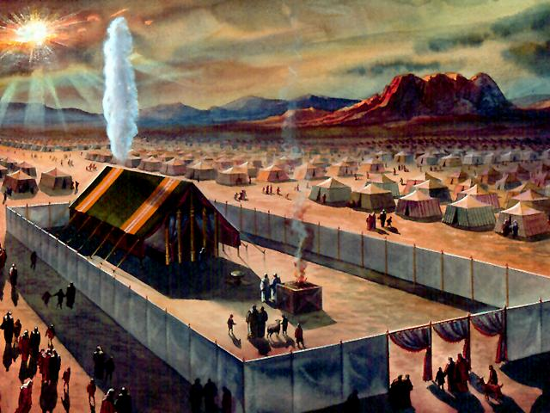
tabernacleAlthough the literal text speaks of the “sons of Israel” and specifically names each of the twelve tribes, most of the prevailing Christian interpretations see this as symbolic and not literal and the one belief that takes the number literally, describes them as either “Evangelical Jews” (which probably means people who are Jewish by heritage and who converted to Christianity) or “Christians” (which most likely means Gentile Christians). In all cases, the Jewishness of these “tribes” is either minimized or eliminated altogether.

Christian hermeneutics regarding the ultimate future of the Jews vary depending on the specific emphasis:

Supersessionist: Under the Covenant of Works mankind, represented ultimately in a covenantal sense under Adam beginning from the Garden of Eden, failed to live as God intended and stood condemned. But beyond time the Covenant of Redemption was made between the Father and Son, to agree that Christ would live an acceptable substitutionary life on behalf of, and as a covenantal representative for, those who would sin but would trust in Christ as their substitutionary atonement, which bought them into the Covenant of Grace. The Covenant of Grace applies to all who trust Christ for their salvation, regardless of ethnicity, and thus the Covenant covers Jews and Gentiles alike with regard to salvation, sanctification, and resurrection. The Covenant of Grace forms the basis of the later covenants with Noah, Abraham, Moses, David and the New Covenant in Christ.

Kingdom-Dominion: In the New Testament, God’s rule is exercised through Jesus Christ the King, who is also the temple of God (John 2:19-21), over his people the Church (of which Israel was a type). Salvation for all people in all times is found by trusting (explicitly or implicitly) in Jesus. Thus, Abraham, Moses, David, and all Christians today are saved by the same faith. The Jews are regarded as special in God’s plan (as in Romans and Ephesians) and yet the Old Testament prophecies regarding Israel find their fulfillment in Jesus and the Church rather than in a literal restoration of Israel.

Dispensational: History is divided into (typically seven) “dispensations” where God tests man’s obedience differently. The present Church dispensation concerns Christians (mainly Gentiles) and is a parenthesis to God’s main plan of dealing with and blessing his chosen people the Jews. Because of the Jews’ rejection of Jesus, Jewish sovereignty over the promised earthly kingdom of Jerusalem and Palestine was postponed from the time of Christ’s first coming until prior to or just after his Second Coming when most or all Jews will embrace him.

There will be a rapture of the Gentile church followed by a great tribulation of seven (or three-and-a-half) years’ duration during which Antichrist will arise and Armageddon will occur. Then Jesus will return visibly to earth and re-establish the nation of Israel; the Jewish temple will be rebuilt at Jerusalem and the Temple mount, possibly in place of the Muslim Dome of the Rock (see Christian Zionism). Christ and the people of Israel will reign in Jerusalem for a thousand years, followed by last judgment and a new heavens and new earth.

One last note from the Christian point of view relative to the future of the Jewish people:

Historicism v. Futurism: The division between these interpretations can be somewhat blurred. Most futurists are expecting a Rapture of the Church, an Antichrist, a Great Tribulation and a Second coming of Christ in the near future. But they also accept certain past events, such as the rebirth of the State of Israel and the reunification of Jerusalem as prerequisites to them, in a manner which the earlier historicists have done with other dates. Futurists, who do not normally use the day-year principle, interpret the Prophecy of Seventy Weeks in Daniel 9:24 as years, just as historicists do. Most historicists have chosen time lines, from beginning to end, entirely in the past. But some, such as Adam Clarke have time lines which also commenced with specific past events, but require a future fulfillment. In his commentary on Daniel 8:14 published in 1831, he stated that the 2,300-year period should be calculated from 334 BC, the year Alexander the Great began his conquest of the Persian Empire. His calculation resulted in the year 1966. He seems to have overlooked the fact that there is no “year zero” between BC and AD dates. For example, the year following 1 BC is 1 AD. Thus his calculations should have required an additional year, ending in 1967. He was not anticipating a literal regathering of the Jewish people prior to the Second coming of Christ. But the date is of special significance to futurists since it is the year of Jerusalem’s capture by Israeli forces during the Six-Day War. His commentary on Daniel 7:25 contains a 1260-year period commencing in 755 AD and ending in 2015.

tzitzitEven under the best of circumstances, the Jews are considered “special” in the end of days, but always taking a back seat to the (Gentile) Church. The worst case scenario from a Jewish point of view is that they cease to exist, either because they have totally been assimilated into the Church or because they have all been killed.

Not a very rosy picture.

By contrast, Jewish Eschatology is all about Israel and the Jewish people (see the list above of all the things Messiah is supposed to do). Rather than the Jews going to the Church and converting to Christianity to be able to enjoy the New Covenant promises of God (which were made specifically with the House of Judah and the House of Israel – see Jeremiah 31:31), the Gentiles must attach themselves to the Jewish people:

Thus says the Lord of hosts, ‘In those days ten men from all the nations will grasp the garment of a Jew, saying, “Let us go with you, for we have heard that God is with you.”‘

–Zechariah 8:23

“Also the foreigners who join themselves to the Lord,
To minister to Him, and to love the name of the Lord,
To be His servants, every one who keeps from profaning the sabbath
And holds fast My covenant;
Even those I will bring to My holy mountain
And make them joyful in My house of prayer.
Their burnt offerings and their sacrifices will be acceptable on My altar;
For My house will be called a house of prayer for all the peoples.”

–Isaiah 56:6-7

As far as the quote from Zechariah is concerned, although Judaism probably believes that any group of people from the nations (the number “ten” is considered symbolic rather than literal) will approach any Jew with this request, I’ve heard one interpretation that says the Jew in question specifically is Messiah. This folds into a Messianic Jewish viewpoint rather well placing Israel at the center of Gentile redemption rather than reverse-engineering the Bible and making the Jews come to the Gentiles to be redeemed by the God of Israel.

Conclusion

I don’t know that there’s a single Messianic Jewish eschatology. Certainly there are variations both in Christianity and the other Judaisms, so there’s no reason to believe that Messianic Judaism should have a single, overarching eschatology that is taught and believed.

I’m not writing this to tell you all the answers but perhaps to give you a starting place to begin re-conceptualizing what the future might look like when it’s not dominated by traditional Christian doctrine. It will also look different than the traditional Jewish points of view, since all other Judaisms do not anticipate a Divine Messiah who supernaturally comes (returns) to Earth having already been resurrected as the “first fruits of the dead” (1 Corinthians 15:20) some two-thousand years ago.

I’ve said in the past that I don’t think anyone has a terrifically clear picture of what’s actually going to happen. Whatever we have recorded in the Bible has been interpreted in many different ways over the centuries and no doubt we’ve distorted what was previously understood by original audiences. These days, it is common to take our theology and read it back into the Bible rather than the other way around, for to take a fresh look at the Bible and use some honest exegesis might result if turning our beliefs on their collective head and forcing us to revise if not totally rewrite what the future is going to bring.

Up to JerusalemAnd if that future sees Israel and the Jewish people ascending to the heights as the head of all nations, and the Gentiles must go to them to be close to God, then the Church might not be in such a hurry to face that reality. Of course, should the King of Israel, that head of the nations, turn out to be Divine and resurrected rather than someone who will be born in the generation of the final war and the final victory, then that would give most Jews a rather poignant pause.

I will pour out on the house of David and on the inhabitants of Jerusalem, the Spirit of grace and of supplication, so that they will look on Me whom they have pierced; and they will mourn for Him, as one mourns for an only son, and they will weep bitterly over Him like the bitter weeping over a firstborn.

–Zechariah 12:10

Oh, just one more thing:

In that day the Lord will defend the inhabitants of Jerusalem, and the one who is feeble among them in that day will be like David, and the house of David will be like God, like the angel of the Lord before them. (emph. mine)

–Zechariah 12:8

The “house of David will be like God, like the angel of the Lord before them.” Really? I know I’m going to be accused by some of misinterpreting or misusing the text, but it certainly seems like a Divine Messiah from the house of David isn’t entirely out of the question.

The Resurrection of the Ekklesia

Now, brothers and sisters, I want to remind you of the gospel I preached to you, which you received and on which you have taken your stand. By this gospel you are saved, if you hold firmly to the word I preached to you. Otherwise, you have believed in vain.

For what I received I passed on to you as of first importance: that Christ died for our sins according to the Scriptures, that he was buried, that he was raised on the third day according to the Scriptures, and that he appeared to Cephas, and then to the Twelve. After that, he appeared to more than five hundred of the brothers and sisters at the same time, most of whom are still living, though some have fallen asleep. Then he appeared to James, then to all the apostles

–1 Corinthians 15:1-7 (NASB)

Scholars commonly see in 1 Corinthians 15:1-7 material of an early “pre-Pauline” confession that focuses on Jesus’ death, burial, resurrection and appearances to select witnesses. But there are continuing disagreements over what kind of event is referred to in vv. 3-5 where Jesus is described as “raised on the third day,” specifically whether this refers to a resurrection/transformation of Jesus’ mortal body or some other kind of event, e.g., a “spiritual” one that left his mortal body in the grave. I’ve just read a new study of the matter that seems to me pretty effective in guiding exegetes to the correct answer: James Ware, “The Resurrection of Jesus in the Pre-Pauline Formula of 1 Cor 15.3-5.” New Testament Studies 60 (2014): 475-98.

–Larry Hurtado
“Paul on Jesus’ Resurrection: A New Study”
Larry Hurtado’s Blog

Being just a regular guy and not a Bible scholar or academician, it never really occurs to me that people drill down into such a level of detail regarding certain Biblical events such as the resurrection. I’ve always been taught that Jesus was physically resurrected on the third day and that for the next forty days, he was seen and touched by many, many people, the witnesses of his resurrection, which serves as evidence of the promise of the resurrection of the “saints” in the Messianic Age.

But here we see Dr. Hurtado explaining how James Ware (probably this author) has investigated the various scholarly positions on what “raised on the third day” actually means. Incredibly (from my point of view), there are those who must not believe in a literal resurrection but somehow imagine that Jesus left his body behind and spiritually rose and ascended, something like “Caspar the Friendly Ghost”.

But why is a bodily resurrection important?

He will swallow up death for all time,
And the Lord God will wipe tears away from all faces…

–Isaiah 25:8

Shall I ransom them from the power of Sheol?
Shall I redeem them from death?
O Death, where are your thorns?
O Sheol, where is your sting?

–Hosea 13:14

But perceiving that one group were Sadducees and the other Pharisees, Paul began crying out in the Council, “Brethren, I am a Pharisee, a son of Pharisees; I am on trial for the hope and resurrection of the dead!” As he said this, there occurred a dissension between the Pharisees and Sadducees, and the assembly was divided. For the Sadducees say that there is no resurrection, nor an angel, nor a spirit, but the Pharisees acknowledge them all.

–Acts 23:6-8

There are any number of prophesies that speak of a general resurrection from the dead at the end of days and it was upon those prophesies that the Pharisees based their faith. This was the same faith that the disciples of Yeshua (Jesus) had since their Messianic beliefs were largely Pharisaic with only a few minor differences that had to do with Gentile admission and status.

new heartIf there was no physical, bodily resurrection for Jesus, then what hope do we have in a resurrection for us?

While I’m stunned that there are still those who, like the Sadducees of old, deny the resurrection today, fortunately…

Ware reviews a wide range of previous scholarly views, carefully assessing their merits, noting the limited force of some and the dubious force of others. His own particular contribution is a more in-depth analysis of the use of the Greek verb translated here “raised”: εγειρω. Essentially, Ware contends that all other uses of the verb describe one or another kind of action involving the raising up, rising up, or setting up of something or someone from a prone or seated position to an upright, standing position.

This, he argues, means that proposals that the verb here refers to an ascension of Jesus, a transportation of him in some “spiritual” mode to heavenly glory, is ruled out. Instead, Paul refers to a raising up or restoration to life of the executed body of Jesus.

To be sure, as Ware notes, later in 1 Cor 15, Paul engages the question of “in what kind of body” are the dead to be raised (vv. 35-49), and Paul here posits a dramatic and profound transformation, those raised being “changed” powerfully. In vv. 42-44, in particular, Paul makes a series of contrasts between the mortal body and the resurrection body: corruption/incorruption, dishonour/glory, weakness/power, “soulish”/spiritual. And Paul also makes the claim that the resurrection of believers will be modelled on Jesus’ resurrection.

-Hurtado, ibid

But Christ has indeed been raised from the dead, the firstfruits of those who have fallen asleep.

–1 Corinthians 15:20

Messiah is the “first fruits” of the dead, the first to rise, the first to experience the bodily resurrection from death through “a dramatic and profound transformation” unlike anything that had ever occurred before. As “first fruits,” he illustrates that the promises of God about a general resurrection are true, for the Master powerfully demonstrated the reality of the resurrection with his own body.

The first account I composed, Theophilus, about all that Jesus began to do and teach, until the day when He was taken up to heaven, after He had by the Holy Spirit given orders to the apostles whom He had chosen. To these He also presented Himself alive after His suffering, by many convincing proofs, appearing to them over a period of forty days and speaking of the things concerning the kingdom of God.

–Acts 1:1-3

MessiahI won’t go into an inventory of all the different witnesses of Jesus’ resurrection that are recorded in the Gospels, but we have every indication that perhaps five-hundred people or more were witnesses that he physically came alive from the dead, that his wounds were still present, that he ate and drank, and that he wasn’t just some sort of vision or “floaty ghost,” but was a real, live human being who once had been dead. He appeared to witnesses so we would have living accounts of the resurrection, so that we could believe, not mindlessly or blindly, but based on what actual human beings saw and experienced in his presence.

Of course, we have to believe that the Biblical record is accurate regarding these witnesses, and some two-thousand years later, it’s possible to introduce some doubt, but these things can only be discerned through the Spirit:

For to us God revealed them through the Spirit; for the Spirit searches all things, even the depths of God. For who among men knows the thoughts of a man except the spirit of the man which is in him? Even so the thoughts of God no one knows except the Spirit of God. Now we have received, not the spirit of the world, but the Spirit who is from God, so that we may know the things freely given to us by God, which things we also speak, not in words taught by human wisdom, but in those taught by the Spirit, combining spiritual thoughts with spiritual words.

But a natural man does not accept the things of the Spirit of God, for they are foolishness to him; and he cannot understand them, because they are spiritually appraised. But he who is spiritual appraises all things, yet he himself is appraised by no one. For who has known the mind of the Lord, that he will instruct Him? But we have the mind of Christ.

–1 Corinthians 2:10-16

What people saw with their eyes and heard with their ears, we must accept as true by faith and through the Spirit. Without the Spirit, they sound like ridiculous nonsense.

When the accusers stood up, they began bringing charges against him not of such crimes as I was expecting, but they simply had some points of disagreement with him about their own religion and about a dead man, Jesus, whom Paul asserted to be alive.

–Acts 25:18-19

And now I am standing trial for the hope of the promise made by God to our fathers; the promise to which our twelve tribes hope to attain, as they earnestly serve God night and day. And for this hope, O King, I am being accused by Jews. Why is it considered incredible among you people if God does raise the dead?

–Acts 26:6-8

During the various legal hearings to which Paul was subjected after his arrest in Jerusalem, one of the things the Romans could not comprehend was the matter of a “dead man” coming back to life and the fact that different groups of Jews would argue violently over such a thing. To the pagan Romans, it seems like incomprehensible nonsense.

That’s what it seems like to much of the world today without the ability to read the Bible through “spiritual” eyes, so to speak. But once we have our eyes opened and we can see, then we can believe by faith that not only was the bodily resurrection of Jesus real, but that it is evidence for the faithful that we too will be resurrected when the Master returns for us.

However, there’s one last paragraph from Dr. Hurtado’s blog I want to toss into the mix for your consideration:

So, Paul posits a profound change involved in the resurrection. But, as Ware so deftly points out, all through the passage Paul refers to the body of believers as changed. That is, Paul insists that the resurrection is an event that changes the nature of the embodied existence of those raised. The “spiritual” body, Ware persuasively argues, has to be in context a description of the animating force of the resurrection body, for the contrast is not with a “fleshly” body but with a “soulish” (ψυχικος) one, i.e., the mortal body animated by “soul” (ψυχη), which here appears to be Paul’s reference to what we might call mortal, “biological” life.

The Jewish PaulWhen I first read the phrase “Paul refers to the body of believers as changed,” I thought he was referring to the “ekklesia of believers,” the “body” as the corporate entity of Jesus’ disciples. Re-reading that part of the blog, I know now he was talking about the biological, physical bodies of the believers, but consider something for a second. It’s not just that we will be resurrected and redeemed as individuals, but the collective “personality” of the ekklesia or the assembly of Messiah will also be changed, that is, the nature of the body of Christ won’t be as it is today.

Today, we have many arguments and disputes between different churches or different theologies that all acknowledge Christ as Lord and King, but who otherwise have widely (and sometimes wildly) different perspectives on many matters of the faith. I previously mentioned those Christians today who seemingly don’t believe in a bodily resurrection but rather believe that only our souls or spirits will ascend and live with Jesus in Heaven while our dead bodies remain in the grave forever.

But with the bodily resurrection I believe will also come a resurrection of the combined ekklesia such that the “body of Christ,” the unified humanity of disciples will also be transformed radically and demonstratively into something new, alive, and spiritually perfected:

“I will put My law within them and on their heart I will write it; and I will be their God, and they shall be My people. They will not teach again, each man his neighbor and each man his brother, saying, ‘Know the Lord,’ for they will all know Me, from the least of them to the greatest of them,” declares the Lord, “for I will forgive their iniquity, and their sin I will remember no more.”

–Jeremiah 31:33-34

Then I will sprinkle clean water on you, and you will be clean; I will cleanse you from all your filthiness and from all your idols. Moreover, I will give you a new heart and put a new spirit within you; and I will remove the heart of stone from your flesh and give you a heart of flesh. I will put My Spirit within you and cause you to walk in My statutes, and you will be careful to observe My ordinances. You will live in the land that I gave to your forefathers; so you will be My people, and I will be your God.

–Ezekiel 36:25-28

Yes, I know the New Covenant was made exclusively with the House of Judah and the House of Israel, and yet I’m liberally sprinkling this covenant language also upon the Gentiles. Many times before, I’ve written about the New Covenant and how I believe it can and must be applied to anyone who comes to faith in the righteous promises of God enacted through the Messiah, including the Gentiles:

Jewish teachers believed that God’s righteousness (his promise-keeping by which he would include the Gentiles) would come through education and conversion. But Paul says “now the righteousness of God has been manifested apart from the law” and he calls it “the righteousness of God through the faithfulness of Messiah for all who believe” (Romans 3:21-22). What Paul means by “the law” here is not a person striving to impress God by their morality, but rather the idea that education in the law and keeping it will make a Gentile acceptable to God in spite of the fact that they were not born into the chosen people. God’s promise-keeping is not dependent on Jewish teachers or Gentile students. It is not by education in or adhering to aspects of the law. God is including Gentiles through his own initiative, through the faithfulness of Messiah who lived (was resurrected) as a result of faithfulness. Messiah lived the commandments and returned to life by his worthiness. Through his merit, Jews and Gentiles are accepted by God.

-Derek Leman
“What’s Wrong with the Jews (in Romans 9-10)? Part 2”
Messianic Jewish Musings

spiritWe know from Joel 2:28-29, 32 that the Spirit will be poured out fully on all flesh, all human beings will benefit and be redeemed and reconciled to God through faith, not just the Children of Israel, but all Children of God among the nations, as long as we endure and run the race faithfully.

Someday each of us will be resurrected, renewed, and perfected, but more than that, as a body of believers, and assembly of disciples, we will collectively be perfected. We will think with one mind and love with one heart, and we will all know God.

The Alter Rebbe interpreted the statement, “Whoever saves a single person of (the people) Israel is as though he saved an entire world” (Sanhedrin 37a): One must perceive a Jew as he stands in the primordial thought of Adam Kadmon. There, each soul stands with all the generations destined to descend from it until the coming of Mashiach, the righteous Redeemer. When one does a favor to an individual, it is a favor to all those souls until the end of all generations.

-Compiled and arranged by the Lubavitcher Rebbe, Rabbi Menachem Mendel Schneerson, of righteous memory, in 5703 (1943) from the talks and letters of the sixth Chabad Rebbe, Rabbi Yosef Yitzchak Schneersohn, of righteous memory.

May you be inscribed and sealed for a good year.

Shabbat Shalom.

"When you awake in the morning, learn something to inspire you and mediate upon it, then plunge forward full of light with which to illuminate the darkness." -Rabbi Tzvi Freeman