The Duty of Messianic Gentiles and Christians to the Jews

There is a lot of confusion about tithing among believers today. Are we required to tithe? Does the Torah obligate us to give 10 percent of our incomes? If so, to whom should we be tithing? At First Fruits of Zion, we get these kinds of questions about tithing all the time. It’s one of the frequently asked questions we see most often.

-Toby Janicki
“Introduction,” p.1
What About Tithing?

I started reading Toby’s book with the idea of writing a review (which I will soon), but for some reason, I found my thoughts distracted by a topic I periodically visit on my blog: the state of those of us who are called Messianic Gentiles and our relationship with Jews who live halachically Jewish lives in the acknowledgement of the revelation of Yeshua the Messiah.

I suppose it has to do with the rather “dynamic” discussion being conducted in the comments section at the Rosh Pina Project blog in their blog post What Makes a Messianic Congregation Messianic in Israel?.

The following quote from one of the comments made by Rabbi Russ Resnik crystallizes the matter at hand:

As a non-Israeli, I won’t comment on the state of Messianic Judaism there. I represent a group of congregations mostly in the USA, but worldwide as well, working to sustain a genuinely Jewish Messianic Judaism. Here’s how we define it: “The Union of Messianic Jewish Congregations (UMJC) envisions Messianic Judaism as a movement of Jewish congregations and groups committed to Yeshua the Messiah that embrace the covenantal responsibility of Jewish life and identity rooted in Torah, expressed in tradition, and renewed and applied in the context of the New Covenant. Messianic Jewish groups may also include those from non-Jewish backgrounds who have a confirmed call to participate fully in the life and destiny of the Jewish people. We are committed to embodying this definition in our constituent congregations and in our shared institutions.”

Traditionally in the Church, when we receive a Jewish person who has confessed Jesus as Messiah (in “Christianese” as “Lord and Savior”), we tend to retrofit modern Christian theology, doctrine, and practice into their lives. Even under the most benign circumstances when we “allow” the “Jewish Christian” to continue to voluntarily observe some Jewish practices such as lighting the Shabbat candles and celebrating events such as Chanukah and Passover, we really expect them to become full-fledged, card-carrying “Gentile” Christians and assimilate into our culture.

But that’s not what Rabbi Resnik is talking about and certainly not what blog author Simon Ben David is advocating. To the best I can understand their (the Messianic Judaism described by R. Resnik) position, it would seem that they desire to create an environment of Jewish people living a fully developed religious and cultural Jewish lifestyle integrated with the revelation of Yeshua HaMashiach within Judaism. Devotion to Messiah then becomes a fully lived Jewish experience completely consistent with every other aspect of Jewish life, whether one lives in Israel or any other part of the world.

Given the history of Messianic Judaism during the last thirty to forty years, that’s not going to be an easy task. Modern Messianic Judaism emerged from within Evangelical Christianity and it has been difficult to cast off that cloak and to reinvent itself as a wholly experiential Judaism, particularly with all of “Christiandom” and not a few “Hebrew Christians” perceiving Rabbinic Judaism (is there any other kind) to be alien if not antithetical to Christian theology and doctrine.

synagogueI’ve argued in support of exclusive Messianic Jewish community in the past and continue to advocate for its necessity, at least for some groups of Jewish people in Messiah, but that’s obviously a controversial subject. Where there are a number of authentically (in my opinion) Messianic synagogues in the U.S. that also admit Gentile members and attendees, this doesn’t really solve the problem of what it is to create an actual Jewish community and environment that is designed to serve Jews and that preserves Jewish people and Judaism within the Messianic context. It has been argued that admitting even a small minority of Gentiles (apart from intermarried couples) “breaks” the Jewishness of the community.

I could say that this dilemma wasn’t one that Paul worried overly much about, although we see in his Epistle to the Romans that he had a terrific time mediating between Jews and Gentiles within the synagogue, at least if my reflection of Romans 9 is any indication.

But if “Judaically-aware” Gentile believers like me want to honor the necessity of exclusive Jewish community for Messianic Jews, what happens to us?

In reading Toby’s book, one of the points he makes is that none of the Torah commandments related to tithing particularly apply to Gentiles and, in reading how the Apostolic Scriptures, including Paul’s letters to the Gentiles, treat the subject, there’s no clear “smoking gun” that directly impresses Torah mitzvot upon Gentile minds and hearts  (you’ll have to wait until I write my book review to see how all that finally worked out).

So even in Jewish community within the ekklesia of Messiah, Jews are Jews and Gentiles are Gentiles. There are areas where God does treat both groups impartially, specifically in receiving the Holy Spirit, the promise of the resurrection, and a life in the world to come for the faithful, but in the nuts and bolts of day-to-day living, we are sometimes light-years apart.

I know one of the proposed solutions is for Messianic Jews to maintain exclusively Jewish communities and for “Messianic Gentiles” to maintain exclusively Gentile communities, separate but equal, so to speak. The latter Gentile communities are readily available in just about any part of the world. They’re called churches. But “church” is almost a “dirty word” to many Gentiles who align with the Messianic movement and almost certainly with all or almost all non-Jews within what has been called “Hebrew Roots” or “Jewish Roots” which encompasses sub-groups such as “One Law,” “One Torah,” “Two-House,” and “Sacred Name.”

I’ve defended identifying myself as a Messianic Gentile based on how I conceptualize Bible study and particularly how I operationalize the New Covenant, and it’s that “mindset” that largely separates me from the vast majority of Evangelical (and just about any other kind of) Christians in existence past and present. So while it’s technically correct to call me a “Christian,” I actually don’t see key portions of my faith in the same way as the folks I go to Sunday school with.

One of the things I took away from Toby’s book is that the practice of tithing has become adaptive over time, especially after the destruction of Herod’s Temple in 70 C.E., and yet tithing has continued. Reading the Didache which Toby also cites, shows us how this particular Torah principle was modified and presented in the teachings of the novice Gentiles training to be disciples into the 2nd century and beyond.

In fact, Toby quoted D.T. Lancaster’s “Torah Club: Unrolling the Scroll” (Marshfield, MO: First Fruits of Zion, 2007), p. 598, saying:

The early believers were Torah keepers, and they wanted to continue keeping the commandment…

-Janicki, p. 49

Defining what I think Toby meant by identifying Gentiles as “Torah keepers” is outside the scope of this essay, but suffice it to say that the principles of ethical monotheism enshrined in the Torah were adapted on various levels to apply to the legal status of the Gentiles who were operating as equal co-participants in the Jewish religious and communal space of “the Way”.

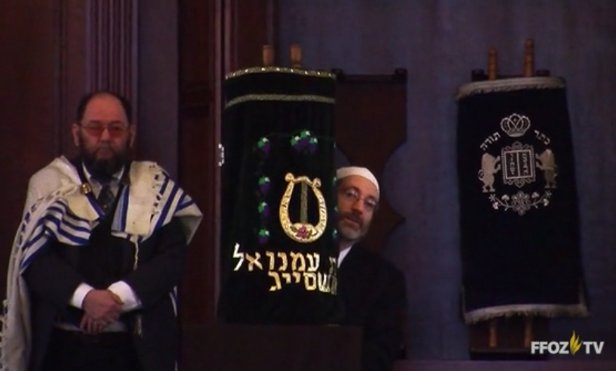
Reading of the Torah at Beth ImmanuelWe aren’t removed from the principles of “the Law,” and Gentile believers were never to be considered “lawless,” but even nearly two-thousand years ago, integration of Gentiles within a Judaism was problematic at best, and the sociological and historic reality is that the relationship ended in a messy divorce.

So are we (Gentile) Christians or Messianic Gentiles or what the heck are we?

As individuals or Gentile groups of believers, I think we end up having to define ourselves by our theology, doctrine, and preferred associations, but in relation to Messianic Judaism it becomes a bigger issue. I know I’ve opened up this can of worms before and closing it again is never easy. But if you go to the Rosh Pina Project blog, read the blog post in question and particularly some of the more emotionally charged comments, you’ll see there’s another side to the coin besides the Gentile side.

I don’t think it’s selfish, and as I mentioned quite recently, I find it quite necessary for both Jews and Gentiles to recognize the distinctions between our roles and identities in Messiah:

When writing on Deuteronomy 22:7 and 22:10, R. Pliskin crafted commentaries called Even when engaged in a mitzvah be sensitive to the feelings of others and Be careful not to cause others to envy. The underlying principles being expressed here are applicable both to Jewish people observing the mitzvot and Gentiles who think they should do so in the manner the Jews are commanded.

One of the things I must (sorry to say this) criticize J.K. McKee for was a statement he made in his book One Law for All: From the Mosaic Texts to the Work of the Holy Spirit about the issue of Jewish distinctiveness in the Messianic community of believers. I don’t recall the exact quote, but he made what I consider to be some rather snarky remarks about these Jewish people being exclusivist and even petty in desiring to have their covenant role as Jews recognized and respected.

And yet we see there’s a principle in Torah observance that recognizes distinctiveness of roles and even that a person whose role does not include the performance of particular mitzvot can actually hurt or inflict pain upon others. While we Gentiles may believe Jews are deliberately provoking us to envy because of their status before God, we, for our part, when we claim mitzvot that are not consistent with our role, are being injurious to the very people and nation we claim to love.

Sorry to “butt heads” with Mr. McKee again, but the quote was required to illustrate my point.

I still don’t have an answer to this conundrum because one doesn’t exist yet. Paul never solved this problem. I think he saw it coming and was helpless to stop it, even though his letter to the Romans was an impassioned plea urging Gentile respect and even submissiveness to the Jewish synagogue authorities for the sake of not being a stumbling block for those Jews still struggling with faith.

Twenty centuries ago, Jewish believers were at least a little hesitant to absorb large numbers of non-Jews, particularly those recently coming out of paganism, without having them undergo the proselyte rite, converting to Judaism, and integrating into Jewish community as Jews. The last two-thousand years or so have given world Jewry many good reasons to be leery of Christianity, both in its emphasis in attempting to remove Jews from Judaism and assimilate them into a wholly Gentile lived identity, and in the perception from other Jews that any Jew who associates with Gentile believers has turned against their people, their heritage, and the Torah and have become aliens and Christians.

daveningMessianic Judaism as a movement is a diamond in the rough, a work in progress, certainly a work of art, but the paint is only partially applied to the canvas and the artist is still considering His brushes and His color palette in anticipation of continuing to create His Masterpiece, which I believe will only be finished with the coming (return) of Messiah Ben David.

But if that makes you Messianic Gentiles uncomfortable, remember that Messianic Jews are in no less an uncertain state as the aforementioned guest blog post by Simon Ben David attests. Standing aside and not debating the wisdom of Jews establishing Jewish communities for the Jews in Messiah may be the best thing we can do as non-Jewish believers to serve the work of the Kingdom. Rather than require that Jews abandon their covenant responsibilities to God by abandoning the Torah or inappropriately “shoehorning” our Gentile selves into those Jewish obligations, the path of charity, kindness, compassion and, if you must think of it as such, self-sacrifice for the sake of your Jewish brothers and sisters in the ekklesia, may in the end be the best way we can serve the redemptive plan of God for Israel and ultimately, for the world.

Oh, I’m including one more thing I think is relevant to the topic:

Kippah for a Non-Jew

I have a few Jewish friends who wear kippahs and sometimes when I’m hanging out with them I feel out of place. Even though I am not Jewish, would there be any problem with me wearing a kippah, too?

The Aish Rabbi Replies:

Well, on one hand, the Pope wears a kippah.

But on the other hand, a non-Jew should not wear a kippah, since that might deceive others into thinking that he is Jewish.

In practice, non-Jews will sometimes wear a kippah while attending a Jewish religious function (many world leaders have been photographed at the Western Wall wearing a kippah), but in general a non-Jew should not wear one, due to the confusion it may cause.

However, since the idea of a kippah is to have the head covered as a reminder of God, you could certainly use some other head covering, like a cap, to serve that purpose.

Sermon Review of the Holy Epistle to the Hebrews: Protos and Deuteros

Bible teachers often use Hebrews 9 as proof that the disciples of Yeshua abandoned the Old Testament rituals of Temple worship and sacrifices as vestiges of an old covenant that had been replaced by a new covenant. A closer look reveals an entirely different message. Hebrews 9 uses the layout of the Temple to present a mystical illustration of the passage from this world to the world to come.

-D. Thomas Lancaster
Sermon Thirty-Four: Protos and Deuteros
Originally presented on December 14, 2013
from the Holy Epistle to the Hebrews sermon series

Lancaster finished his survey of the New Covenant as it applies to Hebrews 8 in the previous week’s sermon which I reviewed here. This also should have finished Hebrews 8 and have taken us into chapter 9 but there’s something Lancaster wanted his listeners to get first. Protos and Deuteros.

For if that first covenant had been faultless, there would have been no occasion sought for a second. (emph. mine)

–Hebrews 8:7 (NASB)

The first or in Greek “Protos” covenant was the Sinai or Mosaic covenant and the second or “Deuteros” covenant is the New Covenant (Jeremiah 31, Ezekiel 36). There needed to be a Deuteros covenant because God found fault with “them” not “it”. That is, He found fault with people not the Protos covenant and not the conditions of the Protos covenant, the Torah, and not with the enactment of some of the covenant commandments which involve the Temple and the Priesthood (all this is covered in previous reviews and you can listen to the recording of this sermon to pick up more details).

After verse 7, Lancaster quickly reviewed verses 8 through 12 which quote Jeremiah 31 and the New Covenant language and then he focused on verse 13:

When He said, “A new covenant,” He has made the first obsolete. But whatever is becoming obsolete and growing old is ready to disappear.

Verb tenses are really important here which is why some English translations of the Bible, including the English Standard Version (ESV) are bad, because they make everything sound like it’s in the past tense, which is not what the actual Greek says. Remember, interpretation begins at translation. Some translators read their theology back into the text when they do the translation, changing the literal meaning to fit their assumptions and all of the classic, though erroneous, perspectives they’ve been taught as part of Christian tradition.

The reason Protos and Deuteros are important is because Paul makes a lot of symbolic use of these two terms as we enter chapter 9.

What is becoming obsolete and getting ready (but hasn’t yet) to disappear?

holy placeNot the Torah, because it represents the conditions of both the Sinai and the New Covenants. Not the Temple because the Temple was still standing when this epistle was written and there will be a Temple in the Messianic Age. Not the Priesthood because God declared that the Aaronic Priesthood is eternal.

So what does Protos represent that is in the process of becoming obsolete and getting ready to disappear.

The Olam Hazah or the Present Age. The age that we have with us now. The age of everything before the Messianic Age and the Age to Come. That’s what is just about to, but hasn’t yet because we’re still in it, get ready to pass away.

Now this next part has to be followed carefully. Once you get it, it’s rather simple to comprehend, but it’s easy to get lost if you don’t get it. Lancaster admitted that he makes it all sound more complicated than it really is.

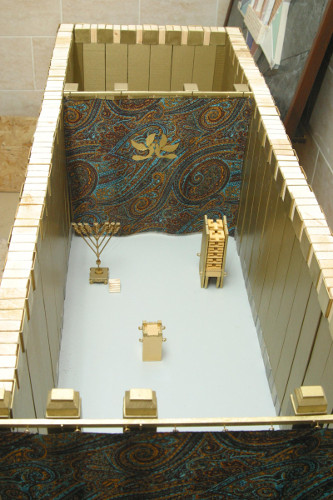
Now even the first covenant had regulations of divine worship and the earthly sanctuary. For there was a tabernacle prepared, the outer one, in which were the lampstand and the table and the sacred bread; this is called the holy place. Behind the second veil there was a tabernacle which is called the Holy of Holies, having a golden altar of incense and the ark of the covenant covered on all sides with gold, in which was a golden jar holding the manna, and Aaron’s rod which budded, and the tables of the covenant; and above it were the cherubim of glory overshadowing the mercy seat; but of these things we cannot now speak in detail.

–Hebrews 9:1-5

Both Lancaster and the writer of the Hebrews epistle are hip deep in symbolism at this point.

The Holy Place described in these verses is the Protos or the Present Age. The Holy of Holies is the Deuteros or the Age to Come. Lancaster goes into a lengthy and detailed explanation of what each of the objects in this analogy of the letter writer’s description means but basically, the Present Age is where all of the daily duties of the Priests occur. It’s where we live today. Here’s what I mean.

holy-holies2

Remember, Lancaster says that he believes the Temple was still standing when this letter was written, so he’s being quite literal. But also, this is representative of the fact that he was describing the Present Age, the age in which he and his readers were living and the age in which we continue to live. We have daily access to the holy things and the service to God as described in the Sinai Covenant (and remember, this is a Jewish person writing to Jewish people so for them, it’s all about the Sinai Covenant). It doesn’t matter that the Temple is now destroyed because Solomon’s Temple was destroyed and there was a long period between that and the building of Herod’s Temple, and yet the Sinai Covenant was (and is) still in effect.

The Holy of Holies by contrast, represents the Age to Come which begins or which is beginning in the Messianic Age, the place where not just any Priest but only the High Priest could enter, and not on a daily basis but only on one day of the year, Yom Kippur, the Day of Atonement, and the High Priest could only enter carrying blood.

He’s saying that the Holy Place, representing our reality today, still has Godliness but there’s a big difference between what we have now and what is going to happen.

Now when these things have been so prepared, the priests are continually entering the outer tabernacle performing the divine worship, but into the second, only the high priest enters once a year, not without taking blood, which he offers for himself and for the sins of the people committed in ignorance. The Holy Spirit is signifying this, that the way into the holy place has not yet been disclosed while the outer tabernacle is still standing, which is a symbol for the present time. Accordingly both gifts and sacrifices are offered which cannot make the worshiper perfect in conscience, since they relate only to food and drink and various washings, regulations for the body imposed until a time of reformation.

–Hebrews 8:6-10

Verse 8 is the key and where we have to pay close attention to the verb tenses:

The Holy Spirit is signifying this, that the way into the holy place has not yet been disclosed while the outer tabernacle is still standing, which is a symbol for the present time.

The way into the New Covenant age has not been shown to us nor will it be while the current age exists, the Present Age, the age we are living in right now. So the Old (Sinai) Covenant still is in effect and we are still living in the Present Age under the rules and conditions of the Old Covenant. Nothing has been replaced, including the Sinai Covenant, the Torah, the Temple (since it will be rebuilt) and the Priesthood (since it’s an eternal Priesthood and will make sacrifices in the Temple in the Messianic Age).

But why isn’t the New Covenant Age open to us yet?

And Jesus cried out again with a loud voice, and yielded up His spirit. And behold, the veil of the temple was torn in two from top to bottom; and the earth shook and the rocks were split.

–Matthew 27:50-51

Most Christians take these verses to mean that once Yeshua (Jesus) died, the Priesthood was abolished and everyone could enter the (spiritual) Holy of Holies and stand before the throne of God. And yet the writer of the epistle to the Hebrews is saying that this isn’t true and it won’t be true until the New Covenant Age which Messiah will bring to completion, or near completion, when he returns.

What Did I Learn?

I was following Lancaster along pretty well but this next part was new to me. The Present Age is represented by the Holy Place, where our daily service to God takes place and where the Sinai Covenant remains in effect. The Present Age is slowly beginning to pass away and about to become obsolete, but since it’s still here and we’re still here, it still has some life left in it.

The Messianic Age can be compared to the veil between the Holy Place and the Holy of Holies. Both resurrected/perfected people, the Saints, so to speak, in Christ who will rise at the first resurrection and the rest of the people alive at his Second Coming who are yet to be resurrected. It’s the intersection between covenants which is why there will have to be a Temple.

world-to-come

But the Messianic Age is relatively brief, only about a thousand years or so, and once passed through that veil, we’ll be fully in the Age to Come:

I saw no temple in it, for the Lord God the Almighty and the Lamb are its temple. And the city has no need of the sun or of the moon to shine on it, for the glory of God has illumined it, and its lamp is the Lamb.

–Revelation 21:22-23

It is only at this point in future history, after the Messianic Age has passed away, that the Sinai Covenant will also pass away and there will no longer be a need for the Temple. It’s difficult to imagine what life will be like here, but this is part of what’s being described.

But it’s not as relevant as what happens in the Messianic Age and indeed what’s happening now.

But when Christ appeared as a high priest of the good things to come, He entered through the greater and more perfect tabernacle, not made with hands, that is to say, not of this creation; and not through the blood of goats and calves, but through His own blood, He entered the holy place once for all, [m]having obtained eternal redemption.

–Hebrews 8:11-12

Even though we can’t actually enter the Deuteros, the second, the New Covenant Age yet, we still have a stake in it that allows us to live as if we have already entered. How can we do this? Because we have a High Priest who has entered before us, the first fruits of the dead (1 Corinthians 15:20). How can he enter where we cannot?

The High PriestBecause he already died and was resurrected into a perfected body. We haven’t done that yet. Also, since even the High Priest cannot enter without blood, the blood he shed in the Present Age he “carried” (spiritually, not literally with his hands) from the Protos to the Deuteros as a one time event (not an annual event as is the present Yom Kippur) as a forerunner for the rest of us, and to provide an anchor for us, bridging the gap from the Present Age to the Age to Come.

As I was listening to Lancaster, I realized that when the Temple veil was torn top to bottom the moment Jesus died, it wasn’t a sign that the Old Covenant was dead and buried right then and there so we all could immediately enter the Holy of Holies and stand naked before the Throne of God. It was a sign that the High Priest of Heaven, Messiah Yeshua could now enter…but only him, and only in the Heavenly Holy of Holies, and only with the blood, his blood.

The sermon ended abruptly at this point so I can only imagine Lancaster will continue to follow through next time. Only eleven sermons left to complete the series. It’s getting pretty exciting. I can’t wait to see what comes next.

Reflections on Romans 9

But in all these things we overwhelmingly conquer through Him who loved us. For I am convinced that neither death, nor life, nor angels, nor principalities, nor things present, nor things to come, nor powers, nor height, nor depth, nor any other created thing, will be able to separate us from the love of God, which is in Christ Jesus our Lord.

–Romans 8:37-39 (NASB)

That’s how Paul wrapped up the eighth chapter of his Holy Epistle to the Romans (as we count the chapters and verses) and as I recorded in my previous reflection on this letter. Paul is offering a note of comfort and conciliation to his Jesus-believing Gentile readers in Rome that in spite of all the adversity they face, they will never be separated from God’s love through Messiah.

But while Paul wasn’t writing letters in chapters, what we call chapter 9 does seem to start off with a major shift in topic.

I am telling the truth in Christ, I am not lying, my conscience testifies with me in the Holy Spirit, that I have great sorrow and unceasing grief in my heart. For I could wish that I myself were accursed, separated from Christ for the sake of my brethren, my kinsmen according to the flesh, who are Israelites, to whom belongs the adoption as sons, and the glory and the covenants and the giving of the Law and the temple service and the promises, whose are the fathers, and from whom is the Christ according to the flesh, who is over all, God blessed forever. Amen.

–Romans 9:1-5

I’ve always wondered why Paul began this part of his letter by saying he wasn’t lying. Who would have thought, over halfway through reading the epistle, that Paul started being duplicitous or disingenuous?

Of course, there’s this:

And when they heard it they began glorifying God; and they said to him, “You see, brother, how many (tens of) thousands there are among the Jews of those who have believed, and they are all zealous for the Law; and they have been told about you, that you are teaching all the Jews who are among the Gentiles to forsake Moses, telling them not to circumcise their children nor to walk according to the customs.

–Acts 21:20-21

Paul had enemies in some Jewish communities in the diaspora and they had apparently been spreading rumors that he had been teaching the Jews in the galut that they did not have to follow the Torah of Moses or the traditions of their Fathers. Perhaps some Jews and Gentiles hearing these rumors (and remember, at the point Paul is writing this letter, he’d never been to Rome before so none of the people reading this would likely have met him before) thought they were true. If indeed Paul was following the instructions for teaching the Gentiles formally adopted by the Apostolic Council’s halachic ruling as chronicled in Acts 15, he was teaching the Gentiles that they were not obligated to the yoke of Torah as were the Jewish disciples. I can see where this could have been confusing.

The Jewish PaulBut either through malice or miscommunication, the rumors existed and the Gentile (and Jewish) disciples in Rome may have believed they had good cause to doubt Paul’s affection for his fellow countrymen. So given that Paul’s about to launch into an impassioned plea for unbelieving Jews, a strong preface of “I’m not lying” may have seemed necessary. Of course, all this is guess-work on my part, but as I’ve said before, these “reflections” on Romans are just my impressions at reading the letter “cover-to-cover,” so to speak.

Paul says he’d rather be accursed and separated from Christ. The ESV translation uses “cut off” in place of “separated” which immediately brings to mind the following:

For whoever does any of these abominations, those persons who do so shall be cut off from among their people.

–Leviticus 18:29

If (and it’s probably a big “if”) the Apostle to the Gentiles meant “cut off” in the sense of the Hebrew word “Karet” as described by Derek Leman, then Paul was indeed saying he was willing to undergo great suffering, complete isolation from Israel, and perhaps even death for the sake of the salvation of some of his brethren in the flesh, that is, for other Jews.

On the heels of that declaration, Paul then says that his unbelieving Jewish brothers (and indeed all Jews) are those to whom belong “adoption as sons,” “the glory and the covenants,” “the giving of the Law (Torah),” “the Temple service,” and “the promises, whose are the fathers.”

In other words, the promises God made to Israel, that is, all Jewish people, as recorded in the Torah, the Prophets, and the Writings (what Jews commonly call the Tanakh and what Christians refer to as the Old Testament), all of them, still belonged to all of Israel, to all Jews from Paul’s point of view as he was writing his letter.

Remember, Paul was writing after the crucifixion, death, resurrection, and ascension of Messiah, the Christ, who sits at the right hand of the Father and who is our High Priest in the Heavenly Tabernacle. Apparently, none of that deleted, watered down, erased, or “fulfilled” any of those aforementioned promises in order to make them go away or to transfer them from Jews to Gentiles.

So if the Jews had all those advantages, why was it so important to Paul that they accept the validity of the revelation of Yeshua as Messiah?

…whose are the fathers, and from whom is he Christ according to the flesh, who is over all, God blessed forever. Amen.

–Romans 9:5

What an odd way to end that sentence. What does Christ (Messiah) have to do with everything Paul said in the previous verses?

But now He [Messiah] has obtained a more excellent ministry, by as much as He is also the mediator of a better covenant, which has been enacted on better promises.

–Hebrews 9:6

D.T. LancasterYou’ll have to read my sermon reviews of D. Thomas Lancaster’s lengthy sermon series on the Holy Epistle to the Hebrews, particularly Better Promises and Glory to Glory to get the full meaning of what I’m saying here, but a big, big part of those “promises” of “the fathers” (also translated as “the patriarchs”) are the promises of the New Covenant, which Paul has been referencing heavily so far in his letter, a Covenant for which Yeshua is the mediator.

In order to access those promises fully, the next step in Jewish religious life and faith was to acknowledge the revelation of the Messiah and it was so important to Paul that Jewish people do so, that they claim their own heritage, he was willing to voluntarily surrender his part in those promises, including the final and total forgiveness of sins and the resurrection into the Messianic Kingdom.

But it is not as though the word of God has failed. For they are not all Israel who are descended from Israel; nor are they all children because they are Abraham’s descendants, but: “through Isaac your descendants will be named.” That is, it is not the children of the flesh who are children of God, but the children of the promise are regarded as descendants. For this is the word of promise: “At this time I will come, and Sarah shall have a son.” And not only this, but there was Rebekah also, when she had conceived twins by one man, our father Isaac;  for though the twins were not yet born and had not done anything good or bad, so that God’s purpose according to His choice would stand, not because of works but because of Him who calls, it was said to her, “The older will serve the younger.” Just as it is written, “Jacob I loved, but Esau I hated.”

–Romans 9:6-13

This set of verses has been misused time and again by Christians including those belonging to some portion of the Hebrew Roots movement, to say that Christians are “spiritual Israel” or that Jesus-believing Gentiles actually are Israel in fact.

But hold up there, Tiger. Not so fast.

Verse 6 may say “for they are not all Israel who are descended from Israel” (and we typically think of “Israel” = “Jacob”), but look at the verses that immediately follow. I suggest that what Paul is actually saying is that not all offspring of Abraham are Israel, but only the descendants of Isaac, the child of the promise (remember, Paul was talking about promises God made to the patriarchs). God loved Jacob but hated Esau. In other words, God loved the child of promise Isaac and Isaac’s child Jacob, but He hated Isaac’s child Esau. Only one of the twins could inherit the promises and that child’s offspring became the Twelve Tribes of Israel who are now the Jewish people.

It has nothing to do with Gentile Christians and only has to do with Gentiles in the sense of the non-inheriting offspring of Abraham and Isaac since their descendants are not Israel, not Jewish.

I think this is Paul’s way of saying that all of the direct descendants of Abraham and of Isaac and of Jacob are loved because of the promises God made to each of them (see Genesis 12:1-3; 17:21; 22:15-19; 26:2-5; 28:10-17). Those promises and all the other promises God made with Israel were never rescinded, thus they all remained (and still remain to this day) in force, but only for the Israelites.

What shall we say then? There is no injustice with God, is there? May it never be! For He says to Moses, “I will have mercy on whom I have mercy, and I will have compassion on whom I have compassion.” So then it does not depend on the man who wills or the man who runs, but on God who has mercy. For the Scripture says to Pharaoh, “For this very purpose I raised you up, to demonstrate My power in you, and that My name might be proclaimed throughout the whole earth.” So then He has mercy on whom He desires, and He hardens whom He desires.

–Romans 9:14-18

calvinism vs arminianismI once heard these verses used to support Calvinism or the idea that God selected only specific individuals for salvation from before the creation of the Earth and not others. Since God is sovereign over the universe, He has the right to do this, but was Paul inventing Calvinism in these scriptures?

Look at the context and especially what he wrote above. He’s been talking about how “God loved Jacob” (Israel) and “hated Esau” (the non-children of promise from Abraham and Isaac, and perhaps all pagan peoples descended from them). Is this unfair of God? According to Paul, no. God had/has the right to choose Israel from among all the nations of the Earth for special blessings, promises, and duties (and make no mistake, being the sole objects of the covenants and obligated to their conditions by performing the Torah mitzvot is indeed a challenging set of duties).

Now recall that Paul isn’t writing to the Jews in Rome but to the Gentile believers, very likely because he had heard of some strife between the Gentiles and Jews sharing community space in the Roman synagogues and that the Gentiles might have been getting a bit arrogant in their special status of equal co-participants in Jewish worship life without the obligation to undergo the proselyte rite. I’ve said in previous “reflections” that the non-believing Jews may have been pushing back by emphasizing their special chosen status as Israelites and no doubt that had the intended effect of “stinging” Gentile pride.

I think what Paul is saying here is that God had every right to choose the Israelites for whatever reason or not reason at all, and that God is not being unfair. God can have mercy on who He chooses and there’s nothing we can do to change God’s mind. Paul uses the example of Pharaoh whose heart God hardened during Moses’ numerous appeals to secure freedom for the Israelite slaves, and God did this for His own glory, even though you might think it was unfair, since this hardening ultimately lead to the deaths of many, many Egyptians.

But God is sovereign and Paul is saying because of such, God can choose Israel for special blessings and quite frankly, we Gentiles have nothing to say about it.

I didn’t fail to notice that such a position has applications in the Messianic Jewish and Hebrew Roots movements of today. Many non-Jews involved in each of these two disciplines can sometimes get that “I’m on the outside looking in” feeling when it comes to Talmud study, davening in a minyan, or even reciting the blessings of donning a tallit, that is, those mitzvot that are distinctively Jewish.

Some non-Jews attached to these movements have said it’s unfair for Messianic Jews to withhold the observance of these mitzvot to themselves and have even gone so far as to say that Messianic Jews are exclusivist and racist.

And yet we have Paul strongly stating that God has every right to give the Torah to the Jewish people and not assign the same chosen status to those of us who are not descendants of Abraham, Isaac, and Jacob. My impression of Paul is that he would have little patience with the demands of such folks.

You will say to me then, “Why does He still find fault? For who resists His will?” On the contrary, who are you, O man, who answers back to God? The thing molded will not say to the molder, “Why did you make me like this,” will it? Or does not the potter have a right over the clay, to make from the same lump one vessel for honorable use and another for common use? What if God, although willing to demonstrate His wrath and to make His power known, endured with much patience vessels of wrath prepared for destruction? And He did so to make known the riches of His glory upon vessels of mercy, which He prepared beforehand for glory, even us, whom He also called, not from among Jews only, but also from among Gentiles.

–Romans 9:19-24

claySo being clay, all of us, in the hands of our molder, that is God, who are any of us to complain if He made some clay Jewish and some clay Gentile? Those He made for “honorable use” (I know this is going to sound unkind) can be compared to the Jewish people, while those made for “common use” are the Gentiles. After all, relative to the entire world population, the Jewish people have always been only a tiny number, apparently reserved for a special use while the rest of us, because we are so many, are more “common.”

I think this was Paul’s message to the Roman Gentile Jesus-believers. He sounds like he was definitely playing “hard ball” in this letter, but since he wasn’t with them in person to emphasize his points, he had to make sure there would be no way his readers could misunderstand him. Going back to that part of the chapter where Paul said he wasn’t lying, maybe he had a good reason to say things in as definite a manner as possible.

Thus the “vessels of mercy which He prepared beforehand for glory” to whom God would “make His power known” are the Jewish people, but some of that glory also extends to us, “not from among the Jews only, but also from among the Gentiles.”

This is the hook Paul uses to keep the Gentiles engaged so they wouldn’t be completely put off by everything he just said. Further:

As He says also in Hosea,

“I will call those who were not My people, ‘My people,’
And her who was not beloved, ‘beloved.’”
“And it shall be that in the place where it was said to them, ‘you are not My people,’
There they shall be called sons of the living God.”
Isaiah cries out concerning Israel, “Though the number of the sons of Israel be like the sand of the sea, it is the remnant that will be saved; for the Lord will execute His word on the earth, thoroughly and quickly.” And just as Isaiah foretold,

“Unless the Lord of Sabaoth had left to us a posterity,
We would have become like Sodom, and would have resembled Gomorrah.”

–Romans 9:25-29

Now Paul flips the Prophets, so to speak, emphasizing where the Gentiles are included in the promises, showing them where they/we are involved. Paul has made his point that the Gentiles can’t assume the role and place of the Jews and now he’s showing the Gentiles where their role and place lies using the relevant scriptures.

Finally (for today’s meditation):

What shall we say then? That Gentiles, who did not pursue righteousness, attained righteousness, even the righteousness which is by faith; but Israel, pursuing a law of righteousness, did not arrive at that law. Why? Because they did not pursue it by faith, but as though it were by works. They stumbled over the stumbling stone, just as it is written,

“Behold, I lay in Zion a stone of stumbling and a rock of offense,
And he who believes in Him will not be disappointed.”

There are not two paths to justification and salvation, faith for the Gentiles and the Torah for the Jews. That the Gentiles are not obligated to “pursue righteousness” through the Law in the manner of the Jews but are saved by faith alone, does not make them better or worse than the Jews, but the Jews, having the Torah (pursuing righteousness through the mitzvot), must still walk by faith. If a Jew (as perhaps some of the Roman Jews had been thinking) believed that mitzvot observance alone justified them before God, then the Torah became a “stone of stumbling” and “a rock of offense” for them. Torah doesn’t replace faith, it is by faith that the Jewish people walk the path of Torah.

TorahIf Paul expected both Jewish and Gentile disciples of the Master to pursue righteousness by observing the same Torah statues and commandments, then he would have said the “stone of stumbling” and the “rock of offense” was for both Jews and Gentiles who lacked faith, but he didn’t. He deliberately juxtaposed the faith of the Gentiles and the Law of the Jews, for it was the Gentiles who were bragging that by faith they were saved and that they had no obligation to the mitzvot, rubbing Jewish noses in Gentile “freedom,” so to speak.

In spite of the differences in role and responsibility between the Jewish and Gentiles disciples, the common denominator, the place where God was totally impartial as far as Israel and the nations were concerned, where He broke down the dividing wall between the two groups (Ephesians 2:14), was that only the faith of Abraham justifies anyone before God. We are all justified by faith in God through the mediator of His promises, Messiah Yeshua (Christ Jesus).

What an illuminating “reflection” Romans 9 turned out to be.

What I Learned in Church Today: Christians and Deuteronomy 5

When I go to Jerusalem, I still get goosebumps.

-Pastor Randy

That was the good news in church today (as I write this). Pastor was talking about how God put His Name in Jerusalem making it the most unique place on Earth. God never removed His promises from Israel and so He is still with them today.

Last week, Pastor started his sermon on Exodus 19:1-25 but he only got to verse 9 before time ran out. He started at verse 10 today and finished the sermon he meant to finish last week.

But since my Sunday school class teaches on each week’s sermon and since the class did get through that portion of Exodus last week, we moved ahead of Pastor and the teacher gave the lesson for Deuteronomy 5:1-5; 22-33.

It was kind of painful.

What do the following say about a “mediator” of the old (first) and new covenants?

  • Galatians 3:16-19
  • Hebrews 8:6-13
  • Hebrews 12:24 and 1 Timothy 2:5-6

-from the Sunday school class notes for Sept. 7th.

If you’re familiar with those verses, you can guess where teacher was going, which is the traditional teaching that the New Covenant replaced the Old Covenant which was “fulfilled” at the crucifixion of Jesus.

Believe it or not, I didn’t breathe a word in this part of the lesson, mainly because it would have taken too long to explain why I disagreed with the entire line of thought associated with this version of replacement theology (New Covenant replacing the Old in the sense that the Torah is replaced by grace for the Jewish people).

The other part is that even though the New Covenant has only just begun to enter our world, teacher acted like it was a done deal. I was sitting with two or three guys and mentioned to one of them (who is currently listening to Lancaster’s audio CD series What About the New Covenant) that the Word (Torah, actually) has yet to be written on our hearts and we won’t all “know God” until the resurrection (and never mind how the New Covenant was only made with Judah and Israel and the complicated explanation attached to how we Gentiles even fit in).

My young friend who is listening to the aforementioned CDs has heard four out of five lectures so far and says he’d like to listen to them all a second time. I’ve been pursuing this line of reasoning for years now and it’s finally just beginning to gel for me. I can only imagine what it’s like for someone really unfamiliar with this way of understanding covenants to be abruptly thrown into it, kind of like learning to swim by being dropped by helicopter into the middle of the Pacific Ocean without so much as water wings.

Kohen GadolAnother thing in class, and it’s come up before, is how teacher acts like we Gentile Christians were once “under the Law” (meaning Torah). He was talking about that part of Hebrews where we find Jesus entering the Heavenly Holy of Holies once and for all and presenting his own blood as the final atonement for sin. Teacher was saying what a relief that we (Christians) don’t have to go into the Temple once a year and kill an animal.

I did speak up on this one and said that we never had to do that. The Sinai Covenant doesn’t apply to us. We are grafted in under the blessings of the New Covenant which doesn’t require that we offer animal sacrifices for the atonement of our sins (and anyway, only the High Priest enters the Holy of Holies on Yom Kippur, not anyone else, least of all Gentiles).

A couple of times, someone mentioned how when Jesus died and the veil separating the Holy Place from the Holy of Holies was torn top to bottom (Matthew 27:51), that means all Christians can boldly approach the Throne of God without fear.

All the people perceived the thunder and the lightning flashes and the sound of the trumpet and the mountain smoking; and when the people saw it, they trembled and stood at a distance. Then they said to Moses, “Speak to us yourself and we will listen; but let not God speak to us, or we will die.” Moses said to the people, “Do not be afraid; for God has come in order to test you, and in order that the fear of Him may remain with you, so that you may not sin.” So the people stood at a distance, while Moses approached the thick cloud where God was.

–Exodus 20:18-21 (NASB)

Apparently the torn veil means we Christians are better or better off than the ancient Israelites because we don’t have to be afraid of God the way they were.

For you have not come to a mountain that can be touched and to a blazing fire, and to darkness and gloom and whirlwind, and to the blast of a trumpet and the sound of words which sound was such that those who heard begged that no further word be spoken to them. For they could not bear the command, “If even a beast touches the mountain, it will be stoned.” And so terrible was the sight, that Moses said, “I am full of fear and trembling.” But you have come to Mount Zion and to the city of the living God, the heavenly Jerusalem, and to myriads of angels, to the general assembly and church of the firstborn who are enrolled in heaven, and to God, the Judge of all, and to the spirits of the righteous made perfect, and to Jesus, the mediator of a new covenant, and to the sprinkled blood, which speaks better than the blood of Abel.

–Hebrews 12:18-24

At one point, I thought I’d successfully communicated that Christians often treat God too casually, as if He were a big, cosmic teddy bear. Several people seemed to agree but when it came right down to it, the teacher said that we can approach God, go up and touch Him, and crawl into His lap like He was our big, old, friendly grandfather. Oy.

And the whole point of the torn veil, which I’ll explain in more detail in Wednesday’s review of Lancaster’s sermon on The Holy Epistle to the Hebrews, is that it allowed Messiah as our High Priest to enter the Heavenly Holy of Holies with the blood he had just shed, not that it lets just any ol’ Christian into the Divine Presence in the most sacred place in the Heavenly Court.

To be fair, I just figured that out while listening to Lancaster’s recorded sermon last week, but it makes a terrific amount of sense now, especially with the realization that the New Covenant has been inaugurated but is yet to arrive in its fullness until the resurrection and the second coming of Messiah. We’re still living in Old Covenant times and until the resurrection and we are perfected, no, we can’t enter into the place where our High Priest is. Only he can go because only he has been resurrected.

On the other hand…

As I urged you upon my departure for Macedonia, remain on at Ephesus so that you may instruct certain men not to teach strange doctrines, nor to pay attention to myths and endless genealogies, which give rise to mere speculation rather than furthering the administration of God which is by faith. But the goal of our instruction is love from a pure heart and a good conscience and a sincere faith. For some men, straying from these things, have turned aside to fruitless discussion, wanting to be teachers of the Law, even though they do not understand either what they are saying or the matters about which they make confident assertions.

–1 Timothy 1:3-7

The Torah at SinaiMaybe I’m pushing too hard and fretting too much over nothing. After all, they’re going to believe what they were taught. It’s a lot to expect that everyone should listen to my interpretation as if I’m always right or something. I’ve learned plenty in church and it’s their church, not mine. All I can and probably should do is put in my two cents worth and let it go at that. Fruitless discussion indeed.

I keep wanting to say that I disagree but I know it would take to long to explain why. And like I said, there really wouldn’t be much point in introducing one controversial interpretation after another.

Next week. Pastor will be going over Deuteronomy 1-5; 22-33 while Sunday school will be one week ahead of Pastor and will teach on Deuteronomy 9. Today, Pastor said that we can’t miss the next two weeks because he has to explain some points he brought up in today’s sermon. One of them was law vs. grace and he said it’s not as simple as there was once law and now there’s grace. I can’t wait to see how he treats this topic.

Observing the Letter and the Spirit of the Torah

In one (or more) of D. Thomas Lancaster’s sermons on the Holy Epistle to the Hebrews, he talks about the difference between the “letter of the Law” and the “spirit of the Law”. In traditional Christian teaching, this usually means that “the letter kills but the Spirit gives life” (2 Corinthians 3:6). In other words, the Law is bad because it promotes a legalistic method of attempting to attain justification before God, while acting in the Spirit of God, that is, the indwelling of the Holy Spirit we receive when we confess Christ as Lord, brings life, for only faith and grace can justify, not works. But this is a complete misunderstanding of the text and what the “letter” and the “spirit” really means.

According to Lancaster, the letter is the actual wording and literal meaning of a commandment while the spirit is the principle behind that commandment. Limiting a commandment to its literal meaning not only restricts our understanding of God’s intent for us, but may lead to either abandoning large portions of the Bible as anachronistic or attempting to drag those anachronisms into the 21st century. Let me give you an example from last week’s Torah Portion:

If you build a new house, you shall make a fence for your roof, so that you will not place blood in your house if a fallen one falls from it.

–Deuteronomy 22:8 (Stone Edition Chumash)

Now let’s take a look at the commentary for this verse referenced in the Chumash:

The Torah requires a Jew to erect a fence or other form of barrier around his roof. This commandment applies also to any dangerous situation, such as a swimming pool or a tall stairway (Rambam, Hil. Rotzeach 11:1-5).

This is an excellent example describing the letter and the spirit of the commandment. The literal meaning is to build a fence or barrier around the edge of your roof so that no one on the roof will fall off by accident. It’s your house and your roof, so you’re responsible. Except few of us have flat roofs on our houses (at least in the typical American suburb) that allow people to go up and stand on them, thus risking a fall. However, as the commentary suggests, the spirit, that is, the general principle behind the specific commandment, has a much wider focus. As property owners (if we own a home and the land it is on), we have a responsibility to assess any potential dangers on our property and take steps to improve safety and thus avoid household members and guests incurring injuries due to our carelessness.

The example of a swimming pool for instance, is a good one, since accidental drownings, particularly of children, are not unknown. Many years ago when my family and I lived in Southern California, we had a swimming pool. My children were quite young at the time, and we wanted to make sure they would be safe around the pool. We had a pool cover installed that ran along a motorized track. When the cover was closed, it was impossible (especially for a child) to pull back the cover since it was secured in place by the track, and the only way to remove the cover was to insert a key into a spring-loaded locking mechanism and hold the key in the “on” position as the motor retracted the cover. In this sense, it could be said that my wife and I “fulfilled” this particularly mitzvah in relation to our swimming pool.

But why should you care about all this?

As I was studying Torah Portion Ki Tetzei on Shabbat (yesterday as you read this), it occurred to me that almost all of the commandments and statues listed could be thought of in terms of the letter and the spirit of the Law.

For instance, Deuteronomy 21:10-14 describes how an ancient Israeli soldier should behave toward a beautiful woman he has captured while battling and defeating an enemy population. The history of war tells us that part of what conquerors do is to abuse and rape the women of the enemy. The Torah doesn’t forbid the capture of these women but does issue the rather strange command that one must wait a full month before actually marrying the woman and engaging in sexual relations with her as a wife. In that one month time period, the man cannot touch her, and she shall shave her head and let her nails grow and weep for her lost parents. At the end of that time, the soldier can either marry her or set her free, but he must not sell her as a slave. Critics of ancient Israel and the Bible say this is still a horribly barbaric practice, but I think I can see a hidden motive of God’s in these verses. Part of the Chumash commentary states:

According to either interpretation, the purpose of the long delay is so that the captor’s desire will evaporate in the interim and he will set her free.

despairIn other words, God anticipated human lust during a war in which a soldier would impulsively desire to sexually assault or even permanently possess a captive woman. While God does not attempt to directly forbid taking women captive, perhaps because it would have set up far too many of the Israeli soldiers to sin in the passion of the moment, He permits capture but forbids any sexual contact for one month. A month is certainly long enough for such passion to dissipate, particularly when the woman is commanded to set aside certain matters of hygiene and grooming.

In modern military forces of the West, it is illegal for soldiers to rape women in war and it would be unthinkable for a soldier to capture a woman and take her home to be a wife. Arguably, this commandment, like most of those we find in the Torah, would only apply in modern times to the Jewish people, but in the present nation of Israel, we don’t find reports of IDF soldiers capturing women in Gaza and taking them home as potential spouses. So what is the principle behind the literal commandment, or is there one anymore? After all, the practice of capturing women as sex slaves during war has become so abhorrent that it is virtually unthinkable.

Has the spirit of this law, even among non-Jewish nations, triumphed over the letter or has something else happened? Has this law become obsolete because the practice among the armies of civilized nations has become extinct (and I recognize that there are forces among uncivilized and brutal peoples where rape during war is still practiced)? That leads to a rather uncomfortable thought; the thought that there are some portions of the Torah that no longer apply and that may never apply again. Let’s take a more extreme example:

You shall not wear combined fibers, wool and linen together.

–Deuteronomy 22:11 (Stone Edition Chumash)

To the best of my knowledge, only Orthodox Jews observe this commandment today. It would be a difficult commandment to observe for most of us given the nature of the clothing typically sold at retail outlets with their mixed natural and artificial fabrics. The Chumash commentary on this verse goes back to Leviticus 19:19 which says in part:

The prohibitions not to cross-breed or to wear mixtures of wool and linen are the quintessential decrees, i.e. commands of the King for which man knows no reasons (Rashi). Ramban clarifies the above point. God surely has reasons, but since man cannot know them, he cannot feel the same satisfaction in performing these decrees that he has when he performs precepts that he feels he understands.

In other words, this class of commandment is to be observed simply because “God said so,” not because (from a human standpoint) it makes any particular sense or seems at all purposeful. There is a literal meaning to this commandment but no apparent underlying principle.

Which brings me to what it is to observe the Torah commandments, particularly for those people who believe it is possible to observe only the literal, Biblical mitzvot of the Torah without any Rabbinic interpretation and binding halachah being involved. As I mentioned, fulfilling the mitzvah of not wearing clothing made of mixed fabrics is something (again, to the best of my knowledge) performed only among Orthodox Jews. And particularly for those non-Jews who feel led in some manner or fashion, to live “Torah-observant” or “Torah-complient” or “Torah-submissive” lifestyles, is it actually possible to do so?

There are three reasons why I think not. The first has to do with the differences between the letter and spirit of the commandments. Most of you, as I said before, don’t have a flat roof on your house so you cannot observe the literal, Biblical commandment. You can only observe this mitzvot if you take the Rabbinic interpretation of its underlying principle into account.

The second has to do with commandments for which we are not likely to ever have the opportunity to fulfill. This goes beyond whether or not we have a flat roof (for instance, the three-story building where I work does have a flat roof where people have access and it does have a barrier to prevent people from falling off), and goes into a realm where, for example, even if we serve in a military organization and find ourselves in battle, it would never even occur to most of us to capture a woman and particularly not to ship her home thousands of miles away with the idea of making her a wife. This may at one time have been an all too common practice during war (at least the initial rape of enemy women) but for American soldiers in the modern era, it’s no longer even on the radar, so to speak. Calvin The third has to do with commands like not wearing mixed fabrics. This is a literal command that can possibly be observed (for after all, Orthodox Jews observe it), and it is a Biblical commandment, so those non-Jews who say they only obey the written or literal Torah can (and by their own value system should) obey it, and yet I know of no one in my past experience among Hebrew Roots and One Law congregations who has ever attempted to observe this mitzvah. So what does all this mean?

As part of my studies last Shabbat, I read the commentaries for the weekly Torah Portion in Rabbi Zelig Pliskin’s book Growth Through Torah. As I was reading, it occurred to me that Rabbi Pliskin, in his commentaries, was indeed describing the principles behind each of the mitzvot he was addressing. R. Pliskin cited numerous Rabbinic teachings in relation to the beautiful woman captured in war (Deut. 21:13-14), some which commented directly on the situation, but most of which extrapolated the various principles behind the literal, Biblical meaning. The following is just one sample:

Rabbi Chayim Zaitchyk commented that we see from here that to really change a trait it takes a thirty day period of intensive work. This is the principle of the month of Elul which is a time for us to focus on our behavior and traits in order to make major improvements on ourselves. -R. Pliskin, p. 435

That particular principle probably doesn’t seem like it should reasonably be extrapolated from the plain meaning of the text, and so most of us (at least if we’re not Orthodox Jews) tend to disregard it. On the other hand, the Jewish people have been the keepers of the commandments of God, including the observance of Shabbat and the knowledge and practice of ethical monotheism, for untold centuries before the rest of the world even heard of a single God. Who is to say that God did not give the leaders and teachers among the Jews, ancient and modern, the authority to study and to derive underlying principles from the surface meaning of the commandments and to integrate those principles into the practice of daily living for their communities?

For Moses from ancient generations has in every city those who preach him, since he is read in the synagogues every Sabbath.”

–Acts 15:21 (NASB)

This single verse is among the most mysterious and probably the most misunderstood in the entire Bible. For many in the Hebrew Roots movement, it is one of the justifications for believing that the Jewish Apostles intended for the Gentile disciples to not only learn the Torah but to observe the full body of the mitzvot in the manner of the Jews, even though Peter said “Now therefore why do you put God to the test by placing upon the neck of the disciples a yoke which neither our fathers nor we have been able to bear?”

I’ve often said that it is impossible to understand what Jesus taught unless you understand how he understood the Torah, Writings, and Prophets, the Bible that existed in the days of the Apostles. Sending new Gentile disciples of the Master to the synagogue to hear the Torah read and interpreted by the teachers each Shabbat was one way to help them understand the principles and even the nuances behind the literal commandments and teachings. It’s not just the words, but the context, the language, and the world view of the original intended audience. The original intended audience of Jesus were Hebrew/Aramaic speaking Jews living in Israel.

The Gentile disciples came from a number of different nations and cultures, none of which would have given them the educational background and specific mindset of the people to whom Jesus was originally teaching. The Gentiles could only gain that perspective and thus eventually learn what Jesus was really teaching by studying among Jewish teachers, probably for many months to many years, because the teachings of the Bible are heavily embedded in culture and experiential living as well as language, religion, and history.

Now take a bunch of Americans (or whoever you are) two-thousand years removed from all of that. Compared to the Gentile disciples being addressed in Acts 15, we might as well have just arrived from another planet in terms of our ability to grasp what they were asked to study, and it was a challenge even for them. I don’t believe that either then or now, non-Jewish disciples of Jesus were or are expected to emulate the Jewish disciples beyond a certain subset of observances and underlying principles, but it is those underlying principles that may capture the secret to what it is to be a (so-called) “Torah-observant Gentile.”

Going back to building fences on roofs or putting covers over swimming pools, I don’t think anyone, Jewish or Christian, would think it was a bad idea to improve safety conditions on our property and to protect our family and friends from accidental injury. It’s not just a “Jewish thing”. In fact, we have a body of penal and civil laws in the U.S. that speak to just those concerns so it can be said our local and national governments, to one degree or another, mandate or command that we behave as responsible citizens by taking proactive steps to provide a safe environment in our communities.

Ismar Schorsch
Ismar Schorsch

Thus we can say that there is more than meets the eye to the Apostolic decree in regards to the Gentile disciples we find in the Acts 15 letter but it may be more layered and nuanced than the simple assumption that there is only a single expectation for everyone everywhere that is contained in the Torah. Ismar Schorsch, in his 2005 commentary on this past week’s Torah portion, as recorded in Canon Without Closure: Torah Commentaries (p. 610) and referencing Eshet Hayil (“A Woman of Valor”) based on Proverbs 31:10-31, said:

Words carry more than their surface meanings. To fixate on their literal meanings turns a deep channel into a shallow trough.

Is it possible that some of us in believing and even attempting to practice a literal, Biblical Torah, have turned the “deep channel” of God’s intent for our lives into “a shallow trough?” The rather lengthy title for one of Rabbi Pliskin’s commentaries on Deuteronomy 22:5 which prohibits the wearing of garments meant for the opposite sex is, Each person should feel joy in fulfilling his or her unique role in life. He states (p. 438):

Targum Yonoson states that the garments of a man include tzitzis and tefilin. Rabbi Chayim Shmuelevitz commented on this that we see the principle that each person has his own mission in life. The same thing that for one person is “holy of holies,” for another person who does a similar thing, but it is not his life’s task, it is an abomination. Each person should feel joy in carrying out his life’s mission and should not try to do things that he was not meant to do.

While R. Pliskin is a Jew writing to other Jews, I think I can reasonably extrapolate an extended principle that applies to non-Jews who feel compelled to take on board a role which is not assigned to us, a Jewish role. I posted a link to a recent “meditation” called Torah and the Christian: An “In-a-Nutshell” Explanation on Google+ and a Jewish person responded:

As a Christian, saved by grace, who happens to have a Jewish heritage, I try to avoid the discussion of what Jews and Gentiles should and should not to do because it has a tendency to lead to division. However, Yeshua already provided the answer, which we would do well to remember: “For he himself is our shalom — he has made us both one and has broken down the m’chitzah which divided us by destroying in his own body the enmity occasioned by the Torah, with its commands set forth in the form of ordinances. He did this in order to create in union with himself from the two groups a single new humanity and thus make shalom, and in order to reconcile to God both in a single body by being executed on a stake as a criminal and thus in himself killing that enmity. Also, when he came, he announced as Good News shalom to you far off and shalom to those nearby, news that through him we both have access in one Spirit to the Father” (Ephesians 2:14-18 CJB).

It’s one of the expected responses from both a traditional Christian and classic Hebrew Roots perspectives, although both groups identify the practices of “one new man” quite differently. It also cites the usual issue of promoting identity specific roles as “causing division,” and my response would be to suggest that a Kohen having a specific role in the Temple did not “cause division” among the different classes of Israelites (apart from the Korach rebellion of course). We simply have our own roles assigned to us by God based, among other things, on who we are in terms of gender, nationality, and covenant connectiveness.

When writing on Deuteronomy 22:7 and 22:10, R. Pliskin crafted commentaries called Even when engaged in a mitzvah be sensitive to the feelings of others and Be careful not to cause others to envy. The underlying principles being expressed here are applicable both to Jewish people observing the mitzvot and Gentiles who think they should do so in the manner the Jews are commanded.

One of the things I must (sorry to say this) criticize J.K. McKee for was a statement he made in his book One Law for All: From the Mosaic Texts to the Work of the Holy Spirit about the issue of Jewish distinctiveness in the Messianic community of believers. I don’t recall the exact quote, but he made what I consider to be some rather snarky remarks about these Jewish people being exclusivist and even petty in desiring to have their covenant role as Jews recognized and respected.

And yet we see there’s a principle in Torah observance that recognizes distinctiveness of roles and even that a person whose role does not include the performance of particular mitzvot can actually hurt or inflict pain upon others. While we Gentiles may believe Jews are deliberately provoking us to envy because of their status before God, we, for our part, when we claim mitzvot that are not consistent with our role, are being injurious to the very people and nation we claim to love.

TorahSo what’s the answer? I don’t think there’s an easily understood one. I hope I’ve established in this short essay that the Torah is not a simple list of “Dos” and “Don’ts” but rather a highly complex and nuanced collection of lifestyle elements that define a Jew’s obedience to God as the conditions of the Mosaic Covenant. I also hope you can see that understanding how non-Jewish disciples of the Jewish Messiah fit into the covenantal landscape, in our case exclusively through the New Covenant blessings as they apply to us, is not an easy task. It wasn’t an easy task when James and the Council of Apostles and Elders issued their binding halachah upon the first Gentile disciples and it certainly isn’t now two-thousand years later.

Pastor Randy, the head Pastor at the church I attend, is in the process of presenting a sermon series on the Ten Commandments and how he believes they apply to Christians today. To do this, he has to dig into various portions of the Torah to lay his foundation, and my Sunday school teacher, who creates lessons based on Pastor’s sermons, is challenged with trying to comprehend how the underlying principles behind the Torah are “Christian”. And that’s where I think the answers for Gentile disciples lie, not in attempting to look and act “Jewish” by donning the outward apparel (tallit, tefillin, kippah) that would make people think we’re Jewish (which seems very much in line with the prohibition for a man to wear woman’s clothing as well as the reverse), but by studying and then practicing the underlying principles behind as many of the mitzvot as make sense for us to approach.

The answer, for me anyway, is not to believe I can obey God by looking like I’m Jewish, but to behave in a manner that applies the principles of the Torah within the context of who I am as a Christian and a Gentile, to live a life of faith, trust, charity, all in obedience, for there are many of us in our various roles and lifestyles, but only one God.

Book Review of Jude: Faith and the Destructive Influence of Heresy

Nearly all bible commentators emphasize the importance of understanding the historical, cultural and grammatical aspects of any text of scripture. As has been said, “A text without a context is a pretext.” In other words, to assume one can understand what God has revealed through those who present his word — prophets, poets, visionaries, apostles — without knowing the context is a presumption. To really understand God’s word, it’s essential to know something about who wrote it and to whom, what was actually said and what it originally meant, when, where, and why it was written.

-Rabbi Barry Rubin
from the General Editor’s Comments (p. xi)
of Rabbi Joshua Brumbach’s book
Jude: Faith and the Destructive Influence of Heresy

I was thrilled when Rabbi Josh sent me a copy of his new (April 2014) book. Like most believers, I know very little about the Book of Jude and every time I read it, I know even less. That’s one of the reasons I was looking forward to reading (and reviewing) Rabbi Josh’s book: to get some answers.

Another reason was to read a commentary on such a difficult Christian text from a wholly Messianic Jewish point of view. As Rabbi Rubin said in the quoted text above, most Christian scholars, clergy, and the people who sit in the pews believe they have a pretty good handle on understanding what the Bible says if they can just get into the original language a little bit and understand something about the author, the audience, and the situational context.

However, as Rabbi Josh points out at the beginning of the book:

The Book of Jude is unusual. Far more than a simple treatise, it is a letter that the author never intended to write, and yet eventually considered important (v.3). It is the product of “popular Judaism,” reflecting the interests of the common people rather than the religious elite, which the author shares along with his readers. It is also steeped in contemporary Jewish literature and tradition, drawing heavily upon Jewish apocalyptic ideas of Jewish understanding of morality (v. 5-7)”.

-Brumbach
“Part One: Background,” p.1

This is what most Christian Bible students, teachers, and scholars miss when they consider what the author was thinking and what he wanted the readers to comprehend: Jewish tradition, midrash, lifestyle, and apocrypha as it was understood by Jews in the mid to late first century CE in Roman occupied Israel and the diaspora beyond.

jude-joshuaAccording to R. Josh, Judah (the more likely name for the author of “Jude”), was chastising some false teachers who had entered the ranks of the Messianic community, likely a primarily Greek speaking Jewish group in the diaspora, who were promoting erroneous and dangerous ideas about salvation and antinomianism (lawlessness), including the idea that being saved by grace alone (“hyper-grace”) means that it is impossible to lose said-salvation, no matter how much you sin (I recently mentioned this concept in my commentary on Romans 8).

To counter these false teachings, Judah used a number of examples to whom these false teachers may be compared. However, these examples for the most part, are drawn not from events we directly read about in the Bible, but from Jewish tradition and midrash.

For instance:

But Michael the archangel, when he disputed with the devil and argued about the body of Moses, did not dare pronounce against him a railing judgment, but said, “The Lord rebuke you!” But these men revile the things which they do not understand; and the things which they know by instinct, like unreasoning animals, by these things they are destroyed.

–Jude 1:9-10 (NASB)

Christian Biblical literalists will assume this dialog between the Archangel Michael and Satan actually occurred as presented because it’s recorded in Judah’s brief epistle, but Judah was drawing from Jewish tradition, not the written Biblical text in order to create his analogy. Specifically, this transaction is in the apocryphal text of the Assumption of Moses (also known as the “Testament of Moses”). Without understanding anything about the Jewish apocryphal writings, and more importantly, how the author wanted his readers to understand the reference, we won’t have the ability to grasp the meaning of this example in the epistle.

It is this perspective that R. Josh brings to the table, so to speak, with his “Jude” book, a unique interpretive matrix one does not find commonly within the Church.

Although fairly short (just 100 pages, reflecting the brevity of Judah’s letter), this book is packed with very useful interpretations and viewpoints on the imagery employed by the writer and its likely impact on the letter’s Jewish readers (and the objects of his criticism, the false teachers).

It would be easy, since the book is so short, to write an extensive, almost page-by-page review of this text, but I don’t want to give too much away. While I found the revelations contained within to be interesting and compelling, I didn’t find the content earth-shattering or a “game changer” as such (at least for me). Besides what I’ve already mentioned, what I took away from this book was the clearing up of a lot of the mysterious and even “mystical” illustrations used by Judah. Once R. Josh pulled back the curtain and let me peek inside, I “got” what the letter writer was attempting to say.

I should mention that this book is part of the Lederer Books Messianic Commentary series which includes Matthew Presents Yeshua, King Messiah: A Messianic Commentary by Rabbi Barry Kasdan and James the Just Presents Applications of Torah: A Messianic Commentary by Dr. David Friedman (I wasn’t able to locate an additional book in this series online, Rav Sha’ul’s Exhortation to the Ephesians on Jewish-Gentile Relations).

I highly recommend Rabbi Josh’s book Jude: Faith and the Destructive Influence of Heresy for anyone who wants a clear understanding of Judah’s (Jude’s) brief but complex epistle, and especially for those who are interested in seeing the Bible through a Messianic Jewish lens. R. Josh’s book is a fine addition to anyone’s library of Biblical commentary.

Rabbi Joshua Brumbach

A few weeks ago, I heard that Dr. William Varner of Master’s College will be in my area this coming October to present an all day teaching on the Epistle of Jude. It might be interesting for me to attend and listen to what he has to say filtered through R. Josh’s informative text.

Rabbi Joshua Brumbach is the Senior Rabbi at Ahavat Zion Messianic Synagogue in Beverly Hills, CA. He’s an accredited Jewish educator, has studied in various Jewish institutions including an Orthodox yeshiva in Europe, and is ordained by the Union of Messianic Jewish Congregations (UMJC) and the Messianic Jewish Rabbinical Council (MJRC). He holds a MJS in Rabbinic Writings from the Messianic Jewish Theological Institute (MJTI), and a BA in Ancient Near Eastern Studies from UCLA.

To find out more about Rabbi Josh, visit his blogspot Yinon Blog.

"When you awake in the morning, learn something to inspire you and mediate upon it, then plunge forward full of light with which to illuminate the darkness." -Rabbi Tzvi Freeman