Acting Jewishly But Not Jewish, Part 1

Paul’s “Jewish Assemblies” rather than “Paul’s Gentile Churches”? “Paul’s Jewish non-Jews” instead of “Paul’s Christian Gentiles?”? Paul bringing Non-Jews into “Judaism” rather than into “Christianity”? Am I really going to argue that these are more accurate labels for discussing the non-Jews who Paul brought to faith in Jesus Christ and the gatherings of them with Jews sharing that conviction, as well as the communal ways of life into which Paul sought to enculturate them? “Yes” — and “No.”

–Dr. Mark D. Nanos
‘Paul’s Non-Jews Do Not Become “Jews,” But Do They Become “Jewish”?: Reading Romans 2:25-29 Within Judaism, Alongside Josephus,’ p.1
forthcoming in The Journal of the Jesus Movement in its Jewish Setting (2014)
and presented as a paper at the SBL Annual Meeting in 2013, Baltimore, MD.

Since this cites a portion of Romans 2, it would be prudent to review that part of scripture before proceeding:

For indeed circumcision is of value if you practice the Law; but if you are a transgressor of the Law, your circumcision has become uncircumcision. So if the uncircumcised man keeps the requirements of the Law, will not his uncircumcision be regarded as circumcision? And he who is physically uncircumcised, if he keeps the Law, will he not judge you who though having the letter of the Law and circumcision are a transgressor of the Law? For he is not a Jew who is one outwardly, nor is circumcision that which is outward in the flesh. But he is a Jew who is one inwardly; and circumcision is that which is of the heart, by the Spirit, not by the letter; and his praise is not from men, but from God.

–Romans 2:25-29 (NASB)

How did the Apostle Paul see the distinction between Jesus-believing Jews and Gentiles in Jewish worship and community space? I’ve written on this topic numerous times, often utilizing the research and publications of both Mark Nanos and Magnus Zetterholm in such “meditations” as Nanos, Paul, and the Consequences of Jewish Identity in Messiah, Nanos, Ancient Antioch, and the Problem with Peter, and Zetterholm, Nanos, Ancient Antioch, and Some Implications. In this more recent paper by Nanos, one that should be published later this year, we see an interesting development in how Nanos presents Paul relative to Romans. Did Paul see the non-Jewish disciples of the Jewish Messiah as practicing Judaism or behaving “jewishly” without converting to Judaism or taking on identical obligations and roles with the Jews?

Being identified as a Jew and behaving like a Jew are readily recognized to represent two related yet not identical matters (p.2).

This behavior can be referred to by the adverb “jewishly,” and as the expression “jewishness.” In colloquial terms, one who practices a Jewish way of life according to the ancestral customs of the Jews, which is also referred to as practicing “Judaism”… (p.3).
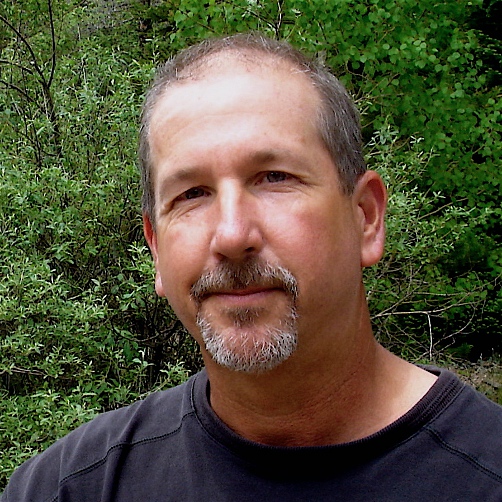
Mark Nanos
Mark Nanos

Nanos distinguishes between being born ethnically Jewish and (as a male) being circumcised on the eighth day and acting “jewishly” (the lower-case “j” is used deliberately by Nanos), as having significant overlap, but not precisely being same. Even a Jewish person born of two Jewish parents and circumcised may choose not to observe any of the mitzvot and nevertheless will be considered Jewish, albeit apostate.

A Gentile who chooses to observe some or even all of the Jewish behaviors associated with the mitzvot can be said to be acting “jewishly” or practicing “Judaism,” but that does not mean the person is actually considered Jewish.

But where is the dividing line? How far could a Gentile Jesus-believer go in Paul’s time, and how far can a Gentile Jesus-believer go in our time in “acting Jewishly” without actually being Jewish? Can we use Paul to establish any rules or guidelines for Gentile Christians today who are attracted to Jewish practices or learning and yet do not desire to convert to Judaism because of their Christian faith?

Because ethnic identity (Jew/s) and ethnic thinking and behavior (Jewish / jewishly / jewishness / Judaism) are clearly related, but not synonymous, interchangeable terms, an interesting phenomenon arises when seeking to describe groups as Jewish. Although “Jewish” can be and is most often used to refer to Jews specifically, and thus gatherings of Jews: they are Jewish, the Jewish people, a Jewish service, and so on, as we will see, “Jewish” can also refer to groups or activities that include non-Jews: that group is Jewish, although it includes non-Jews who appear to think and behave like Jews (p. 6).

Nanos could easily be describing almost any synagogue I’ve ever been in. I’m a Christian married to a Jew. It’s very common to find a mixed Jewish/Gentile group in our local Reform/Conservative synagogue and of course at the Chabad, a number of intermarried couples attend, and yet both venues are undeniably Jewish. The same may be said for some Messianic Jewish synagogues that have at least a core population and leadership of Jews but that also houses a large number of Gentiles who are involved in Jewish practices, such as listening to the Torah readings, davening from a siddur, praying in Hebrew, and so forth.

In all of the contexts listed in the above paragraph, the participating Gentiles can be considered as acting “jewishly” within a Jewish community while remaining fully Gentile. But as I said before, how far can we take the concept of “Gentile jewishness” and consider it a valid method of “practicing Judaism?”

orthodox-talmud-studyAlmost two years ago, I stopped searching for an identity and declared myself a Gentile who studies Messianic Judaism. While my practice isn’t all too “Jewish” (or “jewish”), my thought processes, study materials, and some of my study methods borrow heavily from traditional Judaism.

Of course, I can be a Gentile studying Judaism in the same sense as a 21st century American studying 16th century Greek cuisine. I don’t have to be the thing that I’m studying. Learning the typical dishes of Greece of the 1700s doesn’t require that I be Greek.

But it’s a little different in the world of religion and religious lifestyle. I could study Torah as an abstract collection of knowledge the way some people study the Bible as literature or as history, but the Bible is unique and the Torah is designed to change lives. To be a Gentile student of Messianic Judaism involves not only specific study methods and materials but the required context in which to live it all out.

To continue from Nanos:

What if a group mostly made up of non-Jews with some Jews in leadership behaves jewishly? What if it is made up exclusively of non-Jews yet founded or advised by Jews? What if it consists of only non-Jews and functions independent of any Jews and yet bases its thinking and behavior on Jewish Scriptures, traditions and ways of life? (pp. 6-7)

As I read these passages from the Nanos paper, I can’t help but see a progression from Messianic Judaism (MJ) into Hebrew Roots (HR). The closer the Gentile is to the MJ side of the scale, in a mixed group of Jews and Gentiles to a group of Gentiles with a core leadership of Jews or even arguably, a group of only Gentiles that is advised and guided by Jewish mentors, that group is or could be considered “Jewish” or at least perceived correctly as acting “jewishly”.

However, once to you approach the opposite side of the scale, which would be defined by a group made up exclusively of Gentiles with only Gentiles in leadership, even if they are using Jewish educational materials and religious artifacts (siddurs, kippahs, Tallits, the Chumash, and so on), that group may still appear to be acting “jewishly,” but they are not a Jewish group. They can study Judaism, but they aren’t a Judaism, thus a group made up exclusively of Gentiles with no ties to Jewish oversight cannot, in this paradigm, call itself “Messianic Judaism” and is better defined as “Hebrew Roots” or by some other label.

This directly reflects back to the communities Paul established or in which he was involved such as the “synagogue of the Way” in Syrian Antioch (see Zetterholm’s The Formation of Christianity in Antioch as well as Nanos’ The Mystery of Romans).

The level of “jewishness” practiced by Gentile disciples of the Master may have been in direct proportion to the involvement and influence of Jesus-believing Jews operating in the same religious and social community. The less influence exerted by Jewish mentors on the Gentiles, the less “jewish” were the behaviors and lifestyles of the Gentiles.
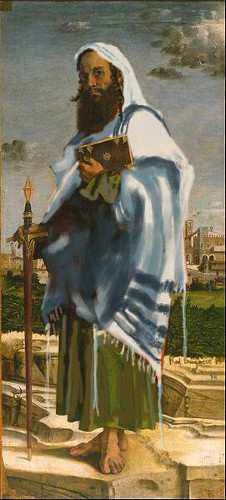
The Jewish PaulWe see something of this in Paul’s Epistle to the Romans. Historically, we know that for a time, Jews were banned from Rome. Prior to that event, there were both Gentiles and Jews who co-mingled as disciples of Jesus. Once the Jews were banned and (presumably) Rome was without a Jewish population, the Gentiles became solely in charge of their own social and religious dynamic, including how “jewishly” they chose to behave. When the Jews were allowed to return and attempted to resume their prior relationship with the Gentiles in Messiah, they discovered the Gentiles were riding on their “high horses,” so to speak, pushing back against Jewish synagogue authority and even criticizing the Jews for lack of strict adherence to Jewish Torah practice.

The chapter (Romans 2) within which this text appears begins with a challenge to anyone judging others, based on the argument that the very act of knowing there is a standard to which the other is held logically involves knowing that one has also failed to achieve it. Realizing that God is the judge who is fully aware of both one’s own intentions and actions as well as that of one’s neighbors, the message Paul drives home is to focus on one’s own responsibilities to do what is required of one, to judge oneself and leave the judging of others to the Judge… (p.19)

And again, Nanos states:

Paul’s argument is constructed to encourage non-Jews to avoid making the same mistake they are quick to recognize in this diatribal caricature. Paul calls them to concentrate on being faithful to what they are responsible to do in service instead of judgment toward the other, including the one who may be judging them… (p. 31)

Nanos is specifically referencing Romans 2:25-29 which I quoted at the top of this blog post, and is saying that those Gentiles who were choosing to judge their Jewish counterparts for any errors or lapses in Torah observance would be better advised to pay attention to their own responsibilities and let the Righteous Judge of Israel judge Israel.

Which, given the current conversation, begs the question of what behaviors of theirs should the Gentiles in Rome have been attending to? Put another way, should the Roman Gentile disciples have been paying attention to the proper execution of their “jewish” behaviors? What does it mean to “concentrate on being faithful to what they are responsible to do?”

Paul argued that these uncircumcised non-Jews were full and equal members of the family of God alongside of the Jewish members, indeed, equally children of Abraham and co-heirs of the promises made to him and his seed, not simply welcome guests (p. 7).

That sounds good but it doesn’t complete the picture.

In the next argument, vv. 12-16, Paul makes it plain that God judges according to the faithful behavior, which is not expected to represent precisely the same standards for Jews and non-Jews; indeed, each is held to the standard of what they know to be proper behavior (p. 19). (emph. mine)

studying_tanakh_messiahSeveral chapters in Romans seem to toggle back and forth between the responsibilities of Jews and Gentiles relative to God and the potential for hypocrisy among the Jews who claim the advantages of being Jewish but who, while teaching the Gentiles what is proper for God (for Gentiles), fail themselves to perform what is proper before God (for Jews). It should have been fairly clear to the Jewish people involved what their roles and responsibilities were, but were the Gentiles just supposed to “wing it,” hoping to know what is right and wrong?

We know that Paul had certain expectations of the Gentiles. Although he opposed Gentiles in Christ from undergoing the proselyte rite, he also discouraged them from continuing any idolatrous practices (Rom 3:29–4:25; 6; 1 Cor 7:17-22; Gal 4:8-10; 1 Thess 1:9-10).

Of the Gentiles taught by Paul, Nanos says:

Paul was exhorting non-Jews turning to God in Christ to seek to discover within themselves the noble values of jewishness, what being a Jew ideally signifies. They should learn to internalize jewishness as the highest value for themselves, albeit remaining non-Jews… (p. 32). (emph. mine)

But here’s a strong caveat:

His letters consist precisely of instruction in the Jewish way of life for non-Jews who turn to Israel’s God as the One God of all the nations; he enculturates them into God’s Guidance (Torah) without bringing them under Torah technically, since they do not become Jews/Israel. They are non-Jews who are learning, by way of Paul’s instructions, to practice Judaism! (p. 33) (emph. mine)

I can see where you might think all this is as clear as mud.

How can Gentiles learn to draw their values from Judaism and even practice Judaism to the degree that outside observers would say the Gentiles are acting “jewishly” and yet still operate under an overlapping but distinct set of standards from the Jews, not be considered under the Torah, and not be considered either Jews or Israel?

From the Didache (6:2), it is said:

For, on the one hand, if you are able to bear
the whole yoke of the Lord, you will be perfect;
but if, on the other hand, you are not able,
that which you are able, do this.

quoted from The Didache: Text, Translation, Analysis, and Commentary, pg 19
by Aaron Milavec

The Didache is considered a set of formalized instructions for Gentile initiates who were seeking to become disciples of Jesus. The document is traced to the second century C.E. and probably represents an earlier form of oral instructions and traditions, possibly originating with the Apostles or their immediate disciples. These standards would have been the basis Jewish mentors used to train the Gentile initiates in preparing them to become baptized and enter into their role as disciples.
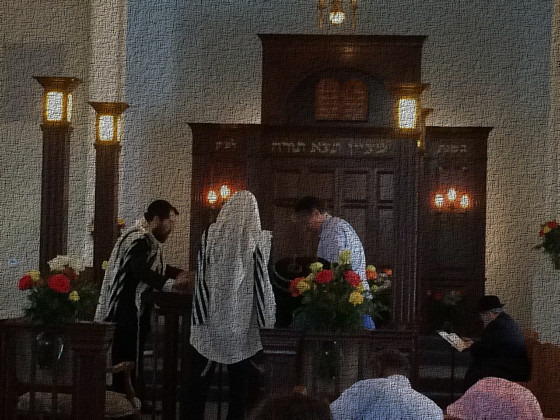
beth immanuelFrom here we see that it is likely the Gentiles were encouraged to bear “the whole yoke of the Lord” Torah, in order to be “perfect,” but if they were not able, it was allowable that they should perform whatever was within their capacity. Again, please keep in mind, that a Gentile acting “jewishly” was both voluntary and was designed to occur within a Jewish communal context.

Given space limitations and the patience of those of you reading this, I’m going to stop here and pick it up in a subsequent blog post. There’s still much to explore about a Gentile acting “jewishly” in ancient times and what happens when he or she is outside a Jewish space. Also, what are the implications for those of us today who are Gentiles who study Messianic Judaism, both inside a Jewish context and outside?

Addendum: I’ve published the second part of this two-part series including a correction to some mistakes I’ve made in part one. I want to thank Dr. Mark Nanos for bringing what I’ve misunderstood about his paper to my attention and allowing me the opportunity to fix my mistakes.

Reflections on Romans 5

Without becoming weak in faith he contemplated his own body, now as good as dead since he was about a hundred years old, and the deadness of Sarah’s womb; yet, with respect to the promise of God, he did not waver in unbelief but grew strong in faith, giving glory to God, and being fully assured that what God had promised, He was able also to perform. Therefore it was also credited to him as righteousness. Now not for his sake only was it written that it was credited to him, but for our sake also, to whom it will be credited, as those who believe in Him who raised Jesus our Lord from the dead, He who was delivered over because of our transgressions, and was raised because of our justification.

Therefore, having been justified by faith, we have peace with God through our Lord Jesus Christ, through whom also we have obtained our introduction by faith into this grace in which we stand; and we exult in hope of the glory of God.

–Romans 4:19-5:2 (NASB)

Remember, Paul wrote this letter without chapters and verses in mind. He was trying to express a unified set of thoughts to his audience who were, most likely, the believing Gentiles associating with believing and unbelieving Jews in the Roman synagogues.

In my previous reflection, I focused a great deal on how, for a Jewish Jesus-believer, there was/is no inconsistency between Torah and faith. For that matter, there’s no inconsistency for a non-Jewish Jesus-believer between faith and obedience, either.

But there was a lot of misunderstanding going on (apparently) in the Roman Jesus-believing community on both sides of the aisle. The Gentiles somehow felt they were superior to the non-believing Jews in that they were granted access to Jewish worship and social space as equal co-participants without having to undergo the proselyte rite and take up the full yoke of Torah in the manner of the Jews. The non-believing Jews pushed back by declaring themselves superior as possessors of the “oracles of God” and how by just being ethnic Jews they were justified before God.

There is also some indication that at least some Jews may have mistakenly thought that because their faith in Yeshua (Jesus) justified them, they were more like the Gentiles and did not have to follow a strict observance of the mitzvot.

Paul was trying to straighten out his audience orient them to the importance of both obedience due to covenant obligation and being justified only by faith.

Now we see Paul continuing to make this point, emphasizing how Gentiles could also be included in the covenant blessings by faith but not have to take up all of the Jewish covenant obligations. The one commonality between the Jewish and Gentile believers was/is that they were/are all justified by faith and granted “peace with God through our Lord Jesus Christ.” Justification by faith is what made Gentile participation in the covenant blessings possible without conversion to Judaism and remember, they were justified by faith alone, so even if they voluntarily chose to take on additional mitzvot in the manner of the Jews, it would not increase their justification or otherwise grant them greater merit before God.

And not only this, but we also exult in our tribulations, knowing that tribulation brings about perseverance; and perseverance, proven character; and proven character, hope; and hope does not disappoint, because the love of God has been poured out within our hearts through the Holy Spirit who was given to us.

–Romans 5:3-5 (NASB)

Receiving the SpiritNotice that justification by faith includes the hope we have in the New Covenant as evidenced by one of the “down payments” of the New Covenant promises, the Holy Spirit “who was given to us.” That takes us back to Acts 2 when the Jewish Apostles received the Spirit in the upper room (in an act reminiscent of the giving of Torah at Sinai), and Acts 10 with the occasion of the Spirit being given to faithful Gentiles, the Roman Centurion Cornelius and his entire household.

For while we were still helpless, at the right time Christ died for the ungodly. For one will hardly die for a righteous man; though perhaps for the good man someone would dare even to die. But God demonstrates His own love toward us, in that while we were yet sinners, Christ died for us. Much more then, having now been justified by His blood, we shall be saved from the wrath of God through Him.

–Romans 5:6-9 (NASB)

But we are justified by faith, not just in God, but in who Jesus is and what he represented as the final sacrifice we’d ever need for the forgiveness of our sins. God loves us all even in our sins, and desires that we repent, take up our faith and cross, and follow our King.

But go and learn what this means: ‘I desire compassion, and not sacrifice,’ for I did not come to call the righteous, but sinners.”

–Matthew 9:13 (NASB)

Jesus quotes Hosea 6:6 to point out that sacrifice (observance) alone does not justify, and also that he came for the sinners, the disobedient and faithless of Israel, to bring them back to God, to redeem Israel. It is believed, contrary to Christian thought, that the general Jewish population in Israel during the late second Temple period maintained a high level of Torah study and observance, higher than previous points in the nation’s history, but it was the sin of baseless hatred that resulted in the Temple’s destruction and the exile of the Jewish people. It was this hatred among the Jews the Messiah was addressing (Remember what I’ve said in the past…these are just my “reflections” as I’ve read through Romans as associated with previously acquired information…it’s not a researched and annotated doctoral dissertation).

In the days of Herod, king of Judea, there was a priest named Zacharias, of the division of Abijah; and he had a wife from the daughters of Aaron, and her name was Elizabeth. They were both righteous in the sight of God, walking blamelessly in all the commandments and requirements of the Lord.

–Luke 1:5-6 (NASB)

As you can see, there were likely many righteous people in Israel, including Zacharias the Priest and his wife Elisheva (Elizabeth). We may never know how many among Israel were at their level of spiritual enlightenment since as the Master said, he came for the “lost sheep of Israel,” and not for the righteous who did not need to repent of baseless hatred.

For if while we were enemies we were reconciled to God through the death of His Son, much more, having been reconciled, we shall be saved by His life. And not only this, but we also exult in God through our Lord Jesus Christ, through whom we have now received the reconciliation.

–Romans 5:10-11 (NASB)

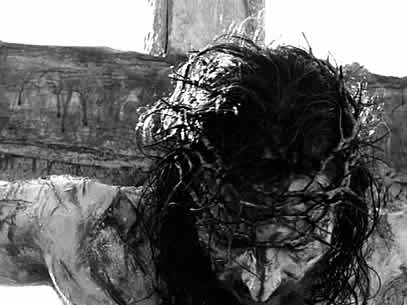
The Death of the MasterOur hope isn’t just in the atonement provided for mankind by the death of the tzaddik, but in the resurrection and the life, for even as we die with him, we rise with him from the tomb as new creations and have the hope of life eternal in the Kingdom of Messiah, a Kingdom of utter peace and tranquility. We are no longer enemies of God but sons and daughters by adoption, Gentiles who are now included in the blessings alongside God’s people Israel.

Therefore, just as through one man sin entered into the world, and death through sin, and so death spread to all men, because all sinned—for until the Law sin was in the world, but sin is not imputed when there is no law. Nevertheless death reigned from Adam until Moses, even over those who had not sinned in the likeness of the offense of Adam, who is a type of Him who was to come.

–Romans 5:12-14 (NASB)

This admittedly is difficult for me to grasp. Paul is introducing something new which seems to be the origin of sin. It came into the world because of the disobedience of Adam, the willful disregard to the one and only negative commandment that existed in the world at that time.

It wasn’t just disobedience that was the sin but the lack of faith that rested behind it. Although the commandment to not eat of the Tree of the Knowledge of Good and Evil was not directly imparted to Havah (Eve), Adam allowed her to consume the fruit and then willfully ate it as well.

But then Paul says that there is no sin “when there is no law,” which I assume is Torah and it defines obedience and disobedience, and yet between Adam and Moses there was still sin and death.

Different translations of Romans 5:13 state “but sin is not charged against anyone’s account where there is no law” (NIV), “but sin is not counted where there is no law” (ESV), and “but no record of sin is kept when there is no Law” (ISV), basically saying the same thing.

I have a hard time depending on Christian commentary to guide me here since most or all of them draw a hard line between Torah and grace, believing the latter has replaced the former for Jewish believers (and everyone else). However the commentary from Gill’s Exposition of the Entire Bible on this verse states in part:

…but sin is not imputed when there is no law. This looks like an objection, that if there was no law before Moses’s time, then there was no sin, nor could any action of man be known or accounted by them as sinful, or be imputed to them to condemnation; or rather it is a concession, allowing that where there is no law, sin is not imputed; but there was a law before that law of Moses, which law was transgressed, and the sin or transgression of it was imputed to men to condemnation and death, as appears from what follows.

NoahFrom this I gather that there were actually standards for sin and righteous for mankind prior to the giving of the Torah at Sinai but that the Torah defined heightened responsibilities specifically for the Children of Israel. This suggests that the rest of humanity still operated under the older standards and, given a more Jewish perspective, that said-standards for the nations were the Noahide Laws we see God issuing in Genesis 9.

Of course there were no Noahide Laws prior to Genesis 9, so there must have been some sort of standards in place between Adam and Noah. These standards are hinted at (how did Abel know about animal sacrifice and how did Noah know what a clean animal was?) but never listed in the Bible.

But what about the next verse?

Nevertheless death reigned from Adam until Moses, even over those who had not sinned in the likeness of the offense of Adam, who is a type of Him who was to come.

–Romans 5:14 (NASB)

Death continued between Adam and the time of the giving of Torah at Sinai because of the continuation of sin, and presumably it continued after that and continues to this day, if we’re talking about bodily death (and since Paul has been talking about the bodily resurrection up to this point, I think it likely). Mankind would have remained accountable to God under Genesis 9 covenant and its conditions, then with Moses and the Torah, Israel was elevated to a much higher place in terms of blessings, responsibilities, and curses.

In a way, this put the Israelites in a rather unenviable position, because the conditions of obeying God, the Torah mitzvot, were so many, so complicated, and so much more involved than the Noahide commandments, that they had to do a lot more work to maintain their covenant relationship with God.

Of course, there are also terrific blessings attached to Israel’s covenant with God including having God dwell among His people in the Tabernacle and later in the Temple. But the Temple and the sacrificial system was never designed to permanently remove sin from the Israelites, or for that matter, the rest of humanity (even though the prayers and sacrifices of Gentiles were acceptable in the Temple).

And who is this “who is a type of Him who was to come?” Apparently, according to various translations and commentaries, it’s Messiah. Adam was the first man and the first to sin, the prototype of sinful mankind, but also the prototype human being as the first created man. Yeshua, as Messiah, sent to be the hope of humanity, is sort of an “anti-Adam,” one who entered the world perfect, just like Adam, but unlike Adam, one who never sinned even though sorely tempted.

But the free gift is not like the transgression. For if by the transgression of the one the many died, much more did the grace of God and the gift by the grace of the one Man, Jesus Christ, abound to the many. The gift is not like that which came through the one who sinned; for on the one hand the judgment arose from one transgression resulting in condemnation, but on the other hand the free gift arose from many transgressions resulting in justification. For if by the transgression of the one, death reigned through the one, much more those who receive the abundance of grace and of the gift of righteousness will reign in life through the One, Jesus Christ.

–Romans 5:15-17 (NASB)

Paul continues his theme of the duality of Adam and Jesus, the transgression of Adam and the free gift of grace through Christ. Adam’s faithlessness and disobedience condemned humanity to sin and death and Messiah’s faithfulness and obedience, even to the point of death, reverses that curse…or rather, it will.

exileLet me explain.

Sin and death are still in the world, even for Christians. Believers still sin. We’re not perfect (or perfected). And believers still die. But if we are faithful and obedient, we will not be dead forever, and when we are resurrected, we will be resurrected as perfected people. God will heal our physical imperfections but more importantly, He will heal our hearts and write His Word upon them, so it will be natural for us to obey and not sin, even as it is now human nature to disobey.

That is why Jesus is our hope because he is the hope of our future perfection and the redemption of the world, all through God’s covenant with Abraham, then with Isaac, then with Jacob, and then the Sinai covenant with the tribes that issued from Jacob, the Israelites, and with their descendants, the Jewish people. Salvation for the rest of the world comes from the Jews (John 4:22) and from their King Messiah.

Jesus reverses the curse that Adam initiated.

Paul calls all this a “free gift,” and I admit to having a bit of a problem with the wording.

It’s true that we don’t have to do anything to produce this solution to the problem Adam introduced into the world, and it’s true that we didn’t even ask for it, and it’s true that we don’t and in fact we can’t pay a price to purchase this gift. On the other hand, we still have to do something. We have to choose. We have to hear the “good news,” and we have to listen, and we have to allow the Holy Spirit to influence us, and then we have to repent and accept the Lordship and rule of Messiah over our lives.

And then we enter into discipleship, start studying, and finally realize what all that actually means. Then we realize what it is to accept Jesus as Lord and oh boy, it’s not as easy as we were led to believe by whoever evangelized us.

Then and only then comes the hard part. Living the life of a disciple and a slave with Jesus as Lord and Master…yeah, Master like Master over a slave. Living the life of a slave with Jesus as our Master, surrendering any priority over our life to him and making all of his priorities our priorities.

Do you do that all the time, 24/7/365? Really? Are you sure?

So then as through one transgression there resulted condemnation to all men, even so through one act of righteousness there resulted justification of life to all men. For as through the one man’s disobedience the many were made sinners, even so through the obedience of the One the many will be made righteous. The Law came in so that the transgression would increase; but where sin increased, grace abounded all the more, so that, as sin reigned in death, even so grace would reign through righteousness to eternal life through Jesus Christ our Lord.

–Romans 5:18-21 (NASB)

It sounds like Paul is getting a little repetitive, but then he says the “Law came in so that the transgression would increase.” God introduced the Torah to Israel to increase their sin? That seems odd. The Torah lists the conditions of the Sinai covenant between Israel and God, a covenant which says God will be Israel’s God and they will be His people and that they agree to obey a certain set of conditions listed in the Torah. If they don’t, and disobedience (sin) is also defined in Torah, then the curses laid out in the Torah will be applied to Israel. If they continue to obey, the blessings, which are also spelled out in the Torah, will be applied.

So how does all that “increase sin” and especially for the whole world since the Sinai covenant and its conditions (Torah) only apply to Israel?

Is there some other “Law” that Paul could be talking about in this context?

For the wages of sin is death, but the free gift of God is eternal life in Christ Jesus our Lord.

–Romans 6:23 (NASB)

There is what’s called “the Law of Sin” which the above-quoted verse defines, but that doesn’t seem to fit the context. However, it also makes no sense at all for God to give the Torah to Jews at Sinai just to increase their culpability for sin so that in their sins, God could demonstrate how much they needed His grace, send Jesus to die for their sins, and replace the Law with grace.

sefer torahThe only way I can see how the Torah could “increase sin” is that it raised the bar quite a bit for the Children of Israel relative to the rest of mankind. It certainly increased the chances of any given Jewish person to come into transgression. After all, it’s no sin for me to not wear tzitzit but it is for a Jewish person (man). It’s no sin for me to eat a pork chop (although I don’t) but it is for a Jewish person. Even as a Christian and the receiver of many blessings through Israel’s covenants with God, I’m still not held accountable to as high a standard of behavior as my wife (who is Jewish), at least not this side of the Messianic Kingdom.

But if Gentile believers are the primary audience of this letter, what does Paul mean? I suspect the answers may be yielded in the next chapter and in next week’s edition of my “reflections.”

A Book Review By Invitation

My recent post/review of Boaz Michael’s Tent of David has really fostered some good discussion. Probably one of the longest and best discussion thread on any post on this blog. At times it has been spirited, but peace and grace have been the general tenor. Thank you!!

Leaders in the discussion have been bloggers James Pyles of “My Morning Meditations” and Ruth of Sojourning With Jews. Both are friends I have gotten to know over the last year in the blogosphere and though we do not see eye to eye on all things Messianic, we all desire truth and enjoy the pursuit thereof. Each of us has publicly wrestled with thoughts and understandings as we search the Scriptures (though I envy both for being more open with their hearts than I have been…).

-Pete Rambo
“You are invited….”
natsab.com

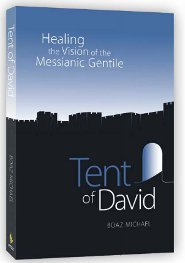
Hebrew Roots (HR) blogger Pete Rambo has issued a challenge to me (Ruth had to back out) to read one or more leading HR books (since Pete and I have already discussed Boaz’s book Tent of David: Healing the Vision of the Messianic Gentile in the comments section of his review) and to “co-review” the book, he with his perspective on his blog and me on mine.

Pete generously sent me two books to choose from, both written by a gentleman named J.K. McKee who maintains a personal/professional website called TNN Online (Theology News Network Online). McKee’s rather lengthy Statement of Faith is also available on his site, so in addition to his About page, you should be able to find out all you need to know about him.

As far as Pete goes, he describes himself as a “46 [year old] recovering seminary trained pastor.” He also says:

During most of my life I have had a particular interest in eschatology (end times events/prophecy) and in understanding truth. (I used to be a conspiracy theorist… now, I am a conspiracy factualist… ) In my quest, I began to run into pieces of information that challenged my very conservative traditional Christian religious perspectives. Only when I began to pray earnestly for Yahweh to show me TRUTH did He move my focus from geopolitical events and onto a close scrutiny of what I now call ‘Churchianity.’ As I learned how far the Church had moved from the simplicity of the Book of Acts and the clear teaching of the Word, I became convicted of the need for a personal reformation.

Tent of DavidTo “bottom line” it, my understanding (and please correct me if I get this wrong, Pete) is that both Pete and Mr. McKee would fall into the theological/doctrinal category within Hebrew Roots of being One Law (and I’ve linked to a set of definitions created by Rabbi David Rudolph from his website MessianicGentiles.com).

The book Pete and I agreed upon (via email) to review first is McKee’s One Law for All: From the Mosaic Texts to the Work of the Holy Spirit. The book is about two-years old and so far has rather stellar reviews on Amazon with a total of nine reviews as I write this. Either the book is incredibly good, or the deck is stacked, or both.

Let me explain.

Since I’m also published author, though not in the religious or theological space, the publishers I’ve written for typically send me anywhere from five to ten “review copies” of my books once they go to market so I can pass them out to family and friends, asking them to write and publish reviews on Amazon.

This is a traditional marketing technique and the assumption is that the author’s family and friends or perhaps “fans” of his/her work will be more likely to write favorable reviews, elevating the book’s ranking at Amazon. Of course, at least from my experience, every time I’ve sent out review copies of one of my books and asked people I know to review it, it’s always a tad risky, since I want the reviewers to be honest and sincere, and there’s always a chance they’ll take exception to some portion of what I’ve written (if not the whole book). On the other hand, I don’t want anyone to be dishonest in writing their opinion of something I’ve created. If one of my books is to be praised, I want that praise to be authentic.

I say all this with the idea that the individuals who have reviewed McKee’s “One Law” book at Amazon may be those people who are already predisposed to like the content of McKee’s book (and his general theological bent) and thus write positive reviews.

I know one of the reasons I reviewed Matthew Vines’ book God and the Gay Christian: The Biblical Case in Support of Same-Sex Relationships is because I knew it would draw exactly two audiences: those who automatically supported his platform and those who automatically opposed it. I wondered if Mr. Vines would ever get a truly objective review of his work, so I made it my “mission,” so to speak, to do just that, setting aside as much of my own personal bias as was possible.

I intend to do the same thing here with the caveat (please pay attention to this part) that I am theologically and doctrinally opposed to the position that there is One Law, that is, a single and unified application of the Torah mitzvot that applies to all disciples of Jesus Christ (Yeshua HaMoshiach) whether they be Jewish or Gentile (that application would ultimately be applied to all human beings since the Bible refers to how “every knee will bow, see Romans 14:11; Philippians 2:10).

I have a history in “One Law,” and after coming to faith within the context of a Christian church nearly twenty years ago, I swiftly (long story) transitioned into a Hebrew Roots/One Law congregation (which billed itself as “Messianic Judaism”) and learned my basic understanding of the Bible and my faith there.

Without going into a long explanation, after some years, I finally was prompted to question all of the assumptions I naively accepted back in the day and spent nearly a year publicly exploring said-assumptions on my previous blog spot (to which I no longer contribute).

In the spirit of friendship and learning, I have agreed to Pete’s proposal but I could be considered what trial attorneys call a hostile witness in that my attitudes and beliefs regarding “One Law” are not supportive of the theological presuppositions it entails.

one law bookThe goal is as Pete states on his own blog:

In the process of our discussion, I mentioned to James via email that we ought to read and review/discuss a book at the same time…

One point to stress for all of us from the outset: the goal here is to learn and grow. We may be challenged, but we want to plan on good vigorous discussion that at the same time is peaceful and displays the fruit of the Spirit!!

That is, Pete and I will read McKee’s book and each of us will post our impressions/reviews on our respective blogs (and I also intend to post a review on Amazon). We will insert McKee’s book into a crucible and attempt, through our differing viewpoints, to tease out the essence of what’s been written, then present those findings to whoever chooses to read our blogs.

As Pete says, we both want to show that two people can discuss differing theological perspectives in a peaceful and cooperative manner, and avoid those emotional meltdowns that we all frequently have witnessed in the religious blogosphere. We aren’t (necessarily) trying to convince the other to change his mind, but rather are trying to provide clarity of thought and expression of our respective points of view.

I hope you will follow along on our two blogs and feel free to join in (politely and respectfully) on our discussions.

Sermon Review of the Holy Epistle to the Hebrews: Shadow and a Copy

Now the main point in what has been said is this: we have such a high priest, who has taken His seat at the right hand of the throne of the Majesty in the heavens, a minister in the sanctuary and in the true tabernacle, which the Lord pitched, not man. For every high priest is appointed to offer both gifts and sacrifices; so it is necessary that this high priest also have something to offer. Now if He were on earth, He would not be a priest at all, since there are those who offer the gifts according to the Law; who serve a copy and shadow of the heavenly things, just as Moses was warned by God when he was about to erect the tabernacle; for, “See,” He says, “that you make all things according to the pattern which was shown you on the mountain.”

–Hebrews 8:1-5 (NASB)

Teaching on Hebrews 8:1-5 regarding the Temple as a Shadow and a Copy of the supernal Temple above with references to Colossians 2:16-17 which describes the festivals and holy days as shadows of things that are to come–the substance of Messiah.

-D. Thomas Lancaster
Sermon Twenty-nine: Shadow and a Copy
Originally presented on November 2, 2013
from the Holy Epistle to the Hebrews sermon series

I should also start out by quoting someone who commented on one of my previous reviews of this series:

While I don’t know how Lancaster approaches the passage you cited, one aspect that most folks don’t appreciate is that the background view is one in which the heavenly sanctuary and the earthly one are operating simultaneously in parallel, with the earthly one reflecting the operations of the heavenly one and receiving its authorization therefrom. The lack of this perspective also is responsible for a less-than-accurate English translation of the passage. For example, the word rendered as “change” can mean simply “difference”; hence what was intended as a comparison becomes falsely tainted with a sense of replacement. The encouragement offered in the Hebrews sermonic letter is that operations of the heavenly sanctuary continue to be effective even if those of the earthly one become unavailable, or are interrupted, or the sanctuary is destroyed outright (all of which occurred either just before or just after this letter was circulated).

I hope you got the distinction being made in the aforementioned quotation. If not, read it again slowly and carefully. It’s important.

Todays’ sermon is just loaded with great information so let’s get started. Lancaster began by quoting from Ezekiel 43 where we see the prophet being taken spiritually to the Third Temple that will exist in Jerusalem in the Messianic Era, effectively inventing time travel (at least according to Lancaster).

Then he led me to the gate, the gate facing toward the east; and behold, the glory of the God of Israel was coming from the way of the east. And His voice was like the sound of many waters; and the earth shone with His glory. And it was like the appearance of the vision which I saw, like the vision which I saw when He came to destroy the city. And the visions were like the vision which I saw by the river Chebar; and I fell on my face. And the glory of the Lord came into the house by the way of the gate facing toward the east. And the Spirit lifted me up and brought me into the inner court; and behold, the glory of the Lord filled the house.

“As for you, son of man, describe the temple to the house of Israel, that they may be ashamed of their iniquities; and let them measure the plan. If they are ashamed of all that they have done, make known to them the design of the house, its structure, its exits, its entrances, all its designs, all its statutes, and all its laws. And write it in their sight, so that they may observe its whole design and all its statutes and do them. This is the law of the house: its entire area on the top of the mountain all around shall be most holy. Behold, this is the law of the house.”

–Ezekiel 43:1-5; 10-12 (NASB)

Ezekiel's TempleGod is telling Ezekiel that His Divine Presence will dwell in this Messianic Age Temple forever! God commands the prophet to describe the Temple he sees in the vision to the Israelites so they will be ashamed and repent of their sins. Why? Because it was their sins that resulted in the destruction of the Temple as it existed in their day, for Ezekiel was physically in exile in Babylon and the Temple in Jerusalem was in ruins.

At this point in the sermon, I couldn’t help but think about how Judaism sees the cause of the destruction of Herod’s Temple as baseless hatred between one Jew and another. Rabbi Tzvi Freeman writes a rather lengthy midrashic description of this baseless hatred against the backdrop of recent events in modern Israel in the article The Tunnels That Rebuilt Jerusalem.

He also wrote this:

To the Rebbe, the exile of the Shechinah was a painful reality. To the rest of us, well, we have other concerns. Again and again, the Rebbe struggled to bring us to his perspective:

Perhaps, for you, this exile is not so bad. And you feel you are doing whatever you can about it, anyway.

But it is not just you alone in exile. Abraham, Isaac and Jacob and all the generations of their children, as well all the heavenly host—in fact, the entire creation—all is unfulfilled, in exile and imprisoned. Even the Creator, blessed be He, locks Himself into prison along with His creation.

Until you get us out of here.

-from Pity on the Cosmos

As you read this, Tisha B’Av is less than a day in the past and yet once you have fully entered a period of mourning, is it so easy to hold back the tears at its end? Not only should we be grieved at our loss but we should be ashamed of our sins. We should repent and repent quickly for our master the King could return at any moment.

To return to Lancaster’s sermon, he next visits Exodus 25:

Let them construct a sanctuary for Me, that I may dwell among them. According to all that I am going to show you, as the pattern of the tabernacle and the pattern of all its furniture, just so you shall construct it.

–Exodus 25:8-9 (NASB)

I recently wrote a commentary on these verses relative to where and how we come close to God, but the more plain meaning of the text tells us something wonderful. It tells us that God laid out the pattern, the blueprint if you will, of the Heavenly Temple Court for Moses and instructed him to construct what amounts to a scale model of the Heavenly Court on Earth in the form of the Tabernacle. For everything in the Tabernacle and about the Tabernacle was an earthly replica of the Heavenly originals…everything…and everyone.

jerusalem-at-nightThat means every object you see described in Exodus that is used in the Tabernacle has a counterpart in Heaven. It also means that every person, the High Priest, the other Aaronic priests, the Levites, everyone, have Heavenly counterparts. Imagine.

Not only that, but Lancaster said that even earthly Jerusalem, the Holy City, is a replica of sorts of a Heavenly Jerusalem. This isn’t as farfetched as it may seem:

And I saw the holy city, new Jerusalem, coming down out of heaven from God, made ready as a bride adorned for her husband.

–Revelation 21:2 (NASB)

Just think. If you’ve ever visited Jerusalem and particularly the Old City (sadly, I have not), then you could choose to see just the streets and stones and tourists, or you could allow yourself to envision Jerusalem as a sort of earthly reflection (though a mirror dimly) of the perfected Jerusalem.

And even though we don’t currently have the Temple with us, we know from Ezekiel that we will, and that when it existed and when it will exist again, every action of every one of the Priests on Earth will be a reflection of the Angelic Priests in Heaven. What is it like when an Angel offers incense on the altar before God I wonder?

We know from the two previous sermons in this series, Melchizedek and The Bypass that Yeshua (Jesus) is the High Priest in the Heavenly Temple. We have to believe that there are also Angelic Priests who attend and assist him in his priestly duties, just as God commanded the earthly Priests to assist and attend the Aaronic High Priest.

We also learned during these prior sermons, that the earthly Tabernacle and later Temple and the earthly Priesthood were considered “weak” only because they could not deliver what the Heavenly Temple and Priesthood do: permanent absolution from sin and resurrection immortality.

But then the earthly Temple and Priesthood weren’t designed to do any of those things. I’ve been exploring how Torah observance was never, ever meant to justify anyone before God in my Reflections on Romans series, so this is certainly a parallel.

At this point, Lancaster is finished with his introduction and proceeds to read Hebrews 8:1-5. So we have such a High Priest in Yeshua in the Heavenly (original and eternal) Temple, who is a “minister” in the “true tabernacle” which was “pitched” not by man but by God.

Verse 3 hints at what “gifts and sacrifices” are offered by Yeshua the High Priest, but that won’t be covered in today’s sermon. However, verse 4 says something important:

He would not be a priest at all [on Earth], since there are those who offer the gifts according to the Law…

LevitesYeshua, of the tribe of Judah and the house of David, would not be a Priest on Earth and will not be when he returns. He does not overturn or override the Law of the Temple, since only Aaronic Priests of the tribe of Levi may serve there (and will serve there in the Messianic Age). Yeshua’s priesthood doesn’t replace the Levitical priesthood, it exists altogether separately in a completely different venue.

So Yeshua will not be High Priest on Earth upon his return and will not function as a Priest in “Ezekiel’s Temple” in Jerusalem. But he still will have to perform an inauguration:

Now the king and all Israel with him offered sacrifice before the Lord. Solomon offered for the sacrifice of peace offerings, which he offered to the Lord, 22,000 oxen and 120,000 sheep. So the king and all the sons of Israel dedicated the house of the Lord. On the same day the king consecrated the middle of the court that was before the house of the Lord, because there he offered the burnt offering and the grain offering and the fat of the peace offerings; for the bronze altar that was before the Lord was too small to hold the burnt offering and the grain offering and the fat of the peace offerings.

–1 Kings 8:62-64 (NASB)

Yeshua will be the great King and perform duties in relation to the Third Temple just as Solomon the King inaugurated the first Temple.

…who serve a copy and shadow of the heavenly things…

–Hebrews 8:5 (NASB)

Here’s where we encounter what Lancaster calls “Christian theological bias.” When we read “copy and shadow,” we’ve been taught in the Church to think “empty,” “meaningless,” “vain,” and even “forgery.” We’ve been taught that all that “stuff,” the Temple, the Priesthood, the sacrifices, and of course, the Torah (Law) had a temporary use but it was all meant to expire and be replaced by the Holy, Heavenly, originals and specifically by Jesus, the High Priest of our hearts, for we replace the stone Temple as little, flesh and blood, spiritual temples.

But that’s not it at all.

To understand this better, Lancaster takes us to Colossians 2:16-17. The quote below is taken from the NASB translation:

Therefore no one is to act as your judge in regard to food or drink or in respect to a festival or a new moon or a Sabbath day—things which are a mere shadow of what is to come; but the substance belongs to Christ.

Some background. Lancaster says this was part of Paul’s argument against the ascetics, those people who believe that one can only be spiritual by disdaining anything that might be physically pleasurable and imposing severe self-discipline and abstention upon themselves.

While there are some practices in Judaism that follow an ascetic pattern (Tisha B’Av and Yom Kippur), the majority of Jewish observances (and remember, Paul was an observant Jewish Pharisee who advocated for Jews in Messiah performing the mitzvot, including Shabbat and the Festivals) such as Pesach (Passover), Shavuot (Festival of Weeks), Sukkot (Festival of Booths), and Shabbat (the Sabbath) were and are celebrated largely by eating and drinking.

Lancaster is interpreting Colossians 2 in a way that says when we observe the festivals, Rosh Chodesh (the observance of the New Moon), and Shabbat, we are experiencing a foretaste of what it will be like in the New Covenant age to feast at the table of Messiah:

I say to you that many will come from the east and the west, and will take their places at the feast with Abraham, Isaac and Jacob in the kingdom of heaven.

–Matthew 8:11 (NIV)

Sukkah in the rainThis could well support Gentile Christian observance of the Biblical holidays in the present age since Yeshua (Jesus) was not just speaking of Israel but of the people of the nations “from the east and the west”. If you or I as non-Jewish disciples of the Jewish Messiah were to keep a proper Shabbos, observe the festival of the New Moon, and build a sukkah in our backyard this fall, in performing each of these acts, we are also experiencing a “shadow or copy,” a scale model, a brief tasty little treat of the magnificent banquet that we will be permitted to join in the Messianic Age.

So shadows and copies aren’t cheap knockoffs or poor imitations that need to be cleaned out to make way for the originals. They are previews, coming attractions of the main event, like watching the previews of a biggest, best movie ever to be made in anticipation of one day seeing the entire film in 3D.

But…

…but here we find “Christian theological bias” again, this time in how these verses are translated. Lancaster offered a couple of examples:

Therefore do not let anyone judge you by what you eat or drink, or with regard to a religious festival, a New Moon celebration or a Sabbath day. These are a shadow of the things that were to come; the reality, however, is found in Christ.

–Colossians 2:16-17 (NIV)

Therefore no one is to act as your judge in regard to food or drink or in respect to a festival or a new moon or a Sabbath day—things which are a mere shadow of what is to come; but the substance belongs to Christ.

–Colossians 2:16-17 (NASB)

I put in bold the words “were” and “however” in the first quote and the word “mere” in the second. Why? Because Lancaster says they don’t exist in the Greek. Later translators added those words to insert an anti-Torah bias into the text. If you just read and understand the Bible in English (or probably a lot of other translations), you’ll completely miss it.

I compared English translations and found the Holman Christian Standard Bible to be just slightly more honest:

These are a shadow of what was to come; the substance is the Messiah.

Unfortunately, it still uses the word “was” which isn’t in the Greek. The Shabbat, Rosh Chodesh, and the other observances are shadows cast by the Holy observances that will enter our world with the Messiah’s return. They are not past, they are present and future.

In other words, the Shabbat, Rosh Chodesh, Passover, Shavuot, Sukkot are all tasty hints and treats, samples from the dessert tray, so to speak, of what is to come, but the full meal deal, so to speak, is the Messiah. Yes, he is the full substance, but we have been provided with previews so we can look forward to what’s coming and experience some of that wonder and delight in the here-and-now.

What Did I Learn?

I felt I already had a pretty good handle on Hebrews 8:1-5 from the background of my general knowledge plus Lancaster’s prior sermons, but what I didn’t expect was how Colossians 2 was so easily applied to the same usage of “copy and shadow.” I was also unconscious of how modern Christian translators have been guilty of some “hanky-panky by apparently playing fast and loose with the oldest Greek manuscripts we have of the text, inserting anti-Torah, anti-Festival, and anti-Jewish bias into Christian minds and hearts.

Face it. Most of us don’t read the Bible in the ancient languages and we rely upon our English Bibles. I find great meaning and truth in the Bible, but on some level, I also feel betrayed. This is a good illustration as to why we must learn to educate ourselves and not depend solely upon traditional Christian learning sources. It’s not even that anyone is lying, but the history of the Church is fraught with traditions stemming from the earliest days of Gentile Christianity, when every effort was made by those pulling away from their Jewish teachers and mentors in the Messianic faith to re-interpret the scriptures in a manner that rendered them totally devoid of their original (Jewish) meaning and truth.

Small wonder most Jews really hate Paul. They’ve learned to interpret him in exactly the same way as most Evangelical Christians, only Christians see Paul’s (supposed) anti-Torah writings as a virtue rather than a curse.

temple-of-messiahI hope you conclude, as I have, that there is nothing about the Heavenly Malkizedekian Priesthood or the Heavenly Tabernacle that undoes, makes obsolete, or terminates the effectiveness and authority of the Torah, the Temple, and the Priesthood here on Earth. When Messiah does return and rebuild the Temple (actually, the Temple Mount is too small to hold the Temple described by Ezekiel, so the geography of Jerusalem is going to have to change somewhat), those Torah Laws that govern the Temple, the Priesthood, and the sacrifices that have been put into abeyance for nearly twenty centuries will be applicable again.

Until that day however, we remain in exile with just the periodic precursors of the age to come to comfort us.

When the Holy Temple was destroyed, there was a wailing voice heard throughout the whole world. The Ministering Angels said to G-d, “Master of the Universe, do You have such emotions of sadness? Isn’t it written ‘Splendor and glory are before You?’ ”

G-d answered: “My House is destroyed, and My children are manacled in chains. Shouldn’t I be suffering?”

– Midrash, Yalkut Shimoni, Tehillim 679

From the day that Jerusalem and the Holy Temple were destroyed, there is no joy before G-d… until Jerusalem will be rebuilt and the Jewish People will return to it.

– Midrash, Yalkut Shimoni, Eychah 7009

From my father’s sichot: When Mashiach will come (speedily in our time, amein), then we shall really long for the days of the exile. Then we will truly feel distress at our having neglected working at avoda; then will we indeed feel the deep pain caused by our lack of avoda. These days of exile are the days of avoda, to prepare ourselves for the coming of Mashiach, speedily in our time, amein.

-from Tanya: Ch. 11. This subject (p. 379) …infinitely more so. (p. 381).
Compiled and arranged by the Lubavitcher Rebbe, Rabbi Menachem Mendel Schneerson, of righteous memory, in 5703 (1943) from the talks and letters of the sixth Chabad Rebbe, Rabbi Yosef Yitzchak Schneersohn, of righteous memory; translated by Yitschak Meir Kagan

How long, Moshiach? How long?

It Takes a Child to Build the Temple

Yehuda Glick, head of the LIBA Movement for Freedom of Movement on the Temple Mount, expressed his satisfaction that “for the first time in three years the Temple Mount has been opened to Jews on Tisha b’Av.”

“300 Jews have already come, including MK Shuli Muallem-Refaeli (Jewish Home). Afterward, we went to Commander of the Old City, David Avi Biton, and expressed our appreciation of the wonderful work the police were doing today,” Glick added.

Earlier this morning, masked Arabs arrived at the Temple Mount throwing stones and Molotov cocktails at the security forces. Police entered the area and dispersed the rioters. There were no casualties, and the police have remained in place to maintain order.

Last night the Jerusalem District Police arrested 27 Arabs suspected participating in the rioting in East Jerusalem.

Thus far, 457 suspects have been arrested for rioting, of which 160 have been served indictments. Additional arrests are anticipated.

“Temple Mount Open to Jews on 9th Av for First Time in 3 Years”
-found at VirtualJerusalem.com

I hadn’t planned to write on Tisha B’Av but the above-quoted article plus something else inspired me. To understand why, read this:

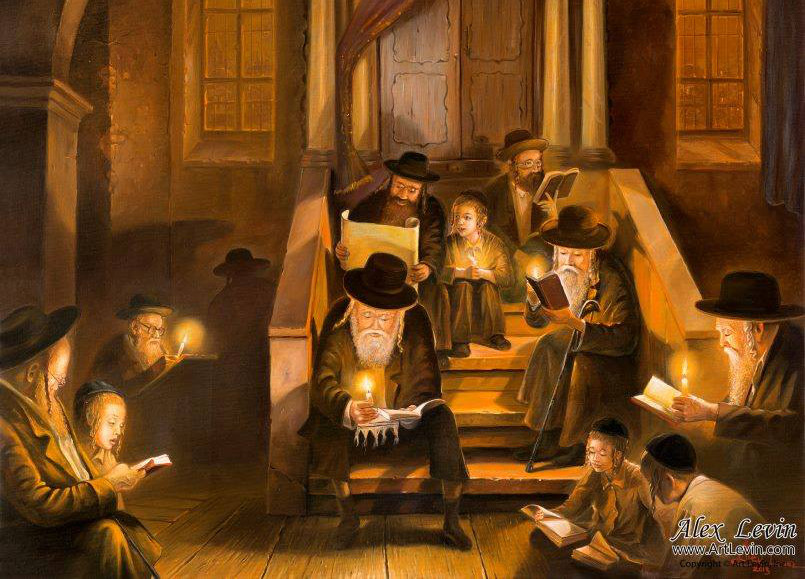
Tisha B’Av night we sit on the floor and read from the Book of Lamentations. In a mournful voice we chant “Alas, she sits in solitude! The city that was great with people has become like a widow. She weeps bitterly in the night and her tear is on her cheek.”

We grieve for our Temple that was destroyed. We recall a once golden Jerusalem that now sits in darkness, abandoned. The streets of the city run red with rivers of blood. Lamentations describes a glorious nation being led out in chains as the fires of destruction fill the air. We cry “for Mount Zion which lies desolate, foxes prowled over it.”

-Slovie Jungreis-Wolff
“Making Tisha B’Av Relevant”
Aish.com

Tisha B'Av
photo credit: Alex Levin http://www.artlevin.com

Observant Jews mourn the loss of both Solomon’s and Herod’s Temples on this date as well as commemorate many other tragedies that have occurred in Jewish history employing very specific practices. Personally, I’ve decided to fast but not to employ all of the traditions involved in Jewish observance to avoid giving the impression that I’m fulfilling the mitzvah. I fast, pray, and study in solidarity with the Jewish people, but I must consider their losses as theirs, not mine.

But while Tisha B’Av is a day of mourning, it is also a day of hope. The very fact that the Temple Mount was opened to Jews on Tisha B’Av for the first time in three years makes me want to smile, even though that is inconsistent with a state of mourning.

I did have to smile at the following, though:

My son was on the lookout the minute the plane touched down in Israel. I could see the ignited light in his little four-year-old eyes on the entire car ride from the airport as he viewed the Holy Land for the first time. He was a tiny man on a mission, to see the Beit Hamikdash, the Holy Jewish Temple, he was always hearing about.

He learned in school the common Jewish notion that each mitzvah (good deed) a Jew performs adds a “brick” to rebuild the destroyed Temple. And he was expecting to see the third Temple in the process of being rebuilt, brick by brick, mitzvah by mitzvah. You can imagine how his face fell and heart was broken when we arrived at the site of the Kotel, the Western Wall.

-Beth Perkel (as told to her by R.S.)
“Searching for the Third Temple”
Aish.com

Some among Israeli Jews believe the Third Temple should be rebuilt right now, while others (including me) think when the Messiah comes (returns), he will build it.

But the wonderfully innocent audacity of a four-year old little boy expecting the bricks of the Temple to miraculously appear one by one as Jews all over the world perform mitzvot is an obviously literal interpretation of midrash and also the perfect faith only a child could have.

“Mommy, this is it?”

“What do you mean this is it?”

“Where is the Beit Hamikdash? All I see is a wall Mommy, where are the bricks we have been working for, where are all the extra bricks?”

“They are coming precious child, someday, hopefully sooner rather than later, they are coming.”

But my answer wasn’t enough. He stood transfixed, woefully unsatisfied, hoping somehow that the bricks would miraculously appear. When they didn’t, he wandered around, the only one moping at the Kotel during the precious moments of our short visit there.

Ultimately, this searching Jewish child actually did find the bricks to the Temple at the Yad La-shiryon tank museum at Latrun, or more specifically, in the memorial wall, in which each brick is a representation of the mesirat nefesh or the self-sacrifice of the soldiers who died defending Israel.

“Mommy, this is it! We found the bricks! These are the bricks for the Beit Hamikdash!”

It brought tears to my eyes. Somehow, his soul had understood something so deep on this very spot where soldiers throughout Jewish history, from the time of the Tanach onward, had died glorifying God’s name, defending the Jewish homeland and helping us take steps towards our destiny. I could see the radiance on his face. He had found it – the bricks that showed him that God’s promise of redemption was on its way.

Kotel
photo credit: Chabad.org

What will bring (back) the Messiah, what will rebuild the Temple, is hope, even during the darkest periods of life. That’s what Tisha B’Av is, hope in the darkness. Even as Jews study Lamentations by candlelight sitting on short stools (as is the custom), with some eyes welling with tears, there is always hope.

Hope is what has enabled the Jewish people to endure as a people for so long. Hope is what recreated the modern state of Israel from the sand and ashes of “Palestine”. Hope is what keeps the prophesy of Messiah alive and all that he will do to return the exiles, redeem God’s people, and restore the nation to its former glory.

I lift up my eyes to the mountains—where does my help come from? My help comes from the Lord, the Maker of heaven and earth.

–Psalm 121:1-2 (NASB)

Our hope is in the Lord, maker of Heaven and Earth. That is the Jewish hope but it must be the hope for the rest of us, otherwise we have nothing, for “Salvation comes from the Jews” (John 4:22).

Hope is a four-year old boy who sees the “extra” bricks for building the Temple in the memorial of Israel’s honored fallen heroes.

May you have an easy fast.

What I Learned in Church Today: God Suffers Our Pain With Us

Today in church (as I write this), Pastor preached on Acts 27:1-12 and Paul’s rather “stormy” trip toward his final destination (in more ways than one) Rome. What I found most useful in today’s sermon were the notes at the conclusion. Normally, this part of the sermon doesn’t “float my boat” since these notes are usually an attempt to take ancient events, spiritualize them, and anachronistically apply them to everyday life in 21st century America.

But this time, I decided to see if these notes could be applied to my life. There are three of them.

Do you believe that God is sovereign over all the storms in your life?

As opposed to what? No, really. As an abstract concept believing what I believe about God, my immediate answer has to be “yes,” but it’s more complicated than that. It’s one thing to say that “God is in control” and that “we win in the end,” and another thing entirely to receive a diagnosis of cancer (no, I don’t have cancer) or that your child was in a serious car accident and is in ICU (don’t worry, my kids are all fine).

Then, no matter how much you “think” God is sovereign over every single detail of your existence, suddenly the pit of your stomach drops out and at least momentarily, panic sets in with the vengeance of a really angry Grizzly Bear. Sure, given enough time, you can regain your emotional equilibrium and refocus on God, but for those first few seconds or minutes (or longer), unless you are a terrifically spiritual person and always totally in tune with God, you’re going to lose it.

Here’s the first thing I wrote down in my notes when Pastor asked the question:

Yes, but that doesn’t mean I still won’t drown.

Here’s the second thing I wrote down.

We don’t have an absolute view into God’s plans for us as individuals.

God can be absolutely sovereign over the storms in our lives and we can still lose a leg in a car crash. We can still end up with a child in intensive care. We can still die a long, lingering, painful death.

God’s sovereignty contains no guarantee at all that our lives won’t be painful and end tragically. When we think of God being “in control,” we really mean that God would never let anything bad happen to us. But just look at Paul’s life. God let everything bad happen to Paul.

But the key is, no matter what happened, Paul still served God faithfully, with an almost supernatural focus (I’m being slightly tongue-in-cheek here) on Yeshua (Jesus) as the author of his faith and the “perfecter” of his existence, both in this world and the one beyond.

Which brings us to Pastor’s second question:

What are you doing to learn to trust God in the storms of life?

I remember a scene from the film Finding Nemo (2003). Dory (voiced by Ellen DeGeneres) and Marlin (voiced by Albert Brooks) are inside of a whale, basically hitching a ride to Sydney, Australia. The water inside the whale starts to drain. As usual, Marlin senses disaster while Dory is willing to trust. Marlin is hanging onto some part of the whale’s insides to keep from falling back into the throat. Dory translates the message from the whale.

It’s time to let go.

praying at the kotelI think that’s what trusting God is about, but it’s best to learn to trust him before your life turns to dog poop. While you still have the time, pray with an especially focused Kavanah for an encounter with God. Strive to draw nearer to Him and plead that He reveals Himself to you before you need Him. I promise that if you don’t do this now, you will be doing it once you need God’s help more than anything you’ve ever needed in your life.

Last question:

Do you realize that God is able to use the storms in your life to give guidance to others?

As first, I didn’t read the to give guidance to others part and just saw the question as asking if I realized God could use the storms in my life. Then I realized what was really going on.

Had they trusted in God and followed Moshe, the entire nation would have gone into Eretz Israel led by him. The Holy Temple would have been built, never to be destroyed; the people would have sat, every man under his grape vine and under his fig tree, never to be exiled; and the still longed for, final redemption under God’s chosen anointed would have come. But they didn’t trust and they didn’t obey. So the exodus from Egypt remained eternal, but the entry into the Land was to be transitory.

-Rabbi Meir Zlotowitz
Megillas Eichach (Lamentations), pg 34

If all of the twelve spies Moses sent into Canaan (Numbers 13, 14) had given a positive report instead of just two, obeyed Moses, and obeyed God, the history of Israel would have been written quite differently.

But they didn’t and history unfolded as it did.

The same is true of Israel in the days of Jesus:

“Jerusalem, Jerusalem, who kills the prophets and stones those who are sent to her! How often I wanted to gather your children together, the way a hen gathers her chicks under her wings, and you were unwilling. Behold, your house is being left to you desolate! For I say to you, from now on you will not see Me until you say, ‘Blessed is He who comes in the name of the Lord!’”

–Matthew 23:17-39 (NASB)

If Israel had repented in the days of Herod’s Temple, Yeshua would have initiated the Messianic Kingdom immediately, the Romans would have been defeated, the Temple would have been preserved, there would have been no exile, and King Messiah’s reign of peace, mercy, and justice over all of the world would have started and be with us to this very day.

But they didn’t, and untold suffering has resulted.

In the 1982 film Star Trek II: The Wrath of Kahn, Admiral James T. Kirk (William Shatner) gave this sage piece of advice to Lt. Saavik (Kirstie Alley):

How you face death is at least as important as how you face life.

Regardless of how God provides and what God allows and how God disciplines, your circumstances are less important than how you respond to them. Consider how Israel is responding, not to just all of the rockets Hamas keeps throwing at her, but how the rest of the world is mistreating Israel, believing she is disproportionately responding to these terrorist acts simply by defending herself.

The whole world is watching Israel and waiting for her to blink. So it is true when anyone who professes faith in Christ, especially when we are under duress.

Fortunately, Pastor said that he’s hardly perfect in this area and that there have been plenty of occasions when he’s been stressed and yet taken it out on his family rather than having greater trust in God. There’s a sort of myth, both inside the Church and outside of it, that says when a Christian is having a particularly tough time of it, he or she should be completely calm if their faith in Jesus is solid. Only a failure of faith results in a Christian who cries or yells or begs.

Like I said, it’s a myth.

Father, if you’re willing, take this cup from me…

–Luke 22:42 (NASB)

This is Jesus at Gethsemane pleading with God the Father to take away the cup of his crucifixion, his agony, his desperate suffering from him.

This is Jesus saying this. This is Jesus not wanting to suffer. This is Jesus acting just like the rest of us. But the second half of the sentence tells the tale.

…yet not my will but Yours be done.

But he still begged. Flesh and blood, human right down to his DNA Jesus still begged that the cup be taken from him.

There’s no shame in anguish as long as there’s also trust.

Because of the surpassing greatness of the revelations, for this reason, to keep me from exalting myself, there was given me a thorn in the flesh, a messenger of Satan to torment me—to keep me from exalting myself! Concerning this I implored the Lord three times that it might leave me. And He has said to me, “My grace is sufficient for you, for power is perfected in weakness.”

–2 Corinthians 12:7-9 (NASB)

If Jesus wasn’t immune, certainly Paul wasn’t either. How many of his Psalms did David dedicate to his own pain and suffering, withering before a Holy God with his flesh melting and his bones turning to dust?

Save me, O God,
For the waters have threatened my life.
I have sunk in deep mire, and there is no foothold;
I have come into deep waters, and a flood overflows me.
I am weary with my crying; my throat is parched;
My eyes fail while I wait for my God.
Those who hate me without a cause are more than the hairs of my head;
Those who would destroy me are powerful, being wrongfully my enemies;
What I did not steal, I then have to restore.

–Psalm 69:1-4 (NASB)

We struggle all our lives between our faith and our humanity, between Divine glory and human weakness. The spirit is willing but flesh…oh the flesh is very weak. Even the best of us, when put to the test, are like a snow cone in a blast furnace.

anguishTo know that God is sovereign and to trust in Him in adversity doesn’t mean you have to be superhuman and it doesn’t mean you don’t get scared. It means when 99% of you is in full panic mode, some tiny voice in the back of your consciousness is still crying out to God, not in terror but in faith, that even if you should drown or be incinerated in the next half-second, if you are not supposed to live (in this life) with God, then you will certainly die in His Presence and live with Him in the resurrection.

Living with God in suffering is like being a terminally ill child. You know you are going to die and you know your Mom and Dad love you very much. But you also know they can’t save your life. You’re still scared and you still don’t want to be away from them, but you know as long as they love you, you’re not alone.

God’s sovereignty in our lives when we suffer doesn’t (necessarily) mean God will stop the suffering. It means He will never abandon us as we are suffering and in some sense, He suffers, too.

The night when hope was enveloped in darkness was about to begin, so God came to Jacob ‘in the visions of the night’ to show him that Jews might be exiled from their land, but they could never be exiled from their God.

-R. Zlotowitz, pp 46-7

When they were exiled to Babylon, the Divine Presence was with them.

-Megillah 29a

And so He is with us.

"When you awake in the morning, learn something to inspire you and mediate upon it, then plunge forward full of light with which to illuminate the darkness." -Rabbi Tzvi Freeman