Reviewing the Meaning of Midrash, Part 1

Torah, like any wisdom, has departments. That’s important to know. You can’t study literature the same way you study biology, and you can’t critique poetry as you would journalism. So too, you can’t study one department of Torah the same as you study another.

There’s more than one way of dividing up those departments. One way is to talk about approaches to the text.

Rabbi Yitzchak Luria, the Ari, constructs an acronym from these four departments, disciplines, or levels of peshat, remez, derush and sod: pardes, meaning “an orchard.” He taught that every soul must delve into all four layers of the Torah, and must continue to return to this world until having done so.

-Tzvi Freeman and Yehuda Shurpin
Is Midrash for Real?
Part 1 in a series on the truth behind Talmudic tales
Chabad.org

I have been promising to write a review on this series for a few weeks now, but as I read part one, I already feel like I’ve bitten off more than I can chew. I’m not Jewish and certainly not an Orthodox Jew, nor am I a mystic, which is what seems to be required to understand what Freeman and Shurpin are saying.

True, I’ve been critical of Christian devotion to Sola Scriptura more than once, but investigating Midrash on the road to Kabbalah could be a bit much for me.

I’m not throwing in the towel. I just want you to know how different this is.

First things first. How does this article define Midrash?

Finding deeper meaning and lessons in life is yet another department, which we call derush or midrash—and our basic commentators will again be found in these halls as well. Midrash often includes stories, called aggadah, some allegorical, some anecdotal, some reaching far beyond what we understand to be possible in our world. Midrash can be found strewn throughout the Talmud, and in many anthologies compiled contemporaneously with the Talmud or later. The largest, best-known collection is called Midrash Rabbah.

Many of the juiciest midrashim are collected in the classic commentary of Rashi. This despite Rashi’s repeated insistence that “I come only to explain the simple meaning of the text.” Because the text bubbles with meaning, frequently defying the steamroller of the strict literalist, demanding deeper interpretation at every turn.

What I’m taking from this is that Midrash isn’t necessarily intended to be literal fact. Certainly Christianity has its own rich tradition of religious allegory, so how can we criticize Judaism for employing the same tools. Midrash is in the “Derush” department, that which reveals the deeper meanings of the Torah.

AggadahBut are these “deeper meanings” actually encoded in the Torah or are they what various authorities including the esteemed Rashi have taken out of Torah and formed into morality tales, fables, or colorful metaphors to communicate principles that can be derived from scripture? How many Christian Pastors take a verse or two of scripture and develop a homily to be delivered from the pulpit on Sunday? I can accept Midrash at that level of understanding and meaning, even though in Orthodox Jewish thought, it may be intended to represent so much more.

But according to the article and the sages it cites, a steady diet of all four “departments” of Torah understanding is necessary for the “spiritual health” of every Jewish person.

The Ari’s message is not as esoteric as it may seem: Just as our bodies do not live by carbs alone, so our souls require a mixed diet. To be a complete Jew embracing a complete, wholesome Torah, you can’t satisfy your requirements studying in one department alone. You need a well-rounded curriculum at all four levels.

But the focus on this series as well as my review is of only one of the four “departments” or “food groups” in this diet.

And the midrashic tales and the secrets of the Torah are just as vital. Why? Because as much as Torah is about what you know and what you do, it’s also about how you think and what you feel. As magnificent a structure as you may have built for yourself, without light and warmth nobody is going to live there too long. That’s the way life goes: without the sparks firing, the engine just stops turning.

Midrash is your gateway to connect with the Author of the Torah. “If you want to know the One who formed the universe,” the Talmudic sages advise, “learn aggadah.” Aggadah, the midrashic tales scattered throughout Torah literature, are said to contain “most of the secrets of the Torah.”

That’s probably a lot farther than most Christians would be willing to go, and understandably so. Outside of Orthodox Judaism and especially the mystic context of the Chabad, it’s also much farther than many Jewish people would want to go. Let’s not kid ourselves. What I’m investigating is a relatively narrow perspective within the panoramic landscape of overarching Judaism. Nevertheless, for those of us who “intersect” with religious Judaism at some level, encountering Midrash is inevitable. So why fight it? Let’s have a look.

But the secrets are veiled, as Maimonides writes (we’ll get to that soon), so that only those who are fit to receive them will discover them there. The Zohar provides a parable to explain why the Torah must speak in parables…

I’m pausing here to remind everyone that Jesus spoke in parables. Christians tend to take the parables of Jesus for granted, largely because those parables have all been explained in the text of the Gospels, and even if we don’t always understand the explanations, we usually receive some satisfactory interpretation from our Pastors or some Christian book writer.
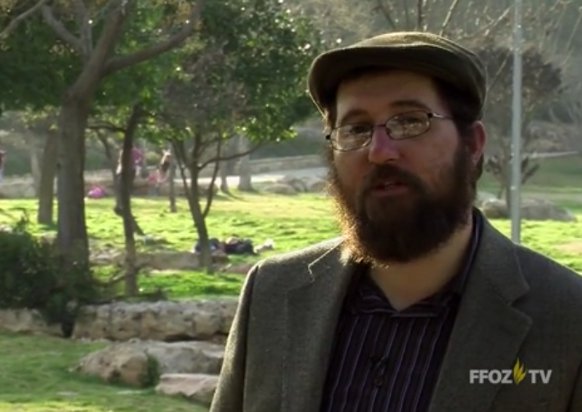
ffoz_tv18_aaron
Aaron Eby

Last fall I reviewed an episode of the First Fruits of Zion (FFOZ) television series called Speaking in Parables which sought to explain the purpose of the Master’s parables in terms of Messianic Judaism.

FFOZ Teachers and Toby Janicki and Aaron Eby are the hosts for these episodes and present each one as a “mystery” that requires three “clues” to solve. In these clues and their solutions, they use the Bible and Jewish literature to teach their audience that “Parables were a common teaching device used to simplify complex concepts.” The question then is whether or not Midrashim also take complex concepts and simplify them for their audience. Most Christians encountering a Midrash would probably say “no.” Sometimes a midrashic tale can make what we think of as the plain meaning of the text seem all too mysterious.

Apparently, the stories and mysterious words are more than packaging. After all, as the parable of the Zohar tells, from within the cloak of these parables the inner soul of the Torah speaks. Perhaps we should think of these stories as haute couture for G‑d’s wisdom. They are the fine clothing and jewelry that allow expression for Torah’s most inner wisdom, as a tasteful wardrobe betrays beauty that would otherwise elude the senses.

I invite you to read Part 1 in a series on the truth behind Talmudic tales (I also put the link at the top) for the full article, including the various parables it contains, to gain the full context of what I’m discussing. The sense I get from this text, and I’ve read similar material before, is that the Torah almost has a life of its own and is deeply encoded with meaning that extends well beyond what we can perceive, even if we could read the oldest available Torah documents in their original ancient Hebrew.

So fitting, so magnificent is this wardrobe that it carries the secrets of Torah even to the small child. In a way, it transmits to the simple child much more than to the sophisticated adult. To the adult, the clothing is distinct from the meaning it contains; the analogy and its analogue live in two different worlds. The child, when he grasps the clothing, grasps the warm body and soul breathing within. They are all one and the same. In his simple understanding of the tale, he touches G‑d.

To better understand how that is so, we’ll have to examine midrash a little deeper. We need to ask, are the stories of the Midrash truth or fiction? If they are truth, how is it that they so often conflict with one another? And how do we know when the Talmud is telling us a historical anecdote and when it is speaking in parables?

MidrashJust a reminder. There’s a difference between facts and truth. Or as Indiana Jones once said, “Archaeology is the search for fact… not truth. If it’s truth you’re looking for, Dr. Tyree’s philosophy class is right down the hall.”

Midrash, like any metaphor or morality tale, can contain truth and still be fiction. We’ll see what more Freeman and Shurpin have to say in next week’s review.


Sermon Review of the Holy Epistle to the Hebrews: Radiance of Glory

A quick immersion into the Christology of the apostles and the writer of the book of Hebrews based on Hebrews 1:2-3: “… His Son, whom he appointed the heir of all things, through whom also he created the world. He is the radiance of the glory of God and the exact imprint of his nature.”

What role in the creation of all things did the Son play? From where did the apostles derive their high view of Messiah in His divinity?

-D. Thomas Lancaster
Sermon Five: Radiance of Glory
Originally presented on January 26, 2013
from the Holy Epistle to the Hebrews sermon series

Lancaster starts his message by taking his audience through a brief summary of last week’s sermon focusing on his conclusions. Those conclusions are going to be important in just a few moments, and again at the end of this review.

This week, the topic is Christology or the study of Christ and particularly his Divine nature. This is something not really (or at all) studied in the Church because it’s pretty much assumed (God the Father, God the Son, God the Holy Spirit, three in one). People pray directly to Jesus, people interchange the Father and the Son, even in song lyrics with statements like, “thank you God for dying on the cross for me.” I personally have always been bothered by how most Christians treat the three persons of the Trinity (and remember, the word “Trinity” never shows up in the Bible) as if they’re interchangeable units, like spark plugs or kitchen knives. One’s just as good as the other, one’s exactly the same as the other.

Lots and lots of what Lancaster calls “Father-Son confusion.”

Lancaster manages to compress a lot of complex concepts into his almost forty-four minute sermon which is reflective of how densely packed he says is Hebrews 1:1-4:

God, after He spoke long ago to the fathers in the prophets in many portions and in many ways, in these last days has spoken to us in His Son, whom He appointed heir of all things, through whom also He made the world. And He is the radiance of His glory and the exact representation of His nature, and upholds all things by the word of His power. When He had made purification of sins, He sat down at the right hand of the Majesty on high, having become as much better than the angels, as He has inherited a more excellent name than they.

Remember from last week, Lancaster said the first few sentences in Hebrews 1 were the premise of the writer of Hebrews, and now that writer has to spend the rest of the chapter and into Chapter 2 to support this thesis, that Messiah is higher and more exalted than Abraham, Moses, the Prophets, and even the Angels.

The question of Christology is summarized by Lancaster in a question asked of him by one of his sons:

“How can Jesus be God if he’s the Son of God?”

Oh, is that all?

Lancaster spends the rest of his sermon trying to answer this question and with the goal of being able to read Hebrews, as well as the rest of the apostolic scriptures, with the same understanding as the apostles and early disciples. This has the benefit, from my point of view, of not having to wade through nearly two-thousand years of subsequent anti-Jewish, anti-Judaism, anti-Torah, and anti-Temple theology and doctrine that was spawned from the early centuries of Church history by the so-called “Church fathers” and certainly cemented in place five-hundred years or so ago by the authors of the Reformation (who are by and large the authors of the Christianity we have today).

…in these last days has spoken to us in His Son, whom He appointed heir of all things…

–Hebrews 1:2 (NASB)

When all things are subjected to Him, then the Son Himself also will be subjected to the One who subjected all things to Him, so that God may be all in all.

–1 Corinthians 15:28 (NASB)

Here’s where we start getting into “deep stuff” about Messiah. We’re talking about Fathers and Sons and Sons as heirs and all that’s supposed to mean. We’re also starting to decouple our brains from the literal meaning of these ideas because the world of mysticism speaks in metaphor and in symbols. Literal access to scripture is no help in comprehending the Divine nature of Messiah. To do that, we have to travel much more dangerous roads.

In the beginning God created the heavens and the earth.

–Genesis 1:1 (NASB)

In the beginning was the Word, and the Word was with God, and the Word was God. He was in the beginning with God. All things came into being through Him, and apart from Him nothing came into being that has come into being.

–John 1:1-3 (NASB)

CreationPrepositions play a part in Lancaster’s narrative as he tries to weave together the role of Father and Son in Creation. Was the world created “through,” “by,” “in” the Word, the Son, the Word made flesh? Not very much help, according to Lancaster. It doesn’t sound very Jewish.

Next he takes us into a Rabbinic argument (words are flying past much too quickly for me to pick up all of the references) where the sages are debating on what basis did God create the world.

Was it for the sake of Abraham? No? For the sake of David? For the sake of Moses? No? How about for the sake of Messiah? Saying the world was created for the sake of someone is another way of saying that such a person is highly exalted. For the sake of Messiah was the world created. Don’t worry if these abstract mystical concepts are beginning to give you a headache. They affect me the same way.

Plunging deeper into the wine dark waters of mysticism, the sages teach that God created the world through the agency of wisdom, as if wisdom was a separate being from God, an agent where God was the owner of the plan but giving the plans to wisdom, she (yes, wisdom is a “she”) executed those plans by being the agency of creation.

Proverbs 3:19 and 8:22-23 give us a portrait of wisdom as creator but let’s not be too literal. We are talking about God’s wisdom, and here’s the important part when considering Messiah…wisdom is an attribute which does not encompass the totality of God’s transcendent being, but neither is wisdom not God.

This is wisdom “talking:”

The Lord possessed me at the beginning of His way, before His works of old.

–Proverbs 8:22 (NASB)

Lancaster links various texts such as the one above with the Targums in terms of “Beresheet” or “In the Beginning,” the creation narrative and the agency of creation. Is it IN the beginning or BY the beginning or something else? Some examples are:

From the beginning with wisdom God created and perfected the heavens and the earth.

Or how about…

In wisdom the Lord created the heavens and the earth.

According to Lancaster, THIS is how the apostles learned the Torah, not how we are taught the Bible in the Church today, and it explains John’s highly mystical introduction to his gospel, “In the beginning was the Word, and the Word was with God, and…”

…but to those who are the called, both Jews and Greeks, Christ the power of God and the wisdom of God.

–1 Corinthians 1:24 (NASB)

…but we speak God’s wisdom in a mystery, the hidden wisdom which God predestined before the ages to our glory…

–1 Corinthians 2:7 (NASB)

Tree of LifeI realize there’s a lot of connections happening here and again, it’s important to look at all this in a somewhat fluid manner, not trying to understand a literal reality here, since we have definitely crossed over, not really into the Twilight Zone, but into a metaphysical realm where mere human beings, even being apostles, are trying to relate in human language, explaining their Christology to us across the long march of post-apostolic history.

Lancaster takes this even further and references something called “The Wisdom of Solomon” contained in a book called the Catholic Published Bible. “The Wisdom of Solomon” was supposedly written by King Solomon and existed about a century before the earthly ministry of the Master, thus we know the apostles would have had access to this material. I won’t go into everything Lancaster cited, but he did produce a nice, numbered list of attributes of wisdom we can make use of:

  1. Wisdom is the worker of all things.
  2. Wisdom passes through all things holding everything together.
  3. Wisdom is the breath of the power of God.
  4. Wisdom is the expression of God’s Glory.
  5. Wisdom is the brightness of everlasting light.
  6. Wisdom is the image of God’s goodness.
  7. Wisdom makes all things new.

And now back to the text for today:

He is the radiance of His glory and the exact representation of His nature, and upholds all things by the word of His power.

–Hebrews 1:3 (NASB)

From Lancaster’s perspective, it’s as if the writer of the book of Hebrews is stating that what was said of wisdom is true of the Son — the Divine wisdom is within him.

And if that isn’t enough, how about Paul’s Christology?

He is the image of the invisible God, the firstborn of all creation. For by Him all things were created, both in the heavens and on earth, visible and invisible, whether thrones or dominions or rulers or authorities—all things have been created through Him and for Him. He is before all things, and in Him all things hold together.

–Colossians 1:15-16 (NASB)

Hopefully you are starting to see the connections. Anti-missionaries jump on the word “image” in terms of the Torah prohibition to not worship an “image,” but again, we’re not talking about a stone statue or a painting and the word “image” isn’t quite literal. Adam was created IN the image of God but the Divine Messiah is THE image of the invisible God. Take the mystic concept of the image of the Heavenly Adam, the Divine Messiah, the agency of creation, God’s powerful Word, and unite it with the earthly Adam, human nature, human beings and we have the person of Messiah, Yeshua of Nazareth.

Lancaster quoted someone saying of a Maggid (I didn’t catch the specific reference because I can’t write that fast) that he taught Hassidism as if it were Mussar, that is, he taught mysticism as if it had life applications. Often teachings such as these, while intellectually fascinating (for me, anyway), don’t really do much to change our day-to-day lives, but Lancaster said something that impacted mine. It’s what I learned for today.

Caveat

Before I go on, I must respond to what should be a natural objection of most Christians (and I’ve mentioned this before). Lancaster is crafting the apostolic Jewish understanding of scriptures in general and Hebrews in specific based on Talmud and various mystic writings in Judaism that were authored (for the most part) after the apostolic era, sometimes many centuries after. Is it valid for Lancaster to construct an ancient Jewish perspective of Hebrews and the related Biblical texts based on subsequent Jewish perspectives? That’s the $64,000 question. I think (but this is an assumption on my part), that Lancaster believes the concepts and ideas contained in these later writings, existed in oral form or in some earlier but now lost documents during or before the apostolic era, and thus are valid material to project into an apostolic Jewish framework. If that assumption is wrong, then it’s quite possible some or all of the elements of Lancaster’s premise and thus his conclusions are wrong. But, on the other hand, Christianity bases it’s interpretations of the Biblical texts entirely on material, commentary, and tradition created after the close of Biblical canon, by many hundreds if not thousands of years, so we might as well say that Christian Biblical understanding is just as “anachronistic” as Lancaster’s “Messianic” perspective. Lancaster’s assumptions at least have the benefit of possibly really existing during the time of the apostles. I don’t have the same confidence in the Gentile Church Fathers, those involved with the various Church Councils, the Reformationists of five centuries ago, and the Fundamentalists of a century ago to be able to represent the thoughts, comprehension, and intent of the original apostolic writers of what we now call the New Testament. Now on with the show.

What Did I Learn?

waking-up-happyLancaster said that the only practical application some of these lessons seem to have is only relevant to hating on people who don’t have the same interpretation as we do.

That immediately reminded me of this incident and all of the other similar situations I’ve managed to get myself into. I didn’t create this blog with the idea of tilting at windmills or “going after” people who disagreed with me. I didn’t even create this blog with the idea of having to defend myself from the attacks of people who don’t agree with me. Nevertheless, reading back over the last several blog posts, I seem to be repeatedly taking the adversarial role. It’s a role that’s very seductive and also very undesirable.

Lancaster said that it’s the job of every disciple to internalize the teachings of his or her Master, to eat of the bread, so to speak, and drink of the Spiritual water, to incorporate our Master’s lessons into our very flesh and blood and being. Then, if we consider ourselves a Tabernacle, we bring the Divine wisdom into ourselves and into our families, and into our communities, and finally into the world, which is the lived expression of praying “Thy Kingdom Come!”

Pay attention. To what? The teachings of our Master? Why? Lest we drift away from him.

In Defense of the Church

I know after today’s morning meditation, it probably seems like I’m becoming really “anti-Church,” but I want to correct that perception. I’m writing this on Sunday afternoon, February 16th after returning home from services. Actually, I started to mentally compose this blog post while in church, realizing that my last several missives were particularly critical of normative Christianity. After I’ve said all that, can I really be supportive of the Church?

I reminded myself earlier that, in spite of the Church’s imperfections, God is in church. I know He was there today (as I write this). Here’s one of the reasons I know:

Pastor Bill and his wife Joan: We visited Millie in her Life Care Center in Florida where she is receiving treatments for the neuropathy in her hands and feet brought on by the chemo/radiation cancer treatments — this condition is reversible, but it takes a long time — thanks for your prayers for Millie.

I can actually see Pastor Bill and Joan doing this. Pastor Bill is an older gentleman with a penchant for the old, traditional hymns. I can see him expressing compassion, warmth, and gentle humor as he was making this visit, offering care to the sick as Jesus has taught us.

I took the above quote from the Prayer Bulletin that’s included in the general Sunday bulletin handed out at the door when anyone enters for services. The bulletin contains all kinds of information. If you’ve ever visited a church on Sunday, you know what I’m talking about, but for me, the prayer bulletin is the most “Christ-like” piece of paper I anticipate. It tells me that the church cares, not just the entity of the local church, but the church that is made up of hundreds of individual believing human beings, each doing their best to walk with God and to be a faithful disciple of Jesus Christ.

Yes, as I’ve said before, the theology and doctrine needs some work, perhaps a lot of work in my humble opinion, but if I’m in a church where the people pray for one another, and where Pastors, members, and attendees visit the sick, donate food to the hungry, and ask God to help the needy (and who among us doesn’t need God?), then they obviously correctly understand some of the most important lessons the Bible teaches us.

Today (as I write this) we had a guest speaker, a young missionary to the Congo which this church sent out four years ago, and who is now back on furlough to give his report. He’s a farmer from the small town of Notus, Idaho, and yet he’s also a dynamic speaker (a little too dynamic sometimes) who has a passion for his work with the Congolese people. He had to hold himself back to an hour since he’s used to preaching anywhere between three to eight hours during any given service in the Congo.

CongoA lot of what Sparky (yes, that was the young missionary’s name) had to say reminded me of the message Conrad Mbewe presented during John MacArthur’s Strange Fire conference, how although about ninety percent of the people in the Congo are considered “Christian,” it’s a strange and bizarre form of Christianity that blends Christian beliefs with indigenous religion and superstition, combined with other Christian groups’ teachings of health and prosperity theology. It’s really mixed up stuff, driven by demonology and magic fetish objects.

Sparky’s message came from a number of Biblical sources and essentially said “Don’t be afraid.” The Congolese Christians are always afraid. They’re afraid of Satan, of demons, of magic, of curses, of all kinds of things. Sparky tries to counter that in his mission as he did in his message, by saying we are not given a spirit of fear but of love and courage when we become believers.

While Sparky was teaching, I thought of my own so-called “mission” into the Christian Church. Although I see the Church, and particularly people like Sparky as doing a tremendous amount of good, there’s still something missing that, when restored, will take the Church the final mile that leads to the return of the Messiah King. As I mentioned, that’s why I’m here, why I write, and why I strive to move forward and to not give up on the Church.

There’s a lot of good in the Church. It’s easy for me and those like me to just toss the Church aside because our theologies clash in the extreme in certain areas, but that’s not all the Church is. The Church is praying for people. The Church is visiting the sick. The Church is teaching courageous faith in God that never gives up and that is never defeated. The Church feeds the hungry. The Church shows compassion. The Church loves.

And even though the Church has flaws and labors under a lot of misunderstanding, God has not abandoned the Church and on any given Sunday, you will find God in Church.

From a Messianic Jewish or Hebrew Roots perspective, it’s easy to miss seeing God in Church, but that’s because we are looking at the Church’s imperfections and not her beauty. This is the same reason Christians often miss the fact that God (again, in my humble opinion) is also in the synagogue on any given Shabbat, any time a minyan is davening, whenever the Torah scroll is removed from the ark.

God hasn’t given up on the Jewish people either, even though, at this time, they resist or do not recognize the face of Messiah, he who has come and he who will come again in power and glory as King.

first-baptist-churchIt’s for the sake of both those worlds and the hope that when Messiah returns, he will find faith among people, that I must remind myself the Church, even as she exists today, still contains God within her walls. God is with His people, Jews and Gentiles. God is waiting. God is patient. God has a plan. He has a plan in the Congo with Sparky. He has a plan for Jewish people in Virginia. He has a plan for Baptists in Idaho. We each have a different role to play in that plan. We are all unique in that plan. The plan requires tremendous diversity of roles and people but all to an identical goal…the goal of bringing glory to God and the coming of King Messiah.

Once again, God reminded me that I’m only one small part of the plan, but that I do have my role to play.

It is not incumbent upon you to complete the work.

-Ethics of the Fathers 2:21

I don’t have to do everything. I don’t have to change everything. From my point of view, it may be that I don’t see me changing anything. But if I’m faithful to play out my role, God will do the changing.

The Two-Thousand Year Old Christian Mistake

Ezekiel 36:26. You don’t need to turn to it, just listen. God says, now watch this promise. “A new heart also will I give you, and a new spirit will I put within you.” verse 27. “And I will put my Spirit within you.” Now do you read any conditions there? What are the conditions for getting the Spirit? What are they? Is there an if there? Nope. God says I will do it. Now the credibility of God is at stake. If a Christian has to do something to get the Holy Spirit then in theory, there are some Christians who never do that something so they never get the Holy Spirit. Therefore the promise of God is invalidated in their behalf. No the credibility of God is at stake. And secondly the credibility of Jesus is at stake in John 14, verse 16.

-Pastor John MacArthur
“From Judaism to Jesus, Part 3: Have you Received the Holy Spirit?”
Commentary on Acts 19:1-7, Jan. 27, 1974
GTY.org

I know, I know. I promised no more MacArthur, but in this case, “Big Mac” actually did me a favor. He helped me (though I’m sure it was unintentional) figure out why “the Church” thinks the New Covenant is all about them and why the New Covenant is supposed to replace the Old. I’ve read the relevant scriptures many times, but could never figure out how Christians fit themselves (ourselves) into the New Covenant language. But let’s review a bit. I looked back on a series I wrote called “The Jesus Covenant” (no, there’s no such thing, but at one point, I had no clue how non-Jewish people could enter into any sort of relationship with God at all related to covenant, and I had to call the series something) and found the key scriptures recorded in The Jesus Covenant, Part 1: The Foundation.

“Behold, the days are coming, declares the Lord, when I will make a new covenant with the house of Israel and the house of Judah, not like the covenant that I made with their fathers on the day when I took them by the hand to bring them out of the land of Egypt, my covenant that they broke, though I was their husband, declares the Lord. For this is the covenant that I will make with the house of Israel after those days, declares the Lord: I will put my law (Heb. “Torah”) within them, and I will write it on their hearts. And I will be their God, and they shall be my people. And no longer shall each one teach his neighbor and each his brother, saying, ‘Know the Lord,’ for they shall all know me, from the least of them to the greatest, declares the Lord. For I will forgive their iniquity, and I will remember their sin no more.”

–Jeremiah 31:31-34 (ESV)

“Therefore say to the house of Israel, Thus says the Lord God: It is not for your sake, O house of Israel, that I am about to act, but for the sake of my holy name, which you have profaned among the nations to which you came. And I will vindicate the holiness of my great name, which has been profaned among the nations, and which you have profaned among them. And the nations will know that I am the Lord, declares the Lord God, when through you I vindicate my holiness before their eyes. I will take you from the nations and gather you from all the countries and bring you into your own land. I will sprinkle clean water on you, and you shall be clean from all your uncleannesses, and from all your idols I will cleanse you. And I will give you a new heart, and a new spirit I will put within you. And I will remove the heart of stone from your flesh and give you a heart of flesh. And I will put my Spirit within you, and cause you to walk in my statutes and be careful to obey my rules. You shall dwell in the land that I gave to your fathers, and you shall be my people, and I will be your God.

–Ezekiel 36:22-28 (ESV)

It actually helps if you read Jeremiah and Ezekiel cover-to-cover, rather than taking verses out of context in order to preserve the entire flow of thought of these prophets. You get a much more cohesive picture of what they’re actually saying. The exile

Notice in both of the above-quoted portions of scripture that God is specifically addressing “the House of Judah” and “the House of Israel.” Unless you subscribe to the Two-House theology and believe that any non-Jew who is at all attracted to Judaism and the Torah must be a hidden member of one of the “Lost Ten Tribes of Israel,” then you can plainly see that the verses in Jeremiah and Ezekiel referencing the New Covenant have absolutely nothing to do with the non-Jewish nations of the world, that is to say, most of humanity.

The New Covenant language applies only to the descendants of Judah and Israel in our modern world, the Jewish people.

Period.

You can see why it took me eleven or twelve separate blog posts in order to figure out where we Gentiles fit in. There’s no smoking gun, no signposts on the road to tell us, as there is with the Jewish people, where non-Jews fit in as far as God’s plan of redemption, restoration, and Messianic Kingdom world peace is concerned. You don’t have to read the whole series (though I wouldn’t mind if you did) to get the answer.

I basically spelled it out in The Jesus Covenant, Part 8: Abraham, Jews, and Christians and in The Jesus Covenant, Part 11: Building My Model. The only thing I couldn’t figure out is how in all of Church history, Christianity had misinterpreted these scriptures so badly, forcing a connection between the Church and the New Covenant which does not exist and which specifically bumps Israel out of the picture entirely.

Then, in editing my third and final review of John MacArthur’s “From Judaism to Jesus” lecture series, I saw the quote that spelled it all out. I posted it at the top but here it is again, with emphasis added:

Ezekiel 36:26. You don’t need to turn to it, just listen. God says, now watch this promise. “A new heart also will I give you, and a new spirit will I put within you.” verse 27. “And I will put my Spirit within you.” Now do you read any conditions there? What are the conditions for getting the Spirit? What are they? Is there an if there? Nope. God says I will do it. Now the credibility of God is at stake. If a Christian has to do something to get the Holy Spirit then in theory, there are some Christians who never do that something so they never get the Holy Spirit. Therefore the promise of God is invalidated in their behalf. No the credibility of God is at stake. And secondly the credibility of Jesus is at stake in John 14, verse 16.

Do you see it? Do you see where MacArthur, and presumably all the denominations of anything calling themselves “Christian” in any way anywhere made their mistake? Israel

All of the New Covenant language expressed in Jeremiah 31:31-34 and Ezekiel 36:22-28 is specifically addressed to the House of Judah and the House of Israel. Further, when you take into account the larger context of these verses, you must realize that the prophets are talking about the Messianic Age, when Messiah comes (returns) as King and inaugurates the Messianic Era, when the Spirit will be poured out on all flesh in such a way that the least of all human beings will still “know God” in a greater way than John the Baptist (read Jeremiah 31, Ezekiel 36, Joel 2:28-29, 32 and Luke 22:14-23 for context). Do you really think we have that today as Christians?

Since we don’t yet have a new heart and a new Spirit in us (I’m not saying that believers don’t have the indwelling of the Holy Spirit, but that’s only the “first fruits,” just the very leading edge of what these prophets are talking about) so that we are all functionally prophets, and since we (Gentiles) aren’t of the House of Judah or the House of Israel, then the New Covenant language can’t be talking about the rise of “the Church” beginning with Acts 2 and progressing across the rest of the New Testament and into the last nearly two-thousand years of “Church history!” The very best we can say, as I mentioned above, is that the giving of the Spirit to the Jewish apostles in Acts 2 and the giving of the Spirit to Gentiles, starting with the Roman God-Fearer Cornelius and his household in Acts 10, are a sort of “first fruits” of the New Covenant promise that is yet to come!

This will definitely not make any traditional Christian at all happy. It might make some Christians angry and defiant. Some Christians, hopefully those who investigate and realize that the Bible doesn’t actually read the way they’ve been taught, might feel a sense of loss and even depression that “the Church” isn’t the center of the universe and our guarantee that all Gentile believers are the best thing God created since sliced bread and peanut butter.

But we really have no reason to be depressed or experience loss. It’s not as if God doesn’t love all the world. It’s not like this invalidates John 3:16. God still “so loves the world,” that is to say, all the people in it, not just the Jewish people. He has a plan for us, it’s just not the plan that “the Church” believes in. This hidden but massive error is the very foundation of supersessionism and anti-Semitism at the root of all expressions of Christianity everywhere on earth. We don’t see it or feel it because it’s buried so deep in our theology. It is the heart of what Rabbi Dr. Stuart Dauermann has called cryptosupersessionism.

Christianity is completely unconscious of its presence and yet it colors everything we in the Church say, do, think, and feel about Christianity and what we believe being a Christian means. I know a lot of Christians including a lot of Hebrew Roots Christians will be upset about what I’m writing, saying I’m doing something terrible, elevating Israel above the Church, creating inequities and all that, but it’s not like we don’t have an exceptionally vital role to play in God’s plan.

RestorationI don’t want to repeat myself, since I’ve written at length a number of times before about the plan God has for the people of the nations who are called by His Name. For examples see Provoking Zealousness, How Will Christians Perfect the World?, The Consequences of Gentile Identity in Messiah, and my recent blog post Don’t Argue. This is why First Fruits of Zion (FFOZ) President and Founder Boaz Michael in his Tent Builders presentation (see his book Tent of David for the details of his plan to correct the Church’s faulty vision) says that:

The church is the biggest stumbling block for the people of Israel to see the true message, the redemptive message of the Messiah.

We’ve all been taught to believe what John MacArthur believes about the New Covenant. The Christian Church in all its incarnations is guilty throughout its existence of the most heinous act of eisegesis in the history of the Bible and Biblical studies. We’ve chronically and grossly misinterpreted the Old Testament and New Testament text (and even those titles are a tremendous misrepresentation of contents and purpose) in such a way that it forces the anti-Jewish, anti-Judaism, anti-Torah presuppositions, agendas, and biases of the Church into and onto the text.

This is the error of “the Church”. This is where, for all the good Christianity has done, the Church has gone wrong since almost the beginning. This is the problem that the Reformation failed to address. This is why Gentiles are in the Messianic movement, not to move in on Jewish worship and identity space, but to right a two-thousand year old wrong. May Heaven grant strength and endurance for those of us who are delivering this message that some ears may hear and understand and not reject and disdain.

A brother will betray his brother to death, and a father will betray his son, and children will rise up against fathers and kill them, and you will be hated by everyone for the sake of my name. But the one who keeps waiting until the time of the end will be saved.

–Matthew 10:21-22 (DHE Gospels)

This is why I’m here. This is why I write. To deliver a message that the Church doesn’t want to hear. To point to the scriptures that Christianity doesn’t want to understand. Check those scriptures for yourself leaving your eisegesis and your assumptions at the door. Do you see what I see? If you do, why are you here and what do you need to do now?

There’s going to be an extra meditation today. I need to inject some balance into the messages I’ve been writing lately about the Church. In spite of all I just said, there is also much good in the Church. You’ll see.

Sunday Sermon: Belief But No Spirit

It happened that while Apollos was at Corinth, Paul passed through the upper country and came to Ephesus, and found some disciples. He said to them, “Did you receive the Holy Spirit when you believed?” And they said to him, “No, we have not even heard whether there is a Holy Spirit.” And he said, “Into what then were you baptized?” And they said, “Into John’s baptism.” Paul said, “John baptized with the baptism of repentance, telling the people to believe in Him who was coming after him, that is, in Jesus.” When they heard this, they were baptized in the name of the Lord Jesus. And when Paul had laid his hands upon them, the Holy Spirit came on them, and they began speaking with tongues and prophesying. There were in all about twelve men.

And he entered the synagogue and continued speaking out boldly for three months, reasoning and persuading them about the kingdom of God. But when some were becoming hardened and disobedient, speaking evil of the Way before the people, he withdrew from them and took away the disciples, reasoning daily in the school of Tyrannus. This took place for two years, so that all who lived in Asia heard the word of the Lord, both Jews and Greeks.

–Acts 19:1-10 (NASB)

I know I finished my review of MacArthur’s sermon series, but today (Sunday, February 9th as I write this), the Pastor at my church delivered a sermon based on Acts 19:1-22. As you’ll recall, MacArthur’s final sermon in his series was based on Acts 19:1-7 so there is the potential for overlap between MacArthur’s message and Pastor Randy’s preaching. In fact, there was sufficient overlap and parallel, that I felt compared to present my own interpretation today.

I can only read or listen to a recording of Pastor MacArthur, but with my own Pastor, I’m sitting in the pew, watching him, listening to him, and directly experiencing his message, particularly with the background of knowing something about him and how he thinks.

He opened with the Bonfire of the Vanities, which I’ll skip, and I just thought that was a novel by Tom Wolfe, one I haven’t gotten around to reading (Pastor mentioned that Wheaton College might need to burn a few things, but I had to look that up online to know what he was talking about).

Oh, to see why bonfires are relevent to this sermon, see Acts 19:18-20. I also mention those verses at the very end of this missive.

The “MacArthur connection” came in when Pastor backed up a bit into his sermon for last week and discussed Apollos.

Now a Jew named Apollos, an Alexandrian by birth, an eloquent man, came to Ephesus; and he was mighty in the Scriptures. This man had been instructed in the way of the Lord; and being fervent in spirit, he was speaking and teaching accurately the things concerning Jesus, being acquainted only with the baptism of John; and he began to speak out boldly in the synagogue. But when Priscilla and Aquila heard him, they took him aside and explained to him the way of God more accurately. And when he wanted to go across to Achaia, the brethren encouraged him and wrote to the disciples to welcome him; and when he had arrived, he greatly helped those who had believed through grace, for he powerfully refuted the Jews in public, demonstrating by the Scriptures that Jesus was the Christ.

–Acts 19:24-28 (NASB)

You may want to refer to the relevant sections of MacArthur’s sermon to see how MacArthur’s and Pastor Randy’s messages interface. Just a suggestion.

Relative to both Apollos and the twelve disciples Paul encounters at the very beginning of Acts 19, Pastor Randy seems to split the state of being a “believer” with being a “Christian.” I tend to use the two terms interchangeably, but Pastor Randy drew a sharp distinction based on this:

You believe that God is one. You do well; the demons also believe, and shudder.

–James 2:19 (NASB)

walking_on_waterApollos and the twelve disciples were taught the baptism of John (probably not by John himself) but, as MacArthur said in his sermon, didn’t have all of the details about who and what they were being baptized into. Frankly, I really can’t place any blame at the feet of Apollos and the other disciples since they didn’t have the Internet, email, text messaging, the telephone, or any other way to quickly disseminate a unified body of information in the then-civilized world of two-thousand years ago. Written letters were slow and when copied for re-delivery, may not have been copied precisely. I imagine there were a lot of folks with only bits and pieces of the teachings of Jesus who had to interact with other believers and teachers in order to get a better picture, but this would have taken a lot of time.

Both MacArthur and Pastor Randy said (and I like Pastor Randy’s delivery a lot better) that believing isn’t enough and that at this point and until they received the Holy Spirit, Apollos and the twelve weren’t Christians. In my previous review of MacArthur, I wondered how he arrived at that conclusion and Randy was able to fill in some blanks.

But this raised other problems. Like MacArthur, Pastor Randy said that a certain passage in this text has given rise to a misunderstanding.

He said to them, “Did you receive the Holy Spirit when you believed?” And they said to him, “No, we have not even heard whether there is a Holy Spirit.”

–Acts 19:2 (NASB)

Depending on the translation, the question could be rendered (erroneously, according to Pastor Randy) “Having believed, did you then also receive the Holy Spirit?”

The idea is that coming to faith and believing in Christ automatically results in, as MacArthur states, a one-time, momentary miracle of receiving the Holy Spirit. Apparently (I’ve never heard this but there’s a lot I don’t know) in Pentecostalism, there’s the idea that one becomes a believer and then at a subsequent time, one receives the Holy Spirit. Randy and MacArthur both stress that coming to faith and receiving the Spirit is a simultaneous event. It’s not one and then the other.

Of course, that makes quoting James 2:19 in this context seem odd since James is saying that believing isn’t enough. Then again, James isn’t talking about believing and the Holy Spirit, but he’s “marrying” belief/faith and actions, leading a transformed life. Of course, Christianity teaches that you can’t live a transformed life without the indwelling of the Holy Spirit, so I suppose that’s implied.

I got to thinking about Calvinism, which both MacArthur and Pastor Randy support, the idea that only certain pre-selected individuals will ever come to faith in Messiah and that, regardless of how we evangelize the rest, they are not pre-determined to be among the elect, and therefore, they are automatically condemned to Hell before they were ever born.

arminianism-calvinism-debateAccording to Calvinists, you’ll never believe let alone receive the Holy Spirit if you are not among the pre-selected elect. The gospel message of Jesus Christ will just bounce off of you. However, if you are among the elect, you will take hold of the message of salvation and receive the Holy Spirit and become a Christian. Of course to be pre-selected also supposes that in your future at some point, you are destined to hear the message of the plan of salvation. I can’t imagine God selecting someone and then not providing the opportunity to hear about Jesus.

I also can’t imagine God selecting someone as a member of the elect and then them becoming a believer but not a Christian. But then Pastor Randy did challenge the congregation. He said that we can’t take for granted that we’re saved just because we answered some altar call once upon a time or raised our hand at a Bible camp at age 14 indicating that we believed. If we aren’t living a transformed life, we haven’t received the Spirit. We’re not really Christians.

But if belief and receiving the Spirit is a unified event and don’t take place separately, then how is it possible to be a believer and not receive the Spirit, thus becoming a Christian?

I’ll take it for granted that I missed something in Pastor Randy’s sermon, but it certainly seems based on my notes and my memory, that a contradiction exists within the body of his message.

Randy painted a picture of someone at Heaven’s Gates asking to be let in. A voice asks the person, “Why should I let you in?”

Randy said the only appropriate answer would be, “I have trusted Jesus Christ as my Lord and Savior.”

Before Randy answered his own question, the first response that came to me, imagining such an august and solemn query was, “I am not worthy to enter the Heavenly Courts and to approach the Throne of God.”

Well, I’m not. Who am I? Just a guy. Why would God allow me to enter into His presence. Not because of any answer I could possibly give Him. Only because He is good and gracious and merciful. Belief and faith isn’t a magic ticket that gets you a free ride on the bus to Heaven. If God weren’t merciful in the extreme, no amount of belief we could cognitively or emotionally generate, and no acts of righteousness, even out of that faith and devotion, could sway God this way or that.

Yes, I believe human beings have free will and we can choose or reject God, but it is God who chooses to accept or reject us as Sovereign King, and the King only accepts out of His gracious mercy through our woefully inadequate and imperfect faith.

Although, thankfully, Pastor Randy didn’t use terms such as “Pre-Cross” or “wrong side of the cross,” he did characterize Apollos and the twelve disciples as “Old Testament Saints” as opposed to Christians (he also used “mini-Pentecost,” which MacArthur mentioned as well and I have no idea what that’s supposed to mean). The difference is the arrival of Jesus and the key verse “…no one comes to the Father but through me” (John 14:6). Before Jesus, Jews came to faith in God the Father and in that faith by God’s grace, there was salvation. Then Jesus arrived and faith in God was no longer the key, but rather access to God required faith in Jesus. Did God change the rules?

I’m not even going to attempt to evaluate that one and the Jewish anti-missionaries have a field day with the dissonance suggested in this doctrine.

I won’t go into the rest of Pastor Randy’s sermon since at this point, the parallels to MacArthur end, but I do want to mention the “saving grace” of the service, so to speak (not that I had anything against the preaching, but it raised as many questions as answers). Today (as I write this) is part of a series of services at my church aimed at promoting and supporting Christian missionary work, so normal Sunday school classes were suspended. Instead, one big Sunday school class with guest speakers was to be conducted in the sanctuary.

So instead of the last hymn being sung, Pastor Dave went up to the pulpit and conducted a closing commentary and prayer based on this:

Many also of those who had believed kept coming, confessing and disclosing their practices. And many of those who practiced magic brought their books together and began burning them in the sight of everyone; and they counted up the price of them and found it fifty thousand pieces of silver. So the word of the Lord was growing mightily and prevailing.

–Acts 19:18-20 (NASB)

burningPastor Dave invited us all to consider our lives, what we have in them that is displeasing to God, those practices, materials, and beliefs we need to confess and burn (literally or otherwise), all the “stuff” that separates us from a closer relationship with God, or even having any relationship at all.

Theology aside, Pentecostalism aside, transitions from Judaism to Jesus aside, this was probably the single most practical message based on these scriptures that I heard, the urging to leave our habits, our traditions, and our comfort zones and to honestly examine ourselves, and I hope (re)examine the scriptures, and re-evaluate who we are, what we’re doing, and what sanctifies and desecrates the Name of God.

Review: John MacArthur on Judaism, Part 3

We were sitting in the State Dining Room just to the left of George Healy’s arresting portrait of Abraham Lincoln, seated forward and listening intently. I couldn’t help recalling the stinging words from his Second Inaugural Address: “Both [North and South] read the same Bible, and pray to the same God; and each invokes His aid against the other.

-Ismar Schorsch
“Jewish and Catholic Views on Abortion,” pg 264 – Jan. 28, 1995
Commentary on Torah Portion Mishpatim
Canon Without Closure: Torah Commentaries

Through Grace Church we ought to probably say for our first time guests we believe in two things that make the church what it ought to be. One is love. And that’s an honest kind of biblical love. The other is sound doctrine. And so our commitment is not only to love the brothers and exercise the ministry of spiritual gifts and the responsibilities of fellowship to one another, but it is also to systematically verse by verse teach the Bible. Believing that if we protect the saints, the saints will do the work of the ministry.

And so in our study of the Scripture, we find ourselves in the book of Acts which is the historical record of the early church from the day of Pentecost through those early years. And we have come in our study to the 18th chapter and really begun what is one message in three parts as often we find is the case. We’re studying the subject generally from Judaism to Jesus. And beginning in 18:18 the Holy Spirit gives us three incidents or three little experiences that illustrate to us the transition that was taking place from Judaism to Jesus.

-Pastor John MacArthur
“From Judaism to Jesus, Part 3: Have you Received the Holy Spirit?”
Commentary on Acts 19:1-7, Jan. 27, 1974
GTY.org

This is continued from Part Two of my review and is the third and final offering in MacArthur’s “From Judaism to Jesus” series and thus my third and final review of the material. I thought I was through with MacArthur when I finished my reviews of the various sessions of his Strange Fire conference, but he keeps popping up on my radar screen. Hopefully, this last review of his sermons will put all the “demons” surrounding my dubious interest in this Pastor to rest.

When Christianity was established and a new covenant was introduced, there were many Jews who found it very difficult to make all of the transition very rapidly. And so there were people in the midst of transition, coming to Jesus Christ from Judaism and caught somewhere in the transition.

And we come in to this study to the third section of our transitional study, verses 1 to 7 of chapter 19 and we meet a group of 12 men who also are in transition. Now remember this, that the whole of Judaism pervaded all of these people’s lives, Christianity came in and it took a while for all of the adjustments to take place. In some cases like Paul, he couldn’t let go of some old patterns. Like Apollus (sic) he just didn’t know the whole Gospel.

Paul personally had two extraordinary visions of the Master, was hand-picked by the exalted Jesus to be God’s emissary to the Gentiles and to take the Gospel message to the then-civilized world, and yet MacArthur has the bald-faced chutzpah to say that Paul couldn’t let go of Judaism because “he just didn’t know the whole gospel.” Amazing.

John MacArthurI think MacArthur, like many Christians, believes that the gospel or “good news” is a New Testament invention of Jesus rather than one that is more expansive, dates back much farther in Jewish history than Jesus, and is not simply defined by the textual contents of Matthew, Mark, Luke, and John. If you’d like (or maybe need) a primer on what “gospel” and “the gospel message” means, please see the thirty-minute episode The Gospel Message of the First Fruits of Zion (FFOZ) television series A Promise of What is to Come.

At this point, it might be good to have a look at the scripture MacArthur is referencing:

It happened that while Apollos was at Corinth, Paul passed through the upper country and came to Ephesus, and found some disciples. He said to them, “Did you receive the Holy Spirit when you believed?” And they said to him, “No, we have not even heard whether there is a Holy Spirit.” And he said, “Into what then were you baptized?” And they said, “Into John’s baptism.” Paul said, “John baptized with the baptism of repentance, telling the people to believe in Him who was coming after him, that is, in Jesus.” When they heard this, they were baptized in the name of the Lord Jesus. And when Paul had laid his hands upon them, the Holy Spirit came on them, and they began speaking with tongues and prophesying. There were in all about twelve men.

–Acts 19:1-7 (NASB)

Now remember, MacArthur is teaching that this passage indicates a transition is taking place in the lives of Jewish believers “from Judaism to Jesus.” In reading the text, I’m not seeing immediate signs of any difficulty with Judaism, struggle in transition, or some sort of apparent conflict between Judaism and Jesus. What does MacArthur have to say (besides, quite a lot)?

Now that question posed in 19:2, “have you received the Holy Spirit since you believed” has become the favorite question of a modern movement in Christianity. And it’s not that I am here for the purpose of having a fight with any other Christians or egoistically declaring my own theology or trying to convince myself and you that I’m right and they’re wrong. The point of view that I take here is simply the exposition of the text. But I want to approach it in the light of a current movement because then I think you can see its significance.

We live in a day when the movement that we know of is Pentecostalism or if you will the later movement begun in 1960 called the charismatic movement has posed this question as the question to ask Christians. “Have you received the Holy Spirit since you believed?” The view that they take is that you can be a Christian and not possess the Holy Spirit. And at some point after your salvation you then by a certain activity allowed through certain information to come to the knowledge of the fact that the Spirit is available to you and that you can receive the Holy Spirit in certain ways.

Strange FireRemember, MacArthur originally delivered this sermon in January 1974, nearly forty years before his controversial Strange Fire conference. And yet, he approaches the issue of Pentecostalism in basically the same manner four decades ago as he did just four months ago, and anticipates the response to his message in the words, “And it’s not that I am here for the purpose of having a fight with any other Christians or egoistically declaring my own theology or trying to convince myself and you that I’m right and they’re wrong,” knowing his message would sound like he was looking for a fight and to define right and wrong by his standards. When he says his point of view “is simply the exposition of the text,” he creates the illusion that he is only reporting the facts with no filters in place and no embellishment of the Biblical text. As we’ve seen time and again in analyzing his messages (and in examining just about anyone’s theological bent), there are always interpretive filters in place. The Bible can’t be understood without interpretation, even with the assistance of the Holy Spirit.

Here, in the guise of an analysis of Acts 19 and even a replacement theory viewpoint of “from Judaism to Jesus,” MacArthur takes a stab at the Pentecostal church.

And we’re going to approach this question to try to show that the Christian, whoever he is, receives the Holy Spirit in full permanent, personal in dwelling from the moment of salvation. And this is an important question. I couldn’t tell you how many times I’ve been asked this. People say to me, “Have you received the Holy Spirit?” And I say, “Of course.” And one fellow said, “Oh, I didn’t realize. You’re one of us.” I said, “Well I don’t know about that, I might be one of you, what are you?”

It’s actually an interesting situation. Some people who were believers received the Holy Spirit and some didn’t know that they were supposed to. I don’t think that Cornelius and his household (see Acts 10) expected to receive the Holy Spirit. They just did. For that matter, did the apostles in Acts 2 really expect to receive the Spirit as “tongues of fire” or did it just happen to them without any expectation?

Are you only a believer if you receive the Holy Spirit in an Acts 2 and Acts 10 way? I don’t recall any “tongues of fire” and speaking foreign languages or prophesying when I became a believer. Maybe I’m the same boat as the disciples in Ephesus who received John’s baptism but not the Spirit. For that matter, Acts 8 records the Ethiopian becoming a believer during his conversation with Philip but is conspicuous in that he did not receive the Spirit. He was just baptised in water and went on his merry way back home. Did Philip not know about the Spirit? Did he not receive it in Acts 2?

I wonder what MacArthur would think about all these monkey wrenches in the machine? When he became a believer, did he see tongues of fire, speak in foreign languages and speak prophesies? If not, why not? Is that one of the “gifts of the Spirit” we don’t experience today? Do we just presume that the Spirit inhabits us when we declare our faith in Messiah?

If you make the book of Acts the norm, then you got tremendous problems. You’re going to have to allow for revelation current today. You’re going to have to allow for Apostles today. You’re going to have to allow for all of the signs and wonders and miracles that accompanied the early church and the various manifestations. Not just in some segments of Christianity, but throughout unqualified. There are many problems.

Charismatic prayerMacArthur spends quite some time going over various arguments he has with Pentecostals, which isn’t what I expected to read about and isn’t the focus of my interest in this sermon series. He does seem to say that we can’t expect to receive the Holy Spirit as believers in the manner commonly observed in the Book of Acts, so I guess that covers those of us who didn’t have a “tongues of fire” experience. Actually in this, I tend to agree more with MacArthur than some of his opponents. We don’t seem to find the same experiences when we become believers as the apostles and early disciples did.

So now we’re back to MacArthur the Supersessionist:

So as we see in the book of Acts is a transition. The new covenant comes, the old covenant has died and as the book of Hebrews says, “It fades away, it decays and grows old.” But as the new covenant arrives, the people come to Christ which is a momentary miracle; they still find it difficult to make the full transition. And so in the book of Acts, there are various transitional things occurring. There are some old things that just kind of die slowly. Some old forms like for example, the early church met in the synagogue.

Again, this is straight replacement theology, with the New Covenant directly replacing the Old Covenant rather than, as we see in Jeremiah and Ezekiel, the New Covenant restating and reasserting the conditions of the previous covenants for Israel. In fact, only one condition in the Abrahamic Covenant can be directly applied to Gentiles having a binding relationship with God, and that’s only through faith as Abraham had faith. And it’s only because that one condition in the Abrahamic covenant is carried over and restated in the New Covenant that Gentiles have access to reconciliation with God through faith.

In other words, there’s no provision in the covenantal structure for new to replace old. New simply ratifies older and re-emphasizes it. It took me a long time to figure this out, about eleven blog posts worth, starting with this one. The revelation in my self-education is why I can’t swallow the traditional Christian replacement theology model. The Bible, and particularly the language around the New Covenant, just doesn’t support it.

“Paul after this charity good while in Corinth and then he took his leave of the brothern, (sic) sailed from there to Syria, with him Priscilla and Aquila. Paul having cut his hair in Cenchrea for he had a vow.” And that tells us he was in transition, he was still making vows on an Old Testament basis, Nazarite vow and he did it in thanks to God for delivering him from Gallio and from those Jews in Corinth who wanted to take his life.

No, Pastor MacArthur, that tells us Paul took a Nazarite vow in accordance to Numbers 6. There’s nothing in the text that says anything about a transition. Please stop reading into the text.

Now this shows you this stringent nature of Paul’s Judaism, even though he was a Christian, he still wanted to fulfill this vow in the right way and he wanted to be there for the feast which was a Judaistic feast.

MacArthur sets Christianity and Judaism in sharp contrast to one another, making them mutually exclusive. One could not practice Judaism as a Jew and at the same time pay homage to and be a disciple of the Jewish Messiah.

That is a crazy statement to make, but all too many Christians don’t see the glaring error in Biblical interpretation. If Sola Scriptura is really supposed to mean “by scripture alone,” traditional Biblical interpretation in the modern Christian church doesn’t meet this standard by a long shot. You can’t be reading the plain meaning of the text in the larger context of the book and the even larger context of all of the scriptures and come to the conclusions at which MacArthur arrives.

I was about ready to dismiss the rest of his sermon when I came across this paragraph:

Ezekiel 36:26. You don’t need to turn to it, just listen. God says, now watch this promise. “A new heart also will I give you, and a new spirit will I put within you.” verse 27. “And I will put my Spirit within you.” Now do you read any conditions there? What are the conditions for getting the Spirit? What are they? Is there an if there? Nope. God says I will do it. Now the credibility of God is at stake. If a Christian has to do something to get the Holy Spirit then in theory, there are some Christians who never do that something so they never get the Holy Spirit. Therefore the promise of God is invalidated in their behalf. No the credibility of God is at stake. And secondly the credibility of Jesus is at stake in John 14, verse 16.

MessiahI find it astonishing that MacArthur can read one of the key texts that describe the New Covenant and still not know what it means. Do we have a new heart and a new spirit yet as Christians? We do? Really? Then why do we still struggle? Why do we still sin? If we got that new heart and new spirit already, what can we look forward to in the Messianic Era when human beings are perfected and King Messiah establishes his reign of total peace and understanding of God?

I hope you understand that. And again I hope you understand that this is said with a sense of love and a sensitivity to the fact that many could construe that I am bitter towards these people (the twelve disciples Paul encounters in Acts 19:1-7). I am not; I am zealous for the glory of God. Well so we meet the third party in transition. Let me close by saying this. We met three little transitions here, didn’t we? First Paul, then Apollos, then the 12. And you know something? We’re a long way from the book of Acts. But we see these three groups still. You know that in the church of Jesus Christ we’ve got people like Paul who are saved, have come all the way to Jesus Christ, but they’re hanging on to legalism?

There’s no way to know what MacArthur really thinks and feels, so I guess I have to take it for granted that MacArthur really doesn’t have it in for the twelve presumably Jewish disciples under discussion because they had the baptism of John but not the Holy Spirit. MacArthur, referencing his first two sermons as well as this one, says that Paul, Apollos, and the twelve were all Jews in transition from Judaism to Jesus.

They’re hanging on to old patterns, traditions, even some Jewish people who find it very difficult to fully absorb themselves in the life of the church. And I say this; I praise God for Jewish Christians who function fruitfully in the ministry of the body of Christ as opposed to maintaining isolation. But you know we have many believers today in Christ who are still they’re not in yet. They’re still holding on to old things. And then we have people like Apollos, sure we have people who good people, honest people, repentive sin, they just believe in God, but they’ve never met Christ.

It seems that MacArthur is praising the Jewish people who have become believers and assimilated into the Gentile Christian Church, while “challenging” or “not praising” those Jews who are believers but who “can’t let go of the old ways” and saying they know God but haven’t met Christ. They’re “not in yet,” according to MacArthur. So much for Messianic Jews, apparently. They aren’t real believers until they set aside the mitzvot and the traditions and function just like goyim in the Church. Ham sandwich, anyone?

Maybe they think of Jesus as a wonderful teacher, a man of great ethics, they never come to the cross and the resurrection. And then we’ve got a lot of people running around who are uninstructed in the Holy Spirit. Much of it is because they don’t even know Jesus Christ. Some know Christ. And grieve the Spirit by misunderstanding His marvelous work. I hope you’re not in transition. I hope like the writer of Hebrews says, “you will come all the way to the fullness of experiencing all that God has provided for you.” Let’s pray.

Ending MacArthur seriesAnd so we come to the end of the sermon and the end of the sermon series. As far as praying goes, now that I’ve reviewed three of MacArthur’s sermons as well as writing multiple reviews of the “Strange Fire” presentations, I pray I can let go of John MacArthur. He can travel his particular trajectory and I can travel mine.

We both read the same Bible and we pray to the same God but, like Abraham Lincoln once said, in our own ways, as Messianic to supersessionistic Christian, we “each invoke God’s aid against the other.” I actually don’t want to oppose Pastor John MacArthur. I don’t want to define myself as an “anti-MacArthurite.” But I do, as I have made abundantly clear, disagree with him pretty much across the board. I think he represents everything that inhibits Boaz Michael’s vision of Gentiles partnering with Israel in rebuilding David’s fallen tent. I think MacArthur is the living embodiment of Boaz’s statement, “The church is the biggest stumbling block for the people of Israel to see the true message, the redemptive message of the Messiah.”

More’s the pity.

Addendum: Turns out my Pastor preached on this part of Acts as well recently. Tomorrow’s morning meditation will contain my Pastor’s take on some of this, which should augment and occasionally modify what MacArthur preached.

"When you awake in the morning, learn something to inspire you and mediate upon it, then plunge forward full of light with which to illuminate the darkness." -Rabbi Tzvi Freeman