Tag Archives: Bible

Captured in the Glass

dust-and-ashesThen the Lord God formed man of dust from the ground…

Genesis 2:7 (NASB)

…we commit his body to the ground; earth to earth; ashes to ashes, dust to dust. The Lord bless him and keep him, the Lord make his face to shine upon him and be gracious unto him and give him peace. Amen.

-from the funeral service in the Book of Common Prayer

That’s how I feel sometimes. Like ashes. Like dust.

I’m no theologian. I just finished reading Jobes’s and Silva’s book Invitation to the Septuagint. The title is rather deceptive, since after the first few chapters, the book is anything but introductory. I came away from the text realizing that it’s amazing how Bible scholars act like they are sure of so much. I’m stunned at how we can be certain of anything at all about the Bible. I knew this already, but the book reminded me that translating ancient texts is an almost impossible task, especially if you’re going to do something crazy with the translations like establish binding theology and doctrine for large groups of human beings, telling them the intent of God for their lives.

How can we be so sure of every, single, tiny, detail that we say we’re certain about? Can we say what God and Moses talked about on Sinai for every minute of those forty days and forty nights? Do we know what it actually felt like to stand in the presence of Jesus, to have watched him right before he began to teach on any given morning? Do we fully, completely understand the lived experience of what it was like to be a human being listening to the prophesies of Elijah, Jeremiah, and Isaiah, at the places and times where and when they lived and breathed?

We have words on a page, but that must pale in comparison to the original intent and action of the spoken words of Moses as he addressed all of Israel on the banks of the Jordan only hours and minutes before his death.

Who am I to tell anyone what I think as if I have any better thoughts than anyone else?

Sometimes I feel like I’m ready to give up spewing my thoughts and feelings into the blogosphere on a daily basis. Then I read something like this:

Another scholar who concurred with Sanders’s reading of Judaism was Heikki Räisänen, who retired from the University of Helsinki in 2006. Räisänen adopted a more radical solution than Sanders. If Sanders’s portrait of Second Temple Judaism is correct, then how do we explain Paul? Räisänen argued that the idea that Paul is a coherent and logical thinker is flawed. In other words, Paul’s theology of law is shot through with contradictions and is fundamentally incoherent. Scholars have labored to articulate Paul’s theology of the law as if it represented a consistent system of thought. They have generally failed to realize, according to Räisänen, that Paul operated with two fundamentally contradictory presuppositions. On the one hand, he posited that the Old Testament law was God’s authoritative word. On the other hand, he insisted that Gentiles were not required to observe the Old Testament law. Naturally, says Räisänen, Paul could not reconcile these two ideas since they are mutually exclusive.

-Thomas Schreiner from his book
40 Questions About Christians and Biblical Law
Question 4: What Is the New Perspective on Paul, and How Should It Be Assessed? pp 36-7

So close and yet so far. I believe Räisänen and ultimately Schreiner are missing the point. Räisänen lays it all out like a dream but still doesn’t grasp what Paul was doing. There was (and is) no contradiction between Paul’s view of the Torah and not requiring Gentile believers to keep it. Paul simply understood that Jewish believers continued to be bound to the Sinai covenant and the Gentiles were not.

Pastor Randy gifted me with this book a few weeks ago and I just started reading it yesterday (as I write this). There are significant parts I agree with and then there are parts that I believe miss the point. Yeah. Here’s me putting my thoughts and feelings out on the Internet again, non-theologian than I am. Go figure.

On the other hand, I thought Schreiner was more or less spot on in Question 2: Was the Mosaic Covenant Legalistic? when he said:

The giving of the law followed the salvation of Israel, and hence such obedience signified Israel’s grateful response to the redemption accomplished by the Lord. There is no basis in the text for the idea that Israel’s obedience established a relationship with the Lord. The Lord took the initiative in rescuing his people, and they were called upon to respond with faithful obedience.

-Schreiner, pg 26

Mount SinaiSchreiner almost has it right (IMHO) but he seems to believe that the Israelites observed the mitzvot out of emotional gratitude for being saved. This is a very Christian way of thinking. I agree that observing the Torah in a mechanical fashion does not make anyone right with God. It never did. However, once the Israelites were redeemed by God and agreed that He would be their God and they would be His people, He gave the Torah to the Israelites and they were expected to observe it.

When they didn’t, as the Tanakh (Old Testament) tells us, they didn’t lose their “salvation” (keeping in mind that Jewish people don’t think of salvation the same way we Christians do), but rather, they tended to lose their right to live in the Land of Israel and to enjoy personal and national freedom. They faced war, captivity, exile, and the destruction of Jerusalem.

Honor your father and your mother, that your days may be prolonged in the land which the Lord your God gives you.

Exodus 20:12 (NASB)

This is just one of the Torah mitzvot, contained in what we refer to as “the Ten Commandments,” that directly ties obedience to the mitzvot with continued residency in the Land of Israel.

I say all this because, in spite of the fact that Schreiner clearly states that Torah obedience is not and never has been tied to personal salvation and redemption by God, he subsequently becomes “confused.”

Consequently, Sanders’s claim that Second Temple Judaism did not emphasize the role of works in obtaining salvation is overstated. The Jewish sources do not so neatly support his contention that Second Temple Judaism was a religion of grace. At the very least some segments of Judaism focused on human obedience and had fallen prey to a kind of legalism.

We have significant evidence that Paul rejects the law because of human inability and that some of his opponents had fallen prey to legalism…

-Schreiner, pp 38-9

OK, Schreiner is talking about the practices of Judaism (Judaisms, really) during the Second Temple period and saying that some of the streams of Judaism believed that it was the scrupulous observance of the mitzvot that “saved” someone rather than faith in Hashem.

…and do not suppose that you can say to yourselves, ‘We have Abraham for our father’; for I say to you that from these stones God is able to raise up children to Abraham.

Matthew 3:9

Some men came down from Judea and began teaching the brethren, “Unless you are circumcised according to the custom of Moses, you cannot be saved.”

Acts 15:1

phariseesI tend to agree that the connection between faith and obedience became lost by many Jewish people in those days. Given that Israel was an occupied nation and that the Jewish people had no reason at all to love or regard the Gentiles, a form of ethnic and national “pride,” and in some cases, “egotism” was to be expected. You see that in any oppressed population. But if, as we have seen Schreiner state in earlier portions of his book, the Torah was considered a valid and indeed commanded form of response to God by the Israelites in ancient times, why was it suddenly so hard to obey in the late Second Temple era? Furthermore, why, given that we already know from Schreiner’s book, not to mention the Biblical record, would Paul, who esteemed the Torah as God’s Holy Word, ever reject it?

I know what you’re thinking. You’re thinking that a lot of what Paul wrote really does seem contradictory. We have an extraordinarily difficult time in the 21st century trying to figure Paul out. In fact, Christians have been trying to understand Paul for who knows how long? My opinion is that he is woefully misunderstood and miscast in the role of the villain who took the teachings of Jesus and made them anti-Law and anti-Jewish. I’m not alone in this opinion.

…and regard the patience of our Lord as salvation; just as also our beloved brother Paul, according to the wisdom given him, wrote to you, as also in all his letters, speaking in them of these things, in which are some things hard to understand, which the untaught and unstable distort, as they do also the rest of the Scriptures, to their own destruction.

2 Peter 3:15-16

Peter admitted that Paul’s writings were hard to understand and that even during the time in which Peter was writing, “untaught and unstable” people were distorting Paul’s words. How much more do we experience this distortion as we work from copies of copies of copies of his original writings, translated again and again, and on top of all that, rigidly filtered through the smoky lens of thousands of years of Christian theology and doctrine?

The reason that Schreiner can’t figure out the contradiction between Paul’s reverence for the Torah of Moses and Paul’s specifically not requiring the Gentile believers to keep the Torah in the manner of the Jews, as well as forbidding them to circumcise and thus convert to Judaism, is that the Christian lens of theology and doctrine is not designed to “see” the obvious resolution.

I know I’ve said this before, but when we understand how the Abrahamic covenant ties all nations to the Messianic promise by faith but links only the descendants of Abraham, and Isaac, and Jacob to the Sinai covenant, then we realize on what basis Paul, and the Council of the Apostles in their binding ruling of halachah for the Gentiles, established that the Gentile believers had a different legal status; one that didn’t require conversion to Judaism and being yoked to the entire mitzvot of Torah.

I’ll say it again for any Christians reading this. Keeping Torah or not keeping Torah is not an issue of personal salvation. The fact that Jewish people, including those who have faith in Yeshua (Jesus) as the Messiah, observe the Torah mitzvot doesn’t save them, but that doesn’t mean the Sinai covenant no longer applies to them. Paul, James, and the Council absolved the Gentile believers from having to take on board the same yoke. Once saved, we were given a status somewhat like non-Jewish people living among Israel (but not identical to the ancient Gerim) and obligated to a modified set of the mitzvot that, on the surface, seem deceptively simple.

shattered-glassBut there’s nothing I can see in the writings of Paul, especially the record of his life we read about in Luke’s Book of Acts, that tells us Paul dispensed with Torah observance in his own life, taught other Jews to do such a thing, or ever, ever disconnected Torah observance from the proper Jewish response to God.

I know this book is going to cause me more than a few headaches. It already has, and I’ve only read four of the questions. I’ve got thirty-six more to go. I suspect that my conversations with Pastor will be very dynamic. Hopefully, my conversations on this blog will be dynamic as well.

Our view of Paul is like he described our understanding of the Bible and God, as seen “through a glass darkly” (1 Corinthians 13:12). Our beliefs, theology, doctrines, and dogma are captured in that glass, trapped in crystal, frozen in amber. It’s time to take a big brick and start pounding on that glass, which was heated, blown, and cast by men who have long since died, and take a fresh look at Paul, Moses, Jesus, Torah, the Bible, and God.

Religious Judaism is accused of taking the Bible and weaving tons and tons of interpretations and traditions around it so that the original intent of the text is barely recognizable. What Protestant Christianity doesn’t realize is that we’ve done exactly the same thing with our post-Reformation, post-modern theologies and doctrines. That we are told we must see Paul’s love of Torah as God’s authoritative word, and his command to the Gentiles that they (we) are not required to observe Torah as mutually exclusive, is a perfect example of our own tradition-induced blindness in the church.

The next part of my review of Schreiner’s book can be found in Blessings, Curses, and Works of the Law.
What Christians See When Looking At Messianic Jews

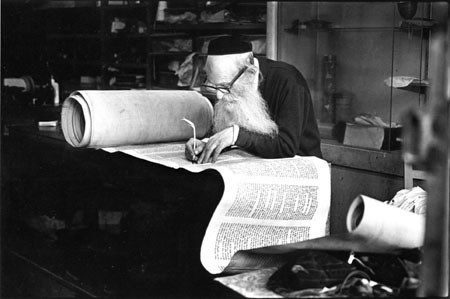
sefer-torahFor every complex question, as H.L. Mencken once put, there is usually an answer that is “clear, simple and wrong.” His observation rings true when it comes to a question I get at least once a week. What do Jews believe about Jesus?

Jews as a group rarely agree on matters of Jewish belief. How could we agree on the essence of another? Yet, we ignore the question at our own peril.

-Rabbi Evan Moffic
“5 Rabbis Explain Jesus”
Huffington Post

An MJ friend wrote me describing the resistance he has been encountering from other Messianic Jews about Torah. He gets it. Mount Sinai is an eternal covenant between God and Jewish people.

-Derek Leman
“Do Messianic Jews Really Need to Keep Torah?”
Messianic Jewish Musings

And meanwhile, the Bible from cover to cover is about God’s-plan-through-Israel-to-the-world and yet the “through Israel” part is forgotten by most. Deuteronomy 4:6 is in the Bible. Verify this for yourself.

-Derek Leman
“Why Don’t Christians Believe Deuteronomy 4:6?”
Messianic Jewish Musings

“What is the Torah?”

I’ve been blogging and blogging and reading and reading trying to come up with an answer that will work between my Pastor and me during our usual Wednesday night discussions. Pastor Randy is away for several weeks in association with his doctorate studies, but I sent him a link to Derek Leman’s blog post Do Messianic Jews Really Need to Keep Torah, since it addresses the heart of our conversations. Pastor has no spare time for a long blog post, but he did send me a brief email saying that he believes the Abrahamic covenant is eternal, but the Mosaic covenant is not.

I suppose I should have expected that response, and it surprisingly hit me in a tender spot. So when Derek wrote Why Don’t Christians Believe Deuteronomy 4:6, it did absolutely nothing to improve my disposition.

Really, is there any hope for communication across the aisle, so to speak, or are we doomed to endless discussion and endless disagreements with no middle ground between any of us?

Do I really want to live a life of faith like this, at least communal faith?

But Rabbi Moffic said that “Jews as a group rarely agree on matters of Jewish belief.” Ever since Sinai, the Jewish people have been chosen and called out to be different from all of the other peoples and nations of the Earth, but how do they stand all of the internal dissonance? My guess is that, at some core level, no matter what other disputes and disagreements one Jew has with another, at the end of the day, a Jew is always a Jew.

iron-sharpens-iron-hotOK, I know there are problems with that statement and there are all kinds of disputes between different sectors of Judaism, but when “they” come for you because you’re a Jew, those disputes vanish like a snow cone in a blast furnace. Beyond a certain point, we can even grasp hope based on a Jewish Cantor welcoming even Messianic Jews on Tisha B’Av.

But that doesn’t translate very well if at all to differing groups of Christians.

John the Baptist described himself as “the voice of one crying in the wilderness” (John 1:23), and that worked pretty well for him up until his beheading, but I’m not sure how well it’s working for me.

Iron sharpens iron, so one man sharpens another.

Proverbs 27:17 (NASB)

OK, I get that. The constant “head-banging” is supposed to sharpen us, but it also can be painful, and frankly, I’m getting a headache.

I know, “if you can’t stand the heat…” Maybe I should get out of the kitchen.

But that’s where the food is.

For everyone who partakes only of milk is not accustomed to the word of righteousness, for he is an infant. But solid food is for the mature, who because of practice have their senses trained to discern good and evil.

Hebrews 5:13-14 (NASB)

At the end of the day, a Jew is a Jew and like it or not, all Jewish people have been bonded together since Sinai and probably before that. Does that work for Christians, though? Are we bound together so that, when adversity strikes, we’ll join with each other based on our common identity as disciples of Christ?

I’d like to think so, but I don’t know. Jews are bound not just based on belief and theology, but by 3500 years of common experience and even down to the level of DNA. Although Jews don’t think of themselves in terms of being “tribal” anymore, it’s still there beneath the surface. Tribes and clans and families are bonded beyond any unbonding, and God drew all Jewish people to Him under the chuppah of cloud and fire at Sinai and sealed the covenant with Torah.

The Birthright program exists to encourage young Jewish people who have little or no attachment to the Land and to the Torah to experience Israel. I hear there’s something about standing on the ground and breathing the air in Israel that has an effect on Jewish people (and perhaps a few Christians as well). I can’t say from experience, but for the sake of my Jewish children, I hope so.

I can only say that for Christians, a common faith in Jesus is the lynchpin that holds us together, at least in theory. But while it is presupposed that Jews will argue with Jews as an expected behavior, how am I as a Christian supposed to explain to another Christian that being Jewish and the existence of the Torah are inexorably linked and cannot be unlinked. Even an atheist Jew will one day confront the meaning of being Jewish beyond the mere ethnic and genetic identity.

jewish-davening-by-waterI recently wrote about Jews encountering themselves through the mitzvot and some Rabbis hope that encouraging a Jewish person to experience even a single mitzvah will make a difference. At the time, I applied that hope to Christians as well, but we must face the facts that Christians don’t think of themselves in the same way as Jewish think of themselves.

No wonder that we can’t get Christians to see Jews as they want to be seen.

There are days when I just want to scream to the Church, “Just let Jews be Jews! We don’t have to agree with them! They don’t need our permission!” But I suppose that wouldn’t go over very well.

Jews rarely agree with each other on matters of belief. Christians are expected to agree with each other on matters of belief. If they don’t, then it usually means some group will split off from their church to form a different church. That’s how Christians manage the dissonance of disagreement.

I have what I think of as a unique relationship with my Pastor in that we can regularly meet every week, disagree on fundamental issues, and still be friends. Pastor lived in Israel for fifteen years and is intimately acquainted with Jewish life in Israel, so on that basis, he knows what it is like to live among lots of Jewish people. And yet, every week when we meet, I still feel like I’m facing some sort of battle for the rights of Jewish people to define their own identity as Jewish based on the Torah, especially Jews who are disciples of Messiah.

I keep thinking of the venerable 19th century Rabbi Isaac Lichtenstein who became a devotee of Yeshua past the age of sixty and yet remained wholly Jewish in his practice, observance, identity, and discipleship. His life as a devout Jew and a Messianic disciple seems so open and clear. Reading The Everlasting Jew showed me how his life made so much sense the way he lived it.

I don’t see a dissonance between what R. Lichtenstein believed and how he lived and the Biblical life of Jesus, Peter, and Paul. I just wish everyone could see what I see, not because I’m so smart, but because I believe I’m seeing what God wants all Christians to see when we look at Messianic Jews.

Why is communicating that vision so hard?

The Bible Between God and Man

Moses at NeboThis week’s Torah reading begins: (Deuteronomy 1:1.) “These are the words that Moshe spoke to the entire Jewish people.”

Noting the distinction between this book and the previous four, which are all “the word of G-d,” our Sages explain (Megillah 31b.) that Moshe recited the Book of Deuteronomy “on his own initiative.”

This does not, ח׳׳ו , mean that the Book of Deuteronomy is merely a mortal invention. Our Rabbis (Tosafos, op. cit.) immediately clarify that Moshe delivered his words “inspired by the Holy Spirit.” Similarly, when the Rambam defines the category of “those who deny the Torah,” (Mishneh Torah, Hilchos Teshuvah 3:8.) he includes: “a person who says that the Torah even one verse or one word does not emanate from G-d. If one would say, ‘Moshe made these statements independently,’ he is denying the Torah.”

Not a single commentator maintains that there is a difference in this regard between the Book of Deuteronomy and the four preceding books.

-Rabbi Eli Touger
“A Mortal Mouth Speaking G-d’s Word”
Adapted from Likkutei Sichos, Vol. IV, p. 1087ff; Vol. XIX, p. 9ff
Chabad.org

Reading this commentary on last week’s Torah portion reminded me of my ongoing discussion with my Pastor about the purpose of Torah. Pastor Randy has told me his particular understanding of the function of Deuteronomy, one I’ve never heard before (and I’ll refrain from sharing that with you at this time), but it also made me think of our discussions about the “inspired” nature of the Bible.

Rabbi Touger separates Deuteronomy from the rest of the Torah by saying the first four books were recorded by Moses just as they were given to him by God, but Deuteronomy involves a “relationship” between God’s inspiration and Moshe’s personality.

For the Book of Deuteronomy are merely Moshe’s words. Moshe’s identification with G-dliness was so great that when he states: (Deuteronomy 11:13.) “I will grant the rain of your land in its season,” he speaks in the first person although the pronoun “I” clearly refers to G-d. “The Divine Presence spoke from his mouth.” (See Zohar III, p. 232a; Shmos Rabbah 3:15.)

On the other hand, it is also clear that the book involves Moshe’s own thinking process. To give an example: there is a difference of opinion among our Sages as to whether the proximity (semichus) of two subjects in the Written Torah is significant or not. (Berachos 21b; Yevamos 4a.) One opinion maintains that it is, while the other explains that although when mortals structure their thoughts, order is important, but “Since the Torah was granted by the Almighty, the order of precedence is not significant.” (Raaban [Rabbi Eleazar ben Nasan], sec. 34.)

I’m reading this as saying Deuteronomy is inspired by God so much so that sometimes Moses speaks almost with God’s voice. On the other hand, Deuteronomy involves the words and thoughts of Moses and information provided by God is organized in Moses’s mind and presented in his oratory.

We have to believe that anything coming directly from God is perfect, at least at the moment of its delivery to mankind. What we do with it on the other hand, is another story. So how does that affect the Bible? When God inspired Moses (or any of the other human Bible writers), at that instant in time, perfect information flowed from the Divine to the mundane; from God to man. Through some process we don’t understand, the relationship was developed between that information and how it was interpreted and delivered by the human beings involved.

In Deuteronomy, Moses was speaking to the entire assembly of Israel and, I suppose, either he later wrote down everything he said, or someone was taking notes while he spoke. Tradition says that Moses wrote the entire Torah by his own hand including Deuteronomy. Scholars differ in their opinions, but I’m not going to get into that right now.

Is the Bible perfect?

Well, yes and no.

The Death of the MasterWe have to believe it contains the entire inspired Word of God, otherwise, the Bible is just another book, no different from any of the other supposedly holy books in other religious or philosophical traditions. On the other hand, the Bible does contain internal inconsistencies that we can’t resolve or “smooth out,” although both Jewish and Christian translators and theologians have tried over the long centuries.

I didn’t used to believe this until I was challenged to make the different gospel versions of the crucifixion map to each other. What day of the week exactly was Jesus executed? Don’t automatically say it was Friday, because that’s not a for sure thing. You have to understand that Passover was a special shabbat and that the Saturday shabbat was also observed. I won’t go into a lengthy explanation, but if you put the different gospel versions side by side, they do not match up. You can’t tell which day it was when Jesus died. It’s not the same day in all gospel versions.

Did God goof? God can’t goof. So did the various gospel writers goof?

Well, yes and no.

Yes, if you want to read the Bible like a newspaper or a legal document (though some portions are a legal document). No, if you realize that certain portions of the Bible are written like Chasidic tales, stories based on fact, but crafted for a specific audience, drawing from other, older Biblical and extra-Biblical texts, in order to communicate a particular message to the target audience.

If you read the Bible like Joe Friday would have wanted it (“The facts ma’am, just the facts”), it doesn’t work.

The explanation of the above concepts depends on the appreciation of the relationship between the Torah and our world. Our Sages state: “The Torah preceded the world.” Here, the concept of precedence is not chronological, for time like space is a creation, relevant only after G-d brought existence into being. Rather the intent is that the Torah is on a level of spiritual truth which transcends our material frame of reference. Although the Torah “descends” and “enclothes itself” in our world, speaking of seemingly ordinary matters such as agricultural laws, codes for fair business practice, and the proper structure for marriage and family relations, this is not its essence. The essence of the Torah is “G-d’s will and His wisdom,” united with Him in perfect unity. (See Tanya, ch. 4.)

This concept has always fascinated me. Even my Pastor believes that in God’s Heavenly Court, there exists a “perfect” Bible…God’s Word as it was given to humanity unaffected by the human mind, imagination, interpretation, or anything else. By inspiring people to write various portions of His Word, God, in effect, is “clothing” the Bible in humanity so that human beings can consume it.

Surely, this commandment that I am commanding you today is not too hard for you, nor is it too far away. It is not in heaven, that you should say, “Who will go up to heaven for us, and get it for us so that we may hear it and observe it?” Neither is it beyond the sea, that you should say, “Who will cross to the other side of the sea for us, and get it for us so that we may hear it and observe it?” No, the word is very near to you; it is in your mouth and in your heart for you to observe.

Deuteronomy 30:11-14 (NRSV)

This is the part of Torah I point to whenever Christians say that the Law was only given to Jews so that they’d realize the Law of God was too hard to keep and that they needed Jesus instead. It’s also a good scripture to bring out when I meet with Christians. The Torah, and in fact, the Bible as a whole, is a multi-dimensional, multi-layered, intertwining, interactive document that is more than a document, that was given to human beings to enact, ponder, study, discuss, argue over, and experience in awe.

The Bible was written by human beings in supernatural partnership with God and it digs as much into the living human psyche as it does into the Divine realm.

rabbi_child_and_sefer_torahI disagree (respectfully) with Rabbi Touger when he says that human beings as intermediaries and Bible writers are either derech ma’avir or “funnels” channeling God’s words and intent without altering them at all, or derech hislabshus in which the human intermediary puts what is given from God into his own words. I think that every word written by every Biblical writer was in some sense affected, transformed, or colored by the human writers, the derech hislabshus. Otherwise, God could have just written the whole thing with his “finger” as He did with the first tablets Moses took up to Sinai, the ones Moses smashed during the incident of the Golden Calf (and notice that God had Moses do the writing on the replacement tablets).

If there is a perfect Word of God, it resides with God. It is spiritual perfection, absolute wisdom, pure joy, intelligence, and love. But how could people understand any of it if it weren’t written in a human language and filtered through a human personality, vocabulary, cultural context, individual style, and so forth?

Enclothing the Torah in mortal intellect does not merely grant man the opportunity for advancement, it also introduces a higher quality to the Torah itself, as it were. For clothing limitless spirituality in the confines of mortal intellect represents a fusion of opposites that is possible only through the influence of G-d’s essence. Because His essence transcends both finiteness and infinity, it can weld the two together, bringing the spiritual truth of the Torah within the grasp of mortals.

My personal opinion is that the esteemed Rabbi Touger might be overstating his point just a bit. I’d prefer to say that the Bible acts as a sort of bridge between Heaven and Earth, between the existence of God and the existence of people. The split instant perfection entered our world, it became imperfect, hard to interpret, difficult to understand, internally inconsistent, all because human beings were allowed to affect what God provided. But this was allowed by design, otherwise man would have no part in God or His Word.

It is said that there are two revelations of God, the first being all of creation, hence no man has an excuse for not seeking God (Romans 1:20), and the Bible, God’s written revelation. Both are complementary. The universe and everything in it provides one set of information about God and the Bible a different but complementary data set.

But if our bridge is imperfect because we are imperfect, there is yet another revelation that has and will put everything in order.

And the Word became flesh and lived among us, and we have seen his glory, the glory as of a father’s only son, full of grace and truth.

John 1:14 (NRSV)

Jesus taught the Torah to his people Israel correctly and he interpreted many things, most of the time using parables. It is said in certain corners of Judaism that when Messiah comes (returns), he will teach Torah perfectly and we will all know. More than that, it will be written on our hearts so that we will all know.

No longer shall they teach one another, or say to each other, “Know the Lord,” for they shall all know me, from the least of them to the greatest, says the Lord; for I will forgive their iniquity, and remember their sin no more.

Jeremiah 31:34 (NRSV)

But that’s then, not now. Now we struggle, bicker, and argue about the purpose of Torah, the meaning of the Bible, how it should be interpreted, what we’re supposed to do with it, and how it’s supposed to guide our lives. As Paul said:

For now we see in a mirror, dimly, but then we will see face to face. Now I know only in part; then I will know fully, even as I have been fully known.

1 Corinthians 13:12 (NRSV)

Of course, it is both Christianity and Judaism that struggles to peer through Paul’s metaphorical “glass darkly” and to understand who we are and who God is:

Jews as a group rarely agree on matters of Jewish belief. How could we agree on the essence of another?

Rabbi Evan Moffic

aleph.jpgMoses spoke Deuteronomy to the entire assembly of Israel on the banks of the Jordan river as they were about to cross over and enter the Land. We too are on a similar journey, hearing the Word of God as filtered through human beings and waiting to “cross over,” so to speak, not with Joshua but with Messiah, into his Kingdom. This is the gospel message or the good news. Messiah will come as King and restore what was broken and lost, he will gather in his exiled children and restore Israel, Jerusalem, and the Temple. He will also gather in those among the nations who are called by his name.

But we must never forget today that God is not aloof and apart. The Word was given to man from Heaven and it is not far off. True, it’s not well comprehended, but it was meant to be understood, at least to the best of human ability, and to be lived out.

And though we only seem him dimly now, as through a darkened or dirty window, someday we’ll see him face to face.

And we will rejoice.

Prophesies of the Master

jewish-revolt-against-romeDo the prophesies of Jesus Christ about the final tribulation really mean what we think they mean?

By the time the Jewish revolt against Rome began, only a few of the Master’s original twelve disciples remained alive. Most had already fallen asleep in various places throughout the world. Thomas continued his work in India; tradition says he died in 70 CE. Simon the Zealot followed up on the work of Thaddeus in Armenia and Parthia, but according to “The Golden Legend,” he did not escape martyrdom, and he may have already been dead by the outbreak of the war with Rome. John continued his labors in Asia Minor where he kept a low profile through the years of the Jewish revolt. James the Less appears to have been still alive in Galilee near the end of the Jewish revolt.

-D. Thomas Lancaster
“War in Perea and Judea,” pg 1037
Torah Club, Volume 6: Chronicles of the Apostles
First Fruits of Zion (FFOZ)

This is how Lancaster begins the study of the “Acts of the Apostles” for the week of Torah Portion Balak. This part of Volume 6 of the Torah Club covers the time of the Jewish revolt against Rome, which leads up to the siege of Jerusalem and culminates in the destruction of the Holy Temple and the dispersion of most of the Jewish inhabitants of Israel into the diaspora.

I thought it was appropriate, since we are currently in the three weeks of mourning between 17 Tammuz and Tish’a B’Av, that I cover a little bit of that “territory” in the history of the Jewish people.

Actually, what captured my interest in the Torah Club study, were the prophesies of the Master regarding this period in Israel’s history. Within this particular lesson, Lancaster recounts several prophesies of the Messiah that not only provide a direct revelation regarding this tragic time for the Jewish people, but which, in my opinion, tells us something new about the words of Christ. For the sake of length, I’m only going to comment on three of the prophesies.

“Therefore, behold, I am sending you prophets and wise men and scribes; some of them you will kill and crucify, and some of them you will scourge in your synagogues, and persecute from city to city, so that upon you may fall the guilt of all the righteous blood shed on earth, from the blood of righteous Abel to the blood of Zechariah, the son of Berechiah, whom you murdered between the temple and the altar. Truly I say to you, all these things will come upon this generation.”

Matthew 23:35-36 (NASB)

The Zealous implemented a state of martial law in the city. They positioned guards at all the exits and allowed no one to leave as they rounded up men culpable in the uprising against them.

-Lancaster, pg 1041

Lancaster recounts the general circumstances in Jerusalem during the Shevet-Tevet, 68 CE time period as recorded by Josephus in Jewish War. In describing the events associated with the above-quoted prophesy of the Master, he relates how the original Sanhedrin was executed by the Zealots and an illegal court was created in its place. But at the “trial” of Zecharyah ben Baruch, a wealthy citizen in Jerusalem who was thought to be a Roman collaborator, Zecharyah’s defense was so convincing, that the Zealot’s puppet court found him innocent of the charges.

But the Zealots were not out for justice and their response fulfilled the Master’s prophetic words:

The Zealous rose up in fury. Two of the Zealot leaders unsheathed their swords and ran the plaintiff through. They said, “You also have our verdict. We acquit you too.” Then they dragged his body into Solomon’s Colonnade and threw it from that height into the valley below. The other Zealots struck the seventy legislators with the flats of their swords and drove them from the Temple. That was the last trial a Sanhedrin conducted in the city of Jerusalem.

The incident fulfills a word spoken by Yeshua in reference to the murder of Zecharhiah the son of Jehoiada in the Temple.

-ibid, pg 1042

The second of the prophesies of Jesus I’m citing here is even more illuminating and perhaps controversial.

I tell you, on that night there will be two in one bed; one will be taken and the other will be left. There will be two women grinding at the same place; one will be taken and the other will be left. [Two men will be in the field; one will be taken and the other will be left.”] And answering they said to Him, “Where, Lord?” And He said to them, “Where the body is, there also the vultures will be gathered.”

Luke 34-37 (NASB)

nyc-sandy-aftermathMost Christians believe they have a complete understanding of the meaning of these verses, and it provides a great deal of theological comfort to them. But notice that the section in brackets is not contained in the oldest manuscripts, which may hint at something about the meaning of what Luke is trying to communicate.

The Zealots kept the city under their martial law. They punished all crimes with death, regardless of how serious the offense. They refused to allow anyone to leave lest he defect to the Romans. They struck down those they discovered escaping and left them unburied. Corpses lay along the roadways into the city. They refused to allow burial for any man they put to death.

To the people of Jerusalem, it seemed as if the Zealots had declared war against Rome and God both. They left the dead bodies to putrefy in the sun. They put to death anyone who dared to bury one of their victims. Josephus says, “He that granted the favor of the grave to another soon stood in need of a grave himself.” In those days, the words of the Master were fulfilled.

-Lancaster, pg 1043

This is a very different interpretation of the Master’s prophesy I quoted above than what we are used to hearing. There is no relation to “the rapture” at all (and I know I’ll probably “get in trouble” for even quoting Lancaster’s interpretation). One is taken by the Zealots for various crimes, real or imagined, and the other, who is not a suspect, is left behind. And where the dead bodies are left in the street, there the vultures gather.

You may have heard stories of Hitler’s Gestapo kidnapping political enemies in the middle of the night from their homes and from their beds. Similar stories have been told of the KGB in the Soviet Union. Under any despotic rule, citizens can be taken away without due process, imprisoned, or killed. There is no justice and no mercy. Why then could this not be the fate of many in Jerusalem during the Roman siege against the city as the Zealots ruled inside the city’s walls with brutality and force?

For then there will be a great tribulation, such as has not occurred since the beginning of the world until now, nor ever will. Unless those days had been cut short, no life would have been saved; but for the sake of the elect those days will be cut short.

Matthew 24:21-22 (NASB)

This is another prophesy that is attributed, in Christian tradition, to “the rapture,” stating that “the elect” will be whisked into Heaven before things get too bad on earth in the last days before the Messiah’s return.

However, according to Lancaster’s commentary, this prophesy may well have been fulfilled during the Fall of Perea in the month of Adar, 68 CE. Again, Lancaster’s source is Josephus’ Jewish War.

As the springtime drew near, Vespasian commenced his campaign. The rebels in Perea held the city of Gadara (or Gedora), which Josephus called “the capital of Perea and a city of some strength.” The leading men of Gadara had sent ambassadors to Vespasian urging him to come and liberate their city from the rebels. Vespasian took the tenth legion from Scythopolis (Beth-shan) and marched them to Gadara. On the fourth day of Adar, the legion came within sight of the city. At the sight of the approaching legion, the rebels abandoned the city and fled. Gadara surrendered immediately.

Vespasian left his tribute Placidus and five hundred cavalry and three thousand footmen to pursue the fleeing rebels. He returned to Caesarea.

-Lancaster, pg 1043

Placidus pursued and harassed the rebels, killing them as they ran and eliminating the populations of any hapless villages the rebels happened to take refuge in. Finally the rebel forces were trapped, hemmed in between the rain-swollen Jordan river and Placidus and his men.

By the time it was all over, more than fifteen thousand corpses floated down the Jordan and washed into the Dead Sea. Placidus continued his assault all the way to the Dead Sea, taking all the villages and towns of Perea except the fortress Macherus.

This slaughter happened just south of Pella where the Jewish believers had taken refuge inside the walls of that city. From their perspective in the city, it seemed as if the Master’s words had come to pass.

They prayed ardently for the coming of the Son of Man to cut the days of tribulation short. They looked for a sign of the Son of Man in the sky, and they listened for the sound of His shofar, but He did not come.

-ibid, pp 1043-44

Broken FaithLancaster presents more prophesies of Jesus as applied to the says that preceded the fall of Jerusalem, verses that most Protestant churches attribute to a final tribulation in which the faithful will be taken up and those who are not chosen are “left behind.”

Can I say what these prophesies mean? No, of course not. I present this interpretation from the Torah Club for two reasons. The first I’ve already mentioned, to recount and commemorate these three weeks of mourning in solidarity with the Jewish people. The second is to illustrate that prophesy is one thing and theology and doctrine based on long-held Christian tradition is something else entirely.

I’ve often wondered what would happen in the final days of tribulation, before the return of Christ, if we all finally realized that there is no rapture…what would happen to us…what would happen to the faithful?

However, when the Son of Man comes, will He find faith on the earth?”

Matthew 24:8 (NASB)

If there is no rapture, if terrible times arrive and we are not rescued, if like the believing Jews who sought refuge in Pella, we look to the sky and pray, if like those devout ones, we gaze up to in the air and the Master does not come in the clouds when we expect him to, what happens to us? What will become of our faith if we fail to hear the sound of his shofar? Then, when Messiah does come at the time appointed by the Father, will he find that we still have faith…or will it have fled along with our courage as our theological expectations and the traditions of the church turn to dust?

The Purpose of Torah in New Testament Judaism, Part 3

world-to-comeRabbi Simeon said: If a man looks upon the Torah as merely a book presenting narratives and everyday matters, alas for him! Such a torah, one treating with everyday concerns, and indeed a more excellent one, we too, even we, could compile. More than that, in the possession of the rulers of the world there are books of even greater merit, and these we could emulate if we wished to compile some such torah. But the Torah, in all of its worlds, holds supernal truths and sublime secrets…

Thus the tales related in the Torah are simply her outer garments, and woe to the man who regards that outer garb as the Torah itself, for such a man will be deprived of portion in the next world.

-Zohar, III.152 as quoted in
The Garments of Torah by Michael Fishbane
Chapter 3: The Garments of Torah – Or, to What May Scripture be Compared?, pg 34

(If you haven’t done so already, please read Part 1 and Part 2 of this series.)

I mentioned previously that there is a strong temptation to take the Torah into mystical and spiritual realms since it seems that’s where it comes from. I also previously mentioned that Pastor Randy believes there is a pure and perfect Word of God that exists in the Heavenly Court and that the Bible we possess in our world, while it contains the Word of God, is not, in fact, the Word of God (ProclaimLiberty commented that indeed this isn’t a correct way to look at the Torah, though). As the Zohar states, we may consider our Bible to be merely a garment, an outer covering, but not the essence of its Holy contents.

Fishbane, in Chapter 3, compares and contrasts Torah as mystic vs. mundane, if I can apply such a word to Torah. This is his response to the current trend in Bible studies to address and consider the Biblical texts from a purely literary perspective. This is the sort of viewpoint we find in Richard Elliott Friedman’s book Who Wrote the Bible?.

Friedman carefully sifts through clues available in the text of the Hebrew Bible and those provided by biblical archaeology searching for the writer(s) of, primarily, the Pentateuch. He does so with clarity and engaging style, turning a potentially dry scholarly inquiry into a lively detective story. The reader is guided through the historical circumstances that occasioned the writing of the sources underlying the Five Books of Moses and the combining of these diverse sources into the final literary product. According to Friedman, the most controversial part of his case is the identification of the writer and date of the Priestly source. This book is neither comprehensive nor unduly complex, making it a good introductory text for beginners and nonspecialists. Recommended for all academic libraries. –Craig W. Beard, Harding Univ. Lib., Searcy, Ark.

Copyright 1987 Reed Business Information, Inc. –This text refers to an out of print or unavailable edition of this title.

-as quoted from Amazon.com

Many modern Bible scholars are in love with the “JPED” theory of Old Testament (Tanakh) authorship, but in this approach, said-scholars all but remove God from the equation and reduce the Bible to a book written for political, religious, and personal motivations, rather than to impart the history and message of God’s interaction with human beings.

However, mysticism is an equally difficult realm in which to thrust the Bible as it far exceeds mere “inspired Word of God” and goes into structures of comprehension that are supposed to transport us into the upper chambers of the Almighty. I personally know some people in the Hebrew Roots movement who immediately become offended and incensed at the mere mention of the “K-word” (Kabbalah) and the quote from the Zohar above is not likely to earn me any points with them.

I’ve admitted before that I’m not mystic. I appreciate and enjoy some of the Jewish mystic writings as metaphors for certain spiritual truths, but I don’t take them as literal experiences. In fact, in an effort to understand something of the Christian mystical perspective, I recently read John A. Sanford’s book Mystical Christianity: A Psychological Commentary on the Gospel of John, however Sanford’s attempt to analyze this gospel from the perspective of Carl Jung and Jungian psychology seemed anachronistic and distracting rather than spiritually revealing.

I do agree though, that if we look at the Bible just as a book, even a Holy and inspired book, and see only the nuts and bolts narrations, our understanding of the message God is trying to deliver to humanity will be extremely limited. The problem is, digging any deeper than the literal meaning of the text presents the danger of getting lost in either mystical byways or just our own imaginations.

I started writing this series as an effort to explain what “keeping the Torah” means to the Jewish disciples of Yeshua (Jesus) but the “question behind the question” is “What is Torah?” That’s an amazingly difficult question to answer.

But if we lack wisdom by considering a mitzvah as just a text on paper narrative (the commandment to visit the sick) or as a simple behavioral act (visiting a sick friend in the hospital), do we gain wisdom and insight and the deeper meaning of Torah by considering the study and performance of a mitzvah as a transcendent act that intimately connects us to God?

“Such a man,” says another Zoharic text (II.99a-b). “is…a ‘bridegroom of the Torah’ in the strictest sense…to whom she (divinity as beckoning Bride) discloses all her secrets, concealing nothing.”

-Fishbane, pg 35

transcendent-shechinahHere, I see a poetic image of the Torah in her “garments,” chaste before her bridegroom, and approaching the act of intimacy, she sheds her clothing, revealing herself to her beloved and finally, she holds back no secrets from the spirit of her cherished one. Fishbane, in discussing the bride, presents both the narrative or legal form of the Torah, the bride in her garments, and the expression of divinity, the inward truth of God, the veiled body of the bride in the process of disrobing as the groom not merely studies Torah but occupies himself (“osek”) fully in Torah:

Said Rabbi Joshua the son of Levi: Every day, an echo resounds from Mount Horeb, proclaiming and saying: “Woe is to the creatures who insult the Torah.” For one who does not occupy himself in Torah is considered an outcast, as is stated “A golden nose-ring in the snout of a swine, a beautiful woman bereft of reason.” And it says: “And the tablets are the work of G-d, and the writing is G-d’s writing, engraved on the tablets” ; read not “engraved” (charut) but “liberty” (chairut)—for there is no free individual, except for he who occupies himself with the study of Torah. And whoever occupies himself with the study of Torah is elevated, as is stated, “And from the gift to Nahaliel, and from Nahaliel to The Heights.”

-Pirkei Avot (Ethics of Our Fathers) 6:2

As Fishbane progresses in his writing, he temporarily sets aside the mysticism of Torah to “put matters in a fuller historical and hermeneutic perspective.” (pg 36) Fishbane characterizes the Torah being viewed in ancient Israel as “the divine voice” spoken directly or indirectly through a number of “filters” (Prophets or more indirect signs and wonders). God’s revelations are expressed in the text as legal and ethical teachings presented across an epic narrative of the history of Israel and her relationship with God.

However, if the text is treated too much like “text,” there is a danger of swinging the pendulum too far in the other direction and stripping the Torah of its divine origins and worse, reducing it to a set of anachronistic tribal laws that do not “travel well” going forward in time.

Of considerable importance in the sanctification of Scripture is that the prestigious literary canon of divine teachings had become a “closed literary corpus” – one culturally reopened only through human textual exegesis.

-Fishbane, pg 37

This leads us to Fishbane’s commentary on the early Pharisees and their comprehension of the “paradoxical and dialectical” nature of the scriptures. According to Fishbane, their resolution to the ambiguities presented in the Bible and in an effort to prevent Torah from becoming a “dead letter,” was to search the text “in every possible way for every possible prolongation of the original divine teachings in new times,” thus making “the old written Torah (into) a ‘living Torah.'”

So we stand between preserving the divinity of scripture as a romanticized mystical text and hermeneutically extending the Torah in order to adapt its divine truths to a constantly changing environment.

I can imagine that neither perspective will be particularly appealing to most readers.

I once criticized John MacArthur because I mistakenly believed he said that, in defining “Biblical sufficiency,” the Bible was literally the only book anyone would ever need to understand any topic.

I’ve since learned that “sola scriptura” doesn’t quite work that way, though I’m still not a big fan of this method of considering the Bible. Fishbane however, explains that Rabbinic commentary takes the idea of “the Bible contains all there is” to a level that would make even MacArthur balk.

…the early Pharisees revealed unexpected possibilities in the original divine communication. It was gradually claimed that “all is in it” (Mishna Abot v.25) – or better, that all could be recovered from it if one but had the appropriate hermeneutic key.

-ibid, pg 38

heurmenutic-keyIn considering my commentary on Boaz Michael’s teaching “Moses in Matthew,” I can only believe that under the inspiration of the Holy Spirit, the apostle Matthew “had the appropriate hermeneutic key” in extracting and applying portions of the Torah, Prophets, and Writings to the life of Messiah in ways that had not originally been presupposed (Hosea 11:1 to Matthew 2:15 for instance). However, unless we assume that the Pharisees and the later Rabbinic Sages also had access to the same influences of the Spirit, can we believe that their “hermeneutic key” is just as “appropriate” as Matthew’s, and that it unlocked the same doors?

I previously wrote a multi-part commentary based on the paper “Matthew 23:2-4: Does Jesus Recognize the Authority of the Pharisees and Does He Endorse their Halakhah?” written by Noel Rabbinowitz for the Journal of the Evangelical Society (PDF). In his paper, Rabbinowitz concluded that not only did Jesus recognize the halachah of the Pharisees but he acknowledged that they had the authority to establish valid halachah in Israel!

This may be a bit of a stretch for most of you reading this, but if we allow Matthew 23:2-4 to act as a bridge between the inspired authority of the gospel and other New Testament writers and the subsequent Rabbinic authorities in Judaism, we may somewhat reasonably conclude that halachah established after the New Testament canon was closed was still tacitly approved from Heaven.

This interpretation has tons and tons of problems (Rabbi Carl Kinbar posted a wonderfully insightful comment on this matter), not the least of which are the pronouncements of the Rabbis which are in direct opposition to Jesus and faith in him as Messiah, however dismissing this perspective out of hand denies not only the stated word of Messiah in the Bible, but the opportunity to view post-exile Judaism as possessing leaders who indeed did speak to and hear from God (which is historically what Christianity has done in the development of supersessionism for the past nearly twenty centuries).

Returning to Fishbane and connecting him (temporarily) with Matthew, I believe that Matthew “encoded” certain information in his gospel that could only be decoded or unpackaged by an audience with the “appropriate hermeneutic key,” one that provided the traditional associations and interpretations to older sections of the Holy text. In addressing scripture, the Pharisees and the Jewish sages who followed them attempted to continue to unlock the pages of the scriptures using (inspired?) hermeneutic keys and amazingly, Fishbane acknowledges that Christianity has done the same thing.

Surely you will have caught here more than a faint Jewish echo of the well-known “interpretatio Christiana,” by means of which Virgil and other pagans were accommodated by the Church Fathers into the normative Christian fold insofar as their writings were shown to “anticipate” the real good news — albeit through a glass darkly.

-ibid, 39

OK, so it doesn’t sound like that much of a compliment, but it does compare the interpretative activities and methods of the Pharisees to the early church fathers conferring, if only by inference, the authority to said-church fathers to develop valid Biblical interpretations. Of course, I have to deliver the same caveat for some of their hermeneutic gymnastics (especially those that discount Israel and denigrate the Jews) as I do certain conclusions, rulings, and pronouncements by the Rabbinic sages that discount the Messiahship of Yeshua.

So where does all this leave us?

…and thus to regard the uniqueness of Scripture as its capacity to teach simultaneously at various cognitive levels; the esoteric tradition of Judaism was concerned to encounter the presence of God, and thus to see the special sanctity and uniqueness of Scripture in its being at once a hieroglyph of the divine Logos and divine Reality itself. God is not merely present in Scripture through a kind of verbal displacement. God and Scripture are, in fact, one mysterious and inseparable Truth.

-ibid, pg 42

simhat-torahWhat is Torah and how is it applied in the lives of New Testament Jews, both in the first century CE and today? The answer seems to travel in different directions. Torah is a bride and the Jewish people are the bridegrooms, and at the intimate urgings and involvement of the bridegroom, the bride begins to doff her garments and reveal her deeper mysteries and truths. Torah is a multi-layered, encapsulated, encoded set of pronouncements that at once present the details of moral, ethical, and legal standards and that, properly read, reveal the divine meaning lurking behind the words on the page, allowing the performance of each mitzvah not simply to be a “good deed” but an act of loving intimacy and devotion of the Jewish people to God.

Mystic or hermeneutic pathways both leading to the same goal: the desire to draw nearer to the Creator.

In this, I don’t mean to say that only Jews desire intimacy with God or that Christians cannot deeply occupy themselves in Torah and benefit from the experience, but the focus of this series has to do with the purpose of Torah in the lives of the Jewish disciples of Messiah. Thus, my focus must be on Torah as applied specifically to Jewish people.

Part 4 of this series should return to this topic and confront something a little less “mystical.”

The Purpose of Torah in New Testament Judaism, Part 1

creative-torahJewish tradition holds that “Moses received the Torah from Sinai,” yet there is also an ancient tradition that the Torah existed in heaven not only before God revealed it to Moses, but even before the world was created.

“The Written Law: Torah”
Jewish Virtual Library

Last night was my regular Wednesday evening meeting with Pastor Randy in his office at church. Often our conversations take various twists and turns (last night was no exception) but we tried to stick to our task of discussing D. Thomas Lancaster’s book The Holy Epistle to the Galatians

Between last week and last night, we managed to cover chapters 6 and 7, but we keep running into a wall based on our different perspectives.

Paul had an ulterior motive for this trip to Jerusalem. He intended to use the opportunity for a private meeting with the apostles, those reputed pillars of the assembly under James the Righteous, the brother of the Master. James presided over the assembly of Messiah as the steward of the throne of David, so to speak. Paul wanted to present his unique interpretation of the gospel to James and the apostles – namely the version of the gospel that God-fearing Gentile believers need not become Jewish in order to inherit salvation, enter the kingdom of heaven, and obtain citizenship in the people of God; rather that faith in the Master was sufficient for even Gentiles.

-Lancaster, Sermon 6: The Big Meeting (Galatians 2:3-5), pg 60

One of the problems Paul had encountered was hearing of “false brothers” (Galatians 2:4) coming into the Messianic communities in Galatia, and convincing some of the Gentile believers that they could only be saved if they were circumcised and converted to Judaism. This was contrary to what Paul believed, but he needed his understanding of the Gentile role in Messianic Judaism confirmed by the Council of Apostles in Jerusalem (which it finally was in Acts 15).

Pastor Randy agrees with me that non-Jews don’t have to convert to Judaism and take on the full weight of Torah as the Jews in order to become disciples of Jesus. However, he believes the “false brothers” were not just convincing the Gentiles to be circumcised, but the Jesus believing Jews as well!

The underlying belief is that both Jews and Gentiles were being taught by Paul that no one must “keep the Torah” once they have come to faith in Jesus because Jesus fulfilled the Law (This contradicts Paul’s own testimony that he never broke any of the laws of Torah, which he repeated many times starting with Acts 21, including what he says in Acts 25:8).

(Note that I’m using the New American Standard Bible – NASB – for quoting Bible verses unless otherwise indicated.)

Do not think that I came to abolish the Law or the Prophets; I did not come to abolish but to fulfill.

Matthew 5:17

For Christ is the end of the law for righteousness to everyone who believes.

Romans 10:4

According to the Greek (according to Pastor Randy), the word “fulfill” in Matthew 5 gives the sense of to fill up, to complete, rather than “fulfilling prophesy” as in simply meeting the qualifications.

Therefore the Law has become our tutor to lead us to Christ, so that we may be justified by faith.

Galatians 3:24

Pastor interprets this verse the way you might expect, that the Torah had one primary purpose and that when Jesus came, that purpose was completed and the Torah, for the most part, is no longer valid or at least not currently valid.

temple-prayersThis actually is a little complex because there are whole sections of Torah that have to do with the Temple and Priesthood that cannot currently be performed for obvious reasons. However, both Pastor Randy and I believe that there will be a third Temple and when it exists, some or all of the laws related to Temple worship will be re-established. We also agree that what Christianity calls “the moral laws” of the Torah remain, such as feeding the hungry and visiting the sick, and these are laws that apply to Christians and (believing and non-believing) Jews. You can’t eliminate all of the Torah without eliminating Christianity.

My assumption is from the opposite end of the telescope, so to speak. I believe that the Jewish believers including James, Peter, and Paul, would not have automatically assumed that the coming of Moshiach would have meant their Torah-observant lifestyles would have been changed or diminished in any way. In fact, I believe that their faith in Messiah would have given them a renewed sense of purpose and meaning in Torah.

You see, brother, how many thousands there are among the Jews of those who have believed, and they are all zealous for the Law…

Acts 21:20

What shall we say then? Is the Law sin? May it never be! On the contrary, I would not have come to know sin except through the Law; for I would not have known about coveting if the Law had not said, “You shall not covet.” But sin, taking opportunity through the commandment, produced in me coveting of every kind; for apart from the Law sin is dead. I was once alive apart from the Law; but when the commandment came, sin became alive and I died; and this commandment, which was to result in life, proved to result in death for me; for sin, taking an opportunity through the commandment, deceived me and through it killed me. So then, the Law is holy, and the commandment is holy and righteous and good.

Romans 7:7-12

There seems to be a duality in how the Torah is addressed in the New Testament, so we can each make a case for the Law being considered “good” or “bad” but what we are trying to determine is if the Torah retained a purpose for the Jewish believers after the resurrection and ascension of Jesus. In order to do that, Pastor Randy and I need some sort of definition for “Torah” or more likely, a mutually agreed upon answer to the question, “What is the purpose of the Torah?”

Pastor believes that there is a purpose to certain portions of the Torah after the ascension but that those portions apply equally to both Jewish and Gentile believers, since believers are defined by faith in Jesus as the bottom line. I disagree and believe there is an additional differentiation between Jewish and Gentile believers based on Sinai and that the Jewish believers remain distinct, even among the larger body of Gentile disciples of Messiah.

My project is to try to investigate the purpose of Torah for Jewish people who are in Messiah. Pastor is going to approach it from his perspective starting with Calvin’s Purposes of the Law in the New Testament. While I think it’s necessary to look at such a viewpoint, my concern is that by definition, it will not take the possibility of continued Jewish Torah observance into account.

I think it is completely reasonable to say that believing Jews and Gentiles can still have differences in obligation and duty under the Torah, just as Levites and Kohens have different duties under Torah than other Jewish people. They are all Jewish and yet specific Jews have certain additional obligations based on who they are. In a community of Jewish and Gentile believers, they (we) are all believers, but the Jews have certain additional obligations based on who they are.

Even a casual Google search on the string, “What is the purpose of the Torah” turned up a vast number of what seems to be very compelling sources, too many to review and summarize in a single blog post. I know this conversation with Pastor Randy will go beyond next week’s meeting, but we both agree that we need to, if not settle the matter, at least have a better handle on it than we do now (we’re also covering Chapter 8 in Lancaster for next week).

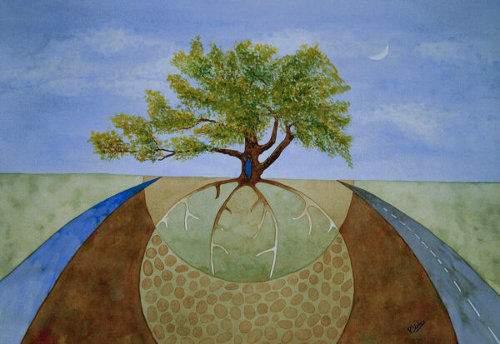
torah-tree-of-lifeI may not be the sharpest knife in the drawer, so to speak, but I’m not the dullest either. I know how to do my homework. On the other hand, I’m still only one person and as such, have the limitations of a single perspective. If anyone has something useful or can point me to a resource that can assist me in looking at the purposes of the Torah for believing Jews, both in the time of Paul and in the present age, I’d certainly appreciate you giving me a “heads up.”

Oh, Pastor Randy reads my blog every day, so it’s not like I’m trying to pull a fast one or something.

One more thing. At the beginning of this blog post, I quoted from Jewish Virtual Library on part of the “identity” of the Torah. It’s interesting that Pastor Randy pretty much agrees with that definition. That is to say, he believes there is a “Word of God” that is independent of the physical object we call a “Bible.” There is a pure, refined, holy, transcendent Torah in Heaven that no man has access to. The Bible contains the Word of God, but the Bible isn’t actually that Word.

That belief lends itself to some very interesting possibilities about what happens when we study the Bible, but I’ll stop at this point rather than try to explore such a vast territory.

The Torah is a tree of life for those who grasp it, and its supporters are praiseworthy. Its ways are ways of pleasantness and all its paths are peace. Lengthy days are at its right; at its left are wealth and honor. Hashem desired for the sake of its [Israel’s] righteousness, that the Torah be made great and glorious.

-from the Siddur

I hope to continue contributing to this project on my blog with some regularity, not only because of my conversations with my Pastor, but for its own sake. I suppose I’m “reinventing the wheel,” and perhaps some knowledgeable scholars have already done some or most of the work for me. If that’s true and who know where I can access that work, don’t be shy. Let me know.

More questions and another perspective on Torah coming up in Part 2 of this series.