Tag Archives: Bible

The Signpost Up Ahead

waiting-for-a-signMay it be Your will … that You lead us toward peace … and enable us to reach our desired destination for life, gladness, and peace.

-Prayer of the Traveler

Before we take a long trip in a car, we first consult a map to determine the best route. If we know people who have already made that particular trip, we ask them whether there are certain spots to avoid, where the best stopovers are, etc. Only a fool would start out without any plan, and stop at each hamlet to figure out the best way to get to the next hamlet.

It is strange that we do not apply this same logic in our journey through life. Once we reach the age of reason, we should think of a goal in life, and then plan how to get there. Since many people have already made the trip, they can tell us in advance which path is the smoothest, what the obstacles are, and where we can find help if we get into trouble.

Few things are as distressful as finding oneself lost on the road with no signposts and no one to ask directions. Still, many people live their lives as though they are lost in the thicket. Yet, they are not even aware that they are lost. They travel from hamlet to hamlet and often find that after seventy years of travel, they have essentially reached nowhere.

The Prayer of the Traveler applies to our daily lives as well as to a trip.

Today I shall…

…see what kind of goals I have set for myself and how I plan to reach these goals.

-Rabbi Abraham J. Twerski
“Growing Each Day, Iyar 21”
Aish.com

I can see the point Rabbi Twerski is making with this, but he missed a few things. When the first European explorers were sailing their tiny ships to the west and south across the unknown vastness of the ocean, they had no maps at all to guide them, and even those who went after them probably had maps that were woefully inadequate to the task of surely guiding their voyages. Exploring ships would be gone for years at a time and some of them never came back, making it difficult for those who wanted to follow to repeat their journeys with any sort of accuracy. Sailing uncharted waters doesn’t allow for consulting a map first to determine the best route. It’s a voyage into the unknown. Here be dragons.

I know life isn’t exactly like that but there are similarities. While we can consult our parents and other people whom we feel would be good “guides” for our journey in life, no two people live exactly the same life, so there are going to be “blank spots.” My son David served in the United States Marine Corps and I’ve never been a member of the Armed Forces. Before he entered the Corps and during his service, I had no way to guide him through many of his experiences. Even now that he has been honorably discharged for several years, there are things I can’t relate to because I didn’t live the life he did. Only others who have also served could understand what David went through.

That doesn’t mean my understanding and “sage” advice to him is useless…but there are limits.

Which brings me to the Bible.

I know what you’re thinking. You’re thinking that the Bible is the perfect guide for a person’s life, and that it anticipates every detail for good or bad that we could possibly encounter.

Well, that’s not entirely true (Note: I wrote this before reading a chapter from John F. MacArthur’s (editor) book Think Biblically called “Embracing the Authority and Sufficiency of Scripture,” a photocopy of which was given to me by Pastor Randy…more on that in a later blog post). In the Aish.com Ask the Rabbi pages, someone asked the following question:

How do we know that the Torah we have today is the same text given on Mount Sinai? Maybe it’s all just a game of “broken telephone.”

This is part of the Rabbi’s answer:

The Torah was originally dictated from God to Moses, letter for letter. From there, the Midrash (Devarim Rabba 9:4) tells us:

Before his death, Moses wrote 13 Torah Scrolls. Twelve of these were distributed to each of the 12 Tribes. The 13th was placed in the Ark of the Covenant (along with the Tablets). If anyone would come and attempt to rewrite or falsify the Torah, the one in the Ark would “testify” against him.

Similarly, an authentic “proof text” was always kept in the Holy Temple in Jerusalem, against which all other scrolls were checked. Following the destruction of the Second Temple in 70 CE, the Sages would periodically perform global checks to guard against any scribal errors.

reading-a-mapMost Christian and Jewish Torah scholars and academics will likely disagree with this explanation, since it’s based more on Midrash than on historical record or other academic and scientific investigation. The Rabbi also neglects to mention the destruction of Solomon’s Temple and what would have happened to the Ark and the Torah scroll it contained (assuming Midrash is correct and the scrolls ever existed in the first place). When ten of the twelve tribes went into the diaspora, what happened to their Torah scrolls? Do any of those original scrolls exist today? If not, how do we know the level of fidelity of the Torah we have today to those earlier copies (and this is why the Dead Sea Scrolls are such in incredible find because they allow us to check much of our current Bible against much earlier manuscripts)?

Even within the scholarly study of the New Testament, experts such as Larry Hurtado often have differences of opinion with other academics in the field. These aren’t bad people, inexperienced people, or unintelligent people…they are educated believers who are experts in their field, and who, based on their studies, continue to disagree with each other, even on important aspects of the Gospels and Epistles.

That, of course, leads to different conclusions, at least to some degree, on the nature of Jesus Christ and what was being taught to the first century CE Jewish and Gentile believers.

It’s not just having a roadmap and it’s not just having an accurately translated roadmap, it’s interpreting the roadmap in one way or another. It’s also important to remember that interpretation starts right at the first step: translating the ancient text into a language we can understand.

I know what you’re thinking. What about the Holy Spirit? Isn’t the Spirit of God supposed to guide us in all truth and to help us correctly understand the Bible? In theory, yes. In practicality, it doesn’t seem to work out that way. Otherwise, all believers would have an identical understanding of the Bible and that would be that.

So what gets in the way? Our humanity. Our need to be “right.” Our trust in our own intelligence over the trust in God’s “intelligence.” So of all the different Christians and all the different Christian interpretations of the Bible, how do we know who is fully “trusting the Spirit” and who isn’t? Are we just supposed to “check our brains at the door” and let the Spirit “beam” understanding into our skulls?

They think self-surrender means to say, “I have no mind. I have no heart. I only believe and follow, for I am nothing.”

This is not self-surrender—this is denial of the truth. For it is saying there is a place where G–dliness cannot be—namely your mind and your heart.

G‑d did not give you a brain that you should abandon it, or a personality that you should ignore it. These are the building materials from which you may forge a sanctuary for Him, to bring the Divine Presence into the physical realm.

Don’t run from the self with which G‑d has entrusted you. Connect your entire being to its Essential Source. Permeate every cell with the light of self-surrender.

-Rabbi Tzvi Freeman
“Self-Surrender”
Based on letters and talks of the Rebbe, Rabbi M. M. Schneerson
Chabad.org

If we are to believe Rabbi Freeman, then God doesn’t expect us to abandon the use of our brains and expect us to just “sense” what the Bible, the world, and everything else means. Understanding and exploring our life is a partnership between the ordinary and the Divine, between man and God.
rabbis-talmud-debateHowever, because the trust and faith of a human being is never perfect, then our understanding is never perfect. We fill in the gaps with our own personalities, our own biases, our own intellect, and that’s what has resulted in about a billion different translations and interpretations of the Bible, and thus the differences we experience in our understanding of God…and the differences we experience in understanding ourselves and other human beings. That’s one reason (to use an extreme example) why some believers are completely delighted that NBA center Jason Collins came out as gay and other believers express concerns.

It would seem that while we’re all using the same roadmap, what it tells us is radically different depending on who we are. Taken to an extreme, we can get caught up in revising our understanding of the Bible to the point where we believe we can “reinvent” or “overrule” what it says for the sake of adapting to the current cultural context.

Where does that leave us as travelers on a journey? Are we “lost on the road with no signposts,” or are we making up the road and the signposts as we go along?

143 days.
Gathering Jerusalem

paul-in-romeHe lived there two whole years at his own expense, and welcomed all who came to him, proclaiming the kingdom of God and teaching about the Lord Jesus Christ with all boldness and without hindrance.

Acts 28:30-31

So ends Luke’s chronicle on the acts of the apostles in what we know today as the Book of Acts. Paul is left in Rome as a prisoner of Caesar in a rented abode, still in chains and guarded by a member of the Praetorian guard. We have only bits and pieces from Paul’s letters and other documents to help us understand what happened to him afterward and the fate to which he finally arrived.

The abrupt end of the book leaves the reader wondering why Luke closed the narrative at that point. He does not grant any specific stories about Paul’s activities in those two years, and he does not mention the outcome of his appeal before the emperor. It seems like a strange and unsatisfying place to conclude the story.

-D Thomas Lancaster
Study for “Behar (On the Mountain)”
Commentary on Acts 28:16-31
Chronicles of the Apostles, Volume 6,  pg 837
First Fruits of Zion (FFOZ) Torah Club

This is the conclusion, as far as Luke’s narrative is concerned, of Paul’s long, dangerous, and confusing journey from Jerusalem to Rome, a journey which began under the shadow of grim prophesy.

While we were staying for many days, a prophet named Agabus came down from Judea. And coming to us, he took Paul’s belt and bound his own feet and hands and said, “Thus says the Holy Spirit, ‘This is how the Jews at Jerusalem will bind the man who owns this belt and deliver him into the hands of the Gentiles.’” When we heard this, we and the people there urged him not to go up to Jerusalem. Then Paul answered, “What are you doing, weeping and breaking my heart? For I am ready not only to be imprisoned but even to die in Jerusalem for the name of the Lord Jesus.” And since he would not be persuaded, we ceased and said, “Let the will of the Lord be done.”

After these days we got ready and went up to Jerusalem. And some of the disciples from Caesarea went with us, bringing us to the house of Mnason of Cyprus, an early disciple, with whom we should lodge.

When we had come to Jerusalem, the brothers received us gladly. On the following day Paul went in with us to James, and all the elders were present. After greeting them, he related one by one the things that God had done among the Gentiles through his ministry.

Acts 21:10-19

Even before Paul entered Jerusalem, he knew he might not be leaving the Holy City again, at least not in this life. Yet he did as a result of false accusations against him, having been accused by Jews from Asia of teaching against the Temple, against Jews keeping Torah, and even bringing a Gentile into the Temple past the court of the Gentiles.

As I said, none of it was true, but Paul defended himself as he was taken from one city to the next, from one court venue to the next. And even though he had done no wrong, because of the accusations against him and the threats against his life, Paul finally appealed to Caesar to hear his case, and his assurance of a one-way journey to Rome and the emperor was complete.

But he never saw Jerusalem again. Never saw Peter or James or the elders and apostles again. Never offered sacrifices in the Holy Temple again.

While Paul’s ultimate fate remains a mystery, what about the Council of Apostles in Jerusalem?

Last Sunday, Pastor Randy said a funny thing from the pulpit and he repeated it during last Wednesday night’s conversation with me.

Now those who were scattered because of the persecution that arose over Stephen traveled as far as Phoenicia and Cyprus and Antioch, speaking the word to no one except Jews. But there were some of them, men of Cyprus and Cyrene, who on coming to Antioch spoke to the Hellenists also, preaching the Lord Jesus. And the hand of the Lord was with them, and a great number who believed turned to the Lord.

Acts 11:19-21

Apostle-Paul-PreachesPastor said this was the beginning of the process of transferring authority from Jerusalem to Syrian Antioch. What? Transferring authority? I’d never heard of such a thing. How could any city but Jerusalem be the geographic and spiritual center of our faith? I had always believed that the ultimate authority over the “church” was always wielded from Jerusalem, that is until 70 CE when the Romans leveled the Temple, razed Jerusalem, and sent the vast majority of the Jewish population into the diaspora. Only then was authority transferred from the Jewish apostolic council to the Gentiles, and this by force.

But according to Pastor Randy, once the original apostles, those who walked with Jesus and who witnessed the resurrection, died…their authority was not automatically passed down to others, either their heirs or any other appointed elders. There is only one record of an apostle being replaced and that was long before the trials of Paul.

So one of the men who have accompanied us during all the time that the Lord Jesus went in and out among us, beginning from the baptism of John until the day when he was taken up from us—one of these men must become with us a witness to his resurrection.” And they put forward two, Joseph called Barsabbas, who was also called Justus, and Matthias. And they prayed and said, “You, Lord, who know the hearts of all, show which one of these two you have chosen to take the place in this ministry and apostleship from which Judas turned aside to go to his own place.” And they cast lots for them, and the lot fell on Matthias, and he was numbered with the eleven apostles.

Acts 1:21-26

Protestantism tends to discourage the idea of a more permanent intent for the Council of Apostles because it smacks of the authority of Rome in Catholicism and other Ecumenical Councils who exercise authority over the faithful, many times to the detriment of the faithful. So Pastor’s thoughts could be a reflection of his perspective and education.

Be that as it may, the Council of Apostles disappears from Jerusalem and from history, certainly by 70 CE if not before.

But what about the centrality of Jerusalem? If you believe there will be a Third Temple (as I do) from where Messiah will reign in Jerusalem, then you cannot dispense with Jerusalem. If you believe that each year the Gentile nations must send representatives to Jerusalem to celebrate Sukkot (Zechariah 14:16-19), then you cannot dispense with Jerusalem. Jerusalem is the focus, the nexus for all of our prophetic hopes in the return of the Messiah. If the apostles and the council vanished from Jerusalem with no successors, did “authority” shift to Antioch?

Now there were in the church at Antioch prophets and teachers, Barnabas, Simeon who was called Niger, Lucius of Cyrene, Manaen a lifelong friend of Herod the tetrarch, and Saul. While they were worshiping the Lord and fasting, the Holy Spirit said, “Set apart for me Barnabas and Saul for the work to which I have called them.” Then after fasting and praying they laid their hands on them and sent them off.

Acts 13:1-3

It certainly seems so, but let’s think about this. The first large group of Gentiles to become disciples of the Master and to receive and extensive education in his teachings and (very likely) in the Torah were the Antioch Gentile God-fearing believers. Antioch also became a good “jumping off place” for Paul and his fellow apostles to go to the Gentiles in the diaspora with the good news of the Messiah (but going to the Jews first, of course). And while Antioch seems to have been a major center of Jewish/Gentile Messianic worship and evangelism, Paul continued to return to Jerusalem (Acts 15 and 21) to receive authoritative rulings on difficult matters and to bring donations for support of the Jewish “saints” in Israel.

fall-of-jerusalemAntioch may have been the center of the Jewish/Gentile interface of the Way, but Jerusalem was the heart, soul, and final authority over the movement.

But when there were no more living apostles in Jerusalem, did God close the door on Jewish authority over the Way, even over the Jewish members?

Lest you be wise in your own sight, I do not want you to be unaware of this mystery, brothers: a partial hardening has come upon Israel, until the fullness of the Gentiles has come in. And in this way all Israel will be saved…

Romans 11:25-26

This and other references of Paul’s, indicate that whatever separation there may be between the Jewish people and King Messiah is only temporary, which includes the separation between the King and Jerusalem. The “authority” left Jerusalem temporarily, but the Throne of the King has always been in the City of David.

The Lord swore to David a sure oath from which he will not turn back: “One of the sons of your body I will set on your throne.

Psalm 132:11

When Jesus returns as Lord of Israel and Lord of all, the authority will return to Jerusalem again. I don’t think even Protestant resistance to “apostolic authority” can deny that we all have one King and he is the authority and author of our lives.

“Jerusalem, Jerusalem, who kills the prophets and stones those who are sent to her! How often I wanted to gather your children together, the way a hen gathers her chicks under her wings, and you were unwilling. Behold, your house is being left to you desolate! For I say to you, from now on you will not see Me until you say, ‘Blessed is He who comes in the name of the Lord!’”

Matthew 23:37-39 (NASB)

Good Shabbos.

145 days.

Pop!

balloon-poppingAuthor’s note: I started writing this on very little sleep, which means that my internal filter, normally thinner than most bloggers, is approaching full transparency. I’m sure when I wake up tomorrow, things will look better, but right now, my “culture clash” with church life is experiencing a power surge.

Pop! That’s the sound of my balloon popping. I suppose I could have titled this “WHAM!” and said it was the sound of my crash dummy hitting a steel wall at 60 mph, but that might be a bit much. Let me explain.

But when Cephas came to Antioch, I opposed him to his face, because he stood condemned. For before certain men came from James, he was eating with the Gentiles; but when they came he drew back and separated himself, fearing the circumcision party. And the rest of the Jews acted hypocritically along with him, so that even Barnabas was led astray by their hypocrisy. But when I saw that their conduct was not in step with the truth of the gospel, I said to Cephas before them all, “If you, though a Jew, live like a Gentile and not like a Jew, how can you force the Gentiles to live like Jews?”

Galatians 2:11-14

Pastor Randy (he’s back from Brazil…yay!) was preaching on Acts 11 today, specifically on verses 19-30, and saying what a great guy (v 24) Barnabas and outlining all of Barnabas’ good qualities and why he was a terrific choice to send to Antioch. Of course, as Pastor rightly says, no one is perfect. Pastor mentioned the above-quoted verses from Galatians 2 and said something like (I can’t quote him word for word, so this is an approximation):

Paul criticized Peter because Peter had slipped back into some practices of Judaism and pulled Barnabas down with him…

Like I said, it’s not an exact quote but it gets the point across. Galatians 2 is coming up on the list of things Pastor and I will be talking about during our upcoming Wednesday night discussions. You see, I don’t think Peter’s problem was that he “slipped back into Judaism.” I think he was intimidated by “certain men” sent from James who weren’t on board with Jewish/Gentile table fellowship and he made the mistake of backing off. Maybe he started listening to the old and mistaken halachah that said “Gentiles were unclean,” but it’s not like Peter “came out of” Judaism and then slipped back into it, as if Judaism and being a disciple of the Jewish Messiah are mutually exclusive terms.

I flashed back to last week’s hollow man experience, and even though I subsequently regained some balance, my experiences during today’s service and in Sunday school afterward reminded me of the gulf of culture between me and normative Protestant Christianity.

It’s the feeling I get when one of the Pastors leads the congregation in an “old-time” hymn that “everyone knows,” except I don’t know it. It’s the feeling I get when people in Sunday school start using “Christian-isms” in their speech, and even if I understand what they’re talking about, it still sounds like a foreign language. Ironically, the person I’m thinking of used the “Christian-ism” term “baby Christians” when describing how more mature members of the faith can erect barriers at a number of different levels that inhibit very new Christians. Without realizing it, she was exhibiting the very behavior she knew put off “baby Christians.”. While I suppose I’m not a new believer, I’m fairly new to normative Christian culture. This re-entry thing has lots of trapdoors.

Another way I felt pretty strange today was noticing how, in our discussion about the events of Acts 11, modern Christian missionary concepts were dropped with complete anachronistic abandon into the synagogue (“church”) at Syrian Antioch. I don’t think that the Jewish Hellenists who fled Jerusalem after Stephen’s death were witnessing to the Greek-speaking Gentile pagans on the street. In fact, I don’t think that full on idol worshiping Gentiles were even “witnessed to” by Jewish disciples until Paul’s encounter recorded in Acts 14:8-18. The world of religious Judaism would have been exceptionally difficult to describe to pagan Gentiles. It’s far more likely that God-fearing Gentiles in the synagogues were the first non-Jewish audience (outside of the Samaritans) of “Jewish evangelists.”

tape-over-mouthBut I kept my mouth shut. As I’ve already said, I didn’t sleep well last night and got up at 4 a.m., so I was (and still am) pretty tired. It was wiser for me to be silent than to open my mouth and inject everything that was going through my head into the middle of the Sunday school class conversation. It’s not like anyone was saying anything wrong, but the perspective from which they were looking at the Acts 11 material was completely off to one side of how I see it. It’s not that I must have my way, but it just seemed like the story of the ancient Jewish and Gentile believers in Messiah had been stripped of its religious and cultural Jewish context and had been remade out of wholly Gentile Christian cloth…from the twenty-first century.

In presenting Acts 11:27-30 the study notes for today’s Sunday school lesson read:

How did this church respond, and what is there about Christians that gives them such joy in giving away what the world worships?

Paul and Barnabas were charged with taking a donation to the Jewish population in Judea when a famine is prophesied as relief for the suffering. The donations were given with abundance and joy but is this a “Christian” quality and one that had never been seen before in Israel?

And he sat down opposite the treasury and watched the people putting money into the offering box. Many rich people put in large sums. And a poor widow came and put in two small copper coins, which make a penny. And he called his disciples to him and said to them, “Truly, I say to you, this poor widow has put in more than all those who are contributing to the offering box. For they all contributed out of their abundance, but she out of her poverty has put in everything she had, all she had to live on.”

Mark 12:41-44

I suppose I could have mentioned that tzedakah was Jewish value long before there were such people as “Christians,” but it didn’t seem worth it to drop a bomb in the middle of the room. I figured this was just another indicator of the cultural and perceptual rift between me and the rest of the class.

Then I thought of another one. As I listen to people talk, in the foyer before services, in the sanctuary before (sometimes during) and after services, in the hallways between services and Sunday school, during and after Sunday school, I realize that these people have known each other for quite a while. I can’t believe they’ve developed these relationship seeing each other just once or twice a week at church. They probably associate with each other outside of church, go to lunch, go to barbecues at each other’s homes, and that sort of thing.

I remember when my wife and I were invited to a Christian’s home a few years back. My wife said it was OK if I went but she wasn’t interested. She doesn’t invite her Jewish friends to our house. She sometimes is involved in social activities at the synagogues here in town, but she doesn’t feel comfortable in primarily “Christian” environments and she doesn’t feel comfortable taking me to primarily “Jewish” environments. I kind of doubt I’ll be inviting people from church over to our home for a Sunday dinner any time soon.

This is quite an interesting effect of a “bilateral” life. It doesn’t affect anything else in what you would consider normal, family life, but my family life, defined as it is, will never intersect with my religious life.

If I can separate my experience from my emotions for a minute, this could actually be a useful study of the impact of the propositions put forth in Boaz Michael’s book Tent of David. One thing I am hoping Boaz will do eventually is to collect the stories of people who have actually followed his pattern of returning to churches to find out the real results in people’s lives and in the church environment.

I’m atypical in that my wife and I are not only intermarried, but I’m a believer and she isn’t (in the Messianic world, there are many intermarried Jewish/Gentile Christian couples, but they share faith in Jesus as Messiah). I know I’m only one voice, but if Boaz can bring together enough voices, we can all see the outcome of returning to the church for those folks like me who think so differently about God, the Bible, Messiah, and everything.

My day at church wasn’t a complete loss, though. I usually don’t care much about the music at church. It’s more something I tolerate than enjoy, but occasionally a little gem will be sprinkled in among the usual fare.

Don’t seek Judaism and don’t seek Christianity. Seek hope in God.

149 days.

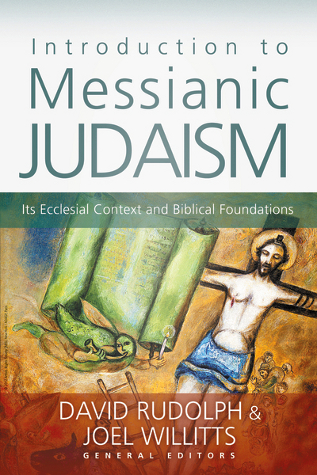
Introduction to Messianic Judaism: Reading the Bible in Flux

Talmud Study by LamplightMessianic Jews accord Scripture a unique status as the inspired and authoritative Word of God. They study it, use it liturgically, and base their life and practice on it. However, Messianic Jews grapple with certain issues involved in biblical interpretation that are particularly relevant to Jewish followers of Yeshua. In the first two parts of this essay I will focus on how Messianic Jewish interpretation of Scripture is affected by interpretive traditions and how this leads to the task of shaping a post-supersessionist canonical narrative. In the third part I will focus on unique uses of Scripture in Messianic Judaism.

-Carl Kinbar
“Chapter 4: Messianic Jews and Scripture” (pg 61)
Introduction to Messianic Judaism: Its Ecclesial Context and Biblical Foundations

In my conversations with Pastor Randy at the church I attend, the core of our conversations are on interpretation of the Bible. Pastor says that the first step in any proper interpretation is understanding the literal meaning of the text in its original language and within its context. I can hardly argue against that, but there are two additional steps: “what the text means” and “what the text means to me.” The former is an application of the text in its original context and the latter is an application of the text today.

Hyper-literalists would say that the application of all Biblical text is uniform across time, being the same both the day it was written and right now in 21st century America. I don’t think I can go that far, since, for instance, many portions of scripture in Tanakh (Old Testament) and New Testament addressing slavery are not particularly applicable in today’s world, whether in Israel or the rest of the nations.

But Dr. Kinbar suggests a finer degree of application depending, in this case, on whether one is or is not a Messianic Jew. We do know that, depending on whether one is an observant Jew or a Gentile Christian, certain passages of the Tanakh, specifically those often understood as “Messianic,” are interpreted differently, with the latter population seeing Jesus in the text and the former group seeing the future Messiah or sometimes national Israel instead.

Even when both populations interpret the same text in terms of its literal meaning within its original context, the application, especially in the present age, differs radically because it is being interpreted by two different populations, each with a different “agenda.”

It’s what I keep trying to explain to Pastor Randy. Even multiple parties who are honest and who seek truth can arrive at different interpretations of the Bible depending on who the parties are and how they’ve been “programmed” to interpret the Bible, sometimes just based on who they are (the ultimate arbiter of scripture may be the Holy Spirit, but that doesn’t prevent many people of good faith and character from interpreting scripture quite differently from one another, sometimes even within the same church).

But Christians will always see Jesus in Messianic texts. Religious Jews, not so much.

Now Kinbar is factoring Messianic Jews into the equation in his article. What can we expect?

Perhaps no one specific application.

Mark Kinzer, another Messianic Jewish thinker, approaches the interpretation of Scripture from a different direction. He argues that the Bible must be interpreted in the context of interpretive traditions, which consist of “the accumulated insights of a community transmitted from one generation to the next. In a Messianic Jewish context, tradition represents the understanding of Scripture preserved through the generations among the communities – Jewish and Christian – within which Scripture itself has been preserved. If we are connected to these communities, then we are also heirs of their traditions.”

-Kinbar, pg 62

jewish-handsThat’s something of an adaptation to how Orthodox Jews see Biblical interpretation. My wife occasionally quotes our local Chabad Rabbi as saying that the Bible cannot be interpreted correctly except through tradition, which in this case, means the traditions of Orthodox Judaism. According to Kinbar, Kinzer includes Jewish and Christian traditions as part of the requirement for correct Biblical interpretation, but Jewish and Christian interpretive traditions (and make no mistake, Protestant Christianity does have traditions for interpreting the Bible) are often at odds with each other, including the rather critical element of identifying the Messiah. Establishing the particulars of which traditions to use from each religious perspective must be an enormous challenge.

But there’s more than one way Messianic Jews look at this matter.

(Daniel) Juster argues for a more cautious approach toward Jewish tradition, asserting that “only biblical teaching is fully binding, whereas other authorities might be followed because we perceive wise application or respect community practices.” In other words, Scripture is the measure of tradition, never the reverse. Juster does not address the claim of traditionalists that the cumulative weight of centuries of interpretation is necessarily of greater weight than the judgment of the individual.

The positions of Juster and Kinzer on the place of tradition in the interpretation of Scripture represent the views of two branches of Messianic Judaism and are emblematic of broader disagreements in the movement over the place of traditional practices in Messianic Jewish life.

-Kinbar, pp 62-3

How I define Messianic Judaism is fairly conservative, and possibly closer to how the contributors of the Rudolph/Willitts book see the definition as opposed to how Hebrew Roots identifies the movement. I see Messianic Judaism as a “Judaism” (most or all of the other “Judaisms” in the world will disagree), that is, a religious, cultural, and ethnic group made up primarily or exclusively of Jewish people who are desiring to establish and nurture a Jewish cultural and religious community for the purpose of worshiping the God of Israel and having “fellowship” with other Jews. The distinction of “Messianic Judaism” is the centrality of Yeshua (Jesus) as the Jewish Messiah King in accordance with his revelation in the Apostolic Scriptures.

I’ve periodically encountered Hebrew Roots congregations (including the one I once attended and taught at) that have defined themselves as “Messianic Judaism,” in spite of the fact that few halachically Jewish people made up their membership and even fewer Jews within that group were born and raised in an ethnically, culturally, and religiously Jewish family. Few of the Jewish people within a Hebrew Roots “Messianic Jewish” group have any more familiarity with Jewish halachah and worship practices than the non-Jews in attendance. I base that statement on personal experience, and since I have little to no equivalent experience in more “authentic” Messianic Jewish congregations, I cannot comment on the membership demographics of their groups. I can only say that the ideal of Messianic Judaism is to provide Jewish communities for Jewish worshipers of God and disciples of Yeshua the Messiah, with some Gentile believers attending to “come alongside” their Jewish brothers and sisters.

prayer-synagogue-riga-latviaBut as we’ve seen, relative to Biblical interpretation, even Messianic Judaism as I define the movement, isn’t a single entity. If Kinzer and Juster represent two different perspectives in this arena, then there are two different expressions of Messianic Judaism based on how scripture is interpreted and subsequently applied. I’m not saying this to throw a monkey wrench into anyone’s machine, but to point out that these issues of religious identification and affiliation aren’t as simple as they may appear on the surface. Many Christians in the church see “Messianic Judaism” as a single container, and when visiting Hebrew Roots congregations, assume that all groups are identical in composition and practice and erroneously believe that all Hebrew Roots groups are “Messianic Judaism.”

Obviously this isn’t the case.

But returning to Messianic Judaism and interpretation of scripture, there are a few important matters to address.

Kinzer remarks that Christian theology generally ignores the eschatological character of Israel’s holiness and accentuates the “discontinuity between Israel’s covenant existence before Yeshua’s coming and the eschatological newness that Yeshua brings. Messiah is thus exalted by the lowering of Moses and Israel.” To the contrary, God’s presence with Israel is an ongoing reality that always anticipates the time of consummation. Kinzer agrees with (R. Kendall) Soulen’s argument that the death and resurrection of Yeshua anticipates what will be achieved for Israel and the nations at the time of the consummation of all things…Israel’s vocation is thus not occluded but brought to a new height in Yeshua, the one-man Israel. The person and work of Yeshua may thereby be seen in the context of Israel’s ongoing life and vocation and not its replacement.

-Kinbar, pg 65

In other words, the coming of Jesus didn’t do away with Israel and the Jewish people but insured their continuation into the future Messianic age. A rather radical thought for many Christians to absorb. But it’s not just Israel’s continuation as a wholly Jewish nation and people, but their ascendency to the head of the nations and the core of Christ’s Kingship on Earth that is being presented. Israel isn’t replaced by Christianity but rather, placed at the head of the table, so to speak. The Jews not only have a future, but an exalted and glorious future.

This is a unique interpretation of the Bible, not so much for religious Jews in general, but for Jews who believe that Jesus is the Messiah and who see him in both the prophesies of the Tanakh and the words of the New Testament.

There’s just one more unique Biblical interpretation attributed to Messianic Judaism I want to point out.

Among the Scriptures, the Torah (the five books of Moses) holds a primary place in the history and affections of the Jewish people as the record of the progenitors of Israel and the formation of Israel as a community bound to God by the commandments (also called collectively “the Torah”). Mainstream Messianic Jews, especially those who adhere to Jewish tradition, depart from the classic Christian teaching that the Torah was made obsolete in Messiah. Rather, they see that Yeshua has affirmed the Torah as the basis for life of covenant faithfulness in keeping with their calling as Jews (Matt 5:17-19).

-Kinbar, pg 69

a-long-way-to-go-pathPastor Randy and I go back and forth on this particular issue, and I continue to maintain, in agreement with Kinbar, that Torah observance for Messianic Jews remains in force if, for no other reason, than such observance defines Messianic Jews as Jews. There may be a variety of other reasons for the continuation of Torah observance within the Messianic Jewish community, but if we believe that Yeshua and subsequently the Apostles, including Paul, supported such observance (and I’ve been writing a good deal lately about Paul’s life of Torah observance) as a life long pattern for Jews in the Messiah, then these are compelling reasons not only for Messianic Jews to interpret scripture in this manner, but to continue to live their lives in accordance with the commandments, as do other Jews in other branches of religious Judaism.

But this is just the beginning, and Messianic Judaism, relative to scripture and a good many others elements, has a long way to go.

The Messianic Jewish construal of the relationship between Scripture and tradition is in flux. Messianic Judaism is still in need of a canonical narrative that is clear and comprehensive, accounting for Israel’s ongoing vocation as a holy people.

-Kinbar, pg 70

The dynamic between scripture and tradition is at the heart of many arguments regarding how a Jew is supposed to relate to the Messiah. For some observers and even some practitioners of Messianic Judaism, observance of Torah is not the issue but observance of “the traditions” very much is. As Dr. Kinbar said, the debate is “in flux” and Messianic Judaism is in many ways, still a “diamond in the rough.”

Of all of the contributors to the Rudolph/Willitts book, only Carl Kinbar (as far as I know) regularly (or periodically) reads this blog and occasionally comments on it, so if I’ve gotten anything wrong in my analysis of his article, I can expect he’ll come by to correct me. While this is slightly intimidating on one hand, on the other, it is rather comforting since it is part of the expected and required dialogue between Messianic Judaism and Gentile Christianity that David Rudolph expressed earlier in the book.

If, as I believe, Gentile Christians have a major role in supporting Israel and encouraging Messianic Jews in taking up and observing the Torah mitzvot as part of the process of a returning Messiah, then conversation and cooperation between our two populations within the body of Yeshua brings us one step closer to repairing our broken world and anticipating the return of the King.

161 days.

Introduction to Messianic Judaism: An Exercise in Wholeness

intro-to-messianic-judaism-bigSimilarly, New Testament scholars have long-held that the Jerusalem community headed by Ya’akov/James was (1) primarily composed of Yeshua-believing Jews who (2) remained within the bounds of Second Temple Judaism and (3) lived strictly according to the Torah (Acts 15:4-5; 21:20-21). Michael Fuller, Richard Bauckham, Craig Hill, Darrell Bock, Robert Tannehill, and Jacob Jervell are among the many Luke-Acts scholars who maintain that the Jerusalem congregation viewed itself as the nucleus of a restored Israel, led by twelve apostles representing the twelve tribes of Israel (Acts 1:6-7, 26; 3:19-21). Their mission, these scholars contend, was to spark a Jewish renewal movement for Yeshua the Son of David within the house of Israel (Gal 2:7-10; Acts 21:17-26).

-David Rudolph
“Chapter 1: Messianic Judaism in Antiquity and in the Modern Era” (pg 22)
Introduction to Messianic Judaism: Its Ecclesial Context and Biblical Foundations

I very recently discovered this book in the “New Books” section of my local library. When I saw it, I immediately checked it out (on Thursday) so that means I have only two weeks to read it before I have to return it (no renewals for new books). I was pretty excited to find this book in my local library system (which covers several counties in Southwestern Idaho) since I’ve never seen any book that could remotely be called “Messianic” in our collection of libraries before. Congratulations Rudolph and Willitts for “breaking the barrier,” so to speak.

But what made me write this “meditation” based on the Introduction and Chapter 1 of this book was the focus on a topic that has been near and dear to my heart these past few months: the ancient Messianic Jewish world and how it impacted newly minted Gentiles disciples of the Jewish Messiah.

You all know the argument. In Acts 15, what exactly did James and the Council do? Did they cancel the Torah for all disciples of Jesus or only for the Gentile disciples? Opinions vary widely (and sometimes wildly), with most Christians seeing the chapter as the final death knell of the Torah and a minority Hebrew Roots group stating that it was the foundation of universal Torah obligation for everyone.

Messianic Judaism as I’ve come to understand the movement, somewhat splits the difference.

As F. Scott Spencer points out, “The representatives at the Jerusalem conference – including Paul – agreed only to release Gentile believers from the obligation of circumcision; the possibility of nullifying this covenantal duty for Jewish disciples was never considered.” If the Jerusalem leadership had viewed circumcision as optional for Yeshua-believing Jews, there would have been no point in debating the question of exemption for Yeshua-believing Gentiles or delivering a letter specifically addressed to these Gentiles. Michael Wyschogrod rightly notes that “both sides agreed that Jewish believers in Jesus remained obligated to circumcision and the Mosaic Law. The verdict of the first Jerusalem Council then is that the Church is to consist of two segments, united by their faith in Jesus.”

-Rudolph, pg 23

Sometimes when I’m having these debates with Pastor Randy in his office, I feel like it’s just him and me (well, it is just the two of us) with my tacit partner being D. Thomas Lancaster, since it is his book we are using as the object of our talks. In finding the Rudolph/Willitts book suddenly available to me, it’s a little like finding gold or a golden information treasure trove that links back to numerous, scholarly information sources, all supporting the basic belief that the ancient Jewish believers in Jesus (Yeshua) never saw being released from circumcision and Torah observance as an option. The only question on their minds was whether or not the Gentiles had to be circumcised and thus obligated to said-Torah observance as Jews.

It’s no secret that I depend on First Fruits of Zion (FFOZ) as my primary information repository for all things Messianic (and by inference, all things Christian), but no matter how reliable a source they may be, they are still one source. It’s sort of like putting all my eggs in one basket. I know better than to believe a single source of data without searching for corroborating support. While the authors and contributors of the “Introduction” book (Rudolph and Willitts are the primary authors of the book, but there are multiple, scholarly contributors as well, so the book reads like an anthology) share many of the views espoused by FFOZ, they don’t share all of them, and that variability lends itself quite well to my corroboration requirement. Do other scholars in the Messianic and Christian academic spaces support the basic belief of early believing Jewish adherence to the Torah that was considered normative and not anachronistic or transient, and do they also share the belief that Gentile disciples were united with their Jewish counterparts in the body of Messiah without having to ever accept obligations to Torah observance that were identical to Jewish observance?

ancient_jerusalemI’ve only read the Introduction and Chapter 1 of the Rudolph/Willitts book as I write this, but so far, the answer is a resounding “yes.”

Rudolph cites Philip S. Alexander’s “Jewish Believers in the Early Rabbinic Literature (2d to 5th Centuries) from the book Jewish Believers in Jesus: The Early Centuries (ed. Skarsaune and Hvalvik), 686-87:

They lived like other Jews. their houses were indistinguishable from the houses of other Jews. They probably observed as much of the Torah as did other Jews (though they would doubtless have rejected, as many others did, the distinctively rabbinic interpretations of the misvot). They studied Torah and developed their own interpretations of it, and, following the practice of the Apostles, they continued to perform a ministry of healing in the name of Jesus….[T]hey seem to have continued to attend their local synagogues on Sabbath. They may have attempted to influence the service of the synagogue, even to the extent of trying to introduce into it the Paternoster [the Lord’s Prayer], or readings from the Christian Gospels, or they may have preached sermons which offered Christian readings of the Torah. The rabbis countered with a program which thoroughly “rabbinized” the service of the synagogue and ensured that it reflected the core rabbinic values.

According to Rudolph, this is a description of Jewish believers who lived in the Galilee during the Tannaitic period or during the first two-hundred years (or so) of the Common Era (CE). In other words, according to Alexander, Jewish believers in Messiah continued to live as observant Jews after the lifetimes of the original Jewish Apostles of Christ.

I know I’ll get some criticism on a couple of points: the first being “circumcision” since it’s not Biblical as a means of conversion from being a Gentile to being Jewish (it certainly is Biblical in terms of the Abrahamic covenent which was re-enforced for the Jewish people by the Mosaic and New Covenants). I’m not going to get into a big argument. The Torah doesn’t presuppose circumcision as a sign of conversion because in the days of Moses, it wasn’t possible to convert to Judaism. One does not convert to a tribe or later, to a clan. By the days of the Maccabees forward, tribal and clan affiliation as a primary definition within national and covenantal Israel had been lost and Jewish religious authorities halachically introduced the process of allowing Gentiles entry into the covenants through ritual conversion.

Woe to you, scribes and Pharisees, hypocrites! For you travel across sea and land to make a single proselyte (convert)…

Matthew 23:15

Even Jesus accepts that the Pharisees and scribes (scribes can include other sects of first century Judaism including Essenses and Sadducees) were converting Gentiles to Judaism.

walking-together2The second point of criticism I’ll receive is how I believe that Jewish but not Gentile believers were obligated to full Torah observance as a result of the Acts 15 ruling (I’d receive a different criticism from most Christians by my belief that the Jewish apostles and disciples remained “under the Law”). See the earlier quotes in this blog post plus my six-part Return to Jerusalem series for my opinion and text supporting said-opinion on this topic. Again, I don’t want to spend a lot of time on this point. I have something more important to talk about.

The beginnings of this book go back to England. Joel Willitts and I met as PhD students in the New Testament at Cambridge University, where we studied under the same supervisor…

Joel and I became good friends and found that much mutual blessing took place whenever we had conversations about the Bible and theology. I valued Joel’s perspective as a Gentile Christian and Joel valued my perspective as a Messianic Jew. There was a synergy in our exchange that often led to fresh insights and unforeseen avenues of theological inquiry. My experience at Tyndale House with Joel and other Gentile Christian friends taught me that there is indeed a God-designed interdependence between Messianic Jewish and Gentile Christian ecclesial perspectives, and that one without the other is woefully inadequate.

Those were magical days in Cambridge. Joel and I talked about what we wanted to accomplish after we completed our doctoral programs and agreed to write a book together.

-Rudolph from the book’s Introduction, pg 18

The result of that dream is the book that’s sitting next to me on my desk as I compose this blog post. A Gentile Christian and a Messianic Jew collaborated together as co-authors, co-editors, and close friends to do what in all likelihood, they could never have done independently. In fact, it took twenty-six Messianic Jews and Gentile Christians to create Introduction to Messianic Judaism. The product is a physical example of an ecclesial reality. Messianic Jews and Gentile Christians need each other. Apart, each one is only half of the whole. Together they…we are the body of Messiah.

Christianity, in general, is the ultimate in inclusionist movements. Any one from any place can turn to Messiah and be accepted. No prior experience required. As it turns out in reading Rudolph, his vision of Messianic Judaism is one that isn’t whole without including Gentile Christians. Our differences complement each other, as do the differences between a man and a woman in a marriage. We aren’t complete without each other.

I look forward to continuing my reading of Rudolph’s and Willitts’ book. So far, it is inspiring hope.

The Unsimple Truth

einstein_simplyIf you can’t explain it simply, you don’t understand it well enough.

-attributed to Albert Einstein

According to Rashi, the question is directed against Rav Yirmiyah who had said that the basket in the tree does not actually have to be within ten tefachim of the ground to be valid. We are dealing with a long basket where it could be tilted and emptied even without being brought below into the reshus harabim. In contrast to this, Rav bar Sh’va brings a Baraisa where an eiruv is not valid unless it is actually brought to where it must be situated. Here, we do not take into consideration the fact that the eiruv should be valid due to the potential that it could
theoretically be brought during bein hashemashos to its destination.

Daf Yomi Digest
Distinctive Insight
from “Rabbinic injunctions and Bein HaShemashos
Eruvin 33

I’m a failure. More to the point, I don’t understand God, Jesus, faith, and spirituality well enough. I can’t explain it simply. I’m not sure I can explain it at all. Certainly the fact that I have posted nearly eight-hundred articles in this “morning meditations” blog (not to mention other blogs) about these subjects and have hardly scratched the surface must mean I don’t understand all this well enough. I can’t explain what I believe simply. I certainly can’t explain it briefly.

I quoted from a commentary on an excerpt from Talmud above to illustrate the level of complexity of the halachot related to Orthodox Judaism. Although I read from the Daf Yomi Digest daily, I scarcely comprehend what I’m reading and what I understand most clearly is that the Talmud is an enormously complex set of works. I don’t know how observant Orthodox Jews manage to obey all of the minute details involved in daily living. I can only imagine that Einstein would have contended with the sages based on his above-quoted statement (though it is unsure if Einstein or Richard Feynman actually said those words).

I can hardly be said to live anything close to an Orthodox Jewish lifestyle in my “observance” as a Christian, but as I write and write and write, and then read back what I’ve written, I realize that I am no closer to truly comprehending God and faith than I was when I first accepted Jesus Christ as Lord. Sometimes I wonder if I’ve even gone that far.

For I do not understand my own actions. For I do not do what I want, but I do the very thing I hate. Now if I do what I do not want, I agree with the law, that it is good. So now it is no longer I who do it, but sin that dwells within me. For I know that nothing good dwells in me, that is, in my flesh. For I have the desire to do what is right, but not the ability to carry it out. For I do not do the good I want, but the evil I do not want is what I keep on doing.

Romans 7:15-19

If we’re honest with ourselves as Christians, then I suppose we all have to admit that this statement of Paul’s is also true of us. How can we live a life we call “holy” and yet still struggle with the mundane, the common, and even the evil within us? If God’s Word is written on our hearts, how can we defy that word and pursue what we know isn’t right? I can only imagine that atheists have moral struggles as well, though as I recall myself from before I came to faith, they didn’t seem as dire.

Is a life of faith really that hard or that hard to explain? It certainly seems that hard to live. But then again, is Einstein’s quote the litmus test we should be using against ourselves? After all, he also said this:

If I could explain it to the average person, I wouldn’t have been worth the Nobel Prize.

Einstein made that statement in response to being asked to give a brief quote on why he won the Nobel Prize. That’s the problem with taking quotes out of context. It’s easy to make a person seem completely inconsistent. How much more difficult it is to analyze “chunks” of the Bible and find consistency and comprehension?

My conversations with Pastor Randy (which are on hiatus for the month of April and for several weeks in May) about D.T. Lancaster’s book The Holy Epistle to the Galatians aren’t hugely complex, but they do get detailed…and we’ve barely covered one chapter in Galatians! How about the book of Romans?

mystery-in-midtownI know that Mark Nanos is popular in Messianic circles, but some years ago, when I tried to read his book The Mystery of Romans, I gave up, not getting very far in his book. Maybe I’d be better able to comprehend his writing now, but Paul’s letter to the Roman church is extremely dense with meaning that I wonder if I’ll ever truly understand either Paul or Nanos. I know the Nanos books on Romans and Galatians should be on my “required reading” list, but who knows if they’ll do me any good? I’m tasked to understand a scholar and author in order to understand the mystery of “letter writer.” Are these reasonable goals?

In some ways, trying to comprehend a life of faith is a fool’s errand. While the concept of Christian salvation is supposed to be simple enough for a small child to understand, the fact remains that the Bible contains depths that if plumbed, would make even explorers such as Jacques Cousteau bolt for the surface as if hotly pursued by Leviathan.

Maybe it’s not quite that bad, but I feel that way sometimes.

Of course there’s a difference between understanding a life of faith and living it. Well, maybe not for the Orthodox Jews since behavior and conceptualization are largely interwoven, but certainly for Christianity, where one can live a basic Christian life without having to know much of the Bible at all. You can feed the hungry, visit the sick, remain faithful to your spouse, give to charity, pray to God, and fellowship with other believers without having to spend even a single day in seminary. Of course studying the Bible gives such a life context and meaning, but you don’t really have to know all of the arcane debates about the doctrine of Divine Election, for example.

Don’t get me wrong. I enjoy reading. I enjoy studying. I enjoy discussing all of these little details. But at what point do you turn it all off and just spend time with God? What’s the point of all of our debates on the web? Why do you try to convince me you’re right about something and why do I try to convince you that I’m right about something? What difference does it make? OK, probably a pretty big one, depending on what we’re talking about, but we can’t all be right? Can we all be wrong? That seems far more likely.

If we believe God exists, then He must exist separately from what we believe and from the web of theology and doctrine we’ve spun for ourselves. God must be an “objective” God. If the world’s population stopped believing in God totally and completely, God would continue to exist and His plan for the universe would continue to move forward toward its ultimate conclusion. We spend all our lives examining the Bible trying to uncover the clues to that plan and what it means in our lives, but we only get bits and pieces, and much of the time, we can’t really be sure we understand what we think we’ve got in our hands.

This theologian espouses one particular theory and another theologian opposes him or her. More theories spring up, more debates occur. But God is God. Our theories and debates don’t affect him in the slightest. He exists as He exists regardless of our “religious orientation.”

We’re all seeking truth but even with the help of the Holy Spirit, who is supposed to guide us in all truth (John 16:13), we all come up with different conclusions. You’d think if there were one Spirit and He was guiding us to One truth, we’d all arrive at the same conclusion.

But we don’t.

I’m most of the way through Carlos Castaneda’s book The Teachings of Don Juan: A Yaqui Way of Knowledge. It’s not really what I expected, but I appreciate Castaneda’s honesty in saying that he didn’t quite succeed either in his field study or as a disciple of don Juan. I decided to read this book because I hadn’t read any Castaneda before and felt I owed it to myself to have the experience.

letting-goMaybe I should just let go and move away from religious and spiritual reading altogether and just read for pleasure (not that reading books on religion and spirituality aren’t pleasurable). I used to read a lot of science fiction and mystery back in the day, with a few of the classics thrown in just for giggles. Maybe that would be more satisfying. Nothing I know or don’t know affects God. I’m not sure it even affects me. I can probably explain simply Castaneda’s book, but how could I possibly explain even one letter of Paul’s? Many have tried, including Nanos and Lancaster, but what does it matter if you end up with a body of work about the Bible that is fraught with disagreement?

I guess there’s a reason people pursue truth all their lives but either never find it or find only what some people (but not all) call “truth.” Maybe we never find it at all. Maybe we just delude ourselves and say what we have is “truth” because living a life of existential uncertainty is too difficult to bear.

Maybe that’s why there are so many atheists. There are no mysteries to the universe beyond what they can see. It’s all nuts and bolts with no colors, textures, or moods. There’s only light and darkness. More’s the pity.

One who returns from the darkness must bring of it with him and convert it to light. He must exploit his experience to surge higher and higher with greater strength.

Therefore, the one who returns from a distance is greater than the one who was always close. What matters is not so much where you stand, but with what force you are moving in which direction.

-Rabbi Tzvi Freeman
“Exploiting the Darkness”
Based on letters and talks of the Rebbe
Rabbi M. M. Schneerson
Chabad.org

So which direction should I move in next in pursuing truth or God or whatever?