Tag Archives: Christian

Book Review: The Jewish Background to the Lord’s Prayer

brad-young-bookThe main problem is one of approach. Too often, the importance of the Jewish background of the prayer and of the language that Jesus used has been overlooked or minimized. Jesus was a Jew, speaking Hebrew to his Jewish followers during the difficult days of the Roman occupation of Israel in the Second Temple Period. A modern Christian has a quite different understanding of prayer, Scripture, and faith than a Jewish teacher like Jesus, not to mention the great differences in language, culture, and history. One can easily miss the great depth of Jesus’ message, even while believing in him. Here we will try to rediscover something of the original Jewish atmosphere in which Jesus taught his followers how to approach God in prayer.

-Brad Young
from “Introduction: The Disciples’ Prayer,” pg 1
The Jewish Background to the Lord’s Prayer
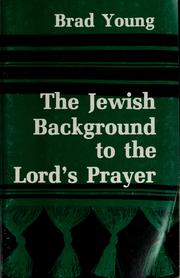
I’ll start by profusely thanking Toby Janicki for graciously lending me his personal copy of Young’s book. Apparently it is out of print, and even used copies on Amazon are kind of pricey, especially for a forty-six page text.

As Young states, we Christians in the Church tend to almost take the Lord’s Prayer, or rather “the Disciples’ Prayer” for granted. It’s one of those things we read in the New Testament that we think we all understand correctly and completely. After all, the prayer itself is quite short. What’s there to misunderstand, right?

The answer to that question is “plenty,” and for the reasons I quoted above.

To start off, I won’t quote the Disciples Prayer here. It should be pretty familiar to most Christians, even those who don’t spend a lot of time in the Bible. For reference, there are two, parallel versions of this prayer in the Bible and they aren’t identical. You can find them in Matthew 6:9-13 and Luke 11:2-4. The differences, I suspect, have to do with the different audiences of each Gospel, with Matthew written to the Jews and Luke written to the Greeks.

Our Father Who Art In Heaven

Young suspects (pg 3) that Luke removed the “Jewish elements” of the prayer, since his version does not contain the words we read in English, “who art in heaven”. This was a familiar prayer formula in first century Judaism but would have seemed foreign to Greek readers. Picturing a “Father in Heaven” might have summoned images in Greek minds of some “god” such as Zeus sitting on an Olympian throne (pg 4). Luke may have felt it prudent to avoid such false associations by editing Jesus’ words (a Gospel writer editing the words of the Master to fit a specific audience is somewhat startling, don’t you think?).

But for a Jewish audience, the “Father in Heaven” reminded them of the love and care Hashem had and has for the Jewish people, and they would have recalled many references from scripture of the kindness of God toward Israel:

Whoever is wise let him note these things, and they will comprehend the kindnesses of Hashem.

Psalm 107:43 (Stone Edition Tanakh)

Jesus taught his disciples that God is not just a generic Father in Heaven, but He is “your” Father and “our” Father. The relationship between God and Israel isn’t just corporate, it’s personal. As Gentile disciples of the Master, we are grafted into that relationship with God, and thus we can call God “our” Father and “my” Father in Heaven.

Hallowed Be Thy Name
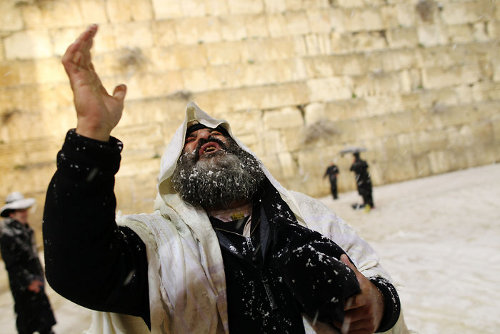
PrayingYoung says (pg 7) that the word we read as “Hallowed,” at least in the King James Translation, is more accurately rendered “sanctified”. He “retrotranslated” the Greek into the Hebrew word “yitkadesh” which means “be sanctified” so the phrase should read like “may Your Name be sanctified”. He also compares this to the Hebrew word “v’hitkadishti” found in Ezekiel 38:23

I will be exalted and I will be sanctified… (emph. mine)

Ezekiel 38:23 (Stone Edition Tanakh)

But as Young asks (pg 8), two-thousand years ago, what did “sanctify” mean to the Master’s Jewish disciples? Young makes comparisons to Leviticus 22:32 and Ezekiel 36:23 but he also said this:

The name of the Lord can be either sanctified or profaned by the conduct of people. In fact, because a martyr would frequently cause others to glorify God as a result of his sacrifice, the Hebrew idiom, “to sanctify the Name,” was often understood as referring to someone who would give his life for his faith.

-Young, pg 8

Adds some dimension to the crucifixion of Christ, doesn’t it? Perhaps as his disciples watched Jesus slowly dying on the cross, they remembered these words and what they truly meant to the Master. Perhaps they finally understood one day, that to pray this prayer was to ask that they be considered worthy to also die for the sake of Heaven.

But it’s not just how you die, but how you live, for “one sanctifies God by living a holy life.” Recall Matthew 5:16 (DHE Gospels):

So also, shine your light before sons of men, so that they may see your good deeds and praise your Father who is in heaven.

Thy Kingdom Come

Young spends a significant portion of this small book discussing the meaning of the Kingdom, and it’s somewhat reminiscent of an episode of the First Fruits of Zion television series called Thy Kingdom Come.

According to Young (pg 10), we mistakenly believe this phrase refers to Heaven or some future, Messianic Kingdom that Jesus will establish after he returns. But what did Jesus mean when he said, as he often did, “the Kingdom of Heaven?”

The Greek word “eltheto” doesn’t have an exact equivalent in English but it suggests “may it be” or “let it be”. But again, in Hebrew and to a Second Temple Era Jewish audience, what did this mean? Young (pg 11) says the phrase is quite similar to words we find in the Kaddish: “May He cause His Kingdom to reign.” Young also makes a comparison to the Hebrew words “tamlich malchutcha” or “May you continue establishing Your Kingship,” indicating a continual process rather than a point fixed in time. It is associated with the idea of a Kingdom that has already arrived, and yet is still in the process of coming.

I wrote a review last week about a portion of D. Thomas Lancaster’s Holy Epistle to the Hebrews sermon series called The Partisans that speaks to this difficult to comprehend matter.

Lancaster
D. T. Lancaster

The overarching concept of God having reigned, His currently reigning, and His reigning forever, is all over the Bible. Exodus 15:18, Psalm 93:1, and Psalm 146:10 only scratch the surface, and all of these references may well have come to the minds of the disciples as they listened to Jesus teach them how to pray.

Young states (pg 13) that, referencing Matthew 10:7, “The Kingdom of Heaven is at hand,” the phrase “at hand” or “engiken” in Greek (Heb. “karav”), is “the perfect indicative” and is better understood as an already completed action. It’s could be better said as “The Kingdom of Heaven is here.”

On the Day of Atonement, the High Priest would say the holiest name for God. When he pronounced the Tetragrammaton, the people would fall on their faces and affirm, “His honorable name is blessed and his Kingdom is forever and ever.” The Kingdom is present. God is reigning. He rules as the people recognize his Kingship. He rules when he redeems people. (emph. mine)

-Young, pg 14

This not only speaks directly to Lancaster’s point in the aforementioned sermon, but it expands the meaning of how God’s Kingdom can already be here in a completed form and still having not quite arrived. As each individual comes to faith and acknowledges the Kingship of God in the world and in their lives, the Kingdom is continuing to be established, one human being at a time, across all time, and across human history. As the Gospel message is progressively spread throughout the Earth, the Kingdom is also being spread, expanded, established, affirmed. When the time of the Gentiles (Romans 11:25) is fulfilled, Israel will be redeemed by Messiah and the Kingdom that has already arrived and yet still arriving, will become perfected in our world, and the Messiah King who is already enthroned in the Heavenly Court, will ascend to his place of honor in Jerusalem.

Blessed are the poor in spirit, for theirs is the kingdom of heaven.

Matthew 5:3 (NASB)

Young says this is a poor translation of the Greek “hoti auton estin” and does not actually imply that the poor can “own” the Kingdom of Heaven.” The “poor in spirit” (followers of Jesus) do not own the Kingdom as a possession. Young renders the same verse in Hebrew and then translates that back into English to say, “Blessed are the poor in spirit, for they make up the Kingdom of Heaven.” In other words, the followers of Jesus comprise, or are the building blocks, or are the substance of the Kingdom.

These are people who have already accepted the rule of the King and thus not only become part of the Kingdom as subjects, but are the very essence of the Kingdom of Heaven, the Messiah’s Kingdom. “May you continue establishing your Kingdom, and may your will be done” are parallel phrases in this prayer and declare that we desire more hearts turn to the Father by way of the Son, further establishing God’s rule and the Kingdom of Heaven on Earth.

Thy Will Be Done, On Earth As In Heaven

We already touched on this phrase in the section above, stating that this is an affirmation of what God is already doing. Young (pg 18) references the Greek “genathato” as “may it be,” translating it back into the Hebrew “hayah” which is “to be” or “asah” which indicates “to do”. A more literal translation, taking the Hebrew into account, would be “Let it be your will in heaven and earth” or “Let your will prevail in heaven and earth”.
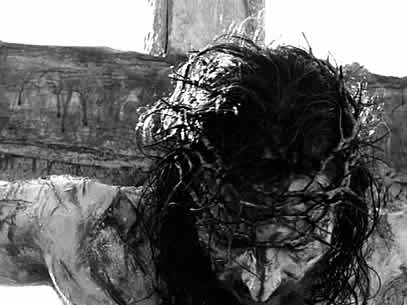
The Death of the MasterYoung says (pg 19) that “to do His will” is idiomatic Hebrew indicating that it is people who do God’s will, thus is a call for obedience or a declaration of obedience to God, for one continually establishes His Kingdom by continual obedience, thus sanctifying His Name.

No finer act of sacrificial obedience to God can be found than in Jesus at Gethsemane (Matthew 26:36-46, Luke 22:39:46):

Of course, the greatest example of the battle to do the will of God is Jesus himself in Gethsemane. Jesus had already predicted his betrayal and sufferings. The brutality of Roman executions was well known, and more than a few had actually witnessed crucifixion. Jesus was keenly aware of the deeper significance of his sufferings. Still, conscious of his own crucifixion looming before him in the next hours, he prayed, “Father, if thou art willing, remove this cup from me; nevertheless, not my will, but thine, be done” (Luke 22:42). Jesus did not succumb but performed the will of God. A person overrules his own volition in order to do God’s will.

-Young, pp 20-21

Jesus has been called an Apostle (Hebrews 3:1), a “sent out one,” and he taught that no servant is greater than the one who sent him (John 13:16), thus Jesus depicted the perfect servant of God, who would obey, even to the death, as an act of love toward his disciples ( John 13:34, John 15:13) and ultimately toward humanity (John 3:16).

Young quotes from Rabbi Alexandri’s prayer (pg 21), saying, “Sovereign of the universe, it is revealed and known to You that our will is to do Your will.” We must all repent continually for it is sin that causes us to rebel against God, preventing us from making His will our will and establishing His Kingdom.

Give Us This Day Our Daily Bread

You wouldn’t think this would need interpreting. Why isn’t it plain that we are to ask God to fulfill our daily needs? Is this asking for our food today, or that our food be prepared for the following day? Young makes a connection to Proverbs 30:8 stating that Jesus may have been deliberately alluding to the scripture, “Remove me far from falsehood and lying; give me neither poverty nor riches; feed me with food that is needful for me.”

So “daily bread” may mean something more like “all of my needs”. This simple phrase in the prayer can be unpacked into a complex set of Jewish conceptualizations interconnected throughout the Bible.

Consider Exodus 16:4-10 and particularly verse 4:

Hashem said to Moses, “Behold! — I shall rain down for you food from heaven; let the people go out and pick each day’s portion on its day, so that I can test them, whether they will follow My teaching or not.”

This speaks not only to obedience but utter dependence and emphasizes not only the study of Torah, according to Rabbi Simeon ben Yochai (pg 25), but being “totally dependent upon God for…every need.”

God is the great provider and we should not even doubt that His providence will always be available (see Matthew 6:25-26, Luke 12:22-24).

And Forgive Us Our Debts, As We Also Have Forgiven Our Debtors

ForgivenessYoung cites (pg 29) Matthew 18:23-35 as a lesson in forgiveness and links how we as disciples forgive others to how we will be forgiven by God. He shows a parallel between this part of the Disciples’ Prayer and what Ben Sira (Sirach) taught (170 BCE): “Forgive your neighbor the wrong he has done, and then your sins will be pardoned when you pray.”

But is it that we impact how or if God will forgive our sins by the quality of forgiveness in our own hearts, or is an unforgiving heart inhibited in prayer, thus never reaching God…or is it a little of both?

“Rabbi, which is the greatest mitzvah in the Torah?” Yeshua said to him, “Love HaShem your God with all of your heart, with all of your soul, and with all your knowledge. This is the greatest and first mitzvah. But the second is similar to it: Love your fellow as yourself. The entire Torah and the Prophets hang on these two mitzvot.”

Matthew 22:36-40 (DHE Gospels)

There’s a slight difference in Luke’s version of the prayer. Matthew asks for forgiveness of “debts” where Luke says “sins.” Young (pg 30) says this is probably associated with the use of the Hebrew word “chayav” which can mean both guilt to which we are accountable and a debt to be paid.

If we again consider Jesus as an Apostle of God, then to the degree he forgave represented God’s forgiveness, and Jesus forgave generously, even to his enemies:

Yeshua said, “My Father, forgive them; for they do not know what they are doing.”

Luke 23:34 (DHE Gospels)

Lead Us Not Into Temptation, But Deliver Us From Evil

Young (pg 31) considers “lead us not into temptation” and “deliver us from evil” to be parallel statements. The word for “temptation” in Hebrew suggests “test” or “trial,” just as HaSatan tested the Master (Matthew 4:1-11, Mark 1:1-12, Luke 4:1-13) hoping to cause him to stumble. Please keep in mind that it wouldn’t have been much of a test if Jesus was totally incapable of sinning, of disobedience to God. He would only have been exalted by resisting the temptation to do what was evil in God’s eyes, that is, if it was possible for him to fail.

When Jesus taught his disciples this portion of the prayer, he of course knew that it was not only possible for the disciples to fall prey to testing and to sin, but that indeed, they would fail. Consider Peter’s denial of the Master after declaring that he would follow Jesus even unto death (Mark 14:66-72, Luke 22:54-62, John 18:15-27).

Young notes parallels (pg 32) not only in scripture (Psalm 119:133) but in one of the Psalm scrolls from the Dead Sea Scrolls discovered in Cave 11, “Let not Satan nor an unclean spirit rule over me” (Heb. “al tashlet bi satqan v’ruach tumah”). Also, the Testament of Levi states, “And do not let Satan rule over me to lead me astray.” Young further quotes abundantly from the Talmud where very similar wording is to be found.

Conclusion

We see here, as I’ve written in other “meditations,” that there is a great deal more information packaged into even the briefest portions of our Bible than we might imagine, even if we are seasoned students of the Bible. If we apprehend scripture from a solely Christian perspective but fail to take into account the Hebrew thought behind the Greek text, we fail not only to get the full message of Jesus, but in many cases, the correct message of Jesus. Thus even with the best intentions and a wholehearted desire to serve God, we end up traveling down many unintended and undesirable paths in relation to God, to the Jewish people, to Judaism, and to Israel.

That said:

Even though Jesus taught his disciples this prayer in Hebrew, in an entirely different setting nearly two millenniums ago, the petitions contained in this short prayer transcend time and are appropriate to the modern-day disciple. Today, perhaps more than ever before, Jesus’ followers need to be challenged again to respond to this timeless message.

-Young, pg 36

DHE Gospels
Delitzsch Hebrew Gospels

The challenge is to encounter the teachings of Jesus and his Jewish disciples on their own terms, meeting them on their own “home ground,” so to speak, rather than in the places that make us feel comfortable. Most Christians get a little nervous when a lesson about Jesus seems “too Jewish.” Oh sure, they can accept a few Hebrew words and a few Jewish thoughts, but once you start re-translating the entire concept of the Gospel message of Moshiach into a wholly Jewish context, most Gentile Christians, especially those raised in the Church and quite accustomed to the traditions associated with Biblical interpretation, will quickly lose their bearings and feeling in danger of becoming lost, will retreat to more familiar territory, even if that territory has a poorer view of the revered Savior.

Young’s small book was published thirty years ago and sadly is very expensive to acquire, but it also is part of a larger body of scholarship that is continually being added to, which holds the promise of truly illuminating the mind and heart of each and every believer, showing us the Jewish face of Yeshua behind the Gentile mask of Jesus.

Imagine if a forty-six page booklet can say so much about just a few verses in the Gospel that teach such a brief prayer, what could be learned if we approached the entire Bible from the same perspective?

Finding My Exit

no-exitWhen you and the path you have chosen get along just great, it’s hard to know whether your motives are sincere.

But when you come across a path to do good, and this path goes against every sinew of your flesh and every cell in your brain, when you want only to flee and hide from it —do this.

Then you shall know your motives are sincere.

-Rabbi Tzvi Freeman
“Sincerity”
Based on letters and talks of the Rebbe, Rabbi M. M. Schneerson
Chabad.org

I hit what seemed to be a pretty significant wall this past weekend. Hopefully not too many people noticed, but I was turning myself into knots inside and very seriously doubting my current path for a day or two.

The first event that contributed to this mess was from divisiveness in the blogosphere. I should have known better, but a miscommunication between a friend and I and then another in a long series of online “nastygrams” caused me to question whether or not my friend was pulling away from me and pulling much of my current world view along with him (long story).

As personal as the first event was, the second event was far more intimate. On Sunday morning, my wife and I were having a small chat before I left for church. I happened to mention that Pastor Randy gave me a paper on the different arguments between Arminianism and Calvinism and my difficulties in they way the author of the article was expressing his viewpoint.

I didn’t think much of it, but my wife, who is Jewish, started touting how Judaism has received the Torah in an unbroken line between Sinai and the present and that in any response to changes of circumstances across time, the Rabbis always consult the core text and all applications are based on strict adherence to the Torah, thus avoiding the problems I was having with a Christian commentary.

I think it was her attempt to show me that Judaism has a better handle on the Bible and thus on God than Christianity, which I don’t mind, but in our conversation, she brought up how, if the Christian view of the Bible were true, then it totally invalidates Jews and Judaism.

If you’ve been reading my blog for any length of time, you know that her perception of Christianity is not what I believe at all. And yet I was confronted with a dilemma. I could explain, thanks to all of the information I’ve captured within this blog, why I believe she’s wrong and why a Messianic interpretation of “Christianity” is wholly Jewish, but my being a “prophet without honor in my own land” (and needless to say, in my own family), how would she take it?

The worst that would happen if I were talking to any other Jewish person was that they’d tell me I was “full of it” and walk away (not that I desire to insult anyone). But what would be the worst that would happen if that transaction were to occur between me and my wife?

I didn’t want to find out so I let the conversation die.

But as I went to church, I was confronted with two highly significant relationships in my life being (apparently) damaged, all because of who I am and my faith in Christ.

I remembered part of a conversation I had with my Pastor. I told him I left the Hebrew Roots movement in part because I knew my participation was very embarrassing to my wife. He asked me, somewhat incredulously, if my being a Christian and going to church were any less embarrassing to a Jewish wife. I absolutely didn’t consider that before, but at that moment and again last Sunday morning, it hit me like a punch in the teeth from Mike Tyson.

I also couldn’t help but consider a few verses.

Then Ezra the priest stood up and said to them, “You have trespassed and married foreign women, and so increased the guilt of Israel. Now make confession to the Lord the God of your ancestors, and do his will; separate yourselves from the peoples of the land and from the foreign wives.”

Ezra 10:10-11 (NRSV)

“Do not think that I have come to bring peace to the earth; I have not come to bring peace, but a sword.

For I have come to set a man against his father,
and a daughter against her mother,
and a daughter-in-law against her mother-in-law;
and one’s foes will be members of one’s own household.
Whoever loves father or mother more than me is not worthy of me; and whoever loves son or daughter more than me is not worthy of me; and whoever does not take up the cross and follow me is not worthy of me.”

Matthew 10:34-38 (NRSV)

leavingThe Master doesn’t address husband and wife specifically, but it wasn’t hard for me to read between the lines. And in relation to Ezra, I guess I would be the “foreign wife.”

I wasn’t afraid this would dissolve my marriage, but I could see my friendship receding into the distance and, as damage control, what would be my only option to contain this conflict? If my wife was saying that my being a Christian made me “anti-Semitic” by definition, then how could I prove otherwise except to stop going to church? But how could I stop going to church and maintain my faith in Christ?

The conflict between my faith and my marriage came abruptly into sharp focus.

So last Sunday at church was miserable, not because of church, but because of me.

It’s actually pretty painful to see all of the other couples at church because they’re couples. There’s no conflict that I can see between husband and wife because of their faith. They sit together at church, they bring their children, they go to Sunday school together, they support each other’s views.

That’s also true of most people (but not all) I know in the Messianic movement. I sometimes feel like the only oddball.

So with a nudnik (and I know something about nudniks) trying to drive a wedge between my friend and me on the one side, and my most recent “religious conversation” with my wife on the other, who I am supposed to be at Christ was stuck soundly in the middle. All I could see were “no option options.” I was in a box with no way out, a room with no exit.

So what happened?

I did what I always try to do under similar circumstances…I didn’t do anything about it. The temptation was to act impulsively to reduce the discomfort, but that’s usually the wrong thing to do.

After church, there was plenty of gardening to do and that’s relatively mindless work, so I had a lot of time to think. After that, I was given the annual task of cleaning out my book closet (if left to my own devices, I’d keep everything I’ve ever owned). My wife and daughter tackled the equally daunting job of cleaning out and arranging the food pantry.

My son Michael came over by the by and cooked dinner for us while we were working. By the by, my wife and I interacted and I noticed that she was behaving, not as if I were an anti-Semite in the camp, but like I’m her husband and we’re doing typical Sunday evening family stuff together in our home.

The bubbling pot began to cool.

I got an email later that night allaying my other concern and reminding me that just because “bad attitude” people try to interfere with friendships doesn’t mean those friendships are any less established. The message couldn’t have come at a better time.

when-the-forest-beckonsThis whole episode reminded me that I have a duty to my wife to share the Good News of Messiah with her. The problem is, she’s already heard it, accepted it within the church, re-accepted it within a Hebrew Roots context, and, when transitioning first to the Reform-Conservative synagogue in town and then the Chabad, chosen to reject the Gospel of Jesus “because that’s not what Jews believe.”

I wish I could convince her otherwise, but that “Good News” might not be easy for her to hear coming from me, especially when I’m competing with the Chabad Rabbi, a lot of anti-missionary rhetoric, and two-thousand years of post-Jesus Jewish history.

That particular “adventure” is to be continued, but I do have a message for blogging nudniks who deliberately try to mess up friendships in order to further their own agendas:

There are people who believe they are doing good by swallowing others’ egos alive. The egos of those they cannot help, and of those who cannot help them, are inedible to them—and therefore intolerable. They cannot work with others—because their egos leave no space for “others”—only for those extensions of their own inflated selves that show they need them, or for those whom they need.

You don’t love your neighbor to glorify your own ego. When you come to your sister’s or brother’s aid, leave your own self behind. Love with self-sacrifice.

-Rabbi Tzvi Freeman
“Free Love”
Based on letters and talks of the Rebbe, Rabbi M. M. Schneerson
Chabad.org

If you come to realize that what you do is not for the sake of Heaven but for the requirements of your own ego or emotions, then the need for you to attend to your own affairs is far, far greater than whatever temporary issues I may be experiencing.

I found the exit from my no-exit room and am continuing down the path that God has set before me.

Paul the Christian Pharisee

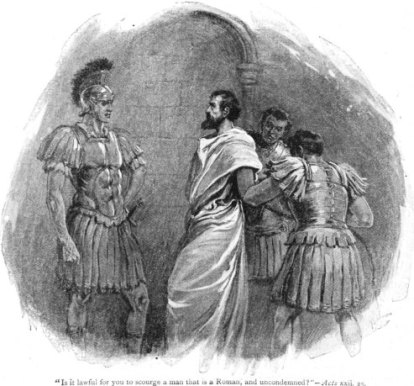
paul-the-phariseeNow when Paul perceived that one part were Sadducees and the other Pharisees, he cried out in the council, “Brothers, I am a Pharisee, a son of Pharisees.

Acts 23:6

Paul used the present tense, “I am a Pharisee,” not “I was a Pharisee.” Christian commentaries are uncomfortable with the statement, and they usually try to dodge the implications by explaining that he used to be a Pharisee prior to becoming a Christian.

Did Paul perjure himself before the Sanhedrin (a grave sin) by saying, “I am a Pharisee” instead of saying, “I was a Pharisee”? If so, none of his accusers had the wherewithal to challenge him on it. If he was no longer a Pharisee at the time of the trial, his testimony would be easy enough to discredit.

-D. Thomas Lancaster
Torah Club, Volume 6: Chronicles of the Apostles
from First Fruits of Zion (FFOZ)
Torah Portion Tazria (pg 711), Commentary on Acts 23:1-24:27

I suppose you could say this is a continuation of my previous “meditation,” Paul the Apostle, Liar, and Hypocrite and earlier commentaries. As I continue to read through Lancaster’s “Chronicles of the Apostles” Torah Club study, I continue to follow Paul through his various “legal problems” and his journey that will eventually lead to Rome, Caesar, and death. I also continue to watch as Paul repeatedly defends himself against the charges brought against him by the Jewish authorities of the Sanhedrin. From Paul’s point of view, he did nothing wrong to the Jewish people, to the Torah, to the Temple, or even to Rome.

Paul argued in his defense, “Neither against the law of the Jews, nor against the temple, nor against Caesar have I committed any offense.”

Acts 25:8

In verse 7 of the same chapter, Luke records that “…the Jews who had come down from Jerusalem stood around him, bringing many serious charges against him that they could not prove.”

As we’ve seen in earlier chapters of Acts and in my earlier commentaries on those chapters (thanks to Lancaster and the Torah Club), there simply was no evidence to support the wild accusations that had been made against Paul. He should have been set free, and except for various political reasons, finally including Paul’s appeal to Caesar and Rome, he never was.

Not only do I want to pursue the scriptures and commentaries that support Paul’s innocence, but I want to continue to illustrate how Paul never imagined that being an apostle of Jesus required in any sense, surrendering observance of the Torah mitzvot and the lifestyle of a Jewish Pharisee, nor did he expect this of other believing Jews.

All believers could claim to adhere to Pharisaic doctrine, but not all of them could claim to actually be Pharisees. Paul concluded his testimony with the declaration, “Brethren, I am a Pharisee, a son of Pharisees; I am on trial for the hope and resurrection of the dead!” (Acts 23:6).

-Lancaster, ibid

That statement might come as a shock to you if you’ve been taught that all Pharisees were horrible, legalistic monsters and hypocrites. After all, Jesus had some pretty rough things to say to the Pharisees.

“Woe to you, scribes and Pharisees, hypocrites! For you are like whitewashed tombs, which outwardly appear beautiful, but within are full of dead people’s bones and all uncleanness. So you also outwardly appear righteous to others, but within you are full of hypocrisy and lawlessness.

Matthew 23:27-28

On the other hand, Jesus also said this:

The scribes and the Pharisees sit on Moses’ seat, so do and observe whatever they tell you, but not the works they do.

Matthew 23:2-3

Do what they say but not what they do. What do they say?

And when he had said this, a dissension arose between the Pharisees and the Sadducees, and the assembly was divided. For the Sadducees say that there is no resurrection, nor angel, nor spirit, but the Pharisees acknowledge them all.

Acts 23:7-8

For Paul, the Pharisaic belief in the resurrection of the dead and a life in the world to come was lived out by his faith in Yeshua (Jesus) as the risen Messiah King.

That is why his faith was “counted to him as righteousness.” But the words “it was counted to him” were not written for his sake alone, but for ours also. It will be counted to us who believe in him who raised from the dead Jesus our Lord, who was delivered up for our trespasses and raised for our justification.

Romans 4:22-25

The doctrine of “the Way” was generally Pharisaic and in believing in the resurrection, so is modern Christianity.

I know, that’s probably a stretch for most of you, but if you follow the logic of Paul’s defense as recorded by Luke, it is very compelling. Lancaster comments further on this point.

The teaching and beliefs of Yeshua, Paul, and all the apostles echo the theology of the Pharisees. A Pharisee could become a disciple of Yeshua and still be a Pharisee…

-Lancaster, pg 713

Not so the Sadducees or any other branch of Judaism that did not believe in resurrection.

Even though the Master sometimes disagreed with the specific priorities of the oral law, He and the apostles practiced and transmitted Pharisaic, rabbinic tradition and interpretation. Their teachings and methods of biblical exegesis mirror those of the Pharisees. The Sadducees, on the other hand, were the first-century equivalents of Karaite Jews and sola-scriptura Protestants. They rejected most Jewish tradition, oral law, and rabbinic exegesis.

-ibid

paul-in-chainsFrom a modern Christian’s point of view, we almost want to make the Sadducees the heroes of the story because they rejected Jewish oral law and traditions, and Jesus heavily criticized the Pharisees for some of their traditions. But while many of the Pharisees far exceeded the Torah’s intent by creating enormous burdens from their rulings that weighed heavily on the Jewish people, Jesus did not criticize their core teachings. Being a Pharisee wasn’t the problem. Being a hypocrite and a liar was. Paul was the former but never the latter.

But Paul had a “confession” to make.

But this I confess to you, that according to the Way, which they call a sect, I worship the God of our fathers, believing everything laid down by the Law and written in the Prophets, having a hope in God, which these men themselves accept, that there will be a resurrection of both the just and the unjust. So I always take pains to have a clear conscience toward both God and man.

Acts 24:14-16

Paul admitted to the charge of belonging “to the sect of the Nazarenes,” but he rejected any implication that the teachings of the Way deviated from normative Jewish expression. To Paul, faith in Yeshua was not simply one more sect of Judaism, it was “the Way of the LORD,” a spiritual restoration and redemption of all Israel that transcended sectarian divides. He admitted to “believing everything that is in accordance with the Torah and that is written in the Prophets.” He declared his hope in God, a hope which his accusers also cherished.

-Lancaster, pg 723

There’s one sentence in my last quote from Lancaster that I hope you caught. Here is is again:

To Paul, faith in Yeshua was not simply one more sect of Judaism, it was “the Way of the LORD,” a spiritual restoration and redemption of all Israel that transcended sectarian divides.

This is as true today as it was the moment Paul said it. Faith in Yeshua the Messianic King is not just a way for the world to be saved (which, of course, is no small thing) but it is the way to spiritual restoration and redemption of all Israel. That is the critical piece of knowledge both Jews and Christians must understand. Jesus doesn’t stand in opposition to the Jewish people, he stands for their redemption as a people and their restoration as a nation.

The good news of forgiveness from sins, salvation, and a life in the world to come is what we focus on as Christians, but most of the time, we miss why Jesus is uniquely special to the Jewish people. He doesn’t just save the individual Jewish soul as he does the individual Gentile soul, he saves Israel, he restores their nation to the head of all nations, he gathers his people back to him and to their Land, and he is their King, the King of the Jews, even as he is also the King of the World.

Paul, the “Christian” Pharisee knew all that, and the evidence of his innocence is also a shining lamp for every Jew and Gentile who turns away from darkness and to the light. To turn toward the light, we Gentiles must surrender a life of disobedience and learn to love, listen, and obey God. For a Jew to turn toward the light of the world in Messiah, they also must learn to obey, but Torah observance for the Jew is part of that obedience. We in the church are obedient, not only when we refrain from sin, but when we act to encourage our Jewish brothers and sisters in the faith to continue to live wholly Jewish lives in accordance with the commandments.

Paul lived his life enthusiastically as a disciple of Jesus Christ…and as a Pharisee.

162 days.

Lancaster’s Galatians: Sermon Two, Influencers, Circumcision, and What is Torah?

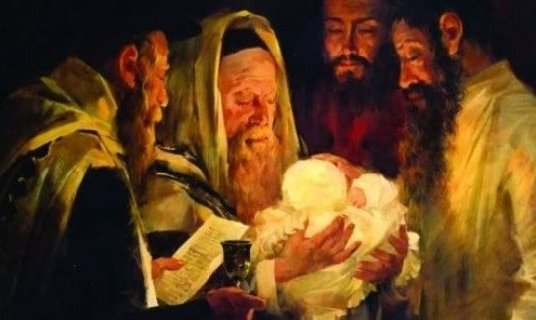
circumcision-mohelNo word in the Jewish religion is so indefinable and yet so indispensable as the word Torah. Torah is the most comprehensive term for the substance of Judaism. Torah is Teaching. Torah is Law. No one can hope to achieve even a minimal appreciation of the Jewish religion without learning, and then reflecting on, the idea of Torah and its place in the life of the Jew. Torah has been for ages the sum and substance of Jewish scholarship. But it would be utterly wrong to conclude from this emphasis on study that Jewish spirituality runs dry in the sands of intellectualism.

-Rabbi Maurice Lamm
“What is Torah”
Aish.com

After greeting them, he related one by one the things that God had done among the Gentiles through his ministry. And when they heard it, they glorified God. And they said to him, “You see, brother, how many thousands there are among the Jews of those who have believed. They are all zealous for the law, and they have been told about you that you teach all the Jews who are among the Gentiles to forsake Moses, telling them not to circumcise their children or walk according to our customs.

Acts 21:19-21 (ESV)

Last night’s conversation with Pastor Randy about the second chapter (sermon) in D. Thomas Lancaster’s book The Holy Epistle to the Galatians wasn’t quite as intense as the previous week’s talk (though it had its moments early on). A lot of the focus was on who Paul’s intended audience was supposed to be, what Paul was trying to say, and why he was saying it.

I think Pastor Randy wanted to pull in all of the material from the letter whilst I wanted to try to contain our investigation to the current chapter of Lancaster’s book, which only covers Galatians 1:6-10. Yes, that’s pretty hard to do, but as I’ve mentioned before, I wasn’t satisfied with my original reading of Lancaster’s book, and I wanted to take this opportunity to go through it again with the proverbial fine-toothed comb, sifting its pages, and uncovering its message, along with Paul’s message to the Galatian churches.

Pastor Randy remains convinced that Paul was writing to the Gentile and Jewish populations in the churches in Galatia, and it’s hard to refute that. Pastor did back away from his comments of the previous week regarding Paul’s addressing of “Brothers” as being only to Jews, but he maintains the term can be applied to both Jews and Gentiles in the community of believers.

And then I brought up how silly it would be for Paul to tell Jews not to become circumcised and convert to Judaism.

And then he brought up how some/many of the Jews in the diaspora may not have been circumcised and may not have been all that Torah observant.

What?

It would seem, summoning Occam’s razor to my rescue, that the most reasonable understanding of the Jewish population of the diaspora was that they were observant to Torah relative to the normative halachah of their day, and that the Jewish males would routinely have been circumcised on the eighth day, even as Jesus was circumcised on the eighth day.

I’ll get back to that in a moment, but before I forget, we also discussed the identity of the influencers:

I am astonished that you are so quickly deserting him who called you in the grace of Christ and are turning to a different gospel—not that there is another one, but there are some who trouble you and want to distort the gospel of Christ. But even if we or an angel from heaven should preach to you a gospel contrary to the one we preached to you, let him be accursed.

Galatians 1:6-8 (ESV)

Who were these “troublers and distorters?” Christian expository preaching for centuries has referred to them as “Judaizers.” We will take a look at that terminology as we wrestle with this question in the ensuing material, but for now, we will adopt a term currently popular in Pauline studies and simply refer to them as the “influencers.” They are within the Galatian communities who are influencing the God-fearing Gentiles to undergo conversion.

One quick observation about the “influencers:” They are most likely believers in Yeshua of Nazareth. This possibility is lost on many interpreters. They might be Jewish believers or believing proselytes to Judaism, but they are almost certainly believers.

How do we know? We will consider the evidence as we work through the epistle, but from the outset, Paul says that they “want to distort the gospel of Messiah.” A non-believer does not want to distort the gospel; he wants to refute it and repudiate it. Only believers distort the gospel. Paul says that they preach “a gospel contrary to the one we preached to you,” but they [are] preaching a gospel, they [are] teachers of good news. For that reason we may deduce that they are believers in Yeshua of Nazareth.

-Lancaster, “Galatians” Sermon Two

When I arrived for my appointment with Pastor Randy, he was working on his computer with translations of Galatians 1:6-8 from the ESV, the KJV, and the Greek text in preparation for our meeting. Here’s the relevant portions of vv. 6-7 from the King James Version with emphasis added:

I marvel that ye are so soon removed from him that called you into the grace of Christ unto another gospel: Which is not another; but there be some that trouble you, and would pervert the gospel of Christ.

paul-editedI can’t reproduce the Greek but the question Pastor was asking is if the “gospel” being preached by the Influencers was indeed the gospel of Christ, or another preaching altogether. While we can agree that there is no other “gospel” of Christ, there can be other types or fashions of “good news,” and Pastor’s opinion is that the Influencers didn’t have to be believing Jews based on the text or context, and indeed, they might not be believers at all.

There’s a certain merit in this, since during Paul’s time with the Jewish communities in the area of Galatia, he encountered many Jewish people and God-fearing Gentiles who listened to the message of the Gospel, but not all of them came to faith.

One of the big, big problems that all Jewish people had with “the Way,” including many of the Jews within the Way, was how to admit Gentiles as equal covenant members without requiring that they become circumcised and convert to Judaism. Acts 15 answers that question, but Galatians was almost certainly written before the Acts 15 event. The decision that Gentiles were not required to convert seems to have been clear to Paul as he was writing the letter to Galatia, but James and the Council had not yet rendered a halakhic ruling based on legal proof-texts. The “Jerusalem Letter” made the decision official, but at this point, Paul is going by his understanding of the Messiah’s plan for the Gentiles through the guidance of the Holy Spirit.

Getting back to circumcision, Pastor maintains that Paul very well could have been telling both Gentiles and Jews that they did not have to become circumcised and observe the Law in order to be disciples of Jesus Christ, the Messiah.

OK, I accept that was Paul’s message to the Gentiles, but to the Jews? Would Paul ever say such a thing?

…and they have been told about you that you teach all the Jews who are among the Gentiles to forsake Moses, telling them not to circumcise their children or walk according to our customs.

Acts 21:21 (ESV)

That’s what finally got back to the Jews in Jerusalem about Paul, and they were taking it very seriously. What was Paul going to do to quell these rumors?

What then is to be done? They will certainly hear that you have come. Do therefore what we tell you. We have four men who are under a vow; take these men and purify yourself along with them and pay their expenses, so that they may shave their heads. Thus all will know that there is nothing in what they have been told about you, but that you yourself also live in observance of the law.

Acts 21:22-24 (ESV)

That’s the solution, but was Paul being disingenuous? That is, was he just going through the motions to mollify the Jerusalem Jews by undergoing a Jewish vow ritual, something he no longer saw as relevant in his life because of his faith in Messiah?

In other words, was he lying to the Jerusalem Jews (and was James and the Elders supporting his lies) about whether or not he was telling the diaspora Jews not to circumcise their sons and to forsake Moses? Did he really tell all those things to the Jewish populations in Galatia?

“I am a Jew, born in Tarsus in Cilicia, but brought up in this city, educated at the feet of Gamaliel according to the strict manner of the law of our fathers, being zealous for God as all of you are this day.

Acts 22:3 (ESV)

Now when Paul perceived that one part were Sadducees and the other Pharisees, he cried out in the council, “Brothers, I am a Pharisee, a son of Pharisees.

Acts 23:6 (ESV)

If anyone else thinks he has reason for confidence in the flesh, I have more: circumcised on the eighth day, of the people of Israel, of the tribe of Benjamin, a Hebrew of Hebrews; as to the law, a Pharisee; as to zeal, a persecutor of the church; as to righteousness under the law, blameless.

Philippians 3:4-6 (ESV)

arrestedPaul was certainly working to establish his “Jewish credentials” in these circumstances. I know that a lot of people, when in fear of their lives, would lie to save themselves, but if Paul were telling diaspora Jews to not circumcise their sons and to go against the Torah, would he have lied about it, even to save his own life?

That hardly seems likely. We know from the New Testament record that Paul endured enormous hardships for the sake of the Gospel of Christ, and that his own life was worth less to him than preaching the good news of Moshiach to the Jews and the Gentiles. If he was trying to save his own life, he wouldn’t have done what we know he did on numerous occasions, which resulted in him being beaten, left for dead, shipwrecked, arrested, put in prison, and ultimately executed by the Romans.

We also know this about some of the Jews in Jerusalem.

And they said to him, “You see, brother, how many thousands there are among the Jews of those who have believed. They are all zealous for the law…

Acts 21:20 (ESV)

Jewswho have believed and all zealous for the law. Believing Jews zealous for the law. Jewish disciples of Jesus as the Messiah who were also zealous for the Torah.

Of course they were upset at the thought that Paul was rumored to be teaching against the law to the diaspora Jews. Of course they were upset when they thought he had taken Trophimus the Ephesian into the Temple (Acts 21:29).

When the seven days were almost completed, the Jews from Asia, seeing him in the temple, stirred up the whole crowd and laid hands on him, crying out, “Men of Israel, help! This is the man who is teaching everyone everywhere against the people and the law and this place. Moreover, he even brought Greeks into the temple and has defiled this holy place.”

Acts 21:27-28 (ESV)

Paul was believed by the Jews from Asia to have taken a Greek into the Temple, defiling it (think “Maccabees” and Chanukah), and speaking against the people (Jews) and the Torah, and they called to the crowds of Jerusalem Jews to help capture this “traitor.” Either that was true and Paul lied about it to save himself, or it was untrue and Paul was defending himself from these vicious rumors. As I mentioned, Paul lying about this seems completely inconsistent with what we know about his history. If he’s telling the truth and the rumors are false, then Paul never told the diaspora Jews to not circumcise their sons, to not observe Torah, and he never took a Gentile into the Temple or spoke against Jewish people or Israel.

But if Paul supported Jewish observance of Torah and circumcision and if there were Jerusalem Jews who were both believers and zealous for the Torah, then they obviously didn’t see any sort of inconsistency between faith in Messiah Jesus and a traditional Jewish life of Torah observance.

I think I gave Pastor something to think about but he is going to test my beliefs very stringently, as well he should.

What is Torah?

Silly question, right? Not according to the quote from Rabbi Maurice Lamm I put at the top of this blog post. And yet, Pastor Randy said that he and I need to have a working definition of “Torah” so that we can know what we’re supposed to be talking about in these conversations. When I say, Paul was a “Torah observant Jew,” what do I mean? I think I know what I mean, but the answer is far more complex than we might imagine.

simhat-torahIt’s also important to understand what “Torah” was in the days of Paul and the Apostles so that we can establish how that relates to what Torah is today. What “Torah” observance is appropriate for a modern “Messianic Jew” to follow? Are those practices identical to say, an Orthodox Jew? How does that observance relate to modern Jewish halachah, let alone the future of the Torah and the rebuilding of the Temple?

Rabbi Yanki Tauber calls the Torah a guidebook, a contract, an identity, a vision, and a daughter and wife. Rabbi Tzvi Freeman calls Torah “oneness.”

The writers at First Fruits of Zion (FFOZ) say this about Torah:

The Torah is the foundation of faith in Yeshua. All of the concepts associated with the Gospel—such as God, holiness, righteousness, sin, sacrifice, repentance, faith, forgiveness, covenant, grace and the kingdom of heaven on earth—are introduced in the Torah. Basic sacraments and rituals like baptism, communion, prayer and blessing all come from the Torah. Faith in Jesus is meaningful because of the Torah. Without the Torah, the Gospel has no foundation on which to stand.

The Hebrew word torah is translated “law” in most of our English Bibles. The Torah is called the Law of Moses because Moses wrote it, but the Torah is more than just a legal code. The word “Torah” (תורה) is from the Hebrew root, yara (ירה) which means “to instruct,” or “to teach.” Although it does contain laws, Torah itself is not only a “law,” but it is God’s “teaching” and “instruction.” That explains why the word Torah is often used to refer to the whole Bible. From our perspective, even the Gospels, Acts, Epistles, and Revelation fall under the broad definition of Torah. It’s all God’s instruction, and it’s all rooted in the Torah of Moses.

The Torah is the story of God’s people and how they came to be the people of God in the first place. The Torah is something all believers have in common. We all have this common ground. The Torah is our shared origin. It is God’s book.

And that hardly scratches the surface.

What is “Torah” relative to my conversations with Pastor Randy when trying to comprehend Paul, his letter to the Galatian churches, and the wider scope of how to understand Jews in Messiah today?

I am entertaining suggestions and comments. Please let me…let us know what you think and let’s see if we can be pointed in the right direction.

Beckoning the God of Peace

in-the-face-of-the-stormPrepare yourself with this meditation, and when you feel anger overcoming you, run through it in your mind:

Know that all that befalls you comes from a single Source, that there is nothing outside of that Oneness to be blamed for any event in the universe.

And although this person who insulted you, or hurt you, or damaged your property, is granted free choice and is held culpable for his decision to do wrong — that is his problem. That it had to happen to you — that is between you and the One Above.

-Rabbi Tzvi Freeman
“Advice on Anger”
Based on letters and talks of the Rebbe
Rabbi M. M. Schneerson
Chabad.org

I’ve spent the past several days monitoring some disturbing and less than “Godly” attitudes on the Internet (No Judah, your not one of them). I suppose it’s obvious that hostile and critical people and organizations should express themselves in an environment as open as the World Wide Web, but it’s always disappointing when the sources of such poor behavior are those who claim the cause of Christ (though they may not call him by that title). I won’t give honor to either of the two specific sites/blogs to which I’m referring by linking to them on my blog, but suffice it to say that they both (apparently) desire to denigrate Jews and Judaism in general, and specific individuals in the Messianic Jewish movement in particular.

There’s more than a little irony happening here. First off, both of the sources I am speaking of advertise themselves as being educated and scholarly, in addition to being holy and honorable. And yet, how can what they say about themselves be true when the results of their “scholarship” and “reviews” are a widespread (relative to the scope of the Internet but perhaps not their readership) reiteration of classic hatred of Jews, a further expression Christian supersessionism, and a great outpouring of comments about individuals bordering on character assassination?

After Shabbat had ended on Saturday night, in a fit of pique, I wrote this on Facebook:

There’s so much injustice masquerading as scholarship and that reduces the history of Jewish people to a subject that’s examined under a microscope. How far do I go to challenge people who think they are defending the cause of Christ but who actually are walking in the footsteps of everyone who has authored a pogrom and constructed a holocaust?

I found myself sorely tempted to respond to the sources of my frustration via email, blog comments, and twitter, basically to (proverbially) give them a piece of my mind. Fortunately, I stopped myself. It’s hardly taking the moral high road when another can provoke you to descend to their level. On the other hand, is this blog post any better?

In all my days I have never had to look behind me before saying anything.

-Shabbos 118b

Lashon hara (gossip or slander) is not necessarily untruthful. The Torah forbids saying something derogatory about a person even if it is completely true.

One of the best guidelines to decide what you should or should not say is to ask: “Does it make a difference who might overhear it?” If it is something that you would rather someone not overhear, it is best left unsaid.

Sometimes the information need not be derogatory. A secret may not be saying anything bad about anyone, but if someone has entrusted you with confidential information, and you have this tremendous urge to share the privileged communication with someone else, you should ask yourself: “Would I reveal this if the person who trusted me with this information were present?”

Sometimes people want to boast. They may even fabricate their story to those who have no way of knowing that it may not be true. Still, they would be ashamed to boast in the presence of someone who knew that their statement was false.

Volumes have been written about what is proper speech and about what constitutes an abuse of this unique capacity to verbalize with which man was endowed. But even if one does not have time to master all of the scholarly works on the subject, a reliable rule of thumb is to ask, “Do I need to look behind me before I say it?” If the answer is yes, do not say it.

Today I shall…

…monitor my speech carefully, and not say anything that I would not wish someone to overhear.

-Rabbi Abraham J. Twerski
“Growing Each Day, Shevat 30”
Aish.com

Let’s look at the first two sentences of Rabbi Twerski’s commentary on “lashon hara” again:

Lashon hara (gossip or slander) is not necessarily untruthful. The Torah forbids saying something derogatory about a person even if it is completely true.

That’s very difficult for most of us to do, especially when we have free access to the Internet and the ability to create and edit websites and blogs we have created or to make comments on the blogs and discussion boards of others. The web is full of harsh criticisms aimed at others and yes, some of those criticisms are true. And yet, and this is especially focused at those folks who claim to observe the Torah of Moses whoever they may be…to publish comments regarding specific individuals for the express purpose of destroying their reputation or causing them personal and emotional harm, cannot be construed in any manner as actually serving God.

peace-of-mind1I’m not unmindful that such individuals are responding in anger, and that they even feel justified due to the belief that they are fighting against what they see as some sort of “injustice” they think was perpetrated against them or their own cause or tradition, but is such a response really the right thing to do? I know that I’m struggling with my own anger at such behavior, but in doing so and in writing this blog post, I’m walking the edge of the very abyss I believe they have already fallen into.

But what is Rabbi Freeman’s advice on anger? If anyone has insulted you or done you wrong, it is a problem that they possess. It’s only the problem of the person insulted (in this case, me) if they (I) allow the insult to affect them (me). Thus, the individuals who are behaving rather poorly on the web are only a problem to me if I let them affect me. That I’m even writing this “meditation” means I must confess that I have allowed this to happen. In that case, my conversation must not engage those who have behaved in an insulting matter, but to the degree that they have entered my life with their discordant behavior, I must take the matter to God. How I feel and how I must respond is between Him and me alone.

To apply Rabbi Twerski’s commentary on what I’ve been saying, in addition, I must monitor my own “speech,” which includes anything I post online. I’m glad I didn’t give in to temptation last Saturday, otherwise I would have failed in that area as well.

(Unfortunately, I did give in to temptation on Google+ Monday morning and I am now living with that regret. The resulting comments on my recent Return to Jerusalem blog post were actually stimulating, but the “comments storm” that occurred on my Why I Go to Church missive were troubling and disappointing for the most part..though thankfully only from a single individual.)

Where do I go from here?

We cannot think two thoughts at the same time. Consequently, when negative thoughts arise, you do not need to fight them. Make an effort to think positive thoughts, and the negative thoughts will disappear.

(see Rabbi Nachman of Breslov; Likutai Aitzos: machshovos, no.11)

-Rabbi Zelig Pliskin
Daily Lift #727
“Fill Your Mind with Positive Thoughts”
Aish.com

There is a much older “midrash” on this topic in which I can also take comfort.

Finally, brothers, whatever is true, whatever is honorable, whatever is just, whatever is pure, whatever is lovely, whatever is commendable, if there is any excellence, if there is anything worthy of praise, think about these things. What you have learned and received and heard and seen in me — practice these things, and the God of peace will be with you.

Philippians 4:8-9 (ESV)

Not only think of what is honorable, just, pure, lovely, and commendable, but practice these things, and the God of peace will be with you.

candleIt is not unexpected that we in the body of faith at one time or another, will turn to God in our anguish and ask Him to quiet our minds and our lives, to shield us from the turmoil that comes from the world and from inside of ourselves. And yet, if we want the “God of peace” to reside with us, Paul says that we must choose to focus our thoughts on peace and then to practice peace.

As Rabbi Twerski might say:

Today I shall…

…strive to practice peace by embracing peace within my thoughts, so that the God of peace will be with me and guide me in His ways, and so that no other person may suffer for anything I say or do.

“The only man I know who behaves sensibly is my tailor; he takes my measurements anew each time he sees me. … The rest go on with their old measurements and expect me to fit them.”

-George Bernard Shaw, Irish playwright

Why I Go To Church

afraid-of-churchI’m actually enjoying going to church. When I came to that realization last Sunday, no one was more surprised than I was.

Wait! Let me explain.

Starting last October, I created a “Days” series that was a countdown to the end of the year. I was planning to make a decision, both about whether or not to go back to church and whether or not to continue to blog in the “Christian” or “Messianic” or “religious” space, given the endless contention occurring in the blogosphere. I started at 78 days and worked my way down to zero. It should be obvious that I continued blogging after January 1st, and I not only continued to go to church regularly, but frequently meet with the Head Pastor.

Eleven months to the day before I published “Day Zero,” I wrote and published an article called Why I Don’t Go To Church. This was in response to both my internal angst (my favorite theme) and to Pastor Jacob Fronczak’s blog post Why I Go To Church. Even back then, I had returning to church in mind, but was undergoing what I’d consider classic approach-avoidance conflict (I was a psychotherapist and family counselor back in the day).

I’ve overcome my “fear of flying,” so to speak, but I was afraid that once I started attending church, I’d find not “niche” of my own and end up being bored. While it’s true, I don’t go to my particular church for the music, I am experiencing many other benefits and even on some small level, beginning to give back just a tad. What added momentum to my journey happened just five days before my countdown was to end. I was reminded that seeking fellowship with God’s people is seeking an encounter with God.

And in church, I have encountered Him.

Today, I did something I shouldn’t have done. There’s a “community” within Google+ called “Messianic Judaism” (for all I know, there could be more than one, but this is the one I belong to). Access is by invitation only, so posting a link to it wouldn’t let you see inside, but someone in the community posted a link to a book review and asked for opinions. Unfortunately, it struck a nerve, and even though I had already determined I wouldn’t address the review and what I believe it represents, I shot off my big mouth (figuratively speaking) and now I’m regretting it.

But the transaction had an interesting side effect. It (or rather someone) challenged my going back to church and further, criticized the church in a manner that resulted in my feeling defensive. Me? Really?

I’ve maintained a relationship with blogger Judah Himango for the past few years, and that relationship has, on occasion, been quite stormy. We still talk online periodically, and today was one of those “talks.” But what he said got under my skin. Here’s part of what he posted to me.

My concerns with Tent of David are that it purports to “heal the vision of the Messianic gentile” by sending them back to the church, which will inevitably lead to assimilation.

I asked, “assimilation into what?” and he responded:

Assimilation into the doctrines of the Church. Sabbath is done away with, the Church has replaced Israel, any non-moral mitzvah is no longer applicable to anyone.

Unfortunately (mea culpa) I missed a part of what Judah had said before I rapidly posted my reply (I think I need to switch to decaf):

There are indeed folks called to the church. But for many others, we’re called to Hebraic Roots congregations or Messianic congregations.

I certainly don’t advocate compelling people to “go to church” if they feel called elsewhere, but on the other hand, I do object to the church being seen as “inferior” or “anti-Biblical” compared to non-Jewish Christians who feel called to worship within a more “Jewish” framework. I’ve been one of those people before and for reasons too lengthy to relate here, I needed to seek my community of faith elsewhere.

Why do I go to church?

First of all, thanks to Boaz Michael and (my advanced reading of) his book Tent of David (TOD) and other influences, not the least of which is my Mom, I summoned the courage to overcome my own personal prejudices and start attending church again.

communityI was welcomed by lots and lots of people, but you’d kind of expect that in an authentic Christian setting. But what happened next, was unanticipated…I started making connections. I’ve had several interesting and compelling conversations with the Head Pastor and just last Sunday, I spent an hour talking to one of the Associate Pastors (when I should have been in Sunday School) in the church library. Not only that, but a number of people actually seem authentically glad to see me, not just because I’m a warm body showing up a church, but because of me as the person I am (or at least as they perceive me to be). In fact, I’m stunned that some of these connections have occurred so quickly and that I’m now even feeling a sense of belonging.

People have offered to pray for me. I’ve seen genuine caring and concern for the hungry, the sick, and the dying. They offer tangible, material support for the needy and for missionaries in many countries. There is a genuine heart for Israel and a desire for her posterity. It’s not just the occasional person, but to the best of my ability to tell, the human community within the church’s walls does look to Christ as Messiah and Israel’s King for salvation and sustenance.

In my talks with Pastor Randy (and they’re really quite candid), we don’t always see eye to eye, but you can’t believe what an incredible pleasure it is, even to disagree with someone and still have the encounter be illuminating, positive, refreshing, and friendly. Try doing that on the Internet!

I don’t know where all this is going to lead me, but for the first time in a long time, I not only have hope that I will find a place in the church and among the community of believers, but that the church itself is turning in a direction that will indeed be part of the healing between the Jewish and non-Jewish disciples of the Master.

I feel that I’ve failed in my comments on Google+ today and allowed my emotions to overcome my common sense. I could delete my comments, but they’ve already been read and responded to, so I might as well leave them up. In any event, God knows what I’ve said and done, so removing my annoyed comments won’t repair my relationship with Him.

But the realization, thanks to Judah’s statements (though he probably didn’t intend them the way I’ve taken them), that there really is hope for Christianity and a way forward in being part of “rebuilding David’s fallen tabernacle” is encouraging. It’s even better now that I realize it’s possible for me to have a small part in that “project” within the community of Christianity.

I don’t particularly mind if people don’t agree with my going back to church, and I understand that whenever you write and publish a book (such as Boaz Michael has), especially in such an emotionally explosive realm as religion, people are going to write critical book reviews. The only thing I mind about some of the criticism being leveled against Tent of David (and yes, I’ve read the reviews), is that it simply misses the overall vision Boaz is trying to communicate. I can appreciate people who have an eye for detail, and who may feel certain specific terms or other content wasn’t used with as much accuracy as they could have been, but look at the big picture.

In between the Gentile Christians going to church and those who have found a home in either a Hebrew Roots or Messianic Jewish congregation are just tons and tons and tons of people with little or no fellowship at all. Maybe they attend small home Bible studies or maybe they just worship with their families. Some, like me, may even seek fellowship over the Internet (which is problematic at best). But remember, seeking fellowship is seeking an encounter with God, and in my experience, many people who think of themselves as “Messianic Gentiles” are disconnected and isolated from other believers and, Heaven forbid, from the God who loves their souls.

symmes_chapel_churchThrough bad teaching, bad leadership, or bad experiences, they’ve become convinced that “the Church” (whatever you imagine the term to mean) is bad, evil, awful, pagan, lost, apostate, anti-Law, and so on…I mean all Christian churches everywhere. And, for whatever reasons, they haven’t found an alternative or the alternative that they’ve found may be a group that defines itself solely on being “anti-Christian,” as opposed to a community dedicated to discipleship under Jesus Christ and a sincere desire to meet with God.

If even some of those people can find in Tent of David what I have, then maybe they don’t have to be alone, either. I don’t think you have to agree with each and every thing Boaz set forth in TOD, but you can embrace the vision and let it take you where God wants you to go.

I am beginning to “fit in” with this church. I probably wouldn’t fit in at most other churches in my area. The fact that a set of unlikely occurences led me to this church as the first stop in my search for community I believe indicates the hand of God at work in my life.

You don’t have to like the fact that I go to church. You don’t have to go to church if you don’t want to. Really, no one is holding a gun to your head. However, I’d like you to consider two things. The first is that there might be a reason God wants me to go to church. The second is that God might have a plan for you that you don’t agree with Him about. That was me once upon a time. Could it be you, too?

That’s not all about why I go to church…but it’s a start.