Tag Archives: Christianity

A Review of David Hall’s “Homosexuality and the Torah”

I have experienced same-sex attraction for most of my life. When I was seventeen years old, I embraced a gay identity. Almost ten years after I came out, I saw the pain that this addiction was working in my life. I sought help from Outpost Ministries, a Minneapolis-based ministry that helps men and women find freedom from unwanted same-sex attraction.

-David Hall
“Homosexuality and the Torah,” p.59
Messiah Journal, Issue 117/Fall 2014

This is something of an interlude between my first and second review of Jay Michaelson’s book God vs. Gay: The Religious Case for Equality. I’ve still got about sixty pages to go (as I write this) in the Michaelson book, but Hall’s article is only eight pages long (nine if you include the endnotes) so I shot through it a few days ago. As it turns out, Hall answers many of Michaelson’s points on homosexuality and the intent of scripture. It’s not a complete hand-and-glove fit, but it’s close. And Hall’s commentary has the advantage of being written by a person who has “been there,” meaning his opinions should have greater credibility than mine since I’ve never experienced “being gay.”

In his article, Hall uses the acronym “SSA” for “same-sex attraction” rather than the more “socially licensed” labels for the LGBTQ community. His footnote for the term (p. 67) states:

I use “SSA” to describe the emotional and physical attraction to members of the same sex. The term “homosexuality” includes the socio-political self-identification as gay or lesbian predicated on those attractions.

Hall says that two years after seeking help, he was “reasonably healed” to where he could begin working for Outpost Ministries and continued for six years to work on his own healing while helping others seeking help from the ministry to do the same.

I know this is going to push a lot of noses out of joint, particularly those advocates for full inclusion of the LGBTQ community into the church and synagogue, but this is the other side of the coin, so to speak, this is the life that stands opposite those such as Jay Michaelson and Matthew Vines.

I can’t speak for Hall and certainly not for Michaelson and Vines. As I said above, I don’t have a “gay experience”. I don’t know what it’s like to have those feelings or to live that life, in or out of the closet. Like Hall, I don’t have all the answers (p.60), but maybe there is an answer, even if it’s not the one that sells books and makes popular stories in social and news media.

One difference between Hall and other, similar commentators is that he’s addressing this topic from a Messianic Jewish perspective, rather than a traditional Christian viewpoint. The key in all this is that Christianity generally dismisses the Law but in doing so, has also done away with obeying God from a physical/bodily as well as spiritual manner.

I don’t know if I entirely agree since Christians, at least in more conservative denominations, tend to provide strong support for physical purity and marital fidelity, at least on the surface. I don’t see why that wouldn’t extend to purity in the sense of not only marital fidelity but exclusively heterosexual romantic/erotic relations.

However…

I have seen that the church suffers profound confusion about what it means when the Bible says that God created us male and female. I have seen the ramifications of a “freedom from the law” theology.

-ibid, p.66

But the churches Hall seems to be referencing are those on the more socially and politically liberal end of the spectrum.

The ELCA and PC-USA recently approved ordaining openly gay clergy and affirming same-sex marriages. In their debates I saw that the discussions never focused on what the Word says but on the feelings of various groups: “Don’t make people feel unwelcome in the PC-USA” or “I love being Lutheran, but I’m gay — don’t kick me out” were common refrains.

-ibid

DHE GospelsThis is more or less the argument in Part One of Michaelson’s book, a focus on feeling rather than the Word. Of course, Part Two of the book does address “what the Word says”, both from a Christian and Jewish point of view, but Hall addresses that as well.

I consider the following paragraph to be the core of Hall’s article:

You may have noticed that in our discussion of homosexuality, I did not mention the Torah’s prohibitions against the behavior in Leviticus 18. I made my appeal not from prohibition but from created intent. This approach helps us see that God’s law is not simply a list of cold rules but boundaries directing us into holiness, righteousness, and life. Why does God prohibit homosexual behavior? Because he is jealous for his image on the earth as reflected in male and female.

-ibid, p.64

Hall’s opinion is similar to my own. Even if we were to completely dismiss all of the apparent Biblical prohibitions against homosexual behavior, we absolutely do not see a normalization of “loving, monogamous same-sex romantic/erotic relationships” in the Bible. In one of the chapters in Part Two of his book, Michaelson attempts to make a case for such a “normalization,” at least to a degree by citing not only David and Jonathan’s friendship but the relationship between Ruth and her mother-in-law Naomi. I’ll issue my response in more detail in a later review, but even Michaelson admits that “sexual orientation” as such was not understood (or experienced) in ancient times, thus using those friendships (and any sexual component implied is highly questionable) in support of normalization of gay relationships in the church and synagogue today is sketchy at best.

Hall continues:

Have we then implied that a person experiencing same-sex attraction is condemned by God? Absolutely not! We have, I hope, shown that there is more going on underneath same-sex attraction than either rebellion or genetic predisposition…

…The opposite of homosexuality is thus not heterosexuality but righteousness. The question regarding SSA is not “Can I be gay and a follower of Yeshua?” but rather “Can I disagree with God about who he made me to be and still truly be Yeshua’s disciple?”

-ibid

So why do gay people experience their sexual orientation/identity as such an immutable quality? From Hall’s viewpoint, it’s just another sign of “brokenness” in the world and in human beings among all the other ways people are broken spiritually. The very concepts, as Michaelson has confirmed in his book, of sexual orientation and sexual identity have been created quite recently in human history. While we have a long record of homosexual sex, what it meant “back in the day” can’t be compared to what we call it in the modern world.

gay marriageWhat if we’re seeing a “power surge” of “sexual diversity” not because the people who once would have hidden who they were, maybe for all their lives, are being given permission to “come out of the closet” by an increasingly “progressive” society, but because our world is becoming increasingly permissive of many sins once treated as strict taboos, including sexual sins, and including those sexual sins (at least in their physical expression) identified as sexual “orientation” and “identity”?

Like Michaelson, I can’t really prove my points, but if looked at through a spiritual and Biblical lens rather than with what Hall calls “the fruit of cheap grace,” it makes more sense.

Like I said, it’s not a perfect fit. There are men and women who try for years to change, to become attracted to the opposite sex as their primary or exclusive object of romantic and erotic love, but who continue to fail. For many, that is proof that sexual orientation is innate and immutable in human beings, with some minority human population being same-sex attracted. For others, it’s a sign of just how far we have morally fallen, and perhaps a sign of the “spiritual warfare” being directed at the world as the time of Messiah’s return draws near. The spirit of humanity is so wide open to all manner of injury and damage, that it never occurs to us (and in some circles it is forbidden to mention it) these so-called “normal” and “natural” attractions and behaviors are a sign that something is seriously wrong.

After seven years of working through my issues, choosing to live beyond my same-sex attraction, I do not see myself as a gay man anymore. God brought enough healing to my life that, in September 2013, I was married to a beautifully feminine woman who does not see me through the lens of same-sex attraction. She sees me as a man perfectly made for her.

-ibid, p.65

Hall makes many good points in his small article and I’ve only touched on a few of them here. If you are convinced that the LGBTQ community should be fully included in the body of faith, then nothing in Hall’s article is likely to change your mind and you probably will just become angry at Hall and at me. If you are a traditional Christian or devout Jew, you are likely to praise Hall and continue to condemn Michaelson, Vines and others, even though Hall says God does not condemn them, at least not any more than anyone else trapped in a life that God did not choose for them. I’m not writing this to beat up gay people, whether they’re in religious community or not. I’m trying to understand what God is really saying and doing, and since I’m only human, that isn’t always easy for me.

I’ve struggled with the inherit nature of humans being created as Male and Female, as complementary physically and in many other ways, as helpmates standing opposite one another, and also having a long line of gay people saying that they were born that way, that being gay is natural, normal, and part of God’s plan, and that it’s cruel and bigoted to ask them to change what is unchangeable.

But if they weren’t “born that way,” at least as part of a God-sanctioned process, then what?

How much pain, suffering, and injustice exists in the world today that we seem helpless to change? The list is endless. What’s the cause in a God-created world? Man’s fall from grace at Eden. The world changed in a fundamental way such that the universe actually started operating differently, where disobedience became possible and much more likely than it was previously, and where even death existed in a way that was previously impossible.

What if one of the things that changed is the fundamental way that sex and attraction works? I agree, I’m proposing a big of “what if,” but it makes more sense than God forbidding same-sex sex and then creating human beings who are designed to desire same-sex sex/love. The way people experience sex and love has been twisted into just about anything you can imagine. The list of sexual fetishes we have categorized is astounding. But God also gave the Torah and the whole of His Word, the Bible, not as a cold list of “do’s and “don’ts” but as boundaries and expectations, a plan of God for human beings and specifically human coupling, of being created male and female.

jewish weddingThe Bible in no way presupposes the normalization of same-sex love/sex in the community of faith. I’m sure many will disagree with me, particularly because I lack a rock solid alternative for addressing what Hall calls SSA. But I can’t “interpret” the Bible so radically that I see something that is not written on any of its pages. I don’t see modern homosexual relationships, let alone marriages, sanctioned and sanctified by God. I don’t see a path to making them sanctioned and sanctified that can be derived or inferred from the scriptural text.

That’s as far as I can take this little interlude. I’ll publish my review of Part Two in tomorrow’s “morning meditation” and then on Tuesday, will publish Part Three’s “unofficial” review, and later on, a final conclusion based on Torah study.

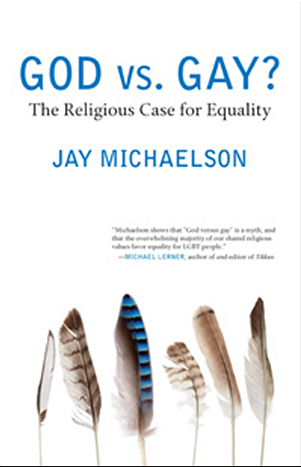
God vs. Gay? The Religious Case for Equality: My Review of Part One

Why our fundamental values support, rather than oppose, equality for sexual minorities.

-Jay Michaelson
Introductory text for Part One of his book
God vs. Gay?: The Religious Case for Equality

I would suggest that you read the book “God vs. Gay by Jay Michaelson.” He’s a Jew and does a great job of exegeting the Hebrew scriptures.

-from a post on Facebook

Michaelson’s book is divided into two parts. Part One derives some basic principles from the Bible, such as love, fairness, compassion, and justice, to create a framework by which one can integrate people in “loving same-sex relationships” into the overarching intent if not the actual narrative of the Bible. Part Two is more about the “nuts and bolts” of the Biblical passages that speak of homosexuality, particularly those that appear to prohibit or condemn homosexual practices.

Today, I’m reviewing Part One.

First of all, I commend Mr. Michaelson as a writer. He’s clear, concise, easy to access, and even entertaining. If I were reading his book with an uncritical eye and had no particular viewpoint on the issues involved, I could see myself becoming convinced by him within about the first thirty pages or so of his book. I definitely can see those people who already possess attitudes like his or who tend to be sympathetic to the matters he raises being convinced pretty much right away. After all, who could possibly be against caring for vulnerable and injured human beings and standing up for the underdog?

On the other hand, to paint the proper portrait of the Bible establishing principles that support and even demand that same-sex partners in loving relationships belong in the Church and be accepted by Christianity (and also by Judaism), requires that he read and interpret Biblical passages from the broadest possible perspective.

Loneliness. “It is not good for the human being to be alone,” God says in Genesis 2:18. In context, this is a shocking pronouncement. Six times God has remarked how good everything is: light, heaven and earth, stars, plants, animals — all of these things are “good.” The entirety of creation is “very good.” Yet suddenly something is not good. Suddenly, God realizes there is something within the world as we find it that is insufficient, something all of us experience in our own lives and strive to transcend: the existential condition of being alone.

-Michaelson, p.5
Chapter 1: “It is not good for a person to be alone”

Michaelson’s treatment of scriptural quotes follows a pattern throughout the chapters in Part One of his book in that they are read from an overly broad viewpoint and often given an unusual or unique interpretation. After all, can God really be surprised? Did He not plan to form a counterpart for Adam from the very beginning? All of the created animals were created male and female. Were not human beings planned to be male and female as well? It seems rather odd that God should create Havah (Eve) as an afterthought and more odd still that, from Michaelson’s point of view, Eve, except for the part having to do with procreation, could easily have been replaced with a male. It’s a terrific stretch to say, as Michaelson seems to, that Genesis presupposes homosexual humanity.

What some folks don’t understand about the closet is that it’s not just a set of walls around sexual behavior. It’s a net of lies that affects absolutely everything in one’s life: how you dress, who you befriend, how you walk, how you talk. And how you love. How can anyone build authentic relationships under such conditions? And if you’re religious, how can you be honest with yourself and your God if you maintain so many lies, so many walls running right through the center of your soul?

-ibid, p.7

Jay Michaelson
Jay Michaelson

This is the other argument Part One presents. It’s not based on the Bible particularly but rather on the presentation of pain, isolation, and loneliness and the desire for companionship and community, including religious community.

On top of that, Michaelson declares “Sexual diversity is real” (p.10), and accesses some scientific evidence to establish that it is natural and normal for various creatures in the animal kingdom and for human beings to display said-diversity, inferring that since sexual diversity is (supposedly) in-born, it must be an intended creation of God’s and thus part of God’s plan for human beings.

However, this requires a tremendously skewed view of the Biblical text along with infusing popular opinion and modern progressive values on sexuality, both as it was considered in the ancient world and today, in order to come to this conclusion.

But he may have shot himself in the foot by stating the following (p.11):

…as I have remarked already, our current sexual categories are of relatively recent coinage.

It seems rather strange that all of recorded human history just “missed” this “coinage” and that “loving same-sex relationships” haven’t, in some sense, been the norm across all cultures across all time, but the terms and concepts associated with the modern LGBTQ community are only decades old (if that, in some cases). While, as Michaelson says, we have visual and textual evidence of homosexual practices in our history, their function, purpose, and meaning is hidden from us, or if not hidden, at odds with the current conceptualization of same-sex relationships being completely comparable to opposite-sex relationships.

But if Genesis is any guide, and if our conscience is any guide, then we must see that having people in love with one another, building homes and perhaps families together, is religiously preferable to its absence.

-ibid, p.12

Except I cannot derive this from anything in Genesis unless I read the chapter in the broadest and most allegorical sense. Certainly no literal or semi-literal reading of the text renders such a meaning, and no accepted exegetical praxis can automatically come to the conclusion Michaelson presents in his above-quoted words.

I could condense the next two chapters into the following statements and quotes.

What about Leviticus, Romans, and Corinthians? Love demands that we read them narrowly, just as we read narrowly the commandments to stone rebellious children to death, or to sell people into slavery. They are already marginal texts — homosexuality never appears in the teachings of Jesus, or the Ten Commandments, and love does not erase them. But it does limit them.

-ibid, p.27
Chapter 3: “Love your neighbor as yourself”

oppressionThere are exegetical and logical errors in the quote above but it communicates Michaelson’s understanding of how to read the Bible and find acceptance of LGBTQ people in the community of faith. Here’s one more:

One New Testament scholar has written that “any interpretation of scripture that hurts people, oppresses people, or destroys people cannot be the right interpretation, no matter how traditional, historical, or exegetically respectable.” This is a crucial point. If we approach “the question of homosexuality” as a legal, academic, or hermeneutical enterprise, we will get nowhere religiously. All the arguments work, and the anti-gay ones are just as clever as the pro-gay. No — to be responsible members of a faith tradition, we must first open our hearts, allow them to be broken by the heartrending stories of gays who have suffered from exclusion, plague, and self-loathing, and uplifted by inspiring stories of integration, love, and celebration.

-ibid, pp.28-29

I suppose I should add:

“All you need is love.”

-Lennon-McCartney (1967)

Sorry if that last bit sounded cynical, but Michaelson isn’t saying anything different from what I’ve read before. You’d think he’d want to bring out the “big guns” in the very beginning of his book to “hook” his doubting audience and cause them (us, me) to believe that the Bible has been so grossly misinterpreted due to cultural prejudice against gays that the “truth” has been hidden until now.

Unfortunately, he throws exegesis right out the window or at least replaces the complex matrix of interpretive methods we apply to the Bible with “all you need is love.”

If God doesn’t want people to suffer and we, as believers, don’t want to be unjust and cause needless suffering, then we must allow ourselves “to be broken by the heartrending stories of gays who have suffered from exclusion, plague, and self-loathing, and uplifted by inspiring stories of integration, love, and celebration.”

I’m sorry. I don’t want to be mean, cruel, and unfair, but the only thing Michaelson has established for me so far is that there is a fundamental incompatibility between the Bible and how gay people experience their own identity and sexuality.

Chapter 3 ends with:

No religious tradition tells us to close our eyes, harden our hearts, and steel ourselves against the demands of love. Though it may occasionally offer us shelter in an uncertain world, rigidity of spirit is not the way to salvation. On the contrary, our diverse religious traditions demand that we be compassionate, loving, and caring toward others, even others whom we may not understand. The Golden Rule demands reciprocity and compassion, and basic equality. Do unto others as you would have them do unto you; give them the same privileges, civilly and religiously, that you would want for yourself. These are core religious principles, found over and over again in the Bible and in thousands of years of religious teaching. Compassion demands that we inquire into the lives of gay people, and discover if the “other” is like us or not. Look for the truth, and you will find it, indeed, it will find you.

-ibid, p.29

BibleAs I said, Michaelson is a very talented, clever, and convincing writer. He also takes some general principles one can glean from the Bible and applies them to an arena that no Biblical scholar, saint, or tzaddik would have done at any point in the past. Where in the classic Christian commentaries or the judgments of the Talmudic sages is God’s intent expressed in the same manner as Michaelson’s? I can feel him attempting to tug at my heartstrings, but when I look back into the Bible or even into the secular historical record, I don’t find “sexual orientation,” “gender identity,” or “loving same-sex monogamous relationships” written anywhere on any of their pages.

Then, starting in Chapter 4: “By the word of God were the heavens made,” Michaelson throws something new into the mix.

Homosexuality is normal. The sentence is simple, honest, and supported by science — and yet, to many religious people it may seem surprising, even blasphemous, at first. Yet sexual diversity is part of the fabric of nature, and if we believe that fabric to have been woven by God, then it is part of the mind of God as well. Same-sex behaviors are found in over one hundred species, from apes to elephants, guppies to macaques. Put in stark religious terms, sexual diversity is part of God’s plan.

-ibid, p.30

If it weren’t so tragically wrong that paragraph would be almost laughable. According to this “logic,” if something, anything exists in the world, it must be part of God’s plan and part of the “mind of God.” Really? What else exists in our broken and damaged world? War, rape, child abuse, robbery, prostitution, birth defects, divorce, death. Did God intend all of that when He created the universe?

No.

Our world became broken the first time a human being disobeyed a commandment from God, and it’s been broken ever since. In Christianity, it’s called “Original Sin”. Judaism has no such concept, but it does have Tikkun Olam, or “Repairing the World.” The idea is that the world is imperfect and requires that people participate in its perfection. It is accompanied by the idea that only the Messiah will be able to complete the task of fully perfecting the world, even though each and every one of us has a part in the “repair job”.

Either way you slice it, the world we live in isn’t the world God intended. It’s the world we created by human disobedience and human ego. You cannot say that God intended everything that is “natural” because death and suffering are natural, and are also the result of people, not God. Yes, God permits it, but only because we’ve earned it. We’ve got free will. We can screw up a free lunch. Thus Michaelson’s argument of “if it’s natural, it’s part of God’s plan” is dead wrong.

Dennis Prager in his article Judaism’s Sexual Revolution: Why Judaism (and then Christianity) Rejected Homosexuality paints human nature with very different brush strokes:

It is probably impossible for us, who live thousands of years after Judaism began this process, to perceive the extent to which undisciplined sex can dominate man’s life and the life of society. Throughout the ancient world, and up to the recent past in many parts of the world, sexuality infused virtually all of society.

Human sexuality, especially male sexuality, is polymorphous, or utterly wild (far more so than animal sexuality). Men have had sex with women and with men; with little girls and young boys; with a single partner and in large groups; with total strangers and immediate family members; and with a variety of domesticated animals. They have achieved orgasm with inanimate objects such as leather, shoes, and other pieces of clothing, through urinating and defecating on each other (interested readers can see a photograph of the former at select art museums exhibiting the works of the photographer Robert Mapplethorpe); by dressing in women’s garments; by watching other human beings being tortured; by fondling children of either sex; by listening to a woman’s disembodied voice (e.g., “phone sex”); and, of course, by looking at pictures of bodies or parts of bodies. There is little, animate or inanimate, that has not excited some men to orgasm. Of course, not all of these practices have been condoned by societies — parent-child incest and seducing another’s man’s wife have rarely been countenanced — but many have, and all illustrate what the unchanneled, or in Freudian terms, the “un-sublimated,” sex drive can lead to.

Dennis Prager
Dennis Prager

Prager attributes Judaism and God’s insistence on monogamous male-female romantic/erotic relationships with the creation and sustainment of Western civilization. We don’t often think of heterosexual monogamous marriage as “revolutionary” but compared to what all of the pagan cultures before and after the establishment of Judaism and Christianity were practicing, it certainly was.

From Prager’s perspective, what is natural is actually contrary to rather than in compliance with the plan of God for humanity.

More from Chapter 4 of Michaelson, p.33:

Still other scientists have observed that, in animal species close to our own, sexuality performs many functions other than reproduction. Bonobo apes, for example, engage in sexual behavior to build all kinds of relationships, to establish power, and, apparently, for fun.

That’s supposed to counter the Christian/conservative argument that sex is exclusively or primarily for reproduction. Of course, most of us won’t argue that sex is also “fun,” but did God intend for us to imitate Bonobo apes? Sex to establish power is often called rape. In the Roman culture of time of the apostles, male Roman citizens would participate in same-sex sex, but only as the “penetrator” in order to establish power and control. Only non-citizens and slaves were to be the “receivers” of the “contact” with the Roman males.

Yes, sex can be used to establish all sorts of relationships as science and history testify, but this can hardly be mixed into God’s intent for human intimacy. Michaelson scrambles science and religion in a way that looks like a hot pan full of “failed omelet.”

Michaelson’s reliance on science includes results of various studies but what he fails to mention is that given the current political and social bias toward support of normalizing the LGBTQ community in western culture, no one is going to fund any scientific research that could even potentially come up with a result other than the desired one (that is, desired by social progressives). No scientific funding will ever be provided to discover why a small percentage (about 3 to 5 percent, although Michaelson says the figure could go as high as 10 percent) of the general human population is gay, including the possibility that this is not a “normal” and expected variance in human sexuality.

On page 40, Michaelson compares the diversity of human (and animal) sexuality to the differences in the colors of flowers. Just as God created flowers of different colors, He created people with different sexualities, which seems to be an extremely loose and dubious comparison.

In Chapter 5: “Thou shalt not bear false witness,” a Biblical statement prohibiting lying under oath in a legal proceeding, Michaelson grossly generalizes the scripture to being “in the closet,” a state in which all gay people must lie about every aspect of his/her life. Basically, being in the closet violates the word of God and “coming out” upholds being a “true witness”.

In the Jewish tradition, there’s a concept called “chillul hashem” — the profanation of God’s name. Anytime a religious person does something odious and it becomes public, it’s a chillul hashem: rabbis committing adultery, religious Jews convicted of bribery, and so on. Having spent a decade of my adult life in the closet, and a decade out of it, and having spent many years witnessing the effects of religiously justified hatred of gay people, I feel certain in my heart that the anti-gay distortion of religion is a great chillul hashem.

-ibid, p.43

It’s an interesting piece of logic. If lying or deceit is a desecration of God’s Name and truth sanctifies God’s Name, and if coming out of the closet is telling the truth, then “coming out” sanctifies God’s Name. Moreover, religious traditions that have historically contributed to the “bludgeoning, burning, and torturing of gay people, literally and figuratively for centuries” is a desecration of God’s Name.

Michaelson paints the reader into a corner, or he tries to, such that if the reader, for any reason whatsoever, is not completely supportive of the LGBTQ community being normalized within the local church and synagogue, then they are automatically committing “chillul hashem,” whether that is actually true from God’s point of view or not.

justiceDon’t get me wrong, I’m hardly supporting the “demonization” of gay people and certainly not contributing to verbal and physical harassment and injury of people based on sexual orientation, but I don’t think that the only other possible alternative is unconditional acceptance of all gay people everywhere into the ekklesia of Messiah without so much as a “by your leave.”

In most states, gay people can be fired from their jobs or denied housing because of their sexual orientation.

-ibid, p.48
Chapter 6: “Justice — justice you shall pursue”

True as far as it goes, but what does that have to do with religion and God? Well, as a principle, and especially in denominations and religious movements that emphasize social justice, it’s a call for Christians and Jews to support LGBTQ equal rights by advocating changes in the political arena, locally, statewide, and nationally.

Michaelson builds one concept upon the other so that, if the reader is convinced by his arguments up to this point, then as a kind and good person and a person of faith, they must take the next step and vote with their conscience, which means voting in support of all pro-gay initiatives.

After all, aren’t we to “love the stranger and not oppress him” (see Lev. 19:34)? Except the “stranger” or “ger” being referenced in that passage of scripture is the non-Israelite who, along with the widow and orphan, did not have an affiliation to a tribe and thus had few if any rights in Israelite society. It is a specific legal status that no longer exists as Israel is no longer tribal, and thus cannot be applied as Michaelson is doing.

He does make a good point on page 50 that, if we shun gays based on the Bible, why don’t we also shun people who are divorced for any reason other than marital infidelity (see Matt. 5:32)? It is true that Christians tend to treat “homosexual sin” differently than any other kind of sin. It would be better to be a convicted murder, have done your time, come out of prison and go to church than to be openly gay.

But having reached the end of Part One of Michaelson’s book, I hope you can see my problem with it. This author’s arguments are hardly iron clad and in fact, most of them are ephemeral and gossamer. Does this mean I hate gay people and want them to suffer? No, of course not. However, compassion does not presuppose unconditional acceptance of gays into the covenant community nor ignoring the fact that, even if Michaelson can possibly prove beyond a reasonable doubt and to a moral certainty that the Bible (and thus God) never, ever condemns homosexual erotic activity, he may never be able to establish that the Bible directly supports marriage equality, at least beyond “establishing” some exceptionally broad principles from various scriptures taken very far out of their original contexts.

I’ll write my review of Part Two once I’ve finished reading Michaelson’s book.

Addendum: I know from reading Michaelson’s book that like most (or all) other gays and most of their “allies,” he strongly opposes what has been called “reparative therapy” also called “conversion therapy,” which is designed to assist a homosexual individual change his/her sexual orientation to heterosexuality. This therapy is considered by the LGBTQ community to be at best useless and at worst torturous, shaming, and potentially lethal (driving some gay people undergoing the therapy to attempt suicide). I can’t argue against their perspectives and the apparent negative effects this treatment has had on numerous gay people, but then again, if sexual orientation can never be changed, what do I do with people like this one?

Also, in anticipation of Michaelson’s arguments in Part Two of his book, I’m saving a link to my previous blog post Leviticus, Homosexuality, and Abominations here.

What Does God Want From Gay People?

BOISE — After a roller coaster of court rulings, the wait is over for same-sex marriage supporters.

The Ada County Courthouse issued the first licenses to Andrea Altmayer and Sheila Robertson minutes after 10 a.m. Wednesday, to cheers from those waiting in line.

Altmayer and Robertson were among the four couples who brought a lawsuit challenging Idaho’s same-sex marriage ban.

The 9th Circuit Court ruled Monday that marriage licenses could be issued in Idaho beginning Wednesday morning. The order was the latest in a roller coaster of court decisions.

-Katie Terhune, 2:34 p.m. MDT October 15, 2014
“Same-sex marriage begins in Idaho”
KTVB.com

Love doesn’t always look like love.

When I published this blog post two weeks ago, I was prepared for some people to applaud it, and for others to condemn it. That’s what happens whenever you put an opinion out there.

I was fully prepared for the waves of both support and hostility that accompany any vantage point on anything, especially a controversial topic like sexuality.

What I was not prepared for in any way were the literally hundreds and hundreds of people who have reached out to me personally to thank me for bringing some healing and hope to their families. Parents, children, siblings, and adults have confided in me (some for the first time anywhere), telling of the pain, and bullying, and shunning they’re received from churches, pastors, and church members — from professed followers of Jesus.

Scores of people from all over the world have shared with me their devastating stories of exclusion and isolation, of unanswered prayers to change, of destructive conversion therapies, of repeated suicide attempts, and of being actively and passively driven from faith by people of faith.

-John Pavlovitz, Rogue Pastor and Writer
Posted 10/16/2014 1:20 pm EDT, edited 1:59 pm
“Distorted Love: The Toll of Our Christian Theology on the LGBT Community”
The Huffington Post

I don’t have a lot of use for the Huff Post. I read some of their articles, but because they are just as skewed to the left as Fox News is to the right, I can’t see any particular advantage of choosing one over the other, so I don’t consider either reliably credible sources of information.

But given that “marriage equality” has come even to Idaho, and since the Huff Post article was posted to Facebook by someone I admire and respect, I am once again revisiting this topic.

Oh, I’ve been here before. I’ve reviewed Matthew Vines’ book “God and the Gay Christian,” criticized controversial Pastor John MacArthur on his abysmal advice to parents of gay children, and otherwise commented on the intersection of faith and the LGBTQ community within their/our midst here, here, and here (and that’s only a partial list).

michaelsonIn my continued attempt to see what other people are seeing and how they resolve the apparent conflict of cleaving to the Bible as the Word of God and yet accepting actively gay couples into the community of faith, another in a long series of books as been recommended to me: Jay Michaelson’s God vs. Gay? The Religious Case for Equality. I don’t high hopes that Mr. Michaelson will be any more successful at showing me what I seem to be missing any more than anyone else has. All of the argument for supporting the acceptance of marriage equality within the Church and Synagogue must either drastically re-write (or at least radically reinterpret) the Bible or baldly insert what isn’t actually there.

I can’t find “loving gay couples” in the Bible, certainly not within the covenant community, nor is what we now call “sexual orientation” or “gender identity” even faintly presupposed in the Biblical text. I can purchase a used copy of Mr. Michaelson’s book for less than a dollar on Amazon, so I risk little in buying and reading what he wrote (and I risk even less because I just discovered his book is available at my local public library).

The core of every gay Christian’s (or ally’s) argument in support of gays participating in the Church while in same-sex romantic/erotic relationships (legally married or otherwise) is that “Jesus is love”. OK, I’m grossly oversimplifying the argument, but stripped down to its nuts and bolts, that’s it.

Pastor Pavlovitz’s article focuses on the damage done to various gay individuals when rejected by their churches and told that their actions and even their desires are sinful (which, by the way, was also a large part of Matthew Vines’ argument). The readers are meant to feel compassion for human beings who were born to desire members of their own sex rather than the opposite. The fault in all this is either God’s or in how we interpret the Bible.

I’m willing to accept the latter argument if you can convincingly show me where the error exists. I’m an advocate for (in theory) taking our understanding of Biblical exegesis “back to formula” and building it up from scratch, since two-thousand years of Christian and Jewish tradition have skewed how we define “sound doctrine” and obliterated how the original writers and readers of the Bible would have understood the message contained therein.

But what I see instead is the desire to not correctly understand the message of the Bible and then conform our lives to a behavioral standard set by God for humanity, but the requirement to fit the Bible into the current societal standards set by progressive cultural and political imperatives.

Besides the recent tide of Federal judicial decisions ordering various states to begin issuing marriage licenses to same-sex couples, Houston (Texas) Mayor Annise Parker and her administration’s subpoenas of the sermons of several local Pastors in relation to a lawsuit regarding the so-called “HERO” (Houston Equal Rights Ordinance ) legislation complicates the “war” between religion and the political structures supporting LGBTQ desires.

Parker
Houston Mayor Annise Parker

And I don’t know what to do with the overwhelming flood of anecdotal reports from people who say they were “born this way” and have never known any other way to relate romantically or sexually. I can’t say “no, that’s not how you feel” or “you are giving in to sinful impulses” when I have no ability whatsoever to experience that person’s reality. On top of that, most religious people who have the concept of sin know, at least on some level, when they’re sinning. But if what straight Christians consider sin is experienced only as love (or maybe sometimes just desire) by gay Christians, what am I to say to that?

I’m looking for an answer one way or the other. Unfortunately, Pavlovitz ends his article only with this:

We are losing credibility to those outside organized Christianity, not because we’re “condoning sin” but because when the rubber meets the road, we really don’t know how to “love the sinner” in any way that remotely resembles Jesus, and our “God is love” platitudes ring hollow.

Church, this is our legacy that we are building in these days to the LGBT community and those who love them, and I assure you it’s not a legacy of love.

I don’t know what the answer is for you, and I can’t tell you how your theology gets expressed in the trenches of real people’s lives. I only know that we as Christ’s church can do better, regardless of our theological stance. We have to do better.

This is where our faith is proven to be made of Jesus-stuff or not.

This is where the love of God we like to preach about is either clearly seen or terribly distorted.

I don’t really care about whatever credibility or lack thereof those outside the religious community see in Christianity since we are supposed to please God, not people. Also, in suggesting that Christianity doesn’t know how to “love the sinner,” he is at least hinting that there’s some sort of sin involved in homosexuality, though I doubt he meant to send that message.

While I agree that “demonizing” gay people is not how the Church should respond to them, I do agree that Jesus didn’t die to excuse or cover up sin but rather, to forgive it (once the sinner has sincerely repented). And again, I crash headlong into the issue of sin vs. (presumably) in-born orientation and behavioral expression of said-orientation.

If we are to respond to all sins as being “the same” with no one type of sin being better or worse than another, then I get it. We can’t react to a gay person in the Church any differently than a bank robber, embezzler, or drug abuser in the Church. Gay sin isn’t any more “icky” than embezzlement sin.

But that’s not the issue from Pavlovitz’s perspective or anyone else who supports wholehearted acceptance of the LGBTQ community within the covenant community. The issue is love equals acceptance and that being gay isn’t a sin, it’s a life. It’s built-in, and that being the case, God must approve since God made the person to be gay even as he made me to be straight.

But there’s no “smoking gun” in the Bible, and to the best of my knowledge, Adam, Eve, Noah, Abraham, Sarah, Isaac, Jacob, Moses, Aaron, Joshua, David, Solomon, Jesus, Peter, and Paul…well, none of them were gay nor were any of them in a “loving same-sex relationship”.

Despite the vast number of laws and commandments, both biblical and rabbinic, the rabbis insist that sometimes we are beholden to an even higher standard. This is the idea of lifnim mi-shurat ha-din, beyond the letter of the law. The sages recognize that one can observe the commandments and still engage in deplorable behavior, and they call one who does this naval b’reshut ha-torah, a scoundrel within the bounds of the law.

-from Walking with the Mitzvot, p.27
Edited by Rabbi Bradley Shavit Artson
and Rabbi Patricia Fenton
Published by the Ziegler School of Rabbinic Studies
aju.edu (PDF)

So who is observing the commandments and still engaging in “deplorable behavior” as far as the current debate goes, the Church or the gay Christians in it? I suppose that remains to be seen.

flag

I’m going to the library in a few minutes (as I write this, I’ve already started the book as you read this) to check out the Michaelson book. I’ll try again. I want to be fair. But more than that, I want to do what God wants me to do. I’m pretty lousy at that sometimes, but I’ve got to keep trying.

Israel and the Nations in the House of God

True, that particular parcel of land was later named Eretz Yisrael, but even then we saw not a small piece of land, but a polished mirror, reflecting the entire world. In this land will rise up the mount of the Lord “and to it shall flow all to the nations.” On this mount will stand the House of the Lord, “it shall be called a house of prayer for all the nations.”

-Rabbi Moshe Avigdor Amiel
Commentary on Lekh Lekha
Chapter 1: Abraham Recognized His Creator, p.135
Translated by Kadish Goldberg
Jews, Judaism, & Genesis: Living in His Image According to the Torah

As Christians (or “Messianic Gentiles” if you prefer), we have our own ideas of how God’s covenant promises to Abraham, Isaac, and Jacob somehow play in to attaching the non-Jewish people groups of the world to the God of Israel. It’s true that we disagree on many of the specifics of the New Covenant and how faith in the accomplished work of Messiah grafts us into the root, and we argue about those opinions day and night, typically by blogging.

Every so often, we employ the classic Jewish writings, not those found in the Bible, but those written afterward, sometimes many centuries afterward, to somehow prove our point. We conveniently forget that these Jewish sages and teachers would not have said or done anything they thought might give credence to the idea that the “founder of the Christian religion,” that is to say “Jesus” (Yeshua) could possibly be the Messiah, let alone of a Divine nature.

However, I believe that only by viewing the Bible through a “Jewish lens” and reading the sacred writings in as close an approximation as possible to how the original audience would have understood them, will we ever come close to capturing the true intent of not only the human writers, but of the Holy Spirit that inspired them. Thus, when I read Rabbi Amiel’s commentaries, which include his insights as to just how the rest of the world was supposed to be attracted to the God of Israel, I become interested.

amiel
Rabbi Moshe Avigdor Amiel

One caveat, though. We can’t read too much into these commentaries for, as I said above, R. Amiel and the sources he quotes would not be considering Jesus in any favorable light, given the long history of enmity that existed between our two faith groups. Nevertheless,I think by examining the Jewish perception of drawing the Gentiles near, we might gain some insights into how we Gentiles might better approach Hashem, God of the Hebrews.

“The Holy One, blessed be He, exiled Israel among the nations so that they would attract converts, as it is said, ‘and I shall plant her in the land’ — does one sow a se’ah unless he expects to reap several koor?” (Tractate Pesachim 87b.)

So it was with the first Jew, our father Abraham. His history, as described in the portion of Lekh Lekha, began in Galut, outside the Land of Israel. He, too, was exiled from his land and birthplace only in order to increase proselytes, as is written ‘and all the families on earth will be blessed through you.’

-Amiel
Chapter 2: Our Father Abraham’s Mission, p.141

Of course in Abraham’s day, Judaism, as such, did not exist. Abraham is noteworthy for coming to faith in the One God of all and acknowledging Him as his personal God. We do know from the Bible and midrash, that Abraham did “make souls” or taught his servants and others the ways of God, but would these people have “converted” to anything and if so, what?

His “converts” were not formally converted. Among the seventy souls who went down to Egypt, no mention is made of any converts. They were converted ideologically. They were influenced by Abraham’s noble spirit…

…Thus, the converts whom we are to attract through our exile among the nations are not formal converts — for “converts are as troublesome for Israel as is a skin affliction.” The converts referred to by the Rabbis are persons who are influenced in varying degrees by our sublime fragrance.

-ibid, pp.141-2

With the caveat I mentioned above in mind, how can we compare this to the actual result of the people of the nations being drawn to the God of Israel in the days of Messiah and afterward?

Go therefore and make disciples of all the nations, baptizing them in the name of the Father and the Son and the Holy Spirit, teaching them to observe all that I commanded you; and lo, I am with you always, even to the end of the age.”

Matthew 28:19-20 (NASB)

“You see, brother, how many thousands there are among the Jews of those who have believed, and they are all zealous for the Law…

…But concerning the Gentiles who have believed, we wrote, having decided that they should abstain from meat sacrificed to idols and from blood and from what is strangled and from fornication.”

Acts 21:20, 25

AbrahamSeemingly, there is a parallel between R. Amiel’s interpretation of the “mission of Abraham” to the nations and the mission to the Gentiles initiated by Yeshua and acted upon by Paul, James, and the Apostles. There’s a conversion without a conversion happening. Gentiles are added to the ranks of the ekklesia of Messiah without any formal conversion such as was typical of the proselyte rite in the late Second Temple period.

But how does R. Amiel and the Judaism he represents imagine this was to be done? Certainly not in the matter that the Christian believes.

“‘And I will make you into a great nation’ — therefore we say ‘God of Abraham.’ ‘And I will bless you’ — therefore we say ‘God of Isaac.’ ‘And I will make your name famous’ — therefore we say ‘God of Jacob.’ Are we then to conclude [the first blessing of the Amidah prayer] with all three? The verse specifies, ‘And you will be a blessing’ — we conclude with ‘you’ (singular), not with all three.

-Tractate Pesachim

Not only do the world’s three major faiths, our holy faith and those of the Christians and the Moslems, base themselves theologically upon our Holy Torah. Not only do they draw life-giving waters from our fountainhead, they also relate to us genealogically.

-Amiel
Chapter 3: God of Abraham, Isaac and Jacob, p.145

You may be aware that Abraham fathered both Ishmael, who became the father of the Arabs and is claimed by Islam, and Isaac, who, through his son Jacob, became the scion of the twelve tribes and finally the Jewish people. But how do Christians derive a genealogical connection to Abraham?

Esau, as you may have read, is Edom, a people who are thought to be the distant ancestors of the Romans, these are the Gentile nations from R. Amiel’s point of view, and thus the Christians, since Christians, by definition, are not Jewish (if that statement makes you uncomfortable when you think of “Hebrew Christians,” remember the Rav’s perspective on the matter is thoroughly Jewish and not easily adapted to Christianity’s framework of conceptualization).

But wait a minute. If both Islam and Christianity can be considered in some manner as physical descendants of Abraham, do we Christians then inherit all of the promises God made to Abraham including possession of the Land of Israel?

Hold your horses and remember your Bible. Even if the Gentile Christians are both “spiritual” and physical descendants of Abraham, there is this:

But God said to Abraham, “Do not be distressed because of the lad and your maid; whatever Sarah tells you, listen to her, for through Isaac your descendants shall be named.”

Genesis 21:12

Now Abraham gave all that he had to Isaac; but to the sons of his concubines, Abraham gave gifts while he was still living, and sent them away from his son Isaac eastward, to the land of the east.

Genesis 25:5-6

interfaithIt is only through Isaac that the promises of God are carried on to the next generation and beyond, not through Ishmael or any of Abraham’s other children. Furthermore, of Isaac’s sons, only Jacob inherits both the birthright and the blessing of the first-born.

As it is written, God spoke to Jacob:

And behold, the Lord stood above it and said, “I am the Lord, the God of your father Abraham and the God of Isaac; the land on which you lie, I will give it to you and to your descendants. Your descendants will also be like the dust of the earth, and you will spread out to the west and to the east and to the north and to the south; and in you and in your descendants shall all the families of the earth be blessed. Behold, I am with you and will keep you wherever you go, and will bring you back to this land; for I will not leave you until I have done what I have promised you.”

Genesis 28:13-15

Thus as we see in Tractate Pesachim, it is only through Abraham and through Isaac, and through Jacob that all of God’s promises are carried out. It is true that based on the commentary, we can consider Abraham the father to other nations, physically the Arab people, and midrashically the Christians, but that makes neither people or religion Jewish.

Expanding on his point, R. Amiel writes:

‘And all the families of the earth will be blessed through you.’ Of the End of Days, when ‘the Temple Mount shall be the highest of all, towering above the hills,’ it is written that ‘many nations will come streaming to it.’ This is to say that even though ‘the Lord shall be one and His name shall be One,’ all the nations of the world will not fuse into one nation. There will remain diverse peoples. National differentiation actually contributes significantly to human development, bringing not curses but blessings. But ‘many nations will come streaming to it,’ — all will flow to one central point, to the Mountain of the Lord which ‘shall be the highest of all, towering above the hills.’ Or, as the Torah says, ‘through you will be blessed all the families [plural!] of the earth.’ (emph. mine)

-Amiel, p.147

Up to JerusalemAs I said, the Rav isn’t going to take any Christian innovations regarding Biblical interpretation into account, so it would be easy to discount his comment above based on that. On the other hand, I think there’s some merit to the idea that, by viewing the Bible a bit more “Judaically,” we can get a more accurate picture not only of how Judaism sees the final resolution of the Gentiles to God, but perhaps how the original Jewish writers of the Bible saw this conclusion of human history.

For me, this does re-enforce my currently held belief that the peoples of all the nations remain distinct national groups differentiated from Israel and from each other, and yet all drawn to One God and One place, the Temple, to worship Him in the “House of Prayer for all peoples”.

I’ve said before that it is at least plausible to consider that when the Master issued his Matthew 28:19-20 directive, the Apostles likely believed they would comply by employing the traditional proselyte rite, bringing the Gentiles into discipleship by converting them to Judaism. This, though, violates prophesy as R. Amiel has pointed out. It is clear that the Gentiles were to be drawn near to God as Gentiles.

The Apostle Paul was the one to see this most clearly, but how does Judaism see it standing on the outside of the Apostolic Scriptures and looking in, so to speak?

What prevented their mass conversion was the law of brit milah, ritual circumcision, for they found that particular commandment to be the most difficult of all. The founder of the faith of the “New Testament” exploited this fear of circumcision and prevented the fulfillment of the promise ‘and I will make you a great nation.” Thus Israel is ‘the smallest of nations.”

-ibid, p.148

This is the Rav’s explanation for how Christianity “morphed” into its own, separate religious expression. Like the ancient Apostles, he believes the proper way to fulfill the prophesies is to convert Gentiles into Judaism, making Abraham’s descendants as numerous than the stars (Genesis 15:5). But this contradicts his view that the people of the nations will draw near to God as people of the nations and not as proselytes. R. Amiel’s only apparent option within his contextual framework, is to have the Gentiles “convert” in the sense of becoming Noahides, righteous Gentiles, which would satisfy the requirement of them retaining their national identity while still honoring the One God of Israel.

R. Amiel acknowledges that Abraham is the father of many nations and that the people of the nations are blessed through him, but the “nations inherited the legacy only partially; we (Jews) inherited it in its entirety.” (p.149)

My respectful response to the esteemed Rav is “yes and no.” I agree that we Gentile believers are not Israel and yet, we are not to be compared to the generic nations of the earth. Even if those nations comply with the Noahide Laws, that doesn’t provide those of us who are grafted in to the root through our faith in Messiah access to the New Covenant blessings. This is something that Rabbi Amiel could not anticipate, but we can. We can take what is valuable from the esteemed and honored sages, and in this case, look at it through a New Covenant lens in order to glean what is of value there.

Restoration
Photo: First Fruits of Zion

I mean no disrespect to Rabbi Amiel, those other Rabbis who contributed to the publication of his book, or the long history of the Sages in Judaism, but even as they were inspired and even as they possess authority from God to make halachah for their generations, they were also men, and as men, given the struggles of the last twenty centuries, there were places they just could not see and knowledge they couldn’t assimilate. No one comes to God without the involvement of the Holy Spirit. To everyone else, the good news of the Messiah doesn’t make a lot of sense:

For indeed Jews ask for signs and Greeks search for wisdom; but we preach Christ crucified, to Jews a stumbling block and to Gentiles foolishness, but to those who are the called, both Jews and Greeks, Christ the power of God and the wisdom of God. Because the foolishness of God is wiser than men, and the weakness of God is stronger than men.

1 Corinthians 1:22-25

All people, Jewish and non-Jewish, come with blind spots that can only be clarified through the Spirit of God. I suppose God could just re-write our programming and the entire world could wake up one morning all declaring faith in Christ and him crucified, but that’s not God’s plan. It would be easier if it were, but God left human free will intact. We have to be willing to hear the messages of the Gospel, and having heard them, we have to be willing to believe and then act on that belief.

The call of the Master is like hearing a knock on your front door. Is it a thief or a benefactor? We won’t know until we open the door, but if we’re wrong, then it’s too late to save ourselves of any threat that might enter. But if we take the risk and open the door, he will come in and with him…freedom.

May we all meet together one day on the Mountain of God, and may we join in prayer in His House.

‘And the souls which they had made in Charan.’

Reish Lakish said, “Whoever teaches his friend’s son Torah is considered by Scripture as though he himself had made [created] him, for it is said, ‘And the souls which they had made…'”

-Amiel
Chapter 4: Flesh and Soul, p.151

Relative Righteousness

‘This is the story of Noah. Noah was in his generations a man righteous and wholehearted.’

What is the implication of ‘his generations’? Rabbi Yochanan said, “Only in his generations, but not in others.”

Reish Lakish said, “If in his generations, then certainly in other generations.”

-Tractate Sanhedrin 108a

Rabbi Yochanan acted in accordance with the noble precept “judge every person positively.” If the text lends itself to both laudatory and pejorative readings, then certainly a man described by the Torah as ‘a man righteous and wholehearted’ should be given the benefit of the doubt. On the other hand, the Torah itself deprecates Noah for not having tried to influence others, in contrast to our father Abraham, about whom the Torah testifies ‘and the souls they had acquired (lit., “had made”) in Charan.’ The Rabbis explain: “He (Abraham) brought them under the wings of the Holy Presence, Abraham converting the men and Sarah the women. The Torah reckons this as if they had made them” (Tractate Sanhedrin 99b). Except for his immediate family, Noah “made” not a single soul and seemed uninterested in the fate of contemporary humanity.

-Rabbi Moshe Avigdor Amiel
Chapter 1: A Tzaddik in His Generations, p.95
Translated by Kadish Goldberg
Jews, Judaism, & Genesis: Living in His Image According to the Torah

I’ve read this criticism before. There’s more than a hint of “superiority” in attributing higher or better motives to Abraham, the first Hebrew, than to Noah who was a Gentile, at least on the surface. Of course, if Rabbi Yochanan is correct, then Noah really did forsake even the attempt to inspire anyone in his generation besides his family to repent of their sins and thus be saved of the coming destruction of the flood.

On the other hand, how can Reish Lakish possibly be right, since there is evidence showing that Abraham but not Noah had disciples who were devoted to the One God?

If, however, we assume that the leader is forged by his generation, the picture is reversed. Noah’s stature surpasses that of Abraham. Abraham functioned in a society amenable to moral improvement, wherein one could “make souls.” Noah lived in a totally corrupt society, yet remained unblemished by its immoral influences.

-Amiel, p.96

This doesn’t tell us if Noah tried to save anyone, but it does suggest that he would have universally failed, given the abject corrupt nature of the society around him.

All this is conjecture, of course, but have you ever wondered if the world we live in today is more like Noah’s or Abraham’s?

“But of that day and hour no one knows, not even the angels of heaven, nor the Son, but the Father alone. For the coming of the Son of Man will be just like the days of Noah. For as in those days before the flood they were eating and drinking, marrying and giving in marriage, until the day that Noah entered the ark, and they did not understand until the flood came and took them all away; so will the coming of the Son of Man be.”

Matthew 24:36-39 (NASB)

We can see that Jesus (Yeshua) is drawing a comparison between the days of Noah and the days of Messiah’s eventual return. In both cases, the general public didn’t have a clue that their time had come and that a revolutionary act of God was imminent. People will still be carrying on “business as usual” right up until the end.

stained glass jesusBut we can’t necessarily extend the comparison to include relative levels of corruption. After all, in the current age, people do respond to Christian missionary efforts and become disciples of Jesus and even some Jews and Gentiles have come to the realization of the revelation of the Jewish Messiah as the Jewish Messiah rather than the Goyishe King, if you’ll pardon my making a distinction.

Beyond the presumed difference in behavior in Noah and Abraham that Rabbi Yochanan and Reish Lakish represent, there’s the idea that God will continue to offer redemption should a generation be open to it, and withdraw that option should that generation be totally cold to God. Does God ever give up on an entire people group?

As for you, you shall go to your fathers in peace; you will be buried at a good old age. Then in the fourth generation they will return here, for the iniquity of the Amorite is not yet complete.”

It came about when the sun had set, that it was very dark, and behold, there appeared a smoking oven and a flaming torch which passed between these pieces. On that day the Lord made a covenant with Abram, saying,

“To your descendants I have given this land,
From the river of Egypt as far as the great river, the river Euphrates: the Kenite and the Kenizzite and the Kadmonite and the Hittite and the Perizzite and the Rephaim and the Amorite and the Canaanite and the Girgashite and the Jebusite.”

Genesis 15:15-21

Although God promises the Land of Canaan as a permanent inheritance to Abraham’s descendants, they would not be allowed to take possession of that Land until the current inhabitants had become so corrupt that they were (presumably) unable to be redeemed. This seems to indicate some sort of spiritual or moral “cut off point,” a state that once entered into can never be reversed.

Then the Lord spoke to Moses, “Go down at once, for your people, whom you brought up from the land of Egypt, have corrupted themselves. They have quickly turned aside from the way which I commanded them. They have made for themselves a molten calf, and have worshiped it and have sacrificed to it and said, ‘This is your god, O Israel, who brought you up from the land of Egypt!’” The Lord said to Moses, “I have seen this people, and behold, they are an obstinate people. Now then let Me alone, that My anger may burn against them and that I may destroy them; and I will make of you a great nation.”

Exodus 32:7-10

It seems like Israel had crossed that “line in the sand” or at least was standing right on top of it. If Moses hadn’t pleaded with God for Israel (Exodus 32:11-14), then the inheritors of the Land would only have come from the tribe of Levi, that is, the descendants of Moses.

That last point is debatable however, and God could have been testing Moses the way He tested Abraham at the Akedah (Gen. 22:1–19).

The famous “Great Commission” (Matthew 28:18-20) as Christianity calls it, was Messiah’s directive to his Jewish Apostles to do what had never been done before; make disciples of the people of the nations without requiring them to undergo the proselyte rite and convert to Judaism. It may have been (and I’m extending the previously mentioned midrash about Noah and Abraham) that like the people of Noah’s generation, the Gentiles were considered unable to be redeemed unless they converted and joined Israel and Jewish people “lock, stock, and barrel,” so to speak. If a Gentile were permitted entry into the ekklesia of Messiah and to remain a Gentile, was such a thing even possible?

Some men came down from Judea and began teaching the brethren, “Unless you are circumcised according to the custom of Moses, you cannot be saved.” And when Paul and Barnabas had great dissension and debate with them, the brethren determined that Paul and Barnabas and some others of them should go up to Jerusalem to the apostles and elders concerning this issue.

Acts 15:1-2

Peter's visionMany Jews didn’t seem to think so, not because they were mean-spirited or had anything against Gentiles as such, but because it seemed like a spiritual and covenantal impossibility. Even Peter, if he hadn’t experienced his vision (Acts 10:9-16),would never have understood that it was possible for Gentiles to be redeemed.

And he said to them, “You yourselves know how unlawful it is for a man who is a Jew to associate with a foreigner or to visit him; and yet God has shown me that I should not call any man unholy or unclean.

Acts 10:28

See? The vision was a metaphor, not a literal reality. It was never about food. It was about people.

Opening his mouth, Peter said:

“I most certainly understand now that God is not one to show partiality, but in every nation the man who fears Him and does what is right is welcome to Him.”

While Peter was still speaking these words, the Holy Spirit fell upon all those who were listening to the message. All the circumcised believers who came with Peter were amazed, because the gift of the Holy Spirit had been poured out on the Gentiles also. For they were hearing them speaking with tongues and exalting God.

Acts 10:34-35, 44-46

Obviously, those late Second Temple period Jews who thought Gentiles could not be brought to God on equal terms and yet remain Gentiles were wrong, but it took a lot of convincing. In fact, Luke’s Book of Acts and many of Paul’s epistles testify to how eagerly thousands upon thousands of Gentiles accepted the discipleship of Yeshua upon themselves, receiving the Spirit and the promise of the resurrection.

But what about we believers today? Oh yes, Christians sometimes go door-to-door passing out religious tracts, send missionaries to far away lands to preach the word of the Gospel, and otherwise proselytize the people around them, but do we ever give up on individuals or, Heaven forbid, entire groups of people?

For Easter one year, the church where I first became a believer many years ago, created a video project. They went to Portland and deliberately approached people who seemed extraordinarily (from these Christians’ point of view) unlikely to accept Christ or even to know much about him. The people they captured on video tape seemed to be what I believe were/are called punk rockers, people, with spiked, multi-colored hair and a proliferation of body piercings; people who didn’t look at all like the “clean-cut” Christians from that church in Boise, Idaho, who typically were socially and politically conservative, and most of whom were educated professionals.

When we screened some of the raw video prior to editing, a lot of people around me in the audience were laughing and making fun of the answers the “subjects” gave in response to the Christian interviewer’s questions about Jesus and Easter.

I was disgusted.

If that had happened today, I certainly would have spoken up, but way back then, I was considered what is called a “baby Christian,” someone new to the faith. I had very little experience as a Christian and didn’t know how or even if this was to be considered normal for a believer. All I knew was that a year from that point, none of the people in that Church would know if anyone they had spoken to in Portland might have made a confession of faith and become a brother or sister in Christ. They’d just written these folks off. More’s the pity.

Who are we? Are we worthy to be called by His Name?

Well, no one is worthy, but by our behavior, by our attitude toward individuals or entire groups or “types” of people, do be sanctify or desecrate the Name of God?

unworthyI can’t tell you about Noah’s righteousness relative to Abraham’s with any certainty, or for that matter, in relation to Moses, but I can tell you that the next time you see another believer operating with a “holier than thou” attitude (or the next time you operate with that attitude), chances are, the second you started making fun of someone else or denigrating them for some flaw or problem they possess, you ceased to have any claim to any righteousness you thought you had.

…as it is written, “There is none righteous, not even one…

Romans 3:10

So what’s the cure for this sickness of self-righteousness?

Now when they heard this, they were pierced to the heart, and said to Peter and the rest of the apostles, “Brethren, what shall we do?” Peter said to them, “Repent…each of you…”

Acts 2:37-38

Peter said other things, but I’m assuming that it is as believers we need to repent of how we judge others, not as those who still need to be baptized by the merit of Moshiach. But then again, if we are capable of acts of cruelty or even just indifference to whole populations of people because they don’t look, talk, or act like us, maybe we are not really disciples of the Master at all.

“And then I will declare to them, ‘I never knew you; depart from me, you who practice lawlessness.'”

Matthew 7:23

Who is Honored on Sukkot?

Epicurus used to say, “Were the gods to answer the people’s prayers, people would deteriorate and die, for so multitudinous are the tribulations which each one wishes upon his fellow.”

Epicurus may be right as regards the prayers of the nations, but not as regards our prayers. We well know “This is the book of the generations of man,” and every year we begin our supplications with “And now, Lord our God, place Your awe upon all whom You have made, Your dread upon all whom You have created…”

-Rabbi Moshe Avigdor Amiel
Chapter 13: The First Man and the Jewish Nation, p.75
Translated by Kadish Goldberg
Jews, Judaism, & Genesis: Living in His Image According to the Torah

Last week, I spent some time writing about those things that make Jewish people unique and distinct from the people of all the other nations, including Gentile Christians, in three blog posts: Upon Reading a Rant About “Messianic Jewishism”, Diminishing the Moon and Israel, and Are Messianic Jews Not Expected to Practice Judaism?. I suppose I could be accused of fomenting discord between Jewish and Gentile members of the ekklesia of Messiah, or to put it in more Christian-friendly terms, the members of the “body of Christ”.

In the spirit of unity which is aptly expressed during this time of Sukkot, I thought I’d take a different tack.

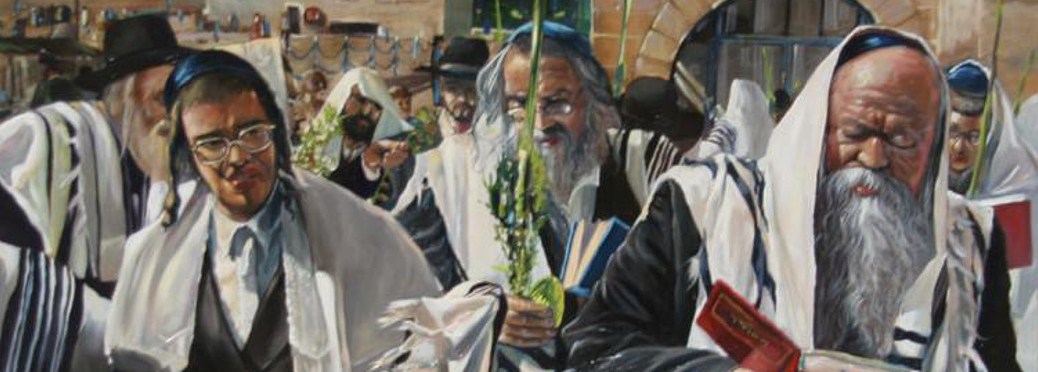
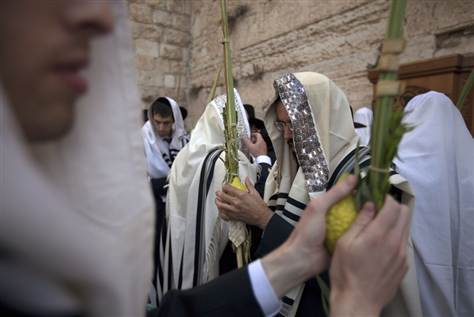
As we discussed last year, the fruit symbolizes the Torah inside a person, while the fragrance represents the Mitzvos, the deeds a person does which affect those around him or her. The four species represent those who have both Torah and good deeds, those who have one but not the other, and even those who have neither.

And what are we told to do? We bind them together! Every Jew is a unique and essential part of our nation.

from “Note from the Director”
News from Project Genesis and Torah.org for Sukkot
Torah.org

Unfortunately, I can’t find this note from Rabbi Yaakov Menken on the Project Genesis website which would allow you to read all of the Rabbi’s comment, but as you might imagine, he is specifically addressing unity among Jewish people and not including non-Jewish believers in Jesus (Yeshua). However, giving Rabbi Menken’s words a “Messianic spin,” I think we can include the entire population within the ekklesia of Messiah, the Jews and the Gentiles, at least for the sake of my example. While unity doesn’t require uniformity, we still are united with each other by love of the Moshiach, may he come swiftly and in our day.

Earlier in his email newsletter, the Rabbi wrote:

The Torah tells us to take four species: the Esrog, a citrus fruit with a pleasant taste and smell; the Lulav from a Date Palm which produces fruit but is not fragrant; Hadasim, myrtle branches which are aromatic but does not provide edible fruit; and aravos, from the willow, which has neither taste nor smell.

Consider the differences and the distinctions involved in each of the four species. What does a citrus fruit, a lulav, myrtle branches, and aravos from a willow have in common?

Not much apparently.

And yet all four of these highly different items are absolutely required for the observance of Sukkot as it is written:

Now on the first day you shall take for yourselves the foliage of beautiful trees, palm branches and boughs of leafy trees and willows of the brook, and you shall rejoice before the Lord your God for seven days.

Leviticus 23:40 (NASB)

four species
Photo by Gili Cohen Magen

Those distinctively different objects are required to be bound together and, in essence, to “work together,” in order for Sukkot to be observed properly. While it’s impossible to offer the appropriate sacrifices related to Sukkot today due to a lack of the Temple and the Priesthood, the celebration is nevertheless observed by religious Jews and not a few believing Gentiles as well.

In a recent comment on one of my blog posts and then again in commenting on a different blog post, I said:

According to Jewish tradition, on the first seven of the eight days of the festival, we are to extend a special invitation to a specific guest in this order:

  1. Abraham, who represents love and kindness
  2. Isaac, who represents restraint and personal strength
  3. Jacob, who represents beauty and truth
  4. Moses, who represents eternality and dominance through Torah
  5. Aaron, who represents empathy and receptivity to divine splendor
  6. Joseph, who represents holiness and the spiritual foundation
  7. David, who represents the establishment of the kingdom of Heaven on Earth

Now before you think I’ve flipped for considering something so far-fetched, look at this:

“I say to you that many (Gentiles) will come from east and west, and recline at the table with Abraham, Isaac and Jacob in the kingdom of heaven (meaning the Messianic Kingdom here on Earth established by Jesus upon his return)…”

Matthew 8:11

This at least suggests a sort of feast occurring during Sukkot in which we non-Jewish disciples of Christ will join the Jewish disciples in participating in the Sukkot festival with the greatest prophets, priests, and kings in the Bible, all in honor of King Messiah.

While I crafted the above quoted-statement to be easier for a traditional Christian to comprehend, I want all of us to understand that Jews and Gentiles will be together at the feast with Abraham, Isaac, and Jacob (and perhaps Moses, Aaron, Joseph, and David) to give glory and honor to King Messiah upon the establishment of his Kingdom. Maybe this will even happen on Sukkot, although of course, I can say that for sure.

Certainly the Prophets, Priests, and Kings represented by the Seven Ushpizin guests are not exactly alike, and although they exist within the unity of the Jewish people, they are not identical in type or function. So too it can be said that even though Jew and Gentile in the ekklesia of Messiah and as citizens in the Kingdom of Heaven have unity within that assembly, they also are not identical in type and function.

sukkotBut you won’t see Abraham, Moses, and David arguing about it, so why should we?

About twelve years ago, Rabbi Eliyahu Hoffman wrote a Sukkot commentary called “Shaking Up Our Priorities” which you can find at Torah.org. It’s worth the read and won’t take much of your time, but I’d like to quote just a part of it here:

One year, as he always did before Sukkos, R’ Yitzchak gathered his belongings, including all the rubles that he had put aside, and left home to travel to a nearby town where the Four Species could be bought. Travelling along the roadside, he stopped suddenly when he heard the sound of someone crying. Indeed, a Jewish man sat in a nearby field, head in his knees, crying and moaning bitterly. R’ Yitzchak approached him. “Reb Yid, what’s the matter?”

“Don’t even ask,” the Jew said, “a bittere pekel tzures – what a bitter portion the Almighty has dealt me! Woe is to me. I had one horse. That might not seem like much, but it was enough to support my family. It was a good horse. I rode it from town to town, delivering people’s mail, parcels – whatever they needed. I didn’t make a fortune, but we had what to eat, and we were happy. But today I awoke, and – woe is me – I found her dead. She must have passed away overnight. As it is, we live from hand to mouth. If I have to deliver by foot, I don’t stand a chance of making a living. Woe is me!”

“Tell me,” asked R’ Yitzchak, “what would a new horse cost you. I’m sure she was a good horse, but there are other horses out there.”

“Of course there are other horses, for someone who has 300 rubles to spend! It would take me almost a year to earn that kind of money! So you see, all is lost!”

Without further ado, R’ Yitzchak took out his wallet and counted out 300 rubles, leaving for himself only the smallest sum from all the money he had so carefully put aside. He placed it in the pocket of the forlorn Jew, who had all the while never taken his head out from between his knees. Sticking his hand into his pocket, he was flabbergasted to find the entire sum he needed to buy himself a new horse. “What… What have you done. I… I never expected.” Completely choked up with emotion, he barely managed to thank R’ Yitzchak for his magnanimity. Little did he know, R’ Yitzchak himself was not a rich man, and that he had just parted with the lion’s share of his own savings.

That year R’ Yitzchak had to settle for the plainest of Esrogim, much to the surprise and wonder of his friends and family. Despite their best attempts to find out, he told no one of what had come of his plans to purchase the most beautiful Esrog, nor of his savings, except to say, cryptically, that “the money was not lost – in fact it had just galloped off and was being put to very good use.”

If you are a (non-Jewish) Christian or otherwise are a person who does not observe Sukkot (or who does so in a rather casual manner), you won’t understand the tremendous significance involved in R’ Yitzchak’s generosity. In a sense, he had before him two apparently conflicting mitzvot. He could do as he had done every year and dedicate the more than 300 rubles it had taken him all year to save for the purchase of the most beautiful Esrog he could find in honor of the festival and God, or he could alleviate the sorrow of a Jew even poorer than he was by freely handing over his money for the purchase of a horse, and settle for the plainest Esrog he could still afford.

Again, from a Christian point of view (and probably the viewpoint of most people), the decision to help his fellow Jew seems clear, but remember, what is at stake is the honor of both God and of human beings at this Holy time of year.

Perhaps, even after performing tzedakah (charity) by giving up his Esrog money, R’ Yitzchak was still unsure that he did the right thing, for we find:

During Chol Ha-Moed (the Intermediate Days of Sukkos), R’ Yitzchak travelled to Lublin to visit his Rebbe, the famed Choize (Seer) of Lublin. At the festive Yom Tov meal, the Choize remarked to his disciples, “The mitzvah of Arba Minim must be performed with great joy. We must thank Hashem that we all managed to perform the mitzvah of waving the Lulav and Esrog. When we wave the mitzvos, all the Heavenly spheres and realms are awakened, and much joy and goodness permeate the upper realms, ultimately reflecting that joy and goodness back down to this world where we can reap its benefits. We all shook the Lulav and Esrog, but, R’ Yitzchak,” he said, turing as he did so to face him, “to wave a horse – now that is a truly original and exceptional way to perform a mitzvah!”

davening_morningChristians, most other non-Jews, and even some Jewish people often think of the Rabbinic Sages as inflexible, rule-bound, and even “anti-Bible” in considering halachah and Talmud as having any sort of authority when compared to the commandments clearly written in the Bible, but here we see that kindness, mercy, and “waving a horse” for Sukkot are not only original and exceptional ways to perform a mitzvah,” but deserving of special honor as expressing the heart of God.

In one of the commentaries for Tractate Yevamos 5 as collected and distributed in the Daf Yomi Digest by the Chicago Center for Torah & Chesed, we find the following based on “Each person shall fear his mother and father, and guard my Shabboses…”:

On today’s daf, we find that the Beraisa proposes that were it not for the verse, one might think that honoring parents overrides the Shabbos!

The famous Yehudi HaKadosh, zt”l, would deliver a regular Gemara shiur to his students that explored the commentary of Tosfos. One of his students was an extremely talented local boy who was unfortunately orphaned of his father. Once, the Rebbe interrupted their learning so that he could concentrate deeply on a certain subject. His young student knew well that such a break could last an hour or more, so he took advantage of the pause to go home and eat.

The boy ate a quick meal and hurried out back to his Rebbe’s home, but his mother called out after him that she wanted him to go up to the attic and bring something down for her. In his rush to return to study, he ignored her call, but half-way back the boy had second thoughts. “Isn’t the whole purpose of study to fulfill the mitzvos? Shouldn’t I honor my mother instead?” he asked himself. So he ran home and did as he was bid.

Afterward he returned to his studies, and as he opened the door to the Rebbe’s house, the Yehudi HaKadosh snapped out of his reverie and rose to his full height as a sign of respect. Beaming, the Yehudi HaKadosh asked, “What mitzvah have you just performed, because it has brought the spirit of the great Amorah Abaye with you into my house.”

The student told his story, and the Rebbe explained to the rest of the students: “It is well known that Abaye was an orphan—his name is an acronym of the verse, ‘For in You does the orphan find mercy.’ This is why his spirit accompanies a person who fulfills the mitzvah of honoring his parents—so that he should have a part in a mitzvah that was denied to him. You want to know why am I smiling? Because Abaye came and answered my question on the Tosafos!”

Again, this may not resonate with most people, including many Jews, but we see a comparison between the authority of a Rebbe over his young students and the mitzvah of honoring parents. It is said that a Rebbe is to be considered greater than one’s own father, so you can see that the young student put himself in a bind by going home to eat and then having to decide between his mother’s request and his obligation to promptly return to the Rebbe’s home.

MidrashIn choosing to honor his mother, he not only did the right thing from a human point of view, but he achieved a certain amount of respect from his Rebbe. Did “the spirit of the great Amorah Abaye” really accompany the boy to the Rebbe’s house and answer the Rebbe’s question on the Tosafos he had been pondering?

There’s no way to know for sure and probably no way to know if any of these events ever actually occurred. But whether or not they did, there’s a principle being taught here, the same principle as was taught in the previous Rabbinic story.

Even if we know nothing of the Torah, the mitzvot, or anything else, we know, or we should know as disciples of Rav Yeshua, our Rebbe, that extending mercy, kindness, compassion, and respect are the greater and loftier mitzvot, the acts of obedience and response to God that, even in moments of doubt, cannot fail.

I said in a comment last week that “if I’m going to err, I’d rather err on the side of humility”. I also quoted one of the Master’s parables:

And He began speaking a parable to the invited guests when He noticed how they had been picking out the places of honor at the table, saying to them, “When you are invited by someone to a wedding feast, do not take the place of honor, for someone more distinguished than you may have been invited by him, and he who invited you both will come and say to you, ‘Give your place to this man,’ and then in disgrace you proceed to occupy the last place. But when you are invited, go and recline at the last place, so that when the one who has invited you comes, he may say to you, ‘Friend, move up higher’; then you will have honor in the sight of all who are at the table with you. For everyone who exalts himself will be humbled, and he who humbles himself will be exalted.”

Luke 14:7-11

When we finally attend the “feast of Abraham, Isaac, and Jacob,” and it will be a massive affair no doubt, I suppose seating arrangements will be a big problem. What are you going to do with all of the people who show up from all over the world to honor King Messiah and to actually recline at the table with men like Jacob and Joseph? Where should we sit?

In retrospect, and considering the example the Master laid out for us, the answer should be obvious. We should consider ourselves as having no honor of our own, but only seek to honor the King and those Seven Ushpizin guests who represent the Prophets, Priests, and Kings of Israel, and indeed, all the Jewish people. If we mistakenly think we are greater than they, won’t our host, Yeshua, be forced to embarrass us by asking us to take the last place at the table?

Ben Zoma says: Who is honored? The one who gives honor to others…

(Talmud – Avot 4:1)

As non-Jewish disciples of the Jewish Messiah King, if we seek to honor him and believe we are worthy of honor, respect, equality, and inclusion within the ekklesia, then both the teachings of the Master and of the great Sages are clear that to be honored, we must honor others, and not deliberately strive to honor ourselves.

UnityThe Master also teaches:

Jesus answered, “If I glorify Myself, My glory is nothing; it is My Father who glorifies Me, of whom you say, ‘He is our God'”

John 8:54

If our Rebbe and Master did not glorify himself, should we not follow his example? Will he not take the different “species” within the body and unite us, regardless of our extreme differences…or perhaps because of them, and in our honoring him, won’t he honor us?

Chag Sameach Sukkot.