Tag Archives: Christianity

The Unchanging Changing God

Leah and RachelSo Jacob did so and he completed the week for her; and he gave him Rachel his daughter to him as a wife. And Laban gave Rachel his daughter Bilhah his maidservant — to her as a maidservant. He consorted also with Rachel and loved Rachel even more than Leah; and he worked for him another seven years.

Jacob’s anger flared up at Rachel, and he said, “Am I instead of God Who has withheld from you fruit of the womb?” She said, “Here is my maid Bilhah, consort with her, that she may bear upon my knees and I too may be built up through her.”

When Jacob came from the field in the evening, Leah went out to meet him and said, “It is to me that you must come for I have clearly hired you with my son’s dudaim.” So he lay with her that night.

Genesis 29:28-30, 30:2-3, 16 (Stone Edition Chumash)

So Jacob marries two women, and sisters no less, and “consorts,” not only with his two wives, but with both of their maidservants as well. By today’s standards, even in progressive, secular society, this is beyond scandalous. And yet, in the ancient near east, what Jacob was going and how he was building up a family was considered perfectly acceptable.

But we don’t consider that acceptable today, and certainly not in the Christian church. Did Jacob deviate from God’s plan? Did he commit some horrible sin, some dire mistake as did his grandfather Abraham when Abraham “consorted” with Sarah’s slave Hagar (Genesis 16:1-4)? Ishmael went on to father the Arab nations, who have been a thorn in Israel’s side across history and into the present day. Did Jacob’s actions with his wives and concubines represent the same error?

Apparently not, since without the children produced by all four of these women, there would be no twelve tribes of Israel and their descendants, the Jewish people.

But how is this possible? If God is eternal and His morality is eternal and unchanging, then how can the relationship Jacob had with two wives and two concubines be approved of by God and yet be considered morally wrong and sinful today?

He answered them, Have you not read that from the beginning the Maker “created them male and female,” and it says, “Therefore a man shall leave his father and mother and cling to his wife, and the two will become one flesh”? If so, they are not two any longer, but one flesh. Thus, what God has joined, man must not divide.

Matthew 19:4-6 (DHE Gospels)

One FleshJesus quotes from an even older story in the Bible to define what is marriage (and what is divorce) to the questioning Pharisees, but conspicuous in his answer is the absence of Jacob, his two wives, and his two concubines. Certainly, every Jewish person hearing the words of the Master and even Jesus himself, owed their very existence to Jacob and his offspring who he sired with four women, only two of whom he had formally married. But what about “two becoming one flesh?”

And what about this?

And it was when about three months had passed, that Judah was told, “Your daughter-in-law Tamar has committed harlotry, and moreover, she has conceived by harlotry.”

Judah said, “Take her out and let her be burned.”

As she was taken out, she sent word to her father-in-law, saying, “By the man to whom these belong I am with child.” And she said, “Identify, if you please, whose are this signet, this wrap, and this staff.”

Judah recognized; and he said, “She is right; it is from me, inasmuch as I did not give her to Shelah my son,” and he was not intimate with her anymore.

Genesis 38:24-26 (Stone Edition Chumash)

If not for this rather scandalous act on both the part of Tamar and Judah, she would not have given birth to the twins Perez and Zerah, and Perez is an ancestor of the Messiah.

How ironic that the one son of Jacob who found his wife among the Canaanite inhabitants of the land was none other than Judah, whose name would eventually denote the progeny of Jacob that survives. In the phrase “About that time Judah left his brothers,” the verb “left” suggests not only a physical departure, but also a violation of family mores (see Genesis 38:1-2).

-Ismar Schorsch
Commentary on Torah Portion Vayetze
“Setting Aside Our Abhorrence of Canaanites,” pg 105
Canon Without Closure: Torah Commentaries

All of this suggests, even if we agree God’s morality and ethics are eternal and unchanging, that He is willing to “work with” our current traditions and customs as a means of accomplishing His plan. Otherwise, how can we explain such apparently outrageous behavior by some of the greatest men in the Bible?

Later in the same commentary, Schorsch goes on to say:

The language implies an expansion of the notion of excluded nations. It is not ethnicity that defines the seven original settler nations of Israel, but cultural mores.

-ibid, pg 106
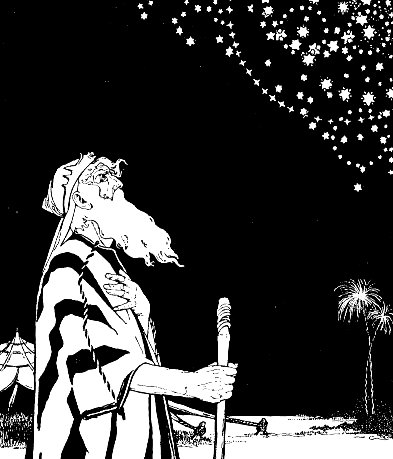
abraham1This makes a great deal of sense, especially in the case of Abraham, who was distinguished from even his close relatives in his homeland, not by ethnicity or genetics, but by a moral and ethical code received from God as the result of “faith counted as righteousness” (Genesis 15:6).

As the family of Abraham progressed forward in time, it began to be distinguished and then defined by families, clans, and tribes descended from the twelve sons of Israel. Who Israel was to each other and to God was set against the national backdrop of the people groups surrounding them. But then, time continues to pass and circumstances radically change.

By the time the Pharisees and Rabbis, Ezra’s spiritual heirs, came to power after the destruction of the Second Temple, Judaism had become a missionizing world religion, constituting as much as one-tenth of the population of the Roman Empire. To maintain the deuteronomic legacy, especially in Palestine, would have severely impeded access to Judaism for prospective converts in a world turned cosmopolitan. Who could be sure that an interested gentile was not a descendant of one of the proscribed nations?

-ibid

I know people in the community of Jesus faith who discount the validity of conversion to Judaism because it is not presupposed in the Torah, as if closure of Torah canon constitutes closure of the will of God. My recent commentaries on Pastor John MacArthur’s Strange Fire Conference have shown me (not that I was unsure of MacArthur’s opinions before this) that he closes Biblical canon with a bang at the end of the Book of Revelation and declares that the Holy Spirit isn’t in the business of working miracles or even talking to people anymore.

And yet, even within the Biblical canon, we see time and time again how God, unchanging and eternal God, seems willing to adapt how He interacts with human beings across the varied mosaic of history in order to accomplish His ultimate goal of reconciling man to Himself and ushering in the Messianic age.

I’ve been struggling more than a little with trying to reconcile the Jewish Torah, Prophets, and Writings, which Christians call collectively, the “Old Testament,” with the later Christian scriptures or the “New Testament.” Even though the books of the Tanakh represent a widely diverse set of writing styles and writers, it yet preserves an overall Jewish “flow” of prophesy aimed at the national redemption of Israel, and the restoration of God’s physical rule on Earth and among all the nations. The Christian interpretation of the later writings shifts the focus away from national Israel and the Jewishness of Yeshua faith, and makes it all a story about God’s plan for personal salvation of all people in a single, homogenized group called “the Church.”

But “the Church” is never mentioned in the Tanakh. If the Bible is supposed to be a unified document, Torah, Prophets, Writings, Gospels, Epistles, Apocrypha, then I would expect that overarching Jewish flow of prophesy to be seamless and unbroken across the “Testaments.”

But it isn’t.

DHE Gospel of MarkHowever, is the fault the document we have that we call the Bible, or is it how different groups interpret it? Certainly Christians see the “Old Testament” in a radically different light than Jews see the Tanakh.

Is my search for Biblical reconciliation and the face of the One, Living God across all history doomed to failure? Is there no way to understand an adaptive God and yet find Him eternal and unchanging in all of the pages of the Bible?

Frankly, one of the only places I’ve been gaining traction so far in my quest is by watching and reviewing the different episodes of First Fruits of Zion’s (FFOZ) television series (available for free viewing online) A Promise of What is to Come. That’s because this program is written and formatted to present familiar concepts in Christianity, such as the Gospel Message, the meaning of the title “Messiah,” repentance, and the parables of Jesus, all from an exclusively Jewish perspective.

The key to understanding the Bible, all of it, is to put yourself in the place of the original writers and especially of the original audience. What were the first century Jewish readers of Matthew’s Gospel supposed to take away from his message? What is “the Good News” from an ancient Jewish point of view? Is the Jesus Christ of the Christian Church really the Jewish Messiah, Son of David we see prophesied by Isaiah, Ezekiel, and Zechariah? Is there some way to make sense of how God seems to change His methods and motives based on changes in ancient (and modern?) cultural mores, and still to recognize that He is One God, a single, unified, creative, entity?

In an ultimate sense, the great Ein Sof God of the Universe is entirely unknowable. How can the small and finite know the limitless infinity?

And yet, God gave us a Bible written in human languages by inspired human beings to other human beings in need of inspiration so that we can know Him. God wants us to know Him and to draw close to Him. We read how Abraham drew close to God. We read how the God of his father became the “Dread” of Isaac. We can see how God turned the fugitive son Jacob into Israel, the father of an empire.

And we can read how one, lone, itinerant teacher changed the course of the world through his teachings, his death, his resurrection, and his ascension to the right hand of Glory.

walkingThe search for God is not a search for an ultimate answer that once we possess it, we may rest in our knowledge and sit assured in our complacency. It is a never-ending process, a trail winding through the mountains, a sea without a shore, a lifelong journey of ever greater discoveries and an ever closer walk with our God.

There is an answer, just as there is a final peace, where each man will sit under his vine and under his fig tree, and no one will make him afraid (Micah 4:4). But that time has yet to come. And until he comes again, we remain a traveler without a home, a bird without a nest, eternally walking, eternally in flight, until home comes to us in the Kingdom of God.

May Messiah come soon and in our day.

Searching for the Real Eloheinu Melech HaOlam

Nadia-Boliz-WeberNadia Bolz-Weber bounds into the University United Methodist Church sanctuary like a superhero from Planet Alternative Christian. Her 6-foot-1 frame is plastered with tattoos, her arms are sculpted by competitive weightlifting and, to show it all off, this pastor is wearing a tight tank top and jeans.

Looking out at the hundreds of people crowded into the pews to hear her present the gospel of Jesus Christ, she sees: Dockers and blazers. Sensible shoes. Grandmothers and soccer moms. Nary a facial piercing.

To Bolz-Weber’s bafflement, this is now her congregation: mainstream America.

-by Michelle Boorstein
“Bolz-Weber’s liberal, foulmouthed, articulation of Christianity speaks to fed-up believers” (November 3, 2013)
The Washington Post

I saw this on Facebook, opened the story, saw the photo of Nadia Bolz-Weber, realized this article was published at The Washington Post (only slightly less liberal than the New York Times and MSNBC.com), and I figured it was some sort of hyper-liberal take on a version of Christianity reformatted for progressive audiences.

Then I started reading and realized that, bumps and bruises included, I kind of liked Bolz-Weber.

Actually, I like her “process” and the people she represents, people who have struggled with the traditional church, people who are looking for something a little more authentic and “edgy.”

I’m not a social liberal. Far from it. I’m not impressed by tattoos and piercings just because someone thinks they’ll look more “relevant” if they decorate their body. If it was just a matter of this Pastor serving a counter-culture audience, I wouldn’t give her a second thought, but she’s attracting “mainstream America,” Mr. and Mrs. Button-down USA.

Why?

I sometimes think of what attracts non-Jewish people to Hebrew Roots or Messianic Judaism out of more traditional Christian venues. I wonder if it’s (more or less) the same things that are attracting “straights” to people like Bolz-Weber?

“You show us all your dirty laundry! It’s all out there!” the Rev. John Elford of the University United Methodist Church booms, as if he is introducing a rock star, leading the cheering crowd into an impassioned round of hymn-singing.

Bolz-Weber springs onstage to do a reading from her book, but first she addresses the language that’s about to be unleashed on the pulpit: “I don’t think church leaders should pretend to be something they’re not.”

The crowd erupts into applause.

I know this sort of thing would make a lot of more traditional Christians cringe. Lately, I’ve been talking about how the Church (which ranges from Fundamentalist Christian to Hebrew Roots) has been throwing stones at those in other denominations and others who have left the faith altogether.

I can only imagine that they would throw a few rocks at Bolz-Weber. I mean, if anybody is different, she’s different.

Bolz-Weber’s appeal is unquestionably part packaging: dramatic back story, cool appearance, super-entertaining delivery. She launched a successful church for disaffected young people and has headlined youth gatherings tens of thousands strong. For a part of American religion that’s been in a long, slow institutional decline, this gives her major credibility.

This one paragraph says a lot.

The packaging, cool appearance, dramatic back story and entertaining delivery I can live without. All of that is superficial and if that’s all you’re looking for, then your faith is as shallow as a mud puddle in your backyard after a ten second rain shower.

homeless-kids-in-oregonThe success with disaffected youth, on the other hand, earns Bolz-Weber some cred. The mainstream Church will never see these kids, they’ll never understand these kids, but it doesn’t mean God doesn’t love the goths, emos, and other youth out there who depressed, drunk, high, homeless, runaways, sexually active straight, gay, bi, and everything else that “white-bread, apple pie” teens in conservative churches would never ever dream of being, and who would cast the disaffected into the pit of hell before they even die.

The last part of the paragraph got my attention: “American religion that’s been in a long, slow institutional decline…”

That’s the part that made me think of Hebrew Roots and Messianic Judaism, among other things.

Don’t get me wrong. I’m not suggesting that the Church should be in the entertainment business just to attract people. Quite the opposite. I don’t think people want to be entertained. I think they want to be informed and more. I think people are searching for authenticity in their faith, I think they want to be challenged. I think they want to struggle to find answers rather than have them served up to them on the aging, traditionalist, fundamentalist, evangelical platter.

Fundamentalist Christianity celebrates the Reformation, which is interesting, because reformation suggests change, re-evaluation, and looking at the Bible, Messiah, and God in (you should pardon the pun) fundamentally new ways. This is opposed to the oldie but goody religion many churches present, that “old-time religion” and “if it was good enough for grandpa, it’s good enough for me” way of looking at Christianity.

Again, I’m not talking about entertainment, I’m talking about seriously challenging the old, traditional interpretations and assumptions about what the Bible is saying and who the Bible is talking to.

I think that’s what Bolz-Weber represents for some people. I think that’s what Hebrew Roots and Messianic Judaism represents for other people.

Her message: Forget what you’ve been told about the golden rule — God doesn’t love you more if you do good things, or if you believe certain things. God, she argues, offers you grace regardless of who you are or what you do.

I agree that God loves us no matter who we are and what we do, however, my opinion is that the offer of grace is contingent upon us being willing to accept the offer. I don’t agree that what we do is irrelevant, since much of the Bible speaks of disciple, obedience, observance, and so forth.

But Bolz-Weber is successful in communicating that you don’t have to wear a suit and tie, vote Republican, or listen to country music in order to be loved by God and in order to have a relationship with Him.

You can be different…really different, and still be a human being created in the image of God.

“This isn’t supposed to be the Elks Club with the Eucharist,” Bolz-Weber said in a taxi ride before her Austin talk. Religion should be “something that’s so devastatingly beautiful it can break your heart.”

aweExactly! Exactly!

So many religious groups are “the Elks Club with the Eucharist” or “the Elks Club with Oneg,” a social club where any true encounter with God takes a seat way in the back of the bus. An encounter with God is “something that’s so devastatingly beautiful it can break your heart.” I think “beauty” and “awe” and “astonishment” that God is who God is and that we can encounter Him in the midst of our worship has been left behind or worse, been denigrated as too “emotional.” No, emotion shouldn’t drive our worship, but we should still be open to a God who is more than just black ink on the white paper of our Bibles. God is real. God is holy. And He’s “something that’s so devastatingly beautiful it can break your heart.”

And God wants broken hearts and broken spirits.

For You do not delight in sacrifice, otherwise I would give it;
You are not pleased with burnt offering.
The sacrifices of God are a broken spirit;
A broken and a contrite heart, O God, You will not despise.

Psalm 51:16-17 (NASB)

The article continues:

Bolz-Weber says she abhors “spirituality,” which she sees as a limp kind of self-improvement plan. She prefers a cranky, troublemaking and real God who at times of loss and pain doesn’t have the answers either.

I think God does have all the answers (though He doesn’t always tell them to us), but I prefer “cranky, troublemaking and real” disciples of Messiah “who at times of loss and pain” don’t “have all the answers.” I don’t have all the answers and sometimes, I’m “cranky, troublemaking and real.”

“God isn’t feeling smug about the whole thing,” she writes about Jesus’s resurrection and the idea that the story is used as fodder for judgment. “God is not distant at the cross. . . . God is there in the messy mascara-streaked middle of it, feeling as [bad] as the rest of us.”

This very physical way of talking about God is thrilling to a lot of people who grew up in liberal Christianity.

I like how the God Bolz-Weber describes isn’t distant and unknowable, but close, passionate, caring, involved. Did God cry as Jesus bled on the cross? Did God weep and wail each time another group of Jewish women and children were herded into a Nazi gas chamber? Does He grieve every time we grieve, not because He can’t see beyond death, but because He knows we can’t see that far?

Therefore, when Mary came where Jesus was, she saw Him, and fell at His feet, saying to Him, “Lord, if You had been here, my brother would not have died.” When Jesus therefore saw her weeping, and the Jews who came with her also weeping, He was deeply moved in spirit and was troubled, and said, “Where have you laid him?” They said to Him, “Lord, come and see.” Jesus wept. So the Jews were saying, “See how He loved him!”

John 11:32-36 (NASB)

“Jesus wept.”

tearsI just wanted to make sure you caught that. He cared. It mattered to him that the sisters of Lazarus grieved, and hurt, and cried. Even though he knew Lazarus would be resurrected (to die again at some future date), he wasn’t callous about it. He didn’t treat Mary and Martha like spiritual morons because they couldn’t see what he could see…that the death of their brother was very temporary.

Grief is real. So Jesus wept. Jesus cared. Jesus loved. Jesus was real. Jesus is real.

Sometimes, that “realness” doesn’t translate very well into a Sunday morning service, at least for the Christians who seem to be leaving the church in droves.

To Carmen Retzlaff, a newly ordained Lutheran pastor who came with her husband to the Austin talk, Bolz-Weber is liberating — partly because she’s “unapologetic” about her faith. “She talks a lot about JEE-sus” — Retzlaff giggles here — “which hasn’t always been a place of comfort in an increasingly secular world. I really love that.”

Real faith. Real, raw, edgy, bleeding, living faith. Faith lived on the razor’s edge, sharp and dangerous. I think people want to feel alive, active, and interactive in church, rather than passive and accepting and maybe even a little sleepy.

Most churches are safe, but should God be safe? It’s not real faith if it doesn’t scare you, at least a little. You aren’t encountering God if He’s not scaring you, at least a little, if you’re not feeling mortal, vulnerable, small, frightened, needy, and inadequate.

Yet she never stopped believing in God. She dabbled for years with Wicca and experimented with every liberal faith group, from Unitarians to Quakers. She performed stand-up as a type of no-cost therapy.

It was going through anti-addiction recovery that finally soothed her anger. Her encounter with a tall, cute, Lutheran seminary student named Matthew Weber brought her back to church. They married in 1996 and have two children.

She first heard the call to pastor in a downtown Denver comedy club at which she and a bunch of her old runaround pals gathered in 2004 to eulogize a friend who had hanged himself. As the only religious member, she was asked to lead the service. Her vocation to her fellow outsiders was born.

I’ve recently, if tangentially, been involved in a conversation that resulted in a number of apostates being slammed against a metaphorical wall by those who see justice as their ultimate identity but who think of mercy as weakness and failure, but in reading this part of Bolz-Weber’s “testimony,” I can see just how far a person can run away from God and still come back. Sure, she’s come back with “baggage” but it was “baggage” that drove her out of the Church, too. If God weren’t a God of mercy, compassion, and second chances, none of us would survive. Heaven help us and save us from people who think they’re more righteous than God.

As far as content, theology, doctrine, and dogma goes, I doubt she and I would agree on many points, but it’s the process of her coming and going and coming back to God that she has in common with me and with a lot of believers, including many people in both the Hebrew Roots and Messianic Jewish movements. The only difference, at least on the surface, is that Bolz-Weber’s church attracts a far more diverse population:

These days, about 180 people show up each Sunday, an eclectic mix of homeless and corporate types, punk teens and suburban baby boomers sitting on stacking chairs in the rented hall.

Here’s where I think she’s spot on:

Bolz-Weber characterizes herself as having had “a heart transplant.” This is typical for someone who presents herself as the “anti-pastor”: cranky, intolerant, egotistical, but always open to Jesus making her better.

A heart transplant. Gee, where have I heard that before?

Moreover the LORD your God will circumcise your heart and the heart of your descendants, to love the LORD your God with all your heart and with all your soul, so that you may live.

Deuteronomy 30:6 (NASB)

She also said:

“Christianity is supposed to give me a mild sense of discomfort. I don’t get to be in control,” she said. “It’s always putting me into something new.”

I think one of the reasons people leave church is that it’s too comfortable, too familiar, too safe. There’s no challenge, no pizzazz, no process by which one grows and gets better, gets closer to God.

strugglingMost of the time, personal, emotional, spiritual change isn’t planned. Most of the time, it takes a crisis to set such change in motion; dramatic, violent motion. People don’t draw closer to God because they’re safe. They authentically experience closeness with God when they are scared, desperate, terrified, lost, heartbroken, shattered.

I’m not saying religion should be a mile-a-minute thrill ride, like at an amusement park, but it should be something you live with every day that’s a little bit “in your face,” some iron that’s sharpening your iron, challenging, disagreeing, confronting…you know, like God is, like how He told His prophets to be when Israel wasn’t toeing the line.

People are looking for something different, not for the sake of it being different, or entertaining, or amusing, but for the sake of it offering a more authentic encounter with God. We enjoy a pleasant sunset, but a violent thunderstorm scares us into drawing closer to God, just like small children snuggle in bed with their parents when the lightning flashes and the thunder booms.

It doesn’t have to be a “fire and brimstone” revival meeting. An encounter with God just has to help us get to a point where we know God really is real and He really is present, and He really cares and hurts with us when we care and hurt. We have to know that our God is a God who can care and hurt, who can show compassion for the most injured and disfigured among us.

We want God to make us feel uncomfortable and to help us be better today than we were yesterday. That’s what we’re looking for, not an old, static system where God is on His mountain and we are in our pews, but a God who is with us, a powerful, existing, active, interactive God, King of the Universe. Eloheinu Melech HaOlam.

We’re alive. We need to know that God is alive, too…and that He still cares.

Vayetzei: The Mosaic of God

Jacobs_LadderJacob awoke from his sleep and said, “Surely, God is present in this place and I did not know!”

Genesis 28:16

What was the source of Jacob’s surprise? Jacob realized that he can relate to God even during sleep.

The Talmud (Berachos 63a) says that there is a brief passage upon which the entire body of Torah is dependent: “In all your ways know God” (Proverbs 3:6). Rambam and countless other commentaries refer to this statement, saying that one should serve God not only with the actual performance of mitzvos, but with all of one’s daily activities.

Dvar Torah for Vayetzei
based on Twerski on Chumash by Rabbi Abraham J. Twerski
quoted by Rabbi Kalman Packouz at Aish.com

Yesterday, I quoted another Aish source, Rabbi Zelig Pliskin, who suggests we should act the way we want to be. This was in part, to support how in serving God, we need to bring both a sense of justice and mercy to the table, so to speak. We need not to be severely biased in one direction or the other, though according to some areas of Jewish thinking, even God created the world with a very slight leaning toward mercy.

In his commentary on Torah Portion Vayetzei, Rabbi Packouz presents an interesting and related challenge.

What is true spirituality? My beloved friend, Rabbi Avraham Goldhar, who has a revolutionary approach to helping kids get better grades with less study time in both secular and Jewish studies, came up with the following paradigm of attributes to clarify the definition of spirituality.

  1. Emotion — Intellect
  2. Kindness — Justice
  3. Community — Solitude
  4. God — Nature
  5. Serenity — Challenge

Put a check mark by one attribute from each pair that you think is more spiritual.

Now, if you want to try something interesting, put an “x” mark by each attribute that you associate with the Jewish people.

Here’s the point Rabbi Packouz is making, a point that dovetails nicely with what I was saying in yesterday’s morning meditation:

What is fascinating is that most people associate spirituality with emotion, kindness, solitude, nature and serenity … and the Jewish people with intellect, justice, community, God and challenge. The reason is that we have an Eastern notion of spirituality — an all encompassing emotional bliss connecting with the universe. The Jewish approach to spirituality is based on fulfilling a purpose, to fix the world (tikun olom)– which requires intellect, justice, community, God and challenge.

For the Jew, intellect is to be channeled into emotion — emotions can’t rule you; you must do the right thing. Justice provides for a world of kindness. A society has to be willing to identify rights and wrongs and stand up to evil. If not, one can attempt to do kindness, but end up enabling evil. Community provides you with an understanding of who you are – a member of a people – even when you are alone, you are still part of something more. Realizing that there is a Creator and having a relationship with the Creator makes the natural much more profound. This world is a veiled reality with the Creator behind it. People can only receive serenity when they live up to their challenges; otherwise, they are tormented in their pursuit of serenity by not living up to their potential.

mosaicYou cannot lead with any one side of the equation, so to speak. You can’t even lead with just a few different but specific attributes. And yet people in religion do this all the time, usually to the detriment of the faith. In reading Rabbi Packouz, I get the impression, at least in the ideal, that Judaism strikes the desirable balance between emotion and intellect, between mercy and justice. Of course, the idea that the universe was created by God with these two elements is also a Jewish idea.

Don’t get me wrong, this probably isn’t literal and factual in terms of the process of Creation, but as a metaphor, it tells an important tale, one that we need to learn in order to truly serve God.

Rabbi Twerski ends his Dvar Torah like this:

A person should eat and sleep with the intent that food and rest are essential to have a healthy body, which enables one to do the mitzvos properly. Someone who is weak and exhausted cannot concentrate on Torah study or do mitzvos properly.

One engages in work and business to provide the needs for one’s family, and to acquire the means to do the mitzvos. Money is necessary to give tzedakah, to purchase tefillin and tzitzis, to build a succah, to pay for an esrog and for matzoh, to pay tuition and fulfill all of the mitzvos. If one partakes of world goods for the purpose of being able to serve God properly, then all of one’s actions become part and parcel of Torah and mitzvos.

If I may take a few liberties here, I’ll add that we should use every aspect of who we are in the service of God, not just a few. It is true that each of us has talents or areas where we excel. For some, it’s compassion, and so they serve God by being compassionate helpers. For some it’s intellect, and so they serve God as teachers and as students, always learning and passing on what they’ve learned.

And now you see why we need to work in a body. No one of us has the capacity to serve God in all areas. If we imagine that we do, then everyone around us will get a limited and probably inaccurate image of who God is, what God does, and what God expects of human beings. If all we know of God is from someone who is exceptionally merciful, we may think of God as loving and permissive in the extreme, but having few behavioral expectations, limits, or discipline, like some sort of “cosmic teddy bear.” If all we know of God is from someone who is exceptionally just, we may think of God as harsh, cruel, rule-bound, inflexible, and blind.

Look back at the numbered list I posted above. God possesses all of those qualities. He exists along all points of all continuums, from emotion to intellect, from kindness to justice, from community to solitude. There is no place where God does not exist, and there is no person God cannot comprehend.

But no human being lives with the same infinite set of perceptions and qualities as God. We are limited. We are finite. We have biases. We lean in one direction or another. No one of us gives anyone else an accurate picture of the attributes of God. That’s why we need to operate in a body. That’s why we need community, either physical or (if an approprite physical community of faith is not accessible) virtual. Because only together, as a body, can we balance and guide each other. It takes all of us, like the bits and pieces that make up a mosaic, to be the image of God.

alone-desertSometimes you’ll encounter someone, a person of faith, perhaps a leader, Pastor, teacher, or writer, and they gather a great deal of attention to themselves. When you encounter this person, remember that he or she is only one person. If that person is not tempered, guided, and corrected by a balanced community (plenty of “religious leaders” exist in an unbalanced community, made up of only people who think and feel just like they do), and I don’t care how powerful they are or believe themselves to be, then that person, all by himself or herself, cannot possibly represent God in all that God is.

Don’t be fooled into thinking that he or she can be such a “holistic” representative, even if that person thinks of themselves that way. Alone, a person is just one, and only God is complete as One. It takes a “village,” not only to raise a child, but to be a community in the image of God.

I shall praise God among a multitude.

Psalms 26:12

While the prayer and performance of a mitzvah are always praiseworthy, it is especially meritorious when an entire community participates in it, as the Sages teach, “The prayer of a multitude is never turned away.”

-from Devarim Rabbah 2

Good Shabbos.

A Sense of Balance Between Justice and Mercy

lady-justiceThere is a basic principle found in the writings of the Rambam (Hilchos Daos) and other classic Torah sources: “Act the way you wish to be and you will become that way.”

We are influenced by our actions. Take, for example, someone who wants to become a kinder person. By doing many acts of kindness over time, the person actually becomes an authentically kinder person.

Each day write down at least ten positive actions that you did. Write down kind words and acts, blessings that you said mindfully, and positive things that you did even though they were hard to do. Write down when you felt grateful, and when you refrained from saying something that would cause another person distress. Write down an encouraging telephone call that you made.

What will happen when you are resolved to write down ten positive actions each day? You will go out of your way to do them. This will have a cumulative effect on your self-image.

Daily Lift #992
“Act The Way You Wish To Be”
Aish.com

Where have we gone wrong? Why is the world of religion a world of struggle between religions? Why is the world of religion a struggle between the religious and the secular, between the righteous and the unrighteous, between those who are “in” and those who are “out,” however we choose to define those terms?

This “daily lift,” is a quote from Rabbi Zelig Pliskin’s book Build Your Self-Image and the Self-Image of Others (Artscroll, Chapter 11)  and says that in order to become the person we want to be, we should start behaving like that person.

We often wait to change our behavior until something internal changes, but the exact opposite is being suggested here. I’ve heard it said that we are what we think, but Rabbi Pliskin is saying that we are what we do, even if it isn’t necessarily what we also think (or feel).

If you want to be a kinder person, perform more acts of kindness. If you want to be more loving, show more acts of love. If you want to acquire any quality, behave as if you already possess that quality. Make lists of things you can do. Ponder them. Imagine yourself doing such things. Then do them. As Gandhi is supposed to have said, be the change you want to see in the world.

What is unsaid but should be obvious, is that we already are what we do. If we act with kindness, then we are a kind person. If we treat others poorly and with disdain, then we are a disdaining person. Look at anyone around you. Watch what they do particularly when they don’t think anyone is looking (everyone can “fake it” for an audience, at least for a while).

Look in the mirror. Watch yourself. Be your mirror in your mind as you go through your day, as you drive to work, as you talk to different people, as you react to a homeless person asking for money, as you talk to your spouse. How do you behave? How do you treat others? How do you speak to them? What are you thinking about them? What do you tell yourself about them? What do you tell others about them, especially in private?

That is who you are.

Who am I?

Not a perfect person, certainly. I have faults. I see them in my mirror. I strive to be more. I want to be the person God sees in me, the person He created me to be. I wonder if I’ll ever get there?

No-MercyI desire mercy because I really need it. I desire justice in our world, but I want God to temper justice with mercy. That’s because justice without mercy is merciless. Justice without mercy may still be just, but it is also cruel and as we’ve seen in a million images, it is also blind. People who are overly zealous for justice at the cost of mercy believe the ends justify the means, no matter what those means may be.

I don’t want to be merciless, cruel, or blind, but sometimes, when I show mercy, I’m accused of abandoning justice. That’s not true, at least I think it’s not true. Mercy without justice carries its own problems. Mercy without justice is permissive, lawless, amorphous, undefined, and ultimately Godless. Mercy without justice allows every type of behavior, no matter how lawless, and calls it all good. It is also blind, but to any and all faults and even to sins. Mercy without justice may sound good, and there are even some religious groups that worship mercy, permissiveness, inclusion, and progressiveness, even before God, while leaving justice in the gutter.

I solemnly charge you in the presence of God and of Christ Jesus, who is to judge the living and the dead, and by His appearing and His kingdom: preach the word; be ready in season and out of season; reprove, rebuke, exhort, with great patience and instruction. For the time will come when they will not endure sound doctrine; but wanting to have their ears tickled, they will accumulate for themselves teachers in accordance to their own desires, and will turn away their ears from the truth and will turn aside to myths.

2 Timothy 4:1-4 (NASB)

You cannot follow God unless you pursue mercy and justice together.

It is said that when God created the world, he used both the attribute of justice and the attribute of mercy. However, it is also said that He biased His creation with just slightly more mercy than justice.

If there was more justice and little mercy, the world would not survive. If there was more mercy and little justice, the world would be lawless and chaotic. If justice and mercy were equal, we would have no model to teach us how to make room in our own hearts so that even in being just, we could still show mercy to others, just as our just God shows us mercy that we don’t deserve.

But just the smallest amount of mercy must outweigh God’s vast justice for people to have law and an order of things, but to still be allowed to make mistakes and yet survive.

Justice is required to confront evil when it is popular among men to call evil things “good.” Mercy is required to allow people to make mistakes and yet to recover from God’s judgment as well as from human judgment (which is often less merciful than God’s).

We all make mistakes.

micah6-8Look at yourself in the mirror. Who are you? Are you more just than merciful? Are you more merciful than just? How are these two qualities balanced within you? Heaven help you if you are just one or the other. I’ve met both sorts of people. They can be very self-righteous and very scary.

If it is true about how God created the world, with generally a balance between justice and mercy, but with mercy edging out justice by just a tiny bit, then how should these qualities be distributed in us?

Do not take revenge nor bear grudge among your people, and you should love your neighbor as yourself, I am God.

Leviticus 19:18

This verse may well be the Torah’s most difficult demand. The Talmud gives an example of revenge: someone refuses to give you a loan; then, when he or she asks you for one, you say, “I will not lend you money because you turned me down when I was in need.” Bearing a grudge comes when you do give the person the loan, but say, “I want you to see that I am more decent than you. I am willing to lend you the money, even though you did not give me that consideration.” The Torah forbids both reactions; we must loan in silence.

R’ Moshe Chaim Luzzato says that revenge is one of the sweetest sensations a person can have, and that the Torah’s demand that we suppress this impulse is asking us to virtually be akin to angels (Path of the Just, Chap. 11). Still, the fact that we are required to do so tells us that this level of control is within our grasp. The key to this is contained in the end of the verse cited above.

The Torah wishes us to consider the other person as we would ourselves. For example, if a person stubbed his toe and felt a sharp pain, he would hardly hit his foot as punishment for having hurt him. Just as we would neither take revenge nor bear a grudge on a part of our own body, we should not do so toward another person.

Today I shall…

…try to think of other people as extensions of myself, and avoid responding with hostility when I am offended.

-Rabbi Abraham J. Twerski
“Growing Each Day, Cheshvan 30”
Aish.com

Rabbi Pliskin says that we should behave as we want to be. Rabbi Twerski says we should treat others as an extension of ourselves. Even the Master quoted Leviticus 19:18 as did Rabbi Twerski, when rendering the two greatest mitzvot (Matthew 22:37-40).

We hang in the balance between justice and mercy, between loving God and loving our neighbor. If we swing too far over to either side, we are no longer balanced. We just fall.

For more on balance including the terrible consequences of a life out of balance, please read Rabbi Yanki Tauber’s short article The Jealous Neighbor.

FFOZ TV Review: Speaking in Parables

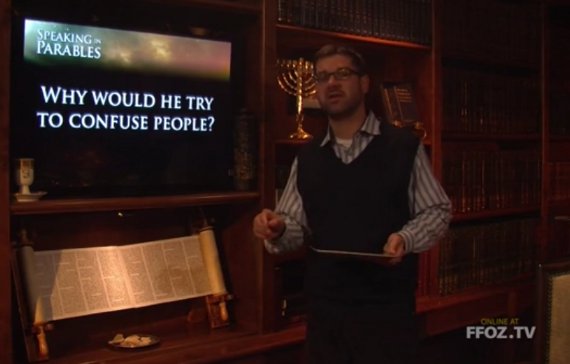
ffoz_tv18_mainEpisode 18: It may be surprising to many Christians that the use of parables was not unique to Jesus but was rather a Jewish literary art form that had been developed over centuries. Viewers will learn in episode eighteen that Jesus used parables not as riddles but stories to help clarify his points. Jesus’ parables attempted to make it easier for his listeners to grasp his words. Like the other rabbis of his day, Messiah used parables to serve as simple explanations and illustrations to help us understand his message about the kingdom.

-from the Introduction to FFOZ TV: The Promise of What is to Come
Episode 18: Speaking in Parables

The Lesson: The Mystery of Speaking in Parables

This is another First Fruits of Zion (FFOZ) perspective on a common “attribute” of Jesus, in this case, how he taught using parables, that for me, revealed more about how Christians think than about the topic itself. I always assumed that the parables of Jesus were metaphors designed to communicate complex concepts and ideas in a simple manner. This is probably because in my previous career as a psychotherapist, using metaphors was a common method I employed to accomplish the same thing.

But apparently, it’s generally understood in the Church that Jesus used parables to confuse his listeners and to hide the truth from the Jewish people. He spoke in riddles in order to prevent the Jews from repenting and returning to God, which, if repentance had occurred, would have resulted in Israel entering the Messianic Age.

According to FFOZ teacher and author Toby Janicki, it’s easy to understand why modern Christians might get that idea:

His disciples approached him and said, “Why is it that you speak to them in parables?” He answered them and said, “Because to you it is given to know the secrets of the kingdom of Heaven, but to them it is not given. For to one who has, it will surely be given, and he will have extra, but for one who does not have, even what he does have will be taken away from him. That is why I speak to them in parables. For in their seeing they will not see, and in their hearing they will not hear, nor do they even understand.

In them is fulfilled the prophecy of Yeshayah that says,

‘Listen well, but you will not understand. Look closely, but you will not know. Fatten the heart of this nation, and make its ears heavy and seal its eyes, so that it will not see with its eyes or hear with its ears or understand with its heart or repent and be healed’.”

Matthew 13:10-15 (DHE Gospels)

ffoz_tv18tobyThis seems to be another case of misunderstanding what appears to be a plain message because we are not approaching the words of the Master using a historical, cultural, and Rabbinic Jewish lens. Toby used to introduce himself in earlier episodes by saying he is a Gentile who is practicing Messianic Judaism, but in the past few episodes, he has described himself as a Gentile who studies Messianic Judaism. I’m becoming increasingly convinced that such a framework is truly required by Gentile Christians if we’re ever to get past our own cultural and historic misconceptions of the Gospels and hear and understand what Jesus is actually saying to his original audience and to us. Maybe we could use a few parables to get that message through our own “thick skulls.”

Toby said the way to understand Matthew 13:10-15 is to go to the section of the Book of Isaiah from which Jesus was quoting:

He said, “Go and say to this people, ‘Surely you will hear, but you do not comprehend; and surely you see, but you fail to know. This people is fattening its heart, hardening its ears, and sealing its eyes, lest it see with its eyes, hear with its ears, and understand with its heart, so that it will repent and be healed’.”

Isaiah 6:9-10 (Stone Edition Tanakh)

Toby told his audience that the conjunction “but” as in “but you do not understand” would better be rendered as “and”. If we substituted the word “and” for “but” in the scripture from Isaiah 6, it would read more like God telling Isaiah that He wants the prophet to relate a message of repentance, but that the people are not going to listen to him.

Otherwise, it looks like God is saying, through Isaiah, that He wants the people to repent, but He also is making it impossible for them to hear the message and obey. Sort of a cosmic “bait and switch,” with God playing the role of the infinite trickster in relation to Israel. This is very reminiscent of how some Christians say God only gave the Torah (Law) to Israel to prove to them that it was impossible to obey, setting them up to understand why they needed grace and Jesus Christ in order to be saved; setting them up to realize that the Torah was never, ever meant to be a permanent lifestyle for the Jewish people, even though the Torah, Prophets, and Writings are replete with messages indicating that both the Torah and the Jewish people would forever exist before God.

Jesus quoted Isaiah 6:9-10 in order to explain that he was like Isaiah, a prophet preaching repentance to an Israel that was already spiritually blind and deaf, unable to see or hear or understand in order to repent and be healed (although in a Jewish context, being healed wasn’t just individual salvation, but the healing and restoration of the entire nation of Israel).

We have arrived at the first clue:

Clue 1: Jesus did not use parables to blind eyes or deafen ears.

ffoz_tv18_aaronIn fact, the opposite seems true. Jesus knew his audience was already spiritually blind and deaf, and maybe he thought using simple parables instead of complex theological arguments would make the message of repentance and restoration easier to understand.

But what exactly is a parable and who typically uses it as a teaching method? For the answer to that question, the scene shifts to Israel and FFOZ teacher and translator Aaron Eby.

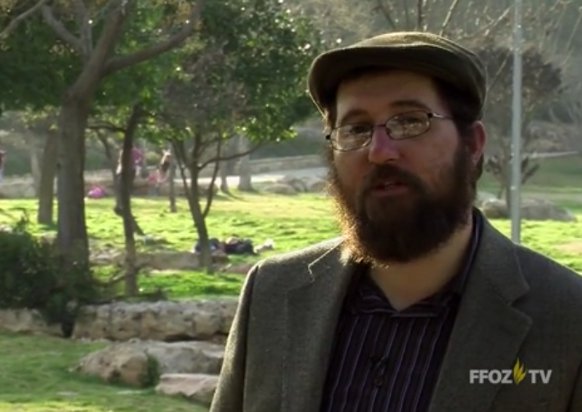
Aaron said that parables were used long before Jesus as a common teaching tool by prophets and even by other Rabbis who were contemporaries of the Master. Aaron quotes Ezekiel 17:12 and the parable of the eagle that plucks off a treetop (watch the episode to hear Aaron’s explanation of the parable) to make his point.

Aaron related that the word for parable in Hebrew is mashal, and that the Sages often used a mashal to explain something that was highly conceptual and difficult to understand. Aaron, like Toby, told his listeners that a mashal was designed to make something easier to understand, not take a plain idea and turn it into a riddle. In fact, in the day of Jesus, it was completely normal and expected for a Rabbi to teach using parables, so the disciples and followers of Christ expected it.

We return to Toby in the studio and come to the second clue:

Clue 2: Parables were a common teaching device used to simplify complex concepts.

Toby takes us to another Gospel scripture to further explain why Jesus taught in parables:

With many parables like these, he spoke to them the word according to what they were able to hear. Other than with a parable, he did not speak to them. But when his disciples were with him and no one else was with him, he would explain everything to them.

Mark 4:33-34 (DHE Gospels)

This still seems like Jesus is using parables to obscure the truth but explaining everything to his disciples privately, however Toby said we need to consider another perspective. One that, once I heard it, I realized I’d been taught before.

The Rabbis of that time taught using a dual teaching method. They taught the common people, the simple farmers and shepherds, using parables in order to make difficult theological issues better understood. However to the disciples who continually studied under their Rabbinic Master, the teacher would relate these same concepts in a more formal and legal manner, since they were better equipped, being the Master’s students, to understand in greater depth.

Clue 3: Jesus taught the common people as they were able to hear him.

Remember that Mark describes Christ’s use of parables as, “he spoke to them the word according to what they were able to hear.” He used parables because that’s what the people were able to hear. They wouldn’t have understood a more detailed and technical explanation in the same way the disciples understood.

What Did I Learn?

ffoz_tv18_dhe_markosI had a basic understanding that parables were metaphors in the purpose of their use, but this episode presented parables and their nature in greater detail than I had access to previously. It’s also another example (for me) that God does not desire to hide information, to trick people, to be an agent of confusion, but rather, He wants us to understand, to trust, to believe, and to realize that a Sovereign God is a just and honest God. Sovereignty doesn’t mean God will pull a “bait and switch” just because He’s entitled to as Creator of the Universe.

I also saw again how in lacking a proper Jewish contextual, legal, historical, and cultural framework when we read the Apostolic Scriptures or any other part of the Bible, we will misunderstand, sometimes tremendously misunderstand, who Yeshua is, what he taught, and why he taught it. The Messianic “good news” will be tinted an alien shade of “Gentile,” resulting in a “Goyim-friendly” New Testament that is required to remove continual Jewish Torah covenant obligation so that it can be replaced with something newer and “better.”

As I said before, when Toby introduced himself as a Gentile who studies Messianic Judaism, it revealed something about me and how I approach my faith. I really do believe and accept the FFOZ premise that Messianic Judaism is a method by which non-Jewish believers can and must study in order to comprehend God, the Messiah, the Bible, our Jewish companions in the faith (and outside the faith), and ourselves better. Otherwise, we’re missing out on a great deal of understanding and truth.

I don’t think anyone intended this part of the episode to be adapted in this way, but I wonder if when Jesus (and Isaiah before him) said that “this nation, and make its ears heavy and seal its eyes, so that it will not see with its eyes or hear with its ears or understand with its heart or repent and be healed,” they realized these words could possibly be applied to much of the Christian church today?

Oh, one more thing. The top image on each of these FFOZ TV reviews is just a screenshot, not an embedded link to the video. The link to the video is just under the italicized introduction to the review as the title of episode, such as in today’s case, Episode 18: Speaking in Parables.

The Door and the Capstone

messiah-prayerYeshua has been exalted to the Father’s right hand (to the position of supreme authority) to bring Israel to repentance and forgiveness, but repentance and forgiveness for what? This is a very important question, and one that is almost never asked or answered. Let’s do that today!

In part the answer you give to this question will be based on your presuppositions and your theological conditioning. Many people will reflexively say, “to repent for not having received him when he first came.” But is this answer satisfactory? I am afraid the answer must be, “Not at all!” That is, not if you want to be consistent and logical! Why am I saying that this reflexive answer is inadequate?

-Stuart Dauermann
“The Risen Messiah and Israel’s Return to Torah”
Interfaithfulness.org

I hope I don’t make a complete mess of the points Dr. Dauermann made in his blog post, but when I read it, a whole area of questions and (hopefully) answers opened up in my mind. One of the questions was one that some Christians ask me from time to time: “Why do Messianic Jews need Jesus?”

With all of the emphasis on Torah and Torah observance seen in the Messianic Jewish and Hebrew Roots worlds, it can look to an outside Christian viewer like Messianic Jews don’t require Jesus for personal salvation. It’s actually an interesting question, because prior to the first advent, there was a perfectly acceptable system in place for Jewish people to be reconciled to God and have their sins forgiven. That system had existed (off and on, relative to the destruction and rebuilding of different versions of the Temple) for thousands of years.

Then suddenly, Jewish and Biblical history seemed to take a sharp left-hand turn:

Jesus said to him, “I am the way, and the truth, and the life; no one comes to the Father but through Me.

John 14:6 (NASB)

All of a sudden, the system that God established many, many centuries before was no longer good enough. Faith and devotion to God (the Father) wasn’t good enough. An additional requirement was attached to the list, one that was never presupposed in the Torah and the Prophets. A very specific faith in and devotion to the Messiah, Son of David.

Progressive Revelation could probably answer that one, but I have problems with the concept. I have problems with the idea that I, as an average Christian guy with no special religious education or background, could know God more fully than a man like Abraham who was called God’s friend, or Moses, who was the greatest prophet ever known in Israel. But progressive revelation says I know stuff that those guys never had a clue about.

I don’t think the Bible could be that disjointed. If the entire Bible we have today is all “God-breathed,” then it can’t contradict itself. The Tanakh (Old Testament) mentions little or nothing about personal salvation. Any redemption, reconciliation, and restoration recorded in its pages all has to do with the redemption of Israel, the nation, the people as a body, as if they were all one man.

I know exactly why I need Jesus and what he provides me, because I had no hope of a relationship with God before Messiah. Every single Jewish person who has ever lived was born into a relationship with God, whether they choose to acknowledge that fact or not.

But what are we supposed to do about John 14:6?

His first sign fails to place the Messiah into proper perspective as the Jewish king who must remain subservient to HaShem. I know how it comes about that non-Jews in particular feel the need to focus on the Messiah as the center of their spiritual universe. I will describe it in terms of entering into a house. When one’s goal is to enter a house, one’s focus must be on the door as its key feature. Rav Yeshua identified himself as the door through which all who wish to approach the Father must enter (viz:John 14:6). But once one has entered, the door must no longer remain the primary focus of attention, because the purpose of entering the house is further inside. Continuing to focus on the door turns one back toward the outside rather than toward the original goal inside. There are reasons for doing both, but the priority is inside rather than outside. But those who remain outside, as in a regrettably real manner Christians have done for many centuries, cannot see the Father who is behind the door but can see only the door. Perhaps it might be said that their relationship with the Father inside consists solely of speaking through an only partially-opened doorway. Thus they continue to view the door itself as their central focus.

Now, I must caution everyone not to make of this analogy anything more than an illustration. It is not intended as an allegory of salvation, or the kingdom of heaven, or any other particular notion. It is not intended to deny the validity of anyone’s spiritual relationships or intentions. Its sole purpose is to challenge a too-narrow focus that misses a bigger picture. For all the splendid significance of the Messiah, and his impact on everything, he is not himself everything. The Father is where everything consists and exists, and too many fail to “grok” Him and this perspective.

Gateway to EdenI’m quoting from a Jewish person’s comment on one of Derek Leman’s blog posts. This comment drew some immediate criticism, since it seems to devalue Jesus in favor of God the Father, so the commenter followed up by saying, “One does not denigrate the door by focusing on the object for which the door exists. The door will always be the means for entering in. The question is whether one will do more than merely enter.”

I’ve provided the link above to the blog post in question so you can read the entire record of comments for additional context. However, I believe we can take an added dimension to John 14:6 out of this. It may not answer all of the questions we have about Jewish access to God pre vs. post-Jesus, but I think the metaphor gives us a better understanding of Jesus as a “door.”

Saying that the sin[s] for which Yeshua was exalted for to bring Israel to repentance and forgiveness was/were the sin[s] of not accepting Him when he first came is also inadequate when considered against the broader background of scripture. Is the Messiah connected in any manner with dealing with sin more broadly considered, and is the repentance with which He is connected specifically identified anywhere? The answer is “Yes.”

The Messiah is our sin-bearer, and it is a form of crazy circular reasoning to imagine that the sin which he bears on our behalf is our failure to receive him. While we shall see that this is part of Israel’s sin, it is NOT the aspect of Israel’s sin that is in focus here.

Now we can return to Dauermann and his perspective of the Jewish Messiah and Messiah’s role in Israel’s redemption. Is it only personal salvation, one individual at a time and nothing else? Was the sin that Israel committed that Jesus must atone for Jewish rejection of Jesus? I agree with Dauermann. That’s crazy. Did the sin that Jesus came to save the rest of us, the non-Jewish world, from the rejection of Jesus…or all of our disobedience before God?

The entire Book of Ezekiel chronicles how Israel fell away from life with God through rejection of his commandments. In this, I like to quote from biblical scholar Preston Sprinkle who demonstrates how Ezekiel clearly teaches that just as Israel’s deterioration and exile, a form of national death, was connected with her failure to walk in the statutes and judgments of Torah, so her national resurrection and renewal would necessitate a divinely engineered national return to obeying the very same statutes and judgments, the nuts and bolts of Torah living. It is not that Israel causes her return to the Land through her return to his statutes and judgments, but that Israel is restored to the land where she is restored to Torah obedience and life with God.

This is what I get out of Ezekiel as well, and it adds to the picture of Messiah and Israel’s redemption I’ve been trying to paint in one way or another for the last eighteen months. Israel’s sin historically has always been its failure to walk in God’s commandments and statutes, the Torah. God has always called Israel back to Him through Torah. Messiah’s Gospel message was always, “Repent, for the Kingdom of Heaven is at hand,” (Matthew 4:17). Repent of what sin? Failing to walk in God’s laws. Yeshua atones for Israel’s sin of failing to walk in the Torah and calls his people Israel to return to God’s statues.

Messiah’s first coming ushered in the very beginning of the New Covenant, but the enactment of the New Covenant, as described in Jeremiah 31, is a process, not an event. It won’t be completed probably until the second coming of Messiah. It is true that God never intended that only the blood of bulls and goats should be the eternal atonement for Israel. Messiah was required for a better and permanent atonement, just as the New Covenant is God’s law written on the circumcised heart, not merely on a scroll, but he doesn’t “undo” all that God previously decreed, including the Torah, the Temple service, and the primacy of national Israel.

Messiah adds to and completes the framework of Israel, the litany of prophesies, the entire collection of promises God made to the Jewish people from Abraham forward. Messiah is the culmination, the capstone, the piece to the house that, at the very top of the structure, holds everything together, allowing all of the other parts to rest against him, and he supports everything.

Capstone archIn a very real way, the capstone is also the doorway into the structure. Without the capstone, everything that was built, everything from Genesis through Revelation, would fall apart. That includes Israel, the Torah, Judaism, the Jewish people, the grafting in of Gentiles, all that there is that God has intended to accomplish. You don’t pour the foundation, let it set, build the house on it, put the final piece, the capstone, in place, and then pull the foundation out from under the house. It would collapse as if built on sand instead of cement. The capstone doesn’t take the place of any of the other pieces, but it is the key piece that ensures all of the other pieces stay solidly in exactly the positions they need to be for the structure to stand.

In that sense, you could say that everything God built before the coming of the Messiah was important and even vital to the overall structure, but it was incomplete. You can also say that even though the capstone exists and is being laid in place, it is not in its final position yet. Otherwise everything that needed to be done would be done, and we would have no need for a second coming. We would already be living in complete and eternal peace.

And a quick look at the world around us tells me that hasn’t happened yet.

Now I have a better image in my mind of the role of Messiah, both for the Jew and for the Gentile. Piece by piece, I’m putting my puzzle together and seeing what the picture that’s forming is telling me. Day by day, I’m getting a better understanding of who Messiah is and the multi-level set of roles he has played, is playing, and will play in our world and how he fulfills the need of all mankind as a doorway into the house of God and in holding together that house.

Perhaps the very universe itself would cease to exist if the capstone were to vanish. Perhaps we would all be locked outside in the cold and dark without the presence of a doorway. All we have to do is open the door and go inside. All we have to do is realize that the capstone gives us absolute assurance that we live in the strong and comforting shelter of the Rock.