Tag Archives: Christianity

The Candles of Rosh Hashanah

Shabbat candlesWhen I got home last night after my meeting with my Pastor, the Shabbos candles were lit. I was pleasantly surprised. For the past week or so, my wife has been at the Chabad helping the Rebbitzen prepare for Rosh Hashanah. My wife didn’t stay for services, which somewhat disappointed me, but the fact that she lit the candles when she got home was heartwarming (and hearth warming).

Unfortunately, there’s a limit to what I can say to her about it without crossing barriers, so I have to keep my feelings to myself (don’t worry, I’m pretty sure she never reads my blog).

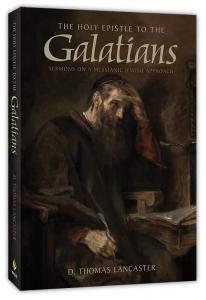
As I said, I visited my Pastor last night, basically to discuss Chapter Eight of D. Thomas Lancaster’s book, The Holy Epistle to the Galatians: Sermons on a Messianic Jewish Approach. We actually started on topic but managed to drift into the definition and purpose of “the Church,” the collective body of Jewish and Gentile disciples of Jesus, the Messiah. Pastor’s opinion is that the New Covenant creates an entirely new entity, the church, and that Jews who become part of that New Covenant join a new entity and leave the older covenant, Sinai, behind.

But if newer covenants cancel older ones, then what about Abraham?

What I am saying is this: the Law, which came four hundred and thirty years later, does not invalidate a covenant previously ratified by God, so as to nullify the promise. For if the inheritance is based on law, it is no longer based on a promise; but God has granted it to Abraham by means of a promise.

Galatians 3:17-18 (NASB)

Nope. Newer covenants do not invalidate older ones.

Pastor kept trying to make his point about the New Covenant from Ephesians 2, but we were missing what it says in Jeremiah 31 and Ezekiel 36, which is the only way to understand the Biblical “core” of the New Covenant:

“Behold, days are coming,” declares the Lord, “when I will make a new covenant with the house of Israel and with the house of Judah, not like the covenant which I made with their fathers in the day I took them by the hand to bring them out of the land of Egypt, My covenant which they broke, although I was a husband to them,” declares the Lord. “But this is the covenant which I will make with the house of Israel after those days,” declares the Lord, “I will put My law within them and on their heart I will write it; and I will be their God, and they shall be My people. They will not teach again, each man his neighbor and each man his brother, saying, ‘Know the Lord,’ for they will all know Me, from the least of them to the greatest of them,” declares the Lord, “for I will forgive their iniquity, and their sin I will remember no more.”

Jeremiah 31:31-34 (NASB)

“Therefore say to the house of Israel, ‘Thus says the Lord God, “It is not for your sake, O house of Israel, that I am about to act, but for My holy name, which you have profaned among the nations where you went. I will vindicate the holiness of My great name which has been profaned among the nations, which you have profaned in their midst. Then the nations will know that I am the Lord,” declares the Lord God, “when I prove Myself holy among you in their sight. For I will take you from the nations, gather you from all the lands and bring you into your own land.”

Ezekiel 36:22-24 (NASB)

abraham-covenant-starsI wrote a multi-part series starting here that charted the massively complicated course of the New Covenant in terms of what it does and doesn’t say about Jews and Gentiles. This is a very good example of not being able to adequately “prove” the particulars of the New Covenant using only the Apostolic Scriptures (New Testament, which by the way, does not mean the same thing as “New Covenant”).

First of all, look at the object of the New Covenant. Jeremiah 31:31 says it’s “the house of Israel and the house of Judah,” so basically, the Jewish people. But what is the New Covenant and how does it differ from the old, according to Jeremiah? Verse 33 says “I will put My law within them and on their heart I will write it; and I will be their God and they shall be My people.”

I have no reason to believe that when God says “My law” that He means anything other than Torah. The difference is that instead of the Torah being externally recorded, it will be part of the internal Jewish motivation. Verse 34 says that they (the Jewish people) “will not teach again, each man and his neighbor and each man his brother, saying, ‘Know the Lord,’ for they all will know Me…”

Today, Jewish people, and in fact all of us, “know God” because of the Bible, an external document that gives us the details of God’s holy standards for the Jews and the Gentiles who are called by His Name. True, the Holy Spirit was given to all believers, but we still have our internal, human nature that struggles against both the Spirit and against conforming our lives to Biblical standards. “After those days,” the Messianic Era, those who are part of the New Covenant, Israel and Judah, the Jewish people, and those of us who are grafted into the root through our faith in Messiah, will have that law, as it applies to each of us, written on our hearts, so that it will be “natural” for us to be obedient to God.

What I don’t see is that the content of the law or the differing roles of believing Jews and Gentiles will change in the slightest. It doesn’t say that in the text.

To support this, Ezekiel 36 says that because of God’s great name, which has been profaned among the nations (verse 23), God will renew Israel, so that the nations (the rest of the world) will know that God is God. Verse 24 continues saying God will take the Jewish people from the nations and return them to Israel. This too is part of the New Covenant, the redemption of national Israel.

So what do we know about the New Covenant. God will write His Torah, not on a scroll or on stone tablet, but on the hearts of the Jewish people, so that they will more perfectly obey His Torah. He will also redeem the Jewish people from their long exile and return them to their Land, to Israel. This is the New Covenant.

Quite a shift from what Pastor was talking about.

I’ve already written about how Gentiles become part of the New Covenant through Abraham, so don’t worry…we’re there, too. I tried to pull it all together in a final (or almost final) blog post called Building My Model which I think you’ll find is a pretty good summary of how the whole New Covenant develops.
the-divine-torahEphesians 3 is part of that description, but because my Pastor mentioned Ephesians 2, I’ll include links to my own interpretation of that chapter as well as an illuminating online conversation on Ephesians 2 and why it does not describe the swan song of the Torah. In fact, I recently said that it is impossible for the Jewish people to repent and to be redeemed by God without turning back to God and obedience of His Holy will through Torah observance.

But what does this have to do with Rosh Hashanah?

During the ten days between Rosh Hashanah and Yom Kippur, religious Jews take the opportunity to hit the reset button on their lives, to take stock of the previous year and to repair any damage they may have done in their relationship with other people and with God. In the long history of enmity between Christianity and Judaism, we in the church have demanded that Jews distance themselves from the Torah (and thus from God) by burning Torah scrolls, volumes of Talmud, numerous synagogues, and sometimes Jewish people.

If the New Covenant includes and intensifies the older covenants rather than replacing them, then we Christians have some “making up” to do with the Jewish people. In our mistaken attempt to reconcile them with Christ by destroying Jewish observance, Jewish lifestyle, and Jewish people, we’ve been opposing rather than obeying God. If we Christians are serious about being part of the New Covenant, then we cannot inhibit the Jewish people from also being included. In fact, if they aren’t included, then we have no direct linkage, since Abraham is the father of all.

Last night, while I was out of the house, my wife lit the candles to commemorate the start of Rosh Hashanah. As a “good Christian husband,” what is my duty to my Jewish wife, given all I’ve just said? Part of my duty is to be delighted that the warmth and glow of the Shabbos candles once again grace the interior of our home.

L’Shana Tova Tikatevu. May you all be inscribed in the Book of Life and enjoy a wonderful new year.
Acts 15 and the Didache: A Brief Exploration

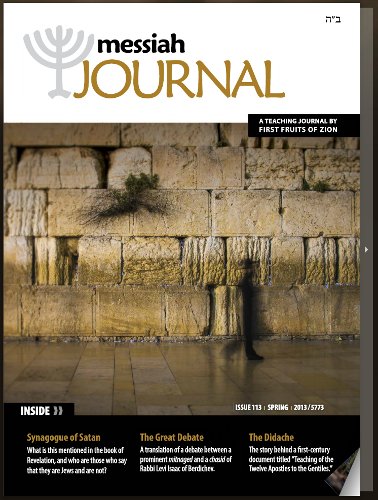
messiah-journal-113Tony Jones aptly calls the Didache “the most important book you’ve never heard of.” It offers an unparalleled look into the day-to-day community of the earliest disciples of Rabbi Yeshua. It is therefore an invaluable document for all students of the Jewish background of Christianity.

The title Didache means “teaching” and is taken from the first word of the book. The work is also known by the longer title, “Teaching of the Twelve Apostles” or the still longer “Teaching of the Lord to the Gentiles by the Twelve Apostles” which is the complete first line of the book.

-Toby Janicki
“The Didache: An Introduction”
from Messiah Journal issue 113, pg 42

I keep meaning to read the Didache, but there are so many other books around that it’s hard to find the bandwidth. Then I received an audio CD in the mail from First Fruits of Zion (FFOZ) that contained a recording of Toby reading his Didache article, published last spring in issue 113 of Messiah Journal.

My son, who is normally my commuting companion five days a week, took some time off of work, so one morning last week, I popped the CD into the player in my car and listened to Toby as I drove to my job. The recording was just the right length so that I could listen to everything Toby had to say from home to work. Then I discovered on the packaging that the content could also be found in text format in Messiah Journal. So here I am.

Most scholars generally agree that the Didache was written either in the location of Egypt, Syria, or Israel sometime between the late first to early second century. Some speculate it may have been written as early as 50 CE. This would mean that the Didache is actually older than the canonical Gospels and was written during the generation after the Master’s death.

-Janicki, pg 44

Admittedly, there’s a lot of guess-work about the Didache, who wrote it, when it was written, but generally it’s agreed that the intended audience was the newly-minted Gentile disciples of the Jewish Messiah, of Jesus. Toby paints a portrait of the Didache as a sort of “learner’s primer” presented to new Gentile disciples who needed some guidance into their day-to-day practices and responsibilities. Toby also makes a point that the style and simplicity of the text seems markedly Jewish and represents early Jewish religious instruction common in the late 1st century period.

The longest title of the Didache, “Teaching of the Lord to the Gentiles by the Twelve Apostles” would have us believe that the Didache contains instructions that were transmitted by the apostles through the halachic authority that was invested to them by the Master himself. While scholars debate which if any of these titles were originally used when the Didache was composed, this raises the question then of whether or not the Didache actually dates back to the original twelve apostles. Did the teaching of the Didache actually emerge from the oral halachah of the Jerusalem Council? The suggested early date of the compositions, coupled with their contents, makes this a high probability. Jonathan Draper writes, “The earlier the date for this text is pushed, the more likely it was associated from the beginning with, or even originated from, the twelve apostles in Jerusalem, as its title states.” As we will see, the Didache becomes a natural outgrowth of the Jerusalem Council’s rulings in Acts 15.

-ibid, pg 45

I’ve written a great deal on the impact of Acts 15 on Gentile believers in the late Second Temple period and beyond in my Return to Jerusalem series and other blog posts such as The Evidence of Acts 15. One of the criticisms leveled against the “Four Prohibitions” recorded by Luke in that chapter, is that they are woefully insufficient instructions for new Gentile disciples, especially relative to the vast compilation of mitzvot collected in the Torah of Moses and required for the Jewish people. It’s a common argument in parts of the Hebrew Roots movement supporting their belief that the full length of Torah commandments were intended to be observed by both Jewish and Gentile believers.

But what if…just what if the Didache represented the oral halachah that was to accompany the Jerusalem Letter to the Gentile disciples and that it “fleshed out” the letter’s contents.

So when they were sent away, they went down to Antioch; and having gathered the congregation together, they delivered the letter. When they had read it, they rejoiced because of its encouragement. Judas and Silas, also being prophets themselves, encouraged and strengthened the brethren with a lengthy message (emph. mine).

Acts 15:30-32 (NASB)

the-didacheIt’s very likely that there was a rather long and involved explanation about the contents of the letter delivered to the different communities of Gentile believers. Luke only hit the high points, so to speak, and didn’t write down literally everything Paul and the other Jewish apostles and disciples had to say by way of instruction to the Gentiles. What if the Didache was the written version of those instructions, at least to some degree?

No, I can’t say that it is or it isn’t. There’s a lot of mystery shrouding the Didache, and no one is able to make many definitive statements about it. However, Toby writes that it nearly was made Biblical canon and for various reasons, fell out of favor. Still, it is acknowledged that the Didache is an important written work in early Christianity, albeit obviously coming from a strong Jewish source.

Once I get the opportunity to read and study the Didache, I’ll revisit my suggestions and see if they at all seem credible. If they do, that still doesn’t mean Christians today should follow their instructions to the letter, but it may mean we already have a more complete set of documents advising us of the intent of the Apostolic Council in terms of the requirements for Gentile disciples in the body of Messiah. And remember, the Acts 15 letter wasn’t just the idea of human beings.

“Therefore we have sent Judas and Silas, who themselves will also report the same things by word of mouth. “For it seemed good to the Holy Spirit and to us to lay upon you no greater burden than these essentials… (emph mine)”

Acts 15:27-28 (NASB)

I can’t claim Divine inspiration for the Didache the way I can for canonized scripture, but it may represent an important and long absent link between the Acts 15 letter and how it was supposed to be lived out “on the ground,” so to speak, by the earliest Gentile disciples.

This may, in the end, also tell us something about who we are in Christ today.

Rosh Hashanah: Playing the Shofar For Our Father

shofar-rosh-hashanahAnd so we plead on Rosh Hashanah, Avinu Malkenu—our Father, our King. We know who You are, behind that stern mask, feigning objective judgment upon Your throne. You are the Ruler of All That Is, but You are also our Father, and a compassionate loving Father at that. Come here with us, hold our hands, see everything from our view down here. Feel our troubles and the pangs of our hearts as only a father can do. And then get involved with Your world and bless us with a sweet and goodly year.

-Rabbi Tzvi Freeman
“I Don’t Like Rosh Hashanah”
Chabad.org

A few days ago, while I was doing some reading, I had an idea for a “Rosh Hashanah” themed blog post. But I got busy with other things and now that I have the time to write it, the idea is gone. I searched my various online inspirations in an attempt to recapture what I had previously thought of, but no go.

But yesterday (as I write this) I did read my four-and-a-half year old grandson a book, written by Sonia Levitin called A Sound to Remember. Unfortunately, it was a library book and since it was due, I had to return it, thus I no longer have it with me to quote from.

The book seemed a little long and a little dry for my young grandson but he still cuddled next to me and paid rapt attention as I read the story of a boy, just past Bar Mitzvah age, named Jacov, a child living in a 19th century European village. Jacov was described as a “slow boy” who stuttered and who generally was the joke of both children and adults in his small town. But his ally was his teacher and friend, the Rabbi of the local synagogue.

The story begins several weeks before the start of the High Holidays. At this time, someone is usually selected to blow the shofar at the Rosh Hashanah and Yom Kippur services (custom says that a single individual is chosen for both of these honors). However, instead of the Rabbi choosing one of the elders of the synagogue or another person of esteem, he chose Jacov.

No one could believe it. Everyone tried to talk the Rabbi out of it. But the decision was made.

Jacov was terrified. What if he made a mistake? How much worse would he seem in the eyes of his neighbors than he already was if he made a mess of blowing the Shofar on Rosh Hashanah?

The day came. Jacov’s parents beamed with pride as the young boy, shofar in hand, stood at the bemah ready to participate in the most important part of the service. The Rabbi called for the first blast. Jacov, who had been practicing diligently in preparation for this moment, blew with all his might, but almost no sound came out. The Rabbi called for the next blast. Jacov redoubled his efforts and the sound was a little better, but still hardly above a whisper. Jacov was red with embarrassment and trembling with shame. He just had to get the last call right.

The Rabbi shouted for the last blast but absolutely nothing was heard from the shofar. Jacov, in spite of all his efforts and determination, couldn’t make a sound.

The day was a disaster for both Jacov and everyone in the congregation. Angry faces “greeted” Jacov and his family as they left the synagogue that day. Jacov had no appetite for food and sat on his bed at home as that night’s darkness encroached, almost as dark as his depression at having utterly failed.

As I said, typically the person who blows the shofar at Rosh Hashanah also has the honor at Yom Kippur, but everyone in the village felt certain that the Rabbi would replace Jacov with a much more worthy individual. After all, who could be less worthy than Jacov?

But this was not the Rabbi’s choice. The Rabbi instead, made a secret agreement with Jacov and then took a quick trip to the city, which was unheard of for a Rabbi during the High Holidays.

Yom-Kippur-ShofarOn Yom Kippur, right before the blowing of the shofar, Rabbi made a statement that was the point of Levitin’s book and the text I wish I could quote.

He said that it is true that customarily, the shofar blasts on Rosh Hashanah should be loud and robust, but sometimes this is not what God wants to hear from us. Sometimes it is our whispers, our anguish, our small cries of the soul that honor God more. Who is to say that Jacov’s tiny and silent efforts weren’t as pleasing to God as another’s loud, clear shofar blasts? Rabbi was much more eloquent in his words than I am right now, and all of the people in the synagogue realized that at this time of atonement, they had failed their Rabbi, little Jacov and his family, and God by being so stern and unforgiving. To truly end the commemoration of this most holy day, they all had to seek forgiveness and make amends.

Then Rabbi revealed the reason for his trip and the purchase he made in the city: another shofar.

At the end of the service, both Rabbi and Jacov blew their shofars together, and no one could be certain which one (or was it both) was making the loud, clear sounds to remember.

Rabbi Freeman in his Rosh Hashanah commentary, tells a story of a Jewish farmer who had hired a teacher to live in his home with his family. In exchange for room and board, the teacher was to provide instruction for his children. However, with the approach of Rosh Hashanah, the teacher went into town to stay for the holidays so he could be close to the local synagogue. This left it to the father to “home school” his children for several weeks.

The father, usually such as “softie” with his children, found that he had to be overly firm to keep his children from taking advantage of him while he was teaching them their lessons.

Finally, on only day three of this exercise, one small child broke down in tears. Father may have played a good part as stern teacher, but he was still father at heart. He couldn’t bear to look at one of his smallest children crying. Looking down at the table to conceal his chagrin, he brusquely called the child over.

“Why are you crying?” he asked.

Between his sobs, the child answered, “I want to ask my daddy…”

“Yes?”

“I mean my teacher…”

“Yes?”

“…so I can ask my daddy…”

“Right.”

“…that my daddy should ask the teacher…”

“So what is it?!”

“…that my teacher shouldn’t be so hard with us any more!!”

teaching-childrenThe story of the beginning of the New Year and the Day of Atonement is the story of our Teacher, our Master, and our Father and who we are as His children. Although most Christians probably don’t think there’s much for us to learn, since we accept that Jesus is our final atonement, there is a great deal we should pay attention to.

We are like Jacov, not very “quick on the draw,” so to speak. Earnest but immature. Eager to learn, but stumbling over the details. We know we are criticized and often deserve it, but we also can’t always control our natures and we make a lot of mistakes. If only our stern taskmaster, who asks so very much of us, would also be our loving Father, who can forgive abundantly.

We assume that once forgiven, we can do whatever we want. That we cannot fall from the hands of our loving Father. We often abuse the privilege of being “saved.” But what did Paul say?

What shall we say then? Are we to continue in sin so that grace may increase? May it never be! How shall we who died to sin still live in it?

Romans 6:1-2 (NASB)

I recently heard it said that as Christians we should live lives of continual repentance before God. That doesn’t mean we repent once, declare our faith in Jesus as Lord and Savior, and then we’re covered forevermore, regardless of our behavior. It means we must be continually aware of our sins and our failures, continually confess them before the Father, continually regret our willful disobedience, continually make life changes designed to never again commit the sins we have repented of, and relocate our steps so we are walking on the path that God has set before us.

Even if we did that only once a year, say during the High Holidays, it would be a better effort at repentance than many Christians make.

Then, maybe we would appreciate that the harshness of our teacher is only a mask concealing the kindness and forgiveness of our loving Father, who is in Heaven.

If you are still asking yourself what possible relevance can the commemoration of Jewish festivals have for Christians, since this is all commanded in the Law (Torah), consider the following:

Question: Why do the Jewish people needs a covenant/Brit with G-d. Why do we have to be commanded to follow his Mitzvos? Why is the commitment necessary? Please let me know if you have any suggestions on further readings as well.

Answer: The Talmud asks your question, in a way. First, note that the Torah gives commandments to Gentiles as well, so evidently it is the Torah view that all humans need these. In fact, Adam, the first man, was commanded.

-from “Ask the Rabbi”
“Commandments and Covenants”
JewishAnswers.com

Without the basis of Torah, we Christians have no moral or ethical elements in our lives. This is no directive for Christians to behave like religious Jewish people, but God’s covenant with Abraham is our linkage to Christian covenant relationship with God. A significant subset of Torah is intended for the people of the nations who are called by His Name. Certainly the commandment to repent is not lost on us…or at least it shouldn’t be.

Wishing you a good and sweet new year.

Born Again Idol Worshipper

jesus-idolAs Rabbi Abraham Isaac Kook, the great Kabbalist and philosopher living at the turn of the century put it, “There is faith that is actually denial, and there is denial that is actually faith.” When a person says that he believes in God, but in fact, that God he believes in is really a conceptual spiritual idol, an image of God that he has conjured up, then his faith is actually denial of truth, heresy. However, when a person professes atheism because he just can’t believe in some almighty king with a white flowing beard floating somewhere in outer space, in a sense he is expressing true faith, because there is no such God.

-Rabbi David Aaron
“Chapter One: Getting Rid of God,” pg 7
Seeing God: Ten Life-Changing Lessons of the Kabbalah

In Christian thinking, that human failure is inherent in human nature, one of the results of original sin, Adam’s rebellion against God’s will in the Garden of Eden as recorded in Genesis 3. That blemish is transmitted from one generation to another to all of humanity through the sexual act. Jesus’ vicarious death on the Cross then represents God’s gracious gift, which erases that original sin and grants salvation to the believer who accepts Jesus’ saving act.

But in Jewish sources, the very fact that the prophets urge the people of Israel to unblock their hearts, to open their eyes, to remove the obstacles that get in the way of their relation to God suggests that this obstacle is more a matter of will, not at all inherent epistemological obstacle to recognizing God’s presence in the world.

Any time we install a feature of creation and call it God, we are committing the sin of idolatry, the Jewish cardinal sin. It need not be a material object; it can be something much more abstract or elusive: a nation, history itself (as in Marxism), financial reward, or another human being.

-Rabbi Neil Gillman
“Introduction,” pp x-xi
The Jewish Approach to God: A Brief Introduction for Christians

It’s not really pleasant to be called an idol worshipper but that’s exactly what happened to me recently.

No, it wasn’t done in an unkind way and I understand the complete sincerity of the person involved and their desire to be “a light to the world,” so to speak, by encouraging me to reconsider what this person believes is a very bad decision on my part…worshipping a man as God.

I think it’s rather amazing that I checked out both Rabbi Aaron’s and Rabbi Gillman’s books from my local library a week or more ago, before I knew I’d be having this conversation with my friend. In reading their first chapters, they both seem to be speaking to the idea of worshipping idols, albeit from different directions. Rabbi Gillman’s book sounds somewhat like my friend in that it’s a Jewish person attempting to be a light to the nations by writing to Christians and letting us know how we’re not getting it right. We aren’t examining the Bible through the correct lens. There are just too many areas of the Tanakh (Old Testament) that either fail to speak of God becoming man and Messiah, or that directly speak against such a thing.

My friend and I have had these conversations before and while I try very hard to take his suggestions and information and examine them objectively, I continue to run headlong into my faith in Jesus as Messiah. I’ve been challenged to re-examine that faith against the Tanakh and seek my answers within its pages. Can we “prove” Jesus is the Messiah without touching the New Testament at all?

Some of those who were with us went to the tomb and found it just exactly as the women also had said; but Him they did not see.” And He said to them, “O foolish men and slow of heart to believe in all that the prophets have spoken! Was it not necessary for the Christ to suffer these things and to enter into His glory?” Then beginning with Moses and with all the prophets, He explained to them the things concerning Himself in all the Scriptures.

Then their eyes were opened and they recognized Him; and He vanished from their sight. They said to one another, “Were not our hearts burning within us while He was speaking to us on the road, while He was explaining the Scriptures to us?”

Luke 24:24-27, 31-32 (NASB)

I suppose I just cheated because I’m quoting from the New Testament, but look at what’s being said. Jesus, using only Moses and the Prophets (which makes perfect sense as none of the New Testament writings existed during this time in history), “explained to them all the things concerning Himself in all the Scriptures.”

If I take that statement at face value, that means it’s possible to support having faith in Jesus as Messiah using only the Torah and the Prophets. Too bad Luke didn’t record what Jesus actually said. It would have made things a lot easier to investigate.

crossLately, I’ve been writing a lot to Christians in the church defending Messianic Judaism and the observance of the Torah mitzvot by believing Jews. I’ve spent almost no time at all directly addressing Jewish people who are religious but have no faith in Jesus, and who see worshipping Jesus as God as idolatry. Rabbi Aaron implied, based on the above-quoted passage of his book, that someone who doesn’t believe in a God that is not credible because He is quantifiable, physical, and definable, has more faith than a person who can point to Jesus as “the image of the invisible God” (Colossians 1:15). Is worshipping Jesus worshipping an “image?” Is worshipping Jesus who lived a human life actually worshipping a man?

You shall not bow down to their gods, nor serve them, nor do after their works: but you shall utterly overthrow them, and quite break down their images.

Exodus 23:24 (American King James Version)

So watch yourselves carefully, since you did not see any form on the day the Lord spoke to you at Horeb from the midst of the fire, so that you do not act corruptly and make a graven image for yourselves in the form of any figure, the likeness of male or female…

Deuteronomy 4:15-16 (NASB)

Those two verses don’t seem to have a direct bearing on the worship of God in corporeal, living form, since “images” and “graven images” address more manufactured items, like statues and such.

This all goes to the heart of how we Christians understand that Jesus was at once human and Divine. For most Jewish people, this does not compute. Rabbi Gillman’s book is written specifically to refute Christianity, although I’m certain with the best intentions.

When Christians try to explain their/our faith to most other groups, we rely a lot on the New Testament and we speak in all manner of “Christianese.” However, does this work very well with most Jewish people? The majority of Messianic Jewish people I know came into the movement by way of the church. Most of them became familiar with and invested in the Torah and a lived Jewish experience only later on. Faith in Jesus preceded a Jewish understanding of faith in Jesus.

Not being Jewish and not having that lived experience and education, I can only present the basis of my faith from a Christian/Gentile point of view.

A lot of Jewish people have a point in “defending” themselves against Christianity. Conversion and assimilation are considered a real threat to Jewish continuance forward in time. While I don’t believe that God would ever allow the extinction of the Jewish people and of Israel, Jewish people are still afraid. Further more, people like my friend and Rabbi Gillman authentically believe they are providing Gentile Christians a service in explaining how we are mistaken and how to correct our mistakes.

This is the sort of dialog that the church hasn’t done well at during the past twenty centuries or so. But if we can’t show from the Tanakh that Jesus is Messiah and Lord, what can we Gentiles in Christianity say to the Jewish people who challenge the validity of our faith and our identity in Christ?

FFOZ TV Review: Repentance

tv_ffoz9_1Episode 09: Jesus did not tell his disciples “Believe in me, the kingdom of heaven is at hand” but rather “Repent, the kingdom of heaven is at hand.” In this episode viewers will discover the direct connection between the kingdom of heaven and repentance. Since throughout the Bible sin leads to exile, it is also true that repentance leads to redemption. Followers of Jesus can help prepare the way for Messiah’s final redemption by walking in a life of repentance now.

-from the Introduction to FFOZ TV: The Promise of What is to Come
Episode 9: Repentance

The Lesson: The Mystery of Repentance

You wouldn’t think there’d be much of a mystery about repentance, but as this episode unfolds, a lot of details are unpackaged that I don’t think most Christians are conscious of. Today’s episode, “Repentance,” is a direct sequel of last week’s episode, The Gospel Message. It is a refactoring of the understanding of the desires of God and the work of Jesus Christ from a wholly Jewish point of view, and strives to communicate that the “good news” isn’t just about “me and my personal redemption.” Christianity seems to focus on “me and Jesus,” while Judaism, and specifically Messianic Judaism for our purposes, has a wider field of view.

From this time on, Yeshua began calling out to proclaim and say, “Repent, for the kingdom of Heaven is on the brink of arrival.”

Matthew 4:17 (DHE Gospels)

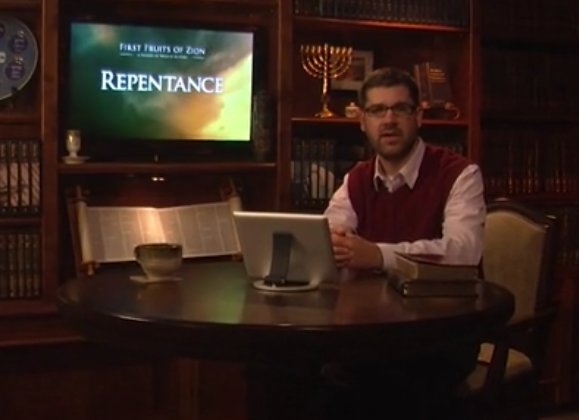
This was Messiah’s message to the Jewish people and the nation of Israel, but why didn’t he say “believe in me” rather than “repent?” FFOZ Author and Teacher Toby Janicki calls us to start thinking outside the box of “me and my personal salvation.” Repentance and Kingdom are national concepts, not just personal directives. We’re talking about a message relevant to the entire nation of Israel and the whole of the Jewish people. I know that probably makes Gentile Christians feel a little insecure, but there’s more that we need to understand about who Jesus is and exactly the function of his mission.

Toby says that Jesus did NOT say “believe in me for the kingdom of Heaven is at hand.” He said “repent.” So did someone else:

Now in those days John the Baptist came, preaching in the wilderness of Judea, saying, “Repent, for the kingdom of heaven is at hand.”

Matthew 3:1-2 (NASB)

The following scripture adds more detail:

Now after John had been taken into custody, Jesus came into Galilee, preaching the gospel of God, and saying, “The time is fulfilled, and the kingdom of God is at hand; repent and believe in the gospel.”

Mark 1:14-15 (NASB)

This breaks down into three points:

  • The Kingdom of God is at hand.
  • Repent.
  • Believe in the gospel.

This is all very similar to the content of last week’s episode, and Toby makes the point that belief goes hand in hand with repentance. As he was speaking, I recalled that there are certain teachings in Judaism that say if all of Israel were to repent at the same moment, it would summon the coming of the Messiah. There are also contradictory teachings but the gist is that Jewish faith and repentance have a direct connection to when the Messianic Era, that is, the Kingdom of God arrives.

This is radically different from what most Christians believe, since we have been taught the return of Jesus will be on some fixed but unknown date on the calendar. We can neither make it come sooner or delay it from happening.

Here comes the first clue to solving our mystery:

Clue 1: The gospel message carries the imperative message, “repent for the Kingdom of God is at hand.”

It’s a call to action. We must do something, that is repent, because the Messianic Era is on the verge of arriving.

tv_ffoz9_aaronBut what is it to repent? Toby tells us that if we believe the gospel message, we will change…not like changing our minds, but changing our lives. My Pastor calls it living a transformed life. Toby says that repentance is a return to God’s Law, the Torah.

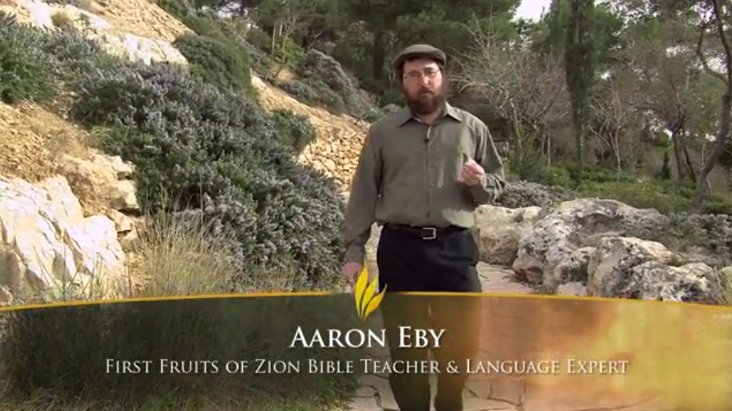
The scene shifts to Israel where FFOZ Teacher and Translator Aaron Eby explains the Hebrew word “Teshuvah” to the audience. He tells us the word gives the meaning of turning around and returning. It’s as if God’s desire for people is for us to walk in His ways, literally, walking God’s path. Sinning is like straying off the path and repentance is turning back or returning to the path.

So you shall observe to do just as the Lord your God has commanded you; you shall not turn aside to the right or to the left. You shall walk in all the way which the Lord your God has commanded you, that you may live and that it may be well with you, and that you may prolong your days in the land which you will possess.

Deuteronomy 5:32-33 (NASB)

The timing of this review couldn’t have been better, since not only are we about to enter the High Holy Days on the Jewish calendar which emphasize repentance and return for the Jewish people, but last week’s Torah portion included the following passage:

“So it shall be when all of these things have come upon you, the blessing and the curse which I have set before you, and you call them to mind in all nations where the Lord your God has banished you, and you return to the Lord your God and obey Him with all your heart and soul according to all that I command you today, you and your sons, then the Lord your God will restore you from captivity, and have compassion on you, and will gather you again from all the peoples where the Lord your God has scattered you.”

Deuteronomy 30:1-3 (NASB)

The “mechanics” of repentance involves a literal ceasing of a specific sin, a deep regret for ever having sinned, verbal confession to God, and making life changes, such as repairing the damage you did to others by sinning, and even giving to charity as a way to compensate for any inability to pay back what you took or heal the hurts you caused. Returning to God’s path.

But this also illustrates that, for the Jewish people, and remember Christ’s primary audience were (and are) Jews and Israel, the only way to repent was (and is) to return to the ways of Torah. If the message of Jesus is as true today as it was nearly two-thousand years ago, then we cannot ask Jewish believers to stop observing the Torah mitzvot, nor can we in the church say that the Torah was meant to be temporary. To do so would be to deny the Jewish people any ability to obey God and repent of their sins. We’d be condemning them to permanent exile, and condemning ourselves to living outside of God’s will for the Gentiles.

Toby gives us the second clue:

Clue 2: Repentance is turning away from sin and towards God’s Law.

The rest of the mystery involves the linkage between repentance and redemption. As mentioned above, when Israel sins, she is exiled from her Land, but Moses in Deuteronomy 30:1-3 also promises that whenever Israel repents, she is redeemed and returned to the Land of Israel. This is the original template for what all of the subsequent prophets in Israel would say, not only about the historic exiles and returns, but the final redemption in the Messianic age.

…and My people who are called by My name humble themselves and pray and seek My face and turn from their wicked ways, then I will hear from heaven, will forgive their sin and will heal their land.

2 Chronicles 7:14 (NASB)

Toby rightly mentions that typically, we’ve heard sermon after sermon applying this verse to Christians in whatever nation we happen to be living in, which in my case, is America. But taken in context, this was being addressed to King Solomon and to Israel. This is not about Christianity and “saving America” as a “Christian nation,” but about the central message of every Jewish prophet in the Old Testament. God intends to heal Israel. Christians can’t afford to be so self-focused that we miss what the Bible is really saying. It’s not all about us and Jesus, it’s about the intent of God toward Israel. It’s about the redemption of national Israel, not individual Gentile souls.

Clue 3: Repentance is a prerequisite to redemption.

It’s almost like Toby is saying that if we all really repent, only then will Messiah return…or is he saying only if Israel repents…?

tv_ffoz9_tobyBut what about us? What about Christians. Does this television episode write us out of the plan of God and the salvation of Christ? Not at all.

Toby says we can be a part of the redemption by living lives of continual redemption. Living such a life is like being part of a sort of “mini-Messianic age.” We experience a foretaste of what is to come when Jesus returns, the time when all of Israel will repent and the Messiah will come in power and glory, bringing redemption to the Jewish people and the world. But none of this happens for Gentile Christians unless Israel repents and is redeemed, so it is in our best interests to support and encourage Jewish observance of Torah.

This lesson has at least strongly implied if not boldly declared that Israel can’t repent unless they return to the specific behavioral path God has provided for them, the Torah. We in the church dare not inhibit this, for Israel’s sake and for our own.

What Did I Learn?

I learned that the timing of the return of Jesus is variable. It isn’t a fixed date on the calendar. According to something FFOZ President and Founder Boaz Michael said at the close of this episode, if Israel had repented at the first coming of Messiah, the Kingdom of God would have been established at that moment.

That’s a rather radical thought, because I always believed that the final redemption was “delayed” to allow time for the gospel message to be transmitted to all the nations of the Earth, to all of the Gentiles. If Israel had repented immediately after the resurrection and the Messianic Era was then established, the vast majority of the world would never have heard of Israel, of Messiah, and they certainly wouldn’t have had a clue that Israel was supposed to be the head of the nations and Israel’s King was the King of the entire planet.

After two-thousand years, if Messiah should return at this very moment, even though many would still disagree with who he is and what he is supposed to do, almost none of us could say that we never heard of Jesus, Israel, the Bible, and what Christians and Jews believe it all means.

Did Jesus truly expect for Israel to have repented long, long ago?

He who testifies to these things says, “Yes, I am coming quickly.” Amen. Come, Lord Jesus.

Revelation 22:20 (NASB)

John wrote these words near the close of the first century CE and it certainly seems as if he expected the return of Messiah soon, perhaps within his own lifetime (and he was quite elderly when he penned this part of our Bible). Is it humanity’s fault that he hasn’t come yet? Is our lack of repentance and hardness of heart to blame?

It’s the mystery for next week.

Abraham, Paul, Circumcision, and Galatians

Apostle-Paul-PreachesIt was for freedom that Christ set us free; therefore keep standing firm and do not be subject again to a yoke of slavery. Behold I, Paul, say to you that if you receive circumcision, Christ will be of no benefit to you. And I testify again to every man who receives circumcision, that he is under obligation to keep the whole Law. You have been severed from Christ, you who are seeking to be justified by law; you have fallen from grace. For we through the Spirit, by faith, are waiting for the hope of righteousness. For in Christ Jesus neither circumcision nor uncircumcision means anything, but faith working through love.

Galatians 5:1-6 (NASB)

On the surface, it seems as if Paul is speaking against circumcision, which is commanded by God to the Jewish people, that all their males will be circumcised on the eighth day of life. Did Paul just cancel God’s commandment to the Jews?

God said further to Abraham, “Now as for you, you shall keep My covenant, you and your descendants after you throughout their generations. This is My covenant, which you shall keep, between Me and you and your descendants after you: every male among you shall be circumcised. And you shall be circumcised in the flesh of your foreskin, and it shall be the sign of the covenant between Me and you. And every male among you who is eight days old shall be circumcised throughout your generations, a servant who is born in the house or who is bought with money from any foreigner, who is not of your descendants. A servant who is born in your house or who is bought with your money shall surely be circumcised; thus shall My covenant be in your flesh for an everlasting covenant. But an uncircumcised male who is not circumcised in the flesh of his foreskin, that person shall be cut off from his people; he has broken My covenant.”

Genesis 17:9-14 (NASB)

On the eighth day the flesh of his foreskin shall be circumcised.

Leviticus 12:3 (NASB)

I don’t see how Paul could be addressing Jewish people in the above-quoted scripture from Galatians and telling them not to circumcise. To do so would be in direct contradiction to God, and I don’t see Paul doing that. Neither does Ariel Berkowitz as he states in his article A Torah-Positive Summary of Sha’ul’s Letter to the Galatians:

We come now to another commonly misinterpreted passage in Galatians. This is the section about circumcision. Any reader of this letter written by Sha’ul who does not pick up the context of the Letter to the Galatians by now has one final opportunity to observe the context.

In verses 2 and 3, it appears at first sight that Sha’ul is teaching against circumcision. In turn, by doing so, he would appear to be teaching against following the teachings of Moses. On the one hand, Sha’ul is teaching against circumcision – and against Moses – if people follow those practices in order to earn, merit, or keep their salvation. Sha’ul, the staunch defender of justification by faith, seems almost at a loss for words in his determination to convince his students to abandon any effort to use God’s Torah, or any teaching, in order to achieve their justification by doing the works of that teaching.

The context for understanding why Sha’ul is against circumcision (and the Torah) for legalistic purposes is found in Galatians 5:4, which states, “You who are trying to be justified by Torah have been alienated from Messiah; you have fallen away from grace.” Here, the writer clearly states the problem he was having with their practicing circumcision: They were “trying to be justified by Torah.” This is in perfect keeping with the theme of the letter, which we saw in chapter two.

On the other hand, Sha’ul had absolutely no problem with circumcision (or living the Torah) — as long as it is done with the proper motives and for the right reasons. There are two reasons why we say this. First, we have already seen that his was a life of consistent Torah observance. Second, he had Timothy circumcised (Acts 16:1–3). One may debate about the reasons why Timothy was circumcised, but one cannot deny the fact that it was done and that Sha’ul was behind it. For these two reasons alone, we can see clearly that Sha’ul was not against circumcision per se, and consequently, not against proper Torah practice. But he was very much against it all if someone attempted to earn, merit, or keep his/her justification by performing it.

Galatians by D.T. LancasterThis explanation is in keeping with other portions of Berkowitz’s commentary, but here, he seems to indicate that both Jewish and Gentile believers should be circumcised in accordance to the commandments. That’s sort of understandable if we rely just on Genesis 17, but once we also involve Leviticus 12:3, we see circumcision as specifically a sign God gave for the Jewish males, not all males, such as Gentiles who are grafted in by faith in Messiah.

According to D. Thomas Lancaster in his book The Holy Epistle to the Galatians, in “Sermon Twenty-Three: Circumcision and Uncircumcision” (pg 231):

Paul warns Gentiles about relying on Jewish status for salvation and declares circumcision irrelevant with regard to salvation.

Berkowitz and Lancaster have similar perspectives regarding Paul’s intent, but Lancaster states that in this section of his letter, Paul is specifically addressing Gentiles. Based on the above quoted passages from Genesis 17 and Leviticus 12, it was an enduring commandment for the Jews to circumcise their males eight days after birth. Of course, Paul also said (1 Corinthians 7:19), “Circumcision is nothing, and uncircumcision is nothing, but what matters is the keeping of the commandments of God.”

That’s even more confusing because then we have to decide if Paul meant keeping all the commandments of God except the commandment to circumcise. However, in a larger context, Paul tells us:

Only, as the Lord has assigned to each one, as God has called each, in this manner let him walk. And so I direct in all the churches. Was any man called when he was already circumcised? He is not to become uncircumcised. Has anyone been called in uncircumcision? He is not to be circumcised. Circumcision is nothing, and uncircumcision is nothing, but what matters is the keeping of the commandments of God. Each man must remain in that condition in which he was called.

Were you called while a slave? Do not worry about it; but if you are able also to become free, rather do that. For he who was called in the Lord while a slave, is the Lord’s freedman; likewise he who was called while free, is Christ’s slave. You were bought with a price; do not become slaves of men. Brethren, each one is to remain with God in that condition in which he was called.

1 Corinthians 7:17-24 (NASB)

That’s rather similar to the following:

For all of you who were baptized into Christ have clothed yourselves with Christ. There is neither Jew nor Greek, there is neither slave nor free man, there is neither male nor female; for you are all one in Christ Jesus. And if you belong to Christ, then you are Abraham’s descendants, heirs according to promise.

Galatians 3:27-29 (NASB)

communityPut together, we seem to read that neither circumcision nor uncircumcision matters, just as there is neither Jew nor Greek. It appears as if we are all “one new man” (Ephesians 2:15) in Christ with no distinctions whatsoever. This argument has been used to justify both the complete rejection of observing the Torah mitzvot for any believing Jew or Gentile, and the complete acceptance of observing all the Torah mitzvot for every believing Jew or Gentile. It gets confusing.

Of course, when Paul says “neither male nor female,” he wasn’t obliterating physical distinctions between men and women. Another way to interpret Paul on this matter is to say that neither circumcision nor uncircumcision or being Jewish or Gentile matters as far as access to salvation and justification by faith in God through Messiah.

This preserves the commandment of circumcision for the Jews and still allows Paul’s statements to be consistent with God’s commandments.

I know there are some folks out there who will say that Abraham had faith and it was his seed (singular), the Messiah, that allows Gentiles to enter into a covenant relationship with God. And Abraham was commanded to be circumcised and to circumcise his male children and all the males in his household. Doesn’t that mean we Gentile believers need to be circumcised too?

Not so fast!

Then he believed in the LORD; and He reckoned it to him as righteousness.

Genesis 15:6 (NASB)

This is the establishment of faith as the primary linkage for anyone to enter into a covenant relationship with God. But the linkage for the blessings to the nations through Messiah comes earlier:

And I will bless those who bless you, and the one who curses you I will curse. And in you all the families of the earth will be blessed.

Genesis 12:3 (NASB)

Between the two above verses, we have the complete set of requirements that allows Gentiles to enter into covenant relationship with God through faith in Messiah (you can find a more complete description in my blog post The Jesus Covenant Part 8: Abraham, Jews, and Christians).

However, much later on, when Abraham was ninety-nine years old, something new happened. God made a covenant with Abraham that included a physical offspring, the Land of Israel, and circumcision. These, in my opinion, were conditions of God’s relationship with Abraham that took a different trajectory. Certainly the requirement of faith was carried down from the previous encounters with God, but God identified a specific population that were to be included relative to the Genesis 17 promises: Abraham’s physical descendents and members of his household were included in the circumcision requirement.

Does that mean Isaac, Ishmael, Eliezer, and all other males in Abraham’s household at this moment became Hebrews? No, because there’s more. Circumcision certainly created a linkage to Abraham but not all circumcised people become Hebrews, Israelites, or Jews.

Now Abraham took another wife, whose name was Keturah. She bore to him Zimran and Jokshan and Medan and Midian and Ishbak and Shuah. Jokshan became the father of Sheba and Dedan. And the sons of Dedan were Asshurim and Letushim and Leummim. The sons of Midian were Ephah and Epher and Hanoch and Abida and Eldaah. All these were the sons of Keturah. Now Abraham gave all that he had to Isaac; but to the sons of his concubines, Abraham gave gifts while he was still living, and sent them away from his son Isaac eastward, to the land of the east.

Genesis 25:1-6 (NASB)

abrahams-servantAfter Sarah died, Abraham married other wives and had other children. But before Abraham died, he sent away all of his other offspring, giving them gifts, and then singled out Isaac, the Child promised to him by God to fulfill the Genesis 17 covenant involving Abraham’s offspring, circumcision, and the Land of Israel. Of course, Abraham had circumcised Ishmael and all of his other sons as well as Isaac, but Isaac was the only beneficiary of the covenant relationship involving what would eventually become the Jewish people. Even his other sons, let alone the other non-relative males (servants, slaves, herdsmen) in his household who had been circumcised, were not inheritors of the covenant that led to possession of the Land of Israel and the conditions specified for the descendents of Isaac and Jacob, the Children of Israel, the Jewish people…the Torah of Moses.

If, as a Christian male, you believe you have an obligation to be circumcised and to circumcise your sons, no one is going to stop you, but being circumcised, even with the belief that it is required of the spiritual offspring of Abraham, does not create any sort of linkage between you and Abraham’s physical descendants. It doesn’t give you the Land of Israel, and it doesn’t obligate you to observing the Torah mitzvot in the manner of the Jews.

By Paul’s day, circumcision of males became a sort of shorthand way of saying “conversion to Judaism.” Paul was right in saying that circumcision (converting to Judaism) does not justify anyone before God, just as performing all of the mitzvot (for Jew or Gentile) does not justify.

Hopefully, at some point, I’ll be able to write on why Abraham was commanded to circumcise physical offspring who would not inherit Israel or non-relative males who also would not inherit, but for now, I will say that Paul did not believe that circumcision was a guarantee of salvation for Jew or Gentile, however I understand that he believed circumcision was still a requirement for the Jews, as were the other mitzvot of Torah. If he was teaching Jews not to circumcise their sons, then he was lying here:

After Paul arrived, the Jews who had come down from Jerusalem stood around him, bringing many and serious charges against him which they could not prove, while Paul said in his own defense, “I have committed no offense either against the Law of the Jews or against the temple or against Caesar.”

Acts 25:7-8 (NASB)

PaulActs 21:20-26 contains more complete text testifying to the fact that Paul never taught the diaspora Jews to fail to circumcise their sons. If he was lying here, then we can have no confidence in anything Paul wrote which would leave the majority of the New Testament in a shambles, along with our Christian faith.

If you, a Christian, feel you must be circumcised and you must circumcise your sons, remember that it does not justify you before God, it does not put you in the line of succession of Abraham, and Isaac, and Jacob, and Jacob’s twelve sons, and of the twelve tribes, and the Torah of Moses, and give you possession of the Land of Israel. At best, you may be aligned with the non-physical relative members of Abraham’s household, but then, we are still searching for what they and their circumcision mean.

Yes, Timothy was circumcised by Paul, but Titus the Gentile believer specifically was not. Neither was Cornelius the Roman and his entire household. Neither do we have a record of any other Gentile believers who were required to be circumcised as a condition of faith in Messiah. Think of this as you will.

For more on this topic, please read If Paul Had Circumcised Gentiles.