Tag Archives: Christianity

Finding My Exit

no-exitWhen you and the path you have chosen get along just great, it’s hard to know whether your motives are sincere.

But when you come across a path to do good, and this path goes against every sinew of your flesh and every cell in your brain, when you want only to flee and hide from it —do this.

Then you shall know your motives are sincere.

-Rabbi Tzvi Freeman
“Sincerity”
Based on letters and talks of the Rebbe, Rabbi M. M. Schneerson
Chabad.org

I hit what seemed to be a pretty significant wall this past weekend. Hopefully not too many people noticed, but I was turning myself into knots inside and very seriously doubting my current path for a day or two.

The first event that contributed to this mess was from divisiveness in the blogosphere. I should have known better, but a miscommunication between a friend and I and then another in a long series of online “nastygrams” caused me to question whether or not my friend was pulling away from me and pulling much of my current world view along with him (long story).

As personal as the first event was, the second event was far more intimate. On Sunday morning, my wife and I were having a small chat before I left for church. I happened to mention that Pastor Randy gave me a paper on the different arguments between Arminianism and Calvinism and my difficulties in they way the author of the article was expressing his viewpoint.

I didn’t think much of it, but my wife, who is Jewish, started touting how Judaism has received the Torah in an unbroken line between Sinai and the present and that in any response to changes of circumstances across time, the Rabbis always consult the core text and all applications are based on strict adherence to the Torah, thus avoiding the problems I was having with a Christian commentary.

I think it was her attempt to show me that Judaism has a better handle on the Bible and thus on God than Christianity, which I don’t mind, but in our conversation, she brought up how, if the Christian view of the Bible were true, then it totally invalidates Jews and Judaism.

If you’ve been reading my blog for any length of time, you know that her perception of Christianity is not what I believe at all. And yet I was confronted with a dilemma. I could explain, thanks to all of the information I’ve captured within this blog, why I believe she’s wrong and why a Messianic interpretation of “Christianity” is wholly Jewish, but my being a “prophet without honor in my own land” (and needless to say, in my own family), how would she take it?

The worst that would happen if I were talking to any other Jewish person was that they’d tell me I was “full of it” and walk away (not that I desire to insult anyone). But what would be the worst that would happen if that transaction were to occur between me and my wife?

I didn’t want to find out so I let the conversation die.

But as I went to church, I was confronted with two highly significant relationships in my life being (apparently) damaged, all because of who I am and my faith in Christ.

I remembered part of a conversation I had with my Pastor. I told him I left the Hebrew Roots movement in part because I knew my participation was very embarrassing to my wife. He asked me, somewhat incredulously, if my being a Christian and going to church were any less embarrassing to a Jewish wife. I absolutely didn’t consider that before, but at that moment and again last Sunday morning, it hit me like a punch in the teeth from Mike Tyson.

I also couldn’t help but consider a few verses.

Then Ezra the priest stood up and said to them, “You have trespassed and married foreign women, and so increased the guilt of Israel. Now make confession to the Lord the God of your ancestors, and do his will; separate yourselves from the peoples of the land and from the foreign wives.”

Ezra 10:10-11 (NRSV)

“Do not think that I have come to bring peace to the earth; I have not come to bring peace, but a sword.

For I have come to set a man against his father,
and a daughter against her mother,
and a daughter-in-law against her mother-in-law;
and one’s foes will be members of one’s own household.
Whoever loves father or mother more than me is not worthy of me; and whoever loves son or daughter more than me is not worthy of me; and whoever does not take up the cross and follow me is not worthy of me.”

Matthew 10:34-38 (NRSV)

leavingThe Master doesn’t address husband and wife specifically, but it wasn’t hard for me to read between the lines. And in relation to Ezra, I guess I would be the “foreign wife.”

I wasn’t afraid this would dissolve my marriage, but I could see my friendship receding into the distance and, as damage control, what would be my only option to contain this conflict? If my wife was saying that my being a Christian made me “anti-Semitic” by definition, then how could I prove otherwise except to stop going to church? But how could I stop going to church and maintain my faith in Christ?

The conflict between my faith and my marriage came abruptly into sharp focus.

So last Sunday at church was miserable, not because of church, but because of me.

It’s actually pretty painful to see all of the other couples at church because they’re couples. There’s no conflict that I can see between husband and wife because of their faith. They sit together at church, they bring their children, they go to Sunday school together, they support each other’s views.

That’s also true of most people (but not all) I know in the Messianic movement. I sometimes feel like the only oddball.

So with a nudnik (and I know something about nudniks) trying to drive a wedge between my friend and me on the one side, and my most recent “religious conversation” with my wife on the other, who I am supposed to be at Christ was stuck soundly in the middle. All I could see were “no option options.” I was in a box with no way out, a room with no exit.

So what happened?

I did what I always try to do under similar circumstances…I didn’t do anything about it. The temptation was to act impulsively to reduce the discomfort, but that’s usually the wrong thing to do.

After church, there was plenty of gardening to do and that’s relatively mindless work, so I had a lot of time to think. After that, I was given the annual task of cleaning out my book closet (if left to my own devices, I’d keep everything I’ve ever owned). My wife and daughter tackled the equally daunting job of cleaning out and arranging the food pantry.

My son Michael came over by the by and cooked dinner for us while we were working. By the by, my wife and I interacted and I noticed that she was behaving, not as if I were an anti-Semite in the camp, but like I’m her husband and we’re doing typical Sunday evening family stuff together in our home.

The bubbling pot began to cool.

I got an email later that night allaying my other concern and reminding me that just because “bad attitude” people try to interfere with friendships doesn’t mean those friendships are any less established. The message couldn’t have come at a better time.

when-the-forest-beckonsThis whole episode reminded me that I have a duty to my wife to share the Good News of Messiah with her. The problem is, she’s already heard it, accepted it within the church, re-accepted it within a Hebrew Roots context, and, when transitioning first to the Reform-Conservative synagogue in town and then the Chabad, chosen to reject the Gospel of Jesus “because that’s not what Jews believe.”

I wish I could convince her otherwise, but that “Good News” might not be easy for her to hear coming from me, especially when I’m competing with the Chabad Rabbi, a lot of anti-missionary rhetoric, and two-thousand years of post-Jesus Jewish history.

That particular “adventure” is to be continued, but I do have a message for blogging nudniks who deliberately try to mess up friendships in order to further their own agendas:

There are people who believe they are doing good by swallowing others’ egos alive. The egos of those they cannot help, and of those who cannot help them, are inedible to them—and therefore intolerable. They cannot work with others—because their egos leave no space for “others”—only for those extensions of their own inflated selves that show they need them, or for those whom they need.

You don’t love your neighbor to glorify your own ego. When you come to your sister’s or brother’s aid, leave your own self behind. Love with self-sacrifice.

-Rabbi Tzvi Freeman
“Free Love”
Based on letters and talks of the Rebbe, Rabbi M. M. Schneerson
Chabad.org

If you come to realize that what you do is not for the sake of Heaven but for the requirements of your own ego or emotions, then the need for you to attend to your own affairs is far, far greater than whatever temporary issues I may be experiencing.

I found the exit from my no-exit room and am continuing down the path that God has set before me.
Taking the Fork in the Road: Discussing Arminianism and Calvinism, Part 1

arminianism-calvinism-debateThe following paper is based on a faculty workshop given by the writer on October 25, 1971, in a faculty meeting at Faith Baptist Bible College. Frequent questions by students in the area of the sovereignty of God have prompted the writer to put his notes into a more permanent form. Although recognizing the differences that exist among evangelicals, the author believes that the position stated herein approximates most closely the Biblical and historical Baptistic view. This paper must not be construed a the official position of the school. However, it is sent forth with the prayer that it might generate more light than heat and be found profitable by the ever inquiring students…

-Manfred E. Kober, Th.D.
“Divine Election or Human Effort?”

Pastor Randy gave me a copy of this paper during our Wednesday night talk last week and I’m just now getting into it. I’ve read the first two chapters (17 pages) and can’t restrain my response any longer. I’ll write more as I progress through the 50+ pages of Dr. Kober’s paper and hopefully I too will generate “more light than heat.”

Before proceeding, a few things. First of all, I told Pastor Randy that I tend to think of myself as a “generic Christian with a Jewish twist” rather than align with a particular denomination, Baptist or otherwise. I also believe it’s quite possible to be a perfectly well-functioning Christian without declaring to be an Arminianist or a Calvinist. After all, these are systems constructed by theologians and honed by other theologians over the course of many centuries. Sure, they’re both based on scripture, but they are derived from scripture; interpreted from scripture. That doesn’t mean that either system is presupposed by scripture, let alone God. I could wad up both Arminianism and Calvinism in all their variations like so much waste paper and toss them into the trash can, then move on to other matters. My existence as a disciple of the Jewish Messiah does not hinge on making such a decision. Theologians, teachers, and preachers in a formal Christian sense must come up on one side or another but as a plain old “vanilla” Christian, I don’t.

Now on with the show.

The primary task for a theologian is to interpret God’s Word for man. But interpretation is both an art and a science. This means that any exposition of the Bible is guided by specific rules and checks which guard against personal whims and prejudices of the interpreter. The application of these rules demands the greatest care in judgment that the godly and dedicated interpreter can bring to bear upon the text. In that sense interpretation is an art.

-Kober
“Chapter 1: The Duty of the Theologian,” pg 1

I can grasp the science of Biblical translation and interpretation but we must admit that it is the “art” that makes things elusive and ambiguous on occasion. If theology was an “exact science,” we wouldn’t have so many different ideas about what the Bible means. Or would we? After all, even a hard science such as astronomy contains many varying points of view on phenomena we can observe through the electromagnetic spectrum, and sometimes what we see can surprise us and challenge our long-held positions.

Kober has already somewhat contradicted himself (I’m sure he doesn’t see it quite that way and I am stretching my interpretation of “contradicted” a bit) by saying in the introduction that he’s presenting his material from the “historical Baptistic view” and in Chapter 1, he says that the science of Biblical interpretation follows rules and checks “which guard against personal whims and prejudices.” Maybe those rules and checks guard against the interpreter’s personal bias, but what about the bias built into the “historical Baptist view?”

Which aspect of salvation does God the Holy Spirit accent? Is it God’s sovereignty in salvation or the effort of man?

-Kober, pg 2

I’m crying “foul” here. Kober makes it sound like the question at hand is “Does God save or do people save themselves?” Not being a Calvinist, I can still agree that God and only God saves, but the question is, do human beings have any ownership of the process at all. It is God’s “effort” that saves, all a human being has to do is to effectively surrender to God. Is surrender an “effort?” Why do we have to be so “either-or?”

This is something of a side note, but I couldn’t resist finding the following statement somewhat ironic.

Frequently, one encounters a strangely resigned attitude on the part of believers toward certain areas of God’s truth, especially that of election, such as “Oh, well, we will know it all by and by!” This is true of course. But the point is that God has revealed more about His majestic plan of redemption than Christians sometimes realize.

-Kober, pp 2-3

beth-immanuelGiven the multitude of blog posts I’ve just written giving my own interpretation of how Messianic Judaism understands God’s revelation of His “majestic plan of redemption,” I wonder what Dr. Kober would say to the suggestion that he, like the Christians he references, may be unconscious of certain viewpoints on the redemption and salvation of Israel as well as the people of the nations called by God’s Name as presented from outside his own framework?

But back to the main focus on this “meditation.”

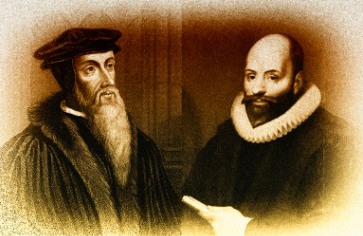
There are two basic ways of approaching the doctrine of salvation. One way is to stress the importance of man and his free will to choose for or against christ; this school of interpretation is called Arminianism, named after James Arminus. The other way of approaching salvation is to stress the importance of God and His sovereign will in bringing men to Himself through Christ; this school of Interpretation is called Calvinism, named for John Calvin. It is unfortunate that one must call himself an Arminian or Calvinist but for theological purposes every Christian is either one or the other.

-Kober
“Chapter 2: The Decrees of God,” pg 4

Is it better to be feared or respected? — I say, is it too much to ask for both?

-Tony Stark (Robert Downey Jr)
Iron Man (2008)

When you come to a fork in the road, take it.

Yogi Berra

That’s kind of my resolution to the problem in a nutshell, and it’s way too early to tip my hand, but I’m doing it anyway. I know people reading this blog post will probably classify me as an Arminian because I’m not a huge fan of God running roughshod over humanity, approving this one for salvation and tossing that one into the fires of the damned for all eternity without so much as a by your leave.

On page 4 of the paper, Kober quotes J.I. Packer saying:

The difference between them is not primarily one of emphasis but one of content. Once proclaims a God who saves; the other speaks of a God who enables man to save himself.

Again, I cry foul because Packer, like Kober, is looking at the picture as an “either-or” equation. Either God is supremely sovereign and saves who He wills and condemns who He wills, all outside the awareness let alone the consent of the people involved (you are saved or “unsaved” before you are ever conceived and born and draw your first breath of life according to a Calvinist) or God has handed some sort of authority over to the human who then does the job of saving himself. It’s not that concrete a choice.

I suppose I’ll be busted because I can’t point to a part of the Bible that says “it can be both” but is that entirely true? I’m going to try to find out and then show you some examples but let me introduce something first.

Jacob was left alone; and a man wrestled with him until daybreak. When the man saw that he did not prevail against Jacob, he struck him on the hip socket; and Jacob’s hip was put out of joint as he wrestled with him. Then he said, “Let me go, for the day is breaking.” But Jacob said, “I will not let you go, unless you bless me.” So he said to him, “What is your name?” And he said, “Jacob.” Then the man said, “You shall no longer be called Jacob, but Israel, for you have striven with God and with humans, and have prevailed.” Then Jacob asked him, “Please tell me your name.” But he said, “Why is it that you ask my name?” And there he blessed him. So Jacob called the place Peniel, saying, “For I have seen God face to face, and yet my life is preserved.”

Genesis 32:24-30 (NRSV)

The name “Israel” can be interpreted a number of ways, but one common meaning is one who struggles with God and prevails (wins). If Jacob struggled with a personified God or an angel of God, logic tells us that a flesh and blood mortal cannot hold his own let alone defeat a supernatural being, particularly if that being is literally the Creator of the Universe or some incarnation of Him.

In some areas of Judaism, it is thought that Jacob’s struggle with God is a picture of how the Jewish people struggle with the difficulties of understanding God’s perfection in an imperfect world. I’ve sat in a local synagogue and listened to the Rabbi disagree with another person’s understanding of God’s sovereignty and say something like “I’m willing to struggle with God on this one.” (not an exact quote)

What if the difficulties we have with the doctrine of salvation are built into the text of the Bible and built into our lives as believers so we can “struggle with God” over them and our relationship with Him? I’m not saying it has to be that way, but it seems like Christians always want definite “either-or” answers to all of the difficult sayings in the Bible, while many religious Jews are willing to live in a state of uncertainty on certain matters, “wrestling with God” over them.

Six million Jews were slaughtered in Hitler’s Holocaust. Many of the Jewish survivors lost their faith and turned their backs on God, and from a human point of view, this is understandable. But many other Jewish survivors found a stronger faith in God as they moved forward with their lives, ultimately raising children and grandchildren with that same abiding faith. How were they able to “wrestle with God” over a seemingly enormous injustice committed or at least allowed by God against His treasured, splendorous people?

Because Arminius was not the systematic theologian that John Calvin was, he did not clearly define his thinking on salvation. As a result, the followers of Arminius distorted his system with views Arminius simply did not hold.

-Kober, pg 5

While this can be taken as a statement of fact regarding the relative backgrounds of Arminius and Calvin, it also reveals (again) the writer’s bias. He is predisposed to select Calvinism over Arminianism, so you could say the paper I’m reading is hardly a balanced and objective examination of the two viewpoints. Nevertheless, I choose to believe that Kober is an honest person who is just trying to “clear the air” about this debate. It doesn’t mean I have to accept the either-or premise of his argument, though.

As I’ve already mentioned, I have a problem with “either-or” and believe that, on some level, the answer can be “both.” While most people may not think of it this way, by “forcing” a decision about God’s thoughts and actions, even based on scripture, we assume that we can know God’s process and intentions to an absolute or at least reasonably knowable and concrete degree, then drag it down from Heaven, so to speak, and into the realm of human understanding at ground level.

It’s almost arrogant to say that the “mechanism” of salvation cannot be mysterious on any level and that we can wholly know all of the little nuts and bolts about how God “does it.” Actually, even the author must admit that we are rather “slippery” on just how many screws God used to put salvation together, and what type of battery he powers the thing with (I’m speaking metaphorically, of course). I’ll get to that tomorrow.

On page six, in describing the “five points of Arminianism,” Kober says, “The faith which God foresaw and…” This wouldn’t be the last time Kober would say or intimate that from the point of creation or before (if “before,” “during,” and “after” have any meaning to God), God looked into the future and saw what was going to happen, like some cheap fortune-teller wielding a crystal ball and some Tarot cards.

New WorldI wrote a response to this idea in relation to Calvinism about a month ago and suggested that God exists outside of time and thus is not subject to its passing as we are. Unlike human beings, God isn’t “trapped” in a little pocket of linear time being carried forward one day at a time whether He wants to be or not. I can’t prove this, but it makes sense (to me anyway) for God to “experience” all of “timespace” as a single instantaneous event, as if everything from the creation of the earth, to Moses parting the Reed sea, to the giving of the Torah at Sinai, to David seeing Bathsheba bathing on a rooftop, to the first birth cries of Mary (Miriam) as Jesus is about to leave her womb, to Jesus breathing his last on the cross, to the first crusade, to the first inquisition, to the first ship to sail to the new world, to the first footstep of man on the moon, as if all those events, and everything else, were happening simultaneously.

God doesn’t “foresee” anything. He just knows because all of Creation from alpha to omega is before Him always. It’s only from our point of view that, when God chooses to touch a specific moment within Creation, we human beings experience God within the context of linear timespace.

Which may be part of the “solution” to the “either-or” problem of God’s Sovereignty vs. Man’s free will. Remember, as Kober writes his paper, he’s the observer. His readers are the observers. We are all the observers of God and it’s our point of view we depend upon. We experience choice and free will because that’s what it looks like from down here. We’re powerless to glean even a hint of God’s perspective and who knows what all this looks like as He sits enthroned in the Heavenly Court?

I have no problem with God being ultimately sovereign and at the same time with humanity experiencing a sense of “partnership” with God in the affairs of the world and in the workings of our lives.

This blog post took on a life of its own and I had to split it into two parts. I continue my discussion of Chapter 2 of Dr. Kober’s article in tomorrow’s morning meditation.

114 days.

Gifts of the Spirit: Pursuing the Mystery

MysteryLest you be wise in your own sight, I do not want you to be unaware of this mystery, brothers: a partial hardening has come upon Israel, until the fullness of the Gentiles has come in.

Romans 11:25

For this reason I, Paul, a prisoner for Christ Jesus on behalf of you Gentiles—assuming that you have heard of the stewardship of God’s grace that was given to me for you, how the mystery was made known to me by revelation, as I have written briefly.

Ephesians 3:1-3

To them God chose to make known how great among the Gentiles are the riches of the glory of this mystery, which is Christ in you, the hope of glory.

Colossians 1:27

What is this “mystery” of which Paul speaks? In all three of my examples from scripture, it seems directly related to the Gentiles being brought into the Jewish movement of “the Way.”

(I have to say before going on that you’re probably going to think I’m a little crazy for writing this. I don’t have some big theological point to make and I’m not trying to convince you of anything. I just have this rattling around in my head and I need to put it out there. OK, that’s done. Continue reading).

I’ve been rather slow in my reading this past week for a variety of reasons, but I managed to squeeze in a chapter from John Sanford’s book Mystical Christianity: A Psychological Commentary on the Gospel of John. In Chapter 3: Christian Disciples, the First Disciples – John 1:35-51, he says (pg 32):

The call to the disciples is a call to initiation into the mystery of Christ. The idea of initiation is all but lost in our present culture, but it was an important one in the time of the inception of Christianity, for in the Roman Empire at that time there flourished a burgeoning number of “mystery religions.” The Greek word translated in English as “mystery” did not mean to the ancient Greek-speaking person what it means to us. A mystery for us is a puzzle to be solved. A mysterion for the ancients was “a matter to the knowledge of which initiation is necessary.” There are some things that can be known only by experiencing them; all in-depth spiritual or psychological understanding falls into this category. For this reason the word mysterion (mystery) is very important in the New Testament.

That statement reminds me very much of the recent First Fruits of Zion Shavuot conference which was held at Beth Immanuel Sabbath Fellowship in Hudson, Wisconsin. The focus of the conference was Gifts of the Spirit and by definition, a spiritual encounter can only be perceived through a direct experience, and is certainly one that reveals something of God. Yet the receiving of the Holy Spirit by those who repent and turn toward God is something that can only be understood by the person receiving the Spirit (unlike in ancient days when outside observers could actually see “tongues of fire” descending upon those whom the Spirit encountered and rested upon).

It also reminded me of something that happened a week ago when I was having coffee with my friend Tom. I won’t tell you all of the details, but at one point, Tom was telling me how important it was to him to be able to communicate to others his unique personal message of encountering God. Tom closed his eyes and a change came over him. I can’t explain it except to say that it reminded me of this:

Therefore I want you to understand that no one speaking in the Spirit of God ever says “Jesus is accursed!” and no one can say “Jesus is Lord” except in the Holy Spirit.

1 Corinthians 12:3

I actually can’t find in the Bible where it says something like “and then the Spirit of the Lord came upon him and he spoke…” but that’s what it reminded me of. At the conference, some of the presenters were discussing the folks who stand up in church and say stuff like “And thus says the Lord” or “The Lord gave me a word of wisdom to speak…” and then they go on to say whatever it is that they think God told them to say.

But actually, the people who are really speaking “in the Spirit” don’t typically make a preamble statement, they just speak in the Spirit.

That’s what I think was going on with Tom.

OK, I can’t prove it and maybe he was just being very passionate at that moment. He certainly didn’t report anything unusual happening to him during our conversation. But that’s what it looked like. That’s what I experienced in listening to him. It was a mystery. It was an initiation of sorts into another perspective. As Sanford states in his book (pp 32-3), “this is, one who leads the initiate into a deeper revelation of himself and God.”

light-in-my-handsI don’t want to get too mysterious here and I certainly don’t want to give you the impression that I’m selling you some sort of spiritual bill of goods. I’m not claiming to have “gotten a word from the Lord” or anything like that. I’m just saying that there’s a point at which we encounter God that doesn’t translate well into human language. It isn’t easy to articulate. Nevertheless, it’s something I believe God shares with those He chooses as He wills.

These experiences are not random. They happen for a reason, though that reason isn’t always apparent.

The experiences that now came to the disciples in their association with Jesus were deeply meaningful and exciting. They had found the Master and they followed him happily, growing in consciousness and enthusiasm as they did so. But their full initiation was not complete. Before they could really truly know, deep within themselves, they would have to undergo two more crises even more painful than the first.

-Sanford, pg 36

For the Jewish disciples of the Master, they endured his death, rejoiced at his resurrection, watched him ascend into the Heavens, and then waited. But in Acts 2 we see that their wait had ended and something miraculous happened to them. They were initiated into the Spirit of God in order to fulfill the purpose of spreading the Gospel message to Israel, Samaria, and to the world beyond. The message of Spirit and salvation. The message of repenting and bringing near the Kingdom of Heaven.

Just looking at Peter when he denied the Master and then seeing him later, after Acts 2:2-4, we encounter a totally changed man.

“Let all the house of Israel therefore know for certain that God has made him both Lord and Christ, this Jesus whom you crucified.”

Now when they heard this they were cut to the heart, and said to Peter and the rest of the apostles, “Brothers, what shall we do?” And Peter said to them, “Repent and be baptized every one of you in the name of Jesus Christ for the forgiveness of your sins, and you will receive the gift of the Holy Spirit. For the promise is for you and for your children and for all who are far off, everyone whom the Lord our God calls to himself.”

Acts 2:36-39

Do you feel changed? Have you been “initiated into the mystery of Christ?” For that matter, do I feel changed?

Those who give priority to their physical selves and make the soul subordinate cannot achieve sincere brotherhood.

-Tanya, chapter 32

Rabbi Schneur Zalman states that a thorough unity is achieved between friends when their neshamos (souls) are permitted to fuse. Since all neshamos are part of God Himself, and inasmuch as God is the Absolute One, all souls can similarly be one. Separation and divisiveness among humans do not derive from the soul, but from the physical self.

The needs and desires of the physical self – the quest to satisfy one’s earthly drives – are the causes of divisiveness. The neshamah does not seek pride nor wealth, is not offended, and does not seek to berate others. All these are traits of the physical self. To the degree that one recognizes the neshamah as one’s true essence and subordinates the physical self thereto, to that degree one can eliminate the divisive factors and achieve true unity and brotherhood.

We thus see why spirituality is of such overwhelming importance. Hillel said that the essence of the Torah is “love your neighbor as you would yourself.” To achieve such love, one must eliminate the impediments to sincere love of another, and as Rabbi Schneur Zalman stated, these impediments are the non-spiritual aspects of life. The greater the degree of spirituality one achieves, the more perfect can one’s love of another person be.

Today I shall…

…seek to establish the primacy of spirituality in my life.

-Abraham J. Twerski
“Growing Each Day, Sivan 17”
Aish.com

paul-on-the-road-to-damascusParticularly in Judaism but also in Christianity, we can become very focused on studying. There’s nothing wrong with studying, with learning the Word of God, and in fact, as responsible believers, we have a duty to familiarize ourselves with the Bible and, to the limits of our abilities, to delve into its depths.

But it is going to take more than the capacities we have within ourselves, our “wetware” and programming, so to speak. In truly learning to know God we must start with the Bible, but we must continue in the Spirit. This isn’t something we can turn on and off like a light switch, and I think it’s pretty much up to God to initiate such a contact, but we have to be open to it.

True, in Acts 9, Paul was nowhere near desiring such an encounter when the Messiah came upon him in a light and a voice. Messiah “happened to” Paul whether Paul wanted him to or not.

But in our material world with our material problems and our material worries, it’s far too easy for us to put aside the spiritual reality of our relationship with God. I imagine that even some other believers reading this blog post will think I’m some sort of “religious nut” for talking about the Spirit of God. And yet, what else can I do? A.W. Tozer says that “I would emphasize this one committal, this one great volitional act which establishes the heart’s intention to gaze forever upon Jesus.” All we can do is look up, to gaze at Him, and like the apostles, we wait.

Messiah will one day walk among us again in our world, but his journey of return begins in the clouds.

This is the actual time of the “footsteps of Mashiach.” (The final age prior to Mashiach’s advent.) It is therefore imperative for every Jew to seek his fellow’s welfare – whether old or young – to inspire the other to teshuva (return), so that he will not fall out – G-d forbid – of the community of Israel who will shortly be privileged, with G-d’s help, to experience complete redemption.

“Today’s Day”
Monday, Sivan 18, 5703
Compiled by the Lubavitcher Rebbe; Translated by Yitschak Meir Kagan
Chabad.org

As Rabbi Twerski might say, today I shall strive to be open to the mysterious movement of God’s Spirit in my life through love of Him and so that my love of my neighbor is more evident in the world.

Am I pursuing the mystery or is the mystery pursuing me?

This will be the last blog post where I’ll directly reference presentations from the First Fruits of Zion Shavuot conference. I’ve pretty much exhausted my notes, the ones I can still read, anyway. I may, from time to time, refer to the conference or some of the speakers or attendees again, but not in any depth. I hope you enjoyed what I shared from my experiences. I sincerely meant to present my own point of view about the conference and do not represent First Fruits of Zion (FFOZ) in any way. At some point FFOZ will no doubt produce an audio CD of the presentations given at the conference. I encourage you to acquire a copy if my renditions of the events there has piqued your interest.

The road

Was it something I said or something I did
Did my words not come out right

-Lyrics by Bret Michaels
Every Rose Has Its Thorn (1988)
Recorded by Poison

The Road is long and often, we travel in the dark.

115 days.

Conquering Wrong with Right

broken-crossSo Christians, tell me. What is the church really like?

Because I go to a church event for the first time in weeks and within twenty minutes, I hear people make off-the-cuff racist, sexist and homophobic comments and nobody bats an eye.

I lay on the couch, curled up in a ball with the phone to my ear and listen to a dear friend tell me how he feels like an outsider to the people he’s attended church with for years because he has chosen to plant his flag with the disenfranchised and the vulnerable in his community, as messy as that gets. And it got messy.

Another friend I grew up with sends me a middle of the night link to an article about the guy in Arizona who stood on his college campus holding a sign reading “You Deserve Rape.” We’ve been having conversations lately about some of his qualms with Christianity, and he sums it nicely by saying, “I don’t want to have to spend the rest of my life explaining this to people. I have better things to do.” And I sympathize. Because I don’t want to have to spend the rest of my life explaining that to people, either.

And that’s just in the last couple of weeks.

-Emily Joy Allison
“Church Prove Me Wrong”
emilyjoyallison.com

The church is its own worse enemy.

I came across Ms. Allison’s blog (I get the impression she wouldn’t consider us on a first name basis so I’ll maintain some formality) as a link someone put on Facebook. That was well over a week ago, but this was the first chance I had to write about it. She says a lot of good things and a few things I disagree with, but she presents me with a struggle. Actually, she presents me with my own struggle, though I don’t conceptualize it in the same manner that Ms. Allison does. The struggle is with being a Christian and going to church vs. some of the really dippy and even hurtful things some Christians and some Christian churches do in the world.

For instance, she posted a screen capture of John Piper tweeting a message on twitter quoting Job 1:19 “in the wake of the terrible tragedies in Oklahoma,”

“Your sons and daughters were eating and a great wind struck the house, and it fell upon them, and they are dead.”

Even if Piper hadn’t intended this message to be taken the way it sounds, his timing (and probably his tastefulness) was ghastly. The tweet was subsequently deleted, but it’s another example of Christians (and people I refer to as “famous Christians” … more on that in a minute) standing on the platform of faith in Jesus Christ and throwing rocks at the injured and dying people of the world.

I sometimes have a problem with some “famous Christians.” These are usually televangelists or other Pastors or leaders who are in the public eye, people whose names are familiar even with atheists. Christians who typically are the worst examples of Christianity and who give the rest of the world the impression that we’re all like they are.

I recently heard an unsubstantiated story (that is, I can’t find it by Googling it) of scandal-plagued Jimmy Swaggart actually selling individual pages from his family Bible while leading a tour group in Israel. This would have been fairly recently, but I can’t find an online reference to the event. We’ve also heard names such as Benny Hinn and Joel Osteen, and I cringe to think that this is what the world sees when they think they’re looking at men who are disciples of and witnesses for Christ.

praying-aloneMany years ago, I knew some Americans who, when they toured Europe, would tell people they were from Canada (this obviously didn’t work at airports when they had to present their passports) because they were too embarrassed by America’s reputation overseas. There are days when I feel that way about being a Christian. I believe as a Christian, that I should be held accountable for my own behavior, my flaws, my mistakes, my errors, but it’s adding insult to injury if I have to be ashamed for every lousy thing someone else does in the name of Christ.

In terms of social consciousness and popular causes, it looks like Ms. Allison and I are different enough to where she would probably be embarrassed to be counted a Christian along with me, so from her perspective, I’m likely one of those folks she’s appealing to when she says:

YOU are supposed to be the living, breathing, embodiment of the gospel, and sometimes I can’t see anything good about it.

Church, prove me wrong. I’m begging you.

Church, prove me wrong. I’ve tried to be patient—and I will continue to try. I will be eating with you, talking with you, praying with you; from time to time I’ll probably be sitting in a church service with you. I will not abandon you, as long as Jesus has anything to do with it. But I need you to show me that he still does.

I recently read a blog post that quoted Jones, E. Stanley, (1925). The Christ of the Indian Road. Abingdon Press, 72-73. You’ve probably read this before:

“Mr. Gandhi, though you quote the words of Christ often, why is that you appear to so adamantly reject becoming his follower?”

Gandhi replied, “Oh, I don’t reject your Christ. I love your Christ. It’s just that so many of you Christians are so unlike your Christ.”

Ghandi’s rejection of Christianity grew out of an incident that happened when he was a young man. During his years studying law in Britain, he had become attracted to the Christian faith, had studied the Bible and the teachings of Jesus, and was seriously exploring becoming a Christian. One Sunday, in South Africa where he had gone to practice law after getting his degree, he decided to attend a church service.

As he came up the steps of the large church where he intended to go, a white South African elder of the church barred his way at the door. “Where do you think you’re going, kaffir?” the man asked Gandhi in a belligerent tone of voice.

Gandhi replied, “I’d like to attend worship here.”

The church elder snarled at Him, “There’s no room for Kaffirs in this church. Get out of here or I’ll have my assistants throw you down the steps.”

Gandhi is certainly an outstanding example, but how many Christians have thrown people out of the church or driven folks away who otherwise are men and women who act and think and breathe with the heart of Christ?

On the other hand, and there’s always an other hand, I can’t use all of this as an excuse to go “church bashing” or “Christian bashing.” From her writing, I get the impression that Ms. Allison is representative of a specifically narrow corridor of the believing world that exists in fusion with many of the popular values western society espouses today.

If the problem Ms. Allison or anyone else has with “the church” is that “the church” has a specific values system that conflicts with the non-religious social priorities we see continually in the popular news media, then maybe it’s a case of the church following its own priorities rather than believing it must “go along to get along” in American culture.

broken_godAlso, if your issue is that your particular religious group or you, as an individual, have difference of opinion with how other religious people or other religious groups conceptualize and operationalize a life of faith, that may not be a matter of the church needing to prove anything to you. That might just be a difference in how you see a life of faith vs. their perspective.

Some churches aren’t going to support what has come to be known as “marriage equality,” not as a matter of bigotry (note, I think the Westboro Baptist Church is reprehensible and does not represent Christ on any level), but a matter of conscience.

If your problem with “church” is that “church” doesn’t mesh with the values we see paraded in public by CNN, MSNBC, the New York Times, and such so that “church” refuses to blend in like a chameleon into the progressive social background, then that’s not the church failing to follow Christ, it’s the church failing to worship society and culture.

I can’t prove to Ms. Allison that she’s wrong. If the church has failed to live up to her expectations, then I’m sorry. The church isn’t perfect because it’s full of imperfect human beings. Sometimes we do stupid things. Sometimes we do mean things. Sometimes some people in the church need to be told that Jesus would never act the way they’re acting.

Ms. Allison will never find a church that is perfect. No matter where she goes to worship and fellowship, she’ll always find “bad apples.” There are whole churches that are “bad apples.”  I don’t doubt though that there are a number of Christian churches that demonstrate values sufficiently similar to her’s that she’d be comfortable worshiping within their walls. I’m not sure what to make of such churches, but if Ms. Allison wants a place to belong, I’m sure it’s out there.

But we’ll never be perfect. Frankly, if a church is following in the footsteps of the Messiah, they probably shouldn’t look and act exactly like the world around us. Jesus said that we are in the world but not of the world.

I’ve been afraid of church for my own personal reasons, but they’re my personal reasons. My problems with going to church belong to me, not church. And yet, I came to a point in my life where I felt I had no other option but to go to church. If you call yourself a believer and a disciple, you can’t go off half-cocked following your own priorities when you know you need to be in fellowship with other believers and you need to follow the Master.

If you want to think that “the church” is irredeemably bad, you’ll find plenty examples of bad churches and bad Christians. If you don’t want to accept church-bashing lying down, and you believe that Christ still exists within the body of believers, you can do something about it. Instead of pointing a finger at what’s wrong, you can be what’s right in the church.

Gandhi is famous for saying, Be the change you wish to see in the world. If you don’t like what you see happening in the church, then be the sort of Christian you believe Jesus wants to see in the church. Walking away doesn’t make you more noble, it just makes you alone. Jesus didn’t walk away from an imperfect world. He died for it.

Mahatma-GandhiAnd then he lived. Someday he’ll come back to redeem our imperfect world. In the meantime, if we call ourselves disciples, if we call ourselves Christians, then we have a responsibility to do here and now what he is going to do when he comes back. We need to introduce a little kindness, compassion, and self-sacrifice into an otherwise broken and bleeding world. Jesus didn’t complain about what was wrong. He was moved by compassion. He caused the blind to see, caused the deaf to hear, caused the lame to walk. Like Christ, don’t complain about what’s wrong. Just do what’s right.

To the contrary, “if your enemy is hungry, feed him; if he is thirsty, give him something to drink; for by so doing you will heap burning coals on his head.” Do not be overcome by evil, but overcome evil with good.

Romans 12:20-21

If I should ever leave the community of faith, it won’t be because church is broken. It will be because I am.

118 days.

Gifts of the Spirit Poured Out On All Flesh

Pouring waterAnd it shall come to pass afterward, that I will pour out my Spirit on all flesh; your sons and your daughters shall prophesy, your old men shall dream dreams, and your young men shall see visions. Even on the male and female servants in those days I will pour out my Spirit.

And it shall come to pass that everyone who calls on the name of the Lord shall be saved.

Joel 2:28-29, 32

“I will pour out my spirit on all flesh.”

That’s a pretty exciting statement when taken at face value, and it filled in a gap in my understanding of how non-Jews are supposed to fit into the New Covenant God made (is making, will make) with Israel.

I’ve spent a great deal of time trying to follow the threads from the covenant God made with Noah, to the one He made with Abraham, to the one He made with Isaac, to the one He made with Jacob, to the one He made with Moses and the Children of Israel, to the New Covenant language recorded in Jeremiah 31 and Ezekiel 36, to the language of Messiah in Luke 22:14-23, and so on.

Classic replacement theology in Christianity has historically made the New Covenant fit but it must grossly misread the text in order to accomplish its goal. Instead of replacing Israel with “the church,” God has renewed and amplified His covenants with Israel in the New Covenant language and is in the process of or is yet to actually write the Torah upon the heart of Israel and to redeem her to Himself.

Only Messiah’s declaration faintly hints that somehow the Gentiles might be involved as well, and I’ve had to satisfy myself with that “slender thread” using more than a little faith and hope, because it’s not all that clear in the Bible just how Gentiles are attached to God through Israel. Oh, we have plenty of evidence that we are. Paul made considerable effort to engage Gentiles and to bring them into the faith after his encounter with Messiah in Acts 9. Then there’s Peter’s encounter with Cornelius and his entire Gentile household and the astonishing event of all those non-Jews actually receiving the Holy Spirit, just as the Jews had in Acts 2, which completely blew the socks off Peter and his Jewish companions (no, they didn’t really wear socks).

But let’s back up a step.

I’m referencing a presentation given by Toby Janicki at the First Fruits of Zion (FFOZ) Shavuot conference at Beth Immanuel Sabbath Fellowship in Hudson, Wisconsin. The name of his teaching was Spirit on all Flesh, and it was one of the few presentations when I addressed the speaker (Toby) afterward with both a question and a thank you.

One of the things Toby established was that there was a movement of the Spirit prior to Acts 2. It’s hard to believe anyone could not know that since the Spirit is all over the Tanakh (Old Testament), but I guess some Christians have a rather myopic view of the Bible. After all, whose Spirit was it that was hovering over the waters? (Genesis 1:2) In Acts 2:2-3, a sound like a mighty rushing wind filled the entire house where they were sitting. And divided tongues as of fire appeared to them and rested on each one of them.

tape-over-mouthIt is further said that after the Spirit rested on them, each of the apostles could speak foreign languages that they did not know. This ability allowed them to be united with many other Jews from the various nations in the diaspora. But if language can unite, where do we see it breaking unity?

Come, let us go down and there confuse their language, so that they may not understand one another’s speech.” So the Lord dispersed them from there over the face of all the earth, and they left off building the city. Therefore its name was called Babel, because there the Lord confused the language of all the earth. And from there the Lord dispersed them over the face of all the earth.

Genesis 11:7-9

According to the beginning of this chapter, the “whole earth had one language,” and they used this ability to unite in arrogance against God. God confused their languages into, according to midrash, the seventy languages among the nations, and thus was scattered mankind.

Now when all the people saw the thunder and the flashes of lightning and the sound of the trumpet and the mountain smoking, the people were afraid and trembled, and they stood far off and said to Moses, “You speak to us, and we will listen; but do not let God speak to us, lest we die.” Moses said to the people, “Do not fear, for God has come to test you, that the fear of him may be before you, that you may not sin.” The people stood far off, while Moses drew near to the thick darkness where God was.

Exodus 20:18-21

The word of God was pronounced on Mount Sinai in seventy languages (Shab. 88a; Ex. R. v.; comp. Acts ii. 5). The Torah was written in seventy languages in order that the nations should not be able to plead ignorance as their excuse for rejecting it (Tosef., Soṭah, viii.). Among the seventy languages the most noble is Hebrew, for in it was pronounced the creative word of God (Gen. R. xviii., xxxi.; Yalḳ., Gen. 52). The Jewish law required that every member of the Sanhedrin should have sufficient knowledge of the seventy languages to be able to do without an interpreter (Sanh. 17a; comp. Meg. 73b; Men. 65a).

“The Seventy Nations and Languages”
JewishEncyclopedia.com

It is said in midrash that seventy tongues of fire issued forth from the mountain and that the people could actually see the sound of God’s voice, and it was as if God had spoken the Torah in all seventy languages in a single utterance. And that God had spoken in the languages of all the nations of the earth because the Torah was given to all mankind.

Hebrew FireIf you couple this imagery with Acts 2 and then with Acts 10, you can see God reversing what he did in Genesis 11 providing a source of unity rather than division.

But it’s not as if the Spirit never encountered non-Israelites prior to Acts 10. In Toby’s presentation, he asked how Rahab (Joshua 2:16) knew that the Jewish spies could hide in the mountains and that their pursuers would stop looking for them after three days? Why not two, or four, or six? Midrash suggests that the Spirit rested upon Rahab and she prophesied. Certainly, the Gentile magician Baalam also had access to the Spirit, for he could even speak to God. In fact, Judaism considers that there were seven prophets among the Gentiles, although they were not as elevated as the prophets of Israel.

But when Peter and his companions saw the Spirit descending upon Cornelius and the Gentiles, they must have thought that the Messianic Age prophesied by Joel had come and indeed, that the Spirit had been poured out on “all flesh.” I don’t doubt that prior to that event, few if any Jews believed that a Gentile could receive the Spirit and thus forgiveness of sins.

For the Gentiles, who were once far off from Israel and the promises, had been brought near (Ephesians 2:13) by the blood of Christ and their faith in the Messiah, and the Gentiles too received the Spirit and forgiveness. Thus Jew and Gentile became one in Messiah (Galatians 3:28) upon receiving the Spirit, with both being included in the body of Jesus and both having a place in the life of the world to come by the Master’s merit.

Receiving the Spirit is a sign of repentance. Although Luke doesn’t record Cornelius making teshuvah, he must have in order for Peter to witness the Spirit resting upon the Gentiles in the Roman’s home. Once Peter related what he and the other Jewish witnesses saw, the Council of Apostles and the elders praised God (Acts 11:18) that He showed no distinction and gave the Spirit and forgiveness of sins to all who repented, both the Jews and the people of the nations. What a wonderful gift.

For me, Joel 2:28-32 is the necessary linkage between Jeremiah 31 and Ezekiel 36 and binding the New Covenant prophesies to Luke 22:14-23, Acts 2, Acts 10, and finally Acts 15. I know from various sources, including John W. Mauck’s book Paul On Trial: The Book Of Acts As A Defense Of Christianity, that it was always God’s plan to include the Gentiles in a relationship with Him through Messiah.

…that the church’s disruption of the social/religious status quo (allowing Gentiles to become full members of the faith without circumcision and observance of the Torah)…

When I put all this together with everything I’ve learned so far about the connection between the covenants and all the material I’ve gathered about the meaning of the Acts 15 declaration, the relevance of Gentiles as members of the Kingdom becomes increasingly clear.

creative-torahThe Jewish people have been the keepers of the Torah, the Shabbat, and the knowledge of One God for thousands of years, while the people of the nations were worshiping figures made of stone and wood. But it was always God’s plan to include us as equal members in the Kingdom of Heaven, and the unique purpose of the Messiah was to allow us to come along side the Jewish people as equal sharers of the Spirit of God and of salvation, in order to give glory and honor to the King of Israel, the Holy One of Heaven.

God indeed has united all of His people among Israel and the people of the nations who are called by His Name. Just as God is One, we are One in Spirit and in the Kingdom, the Jew first and then also the Gentile. The Kingdom isn’t here yet because the Torah has yet to be written on our hearts. Peace has not arrived. We continue to struggle. But now there is hope. Now there is a path for the rest of us to follow. May the Lord of Heaven grant us wisdom and grace so that we can help in repairing our broken world and straightening the now crooked road upon which the King will walk when he returns to Israel and his throne in Holy Jerusalem.

Thanks for the good news, Toby.

Addendum: This ties up the end of my “Jesus Covenant” series called Building My Model and the other parts that came before it.

121 days.

The Evidence of Acts 15

Apostle-Paul-PreachesWhen they arrived, they called the church together and related all that God had done with them, and how he had opened a door of faith for the Gentiles. And they stayed there with the disciples for some time.

Then certain individuals came down from Judea and were teaching the brothers, “Unless you are circumcised according to the custom of Moses, you cannot be saved.” And after Paul and Barnabas had no small dissension and debate with them, Paul and Barnabas and some of the others were appointed to go up to Jerusalem to discuss this question with the apostles and the elders.

Acts 14:27-15:2 (NRSV)

Luke notes a sharp disagreement existed (verse 2), his otherwise respectful reference to the circumcision groups contrasts markedly with Paul’s trenchant comment about the Jewish Christians who were advocating the requirement of Gentile circumcision in Galatians 5:12: “I could wish that those who trouble you would even cut themselves off!” This treatment is consistent with the desire by Luke not to hang the church’s “dirty laundry” before Roman officials.

-John W. Mauck
“Chapter 17, Acts 15:1-35: Circumcised Hearts”
Paul On Trial: The Book Of Acts As A Defense Of Christianity (Kindle Edition)

I previously mentioned Mauck’s book on my blog and I am continuing to read and enjoy his insights on Luke/Acts as a reflection of his belief that these books were written as a legal brief pursuant to Paul’s trial in Rome before the emperor (Acts 28). Mauck, an attorney and Bible scholar, suggests that Luke did not write his gospel or the book of Acts as theological instruction for the Jewish and Gentile disciple of Christ, but as a legal document for the secular Roman court. His book acts as “evidence” of his assertion to his readership and I must say, as a lay person, I’m certainly seeing how he arrives at his position.

Acts 15 is of special interest to me, since it is the pivotal chapter in Luke’s book regarding how Gentiles were to be formally entered into the Jewish religious movement of “the Way.” I previously spent a good deal of time writing on Acts 15, primarily from D. Thomas Lancaster’s viewpoint as expressed in Torah Club, Volume 6: Chronicles of the Apostles published by First Fruits of Zion (FFOZ). While Lancaster’s treatment of Acts 15 was dense with information and insight, I always welcome different viewpoints on this material, since I consider it so vital in understanding the purpose and drive of the Gentile Christian life today.

What follows is a summary of Mauck’s chapter on Acts 15 and what I can glean that is of relevance to both Jewish and Gentile disciples of the Messiah today.

(I haven’t abandoned my series on the First Fruits of Zion Shavuot Conference, but wanted to change my focus for a moment to keep my thoughts fresh and to continue to provide new and enlightening material to anyone who is reading my blog. I’ll continue my commentaries on the conference and its presenters tomorrow).

Scripture informs the argument and decision. Acts 15:17, a part of Jacob’s interpretation of the prophet Amos, is particularly important: “that the rest of mankind may seek the Lord. Even all the Gentiles who are called by My name.” It tells the Roman reader that the Hebrew prophets had foreseen that not all Jews would remain faithful to God, while Gentiles would become followers of Israel’s God without becoming Jews. The Messianics were not inventing a new faith, but following a plan of God unfolding from ancient times.

-Mauck, Chap. 17

As a legal brief written by Luke, Mauck believes that the intended audience of Acts is not only Gentile but non-believing. One of the most serious charges leveled against Paul was that he was promoting a new religion among Jews and Gentiles in the Roman Empire. Only Judaism was considered a legal religion outside of the Greek/Roman pantheon of “gods”. The creation and promotion of any other religious form would be considered “atheism” in the Roman courts. Luke then, must convince the court in Rome that Paul’s evangelism to Jews and Gentiles was the promotion of a pre-existing religion: Judaism, and that the Jewish expression of “the Way” was wholly consistent with the other normative Judaisms of the first century CE as evidenced, in part, by the Tanakh (Old Testament).

The-LetterBut as we’ve seen so far, while the plan to include Gentiles in the Jewish movement has been established from ancient times, it isn’t clear just how they (we) were to be involved. At the beginning of Acts 15, Jewish believers from the “circumcision party” assert that the only way for Gentiles to gain entry into any form of Judaism was to be circumcised (convert) and to follow the Torah as proselytes. Paul disagreed with this position and it became such a controversy that the matter was referred to James (Jacob) and the Council of Apostles in Jerusalem for a legal decree.

I’ll leave it to the reader to acquire Mauck’s book and review Chapter 17 in its entirety, but in addressing the “Jerusalem Letter,” which contains a summary of the Council’s final decision about the Gentiles, Mauck says this:

By carefully setting forth the controversy, summarizing the arguments of the disputants, recounting the decision-making procedure, and memorializing the decision and reasons for it, Acts 15:1-35 exemplifies how a legal brief addressing a theological subject should be written to a secular reader.

Instead of the far more extensive law of Moses which the Jewish Christians were following, the Gentiles who are now going to be included in the people of God have been given four laws to obey…

Dan Gruber 1. has shown how the Jerusalem Council never changed the requirements of Torah but rather took portions of Torah which applied to Gentiles living among the Jews and informed the Gentiles of those requirements.

It’s been rather frustrating for both ancient and modern Bible scholars that Luke didn’t record more of the “mechanics” of exactly how the “Apostolic Decree” was supposed to impart a life of holiness and inclusion upon the Gentile believers. On the surface, the four decrees seem especially anemic in addressing Gentile worship and devotion to God within a Jewish framework. However as Mauck points out:

The theological basis for this decision would be lost on a Roman official reading Luke’s brief except that Luke records Jacob’s pronouncement that his decision is based upon the teaching of Moses…if Luke were writing to Gentile or Jewish Messianics, it seems to me that a more comprehensive or edifying explanation for these rules would be forthcoming…

What has been lost to history and thus to us, are the instructions that were orally provided to the letter’s Gentile recipients by Barnabas, Paul, Judas, and Silas (Acts 15:22) which no doubt gave dimension and deeper meaning to the pen and paper content of the Council’s letter to the Gentiles in the diaspora.

However, Mauck appears convinced of an important point: that the Gentile believers were never intended to live a Jewish lifestyle and take on board the full “yoke of Torah” as were the Jews.

I know I’ve said that before in a number of different ways and I’m sure certain members of my audience are getting tired of hearing it, but when presented by an attorney as not theology but legal evidence to be submitted to a pagan court system, the nature and weight of the information changes. The differences in application of Torah to Jewish and Gentile participants in the Nazarene movement cease to be an argument of opposing theological opinions and become a series of established facts set before the Roman court, complete with documentation (assuming any copies of the letter could be acquired) and witnesses (Paul could testify on the events he witnessed as could other apostles and disciples if they could appear before the court).

In the next Chapter, Mauck nails home the point of differing Torah application to Jewish and Gentile disciples:

…that the church’s disruption of the social/religious status quo (allowing Gentiles to become full members of the faith without circumcision and observance of the Torah)…

He further states:

Gentiles could be included into the people of God by faith in him rather than by circumcision and observance of extensive ritual…

A fruit tree budding detailOf course, it is faith that attaches both Jew and Gentile to God through Messiah by the Spirit, not observance of Torah, but Mauck does repeatedly assert that upon turning to God through faith in Messiah, the Gentile was not required to become circumcised or to observe Torah in the manner of the Jews.

While I believe it’s important to continue to establish that it was never the intent of the Council of Apostles (nor of the Holy Spirit) that Gentile disciples were to have Torah applied to their lives in the same manner as the Jewish disciples of Jesus, it is equally important to drive home the point that, according to the evidence, God never intended for Jewish believers to ever cease observance of the Torah of Moses:

Also, the inclusion of Paul’s circumcision of Timothy…refutes charges that Paul and the Messianics were changing “customs handed down from Moses.” (Acts 21:21, see Acts 6:14)

In further support of this point (Mauck’s references to Jews turning to Jesus as Messiah while remaining Jewish and remaining “zealous for the Torah” are replete in this book and I won’t attempt to create a comprehensive list), Mauck notes in Chapter 21:

The meeting with Jacob and the elders (Acts 21:15-26) has essential forensic applications. First, the elders declare how thousands of “zealous for the law” Jews have believed. Luke wants Theophilus to know that the faith in Jesus remains Jewish completely.

I’ll stop here since I only intended to present the content of primarily a single chapter of this book rather than write a complete review. Nevertheless, I believe I have found another stone to support the structure that Gentile entry into the first century Jewish Messianic movement did not require that the Gentiles undergo circumcision and adhere to Torah observance in the manner of the Jews, nor did Jewish entry into “the Way” convert Jewish believers to “Christianity” as we understand it in the modern era, and force them to surrender their Jewish identities and Jewish Torah observance.

The modern Messianic Jewish movement is on a quest of discovery, re-establishing these facts, re-asserting the right of Jews to live as Jews, to observe the Torah of Moses, and to be devoted disciples of the Messiah, as concepts and behaviors that are completely acceptable and integrated within a Jewish lifestyle and worldview.

In doing so, Messianic Judaism, like the Apostolic Council in ancient days, does not require Gentile believers in Jesus to become circumcised and to observe the Torah in a manner identical to their Jewish counterparts. This is established by the Bible and specifically Acts 15 and related scriptures as both theology and legal evidence along with the support of the Holy Spirit of God.

The mystery isn’t in how Jewish believers are to live as disciples of the Messiah, but how we Christians are to understand the application of the Torah upon us, since the oral instructions accompanying the Council’s letter did not survive. However, if we are to believe that the Bible is sufficient for our needs (though not containing all of the information that exists and with the understanding that extra-Biblical data, such as history and archeology, can enhance Biblical understanding), then we must agree that what we have in our hands when we hold the Bible, is enough to tell us who we are and how we are to proceed forward, as Jews and Gentiles, in a life of discipleship as followers of our Master.

1. Dan Gruber, “Torah and the New Covenant” (Hanover, N.H.: Elijah Publishers, 1998), 26-7 and other references; see Bauckham, “James and the Church,” 459-62.

122 days.