Tag Archives: church

What I Learned in Church Today: Anti-Gentilism and Crypto-Supersessionism

Before starting, I wish to apologize to Pastor Randy, everyone at his church,  and any Christians who may be offended by what I’m about to say. I’m sorry but the Church isn’t perfect. It’s full of flawed human beings (I know, I’m one of them). Last Sunday, one of those people proved it and I’m proving it again by even talking about it. I probably shouldn’t. I almost didn’t. But I decided in the end that this needs to be said, not to injure the Church but to help it improve.

Now to begin today’s “morning meditation.”

Two statements from the notes handed out in the church bulletin on Pastor’s sermon for last Sunday:

Paul’s Conversion in Damascus (22:2b-13)

  1. His Previous Conduct – How Judaism Once Controlled His Life (vs. 2b-5)
  2. His Present Conduct – How Jesus Now Controls His Life (vs. 6-13)

This was part of Pastor’s sermon on Acts 21:35-22:2a. For a little context, here are the relevant passage of scripture:

And when they heard that he was addressing them in the Hebrew dialect, they became even more quiet; and he said,

“I am a Jew, born in Tarsus of Cilicia, but brought up in this city, educated under Gamaliel, strictly according to the law of our fathers, being zealous for God just as you all are today. I persecuted this Way to the death, binding and putting both men and women into prisons, as also the high priest and all the Council of the elders can testify. From them I also received letters to the brethren, and started off for Damascus in order to bring even those who were there to Jerusalem as prisoners to be punished.

“But it happened that as I was on my way, approaching Damascus about noontime, a very bright light suddenly flashed from heaven all around me, and I fell to the ground and heard a voice saying to me, ‘Saul, Saul, why are you persecuting Me?’ And I answered, ‘Who are You, Lord?’ And He said to me, ‘I am Jesus the Nazarene, whom you are persecuting.’ And those who were with me saw the light, to be sure, but did not understand the voice of the One who was speaking to me. and I said, ‘What shall I do, Lord?’ And the Lord said to me, ‘Get up and go on into Damascus, and there you will be told of all that has been appointed for you to do.’ But since I could not see because of the brightness of that light, I was led by the hand by those who were with me and came into Damascus.

“A certain Ananias, a man who was devout by the standard of the Law, and well spoken of by all the Jews who lived there, came to me, and standing near said to me, ‘Brother Saul, receive your sight!’ And at that very time I looked up at him.”

Acts 22:2-13 (NASB)

I go over the notes for the sermon before services while everyone else is “schmoozing” and drinking coffee. Sometimes, I’ll even start writing down my impressions (I’m kind of a nerd that way). When I saw the two points above, my immediate response was “Judaism and the Jewish Messiah are not mutually exclusive.”

It’s doubtful Pastor meant to say they were, at least in a first century context (today is another story), but so many Evangelical Pastors believe that with the so-called “birthday of the Church” in Acts 2, God had declared Judaism (and possibly the Jewish people) obsolete and replaced by Christianity and the Church (neither of which existed as we understand them today at that point in history).

Actually, I really liked today’s (as I write this) sermon. Pastor really shines in his knowledge of Biblical history as well as the languages involved, and he brought out many details I thought were important and illuminating. At the same time, I could see the “lights” dim in the eyes of some of the people around me as Pastor may have (for them) gotten a bit too historical and scholarly.

He also delivered a welcome and rousing speech condemning anti-Semitism and the shocking fact that there are some two-hundred neo-Nazi organizations in the U.S. today that teach adults and children to hate and kill Jews and other minority populations. Anti-Semitism should not exist in our world, especially post-Holocaust.
ChurchThe only thing he left out was how for nearly all of the history of the Church, we have been one of the chief supporters of anti-Semitism, pogroms, forced conversions, torture, and murder of countless Jewish people, not to mention the numbers of synagogues, Torah scrolls, and volumes of Talmud we’ve destroyed “in the name of Jesus”.

Thankfully, Christians don’t participate in such actions today, but there’s an echo of that same sentiment toward Jewish people we can still hear in our churches right now, including in the Sunday school class I attended a few hours (as I write this) ago.

I’ll get to that in a bit.

In reading Paul recite his own history about how he so zealously opposed the Messianic Jewish movement of the Way, I realized the Bible never directly addresses why Paul embraced such murderous hate of the movement. What did it mean to him personally? Why did he make it his special mission to eradicate Jewish Jesus-believers?

Typically in the late second Temple period, the Way was opposed by other Jewish groups because of it’s unusually wide acceptance of Gentiles as equal co-participants in Jewish religious and social space without the requirement of the non-Jews undergoing the proselyte rite.

“And He said to me, ‘Go! For I will send you far away to the Gentiles.’”

They listened to him up to this statement, and then they raised their voices and said, “Away with such a fellow from the earth, for he should not be allowed to live!”

Acts 22:21-22 (NASB)

The Jewish crowd, that had previously assaulted Paul because of the mistaken belief that the apostle had taken a Gentile into the Temple, up to this point, was (presumably) calmly listening to Paul relate his first encounter with Messiah, even describing how Yeshua appeared to him in a vision of light, and that he heard a Bat Kol from Heaven. Seemingly, they did not object to Paul’s assertion that Yeshua was Messiah and even that he could speak from the Divine realm. They only became once again enraged when Paul mentioned the Gentiles.

But when Paul previously opposed the Way some thirty years before, it was early enough in history that there would have been few, if any Gentiles participating in the Messianic Jewish movement. Paul’s motivation couldn’t have been Gentile involvement. But what else could it have been?

But He kept silent and did not answer. Again the high priest was questioning Him, and saying to Him, “Are You the Christ, the Son of the Blessed One?” And Jesus said, “I am; and you shall see the Son of Man sitting at the right hand of Power, and coming with the clouds of heaven.” Tearing his clothes, the high priest said, “What further need do we have of witnesses? You have heard the blasphemy; how does it seem to you?”

Mark 14:61-64 (NASB)

PhariseesJewish objections to Jesus were never about claims of his being Messiah. Would-be Messiahs came and went in Judaism all of the time. The worst Jesus and his followers could have been accused of was being wrong, but being wrong is hardly blasphemy. What would have been considered blasphemy was a man declaring himself co-equal with God. This is why the High Priest tore his clothes. This is what got Jesus killed. This is what the Jewish people found so incredibly offensive and wanted to exterminate.

(As an aside, for more details about Jewish objections to Messiah as Deity, read Derek Leman’s new ebook The Divine Messiah as well as my book review on his work.)

Paul (Saul) was present at the defense of Stephen (Acts 7) and heard the disciple of the Master state, “Behold, I see the heavens opened up and the Son of Man standing at the right hand of God” (Acts 7:56), declaring Yeshua co-equal with God. Saul willingly held the cloaks of the men of the Sanhedrin as they drove Stephen outside the city and stoned him to death.

This may have been the genesis of Paul’s hatred of the Way, a sect of Judaism that went one step too far in not only following a (presumably) dead man as Messiah, but believing him to be co-equal with God and God Himself.

So in opposing blasphemy, from the point of view of most Jews of his day (or for that matter, ours), Saul was in the right (even though it turned out he was wrong). The only thing really questionable was how personal his hatred of the Jewish Messianics seemed to be. We can speculate as to Saul’s reasons, but the Bible is silent as to what they might have been.

So in Acts 9, Paul did not “convert to Christianity,” but he did have a supernatural and highly personal encounter with the Master, strong enough to override all of Paul’s previous motivation and set him on a new track. That track however, was one that was completely Jewish and might even be described as “Pharisaism with a Messianic twist”. By his own admission, Paul’s beliefs and practices were still totally consistent with being a Pharisee and a zealot for the Torah, but he was most of all a zealot for Messiah within a completely Jewish lived reality.

Although I thought Pastor’s sermon was very good with just a few slight wrinkles, Sunday school was another story. You may recall from a previous blog post how my wife had pointed out my arrogance, and as a result, I began to reevaluate my role in the church.

Out of that, I resolved, at least for a time, to remain silent in Sunday school. I mentioned to the teacher before class got started that I would be keeping quiet, and he honored that by not posing me with any questions.

There were more than a few times during class when I regretted my decision, although I still think it was for the best.

Oh sure, the non-believing Jews who opposed Paul were called “satanic” for their devotion to the Law and their rejection of Jesus (although nowhere in the narrative we were studying does it mention them rejecting Jesus at all). Teacher likes to label non-believing Jews as “influenced by Satan” from time to time, and I’ve called him on it in the past. He can’t seem to imagine the actual motivation and reasoning involved in first century Jews not understanding Gentile equality in a Jewish social and worship venue. I’ve noticed some Christians often treat the people they encounter in the Bible as “characters” playing out some sort of artificial role in a “Bible story,” as if they weren’t (and aren’t) real, live human beings in actual human situations.

Adult Sunday SchoolBut a number of people in class were sort of chuckling at the “ignorance” of the Jewish mob who had finally settled down and was listening to Paul’s words, and how they had a “hissy fit” upon Paul’s mention of the Gentiles.

At one point, a gentleman piped up complaining about all the accusations of “anti-Semitism” against Christians and wondering if there was some sort of opposite sentiment like Jewish “anti-Gentilism” (I suppose he was thinking along the lines of something like reverse discrimination, but depending on your point of view, that may or may not exist).

That’s when I started gritting my teeth. It’s incredible that anyone who has studied the Bible for any length of time (this person, by the way, seems well-read and intelligent) can miss why, especially on one of the three major pilgrim festivals on the Jewish religious calendar, Jews would be highly sensitive to Gentiles invading Jewish worship and social space in the Temple (which was what they were reacting to).

For cryin’ out loud, the Romans had invaded the whole blamed country and were occupying it. The Jewish nation was hip deep in oppressive, cruel, dictatorial Gentile Roman soldiers. Who responded to keep the peace when the Jewish mobs rioted? The Roman soldiers. Why? Because Rome had control of Israel and jurisdiction over Jerusalem, including on the Temple Mount where the riot occurred. Of course the crowds of Jews, both native to the Land and from the diaspora, millions of them inhabiting Jerusalem during the festival of Shavuot, would have been incensed at the very idea of Gentiles taking even more away from the Jewish people than they already had.

Believe me, if you were a Jew in that situation, you’d probably have “lost it,” too.

I stayed silent and no one else spoke up. Remember those echoes I mentioned before? This was one of them.

I’ve already got enough theological and doctrinal issues to address in church as it is. I don’t want to find something like this on top of it all.

I know it might seem like a small thing to some, maybe to most people. Maybe it’s just that I’m married to a Jewish wife and have three Jewish children. But the Church, including each and every individual in my little local church, won’t truly make Pastor’s dream of a world without anti-Semitism come true until we really start treating the ancient and modern Jews like real people with real concerns instead of caricatures or stereotypes used only as “bad examples” of religion without Christ.

My Sunday school teacher made a point several times in class to emphasize how, when we believe we don’t like someone, to look deeper and to find what is good in them rather than focus on what we dislike. In complaining about the Jewish crowd who opposed Paul as displaying “anti-Gentilism” and failing to see why they would feel and act as they did, one Christian gentleman overtly failed in that mission and by not speaking up, the rest of us silently agreed that we didn’t have to look past Jewish anger to see Jewish hurt, fear, and vulnerability.

Christian and JewishWe always read these “Bible stories” supporting Paul and the rest of the believing Jews and Gentiles, and imagining the Jews who were “persecuting the Church,” including Saul back in the day, as fools and villains. The Church exists in a post-missionary, crypto-supersessionist space, even now, relative to the Jewish people and Israel. If I would have called this gentleman on his comment, I don’t think it would have done any good. I’m an outsider, an anomaly in Christian religious and communal space. The rest of them had heard the Pastor’s plea to end prejudice against Jews in the Church. But at least one person didn’t think it applied to him.

Matters leading to sadness fall into two categories: matters that can be corrected and matters that cannot.

If something can be done to correct a situation, why feel sad? Simply take action to correct the matter!

On the other hand, if nothing can be done, what gain is there in feeling sad? Sadness will not improve matters. It is wiser to accept what cannot be changed.

-Rabbi Zelig Pliskin
Aish.com

Tonight at sundown begins the Festival of Shavuot which I commented on a few days ago. As long as even one believer thinks the “birthday of the church” completely overrides this moed’s meaning to God’s chosen people, the Jews, the Church will never be free of its anti-Jewish history.

One last thing. I’m often critical of the Church, not because I’m into “Christian-bashing” but because I believe that the Church, the Gentile Jesus-believing ekklesia, is good. But it could be a whole lot better. I’ve defended the Church more than once, and one of the defining qualities of Christianity is love of one’s neighbor and fellowship.  I know I’m only one man, but I can see this so clearly. We need to do better, a lot better. We need to see the Jewish people and Israel as God sees them. Only then can we fulfill our own purpose as the people of the nations who are called by His Name to be the crowning jewels surrounding and uplifting Israel and her King Messiah.

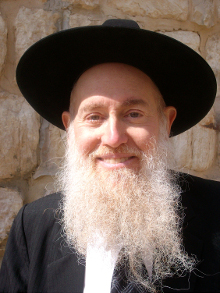
David’s Fallen Tent in the Wilderness

The Torah states:

“And the Almighty spoke to Moshe in the wilderness of Sinai” (Numbers 1:1).

Why does the Torah specify “the wilderness” of the Sinai desert? It would have been sufficient to say “in the Sinai desert”; everyone knows that deserts are wildernesses.

The Midrash Bamidbar Rabbah comments on this verse, “Whoever does not make himself open and free like a wilderness will not be able to acquire wisdom and Torah”. This refers to having the trait of humility which allows a person to learn from everyone and to teach everyone.

An arrogant person will only be willing to learn from someone he feels is befitting his honor. A humble person is only concerned with gaining Torah knowledge and will be grateful to learn new ideas even from one who has less overall knowledge than himself.

The Midrash teaches that the Torah was given on Mt. Sinai because Mt. Sinai was the lowest of all the mountains. This symbolizes that if a person wants to receive wisdom he must be humble. If he is full of himself there is little room for anything else.

-Rabbi Kalman Packouz
Commentary on Torah Portion Bamidbar
Based on Rabbi Zelig Pliskin’s book
Growth Through Torah
Aish.com

Wow, speaking of arrogance and humility. Rabbi Pliskin’s message as presented by Rabbi Packouz came along at the right time.

As I mentioned a few days ago, I’ve been pondering my wife’s accusation of my being arrogant in my approach to attending church and presenting my particular (and from their point of view, unique) perspective on the Bible, the Messiah, Jewish people, and Judaism. How dare I walk into someone else’s house and tell them they should redecorate, what color to paint the walls, and that their taste in art is hideous?

Well, hopefully, I wasn’t that bad, but sometimes it feels like it.

As Ben Zoma said:

Who is one that is wise? One who learns from every person.

Pirkei Avot 4:1

I am inexorably drawn toward learning from Jewish sources, and yet when I try to enthusiastically share what I’ve learned with my fellow Christians, I feel like I’m the only guy in the room speaking Martian.

Rabbi Zelig Pliskin
Rabbi Zelig Pliskin

Interestingly enough, I have learned a lot by going to church. Not so much in the areas of theology or doctrine, although it’s been illuminating to capture the Evangelical perception of theology and doctrine, but in the areas of history, both Church history and the more generic kind, church social dynamics, and…brace yourself…kindness.

No matter how much of a pest I make of myself, people are still smiling at me, reaching out to me, offering to listen to my woes (should I ever share them in person), and to pray for me.

Who is wise? One who learns from every person, including every person at church. Yes, there is much to learn. I have to remember that church isn’t just theology and doctrine, it’s action. It’s the perpetual food drive I donate to every time I go to church, dedicated to feeding the hungry in our local community. It’s the missionary effort around the world, serving people who have never heard of the compassion of Christ, it’s visiting the sick, offering comfort to the grieving, providing care and education for little children.

“What we think, or what we know, or what we believe is, in the end, of little consequence. The only consequence is what we do.”

-John Ruskin

Ironically, most Christians are so “works-phobic” that they don’t count their own good deeds (mitzvot) as really meaning anything in the cosmic economy of God, more’s the pity, because it’s what the Church does best.

I don’t have as much to complain about as I think:

“A child, for example, cuts his finger and screams the house down. An adult cuts his finger and gets on with life. Children live in the here and now, so a child has no context for his pain. There is no meaningful future to look forward to, just the immediacy of the pain. An adult realizes that the pain will pass and life will be good again in spite it. He doesn’t suffer. And, by the way, why is it that when you hug and kiss a child the pain seems to go? It’s not the pain that goes, it’s the suffering. You have given the child a meaningful context for the pain – the context of a parent’s love. The child still feels the pain, but with a newfound context for it, he no longer suffers.

“An adult must find his own meaning in his pain. Sometimes it is obvious, as in the case of a woman in labor. Sometimes it is a little harder. But when he or she can look at the pain as a means to grow, a means to develop deeper self-understanding, then the pain remains, but the suffering will be forgotten.

“Everyone goes through pain in life. But not one of us has to suffer if we do not want to.

“Again, the choice is ours.”

-Rabbi Packouz

Rebbe
Rabbi M.M Schneerson, the Rebbe

R. Packouz is referring to tremendous human suffering and agonizing pain, not simply being frustrated when people around me don’t take my point of view seriously. What I am experiencing isn’t as painful as even a child’s cut finger. But I still gave in to the temptation to say, “ouch.”

I’ve started reading Sue Fishkoff’s book The Rebbe’s Army, and in the first chapter, she relates (pg 17):

The Besht’s (the Baal Shem Tov or Rabbi Israel ben Eliezer) message was revolutionary. His followers broke with certain Jewish norms, adopting specific dress and customs and making ritual modifications, all of which horrified the Jewish establishment.

I don’t know if I’ve “horrified” anyone, but I’m certainly shaking up the establishment here and there. Fishkoff also writes of the Besht:

“I have come into this world to show man how to live by three precepts,” he said. “Love of God, love of Israel, and love of the Torah.”

If I can have a similar purpose within my own context, then it wouldn’t be just me wielding my opinion like a sword, but the will of God to teach how to love and how to focus love.

Not that my fellow Christians are ignorant about love. Many, as I’ve said above, love greatly and demonstrate that love abundantly, particularly to the Jewish people. I just want to help illustrate that there is no dissonance between loving the Jewish people, loving Israel, loving the Torah, and loving God. There is no dissonance between loving Jewish people and realizing that means accepting and approving Jewish people loving the Torah, loving Israel, and loving God, including Messianic Jewish people.

Since I frequently read material published online by Aish.com, I often come across quotes of Rabbi Pliskin’s work, such as the one I cited above. I decided it was long past due to actually purchase one of his books, so after I finish Fishkoff’s book, I’ll be consulting (since it’s a Torah commentary) Growth Through Torah.

From what I can tell about R. Pliskin from his writing, he seems to stress compassion and kindness toward others. He seems like the sort of person who desires peace in the world and peace between people, rather than always banging heads over this theological point or that.

Chuck Jones
Chuck Jones

In many ways, we are at war in the world, battling against ignorance, hostility, brutality, and indifference, but if all we do…I do is fight, then I’ve simply redoubled my efforts after forgetting my purpose (a lesson I learned from Chuck Jones when he was describing his philosophy behind creating Wile E. Coyote to a film class I once attended).

I still don’t want to be too quick in deciding what I’m going to do next, so I’m not going to hastily pursue a conclusion.

On the other hand, there is this…

Giving up is a final solution to a temporary problem.

-anonymous holocaust survivor

And this…

While most Hasidim restrict their personal dealings to Jews, and some even to Jews within their own ultra-Orthodox communities, Lubavitchers have never been insular. Their first interest is in kindling the sparks within Jewish souls, but since the early 1980s they have widened their appeal to include non-Jews, whom they urge to remain within their own religions while obeying the seven laws God gave to Noah … This is crucial because only when all God’s divine sparks are released and reunited with the Divine Oneness will God’s purpose be achieved. “Our job is to make a dwelling place for God in the lower world,” says Rabbi Sholtiel Lebovic … “We try to make the world a more and more godly place, until the coming of Moshiach [the Messiah].”

-Fishkoff, pg 22

Although many Orthodox Jews, including Chabadniks, look down their noses at Gentiles and particularly Christians, here we see a perspective that acknowledges all human beings are “sparks” thrown off by the Divine Oneness, and only by all of those sparks being united with their Source can the world be prepared for the coming (return) of the King.

I’m one of those small sparks. But so is each and every individual soul at the church I attend, and each and every individual soul in all of the churches in the world. They’re just waiting for someone to discover them, reveal them, and free them, so they can fly…so they can soar.

I should take a fresh look at the blueprints for that tent again and see if God really wants me to help build it.

Collapsing the Tent of David

Then the LORD God said, “It is not good for the man to be alone; I will make him a helper suitable for him.”

Genesis 2:18 (NASB)

Then Paul took the men, and the next day, purifying himself along with them, went into the temple giving notice of the completion of the days of purification, until the sacrifice was offered for each one of them.

Acts 21:26 (NASB)

One person regards one day above another, another regards every day alike. Each person must be fully convinced in his own mind. He who observes the day, observes it for the Lord, and he who eats, does so for the Lord, for he gives thanks to God; and he who eats not, for the Lord he does not eat, and gives thanks to God.

Romans 14:5-6 (NASB)

You’re probably wondering what those different portions of scripture have in common. Actually, relative to my experiences last Sunday, quite a lot.

The topic of both the sermon and the Sunday school class at church was Acts 21:15-26. It was a source of a great deal of frustration for me, but I have to be thankful to Pastor Randy for cluing me in about something first.

He reminded his audience of the great accomplishments of the Jewish people and Israel across the centuries, and made sure that we all got the idea that God didn’t do away with the Old Testament (Tanakh), the nation of Israel, and the Jewish people.

He also let us know that, in the debate over whether or not Paul did the right thing by paying the expenses of the four men under a vow at the Temple and offering sacrifices, over half of those historic and modern scholars upon whom Pastor depends for his research strongly believe that not only did Paul make a mistake, but that he sinned by participating in the Temple rites.

Fortunately, Pastor doesn’t agree with that opinion (and neither do I) and in listening to various people conversing after the sermon, I was relieved to hear that most (but not all) of the people around me have the same opinion as Pastor.

But Pastor kept repeating that offering sacrifices doesn’t atone for sins, it never did. This reminded me of time after time during our previous private discussions, when talking about the continuation of Torah observance for the Jewish people including Jewish believers, he kept stressing the same point.

However, while listening to the sermon, I had something of a minor revelation similar to the one that resulted in me writing The Two-Thousand Year Old Christian Mistake.

You see, I agree with Pastor that the sacrifices in and of themselves have no power to atone for sins and to save a human being from the consequences of God’s justice. We are only saved through faith and out of that faith, we obey God. That’s what Paul and every other Jew who sincerely participated in the Temple rituals was doing. Obeying God out of faith.

So why beat up the Torah by saying it doesn’t save when I fully agree that simple, mechanical performance of the mitzvot with no intent or faith behind it is just going through the motions?

Some men came down from Judea and began teaching the brethren, “Unless you are circumcised according to the custom of Moses, you cannot be saved.”

Acts 15:1 (NASB)

This has alway puzzled me because circumcision (that is, the physical act of being circumcised and then observing the Torah commandments) isn’t what saves a person, and these gentlemen from Judea should have known that. Of course, they should have known that.

But that’s not what they meant.

When an Evangelical Christian reads that verse he or she thinks the Jews involved are saying that performing the mitzvot including the sacrifices in the Temple is what saves. But they were never meant to save. They are the conditions of the covenant relationship with God and that relationship in covenant, through faith, is what saves.

Oh duh.

Why didn’t I see this before?

Irony of GalatiansThe big hang up Christians have with the Torah is because of a misunderstanding of what the folks they call “Judaizers” were saying (Nanos more aptly refers to them as “influencers” since New Testament scholars can’t seem to agree on exactly who these people were. See The Irony of Galatians).

The “influencers” Paul refers to in his epistle to the Galatians and the Jews we hear from in Acts 15:1 weren’t saying that obeying the mitzvot and making the various sacrifices at the Temple would save the Gentile. They were saying that the Gentiles needed to be in a covenant relationship with God in order to be saved.

Especially for non-Jesus-believing Jews, the New Covenant times weren’t even on the horizon. How could they be? From their perspective, Messiah had not yet come. Thus, the Gentiles had no standing before God unless they became proselytes and entered into the Sinai covenant with God as converts to Judaism. Being a God-fearing Gentile might have been a step in the right direction, but it wasn’t a covenant relationship.

But Paul and many of the disciples of Yeshua (Jesus) knew that the New Covenant had been inaugurated with the death and resurrection of the Master, so through faith in Messiah, the Gentiles could be grafted in and benefit from the blessings of that covenant, which had begun to enter the world but had not yet completely arrived.

If you miss the distinction, that it’s being in a covenant relationship with God through faith that saves rather than just the literal behaviors of the conditions of a covenant, you completely misunderstand the Jews advocating for Gentile conversion.

These “Judaizers” or “Influencers” weren’t bad, awful, evil people. They may have had genuine concern for the Gentiles who had attached themselves to the Jewish religious movement of “the Way”. These Jews, some of whom could have been Jesus-believers with an incomplete understanding of the New Covenant blessings upon the Gentiles, may have been authentically puzzled why Paul was treating the Gentiles as if they were equal co-participants, both socially and in covenant, in Jewish religious life. They may have felt that the Gentiles couldn’t participate in covenant blessings without conversion, because they didn’t see any other way to reconcile the Gentiles to God.

Paul understood, but his viewpoint wasn’t always terribly popular with Jewish populations who didn’t apprehend his vision (figuratively and literally).

Once you figure it out, you realize the issue was never that the mitzvot saved, it was Covenant relationship. It always has been and it’s still the issue we struggle to comprehend today. Jews are the focus of almost all of the covenants we see in the Bible including the Sinai and New Covenants. Gentiles are included under a single provision of the Abrahamic covenant and by faith in Jesus, in the blessings of the New Covenant.

And that’s what I got out of last Sunday’s sermon, not that Pastor explained it that way, but by his preaching, I finally made the connection.

Things didn’t go so well in Sunday school. I was determined to make only one statement in class. I could have talked all day long about the Christian traditions that were being imposed on the text resulting in quite a few (in my opinion) erroneous assumptions being made by most of my classmates. One fellow pointblank told me Paul did sin because when Jesus was crucified, the sacrifices ended. I disagreed of course, and gave him a mini-explanation of what the Epistle to the Hebrews was really about, but I knew it was for nothing.

My Sunday school teacher heavily favors the sermons of John MacArthur and it is MacArthur’s opinion that the practice of Judaism by Jesus-believing Jews as we see it in the Book of Acts, was a transitional period between Jewish practice being within the will of God, and it being replaced by the grace of Jesus Christ, effectively extinguishing the “ceremonial laws” in the Torah.

MacArthur
John MacArthur

Teacher said it was MacArthur’s opinion that God was being patient and tolerant of the Jesus-believing Jews, including Paul, who continued in devotion to Hashem by davening at the set times of prayer, offering sacrifices in accordance to the commandments, observing Shabbos, keeping kosher, and all of the other portions of the Law that had been “nailed to the cross with Jesus.”

But there’s an apparent contradiction. In Acts, Luke depicts Paul as very pro-Torah, pro-Temple, pro-Jewish people, and pro-Judaism. However, a number of Paul’s letters, principally Galatians, seem to cast Paul in the role of being anti-Torah. That was the foundation for my comment in class when the issue of Romans 14 and the identity of the “weak” and “strong” (basing my opinion on Nanos in The Mystery of Romans) came up.

It was like I was talking in a language no one in the room understood. I saw quite a few blank stares, like no one could figure out what the heck I was talking about. One fellow, who is quite intelligent and well-read (and who holds a highly traditional Evangelical Christian view on the Bible) referenced Romans 14:5-6 to explain that it was (at that time) OK to either observe the Law or not observe the Law as long as it was for the sake of the Lord.

In other words, no one even understood my question and so they had no idea they had completely missed my point.

I let it go rather than continue to be a source of confusion and aggravation and after all, teacher said this was a lesson about unity.

Unity. That totally baffled me until I realized he meant Paul agreed to undergo the Temple ritual and humble himself to James and the Elders in Jerusalem as kind of “going along to get along.” They saw Paul as compromising in order to keep the peace, rather than standing his ground about the lack of validity in Jewish tradition, custom, and observance.

There was no way anyone in the classroom could have possibly imagined that Paul might have wanted to offer sacrifices and looked forward to participating in the Temple ritual, especially during the Holy Festival of Shavuot (although they all acknowledged why Paul should have totally been jazzed about Pentecost…the Acts 2 Pentecost, not the Greek word for the Jewish moed).

I spent the rest of the class time in a forced silence, so I was in a “terrific” mood when I left church and made the ten or fifteen minute drive back home.

When I walked in the kitchen trolling for lunch, my wife made the mistake of asking me how church went, and I made the mistake of telling her.

Then she reminded me of her role according to God:

And the Lord God said, “It is not good that man is alone; I shall make him a helpmate opposite him.”

Beresheet (Genesis) 2:18

IntermarriageThe translation I found at Chabad.org is a bit different than you’ll find in most Christian Bibles, and as I understand it, implies that God created woman to oppose her husband under certain circumstances.

Women can often cut through the fog that surrounds a man’s mind and get to the core of a matter, whether we like it or not.

My wife told me I was being arrogant if I thought I was going to change anyone’s mind, especially if that was any part of the reason I was going to church.

I got mad at first, but spending some time in the backyard pulling weeds gave me time to think.

I have been arrogant. I’ve walked into someone else’s religious and social space with the assumption that I had anything to offer them; that I had anything they wanted at all.

As it turns out, I have nothing to offer and certainly nothing anyone at church wants to hear or learn. I may think what I’m learning and how I understand the Bible is worthwhile and illuminating, but obviously I’m in a world of people who don’t see things like I do.

I kind of thought that was the point, but I’m realizing I’ve been wrong. I have no right to impose my point of view or to disagree with the people who are running the show at church. It’s their church. I’m just a glorified guest. I’m not a member and I couldn’t become a member with my current perspectives and attitudes.

My Sunday school teacher’s emphasis on unity is really the Church’s (big “C”) attitude about community. People must agree with each other for the sake of peace and unity because Christians believe certain things.

Whenever I make some sort of theological statement that conflicts with how my wife sees her convictions, she tells me “what Jews believe,” which largely comes from the local Chabad Rabbi. He tells her what Jews believe and helps orient her to a Jewish religious perspective (not that she in any way is Orthodox). So I should have realized there are certain things Christians believe too, and making some sort of theological statement that conflicts with how people in Sunday school see their convictions elicits the same response from them as I get from my spouse.

I have been arrogant, and naive, and just plain stupid.

I feel like an idiot and I feel ashamed.

I also have to question why I’m going to church, any church. In his book Tent of David, Boaz Michael emphasized that the “Messianic Gentile” must have the right attitude, one of humility and fellowship, when returning to (or staying in) church and being a sort of “light to the nations…uh, Christians.”

I blame myselfBut there’s a light you shine to help people see the path, and then there’s the really bright, annoying light you shine in people’s faces until they yell at you to turn the darn thing off.

If the “Tent of David” were inflatable, then I’d be guilty of letting at least some of the air out. I certainly feel deflated.

The Internet went out at my home on Sunday afternoon (long story) so I wasn’t able to write this blog post when my emotions were running high. That’s a good thing. I’ve had a day or so to mull things over and to cool off.

I know I disagree with most (or all) of the people at church about many things, and I have good reasons (whether anyone agrees with those reasons or not) why I believe what I do, but the people around me every Sunday morning are under no obligation whatsoever to care what I think and feel, particularly when it flies in the face of their Biblical and world view.

So I’ve got one of three options as I see it: Do what I’m doing now and continue to be an irritant not to mention desecrating the name of God, continue to go to church while keeping my big mouth shut and not participating in discussions, or leaving church and let bygones be bygones.

Frankly, in the eighteen months or so I’ve been going, I may have contributed a few positive things in church, but for the most part, no one knows what to do with me, or if they’ve made up their minds (and some have), they know they want nothing to do with me.

I’ve ruined more relationships, both face-to-face and online, by spewing my opinions and putting people off.

I’ve been letting the air out of David’s Tent or maybe I’ve been taking tools of mass destruction to it. I was supposed to be inflating it, constructing it, building it up, but now the thing is beginning to collapse around my ears. Maybe it should collapse around my mouth.

No, it’s not my mouth, it’s my attitude. I just got so caught up in what I know, that I forgot about what’s most important.

Any dispute which is for the sake of Heaven will ultimately endure, and one which is not for the sake of Heaven will not ultimately endure.

-Pirkei Avot 5:20

Yom HaShoah in Church

Passover this year was not a festival of freedom for Alisa Flatow of West Orange, New Jersey. The Brandies junior was rendered brain dead by a piece of shrapnel on April 9, when a Palestinian suicide bomber drove his van of explosives into a busload of Israelis near Kfar Darom in the Gaza Strip.

-Ismar Schorsch
“To Love Our Neighbor is Not Enough,” pg 413, May 6, 1995
Commentary on Torah Portion Kedoshim
Canon Without Closure: Torah Commentaries

No one is ever to say, “I am too old to worry about the welfare of the next generation.”

-Schrorsch
“The Ethic of Stewardship,” pg 417, May 10, 1997

In short, holiness is a matter of deeds, not words.

-ibid
“What is Holiness?” pg 419, April 23, 1994

You may be wondering what all of these quotes have to do with Yom HaShoah or Holocaust Memorial Day. I’m sure Schorsch’s commentaries on Parashah Kedoshim were unassociated with any thought of Shoah, but with the commemoration beginning tonight (Sunday, April 27th) at sunset, Schorsch’s articles on holiness are refactored in my mind into a memorial for the dead and a cry to the living.

I’m writing this before attending church on Sunday morning. I can’t get away from the counterpoint of Christianity’s history relative to the Jewish people and however unmeaning, the Church’s contribution to Hitler’s ghastly atrocities.

I commented several weeks ago on my decision not to attend Easter…uh, Resurrection Day services at church because of how it affected my wife last year. It seems somewhat ironic that I should select Yom HaShoah as my opportunity to return to corporate Christian worship. I hope it’s not a mistake.

My recent reflections on Purim including its meaning for the Church and sadly finding the Spirit of Haman in the Church, point to the relevancy of certain Jewish observances to Christians, especially as a point of education and elucidation.

ShoahIf any body needs to be reminded of Shoah and how the screams of six-million murdered Jews continue to echo down the dark tunnel of history and into our present, it is the Church.

I don’t say this as a way of blaming current Christianity for the Holocaust or any of the other atrocities that have been committed against the Jewish people and Judaism over the past two-thousand years or so, but as a cautionary tale and a reminder that we don’t have to return to the sins of the past. As I’ve said before, Evangelicals are abandoning support of Israel and the Jewish people in droves. The stage is being set in Europe and America for a resurgence of anti-Semitism and Jew hatred.

How soon we forget.

Which is why we must not only remember but we must teach. We must remind ourselves of the horrors of the past and we must educate the next generation that the return of the Spirit of Amalek is only a heartbeat away.

So my church attendance today will also be a silent reminder, or maybe a not so silent reminder, to my fellow Christians of what this day means to them…to us.

I have a t-shirt. I can’t recall the name of the company that produced it. I bought it many years ago, at the approach of Yom HaShoah, along with the others in the congregation I used to attend. The company making it wanted to sell six million of them, one for each victim. I don’ t know if it worked out that way. I hope it did. I want to represent one of six million. I want to be a reminder of one Jewish soul who died needlessly because of evil men and Christian indifference.

This commemorative t-shirt cries out that Shoah must never happen again. I wear it every year at this time, which is usually during the weekdays at work, as a witness. Only one person has ever asked me what it meant. He seemed surprised when I told him.

RemembranceI normally go to church dressed in “business casual” clothing, but dress pants are hardly suitable attire with a black t-shirt, so I’m “dressing down” for church today. I’m also dressing up, so to speak, and by “up” I mean elevation, both informational and spiritual. My clothing will be a badge of warning and of purpose. We must all do something today and tomorrow (and always) to remind the world around us of what they’ve forgotten, and to tell the news in the world around us to those who have never been told before.

My friend Dan Hennessy is, among other things, a “Holocaust educator, author, and activist.” He has a motto for his teaching which I like.

Education is resistance. Join the resistance.

Rather makes you feel like a freedom fighter when you say it out loud. But that’s who we are when we speak of Shoah, when we tell others what Yom HaShoah means, not just as a piece of history, and not just as something meaningful to Jewish people, but as a vital reminder to the Church” that we, as disciples of the Jewish Messiah, have a responsibility and a duty to the Jewish people, to Israel, and to God, never to forget and never to let our children forget. We must never let the world forget about the day when the world went mad.

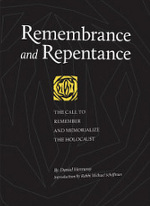
Dan’s research and teaching led him to write a book: Remembrance and Repentance: The Call to Remember and Memorialize the Holocaust. I’m fortunate enough to own a copy which I reviewed last year. At less than one hundred pages, it can be read in just an hour or two and serves as a perfect devotional for the remembrance of Shoah.

What do you do on Yom HaShoah?

You can learn more than I could possibly insert into this brief missive. You can read the story of a Holocaust survivor and put a living, human face on the Holocaust. You can watch video reminders of the past so you may strengthen your resolve that the past does not also have to be the future for the Jews. You can realize that Shoah is continually lived out in Jewish experience today and in the history of modern Israel.

The Holocaust did not end in 1945 when the Allies liberated the Jewish survivors from the Nazi killing centers and concentration camps. Still shadowing the world’s moral, political, and religious life are the consequences of what happened, and did not happen, in the period of 1933 to May 1945 in predominantly Christian Europe.

-Daniel Hennessy
“Educational Activism,” pg 82
Remembrance and Repentance: The Call to Remember and Memorialize the Holocaust

I quoted Ismar Schorsch above in saying that we are not “too old to worry about the welfare of the next generation” and “holiness is a matter of deeds, not words.”

Yesterday’s Torah Portion Kedoshim includes the following:

Hashem spoke to Moses saying: Speak to the entire assembly of the Children of Israel and say to them: You shall be holy, for holy am I, Hashem, your God.

Leviticus 19:1-2 (Stone Edition Chumash)

These words, or something similar, are not foreign to Christians:

Therefore you are to be perfect, as your heavenly Father is perfect.

Matthew 5:48 (NASB)

Remembering Shoah and teaching others to remember is an act of Holiness and perfection. It is honoring God, for God asks each of us to love kindness and to do justice (Micah 6:8).

candle shoahToday, I will stand in the sanctuary among other Gentile Christians as a witness. Pastor Randy, who lived in Israel for fifteen years, is on vacation this week so he won’t be leading services. Pastor Bill will be giving a sermon on David and Goliath (I Samuel 17) and my Sunday school class will be teaching on Ephesians 2. Nothing wrong with any of those lessons.

But given what is on my heart as I write this, I can think of something better to teach in church today. I pray that there’s someone who will listen.

This year, Yom HaShoah begins on Sunday, April 27th at sundown and ends on Monday, April 28th at sundown. If you can teach someone about Shoah then teach. If you know little or nothing of Shoah, then learn.

When is Church Not Church?

Long before the church was called the church, it consisted of an assembly of Jewish believers who practiced Judaism as part of their devotion to Yeshua of Nazareth.

In the days that followed the spiritual outpouring of Shavu’ot, the disciples found themselves shepherding a large community of new disciples in Jerusalem. Three thousand men and women received the message about Yeshua and immersed themselves for his name. Many of these joined themselves to the community of his disciples in the holy city.

By devoting themselves to the apostles’ teaching, the community of early believers continued in the Jewish mode of faith and practice, which prioritizes study above other pursuits. Judaism places a heavy emphasis on study, learning, and Torah education. Jewish life structured itself around study, and the study of Torah permeated every aspect of Pharisaic Judaism. Rabbinic literature frequently extols the virtues of study and praises the man whose “delight is in the Torah of the LORD, and on his Torah he meditates day and night” (Psalm 1:2). The sages had numerous axioms about the greatness of Torah study. Judaism regards the study of Torah as a mitzvah incumbent upon every Jew and the primary obligation of Jewish life.

-D. Thomas Lancaster
“Before the Church Was Called the Church,” pp 16-17
Messiah Magazine, Spring 2014 issue

I wanted to juxtapose the above statement with a definition of the Church as a spiritual body, but all I came up with was this:

noun
1. a building used for public Christian worship.
“they came to church with me”
synonyms: place of worship, house of God, house of worship; cathedral, abbey, chapel, basilica; megachurch; synagogue, mosque
“a village church”
the hierarchy of clergy of a Christian organization, esp. the Roman Catholic Church or the Church of England.
noun: the Church

Origin
Old English cir(i)ce, cyr(i)ce, related to Dutch kerk and German Kirche, based on medieval Greek kurikon, from Greek kuriakon (dōma ) ‘Lord’s (house),’ from kurios ‘master or lord.’ Compare with kirk.

This is an extension, a sort of “Part 2” to my prior blog post Notes on the Church from an Insomniac, except that I’m writing this wide awake after enjoying a reasonably good night’s sleep. But the concept I’m trying to explore is “the Church” as a unique entity of people from all walks of life, including Jews, who have converted to a religion called “Christianity” based on the worship of Jesus Christ as we find him in the Gospels, and because of their faith in Christ, are saved from eternal damnation and when they die, will go to Heaven to be with God in a realm of eternal peace.

OK, that’s an oversimplification and I’ve deliberately employed more than a little “tongue-in-cheek” in crafting that description. Let’s see what happens when I put “Christianity” in my Google search string.

noun
noun: Christianity
1. the religion based on the person and teachings of Jesus of Nazareth, or its beliefs and practices.
Christian quality or character.
“his Christianity sustained him”

Not much help there.

But consider, as I understand it from the teachings at the church I currently attend. “The Church” (big “C”) was “born” in Acts 2 by the Holy Spirit inhabiting, first the apostles of Christ in the upper room on Pentecost (Shavu’ot) and then a body of thousands of Jewish people coming to faith in Jesus. So far, that’s semi-consistent with Lancaster’s description, except that he doesn’t say something incredibly new and disconnected from prior Jewish and Biblical history was established on that occasion. As I read Lancaster and understand his teachings on the New Covenant, I can only interpret the Acts 2 event in terms of previous Biblical history and see it as the logical and natural extension of God’s plan going forward in time without the requirement to make the train “jump the tracks,” so to speak, and violently diverge from everything written in the Bible (in this case, Torah, Prophets [Navim], and Writings [Ketuvim] or “Tanakh”) up to this point in history.

Spirit, Torah, and Good NewsThe classic New Covenant texts in Jeremiah 31 and Ezekiel 36 clearly identify Israel as the focus of the New Covenant, a Covenant with identical conditions to those listed in the Old Covenant given at Sinai through Moses. The only difference, and I’ve said this before, is that the covenant would be written on the heart by the Spirit, not on tablets and scrolls, and internalizing the Torah makes it possible for the Jewish people, that is, the nation of Israel, and those who attach themselves to Israel through an Abrahamic faith in the Jewish Messiah, to wholly obey the instructions of God and live a life of holiness.

The New Covenant was inaugurated in the death and resurrection of Yeshua (Jesus) and the Holy Spirit was given as a pledge (2 Corinthians 1:22) that when Messiah returns, he will complete what he has started and the New Covenant will be fully enacted in our world.

Revisiting my quote of Lancaster regarding the vital importance of Torah study, even the Gentiles were required to do this (Acts 15:21) as the means by which they (we) could understand the teachings of our Master and learn to also strive to live holy lives in anticipation of the Messianic Era and the age to come.

So what happened? The original assembly or ekklesia (which also can be interpreted as synagogue) of Messiah was first wholly Jewish, and then it was legally determined that Gentiles had standing in the Jewish ekklesia of “the Way” without having to undergo the proselyte ritual (Acts 15). That is, we people of the nations who are called by His Name (Amos 9:11-12), can be equal co-participants in the blessings of the New Covenant without converting to Judaism and being obligated to the entire set of responsibilities in the Torah. Make no mistake, though. This does not make us absolved of great responsibilities and does not render us “Law-free,” and we indeed have a unique obligation to the Torah of Moses. If we repent of our sins, receive atonement through Messiah, and daily pick up our cross and seek our Master, we will become the crowning jewels of the nations, but only because “Salvation comes from the Jews” (John 4:22) through the centrality of Israel and her firstborn son, Yeshua of Nazareth, not because we convert to Christianity and join the Church.

Confused? Am I repeating myself?

What I’m asking is if this more “Judaic” viewpoint on the Bible is correct, and the ekkelsia, in terms of Messianic community simply means “assembly” rather than requiring the creation of a unique body called “the Church” which after being “raptured” to Heaven and subsequently returned with Jesus to Earth, remains separate from anyone who came to faith during the “tribulation” (which doesn’t make a bit of sense), then how did things get so messed up?

Whole books have been written trying to answer that question (including this one, which I will start reading soon), but something I read on New Testament scholar Larry Hurtado’s blog seems to (somewhat) apply.

In the article I note one or two “fashions” in NT studies of past decades, ideas or emphases that seem all the rage for a short while but then seem to have faded just as quickly as they appeared. In this case, I cite “structuralist exegesis.”

I also discuss a couple of “fallacies,” by which term I refer to ideas that obtained wide and long-lasting currency but have subsequently been shown to be errors. The question here is why this happens. How do a wide assortment of scholars take something as given when there never was adequate basis for it?

Finally, I explore very briefly some possible future emphases in the field, such as the growing internationalization of those who comprise NT scholars, the growing interest in “reception history,” and one or two other things.

Larry Hurtado
Larry Hurtado

A pre-publication version of Dr. Hurtado’s article Fashions, Fallacies and Future Prospects in New Testament Studies (PDF) is freely available for you to read. Hurtado spends much of this article describing how brief “fads” in certain New Testament studies gained traction momentarily, but then…

I turn now to consider some other approaches and ideas that had much more impact and much more “staying power,” but were subsequently shown to be erroneous. These ideas are much more important to consider precisely because they won such wide acceptance and over a goodly period of time. These were not passing fashions. They were firmly held and confidently asserted widely, in some quarters treated as solid truth, but are now clearly seen to have been fallacious.

-Hurtado, pg 4

Hurtado says nothing to discredit current Christian doctrine, but the fact that Christian scholarship had gained an attraction and wide adherence to theories and interpretations of the New Testament that have subsequently proven to be unreliable or just plain wrong is compelling to me. For one thing, it establishes that really anything we believe about the New Testament in specific and the whole Bible in general is up for examination, just like any other scientific endeavor. That’s actually pretty huge since from the point of view of sitting in a pew at church every Sunday morning and listening to the Pastor’s sermon, we are generally intended to take everything we hear at face value and consider the message as (mostly) unquestionable fact and truth.

I say “mostly” because I know Pastor doesn’t expect everyone to agree with him all the time, and because it’s possible to ask questions about the sermon in Sunday school class, but even within that context, there’s a limit and one does not cross the line of (so-called) “sound doctrine” or “solid truth” to consider perspectives that, from an Evangelical point of view, would be considered “cultic” and even “heretical.”

But while we may consider the Word of God as Holy, inerrant, and inspired by the Spirit of God, subsequent human interpretations don’t fall in those categories and therefore are “up for grabs.”

Judah Himango in his blog post Torah demands interpretation: an example from Deuteronomy 16, states:

My modus operandi for the EtzMitzvot.com project is to restate each command in the broadest, least-interpretive way possible, keeping faithful to the text without inferring or assuming what those words mean. As I came across Deuteronomy 16:16, I wrestled with this standard.

For some commandments, this standard is near impossible to apply without some creative interpreting/inferring/assuming.

For example, “just the facts, ma’am version of this mitzvah is, “Appear before God at the place he chooses for the 3 pilgrimage feasts.”

OK, that’s nice, how would you actually apply this in your life, today?

Judah also says:

You might think I am arguing for rabbinic or church interpretation; leaving the hard work of Bible interpretation to people smarter and more studied than us. But the take-home here should be: commandments are not always straightforward. Practicing them requires study and learning. Jewish and Christian traditions can guide us as a point of reference, but should not be elevated beyond the educated guesses they are.

So Biblical interpretation is not only normative in our studies, it’s unavoidable. It is impossible to understand everything we see in the Bible without running it through some sort of interpretive matrix yielding a hopefully accurate but undoubtedly biased set of conclusions. Bias isn’t necessarily bad and as I said, in any event, it’s unavoidable. The trick is to come to a set of conclusions that not only fits the immediate text being studied, but the underlying and comprehensive theme running through the entire body of the Bible. If isolated or “cherry-picked” bits of scripture contradict the overall tapestry of the Bible as a whole, chances are something’s wrong with your hermeneutics.

These musings are necessarily limited and selective, and others will no doubt offer observations additional to or even critical of mine. This is to be welcomed. But, if NT studies is to continue as a viable field, I suggest that the future approaches taken will have to demonstrate that they offer something substantial, something “value-added” to the study of the fascinating texts that comprise our NT and the remarkable religious developments that they reflect. Trying out this or that new speculation, or appropriating this or that methodological development in some other field will (and should) continue to be part of the ensuing discussion. But, I repeat, to amount to something more than a passing fashion, our approaches will have to be both well-founded and substantial in what they produce. And to avoid the sort of serious fallacies that we have noted, we will have to exercise both committed scholarly effort and self-reflective critique.

-Hurtado, pg 21

Carl Kinbar
Rabbi Carl Kinbar

This summons questions about the level of Messianic Jewish scholarship today, and I explored that question, thanks to another blog post by Dr. Hurtado, almost a year ago. Rabbi Dr. Carl Kinbar responded in part:

Here are a few thoughts about peer review. The “peer” in “peer review” is used in a very specific sense: it is someone who has recognized expertise in the subject. For example, the scholars who reviewed my doctoral dissertation are peers in the study of rabbinic texts rather than people “just like me” (since I was only a graduate student at the time). You cannot have a peer review process without experts. Although it is possible for someone to become an expert through self-study, such people are as rare as hen’s teeth and the reason is very simple: 99.9% of people who have never been discipled in their field have not learned the basic habits of scholarship and have not been exposed to the sort of critique that would help them to avoid errors of method and fact. With very few exceptions, even the best of the self-taught are like talented basketball players who have only played in pick-up games but have never been involved in organized basketball on any level and therefore have never been coached or received high-level input. I suspect that there are thousands of such basketball players, some of whom have a lot of talent but none of whom have learned the moves that are required even of entry-level NBA players. Becoming a professional player will depend on how others evaluate their talent, not on their own sense that they are NBA-quality. A true peer in “peer review” is someone who has been evaluated as an expert by existing experts.

As a Messianic Jewish scholar, I try to make up for the lack of peer review by submitting my work for review by a range of people, including both scholars and non-scholars. Before I received a significant amount of traditional and academic discipling, I thought that self-study was enough. I now know that it isn’t.

So on the one hand, we may conclude that the current state of Messianic Jewish scholarship would not yet meet the standards set in the realm of New Testament scholarship at the highest academic levels, but on the other hand, it’s headed in the right direction. Does that mean we are forced to accept Evangelical Christian interpretation as the de facto standard? I personally don’t think so, especially when, thanks to Hurtado’s aforementioned paper, we see that even long-standing and popular opinions on the New Testament can be subsequently discounted or discredited.

Am I right and you’re wrong? I can hardly say that and that’s not the point of this missive. My point is that Evangelical Christian theology and doctrine sits on its own laurels at its great peril, as does any position, system, or intellectual endeavor. Intellectual and spiritual honesty and integrity requires continuing investigation and study. The minute you stop questioning your own assumptions and take a position of static dogma, is the minute you lose a living relationship with the Word of God and perhaps even God Himself. That’s not intentional, of course, but it often is a sad result.

Just remember, at one point the Church thought the earth was the center of the universe based on the Bible. At one point, the Church burned people as witches (Europe) or pressed them to death under heavy stones (America) based on the Bible.

Now we are finally facing the idea that much of the Church’s “sound doctrine” and “solid truth” is based on a two-thousand year old mistake, and worse, that we’re taking our major cues, not from the Judaic understanding of the scriptures as they were viewed during the Apostolic Era, but from a group of European reformers who lived barely five-hundred years ago and who themselves may well have been anti-Judaism and anti-Jewish people.

Up to JerusalemIs that what Jesus taught? Is that how Paul interpreted the scriptures? Is that the way James the Just, brother of the Master, determined Gentiles should be included in the branch of Judaism then known as “the Way?”

When is Church not Church? When it’s the assembly of Messiah longing for the coming of the New Covenant, when God’s instructions are written on hearts, and the spirits of men and women, young and old, from the least to the greatest, know God.

We aren’t there yet, but we have a responsibility to strive to be better than we are and in spite of our assumptions and traditions, to continually “be in the Word” (to employ a Christian aphorism), and to realize that our perspective might not be the best vantage point from which to view the full panoramic scope of God’s overarching plan for His people Israel, who are absolutely necessary and central to the Way of salvation for the rest of the world.

To find out more about why the word “ekklesia” and the word “sunagōgē” which we translate into English as “synagogue,” could all be translated as “meeting place” or “assembly” and don’t have to be translated as “church,” read What does Synagogue mean in Hebrew? by Dr. Eli Lizorkin-Eyzenberg.

A final note. I’m quite aware that I’ve scheduled this “meditation” to automatically publish on the morning of Easter Sunday or Resurrection Day. This is probably the most holy day on the Christian calendar and I suppose my interpretation of “ekklesia” into something other than “Church” could be seen as an inappropriate criticism. And yet, who we are and to what body we belong is of vital importance, on this day as much as any other, for our Master is Risen, and he is returning. The Kingdom is at hand, and the New Covenant is unfolding. We must be ready, but to do that, we must understand the actual and authentic nature and character of King, Kingdom, and Covenant. It is to that purpose I have dedicated this blog post and all of my writing.

Notes On the Church From an Insomniac

Old English cir(i)ce, cyr(i)ce, related to Dutch kerk and German Kirche, based on medieval Greek kurikon, from Greek kuriakon (dōma ) ‘Lord’s (house),’ from kurios ‘master or lord.’

I’ve always wondered how you get “church” out of “ekklesia” and in a bout of insomnia, I decided to find out. It’s not so much that I want to know about the usage of “church” as a building or even an organization, but as the entity that has, in some circles, replaced Israel as the focus of all His New Covenant prophesies and promises (see my five-part review series on D. Thomas Lancaster’s lectures, What About the New Covenant for more).

The definition above is what I first came up with in a Google search using the search string “origin of the word church”. Here’s more detail:

church (n.) Old English cirice, circe “church, public place of worship; Christians collectively,” from West Germanic *kirika (cognates: Old Saxon kirika, Old Norse kirkja, Old Frisian zerke, Middle Dutch kerke, Dutch kerk, Old High German kirihha, German Kirche), probably [see note in OED] from Greek kyriake (oikia), kyriakon doma “Lord’s (house),” from kyrios “ruler, lord,” from PIE root *keue- “to swell” (“swollen,” hence “strong, powerful”); see cumulus. Phonetic spelling from c.1200, established by 16c. For vowel evolution, see bury. As an adjective from 1570s.

Greek kyriakon (adj.) “of the Lord” was used of houses of Christian worship since c.300, especially in the East, though it was less common in this sense than ekklesia or basilike. An example of the direct Greek-to-Germanic progress of many Christian words, via the Goths; it probably was used by West Germanic people in their pre-Christian period.

Also picked up by Slavic, probably via Germanic (e.g. Old Church Slavonic criky, Russian cerkov). Finnish kirkko, Estonian kirrik are from Scandinavian. Romance and Celtic languages use variants of Latin ecclesia (e.g. French église, 11c.).

-from Online Etymology Dictionary

This resource has links that define the sources used to generate the information above so please click the link for more.

As you can see, it’s not as simple as saying that “church” equals “ekklesia” which is how it seems if you simply read your English-language Bibles.

Now what about “ekklesia” (alt. “ecclesia”)?

noun, plural ec·cle·si·ae [ih-klee-zhee-ee, -zee-ee] Show IPA .

1. an assembly, especially the popular assembly of ancient Athens.

2. a congregation; church.

Origin: 1570–80; < Latin < Greek ekklēsía assembly, equivalent to ékklēt ( os ) summoned ( ek- ec- + klē-, variant of kal-, stem of kaleîn to call, + -tos past participle suffix) + -ia -ia

The same source, dictionary.reference.com also provides the following:

— n , pl -siae
1. (in formal Church usage) a congregation
2. the assembly of citizens of an ancient Greek state

[C16: from Medieval Latin, from Late Greek ekklēsia assembly, from ekklētos called, from ekkalein to call out, from kalein to call]

churchAccording to biblehub.com, the “English word “church” comes from the Greek word kyriakos, “belonging to the Lord” (kyrios).” By comparison, “ekklēsía(from 1537 /ek, “out from and to” and 2564 /kaléō, “to call”) – properly, people called out from the world and to God, the outcome being the Church (the mystical body of Christ) – i.e. the universal (total) body of believers whom God calls out from the world and into His eternal kingdom.”

So as nearly I can figure, not being a linguist or etymologist, we can understand the word “ekklesia” as originally meaning (for the purposes of this brief study) an assembly of Greek citizens or more specifically, a popular assembly in the city of Athens. In its most generic sense, it was probably used to mean any assembly of people for a common purpose.

There’s also a sense, when used to describe an assembly of believers, as it’s used in the New Testament, that said-assembly is a group of people “called out”. This is probably (in the minds of the Jewish writers of the New Testament) related to the Hebrew word Shaliah, meaning “legal emissary” or “agent,” equivalent to the Greek word “apostolos” from which we get the English word “apostle”. It’s reminiscent of the use of the word Shaliach as employed by the Chabad to mean “a member of the Chabad Hasidic movement who is sent out to promulgate Judaism and Hasidism in locations around the world.”

That probably fits since historically and into modern times, one of the primary functions of the Christian Church as an institution is to send out members as missionaries or “sent out ones” to “promulgate Christianity in locations around the world.”

Called out ones, sent out ones. In either case, a population of individuals separated from the larger group for a common purpose. From a Christian standpoint, “the Church” is called out of the generic population of the nations for the purpose of being worshipers of Jesus Christ. An important secondary mission (Matthew 28:19-20) is to spread the gospel message of salvation to the world, creating more called out ones to join “the Church.”

Except, as you may have noticed above, the word “church” is more related to the Greek word “kyriakos,” so I’m not sure it’s reasonable to directly translate “ekklesia” as “church”.

But I haven’t written this in the middle of the night to be that picky. I’m just using it as background.

In studying Lancaster’s What’s New About the New Covenant lecture series, I started wondering, given the centrality of Israel in all the New Covenant language, how “the Church” managed to replace Israel or usurp her position in that Covenant. Actually, I’ve wondered this for a while and it keeps bothering me.

PaulI’ve learned in past conversations with Pastor Randy at the church I attend, that “the Church” was created in Acts 2 at Pentecost, was originally made up of mostly Jewish people, and was centralized around Jerusalem and the Temple. Subsequently, the Church began to spread and its locus of control was shifted to the assembly at Syrian Antioch (see Acts 11 starting at verse 19 and subsequent chapters) as more Gentiles were added. Paul returned to Antioch after his first two “missionary journeys” rather than Jerusalem, to give a report of his activities. He only returned to Jerusalem after his third journey (Acts 21) at the prompting of the Holy Spirit (Acts 20:22-23), not as a missionary going back to his “home church” to make a report, but for a larger and most likely eternal purpose.

From this perspective, as time goes on, starting during the lifetime of Paul, “the Church” becomes less and less Jewish and less and less of a Judaism, and increasingly describes a body of Jewish but mostly Gentile people focused on the worship of Jesus Christ, while divesting themselves of the various practices, perspectives, and even thoughts that previously associated it with a first century stream of Judaism (very similar to the viewpoint of John MacArthur on this topic).

Can you see why this bothers me? I’ve mentioned recently that if God really did reject Israel and replace her with “the Church” in all of the covenant prophesies and promises, then it would be like a man cutting off his own legs and expecting to run a marathon afterward.

It would be impossible.

All of the New Covenant language we see in Jeremiah 31 and Ezekiel 36 is focused on Israel as the object of God’s prophesies and promises, not another entity, and certainly not an entity that isn’t Israel and Judah (which “the Church” isn’t). It’s as if traditional Christian thought on the New Covenant starts in the Gospels and particularly the Epistles, and then works its way backward into the “Old Testament,” proceeding to engage in some significant theological and eisegetical gymnastics to rework the words of the Prophets in order (some how) to make them fit the way institutional Christianity chooses to interpret Paul.

I’ve also mentioned recently how at least some of what Paul wrote is all too easily interpreted as anti-Torah, anti-Judaism, and anti-Jewish people, making Paul a big problem for understanding the New Covenant as it’s described in the Prophets, and giving “the Church” the (apparent) leverage it needs to reinterpret the New Covenant in a Gentile-focused manner that diminishes Israel and the Jewish people in favor of Goyim Christianity. At this point, if the Jews weren’t kicked out of the Church (unless they converted to Christianity and gave up Judaism and being Jewish people), they would have walked out, since the “no Jews allowed” sign had been raised. The Church isn’t a Jewish place, it’s a Gentile place.

“The older I get, the more I realize how different it is to be a Jew in a Jewish place as opposed to a Jew in a non-Jewish place. It’s definitely a different feeling in terms of how freely you can be yourself and celebrate your culture and religion.”

-Natalie Portman

Etymology is defined as “the study of the origin of words and the way in which their meanings have changed throughout history.” As we’ve seen above, the etymology of the word “Church” isn’t as straightforward as the casual users of that word might believe. In fact, “Church” is more related to a completely different Greek word, but most people don’t know that.

JudaismI suggest that the way most Christians understand the word “Church” today isn’t how the original apostles and disciples of the Master understood “ekklesia” or meant for anyone to understand it. The “ekklesia” were the called out body of Messiah, but did not call out Jews from Judaism. If the New Covenant prophesies mean anything at all, then primarily, it was the non-Jewish peoples who were “called out” of paganism in order to be grafted in to the commonwealth of Israel to benefit from the blessings of the New Covenant through their Abrahamic faith in Messiah, Son of David. The Jewish disciples may have been called out of other Jewish streams and into the Judaism of “the Way,” but if they had been called out of Judaism as modern Christians believe, then they (and we) would have exited the New Covenant altogether.

But just as we see how the word or words that eventually became “church” in English went through many changes throughout history, the meaning, purpose, and composition of the body of believers has also “morphed” a great deal over time. I doubt Paul would recognize a modern group of Christians in a Sunday worship service because of the result of nearly two-thousand years of evolutionary changes.

I wish I could do this wee study more justice, but it would take more study and time than I have right now. I fell asleep exhausted several hours ago, woke up way too late (or too early) and now I can’t sleep at all. For some reason, I keep thinking of “the Church” in general and the little local church I attend in specific.

I emailed one of the associate Pastors earlier today in relation to the church’s website, and one of the things he asked in response was, “How are you doing in your walk?”

Given how unusual I am in relation to just about everyone else in church, I didn’t know how to respond. I feel “fine” in my “walk,” but I don’t know if that’s how I’d appear from his point of view.

I suppose I should try to get some more sleep. Morning will come all too soon and I’ll regret it if I go to work with my brain in a fog. Maybe I’ll write a “part two” to this when I get more time and can do more research. I don’t really feel like I’ve said what I wanted to say, except that I wanted to say that what the Church has become today, not as a building or even an institution, but as an entity or even a concept, seems to have changed a great deal from the hopes and dreams of the apostles and from the spirit of what was intended in the New Covenant, a covenant non-Jewish people can only partake of through Israel and her firstborn son, Messiah, Son of David…the person we call Jesus Christ.

Read Part 2: When Is Church Not Church?