Tag Archives: D Thomas Lancaster

Sermon Review of the Holy Epistle to the Hebrews: The Messiah Psalm

Psalm 110 is the most frequently quoted text in the New Testament. Why? And what did Yeshua mean when he quoted it to challenge the concept of a Davidic Messiah?

Listen to a study of Hebrews 4:14-5:6 which unwraps Psalm 110 and introduces the priesthood of Messiah. “The Messiah Psalm” offers discussion about the Messianic interpretation of Psalm 110 as it appears in the teaching of Yeshua (Mark 12) and the Epistle of Hebrews.

-D. Thomas Lancaster
Sermon Thirteen: The Messiah Psalm
Originally presented on April 13, 2013
from the Holy Epistle to the Hebrews sermon series

Therefore, since we have a great high priest who has passed through the heavens, Jesus the Son of God, let us hold fast our confession. For we do not have a high priest who cannot sympathize with our weaknesses, but One who has been tempted in all things as we are, yet without sin. Therefore let us draw near with confidence to the throne of grace, so that we may receive mercy and find grace to help in time of need.

For every high priest taken from among men is appointed on behalf of men in things pertaining to God, in order to offer both gifts and sacrifices for sins; he can deal gently with the ignorant and misguided, since he himself also is beset with weakness; and because of it he is obligated to offer sacrifices for sins, as for the people, so also for himself. And no one takes the honor to himself, but receives it when he is called by God, even as Aaron was.

So also Christ did not glorify Himself so as to become a high priest, but He who said to Him,

“You are My Son,
Today I have begotten You”;
just as He says also in another passage,

“You are a priest forever
According to the order of Melchizedek.”

Hebrews 4:14-5:6 (NASB)

Lancaster teaches some really interesting things in this session, but we have to get there first.

As he often does, Lancaster begins by recapping his previous sermon, in this case by reminding us that we need a priest to approach God, to approach paradise, because we have big angels and a flaming sword keeping us out.

Lancaster also reminds us of who the original readership of the writer of the Hebrews epistle was, and it sure wasn’t us, that is, twenty-first century (Gentile) Christians. The original audience, from Lancaster’s point of view, were first century Hellenistic Jews living in Judea. They had just suffered the martyrdom of James the Just, brother of the Master, the head of the Apostolic Council, along with other important leaders, and they had either just been denied access to the Temple and Priesthood or they were about to be denied. The Sadducees, who controlled access to the Temple, never got along with the Master Yeshua (Jesus) because they deny the resurrection and the existence of the divine soul, both of which the Master taught.

PriestsFrom a Christian’s point of view, it’s very important to realize that the Jewish disciples of the Master did not have a problem with the Temple or the Priesthood at all. They only had a problem with the corruption of the Sadducees who at that point in history controlled access to the Priesthood and the Temple sacrifices. Most Christians read Hebrews as the anti-Levitical Priesthood and anti-Temple book in the Bible, so it’s important to point out these distinctions.

In the next part of the sermon, Lancaster takes us on a small but important detour away from Hebrews and into the Gospel of Mark:

They came again to Jerusalem. And as He was walking in the temple, the chief priests and the scribes and the elders came to Him, and began saying to Him, “By what authority are You doing these things, or who gave You this authority to do these things?”

Mark 11:27-28 (NASB)

Lancaster says that Yeshua evaded the question for about a chapter and then got down to the heart of the matter.

By chapter 12, verse 34, Jesus had so deftly responded to all of his challengers that no one dared to ask him anymore questions. Then Jesus had a question of his own:

And Jesus began to say, as He taught in the temple, “How is it that the scribes say that the Christ [Messiah] is the son of David?”

Mark 12:35 (NASB)

This is one of those questions that if we don’t consider the context of what was going on and we don’t apprehend the query in the manner of a first-century Jew, we’ll completely miss the meaning. Asking if the Messiah is the Son of David is like asking if the Pope is Catholic. Of course, he is! It’s incredibly obvious. So why did Jesus ask this question?

David himself said in the Holy Spirit,

‘The Lord said to my Lord,
“Sit at My right hand,
Until I put Your enemies beneath Your feet.”’

David himself calls Him ‘Lord’; so in what sense is He his son?” And the large crowd enjoyed listening to Him.

Mark 12:36-37 (NASB)

Jesus quotes from Psalm 110. It was common for him to refer to older scriptures, so on the surface, this doesn’t seem unusual. It was common for Paul and the other apostles to quote from previous scriptures, so again, it doesn’t seem to be an unusual event.
King DavidBut of all the Old Testament scriptures quoted in the New Testament, Psalm 110 is the one quoted most often, being cited a total of fifteen times, with nine of those mentions in the Epistle to the Hebrews. The apostles related to Psalm 110 as one of these most noteworthy Messianic prophesies (with Psalm 2 being the other). What was Jesus, and later the writer to the Hebrews, trying to say that we miss, especially in English?

Lancaster tells us that English language Bibles render Psalm 110 poorly because they generally translate the words “my Master” and “Hashem” both as “Lord”. This gives the impression that God is talking to Himself.

Lancaster reads the ESV translation of Psalm 110 but with some slight differences that render it more comprehensible. I’ll reproduce it here with those differences formatted in bold and underlined text.

Hashem says to my Master:
“Sit at my right hand,
until I make your enemies your footstool.”
Hashem sends forth from Zion
your mighty scepter.
Rule in the midst of your enemies!
Your people will offer themselves freely
on the day of your power,
in holy garments;
from the womb of the morning,
the dew of your youth will be yours.
Hashem has sworn
and will not change his mind,
“You are a priest forever
after the order of Melchizedek.”
The Master is at your right hand;
he will shatter kings on the day of his wrath.
He will execute judgment among the nations,
filling them with corpses;
he will shatter chiefs
over the wide earth.
He will drink from the brook by the way;
therefore he will lift up his head.

Psalm 110

The craziness of this Psalm is that David, under inspiration from the Holy Spirit, referred to his descendent, his “son” as it were, as his “Master.” No son is Master of his father. This was Yeshua’s point. The Messiah was surely the Son of David but Psalm 110 also understands that Messiah is more than the Son of David. If Messiah was only the Son of David, he would be seated at David’s right hand.

Licht senderSince Messiah is seated at God’s right hand, whose son does that make him (hint, hint)?

Lancaster read from a collection of traditional Jewish midrash which incredibly, has Abraham also asking why Messiah, Son of David, Son of Abraham ultimately, is seated at God’s right hand.

The Even Zohar, Rabbi Yeshiel Tzvi Lichtenstein in his commentary on Mark 12:25 states that Messiah was indeed the Son of David in the flesh and the Son of God in the Spirit.

Yeshua was confirming that he was the Messiah, Son of David and Son of God. Lancaster says it was Yeshua’s interpretation of Psalm 110 that resulted in his execution.

Again the high priest was questioning Him, and saying to Him, “Are You the Christ [Messiah], the Son of the Blessed One?” And Jesus said, “I am; and you shall see the Son of Man sitting at the right hand of Power, and coming with the clouds of heaven.” Tearing his clothes, the high priest said, “What further need do we have of witnesses? You have heard the blasphemy; how does it seem to you?” And they all condemned Him to be deserving of death.

Mark 14:61-64 (NASB)

If the high priest had just asked “are you the Messiah” and Jesus had said “yes,” maybe he could have been wrong but it wouldn’t be blasphemy. But the high priest asked if Jesus was Messiah and Son of God, and Jesus answered yes. That’s what caused the high priest to condemn Jesus to death.

Now back to Hebrews 4 and our need for a high priest.

Lancaster spent a fair amount of time stating that Jesus had to be fully a human being, not just God or an angel masquerading as a human being. When Jesus was tempted, it had to be completely possible for him to give in to temptation and sin. It’s not temptation if there isn’t a real risk of sinning and if it was actually impossible for Jesus to sin, then he wasn’t really tempted, and therefore, he wasn’t really human. It had to be very possible for Jesus to sin, just like the rest of us. The only difference is that unlike the rest of us, Jesus passed every test and never, ever sinned.

This is where I got stuck last week, since it seems like someone who passed every test still wouldn’t be able to empathize with all of humanity because only he passed all the tests. The rest of us fail.

The High PriestBut in his sermon, as Lancaster entered Hebrews 5, he said this was a very important point. When the writer of Hebrews describes the high priest in verses 1 and 2, he’s not thinking of the then corrupt Sadduceeian high priest, but the ideal among high priests, Aaron. Ironically, one of Aaron’s highest qualifications, according to Lancaster, for the high priesthood was his sin in the incident of the Golden Calf (Exodus 32). It was because Aaron sinned that he could empathize with the weakness of the Israelites and have compassion as he atoned for their sins.

But this presents a problem, at least in an eternal sense.

…he can deal gently with the ignorant and misguided, since he himself also is beset with weakness; and because of it he is obligated to offer sacrifices for sins, as for the people, so also for himself.

Hebrews 5:2-3 (NASB)

Aaron, or the idealized high priest, could “deal gently with the ignorant and misguided” but on the other hand, he still had to offer sacrifices for himself because he too sinned.

While Aaron was the greatest and most noble of the high priests, there was still one who had better qualifications, one who could also empathize and “deal gently with the ignorant and misguided” but ”One who has been tempted in all things as we are, yet without sin” (Hebrews 4:15).

Verse 5 quotes from Psalm 110 and verse 6 is the writer’s proof text:

“You are a priest forever
According to the order of Melchizedek.”

Lancaster leaves us hanging at the meaning of “priest forever according to the order of Melchizedek,” so I suppose we’ll have to wait until next week to get into what all that’s about.

What Did I Learn?

I liked the “straightening out” of Psalm 110 so that it becomes easier to tell “who’s who” in the text. Also, I found the emphasis of Lancaster (and the writer of Hebrews) on the humanity of Jesus compelling. I’ve heard Christians refer to Jesus again and again as a “man-god,” which makes him sound like something out of a science fiction or fantasy novel rather than who he was and is. It’s fascinating to consider Jesus, our high priest in the Heavenly Court, as fully a human being and out of that sinless humanity, he is able to empathize with flawed and failing people in his being the atonement for our sins. I still struggle with how one who has never failed, as Aaron failed, could ever really feel empathy and completely understand, not only real temptation and the risk of failure, which Jesus did experience, but also how we actually, miserably fail, which Jesus never experienced.
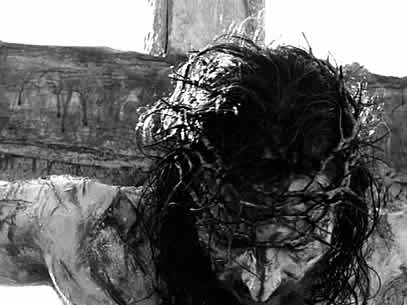
The Death of the MasterIf Jesus had failed, he’d understand us better, but if he failed, he would have been disqualified and never would have ascended to be seated at Hashem’s right hand as our Master.

I can imagine this interpretation presenting some difficulties for many Christians relative to the traditional understanding of the “Godhead” and Trinitarian doctrine. I don’t think Lancaster is challenging this necessarily, but he is forcing us (me, anyway) to view the nature and character of Messiah differently. He was, and arguably still is, fully and completely human and the Son of David according to the flesh, but also fully and completely the Son of God according to the Spirit. How this works, I don’t know. I’m not sure anyone really knows, although there are plenty of opinions to go around, including the denial of the Master’s divine nature completely.

I can only imagine that Lancaster in his analysis of the Book of Hebrews, may have taken this one on as his sermon series progressed. Right now, at the end of sermon thirteen, we’re hanging at the priesthood of Melchizedek. Next week, Hashem be willing, we’ll learn more.

Review of “What About the New Covenant,” Part 4

Session Four: Better Promises

But Jesus has now obtained a more excellent ministry, and to that degree he is the mediator of a better covenant, which has been enacted through better promises.

Hebrews 8:6 (NRSV)

I have a feeling I’m going to encounter this material again when I listen to and review the relevant presentations in D. Thomas Lancaster’s Holy Epistle to the Hebrews sermon series. However, the Hebrews material has been folded into a different context, one contrasting and comparing the Old and New Covenants in First Fruits of Zion’s (FFOZ) latest teaching lectures What’s New About the New Covenant.

On disc four, Lancaster starts with a brief summary of the previous lectures. We learned that Old Covenant doesn’t mean Old Testament, and it doesn’t even mean the Torah. It is an agreement God made with Israel (and only Israel) at Sinai stating that He would be Israel’s God and they would be His people as long as they obeyed His commandments (the conditions recorded in the Torah), and should Israel disobey, God would punish them and exile them (but not forever reject them).

We also learned that the New Covenant doesn’t mean the New Testament and it doesn’t mean the Church. It also doesn’t mean “renewed” Covenant because it indeed is something new. The New Covenant is also an agreement made between God and the Houses of Judah and Israel (and only the Houses of Judah and Israel) and that, according to the writer of the Epistle to the Hebrews, the New Covenant is made of “better promises” and Jesus is the mediator of that New Covenant.

But what are the better promises and how can they be better if between the Old and New Covenants, God does not change even a single condition or requirement for Israel (the Torah mitzvot) but does change the hearts of all Jewish people, making it possible for them to correctly perform all of the mitzvot?

To answer that question, Lancaster takes us through a study of a few of the chapters in the book of Jeremiah. This is why I like reading large portions of the Bible in one setting. I can get the full message of God to Israel in its complete context rather than parsing bits and pieces and verses together artificially to form a picture that might not be correct.

Better Promises in the Messianic Future

The days are surely coming, says the Lord, when I will make a new covenant with the house of Israel and the house of Judah.

Jeremiah 31:31

“The days are surely coming” indicates the end of days, the final redemption, the future Messianic Era. For those Christians who believe that the New Covenant has already replaced the Old Covenant, this statement makes that particular doctrine impossible because the New Covenant hasn’t been enacted or completed yet. The death and resurrection of Jesus only got the ball rolling, so to speak. We’re still in the Old Covenant age. The Torah is still in effect as it always has been since Sinai.

Good News for Israel and Judah

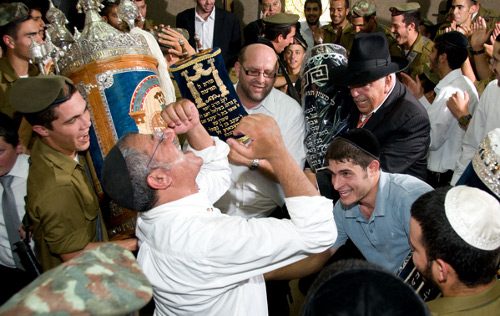
Simchat TorahNotice (and I’ve mentioned this before) that the addressees of the New Covenant are “the house of Israel and the house of Judah.” This is only with the house of Israel and the house of Judah. Period. It’s an exclusive relationship between God and the Jewish people, just as the Old Covenant defined an exclusive relationship between God and the Jewish people. The New Covenant (pay attention please, this is important) has nothing to do with the nations, with Gentiles, or with anything called “Christianity” or “the Church.” The New Covenant does not create a stand-alone covenant relationship between the Church and God. The only covenant that all the people of the earth can claim for their (our) very own is the Noahide Covenant (Genesis 9:1-17).

The Transformation of the Jewish Heart

It will not be like the covenant that I made with their ancestors when I took them by the hand to bring them out of the land of Egypt—a covenant that they broke, though I was their husband, says the Lord. But this is the covenant that I will make with the house of Israel after those days, says the Lord: I will put my law within them, and I will write it on their hearts; and I will be their God, and they shall be my people.

Jeremiah 32-33

The next “better promise” is that God will make it possible for the Jewish people to obey His righteous standards and not sin by writing those standards on the Jewish heart.

Husband and Wife

Lancaster says an oath the groom would recite at the wedding ceremony in the ancient near east was to declare, “I will be your husband and you will be my wife.” God declared “I will be a God to you and you will be a people to me,” but that was contingent upon Israel not disobeying God and worshiping idols. Idol worship was considered as adultery by God, a wife going astray with other lovers (gods). Under the Old Covenant, Israel went astray, but under the better promises of the New Covenant, since the Torah will be written on their hearts and not just on tablets and scrolls, Israel will never again “cheat” on God, so to speak, and will always remain faithful.

Intimate Knowledge of God

No longer shall they teach one another, or say to each other, “Know the Lord,” for they shall all know me, from the least of them to the greatest, says the Lord; for I will forgive their iniquity, and remember their sin no more.

Jeremiah 31:34

Master and disciplesUnder the Old Covenant, many times the people of Israel, including the Priests and Prophets knew about God, but they didn’t know Him in the sense of an intimate knowledge that led to obedience. This is often true of Jews and Christians today. It’s easy to study the Bible and learn about God but not so easy to live a life that is consistently, day-by-day, hour-by-hour pleasing to God. Under the New Covenant, there will be a universal revelation of God to the whole world. It will be natural for everyone to obey God.

I know I said the New Covenant is an agreement just between God and the Jewish people, and I, or rather Lancaster, will get to the issue of Gentiles by the by.

Forgiving All of Israel’s Sins Forever

So that you may not claim to be wiser than you are, brothers and sisters, I want you to understand this mystery: a hardening has come upon part of Israel, until the full number of the Gentiles has come in. And so all Israel will be saved; as it is written,

“Out of Zion will come the Deliverer; he will banish ungodliness from Jacob. And this is my covenant with them, when I take away their sins.”

Romans 11:25-27

Lancaster didn’t cite Paul or Romans 11 but I felt it an appropriate addition. Lately, I’ve been hearing some bad opinions about Paul and his so-called anti-Torah, anti-Judaism, and anti-Jewish people letters, and I thought this would be a good time to clear some of that up, since Paul is preaching to the Romans New Covenant doctrine that is highly favorable to the Jewish people and to Israel.

Jeremiah, according to Lancaster, is saying one of the “better promises” of the New Covenant mediated by Messiah, is that God will forget all of Israel’s sins which is what makes it possible for Paul to literally mean that “all Israel will be saved” rather than some tiny remnant who, according to the Church, must leave Judaism and convert and assimilate into (Gentile) Christianity. God doesn’t change the Torah. The Torah is unchangeable at its core. God does change the Jewish people so that they naturally will be faithful to God and God, for His part, will forgive all of Israel’s sins, from the Golden Calf forward throughout all of history and into the Messianic Age.

That’s very good news, a wonderful gospel for the Jews.

Israel Will Always Be a Nation Before God

Thus says the Lord,
who gives the sun for light by day
and the fixed order of the moon and the stars for light by night,
who stirs up the sea so that its waves roar—
the Lord of hosts is his name:
If this fixed order were ever to cease
from my presence, says the Lord,
then also the offspring of Israel would cease
to be a nation before me forever.
Thus says the Lord:
If the heavens above can be measured,
and the foundations of the earth below can be explored,
then I will reject all the offspring of Israel
because of all they have done,
says the Lord.

Jeremiah 31:35-37

Moon and StarsI suppose this could be two “better promises.” Israel will be a distinct nation and the Jewish people will be a distinct and identifiable people as long as there is a sun, a moon, stars, and a sea, which is to say, as long as the earth, our solar system, and the universe exists. It is also a promise that God will never reject Israel and the Jewish people and they will remain a people and a nation until the heavens can be measured and the foundations of the earth can be explored. These conditions, by the way, are rhetorical language meaning “always.” Israel will always be a nation before God and God will never reject the Jewish people. Ever.

This flies in the face of the various churches who still adhere to some form of Replacement Theology because for them, the New Covenant replaces the Old Covenant, and they interpret that to mean that God rejected Israel permanently because Israel rejected Jesus as Messiah. God then replaced Israel with the (Gentile) Church which accepted Jesus. Now, the only way God will accept a Jew is for the Jew to reject Judaism and convert to (Gentile) Christianity. However, examining the New Covenant language reveals that Replacement Theology is hopelessly unBiblical.

Jerusalem the Eternal City

The days are surely coming, says the Lord, when the city shall be rebuilt for the Lord from the tower of Hananel to the Corner Gate. And the measuring line shall go out farther, straight to the hill Gareb, and shall then turn to Goah. The whole valley of the dead bodies and the ashes, and all the fields as far as the Wadi Kidron, to the corner of the Horse Gate toward the east, shall be sacred to the Lord. It shall never again be uprooted or overthrown.

Jeremiah 31:38-39

Who can count the number of times Jerusalem has been conquered and destroyed? OK, probably someone has, but the point is that historically, whenever Israel sins, the Temple is destroyed and Jerusalem is left in ruins. This “better promise” for the Jewish people states that Jerusalem will be rebuilt and expanded and it will never again be destroyed because the Jewish people will never again sin against God or other people.

Some of the really exciting “better promises.”

Jeremiah 32:1-15 tells of God commanding Jeremiah to buy a field in Judah during Nebuchadrezzar’s siege against Jerusalem, a command Jeremiah couldn’t understand. It would have been crazy to do so, but God had something in mind: more “better promises.”

MessiahI don’t really want to reveal all of the better promises since if I do, you might not be as inclined to listen to the full lecture. In brief, the other promises include the regathering of the Jewish people to their Land, giving the Jewish people all one heart, and one way (in my opinion, “the Way”) so that there will be no division among Jews, that the New Covenant will be everlasting, that God will rejoice over doing good for Israel, that a “righteous branch” meaning the Messiah, will rise from the line of David. In addition to a return of the Davidic dynasty on the throne of Israel, the line of Aaron and the Levitical priests will return, which means there must be a Temple for them to offer sacrifices in.

God even says that He will only break His covenant with David and with Aaron if someone can break God’s covenant with day and night. More rhetorical language meaning “never.”

But there is something more about Lancaster’s sermon I do want to reveal since it contains a dire warning.

Those Who Say God Rejected Israel

The word of the Lord came to Jeremiah: Have you not observed how these people say, “The two families that the Lord chose have been rejected by him,” and how they hold my people in such contempt that they no longer regard them as a nation? Thus says the Lord: Only if I had not established my covenant with day and night and the ordinances of heaven and earth, would I reject the offspring of Jacob and of my servant David and not choose any of his descendants as rulers over the offspring of Abraham, Isaac, and Jacob. For I will restore their fortunes, and will have mercy upon them.

Jeremiah 33:23-26

ChurchHistorically, who has held Israel in contempt and said that God no longer regards the Jewish people as a nation? OK, just about everybody, but that “everybody” includes the Christian church. Even today, many churches continue to adhere to some form of Replacement or Fulfillment Theology, and any Christian who does espouse such a theology is who God, through Jeremiah, said “hold my people in such contempt” (emph. mine). Really, do you want to be on God’s “wrong side” by holding Israel in contempt, or even in the slightest degree, believe that God has rejected Israel and replaced her with the Church?

In addition to their being more “better promises” and “good news” for the Jewish people in these chapters of Jeremiah, Lancaster mentioned that there are still more better promises littered about the various books of the Prophets including Isaiah, Ezekiel, Amos, and Joel. That’s really a lot of better promises and good news for Jewish people.

But What About the Gentiles?

Then certain individuals came down from Judea and were teaching the brothers, “Unless you are circumcised according to the custom of Moses, you cannot be saved.”

But some believers who belonged to the sect of the Pharisees stood up and said, “It is necessary for them to be circumcised and ordered to keep the law of Moses.”

Acts 15:1, 5

Remember what I (citing Lancaster) said above about the New Covenant being made only with the House of Israel and the House of Judah? No mention of Gentiles at all. So do we even figure in? There’s a lot of language in the Apostolic Scriptures that says “yes” but we have to dig for it.

However, from the point of view of the various Jewish sects in the late second temple period, including believing Jews in “the Way,” recalling the New Covenant language, the only way they could see how Gentiles could be included in these “better promises” was to convert to Judaism.

In Acts 15:1-2 and 15:24, Now with what Satanically-inspired and dogmatic false teaching did these “certain men from Judaea” try to infect the church at Antioch, and why according to Galatians 2:4-5? (emph. mine)

That quote is from the study notes for the Sunday school class I attend when they were teaching on Acts 15 last September (here’s the link to the relevant blog post). What they couldn’t see was that the Jewish people asking these questions were not “Satanically-inspired” but rather, asking a legitimate question based on the Jeremiah 31 text.

Paul knew that the Gentiles didn’t have to convert to Judaism in order to be included in better promises (hence his letter to the Galatians), and Peter witnessed this first hand as recorded in Acts 10:44-48, but no formal decision had been rendered by the Council of Apostles and Elders defining Gentile legal identity within the Jewish community. Acts 15:6-29 records a summary of the legal hearing, including the testimony of various witnesses, and the conclusion and ruling of the Council that Gentiles could be granted honorary status within the commonwealth of Israel, grafted into the nation (see Romans 11:11-24), but only because of their association with Israel through faith in King Messiah.

Apostle Paul preachingThat’s an incredibly vital point to get, because without the New Covenant “better promises” being applied exclusively to the House of Israel and the House of Judah, if God really did reject Israel and the Jewish people in perpetuity, then we Gentiles would have absolutely, positively no hope of salvation at all! Israel is central in God’s plan to redeem the people of all the nations of the earth.

When King Messiah returns, he will be King of Israel, King of the Jews, and he will conquer all of the other nations and be their King. He will annex all of the other countries and Israel will be at the head of the nations, and all of the other nations will be vassal servants to Israel. As citizens of these vassal nations, we too will be annexed subjects of Israel and her King. The good news for the Gentiles is if we swear allegiance to King Messiah now, even before his return, we become his subjects and the New Covenant blessings become ours.

No, we don’t become Jews because we are citizens of a nation annexed by Israel and not citizens of Israel itself. We are granted an honorary status in the commonwealth of Israel. We’re grafted in.

As I’ve mentioned about a million times elsewhere, we don’t come under “One Law” in terms of being commanded to wear tzitzit, lay tefillin, and such, but we do become people who are called by His Name, and partisans or freedom fighters, so to speak, who are defending our King and his people until he returns and ascends his throne in Jerusalem, much as Robin Hood and his Merry Men of legend fought against the tyranny of Prince John and protected the innocent until King Richard’s return.

And many peoples will come and say, “Come, let us go up to the mountain of the LORD, To the house of the God of Jacob; That He may teach us concerning His ways And that we may walk in His paths.” For the law will go forth from Zion And the word of the LORD from Jerusalem.

Isaiah 2:3

New CovenantIf you are not a Jew and if you call yourself a Christian or any other name that indicates an allegiance to the King of the Jews, to Jesus Christ, then this is your hope in the New Covenant through national Israel, the Messianic Kingdom, and through the Messianic King. The Master said, Salvation comes from the Jews,” (John 4:22) and according to Lancaster, he was talking about the New Covenant and everything that was presented in this lecture ”Better Promises.”

If you want to be part of those “better promises” then please carefully consider everything you’ve read here today. It really wouldn’t hurt and might do a great deal of good if you got a hold of the five-disc set of What’s New About the New Covenant and listened to all of the content, since it really applies to who we are as Christians and what God expects of us and of how we treat His people Israel. Our salvation comes from Israel and her firstborn son Yeshua of Nazareth, the Messiah, the King…not the other way around.

Sermon Review of the Holy Epistle to the Hebrews: The Book and the Sword

Hebrews 4:11-16 speaks of a fearsome sword that divides soul and spirit, joint and marrow, and reveals the inner intentions of the heart. Discover the edenic background to the double-edged sword of the book of Hebrews and the Way to the tree of life.

-D. Thomas Lancaster
Sermon Twelve: The Book and the Sword
Originally presented on April 6, 2013
from the Holy Epistle to the Hebrews sermon series

Let us therefore make every effort to enter that rest, so that no one may fall through such disobedience as theirs.

Indeed, the word of God is living and active, sharper than any two-edged sword, piercing until it divides soul from spirit, joints from marrow; it is able to judge the thoughts and intentions of the heart. And before him no creature is hidden, but all are naked and laid bare to the eyes of the one to whom we must render an account.

Since, then, we have a great high priest who has passed through the heavens, Jesus, the Son of God, let us hold fast to our confession. For we do not have a high priest who is unable to sympathize with our weaknesses, but we have one who in every respect has been tested as we are, yet without sin. Let us therefore approach the throne of grace with boldness, so that we may receive mercy and find grace to help in time of need.

Hebrews 4:11-16 (NRSV)

D. Thomas Lancaster started this week’s sermon by going over the sense of distance we sometimes (often?) perceive exists between us and God. I’ve experienced that distance more than once. I’ve attributed that distance to my own faults and failures. After all, what else could it be?

Lancaster went through the ancient, traditional approach that people took to “access” God. As I’ve always surmised, why should an infinite, omnipotent, God want or have to listen to one tiny mortal human being? Who do we think we are, anyway that God should be mindful of us?

So usually ancient man had to go to a god’s temple, bring an appropriate sacrifice, and allow the priest of the temple to offer the sacrifice on our behalf. They needed a priest.

I can already see where Lancaster is going and the expected Christian response that, as believers, we are now our own priests (1 Peter 2:5) and don’t need an intercessor. God removed the veil separating man from the most holy place (Matthew 27:51, Mark 15:38).

But let’s wait and see how far and in what direction Lancaster takes this sermon.

Lancaster says the requirement of a priest did not always exist. Adam and Eve walked with God in the garden, in Gan Eden, in paradise and there was nothing between them and Him.

But that didn’t last too long.

Then the Lord God said, “See, the man has become like one of us, knowing good and evil; and now, he might reach out his hand and take also from the tree of life, and eat, and live forever” — therefore the Lord God sent him forth from the garden of Eden, to till the ground from which he was taken. He drove out the man; and at the east of the garden of Eden he placed the cherubim, and a sword flaming and turning to guard the way to the tree of life.

Genesis 3:22-24 (NRSV)

Leaving EdenNo, the cherubim are not cute, little, baby-like angels. The keruvim are big, dangerous, fierce angelic beings with a flaming sword, no less, turning in each direction to bar the way to the tree of life.

And human beings walked out of Eden and have been in exile ever since, trying to find a way back, trying to return to paradise, and even we, who have put our faith and devotion in Messiah, are still separated from God, still in exile, still on the outside looking in, some of us more than others, it seems.

He slaughtered the ox and the ram as a sacrifice of well-being for the people. Aaron’s sons brought him the blood, which he dashed against all sides of the altar, and the fat of the ox and of the ram—the broad tail, the fat that covers the entrails, the two kidneys and the fat on them, and the appendage of the liver. They first laid the fat on the breasts, and the fat was turned into smoke on the altar; and the breasts and the right thigh Aaron raised as an elevation offering before the Lord, as Moses had commanded.

Aaron lifted his hands toward the people and blessed them; and he came down after sacrificing the sin offering, the burnt offering, and the offering of well-being. Moses and Aaron entered the tent of meeting, and then came out and blessed the people; and the glory of the Lord appeared to all the people. Fire came out from the Lord and consumed the burnt offering and the fat on the altar; and when all the people saw it, they shouted and fell on their faces.

Leviticus 9:18-24 (NRSV)

Lancaster showed us in the verses above, the inaugeration of the duty of the Levitical priesthood. So now only priests can enter into the presence of the Lord and only after making extensive preparations on their own behalf as well as on the behalf of those they represent.

Again, I know what you’re thinking, Christians. Hang on. The answer is coming.

burning-bushIs there a way back to Eden, a way back to the level of intimacy that Adam and Eve (or Chava, actually) enjoyed with Hashem? Is there a way past the keruvim and the flaming sword?

Lancaster took a look at the sword through the lens of rabbinic commentary, principally Genesis Rabbah, and came up with different opinions about the sword. Some say it is angels, and others flaming Gehenna. One Rabbi said circumcision. The final opinion is that the sword is Torah, for as it says:

Let the high praises of God be in their throats and two-edged swords in their hands, to execute vengeance on the nations and punishment on the peoples…

Psalm 149:6-7 (NRSV)

Lancaster then took his audience over some previous territory:

For if the message declared through angels was valid, and every transgression or disobedience received a just penalty…

Hebrews 2:2 (NRSV)

The word “message” in Greek is “logos” or “word” and is representative of the Torah, and it contains judgment for disobedience of transgressions, just as the sword was God’s response for disobedience at Eden.

The sword is logos, Torah, God’s standard, God’s instruction. How can we get past God’s judgment, past the sword, is there a way back to Eden?

Jesus said to him, “I am the way, and the truth, and the life. No one comes to the Father except through me.

John 14:6 (NRSV)

It’s no coincidence that the ancient name for the Jewish worship stream devoted to Yeshua (Jesus) was called “the Way.” Genesis 3:24 says the sword guarded the way to the tree of life” (emph. mine). Just like Israel in the days of the Tabernacle, in the days of the Temple, the writer of Hebrews is telling his Jewish readers that they need a priest to help them draw nearer to God, but even though they had priests to intercede and offer sacrifices in Herod’s temple, there was an even greater priest in an even greater, heavenly Temple, and only through him could they, can we approach any level of intimacy with God.

But this is no easy thing. One does not simply declare that they “believe in Jesus” and suddenly it’s alright and everything’s groovy. In Rabbinic interpretation, the Torah was given with a sword so that if Israel obeyed God, the Torah would save them from the sword, and if Israel did not obey God, the sword would mete out judgment, which as we see many times in the record of the Tanakh (Old Testament), that is exactly what happened.

Contemplate three things, and you will not come to the hands of transgression: Know what is above from you: a seeing eye, a listening ear, and all your deeds being inscribed in a book.

-Pirkei Avot 2:1

All of us like sheep have gone astray, Each of us has turned to his own way; But the LORD has caused the iniquity of us all To fall on Him.

Isaiah 53:6 (NASB)

There is none righteous, not even one…

Romans 3:10 (NASB)

lightEven the mere thought of entering into the presence of God should send us into fear and trembling, for who is without sin, and who has not disobeyed the most powerful, almighty, infinite God? It is a terrible thing to fall into the hands of the living God (Hebrews 10:31).

The sword, the Torah, is God’s standard of righteousness and it judges us. In and of ourselves, we cannot pass by the flaming sword and enter into God’s presence in paradise.

But there is some good news:

Since, then, we have a great high priest who has passed through the heavens, Jesus, the Son of God, let us hold fast to our confession. For we do not have a high priest who is unable to sympathize with our weaknesses, but we have one who in every respect has been tested as we are, yet without sin. Let us therefore approach the throne of grace with boldness, so that we may receive mercy and find grace to help in time of need.

Hebrews 4:14-16 (NRSV)

Once a year in the days of the Temple in Jerusalem, the High Priest would go through a special set purification rites and sacrifices for himself simply to prepare to enter into the Holy of Holies on the Day of Atonement, on Yom Kippur, to present the annual offerings to atone for the sins of the nation.

But he had to do this once a year, and he had to offer many sacrifices just to atone for his own sins first, so he could be in such a state of purity in order to be acceptable enough to enter into the Most Holy Place in the earthly Temple.

This was an effective system but it had limits. The writer of the Book of Hebrews says there is one even more righteous than the High Priest of the line of Aaron. This priest is without sin, a tzadik who is completely Holy unto God. It is he who is our hope, not of entering the earthly Temple (as it will one day exist again) to make offerings, but to enter past the keruvim, past the flaming sword, past the desperate hazard of God’s judgment and the threat of burning eternally in Gehinnom, so that we may rest in God’s mercy in paradise.

What Did I Learn?

I particularly appreciated the word play associated with “the way” as illustrated in Genesis 3:24 and John 14:6, and how that “way” allows us to return from the exile humanity experienced as a result of the failure at Eden. It puts me one step closer to understanding why we all need a “Savior,” and why prayer and repentance to Hashem is “not enough,” a question that has plagued me for quite some time.

But it also brings up a question or rather, it reminds me of an unanswered question I typically ignore except at times like these when I can’t avoid it.

For we do not have a high priest who is unable to sympathize with our weaknesses, but we have one who in every respect has been tested as we are, yet without sin.

Hebrews 4:15 (NRSV)

There seems to be a disconnect between this verse and the one that follows, and even between one part of this verse and another.

Yeshua (Jesus) lived a perfectly human and yet a perfectly sinless life for thirty some odd years. I probably can’t avoid an act of disobedience for thirty some odd minutes (or even thirty seconds, sometimes). So Jesus can sympathize with us when we are tempted and tested because he knows the difficulty and suffering of testing as well. Lancaster says it wasn’t just the three trials of the tempter he had to endure (Matthew 4:1-11), but living a human life, he endured human temptations.

So he can sympathize with me when I am tested in the manner of humans, just as he was tested in all human frailty…

…but he did not sin…ever.

unworthySo our high priest can sympathize with our trials, just like the Aaronic High Priests as human beings could sympathize, but an Aaronic High Priest could also sympathize with failure and having sinned because they weren’t perfect…they sinned.

Jesus never sinned, which is what qualifies him to enter into the Heavenly Holy of Holies on our behalf, but how can he possibly sympathize with human failure when he never failed?

Recently, Derek Leman wrote a very good piece on the meaning of grace that transcends the traditional Christian interpretation and adds a great deal of depth to God’s divine kindness and mercy and His undeserved gifts to human beings.

On that level, I can understand why Jesus the High Priest would intercede for us before the Father, and I can imagine that he might feel merciful and even experience pity for we pathetic human beings (I may not be apprehending Derek’s point as much as I need to here), but sympathy or rather empathy because our experience is his experience? I don’t think so. I can’t see how you can understand failure unless you’ve failed. Since Jesus never failed, how can he, or God the Father, the infinite and unknowable Ein Sof, possibly understand us? How can Jesus ever understand me when I fail?

Review of “What About the New Covenant,” Part 3

Session Three: The Inner Torah

Lancaster began this lecture by recalling a time when he was teaching a Torah class at a large, Charismatic church. One of his students really loved the class and decided to bring her husband. The husband was less enthusiastic and told Lancaster after the lesson was over, “This sounds like the oldness of the letter, not the newness of the spirit.”

It’s the contrast between these two ideas and the traditional Christian misinterpretation of these concepts, that Lancaster presents through out this forty-three minute sermon.

Lancaster followed up with a fictional story about him running a stop sign while driving and being pulled over by a police officer. In this made up scenario, Lancaster told the officer, I know the letter of the law said “stop” but as long as I didn’t hit anyone or cause an accident, I obeyed the spirit of the law.

In real life, that wouldn’t work out very well.

Let’s take another example from the lecture.

When you build a new house, you shall make a parapet for your roof; otherwise you might have bloodguilt on your house, if anyone should fall from it.

Deuteronomy 22:8 (NRSV)

This is included as one of the 613 mitzvot or commandments in Judaism. The letter of the law is that, assuming you have a flat roof on your house where people can stand, you shall build a barrier around the roof to keep people from falling off. The spirit of the law, that is the intent, and in this case, it’s God’s intent, is that you should locate and remediate any dangerous hazard on your property.

The spirit of the law doesn’t abrogate or somehow cancel the letter, the spirit is simply the intent behind the actual law.

But in Christianity, the letter of the law and the spirit of the law are placed in direct opposition to one another. The letter usually means the Torah or the “Old Covenant” conditions, while the spirit usually means the grace of Christ or the New Covenant. The spirit is an easier law, one people are more capable of obeying than the letter.

However, Christians are somewhat justified in their assumption which they get from Paul:

But now we are discharged from the law, dead to that which held us captive, so that we are slaves not under the old written code but in the new life of the Spirit.

Romans 7:6 (NRSV)

Not that we are competent of ourselves to claim anything as coming from us; our competence is from God, who has made us competent to be ministers of a new covenant, not of letter but of spirit; for the letter kills, but the Spirit gives life.

2 Corinthians 3:5-6 (NRSV)

I can see why some people want to get rid of Paul, especially when many of us are trying to interpret Paul as pro-Torah, not anti-Law.

But what did Paul mean? The peshat or plain meaning of Paul’s words seems to indicate that he is contrasting the law with the spirit, the Torah with Jesus. Is this the way we should read Paul? Is there another “plain” and more accurate way to understand what he’s saying?

That requires a little background, perhaps the very background possessed by his original audience.

According to Jeremiah 31:34, we know the New Covenant language declares that in the future, Messianic Era, there will be a universal revelation of God. Everyone will know God. We will have an apprehension of God that will be greater than that of John the Baptist, all of Israel will be saved, because the Torah will be written on the hearts of Judah and Israel.

Hear, O Israel: The Lord is our God, the Lord alone. You shall love the Lord your God with all your heart, and with all your soul, and with all your might. Keep these words that I am commanding you today in your heart.

Deuteronomy 6:4-6 (emph. mine)

ShemaHey, wait! That’s the Shema. That was given way back in the days of the ancient Israelites. But the Torah of God isn’t written on our hearts yet. What gives?

I’ll get to that.

We know that God will give Israel a new spirit and new heart, and God will put the new spirit into the hearts of the Jewish people (Ezekiel 36:26-27) so it will be possible for people, Israel and the people of the nations who join them through faith in Messiah, to obey God, not just the list of mitzvot, but the intent behind them, not out of fear or obligation, but because we want to and fully understand why we should do good. I know Gentiles are included because God’s Spirit will be poured out on all flesh (Joel 2:28-29) and that our evil natures will be bound and unable to sway us (Revelation 20:1-2).

But we aren’t there yet, are we? That’s what Lancaster said in session two. So what do we have?

Now He who prepared us for this very purpose is God, who gave to us the Spirit as a pledge.

2 Corinthians 5:5 (NRSV)

So God gave believers His Holy Spirit as a pledge or down payment. Against what? According to Lancaster, against the promise of the coming Messianic Age which was inaugurated and started beginning to arrive with the death and resurrection of Jesus, but will not fully arrive until the return of Messiah.

Until then, we know what we want and what we should do (such as stopping at a stop sign) but we don’t always do what we know is right because of our human nature or what is called in Judaism the evil inclination.

For we know that the Law is spiritual, but I am of flesh, sold into bondage to sin. For what I am doing, I do not understand; for I am not practicing what I would like to do, but I am doing the very thing I hate. But if I do the very thing I do not want to do, I agree with the Law, confessing that the Law is good. So now, no longer am I the one doing it, but sin which dwells in me. For I know that nothing good dwells in me, that is, in my flesh; for the willing is present in me, but the doing of the good is not. For the good that I want, I do not do, but I practice the very evil that I do not want. But if I am doing the very thing I do not want, I am no longer the one doing it, but sin which dwells in me.

Romans 7:14-20 (NRSV)

My brilliant light of selfA person who has received the “down payment” of the Spirit knows what is right and what pleases God. God has just started writing the Torah on that person’s heart. But they still possess their will to be disobedient, and so two natures war within the person, and they always will be until the resurrection. We can live in the flesh, that is, in our human nature, but then we don’t even desire to please God. We can live by the letter of the law, attempting to please God, but only with our human strength. Or we can live in the spirit, desiring to please God and relying on the Spirit of God to help us obey him, even though we know we will continually be in a battle with our human nature.

This isn’t a battle between the Torah and grace, but between the Holy Spirit within us and our human nature.

To some degree, this makes it seem as if we’re off the hook, since being evil, even possessing the Spirit, the best we can do is try to do good but continue to sin.

Lancaster says Paul doesn’t make it that easy.

So then, brethren, we are under obligation, not to the flesh, to live according to the flesh — for if you are living according to the flesh, you must die; but if by the Spirit you are putting to death the deeds of the body, you will live.

Romans 8:12-13 (NRSV)

Once we receive the Spirit, God expects us to live as if the Messianic Age has already fully arrived, not to just blow off God’s desires.

What then? Shall we sin because we are not under law but under grace? May it never be!

Romans 6:15 (NRSV)

By the way, that “law” Paul mentions is not the Torah. You’ll have listen to the entire recording of the lecture to get the full argument, but the “law of sin and death” (Romans 8:2) means the wages or consequences of sin is death (Romans 6:23). If we give in to the temptation to sin and don’t even resist the evil inclination within us, then the result is death. We must keep fighting, the old man against the new man, wrestling like Jacob and Esau in their mother’s womb (Hosea 12:3).

I’m reminded of the sermon and subsequent Sunday School lesson I heard last week in church. The message was on the perseverance of Paul in the face of almost certain death.

But I do not consider my life of any account as dear to myself, so that I may finish my course and the ministry which I received from the Lord Jesus, to testify solemnly of the gospel of the grace of God.

Acts 20:24 (NRSV)

PaulWe know, based on what Paul said in Romans, that he continued to struggle with his human nature and disobeyed God, but we also know that he “fought the good fight…finished the race…kept the faith” (2 Timothy 4:7), remaining obedient and faithful to God and his mission to the Gentiles, never teaching against the Torah or against the Jewish people (Acts 28:17-20).

So it’s possible in this life with the current troubles we face (and how many of us have ever had the struggles Paul had to deal with?) to obey God and to commit our lives to our Master, with the old nature and new creation within each of us struggling “like two immortals locked in an epic battle until Judgment Day and trumpets sound” (quoting from this movie) at the return of the King.

I wouldn’t be giving a complete review of “The Inner Torah” unless I talked some about the Rabbinic perspective on the Messiah and the Messianic Age. Lancaster says that according to the Sages (he didn’t provide a specific reference), Messiah will teach the Torah, correcting all of the misinterpretations, and he will even bring a new Torah, the Torah of Messiah. This is somewhat misleading since the Torah of Messiah is the Torah of Moses, but…

…it’s thought that there is a perfect, heavenly Torah, which is God’s wisdom, will, and intent. To make it accessible to people, the Torah was “clothed,” so to speak, so that it could take on physical properties and be given to our world. That is the Torah we have as represented by scrolls in arks in synagogues and by books of the Bible we carry with us. But you can only include so much of Heaven in an object meant to exist on Earth. Messiah will be able to “unlock” the greater mysteries of the Torah, the heavenly essence, so to speak, and teach that Torah. It’s still the same Torah, but it contains so much more than we can currently perceive.

This is the inner Torah, the same Torah that was given at Sinai, but fully “unclothed” and fully written within us, so that we will not only know all good and everything that pleases God, but we will have a total desire to do all that is good and we will understand why each thing God wills is good and perfect, because it will be written within our natures. There will be no more fighting inside of us. The old creation is dead and the new creation lives on victorious (2 Corinthians 5:17).

The messianic age will be characterized by the peaceful co-existence of all people (Isaiah 2,4). Hatred, intolerance, and war will cease to exist. Some authorities suggest that the laws of nature will change, so that predatory beasts will no longer seek prey and agriculture will bring forth supernatural abundance (Isaiah 11,6-9); others like Maimonides, however, say that these statements are merely an allegory for peace and prosperity. What is agreed on by all is a very optimistic picture of what real people can be like in this real world, the like of which has never been seen before.

All of the Jewish people will return from their exile among the nations to their home in Israel (Isaiah 11,11-12; Jeremiah 23,8; 30,3; Hosea 3,4-5), and the law of the Jubilee as well as the rest of the special agricultural laws in the Torah will be reinstated.

In the messianic age, the whole world will recognize YHWH, the LORD God of Israel, as the only true God, and the Torah will be seen as the only true religion (Isaiah 2,3; 11,10; Micah 4,2-3; Zechariah 14,9). There will be no more murder, robbery, competition, or jealousy.

-Mashiach: The Messiah
mechon-mamre.org

heart in the sandNear the end of the lecture, Lancaster briefly mentioned that the Torah written on our hearts doesn’t mean that Gentiles become Jews or that Gentiles and Jews all wear tzitzit, lay tefillin, and wear payot. How the Torah is applied varies between Jews and Gentiles. I want to add that people struggle hard enough with our human natures and our sins. It’s not like wearing a tallit will cancel being stingy, or repeatedly losing our temper, or other sins of which we’re guilty.

As Lancaster interprets Paul and presents in his lecture, we may still struggle between righteousness and sin, but we are also responsible for continuing the fight. Paul kept the faith all his life and he’d have lived a longer life if he wasn’t obedient to God. But the Master taught, “Those who find their life will lose it, and those who lose their life for my sake will find it.” The New Covenant is only beginning. We are still at war within ourselves. But as we battle, the finger of God slowly is writing His Torah on our hearts and the King is coming. We must continue in his will and grace, be obedient, and prove ourselves as worthy servants until his return.

Addendum: I just read a commentary on New Testament scholar Larry Hurtado’s blog on N.T. Wright’s new book (tome) Paul and the Faithfulness of God. This is the last of a series of reviews Hurtado has written, and I found the following quote appropriate to the current discussion:

We do have Wright emphasizing correctly that for Paul God’s eschatological programme had already begun in Jesus, especially in Jesus’ death and resurrection. So, to use terms familiar in the history of NT scholarship, Paul held an “inaugurated eschatology,” the final events already underway, the programme to be consummated at Jesus’ parousia (return). (I still like Oscar Cullmann’s analogy: For Paul, Jesus’ death and resurrection was D-Day, and his parousia V-Day, and Paul thinks he is living in the exciting time between these two events: Christ and Time, pp. 144-74, esp 145. )

Also, Wright links (again correctly) the Spirit with eschatology, and so the presence and experience of the Spirit in early Christian circles was for Paul evidence of the new age underway, the Spirit raising new possibilities, new energies for obedience to God, even among former pagans.

For the full content of Hurtado’s commentary, please read Paul’s Eschatology: Further Comments on Wright’s New Opus.

Mission to the Church

Question:

I read on Aish.com that “Every Jew is equally important to our mission.” Pardon my question, but exactly what is our mission?

The Aish Rabbi Replies:

No need to apologize. The only bad question is one that remains unasked.

Rabbi Noah Weinberg zt”l wrote an article for Israel’s 50th anniversary, which was published in Azure magazine. There he writes:

“Tikkun Olam” is the basis of what drives the Jewish people to greatness. It all started back with Abraham. His business was to go out and teach what it means to be “created in the image of God.” He demonstrated how a human being has to take responsibility for the world. Abraham’s undertaking was the first progressive, liberal movement the world had ever seen. And look how it succeeded!

Tikkun Olam is the Jewish legacy. In looking back at the first 3,000 years of Jewish history, we don’t recall the names of any great entertainers or athletes or corporate executives. We recall the great teachers of the Jewish message: Moses, King David, Maimonides, the Vilna Gaon. That is the essential Jewish legacy. The message was engrained in our souls at Mount Sinai and it is the single defining characteristic of our people.

Torah methodology is universal – for Jews and non-Jews, religious and secular, Israel and the diaspora, left and right. The Torah is alive and relevant for today. And for the Jewish people, the ability to effectively communicate this message is our single most important undertaking.

I hope this helps answer your question. Though this raises a whole new question: What are you going to do about it?!

-from “Jewish Mission”
Aish.com

We don’t often think of Jews as “missionaries.” In fact, except for arguably the Chabad, religious Judaism doesn’t really practice anything we’d call “outreach. And yet we see in the above-quoted text that the Aish Rabbi, referencing Rabbi Noah Weinberg, not only believes that the “Torah methodology is universal – for Jews and non-Jews,” but that the “Torah is alive and relevant for today,” and like Abraham, it should be used to teach everyone that we were all “created in the image of God” as a responsibility the Jewish people have to the entire world.

About a year ago, Rabbi David Rudolph delivered a sermon to his congregation Tikvat Israel called Our Mission in which he outlined the specific mission for his synagogue to reach out to the larger Jewish community in Richmond, Virginia.

Others objected after listening to the recorded sermon, stating that R. Rudolph was being exclusionary and that the mission of any Messianic Jewish group should be equally to Jews and Gentiles. Interestingly enough, I find R. Rudolph’s approach to be quite Pauline in nature (Acts 3:26, 19:8-10, Romans 1:16, 2:9). Rudolph’s complementary sermon is called ”We Need Each Other” (find it by going to Sermons and then scroll down and look under the “Unity” category) illustrating that Jewish and Gentile disciples in Messiah need really do need each other.

I chronicled all of this in two blog posts: Twoness and Oneness: From the Sermons of David Rudolph and Oneness, Twoness, and Three Converts. In a sense, this mirrors the larger normative Judaisms of our day in that the mission of religious Judaism is to bring secular Jews back to the Torah and to reach out to the people of the nations of the world, teaching them (us) the lessons of ethical monotheism and our responsibilities to the world as beings created in God’s image.

new heartI’ve been thinking of my own “mission” (so-called) to the Christian Church to share the “good news” of the Messiah, that all of Israel will be saved (Romans 11:26), that the Gentiles who are called by His Name (Amos 9:11-12) will come alongside Israel to raise the fallen tent of David, that the Temple will be called a house of prayer for all people (Isaiah 56:7), but only if we will take hold of the tzitzit of a Jewish man (Zechariah 8:23) who I believe is a very specific Jewish man, Messiah, Son of David, whom the Church calls Jesus Christ.

It hasn’t gone so well and frankly, I’m concerned that any sort of effectiveness I may have once experienced is rapidly waning. I guess good news for the Jewish people doesn’t sound so good to Christians who are used to sitting in the Catbird seat, so to speak.

I recently read an objection to the Noahide laws that religious Judaism applies to the rest of the world as the minimum standards by which the nations are expected to live. I also recall a story Pastor Randy told me about his time in Israel. He noticed a Jewish man would sit just outside a Christian church or seminary (I can’t remember which one) and after engaging the man in conversation, Pastor realized this man was trying to live out his “mission” to be a light to the nations. I think my friend Gene Shlomovich is trying to do the same thing and for pretty much the same reason. From their point of view, the Noahide laws are incumbent for all of humanity, Jew and Gentile alike. And if we are to take the Aish Rabbi at his word, Torah, in some manner or fashion is also applicable on all of humanity, not just the Jewish people.

But it depends on what you call Torah or instruction, and it depends on how you want to apply the specifics of all those instructions on the Jewish people vs. the rest of the world.

Actually, as far as people go, the Noahide laws aren’t a bad place to start. They are expressed as a list of (mostly) “negative commandments,” that is, a list of “don’t” but could easily be rephrased to be the opposite. Here’s how they’re listed at AskNoah.org:

  1. Do Not Worship a False Deity
  2. Do Not Commit Blasphemy
  3. Do Not Commit Murder or Injury
  4. Do Not Have Forbidden Sexual Relations
  5. Do Not Commit Theft
  6. Do Not Eat Meat Taken from a Live Animal
  7. Establish Laws and Courts of Justice

That actually doesn’t sound bad at all. Click the link I provided just above this list to read all of the explanatory text accompanying those commandments and you’ll see there’s more to them than meets the eye (the origin of the Noahide laws can be found in Genesis 9).

Here’s the list again, reworked to a list of positive commandments:

  1. Worship the One, true God and obey Him only.
  2. Sanctify the Name of God and bless Him.
  3. Preserve and sanctify human life.
  4. Cleave to and honor your spouse, forsaking all others.
  5. Only that which is yours may you use and consume.
  6. Treat the lesser beasts with compassion, committing no cruelty to them.
  7. Establish just laws and courts in judging your fellows because your God is lawful and just in judging mankind.

wrapping paperBefore complaining that you don’t have enough of God’s laws to obey, check and make sure you’re meeting even the minimum standard I’ve just listed here.

If you’ve been paying attention, you should have noticed that each of these laws is quite Biblical and expresses the desires and will of God. They read like a condensation of the laws of the Torah and each of these laws can be unpackaged to produce a lot of detail.

For instance, it would be difficult for a single individual to establish an entire court system for his or her nation, but we can take that commandment to also mean that we should treat other people in a just manner. In fact, part of the prayer Jesus taught his disciples (Matthew 6:9-13, Luke 11:2-4) includes the phrase “forgive us our debts as we also have forgiven our debtors,” implying (or outright saying) that God will forgive our transgressions in the same manner as we forgive those who have sinned against us. It is a terrible thing to fall into the hands of the living God (Hebrews 10:31).

If this is a large part of the mission of the Jewish people to the rest of the world, it’s not so bad at all. In fact, you can see the Noahide laws as the place where Jesus was starting with the non-Jewish people, principally through Paul but ultimately through all of the apostles, and then trying to elevate us, first with the four Acts 15 particulars, and then ultimately in defining how the Torah of Moses is applied to Gentile believers.

God entrusted Noah with a basic set of laws that were to be applied to all humanity. This was in the days before Abraham, and thus mankind knew or should have known what God expected of them…of us. Then, through Abraham, Isaac, and Jacob, and through Jacob’s children, the twelve tribes, the Israelites, the Jewish people, were entrusted to be a light to the nations (Isaiah 49:6).

See, just as the Lord my God has charged me, I now teach you statutes and ordinances for you to observe in the land that you are about to enter and occupy. You must observe them diligently, for this will show your wisdom and discernment to the peoples, who, when they hear all these statutes, will say, “Surely this great nation is a wise and discerning people!” For what other great nation has a god so near to it as the Lord our God is whenever we call to him? And what other great nation has statutes and ordinances as just as this entire law that I am setting before you today?

Deuteronomy 4:7-8 (NRSV)

lightAs you can see, Israel was to be a light to the nations from the very beginning. It is true that Israel has had great difficulty in fulfilling that mission. The Tanakh (Old Testament) is a litany of blessings and curses God has heaped upon Israel for cycle after cycle of obedience and disobedience. And yet as we’ve seen from D. Thomas Lancaster’s New Covenant lecture series, the intent of the New Covenant was not to change the Law and how it was applied, it was and is intended to change people so that we will be able to obey the law God has given us as applied to Jews and to the Gentiles called by His Name.

Jesus was the ultimate example of Israel’s “light to the world”:

Again Jesus spoke to them, saying, “I am the light of the world. Whoever follows me will never walk in darkness but will have the light of life.”

John 8:12 (NRSV)

And he transmitted or rather, reaffirmed Israel’s mission to be a light to the world to his Jewish disciples:

“You are the light of the world. A city built on a hill cannot be hid. No one after lighting a lamp puts it under the bushel basket, but on the lampstand, and it gives light to all in the house. In the same way, let your light shine before others, so that they may see your good works and give glory to your Father in heaven.”

Matthew 5:14-16 (NRSV)

And that light was to be shown to everyone by the Jewish disciples:

And Jesus came and said to them, “All authority in heaven and on earth has been given to me. Go therefore and make disciples of all nations, baptizing them in the name of the Father and of the Son and of the Holy Spirit, and teaching them to obey everything that I have commanded you. And remember, I am with you always, to the end of the age.”

Matthew 28:18-20 (NRSV)

The Master selected Paul as a special emissary to take this “good news” to the Gentiles as well as to Israel:

But the Lord said to him, “Go, for he is an instrument whom I have chosen to bring my name before Gentiles and kings and before the people of Israel…”

Acts 9:15

And it was first revealed to Peter that even the Gentiles could receive the Holy Spirit and be saved:

While Peter was still speaking, the Holy Spirit fell upon all who heard the word. The circumcised believers who had come with Peter were astounded that the gift of the Holy Spirit had been poured out even on the Gentiles, for they heard them speaking in tongues and extolling God. Then Peter said,“Can anyone withhold the water for baptizing these people who have received the Holy Spirit just as we have?” So he ordered them to be baptized in the name of Jesus Christ. Then they invited him to stay for several days.

Acts 10:44-48 (NRSV)

Unfortunately, the actual “good news” of the New Covenant blessings to the Gentiles has become rather warped in its meaning and in many cases, that it is good news to the Jew first has become forgotten, even though it is plain in the Biblical text (Romans 1:16 for example).

Spirit, Torah, and Good NewsThe Jewish mission is to repair the world (Tikkun Olam) by returning the secular Jew to the Torah and to be a light to the nations, informing us of the good news of God. From a Messianic Jewish perspective (a viewpoint I have adopted), the perfect example of the “world repairer” is Messiah Yeshua (Christ Jesus). He assigned his disciples to be a light to the Jewish people and to the nations, and particularly Paul was to both return the Jewish people to a more specific observance of Torah (this was illustrated in articles written by Derek Leman and David Matthews at AncientBible.net) and to illuminate the Gentiles in the diaspora with the light of Messiah.

But while the Christian Church has done much good in the world (and sadly in its history, also great evil), it is currently suffering from mission drift and is in desperate need of what you might call a Messianic Reformation. I think that was Boaz Michael’s intent in writing Tent of David and subsequently traveling back and forth across America giving Tent Builders seminars.

And so it is now up to we Messianic Gentiles inhabiting our churches to carry that light back into the Christian community. But history teaches that we won’t always be successful and that some will reject our offer of good news, substituting what they already believe they have for what Jesus intended apostles like Paul to teach. We know from Paul’s own history that he received “mixed reviews” and that while some eagerly accepted the gospel of Messiah, others vehemently rejected it.

And so it is with us. All we can do…all I can do, is to be a voice in the wilderness, a small ship on a vast and turbulent sea, crying out, raising my sails, hoping someone will have ears to hear and eyes to see, and for those who do, it is wonderful. For those who don’t, may God send another emissary who may gain better “traction,” and if He chooses not to (for did he send someone after Paul to all those who rejected Paul?), then may he forgive me for my failure and may he forgive all of us who do not or have not listened, as the Master taught, “forgive them; for they do not know what they are doing.”

Not all Christians are going to help raise the tent of David. Sometimes, they’ll let it fall.

Addendum: since writing and publishing this blog post, I revisited something I wrote almost a year ago called Conquering Wrong with Right. It was not so much a record of my own dissonance with normative Christianity but the Church as seen through the eyes of a millennial blogger; a young woman who doesn’t want to give up on the Church but who doesn’t see Christians living up to the ideal of Christ. I thought it was a fit addition to the current message.

Sermon Review of the Holy Epistle to the Hebrews: A Sabbath Rest Remains

The Sabbath represents the Messianic Era and the menuchah of the world to come. In Hebrews 3:7-4:11, the holy epistle to the Hebrews compares this present world to the work week of preparation, and he warns us to prepare ourselves now for the kingdom and the world to come. This important message demonstrates that Hebrews 4 should not be used to justify a spiritual interpretation of the Sabbath that makes actual Sabbath observance obsolete.

-D. Thomas Lancaster
Sermon Eleven: A Sabbath Rest Remains
Originally presented on March 16, 2013
from the Holy Epistle to the Hebrews sermon series

Lancaster spent about the first half of his sermon reviewing the previous sermon. Remember we were left with a cliffhanger? What is God’s rest? Is it…

  1. The Sabbath?
  2. The Land of Israel?
  3. The Messianic Kingdom/The World to Come?

We are told a number of stories in today’s sermon, most from the Talmud, such as one found in Tractate Sanhedrin 98a, of Rabbi Joshua ben Levi who, while meditating near the tomb of Rabbi Shimon Bar Yohai, met the Prophet Elijah.

Rabbi ben Levi asked Elijah, “When will the Messiah come?” asked Joshua. “Ask him,” replied the Prophet. “The Messiah is at the gates of Rome, sitting among the poor, the sick and wretched. Like them, he changes the bindings of his wounds, but does so one wound at the time, in order to be ready at a moment’s notice.”

The Rabbi traveled to Rome, found the Messiah, and greeted him with ”Peace upon you, my Master and Teacher, to which the Messiah replied, ”Peace upon you, son of Levi.” When the Rabbi asked Messiah when he would come, Messiah replied, ”Today!”

But by the time Rabbi ben Levi returned to Elijah, the Messiah had not come. Messiah had lied…or did he?

Elijah explained “This is what he said to thee, To-day, if ye will hear his voice”, a reference to Psalms 95:7, making his coming conditional with the condition not fulfilled.

You should remember Psalm 95 from last week’s review, since it figured heavily in laying the foundation for our “mystery” of what is meant by “God’s rest” or for that matter, the mystery of “What is today?”

Before continuing, as Lancaster said, Hebrews 3 and 4 are frequently used by many Christian Pastors to prove that a literal Saturday Shabbat has been done away with and that it has been spiritually “converted” into Christ. Our Sabbath rest is Jesus Christ. Problem is, this letter was written by a Jewish writer to a Jewish audience who were still keeping the Sabbath. While Gentiles may not have been placed under that aspect of Torah obedience, these Jews were still Jews and were still performing all of the mitzvot including observing Shabbos.

But these guys were tired. They’d been waiting for the return of the Messiah for thirty years and their faith and patience were wearing thin. They either had been barred from the Temple because of their Messianic faith or were about to be. As we learned last week, the writer of Hebrews was adjuring them to keep their faith in Messiah or risk the fate of that faithless generation in the desert who disobeyed God and did not enter the Land of Canaan to take it as their possession. They did not enter God’s Sabbath rest.

But again, what is God’s rest?

Therefore, while the promise of entering his rest is still open, let us take care that none of you should seem to have failed to reach it.

Hebrews 4:1 (NRSV)

Apparently it was something that the readers of Hebrews could still attain since ”his rest is still open.” If Lancaster is right, then it can’t be the literal Saturday Sabbath, because they were already keeping that. It couldn’t be literally the Land of Israel, because they were already there.

…again he sets a certain day—“today”—saying through David much later, in the words already quoted, “Today, if you hear his voice, do not harden your hearts.”

Hebrews 4:7 (NRSV)

shabbat-queen-elena-kotliarkerLancaster went through a rather lengthy explanation of what “today” means, which includes literally this very day, that is, right now. But from our perspective, it’s always “right now” or “today.” Part of what the Hebrews writer is saying, according to Lancaster, is that as long as you are still alive, “hear (heed) his voice, do not harden your hearts, ” but repent and return to God.

But “today” is also idiomatic language for the Shabbat. I just got done saying this wasn’t about a literal Shabbat on Saturday, but what were the Hebrews risking by a lack of faith? And why did Lancaster tell the story of Rabbi Joshua ben Levi, Elijah, and Messiah?

The object of the Midrashic story from Talmud was to say Messiah would come today if Israel would repent. The Jewish readers of the Hebrews letter will enter God’s rest if they repent. If the coming of Messiah is linked here to God’s rest, then what is to be entered is the Messianic Kingdom.

The Sages liken the Shabbat to the Kingdom of Heaven and the World to Come. It’s as if the days of the week and Shabbat represent the different ages of creation with the seventh day, the end of time, being a grand, millennial Shabbat, an age of great rest, and our weekly Sabbaths are merely a periodic reminder, down payment, or foretaste of that ultimate rest in Moshiach.

This seems to resolve Lancaster’s mystery or cliffhanger, but in fact, he states that it was a trick question. Since the Messianic Age is future oriented, then Hebrews 3 and 4 are not only a rendition of history but prophetic. It may surprise you to realize that all of the prophesies in the Bible have to do with Israel and Jerusalem and for all prophesies to be fulfilled, there must be an Israel and Jerusalem. No Israel, no fulfillment of prophesy.

So a literal Sabbath, a literal Land of Israel, and the Messianic Age to Come all figure into God’s rest and the object of Lancaster’s sermon for the past couple of weeks.

He says some interesting things about work and rest:

Let us therefore make every effort to enter that rest, so that no one may fall through such disobedience as theirs.

Hebrews 4:11 (NRSV)

one-of-ten-virgins-oilWhy do we work to enter God’s rest? I thought we were saved by grace. Lancaster says we must do all that is necessary to get ready for the Messiah’s return, even though it will never be enough. It’s like if you keep a traditional Shabbat. On Friday you work and work and work to get ready, but even if you don’t get everything done in time, Shabbat comes and then you stop, you are quiet, there is peace, and there is rest…

…whether you’re ready or not.

Jesus said “It is finished” on the cross (John 19:30) and in the past, I’ve said that it can’t mean literally all of Messiah’s work is finished. If it did, then he wouldn’t have to return. But in another sense, besides Messiah’s suffering, something else was finished, which was the inauguration of the Messianic Age. It started with the death and resurrection, so that part’s finished, but everything will not be completed until all of Israel (according to Lancaster) repents:

“Jerusalem, Jerusalem, the city that kills the prophets and stones those who are sent to it! How often have I desired to gather your children together as a hen gathers her brood under her wings, and you were not willing! See, your house is left to you, desolate. For I tell you, you will not see me again until you say, ‘Blessed is the one who comes in the name of the Lord.’”

Matthew 23:37-39 (NRSV)

I should say that Rabbinic opinions differ on this point, with some saying that Messiah will come when all Israel repents, and others saying that Messiah will come when Israel is wholly corrupt and about to fall. Lancaster apparently is taking the former view.

So does “get ready” and “strive” and “work” mean “shore up your faith?” I can see why Lancaster says we’ll never be ready because no one’s faith will ever be perfect. Of course, we have the Parable of the Ten Virgins (Matthew 25:1-13) that says there are things to be done, preparations to make, to be ready for the coming of the bridegroom (Messiah), with the oil in their lamps representing perhaps our faith and devotion to God.

And yet without God’s grace, nothing we do could ever be enough all by itself to merit the Messianic Age and a life in the world to come, which is part of what Joshua ben Levi wanted to know from Messiah. But being faithful and obedient, by grace, we shall enter God’s rest if we persevere to the end (see 2 Timothy 4:7).

What Did I Learn?

I think I’ve been learning this lesson for a while now. I wrote a little bit about it nearly two years ago, and it also seems associated with something I wrote more recently.

Beyond that, someone commented about one of my blog posts on Facebook not too long ago. I’ll withhold his name unless he allows me to use it, but here’s what he said:

A.) There’s 6,000 years of linear-time human history since Adam & Chava ‘stepped out of Gan Edan into the physical world of existence.’

B.) For the sake of Israel, G-d will deduct ‘time served in the captivity of Egypt’ from the 6000 years. Consensus opinion is 210 years.

C,) Mashiach comes and ushers in a 1,000 year earthly kingdom with Israel as head of the nations

D.) At the end of this 1000 year “shabbat hagadol” the earth is ‘recreated’ and existence as we know it ends and begins in a new reality – THIS is the time of the New Covenant, as outlined in the Tenakh, the writings of the sages and the final chapters of the book of Revelation.

E.) The New Covenant existence is one of no more ‘evil,’ no more ‘free will,’ no more ‘choice,’ no more ‘sin,’ no more consequence of sin, i.e., death, suffering, sadness, etc.

Of course, the eye-catcher in all that is the 210 year idea and how it relates to the Jewish calendar. We are presently in 5774 which would mean another 226 years maximum to go (Messiah can come any time in a 40-year window before this but no later.) Now, deducting the 210 years for ‘time served in Egypt’ we have a year that corresponds to 2030 on our western calendars. This is not some modern nonsense to sell books. It is primarily from the Zohar first published in the 13th century. Rabbi Pinchas Winston has some interesting stuff on this.

This will all make more sense if you listen to Lancaster’s forty minute sermon on A Sabbath Rest Remains, since I hardly have related everything he taught. This is just a review. Also remember that taking midrash and mysticism too much to heart is a lot like playing with matches. It’s dangerous and you could get burned. Just saying.

practicing_faithAs I conclude this eleventh sermon in a series that is still ongoing over a year after it started, I find I could easily get lost. There is so much detail involved, so many sources and references, both inside and outside of the Bible, to consult and connect, that it’s hard for my mind to apprehend and hold in focus everything all at once.

OK, I admit it. I can’t keep everything Lancaster’s taught so far in my head in “active memory,” so to speak, all at the same time.

So, like most people, I have to reduce a lot of talking and studying into a small, manageable point. Faith is an active and even physical process. It may start with intellectual ascent of the existence of God and a spiritual awareness of the presence of the Creator, but that means nothing unless it also encompasses a lived obedience to God.

For the generation who died in the desert (except for a very few such as Joshua and Caleb), even the physical awareness of the Divine Presence with them for over forty years on a daily basis was not enough for them to merit entry into the Land of Israel or into the Messianic Kingdom. They failed to obey. They failed to fulfill the promise of God to Abraham, Isaac, and Jacob by entering the Land, going to war, and taking possession of Israel.

For the readers of the letter of Hebrews, like the generation in the desert standing on the eastern bank of the Jordan, they too stand on the threshold, risking everything, risking the fate of the faithless generation of Israelites, should they also test God as did that generation of their Fathers. Intellectual knowledge and spiritual awareness are not enough. Lived, active obedience to God in the continuation of their faith in Messiah as the future King who is coming but who already rules is an absolute requirement.

The readers of the letter had waited thirty years and their faith was wavering. We’ve waited almost two-thousand years. What about us?

For more about a traditional Jewish perspective on Messiah, the world today, and the world to come, see Moshiach and the World Today.