Tag Archives: First Fruits of Zion

Review of “What About the New Covenant,” Part 3

Session Three: The Inner Torah

Lancaster began this lecture by recalling a time when he was teaching a Torah class at a large, Charismatic church. One of his students really loved the class and decided to bring her husband. The husband was less enthusiastic and told Lancaster after the lesson was over, “This sounds like the oldness of the letter, not the newness of the spirit.”

It’s the contrast between these two ideas and the traditional Christian misinterpretation of these concepts, that Lancaster presents through out this forty-three minute sermon.

Lancaster followed up with a fictional story about him running a stop sign while driving and being pulled over by a police officer. In this made up scenario, Lancaster told the officer, I know the letter of the law said “stop” but as long as I didn’t hit anyone or cause an accident, I obeyed the spirit of the law.

In real life, that wouldn’t work out very well.

Let’s take another example from the lecture.

When you build a new house, you shall make a parapet for your roof; otherwise you might have bloodguilt on your house, if anyone should fall from it.

Deuteronomy 22:8 (NRSV)

This is included as one of the 613 mitzvot or commandments in Judaism. The letter of the law is that, assuming you have a flat roof on your house where people can stand, you shall build a barrier around the roof to keep people from falling off. The spirit of the law, that is the intent, and in this case, it’s God’s intent, is that you should locate and remediate any dangerous hazard on your property.

The spirit of the law doesn’t abrogate or somehow cancel the letter, the spirit is simply the intent behind the actual law.

But in Christianity, the letter of the law and the spirit of the law are placed in direct opposition to one another. The letter usually means the Torah or the “Old Covenant” conditions, while the spirit usually means the grace of Christ or the New Covenant. The spirit is an easier law, one people are more capable of obeying than the letter.

However, Christians are somewhat justified in their assumption which they get from Paul:

But now we are discharged from the law, dead to that which held us captive, so that we are slaves not under the old written code but in the new life of the Spirit.

Romans 7:6 (NRSV)

Not that we are competent of ourselves to claim anything as coming from us; our competence is from God, who has made us competent to be ministers of a new covenant, not of letter but of spirit; for the letter kills, but the Spirit gives life.

2 Corinthians 3:5-6 (NRSV)

I can see why some people want to get rid of Paul, especially when many of us are trying to interpret Paul as pro-Torah, not anti-Law.

But what did Paul mean? The peshat or plain meaning of Paul’s words seems to indicate that he is contrasting the law with the spirit, the Torah with Jesus. Is this the way we should read Paul? Is there another “plain” and more accurate way to understand what he’s saying?

That requires a little background, perhaps the very background possessed by his original audience.

According to Jeremiah 31:34, we know the New Covenant language declares that in the future, Messianic Era, there will be a universal revelation of God. Everyone will know God. We will have an apprehension of God that will be greater than that of John the Baptist, all of Israel will be saved, because the Torah will be written on the hearts of Judah and Israel.

Hear, O Israel: The Lord is our God, the Lord alone. You shall love the Lord your God with all your heart, and with all your soul, and with all your might. Keep these words that I am commanding you today in your heart.

Deuteronomy 6:4-6 (emph. mine)

ShemaHey, wait! That’s the Shema. That was given way back in the days of the ancient Israelites. But the Torah of God isn’t written on our hearts yet. What gives?

I’ll get to that.

We know that God will give Israel a new spirit and new heart, and God will put the new spirit into the hearts of the Jewish people (Ezekiel 36:26-27) so it will be possible for people, Israel and the people of the nations who join them through faith in Messiah, to obey God, not just the list of mitzvot, but the intent behind them, not out of fear or obligation, but because we want to and fully understand why we should do good. I know Gentiles are included because God’s Spirit will be poured out on all flesh (Joel 2:28-29) and that our evil natures will be bound and unable to sway us (Revelation 20:1-2).

But we aren’t there yet, are we? That’s what Lancaster said in session two. So what do we have?

Now He who prepared us for this very purpose is God, who gave to us the Spirit as a pledge.

2 Corinthians 5:5 (NRSV)

So God gave believers His Holy Spirit as a pledge or down payment. Against what? According to Lancaster, against the promise of the coming Messianic Age which was inaugurated and started beginning to arrive with the death and resurrection of Jesus, but will not fully arrive until the return of Messiah.

Until then, we know what we want and what we should do (such as stopping at a stop sign) but we don’t always do what we know is right because of our human nature or what is called in Judaism the evil inclination.

For we know that the Law is spiritual, but I am of flesh, sold into bondage to sin. For what I am doing, I do not understand; for I am not practicing what I would like to do, but I am doing the very thing I hate. But if I do the very thing I do not want to do, I agree with the Law, confessing that the Law is good. So now, no longer am I the one doing it, but sin which dwells in me. For I know that nothing good dwells in me, that is, in my flesh; for the willing is present in me, but the doing of the good is not. For the good that I want, I do not do, but I practice the very evil that I do not want. But if I am doing the very thing I do not want, I am no longer the one doing it, but sin which dwells in me.

Romans 7:14-20 (NRSV)

My brilliant light of selfA person who has received the “down payment” of the Spirit knows what is right and what pleases God. God has just started writing the Torah on that person’s heart. But they still possess their will to be disobedient, and so two natures war within the person, and they always will be until the resurrection. We can live in the flesh, that is, in our human nature, but then we don’t even desire to please God. We can live by the letter of the law, attempting to please God, but only with our human strength. Or we can live in the spirit, desiring to please God and relying on the Spirit of God to help us obey him, even though we know we will continually be in a battle with our human nature.

This isn’t a battle between the Torah and grace, but between the Holy Spirit within us and our human nature.

To some degree, this makes it seem as if we’re off the hook, since being evil, even possessing the Spirit, the best we can do is try to do good but continue to sin.

Lancaster says Paul doesn’t make it that easy.

So then, brethren, we are under obligation, not to the flesh, to live according to the flesh — for if you are living according to the flesh, you must die; but if by the Spirit you are putting to death the deeds of the body, you will live.

Romans 8:12-13 (NRSV)

Once we receive the Spirit, God expects us to live as if the Messianic Age has already fully arrived, not to just blow off God’s desires.

What then? Shall we sin because we are not under law but under grace? May it never be!

Romans 6:15 (NRSV)

By the way, that “law” Paul mentions is not the Torah. You’ll have listen to the entire recording of the lecture to get the full argument, but the “law of sin and death” (Romans 8:2) means the wages or consequences of sin is death (Romans 6:23). If we give in to the temptation to sin and don’t even resist the evil inclination within us, then the result is death. We must keep fighting, the old man against the new man, wrestling like Jacob and Esau in their mother’s womb (Hosea 12:3).

I’m reminded of the sermon and subsequent Sunday School lesson I heard last week in church. The message was on the perseverance of Paul in the face of almost certain death.

But I do not consider my life of any account as dear to myself, so that I may finish my course and the ministry which I received from the Lord Jesus, to testify solemnly of the gospel of the grace of God.

Acts 20:24 (NRSV)

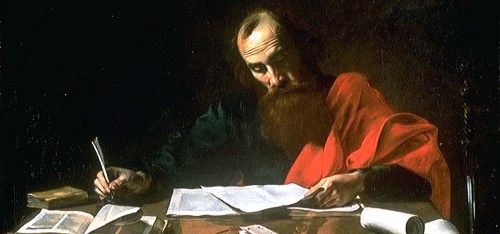
PaulWe know, based on what Paul said in Romans, that he continued to struggle with his human nature and disobeyed God, but we also know that he “fought the good fight…finished the race…kept the faith” (2 Timothy 4:7), remaining obedient and faithful to God and his mission to the Gentiles, never teaching against the Torah or against the Jewish people (Acts 28:17-20).

So it’s possible in this life with the current troubles we face (and how many of us have ever had the struggles Paul had to deal with?) to obey God and to commit our lives to our Master, with the old nature and new creation within each of us struggling “like two immortals locked in an epic battle until Judgment Day and trumpets sound” (quoting from this movie) at the return of the King.

I wouldn’t be giving a complete review of “The Inner Torah” unless I talked some about the Rabbinic perspective on the Messiah and the Messianic Age. Lancaster says that according to the Sages (he didn’t provide a specific reference), Messiah will teach the Torah, correcting all of the misinterpretations, and he will even bring a new Torah, the Torah of Messiah. This is somewhat misleading since the Torah of Messiah is the Torah of Moses, but…

…it’s thought that there is a perfect, heavenly Torah, which is God’s wisdom, will, and intent. To make it accessible to people, the Torah was “clothed,” so to speak, so that it could take on physical properties and be given to our world. That is the Torah we have as represented by scrolls in arks in synagogues and by books of the Bible we carry with us. But you can only include so much of Heaven in an object meant to exist on Earth. Messiah will be able to “unlock” the greater mysteries of the Torah, the heavenly essence, so to speak, and teach that Torah. It’s still the same Torah, but it contains so much more than we can currently perceive.

This is the inner Torah, the same Torah that was given at Sinai, but fully “unclothed” and fully written within us, so that we will not only know all good and everything that pleases God, but we will have a total desire to do all that is good and we will understand why each thing God wills is good and perfect, because it will be written within our natures. There will be no more fighting inside of us. The old creation is dead and the new creation lives on victorious (2 Corinthians 5:17).

The messianic age will be characterized by the peaceful co-existence of all people (Isaiah 2,4). Hatred, intolerance, and war will cease to exist. Some authorities suggest that the laws of nature will change, so that predatory beasts will no longer seek prey and agriculture will bring forth supernatural abundance (Isaiah 11,6-9); others like Maimonides, however, say that these statements are merely an allegory for peace and prosperity. What is agreed on by all is a very optimistic picture of what real people can be like in this real world, the like of which has never been seen before.

All of the Jewish people will return from their exile among the nations to their home in Israel (Isaiah 11,11-12; Jeremiah 23,8; 30,3; Hosea 3,4-5), and the law of the Jubilee as well as the rest of the special agricultural laws in the Torah will be reinstated.

In the messianic age, the whole world will recognize YHWH, the LORD God of Israel, as the only true God, and the Torah will be seen as the only true religion (Isaiah 2,3; 11,10; Micah 4,2-3; Zechariah 14,9). There will be no more murder, robbery, competition, or jealousy.

-Mashiach: The Messiah
mechon-mamre.org

heart in the sandNear the end of the lecture, Lancaster briefly mentioned that the Torah written on our hearts doesn’t mean that Gentiles become Jews or that Gentiles and Jews all wear tzitzit, lay tefillin, and wear payot. How the Torah is applied varies between Jews and Gentiles. I want to add that people struggle hard enough with our human natures and our sins. It’s not like wearing a tallit will cancel being stingy, or repeatedly losing our temper, or other sins of which we’re guilty.

As Lancaster interprets Paul and presents in his lecture, we may still struggle between righteousness and sin, but we are also responsible for continuing the fight. Paul kept the faith all his life and he’d have lived a longer life if he wasn’t obedient to God. But the Master taught, “Those who find their life will lose it, and those who lose their life for my sake will find it.” The New Covenant is only beginning. We are still at war within ourselves. But as we battle, the finger of God slowly is writing His Torah on our hearts and the King is coming. We must continue in his will and grace, be obedient, and prove ourselves as worthy servants until his return.

Addendum: I just read a commentary on New Testament scholar Larry Hurtado’s blog on N.T. Wright’s new book (tome) Paul and the Faithfulness of God. This is the last of a series of reviews Hurtado has written, and I found the following quote appropriate to the current discussion:

We do have Wright emphasizing correctly that for Paul God’s eschatological programme had already begun in Jesus, especially in Jesus’ death and resurrection. So, to use terms familiar in the history of NT scholarship, Paul held an “inaugurated eschatology,” the final events already underway, the programme to be consummated at Jesus’ parousia (return). (I still like Oscar Cullmann’s analogy: For Paul, Jesus’ death and resurrection was D-Day, and his parousia V-Day, and Paul thinks he is living in the exciting time between these two events: Christ and Time, pp. 144-74, esp 145. )

Also, Wright links (again correctly) the Spirit with eschatology, and so the presence and experience of the Spirit in early Christian circles was for Paul evidence of the new age underway, the Spirit raising new possibilities, new energies for obedience to God, even among former pagans.

For the full content of Hurtado’s commentary, please read Paul’s Eschatology: Further Comments on Wright’s New Opus.
Review of “What About the New Covenant,” Part 2

Session Two: The Breit Chadashah

D. Thomas Lancaster started this second lecture in the series by taking me more than a few years back into my own history in the Hebrew Roots movement. He said that when he first became involved in Messianic Judaism, even though most people in his group didn’t know Hebrew, there were a few “Hebrewisms” that everyone was expected to observe.

Never say “Jesus”. Always say “Yeshua”. Say “Messiah” instead of “Christ”. Say “Torah” instead of “Law”. Really remember to say “Rav Shaul” rather than “Paul.” Also, say “Breit Chadashah” instead of “New Testament.”

Although some of my readers are scrupulous to use these “Hebrewisms” when emailing me or commenting, even though they may not be well-versed in Hebrew (though a few are quite proficient), some of them probably feel they have to follow this sort of “Messianic Political Correctness speak” in order to be acceptable or perhaps they feel they’re correcting past wrongs and, after all, Messianic Gentiles and Hebrew Roots Christians don’t want to sound too “church-y”.

But there’s a fundamental misunderstanding that most people in the Church and many in the Hebrew Roots and Messianic movements have, that the “New Testament,” that is the books in our Bibles that start with Matthew and end with Revelation, is the same thing as the “New Covenant.”

It’s not.

But to understand that point, we have to understand what the Old Covenant is and that the Old Covenant is not the same as the Torah or what Christians call “the Law.”

I covered some of this territory in last week’s review but Lancaster adds more detail in today’s sermon.

Now therefore, if you obey my voice and keep my covenant, you shall be my treasured possession out of all the peoples. Indeed, the whole earth is mine, but you shall be for me a priestly kingdom and a holy nation. These are the words that you shall speak to the Israelites.”

So Moses came, summoned the elders of the people, and set before them all these words that the Lord had commanded him. The people all answered as one: “Everything that the Lord has spoken we will do.” Moses reported the words of the people to the Lord.

Exodus 19:5-8 (NRSV)

This is the Old Covenant in a nutshell. It’s an agreement and a rather simple one at that. God says, if you, Israel, obey me, then I, God, will make you a ”priestly kingdom and a holy nation.” More simply put, God agrees that if Israel obeys Him ”Then I will take you for My people, and I will be your God.” (Exodus 6:7)

Once the people agreed to the Covenant, then Moses initiated it.

Moses came and told the people all the words of the Lord and all the ordinances; and all the people answered with one voice, and said, “All the words that the Lord has spoken we will do.” And Moses wrote down all the words of the Lord. He rose early in the morning, and built an altar at the foot of the mountain, and set up twelve pillars, corresponding to the twelve tribes of Israel. He sent young men of the people of Israel, who offered burnt offerings and sacrificed oxen as offerings of well-being to the Lord. Moses took half of the blood and put it in basins, and half of the blood he dashed against the altar. Then he took the book of the covenant, and read it in the hearing of the people; and they said, “All that the Lord has spoken we will do, and we will be obedient.” Moses took the blood and dashed it on the people, and said, “See the blood of the covenant that the Lord has made with you in accordance with all these words.”

Exodus 24:3-8 (NRSV)

Moses at NeboThis formally sealed the Covenant relationship between Israel and God. If you look at verses 9 through 11, you’ll see representatives of Israel having a meal in the presence of God since, in last week’s lecture, Lancaster said it was traditional behavior among two human parties, such as a great King and a vassal nation, to share a meal after a treaty had been settled.

The actual Covenant was the agreement between God and Israel, and Israel, for their part, were responsible to obey God in order to hold up their end of the bargain. But how? That’s where the Torah comes in. It defines the specific conditions and stipulations that Israel must obey.

However, there’s a problem. Israel’s obedience was rather poor. In fact, the first time they disobeyed was very soon after their initial agreement by building the Golden Calf (see Exodus 32). After that, the Covenant had to be renewed and it was renewed many times. But Israel, sadly, fell into a pattern of disobedience and sin. As part of the Covenant conditions, if the people obeyed, then God would be their God and they would be His people, but when they disobeyed, He ceased to be their God and they ceased to be His people. Then God sent an army and great destruction usually happened, sometimes with the people going into exile. Once they cried out to God and repented, God would send a rescuer, defeat Israel’s enemies, and restore the people to their Land.

And this happened over and over again. The Book of Judges is a good chronicle of this but the pattern is recorded in much of the Tanakh (Old Testament).

I mentioned that a lot of New Covenant language is found in Jeremiah 31 and Lancaster said that we need to understand the context of Jeremiah to get this.

In Jeremiah 3:1-5 we see Israel depicted as an unfaithful wife, and in spite of many calls to repentance, such as in verses 6 though 25, Israel remains uncaring and God sends the armies of Babylon to destroy Jerusalem.

But amid this tragic tale, Jeremiah introduces hope in the form of a future redemption, but one like Israel had never seen before.

The days are surely coming, says the Lord, when I will make a new covenant with the house of Israel and the house of Judah. It will not be like the covenant that I made with their ancestors when I took them by the hand to bring them out of the land of Egypt—a covenant that they broke, though I was their husband, says the Lord. But this is the covenant that I will make with the house of Israel after those days, says the Lord: I will put my law within them, and I will write it on their hearts; and I will be their God, and they shall be my people. No longer shall they teach one another, or say to each other, “Know the Lord,” for they shall all know me, from the least of them to the greatest, says the Lord; for I will forgive their iniquity, and remember their sin no more.

Jeremiah 31:31-34 (NRSV)

Now remember, the conditions of the Covenant are not the Covenant itself. The conditions of the Old Covenant are the Torah, but Jeremiah isn’t saying that the conditions are what’s new, it’s the Covenant that’s new.

Sofer-Sefer-TorahWhat’s so new in the New Covenant?

In the Old Covenant, God spoke the words of the Covenant to Moses who spoke them to Israel. Israel agreed and everything was written down on scrolls or tablets and the people were to refer to those conditions to, first understand what they had agreed to, and then to actually do what they’d agreed to do by performing the mitzvot.

In the New Covenant, instead of doing all that, God writes the conditions of the Covenant on the hearts and puts them in the minds of the people of Israel and then it becomes second nature for them to obey. The Torah conditions are internalized rather than being externally referenced.

The Old Covenant was written on scrolls and the New Covenant will be, or is in the process of being, written on human hearts and human natures.

But the conditions are the same.

I know what you’re thinking. You’re thinking if Gentiles are also benefiting to the New Covenant through faith in Jesus (Yeshua), then are those same conditions being written on our hearts as well?

Yes and no.

In the Torah is there a condition for Gentiles to circumcise their males on the eighth day of life? No, that requirement is only for the physical descendants of Abraham, Isaac, and Jacob. Gentiles are exempt. I’ve said before that the Acts 15 decision formally spelled out the conditions that Gentiles are responsible for carrying out, and it’s only through the blessings of one part of the Abrahamic covenant that the nations are attached to the New Covenant at all. Jews already knew the conditions that applied to them because they were the same ones established by the Sinai (Old) Covenant and they never changed.

But what about this?

But Jesus has now obtained a more excellent ministry, and to that degree he is the mediator of a better covenant, which has been enacted through better promises. For if that first covenant had been faultless, there would have been no need to look for a second one.

God finds fault with them when he says: “The days are surely coming, says the Lord, when I will establish a new covenant with the house of Israel and with the house of Judah…

Hebrews 8:6-8 (NRSV)

Torah at SinaiIt’s scriptures such as this that Christians use to prove that the Old Covenant was replaced by the New, but look at what the writer of Hebrews is actually saying. As he is about to quote from Jeremiah 31, he says, ”God finds fault with them (emph. mine)…” He doesn’t say God found fault with it, that is, the Old Covenant, but with them, with Israel, with the people, because they didn’t obey the conditions of the Covenant because of sin.

The solution wasn’t to change the Covenant but instead, to change the people, so it would be possible to fulfill the conditions of the Old Covenant originally spelled out at Sinai. The New Covenant (and not renewed) is a new method of delivery and institution so Israel will be obedient by design.

So how did we get into the mess we’re in as Christians today? How did this get screwed up?

According to Lancaster, the Church Fathers in the second and third centuries CE knew that they didn’t have to keep the conditions of the Old Covenant as did the Jews but they didn’t know why. The Apostles taught that Gentiles had a different (and somewhat overlapping) set of conditions but once the last of the Apostles died, the Gentiles made a few assumptions (or perhaps a few deliberate errors to serve a specific purpose, but that’s my opinion). Lancaster said these Gentile Christians assumed that everyone, Jew and Gentile in Jesus, kept the Gentile standards of obedience, and the Gentile Christians actually criticized (and later persecuted) Jews for not abandoning the “Old Covenant” conditions.

The other shocker for some Christians is that we aren’t really living in New Covenant times right now. Sure, the death and resurrection of Jesus started a process by which the New Covenant era began to arrive but it’s not fully with us yet. Otherwise, we wouldn’t sin. Otherwise the conditions of the New Covenant would be written on our hearts rather than in the Bible and we would all just naturally obey God.

Sadly, I must confess that I do not naturally obey God. I have to struggle with obedience. Chances are, you do, too. It will only be when the New Covenant Era fully arrives that we really will be “new creatures” and “new creations”. We aren’t there yet. We’re a work in progress.

That doesn’t stop you and me from repenting now. Why wait? Messiah is coming.

If my reviews are piquing your interest, you can find the complete, five-disc set of Lancaster’s New Covenant lectures at First Fruits of Zion. I’ll review the third lecture next week.

For more on this topic and how historical and modern Christianity has misunderstood the New Covenant, see my blog post The Two-Thousand Year Old Christian Mistake.

Subbotniks, Proselytes, and Messianic Gentiles

I was reminded of this once again when I recently came across some articles on the Russian Subbotniks. The Subbotniks were a break-off group from the Russian Orthodox Church. They observed a seventh day and also faithfully observed the laws of Torah. When researching their account, I was not only intrigued by its many similarities to the situation of increasing numbers of Gentiles disciples of the Master returning to the practice of Torah, but I was also struck by some dangerous pitfalls revealed by their story. If we are not careful, we might fall into the same traps. In that regard, the tale of the Subbotniks is as inspiring as it is cautionary.

-Toby Janicki
“The Subbotniks,” pg 49
Messiah Journal Spring 2014 (115) issue

In 1451, Pope Nicholas V issued a decree forbidding all social contact between Christians and Jews. The Church sought to stop Christian converts to Judaism; throughout Europe, those who did so were liable to the death penalty.

This Day in Jewish History
For 24 Adar 5774 – March 26, 2014

To be honest, I’ve been avoiding reading Toby’s article because the title just didn’t “resonate” with me, but now I’m glad I did. Lately, I’ve been writing about the nature of Messianic Judaism for Jewish people and just how Jewish should Jews in Messianic Judaism be. However, as I’m always reminded, there’s the other side of the coin; Gentiles who remain devoted disciples of Jesus as the Jewish Messiah and yet who are also attracted to the practice and/or perspective of Judaism on their (our) faith.

But I included the quote about Pope Nicholas V for a reason. When I first read it a day or so ago, I found myself wondering why this Pope found it necessary to forbid contact between Christians and Jews and why there was such a “problem” with Christians converting to Judaism in 15th century Europe? How many Christians were converting anyway, and why? What was the allure?

I suppose the story of the 18th century Subbotniks might contain part of the answer. It seems that periodically in the history of the Church, some sub-group of Gentile believers breaks off from their local, normative expression of Christianity and either converts to Judaism or, without abandoning their faith in Jesus, begins to take on more “Jewish” practices and perspectives.

Luther’s open letter of 1538 condemning Sabbatarian tendencies among Christians in Silesia and Moravia after 1527 is a key work marking the transition toward the anti-Judaic attitudes of the late Luther. Marked by a new severity toward the Jews on Luther’s part, the letter had its origin in Luther’s response to a new Sabbatarianism arising among radical Protestants, which Luther saw as a victory for Jewish legalism over sound evangelical teachings.

-Dr. Lowell H. Zuck
“Luther’s Writing Against Emerging Sabbatarianism”
ConcordiaTheology.org

Apparently, the Reformation didn’t end of the problem of Christian Sabbatarians anymore than Pope Nicholas did.

Martin Luther
Martin Luther

I’ve often thought that the authors of the Reformation didn’t take things far enough. Sure, they stood up against the errors and abuses of the Roman Catholic church as it existed in the 16th century, but they didn’t change as much as you might imagine. They still kept the Sunday worship day and continued to adhere to and enforce theologies and doctrines that were anti-Semitic and anti-Judaism, even accusing “the Jews” of attempting to mislead Christians (probably relative to the Shabbat):

I had made up my mind to write no more either about the Jews or against them. But since I learned that these miserable and accursed people do not cease to lure to themselves even us, that is, the Christians, I have published this little book, so that I might be found among those who opposed such poisonous activities of the Jews who warned the Christians to be on their guard against them. I would not have believed that a Christian could be duped by the Jews into taking their exile and wretchedness upon himself. However, the devil is the god of the world, and wherever God’s word is absent he has an easy task, not only with the weak but also with the strong. May God help us. Amen.

-quoted from “The Jews & Their Lies” (1543) by
JewishVirtualLibrary.org

I’ve been accused in the past of bashing Luther a little too hard, so I’ll try to be a little less aggressive here, but the history of Christians being attracted to aspects of Judaism doesn’t seem to be an isolated one.

Why? What’s the attraction?

Initially, these former members of the Christian Church continued to view both the Old and New Testaments as divinely inspired, but they believed that nothing in the New Testament abolished the commandments of the Torah, including the laws of kashrut (dietary laws). While still considering themselves disciples of the Master, the Subbotniks wrestled with the traditional Orthodox Church’s teaching on the Trinity, and they developed some of their own thoughts regarding Christology and Yeshua’s role as a prophet and miracle worker. They also squarely rejected icons and frescoes of the Orthodox Church as idolatrous.

-Janicki, pg 50

shabbos1My guess is when my traditionally Christian readers hit the word “Trinity” in the quote above, you may have decided that the Subbotniks were heretics and wrote them off, but hang in there. Also, for the Protestants out there, you may be thinking that the Subbotnik reaction to the “icons and frescoes” of the Orthodox Church may have been appropriate, but they certainly wouldn’t have that sort of issue with Protestant Christianity today. They certainly wouldn’t have left a (for example) Baptist church to take up Sabbath-keeping, would they?

Having spent some number of years in the Hebrew Roots movement (which meant I also exited traditional Church worship and thought), I’ve interacted with many, many people who “left the Church”. They (we) have a lot of reasons for doing so. For me, it was that the Christian Pastors and church members (Sunday School teachers, rank-and-file in the pews) weren’t able to answer all of my questions about the Bible and why Christians do and teach certain things (a Sunday Sabbath, replacement theology). But some people felt much, much worse about Christianity than I ever imagined.

Some people were actually angry at their former churches and their former Pastors. Some people felt lied to. They had discovered, through various processes, that the New Covenant didn’t say what many churches teach, it isn’t a recipe for replacing Israel with the Church in God’s covenant promises, and it isn’t the “swan song” for the Jewish people and Judaism. Many of these people, and some expressions of Hebrew Roots, attempted to follow a path similar to those of the Subbotniks, remaining believers in Jesus (or Yeshua, if you will), but adopting many of the practices of modern Judaism to varying degrees of observance. The logic is that if the fundamental theology and doctrines of Christianity are wrong because they are anti-Jewish, anti-Israel, and misrepresent the “Jewishness” of the foundations of “Christian” faith, the true answer to how we Gentiles are to be devoted disciples of Jesus can only be found by seriously revisiting the first century Judaism of “the Way” and building a worship practice and teaching from there. That point of view also accuses the Reformation of not going far enough or perhaps not going far enough back in time as I previously mentioned.

Toby Janicki
Toby Janicki

As I quoted Toby saying, the example of the Subbotniks and of all the various non-Jewish groups across history who have devoted themselves to Jesus by devoting themselves to Jewish study and practice is inspiring for modern-day Messianic Gentiles like me, but he also said their story is a cautionary tale.

Toby relates that the Subbotniks were persecuted by the Orthodox Church and the government, but it’s fairly unlikely Messianic Gentiles in the western nations would face the same treatment today. The separation of church and state means the U.S. government has no vested interest in enforcing a state religion as such, and how exactly is a Catholic or Evangelical (or any other kind of) church going to persecute us? No, we won’t be persecuted. Some Christians and some Churches are actually curious about Messianics. Up to a certain point, they find it interesting or even a little fascinating to be just a little more “Jewish” as Gentile Christians and to even “allow” a certain level of Jewish practice among Jewish believers.

But when they finally grasp just how people like me think Jewish believers should be completely Jewish, these Christians back off while rapidly raising their “you’re under the Law” shields. Even Christians like me, who don’t have a significant “Jewish” practice but who utilize a Messianic Jewish informational and educational platform in interpreting the Bible, are at best thought of as intelligent but mistaken and at worst as a member of a cult or even a heretic (what do you mean “the Law” wasn’t nailed to the cross with Jesus?).

But Toby’s right. Messianic Gentiles walk a fine line, at least potentially. We must never mistake Jewish perspective or Jewish practice as the object of our faith. The true focus must be Messiah as the “doorway” by which we may approach the Throne of God.

At the same time, the story of the Subbotniks cautions us about potential pitfalls. What began as a life-giving revelation ended in causing the people to deny Yeshua as Messiah — the very one who had brought them to the truth. This story is not just an interesting footnote for the history of religion. Both Jews and Gentiles in the Messianic Jewish movement face the same issues today that the Subbotniks did.

-Janicki, pg 57

I don’t have any numbers to draw from, but anecdotal information suggests more than a few Gentiles in the Hebrew Roots and Messianic Jewish movements have “swung to the other side,” so to speak, and converted to (usually Orthodox) Judaism. One of the best arguments “the Church” has to dissuade Gentiles from becoming involved in Jewish practices and studies is the danger of apostasy and conversion. This is as big a problem now as it was five-hundred years ago. The understanding that the Church labors under a set of misunderstandings, some of which go back to the very foundations of (Gentile) Christianity, creates the false impression that Christianity is bad and Judaism is good.

jewish-traditionI’m not denigrating Judaism, but I am saying that, for my part, it is a lens through which I gain a clearer (in my opinion) focus on what the Bible is actually trying to say, and a better view of the original intent of the Bible writers including the ever controversial Apostle Paul. One of the reasons I limit my “Jewish” practice is to avoid falling into the trap that captured the Subbotniks and that pulls many believers out of Yeshua-faith and into conversion to normative Judaism every year (I should say though, that it’s not my only reason).

In my opinion, Messianic Gentiles will continue to struggle with our own “identity” issues, regardless of whether we find ourselves in a Messianic Jewish synagogue or a traditional church. I’ve participated in adding some resources to a website called MessianicGentiles.com, created by Rabbi David Rudolph, in order to assist in building a positive identity for people like me. While I believe that it is vital for Jews in Messianic Judaism to have authentic Jewish community in the movement so as to not be cut off from larger Jewry, just like Messianic Jews, Messianic Gentiles must never forget that the central focus of our faith is not our practice but the Messiah.

If Judaism were the focus, then Jews in Messianic Judaism could find community in any synagogue of any of the other branches of Judaism. And if Judaism were the focus for Gentiles, then our answer would be to convert to some branch of normative Judaism and that would be that.

But then we end up denying the Master, Yeshua…Jesus. Having come this far under difficult circumstances, being dismissed by other Christians, trying to help our families understand why we do what we do, being accused of being “wannabe Jews,” are we to fail now in our faith and apostatize by becoming Jewish proselytes and casting Messiah aside like an old love affair?

Review of “What About the New Covenant,” Part 1

“I will make a new covenant with the house of Israel and with the house of Judah.”

Jeremiah 31:31

Does the New Covenant really replace the Old Covenant? Christian replacement theology is solidly based on a misunderstanding of the meaning of the new covenant. The church teaches that the new covenant cancels the Torah and God’s covenant with the Jewish people.

Messianic Judaism teaches that Yeshua did not abolish the Torah, but if that’s true, what about the new covenant? Doesn’t the new covenant of grace and faith replace the old covenant of works and law? In five engaging lectures, Torah Club author D. Thomas Lancaster digs into the Bible’s prophecies to dispel many of the common myths and misunderstandings about the new covenant.

-from the First Fruits of Zion (FFOZ) webpage for the
What About the New Covenant sermon series

Introduction to the Series

About eighteen months ago, I began my personal investigation of the covenants in an attempt to understand how Gentiles (including me) were able to have a covenantal relationship with God without converting to Judaism. This investigation resulted in an eleven (twelve, really) part blog series I euphemistically called “The Jesus Covenant” which I started here. It took over six months of study and anguish, but I finally arrived at a place where I could be at peace about where I fit in the New Covenant as a Gentile.

When I received the five-part audio CD lecture series called “What About the New Covenant” from FFOZ in the mail several days ago, I was interested in how my discoveries and conclusions map to those of theologian and teacher D. Thomas Lancaster. Was I completely off base or would Lancaster confirm that I am standing on solid, Biblical ground as far as my understanding of the covenants, and especially the New Covenant?

The material on this set of audio discs is repurposed from several sources, including parts of Lancaster’s Holy Epistle to the Hebrews sermon series, FFOZ’s Torah Club Volume 5: Depths of the Torah, and Lesson 3 from FFOZ’s HaYesod Program.

That said, organization and presentation of this information is completely new, and these teachings, once “trapped” within much larger tomes and recordings, have been “freed” so we can access specifically what Messianic Judaism teaches about the New Covenant. One caveat: this is Messianic Judaism as First Fruits of Zion sees, understands, and practices it. I should emphasize like any other Judaism or any other Christianity for that matter, Messianic Judaism isn’t a single, monolithic entity and opinions among the various groups may differ somewhat.

Session One: The Covenant Maker

The first session is nearly fifty minutes long and as you might imagine, is pregnant with both amount and depth of information. Here, Lancaster takes his listeners on a grand tour of all of the covenants God made with humanity and Israel (all of the covenants except the Noahide covenant were made with Israel) and attempts to answer the all important question, “What is a Covenant?”

A good question has a long afterlife.

-Ismar Schorsch
“What Do I Look at When I Pray?” (pg 382)
Commentary on Torah Portion Shemini
from his book Canon Without Closure: Torah Commentaries

It’s true, we don’t really understand what “covenant” means in our world today. The only covenant we have left in modern times is the marriage covenant, and even that one has been nearly destroyed by our lack of understanding of the binding nature of covenants. If we did understand, divorce wouldn’t be such an epidemic, at least among the faithful.

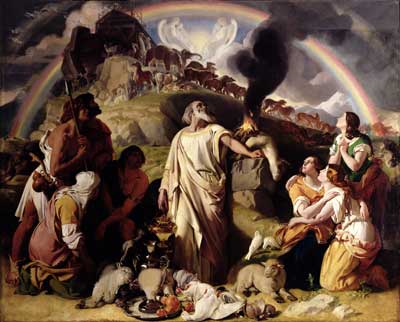
noah-rainbowI mentioned the Noahide covenant that God made with all life, including all of humanity. God created a set of obligations for humanity and in exchange for obedience, God promised not to destroy the world again by flood. The sign of this covenant is the rainbow we periodically see in the sky (see Genesis 9 for details).

But it’s not until Lancaster begins talking about the covenant God made with Abraham and all of Abraham’s descendants through Isaac and Jacob, the Jewish people, that we begin to understand the nature of this covenant and all the covenants to follow.

The first big point to get is that all subsequent covenants build on prior covenants rather than replacing them. In fact, this is really important for ancient and modern Israel because whenever Israel violated the covenant made with God at Sinai (such as the incident of the Golden Calf recorded in Exodus 32), it was God’s promises made in the Abrahamic covenant that allowed Him to repeatedly redeem Israel. You might want to review God’s promises to Abraham and his descendants by looking at Gen. 12:1-3, 7, and 22:18. You’ll also see this covenant being inherited by Abraham’s son Isaac in Gen. 22:18.

Interestingly enough, although it is commonly believed that Abraham had no obligations he had to fulfill apart from participating in the sign of this covenant, which was circumcision for himself and all the male members of his household, this is not actually true. Abraham was required to have a lived-out faith that God periodically tested. And the results of those tests really, really mattered.

The angel of the Lord called to Abraham a second time from heaven, and said, “By myself I have sworn, says the Lord: Because you have done this, and have not withheld your son, your only son, I will indeed bless you, and I will make your offspring as numerous as the stars of heaven and as the sand that is on the seashore. And your offspring shall possess the gate of their enemies, and by your offspring shall all the nations of the earth gain blessing for themselves, because you have obeyed my voice.”

Genesis 22:15-18 (NRSV)

Abraham and the starsGod said “Because you have done this…I will indeed bless you, and I will make your offspring as numerous as the stars of heaven.” These are conditions. You did this and in response, I will do that. Abraham had to demonstrate perpetual fidelity to God by faith, trust, and obedience, and doing so, God responded by fulfilling the covenant promises He made to Abraham and his descendants.

It is the same for us as James, the brother of the Master famously wrote in James 2:14-26. Lancaster says we are justified by faith and works, which is a rather radical thought in traditional Christianity, but as you’ll discover, his presentation of covenants including the New Covenant, is also not the “norm” from an Evangelical perspective.

As a side note relevant to justification and deeds, see Derek Leman’s blog post Our Deeds are Not Filthy Rags.

As far as the “duration” of the Abrahamic covenant, according to the Apostle Paul:

Brothers and sisters, I give an example from daily life: once a person’s will has been ratified, no one adds to it or annuls it. Now the promises were made to Abraham and to his offspring; it does not say, “And to offsprings,” as of many; but it says, “And to your offspring,” that is, to one person, who is Christ. My point is this: the law, which came four hundred thirty years later, does not annul a covenant previously ratified by God, so as to nullify the promise.

Galatians 3:15-17 (NRSV)

In other words, later covenants do not get rid of, annul, cancel, or make obsolete earlier covenants. In addressing the covenant God made with Abraham, Paul says it’s forever. A later covenant can only ratify an earlier one, not abolish it.

Lancaster spends some time on the Mosaic covenant, the covenant God made with the Children of Israel, that is, Abraham’s, Isaac’s, and Jacob’s descendants, at Sinai. One important point he makes is that this later covenant builds on the earlier one and in fact, the making of this covenant actually fulfills sections of the earlier, Abrahamic covenant. One example is the continuation of the promises that Abraham’s descendents would possess the Land of Israel, cementing this promise by establishing the laws specific to the Jewish people living in that Land.

Another important issue Lancaster brought up is the difference between the covenant and the Law. The Torah is not the Sinai covenant, it represents the conditions of the covenant, defining the responsibilities of each party: God and the Children of Israel. It also defines the sign of the covenant which is the Shabbat.

This sign is unique in that it is not a manifestation in nature, such as the rainbow, or a physical condition or procedure, such as circumcision. Shabbat is an “island in time” or, as Lancaster quotes Abraham Joshua Heschel, “a sanctuary in time.”

Therefore the Israelites shall keep the sabbath, observing the sabbath throughout their generations, as a perpetual covenant. It is a sign forever… (emph. mine)

Exodus 31:16-17 (NRSV)

Notice that the Sinai covenant and its sign are forever and perpetual. No exchanges or replacements allowed.

As I mention above, whenever Israel disobeyed the conditions of the Sinai covenant, according to those conditions, God punished Israel. There is no provision in the covenant for its annulment. All covenants God made with Israel are forever. Is that clear?

King DavidLancaster moved on to describe the Aaronic covenant, which is the promise that Aaron’s descendants will always be High Priests, and the Davidic covenant that states David’s descendants will be Kings over Israel. The conditions state that should a King disobey, he would be disciplined, but God would not remove his love from the Davidic dynasty (see 2 Samuel 7). The Davidic covenant is also the hope of the Messiah, for a sinless King must rule one day over Israel, that is, King Messiah.

So far, all of these covenants are built one on top of the other. Each later covenant expands upon the previous covenant in some way. But what about the New Covenant?

First, let me, thanks to Lancaster (though I knew this already), relieve you of a burden. The New Testament, that is the collection of scriptures from Matthew through Revelation, does not equal the New Covenant. I heard a highly intelligent, well-educated, and abundantly accomplished Pastor tell me once that the New Testament is the same thing as the New Covenant and I almost fell out of my chair.

According to Lancaster (and I agree with him), the New Testament is a collection of scriptures that record how Yeshua (Jesus) initiated some of the conditions of the New Covenant, but it is not the covenant itself. Lancaster (and again, I agree) says that the New Testament would be better named “The Apostolic Writings” or “The Apostolic Scriptures”. Just as the Torah is not the Sinai (or “Old”) Covenant, neither is the “New Testament” the New Covenant.

So where do we find the New Covenant? It’s all over the Torah, the Prophets, and the Writings, but as you hopefully already know, the key scriptures are these:

The days are surely coming, says the Lord, when I will make a new covenant with the house of Israel and the house of Judah. It will not be like the covenant that I made with their ancestors when I took them by the hand to bring them out of the land of Egypt—a covenant that they broke, though I was their husband, says the Lord. But this is the covenant that I will make with the house of Israel after those days, says the Lord: I will put my law within them, and I will write it on their hearts; and I will be their God, and they shall be my people. No longer shall they teach one another, or say to each other, “Know the Lord,” for they shall all know me, from the least of them to the greatest, says the Lord; for I will forgive their iniquity, and remember their sin no more.

Jeremiah 31:31-34 (NRSV)

I will take you from the nations, and gather you from all the countries, and bring you into your own land. I will sprinkle clean water upon you, and you shall be clean from all your uncleannesses, and from all your idols I will cleanse you. A new heart I will give you, and a new spirit I will put within you; and I will remove from your body the heart of stone and give you a heart of flesh. I will put my spirit within you, and make you follow my statutes and be careful to observe my ordinances. Then you shall live in the land that I gave to your ancestors; and you shall be my people, and I will be your God.

Ezekiel 36:24-28 (NRSV)

Taking all this together, first notice that the New Covenant is made only with Judah and Israel. No mention is made of the Gentiles and particularly “the Church” at all. It seems that outside of the Jewish people, God has no covenant relationship with humanity and never will. Also notice that nothing in this language whatsoever changes, annuls, cancels, or abolishes anything in any of the previous covenants God made with Israel. That means, among other things, that the Torah is perpetual and that Jesus didn’t lie:

“Do not think that I have come to abolish the law or the prophets; I have come not to abolish but to fulfill. For truly I tell you, until heaven and earth pass away, not one letter, not one stroke of a letter, will pass from the law until all is accomplished.”

Matthew 5:17-18 (NRSV)

CreationJesus never intended to come and abolish what God established in relationship with Israel, and the Torah will not change at all until Heaven and Earth pass away and until all is accomplished.

Well, Heaven and Earth are still here as far as I can tell. But what needs to be accomplished? I mean, didn’t Jesus say “It is finished” on the cross right before he died? (John 19:30) (Hint: If he said “It is finished” and then died, it’s very likely that what was finished was his suffering).

I said before, echoing Lancaster, that Jesus initiated the New Covenant by his death and resurrection. Jesus himself said that the bread and wine the Apostles ate at the last meal with the Master (and Lancaster taught that after a covenant was made in the ancient Near East, a meal was always eaten together by the participants of the covenant) were the New covenant in his body and blood (Luke 22:19-20), so the New Covenant started at that point. Jesus got the ball rolling. But what happened to the covenant after that?

Look at the passages from Jeremiah 31 and Ezekiel 36 again. Do you see all that happening? How can the Word of God be written on our hearts if we as believers still sin? How can the New Covenant be initiated but not completed?

For in him every one of God’s promises is a “Yes.” For this reason it is through him that we say the “Amen,” to the glory of God.

2 Corinthians 1:20 (NRSV)

He who has prepared us for this very thing is God, who has given us the Spirit as a guarantee.

2 Corinthians 5:5 (NRSV)

What is this promise and guarantee? It’s the sign of the New Covenant. Lancaster says that the New Covenant encompasses all of the previous signs (Shabbat, for instance) but also has its own sign. It’s also unique in that the sign functions as sort of a down-payment or promissory note that Messiah will return to complete what he started, that is to deliver on the rest of God’s promises outlined in the New Covenant language.

That’s why we as believers have the Holy Spirit but still don’t see evidence of the full arrival of the Messianic Kingdom, the Kingdom promised by the New Covenant. It is a promise of what is yet to come.

I said before that the New Covenant doesn’t annul or change any of the previous covenants but then why is it “New?” Look again at Jeremiah and Ezekiel. Judah and Israel are still obligated to obey God’s Torah but the big difference, the only real difference, is that this time, God will make it possible for man to obey.

Many Christians say that God gave Israel the Law to prove that they were incapable of obedience to God’s standards and, once He made that point, He replaced the Law (Torah) with the Grace of Jesus Christ, which doesn’t rely on man having to do anything, including, if you’re a Calvinist, exercising enough free will to accept that free gift of salvation. Lancaster says that God didn’t change His expectations of obedience, there has always been grace, and that knowing man cannot obey God consistently out of his own will, God places His Spirit in man and God writes His Torah on man’s heart, circumcising that heart, so that man will “naturally” obey God’s desires. That’s the “New” in “New Covenant.”

This is a beautiful way to dispense with the requirement in the Church that we retrofit modern Christian theology into the Old Testament and invent new interpretations to explain Christian doctrinal dissonance in trying to make the older and newer scriptures fit together. Lancaster creates a seemless progression across all scripture that doesn’t make it necessary for us to “jump the tracks” at Acts 2 and invent a never prophesied entity known as “the Church”.

But I mentioned before that the New Covenant, like all of the prior covenants except the one made with Noah, were made with Israel, that is the descendants of Abraham, Isaac, and Jacob. This is really good news, the gospel message to the Jewish people, but what about the Gentiles? Have we been left out in the cold after all? Where is the gospel for us?

In him you also, when you had heard the word of truth, the gospel of your salvation, and had believed in him, were marked with the seal of the promised Holy Spirit; this is the pledge of our inheritance toward redemption as God’s own people, to the praise of his glory.

Ephesians 1:13-14 (NRSV)

New CovenantThe Apostle Paul (Romans 11:11-24) said that the God-fearing Gentiles are grafted into the Commonwealth of Israel through fidelity to the Jewish Messiah King, that is, to Jesus, and that by swearing such allegiance and in obedience to our King (which I speak of in this blog post), we are added in to that commonwealth alongside the born citizens of Israel, the Jewish people.

Lancaster was quick to point out that such “grafting in” does not make Gentile believers (i.e. Christians) Jewish nor does it obligate us to the Torah in the same manner as the Jews. Yes, we Gentile believers are obligated to some of the conditions in the Torah, but that obligation is unique to us as Gentiles, and many other conditions are only applied to Jewish people, whether believers or not.

Again, this does not mean there is one, identical application of the Torah mitzvot for both Jews and Christians, and it absolutely doesn’t mean that the Church, under the New Covenant, has replaced Israel and the Jewish people or anything in the Old(er) Covenant made at Sinai…or any of the other of God’s covenants.

…remember that you were at that time without Christ, being aliens from the commonwealth of Israel, and strangers to the covenants of promise, having no hope and without God in the world. But now in Christ Jesus you who once were far off have been brought near by the blood of Christ.

Ephesians 2:12-13 (NRSV)

This particular doctrine on the New Covenant is certainly a lot easier to make sense of and follows the flow of the entire Bible much better than the traditional Christian understanding outlined, for instance, by gentlemen such as Dr. Thomas Schreiner in his book 40 Questions About Christians and Biblical Law which I reviewed a time or two.

I’m grateful to Lancaster and the other fine folks at First Fruits of Zion for producing this teaching and making it available to people like me. It certainly is a breath of fresh air and illuminates the Bible in a manner that we’ve gotten far away from in Christianity over the long centuries. It’s time to take back the lessons taught by the Apostles and to lead a new “reformation” of our own in the Church.

I strongly suggest that you acquire this audio series for yourself. I didn’t include everything Lancaster taught on disc one (though you must imagine I did given the length of this blog post) and he presents further information that solidifies his argument regarding the New Covenant.

I look forward to writing reviews on the rest of the series and having Lancaster show me just “how deep the rabbit hole goes” (with apologies to Morpheus, played by Laurence Fishburne).

The Meaning of Purim for the Christian Church

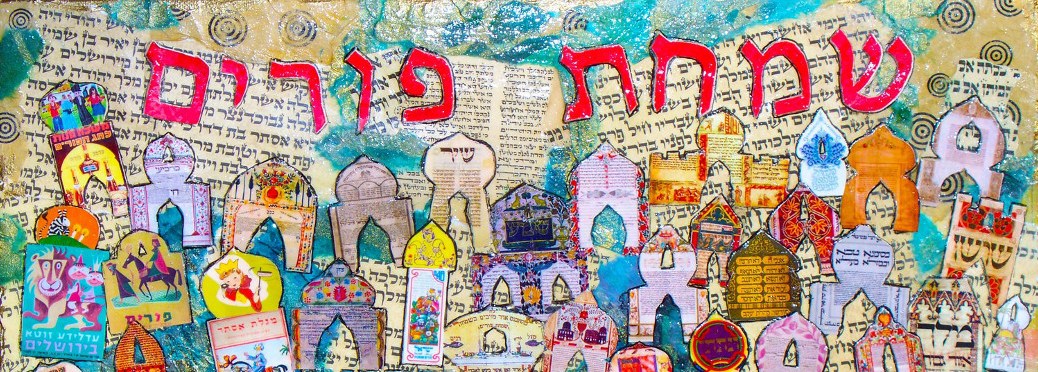
Super girlI haven’t thought much about Purim in awhile. It’s not something we observe in our home and I tend to think of Purim as being primarily for children, dressing in costume, playing games, telling jokes, that sort of thing. Back in the day, the congregation I used to attend observed Purim with a children’s play, which often took on some sort of Star Wars or other fantasy theme. But those days are gone, my children are grown, and my grandson isn’t even aware of Purim.

I received an audio CD from First Fruits of Zion (FFOZ) a number of days ago, but I didn’t get a chance to listen to it until I was weeding the backyard over the weekend. It’s interesting trying to pull weeds out of muddy plant beds, listening to D. Thomas Lancaster lecture about Purim to the congregation at Beth Immanuel Sabbath Fellowship, and periodically grab my pen and notebook to quickly jot down an important note or two. Fortunately, the sermon was just under thirty minutes, but it was frustrating not being able to actually start writing my commentary until after I finished getting rid of those pesky weeds (which took significantly longer than thirty minutes).

The sermon was originally delivered in 2008 but I can say that everything I heard was news to me.

As you most likely know, Purim is a holiday taken from the Megillah (Scroll) of Esther. To quote from MyJewishLearning.com:

Though Purim is a joy-filled holiday, its story might appear somber at first glance: It tells of the near-destruction of the Jewish people as decreed by Haman, an advisor to the Persian King Ahashuerus.

However, Ahashuerus’ newly crowned queen, Esther–who replaced Vashti when she was thrown out of the kingdom–is secretly a Jew. Due to her courage and her eventual role in saving the Jews, the story of Purim is known as “Megillat Esther,” or the Scroll of Esther.

Lancaster, in his sermon called “Purim 1946,” stated what most of us know, that it is the one book in Biblical canon that doesn’t mention God at all, and yet the mercy of God is quite evident. He also said what most traditional Jews and Christians agree upon, that this is a uniquely Jewish celebration. What the heck are Gentiles at Beth Immanuel or anywhere else, particularly Christians, doing celebrating Purim?

I’ll get to that.

The terrible events we read in the Book of Esther have been applied across all of Jewish history, for the evil that Haman did was perhaps the first recorded act of anti-Semitism, particularly with the goal of Jewish genocide. Across all the inquisitions, pogroms, persecutions, Talmud burnings, and even mass murder, we find the “Spirit of Haman” repeatedly returning to finish the job he started those many thousands of years ago. This “Spirit” is likened by Lancaster to a demonic force, and even the great dragon we find in Revelation 12.

The most obvious expression of this Spirit in recent history is in the person of Adolf Hitler and his bloody Holocaust, and I don’t think we’ve seen the last of such evil, especially with the rise in anti-Semitism we see in the world today, particularly in Muslim nations.

But the Scroll of Esther contains a secret, something hidden, as the presence of God was hidden in the text of the story.

But I will surely have concealed My face on that day because of all the evil that it did, for it had turned to gods of others.

Deuteronomy 31:18 (Stone Edition Tanakh)

Lancaster points out that the Hebrew word for “concealed” or “hidden” uses the same letters as the name “Esther,” so he believes there is a connection.

This won’t be obvious in Christian Bibles but you would see it in an actual Scroll of Esther and it’s even evident in my Tanakh.

In Esther 9:6-10 a list of the names of the ten sons of Haman appears, but in the actual scrolls which are read on Purim in synagogues, the names are listed in columns with the name of a son on one side, and the word “and” on the opposite side of the page or portion of the scroll. The significance of this isn’t in the arrangement of the names in the list, but that in the actual scroll and in my Tanakh, there are three Hebrew letters that are printed smaller than the rest: TAV, SHIN, ZAYAN. However, they don’t seem to spell any word in ancient Hebrew.

Hold onto that thought. I’ll return to it.

Lancaster points out a rather odd detail I’ve never noticed before. The names of Haman’s sons are listed as I explained above, indicating that they were among those who were killed by the Jewish people, and yet, just a few verses later, Esther makes the following request of King Ahasuerus, a second request after she asked that the Jewish people be allowed to defend themselves:

Esther replied, “If it pleases the king, let tomorrow also be given to the Jews who are in Shushan to act as they did today, and let Haman’s ten sons be hanged on the gallows.”

Esther 9:13 (Stone Edition Tanakh)

Purim MegillahWait a minute. The ten sons of Haman are already dead. What’s the point of hanging their dead bodies on the gallows? The answer is simple and rather gruesome. The ancient “gallows” isn’t the same thing we think about when we see a hanging in some film about the old American West. She wanted the dead bodies of Haman’s sons to be impaled on stakes and displayed, probably as a warning against anyone who would dare to rise up against the Jewish people.

This request is why Purim is celebrated by Jewish people for two days if they live in a walled city. But there’s a midrash about Esther’s use of the word “tomorrow.” The midrash says that there are two kinds of “tomorrow,” the tomorrow that is now, that is, the literal day that comes after today, and a tomorrow that is in the future, which is at some far but perhaps unknown point in the future.

Now we return to the three Hebrew letters that appear smaller than the rest in Jewish texts of Esther. You can’t read them as a word, but you can read them as a date, since each Hebrew letter has a numeric value. In this case the date is the year 5707. Remember that Hebrew years aren’t counted the way we do in the modern era. The New Year on the Hebrew Calendar is on the Festival of Rosh Hashanah, literally “head of the year,” which most recently was observed from September 4th to September 6th in 2013. The current year on the Jewish calendar is 5774. Do the math. The Jewish year 5707 is 1946 on modern calendars.

What’s so significant about 1946? The Nuremberg Trials:

The Nuremberg Trials were a series of military tribunals, held by the Allied forces after World War II, most notable for the prosecution of prominent members of the political, military, and economic leadership of Nazi Germany. The trials were held in the city of Nuremberg. The first, and best known of these trials, described as “the greatest trial in history” by Norman Birkett, one of the British judges who presided over it, was the trial of the major war criminals before the International Military Tribunal (IMT). Held between 20 November 1945 and 1 October 1946, the Tribunal was given the task of trying 23 of the most important political and military leaders of the Third Reich.

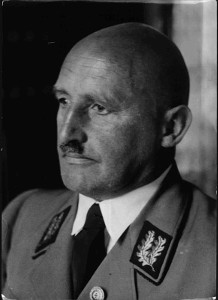
On October 1st, the first verdicts were handed down, the death sentences of twelve Nazi war criminals, including a man named Julius Streicher:

[He] was a prominent Nazi prior to World War II. He was the founder and publisher of Der Stürmer newspaper, which became a central element of the Nazi propaganda machine. His publishing firm also released three anti-Semitic books for children, including the 1938 Der Giftpilz (“The Toadstool” or “The Poison-Mushroom”), one of the most widespread pieces of propaganda, which purported to warn about insidious dangers Jews posed by using the metaphor of an attractive yet deadly mushroom.

Of the twelve men sentenced to death, one of them was not present during the verdict and through a legal circumstance, was not executed. Another man committed suicide the night before the hangings (the Tribunal deemed these men unworthy of being extinguished by firing squad as would have been the case in a traditional military execution).

Julius Streicher
Julius Streicher

The hangings took place on October 16th, 1946. Streicher was defiant to the end and seconds before he was hung, Streicher venomously cried out, “Purimfest 1946!”

It was nowhere near the festival of Purim, which is usually in late winter or early spring, but it was Hoshanna Rabbah, the seventh day of Sukkot, which is also called “The Great Salvation.”

But of the twelve men sentenced to die on the gallows, only ten of the most vile and hateful Nazis, including the great anti-Semite Julius Streicher, died as did the ten sons of Haman so many thousands of years before. There are indeed two tomorrows, if you’ll accept it. There is a tomorrow that is now and a tomorrow that is in the future. The tomorrow Esther spoke of was the next day, but based on the Hebrew letters written smaller than the others in the list of Haman’s sons (and I have no idea how the tradition began), the tomorrow of the future was October 16th 1946.

I wonder if this is the last time though that we’ll face such heinous persecution of the Jews with the result of more “sons of Haman” dying on the gallows as payment for their crimes?

A date hidden in the Scroll of Esther with a prophetic message, much as the face of God is hidden in the Megillah. But according to Lancaster, that’s not the only hidden prophesy:

Mordechai left the king’s presence clad in royal apparel of turquoise and white with a large gold crown and a robe of fine linen and purple; then the city of Shushan was cheerful and glad. The Jews had light and gladness and joy and honor. And in every province, and in every city, every place where the king’s word and his decree reached, the Jews had gladness and joy, a feast and a holiday. Moreover, many from among the people of the land professed themselves Jews, for fear of the Jews had fallen upon them.

Esther 9:15-17 (Stone Edition Tanakh)

Read literally, we see the victory of the Jews in that ancient land we know today as Iran, where Mordechai, the uncle of Esther (her Hebrew name was Hadassah) was elevated very high and made very great in the Kingdom, and the Jewish people, at that point in history, knew peace, gladness, and joy, and they had light and honor in every province under the rule of the King.

But…

But if you expand the scope of these verses to contain the Messianic Age, if the King is King Messiah, and the Jews are not just the Jews in King Ahasuerus’ kingdom, but the Jews from all over the world, who have been returned, all of them, from exile to their land, the Land of Israel, then you see a perfect picture of the Messianic Kingdom and described in numerous other prophesies in the Tanakh.

Except for one thing. What about the latter part of verse 17?

Moreover, many from among the people of the land professed themselves Jews, for fear of the Jews had fallen upon them.

I’ve heard this verse interpreted to mean that many Gentiles in the land converted to Judaism. Others have said they only pretended to be Jews for fear of retribution. Still, another way of looking at this sentence is that many people threw in their lot with the Jewish people, not taking on Jewish identity as such, but being overtly supportive of the Jewish people and Jewish practices.

But if this too is a prophesy as Lancaster suggests, what does it mean for believing Gentiles today? For Lancaster personally, it means pursuing the worship of Hashem, God of the Hebrews, through the study and practice of Messianic Judaism. Remember, the Bible says that in the last days, many nations will rise up against Israel, and the Holy Nation will almost be defeated, that is, until God comes to defend Israel and the Jewish people.

Once again, and for the final time, Israel will almost be wiped out and in the last moments, when all hope seems lost, God will once again save His people and destroy their enemies. And just as in ancient Persia, those people who are not Jewish will likely fear being taken also as the enemies of the Jews. What better way to be known to be a friend of the Jewish nation and an ally of Israel than to come alongside them right now, before the trouble starts or at least before the last war starts? That is what Lancaster seems to be doing right now.

PogromI’m not saying that we all have to join Messianic Judaism, but consider this. Lancaster didn’t touch on this topic, but how many “sons of Haman” in the last nearly two-thousand years have been part of the Church of Jesus Christ? How many pogroms, persecutions, maimings, and murders have been engineered by people calling themselves “Christians”. You can justify it by saying they weren’t really “Christians” but the fact remains that normative Christianity in a variety of forms has been deeply involved in harassing the Jewish people and attempting to eradicate Judaism by destroying volumes Talmud, scores of Torah scrolls, and innumerable synagogues.

The darkest moments of the history of the Church are just as stained with the blood of Jews as was the soul of Julius Streicher, or the Spirit of Haman.

Just a few short years ago, Evangelical Christianity was a great supporter of Jewish Zionism, the belief that the nation of Israel is a Jewish nation. But recent stories in The Blaze, Charisma News and other Christian media outlets seems to show that Evangelicals are distancing themselves from supporting Israel. This is also true of Palestinian Evangelicals, and some of these groups seem to be instead backing those who could be the modern-day equivalents of the sons of Haman.

I can see I’ve made a mistake in thinking of Purim as primarily a children’s holiday. This year, Purim is observed from sundown on Saturday, March 15th until sundown on the following day. Listening to Lancaster’s sermon and realizing the implications as I was on my hands and knees pulling weeds out of the mud, I saw Purim as warning and cautionary tale. We in the Christian church, in its many denominations and expressions, cannot afford to take the prophesies Lancaster says are in the Scroll of Esther for granted.

I don’t believe October 16th, 1946 is the last time we’ll see “sons of Haman” publicly executed for crimes against humanity and especially the Jewish people. I believe there will come a day when God will fight for His people, the Jewish people, and Israel will be victorious, and the survivors of the nations who were enemies of the Jews will be very, very afraid, and they will be ordered by God to send representatives to Jerusalem to observe Sukkot each year, and to give glory and honor to Israel’s ruler, King Messiah (Zechariah 14:16).

We in the Church need to decide which side of Biblical prophesy we want to be on. Do we want to be for the Jews or against them? Will we come alongside the Jewish people in the final war, or will we learn to fear them because we pulled away from Israel?

I’ve already declared myself as a Gentile who studies Messianic Judaism, but Lancaster’s sermon gave me more reasons to believe that this decision is the correct one. No, I’m not telling everyone in all your local churches that you have to be like me. But then again, I’m a Gentile who studies Messianic Judaism and who attends a Baptist church. Maybe the proper response to Purim this year for Christians is to study the Scroll of Esther, consider the prophesies it contains, and make a choice about which side you’re on, Mordechai’s or Haman’s. I believe my church supports Israel and the Jewish people to the best of their ability and understanding, but we can be better. It wouldn’t hurt as you practice Christianity in the church and in your lives to maybe study from a Messianic Jewish perspective…just a little bit.

You can go to the Beth Immanuel audio page to listen to Purim 1946. I strongly recommend it. Purim is coming soon. So is the Messiah.

He who testifies to these things says, “Yes, I am coming quickly.” Amen. Come, Lord Jesus.

Revelation 22:20 (NASB)

What Galatians Means to Christians Today

Some men came down from Judea and began teaching the brethren, “Unless you are circumcised according to the custom of Moses, you cannot be saved.”

Acts 15:1 (NASB)

Also, in the eyes of most Jews, the statement of Acts 15:1 seemed incredibly obvious. One does not come to Hashem except through Judaism.

-from Book Review: The Irony of Galatians

Even after I publish a particular blog post, I tend to obsess over it a little bit, searching for typos, finding a sentence that could be improved, that sort of thing. I try to do all this editing beforehand, but sometimes things slip by.

That includes the above-quoted statement. Today, religious Judaism is adamant that of the three monotheistic faiths in existence, they do not require others to convert to their religion in order to merit a place in the world to come. You can be a righteous Gentile and in obedience to the Noahide laws, you can have a place in the coming Kingdom. No need to actually convert to Judaism at all.

I realized that even in the days of the Apostle Paul, this was also true in some sense. It’s been suggested that some version or variation of what we call the “Noahide laws” today existed back then and was the operational guide for God-fearing Gentiles who populated the diaspora synagogues alongside the Jews and proselytes.

But I can only imagine that being a first-century God-fearer and seeing the awesome beauty of the Torah, watching Jewish men davening in a minyan, experiencing the joy of just hearing the prayers in Hebrew, contemplating the amazing link that each Jewish person had to thousands of years of the history of God’s interaction with Israel all the way back to Moses must have been an incredible lure. How many God-fearing Gentiles in response to their time in the synagogue started down the road of the proselyte ritual that culminated in converting to Judaism, so that they could say “My Fathers” rather than “their Fathers?”

I’ve been looking at Mark Nanos’ book The Irony of Galatians as it impacts my view of the actual epistle written by Paul and its intent toward the believing populations in the area of Galatia in that day. But what impact does it have on Gentile believers who worship among Jews today?

I’m specifically thinking of Messianic Jewish congregations, those few of which I’m aware that are “owned and operated” so to speak, by halakhic and observant Jewish people who are disciples of Yeshua as Messiah. What is it like to be a Gentile, a fully equal co-participant in Jewish worship and community life, and yet not to be Jewish?

For that matter, what is it like to be a Gentile believer in one of the variations of Hebrew Roots community life, be attracted to Jewish practice and the Torah, but find that the vast majority of people around you only have a so-so understanding of what that means and especially how to properly practice a Judaism (this isn’t absolutely true of all Hebrew Roots groups, but it is true of the majority of those I’ve personally experienced)?

A non-trivial percentage of those Gentiles have left either Messianic Judaism or Hebrew Roots and like some of the first century God-fearing Gentiles, proceeded with the proselyte ritual, usually within Orthodox Judaism, and converted to that identity and that faith.

They too have missed the warning that Paul was issuing to his Gentile addressees in his letter to the Galatians and allowed themselves to “desert Him who called them by the grace of Christ for a different gospel, which is really not another gospel at all.”

In a Jewish or Jewish-like worship venue, especially with the involvement of traditional Jewish worship, study, and community practices, it can be easy for some folks to confuse Judaism for faith.

That was the point of Paul saying in Galatians 2:3 that Titus, a Greek who came to faith in Yeshua, specifically wasn’t compelled to be circumcised (convert to Judaism). It’s why Paul cited Genesis 15:6 as recorded in Galatians 3:6 that it was by Abraham’s faith God reckoned to him as righteousness before Abraham was circumcised.

PaulAccording to most New Testament scholars, Paul likely wrote his letter to the Galatians before the events recorded in Acts 15 so it could appear that Paul was very much “shooting from the hip,” because the formal halakhic ruling regarding the legal status of Gentile Yeshua-believers within the Jewish worship and community context of “the Way” had not yet been issued. But Paul’s authority and assignment as the emissary to the Gentiles came directly from Messiah in a vision as we have preserved for us in Acts 9. If we can depend upon anyone to understand who the Gentiles were to be as worshipers of Messiah among the Jews, it is Paul.

His letter was a response to the confusion and dissonance that was occurring between believing Gentiles and non-believing Jews (this is according to Nanos in his “Irony” book) in the Jewish communities in the region of Galatia. The synagogue was the only proper setting for the new Gentile believers to learn Torah and thus begin to understand the teachings of the Master, and this decision was eventually confirmed in the words of Acts 15:21. But while being a Gentile God-fearer was most likely a reasonably well-defined role, being a Gentile believer of the Jewish Messiah was not, especially to those Jews who did not share in that faith and quite possibly for some who did (see Acts 15:1).

Several of D. Thomas Lancaster’s sermons in the Holy Epistle to the Hebrews series address a very simple message of the writer of Hebrews to his Jewish audience in Jerusalem. The message says to pay attention to what we have learned and not to drift away from our faith in Messiah, lest we grow cold in faith and distant from the lover of our souls. That distance can make us mistake who really loves us and like the addressees of Paul’s letter to the Galatians, we may think Judaism is our goal rather than Messiah, the living Word of God.

The traditional Christian interpretation of Galatians (I know I’m over-simplifying it) is that Paul was attempting to convince both believing Gentiles and believing Jews that the “Law was dead” and replaced for everybody by only faith in Christ Jesus, inventing a new identity in the Jewish Messiah for one and all, and eliminating Jewish identity for Jews entirely. That’s very much like throwing out the baby with the bath water.

Looking at the letter as Nanos sees it, it’s a cautionary tale specifically to the Gentiles not to confuse Jewish Torah observance and community life for the practices that accompany a Gentile faith in Messiah. Yes, many of the blessings and observances are identical for Jewish and Gentile disciples of the Master, but the identities are not. This is a warning we can heed today, especially those of us who though not Jews are still attracted to Jewish studies, the Torah, the Talmud, and the wisdom of the sages.

The main reason Nanos wrote his book was to publicize an apprehension of Paul’s “voice” that did not give rise to anti-Jewish, anti-Judaism, and anti-Torah sentiments, that enhanced the relationship between Christians and Jews rather than divide them, and in honor of all the Jewish people across the long centuries who have suffered and died because (directly and indirectly) of the historical and traditional interpretation of Paul’s letters by the Church.

Even as Nanos attempts to penetrate Christian history and tradition through scholarly means in order to contribute to righting many terrible wrongs, Boaz Michael, President and Founder of the educational ministry First Fruits of Zion (FFOZ) approaches the same goal through a more “grassroots” method as he writes in his book Tent of David. This sends people back into the church with the same message, that we have been misreading Paul for a very long time and the result has been disastrous on an epic scale.

leaving-the-churchWe can correct the course of history by the grace of God, but we need to be willing to change. We need to be willing to see Paul in a radically different way as compared to Church history and tradition. We need to grant ourselves the ability to set aside our long-held preconceptions about what the Bible is saying and we need to resist two things: the desire to stay “safe” by digging in our heels and not even considering that Christian interpretive traditions could be wrong and, for those Gentiles attracted to Judaism in some manner or fashion, to resist the desire to abandon the Church, Christianity, and even Christ and embrace a fully Jewish identity through conversion.

Neither option is correct. We cannot summon the Messianic future by holding on to an interpretive tradition that was born out of supersessionism and anti-Semitism, nor can we do so by exiting Christianity and the nations entirely and converting to Judaism as our only way of serving God.

I’ve referenced Rabbi David Rudolph in a number of blog posts including An Exercise in Wholeness, Twoness and Oneness: From Sermons by David Rudolph, and Oneness, Twoness and Three Converts to describe how observant Jews, particularly in the Messianic framework, and Christians, both within the Messianic community and in the local church need each other in order to fulfill prophesy and prepare the way for the return of the King.

In my opinion, no other avenue is going to work or is in accordance with the plan of God as we see, or as I see, in the Bible.

If you are a Gentile Christian in a church and you have an awareness of the Messianic plan as I often describe on this blog, you have an opportunity to help raise awareness among other Christians. It’s not easy as I can personally attest, and most of the time, people in the local church will not want to hear your/my message. Still, the effort must be made, for who can say that by starting the process, even if you don’t see its completion, that what you began was not effective?

If you are a Gentile believer in a Messianic Jewish or Hebrew Roots community, you do not have to apprehend Jewish identity in order to be an active and vital part of God’s plan. In fact, your Gentile identity is essential to bringing that plan to fruition. If the world was populated only with Jewish people (and that may seem attractive to many Jewish people), then the prophesies we have in our Bible about our role in bringing about the Messianic Age would be impossible to accomplish. Gentiles are absolutely needed, even as Jews are needed to be part of all that God said He would do.

jewish-prayer_daveningPaul didn’t go anywhere near what I’m saying in the Galatians letter, but as I continue to ponder this epistle and the book that Mark Nanos wrote about it, the implications are there. Paul was addressing Gentile believers existing and worshiping in a Jewish religious and community space. After a long absence, we are beginning to see that process and those relationships begin anew. The Apostolic Scriptures don’t paint a very plain portrait of how those relationships should work in an ideal manner. We only have examples of the struggle to find balance and harmony, which was probably never accomplished in Paul’s lifetime and which completely disintegrated in the decades and centuries after the Fall of Jerusalem.

Whether you are Jewish or Gentile, Messiah does not require that you give up who you are and become something you are not. Jewish believers make a mistake by “converting” to Christianity and assimilating into the Gentile mainstream because God never intended “the Church” to finish the job of eliminating the presence of Jews on our planet that Hitler’s Holocaust started (I know that sounds harsh, but that’s how some Jewish people see assimilation, especially into a normative Gentile Christian identity). Jewish believers serve God by retaining a lived Jewish identity, by observing the mitzvot, by davening with other Jews, by being who God made them to be.

Gentile believers make a mistake by thinking that being a member of the nations who are called by His Name means they/we aren’t good enough for God or somehow that status makes them/us insignificant in God’s plan. If you abandon your fellow Gentile believers and especially if you abandon Messiah and convert to Judaism, you defy one of the primary reasons for your existence. God has made all of the Jews He intends to make. For some few, conversion to Judaism may be valid, but for the majority of us, the only thing we’re trying to satisfy through conversion is our own desires or to smother feelings of inadequacy.

Only, as the Lord has assigned to each one, as God has called each, in this manner let him walk. And so I direct in all the churches. Was any man called when he was already circumcised? He is not to become uncircumcised. Has anyone been called in uncircumcision? He is not to be circumcised. Circumcision is nothing, and uncircumcision is nothing, but what matters is the keeping of the commandments of God. Each man must remain in that condition in which he was called.

Were you called while a slave? Do not worry about it; but if you are able also to become free, rather do that. For he who was called in the Lord while a slave, is the Lord’s freedman; likewise he who was called while free, is Christ’s slave. You were bought with a price; do not become slaves of men. Brethren, each one is to remain with God in that condition in which he was called.

1 Corinthians 7:17-24 (NASB)

Whoever you are, don’t give up who you are, because God created you and the roles you fill for a reason, even if you can’t see what that reason is right now. Paul may have written his letter to a group of people who lived halfway around the world two-thousand years ago, but in this case, I can perceive very clearly how his “ironic rebuke” is addressed to us today. Perhaps you can hear this message, too.