Tag Archives: God

Falling

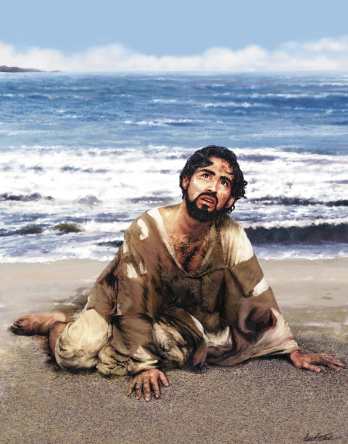
FallingIt does seem frightfully unfair that one man’s single transgression should consign all humanity to death. But it is equally unfair that one man’s righteousness also offers all of humanity the reward of righteousness: “the right to the tree of life.” (Revelation 22:14)

From: “The Life-giving Spirit”
Parasha B’reisheet commentary
First Fruits of Zion (FFOZ)

After man ate from the Tree of Knowledge, however, he acquired the intimate knowledge of and desire for evil. The evil inclination was no longer an external force, represented by the Serpent. It was within. Our physical flesh was now a confused mixture of good and evil. Death was introduced into the world: human flesh, separated from the spirit, was a creature of the finite, physical realm — one which must ultimately decay and die. Man would now face a much greater challenge than before. He would no longer battle a Serpent from without. He would have to battle his own sluggish yet desirous flesh within.

Rabbi Dovid Rosenfeld
The Primordial Sin, Part II
Pirkei Avos Chapter 6, Mishna 5(b)
Torah.org

This coming Saturday, we begin a completely new Torah cycle with Parasha B’reisheet and once again, we start by reading the first chapters of Genesis. Adam is coming, and I’m a little nervous. I know this may seem strange, since we are in the middle of Sukkot, a time of great joy, but it’s as if I am sitting in my sukkah, somehow looking at Creation from several moments before God said “Let there be light” (Genesis 1:3). Yet in that point of suspended time, I know everything that is going to happen after God speaks these words. It’s as if God has not yet created the universe and some part of me wants to stop Him. How can He create the Earth, Adam, Eve, the tree of the knowledge of good and evil, even the serpent, knowing what I know; knowing about the fall? How can He create the universe knowing about all of the pain, anguish, and suffering that is going to happen as a result?

What?

Do you doubt that God knew about what would happen once He started everything in motion? Don’t you realize that to be God, He must have known that Adam would disobey, give into temptation, and lead all of humanity down a dark and sinister road to the abyss?

God must have known, but He created us anyway. Still, waiting for next Shabbat to come is like waiting for it happen all over again, from moments before God brought all into being with His powerful Word, to forming the first man out of clay, breathing life into Him, splitting the man and making woman, placing them in the Garden, and then…and then…

I often despair at the state of the world. All I have to do is go online and start reading the news. I recently read a story on CNN about a toddler in China who was the victim of a hit-and-run accident. As bad as this is, what makes the story all the more horrible is that she was hit twice by two separate vehicles and neither driver stopped. Worse, numerous pedestrians walked right past her and did nothing. Finally, a “58-year-old scavenger named Chen Xianmei” stopped and pulled her out of the street. The CNN story states that the “grainy footage of the accidents went viral on Chinese Internet within minutes of posting”, and only then did anyone express “outrage”.

According to Rabbi Rosenfeld, as a result of what Christians call “the fall”, humanity is now is a state of confusion, trying desperately to tell the difference between good and evil and to understand what we are supposed to be doing about it. The Prophet Isaiah, in warning Israel, could also have been warning us:

Woe to those who call evil good
and good evil,
who put darkness for light
and light for darkness,
who put bitter for sweet
and sweet for bitter. –Isaiah 5:20

God holds the worldIt seems as if everything that God tells us is evil and wrong is touted by the world around us as right, positive, and desirable. In that sense, I feel very much a stranger in a strange land, an alien among humanity, a pariah standing against everything the world says is the right thing to do and being called cruel and bigoted because of it.

That’s why I want to stop God from creating the world. Because it will just start all over again and we’ll end up right back here, facing the same day, the same problems, the same moral confusion where right and wrong are literally turned inside out.

Do not repay anyone evil for evil. Be careful to do what is right in the eyes of everyone. If it is possible, as far as it depends on you, live at peace with everyone. Do not take revenge, my dear friends, but leave room for God’s wrath, for it is written: “It is mine to avenge; I will repay,” says the Lord. On the contrary:

“If your enemy is hungry, feed him;
if he is thirsty, give him something to drink.
In doing this, you will heap burning coals on his head.”

Do not be overcome by evil, but overcome evil with good. –Romans 12:17-21

…so Christ also, having been offered once to bear the sins of many, will appear a second time for salvation without reference to sin, to those who eagerly await Him. –Hebrews 9:28

I know, I know…he’s coming, too. Jesus, I mean.

The world is broken but not beyond repair. The principle of Tikkun Olam tells us that we are junior partners with God in the act of repairing the world. Of course, we all await the Messiah to come back and bring the job to its finale, restoring us to who and what we were before the serpent entered the Garden and in fact, restoring the Garden itself. I know. We will once again walk with God as Adam did and “each man will sit under his vine and under his fig tree, and none will make him afraid” (Micah 4:4).

Sukkah in the rainI just wish we didn’t have to fall in the first place, because it’s so hard to get back up.

Maybe that’s why Sukkot is happening right now. In an imperfect world, where our shelters don’t have solid walls and the roof leaks, we are like people living in a sukkah depending on God to keep us fed, warm, dry, and safe.

Adam is coming and he’s about to fall. But Jesus is coming to help pick him back up. I’m trembling in fear as it’s about to happen all over again. I’m watching, I’m waiting. I’m praying.

Having discovered all your faults, you are depressed.

Imagine you have just found a doctor with a diagnosis that explains all your afflictions over the past many years. And he’s written a prescription directing you on a sure path to good health.

Shouldn’t you jump with joy and relief?

-Rabbi Tzvi Freeman
“Joyful Prognostics”
Based on letters and talks of the Rebbe
Rabbi M. M. Schneerson
Chabad.org

A few months back, I wrote a three-part series on the lessons we are about to learn once more in Genesis. This might be a good time to read them again: Part I: Overcoming Evil, Part II: The Primordial Serpent, and Part III: Healing the Wounded.
Plain Clothes Sukkah

Plain clothes angelIsrael here below is balanced by the angels on high, of whom it says: ‘Who makest thy angels into winds’ (Psalm 104:4). For the angels in descending on earth put on themselves earthly garments, as otherwise they could not stay in this world, nor could the world endure them. Now if thus it is with the angels, how much more so must it be with the Torah – the Torah that created them, that created all the worlds and is the means by which these are sustained. Thus had the Torah not clothed herself in garments of this world, the world could not endure it. The stories of the Torah are thus only her outer garments and whoever looks upon that garment as being the Torah itself, woe to that man – such a one will have no portion in the next world. David thus said: ‘Open thou mine eyes that I may behold wondrous things out of Thy Torah’ (Psalms 119:18); to wit, the things that are beneath the garment.

-Abraham Joshua Heschel
God in Search of Man : A Philosophy of Judaism (p. 267)

The LORD said to Moses, “Tell the Israelites to bring me an offering. You are to receive the offering for me from everyone whose heart prompts them to give. These are the offerings you are to receive from them: gold, silver and bronze; blue, purple and scarlet yarn and fine linen; goat hair; ram skins dyed red and another type of durable leather; acacia wood; olive oil for the light; spices for the anointing oil and for the fragrant incense; and onyx stones and other gems to be mounted on the ephod and breastpiece.

“Then have them make a sanctuary for me, and I will dwell among them. Make this tabernacle and all its furnishings exactly like the pattern I will show you. Exodus 25:1-9

If you’ve spent any time studying the book of Exodus and particularly the instructions God gives Moses for making the materials and components to be used in constructing the Mishkan (Tabernacle) in the desert, you probably noticed the exquisite level of detail and craftsmanship required. In fact, it required God to endow special skills to specific people (Exodus 31:1-11) in order to accomplish all that was needed. Of the Levites, different families and clans were assigned individual tasks over building and taking down the many and various parts of the Mishkan and its contents, and carrying them from place to place across the span of the forty years of the wandering of the Children of Israel. It would have been an enormous, pain-staking undertaking to set up the Mishkan to perfect specifications each time the Israelites stopped, and to take it down and move it each time the Israelites journeyed onward.

Now compare that to how you built your sukkah a few days ago. My family has a rather modest sukkah that came in a kit. It measures a scant four feet by six feet and can hold just a few people at a time. It’s fairly easy to put the framework together and to attach the necessary straps, but the cloth that makes up the walls (with a built-in doorway and window) is rather cumbersome to manage single-handed. It attaches to the frame using Velcro which is and isn’t easy to work with. I used a makeshift crossbeam to hold up the “ceiling” and put up the string of lights with tape. It’s not the most beautiful sukkah in the world I’m sure, but I can manage to put it up by myself and, when the time comes, I’ll be able to take it down and pack it away alone.

On the other hand, it can’t possibly be anywhere as arduous a task as when Moses (according to Rabbinic interpretation) constructed the Mishkan for the first time by himself (Exodus 40).

Why am I comparing the Mishkan with my own humble sukkah? Technically, Sukkot isn’t about the Mishkan but rather, it’s about the tents the Israelites lived in during their time in the desert. We celebrate God’s provision in our lives in remembrance of how He provided everything the Children of Israel needed for their forty year trek through the Sinai. However, something Rabbi Heschel said in his aforementioned book (p. 287) made me compare the two.

Just as man is not alone in what he is, he is not alone in what he does. A mitsvah is an act which God and man have in common. We say “Blessed art Thou, Lord our God, King of the universe, who has sanctified us with His mitsvot.” They obligate Him as well as us. Their fulfillment is in not valued as an act performed in spite of “the evil drive,” but as an act of communion with Him. The spirit of mitsvah is togetherness. We know, He is a partner to our act.

When I read that passage, I recalled the effort of putting up my own small sukkah and realized I really wasn’t alone in constructing it. God was there with me. Although, as a Gentile, I’m not obligated to obey the commandments associated with Sukkot, my wife and children are Jewish and as  husband and father, the responsibility to build the sukkah is mine. I also have a number of reasons to associate Jesus Christ with Sukkot as living water (John 7:37-41) and as a living sukkah.

The word was made flesh and dwelled in our midst. We have beheld his glory, like the glory of the father’s only son, great in kindness and truth. –John 1:14 (DHE Gospels)

My earlier quotes from Heschel compared the Torah we have on earth and the “heavenly Torah”. This comparison is a “cautionary tale” of how we risk greatly misunderstanding God’s Word by treating as if it were only the inspired writings of men. In Jewish mystic belief, there is a Torah that we cannot possibly access; the Torah that was used by God to speak the universe into existence, the Torah that had to be reduced and “clothed” in “commonplace garments” just to exist in the world of human beings.

Shekinah and the MishkanWhile this is midrash as much as believing that angels must somehow “transmogrify” in order to come to earth from heaven, it illustrates what I see as the relationship between one small sukkah and the Mishkan that amazingly contained God’s Shekhinah, the reduced and “humbled” essence of the Creator that can be expressed physically in our reality. I mentioned in my previous blog post that the “intent is to fill our sukkah, not only with heavenly guests, but with earthly ones as well, creating a meeting point and a joining between heaven and earth in joy and peace, in anticipation of the days of the Moshiach.”

Today, based on what I’m learning, I could say that God was my “partner” in building my sukkah, even as He “partnered” with Moses in building the Mishkan. After Moses (and God) finished building the Mishkan, something amazing happened.

Then the cloud covered the tent of meeting, and the glory of the LORD filled the tabernacle. Moses could not enter the tent of meeting because the cloud had settled on it, and the glory of the LORD filled the tabernacle. –Exodus 40:34-35

In my previous blog, I suggested that we might “bend the rules” of the Ushpizin just a bit, to include an invitation for the Master to enter the sukkah, but if God helped Moses construct the Mishkan and then inhabited it, maybe I can dare hope that after God helped me build my sukkah, some part of Him rested, not just over it, but inside of it.

Until I read Heschel, I always thought of commandments as something God gave people so that people could obey God. Now I realize that the mitzvot belong to Him and well as us and that when we obey God, we are also working with God. I hesitate to say that God is “obligated” to obey His own mitzvot, but I can accept that for our sake, He voluntarily cooperates with us to do most of the “heavy lifting”. In retrospect, this is probably absolutely necessary not only to enable us to obey Him, but for us to even have the awareness of a relationship with God.

The little sukkah sitting in my backyard is dressed in plain and commonplace garments, made out of the ordinary materials of the world. By appearances, it’s nothing special and there’s nothing about it to attract the eye (Isaiah 53:2). But as the prophet Isaiah teaches, appearances can be deceiving and what is dressed in rags on earth is adorned in shimmering gold and bright linen in heaven.

They stripped him and put a scarlet robe on him, and then twisted together a crown of thorns and set it on his head. They put a staff in his right hand. Then they knelt in front of him and mocked him. “Hail, king of the Jews!” they said. They spit on him, and took the staff and struck him on the head again and again. After they had mocked him, they took off the robe and put his own clothes on him. Then they led him away to crucify him. –Matthew 27:28-31

I turned around to see the voice that was speaking to me. And when I turned I saw seven golden lampstands, and among the lampstands was someone like a son of man, dressed in a robe reaching down to his feet and with a golden sash around his chest. The hair on his head was white like wool, as white as snow, and his eyes were like blazing fire. His feet were like bronze glowing in a furnace, and his voice was like the sound of rushing waters. In his right hand he held seven stars, and coming out of his mouth was a sharp, double-edged sword. His face was like the sun shining in all its brilliance. –Revelation 1:12-16

Chag Sameach Sukkot!

Addendum:

Read more about the inspiration of Sukkot at Torah.org.

And as much as I hate to get “political” here, because it’s relevant, there seems to be a Sukkot sub-theme running in the “Occupy Wall Street” movement called Occupy Judaism. Not the most joyous of news, but it’s part of the “plain clothes” world that we live in.

Be the Change You Want to See

Feeding Hungry ChildrenYou open Your hand and satisfy the desire of every living thingPsalm 145:16 (Stone Edition Tanakh)

Once, when a poor man came to Rav Shmelke for a donation, the rebbe realized that he had nothing for him, not a penny. After a moment’s thought he recalled that his wife had an expensive piece of jewelry under her pillow. Since he was sure that his wife would be happy to give it for tzedakah he immediately rushed into the next room and brought the jewelry. As the poor man was leaving, obviously thrilled with the windfall, Rav Shmelke’s wife approached her home.

Daf Yomi Digest
Stories off the Daf
“The Delight of Shabbos”
Chullin 111

It is written that one should give a lot of charity on the eve of Succos. One should also invite poor guests for Yom Tov, each person according to his means.

-Sharei Teshuvah section 1
As quoted from A Guide to the Laws of Succos

Jews and Christians, as people of faith, have a tradition of helping the poor and the downtrodden. For Jews during Sukkot, it is a mitzvah, a kindness in obedience to God, to invite the poor into your sukkah to share a meal, so that the joy of one who has plenty may become the joy of one who does not.

But how far does Jewish or Christian “charity” go? I ask because the concept of money, economy, rich, and poor are very much on people’s minds and in the news media right now. The “99 percent” feel as if they have been robbed and cheated out of their fair income and earnings by the “one percent” who control most of the world’s wealth. There is ample evidence of this, at least according to a digg.com article showing information from the Congressional Budget Office. Frankly, seeing the chart in this article’s photo would make just about anyone upset.

However, there are some who believe that the problems of the so-called “99 percent” are a result of people not taking sufficient responsibility for their circumstances and their behavior. I saw a rather interesting photo originally (from my point of view) posted by Tim Davis on Facebook advocating this perspective and the person holding the sign isn’t the only one. The Daily Kos posted a photo of “the 53% guy”, a former Marine who advocates hard work and lives out his convictions, and the blog published a rebuttal to the Marine’s statements from a more liberal perspective. The Daily Kos article, written by Max Udargo, didn’t offer a link to the source of the photo, but I tracked the original source to We are the 53% thanks to FlaglerLive.com. Apparently, there are a lot of “53% guys”.

But who is right, or does it matter? More importantly, as people of faith, what do we believe and what is God’s expectations for our behavior? Let me show you two extremely different points of view. We’ll start with Udargo.

I’m a liberal, so I probably dream bigger than you. For instance, I want everybody to have healthcare. I want lazy people to have healthcare. I want stupid people to have healthcare. I want drug addicts to have healthcare. I want bums who refuse to work even when given the opportunity to have healthcare. I’m willing to pay for that with my taxes, because I want to live in a society where it doesn’t matter how much of a loser you are, if you need medical care you can get it.

Now let’s compare this viewpoint with one I found the Mountain Home News.

IT is NOT for the GOVERNMENT to spend our tax dollars on anything else but OUR needs in this country., and it’s right there in Article I, Section VIII,

105 million to Somalia…………..”OK ZOOK…….you’ve already ranted about that on past blogs…………..yes. I have. Now I’m gonna tell ya why it’s so important………..

It’s not just the MONEY……….to you & me, 105 million dollars would be a once in a lifetime lottery win……….to the BUREAUCRATS back there, it’s as casual as a cup of coffee……(after all, it ain’t THEIR money).

That 105 million is a CLEAR PICTURE to the THOUGHT PROCESS back there. Don’t you remember that “debt ceiling fiasco?”……wasn’t all that long ago…….My God, the world was coming to an END…….grandma was going have her medicine taken away, our kids were gonna have to eat worms and die, the nation was about to collapse, all the Social Security and pension checks were gonna stop, everything was gonna come to a screeching halt (except the food stamps, free medical & education for illegals)——–REMEMBER THAT?

This USED to be America, and without your help, it CAN be again. This is NOT the World Welfare Office.

Remember that I said I was going to post extreme viewpoints. I don’t happen to agree with either one.

Mr. Udargo wants to live in a country where free healthcare is provided at the same level for a person regardless of income, lifestyle, and motivation. From his point of view, healthcare services should be identical, regardless of whether you work and earn an income or if you choose not to work and prefer to be unemployed or even choose to habitually abuse drugs. As far as I can tell from reading Mr. Udargo’s article, what a person does shouldn’t matter, only that he or she is a human being. On the other hand, what’s the point of working and working hard to make sure your family’s needs are taken care of if someone is just going to give “free” healthcare to you anyway and let someone else pay for it?

The Mountain Home News blog (certainly a very minor media outlet), holds the opposite point of view and believes that taxpayer money is completely wasted on providing assistance to those the Federal Government deems needy. His rant (I can’t think of a more appropriate word for it) is even more extreme than the position taken by author/philosopher Ayn Rand in her book (which I recently read) Atlas Shrugged, which also advocates self-responsibility and receiving only the benefits that you have earned by your personal efforts. From Rand’s point of view, choosing to be charitable is one thing, but being forced to be charitable by the Government, especially to the point of self-extinction, is virtually a crime.

But in its extreme form, isn’t a type of self-extinction what Mr. Udargo is advocating? Like so many who espouse an economically liberal point of view, they fail to take into consideration the cost. If you impose the level of taxes necessary to provide free and good healthcare to literally every American citizen across the board, including and especially those who refuse to work (as opposed to those who are out of work due to circumstances and who would do anything to find and keep employment), what amount of income would those of us who have work now get to keep from our labors? Right now, economically liberal people believe it is the corporations that are keeping them “poor” (and if we’re talking about 99% of the American population, most of them aren’t destitute and starving), but we all voluntarily purchase most of the goods and services provided by said-corporations. We could inhibit their exorbitant incomes dramatically just by refusing to buy their stuff. On the other hand, it is illegal to refuse to pay our taxes, even though we don’t have a great deal of control about how that tax money is spent.

In ancient Israel; Biblical Israel, when a person couldn’t pay their debts, they sold themselves into slavery. This was really more indentured servanthood and the person would only be a slave for seven years (Exodus 21:1-11). At the end of that time, if the slave chose to leave, the master was supposed to give the slave enough money to basically set him up in his own business so he could provide for himself. This is what I call the “ancient Israeli welfare system”. At no time did a person simply sit back and receive an income for doing nothing.

On the other hand, we have Acts 4:32-35 which states:

All the believers were one in heart and mind. No one claimed that any of their possessions was their own, but they shared everything they had. With great power the apostles continued to testify to the resurrection of the Lord Jesus. And God’s grace was so powerfully at work in them all that there were no needy persons among them. For from time to time those who owned land or houses sold them, brought the money from the sales and put it at the apostles’ feet, and it was distributed to anyone who had need.

Probably the most extreme example of giving in the New Testament was taught by Jesus himself:

Yeshua (Jesus) sat facing the treasury box. He was watching the people placing ma’ot (small silver coins) into the treasury box, and many rich people gave much. A poor widow came and gave two prutot (small copper coins), a quarter of an issar (large copper coin). He called to his disciples and said to them,

Amen, I say to you that this poor widow has given more than all those giving to the treasury box. For all of them gave of their surplus, but she, out of her lack, has given all that she had – her entire living! –Mark 12:41-44 (DHE Gospels)

So what are we to believe and what are we to do? Should we become angry at our lot in life, blame the corporations and their CEOs for what we don’t have in luxuries and for some of us, even necessities, and start protesting. Should we instead pick up signs and march on our local and national government offices and blame them for the same things? Who is at fault for the state of our nation and for the state of the poor?

Does it matter? I suppose in terms of God’s justice, any injustice matters, but what are we to do about it? Should we ignore the poor or help them? Should we only give to those who are out of work and seeking to regain employment, or should we also be giving to anyone, regardless of their circumstances and the choices they are making?

HomelessIt seems to come down to a matter of choice, and I think that’s what the Bible is trying to tell us. Jesus paid his taxes willingly (Mark 12:17) regardless of how Rome was going to make use to that income. His disciples did sell all that they had and gave the proceeds to the poor among them. Even the poor widow chose to give her entire income to the treasury box. No one made these people (with the exception of the Roman tax) give away their money. They made a conscious decision to do so. It’s not wrong to feed a starving child. It’s not wrong to give to organizations who provide medical care for the needy. It’s not even wrong to give away literally everything you own so that the poor will have something to eat for a day or two (even though, in the process, you make yourself one of the poor).

But you don’t have to. More accurately, you are not compelled to give away literally everything you own for the sake of another. If it is part of your values system to do so, then you can do so. If Max Udargo wants to surrender his entire income, all of his savings, everything he’s got, in order to provide healthcare for even one person, regardless if they choose to work or not, he is completely free to do so. But he shouldn’t be made to do so. If the writer of the Mountain Home News blog doesn’t want to surrender his income for the benefit of others, he shouldn’t be made to do so. It’s not charity if it has to be forced or if the consequence of not giving is to go to jail (such as for income tax evasion).

I can’t tell you that corporate greed isn’t a problem or that adjustments shouldn’t be made in the system, but I’m not going to tell you that those who have worked, and worked hard for their incomes should be deprived of them for the sake of people who choose not to take advantage of the opportunity to work. I can tell you that you can look at who God is and how He has taught us mercy and compassion and you can act accordingly. You can give but it is your choice based on the values you hold dear as a person of faith.

While there is plenty of injustice in the world, including the injustice that is evident in the realms of private business and public politics, we can either be angry or we can look around, see a need, and fill it. I know that won’t solve all the world’s problems and make people be more just, but we can be just by contributing to making the world a little bit better. We don’t have to do this by surrendering our entire income to impoverished drug addicts. We don’t have to do this by quitting our jobs and moving to another country to work with starving children (although we can certainly choose to do those things). We can do this by living out each day, being responsible for our lives, our behavior, and providing for ourselves and our families, and also by opening our hand and providing for someone else who truly needs our help, within the limits of our compassion and our ability. But if you have picked up a sign and protested against corporations but haven’t given even a dollar to the homeless or one can of soup to the food bank, then your values and your priorities are in need of examination.

The Panoramic Garden

It’s a broken world and we can’t fix it all by ourselves. However, we can be one part of the solution. We can be a partner with God to help, even a little bit, and if everyone did that, perhaps there would be fewer people who are poor and hungry. You can be the change you want to see in the world. You can choose to be the answer to someone’s prayer.

The Empty Sukkah

The empty sukkahRabbi Pinchas of Koretz was a spiritual giant in his generation. At first, his greatness was mostly unknown to his contemporaries, but he had no regrets; indeed, it suited him just fine. He spent his days and nights in Torah-study, prayer and meditation. Rarely was he interrupted.

But then, the word began to spread, perhaps from fellow disciples of Rabbi Israel Baal Shem Tov, that Rabbi Pinchas was very, very special. People began to visit him on a regular basis, seeking his guidance, requesting his support, asking for his prayers and beseeching his blessing. The more he helped them, the more they came. The trickle to his door became a stream and the stream became a daily flood of personal stories and requests for help.

Rabbi Pinchas was overwhelmed. He felt he was no longer serving G-d properly, because he no longer had sufficient time to study, pray and meditate as he should. He didn’t know what to do.

-Rabbi Yerachmiel Tilles
“The Unpopular Tzaddik”
Chabad.org

Rabbi Tilles goes on to tell the story of Rabbi Pinchas and the disastrous results of his desire to, in essence, be left alone with God. Rabbi Pinchas forgot that he was put into a world full of people and as much as people can be distracting at times, we ignore them at our own peril.

As the story goes, Rabbi Pinchas asked for and received a boon from Heaven, that people no longer be attracted to him in the slightest. However, there is a saying: “Be careful what you ask for.” Sukkot is a terrible time to be alone for a Jew.

In those days in Europe, people desiring an invitation to a meal would stand in the back of the shul upon the completion of the prayers. The householders would then invite them upon their way out, happy to so easily accomplish the mitzvah of hospitality. Rabbi Pinchas, unfortunately, did not find it so simple. Even those without a place to eat and desperate for an invitation to a sukkah in which to enjoy the festival meal, turned him down without a second thought. Eventually, everyone who needed a place and everyone who wanted a guest were satisfied, except for the tzaddik, Rabbi Pinchas.

He trudged home alone, saddened and a bit shaken up at the realization that he might never have another guest, not even for the special festive meal of the First Night of Sukkos. Alas, that too was part of the price of his freedom…. It was worth it, wasn’t it?

Wasn’t it? Rabbi Levi Avtzon tells a different story about Sukkot, why it exists, and why we are here.

Thousands of Chabad rabbis and students go out to the streets in Sukkah Mobiles to meet fellow Jews and offer them the opportunity to shake the Four Kinds (“Please don’t shake them too hard!”), grab a bite in the sukkah, and just have a nice friendly chat (“You’re from Australia? How awesome! I have a cousin there. Do you know him?”). Unity.

At the core of the almost seven billion human beings walking the beautiful earth is a quest for unity: unity and harmony within ourselves, unity with our fellows and environment, and unity with our Creator. This quest can be covered with dust, concealed by hate and stigma, obscured by ego, and masked by bloodshed—but the quest never dies, and never will die until we bring peace and harmony to our world.

For seven days a year we dedicate ourselves to bringing unity to our world. On this holiday, united we sit.

What could have been more wrong than for Rabbi Pinchas to create a situation where he was completely denied unity and fellowship with other Jews at so joyous a season? And yet, was there a silver lining to his cloud? For a moment, it seemed so.

Pausing just inside the entrance to his sukkah, Rabbi Pinchas began to chant the traditional invitation to the Ushpizin, the seven heavenly guests who visit every Jewish sukkah. Although not many are privileged to actually see these exalted visitors, Rabbi Pinchas was definitely one of the select few who had this experience on an annual basis. This year, he raised his eyes and saw the Patriarch Abraham–the first of the Ushpizin and therefore the honored guest for the first night of the festival–standing outside the door of the sukkah, keeping his distance.

Rabbi Pinchas cried out to him in anguish: “Father Abraham! Why do you not enter my sukkah? What is my sin?”

Replied the patriarch: “I am the embodiment of Chessed, serving G-d through deeds of loving-kindness. Hospitality was my specialty. I will not join a table where there are no guests.”

The story of Rabbi Pinchas ends on a happy note. After much prayer, Heaven hears and answers and “throngs of people were again finding their way to his door; seeking his guidance, asking his support, requesting his prayers, and beseeching his blessing.” While by nature, Rabbi Pinchas was a solitary and studious person, thanks to Father Abraham, the interruption of his most cherish activities was no longer seen as a problem.

Chabad's mobileI find it interesting that Rabbi Avtzon characterized Sukkot as symbolic of “seven billion human beings walking the beautiful earth is a quest for unity: unity and harmony within ourselves, unity with our fellows and environment, and unity with our Creator.” This illustrates that somehow, it is not only the Jewish people who seek God, it is not only the Jewish people who seek His shelter, and it is not only the Jewish people who seek unity. Sukkot represents the quest for world-wide unity under God, and yet like Rabbi Pinchas, some of us will sit in our sukkah alone.

Rabbi Pinchas created his own problem and thanks to a lesson from Heaven, he also resolved it. Tonight begins the seven days of Sukkot (I put up the family sukkah in my backyard last night) and the world’s population of Jews (and a few Gentiles like me) will be entering a sukkah somewhere, taking meals, hopefully sharing company with many guests, and maybe even sleeping within their make-shift tents, relying on God to keep out the wind and rain in memory of the same shelter He provided to the Children of Israel in the desert.

The empty sukkah of Rabbi Pinchas was a bitter thing and even Abraham would not enter, but for those who are alone through circumstances or by choice, there is still some benefit in being an open and empty container.

The beginning of all paths and the foundation of all ascents is to open yourself to receive from Above.

And how do you receive from Above? By being empty—because a full vessel cannot receive, while an empty vessel has a hollow to be filled.

That is why we must run from depression; because a depressed person is so filled with his own self-pity, there is no room left to receive anything, no opening for life to enter.

But a humble, open spirit is vibrant with joy.

-Rabbi Tzvi Freeman
“Joyful Emptyness”
Meditations on Happiness”
Based on letters and talks of the Rebbe
Rabbi M. M. Schneerson
Chabad.org

Chag Sameach Sukkot!

And if you’re wondering about the “Sukkah-on-wheels” as shown in the second image in this blog post, learn about the world’s largest mobile sukkah at COLLive.com (rumor has it that even Spider-Man gets into the swing of things).

Island Under Heaven

Under heavenThere is no security this side of the grave.Harlan Ellison

Very little is needed to make a happy life; it is all within yourself, in your way of thinking.Marcus Aurelius

Joy is an overflowing, an explosion. Something enters a person’s life for which he could never be prepared and his previously tidy self erupts in song, dance and joy. Approach the Divine with a calculated mind and there is no window for joy. Embrace the infinite beyond mind and let joy surprise you.

-Rabbi Tzvi Freeman
“Explosive Joy”
Meditations on Happiness
Based on letters and talks of the Rebbe
Rabbi M. M. Schneerson
Chabad.org

I know in one sense, God does not require us to live happy or satisfied lives and certainly, many of His servants, the Prophets and the Apostles, did not live happy lives. In fact, most of them died under less than optimal circumstances. Nevertheless, Paul did say:

I know what it is to be in need, and I know what it is to have plenty. I have learned the secret of being content in any and every situation, whether well fed or hungry, whether living in plenty or in want. I can do all this through him who gives me strength. –Philippians 4:12-13

This tells me that our circumstances don’t have to dictate our perception of life or of ourselves as long as we rely on God as the source of our strength. Of course, in verse 14, Paul went on to say, “Yet it was good of you to share in my troubles”, so for Paul, having a community to share his experiences with was not out of the question.

I’ve been considering matters of community and connection along with learning and growing closer to God. For some time, I have desired to study and worship with my wife and, since she’s Jewish and doing so is not an option in a Christian format, I have sought to meet her where she is and to honor God in a synagogue setting. Also, and this should be obvious to anyone who has been following my blog posts, I find Jewish theology, philosophy, and mysticism fascinating and indeed, a window into the soul of the Messiah, so deepening my understanding within a Jewish context is also something I desire.

But there’s a difference between wanting and having and there’s a difference between ideals and human beings. While I find a great deal of meaning in many of the writings produced by Rabbi Tzvi Freeman and the Chabad as well as religious Judaism in general, I am also aware that there are real people with real lives behind what I read and study. No religion or group of religious people is perfect and if we are human, we are flawed. Those flaws can get in the way of reaching community, fellowship, and purpose and sometimes desiring community with people can be confused with desiring union with God.

In yesterday’s blog, I discussed the roadblocks preventing me from achieving my stated goals, but maybe I’m confusing the ideal of what I want with the reality what I’m encountering. I may also be confusing how God sees and judges me with how human beings see and judge me. I am aware that many of the traditional values held by Christianity are incompatible with Judaism, especially based on how both religions have evolved over the past 2,000 years or so. Yesterday, I quoted a Jewish person who brought this to light, at least on the Christian side of the equation.

“Christianity has to realize its error in deviating from what the original sect taught and practices before that connection can be made, before that door can be entered through. Only then will hope be found.” –said by S

Night trainI think part of what I’ve been looking for is both the Biblical and Rabbinic ideal in how God is understood and taught, but what I have been encountering is the problematic relationship between Christians and Jews in the real world. It’s also easy to get caught up in the idea that feeling like I’m being pushed aside or pushed away means that I’m not good enough for that group. At least that’s how I see it sometimes.

Given all this, some Christians reading this might wonder why, besides the fact that I am married to a Jew, I pursue the Jews as the keepers of the Bible and the gateway to its understanding?  Why won’t I abandon this particular path and pursue a more normative Christian journey? Rabbi Abraham Joshua Heschel in his book God in Search of Man quotes A. Jeremias, Juedische Froemmigkeit, p. 57 with the answer:

Christian..Gellert, when asked by Frederick the Great: “Herr Professor, give me a proof of the Bible, but briefly, for I have little time,” answered: “Majesty, the Jews.” (Heschel p. 246)

Heschel (p. 255) also quotes from Seder Eliahu Rabba, IX, ed. M. Friedman, Wein, 1902, p. 48 when he declares that the revelation of the Bible is not for the Jew alone.

There is a grain of the prophet in the recesses of every human existence. “I call heaven and earth for witnesses that every man, whether gentile or Jew, whether man or woman, whether man-servant or maidservant, according to the measure of his good deeds, the spirit of holiness rests upon him.”

How like the words of Paul in Galatians 3:28. Heschel further demonstrates why I look east to Jerusalem with my questions about God and punctuates my dilemma in wondering how I will ever get an answer.

Never before and never since has such a claim been expressed. And who will doubt that the claim proved to be true? Has not the word spoken to the people of Israel, penetrated to all corners of the world and been accepted as the message of God in a thousand languages? (p. 243)

Our problem, then, is how to share the certainty of Israel that the Bible contains that which God wants us to know and to hearken to; how to attain a collective sense for the presence of God in the Biblical words. In this problem lies the dilemma of our fate, and in the answer lies the dawn or the doom. (p. 246)

I know ideally (there’s that word again) that I should seek to please God and not people (Acts 5:29; Galatians 1:10), but as Paul pointed out in Philippians 4:14, it would be good to share myself with others. However, reality, whether “dawn” or “doom”, is what it is and given my particular theological preferences and the nature of a perfect world vs. a real one, I may have to accept that although drawn to the gates of Judaism, I am not always welcome in Jewish communities because of my faith. In that I must also realize I am still “good enough” as the person I am, even though I must stand apart from those people and from my goal. That part about being “good enough” is hard for me to understand though, in light of the value of continual self-improvement and especially knowing that no one is righteous (Ecclesiastes 7:20; Romans 3:10).

RainIt’s rather premature to declare my experiment a failure, but I may end up having to accept truncated results. While human beings have limits and construct barriers, God does not inhibit us from approaching Him with an open and contrite heart. Even in Judaism, it is acknowledged that God has not rejected the Gentiles (although how they believe God sees Christians is another story) and of course, the very heart of Christianity opens the door for the nations to have access to God, specifically through the person of Jesus Christ.

In the end, community or isolation, acceptance or non-acceptance, I can still pray, I can still read, I can still study, and I can still write and share who I am and what I am learning during these “morning meditations”. If anyone deems them of value, I am certainly grateful, but more than people, I must share who I am with God, not that He doesn’t know me already, but because part of a relationship is to share yourself with the other. Being a writer, this is how I best share and communicate what I experience when I immerse myself into the pools of God’s perfect wisdom. Again, Heschel has something to say on this point.

The Bible is holiness in words. (p. 244)

If God is alive, then the Bible is His voice. (p. 245)

Almost 400 years ago, John Donne wrote that “no man is an island”. I suppose in general, that’s true. At other times though, I can see myself as a single, tiny bit of flotsam floating on an infinite sea waiting for God to toss me a line and bring me to His shores. A better metaphor, given the approach of Sukkot, is to say that I’m that imperfect and incomplete booth or tent, empty of guests and exposed to the harsh elements, who also is sheltered by the roof of Heaven.

A voice says, “Cry out.”
And I said, “What shall I cry?”
“All people are like grass,
and all their faithfulness is like the flowers of the field.
The grass withers and the flowers fall,
because the breath of the LORD blows on them.
Surely the people are grass.
The grass withers and the flowers fall,
but the word of our God endures forever.” –Isaiah 40:6-8

The World that Doesn’t Exist

Sukkah…these I will bring to my holy mountain
and give them joy in my house of prayer.
Their burnt offerings and sacrifices
will be accepted on my altar;
for my house will be called
a house of prayer for all nations.”
The Sovereign LORD declares—
he who gathers the exiles of Israel:
“I will gather still others to them
besides those already gathered.”
Isaiah 56:7-8

When Jesus heard this, he was amazed and said to those following him, “Truly I tell you, I have not found anyone in Israel with such great faith. I say to you that many will come from the east and the west, and will take their places at the feast with Abraham, Isaac and Jacob in the kingdom of heaven.”Matthew 8:10-11

According to the prophets, the Feast of Booths celebrates a time when all nations will ascend to Jerusalem bearing tribute to King Messiah and celebrating the festival. In that day, all nations will ascend to His throne in Jerusalem in order to celebrate the Festival of Booths (Tabernacles). Obviously, this is a very important festival for disciples of Messiah today.

The Weekly eDrash
“A Tabernacle of Glory over Jerusalem”
First Fruits of Zion commentary on Sukkot
FFOZ.org

I’ve had my doubts.

No, I don’t doubt the word of God but on the other hand, given the division between different denominations of Christians and particularly between Christians and Jews, I wonder how we will all be able to sit down at the same table together “at the feast with Abraham, Isaac and Jacob in the kingdom of heaven” and rejoice in each other and in the Messiah?

Last week I hit a speed bump in my pursuit of the Ger Toshav as a possible model for a relationship between Christians and Jews, and today I was reminded of the state of discomfort and even enmity some Jews feel toward Christians based on this “wall photo” that was shared on Facebook. Add to that some of the comments from Jewish participants about Christianity:

“Christianity has to realize its error in deviating from what the original sect taught and practices before that connection can be made, before that door can be entered through. Only then will hope be found.” –said by S

“I’m saying that Judaism shouldn’t centralize the messiah. And in my opinion when it does, it’s a mistake. Christianity and the holocaust are results of such a mistake.” –said by A

“There are 2 paths in serving Creator: 613 commandments for Jews and Noahide Laws for gentiles. Thats the ideal modality. When gentiles invent their own religions or Jews don’t follow their commandments, they keep the world from reaching perfection which is the hallmark of the Messianic Age.” –said by V

…the reason you give for Christians accept Jews is impossible. a Jew is what he is. Why should he give up to a lesser level of spirituallity?

Your reason for Jews accept Christians, isn’t exactly that, but it has a reason… a reason found in Torah. As long as a gentiles thinks that a man is God, or that there are more than 1 God, or that the Torah given BY GOD to Moshe in Sinai isn’t valid, then a Jew cannot accept it. That’s Idolatry.

I, as a Jew don’t think that gentiles are lesser human beings!!!! NOT AT ALL!!! A Jew who call himself Jew but commits lashon haRa and proclaims hate, is a lesser human being than a gentile with a good heart for humanity. –said by X

From mainstream Judaism’s point of view, it is reasonable to expect this level of response in believing that Christians have misappropriated the concept of Messiah and bent it in very non-Jewish directions. But it also precludes any possibility of a Christian entering a synagogue setting (where it is known he or she is a Christian), learning of the wisdom of the sages, and even being a tiny part of the community, when that Christian’s basic faith would be seen as an affront. Both Jews and Christians pursue God in His vast and majestic Heavens, and yet we cannot build a simple bridge between our two worlds on here on Earth.

I can truly see how Jesus could say “when the Son of Man comes, will he find faith on the earth?” (Luke 18:8)

And yet the prophet says this:

This is what the LORD Almighty says: “In those days ten people from all languages and nations will take firm hold of one Jew by the hem of his robe and say, ‘Let us go with you, because we have heard that God is with you.’” –Zechariah 8:23

The Jews rely on the promises of God that “every man will sit beneath his own vine and fig tree and none will make them afraid” (Micah 4:4) while the Christians rely on the grace of Jesus and the word of the Apostle Paul when he said, “in all these things we are more than conquerors through him who loved us. For I am convinced that neither death nor life, neither angels nor demons, neither the present nor the future, nor any powers, neither height nor depth, nor anything else in all creation, will be able to separate us from the love of God that is in Christ Jesus our Lord” (Romans 8:37-39).

But each group believes God is speaking to only them and is excluding the other (and all others).

While Sukkot is a season of hope, in the present age it is also a season of despair, for while we (or at least Jews and those few Christians who will build a sukkah this year) are supposed to generously invite all guests into our sukkah for a meal and fellowship for the sake of God, how many people and groups will not be on the “approved” list?

JonahLike Jonah, we know the word and the will of God and yet we still seek to run away because it is against our human will to fulfill that word. God turned Jonah away from his mistaken path and delivered him to the great city to complete the job God gave to him, but how will God do that with us? It could begin with a single invitation into our homes and lives of someone we would otherwise not have considered letting in. It could begin with a Christian family accepting a single Jew into fellowship and the breaking of bread. It could begin with a Jewish family inviting a single Christian into their sukkah to enjoy a meal and the prayers. The question is, can it begin now, or must we wait for the Messiah to come (for the Jews) and come again (for the Christians)?

I’m not writing this for you who are “already onboard” with seeking a unity between Christians and Jews, but to those who seek to shelter themselves within their own groups and push away the rest of the world and the rest of the people God created. Is there a delight in committing one act of friendship and graciousness; an act of pure and simple love, not for your sake or mine, but for the sake of God?

G-d has many delights:

The delight that comes from a pure and simple act of love.

Greater than that, the delight that comes from an act of beauty sparkling in the darkness.

Greater than that, the delight when a child who has run away returns with all her heart.

Delight lies at the essence of all that is.

-Rabbi Tzvi Freeman
“Delights”
Based on letters and talks of the Rebbe
Rabbi M. M. Schneerson
Chabad.org

The Rabbi describes a world of people and ideals that does not exist, at least not yet. The hope that we all have in the Messiah is that one day, we will all be able to live in this world and be at peace with God, with all our neighbors, and most of all, be at peace within our own hearts. We will see that peace someday. But we have a very long way to go until “someday” gets here.