Tag Archives: Hebrew Roots

Healing the Enemy

healingIt is not incumbent upon you to complete the work.

Ethics of the Fathers 2:21

In economics, the bottom line measures success and failure. Someone who goes into a business venture with complete recklessness, yet makes a great deal of money, is considered a successful entrepreneur. Another person who was extremely cautious and applied sound business principles, yet went bankrupt, is considered a failure.

Unfortunately, we tend to apply these values to our personal, non-business lives. If things do not turn out the way we wish, we may think that we have performed badly. This is not true. If parents abuse and neglect their children, yet one child wins the Nobel Prize, or discovers the cure for cancer, they do not suddenly become good parents. On the other hand, if they did their utmost to raise their children well, yet one becomes a criminal, they are not necessarily bad parents.

We must understand that we have no control over outcome. All we can control is process, i.e. what we do. If we act with sincerity and with the best guidance available, then what we are doing is right.

Parents whose children turn out to be anti-social invariably fault themselves and may be consumed by guilt. Their pain is unavoidable, but their guilt is unjustified.

Humans do not have the gift of prophecy, nor do we always have the most accurate knowledge. We should hold ourselves responsible for that which we can control, but we should not hold ourselves responsible for that which is beyond our control.

Today I shall…

…try to realize that I must judge the correctness of my actions by how I arrive at them, and not by what results from them.

-Rabbi Abraham J. Twerski
“Growing Each Day, Adar 16”
Aish.com

There’s a lot going on here including the struggle to define what is good and what is bad, not only in our own actions, but in the actions of others. We all know our own intent when we say or do something, but even when that intent is good, especially on the Internet, our words can be taken in the wrong way and people can respond with offense and even hurt and anger, as if we had gone out of our way to try to injure them. On the web, that’s usually how we define an “enemy.”

“You have heard that it was said, ‘You shall love your neighbor and hate your enemy.’ But I say to you, Love your enemies and pray for those who persecute you, so that you may be sons of your Father who is in heaven. –Matthew 5:43-45 (ESV)

Bless those who persecute you; bless and do not curse them. Rejoice with those who rejoice, weep with those who weep. Live in harmony with one another. Do not be haughty, but associate with the lowly. Never be wise in your own sight. Repay no one evil for evil, but give thought to do what is honorable in the sight of all. If possible, so far as it depends on you, live peaceably with all. Beloved, never avenge yourselves, but leave it to the wrath of God, for it is written, “Vengeance is mine, I will repay, says the Lord.” To the contrary, “if your enemy is hungry, feed him; if he is thirsty, give him something to drink; for by so doing you will heap burning coals on his head.” Do not be overcome by evil, but overcome evil with good. –Romans 12:14-21 (ESV)

None of this is suggesting that Jesus or Paul wanted us to give a kiss on the cheek to someone who’s holding the barrel of a loaded handgun to our head. It’s not as if we are forbidden from defending ourselves in war or must allow ourselves to be beaten during a robbery attempt. We see Christ’s intent in his juxtaposing the words “neighbor” and “enemy.” Someone can be our “enemy” if they are our next door neighbor. Maybe we’re upset with them because they borrowed our favorite power tool six months ago and never gave it back, or they have a dog that barks half the night but refuses to quiet the animal. For whatever reason, our “neighbor” can become our bitter enemy and they can even say bad things about us and malign our character unjustly.

WrongThis happens a lot on the web and often in blogs and blog comments (and I’ve written about this many times before). While I haven’t been “stung” in a little while, in my readings this morning (as I write this), it occurred to me that misunderstanding and misinformation are rampant on the Internet, and disagreements or differences of opinion on a good many things, but particularly in the world of religion, have created many enemies from the body of our neighbors. Against my better judgment, I’m going to refer to a blog post by Judah Himango, his commentary on a sermon delivered at his wife’s church (Judah attends church with his wife on Sunday but considers his Hebrew Roots congregation, which meets on Saturday, to be his primary place of worship) which Judah calls My experience at church today, a friendly criticism of Pastor Troy Dobbs’ sermon on Jesus and the Sabbath.

In reading Judah’s commentary, I must say that I agree with him that the Pastor in question was not accurate, (in my humble opinion) and that his message from the pulpit reflected a very traditional supersessionist stance which we have often observed in the church historically. I have been fortunate to find a church and a Pastor who sees beyond the rhetoric and back into the Scriptures in a way that reflects what I believe to be the true intent of Jesus and the Apostles relative to Jews, Judaism, and the Torah (although we don’t agree on everything), but many other churches still have a long way to go. Does that make the particular Pastor at Judah’s church my “enemy” or any sort of enemy to those of us to disagree that “the Law was nailed to the cross and replaced by grace?”

Absolutely not. In fact, at one point in the comments section, Judah even defends this Pastor by saying, “Pastor Dobbs has much great teaching.” It’s only on certain points that Judah and Pastor Dobbs disagree; it’s not (I hope) a more general drawing of battle lines between Hebrew Roots and Christianity, as if they were mutually exclusive entities (although I’m disappointed to find out that Judah “posted [a] friendly criticism on the Church’s website, underneath their post for this particular sermon, and on the Church’s Facebook page, but they deleted both..”) I think we in the church should be big enough to take a few criticisms rather than assuming what we say will always be taken as “Gospel” by literally everyone hearing the message without question.

I don’t believe it Judah’s intent to say that only his perspective is correct and everything produced by any Christian Pastor is wrong (unfortunately, a number of people have commented on his blog who seem to have a more “adversarial” relationship with Christianity and the church), but it is all too easy for most of us to start making enemies between different factions of Christianity by pointing out where they (we) disagree and ignoring how much alike both sides actually are. It’s inevitable that we are going to disagree, particularly in the religious blogosphere, but then, what are we supposed to do about it? What did Jesus and Paul say to do in their words as I quoted them above? What did Rabbi Twerski say?

Today I shall try to realize that I must judge the correctness of my actions by how I arrive at them, and not by what results from them.

Said another way, perhaps we should try to realize that we must judge the correctness of the actions of others by how they arrive at them, not by what results from them. If we understand that our good intentions can be misunderstood, then we must certainly grant that same “grace” to others. No, it’s not like we have to agree with everything that everyone else says and we can certainly recognize and challenge error, but the fact that we disagree with someone and think they’re wrong about something doesn’t make them bad or evil, nor does it make them our enemy, unless we choose to decide that they are. churches
Pastor Dobbs isn’t Judah’s enemy and frankly, he isn’t mine, either. Extending that out from individuals to systems, it also doesn’t mean that the church is the enemy of Hebrew Roots or even Messianic Judaism (or any Judaism). Yes, there has been great enmity between Christians and Jews historically, and yes, sermons like those delivered by Pastor Dobbs have often been used to maintain the distance and to some degree, the hostility we sometimes experience between Christians and Jews. To deny the validity of Jews and Judaism within the confines of what once was a sect of Judaism is kind of crazy-making, especially if you think the scriptures support such a position.

But the answer to this problem isn’t to make enemies, to revile “the church,” or to believe that some other movement that exists outside of Christianity is the only valid expression of the worship of Messiah. The answer, or at least part of it, is communication, fellowship, and patience. This is why I thought it was rather poor form of whoever manages the church’s website and Facebook page to remove Judah’s commentary (assuming it was worded in a respectful manner). Of course, depending on the church’s policy on public communications, it might be a conversation that would better be conducted (initially) in private, but even that might not have yielded Judah a friendly and receptive audience.

What to do? There’s probably no one right answer for all people and all churches, but I think part of the answer is what Boaz Michael suggests in his book Tent of David. We need to persist in the church. We need to be present in the church. We need to be the change we want to see in the church, not by forcing our thoughts, feelings, and opinions down the church’s collective throat, but by living the sort of life we believe is right in relation to Jews, Judaism, and Israel. But this doesn’t mean we should act like Jews, Judaism, and Israel (and I said just yesterday, that the best way to preserve the safety and continuance of Judaism and the Jewish people is for we Christians to protect Jewish identity, especially from ourselves).

Paul says we must do our best, as far as it depends on our own behavior, to “live peaceably with all,” which includes those with whom we disagree. And when we disagree, our response is not to beat our “enemy” about the head and shoulders with a blunt instrument (such as a handy Torah scroll), but to “heap burning coals” on their heads by offering them acts of kindness, meeting their needs, and providing for their requirements. Part of that, for some of us anyway, is to show up at church every week, to attend Sunday School, to take a weekday evening class offered at church, to smile and be friendly, to make relationships.

No one is going to listen to us, especially in a disagreement, unless we’ve first established a relationship with them and we’ve demonstrated that we are committed to being part of the church community. Even if we go on a more or less regular basis, if we are going as if we’re just guests and not part of the church, who will want to listen to us? Why will anybody care? They don’t think we care, so why should they?

If you want to inspire change, you have to demonstrate love. This isn’t just one group trying to convince another group to change their minds or to acknowledge that our group may have a valid point. The ability to commit and to show love has much wider and deeper implications.

The purpose of every human being is to serve his Creator, and that is a service of great joy: “I, puny mortal and decidedly finite being, serve with my deeds the Infinite Creator of All Worlds! I am bound to the Source of Life from birth, and all the many raging waters of this world cannot tear me away from that bond. Even if I sometimes fail, I may always return and in a single moment reconnect all my soul.”

-Rabbi Tzvi Freeman
“The Infinite Connection”
Based on letters and talks of the Rebbe
Rabbi M. M. Schneerson
Chabad.org

communityI disagree with Judah that it will always be a mistake to ask anyone who supports Jews, Judaism, the Jewishness of Messiah, and the centrality of Israel to become part of a traditional church (though I admit, it isn’t for everybody). After all, Judah and his wife are part of a church and yet that doesn’t seem to have inhibited his ability to express a differing opinion. I’m a part of my church, and the content of my blog posts should provide ample evidence that I haven’t been “brainwashed” or otherwise inhibited from holding and expressing my individual perspectives. Boaz Michael, who wrote Tent of David, and his wife Amber regularly attend a small Baptist church in their community and yet, he is not only able to write such a book, but his Pastor actually wrote the book’s introduction, endorsing Michael’s views.

The church isn’t a building or a denomination or even a theology. The church is people. The church is the body of Messiah, all of us, each and every individual who acknowledges that Jesus Christ is Lord and Yeshua HaMoshiach is ani or ha-olam (light of the world). Yes, the body of the Messiah seems hopelessly shredded, fragmented, scattered, and dismembered, with the bloody parts strewn to the four corners of the globe. But God has promised to gather the Jews who are called by His Name back to Israel (Zechariah 10:6-8, Micah 2:12) and He has also promised to gather the Gentiles from the nations who are also called by His Name (Zechariah 14:16-19, Amos 9:11-12).

One day the body of the Messiah will be One just as God’s Name is One. The body will still have “parts” even as an individual human body has many parts, but all of those parts must work together in harmony if the body is to live and to maintain good health. So to it will be for the body of Messiah. Yet, we in that body will only wither and die if we say that we reject another body part or that our own part is the only thing the body needs. Can a person live without a heart or a liver? Can the lungs say that they are the only body part the person needs and all of the other parts are “wrong?”

Even when Israel has behaved in total disobedience, God called her back to Him like a groom calls his virgin bride. How can we do any less when we perceive disagreement between ourselves and some other part of the church? I know the analogy is far from perfect, but to believe otherwise is to deny that Christ has a body of those who are called by his name or worse, it’s to say that in our own opinion, we have judged only ourselves to be the “true church” and that all congregations who don’t agree with us right down to the finest theological detail, are not part of the larger Messianic community.

Seize the vision of hope, healing, unity, and community. The beginning of restoration of the body of Christ starts with one person reaching out a friendly hand to another, even when they’ve disagreed, and calling him “brother.”

Imploring Unity

jewish-davening-by-waterAnd on the Sabbath day we went outside the gate to the riverside, where we supposed there was a place of prayer, and we sat down and spoke to the women who had come together.

Acts 16:13 (ESV)

They did not find any Jews. On that particular Sabbath only a small group of God-fearing Gentile women gathered to worship the God of Israel in the open air. The handful of God-fearers seems to be all that remained of the Jewish community in Philippi. The decree against the Jews had overlooked God-fearers. Even in the absence of the Jewish community, the women continued on with Sabbath observance and prayers.

-D. Thomas Lancaster
Torah Club, Volume 6: Chronicles of the Apostles
from First Fruits of Zion (FFOZ)
Torah Portion Terumah (“Heave Offering”) pg 488
Commentary on Acts 15:36-17:14

Yesterday’s extra meditation addressed the “Jewish oral traditions” as applied to the early Gentile disciples in the days of James, Paul, and the Council of Apostles. We saw, based on Lancaster’s commentary, that it is very likely Paul taught a sort of oral law or “halachah” to the Gentiles regarding the teachings of Jesus and how to implement those teachings using a basic understanding of Torah as a foundation.

I wrote that meditation because for the past week or so, I’ve been focused on Jewish halachah and the right of the Jews in the modern Messianic communities to establish and maintain a halachah for themselves that is substantially similar to halachot utilized by other streams of Judaism. But in defining Jewish identity through halachah, Gentile identity definitions have been neglected relative to the Bible. Based on that neglect, some Christians have opposed the maintenance of a unique Jewishness among the Jewish disciples of Messiah, defining it as “exclusivist” and even “racist.” There’s also a suggestion that “things of the flesh” and “things of the spirit” are mutually exclusive, and that God has ceased to apply a special spiritual identity and purpose to the Jewish people, the living inheritors of Sinai, particularly now that the Messiah has come and will (hopefully soon) come again.

Christianity and Judaism stand in stark contrast to each other, even within the context of Messianic Judaism where Jews and Gentiles share the same God and the same Messiah. However, as we saw in Lancaster’s commentary on Acts 16:13 above, in the days of Paul, the Gentile disciples and God-fearers probably looked more “Jewish” than we ever would look today, up to and including observing Shabbos. Lancaster quotes Ben Witherington’s The Acts of the Apostles : A Socio-Rhetorical Commentary (pg 491) to provide us with a bit more detail.

Presumably these women had assembled to recite the Shema, to pray the Shemoneh Esreh, and to read from the Law and the Prophets and perhaps to discuss its meaning, to hear from a teacher, and to receive a final blessing. In this case, Paul was the guest teacher.

This short paragraph provides us with a rich picture of a group of non-Jewish women, not yet disciples of the Messiah Yeshua, who came together in the absence of their exiled Jewish mentors and teachers, to continue to worship the God of Israel in the only way they knew how. If it had been the custom to light Shabbos candles in that day just before the arrival of Erev Shabbat, I can imagine these devout women doing so with humility and even a sense of awe and wonder, welcoming God’s rest into their homes as best they could.

LydiaMariaElkinsSome Christians, primarily those associated with the Hebrew Roots movement, have come under the mistaken belief that supporting Jewish identity uniqueness means abandoning what the women in Acts 16 were practicing and scurrying off to a Christian church, learning to be a “good goyishe” believer, and forgetting the rich history and imagery of worshiping God within the beauty of many of the mitzvot. Nothing could be further from the truth. Here we have a wonderful example of a small group of women who had devoted themselves to God within the Jewish traditions, but who were isolated from exploring and extending their faith until they met Paul and his small group by the water.

The women gladly welcomed the visitors. Paul, Silas, Timothy, and Luke sat down with the women and explained their errand to Philippi. They presented the women with the good news of the kingdom.

-Lancaster, ibid

There’s a certain simplicity in picturing such a scene and it makes me long for that sort of encounter with holy men of God and indeed with the good news of the Messiah. I can only imagine what it must have been like to sit by the river and listen to Paul and the others teach. One day, may we all be privileged to hear such words of integrity and holiness.

“Religion” has gotten so complicated and so divisive (not that religious divisiveness didn’t exist during the days of Paul). Even in my own little corner of Christianity/Hebrew Roots/Messianic Judaism, sparks fly, tempers flare, and opinions are bandied about as if they were the sacred texts themselves (well, in the blogosphere anyway…my face-to-face encounters are always very civil and friendly, even when some of my brothers and I don’t see eye-to-eye).

Derek Leman shared a link on Facebook, and I found the article written by Rabbi Dr. Nathan Lopes Cardozo called I am Taking Off My Kippah quite compelling.

Don’t be shocked. But I need to be honest. I am contemplating taking off my kippah. No, do not worry. I have no intention of becoming irreligious, or even less religious. Far from it. In fact, I want to become more religious and have come to the conclusion that my kippah prevents me from doing so.

All my life I am trying to become religious, i.e. genuinely religious, but so far I have bitterly failed. Oh yes, I am observant, even “very observant.” I try to live by every possible halacha. It’s far from easy and boy, do I fail!

But that is not my problem. My problem is that I don’t want to be observant. I want to be religious, and that is an entirely different story.

Please pause and read all of Rabbi Cardozo’s missive and capture the full flavor of his message and intent before proceeding here. You see, he makes a very good point. As I read his words, I am aware of a thought and a direction that has become my “traveling companion” for the past few years now. When I was involved in Hebrew Roots (and I still maintain friendships with my former colleagues), I originally fell into the “trap” of mistaking being “observant” for encountering God. It’s not that you can’t do both. It’s not that you can’t wear a kippah, don a tallit, lay tefillin, daven from a siddur and not still encounter God, it’s just that doing a bunch of “stuff” and wearing a bunch of “stuff” doesn’t guarantee the experience, nor does it make you better or more holy than the Christian who doesn’t do all that.

They do all their deeds to be seen by others. For they make their phylacteries broad and their fringes long…

Matthew 23:5 (ESV)

Don’t misunderstand me. I’m not saying that davening while wearing tzitzit and tefillin is a bad thing (particularly for a Jewish person), but it is a pit that some have fallen into, like the scribes and Pharisees Jesus was addressing. When the “stuff” becomes more important than what you’re trying to accomplish with the “stuff,” then it’s time to put it all in a box, put the box on a high shelf in your closet, and proceed to encounter God unfettered and exposed. Then maybe if you choose to pick some of that “stuff” back up in the future, it will actually mean something to you by then. If Rabbi Cardozo, who is Jewish and who is a child of the commandments can see this for himself, how much more should we who are not Jewish and who are “grafted in” only by faith and mercy see it for ourselves?Jewish_men_praying2

But even in acquiring this view, and returning to Paul and the Gentile God-fearers who have become disciples of the Master, there is a problem. While I do indeed support Jewish identity distinction within the body of Messiah, I’m not going to pretend that it doesn’t present a barrier to unity.

As Paul spoke about repentance, the Messiah, and the kingdom, “the Lord opened her heart to respond.” She declared her desire to become a disciple. She and her household (children, slaves, and husband if she had one) received immersion into Messiah.

After her immersion, Lydia implored the apostles to consider staying in her home. As a God-fearer, Lydia was aware that Jews did not ordinarily lodge in the homes of Gentiles. She attempted to persuade them, “If you have judged me to be faithful to the Lord, come into my house and stay.” Her request implies an appeal to judge her favorably on the basis of her observance to the Torah. The apostles expressed some reluctance, perhaps because of uncertainty about the Gentile home or perhaps because their lodging in the home of an unmarried woman (if she was) might appear unseemly. Luke says, “She urged us…and she prevailed upon us.” At last, the apostles agreed to accept her hospitality.

-Lancaster, pg 489

Some folks will jump on the phrase, “judge her favorably on the basis of her observance to the Torah” as an indication that Lancaster believes Lydia and her household were Torah observant in an identical manner to the Jews, and certainly in order for Paul and his party to stay in her household, a number of the mitzvot involving food and wine would have to be followed. We don’t have very many details regarding Lydia’s “Torah observance,” but putting everything together, we can see that she and the other devout God-fearing women in Philippi appeared to follow a number of the mitzvot, and from an outsider’s point of view, much of the behavior of these Gentile women may have been indistinguishable from Jewish women.

But there was a dynamic tension involved when Lydia asked Paul and his group to stay in her home because she wasn’t Jewish and because Paul and his party were Jewish (I believe Timothy was considered halalachally Jewish because Paul had him circumcised…Luke was arguably not Jewish but obviously was accepted as an appropriate traveling companion by his Jewish associates nonetheless). That dynamic tension has resurfaced in the Messianic realm today and for similar reasons…but not identical reasons.

In Paul’s day, being a disciple of Jesus and being Jewish was not at odds at all. While other Jewish sects may have disagreed with the identity of Jesus as Messiah, the Master’s Jewish disciples were unequivocably considered Jews. It was a no-brainer. No one gave it a second thought. But as we’ve seen in some of my previous blog posts, just who and what a Gentile disciple in the Messiah was presented quite a problem. The Apostolic Decree James issued in Acts 15 provided a basic starting point for Gentile disciples, but how far their observance and worship could be taken may have still been up for grabs.

Today, like it or not, the tradition of the church says that a person is only a Christian if they believe Jesus is Lord and died for your sins…and for Jews, they are only Christians if they give up “the Law” and rely on grace alone. No Jewish mitzvot are welcomed along on the journey of Christian faith. Yes, those attitudes are changing, but it’s completely understandable that Jewish Messianics are sensitive to any suggestion that they’ve “converted to Christianity” and are no longer observant Jews. Just as Paul was nearly lynched when it was even suggested that he took a Gentile into the Temple (Acts 21:28-29), a Messianic Jew associating with non-Jews who, for all intents and purposes, are also taking on board Jewish identity markers with apparent impunity, brings forth a lot of questions about just “who is a Jew?” Sometimes the answer to that question prompts “circling the wagons.”

Dr. David Stern in his book Restoring the Jewishness of the Gospel: A Message for Christians insists that Messianic Jews continue to observe the mitzvot and follow halachah as long as it doesn’t hinder unity with the Gentile believers. Paul, Silas, and the others were caught in a similar bind, desiring to observe halachah but also recognizing the need to be accepting of their fellow Gentile disciples.

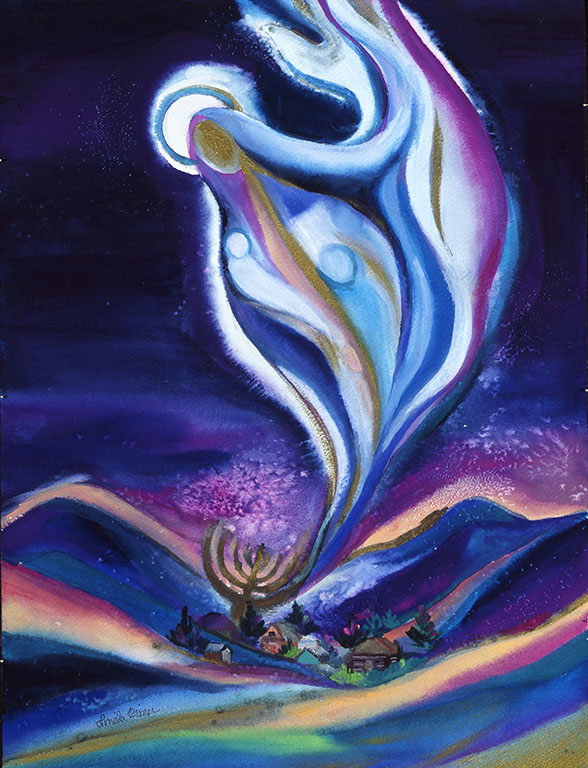
Shechinah-Above-The-TownI don’t have an absolute answer for this puzzle, but we do see that Paul was able, in some manner or fashion, to overcome the struggle he was facing and allow his party to stay in Lydia’s home. The Bible text is silent about the specific arrangements involved so we don’t have a concrete map to use for our present situation. We also see that “Christian” women were acting a whole lot more “Jewish” than is typical in most churches today. That suggests it may be possible for completely Gentile churches or congregations to “recite the Shema, to pray the Shemoneh Esreh, and to read from the Law and the Prophets and perhaps to discuss its meaning.” That’s not “normal” in most churches today, but according to the Bible, it’s not exactly forbidden, either. I think this type of worship is at the heart of what the Hebrew/Jewish Roots movement is supposed to be all about.

But the goal isn’t for Gentile Christians to become “Jewish” or even to go out of their way to “act Jewish.” For that matter, the goal isn’t really for Jews to “act Jewish,” recalling the intent and purpose of Rabbi Cardozo’s blog post. The goal is to be who we are in our relationship with God and to seek His face always.

If your “stuff” is getting in the way of that or in the way of your relationships with the wider body of believers, including the church, then it’s time to reconsider what your goals are and who your Master is. It’s time to restore bonds between the different little “bodies” of Messiah that have been running around on this world, all proclaiming that they hold exclusive truth. Efforts are being made. Barriers are being lowered. Books like Tent of David are being written which embrace this vision of healing the shredded and fragmented body of Messiah. And amazingly, Boaz Michael and Toby Janicki from the Messianic Jewish educational ministry First Fruits of Zion (FFOZ) are being interviewed on Christian television (two-hour long video).

The world is changing. God is bringing us together. But that will only happen if the different parts of Messiah body know who we are and what we’re supposed to be doing, each of us with our special gifts and unique identities. Bring peace and unity. The barriers will fall. The fallen sukkah will be restored.

When the Fruit Tree is Silent

the-fruit-treeOne who humiliates another person in public … even though he may be a scholar and may have done many good deeds, nevertheless loses his portion in the eternal world.

-Ethics of the Fathers 3:15

Imagine a situation: you have a fine home, a well-paying job, a comfortable car, and a substantial retirement annuity. If you do a single thoughtless act, you will lose everything you have worked to achieve: home, job, car, and savings. What kind of precautions would you take to avoid even the remotest possibility of incurring such a disaster? Without doubt, you would develop an elaborate system of defenses to assure that this event would never occur.

The Talmud tells us that everything we have worked for during our entire lives can be forfeited in one brief moment of inconsideration: we embarrass another person in public. Perhaps we may say something insulting or make a demeaning gesture. Regardless of how it occurs, the Talmud states that if we cause another person to turn pale because of being humiliated in public, we have committed the equivalent of bloodshed.

Still, we allow our tongues to wag so easily. If we give serious thought to the words of the Talmud, we would exercise the utmost caution in public and be extremely sensitive to other people’s feelings, lest an unkind word or degrading gesture deprive us of all our spiritual merits.

Today I shall…

…try to be alert and sensitive to other people’s feelings and take utmost caution not to cause anyone to feel humiliated.

-Rabbi Abraham J. Twerski
“Growing Each Day, Adar 2”
Aish.com

I suppose this is a continuation of a previous morning meditation and yet another attempt on my part to appeal to the body of faith. I am aware of a discussion in the Hebrew Roots “blogosphere” that has cast me and a friend of mine in an unfavorable light, but up until now, I’ve said nothing about it. I certainly have no intention of visiting said-blog and attempting to refute the accusations. What would be the point? As we see from Talmudic wisdom, behaving unkindly in response to criticism is unsustainable. Of course virtually all Christians, including those in the Hebrew Roots movement, have little use for the Talmud, so I imagine Rabbi Twerski’s appeal is in vain when applied to such an audience.

Accessing the Bible, do we really get a sense that if we humiliate another person publicly, we’ll lose our salvation as the Rabbi suggests? No? So why worry about it? I guess we are free to humiliate others with impunity, right?

And since they did not see fit to acknowledge God, God gave them up to a debased mind to do what ought not to be done. They were filled with all manner of unrighteousness, evil, covetousness, malice. They are full of envy, murder, strife, deceit, maliciousness. They are gossips, slanderers, haters of God, insolent, haughty, boastful, inventors of evil, disobedient to parents, foolish, faithless, heartless, ruthless. Though they know God’s righteous decree that those who practice such things deserve to die, they not only do them but give approval to those who practice them.

Romans 1:28-32 (ESV)

OK, that’s a little harsh, even for me. Also, Paul was talking about God’s wrath upon the unrighteous, and that couldn’t possibly include anyone in the body of Christ, could it? Maybe I should look elsewhere for more appropriate scriptures.

For this is the message that you have heard from the beginning, that we should love one another. We should not be like Cain, who was of the evil one and murdered his brother. And why did he murder him? Because his own deeds were evil and his brother’s righteous. Do not be surprised, brothers that the world hates you. We know that we have passed out of death into life, because we love the brothers. Whoever does not love abides in death. Everyone who hates his brother is a murderer, and you know that no murderer has eternal life abiding in him.

1 John 3:11-15 (ESV)

That may still be a little over the top, since you don’t actually have to hate someone in order to publicly embarrass and humiliate them. I’m sure my recent critics don’t actually hate me. Given that, is it OK with Jesus then to be insulting?

“You have heard that it was said to those of old, ‘You shall not murder; and whoever murders will be liable to judgment.’ But I say to you that everyone who is angry with his brother will be liable to judgment; whoever insults his brother will be liable to the council; and whoever says, ‘You fool!’ will be liable to the hell of fire.”

Matthew 5:21-22 (ESV)

Hmmm. I don’t know about you, but that one seems to be pretty close to the mark. In fact, it is pretty much identical to the following:

He who publicly shames his neighbour is as though he shed blood.

-Talmud: Bava Mezia 58b

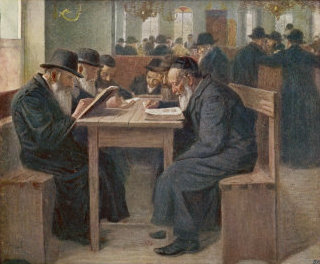
studying-talmudWell, so much for the Talmud having absolutely and totally no relevance to a Christian life of faith. Perhaps a certain amount of the Torah and traditional Jewish halachah applies to Christians after all, if it connects back to what we learn from our Master.

But getting back to the main point of this missive, it seems that (and I’ve mentioned this many times before) our endless series of rants, public insults toward others, and general “bad mouthing” of other Christians with whom we disagree, isn’t exactly “kosher,” so to speak. Unfortunately, when I say stuff like this, the usual response from some quarters is that I’m just an old “softie” and that I’m sacrificing “clarity” and “truth” for the sake of patience, kindness, avoiding envy or proud boasting, and attempting not to dishonor others (see 1 Corinthians 13:4-5).

Obviously, I’m not perfect at it, thus some of the language that I’ve included in this “extra meditation.”

But what are we to do under such circumstances when other believers insist on overlooking both Matthew 5:21-22 and its Talmudic corollary Bava Mezia 58b?

Bless those who persecute you; bless and do not curse them. Rejoice with those who rejoice, weep with those who weep. Live in harmony with one another. Do not be haughty, but associate with the lowly. Never be wise in your own sight. Repay no one evil for evil, but give thought to do what is honorable in the sight of all. If possible, so far as it depends on you, live peaceably with all. Beloved, never avenge yourselves, but leave it to the wrath of God, for it is written, “Vengeance is mine, I will repay, says the Lord.” To the contrary, “if your enemy is hungry, feed him; if he is thirsty, give him something to drink; for by so doing you will heap burning coals on his head.” Do not be overcome by evil, but overcome evil with good.

Romans 12:14-21 (ESV)

But in making this an issue on my blog, am I “repaying evil for evil” rather than “heaping burning coals” (by heaping kindness) upon the heads of those who are so critical of me? (As an aside, Paul’s quoting partially from Proverbs 25:22, so again, I guess more of the Torah is applicable upon us than we commonly realize.)

Do not be overcome by evil, but overcome evil with good.

Easier said than done, especially on the Internet, when people visit each other’s blogs and make sniping comments like gangbangers doing drive-by shootings. It’s one of the reasons I don’t visit and especially don’t comment on the blogs of some of my “opponents.” My minor effort at not repaying evil for evil and perpetuating the cycle of “drive-bys.”

But this still isn’t working because I’m still writing a message to people who don’t want to listen. There’s no hope of trying to get them to see why what we’re all doing is so wrong. Self-justification is a powerful lure and there’s a tendency to confuse our priorities with God’s.

But if there’s no hope, what’s left?

There is hope, and there is trust in G-d –and they are two distinct attitudes.

Hope is when there is something to latch on to, some glimmer of a chance. The drowning man, they say, will clutch at any straw to save his life.

Trust in G-d is even when there is nothing in which to hope. The decree is sealed. The sword is drawn over the neck. By all laws of nature there is no way out.

But the One who runs the show doesn’t need any props.

-Rabbi Tzvi Freeman
“Between Hope and Trust”
Based on letters and talks of the Rebbe
Rabbi M. M. Schneerson
Chabad.org

shhhhSo I should trust in God to take care of whatever (or whoever) is bothersome and move on. That’s pretty much what Rabbi Freeman said as I quoted him on a previous meditation.

Why don’t people like to remain silent when others insult them? Because they’re afraid that others might think they’re weak and unable to answer back.

The truth is, it takes much greater strength to remain silent when someone insults you. Revenge, on the other hand, is a sign of weakness. A revenger lacks the necessary strength of character to forgive.

(Rabbi Yerachmiel Shulman; Ketzais Ha’shemesh Big’vuraso, p.42; Rabbi Pliskin’s “Gateway to Happiness,” p. 302)

-Rabbi Zelig Pliskin
“Daily Lift #728: It Takes Strength to Keep Silent”
Aish.com

Yeah. I’ve got to work on that one. After all, I can hardly say I’ve advanced further spiritually than my critics if I’m just as prone to the same misbehavior as they display. We shall know a tree by its fruit. In my case, I’ve striving to be a “silent fruit tree.”

Taking a page from Rabbi Twerski’s book…

Today I shall…

…try to refrain from replying to insults that others say to me or to those people I care about and strive to return good for evil.

Afraid of Church

leaving-the-churchNot a word is said in the “olive tree” passage (see Romans 11:11-24) or anywhere else in Scripture about splitting the promises into earthly ones for the Jews and heavenly ones for the Church. However, God has made two kinds of promises. In regard to the promises which relate to individual salvation, there is neither Jew nor Gentile (Galatians 3:28), no distinction between them (Romans 10:12), no dividing wall of hostility (Ephesians 2:14-19). On the other hand, there remain promises to national Israel, the Jewish people, in which Gentile nations corporately and Gentile believers individually have no direct share – although it is worth noting that there are also promises to certain Gentile nations…

-David H. Stern, Ph.D
Restoring the Jewishness of the Gospel: A Message for Christians
Chapter 2: “Restoring the Jewishness of the Gospel,” pg 25.

The only reason I’m reading this book is because one of the Associate Pastors at my church asked me to read it and evaluate it for him. He’s obviously read it a number of times himself, because there is evidence of a great deal of note taking and underlining in its pages, so he must know its contents well. And yet, this charming, older gentleman from Oklahoma asked me if I’d read Stern’s small book and give him my opinion on how we can restore the Jewishness of the Gospel. Of course, I told him I’d be glad to.

But I was a little worried. My first introduction to Dr. David Stern was through his best known work, The Complete Jewish Bible and it was presented to me as a “real” Jewish Bible (New Testament, actually) within a Hebrew Roots (advertising itself as Messianic Judaism) congregation. I didn’t know any better and so I was thoroughly enthralled with what I read. Real “Hebrew” words were sprinkled among the English. Later, I found some Yiddish also anachronistically inserted within its pages. Ultimately though, I discovered that I desired a Bible that focused on accurate translation with no specific audience in mind.

Don’t get me wrong. I understand what Dr. Stern was trying to do, but there were already a number of New Testaments translated into Hebrew and many other Christian Bibles in English that would have served as well. Also, since I have separated myself from the “One Law” expression of the Hebrew Roots movement, Stern’s “Complete Jewish Bible” is a painful reminder of how incredibly naive I was once upon a time.

So in approaching Restoring, I was a little timid and figured what I was going to be reading would be “old school” Hebrew Roots at its finest.

Wow, was I surprised. The book is about 76 pages long, minus an appendix or two and I’m just on page 26 so far, but I was completely impressed. The writing and teaching is basic (but after all, Stern was trying to reach the widest possible Christian audience), but the ideas he documents are very close to what I’ve been trying to express. Given that I associate him with “One Law” and that his New Testament translation is still well-regarded in some Hebrew Roots circles, I just naturally believed his stance was in support of Hebrew Roots Christians rather than Messianic Jews.

Man, was I wrong.

I’m not writing this in any way as my response to the aforementioned Pastor, since he probably isn’t interested in this aspect of Stern’s book, but in recent conversations on Acts 15 commentary and why I go to church, I’ve entered a debate or two on why I believe (though it’s not as if I haven’t stated my reasoning many times before) that there are fundamental differences between Jewish and Gentile believers in Christ relative to identity and covenant obligation.

But theologically, the Jews are unique because God chose them as the vehicle for bringing salvation to the world. The entire Hebrew Bible attests to that, as does the New Testament (see Yochanan [John] 4:22; Romans 3:2, 9:4-5). The Jews are God’s people in a sense that applies to no other people on earth. Because of this, the New Testament abounds with theological Scyllas and Charybdis rocky places that offer dangerous passage. What other people is faced with Galatians 3:28 (“there is neither Jew nor Greek”) or Ephesians 2:11-22 (“the middle wall of the partition”)?

-Stern, pp 12-13

praying_jewNotice what Stern doesn’t say. He doesn’t say that the Jews are theologically unique and identical to the Gentile Christians who have joined their ranks. He doesn’t obliterate Jewish identity and, from the quote above, Stern supports a view that God made unique promises to the Jews that are not shared with Gentile believers just because Christ performed a unique service in the plan of God and allowed the Gentiles to also be saved.

Some of the debates I’ve been having in the comments sections of some of my other blog posts lately have to do with the following:

But many believers feel uneasy about restoring Jewishness to the Gospel and encouraging Messianic Jews to express their Jewish identity. They fear an elitism will arise in which Gentile Christians will be made to feel like second-class citizens of the Kingdom. This is a real pitfall, and Scripture warns against division between Jew and Gentile in the Body of the Messiah. However, the New Testament also gives assurance that both are one in Yeshua, serving one God by one Spirit. Therefore, let all believers, both Jewish and Gentile, work together to avoid invidious comparisons, which only serve the Adversary. Let every Messianic Jew and every Gentile Christian demonstrate in his own life those elements of Jewishness which arise from his own spiritual consciousness and identity, without feeling condemned for expressing either too much or too little.

-Stern, pg 14

That last paragraph might seem ambiguous in terms of how Stern sees the differences between believing Jews and Gentiles, but put together with the other quotes, we see his opinion develop. Both Jews and Gentiles are unique in God’s plan but not in identical ways. They are united in salvation but do not share a uniform identity. There is danger in forgetting the uniqueness of the Jews, especially in light of how some Christians interpret scriptures such as Galatians 3:28 and Ephesians 2:11-22, as if the aforementioned uniqueness of the Jews was cast aside. Jewish believers must be allowed and encouraged to express a wholly lived Jewish identity by we Gentile Christians. To do that, we Christians must set aside our fears that the Jews will “take over” somehow, and cast the Gentiles out of their midst and “back into the churches.” Stern doesn’t seem to object to both Jews and Gentiles expressing “elements of Jewishness” (which should be a given for Jewish believers) but that which arise from “his own spiritual consciousness and identity (emph. mine).”

Recently I was chastised for my support of Boaz Michael’s book Tent of David (TOD), particularly as it inspired my own return to church. One of my (and Boaz Michael’s) especially passionate critics is Judah Himango, a long time blogger in the Messianic Judaism and Hebrew Roots space.

My interpretation of his response to me and particularly to Michael’s TOD book seems to be precisely what Stern predicts when he says, “…they fear an elitism will arise in which Gentile Christians will be made to feel like second-class citizens of the Kingdom.” Coupling TOD with the philosophy of “bilateral ecclesiology” presented in Mark Kinzer’s book Postmissionary Messianic Judaism: Redefining Christian Engagement with the Jewish People, a portrait of a Messianic Judaism that is plotting the expulsion of all Gentile Christians from their ranks disguised as a benign attempt to reconnect “Messianic” non-Jewish believers to their counterparts in the “Church” begins to emerge.

Or is it what Stern wrote about in 1988 and earlier; that the fear of Jewish elitism by Gentile Christians in the Messianic/Hebrew Roots realm, is still very much alive and kicking (and I’ve got the metaphorical boot prints on my backside to prove it)?

But do Hebrew Roots Christians really have anything to be afraid of?

Yes and no.

kinzer-postmissionaryOK, let’s be fair. The people and groups within the expression of Messianic Judaism I’m discussing very much support Jewish unique identity and distinction within the larger body of Messiah. Much of Stern’s book addresses this in an attempt to help its Christian audience understand that when a Jew becomes a disciple of Jesus, they are not only allowed, but obligated to remain a Jew relative to Torah and halachah (although again, to be fair, Stern hasn’t addressed halachah as of page 26). Messianic Judaism walks a fine line in terms of Stern, because on the one hand, he encourages Jews to continue living as Jews and as having the right to be a unique people chosen by God, but on the other hand, he is insistent that uniqueness and distinction absolutely not get in the way of unity between Jewish and Gentile believers.

So far, he hasn’t outlined his vision for how believing Jews and Gentiles are supposed to be separate and unique and yet also united, except to say that we share equality in salvation but the Jews are unique in certain national promises from God.

I’m not offering this as a solution, but as an explanation and a reminder that this problem has been around for at least a few decades and it’s not going away anytime soon. But we are talking about relationships and identity that are based on fear and on who your group is opposed to and struggling against. Both Hebrew Roots and Messianic Judaism feel victimized by the other. Hebrew Roots fears Jewish elitism and that the Jewish believers will seize sole possession of the Torah mitzvot, and Messianic Jews see the encroachment of Gentile Christians who demand a “Jewish identity” identical to the Jews as a form of replacement resulting in the obliteration of everything it means to be Jewish.

It’s fear that is at the very heart of Hebrew Roots opposition to Michael’s TOD book, as if somehow elitist Messianic Judaism will “force” or “trick” the Hebrew Roots Christians back into their “church ghettos.”

I’m not afraid because I’ve already come to terms with who I am in Christ and what it all means. I have also come to terms with what (to the best of my ability to comprehend) it means for a Jew to possess a unique Jewish identity and role, mainly just because I live with a Jewish wife and have three Jewish children (although their apprehension of their lived Jewish identity varies from one child to the next). I’ve learned what it is to be a Christian living with Jews without having to worry about the distinctions between their identity and mine. I can go to church and not lose anything and in fact, I actually gain quite a bit…and I still get to live with my Jewish family…and they still get to be Jews…and my Christianity doesn’t have to inhibit or interfere with that in any way.

What some of the “fine bloggers” who are deeply concerned with the implication of Michael’s TOD book are missing are the myriads of voices across the Internet who here and there are saying that TOD is changing their lives for the better. TOD is helping people overcome their “fear of church.” People who I’ve known for years and who I never thought would see the inside of a church again are seeking out Christian Bible studies and worship services…largely because they read or are reading TOD and listening to the voice of reconciliation and restoration.

David Stern speaks of restoring the original Jewishness of the Gospel so that both Jews and Christians can hear the voice of the Jewish Messiah King. Boaz Michael speaks of healing the vision of the “Messianic Gentile” or the Christian who has become or is in the process of becoming aware of the “Jewishness of the Gospel;” Stern’s primary message to us. Michael may as well have written the sub-title of his book as restoring the vision of the Christian and the Church. If minds and hearts and relationships really, really are being healed because of this book and the overarching vision it presents, who are you or I to say that’s a bad idea. People are perfectly free to reject the message of healing if they so choose because of fear, because of prejudice against Christians (and sometimes against Jews), or for whatever reason.

But for every blogger who protests, how many people who we may never see or hear from are beginning a journey that will transform isolation, loneliness, broken fellowship, and sometimes, broken families, into a path leading to reunification and reconciliation? Most likely (though I only have anecdotal information to go by), a lot more of them are out there than there are bloggers who oppose those Christians and their mission.

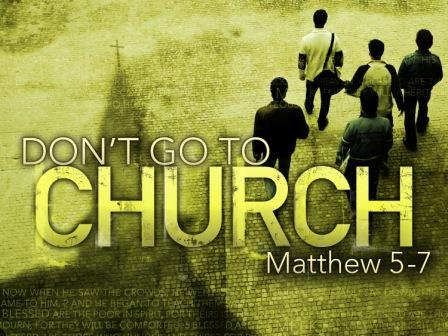
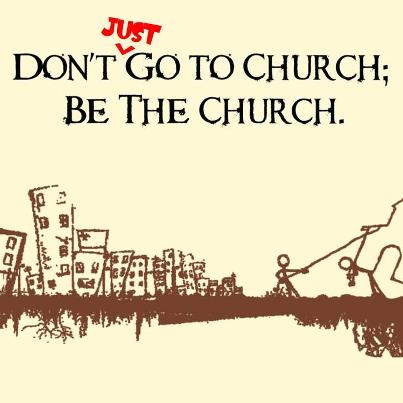
dont-go-to-churchI’ve said this before, but I’ve seen that it’s gone unnoticed, so I’ll repeat the message. Author Boaz Michael and his wife Amber are “walking the walk,” so to speak. For the past several years, Boaz and Amber have been attending a small Baptist church in their community in Missouri. To the best of my knowledge, this church is their only regular worship venue, so they infrequently are able to visit a Messianic (or otherwise) Jewish synagogue. Again, to the best of my knowledge, Boaz and Amber haven’t lost a thing by attending this church, and in fact they’ve gained fellowship and belonging and have shared their unique vision with the Church.

If they aren’t afraid of losing who they are by “going to church,” how should the rest of us feel? I suppose anyway we want. But if we are afraid of church, then we should be honest and ask ourselves why. I was certainly afraid of what returning to church would mean to me, but with a lot of help, I set those feelings aside. And in returning to church, I found that I could also encounter God within its walls and with other Christians. That doesn’t have to be you if you don’t want it to be, but please, don’t let it be fear, animosity, or hostility that stops you from walking that path or causes you to disdain those of us who do.

If you are confident that G‑d will help you, why is anxiety written all across your face? If you are truly confident, show it and celebrate!

-Rabbi Tzvi Freeman
“Celebrate”
Based on letters and talks of the Rebbe
Rabbi M. M. Schneerson
Chabad.org

Oh, and I’ll let you know how the rest of Stern’s book turns out.

Why I Go To Church

afraid-of-churchI’m actually enjoying going to church. When I came to that realization last Sunday, no one was more surprised than I was.

Wait! Let me explain.

Starting last October, I created a “Days” series that was a countdown to the end of the year. I was planning to make a decision, both about whether or not to go back to church and whether or not to continue to blog in the “Christian” or “Messianic” or “religious” space, given the endless contention occurring in the blogosphere. I started at 78 days and worked my way down to zero. It should be obvious that I continued blogging after January 1st, and I not only continued to go to church regularly, but frequently meet with the Head Pastor.

Eleven months to the day before I published “Day Zero,” I wrote and published an article called Why I Don’t Go To Church. This was in response to both my internal angst (my favorite theme) and to Pastor Jacob Fronczak’s blog post Why I Go To Church. Even back then, I had returning to church in mind, but was undergoing what I’d consider classic approach-avoidance conflict (I was a psychotherapist and family counselor back in the day).

I’ve overcome my “fear of flying,” so to speak, but I was afraid that once I started attending church, I’d find not “niche” of my own and end up being bored. While it’s true, I don’t go to my particular church for the music, I am experiencing many other benefits and even on some small level, beginning to give back just a tad. What added momentum to my journey happened just five days before my countdown was to end. I was reminded that seeking fellowship with God’s people is seeking an encounter with God.

And in church, I have encountered Him.

Today, I did something I shouldn’t have done. There’s a “community” within Google+ called “Messianic Judaism” (for all I know, there could be more than one, but this is the one I belong to). Access is by invitation only, so posting a link to it wouldn’t let you see inside, but someone in the community posted a link to a book review and asked for opinions. Unfortunately, it struck a nerve, and even though I had already determined I wouldn’t address the review and what I believe it represents, I shot off my big mouth (figuratively speaking) and now I’m regretting it.

But the transaction had an interesting side effect. It (or rather someone) challenged my going back to church and further, criticized the church in a manner that resulted in my feeling defensive. Me? Really?

I’ve maintained a relationship with blogger Judah Himango for the past few years, and that relationship has, on occasion, been quite stormy. We still talk online periodically, and today was one of those “talks.” But what he said got under my skin. Here’s part of what he posted to me.

My concerns with Tent of David are that it purports to “heal the vision of the Messianic gentile” by sending them back to the church, which will inevitably lead to assimilation.

I asked, “assimilation into what?” and he responded:

Assimilation into the doctrines of the Church. Sabbath is done away with, the Church has replaced Israel, any non-moral mitzvah is no longer applicable to anyone.

Unfortunately (mea culpa) I missed a part of what Judah had said before I rapidly posted my reply (I think I need to switch to decaf):

There are indeed folks called to the church. But for many others, we’re called to Hebraic Roots congregations or Messianic congregations.

I certainly don’t advocate compelling people to “go to church” if they feel called elsewhere, but on the other hand, I do object to the church being seen as “inferior” or “anti-Biblical” compared to non-Jewish Christians who feel called to worship within a more “Jewish” framework. I’ve been one of those people before and for reasons too lengthy to relate here, I needed to seek my community of faith elsewhere.

Why do I go to church?

First of all, thanks to Boaz Michael and (my advanced reading of) his book Tent of David (TOD) and other influences, not the least of which is my Mom, I summoned the courage to overcome my own personal prejudices and start attending church again.

communityI was welcomed by lots and lots of people, but you’d kind of expect that in an authentic Christian setting. But what happened next, was unanticipated…I started making connections. I’ve had several interesting and compelling conversations with the Head Pastor and just last Sunday, I spent an hour talking to one of the Associate Pastors (when I should have been in Sunday School) in the church library. Not only that, but a number of people actually seem authentically glad to see me, not just because I’m a warm body showing up a church, but because of me as the person I am (or at least as they perceive me to be). In fact, I’m stunned that some of these connections have occurred so quickly and that I’m now even feeling a sense of belonging.

People have offered to pray for me. I’ve seen genuine caring and concern for the hungry, the sick, and the dying. They offer tangible, material support for the needy and for missionaries in many countries. There is a genuine heart for Israel and a desire for her posterity. It’s not just the occasional person, but to the best of my ability to tell, the human community within the church’s walls does look to Christ as Messiah and Israel’s King for salvation and sustenance.

In my talks with Pastor Randy (and they’re really quite candid), we don’t always see eye to eye, but you can’t believe what an incredible pleasure it is, even to disagree with someone and still have the encounter be illuminating, positive, refreshing, and friendly. Try doing that on the Internet!

I don’t know where all this is going to lead me, but for the first time in a long time, I not only have hope that I will find a place in the church and among the community of believers, but that the church itself is turning in a direction that will indeed be part of the healing between the Jewish and non-Jewish disciples of the Master.

I feel that I’ve failed in my comments on Google+ today and allowed my emotions to overcome my common sense. I could delete my comments, but they’ve already been read and responded to, so I might as well leave them up. In any event, God knows what I’ve said and done, so removing my annoyed comments won’t repair my relationship with Him.

But the realization, thanks to Judah’s statements (though he probably didn’t intend them the way I’ve taken them), that there really is hope for Christianity and a way forward in being part of “rebuilding David’s fallen tabernacle” is encouraging. It’s even better now that I realize it’s possible for me to have a small part in that “project” within the community of Christianity.

I don’t particularly mind if people don’t agree with my going back to church, and I understand that whenever you write and publish a book (such as Boaz Michael has), especially in such an emotionally explosive realm as religion, people are going to write critical book reviews. The only thing I mind about some of the criticism being leveled against Tent of David (and yes, I’ve read the reviews), is that it simply misses the overall vision Boaz is trying to communicate. I can appreciate people who have an eye for detail, and who may feel certain specific terms or other content wasn’t used with as much accuracy as they could have been, but look at the big picture.

In between the Gentile Christians going to church and those who have found a home in either a Hebrew Roots or Messianic Jewish congregation are just tons and tons and tons of people with little or no fellowship at all. Maybe they attend small home Bible studies or maybe they just worship with their families. Some, like me, may even seek fellowship over the Internet (which is problematic at best). But remember, seeking fellowship is seeking an encounter with God, and in my experience, many people who think of themselves as “Messianic Gentiles” are disconnected and isolated from other believers and, Heaven forbid, from the God who loves their souls.

symmes_chapel_churchThrough bad teaching, bad leadership, or bad experiences, they’ve become convinced that “the Church” (whatever you imagine the term to mean) is bad, evil, awful, pagan, lost, apostate, anti-Law, and so on…I mean all Christian churches everywhere. And, for whatever reasons, they haven’t found an alternative or the alternative that they’ve found may be a group that defines itself solely on being “anti-Christian,” as opposed to a community dedicated to discipleship under Jesus Christ and a sincere desire to meet with God.

If even some of those people can find in Tent of David what I have, then maybe they don’t have to be alone, either. I don’t think you have to agree with each and every thing Boaz set forth in TOD, but you can embrace the vision and let it take you where God wants you to go.

I am beginning to “fit in” with this church. I probably wouldn’t fit in at most other churches in my area. The fact that a set of unlikely occurences led me to this church as the first stop in my search for community I believe indicates the hand of God at work in my life.

You don’t have to like the fact that I go to church. You don’t have to go to church if you don’t want to. Really, no one is holding a gun to your head. However, I’d like you to consider two things. The first is that there might be a reason God wants me to go to church. The second is that God might have a plan for you that you don’t agree with Him about. That was me once upon a time. Could it be you, too?

That’s not all about why I go to church…but it’s a start.

Practicing Messianic What?

studying_tanakh_messiahBy now, most Christians have at least heard of “Messianic Jews,” that is, Jewish believers in Yeshua of Nazareth who have retained their Jewish identity and continue to observe the Torah and practice Judaism in loyalty to Yeshua and their biblical heritage.

Less well known and less understood are what we can call “Messianic Gentiles.” I identify myself as a Messianic Gentile, and I am not alone. There are a lot of us, and our numbers are growing, but what exactly is a Messianic Gentile?

The Messianic Gentile is a Sabbatarian and Torah-keeper practicing Messianic Judaism, not as a wanna-be Jew, but as a Gentile. The holy Torah of Moses has commandments for both Jews and Gentiles. Judaism is a universal religion. It is naturally centered around the Jewish people (and the Jewish Messiah), but its scriptures and practices extend out to all nations, encompassing all of us in the final consummation of the Messianic Era. A Messianic Gentile lives for the Messianic Era, an idea that our Master called “the kingdom of heaven.”

-D Thomas Lancaster
“I’m a Messianic Gentile” (June 26, 2011)
FFOZ Blogs

You probably think I’m crazy even asking if Christians practice any form of Judaism. The vast, vast majority of both Christians and Jews would answer a resounding “no.” Only a tiny population of Jews and non-Jews in what is referred to as the Messianic Jewish and Hebrew Roots movements (they overlap somewhat but are hardly the same thing) even ask such a question. Moreover, only some of the people inside of those movements are considering or confused by the answer.

But why even ask such a ridiculous question? First of all, I recently read such a question as it was floating by in the blogoverse and was intrigued by its audacity. One such church-going (non-Jewish) Christian says he regularly tells other people in his church that he practices “Messianic Judaism”. This is just a hair off from his possibly telling other Christians that he’s a “Messianic Jew”. I don’t want to be unfair or inaccurate, and this person did not refer to himself as a Jew, Messianic or any other kind.

-from my blog post
Do Christians Practice Judaism (October 17, 2012)

Well, color me chagrined. I seem to have run headlong into a contradiction. Boaz Michael, President and Founder of First Fruits of Zion (FFOZ) posted a link to Lancaster’s “Messianic Gentile” blog on Facebook recently (though I can’t seem to find it on Facebook again), and I registered my embarrassment in a comment there as well (this is related to Michael’s recently published book, Tent of David: Healing the Vision of the Messianic Gentile).

But I felt the issue needed more exposure so of course, I’m blogging about it.

I really don’t think that a Christian can practice Judaism as such because it seems to muddy the waters between practicing Judaism and being a Jew. Don’t only Jews practice Judaism? It’s confusing because Judaism is more than just a religious movement (Christianity is a religious movement). It’s a people group, a culture or collection of related cultures, a lifestyle, and when factoring in Israel, it’s not just a piece of geography, but the Jewish people and the Jewish nation as well.

If you’re not Jewish, how do you “practice” all that?

According to Lancaster, a “Messianic Gentile” such as he, practices Messianic Judaism by keeping the Shabbat and keeping Torah, “not as a wanna-be-Jew, but as a Gentile.”

My Jewish wife once called me a “Jewish wannabe” in the heat of a discussion and among many other events, it has “inspired” me to attempt to embrace my identity as a Christian for the sake of clarity and as a sign that I’m “backing away from her turf.” That Lancaster calls Judaism a “universal religion” doesn’t mean (in my opinion, but I don’t have even the beginnings of the educational and experiential background in religious and Bible studies that Lancaster possesses) that it can be universally appropriated and practiced by anyone anywhere.

There’s a fine line to be drawn here. On the one hand, Gentiles dressing frum and wearing payot would be offensive to Jews and even look kind of crazy, but on the other hand, Isaiah did relate the words of God when he said:

“It is too light a thing that you should be my servant to raise up the tribes of Jacob and to bring back the preserved of Israel; I will make you as a light for the nations, that my salvation may reach to the end of the earth.”

Isaiah 49:6 ESV

Jewish in JerusalemThis goes back to something more basic we find in the Torah:

See, I have taught you statutes and rules, as the Lord my God commanded me, that you should do them in the land that you are entering to take possession of it. Keep them and do them, for that will be your wisdom and your understanding in the sight of the peoples, who, when they hear all these statutes, will say, ‘Surely this great nation is a wise and understanding people.’ For what great nation is there that has a god so near to it as the Lord our God is to us, whenever we call upon him? And what great nation is there, that has statutes and rules so righteous as all this law that I set before you today?

Deuteronomy 4:5-8 (ESV)

Israel, in a sense, was supposed to be an example to the rest of the world by how it obeyed God and adhered to the standards of the Torah mitzvot. The rest of us were and are supposed to observe, be really impressed, and allow Israel’s idealized example influence our nations to become more just, more compassionate, and for all of us to leave our “idols” behind and embrace ethical monotheism.

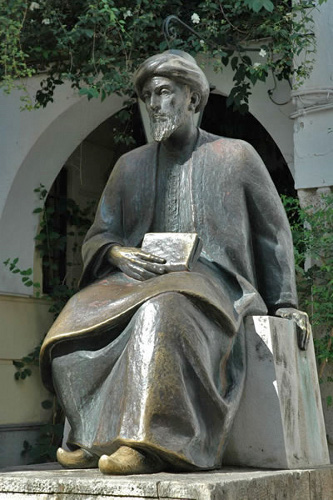
Maimonidies (Moshe Ben-Chaim) Laws of Kings, Laws 11:10-12 (Capach Edition): “[10] …Can there be a greater stumbling block than this (Christianity)? That all the prophets spoke that the Messiah will redeem Israel and save them, and gather their dispersed and strengthen their Mitzvot, and this (one, i.e., Jesus) caused the Jews to be destroyed by the sword, and scattered their remnants and humbled them, and exchanged the Torah, and caused the majority of the world to err to serve a god other than the Lord. [11] Nevertheless, the thoughts of the Creator of the world are not within the power of man to reach them, ‘for our ways are not His ways, nor are our thoughts His thoughts.’ And all these matters of Jesus of Nazareth and that of the Ishmaelite who arose after him are only to straighten the way of the king Messiah and to fix the entire world, to serve God as one, as it is stated (Zephaniah 3:9), “For then I will turn to the peoples (into) clear speech, to all call in the name of G-d and serve Him unanimously. [12] How (will this come about)? The entire world has already become filled with the mention of the Messiah, with words of Torah and words of mitzvos and these matters have spread to the furthermost isles, to many nations of uncircumcised hearts, and they discuss these matters and the mitzvot of the Torah. Some say: “These mitzvoth are true, but were already nullified in the present age and are not applicable for all time.” Others say: “Hidden matters are in them (mitzvos) and they are not to be taken literally, and the messiah has already come and revealed their hidden (meanings). And when the true Messiah stands, and he is successful and is raised and exalted, immediately they all will retract and will know that fallacy they inherited from their fathers, and that their prophets and fathers caused them to err.”

-quoted from mesora.org

maimoCommentary on this quote found at mesora follows:

With respect, the point is, I think, that although Christianity and Islam are not true, they have played a part in the Divine scheme for the redemption of the whole of humanity by spreading some sort of ethical monotheism involving an albeit incorrect idea of Messiah, Torah and Mitzvot. Although Islam and Christianity are part of the overall process leading to the redemption their imperfect ethical monotheism will be rectified through the adoption of the seven laws.

Naturally, neither Judaism in general nor Maimonides in specific, support Christianity nor the idea that God intended our faith as a mechanism for spreading knowledge of God, and the opinions expressed at the mesora website reflect this. Nevertheless, we can see that Judaism has had a great influence on the world (like it or not) as expressed through Christianity and Islam.

But does “influence” equal “practicing Judaism?” Again, most Christians and certainly most if not all Muslims will strongly deny practicing Judaism in any way or form, but returning to the Messianic Gentile, what about them?

I mainly see “Messianic Gentiles” as having a different perspective than more traditional Christians (which isn’t to say that a self-identified Christian in a church couldn’t have the same point of view). As Lancaster says, they “believe that the Torah is not cancelled, and it contains laws and commandments that apply to both Jews and Gentiles. We keep those laws and commandments as we seek the kingdom.” He further states that:

The idea of practicing Messianic Judaism as a Gentile is not a new thing. Paul’s readers were doing it almost 2000 years ago.

However, in my reading of many of Lancaster’s other works, I don’t believe he is saying that we Christians are all obligated to practice Judaism nor commanded to imitate Jews in every detail in their halalach lifestyle. I don’t think you can find the early Christians who were established by Paul living in such a manner, although I admit that they did live more like the Jews of their day than we Gentile believers do today. I don’t doubt they kept a kind of kosher for table fellowship with Jews, perhaps kept Shabbos as they were able (early Gentile Christianity, unlike Judaism, was not a recognized religion by the Roman empire and Gentiles would not have been absolved from working on Shabbos as the Jews were), davened at the set times of prayer, and even observed some of the festivals (Passover would have been particularly meaningful).

But were even the ancient Christians at the end of the Second Temple era “practicing Judaism?”

A few days ago, I wrote a meditation that outlined the struggles Jewish and Gentile believers had with each other in the days of James, Peter, and Paul due to conflicts in what the Gentiles should and shouldn’t be practicing, and what sort of social bonds (if any) should form between Jewish and non-Jewish disciples of the Master…all based on Lancaster’s commentaries.

I don’t think this is an easy issue to deal with. It wasn’t 2,000 years ago, and it doesn’t seem to be in the present. But if the early Christians in their religious life weren’t “practicing Judaism,” what were they doing? “Christianity” as a discrete entity did not yet exist. Were these Gentiles acting as some sort of “quasi-converts” or “amplified God-fearers?” I think the New Testament was struggling with trying to identify who and what the Gentiles were as they entered into “the Way” and never got around to answering the question.

I’m not sure the question has been answered today, either. Some Hebrew Roots supporters have jumped from A to Z and declared that Messianic Judaism is (supposed to be) all-inclusive and there are no distinctions allowed. Gentiles entering the movement acquire a covenant status that’s not only equal to the Jews in the movement, but identical to them in every conceivable detail. A “Messianic Gentile” is just a “Messianic Jew” without a particular string of DNA and (in the case of males) a circumcision.

I’m not trying to be disagreeable to Lancaster, Boaz, or anyone else, but my opinion is that we use the phrase “Messianic Gentile” as a way to describe a Christian who has a very specific view of Jews, Judaism, the Torah, and God, all relating back to what the movement teaches. But does that mean whatever Messianic Judaism is allows both Jews and Gentiles to practice Judaism as a religious or worship form? If my wife and I go to one of the local synagogues and worship together, am I practicing Judaism?

D.T. LancasterWhile my viewpoints and attitudes probably identify me as a “Messianic Gentile” by Lancaster’s definition, I tend not to use the label for a variety of personal reasons. My wife thinks of me as a Christian and I can only imagine that everyone who sees me at church doesn’t give my being a Christian (as opposed to being a Messianic Gentile) a second thought. Of course, at this stage of my life, I don’t observe anything that even resembles a Shabbat and my level of kashrut is what the Chabad Rabbi in our community would call “kosher style.” If I wanted to truly be “Messianic,” I’d have a long way to go.

I don’t lay tefillin, I don’t pray while wearing a tallit gadol, I only wear a kippah if I’m actually going to shul (since all men are required to, Jewish or not), I pray with a siddur very sparingly, I can’t pray in Hebrew (languages are not one of the things I’m good at), and in many, many other ways, I’m not a “Messianic” anything. I certainly don’t practice Judaism, Messianic or otherwise.

I can’t tell D. Thomas Lancaster or anyone else that they aren’t practicing Messianic Judaism, but on the other hand, in my own life, I can’t see how a Christian like me could ever do such a thing. I suppose this is where opinions differ and possibilities for some of us are yet to be realized. Even if my wife and daughter were to suddenly become shomer shabbos and kasher our kitchen, and I were to daven at the set times of prayer, who would I be and what would I be practicing?

I tend not to think that it’s any form of Judaism, in spite of the obvious similarities, but on the other hand, I don’t really know what to call it. One thing’s for sure, especially with the recent issues involving Gentiles at the Kotel and the lack of respect we’ve been showing at this most Holy site, I feel once again diminished (it’s so sad some Christians can’t treat Jews with respect) and I know for certain that we sure aren’t Jews.