Tag Archives: Israel

Attached and Yet Unattached

As a centrist movement, Conservative/Masorti Judaism strives to reconcile ancient ideas with modern understandings. Utilizing this approach, twenty years ago, a group of Temple Emunah members, led by Barbara Palant, began to consider how we could become a more welcoming community—one that embraces interfaith families while still adhering to our time-honored traditions.

Following the Rabbinical Assembly’s practice, Temple Emunah has adopted the phrase “K’rovei Yisrael” to refer to those individuals who are part of our community and part of a Jewish home, though they are not personally Jewish. The term literally means “those who are close to [the people of] Israel.” K’rovei comes from the word “karov,” meaning “close;” krovim means “relatives.” K’rovei Yisrael are distinct from non-Jewish friends and extended family members who might visit our community or our congregation for a Bar Mitzvah or for some other reason. K’rovei Yisrael are also different from non-Jewish relatives of Temple Emunah members who choose not to be involved in our synagogue community.

-Rabbi David Lerner
Welcoming K’rovei Yisrael at Temple Emunah Today
TempleEmunah.org

I saw a link to this webpage posted in a closed Facebook group for “Messianic Gentiles”. I don’t recall the actual context involved, but if you look at the content of Temple Emunah’s webpage for “K’rovei Yisrael,” you can see they have rather liberal social and religious tastes, and in this particular instance, are outlining the roles and responsibilities of intermarried non-Jews who are part of their synagogue “family”.

intermarriageI can see why this would be appealing to a group of Messianic Gentiles, but this only works under certain circumstances, the circumstances outlined in Rabbi Lerner’s brief missive. It only works if you are not only regularly attending a (Messianic) synagogue that is primarily a Jewish space that permits Gentile involvement, but also, that you are married to a Jew.

Of course that second qualification could be adapted such that you are a regular attendee and while not intermarried, have nevertheless bound yourself to Israel through devotion to Rav Yeshua (Jesus Christ) as the coming Moshiach, and to Hashem, God of Israel.

Rabbi Lerner’s welcome to K’rovei Yisrael is very enthusiastic and encouraging, offering many opportunities for synagogue participation by non-Jewish “family members,” but I wanted to focus on the limitations he presented:

Out of respect for our traditions, K’rovei Yisrael should not participate in rituals with the Torah including:

  • Aliyot, opening/closing ark, and performing hagbah or gelilah (lifting or rolling/dressing the Torah).
  • Wear tefillin. If K’rovei Yisrael want to learn more about tefillin for educational purposes, they are invited to speak with me.
  • Recite any prayer that fulfills the ritual obligation of another person; for example, reciting Kiddush over the wine or another blessing for the community.
  • Recite b’rakhot, sign the ketubah as a witness, or read the ketubah as part of the ceremony at a Jewish wedding.
  • Hold committee chairmanship or board member positions, or vote at congregational meetings (per policies of the United Synagogue of Conservative Judaism).

To me, this makes perfect sense. Rabbi Lerner may be offering an extraordinarily generous opportunity for intermarried non-Jews to be part of synagogue community, but at the end of the day, even if you live in a Jewish home as a non-Jew, you’re not Jewish, which means, even if you share devotion to Rav Yeshua with the Jews in your community, there are just certain things that belong to the Jewish people because of their covenant standing with Hashem.

Here’s a little more from R. Lerner’s article:

The areas that become challenging are those where K’rovei Yisrael are symbolically enacting a ritual that signifies their commitment to our tradition, which would not be accurate. For example, when Jews take an Aliyah to the Torah, they are not merely standing at the Torah; they are acting out a drama that reflects their relationship to the Torah. First, they are called up with their Hebrew name, something that K’rovei Yisrael do not have. Second, an Aliyah is ascending to the Torah, accepting the Torah as the binding force for living your life.

chabad
Credit: jewishvenice.org

R. Lerner speaks more about Jewish tradition, but for me, what he’s describing is the covenant relationship with God that a Jew possesses over the non-Jew.

I’ve written at length about particularly how the New Covenant was made specifically with the House of Judah and the House of Israel, and if we non-Jewish Yeshua-disciples are able to reap some of the blessings from that covenant, it’s not because we are named parties, it is only because Hashem has grace and mercy toward us.

Most of us (non-Jews) who are intermarrieds, if we found ourselves in such a synagogue, out of respect for the Rabbi, out of respect for the Jewish synagogue community, and particularly out of respect for our Jewish spouses, we would be more than happy to accept the limitations along with the opportunities being offered.

However, as Yeshua-believers, if we find ourselves in a Jewish community of Yeshua-believers, somehow we think that doesn’t matter anymore and we have been elevated to equal covenant status with the Jews. So we want to be called up for an Aliyah, we want to wear a tallit gadol, we want to lay tefillin, we want to be counted as part of a minyan.

It seems that at least some groups believe Yeshua-faith is a license to abrogate the unique and exclusive covenant relationship that Israel and the Jewish people have with Hashem. Is this what our Rav, the once and future King (so to speak), Moshiach, the Jewish Messiah wanted when he called upon Rav Shaul (the Apostle Paul) to become the special emissary to the Gentiles?

It hardly seems likely, for it represents a gross betrayal of everything God did for Israel by covenant.

Ironically, in some ways, this is exactly the sort of betrayal that both normative Judaism and normative Christianity believe Paul is guilty of. Except, Christians don’t look of it as guilt or betrayal, just replacement, inclusiveness, or whatever you want to call it.

I also recently read another article called How Jewish Christians Became Christians, which is a short summary from Lawrence H. Schiffman’s book From Text to Tradition, A History of Second Temple and Rabbinic Judaism .

The split between Judaism and Christianity did not come about simply or quickly. It was a complex process which took some one hundred years, starting from the crucifixion [of Jesus], and which had different causes and effects depending on whether it is looked at from the point of view of Judaism or Christianity. Further, the question of legal status as seen through Roman eyes also had some relationship to the issue.
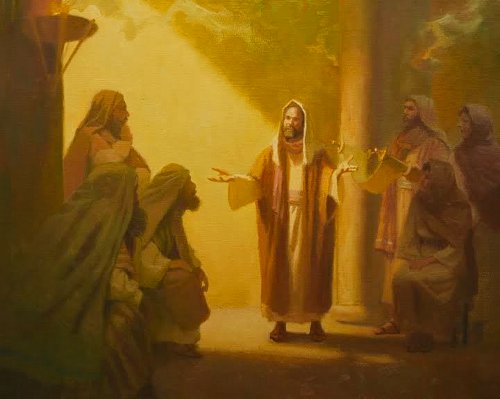
Apostle Paul preachingThe article is relatively kind to early “Christianity” as a Jewish movement with an unusually liberal policy regarding Gentile admission. However, it does describe the Christian view of what caused the schism to the massive influx of non-Jews who did not see themselves as part of Jewish community. So…

…the New Testament redactors had clearly decided that they were no longer part of the Jewish people. Therefore, they described Jesus as disputing with all the Jews, not just some, as would be appropriate to an internal Jewish dispute. Once Christians saw Jews as the “other,” it was but a short step to the notion that all Jews were responsible for the rejection of Jesus and, hence, for the failure of his messianic mission to be fulfilled.

This perspective has echoed through nearly twenty-centuries of Church history and fuels much of how Christianity interprets Rav Yeshua’s relationship to his fellow Jews today. And yet, even a casual reading of the Gospels by someone who is not inculcated in Christian exegetical tradition will illustrate…

In the earliest Gospel texts, which picture Jesus as debating issues of Jewish law with the Pharisees, no hostility is observed. The crucifixion is said to have been carried out by the Romans with the support of some (apparently Hellenized) priests.

In other words, the Gospels we have with us today show Rav Yeshua having what Jews would consider perfectly normal and acceptable debates with fellow Jews on matters of halachah. This remains perfectly normal and acceptable behavior within religious Judaism today. It’s a matter of the Jewish “us” arguing with the Jewish “us”, not “us against them”.

Even for we Gentiles who accept that Christian theology and doctrine is based more on traditions that were originally created by those early non-Jewish “Church fathers” who sought to separate their newly created religion from the Jewish scriptural understanding, the Jewish people, and Judaism, it can sometimes be difficult to escape our past. We still sometimes tend to give in to the old habits and attitudes we were taught in our churches.

We still have a tough time understanding that “neither Jew nor Greek” (Galatians 3:28) means that we are all equal in God’s love, in receiving the Holy Spirit, in having a place in the world to come, without it also meaning that there are absolutely no covenant distinctions between the two groups.

However, all of this only becomes a problem at the intersection of Jews and non-Jews in (Messianic) Jewish religious community.

It’s a moot point for those of us not in community, Jewish or otherwise. Also, as I briefly explored in another recent blog post, there seems to be a movement of sorts among Messianic Jews in Israel to become participants in more normative Jewish synagogue life with the goal of being integral members of those communities (to paraphrase PL’s comment on the matter).

synagogueWhile this strengthens the ties between Messianic Jews and the larger Jewish community in the Land, by necessity, Gentiles will not be involved, so again, the points I brought up regarding the aforementioned “intersection” become moot.

And as Rabbi Lerner wrote in his article to K’rovei Yisrael:

The blessings themselves indicate how integral the Torah is in our lives and that we have been given a unique destiny as Jews to live by its ideals, bringing them fully into the world.

I know that many of us, when we became involved in Hebrew Roots or Messianic Judaism, or whatever opened your eyes to the more “Hebraic” nature, not only of the Tanakh (Old Testament), but especially the Apostolic Scriptures (New Testament), we became attached and even enamoured with Jewish community, such that we actually had access to, as well as Jewish praxis, ritual, and tradition.

There are a lot of non-Jewish people who were dismayed, discouraged, and even insulted when various Jewish and Gentile pundits in Messianic Jewish space (including little ol’ me) basically said, “Back off…some Jewish stuff just doesn’t belong to you.”

If the movement in Israel for Messianic Jews to integrate into normative (Orthodox) Jewish community takes hold, and especially if it becomes the model for Messianic Jewish practice in other nations, including the U.S., then opportunities for non-Jewish participation in Messianic Jewish community dwindle.

This doesn’t particularly affect me. I’ve accepted it in my life, but for others, it may come as quite a blow. Of course, all this is just speculation and at least in the U.S., authentically Jewish Messianic synagogues which service a majority Jewish population are not especially plentiful.

But for me, it again emphasizes that Judaism as such isn’t the primary interface by which we non-Jewish disciples access our Rav or access the God of Israel (though I’m still fond of my “Jewish lens”). This is probably what the early non-Jewish disciples in the Apostle Paul’s day and soon after experienced. You have a religious structure that is uniquely by and for Israel and that affords Israel a covenantal relationship with God, as well as a rich lifestyle of Torah practice, but so much of it doesn’t include the rest of us. How could Judaism possibly be an anchor for us?
ChurchThe answer, almost two-thousand years ago, was for the Gentiles to leave en masse and to develop a brand new Gentile-focused religion: Christianity. But now, for whatever reasons, many Christians are leaving the Church in pursuit of some aspect of Judaism as they understand it, whether it’s formal conversion, becoming a Noahide, Hebrew Roots, or Messianic Judaism.

But that puts us right back where we came from, so to speak. Christianity, as it has turned out to be, doesn’t accurately understand why the centrality of Israel is so important in God’s redemptive plan for the world, and those of us who have figured it out, leave the Church because of that. But increasingly, there’s less and less room for non-Jews who are attracted to Israel, and who want to attach themselves to Israel and thus to Israel’s God to find a place among Israel, even as “resident aliens,” at least as far as I can tell from my little corner of Idaho.

It would be easier for me, as a Gentile husband to a Jewish wife, to find a role in Jewish community in Rabbi Lerner’s synagogue (assuming my wife attended and desired my participation) than it would be for me to have a role in Messianic Judaism, at least if the goal is for Messianic Judaism to become an increasingly integral part of larger (Orthodox) Judaism and Israel.

On the one hand, that’s where Jews need to be, among other Jews in Jewish community. That’s why I’m delighted that my wife does that, both in our local Reform/Conservative group and with the Chabad. But on the other hand, we Gentiles in Rav Yeshua are facing the same dilemma that we faced in the First Century C.E.

My personal answer is to give up the identity crisis and to develop my relationship with my Rav in isolation (with the help of the Internet, of course). What I say, think, do, and believe in private affects no one, except to the degree that I write about it on this blog. And even then, you can choose to read or not read what I produce. Your decision.

But my answer isn’t everybody’s answer.

I get that Messianic Jews are Jews and I understand, having my wife as a living example, what that means. I also get why some Messianic Gentiles are looking to Noahides as a model for how to define themselves. For both Christianity and Judaism, community is extremely important and it provides a lot of support and encouragement.

But I also understand that the natural consequence of all this is that we non-Jewish Yeshua disciples who will never fit in at a church and who possess this peculiar “Judaically-aware” perspective on the meaning of the Bible, the meaning of Messiah, and the meaning of Hashem’s overarching plan of redemption for Israel, and through Israel, the world, are left with the option of either somehow forming our own communities of “Gentile-focused Messianics” or go it alone.

MessiahI’m sure God has an answer to all this, and I don’t doubt that when Messiah physically rules Israel and the nations from his throne in Jerusalem, that he will enact laws and practices to address these questions, but in the present, in order to preserve (Messianic) Jewish identity, community, and unity, the rest of us have to figure out how to do something else by going somewhere else.

I wrote Why Worshiping Alone Matters and Why We Are Never Alone as possible responses to this issue. I hope they can be an answer for you, too.

I don’t know if the following applies, but I’ll include it anyway, just in case:

“Also the foreigners who join themselves to the Lord,
To minister to Him, and to love the name of the Lord,
To be His servants, every one who keeps from profaning the sabbath
And holds fast My covenant;

Even those I will bring to My holy mountain
And make them joyful in My house of prayer.
Their burnt offerings and their sacrifices will be acceptable on My altar;
For My house will be called a house of prayer for all the peoples.”

The Lord God, who gathers the dispersed of Israel, declares,
“Yet others I will gather to them, to those already gathered.”

Isaiah 56:6-8 (NASB)

Exploring Reformed Theology: Why the Church Is Not Israel

James, a lot of effort went into your response to Sproul’s video, and I’m kind of bummed about that because it was all based on a misunderstanding. Sproul’s perspective, as in most of Reformed theology, is that, “…the church has always been the Israel of God and the Israel of God has always been the church.” Rather than replacement theology as they are so often accused of, this is a Super Covenant perspective that accords well with Scripture.

So in your article (and in your listening to Sproul’s video) you make an assumption that Sproul never does. You ask, “So what’s all that got to do with the rest of us, that is, we non-Jewish believers?” But Sproul takes for granted that what Jesus does for the Jews, He does for all who believe, because there is one people of God, whether Jew or Gentile.

In this blog post called “R.C. Sproul, Jesus, and the Doctrine of Active Obedience,” I mentioned that my interest in this teaching was spawned by reading a Facebook post from someone I know virtually and have met once face-to-face.

After putting a link to my review of Sproul’s small sermon (actually a sermon excerpt) into that Facebook discussion, he responded (I don’t want to use his name without his permission) by writing what I quoted above.

He also pointed me to an article called The Church and Israel in the New Testament by Keith Mathison:

Dr. Keith A. Mathison is professor of systematic theology at Reformation Bible College in Sanford, Fla., and author of “From Age to Age.”

Apparently, there’s supposed to be something about Reformed Theology that has a leg up on Biblical exegesis compared to other Christian theologies.

keith mathison
Dr Keith Mathison

The link I provided just above leads to a rather extensive write-up, and if I’m curious enough, I may go through it one day. But I needed something a tad more concise for the present and came across this resource:

Reformed theology is generally considered synonymous with Calvinism and most often, in the U.S. and the UK, is specifically associated with the theology of the historic church confessions such as the Westminster Confession of Faith or the Three Forms of Unity.

I have a pretty dim view of Calvinism and consider the Calvinism vs. Arminianism duality (the link leads to part one of a four-part series) to be a totally artificial and false dichotomy. The Calvinism/Arminianism debate for me is literally a non-starter.

Nevertheless, the “theopedia” page provides a bullet point list of what it is to be “Reformed”:

  • It means to affirm the great “Solas” of the Reformation. (See the Five Solas)
  • It means to affirm and promote a profoundly high view of the sovereignty of God.
  • It means to affirm the doctrines of grace. . . to see God as the author of salvation from beginning to end. (See Calvinism)
  • It means to be creedal. . . to affirm the great creeds of the historic, orthodox church. (See e.g. the Nicene Creed)
  • It means to be confessional. . . to affirm one or more of the great confessions of the historic orthodox church. (see e.g. the Westminster Confession)
  • It means to be covenantal. . . to affirm the great covenants of Scripture and see those covenants as the means by which God interacts with and accomplishes His purposes in His creation, with mankind. (see Covenant Theology)
  • It means to take seriously the Great Commission of Matthew 28:19-20. . . to affirm the primacy of mission and understand that mission.
  • It means to have a distinctly Christian worldview that permeates all of life.

Just on the surface, I don’t see that Reformed theology changed very much anymore than I think the Reformation 500 years ago changed very much about the basic anti-Israel, anti-Judaism platform of basic Christianity laid down by the “Church Fathers”.

Now let’s get to Dr. Mathison’s article:

The first to believe that Jesus is the promised Messiah are Israelites— Andrew, Peter, James, John. But in the Gospels, we also hear Jesus speak of building His church, and we see growing hostility between the leaders of Israel and Jesus. We hear Jesus speak of destroying the tenants of the vineyard and giving it to others (Luke 20:9–18). In the book of Acts, the spread of the gospel to the Samaritans and Gentiles leads to even more conflict with the religious leaders of Israel. So, is Israel cast aside and replaced by this new entity known as the “church”?

There are those who would say yes, but the answer is not that simple, for we also run across hints that God is not finished with the nation of Israel.

churchFirst of all, the word “church” is used anachronistically in this context, and the concept was completely unknown to Rav Yeshua (Jesus) or anyone else in First Century C.E. Israel. One night, nearly two years ago, in a bout of insomnia, I researched the word “church” and found, among other things, that the Greek word “ekklesia” cannot be directly translated as “church” within the context of the Bible. Anyone who does so is taking quite a few theological and linguistic liberties.

But we have a hint here that Mathison may not subscribe to “replacement theology,” at least as we commonly understand it.

Mathison goes through passages of scripture, focusing mainly on Rav Yeshua and Rav Shaul (the Apostle Paul), but then he takes a quick left-hand turn into the Twilight Zone:

During most of the Old Testament era, there were essentially three groups of people: the Gentile nations, national Israel, and true Israel (the faithful remnant). Although the nation of Israel was often involved in idolatry, apostasy, and rebellion, God always kept for Himself a faithful remnant—those who trusted in Him and who would not bow the knee to Baal (1 Kings 19:18). This remnant, this true Israel, included men such as David, Joash, Isaiah, and Daniel, as well as women such as Sarah, Deborah, and Hannah.

Wait! What? “National” Israel vs. “True” Israel? I can see this being abused pretty easily.

The problem is that nowhere in the Tanakh (Old Testament) is this distinction made. Mathison refers to Bible verses such as Luke 2:25-38, Romans 2:28-29, and Galatians 3:16, 29 to define the difference between these two “Israels.”

In a nutshell though, in the “Old Testament,” “true Israel” were those Israelites who did not succumb to idolatry, and in the “New Testament” (Apostolic Scriptures), “true Israel” are those Jews (and arguably Jews and Gentiles) who come to faith in Jesus.

israelI have a problem sub-dividing Israel into national and true, because when Israel was blessed by God, all of national Israel was blessed, and when Israel was cursed by God (such as being sent into exile), all of national Israel was cursed and sent into exile.

Consider the prophet Daniel and his companions. As he stated in a quote above, Mathison considers them to be part of “true Israel,” and yet, they were sent into exile along with all of the other Israelites.

Also, consider the destruction of Jerusalem and the razing of the Holy Temple by the Romans in 70 C.E. When the Jewish people were exiled from their Land, the “true Israelites” were not allowed to stay while the non-Jesus believing “national Israelites” were exiled to the diaspora.

Now let’s go to something that Mathison neglected to mention, the New Covenant:

“Behold, days are coming,” declares the Lord, “when I will make a new covenant with the house of Israel and with the house of Judah, not like the covenant which I made with their fathers in the day I took them by the hand to bring them out of the land of Egypt, My covenant which they broke, although I was a husband to them,” declares the Lord. “But this is the covenant which I will make with the house of Israel after those days,” declares the Lord, “I will put My law within them and on their heart I will write it; and I will be their God, and they shall be My people. They will not teach again, each man his neighbor and each man his brother, saying, ‘Know the Lord,’ for they will all know Me, from the least of them to the greatest of them,” declares the Lord, “for I will forgive their iniquity, and their sin I will remember no more.”

Jeremiah 31:31-34 (NASB)

Notice, Hashem, through the prophet Jeremiah, doesn’t say that only “true Israel” will be participants in the New Covenant, but rather the house of Judah and the house of Israel. God calls them “My people” and says He will put “My Law within them” and that “they will all know Me” and that “I will forgive their iniquity.”

JerusalemWhile God has interacted with specific individuals among His people Israel, He generally acts toward Israel corporately, as a unit, not cherry-picking this Jew and that one as “true Israel”.

Further…

“Therefore say to the house of Israel, ‘Thus says the Lord God, “It is not for your sake, O house of Israel, that I am about to act, but for My holy name, which you have profaned among the nations where you went. I will vindicate the holiness of My great name which has been profaned among the nations, which you have profaned in their midst. Then the nations will know that I am the Lord,” declares the Lord God, “when I prove Myself holy among you in their sight. For I will take you from the nations, gather you from all the lands and bring you into your own land. Then I will sprinkle clean water on you, and you will be clean; I will cleanse you from all your filthiness and from all your idols. Moreover, I will give you a new heart and put a new spirit within you; and I will remove the heart of stone from your flesh and give you a heart of flesh. I will put My Spirit within you and cause you to walk in My statutes, and you will be careful to observe My ordinances. You will live in the land that I gave to your forefathers; so you will be My people, and I will be your God.”

Ezekiel 36:22-28

If you read the above-quoted passage carefully, you will see that God mentions two general populations: Israel and the nations. He doesn’t subdivide Israel into “true” and “national”. Again, He addresses Israel corporately and nationally. He will cleanse Israel of her “filthiness,” give Israel a new heart, and put His Spirit within Israel, so that they will walk in His statutes and observe His ordinances. That is, with God’s Spirit within Israel, they will observe the Torah mitzvot as second nature. Their sins will be forgiven. Israel will be perpetually obedient in New Covenant times (which haven’t fully arrived yet, by the way).

OK, Reformists believe that when God said “Israel” he also meant “the Church,” and that everything He promised Israel was also promised to the Church, once it (the Church) was created in New Testament times.

Mathison’s article is rather lengthy (but hey, who am I to talk?) so I’ll cut to the chase. When Paul writes in Romans 11:25 that “all Israel will be saved,” who is “all Israel?”

Charles Cranfield lists the four main views that have been suggested: (1) all the elect, both Jews and Gentiles; (2) all the elect of the nation Israel; (3) the whole nation Israel, including every individual member; and (4) the nation Israel as a whole, but not necessarily including every individual member. Since Paul repeatedly denies the salvation of every single Israelite, we can set aside option (3).

And of these options, which one does Mathison believe represents “all Israel?”

The interpretation of “all Israel” that best fits the immediate context is that which understands “all Israel” as the nation of Israel as a whole, but not necessarily including every individual member of ethnic Israel.

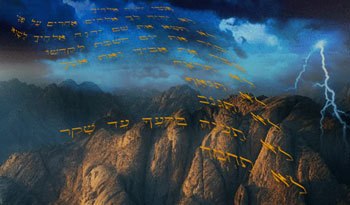
Torah at SinaiThat’s good as far as it goes, but it also, in my opinion, somewhat misses the point. What makes Mathison think that this entity we refer to as “the Church” will exist as such upon the coming of King Messiah?

By stating that Israel and the Church are the same thing, Mathison denies the fact that the Sinai Covenant was made exclusively with the Children of Israel, that is, the biological descendents of Abraham, and of Isaac, and of Jacob, and that non-Israelites could only be admitted to that covenant by assimilating into Israel, typically by intermarrying into the tribes (in modern times, we’d say that they would have to convert to Judaism).

If Mathison believes that Israel = Church and that Church = Israel, then all of the covenants God made with Israel must, by definition apply to Jews and Christians equally.

That means he is either validating the “One Law” proposition, and all we believing non-Jews are obligated to the identical set of commandments of Torah as are the Jews, or that after Jesus “fulfilled” the Torah commandments, they became null and void, since putting your faith in Jesus made it as if you had already fulfilled the Torah and thus, Christ’s righteousness is transferred to you.

That basically destroys the Jewish people as a people group and nation unique to God and effectively, any believing Jew at that point converts to Christianity.

Except that’s not what the New Covenant language in Jeremiah 31 and Ezekiel 36 says. Re-read the text from those parts of the Bible I quoted above. They are worded such that Israel would literally observe the Torah commandments in the New Covenant era, an era which arguably was inaugurated with the life, death, and resurrection of Rav Yeshua, but one that will not be completely realized until our Rav returns as King Messiah.

In other words, this is all future tense. Israel will observe the Torah in the future when Moshiach rules Israel and the world from his throne in Jerusalem. If we are to live as if the King were already on his throne, even though he is still absent, a King in exile so to speak, then one might say Israel, national Israel, that is, the Jewish people, the objects of the Sinai and New Covenants, should observe the Torah commandments now.

This is especially true of Jews in Messiah since they have the “down-payment” of the Spirit, and thus there is greater emphasis to observe the mitzvot based on both Sinai and the New Covenant.

If Church = Israel, then it means Gentile believers in Yeshua should also observe the mitzvot in a manner identical to the Jews.

Abraham and the starsI don’t believe that’s true, of course, and I’ve written many times on why, including in this summary article about how it’s possible for we non-Jewish people of the nations who have joined ourselves to Israel through Rav Yeshua can benefit from some of the New Covenant blessings.

The conclusion of Mathison’s article reads like this:

The relationship between Israel and the church in the New Testament is not always easy to discern, but it can be understood if we remember the differences between national Israel and true Israel in both the Old Testament and the New, and if we keep in mind what Paul teaches in Romans 11. Israel’s present hardening has a purpose in God’s plan, but this hardening is not permanent. The future restoration of the nation of Israel will involve their re-grafting into the olive tree, the one people of God. The restoration of Israel will mean their becoming part of the “true Israel” by faith in Jesus Christ the Messiah.

In general, Mathison believes that national Israel (though not necessarily each and every individual Jewish person) will be “saved”, that is, merit a place in the world to come, along with the “Church”.

But if I don’t believe there will be a Church when Jesus returns, then who are we and what will we be?

“In that day I will raise up the fallen booth of David,
And wall up its breaches;
I will also raise up its ruins
And rebuild it as in the days of old;
That they may possess the remnant of Edom
And all the nations who are called by My name,”
Declares the Lord who does this.

Amos 9:11-12

We will be the people of the nations who are called by His Name. OK, “Christian” is easier to say, but that term comes with a lot of baggage; a lot of anti-Semitic, anti-Jewish people, anti-Judaism, and anti-Israel baggage.

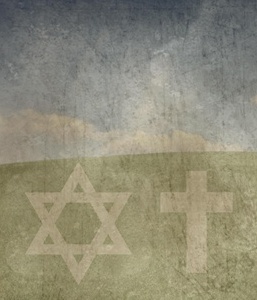
Judaism and ChristianityThat’s why people who think, believe, and behave like me tend to refer to themselves/ourselves by some other “label” than “Christian,” such as “Messianic Gentile” or “Talmid Yeshua”.

Ultimately, Mathison and those Christians associated with Reformed Theology aren’t replacement theorists, and they do believe that in the end all (or most) of Israel will be saved, but I don’t agree that there’s a “true” Israel vs. a “national” Israel. That totally invalidates the vast majority of the Jewish people over the past nearly two-thousand years who have lived and died having true faith in the God of their forefathers and who have declared in the Shema that “Hashem is One.”

It also invalidates the covenants, since every single Jewish person who has ever lived was born into a covenant relationship with God. Every single Jew, not just Jesus-believing Jews.

Mathison doesn’t say it as such, but the feeling I got reading his article was that the Church was at the top of the heap and Israel, because nationally they’ll only come to faith in Jesus in the end, is somewhat “lesser”. I think causality was reversed.

Even Rav Yeshua said “Salvation is from the Jews” (John 4:22), so it is the attachment of the non-Jew to Israel through Rav Yeshua that leads to salvation. Without Israel and her King and without the grace of God, the nations of the world are destined for destruction because we have no covenant status before Hashem (unless you consider Genesis 9 as a binding covenant).

Mathison flirts with some pretty good ideas, he just doesn’t take them far enough. He doesn’t flip the paradigm so that non-Jewish disciples are dependent on our relationship with Israel and her King rather than the Jews being dependent on Jesus and the Church.

I don’t think any body calling themselves “Christian” or “the Church” will ever truly admit that reality this side of the Messianic Era. I think many of those Christians who “get it” finally have to leave their churches, go someplace else, and do something else, while they/we are waiting for the return of the King (though there are those who do hang in there and are able to maintain their balance).

No, I’m not “church-bashing”. During my two-year sojourn in a local, little Fundamentalist Baptist church, I met quite a few men and women who really did have the heart of Jesus, who were doing good, who loved God, who went out of their way to take care of the needy, the hungry, the lonely, and the lost.

MessiahI admire these people greatly and aspire to be more like them, because they are more like Rav Yeshua (although they wouldn’t think of him as such).

I just think Christianity needs to go further back into the Bible and completely rethink and reinterpret scriptures while setting aside anything that “the Church” has taught them. This is why I read and understand the Bible from a fundamentally Jewish point of view (as best as I am able, that is). It’s the only way that the overarching message of the Bible makes any sort of sense.

The truth is coming.

The Spiritual Responsibility of the Church to Israel

In a closed Facebook group, someone mentioned recently that the Noahide Siddur completely omits the Mussaf, probably because the wording is so closely associated with the exclusive relationship of the Jewish people to Hashem and the avodah of the Temple.

And while I’ve said in the past that Gentile Talmidei Yeshua are not Noahides (though I have been since corrected that a better title would be “more than a noahide”), this does bring up a boundary line between non-Jewish disciples of Rav Yeshua and the Jewish disciples (and Jewish people in general). There are just some things we can’t claim to share with Israel because they are the exclusive property of Israel.

Very recently, I wrote a blog post about a Christian’s duty to support and defend Israel and the Jewish people, even from the “war” being waged against them by our nation’s current administration.

It’s not always easy to do.

No, we’re not Israel. We’re not Jewish. But we still have a duty.

But what is the duty we Christians and/or Talmidei Yeshua have relative to the Jewish nation and her people?

The Jewish people are considered as one “organism.” What happens to one limb affects the entire body.

Every Jew recognizes that all the Jewish People are bound together. When there’s a terrorist attack in Israel, we all feel it. The Talmud says “Kol Yisrael areivim zeh la-zeh” – Every Jew is responsible one for another.

The story is told of the religious man who died and went to heaven. There, he appeared before the Heavenly Tribunal to hear a listing of his good deeds and bad. The man was quite satisfied to hear of all his mitzvahs. But he was shocked to have included amongst his transgressions the prohibition of eating pork.

“What?!” the man protested, “but I never once ate pork!”

“True,” spoke the Tribunal, “but for 20 years you lived next door to a man who ate pork, and you never made an effort to discuss it with him. For that, you are responsible.”

from the article “Responsible One for Another”
posted in the “Ask the Rabbi” column at
Aish.com

OK, that’s the responsibility of one Jew for another, but what about the rest of us?

“Then the King will say to those on His right, ‘Come, you who are blessed of My Father, inherit the kingdom prepared for you from the foundation of the world. For I was hungry, and you gave Me something to eat; I was thirsty, and you gave Me something to drink; I was a stranger, and you invited Me in; naked, and you clothed Me; I was sick, and you visited Me; I was in prison, and you came to Me.’ Then the righteous will answer Him, ‘Lord, when did we see You hungry, and feed You, or thirsty, and give You something to drink? And when did we see You a stranger, and invite You in, or naked, and clothe You? When did we see You sick, or in prison, and come to You?’ The King will answer and say to them, ‘Truly I say to you, to the extent that you did it to one of these brothers of Mine, even the least of them, you did it to Me.’”

Matthew 25:34-40 (NASB)

MessiahI once knew a Christian who had a unique interpretation of these verses. While on the surface, it seems as if the disciples of Yeshua (Jesus) are commanded to provide assistance for people who are hungry, thirsty, without clothing, or who are otherwise in distress or disadvantaged, this older Christian gentlemen (and one of the most steadfast doers of what Jesus commanded that I ever met) said he believed that we merit the reward spoken of by our Rav (he didn’t word it this way, of course) when we provide this sort of care specifically to the Jewish people, not just to people in general.

I’m not sure that’s likely, considering that Yeshua’s audience consisted of Jewish people and that Matthew’s Gospel is widely considered to have been written specifically to Jews, but on the other hand, it makes a sort of sense.

The Rav himself said that “salvation comes from the Jews” (John 4:22), and if Israel can be said, particularly through our Rav, to be a light to the nations (Isaiah 49:6), then we owe that light a great debt.

The Apostle Paul (Rav Shaul) believed that there were many advantages to being a Jew, as he chronicled in his Epistle to the Romans (Romans 3:1-2). Paul also commended the largely non-Jewish communities (“churches” if you will) in the diaspora for donating charity (tzedakah) to the Holy Ones in Jerusalem (see 1 Corinthians 16 and 2 Corinthians 8 for examples), as if the Gentiles owed it to the impoverished Jews in the Holy City.

Of course, there are other reasons we owe the Jewish people a debt:

On this day in 1601, Hebrew books that had been confiscated by Church authorities were burned in Rome. This was an unfortunate theme throughout the Middle Ages: In 1592, Pope Clement VIII had condemned the Talmud and other Hebrew writings as “obscene,” “blasphemous” and “abominable” — and ordered them all seized and burned. Centuries earlier, Pope Gregory IX persuaded French King Louis IX to burn some 10,000 copies of the Talmud (24 wagon loads) in Paris. As late as 1553, Cardinal Peter Caraffa (the future Pope Paul IV) ordered copies of the Talmud burned in the Papal States and across Italy. Yet despite all attempts to extinguish our faith, the light of Torah shines brightly till today.

from “This Day in Jewish History”
for Shevat 11
Aish.com

OK, you might say that you’re not Catholic or that this happened a long time ago and we don’t do this to Jewish people anymore, but the inherit memory of the Jewish people and the history of the Church’s “relationship” with the Jews is very long lived.

And sadly, even to this day, we can often find the spirit of Haman in the Church.

It’s so easy to wallow in the mud, to get tangled up in Israel’s final redemption and the current political landscape. It’s easy for non-Jews in Yeshua to experience jealousy over the advantage of the Jews (Romans 3:1-2), which I suppose is why Christianity developed the doctrine of supersessionism (or cryptosupersessionism as the case may be).

Rabbi Noah Weinberg of blessed memory wrote an article over 15 years ago called Free Will – Our Greatest Power. It’s somewhat lengthy, but here’s a summary of his five main points:

  • Level One: Don’t be a sleepwalker. Make decisions actively.
  • Level Two: Don’t be a puppet of society’s goals, or a slave to your old decisions.
  • Level Three: Be aware of the conflict between the cravings of your body and the aspirations of your soul.
  • Level Four: Identify with your soul, not your body.
  • Level Five: Make your will God’s will.
Rabbi Weinberg
Rabbi Noah Weinberg

If you read the entire missive, you’ll see that having free will and making Hashem’s will our will results in an intersection between the mundane and the Divine. We learn to see past the physical reality of our world and the things (and people and nations) we often fight against, and perceive them (things, people, nations) through a spiritual lens.

By the way, this isn’t an either-or affair:

Given that we live in a physical world, much of the goal of Judaism is to infuse the physicality with holiness. We say a blessing before eating our special kosher food, we have a framework for sanctifying our marital relations, etc.

from the article “What is Holiness?”
posted in the “Ask the Rabbi” column
Aish.com

In the western mindset, we tend to think of things in binary terms. Something is either this or that, we turn left or right, we can choose this one or that one. But that mindset, including within the Christian Church, is based on ancient Greek philosophy.

Judaism and Hebrew thought is much more comfortable with dynamic contradictions in which seeming opposites can live together, if not at peace, then at least under a flag of truce.

Observant Jews don’t choose between the material and spiritual worlds, they infuse the physical with the spiritual. In my own dim little way, I can see Israel as both the present political reality and the Holy Nation of God given to the Jewish people as their perpetual heritage.

I think if we choose to put on that pair of lenses and see the many aspects of our world, and particularly Israel and the Jewish people, the way God sees them, we would have no doubt in our minds (or hearts) at all that we should be doing all we can to assist an Israel under siege, or at the very least, not to get in Israel’s way.

I said that the physical and the spiritual can co-exist in dynamic tension, but looking at Level Four of Rav Weinberg’s summary, it seems like that co-existence isn’t exactly 50/50. If we can perfect our vision, it means being biased somewhat toward the spiritual side of our sight. In this context, that means seeing more of Israel’s spiritual reality than her current physical and political reality. It means seeing Israel more as what she’ll be when her full redemption arrives.

For when Israel’s redemption arrives, ours will arrive with him.

If your bread fell out of heaven, you might be afraid to make a diet of it. Sure, it’s convenient, but most people would rather sink their teeth into a steak, or at least a potato—something that feels like a part of their world.

That’s also the way many people feel about any topic that touches on the spiritual. It is the unknowableness of it—that you can’t grasp it in your hand or tally it up with your assets—that causes people to shun it, to run from it, to even deny it exists.

These people are running from who they are. Far more than we are a body with a bank account, we are spiritual beings. Without nourishment for our souls, we are plagued by insatiable cravings—like a body lacking essential nutrients.

For the human being, inner peace is achieved by first surrendering to the unknown.

-Rabbi Tzvi Freeman
“Grasping Bread from Heaven”
Chabad.org

If we don’t feed ourselves with “bread from Heaven,” not only will our spiritual self be starved, we won’t be able to recognize what is truly, spiritually real, and then act upon it in the present world.

What Would You Do To Fight Against America’s War on Israel?

I don’t usually get political on this blogspot, but sometimes things just build up.

The trigger was my reading two articles. The first was written by Caroline Glick and called The Obama Administration’s Most Covert War, which I found on Facebook. The second was written by Naomi Ragen and titled Israeli and American Jews: The Grand Canyon. That one was sent to me via email by my wife.

From Glick’s article:

Over the past several weeks, we have learned that the Obama administration believes it is at war with Israel. The war is not a shooting war, but a political war. Its goal is to bring the government to its knees to the point where Prime Minister Benjamin Netanyahu loses power or begs Obama and his advisers to shepherd Israel through a “peace process” in which Israel will renounce its rights to Jerusalem, Judea and Samaria.

This pretty much makes my blood boil. Anyone who knows me knows I’m not any sort of Obama fan, but the fact that he’s playing political games to establish his so-called legacy by risking the lives of every Israeli Jewish man, woman, and child is reprehensible and vile.

obama
President Obama

Naomi Ragan wrote about her encounter with a liberal Jewish woman during a short car ride here in America to highlight the chasm existing between Israeli and American Jews.

She was silent for a moment, then shook her head. “He [Netanyahu] shouldn’t have come to America. He shouldn’t have addressed Congress. It polarized American Jews, politicizing the support for Israel,” she said emphatically.

“I think it’s been politicized for a long time,” I answered drily. “Democrats voted for Obama. Republicans didn’t.”

That seemed to surprise her. “So, Israelis don’t like Obama?”

“They hate his guts.”

She shrugged. “Yes, I can understand that. What do you think happened to him?” She seemed honestly bewildered.

“Nothing happened to him. Anyone who did the slightest bit of research understood that he had been a member of an anti-Semitic church for twenty-five years; a church that gave an award to Louis Farrakhan.”

Ragen pulls no punches and takes no prisoners. It also seems quite true that Israeli Jews have a lived experience many American Jews (or Americans period) are clueless about.

The Ragen article continued:

If I’d had any doubts, her reaction put them to rest. She had been one of the 70 percent of American Jews to vote Democrat and elect Obama. Twice.

“You know, American Jews vote for the things that are important to them. Those are not always the same things that are important to Israelis.”

I looked surreptitiously at my watch, calculating how much more time we would be locked into this conversation. Too long to say nothing. So I ventured mildly: “What is important to you?”

“Well, women’s rights, reproductive rights. The environment. And fighting the evangelicals.”

I suddenly remembered something my Harvard-educated son recently told me: “Many American Jews will blindly follow any agenda created by the Liberal establishment because it makes them feel virtuous and like part of the in-crowd.”

“So,” I said unwisely, my temperature rising, “let me get this straight. You’re worried about abortions, climate change and being converted to Christianity?” I didn’t let her answer. “And those things are more vital, more important to you, than whether Israel’s greatest enemy gets an atom bomb to blow the next six million Jews off the face of the earth?”

ragen
Naomi Ragen

And the article ended…

Just at that moment, the hotel loomed into view. I thanked her for the ride, opening the door and stepping out as swiftly as possible. Before I closed the door, I turned back and looked at her.

“Please,” I begged her. “Don’t vote for Hillary.”

It was the last straw. “She’s better than Trump!”

“I don’t think so,” I told her with full confidence.

She rolled her eyes. I rolled mine.

And then the door slammed shut, and she disappeared in one direction, and I in another.

But then, why should you care about all this?

Here’s why.

The question shouldn’t be “Why are you, a Christian, here in a death camp, condemned for trying to save Jews?” The real question is “Why aren’t all the Christians here?”

-Joel C. Rosenberg, The Auschwitz Escape

I’m going to assume that the majority of people reading this blog aren’t Jewish but rather, American Christians or perhaps what I call Gentile Talmidei Yeshua, non-Jewish disciples of Rav Yeshua (Jesus).

My experience in various Messianic Jewish and (largely Gentile) Hebrew Roots groups is that their members, Jewish or Gentile, tend to be pro-Israel politically. Of course, I live in Idaho, which is a pretty “red” state, so folks here are generally conservative about a lot of things.

I have to believe that when Ragen says Israelis hate President Obama’s guts, it’s because they see Obama all but handing Muslim Iran the keys to a nuclear arsenal and showing them how to aim it at Israel.

glick
Caroline Glick

Caroline Glick’s article outlined the nuts and bolts of Obama’s (not-so) covert war against Israel in less passionate but no less disturbing terms. The country we’re citizens of (I’m assuming most of you live in the U.S.) is deliberately acting against the Israeli people, putting all their lives in jeopardy. It’s terrifying to think that the other people I share this nation with voted to elect a man into the office as President twice who is capable of such heinous acts.

Naomi Ragen complains about the liberal Jews who are more worried about “abortions, climate change and being converted to Christianity” than “whether Israel’s greatest enemy gets an atom bomb to blow the next six million Jews off the face of the earth.”

What about the rest of us?

If you’re religious and you’re a political conservative, you’re probably pro-Israel and in some fashion, oppositional to abortions and the idea of human created climate change. You may indeed want to “share the Gospel” with Jewish people, but if you’re Gentile Talmidei Yeshua, that might seem a somewhat different process to you than how Evangelicals might approach it.

Whoever you are, if you say you are pro-Israel, how far does that go?

I learned from this Aish article about Swedish journalist Petter Ljungggren, who tested anti-Semitism in his own country by putting on a kippah (he’s not Jewish) and letting himself be publicly cursed at, threatened, and harassed.

holocaustI’m not a big fan of non-Jews wearing traditionally Jewish apparel, but in this case, Ljungggren had a good reason. It makes me wonder if we all shouldn’t start donning kippot, not to imitate Jews but to stand in solidarity with them and with Israel.

Maybe we’d just feel social pressure like this young fellow, or maybe we’d experience a whole lot more.

Millions of human lives are at stake. Millions of Jewish Israeli lives are at stake. We happen to be living in a nation that’s at least contributed to if not acted as the direct cause of the danger to Israel.

If the Jews were once again rounded up and sent to the camps tomorrow would we Gentile disciples of Rav Yeshua (or just regular Christians) go with them?

The Blessings of Living in Israel are for the Jews

The Jewish people, the Almighty, the Torah and Eretz Yisroel (The Land of Israel). For more than 3,300 years we’ve been bound together. Did you ever wonder what the Sages taught us about how special is the Land of Israel? Here is a compilation from The Mitzvah to Live in Eretz Israel:

“There is no love like the love for the Land of Israel” — Bamidbar Rabba 23:7.

“There is no Torah like the Torah of the Land of Israel” — Bereshit Rabba 16,7.

“The air of the Land of Israel makes one wise” — Talmud, Bava Batra 158b.

“There are 10 portions of Torah in the world: 9 in the Land of Israel and 1 in the rest of the world” — Esther Rabba 1.

“If you desire to see the Shechina (Divine Presence) in this world, study Torah in the Land of Israel” — Midrash Tehillim 105.

“Living in the Land of Israel is the equivalent to all the mitzvot (commandments) in the Torah” — Sifrei, Parshat Re’eh, Tosefta Avoda Zara 5).

The Ramban, Nachmanides, writes that “We are commanded to take possession of the Land God gave to our forefathers, Avraham, Yitzchak and Ya’akov (Abraham, Isaac and Jacob). We must not leave it to others or in desolation, as God told them, ‘And you will take possession of the land, for I gave the Land to you to possess and you will settle the Land which I promised to your fathers’ (Deut. 17:14, 26:1).”

Israel is far more than just a country or a refuge for the Jewish people — it is an integral part of our spiritual destiny!

-Rabbi Kalman Packouz
Shabbat Shalom Weekly commentary for Torah Portion Bo (Exodus 10:1-13:16)
Aish.com

It’s quite clear Rabbi Packouz is addressing a Jewish audience. After all, what other people have ever been commanded to take possession of and live in the Land of Israel? Only the Jews, the modern descendants of the ancient Hebrews, the Israelites who wandered the desert for forty years prior to coming into their inheritance.

But I know more than a few non-Jewish Talmidei Yeshua who are envious and also desire the blessings listed above (I only quoted part of Rabbi Packouz’s article, so please click the link I provided above to read the full write-up).

I suppose we should be a little envious. After all there are tremendous blessings accorded the Jewish people for living in Israel that cannot be apprehended by anyone who isn’t Jewish. Further, except for maybe some exceptional cases, in Messianic Days, Israel will be filled with all or most of the world’s Jewish population. Imagine the prophesies finally being fulfilled.

“For I am the Lord your God,
The Holy One of Israel, your Savior;
I have given Egypt as your ransom,
Cush and Seba in your place.
“Since you are precious in My sight,
Since you are honored and I love you,
I will give other men in your place and other peoples in exchange for your life.
“Do not fear, for I am with you;
I will bring your offspring from the east,
And gather you from the west.
“I will say to the north, ‘Give them up!’
And to the south, ‘Do not hold them back.’
Bring My sons from afar
And My daughters from the ends of the earth,
Everyone who is called by My name,
And whom I have created for My glory,
Whom I have formed, even whom I have made.”

Isaiah 43:3-7 (NASB)

MessiahAccording to Judaism 101:

The mashiach will bring about the political and spiritual redemption of the Jewish people by bringing us back to Israel and restoring Jerusalem (Isaiah 11:11-12; Jeremiah 23:8; 30:3; Hosea 3:4-5). He will establish a government in Israel that will be the center of all world government, both for Jews and gentiles (Isaiah 2:2-4; 11:10; 42:1). He will rebuild the Temple and re-establish its worship (Jeremiah 33:18). He will restore the religious court system of Israel and establish Jewish law as the law of the land (Jeremiah 33:15).

All of this is part of the Jewish argument that Jesus (Yeshua) couldn’t possibly be the Messiah because during his earthly life in the late Second Temple period, he did none of these things and then he died.

Christians believe that he was resurrected, ascended into Heaven, is our High Priest in the Heavenly Court, and in due time, will return.

Most Christians don’t believe Jesus will politically and spiritually redeem the Jewish people upon his return, although they probably would agree that if Jews converted to Christianity, they would receive spiritual redemption (I don’t think the Church would go for the idea of Israel being an actual political entity under Jesus, let alone the Kingdom that would rule all the other nations of the world, even though the Bible states this).

I know a lot of Christians who would vehemently oppose any idea that Jesus would rebuild the Temple and re-establish the Levitical priesthood and sacrifices, let alone restore the Sanhedrin court system.

But if we set aside Christianity’s traditions as they steer the Church’s doctrinal teachings, and if we accept the fact that non-Jews do not have a portion in the Land of Israel, just what do we Goyim have as far as Israel goes?

Thus says the Lord God,

“Behold, I will lift up My hand to the nations
And set up My standard to the peoples;
And they will bring your sons in their bosom,
And your daughters will be carried on their shoulders.
“Kings will be your guardians,
And their princesses your nurses.
They will bow down to you with their faces to the earth
And lick the dust of your feet;
And you will know that I am the Lord;
Those who hopefully wait for Me will not be put to shame.”

Isaiah 49:22-23

“Arise, shine; for your light has come,
And the glory of the Lord has risen upon you.
“For behold, darkness will cover the earth
And deep darkness the peoples;
But the Lord will rise upon you
And His glory will appear upon you.
“Nations will come to your light,
And kings to the brightness of your rising.
“Lift up your eyes round about and see;
They all gather together, they come to you.
Your sons will come from afar,
And your daughters will be carried in the arms.

Isaiah 60:1-4

New arrivals at Ben Gurion airport

It seems our job is to facilitate the return of the Jewish people to Israel, to not just “surrender” them from our lands, but to take an active part in the Messiah’s mission to return each and every Jewish man, woman, and child to the bosom of their nation Israel, for the Jews are the nation of Israel. I’ve tried looking for information regarding what, if any, inheritance Gentiles may expect regarding Israel, but there’s nothing clearcut.

But something called ElijahNet.net suggests that the Gentiles who join themselves to Israel will indeed have a portion:

Will the Gentiles who have joined themselves to the Lord be separate from His people? The God of Israel says, “No. They will be part of My household, My family.” Will the Gentiles who join themselves to the Lord be excluded from the holy place and service of the Lord? God says, “No. They will worship Me in My house, along with those of the dispersed of Israel whom I have gathered. They will be gathered to the remnant of Israel.”

“In the last days, the mountain of the house of the Lord will be established as the chief of the mountains, and will be raised above the hills: and all the goyim will stream to it. And many peoples will come and say, ‘Come, let us go up to the mountain of the Lord, to the house of the God of Jacob; that He may teach us concerning His ways, and that we may walk in His paths, for the law [Torah] will go forth from Zion, and the word of the Lord from Jerusalem.’ And He will judge between the goyim, and will render decisions for many peoples; and they will hammer their swords into plowshares, nation will not lift up sword against nation, and never again will they learn war.” (Is. 2:2-3, Mic. 4:1-3)

God gave Ezekiel visions of a time to come when living, healing water would flow out of Jerusalem. (Ezek. 47:1-12) The Lord told Ezekiel that the alien in the midst of Israel will be allotted an inheritance among the tribes of Israel. (Ezek. 47:21-23)

I should point out that from a Jewish point of view, Ezekiel 47:21-23 isn’t about giving Gentiles part of the Land of Israel.

A more apparently Christian source has this to say:

Question: Are we as “gentile Christians” part of Israel (Rom 11:17)? Do any of the promises made to Israel as a nation apply to us, for example Deuteronomy 28 (I’ve often heard this one used by prosperity teachers although they never read past the fourteenth verse).

Answer (in part): Regarding your first question, I would say that “no” we are not “part of Israel” as gentile Christians. Both Jewish and Gentile Christians today make up the “Church” the “body of Christ” or “one new man” which Paul discusses in Ephesians 2. We, as Gentiles, were aliens from the commonwealth of Israel and strangers from the covenants of promise (Eph. 2:12), but now we have been brought near through Christ. But notice that we are not said to be “part of Israel” or a “new Israel.” Instead, both Jews and Gentiles are said to be joined into a new spiritual body, the one new man (Eph. 2:15). Another evidence that we are not “part of Israel” is found by carefully examining Paul’s use of the term “Israel” in Romans 9-11, and especially chapter 11. There, it will be found that “Israel” still refers to Jews.

Regarding your second question, “Do any of the promises made to Israel as a nation apply to us, for example Deuteronomy 28 . . .”

Moses at SinaiWhile there are principles in Deu. 28 which apply in general (e.g., God will bless a nation which is devoted to Him and follows His will, He will turn away from a nation—such as ours—which forsakes Him), the context of the passage is very clearly specific to the nation Israel. It includes curses which make absolutely no sense when applied to Gentiles (believers or otherwise). For example, the promise of worldwide scattering in judgment of disbelief: yet Gentiles (non-Jews) have always been scattered all over the world.

Whereas all scripture is written for our learning (Rom. 15:4), it is not all written specifically to us—and this is the case in Deuteronomy 28. Both the blessings and curses stated there apply to Israel, as the phrase “wandering Jew” and history abundantly prove.

Concerning the blessings which come to believing Gentiles, this is best understood by studying the relationship between the New Covenant (given to Israel in Jeremiah 31) and the Church.

Of course, there are a seemingly endless collection of Jewish and Christian information sources on the web, so this is only a very tiny sampling.

I couldn’t find anything at AskNoah.org about what sort of connection there could possibly be between a righteous Gentile and the Land of Israel.

I did find something on their view of the New Covenant in Jeremiah 31, as well as whether or not Noahides will worship at the Third Temple. From the latter article:

Gentiles were welcomed to bring their sacrificial offerings for G-d to the First and Second Temples in Jerusalem, and they will participate even more at the Third Temple – especially during the festival of Sukkot (Zechariah 14:16).

Also…

In his commentary on the Torah section beginning with Genesis 12:1, Ramban (Nachmanides) wrote:

“Even in the time of Joshua, … the Gentiles knew that this place was the most august of all, that it was at the center of the inhabited world; and [Torah] Tradition had taught them that it corresponds in this world to the celestial Temple where Divine Majesty, called (righteousness), resides.”

And…

When the First Temple was inaugurated by King Solomon, he beseeched G-d with an eloquent prayer that included the following words (Kings I, 8:41-43) (which show that in the past, Gentiles were welcomed to the First and Second Temples, and that they will participate even more in the Third Temple)…

And finally, the article quotes from Isaiah 2:2-3 regarding the participation of Gentiles in the Temple:

“And it will come to pass at the end of days that the mountain of G-d’s House will be firmly established, even higher than the peaks, and all the peoples will flow toward it as a river. And many nations will go and will cry, ‘Let us go up toward the mountain of G-d’s House, to the House of the L-rd of Jacob, and we will learn from His ways and walk in His paths, for out of Zion goes forth Torah and the word of G-d from Jerusalem.’ “

Of course, participation in the Temple rites is not the same as having any portion in the Land. Isaiah 56 aside, I can’t find a legitimate Jewish commentary saying that any Gentiles will have a permanent home in the Land of Israel at all. It seems that we can certainly visit, and if intermarried, the Gentile would probably live in Israel with the Jewish spouse, but that’s about it.

christian-tourists-in-israel
Christian tourists in Israel

Is that such a bad thing? I know some people who operate in the Hebrew Roots space who most likely would think so. I think some of those non-Jews somehow believe they have “rights” not only to the Land of Israel, but to the Torah mitzvot as well. It’s been a long-standing argument. The relationship between Gentiles and the Land of Israel is probably something like how Jews traditionally accept Gentiles visiting the synagogue:

Non-Jews are always welcome to attend services in a synagogue, so long as they behave as proper guests. Proselytizing and “witnessing” to the congregation are not proper guest behavior.

When going to a synagogue, you should dress as you would for church: nicely, formally, and modestly. A man should wear a yarmulke (skullcap) if Jewish men in the congregation do so; yarmulkes are available at the entrance for those who do not have one. In some synagogues, married women should also wear a head covering. A piece of lace sometimes called a “chapel hat” is generally provided for this purpose in synagogues where this is required. Non-Jews should not, however, wear a tallit (prayer shawl) or tefillin, because these items are signs of our obligation to observe Jewish law.

During services, non-Jews can follow along with the English, which is normally printed side-by-side with the Hebrew in the prayerbook. You may join in with as much or as little of the prayer service as you feel comfortable participating in. You may wish to review Jewish Liturgy before attending the service, to gain a better understanding of what is going on.

Non-Jews should stand whenever the Ark is open and when the Torah is carried to or from the Ark, as a sign of respect for the Torah and for G-d. At any other time where worshippers stand, non-Jews may stand or sit.

When we non-Jews are in Israel, we are guests and we are expected to treat our hosts with proper respect, just as if we were visiting someone else’s house. You wouldn’t go into someone else’s home and act as if you lived there, would you?

In Rabbi Moshe Weiner’s Passover message to all Noahides, he states:

One of the wonders of the future redemption is the revelation of the Divine light that will shine onto the whole world, to all humanity (Isaiah 60:3). From the power of this light, all people will recognize the true existence of the Master of the world, Who fills the whole world, as stated by the prophet Isaiah (52:8-10): “with their own eyes they will see that G-d returns to Zion. Burst out, sing glad song in unison, O ruins of Jerusalem together, for G-d will have comforted His people; He will have redeemed Jerusalem. G-d has bared His holy arm before the eyes of all the nations; all ends of the earth will see the salvation of our G-d.”

Just as Moses our teacher at Mount Sinai began to repair the world, including all the Children of Noah by giving the Seven Commandments that were commanded to them, so too, the Messiah will teach and show the world (but in a more wondrous manner) the same recognition in the truth of the Creator of the universe which began to be revealed by Moses.

It is a great merit for each and every one of us to bring himself and his community to the faith and anticipation of this future freedom for the whole world. This will be freedom from evil and falsehood, and a redemption by which we will merit to go out from darkness to a great and true light.

Toward the lightCertainly it seems, the righteous Gentiles are included in many of the blessings of Messiah and that both Jew and Gentile will “go out from darkness to a great and true light.”

But that’s as far as I can understand it. All of those blessings Rabbi Packouz mentions that are received by those living in the Land of Israel are only received by the Jews living in the Land of Israel. For the Gentiles, not so much.

I can only imagine that Gentiles are still blessed in some manner when they/we visit Israel, but we’re visitors and guests, not residents. We may be associated with Israel as citizens of the vassal nations, subservient to our King, and we may have been brought near to her (see Ephesians 2:13) so that there is to be peace between Israel and we people of the nations (although I suspect that peace won’t be truly realized until the Messiah establishes his reign as King in Israel over the world), but none of that means that we are Israel, nor that we have rights to any of her real estate (at least as far as I can discover).

I guess in the resurrection, just like right now, I’ll have to be satisfied with my own little corner of Idaho.

My (Jewish) wife did surprise me again the other day. Out of a proverbial “clear blue sky,” she asked me if I’d given up on any plans to visit Israel. I didn’t know what to say. One circumstance or the other has gotten in the way and I haven’t even been thinking of it lately. I also am concerned about expenses for a number of complicated (and private) reasons, so thought maybe my long-suffering wife would appreciate it if I didn’t spend thousands of dollars playing tourist in the middle east.

I don’t know.

Blogger Ro Pinto wrote multiple blog posts about her recent trip to Israel including this summary, and it is abundantly obvious that she has a tremendous love of and devotion to the God of Israel, His people, and their Land. Some of her spiritual insights border on spectacular, which is a realm that has always eluded me.

Compared to how she related to Israel during her trip, I can’t imagine achieving anywhere near such experiences and insights. I think a visit to Israel is supposed to be as much about what you bring to the table spiritually as what you expect to receive.

Visiting Israel as a Gentile is not like traveling to any other nation on Earth. Jerusalem is the only city on the planet where God has put His Holy Name. Every time I seriously think of traveling to the Holy Land, I feel humbled and chagrined. Who am I compared the men and women of the Bible who trod that ancient Land, the Prophets, the Kings, the warriors, the scholars?

Every time I read or hear from some non-Jewish person who lays claim to Israel or the Torah, I’m astonished at the “Obama-like” audacity they exhibit. The feeling of being able to do anything you want, regardless of the (in this case Biblical) Law, without so much as a “by your leave”. You can’t bypass the God of Israel with a pen and a phone.

Who among the Gentile Talmidei Yeshua hasn’t felt the call of Israel at one point of another in our lives? Who hasn’t, at some time in our existence, wanted to bathe in the glow of the blessings Rabbi Packouz outlined in his “Shabbat Shalom Weekly” article?

Up to JerusalemBut it’s like being a kid and watching the boy or girl next door receive a shiny new bicycle for their birthday. Just because you want to ride on that bike too, doesn’t mean it belongs to you.

Tipping Point to the End of Days

Question:

With the world appearing more and more a dangerous place, I’m wondering what Judaism has to say about the possibility of an apocalyptic final event. Does such a concept exist, and how will that play out?

The Aish Rabbi Answers in Part:

The other path is described as Messiah coming “humble and riding upon a donkey” (Zechariah 9:9). In this scenario, nature will take its course, and society will undergo a slow painful deterioration, with much suffering. God’s presence will be hidden, and his guidance will not be perceivable.

According to this second path, there will be a valueless society in which religion will not only be chided, it will be used to promote immorality. Young people will not respect the old, and governments will become godless. This is why the Midrash says, “One third of the world’s woes will come in the generation preceding the Messiah.” (Rabbi Aryeh Kaplan, “Handbook of Jewish Thought”)

“End of Days”
from the Ask the Rabbi column
Aish.com

I know a lot of religious pundits, both online and in various congregations and study groups, have tackled the question of the “end times,” so I’m probably being ridiculously redundant. On the other hand (and I’m sure I’ll get in trouble for this), as I was reading this column, I was thinking about how I, from my own (somewhat) unique point of view, see the matter.

According to the Jewish sages, the coming of Messiah can occur in one of two ways (the Aish Rabbi outlines both). The first is that the world becomes filled with love and kindness and all people everywhere bow down to and swears obedience to King Messiah. All the world has to do is engage in teshuvah (repentance) en masse and perform Tikkun Olam (repairing the world).

I don’t see that scenario taking place any time soon.

The other path is as you see quoted above. Instead of Messiah entering this world and establishing his Kingdom in honor and glory, he humbly emerges on the scene riding upon a donkey. This event happens if the people of the world never get their act together, and we allow society to “undergo a slow painful deterioration, with much suffering.”

moshiach ben yosefSo there has to be a “tipping point,” so to speak, where the decision is made, when the fate of the planet is determined by worldwide human behavior and intent.

According to the sages, this tipping point occurs in the future.

But what if it has already happened?

In addition to Zechariah 9:9, consider the following:

When they had approached Jerusalem and had come to Bethphage, at the Mount of Olives, then Jesus sent two disciples, saying to them, “Go into the village opposite you, and immediately you will find a donkey tied there and a colt with her; untie them and bring them to Me. If anyone says anything to you, you shall say, ‘The Lord has need of them,’ and immediately he will send them.” This took place to fulfill what was spoken through the prophet:

“Say to the daughter of Zion,
‘Behold your King is coming to you,
Gentle, and mounted on a donkey,
Even on a colt, the foal of a beast of burden.’”

The disciples went and did just as Jesus had instructed them, and brought the donkey and the colt, and laid their coats on them; and He sat on the coats. Most of the crowd spread their coats in the road, and others were cutting branches from the trees and spreading them in the road. The crowds going ahead of Him, and those who followed, were shouting,

“Hosanna to the Son of David;
Blessed is He who comes in the name of the Lord;
Hosanna in the highest!”

When He had entered Jerusalem, all the city was stirred, saying, “Who is this?” And the crowds were saying, “This is the prophet Jesus, from Nazareth in Galilee.”

Matthew 21:1-11 (NASB)

The crowds seeing “the prophet Jesus, from Nazareth in Galilee” couldn’t possibly have missed the symbolism. No wonder they were filled with joy. The Messiah had arrived.

But here’s what was also necessary, at least as I interpret the sages:

“Jerusalem, Jerusalem, who kills the prophets and stones those who are sent to her! How often I wanted to gather your children together, the way a hen gathers her chicks under her wings, and you were unwilling. Behold, your house is being left to you desolate! For I say to you, from now on you will not see Me until you say, ‘Blessed is He who comes in the name of the Lord!’”

Matthew 23:37-39

If the Talmudic sages are right (and I’m taking a big leap here), then when Rav Yeshua (Jesus) entered Jerusalem on a donkey, the tipping point had already arrived and the decision had been made that the world would slowly degenerate and degrade into moral chaos.

I think Yeshua’s lament over Jerusalem was his expression of sorrow of what the Jewish people would have to suffer in a world that has always hated them. No matter what they had suffered up to this point, the world was going to become so evil, that it would become progressively worse for all Jews everywhere.

hiddenMaybe this is why we don’t have prophets and miracles anymore, at least not like we saw them in the Bible including as illustrated in the Apostolic Scriptures. Because “God’s presence” is “hidden, and His guidance” is “not…perceivable.” This differs from why the “age of miracles” is believed by many Christians to have ended.

The Aish Rabbi continues (I’m repeating some of what I quoted above for emphasis):

According to this second path, there will be a valueless society in which religion will not only be chided, it will be used to promote immorality. Young people will not respect the old, and governments will become godless. This is why the Midrash says, “One third of the world’s woes will come in the generation preceding the Messiah.” (Rabbi Aryeh Kaplan, “Handbook of Jewish Thought”)

According to the Talmud, as the Messianic era approaches, the world will experience greater and greater turmoil: Vast economic fluctuations, social rebellion, and widespread despair.

Isn’t that much of what we see happening around us today? Isn’t our society “valueless” (though it doesn’t refer to itself as such) in which the faithful are not only chided, but we also see religious groups, including churches and synagogues as well as our own government, promoting godlessness?

Of course the world of the past nearly two-thousand years has been filled to abundance with chaos, lack of ethics, cruelty, moral abandon, and our religions, including Christianity, have stood many times against the will of God rather than for it, especially in the historic treatment of the Jewish people.

But then again, if the tipping point regarding how Messiah would come was made in the early years of the First Century C.E., then from that moment on, we should have known that collective humanity wasn’t going to spontaneously repent and join together under the one Jewish King.

Of course, this only makes sense if my creative blending of scripture and Talmud actually works. I know many Jews chafe whenever a non-Jew such as myself appropriates Jewish literature and adapts it to “point” to the revelation of Rav Yeshua as the coming Moshiach.

They state that the Messiah is understood to come only once and not twice, but even though we consider him our High Priest in the Heavenly Court, in some metaphysical way, perhaps he is also still with us, humbly riding that donkey in the degenerate alleys and byways of our many cities in the world, suffering along with his people, waiting for the proper moment when the world finally collapses under the weight of its own iniquity, and then a world war of “immense proportion led by King Gog from the land of Magog” will trigger the final battle between good and evil (Ezekiel ch. 38, 39; Zechariah 21:2, 14:23; Talmud – Sukkah 52, Sanhedrin 97, Sotah 49).

The Aish Rabbi states:

What is the nature of this cataclysmic war? Traditional Jewish sources state that the nations of the world will descend against the Jews and Jerusalem. The Crusades, Pogroms and Arab Terrorism will pale in comparison. Eventually, when all the dust settles, the Jews will be defeated and led out in chains. The Torah will be proclaimed a falsehood.

Then, just when we think the story is over, the Messiah will come and lead the Jewish redemption. He will inspire all peoples to follow God, rebuild the Temple, gather in any remaining Jewish exiles to Israel, and re-establish the Sanhedrin. (Maimonides – Melachim ch. 11-12)

fall of jerusalemIt’s telling that one of the predictions, according to the sages, is that the nation of Israel will ultimately be defeated, the Jewish people will once again be in chains, and the “Torah will be proclaimed a falsehood.”

I can imagine that a good many Christians and Jews will have their faith crushed when Israel is vanquished in the final war and yet the Messiah does not come (or Jesus doesn’t come back). However, the Church has already declared the Torah as a falsehood, at least the way Jews understand it, as has Islam, so it’s not hard to imagine that Israel’s enemies won’t just be the secular governments, but Muslim nations and Christians as well.

That’s a rather sobering thought. That means any of us who continue to support Israel through these times will be enemies of many nations, probably including our own.

It means that even those Jews who make aliyah and those Gentile believers who are family members accompanying them or who otherwise manage to reside in the Land, are voluntarily painting a huge target on their backs, one that will bring the wrath of the entire planet down upon them and their loved ones.

“But when you see the abomination of desolation standing where it should not be (let the reader understand), then those who are in Judea must flee to the mountains. The one who is on the housetop must not go down, or go in to get anything out of his house; and the one who is in the field must not turn back to get his coat. But woe to those who are pregnant and to those who are nursing babies in those days! But pray that it may not happen in the winter. For those days will be a time of tribulation such as has not occurred since the beginning of the creation which God created until now, and never will. Unless the Lord had shortened those days, no life would have been saved; but for the sake of the elect, whom He chose, He shortened the days. And then if anyone says to you, ‘Behold, here is the Christ’; or, ‘Behold, He is there’; do not believe him; for false Christs and false prophets will arise, and will show signs and wonders, in order to lead astray, if possible, the elect. But take heed; behold, I have told you everything in advance.”

Mark 13:14-23

I know there are some who believe Rav Yeshua was predicting the downfall of Jerusalem in 70 C.E., and perhaps he was, but then again, it’s possible to use a good prophesy twice. This could as well be applied to the coming destruction of Jerusalem in the final war. To my few readers in Israel, depending on when this war comes, this prophesy could well apply to you.

rusty toolsI encourage you to click the link I provided above and read what else the Aish Rabbi has to say about Messianic redemption. As I read him, it seems clear that he still believes things could go either way. Either the world still has time to come together and summon the Messiah in peace, or we could still plunge into darkness, war, and chaos.

Assuming the Jewish sages are correct, I believe the decision was made long ago, and that for the past twenty centuries, the world has been slowly eroding, like the banks of a river being gradually washed away, or a collection of tools abandoned in some workshop and crumbling into rust as the years pass.

For the coming of the Son of Man will be just like the days of Noah. For as in those days before the flood they were eating and drinking, marrying and giving in marriage, until the day that Noah entered the ark, and they did not understand until the flood came and took them all away; so will the coming of the Son of Man be.

Matthew 24:37-39

Just as it was in the days of Noah as the flood approached, so it is today, and so has it been for almost two-thousand years. Life has seemed “ordinary,” but there are days ahead when we will dispair.

Rabbi Abraham J. Twerski wrote a commentary on Psalm 51:5 about King David and making teshuvah, even for sins which may be the result of some in-born character trait. If David was born with the biological nature to have great passion, and that passion led him to sin with Batsheva, it was still his responsibility.

In making teshuvah before Hashem, David takes personal responsibility for his sins rather than blaming other people or circumstances. Granted, he goes through many things, including the death of his first child by Batsheva, before arriving at this point, but he did arrive.

The same can be said for you and me. Moshiach is not here yet. We still have time. However, time may be very short. We don’t know, of course, but why wait? Make teshuvah now and serve God as if the war will begin tomorrow and you will lose time and your life.

The Aish Rabbi finishes his essay this way:

Despite the gloom, the world does seem headed toward redemption. One apparent sign is that the Jewish people have returned to the Land of Israel and made it bloom again. Additionally, a major movement is afoot of young Jews returning to Torah tradition.

By the way, Maimonides states that the popularity of Christianity and Islam is part of God’s plan to spread the ideals of Torah throughout the world. This moves society closer to a perfected state of morality and toward a greater understanding of God. All this is in preparation for the Messianic age.

MessiahThe Messiah can come at any moment, and it all depends on our actions. God is ready when we are. For as King David says: “Redemption will come today – if you hearken to His voice.”

While we may not be able to avert the disaster of a morally decaying world and an impending and catastrophic world war which will destroy Jerusalem, we can prepare ourselves for those times by learning the Torah as it applies to each of us, whether as a Jew or a non-Jewish disciple of the Rav. When the horrors have finally passed, as the Rabbi states quoting King David, then there will be redemption for us, if we have hearkened to His voice.