Tag Archives: Jesus

The Mystery of Romans: Who are the “Weak” and the “Strong”?

Apostle-Paul-PreachesWelcome those who are weak in faith, but not for the purpose of quarreling over opinions. Some believe in eating anything, while the weak eat only vegetables. Those who eat must not despise those who abstain, and those who abstain must not pass judgment on those who eat; for God has welcomed them. Who are you to pass judgment on servants of another? It is before their own lord that they stand or fall. And they will be upheld, for the Lord is able to make them stand.

Some judge one day to be better than another, while others judge all days to be alike. Let all be fully convinced in their own minds. Those who observe the day, observe it in honor of the Lord. Also those who eat, eat in honor of the Lord, since they give thanks to God; while those who abstain, abstain in honor of the Lord and give thanks to God.

We do not live to ourselves, and we do not die to ourselves. If we live, we live to the Lord, and if we die, we die to the Lord; so then, whether we live or whether we die, we are the Lord’s. For to this end Christ died and lived again, so that he might be Lord of both the dead and the living.

Why do you pass judgment on your brother or sister? Or you, why do you despise your brother or sister? For we will all stand before the judgment seat of God. For it is written,

“As I live, says the Lord, every knee shall bow to me,
and every tongue shall give praise to God.”

So then, each of us will be accountable to God.

Romans 14:1-12 (NASB)

I’ve just finished reading the third chapter in the Mark D. Nanos book The Mystery of Romans: The Jewish Context of Paul’s Letters. Yes, it did take me a long time and for two reasons. Nanos is quite erudite in his writing, packing each page densely with information. I have to take copious notes on all points of interest while I’m reading. Thus reading and writing while I’m reading makes for slow going.

But I’ve gotten through the eighty pages of “Chapter 3: Who Were the ‘Weak’ and the ‘Strong’ in Rome?” Hint: they aren’t who you think they are, at least according to Nanos.

But first things first.

There is almost universal agreement (it appears to be an almost unquestioned fact) that the “weak” were Christian Jews who still practiced the Law and Jewish customs (with most maintaining that this group would have included “God-fearing” gentiles as well), and that the “strong” were Christian gentiles (as well as Christian Jews like Paul who have supposedly abandoned Jewish practices).

-Nanos, Chapter 3, pg 87

Mark NanosIn my previous review of Chapter 1 of this book, I noted that Nanos takes a high view of Jewish Torah observance and a Gentile “Torah-respecting” lifestyle, meaning that, from a Pauline perspective (according to Nanos), Gentiles in the ancient Messianic Jewish communities were expected to support and uphold Jewish Torah observance while at the same time, conforming to the application of Torah to the Gentile believers as defined by the halakhic decision made by James and the Elders and Apostles in Acts 15 (which was probably supported and expanded by an oral teaching that accompanied the “Jerusalem letter,” the Didache being one possibility).

I mention this, because it must be taken into account in the current conversation, for this position is the template for everything that follows in Nanos’ analysis of Paul’s famous letter to the Romans.

Let’s cut to the chase:

Paul was not concerned with distinguishing between Christian Jews/gentiles who practiced (“weak”) or did not practice (“strong”) the Law and customs, with the hope that all would eventually abandon the Law and customers as they grew stronger in their faith in Christ. His concern was rather that all the non-Christian Jews (“stumbling” in faith toward Christ) in Rome would recognize that Jesus was the Christ of Israel, their Savior, and that they would thus believe in Christ and become Christians (“able” to have faith toward Christ) — Christian Jews. As Christian Jews they would indeed continue to be Jews in that they continue to practice the Law and Jewish customs in faith, not in order to justify themselves, but because they are Jews justified by the Jewish Savior/Messiah/Christ, thus joining with gentiles who are Christians in giving glory with “one accord” and thus “one voice” to the One Lord: “the God and Father of our Lord Jesus Christ” (15:6).

-Nanos, pp 154-5

In order to make that explanation work, the believing Gentiles and believing Jews must share a common synagogue or synagogues in Rome with the non-believing Jews. This isn’t as incredible as you might think. Most people assume that whenever Jews and Gentile God-fearers came to faith in Messiah, they left the synagogue and formed their own house churches. Sometimes that was true, but not always. Nanos and the resources he cites (you’ll have to see the book for the entire bibliography) support the idea that the believing body of Jews and Gentiles in Rome remained in their synagogue communities once they came to faith.
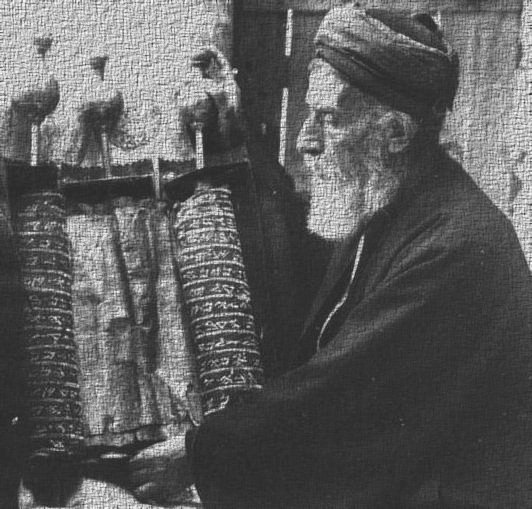
ancient-torahFor the Jewish believers, this probably seemed like a no-brainer at the time, since coming to faith in Yeshua as Messiah in the mid-first century was not particularly strange, and it certainly didn’t mean that the believing Jew was converting to a different religion as it would mean today if a Jew came to faith in Jesus and started going to Church (and for Messianic Jews today, they remain within Judaism as did Paul and the other Jewish believers in the apostolic era).

Also, Gentile God-fearers were commonly found in diaspora synagogues and although they had no covenant status reconciling them with God (unless some pre-Rabbinic status of “Noahide” were conferred upon them), nevertheless, they had come to believe that the God of Israel was the God over all. Once these Gentiles came to faith in Messiah, their was no requirement that their worship practices should change for after all, they were disciples of the Jewish Messiah King. Where else should they be but among Messiah’s people Israel? In fact, James and the Apostles in Jerusalem made this very point:

Therefore I have reached the decision that we should not trouble those Gentiles who are turning to God, but we should write to them to abstain only from things polluted by idols and from fornication and from whatever has been strangled and from blood. For in every city, for generations past, Moses has had those who proclaim him, for he has been read aloud every sabbath in the synagogues.”

Acts 15:19-21 (NASB)

Once coming to faith in Messiah, in order to fully comprehend and practice his teachings, it was necessary to continue accessing his “source material,” which, according to the ruling of the Council, were to be found in the Torah and the Prophets.

Those Jews and Gentiles in the local Roman synagogues who came to faith while davening and worshiping within those communities would still be attached to those communities, to their friends, to the Rabbis. And since Yeshua-worship wasn’t inherently “non-Jewish,” Nanos suggests the believing Gentiles and Jews would have remained in their original synagogues.

Why should we care about this?

Because we have several populations co-mingling within a single religious and community setting: non-believing Jews, believing Jews, and believing Gentiles.

Now this next point is important. As Gentile God-fearers, the non-Jews who regularly attended synagogue would have been observing a set of behaviors that would allow them to co-participate in the community without violating the requirements of Torah observant Jews. They would eat the same foods, probably pray the same prayers or prayers modified for non-Jewish people, and otherwise not interfere with the Jewish “ascendency” in their own synagogue.

In other words, they wouldn’t make waves.

But once the God-fearers became believers and realized, through Paul as well as through the halakhic ruling of the Apostles, that they were not obligated to convert to Judaism and take on the full yoke of Torah but they were still fully equal co-participants in salvation and justification before God, they got a little cocky.
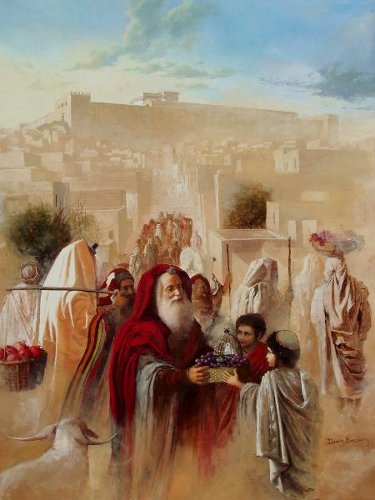
ancient_jerusalemIn Paul’s letter to the Galatians, the primary problem population (say that three times real fast) were “judaizers,” Jews or Jewish converts who were attempting to convince the Gentile population in the Galatian faith-communities that they had to convert to Judaism to be saved (and probably to re-enforce the idea among the Jewish population that being ethnically Jewish and Torah observant was what justified them before God, not faith in Messiah). The target population of Paul’s letter to Rome had the opposite problem: “gentilizers.”

The believing Jews wouldn’t bat an eye about continued Torah observance. For them, it would be a given, and of course, for the non-believing Jews in the synagogue, why should they change the observance given to them by their forefathers? But for the believing Gentiles, who didn’t have the same set of standards (although they definitely had standard of obedience as disciples), they started to “bug” the non-believing Jews about how now the believing Gentiles were “equal” without having to conform to the full body of Torah mitzvot.

And Paul was taking these Gentiles, the so-called “strong,” to task for disrespecting the “weak” who he felt in time, would also come to faith in Messiah. By their behavior, the Gentile believers were actually in danger of inhibiting Jews from coming to faith in their own Messiah (the parallels between this situation and the modern Christian Church are undeniable).

Let us therefore no longer pass judgment on one another, but resolve instead never to put a stumbling block or hindrance in the way of another. I know and am persuaded in the Lord Jesus that nothing is unclean in itself; but it is unclean for anyone who thinks it unclean. If your brother or sister is being injured by what you eat, you are no longer walking in love. Do not let what you eat cause the ruin of one for whom Christ died. So do not let your good be spoken of as evil. For the kingdom of God is not food and drink but righteousness and peace and joy in the Holy Spirit. The one who thus serves Christ is acceptable to God and has human approval. Let us then pursue what makes for peace and for mutual upbuilding. Do not, for the sake of food, destroy the work of God. Everything is indeed clean, but it is wrong for you to make others fall by what you eat; it is good not to eat meat or drink wine or do anything that makes your brother or sister stumble. The faith that you have, have as your own conviction before God. Blessed are those who have no reason to condemn themselves because of what they approve. But those who have doubts are condemned if they eat, because they do not act from faith; for whatever does not proceed from faith is sin.

Romans 14:13-23 (NASB)

Nanos asks his readers to look at this passage in sort of the opposite direction than the way we’ve been taught. Also keep in mind that, just like the situation we see in Galatians 2, the issue is table fellowship and offensive treatment, not food. If your brother or sister (here, Paul has to be relating believing Gentiles to non-believing Jews as “brothers and sisters,” perhaps because they attend the same synagogue community) stumbles (in their faith) because you, as a Gentile, are not obligated to keep the kosher laws, you are no longer walking in love.

While the Gentiles were “mere” God-fearers, they were in a “one-down” position in the synagogue because of legal status and let’s face it, it is a Jewish synagogue. Once they became co-participants in salvation because of Abrahamic faith, the Gentile believers became a tad bit obnoxious to the non-believing Jews and stopped “walking in love.”

There’s a lot Nanos says about the halachah of “walking in love” and the two greatest commandments of Jesus (Matthew 22:36-40) that applies here. You can’t really love God if you are taunting your neighbor who is “weak” in faith and has not yet become reconciled to Messiah.

I have great sorrow and unceasing anguish in my heart. For I could wish that I myself were accursed and cut off from Christ for the sake of my own people, my kindred according to the flesh.

Romans 9:2-3 (NASB)

stuart_dauermannPaul was desperate to share the “good news” to every Jew and he desired, above all else, that his own people should come to faith and redemption. So much so, that he was willing to surrender his own salvation if it would save some of his non-believing Jewish brothers and sisters. Clearly, Paul didn’t see himself, as a believing Jew, in any way disconnected from the larger community of non-believing Jews in Israel or the diaspora or national Israel as a whole. In other words, to reference Rabbi Dr. Stuart Dauermann, all Jewish people for Paul were Us, not Them.

I had a tough time with this chapter. I knew that Nanos was going to reframe the “weak vs. strong” argument in Romans 14, 15, but his build up to even stating his point took a long time. I finally had to jump back to the last pages of the chapter so I’d have some idea of what Nanos was getting at. Once I did, I found it easier to make it through the intervening pages.

According to Nanos, the “strong,” the believing Gentiles in the synagogue, should have known better than to try to “gentilize” the non-believing Jews and thus damaging relationships not only with them, but with the believing Jews who were also continuing to observe Torah and the Jewish customs. The Gentiles were cheapening their own “freedom” in Yeshua-faith by suggesting that the Torah devotion of non-believing Jews was a “weakness” on their part. However, Paul was actually saying that where they were weak was not in their faith in God and observance of the mitzvot, but their faith in Yeshua as Messiah. The Gentile “strong” were greater in that faith but ironically, they weren’t that strong either, for they became arrogant in their new status and in lacking love, I suspect they were also “weak” themselves.

Nanos makes such a complex argument, I don’t know that I can completely apprehend all of the nuances in just one reading, but I don’t really have the time to pour weeks more of study into a single chapter. The Mystery of Romans is such a compact container for such a large amount of data that I have no doubt I’ll have to read it a second time (or more) to tease out additional understanding and meaning. For now, I’m willing to entertain the idea that the “weak” and the “strong” can conform to an alternate meaning and in fact, they must if Paul is to remain consistent as a personality and in his theology throughout his letters and as depicted by Luke in Acts.

Addendum: Having just finished Chapter 4, a number of the points Nanos made about “weak” and “strong” are clearer, especially in relation to Gentile behavioral responsibilities toward Jewish people in general (both believing and non-believing). My next “meditation” on the Nanos book should be a great deal more coherent.

FFOZ TV Review: Fringes of the Garment

FFOZ TV Episode 22Episode 22: In the gospel story of the woman with the hemorrhage of blood, she is healed by touching the fringe of Jesus’ cloak. By touching Jesus’ fringe, the woman was acting upon the prophetic nature of an important biblical commandment. Episode twenty-two will introduce the commandment in Numbers for Jewish men to put fringes on the corners of their garments to remind them of God’s instructions. Viewers will then see how this all ties into the prophetic words of Zechariah about ten men from the nations grabbing a hold of the fringe of a Jew.

-from the Introduction to FFOZ TV: The Promise of What is to Come
Episode 22: Fringes of the Garment (click this link to watch video, not the image above)

The Lesson: The Mystery of Fringes of the Garment

This is a particular mystery I originally thought I had a pretty good handle on and one that traditional Christians would generally find missing in their educational database. What First Fruits of Zion teachers Toby Janicki and Aaron Eby presented was at least a little different from I expected. Parts of the lesson were considerably different.

But first things first.

Today’s “Biblical mystery” originates in the following text:

And behold, a woman who had suffered from a discharge of blood for twelve years came up behind him and touched the fringe of his garment, for she said to herself, “If I only touch his garment, I will be made well.” Jesus turned, and seeing her he said, “Take heart, daughter; your faith has made you well.” And instantly the woman was made well.

Matthew 9:20-22 (ESV)

Toby used the English Standard Version of the Bible for his reading. While I tend to prefer the New American Standard Version, after comparing the two translations of this scripture side-by-side, I understood why he made the selection he did (besides the fact that FFOZ defaults to the ESV translation as a matter of course). I also realized why Toby didn’t use the Delitzsch Hebrew Gospels for the reading, since it would have given away too much too fast.

Why did the woman with the “discharge of blood” seek healing specifically by touching “the fringe of his (Jesus’) garment?” What made her think that would stop years of bleeding? Was it just some sort of anomalous or random choice on her part? As it turns out, she wasn’t the only one to believe that touching “fringes” would produce a healing result:

And wherever he came, in villages, cities, or countryside, they laid the sick in the marketplaces and implored him that they might touch even the fringe of his garment. And as many as touched it were made well.

Mark 6:56 (ESV)

As it turns out, a lot of Jewish people believed that touching the fringe of Jesus’ garment would heal them. I’d completely missed this on my numerous read-throughs of the Bible and am grateful to Toby for pointing this out.

But most Christians wouldn’t understand the significance of the “fringes” of the clothing of a Jewish man in the late Second Temple era (or today, for that matter). “Fringes” makes it sound like people were touching a hem or edge of whatever Jesus was wearing. Why would that heal?

This is where even a little understanding of the Law of Moses comes in handy.

Speak to the Children of Israel and say to them that they shall make themselves tzitzis on the corners of their garments, throughout their generations. And they shall place upon the tzitzis of each corner a threat of turquoise wool. It shall constitute tzitzis for you, that you may see it and remember all the commandments of Hashem and perform them; and not explore after your heart and after your eyes after which you stray. So that you may remember and perform all My commandments and be holy to your God.

Numbers 15:38-40 (Stone Edition Tanakh)

Toby JanickiWhile Toby continued to use the ESV translation, I’m using a much more Jewish source for this scripture. The original Hebrew word for what we read translated in the New Testament as “fringes” is “tzitzit” (“tzitzis” in the Ashkenazi pronunciation). When we get to Aaron Eby’s portion of the program, we’ll learn what tzitzit are, but at this point in the show, Toby tells us that these “fringes” were a response to the commandment in Numbers 15 and that being on a Jewish man’s garment did two things:

  1. The fringes served as a reminder to the Jewish wearer of all of the commandments of God.
  2. The fringes served as a reminder to anyone seeing the wearer that this person was a Jew who was obedience to the God of Israel, since no other people were given the commandment of tzitzit or the Torah of Moses.

And lest you think that the fringes on Jesus’ garments weren’t really tzitzit because that commandment wasn’t being observed by Jewish men in that age, consider this:

For they widen their tefillin and lengthen their tzitziyot.

Matthew 23:5 (DHE Gospels)

“Tzitziyot” is the plural of “tzitzit” in Hebrew, and here we see Jesus criticizing some of the Pharisees for dramatically displaying the length of their fringes as well as the straps of their tefillin or phylacteries (the wearing of tzitzit and tefillin is still practiced by observant Jewish men today).

This brings us to our first clue in solving today’s Biblical mystery:

Clue 1: Jesus had fringes on the corners of his garment in obedience to the Numbers 15 commandment.

Now the scene shifts to Aaron Eby in Israel for a brief Hebrew language lesson on the Hebrew words for “fringe” and “corner.”

Aaron EbyAs I mentioned above, the word translated as “fringe” or “tassel” in some English Bibles is actually the Hebrew word “tzitzit” (plural: “tzitziyot”, although as Aaron says, English speakers use “tzitzit” often for both singular and plural).

The Hebrew word for “corner” in the context of a garment, is “kanaf.” Tzitzit are cords of wool (usually). The string of blue colored thread (sometimes translated as “turquoise”) was made from a very specific process that is thought by most observant Jews to be lost (which is why most tzitzit today are completely white), although some Jewish people think it has recently been rediscovered.

In ancient times, a man’s garment would be like a sort of “poncho” and had four actual corners on the bottom. On each corner, tzitzit would be tied. Today, men’s garments lack this structure, so most Jewish men wear what Christians call a “prayer shawl” and what Jews call a Tallit Gadol (large tallit). Most, if not all, observant Orthodox Jews will wear an undergarment throughout the day called a Tallit Katan (small tallit) in addition to donning a Tallit Gadol during worship and prayer in order to be obedient to the Numbers 15 commandment and for the same reasons I listed above.

Aaron said that according to Deuteronomy 22:12, the tzitzit must be on the corners of the garment. No other location on a Jewish man’s clothing is in obedience to the commandment of God. Thus, some non-Jewish men in certain areas of the Hebrew or Jewish Roots movement who choose to tie tzitzit on their belt loops are actually in scriptural error (not to mention that the commandment was specifically given to the Israelites and their modern-day descendants, the Jewish people).

What was more interesting to me was Aaron’s explanation of the word “Kanaf.” It can mean both “corner” as in the corner of a man’s garment, or “wings”.

He said, “Who are you?” And she answered, “I am Ruth, your servant. Spread your wings over your servant, for you are a redeemer.”

Ruth 3:9 (ESV)

Since Boaz didn’t likely have actual bird’s wings, Ruth was more likely asking (assuming she was being literal) that Boaz spread some portion of his cloak over her, protecting her from sight (though it could also be understood in a more general sense as a request for protection since she referred to him as “redeemer”).

Aaron said that Kanaf could be understood not only as the corner of a cloak or other garment, but specifically the attachment point of the tzitzit and the garment’s corner. This leads to the idiomatic meaning of “touching the corner” (kanaf) as “touching the tzitzit,” which is probably what the woman in Matthew 9:20-22 was actually doing.

Back in the studio, Toby provides the next clue:

Clue 2: Fringes are called tzitzit and the Hebrew word for corner is kanaf.

But we still have our mystery. Why would anyone believe that touching the tzitzit on Jesus’ garment would cause healing to occur?

But for you who fear my name, the sun of righteousness shall rise with healing in its wings.

Malachi 4:2 (ESV)

MessiahThat’s “sun” s-u-n, not “son” s-o-n, and yet this prophesy about the coming Messianic age is really discussing the Messiah. There are other portions of scripture that refer to the Messiah with the term “Sun” including Revelation 1:16, and Malachi specifically states that Messiah shall rise with healing in its (his) wings.”

Toby concludes that when the woman with the issue of blood and all the others touched the Master’s tzitzit and expected to be healed, they were considering the prophesy of Malachi 4:2 and displaying their faith in Jesus as Messiah. When Jesus told the woman who had moments before stopped bleeding, that her faith had healed her, in this interpretation, he wasn’t referring to her faith in God as such, but her specific faith in him, in Jesus as the Messiah.

Toby went on to reference another important Messianic scripture:

Many peoples and strong nations shall come to seek the Lord of hosts in Jerusalem and to entreat the favor of the Lord. Thus says the Lord of hosts: In those days ten men from the nations of every tongue shall take hold of the robe of a Jew, saying, ‘Let us go with you, for we have heard that God is with you.’”

Zechariah 8:22-23 (ESV)

Toby should have made this part of a fourth clue, since it doesn’t directly reference the theme of the other three (and I don’t mind departing from the format of three clues per mystery from time to time), and it says something very important. In fact, in order to teach this part of the lesson, Toby twice had to say that it was a specific belief and teaching of the First Fruits of Zion ministry, so a viewpoint that might not be found in general Christian doctrine or even in other expressions of Messianic Judaism.

Toby said that the ten men of the nations specifically represented believers from all the (non-Jewish) nations of the earth, “the Church,” (this point is important and I’ll explain it further in a minute), grasping (metaphorically) the tzitzit, not just of any Jewish man, but of one specific Jewish man, Messiah. The number of men is also significant since, in Judaism, ten men (almost always ten Jewish men) form a minyan or a quorum. A minyan must be present for any group to engage in davening during the set times of prayer or for the ark to be opened and the Torah to be carried out for reading during a Shabbat service.

Here, Toby tells us that this is a prophesy and a sign of Christian belief and faith in the God of Israel and a desire to become a part of the Messianic Kingdom.

What Did I Learn?

Actually, I learned the most from Toby’s “fourth clue.” I had always understood the passage from Zechariah as a prophesy that the people of the nations (not necessarily Christians, but unbelievers who were coming to faith) would turn to Jewish people for an understanding of God and to come to faith in the Messianic Age, going up to Jerusalem to pay homage to King Messiah, to Jesus. The scripture specifically mentions “ten men from the nations,” which indicates only Gentiles and no Jews, but Toby said that the prophesy references “the Church” turning to the Jewish Messiah.

moshe_tzitzitMy Pastor defines “the Church” as the Gentile and Jewish people who have come to faith in Jesus, so logically, Toby can’t be correct in equating “the Church” with only Gentile Christians, that is, unless he is saying that he (and First Fruits of Zion) defines the Church as only Gentile Christians, and Jews in Messiah, Messianic Jews, as another entity, more a Judaism than a Christianity.

I know that Messianic Judaism does typically support distinctions between Jews and Gentiles in the Body of Messiah, but the Body must still be unified in Messiah. Toby’s brief statement is pregnant with implications, and some of them rather daunting, that FFOZ may consider Messianic Judaism as completely detached from Gentile Christianity.

I find this difficult to believe, since I’ve heard FFOZ President and Founder Boaz Michael speak at length about the Jewish and Gentile unity in the Body of Messiah, and maybe I’m reading far more into Toby’s statement than I should. Maybe he misspoke himself when he said “the Church” and he meant “Gentile Christians.” I don’t know. I know that whenever I post a link to one of my FFOZ TV reviews on Facebook, Toby “likes” it, but I don’t know if he ever reads my reviews. If he does, I would hope he’d chime in on some social networking venue and correct any misunderstanding I may have about what he was teaching.

One way I could interpret this part of his teaching is that Toby was trying to say that by having ten men from the nations (Gentile Christians) grasping the tzitzit of Messiah, we Christians would be making a fundamental paradigm shift from traditional Church theology and doctrine, to one more in line with a Messianic Jewish perspective, looking through a Jewish lens in order to read the Bible and to see Messiah for who he really is: the Jewish Messiah King.

Although I rarely mention it in my reviews, during each episode of this series, there is a segment promoting First Fruits of Zion’s FFOZ Friends program, a series of support channels anyone can sign up for to provide a specific level of contribution to the ministry in exchange for access to hardcopy and online learning resources.

This time, I listened to this part of the program with rapt attention, especially the words (I’m paraphrasing):

Teachings that have been lost since the time of the apostles.

That’s part of how FFOZ promotes its educational materials and its general understanding and perspective on the Bible. That connects back to what I said above about Zechariah 8 and the sign that in the Messianic Era, Christianity would experience a significant shift in perspective from its current theological and doctrinal positions to one more aligned with Messianic Judaism.

If all this is true, then FFOZ is gently trying to promote the beginnings of such a shift in the Church now through its FFOZ TV: The Promise of What is to Come television program. I know from my own experiences in my local church, that such an effort is easier said than done and truly may require the Messiah’s second coming to accomplish.

prophetic_return1One thing Toby might have missed in his Malachi reference is that the “healing” we’ll experience as “the Church” in the Messianic Age may be the nearly two-thousand years of enmity and schism between Christianity and Judaism. I think Toby was a little quick to jump from the single verse in Malachi 4:2 and assign it a specific meaning in the late Second Temple period, since it seems to mean so much more. I know that prophesy can be applied to more than one event, but the link from Malachi to Matthew and Mark was pretty abrupt and I would have preferred a longer trail and more explanation supporting that link.

I take more from Toby’s “fourth clue” that someday, “the Church,” or rather, the Gentiles therein (and the “gentilized” Hebrew Christians who are missing out on the blessings of Torah observance), will have their eyes opened and realize that their faith in Jesus is actually the devotion of the people of the nations to the God of Israel and the Jewish King who will one day rule forever in Jerusalem. We will gather on that day, we, the people of the nations who are called by His Name, alongside God’s treasured and splendorous people, the Jewish people, bend our knee to the King, and worship Israel’s God in spirit and in truth.

The Didache in Retrospect, Part 2

SpeakThe fifth sequence might appear as puzzling since it associates grumbling as “leading to blasphemy” (3:6). The Greek term “blasphemia” derives from “blapto” + “theme” (“to injure” + “speech”) and so could be rendered as “slander.” In the Septuagint, however, this term is almost entirely used to denote injurious speech against the Lord, hence what is communal called “blasphemy.” Since the verb “gonguzein” (“to murmur”) is used repeatedly to describe the grumbling of the Israelite people in the desert (Exod. 16:2, 7(2x), 8(2x), 9, 12), some scholars believe this is the implied case history that stands behind the warning against murmuring (Ross 218).

-Aaron Milavec
“A Brief Commentary,” pp 58-9
The Didache: Text, Translation, Analysis, and Commentary

I’m picking things up pretty much where I left off in yesterday’s morning meditation. You may wonder about the above-quoted text, but while Milavec associates it with “grumbling” or blaspheming against the Lord, the phrases “to injure” and “speech” remind me of something else.

Leviticus 25:17 says, “You shall not wrong one another.” This has traditionally been interpreted as wronging a person with speech. It includes any statement that will embarrass, insult or deceive a person, or cause a person emotional pain or distress.

-from the article “Speech and Lashon Ha-Ra”
Judaism 101

I don’t question Milavec’s interpretation of this portion of the Didache, the document apparently used to train newly minted Gentile disciples in “the Way,” possibly in the late first century to late second century in the common era, but it also seems reasonable that if the novice Gentile disciples were warned against “injuring” God in speech, they would also be warned against injuring other people in speech.

This is training that many believers in the various religious streams that claim Jesus as Lord and Messiah would benefit from today.

I mentioned some things about Gentiles and food issues in my original pass through on the Didache, but Milavec speaks further on this topic on pages 61-2 of his commentary:

The absolute prohibition against eating “the food sacrificed to idols” (6:3) occurs after the conclusion of the training program and just prior to baptism.

Milavec debates whether this prohibition was placed outside the “Way of Life” instruction as an awkward addition or the injunction was developed and added to a later iteration of the oral instructions/written Didache as a necessity to cement this restriction as an absolute “no-no.” This was probably easier said than done for Gentiles just coming out of paganism and with family and friends still involved in the Roman/Greek worship framework:

Of necessity, therefore, most candidates would have been constrained to take part in family meals wherein, either regularly or periodically, some offering was made to the household gods as part of the meal or some portion of the meats served had been previously offered at a public altar.

-Milavec, pg 62

kosher eatingWhile the prohibition against eating meat sacrificed to idols was one of the absolute commandments in the Didache, reflecting a portion of the Jerusalem letter (Acts 15:28-29), Neither the text of the Didache nor Milavec’s commentary mention applying kosher food restrictions to Gentile disciples in any sense. It also doesn’t mention how Jewish and Gentile table fellowship was to be managed, but then, the perspective of Jews who would be eating with Gentiles was outside the scope of the Didache’s mission, which was as a training manual for a specifically Gentile audience.

In speaking to Baptism (pp 62-4), Milavec cautions against turning “Immerse in the name of the Father and of the Son and of the Holy Spirit” (7:1) into a “baptismal formula”:

Furthermore, the Hebraic expression of acting “in the name of X” has to do with the way a disciple or servant was authorized to act because of the training or mandate received from the master.

-ibid pp 62-3

This is a reflection of how a Rabbi would teach in the name of or in the merit of his master. We find this in the apostolic scriptures:

According to the Christian Scriptures, for example, the Twelve heralded the reign of God and apprenticed disciples “in the name of “Jesus” (Acts 4:18; 5:28; 9:27, 29).

-ibid, pg 63

Milavec’s commentary continues to reveal that this document, though a set of instructions for Gentiles, has a very Jewish source.

The closing line, “This is the Way of Life!” (4:14b), probably served as a liturgical refrain and, quite possibly, following Jewish parallels, was sung (#5a).

-ibid

It is also apparent that the character of the Didache recognized no separation between the “Jewishness” of its sources and the teachings of Jesus and the apostles, declaring that Jesus and the apostles were completely representative of the normative Judaisms of that day:

The Didache declares that members should pray “as the Lord commanded” (8:2). The “Lord,” in this case, is not Jesus, for he is regarded as “the servant” who reveals “the life and understanding” of the Father (9:3). For early Christians, Jesus proclaimed “the good news of God” (Mark 1:14; Rom 1:1, 15:16; 2 Cor 2:7; 1 Thess 2:2, 9; 1 Pet 4:17) — never the good news of Jesus.

-ibid, pg 65

This is bound to make many modern Christian readers a little nervous or concerned, because the Didache is elevating God the Father higher than Jesus the Son. At the risk of offending almost everyone, it also potentially raises questions about the modern conceptualization of the trinity, since trinitarian theology considers the Father, the Son, and the Holy Spirit co-equals in the Godhead or the “Echad” of God. Of course, Jesus considered himself a servant in his early incarnation, but post-ascension, we cannot say that continued to be so, at least in standard Christian thought.

Part of the reason I bring this up is because I recently quoted John MacArthur on the topic of being “obsessed” with Jesus:

The charismatic movement fails this test of exalting Christ above all. MacArthur said, Show me a person obsessed with the Holy Spirit and I’ll show you a person not filled by the Spirit. Show me a person obsessed with Jesus Christ and I’ll show you a Spirit-filled person.

The Didache seems to take another viewpoint on this matter, at least relative to God the Father.

PaulOne of the values of examining ancient Christian texts such as the Didache, are that they are closer to their Jewish source and pre-date the overwhelming majority of Gentile Christian teachings. The Didache may give us a snapshot of how the Jewish and Gentile believers viewed certain concepts that we take for granted in the Church today. I don’t say this to upset anyone, but to bring into focus that what we understand about being a Christian now could be seen as entirely foreign by the very first Christians in the ekklesia communities established by Paul.

What would the apostle Paul say if he were to walk into a 21st century church and listen to what was being taught?

Milavec confirms that the Didache fully anticipated Gentile believers encountering prophets and seems to cast such occurrences in “charismatic” terms:

When the Spirit was active each inspired prophet gave thanks “as much as” he or she wished — a hint that when the prophets got rolling their combined ecstatic prayers might well run on over an hour. Lest this be considered preposterous, consider the case of the second-century “Martyrium Polycarpi,” where one discovers that Polycarp “stood up and prayed, being so full of the grace of God, that for two hours he could not hold his peace.”

-ibid, pg 70

Polycarp is considered the last disciple of John, the last apostle, and when Polycarp died, the direct line of discipleship leading back to the original apostolic tradition was destroyed. I mourn Polycarp as the last link to a body of wisdom and experience we understand only incompletely today.

I find it a little anachronistic for Milavec to insert “charismatic” concepts into ancient times, since the modern Charismatic movement is extremely young. This could represent a bias on Milavec’s part which may include his belief (I’m guessing here) that the “gifts of the Spirit” extended beyond the closure of Biblical canon. But how would the actual, lived experience of a man like Polycarp testify in relation to modern Christian doctrine?

When discussing “First Fruits Offered to the Prophets,” Milavec says something unanticipated, at least by me:

The anti-temple stance of the Didache (#10q, 14b) and the decided preference for the Spirit-led prayers of the prophets helps explain why the first fruits were to be given to “the prophets,” who were regarded as the most fitting substitutes for the priests of the Temple.

-ibid, pg 75

My interpretation of the so-called “anti-temple stance” of the Didache is different. It is likely that the Didache was an oral tradition in the last days of the Temple and for most of the “lifetime” of this document’s utility, the Temple probably no longer existed. Judaism underwent a remarkable and traumatic transition with the destruction of the Holy Temple and the exile of the majority of the Jewish people from their beloved Israel. That transition ultimately evolved into the Jewish tradition that considers prayers and good deeds (mitzvot) taking the place of the sacrifices. The tithe once offered at the Temple for a firstborn is still, in some corners of Judaism, given to one known to be a Cohen in modern Israel and in some Jewish communities in today’s diaspora.

Solomons-TempleIt is possible the sections of the Didache that address giving first fruits to prophets mirror this practice of substitution, so, in effect, the new Gentile disciples were being encouraged to follow Jewish practices mapping to Temple sacrifices that were no longer possible.

It has been said that in the future Kingdom of Israel, when Messiah reigns on the Throne of David, the sacrifices of Gentiles will once again be accepted in the Temple in Jerusalem as they were in the days of the First and Second Temples.

The Rabbis say (Hullin 13b): ‘Sacrifices are to be accepted from Gentiles as they are from Jews’ …

-from My Jewish Learning

Gentiles were welcomed to the First and Second Temples in Jerusalem, and they will participate even more at the Third Temple – especially during the festival of Sukkot (Zech. 14:16).

When the First Temple was inaugurated by King Solomon, he beseeched G-d with an eloquent prayer that included the following words (Kings I, 8:41-43)…

Torah Law holds that Gentiles are allowed to bring burnt offerings to G-d in the Temple when it is standing in Jerusalem. There is a specific commandment to let us know that an animal (sheep, goat or bullock) offered in the Temple by a Gentile must be unblemished, to the same degree as the offering of a Jew. (Leviticus 22:25)

The Prophet Isaiah foretold us about the even greater participation of Gentiles that will take place at the Third Temple (Isaiah 2:2-3):

“And it will come to pass at the end of days that the mountain of G-d’s House will be firmly established, even higher than the peaks, and all the peoples will flow toward it as a river. And many nations will go and will cry, ‘Let us go up toward the mountain of G-d’s House, to the House of the L-rd of Jacob, and we will learn from His ways and walk in His paths, for out of Zion goes forth Torah and the word of G-d from Jerusalem.’ “

-from “Will Gentiles worship at the Third Temple during Sukkot?”
AskNoah.org

With all that said, I must disagree with Milavec that the Didache is “anti-Temple,” but rather, it was encouraging Gentile disciples to offer “first fruits” in a manner acceptable within the early post-Temple era in Judaism, and perhaps with an eye on the future Kingdom of Messiah, when the sacrifices of Gentiles would be as acceptable as those of a Jewish person.

The last significant section in Milavec’s commentary on the Didache references the End Times, but I think I’ll save that for my third and final blog post in this series.

Vayeshev: The Blessing and the Curse of the Presence of God

Joseph in prison“And it happened after these things that the cupbearer of the king of Egypt and the baker transgressed against their master, the king of Egypt.”

Genesis 40:1

“I have set God before me always…”

Psalm 16:8

Rashi brings the Midrash that the cupbearer was imprisoned because a fly was found in Pharaoh’s goblet of wine; the baker was imprisoned because a small pebble was found in the king’s bread.

Our tzaddikim (righteous ones) never lost sight of being in God’s presence. Everything that transpired was contemplated as to how it applied to their service of God. The story is told of one such tzadik, the Alter (Elder) of Kelm who once found a small chip of wood in his bread. This immediately brought to mind the story of the king of Egypt’s baker who was imprisoned for allowing a pebble to be in the king’s bread. The Alter cogitated, “A defect in a person’s bread is hardly grounds for so severe a punishment. No one will be punished for this chip of wood in the bread, especially since it was totally accidental. Why, then, was the king’s baker punished so harshly?”

Dvar Torah on Vayeshev
based on Twerski on Chumash
by Rabbi Abraham J. Twerski
quoted by Rabbi Kalman Packouz at Aish.com

A tzaddik is a holy or righteous person who, as Rabbi Packouz states, does not lose sight of being in the presence of God. There’s a reason most of us aren’t tzaddikim or “righteous ones.” It is extremely difficult (forgive me for saying this) to keep our thoughts on being in the presence of God every waking hour. Even if it is our most heartfelt desire, sooner or later our concentration will waver, our mind will wander, and we’ll start thinking and then doing things without an awareness that God is also present with us.

This is what separates someone like Joseph from you and me. Even when he was alone and knew he would not be caught, he still refused to take advantage of very appealing opportunities. For even if his human master was away, he was always in the presence of the Master of the Universe.

After a time, his master’s wife cast her eyes upon Joseph and said, “Lie with me.” But he refused. He said to his master’s wife, “Look, with me here, my master gives no thought to anything in this house, and all that he owns he has placed in my hands. He wields no more authority in this house than I, and he has withheld nothing from me except yourself, since you are his wife. How then could I do this most wicked thing, and sin before God?” And much as she coaxed Joseph day after day, he did not yield to her request to lie beside her, to be with her.

One such day, he came into the house to do his work. None of the household being there inside, she caught hold of him by his garment and said, “Lie with me!” But he left his garment in her hand and got away and fled outside. When she saw that he had left it in her hand and had fled outside, she called out to her servants and said to them, “Look, he had to bring us a Hebrew to dally with us! This one came to lie with me; but I screamed loud. And when he heard me screaming at the top of my voice, he left his garment with me and got away and fled outside.” She kept his garment beside her, until his master came home. Then she told him the same story, saying, “The Hebrew slave whom you brought into our house came to me to dally with me; but when I screamed at the top of my voice, he left his garment with me and fled outside.”

Genesis 39:7-18 (JPS Tanakh)

Of course, Joseph wasn’t always a tzaddik.

At seventeen years of age, Joseph tended the flocks with his brothers, as a helper to the sons of his father’s wives Bilhah and Zilpah. And Joseph brought bad reports of them to their father.

Genesis 37:2 (JPS Tanakh)

DescendingAs his father’s favorite son, Joseph could get away with almost anything, so much so, that his brothers learned to hate him and finally conspired to kill him. Thus began the long descent of Joseph from favored son to slave and the finally to prisoner in Egypt.

It is said in some circles of Judaism:

Before a person experiences a miracle – נס – , he is given a trial – ניסיון. There is no ascent (aliyah) without a prior descent (yeridah). The lower the descent, the higher the potential ascent.

And so it was for Joseph.

But what about you and me? Remember, while we have more than a few Biblical examples of people who started out in difficult circumstances only to rise mightily by the hand of God, there is also a certain amount of midrash involved in the commentaries I’m using. Can we say that for every difficulty or misfortune we encounter, we will ultimately spring back with the same force or greater, ascending exalted heights for the glory of God?

Probably not. The apostle Paul, while a highly respected Rav and tzaddik in his own right, died a cruel and unrecorded death among pagan Gentiles in Rome at the hand of Caesar. How many righteous ones, both Jewish and Christian, have suffered and died with no reward in this world? How many never thought of a reward in this present life, but only looked to Heaven?

For I am already being poured out as a drink offering, and the time of my departure has come. I have fought the good fight, I have finished the course, I have kept the faith; in the future there is laid up for me the crown of righteousness, which the Lord, the righteous Judge, will award to me on that day; and not only to me, but also to all who have loved His appearing.

2 Timothy 4:6-8 (NASB)

Paul too was a man who was always aware of being in the presence of God, standing before the Throne of the Master of the Universe. It was being in His Presence that was most rewarding to the apostle, much more than any reward he could ever receive in mortal life. His crowns are in Heaven.

Rabbi Packouz concludes his commentary like this:

The Alter concluded, “It was because when one serves or relates to the king, the standard of perfection is much greater than when relating to other people. One must exercise much greater caution to prevent any defects. In serving the king, even a small defect is a major offense!”

“I am in the service of the King of kings,” continued the Alter. “Is my behavior before Him without defect? Have I been cautious enough to avoid even accidental infractions?”

On the surface, we might wish always to be in the presence of God, but consider this. God watches every move and every mood. You cannot so much as twitch without God noticing. Then too, if you are always in His presence, that includes when you drive to work, when you discipline your children, when you talk to your neighbor, when you talk about your neighbor behind their back, and particularly when you are alone, for no one displays more of who they really are than when they’re alone and they think no one is watching.

The only difference between a tzaddik and the rest of us is that the tzaddik knows he or she is in the presence of God constantly. The rest of us are also constantly in God’s presence, but we aren’t always aware of that fact, or we don’t want to always be aware of it.

Joseph of EgyptJoseph became Prince of Egypt, second only to Pharaoh in power and majesty in that ancient land. But this was only after suffering great trials, and in those trials, always being aware he was in God’s presence. Only when he didn’t succumb to the temptations of lust, anger, and despair was he elevated to great heights, but even then, only for the glory of God and to serve the desperate and the starving…and only to ensure the continuation of Jacob and the Children of Israel.

Nearly two years ago, for Torah Portion Vayigash. I wrote something similar as related to our Master, to Messiah. Jesus also suffered many trials in his mortal lifetime as a humble teacher who could have risen to King, but in the presence of God, allowed himself to be degraded, crucified, and murdered.

But he rose to the most exalted place at the right hand of the Father, to be glorified and with the promise of one day returning as King to defeat Israel’s enemies, restore the Holy Land to glory, return the exiles to their nation, and to rule us all in justice and peace.

Any one of us may be called upon to serve the King at any moment, not in exalted glory, but as a humble and even humiliated servant. How we respond to suffering, hardship, and shame in the presence of God may determine how we will be allowed to continue to serve Him…or if we will be allowed to do so.

When you believe you are living inside of an unobserved and unguarded moment, that is the time to realize the truth. You are never alone. God is always there. You are always before the Throne. That can either be a blessing or a curse, depending on how you choose to use that moment.

Good Shabbos.

The Challies Chronicles: John MacArthur Tests the Spirits

john-macarthurThe second day of the Strange Fire conference began with John MacArthur preaching a message titled “Testing the Spirits.” It was based on 1 John 4: “Beloved, do not believe every spirit, but test the spirits to see whether they are from God…”

-Pastor Tim Challies
“Strange Fire Conference: John MacArthur Tests the Spirits,” October 17, 2013
Challies.com

This is a continuation of my Challies Chronicles series, reviewing the live blogging of Pastor Tim Challies on John MacArthur’s Strange Fire conference. Based on a conversation I had last week with my Pastor and what I wrote in a previous blog post, I’ll try to exercise more restraint or at least be a little more even-handed in my responses to this topic.

As far as the above-quoted statement goes, I couldn’t agree more. I’ve seen more than few people in church (not necessarily the one I go to now) attribute their emotional states to an influence of the Holy Spirit. Typically, if a person is facing a tough decision and they pray about it, and then, when they consider one of their options and they experience “a peace” about it, they say that was confirmation from the Spirit that it’s the right decision.

Well, maybe.

And maybe the person just feels at peace with the decision they’d prefer to make, not whether or not it is in the will of God. After all, who says God is in the business of always making us feel good or giving us our heart’s desire constantly. From my experience, God tends to guide people into areas of challenge and difficulty, not on board the gravy train to Heaven.

But let’s see what else Pastor Challies has to say about this presentation by MacArthur.

There are many places in the New Testament where we are told to test all things and this is critical because Satan and his demons exist and because they operate a kingdom of lies that dominates the world. Satan has been allowed to run loose in this world and he and his agents are disguised as angels of light. We should not be surprised that Satan operates 99% of the time in false religion, in lies and deception. He is not the one behind the corruption in sinful society—the flesh takes care of that. He is behind the false systems of belief that pervade this world.

MacArthur said that many Christians get spiritual warfare all wrong and turned briefly to 2 Corinthians 10:3ff where we see that the weapons of our warfare are not human and that we cannot rely on anything concocted by man. Our weapons must be divinely powerful. Why? Because we must be engaged in the destruction of fortresses. The picture here is that human weapons are no match for a huge and impregnable fortress. We are assaulting formidable edifices and cannot use pea-shooters. These fortresses are speculations, ideas, psychologies, and religions. Spiritual warfare is not about running off demons, but battling for the mind.

I have to admit that I am confused about to what extent MacArthur believes the Spirit of God intervenes in our world? How much of what goes on around us can we attribute to God vs. other influences, most of all being human influences, including our personal, internal states?

Calvin and Hobbes discuss evil

MacArthur seems to imbue evil spirits with a great deal of power on the surface, but then he says, “These fortresses are speculations, ideas, psychologies, and religions. Spiritual warfare is not about running off demons, but battling for the mind.”

So really then, “spiritual warfare” isn’t actually battling in a supernatural realm, but dealing with our own thoughts and feelings as well as the stuff that goes on around us in the world every day like cults, new age philosophies, and other institutions. OK, I get that you can’t trust politicians or Scientology. Of course, since he mentioned it, MacArthur’s track record dealing with psychology is pretty sketchy from my point of view.

He is also an advocate of Nouthetic Counseling, which stresses the Bible as a sufficient tool for counseling people with mental illnesses such as depression and anxiety. MacArthur does not reject all forms of psychological theories and techniques, though he considers some psychology and psychiatry as contrary to the Bible.

MacArthur has argued that “True psychology (i.e. “the study of the soul”) can be done only by Christians, since only Christians have the resources for understanding and transforming the soul. The secular discipline of psychology is based on godless assumptions and evolutionary foundations and is capable of dealing with people only superficially and only on the temporal level… Psychology is no more a science than the atheistic evolutionary theory upon which it is based. Like theistic evolution, Christian psychology is an attempt to harmonize two inherently contradictory systems of thought. Modern psychology and the Bible cannot be blended without serious compromise to or utter abandonment of the principle of Scripture’s sufficiency….

Wikipedia on MacArthur

By the way, that point of view of mine comes from a Bachelor’s degree in Psychology, a Master’s degree in Counseling Psychology, and fifteen years of post-graduate practice, so it’s not like I don’t have a basis for my opinion. I don’t think counseling psychological disorders absolutely requires that the therapist be a Christian or that the counseling techniques be strictly based on the Bible.

CounselingSure, MacArthur isn’t specifically referencing Nouthetic counseling but since he brought the topic up, I think the it becomes relevant to the current discussion.

But I do believe that people more often than not, create their own problems. They don’t need to look to a supernatural cause right away. When any of us have some sort of difficulty in our lives, the first person we should consider is the one we see in the bathroom mirror every morning.

The architect of it all is Satan, the arch-deceiver.

On the other hand, MacArthur is saying that all of these human caused problems have a supernatural source.

And his solution?

What is our responsibility as Christians? It is to smash these ideologies, to crush these fortifications, and to take every thought captive to the obedience of Christ. Once again, we need to remember that we are engaged in a battle for how people think. (emph. mine)

Sorry. Got caught up in the martial language there for a minute.

I’m OK with “obedience to Christ,” but I’m a little worried about “a battle for how people think.” Who is supposed to control my thinking, the Jesus of the Bible, or a particular movement in Christianity? I would prefer the former and turn myself over to God than to man, but that may not mean I’ll always agree with MacArthur or others like him on everything. If I don’t, would he think I was being influenced by Satan? I don’t know. I’ve recently called myself a Christian who studies Messianic Judaism, so I imagine he’d have an opinion on that.

When the Great Awakening broke out, there was much debate about what was and what was not a true work of the Spirit. Jonathan Edwards went to 1 John 4 and MacArthur closely followed Edwards’ The Distinguishing Marks of a Work of the Spirit of God…

We are all responsible to assess anything and everything that is claimed to be a work of the Holy Spirit. These are timeless tests for all movements, all preaching, and all preachers. What is truly of the Holy Spirit will conform to these marks.

MacArthur lost me at the Great Awakening. My primary orientation when trying to understand God is the Bible. I’ve recently been chastised by a good friend for not knowing Christian history, but how much authority should I insert into particular events in the history of Christianity vs. the Bible in trying to understand the work of the Holy Spirit?

This is one of those times when my not being a “typical Christian” doesn’t work out so well.

The context for this passage is the work of the Spirit (see 3:24). While the working of the Holy Spirit is invisible, the manifestations of his work are visible. We know Christ abides in us because the Spirit he has given is manifested in us. What is the Spirit doing in us? MacArthur provided a long list. The Spirit creates a desire for repentance, a hatred of sin, a belief in the gospel, a love for Christ, a desire to be a slave of Christ, a delight in Scripture, a longing for obedience, joy in trials, love of other believers, desire for fellowship, illumination of Scripture, a heart of praise, worship as a way of life, increasing Christ-likeness and much more besides.

I’m reassured a bit since MacArthur does believe that the Holy Spirit does have an influence and a tangible impact on our day-to-day lives, prompting us to repentance, inspiring love of Messiah, supporting us in our trials, and so forth.

His major critique of the charismatic movement is that it focuses undue attention on the Holy Spirit and does so at the expense of Christ. Any true preacher will be Christ-dominated and present him in an accurate and exalting way. It is a matter of sound theology and also a matter of preeminence. Where you see any deficiency in the nature and preeminence of Christ, this is not the work of the Holy Spirit. The Holy Spirit’s ministry is always to point you to Jesus Christ. Anyone who pollutes the gospel or distracts from the Son to the Spirit is not operating in the Spirit.

The devil would never want men to have more honorable thoughts of Christ and for that reason loves to draw attention away from Christ to a false image of the Holy Spirit. And all the while he pretends to draw attention to Jesus. A true work of the Spirit exalts the true Christ. If the charismatic movement was a movement of the Spirit, it would be Christ-dominated and everyone in the movement would be bowing the knee to the true Christ in belief of the true gospel.

According to leading charismatics, a distinctiveness of the charismatic movement is the preeminence of the Holy Spirit. They have a passion to experience the Spirit’s presence and power. But if the Spirit is the person sought, his work has been rejected. In this movement Christ is obscured, Scripture is depreciated, and a preoccupation with experience is elevated.

Off balanceSorry for the numerous and lengthy quotes, but there’s a lot going on here. I know time and again, I’ve been told to focus on Jesus, only Jesus. I can see that if, as a believer, I want the Holy Spirit to do this dramatic thing or that dramatic thing, or some other dramatic thing, that I’m probably caught up in a religion of sensation and that I’m way off-balance. I get that.

But when told to only, only, only focus on Jesus, I wonder where did God the Father run off to? I mean, MacArthur and a lot of other Christians talk about the Holy Spirit, and they talk lots and lots about Jesus, but where is God? I know. In a trinitarian view, all of them are God, but if that’s true, doesn’t focusing on any one aspect of the trinity make us unbalanced? If it’s possible to focus too much on the Spirit, is it also possible to focus too much on the Son?

I almost never, ever hear anything spoken among Christians about God the Father or, as He would be expressed in the Tanakh (older Jewish scriptures known in Christianity as the “Old Testament”), Hashem. But Jesus talked about Him all the time.

Therefore Jesus answered and was saying to them, “Truly, truly, I say to you, the Son can do nothing of Himself, unless it is something He sees the Father doing; for whatever the Father does, these things the Son also does in like manner.”

John 5:19 (NASB)

In that day you will not question Me about anything. Truly, truly, I say to you, if you ask the Father for anything in My name, He will give it to you.

John 16:23 (NASB)

Jesus spoke these things; and lifting up His eyes to heaven, He said, “Father, the hour has come; glorify Your Son, that the Son may glorify You…”

John 17:1 (NASB)

I’m saying all this not to be a theological pain in the neck, but to point out that Jesus always re-directed the attention of his disciples to the Father.

The charismatic movement fails this test of exalting Christ above all. MacArthur said, Show me a person obsessed with the Holy Spirit and I’ll show you a person not filled by the Spirit. Show me a person obsessed with Jesus Christ and I’ll show you a Spirit-filled person.

I learned in the Bible to always pray to God in the name of the Messiah. Am I wrong? Am I supposed to pray to Jesus? Am I supposed to be “obsessed” with Jesus so I can “prove” that I’m filled with the Spirit? MacArthur said to “exalt Jesus above all.” I can’t believe he means to exalt the Son over the Father, does he?

Coffee and BibleI agree we need to be mindful of anything we consider a supernatural experience or a “movement of the Spirit.” I’m not much of a spiritualist and I’m certainly not a mystic (although the writings of the mystics make wonderful metaphors). I like reading and I like studying. I think I’m “wired” to go in that direction. But I’m also wired to pay attention to what I read, which most certainly includes the Bible.

I know MacArthur is trying to make a point and the scope of his presentation, his conference, and his book probably don’t allow for answering more broad-based questions, but inadvertently, he brought this subject up so now I think he should have to deal with it.

The Bible doesn’t elevate Jesus above God the Father just as it doesn’t elevate the Spirit above the Father. MacArthur says that overindulging in the Spirit of God to the detriment of everything else God is leads to error, and I completely believe it. But how does MacArthur avoid the same problem when he demands that we should obsess on Jesus to the exclusion of God the Father?

Searching for the Real Eloheinu Melech HaOlam

Nadia-Boliz-WeberNadia Bolz-Weber bounds into the University United Methodist Church sanctuary like a superhero from Planet Alternative Christian. Her 6-foot-1 frame is plastered with tattoos, her arms are sculpted by competitive weightlifting and, to show it all off, this pastor is wearing a tight tank top and jeans.

Looking out at the hundreds of people crowded into the pews to hear her present the gospel of Jesus Christ, she sees: Dockers and blazers. Sensible shoes. Grandmothers and soccer moms. Nary a facial piercing.

To Bolz-Weber’s bafflement, this is now her congregation: mainstream America.

-by Michelle Boorstein
“Bolz-Weber’s liberal, foulmouthed, articulation of Christianity speaks to fed-up believers” (November 3, 2013)
The Washington Post

I saw this on Facebook, opened the story, saw the photo of Nadia Bolz-Weber, realized this article was published at The Washington Post (only slightly less liberal than the New York Times and MSNBC.com), and I figured it was some sort of hyper-liberal take on a version of Christianity reformatted for progressive audiences.

Then I started reading and realized that, bumps and bruises included, I kind of liked Bolz-Weber.

Actually, I like her “process” and the people she represents, people who have struggled with the traditional church, people who are looking for something a little more authentic and “edgy.”

I’m not a social liberal. Far from it. I’m not impressed by tattoos and piercings just because someone thinks they’ll look more “relevant” if they decorate their body. If it was just a matter of this Pastor serving a counter-culture audience, I wouldn’t give her a second thought, but she’s attracting “mainstream America,” Mr. and Mrs. Button-down USA.

Why?

I sometimes think of what attracts non-Jewish people to Hebrew Roots or Messianic Judaism out of more traditional Christian venues. I wonder if it’s (more or less) the same things that are attracting “straights” to people like Bolz-Weber?

“You show us all your dirty laundry! It’s all out there!” the Rev. John Elford of the University United Methodist Church booms, as if he is introducing a rock star, leading the cheering crowd into an impassioned round of hymn-singing.

Bolz-Weber springs onstage to do a reading from her book, but first she addresses the language that’s about to be unleashed on the pulpit: “I don’t think church leaders should pretend to be something they’re not.”

The crowd erupts into applause.

I know this sort of thing would make a lot of more traditional Christians cringe. Lately, I’ve been talking about how the Church (which ranges from Fundamentalist Christian to Hebrew Roots) has been throwing stones at those in other denominations and others who have left the faith altogether.

I can only imagine that they would throw a few rocks at Bolz-Weber. I mean, if anybody is different, she’s different.

Bolz-Weber’s appeal is unquestionably part packaging: dramatic back story, cool appearance, super-entertaining delivery. She launched a successful church for disaffected young people and has headlined youth gatherings tens of thousands strong. For a part of American religion that’s been in a long, slow institutional decline, this gives her major credibility.

This one paragraph says a lot.

The packaging, cool appearance, dramatic back story and entertaining delivery I can live without. All of that is superficial and if that’s all you’re looking for, then your faith is as shallow as a mud puddle in your backyard after a ten second rain shower.

homeless-kids-in-oregonThe success with disaffected youth, on the other hand, earns Bolz-Weber some cred. The mainstream Church will never see these kids, they’ll never understand these kids, but it doesn’t mean God doesn’t love the goths, emos, and other youth out there who depressed, drunk, high, homeless, runaways, sexually active straight, gay, bi, and everything else that “white-bread, apple pie” teens in conservative churches would never ever dream of being, and who would cast the disaffected into the pit of hell before they even die.

The last part of the paragraph got my attention: “American religion that’s been in a long, slow institutional decline…”

That’s the part that made me think of Hebrew Roots and Messianic Judaism, among other things.

Don’t get me wrong. I’m not suggesting that the Church should be in the entertainment business just to attract people. Quite the opposite. I don’t think people want to be entertained. I think they want to be informed and more. I think people are searching for authenticity in their faith, I think they want to be challenged. I think they want to struggle to find answers rather than have them served up to them on the aging, traditionalist, fundamentalist, evangelical platter.

Fundamentalist Christianity celebrates the Reformation, which is interesting, because reformation suggests change, re-evaluation, and looking at the Bible, Messiah, and God in (you should pardon the pun) fundamentally new ways. This is opposed to the oldie but goody religion many churches present, that “old-time religion” and “if it was good enough for grandpa, it’s good enough for me” way of looking at Christianity.

Again, I’m not talking about entertainment, I’m talking about seriously challenging the old, traditional interpretations and assumptions about what the Bible is saying and who the Bible is talking to.

I think that’s what Bolz-Weber represents for some people. I think that’s what Hebrew Roots and Messianic Judaism represents for other people.

Her message: Forget what you’ve been told about the golden rule — God doesn’t love you more if you do good things, or if you believe certain things. God, she argues, offers you grace regardless of who you are or what you do.

I agree that God loves us no matter who we are and what we do, however, my opinion is that the offer of grace is contingent upon us being willing to accept the offer. I don’t agree that what we do is irrelevant, since much of the Bible speaks of disciple, obedience, observance, and so forth.

But Bolz-Weber is successful in communicating that you don’t have to wear a suit and tie, vote Republican, or listen to country music in order to be loved by God and in order to have a relationship with Him.

You can be different…really different, and still be a human being created in the image of God.

“This isn’t supposed to be the Elks Club with the Eucharist,” Bolz-Weber said in a taxi ride before her Austin talk. Religion should be “something that’s so devastatingly beautiful it can break your heart.”

aweExactly! Exactly!

So many religious groups are “the Elks Club with the Eucharist” or “the Elks Club with Oneg,” a social club where any true encounter with God takes a seat way in the back of the bus. An encounter with God is “something that’s so devastatingly beautiful it can break your heart.” I think “beauty” and “awe” and “astonishment” that God is who God is and that we can encounter Him in the midst of our worship has been left behind or worse, been denigrated as too “emotional.” No, emotion shouldn’t drive our worship, but we should still be open to a God who is more than just black ink on the white paper of our Bibles. God is real. God is holy. And He’s “something that’s so devastatingly beautiful it can break your heart.”

And God wants broken hearts and broken spirits.

For You do not delight in sacrifice, otherwise I would give it;
You are not pleased with burnt offering.
The sacrifices of God are a broken spirit;
A broken and a contrite heart, O God, You will not despise.

Psalm 51:16-17 (NASB)

The article continues:

Bolz-Weber says she abhors “spirituality,” which she sees as a limp kind of self-improvement plan. She prefers a cranky, troublemaking and real God who at times of loss and pain doesn’t have the answers either.

I think God does have all the answers (though He doesn’t always tell them to us), but I prefer “cranky, troublemaking and real” disciples of Messiah “who at times of loss and pain” don’t “have all the answers.” I don’t have all the answers and sometimes, I’m “cranky, troublemaking and real.”

“God isn’t feeling smug about the whole thing,” she writes about Jesus’s resurrection and the idea that the story is used as fodder for judgment. “God is not distant at the cross. . . . God is there in the messy mascara-streaked middle of it, feeling as [bad] as the rest of us.”

This very physical way of talking about God is thrilling to a lot of people who grew up in liberal Christianity.

I like how the God Bolz-Weber describes isn’t distant and unknowable, but close, passionate, caring, involved. Did God cry as Jesus bled on the cross? Did God weep and wail each time another group of Jewish women and children were herded into a Nazi gas chamber? Does He grieve every time we grieve, not because He can’t see beyond death, but because He knows we can’t see that far?

Therefore, when Mary came where Jesus was, she saw Him, and fell at His feet, saying to Him, “Lord, if You had been here, my brother would not have died.” When Jesus therefore saw her weeping, and the Jews who came with her also weeping, He was deeply moved in spirit and was troubled, and said, “Where have you laid him?” They said to Him, “Lord, come and see.” Jesus wept. So the Jews were saying, “See how He loved him!”

John 11:32-36 (NASB)

“Jesus wept.”

tearsI just wanted to make sure you caught that. He cared. It mattered to him that the sisters of Lazarus grieved, and hurt, and cried. Even though he knew Lazarus would be resurrected (to die again at some future date), he wasn’t callous about it. He didn’t treat Mary and Martha like spiritual morons because they couldn’t see what he could see…that the death of their brother was very temporary.

Grief is real. So Jesus wept. Jesus cared. Jesus loved. Jesus was real. Jesus is real.

Sometimes, that “realness” doesn’t translate very well into a Sunday morning service, at least for the Christians who seem to be leaving the church in droves.

To Carmen Retzlaff, a newly ordained Lutheran pastor who came with her husband to the Austin talk, Bolz-Weber is liberating — partly because she’s “unapologetic” about her faith. “She talks a lot about JEE-sus” — Retzlaff giggles here — “which hasn’t always been a place of comfort in an increasingly secular world. I really love that.”

Real faith. Real, raw, edgy, bleeding, living faith. Faith lived on the razor’s edge, sharp and dangerous. I think people want to feel alive, active, and interactive in church, rather than passive and accepting and maybe even a little sleepy.

Most churches are safe, but should God be safe? It’s not real faith if it doesn’t scare you, at least a little. You aren’t encountering God if He’s not scaring you, at least a little, if you’re not feeling mortal, vulnerable, small, frightened, needy, and inadequate.

Yet she never stopped believing in God. She dabbled for years with Wicca and experimented with every liberal faith group, from Unitarians to Quakers. She performed stand-up as a type of no-cost therapy.

It was going through anti-addiction recovery that finally soothed her anger. Her encounter with a tall, cute, Lutheran seminary student named Matthew Weber brought her back to church. They married in 1996 and have two children.

She first heard the call to pastor in a downtown Denver comedy club at which she and a bunch of her old runaround pals gathered in 2004 to eulogize a friend who had hanged himself. As the only religious member, she was asked to lead the service. Her vocation to her fellow outsiders was born.

I’ve recently, if tangentially, been involved in a conversation that resulted in a number of apostates being slammed against a metaphorical wall by those who see justice as their ultimate identity but who think of mercy as weakness and failure, but in reading this part of Bolz-Weber’s “testimony,” I can see just how far a person can run away from God and still come back. Sure, she’s come back with “baggage” but it was “baggage” that drove her out of the Church, too. If God weren’t a God of mercy, compassion, and second chances, none of us would survive. Heaven help us and save us from people who think they’re more righteous than God.

As far as content, theology, doctrine, and dogma goes, I doubt she and I would agree on many points, but it’s the process of her coming and going and coming back to God that she has in common with me and with a lot of believers, including many people in both the Hebrew Roots and Messianic Jewish movements. The only difference, at least on the surface, is that Bolz-Weber’s church attracts a far more diverse population:

These days, about 180 people show up each Sunday, an eclectic mix of homeless and corporate types, punk teens and suburban baby boomers sitting on stacking chairs in the rented hall.

Here’s where I think she’s spot on:

Bolz-Weber characterizes herself as having had “a heart transplant.” This is typical for someone who presents herself as the “anti-pastor”: cranky, intolerant, egotistical, but always open to Jesus making her better.

A heart transplant. Gee, where have I heard that before?

Moreover the LORD your God will circumcise your heart and the heart of your descendants, to love the LORD your God with all your heart and with all your soul, so that you may live.

Deuteronomy 30:6 (NASB)

She also said:

“Christianity is supposed to give me a mild sense of discomfort. I don’t get to be in control,” she said. “It’s always putting me into something new.”

I think one of the reasons people leave church is that it’s too comfortable, too familiar, too safe. There’s no challenge, no pizzazz, no process by which one grows and gets better, gets closer to God.

strugglingMost of the time, personal, emotional, spiritual change isn’t planned. Most of the time, it takes a crisis to set such change in motion; dramatic, violent motion. People don’t draw closer to God because they’re safe. They authentically experience closeness with God when they are scared, desperate, terrified, lost, heartbroken, shattered.

I’m not saying religion should be a mile-a-minute thrill ride, like at an amusement park, but it should be something you live with every day that’s a little bit “in your face,” some iron that’s sharpening your iron, challenging, disagreeing, confronting…you know, like God is, like how He told His prophets to be when Israel wasn’t toeing the line.

People are looking for something different, not for the sake of it being different, or entertaining, or amusing, but for the sake of it offering a more authentic encounter with God. We enjoy a pleasant sunset, but a violent thunderstorm scares us into drawing closer to God, just like small children snuggle in bed with their parents when the lightning flashes and the thunder booms.

It doesn’t have to be a “fire and brimstone” revival meeting. An encounter with God just has to help us get to a point where we know God really is real and He really is present, and He really cares and hurts with us when we care and hurt. We have to know that our God is a God who can care and hurt, who can show compassion for the most injured and disfigured among us.

We want God to make us feel uncomfortable and to help us be better today than we were yesterday. That’s what we’re looking for, not an old, static system where God is on His mountain and we are in our pews, but a God who is with us, a powerful, existing, active, interactive God, King of the Universe. Eloheinu Melech HaOlam.

We’re alive. We need to know that God is alive, too…and that He still cares.