Tag Archives: Jesus

The Pious Fraud

In a reply to a yechidus query in the winter of 5635 (1874-75), my grandfather said to my father: The yetzer hara, (the evil impulse), is called “animal soul,” not because it is necessarily a brute animal. At times it may be a fox, the most cunning of beasts, and great wisdom is needed to perceive its machinations. At other times it may clothe itself in the garb of an earnest, straightforward, humble tzadik, possessing fine traits of character.

The animal soul manifests itself in each person according to his individual character. One person may suddenly experience a powerful longing to study Chassidus or to meditate deeply on some chassidic concept. The truth is, however, that this is nothing more than the yetzer hara’s counsel and the animal soul’s machinations to prevent him from engaging in the avoda of davening or a similar activity.

Take this as a general principle and remember it always: Any matter that is effective towards or actually leads to active avoda, and is confronted with opposition of any sort, even the most noble, that opposition is the scheming of the animal soul. My father concluded: Until then I had not known that there can be a “pious” animal soul, let alone a “chassidic” animal soul.

“Today’s Day”
Shabbat * Sivan 23, 5703
Compiled and arranged by the Lubavitcher Rebbe
Rabbi Menachem Mendel Schneerson, of righteous memory, in 5703 (1943)
from the talks and letters of the sixth Chabad Rebbe
Rabbi Yosef Yitzchak Schneersohn, of righteous memory
Translated by Yitschak Meir Kagan

The nature of good vs. evil and the nature of the human soul is somewhat more complicated in Judaism than it is in Christianity. I’m not going to spend any time trying to delve into these explanations, since there are people much more knowledgable and wiser than I am who have already made those distinctions. I do want to talk about how as human beings, we tend to fool ourselves, though. I know a lot about that.

It’s interesting to consider that even a very righteous person who desires to study Chassidus (If you’re Christian, think of it as studying the Bible, though that is a woefully inadequate comparison) could actually be caving into his “evil impulse.” I mean, what’s wrong with studying the Bible, folks? Or, what’s wrong with praying, or going to your local house of worship?

According to the commentary, even the desire to do something praiseworthy may be masking something else we’re trying to avoid, including our own awareness that we’re not being forthright in our motivations.

Really?

Think about this.

I want to read and study the Bible or some online commentary on the Torah. Being who I am, I’ll probably start writing a blog about it just because it’s in my nature to turn Bible study into blogs. But the floor needs to be vacuumed. Or my daughter needs a ride to work. Or my grandson is visiting and wants me to play with him. Or something is bothering my wife and she wants to talk with me about it. Or…

Well, you get the idea.

There’s nothing wrong with studying. There’s nothing wrong with blogging about Biblical or faith-based topics…unless they get in the way of “the weightier matters of the Torah,” which almost always involves actually doing some sort of good deed for another human being.

Imagine an extreme case where a person studied the Torah to the exclusion of all other considerations, including earning a living and supporting his family.

For even when we were with you, we would give you this command: If anyone is not willing to work, let him not eat. –2 Thessalonians 3:10 (ESV)

But if anyone does not provide for his relatives, and especially for members of his household, he has denied the faith and is worse than an unbeliever. –1 Timothy 5:8 (ESV)

But most of us aren’t that extreme. We do however, know how to appear pious and holy to the outside world and still have defective motives though.

“Woe to you, scribes and Pharisees, hypocrites! For you are like whitewashed tombs, which outwardly appear beautiful, but within are full of dead people’s bones and all uncleanness. So you also outwardly appear righteous to others, but within you are full of hypocrisy and lawlessness. –Matthew 23:27-28 (ESV)

Jesus was addressing people who knew they were being hypocrites and they didn’t mind behaving that way. What about those of us who truly believe we’re doing the right thing, but are really serving our own interests? We may really tell ourselves that studying Torah is more important than getting a job or getting a better job so we can support our families. We may tell ourselves that studying the Bible is more important than doing the vacuuming, washing the dishes, making dinner for the kids, or helping our neighbor with her yard work. I suppose, on a certain level, we can make a convincing case for it, too. After all, what’s wrong with studying the Word of God? What’s wrong with being immersed in the Bible? What’s wrong with being consumed and even obsessed with a life of faith?

What? But doesn’t a life of faith involve actually doing something about it? Doesn’t mowing your neighbor’s yard override praying, at least sometimes? Should we always ignore people for the sake of something we consider a higher ideal?

It’s probably not clear-cut in every single situation, but often we are so clever, we convince ourselves to do what we want to do, something that is indeed praiseworthy, so we can get out of doing something we don’t want to do that is equally praiseworthy.

The ego of man is cannibalistic in essence. At worst, it destroys everyone and everything in its path in order to attain its selfish goals. At best, as in the case of a civilized, refined and tolerant individual, it acknowledges its status as one among many, avows its support of the “human rights” of its fellows and concedes the legitimacy of pursuits other than its own. But even the most liberal-minded of men cannot escape the trappings of the ego: he will always see his fellow through the prism of self. His (seemingly) objective mind will point out that he shares the planet with billions of others, that there exist countless perspectives and callings in addition to his own. Deep down, however, the self will remain the gravitational center of reality, its ultimate point of reference. He will see others as necessary, perhaps crucial, but always secondary cogs to the kingpin of self.

Commentary on Ethics of Our Fathers
“The Contemporary Cannibal”
Sivan 23, 5772 * June 13, 2012
Chabad.org

This is part of a direct commentary on the following:

Rabbi Chaninah, deputy to the kohanim, would say: Pray for the integrity of the sovereignty, for were it not for the fear of its authority a man would swallow his neighbor alive. Rabbi Chaninah son of Tradyon would say: … Two who sit and exchange words of Torah, the Divine Presence rests amongst them…

-Ethics of the Fathers, 3:2

On the surface, it doesn’t seem as if there’s a connection between our need for a sovereign in order to curb man’s aggressive nature and studying words of Torah, but with just a little thought, the link becomes apparent.

So anyone who views the universe as an ownerless, arbitrary existence will never transcend the moral and intellectual cannibalism of the ego. For without a supreme authority that creates, defines and gives direction to all of creation, the self and its perceptions are the sole judge of right and wrong; inevitably, one’s vision of others will be tinted with the color of self.

It is only through the fear of G-d, only through the acceptance of the sovereignty of the King Of All Kings, that man can grow beyond the prejudice and anarchy of the ego. It is only by sensing an Absolute Truth before which all are equally insignificant, but which grants significance to the countless individual roles that fulfill the Divine purpose in creation, that an individual can genuinely see his fellow as his equal.

And because the naturally self-centered consciousness of man is, by definition, incapable of truly seeing beyond itself, this truth it is not something that one can understand and feel with the contemporary tools of his mind and heart. One must therefore “pray for the integrity of the sovereignty” in his life. One must concede that the transcendence of self is beyond his humanly natural capabilities, and humbly request that he be granted a higher, ego-free vision of his fellow.

It is only by acknowledging the absolute sovereign of the universe and submitting to His will that we can stop, look at what we’re doing, and realize what is really important in our lives and in the lives of those around us. Studying the Bible is important. Praying is important. Playing with your three-year old grandson is more important. God’s Bible is always there and is vital in helping us understand the importance of our roles, but once a moment in a child’s life has passed, you never get it back again.

You need to decide what you are. If you believe yourself to be angel, be prepared for some disappointment. If you think of yourself as a beast, you may well become depressed.

Best to know you are human. Stay away from situations you can’t handle, and face up to the mess when you fall down. That’s even higher than the angels.

-Rabbi Tzvi Freeman
“Identity”
Based on letters and talks of the Rebbe
Rabbi M. M. Schneerson
Chabad.org

God as a Teacher

Talmud StudyThe metaphor of God as teacher and human beings as His pupils, a metaphor that gains prominence in the rabbinic period, is also an apt means of describing the covenantal relationship. God as teacher encourages His pupils to think for themselves and assume intellectual responsibility for the way Torah is to be understood and practiced. The fact that the rabbis not only declared that the age of prophecy had ended, but insisted also that the talmudic sage ranked higher than the prophet, seems to suggest that the community has a higher appreciation of its covenantal relationship to God when it sees Him as its teacher than when it sees Him as an authoritarian voice dictating His will through the prophets.

God as a loving husband and the devoted teacher do not require reward and punishment to play a significant role in the covenantal relationship. They are not frameworks of absolute power of one covenantal partner over the other, but frameworks in which the integrity of both partners is recognized and the human partner is enabled to feel personal dignity and to develop the capabilities of responsibility.

-Rabbi David Hartman
from the Introduction of his book
A Living Covenant: The Innovative Spirit in Traditional Judaism

Are you a God-fearing man, Senator? That is such a strange phrase. I’ve always thought of God as a teacher; a bringer of light, wisdom, and understanding.

-Erik Lehnsheer/Magneto (played by Ian McKellen)
X-Men (2000)

I just did two strange and different things, at least from a Christian point of view. I used Rabbi Hartman’s quote to describe God as primarily a teacher, and I quoted a comic book movie to do the same thing. Strange. Interestingly enough, the character of Eric (Magneto) Lehnsheer is portrayed as a Jewish Holocaust survivor, so his perspectives may have a place in today’s “meditation.”

It’s not as if Judaism doesn’t see God as a Judge, but He is not only a Judge (and I need to be careful here, since I’ve mischaracterized aspects of Judaism before). The Bible is replete with “marriage metaphors” in which God is portrayed as a loving husband to a sometimes faithless Israel. While this metaphor is occasionally used by Christianity to justify the supersessionist view that the church (the loyal wife) has replaced Israel (the faithless wife), in fact, God has also said that He will take back Israel when she turns back to Him and that He will never permanently abandon her.

However, I’m less interested in discussing the topic of supersessionism and more interested in exploring God as our teacher. As Rabbi Hartman seems to say, this casts God in a completely different light than the one by which we are accustomed to viewing Him. It also nicely fits into how Judaism sees the role of human authority within the realm of faith. I continue now with Hartman as he speaks in his book’s Introduction.

When Christian ministers ask me at what age or on what occasion I received my calling as a rabbi, I often find myself hesitating over how to respond. If I answer it began when I entered yeshivah at age five to study Bible and Talmud, they might believe that I am likening myself to Jeremiah, who received his prophetic calling as a child. If I tell them that I never received a calling but was ordained after my teachers concluded that I was intellectually capable of rendering competent decisions regarding what is prohibited and permitted by Jewish law, they might be shocked at meeting a modern version of a Pharisee. They could perhaps find confirmation for the allegation that legalism had replaced the living guidance of God.

…Yet, as a traditional halakhic Jew, I know that a rabbi is a teacher whose spiritual role is premised on possession of an intellectual understanding of the Jewish tradition and commitment to the Jewish people. A direct call from God is not required to legitimize activity as a rabbi in Israel.

I can only imagine that the confusion Rabbi Hartman expects of the Christian ministers he references is reflected in the minds and hearts of any Christians reading this missive. Indeed, Judaism is often seen as a legalistic, works-based, and spiritually “dead” faith for exactly the reasons Rabbi Hartman states. And yet he also says that a “rabbi is a teacher whose spiritual role is premised on possession of an intellect understanding of the Jewish tradition,” presupposing that rabbis actually have spiritual roles in Judaism. So where is the spirituality?

What is spirituality?

According to Wikipedia, spirituality “refers to an ultimate or an alleged immaterial reality; an inner path enabling a person to discover the essence of his/her being; or the “deepest values and meanings by which people live.” That’s probably not a very helpful definition, but spirituality is difficult to define, largely because the spirit cannot be conclusively demonstrated in a material world.

In some branches of Christianity, spirituality is considered synonymous with emotion, or more specifically, an emotional experience that is inspired by a spiritual encounter with God (or one that bypasses God and focuses specifically on Jesus Christ). We tend to think of spirituality as a “feeling.” Most Christians don’t tend to relate to spirituality as a thought or as something that happens when we study and learn from a teacher or rabbi.

And yet, Rabbi Hartman seems to be saying that learning Torah and Talmud is a spiritual experience. I don’t know if that’s what he’s actually saying, but I think I can make a case for it. I think that in Judaism (this is just my opinion, of course), the sense of a Jew’s identity is inexorably tied to Jewish history, traditional Jewish thought, Talmudic study, midrash, halachah, and understanding. You might even think of the passionate debates that occur in yeshivah as a metaphor for a Jew “wrestling with God.” (Genesis 32:22-32)

The concept of wrestling or debating with God may seem alien and even sacrilegious to a Christian, even though we have ample examples from the Bible. Look at Abraham boldly debating with God over the fate of Sodom and Gomorrah (Genesis 18:16-33) and Moses pleading with God to spare the Children of Israel after the sin of the Golden Calf. (Exodus 32:9-14). Can a Christian even understand this the way a Jew can?

That said, Rabbi Hartman doesn’t see a complete dissonance between Jews and Christians.

…those early experiences were given profound intellectual and philosophical support in the years of my graduate study at Fordham University. Living with the Jesuits, sensing the intellectual and spiritual integrity of my teachers, observing how our different faiths were reciprocally enriched through our encounters – these were experiences that I could not ignore in developing my own appreciation of what it is to stand as a covenantal Jew before God.

I can’t say that all Jews will agree with Rabbi Hartman’s statements and I’m sure not all Christians will either. We see, based on everything I’ve written and quoted up to this point, that Christianity and Judaism conceptualize themselves and their relationship with God on a spiritual level in fundamentally different ways. We see God and how we are supposed to connect to Him from two totally different directions. And yet there are the occasional glimmers when, if we try hard enough, we just might be able to understand that we have a few things in common, as Rabbi Hartman pointed out in his description of his time among the Jesuits.

But God is One. He is the God of the Jews and the nations. He makes the rains descend on not only Jews and Christians, but on the righteous and unrighteous alike. He sent His “only begotten son” “not wishing that any should perish, but that all should reach repentance.” (2 Peter 3:0 ESV)

If God is our teacher, is He providing two wholly dissimilar lessons, one for the Jews and the other for everyone else? Christianity doesn’t think so, but their (our) solution is to replace the original lesson God taught at Sinai with the one taught by Jesus at Calvary. Traditional Jews believe that God teaches a larger lesson (the Torah) to the Jews and a subset of that lesson (the Noahide laws) to the nations.

I don’t agree with either viewpoint and believe that it is God’s intention to ultimately reconcile Israel with the nations as co-existing covenant members, Sinai and Messianic, standing side-by-side in front of the throne of God. I don’t know how to completely articulate this relationship yet, especially in terms of our mutually dependent roles being described in scripture, but I believe it is well worth pursuing.

We see that at the end of all things, the ” throne of God and of the Lamb will be in it (the city), and his servants will worship him.” (Revelation 22:3 ESV) I believe those servants are both Israel and we from among the nations who have demonstrated an enduring faith, who have “fought the good fight,” and “have finished the race.” (2 Timothy 4:7)

If God is speaking to both the Jew and the Christian (and indeed, to the entire world), we must discover what the lesson is and what our teacher wants us to learn. Jesus was rightly called “teacher” and “rabbi” and he taught as did the other rabbis during the late Second Temple period in Israel. This was an experience that his disciples found to be completely consistent with how other disciples learned from their rabbis. From what we see in the Bible, it was also consistent with how we Christians experience spirituality, love, compassion, and truth.

Some Jewish thinkers believe that the Second Temple was destroyed, not because of general faithlessness among the Jews, but because of the sin of baseless hatred between one Jew and another. The counterpoint to this sin, and what some believe will aid in the coming of the Messiah, is for Jews to show unrestrained love by…

reaching out to another person – any other person – and showing him care, consideration, and concern. Do a favor for someone else, not because there is a reason to do so, but because you care for him.

“Keeping In Touch: The Three Weeks”
Based on the teachings of the Lubavitcher Rebbe
Rabbi Menachem M. Schneerson
Adapted by Rabbi Eli Touger
Chabad.org

If we are trying to hear the lessons being taught by our rabbi and Master, perhaps reaching out to everyone, Jew and Gentile alike, with care, consideration, and concern, might be a good place to start.

A river of life flows through the inner worlds, emerging from there into your own, carrying with it all your needs.

You need to know about that river, for it carries upstream as well.

When you celebrate that river with a blessing for your food, out loud and with joy, then your voice echoes back with even greater force, replenishing all the higher worlds through which the river passes on its way. The channels of life are widened and their currents grow strong.

Take care of your river. Invest in it and reap the dividends.

-Rabbi Tzvi Freeman
“The Echo Upstream”
Based on letters and talks of the Rebbe
Rabbi M. M. Schneerson
Chabad.org

Overcoming Humanity

It is human nature. When someone wrongs us, we want to retaliate. We are infuriated and hold onto memories of these “wrongs,” and when given the opportunity, we respond in kind.

Taking revenge is prohibited in Judaism.

Maimonides writes about revenge in his code of Jewish law:

Taking revenge is an extremely bad trait. A person should be accustomed to rise above his feelings about all worldly matters; for those who understand [the deeper purpose of the world] consider all these matters as vanity and emptiness, which are not worth seeking revenge for.” (Paraphrased from Mishneh Torah, De’ot 7:7.)

Rather, Maimonides continues, if someone who has wronged you comes to ask a favor, you should respond “with a complete heart.” As King David says in the Psalms, “Have I repaid those who have done evil to me? Behold, I have rescued those who hated me without cause”(Psalm 7:5).

In addition, Jewish law forbids us to bear a grudge. Thus, the Talmud explains, you may not even say to the person who wronged you that you will act rightly, even though he or she did not. (Talmud, Yoma, ibid.)

Rabbi Schneur Zalman of Liadi in his code of Jewish law concludes that, “one should erase any feelings of revenge from one’s heart and never remind oneself of it.”(Shulchan Aruch Harav, end of 156:3 [in the new Kehot editions (2001) p. 393].)

-Dovid Zaklikowski
“What Does Judaism Say About Taking Revenge?”
Learning and Values
Chabad.org

You shall neither take revenge from nor bear a grudge against the members of your people; you shall love your neighbor as yourself. I am the Lord.

Leviticus 19:18

I’m actually a lot more calm about this issue than I have been in previous days, but as I was studying this morning (as I write this), the topic came up and I thought I should continue with my commentary on the nature of human beings and our desire to strike back when someone causes us pain.

It’s difficult to not want to immediately hit back when someone does something to hurt or scare us. The sudden power surge of adrenaline hits our blood stream and our reflexes take over. The guy who cuts you off in traffic nearly hitting you, or the shock of someone accidentally bumping into you on the sidewalk and practically knocking you off your feet almost always produces a split second of tremendous emotion that we have to overcome with reason.

Of course, that isn’t really revenge as much as it is biochemistry. Once we get past the instant of emotion, we can stop ourselves before we go into a “road rage” or actually form a fist and hit the person who by now, is apologizing for walking into us and is trying to steady us on our feet. Revenge is longer lasting. Revenge is the desire to “get even” with whoever offended us and to, even days, weeks, or months later, make sure they “pay” for what they’ve done to us, whether the injury was real or imagined.

Here’s a classic Jewish example of revenge:

Taking revenge is when you ask someone, “Lend me your sickle,” and he says no. The next day he comes to you and asks you “Lend me your hatchet.” You respond, “I am not lending to you, just like you did not lend to me.”

This is an example of revenge.

—The Talmud, Yoma 23a

But revenge goes beyond what you actually do. It involves what you think and how you feel. How many people never actually “take revenge” but nurse it in their hearts, sometimes for years, letting it blacken not only that one relationship, but everything they are as a person, right down to the core of their soul?

Not taking revenge is not just about modifying one’s actual actions; it is also that the thought of revenge never even enter one’s heart. (See Rabbi Jonah Gerondi (1180-1263), Shaarei Teshuvah 3:38. See Nachmanides on Leviticus, ad loc.)

-Zaklikowski

That’s a tall order. It’s one thing to not act on the desire to take revenge or to even eventually put feelings of revenge aside, but it’s something else entirely to never experience thoughts or feelings of revenge in the first place when it would be otherwise expected to do so.

On the surface, the literal commandment we see in Leviticus 19:18 seems to address not acting on feelings of revenge and not carrying a grudge forward in time after the event, but how can you not have such thoughts and feelings in the first place? Zaklikowski’s response is this:

The verse prohibiting revenge ends with the famous maxim, “You should love your fellow as yourself.” Rabbi Moshe ben Nachman, “Nachmanides,” explains that erasing the event from your heart will guarantee that you will never come to transgress the commandment, allowing you to love your fellow, no matter what transpires between the two of you. (Igeret HaKodesh, Epistle 25.)

As I said before, that’s a tall order. It would mean that we would have to harbor love in our hearts for others as a matter of course and to learn to habitually forgive those who have wronged us. These are qualities that go beyond normal human experience, emotion, and reason. These are the lessons we learn from God and are the results of a life lived in faith.

“Be kind, for everyone you meet is fighting a hard battle.” -Plato

What would the world look like if we all internalized these lessons into our beings and committed to responding to our environment in this way all of the time?

When you look at a human being, you see his hands working, his feet walking, his mouth talking. You don’t see his heart, his brain, his lungs and kidneys. They work quietly, inside. But they are the essential organs of life.

The world, too, has hands and feet — those who are making the news and effecting change. The heart, the inner organs, they are those who work quietly from the inside, those unnoticed. Those who do a simple act of kindness without knowing its reward.

-Rabbi Tzvi Freeman
“Inside Workers”
Based on letters and talks of the Rebbe
Rabbi M. M. Schneerson
Chabad.org

Love is patient and kind; love does not envy or boast; it is not arrogant or rude. It does not insist on its own way; it is not irritable or resentful; it does not rejoice at wrongdoing, but rejoices with the truth. Love bears all things, believes all things, hopes all things, endures all things. –1 Corinthians 13:4-7 (ESV)


Forgive

“If your brother sins against you, go and tell him his fault, between you and him alone. If he listens to you, you have gained your brother. But if he does not listen, take one or two others along with you, that every charge may be established by the evidence of two or three witnesses. If he refuses to listen to them, tell it to the church. And if he refuses to listen even to the church, let him be to you as a Gentile and a tax collector. Truly, I say to you, whatever you bind on earth shall be bound in heaven, and whatever you loose on earth shall be loosed in heaven. Again I say to you, if two of you agree on earth about anything they ask, it will be done for them by my Father in heaven. For where two or three are gathered in my name, there am I among them.”

Then Peter came up and said to him, “Lord, how often will my brother sin against me, and I forgive him? As many as seven times?” Jesus said to him, “I do not say to you seven times, but seventy-seven times.

Matthew 18:15-22 (ESV)

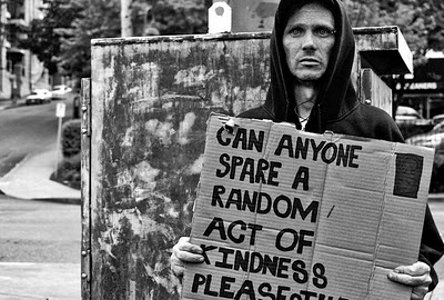
This is a unprecidented third “meditation” in one day, but I saw the accompanying photo on Facebook and it just fit. It’s been a tough week in the Messianic blogosphere and I’ve got the (virtual) bruises to prove it (It’s been a tough week anyway, but that’s beside the point). Most people who give me a hard time for my specific beliefs and their accompanying statements are actually really nice people who love God and want to do good to others. The vast majority of them, I consider my friends and for those who I’ve never met before, I’d love to get together over coffee or a beer and get to know you better. Most of them actually do perform deeds of lovingkindness and have extremely generous hearts.

Just a tiny few however, seem to have a tough time “letting go,” as if what I’m saying is a direct challenge to the doctrine of salvation and the grace of Jesus Christ. I’m not making any such challenge, but for some believers, any suggestion of change or deviation from the norm, particularly in the arena of supersessionism and anti-Jewish rhetoric, is to be feared and even shunned. I admit that there are moments when I want to snap back (more than I already do) but I don’t because I know it wouldn’t be the right thing. How can I exemplify the teachings of my Master if I allow myself to get caught up in the rapid volley, tennis match exchange of angry and upset comments?

Sometimes, along with everyone else, I get caught up in arguing all of the little minutia of religion; all of the arcane details that would make most Rabbis and Pastors go nuts and want to toss in the towel on the human race, but really, God is very simple.

At the end of the day, when you look back at who you are, who you claim to be, what you’ve done with your time, and how you’ve treated other people, you have to say to yourself, “Stop being a jerk and just forgive.” As someone commented on another of my blogs (this isn’t an exact quote), “it’s more important to do right than to be right.”

How can we enter a Shabbat’s rest with anger and frustration tying our hearts and souls into something that looks like a design by M.C. Escher? Let go. Tell the people who you love, “I love you.” Cup a small child’s face in the palm of your hand. Forget all the words and actions that have caused you pain. Remember what’s important.

Forgive.

If you’ve hurt me, I forgive you.

May God go with us all on our journey of faith.

nightsky1

Following the Footsteps of Messiah

It seems like every discussion on every Messianic blog, every “innovative” (I use the term somewhat pejoratively) theology in the Messianic movement, every controversy that I come into contact with currently boils down to the idea of Jewish and Gentile identity.

One Law/Divine Invitation isn’t really about Torah observance. Everyone on both sides of the argument is saying that Torah observance is good and it’s for everyone. People who characterize the argument along the lines of whether or not Gentiles are “supposed to” or “allowed to” observe Torah are completely missing the point (or, in some cases, deliberately and maliciously mischaracterizing the DI position).

Torah observance is not the issue. The only issue is whether or not God has a special covenant relationship with the Jewish people, and whether they continue to have the responsibility to guard that covenant (including the responsibility to admit or refuse proselytes to Judaism).

-Jacob Fronczak
“Getting Past Jewish and Gentile Identity”
Hope Abbey

In my opinion, Jacob’s blog post is spot on. There’s been this ongoing debate on the Messianic blogosphere for years now on the “One Law” topic and I think that Jacob’s correct when he says we’re focused on the totally wrong thing.

I was on the phone yesterday with a guy who lives in Tacoma. Our conversation was all over the map, but we eventually settled on discussing Gentile obligation to the Torah. We were talking about how non-Jewish people who have attached themselves to the Messianic Jewish/Hebrew Roots movement can become incredibly obsessed with “Gentile obligation to the Torah” to the exclusion of virtually all other considerations. What other considerations?

“You have a job. You can provide for your family.”

“You have a lovely wife and a wonderful little boy. Learn to love them and enjoy your time with them.”

“You not only are aware of God but you know Him and you love Him, thanks be to the Messiah whose Good News brought us into such a relationship and sustained us to see this time.”

“You may not know all of the answers to your questions, but you know what’s important. You can spend the rest of your life studying the Bible, but no matter what you end up knowing and not knowing, God is with you all of the time.”

I could go on. Frankly, the Messiah told us what’s important:

And one of the scribes came up and heard them disputing with one another, and seeing that he answered them well, asked him, “Which commandment is the most important of all?” Jesus answered, “The most important is, ‘Hear, O Israel: The Lord our God, the Lord is one. And you shall love the Lord your God with all your heart and with all your soul and with all your mind and with all your strength.’ The second is this: ‘You shall love your neighbor as yourself.’ There is no other commandment greater than these.” And the scribe said to him, “You are right, Teacher. You have truly said that he is one, and there is no other besides him. And to love him with all the heart and with all the understanding and with all the strength, and to love one’s neighbor as oneself, is much more than all whole burnt offerings and sacrifices.” And when Jesus saw that he answered wisely, he said to him, “You are not far from the kingdom of God.” And after that no one dared to ask him any more questions. –Mark 12:28-34 (ESV)

Then the King will say to those on his right, ‘Come, you who are blessed by my Father, inherit the kingdom prepared for you from the foundation of the world. For I was hungry and you gave me food, I was thirsty and you gave me drink, I was a stranger and you welcomed me, I was naked and you clothed me, I was sick and you visited me, I was in prison and you came to me.’ Then the righteous will answer him, saying, ‘Lord, when did we see you hungry and feed you, or thirsty and give you drink? And when did we see you a stranger and welcome you, or naked and clothe you? And when did we see you sick or in prison and visit you?’ And the King will answer them, ‘Truly, I say to you, as you did it to one of the least of these my brothers, you did it to me.’

“Then he will say to those on his left, ‘Depart from me, you cursed, into the eternal fire prepared for the devil and his angels. For I was hungry and you gave me no food, I was thirsty and you gave me no drink, I was a stranger and you did not welcome me, naked and you did not clothe me, sick and in prison and you did not visit me.’ Then they also will answer, saying, ‘Lord, when did we see you hungry or thirsty or a stranger or naked or sick or in prison, and did not minister to you?’ Then he will answer them, saying, ‘Truly, I say to you, as you did not do it to one of the least of these, you did not do it to me.’ And these will go away into eternal punishment, but the righteous into eternal life.” –Matthew 25:34-46 (ESV)

Really. Did anyone get “saved” or “lost” because of Gentile/Jewish identity confusion?

Becoming truly aware of God and His wonders and His graciousness is like entering a world of endless possibilities. You want to sample them all and in fact, you want to just jump into the “ocean” of God and “drown” in Him. However, sooner or later, you realize you still need to breathe and so you come to the surface. That’s the point where you start to ask yourself, “who am I now as a person of God?” Answers vary, but at some point you realize you can’t hog the whole ocean to yourself. Too much of anything can be overwhelming and even harmful:

Doctors tell us that it is better to eat food in small increments more frequently than to eat less frequently, but in larger amounts. It is a delight for those who manage this to find that they can manage on much less food than they had previously assumed that they required. But of course, one difficulty is how to manage with those very tasty foods that seem to compel some of us to eat more and more of them. What is one to do with such foods? One way is to simply abstain from such foods. Others do enjoy them, but still manage to eat a very small amount, “just to taste.”

Mishna Berura Yomi Digest
Stories to Share
“A Question of Moderation”
Siman 168 Seif 9

If I posted the entire missive, it wouldn’t make a lot of sense to most Christians and it certainly would seem irrelevant to a life lived under grace, but there’s an important lesson hidden here. At some point, someone told a lot of non-Jewish people in the Messianic Jewish/Hebrew Roots movement that “One Law fits all.” It’s a compelling thought that we who are Gentile Christians might have access to the wonders of the Torah just by believing so and for many, it’s almost magical the first time you don a tallit and look down at the tzitzit. It’s also kind of intoxicating in a way and many of us (including me at one point) get swept up in the “coolness factor.” In fact, we can be so swept away by the waves of “Jewishness” that we forget all about the “weightier matters of the Torah,” such as those the Master taught in the scriptures I cited above.

The Torah is like a room filled with an infinite selection of delectable morsels and the temptation is to eat them all in unlimited quantities. But has all of the food at the banquet been laid out for us and is eating every bit of everything we see really a good idea?

A wind from the Lord started up, swept quail from the sea and strewed them over the camp, about a day’s journey on this side and about a day’s journey on that side, all around the camp, and some two cubits deep on the ground. The people set to gathering quail all that day and night and all the next day — even he who gathered least had ten homers — and they spread them out all around the camp. The meat was still between their teeth, nor yet chewed, when the anger of the Lord blazed forth against the people and the Lord struck the people with a very severe plague. –Numbers 11:31-33 (JPS Tanakh)

Now he told a parable to those who were invited, when he noticed how they chose the places of honor, saying to them, “When you are invited by someone to a wedding feast, do not sit down in a place of honor, lest someone more distinguished than you be invited by him, and he who invited you both will come and say to you, ‘Give your place to this person,’ and then you will begin with shame to take the lowest place. But when you are invited, go and sit in the lowest place, so that when your host comes he may say to you, ‘Friend, move up higher.’ Then you will be honored in the presence of all who sit at table with you. For everyone who exalts himself will be humbled, and he who humbles himself will be exalted.” –Luke 14:7-11 (ESV)

The two sets of verses I quoted above really do go together. Both have to do with desiring something that is unmerited, unnecessary, and not particularly good for us. They both also have to do with what we want for us, that is, me, me, me. What are my rights? What do I get?

Is that what the Master taught? To put ourselves and our rights and what we want before all other considerations? Sure, you may say, but what about my “obligations?” Fine! What about your obligations to feed the hungry, visit the sick and the prisoner, welcome the stranger? Are you fulfilling those obligations to God? Are you as concerned about helping other people as you are about how your tzitzit are tied?

And what about this as quoted from Fronczak’s blog post?

Messianic Jews can work with Judaism to portray to them a Jesus who is fully Jewish, dealing with theological and cultural objections. This will only happen when Messianic Jews become well versed in their own literary heritage, and when they begin to take halacha seriously, and when someone can walk into a Messianic synagogue and actually reasonably expect a traditional synagogue service.

Messianic Gentiles can work with Christians on the traditional Christian misinterpretations of the Scripture. They can restore the image of Jesus the Jewish Messiah, the importance and centrality of Israel, and the continuing relevance and binding authority of the Torah (not coincidentally, three of First Fruits of Zion’s core values).

That is the big picture; it is what really matters. We need to get on with it so we can make that happen. We need to become who we are, and get on with our mission.

I suppose I’m not really saying anything different from Jacob is and I don’t know if my blog post adds anything to his already excellent statement, but I can’t help but want to support what he’s saying and to emphasize the fact that we do really need to “get on with it.” Continually arguing among ourselves about who is obligated to this and that doesn’t do jack, so to speak.

If you really want to know what your obligations to God are and then perform them, look around you, discover a need someone has, and then fulfill it. If you meet just one person’s need everyday, you will be doing the will of God and walking in the footsteps of the Messiah. Torah will take care of itself.

This is the actual time of the “footsteps of Mashiach.” (the age just before the Messiah comes) It is therefore imperative for every Jew to seek his fellow’s welfare – whether old or young – to inspire the other to teshuva (return), so that he will not fall out – G-d forbid – of the community of Israel who will shortly be privileged, with G-d’s help, to experience complete redemption.

-from “Today’s Day”
Monday, Sivan 18, 5703
Compiled and arranged by the Lubavitcher Rebbe
Rabbi Menachem Mendel Schneerson, of righteous memory, in 5703 (1943)
from the talks and letters of the sixth Chabad Rebbe
Rabbi Yosef Yitzchak Schneersohn, of righteous memory.

Behaalotecha: The Presence of Light and Compassion

lightThe Lord spoke to Moses, saying: Speak to Aaron and say to him, “When you mount the lamps, let the seven lamps give light at the front of the lampstand.” Aaron did so; he mounted the lamps at the front of the lampstand, as the Lord had commanded Moses.

Numbers 8:1-3 (JPS Tanakh)

The Almighty is not in need of our light. On the contrary, we are in need of His. For this reason the Torah guides us in the proper way of taking full spiritual advantage of the light of the Menorah: The lamps must radiate toward themselves, meaning that the light they give should not only illuminate others, but it must come back and shine on the Menorah itself.

This returning light is at once a fact and a commandment. It applies especially in our day and age when the Temple and the Menorah are no longer standing, and when we must fill the void of the reflecting light that the Menorah once provided.

When the light we radiate around us by leading Torah lives returns to us, enhancing our spirituality and improving our behavior to one another, we will have fulfilled both the fact and the commandment of “When you light the lamps opposite the front of the candlestick the seven lamps shall give light.”

-from “Light That Returns”
A commentary on Torah Portion Behaalotecha
VirtualJerusalem.com

“You are the light of the world. A city set on a hill cannot be hidden. Nor do people light a lamp and put it under a basket, but on a stand, and it gives light to all in the house. In the same way, let your light shine before others, so that they may see your good works and give glory to your Father who is in heaven.”

Matthew 5:14-16 (ESV)

I suppose this week’s commentary on the Torah Portion is only loosely based on the Parashah, but I must admit that I need a little extra “light” in my world. With that in mind, I’m “tweaking” my “meditation” to favor “light.”

The Virtual Jerusalem commentary compares the commandment of lighting the Menorah in the Tabernacle to the “light” of spirituality, goodness, Torah study, and scholarship. To a Christian, praying, singing hymns, and preaching the Word might all seem like more worthwhile activities than studying the Bible, but for some Jews, studying Torah is directly associated with obeying its commands to do good and to show kindness to others. When you take in the light of the Torah, it shines in the world around you as well.

That very well could be related to what the Master was thinking when he said the words we have recorded in Matthew 5:14-16. We shine our light because we have received that light from our Master and teacher. It extends out into the world but it also is reflected back toward us as those we have touched in a meaningful way received our light (which comes from our Master) and it returns to us as a blessing.

Yes, we need blessings and renewal because even among the body of believers, it can be a trying world. If you’ve been reading the comments made on my blog over the past week or so, you know that tempers became heated, nerves became frayed, and some among the body of Christ seemingly forgot that our Master taught us a new commandment to love one another (John 13:34). Of course, there is the concept of “tough love” or “I’m only telling the truth,” but the Bible is replete with teachings about how to approach a brother privately to solve a dispute (Matthew 18:15-18).

Of course, Jesus goes on to say:

Again I say to you, if two of you agree on earth about anything they ask, it will be done for them by my Father in heaven. For where two or three are gathered in my name, there am I among them.” –Matthew 18:19-20 (ESV)

Naturally, the two have to actually agree on something, which seems easier said and done, and perhaps that “two or three..gathered in my name” means gathering face-to-face and not virtually in the blogosphere.

Yes, the “magic” of brotherhood I experienced at the Shavuot conference I recently attended has dissipated and once again, I encounter the actuality of “religious conversations,” where one can be accused of various misdeeds when the only “crime” that occurred was saying to the other person, “I don’t agree with you.” Failing to unreservedly honor another’s sacred cow can be a terrible thing (and I know a little something about pursuing sacred cows).

Tsvi Sadan calls the Messiah the concealed light, in part because the light of the Jewish King has been temporarily concealed from his Jewish brethern for the sake of the nations (see Romans 11). Rabbi Tzvi Freeman, in presenting the wisdom of the Lubavitcher Rebbe, of righteous memory, says:

It all began with an infinite light that filled all and left no room for a world to be. Then that light was withheld so the world might be created in the resulting void.

Then the world was created, with the purpose of returning to that original state of light — yet to remain a world.

All the world’s problems stem from light being withheld.

Our job then, is to correct this. Wherever we find light, we must rip away its casings, exposing it to all, letting it shine forth to the darkest ends of the earth.

Especially the light you yourself hold.

The Light was concealed. But its Source was not. The Source of Light is everywhere.

For those of you with little tolerance for Chassidic mysticism, I prefer to think of these writings as metaphorical. If indeed we shine some of the “concealed light” of our Master, the Messiah, Jesus Christ, as he taught us, we must not let the light be concealed. We must “rip away its casings” and expose that light to others. But what light are we talking about and what happens when it shines?

“Blessed are the poor in spirit, for theirs is the kingdom of heaven.

“Blessed are those who mourn, for they shall be comforted.

“Blessed are the meek, for they shall inherit the earth.

“Blessed are those who hunger and thirst for righteousness, for they shall be satisfied.

“Blessed are the merciful, for they shall receive mercy.

“Blessed are the pure in heart, for they shall see God.

“Blessed are the peacemakers, for they shall be called sons of God.

“Blessed are those who are persecuted for righteousness’ sake, for theirs is the kingdom of heaven.

“Blessed are you when others revile you and persecute you and utter all kinds of evil against you falsely on my account. Rejoice and be glad, for your reward is great in heaven, for so they persecuted the prophets who were before you. –Matthew 5:3-12 (ESV)

I suppose I could have quoted from any number of the Master’s teachings, but this one seemed particularly appropriate. Who is blessed? The poor in spirit, mourners, the meek, people who are passionate for righteousness, the merciful, the pure of heart, peacemakers, those persecuted for the sake of righteousness, the reviled, those falsely accused on account of the Master.

If you toss the Beatitudes into a big bowl, take a large wooden spoon and stir vigorously, you can come out with the idea that if you are persecuted, reviled, falsely accused, or just plain “bad mouthed,” you should still respond with meekness, act mercifully, be peacemakers, and mourn for the souls of those who need to personalize conflict in the name of Christ. What an odd way to react to a verbal slap in the face, but then the Master also said something about turning the other cheek (though probably not literal in meaning).

Sorry, I just needed to ponder those thoughts and to consider that even the world of religious discourse (some would say especially the world of religious discourse) is no less filled with landmines and tripwires than any secular conversation.

He could have placed streetlamps along all the pathways of wisdom, but then there would be no journey.

Who would discover the secret passages, the hidden treasures, if all of us took the king’s highway?

Toward the light Rabbi Freeman uses light and darkness to describe the presence or absence of wisdom and knowledge of God, but I choose to see this as a metaphor illustrating peace, mercy, and righteousness, or their absense. A movie I’ve seen a few times starring Harrison Ford as (of all people) the President of the United States, contains one of my favorite lines of dialog:

Peace isn’t merely the absence of conflict, but the presence of justice.

In my case, I’d settle for only the occasional absence of conflict (since, after all, this is the Internet and human beings are involved), the presence of compassion, and the soft glow of a bit of kindness, like candlelight, holding the darkness at bay.

Good Shabbos.