Tag Archives: Jesus

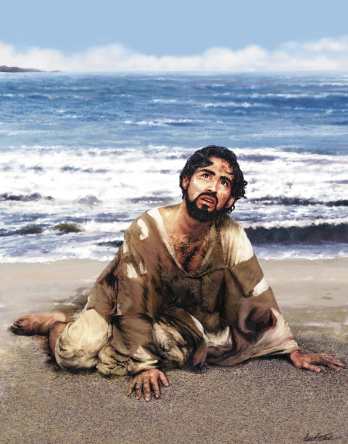
Falling

FallingIt does seem frightfully unfair that one man’s single transgression should consign all humanity to death. But it is equally unfair that one man’s righteousness also offers all of humanity the reward of righteousness: “the right to the tree of life.” (Revelation 22:14)

From: “The Life-giving Spirit”
Parasha B’reisheet commentary
First Fruits of Zion (FFOZ)

After man ate from the Tree of Knowledge, however, he acquired the intimate knowledge of and desire for evil. The evil inclination was no longer an external force, represented by the Serpent. It was within. Our physical flesh was now a confused mixture of good and evil. Death was introduced into the world: human flesh, separated from the spirit, was a creature of the finite, physical realm — one which must ultimately decay and die. Man would now face a much greater challenge than before. He would no longer battle a Serpent from without. He would have to battle his own sluggish yet desirous flesh within.

Rabbi Dovid Rosenfeld
The Primordial Sin, Part II
Pirkei Avos Chapter 6, Mishna 5(b)
Torah.org

This coming Saturday, we begin a completely new Torah cycle with Parasha B’reisheet and once again, we start by reading the first chapters of Genesis. Adam is coming, and I’m a little nervous. I know this may seem strange, since we are in the middle of Sukkot, a time of great joy, but it’s as if I am sitting in my sukkah, somehow looking at Creation from several moments before God said “Let there be light” (Genesis 1:3). Yet in that point of suspended time, I know everything that is going to happen after God speaks these words. It’s as if God has not yet created the universe and some part of me wants to stop Him. How can He create the Earth, Adam, Eve, the tree of the knowledge of good and evil, even the serpent, knowing what I know; knowing about the fall? How can He create the universe knowing about all of the pain, anguish, and suffering that is going to happen as a result?

What?

Do you doubt that God knew about what would happen once He started everything in motion? Don’t you realize that to be God, He must have known that Adam would disobey, give into temptation, and lead all of humanity down a dark and sinister road to the abyss?

God must have known, but He created us anyway. Still, waiting for next Shabbat to come is like waiting for it happen all over again, from moments before God brought all into being with His powerful Word, to forming the first man out of clay, breathing life into Him, splitting the man and making woman, placing them in the Garden, and then…and then…

I often despair at the state of the world. All I have to do is go online and start reading the news. I recently read a story on CNN about a toddler in China who was the victim of a hit-and-run accident. As bad as this is, what makes the story all the more horrible is that she was hit twice by two separate vehicles and neither driver stopped. Worse, numerous pedestrians walked right past her and did nothing. Finally, a “58-year-old scavenger named Chen Xianmei” stopped and pulled her out of the street. The CNN story states that the “grainy footage of the accidents went viral on Chinese Internet within minutes of posting”, and only then did anyone express “outrage”.

According to Rabbi Rosenfeld, as a result of what Christians call “the fall”, humanity is now is a state of confusion, trying desperately to tell the difference between good and evil and to understand what we are supposed to be doing about it. The Prophet Isaiah, in warning Israel, could also have been warning us:

Woe to those who call evil good
and good evil,
who put darkness for light
and light for darkness,
who put bitter for sweet
and sweet for bitter. –Isaiah 5:20

God holds the worldIt seems as if everything that God tells us is evil and wrong is touted by the world around us as right, positive, and desirable. In that sense, I feel very much a stranger in a strange land, an alien among humanity, a pariah standing against everything the world says is the right thing to do and being called cruel and bigoted because of it.

That’s why I want to stop God from creating the world. Because it will just start all over again and we’ll end up right back here, facing the same day, the same problems, the same moral confusion where right and wrong are literally turned inside out.

Do not repay anyone evil for evil. Be careful to do what is right in the eyes of everyone. If it is possible, as far as it depends on you, live at peace with everyone. Do not take revenge, my dear friends, but leave room for God’s wrath, for it is written: “It is mine to avenge; I will repay,” says the Lord. On the contrary:

“If your enemy is hungry, feed him;
if he is thirsty, give him something to drink.
In doing this, you will heap burning coals on his head.”

Do not be overcome by evil, but overcome evil with good. –Romans 12:17-21

…so Christ also, having been offered once to bear the sins of many, will appear a second time for salvation without reference to sin, to those who eagerly await Him. –Hebrews 9:28

I know, I know…he’s coming, too. Jesus, I mean.

The world is broken but not beyond repair. The principle of Tikkun Olam tells us that we are junior partners with God in the act of repairing the world. Of course, we all await the Messiah to come back and bring the job to its finale, restoring us to who and what we were before the serpent entered the Garden and in fact, restoring the Garden itself. I know. We will once again walk with God as Adam did and “each man will sit under his vine and under his fig tree, and none will make him afraid” (Micah 4:4).

Sukkah in the rainI just wish we didn’t have to fall in the first place, because it’s so hard to get back up.

Maybe that’s why Sukkot is happening right now. In an imperfect world, where our shelters don’t have solid walls and the roof leaks, we are like people living in a sukkah depending on God to keep us fed, warm, dry, and safe.

Adam is coming and he’s about to fall. But Jesus is coming to help pick him back up. I’m trembling in fear as it’s about to happen all over again. I’m watching, I’m waiting. I’m praying.

Having discovered all your faults, you are depressed.

Imagine you have just found a doctor with a diagnosis that explains all your afflictions over the past many years. And he’s written a prescription directing you on a sure path to good health.

Shouldn’t you jump with joy and relief?

-Rabbi Tzvi Freeman
“Joyful Prognostics”
Based on letters and talks of the Rebbe
Rabbi M. M. Schneerson
Chabad.org

A few months back, I wrote a three-part series on the lessons we are about to learn once more in Genesis. This might be a good time to read them again: Part I: Overcoming Evil, Part II: The Primordial Serpent, and Part III: Healing the Wounded.

What You Bring to Prayer

MinyanA man may commit a crime now and teach mathematics effortlessly an hour later. But when a man prays, all he has done in his life enters his prayer.

-Abraham Joshua Heschel
God in Search of Man : A Philosophy of Judaism
pp. 301-2

In a sense, Sukkos itself is about getting our priorities straight. Here we just finished with the Days of Judgement, hopefully with Hashem’s blessings for a year of prosperity and success. Yet the first thing we do with our new-found blessings is to leave our comfortable homes for the temporary shade of the Sukkah. We thereby acknowledge that there can be no greater “success” in life that to do what Hashem really desires, even when it’s not what’s most comfortable. Sometimes we shake with the Esrog and sometimes we shake with the horse – the main thing is to strive to understand what Hashem wants of us in a given situation, not what we want or what makes us feel good. As the pasuk says (Mishlei/Proverbs 3:6), “In all your ways know Him; He will straighten your paths.”

Rabbi Eliyahu Hoffmann
“Sukkos: Shaking Up Our Priorities”
Torah.org

What does it mean to be a person of faith? Ironically, the answer may depend on your religion. Different faith groups seem to emphasize different priorities. What we believe we must do to serve God depends on the rules we have for such an occasion. In reading Rabbi Heschel’s book God in Search of Man, I found a representation of both the Jewish and Christian viewpoint on what it is to be a servant of God.

Here is how Heschel (p. 293) sees Christianity and frankly, how many Christians see themselves.

Paul waged a passionate battle against the power of law and proclaimed instead the religion of grace. Law, he exclaimed, cannot conquer sin, nor can righteousness be attained through works of the law. A man is justified “by faith without deeds of the law.” (Romans 3:28)

By contrast, Heschel presents Judaism thus:

It takes deeds more seriously than things. Jewish law is, in a sense, a science of deeds. Its main concern is not only how to worship Him at certain times but how to live with Him at all times. Every deed is a problem; there is a unique task at every moment. All of life at all moments is the problem and the task. (p. 292)

The claim of Judaism that religion and law are inseparable is difficult for many of us to comprehend. The difficulty may be explained by modern man’s conception of the essence of religion. To the modern mind, religion is a state of the soul, inwardness; feeling rather than obedience, faith rather than action, spiritual rather than concrete. To Judaism, religion is not a feeling for something that is, but an answer to Him who is asking us to live in a certain way. It is in its very origin a consciousness of total commitment; a realization that all of life is not only man’s but also God’s sphere of interest. (p. 293)

Heschel presents a very rigid dichotomy between Judaism and Christianity as faith lived out in deeds vs. one expressed only by internal introspection. Even prayer for a Jew is a matter, not only of what he thinks and feels, but what he does, vs. the prayer of a Christian as being a private, ephemeral pipeline between man and God, excluding anything behavioral. In fact, Heschel (p.295) paints an extremely dismal portrait of Christianity in this following example:

Thus acts of kindness, when not dictated by the sense of duty, are no better than cruelty, and compassion or regard for human happiness as such is looked upon as an ulterior motive. “I would not break my word even to save mankind!” exclaimed Fichte. His salvation and righteousness were apparently so much more important to him than the fate of all men that he would have destroyed mankind to save himself.

DaveningThe mistake in judging Christianity that Heschel makes is in judging the faultiness of some of its followers rather than the source itself. Didn’t James, the brother of the Master, write this?

What good is it, my brothers and sisters, if someone claims to have faith but has no deeds? Can such faith save them? Suppose a brother or a sister is without clothes and daily food. If one of you says to them, “Go in peace; keep warm and well fed,” but does nothing about their physical needs, what good is it? In the same way, faith by itself, if it is not accompanied by action, is dead. But someone will say, “You have faith; I have deeds.”

Show me your faith without deeds, and I will show you my faith by my deeds. You believe that there is one God. Good! Even the demons believe that—and shudder.

You foolish person, do you want evidence that faith without deeds is useless? Was not our father Abraham considered righteous for what he did when he offered his son Isaac on the altar? You see that his faith and his actions were working together, and his faith was made complete by what he did. And the scripture was fulfilled that says, “Abraham believed God, and it was credited to him as righteousness,” and he was called God’s friend. You see that a person is considered righteous by what they do and not by faith alone.

In the same way, was not even Rahab the prostitute considered righteous for what she did when she gave lodging to the spies and sent them off in a different direction? As the body without the spirit is dead, so faith without deeds is dead. –James 2:14-26

Of course, many Christians all but ignore this short but well-known piece of advice in favor of the creed whereby salvation is accomplished through faith alone and without works, thus depicting any good deeds as ultimately useless to an individual’s salvation.

But who said we are here simply to be saved? Yes, mankind is in trouble, we are morally bankrupt, self-driven, greedy, materialistic, and would consume our neighbor alive if there were not laws to prevent it. We need to be saved, not only from our ultimate fate at the hands of a living and just God, but from our own acts of self-destruction.

But why do Christians stop at praying for the church? Why do some Pastors limit their preaching to the salvation of the faithful when all people everywhere need not only a realization of God, but to live out a life that serves God and man? Even our secular and atheist brothers and sisters in the world surpass us in compassion sometimes.

I’m a liberal, so I probably dream bigger than you. For instance, I want everybody to have healthcare. I want lazy people to have healthcare. I want stupid people to have healthcare. I want drug addicts to have healthcare. I want bums who refuse to work even when given the opportunity to have healthcare. I’m willing to pay for that with my taxes, because I want to live in a society where it doesn’t matter how much of a loser you are, if you need medical care you can get it.

-Max Udargo
“Open Letter to that 53% Guy”
Daily Kos

You may consider Mr. Udargo’s statement to be extreme (and I’ve quoted him before), but he is expressing compassion for men and women he doesn’t even know and, through his taxes, he’s willing to pay to make sure they receive care they neither worked for nor, in some cases, ever intend to pay back. Shouldn’t a Christian have the same selfless caring for the needy, the broken, and the dying?

I think we’re supposed to, but the message has become lost. Like most of the rest of our culture, the church has become internally driven and self seeking. Perhaps the synagogue is no better in practice, but Rabbi Heschel reminds us that Judaism, and by inference Christianity, has a core set of principles that differs from how we actually choose to practice a life of faith today. Jesus said himself that we are to love both God and man (Matthew 22:37-40) and he didn’t mean just the people that we know and love.

“You have heard that it was said, ‘Love your neighbor and hate your enemy.’ But I tell you, love your enemies and pray for those who persecute you, that you may be children of your Father in heaven. He causes his sun to rise on the evil and the good, and sends rain on the righteous and the unrighteous. If you love those who love you, what reward will you get? Are not even the tax collectors doing that? And if you greet only your own people, what are you doing more than others? Do not even pagans do that? Be perfect, therefore, as your heavenly Father is perfect. –Matthew 5:43-48

If, as Rabbi Heschel says, that “when a man prays, all he has done in his life enters his prayer”, then it’s not just what we think or feel when we are attempting to draw closer to God, but what we do that defines our relationship with Him. To see a person’s true relationship with the Creator, look at how they treat people.

Whoever claims to love God yet hates a brother or sister is a liar. For whoever does not love their brother and sister, whom they have seen, cannot love God, whom they have not seen. And he has given us this command: Anyone who loves God must also love their brother and sister. –1 John 4:20-21

Plain Clothes Sukkah

Plain clothes angelIsrael here below is balanced by the angels on high, of whom it says: ‘Who makest thy angels into winds’ (Psalm 104:4). For the angels in descending on earth put on themselves earthly garments, as otherwise they could not stay in this world, nor could the world endure them. Now if thus it is with the angels, how much more so must it be with the Torah – the Torah that created them, that created all the worlds and is the means by which these are sustained. Thus had the Torah not clothed herself in garments of this world, the world could not endure it. The stories of the Torah are thus only her outer garments and whoever looks upon that garment as being the Torah itself, woe to that man – such a one will have no portion in the next world. David thus said: ‘Open thou mine eyes that I may behold wondrous things out of Thy Torah’ (Psalms 119:18); to wit, the things that are beneath the garment.

-Abraham Joshua Heschel
God in Search of Man : A Philosophy of Judaism (p. 267)

The LORD said to Moses, “Tell the Israelites to bring me an offering. You are to receive the offering for me from everyone whose heart prompts them to give. These are the offerings you are to receive from them: gold, silver and bronze; blue, purple and scarlet yarn and fine linen; goat hair; ram skins dyed red and another type of durable leather; acacia wood; olive oil for the light; spices for the anointing oil and for the fragrant incense; and onyx stones and other gems to be mounted on the ephod and breastpiece.

“Then have them make a sanctuary for me, and I will dwell among them. Make this tabernacle and all its furnishings exactly like the pattern I will show you. Exodus 25:1-9

If you’ve spent any time studying the book of Exodus and particularly the instructions God gives Moses for making the materials and components to be used in constructing the Mishkan (Tabernacle) in the desert, you probably noticed the exquisite level of detail and craftsmanship required. In fact, it required God to endow special skills to specific people (Exodus 31:1-11) in order to accomplish all that was needed. Of the Levites, different families and clans were assigned individual tasks over building and taking down the many and various parts of the Mishkan and its contents, and carrying them from place to place across the span of the forty years of the wandering of the Children of Israel. It would have been an enormous, pain-staking undertaking to set up the Mishkan to perfect specifications each time the Israelites stopped, and to take it down and move it each time the Israelites journeyed onward.

Now compare that to how you built your sukkah a few days ago. My family has a rather modest sukkah that came in a kit. It measures a scant four feet by six feet and can hold just a few people at a time. It’s fairly easy to put the framework together and to attach the necessary straps, but the cloth that makes up the walls (with a built-in doorway and window) is rather cumbersome to manage single-handed. It attaches to the frame using Velcro which is and isn’t easy to work with. I used a makeshift crossbeam to hold up the “ceiling” and put up the string of lights with tape. It’s not the most beautiful sukkah in the world I’m sure, but I can manage to put it up by myself and, when the time comes, I’ll be able to take it down and pack it away alone.

On the other hand, it can’t possibly be anywhere as arduous a task as when Moses (according to Rabbinic interpretation) constructed the Mishkan for the first time by himself (Exodus 40).

Why am I comparing the Mishkan with my own humble sukkah? Technically, Sukkot isn’t about the Mishkan but rather, it’s about the tents the Israelites lived in during their time in the desert. We celebrate God’s provision in our lives in remembrance of how He provided everything the Children of Israel needed for their forty year trek through the Sinai. However, something Rabbi Heschel said in his aforementioned book (p. 287) made me compare the two.

Just as man is not alone in what he is, he is not alone in what he does. A mitsvah is an act which God and man have in common. We say “Blessed art Thou, Lord our God, King of the universe, who has sanctified us with His mitsvot.” They obligate Him as well as us. Their fulfillment is in not valued as an act performed in spite of “the evil drive,” but as an act of communion with Him. The spirit of mitsvah is togetherness. We know, He is a partner to our act.

When I read that passage, I recalled the effort of putting up my own small sukkah and realized I really wasn’t alone in constructing it. God was there with me. Although, as a Gentile, I’m not obligated to obey the commandments associated with Sukkot, my wife and children are Jewish and as  husband and father, the responsibility to build the sukkah is mine. I also have a number of reasons to associate Jesus Christ with Sukkot as living water (John 7:37-41) and as a living sukkah.

The word was made flesh and dwelled in our midst. We have beheld his glory, like the glory of the father’s only son, great in kindness and truth. –John 1:14 (DHE Gospels)

My earlier quotes from Heschel compared the Torah we have on earth and the “heavenly Torah”. This comparison is a “cautionary tale” of how we risk greatly misunderstanding God’s Word by treating as if it were only the inspired writings of men. In Jewish mystic belief, there is a Torah that we cannot possibly access; the Torah that was used by God to speak the universe into existence, the Torah that had to be reduced and “clothed” in “commonplace garments” just to exist in the world of human beings.

Shekinah and the MishkanWhile this is midrash as much as believing that angels must somehow “transmogrify” in order to come to earth from heaven, it illustrates what I see as the relationship between one small sukkah and the Mishkan that amazingly contained God’s Shekhinah, the reduced and “humbled” essence of the Creator that can be expressed physically in our reality. I mentioned in my previous blog post that the “intent is to fill our sukkah, not only with heavenly guests, but with earthly ones as well, creating a meeting point and a joining between heaven and earth in joy and peace, in anticipation of the days of the Moshiach.”

Today, based on what I’m learning, I could say that God was my “partner” in building my sukkah, even as He “partnered” with Moses in building the Mishkan. After Moses (and God) finished building the Mishkan, something amazing happened.

Then the cloud covered the tent of meeting, and the glory of the LORD filled the tabernacle. Moses could not enter the tent of meeting because the cloud had settled on it, and the glory of the LORD filled the tabernacle. –Exodus 40:34-35

In my previous blog, I suggested that we might “bend the rules” of the Ushpizin just a bit, to include an invitation for the Master to enter the sukkah, but if God helped Moses construct the Mishkan and then inhabited it, maybe I can dare hope that after God helped me build my sukkah, some part of Him rested, not just over it, but inside of it.

Until I read Heschel, I always thought of commandments as something God gave people so that people could obey God. Now I realize that the mitzvot belong to Him and well as us and that when we obey God, we are also working with God. I hesitate to say that God is “obligated” to obey His own mitzvot, but I can accept that for our sake, He voluntarily cooperates with us to do most of the “heavy lifting”. In retrospect, this is probably absolutely necessary not only to enable us to obey Him, but for us to even have the awareness of a relationship with God.

The little sukkah sitting in my backyard is dressed in plain and commonplace garments, made out of the ordinary materials of the world. By appearances, it’s nothing special and there’s nothing about it to attract the eye (Isaiah 53:2). But as the prophet Isaiah teaches, appearances can be deceiving and what is dressed in rags on earth is adorned in shimmering gold and bright linen in heaven.

They stripped him and put a scarlet robe on him, and then twisted together a crown of thorns and set it on his head. They put a staff in his right hand. Then they knelt in front of him and mocked him. “Hail, king of the Jews!” they said. They spit on him, and took the staff and struck him on the head again and again. After they had mocked him, they took off the robe and put his own clothes on him. Then they led him away to crucify him. –Matthew 27:28-31

I turned around to see the voice that was speaking to me. And when I turned I saw seven golden lampstands, and among the lampstands was someone like a son of man, dressed in a robe reaching down to his feet and with a golden sash around his chest. The hair on his head was white like wool, as white as snow, and his eyes were like blazing fire. His feet were like bronze glowing in a furnace, and his voice was like the sound of rushing waters. In his right hand he held seven stars, and coming out of his mouth was a sharp, double-edged sword. His face was like the sun shining in all its brilliance. –Revelation 1:12-16

Chag Sameach Sukkot!

Addendum:

Read more about the inspiration of Sukkot at Torah.org.

And as much as I hate to get “political” here, because it’s relevant, there seems to be a Sukkot sub-theme running in the “Occupy Wall Street” movement called Occupy Judaism. Not the most joyous of news, but it’s part of the “plain clothes” world that we live in.

Sukkot: Drawing Water from Siloam

Pouring waterThe festival of Sukkot is the most joyous of the three biblically mandated festivals. In the holiday prayers, each festival is given its own descriptive name: Passover is the “Season of our Liberation,” Shavuot is the “Season of the Giving of our Torah,” but Sukkot is described simply as the “Season of our Rejoicing”! The Torah enjoins us no less than three times to rejoice, and be only happy, on Sukkot.

Sukkot is the holiday when we celebrate Jewish unity—as symbolized by the sukkah, whose holy walls bring us all together; and the Four Kinds, that symbolize the essential unity of all Jews, despite differing levels of Torah knowledge and observance. In the times when the Holy Temple stood in Jerusalem, on every night of the holiday (starting with the second night), there was a grand Water Drawing Celebration.

“Rejoice” from Chabad.org

Draw water with joy, from the wellsprings of salvation.Isaiah 12:3

In many ways, you could say that Sukkot is the happiest time of year, particularly after the solemn day of fasting and atonement just completed for Yom Kippur. There are many ways to celebrate the joy of fellowship with your people and with your God but I find this tradition to be particularly refreshing:

Unique to the holiday of Sukkot is the mitzvah to offer a water libation on the altar, in addition to the wine libation that accompanied all the sacrifices throughout the year. This water was drawn on the evening beforehand, amidst great fanfare, singing, reveling, and even acrobatic stunts performed by the time’s greatest sages.

In fact the Talmud states that “one who has not witnessed the Festival of the Water Drawing has not seen joy in his lifetime!”

I must admit that I have never witnessed the simchat beit hashoevah; the joy of the water-drawing, even as it is celebrated today, so I suppose, as the Talmud says, I’m missing out. Or am I?

Oddly enough, I woke up this morning wondering if Jesus ever built and lived in a sukkah. After all, during his lifetime, as the son of a carpenter growing up in a small rural village in occupied Roman Judea, his family must have observed Sukkot. We can only imagine that the family would make the trek to Jerusalem for the first day of Sukkot at least on some years. We know from Luke 2:41 that “Every year Jesus’ parents went to Jerusalem for the Festival of the Passover”, so it’s not hard to believe that they were obedient to the mitzvot of Sukkot as well. Why wouldn’t Yosef the Carpenter and his eldest son Yeshua ben Yosef build a small sukkah so that the family could take meals, welcome guests, and reside under the protection of God’s shelter as it says in the commandments?

In fact, we know that Jesus, the adult did attend Sukkot in Jerusalem, although, on one occasion, there was a bit of a conflict involved.

But when the Jewish Festival of Tabernacles was near, Jesus’ brothers said to him, “Leave Galilee and go to Judea, so that your disciples there may see the works you do. No one who wants to become a public figure acts in secret. Since you are doing these things, show yourself to the world.” For even his own brothers did not believe in him.

Therefore Jesus told them, “My time is not yet here; for you any time will do. The world cannot hate you, but it hates me because I testify that its works are evil. You go to the festival. I am not going up to this festival, because my time has not yet fully come.” After he had said this, he stayed in Galilee.

Not until halfway through the festival did Jesus go up to the temple courts and begin to teach. –John 7:2-9; 7:14

Leaving the Master for a brief moment, let’s take a look at a description of the celebration of water drawing based on Talmud, Sukkah 53:

What was the manner of the Water-Libation?

They used to fill a golden flagon holding three logs with water drawn from the Siloam (the siloam pool is an ancient site in Jerusalem, south of the Old City). When they reached the Water Gate they blew on the shofar a tekiah – teruah – tekiah. On the right of the Altar ramp were two silver bowls. They each had a hole like a narrow snout –one wide, the other narrow– so that both bowls emptied themselves together (the wider one was for wine, since wine flows out more slowly). The bowl to the west was for water and the one to the east was for wine.
Joy
Rabbi Judah said: They used to repeat the words, “We belong to G-d, and our eyes are turned towards G-d.”

The Pouring of the Water was held on all seven days [of Sukkot]…The one who was doing the pouring was told, “Raise your hands” (so that all could see him pouring the water on the altar). -Talmud, Sukkah 42b; 48b

Of a near-contemporary of the Master, a tale of the joy of Sukkot and of simchat beit hashoevah is told:

It was related of Old Hillel that when he was rejoicing with the joy of the Water-Drawing, he used to say, “…Where I love to be, thither my legs carry me.” And the Holy One, blessed is He, says, “If you come to My house, I will come to your house, and if you do not come to My house, neither will I come to yours.”

Sukkot is a time when we desire to come to His House with all our hearts and even though the Temple in Holy Jerusalem is not with us today, we can pray for its return, we can approach the Throne of Heaven within our souls, and we can invite God to reside with us, as much as we can recite the Ushpizin to invite Abraham, Isaac, Jacob, and many others, to join us as the Guest of our joy. With this image in mind, we can now return to the Master and see a perfect picture of the embodiment of living water in the House of God.

On the last and greatest day of the festival, Jesus stood and said in a loud voice, “Let anyone who is thirsty come to me and drink. Whoever believes in me, as Scripture has said, rivers of living water will flow from within them.” By this he meant the Spirit, whom those who believed in him were later to receive. Up to that time the Spirit had not been given, since Jesus had not yet been glorified.

On hearing his words, some of the people said, “Surely this man is the Prophet.”

Others said, “He is the Messiah.” –John 7:37-41

I deliberately ended my quote from this passage to remove the debate that existed (and that still exists) about the identity of Jesus, and I want to emphasize a point. The connection between the Master’s words and the joy of the water-drawing is unmistakeable, and yet how many Christians miss the reference because they choose not to find the Savior of the church in the teachings of the Jews? If Jesus not only rejoiced in the celebration of water-drawing, but became the simchat beit hashoevah, though I have not witnessed the celebration myself, how much more joy can I embrace as a disciple of living water? In drawing closer to God through the life of the Messiah, I can draw that living simchat beit hashoevah into me.

Jesus answered, “Everyone who drinks this water will be thirsty again, but whoever drinks the water I give them will never thirst. Indeed, the water I give them will become in them a spring of water welling up to eternal life.” –John 4:13-14

Under the sukkahAbraham Joshua Heschel in his book God in Search of Man, looks at the “wells of the Messiah” from a different direction.

“For if a man live many years let him rejoice (Ecclesiastes 11:8) in the joy of the Torah and remember the days of darkness, these are the days of evil, for they shall be many. The Torah which a man learns in this world is vanity in comparison with the Torah [which will be learnt in the days] of the Messiah.” (Ecclesiasties Rabba, ad locum).

Isaiah’s prediction for the days to come, “With joy shall ye draw water out of the wells of salvation” (12:2), is explained by Rashi in the following way: “Ye shall receive new teaching, for the Lord will widen your understanding…The mysteries of the Torah that were forgotten during the exile in Babylonia because of the distress Israel suffered, will be revealed to them.”

In reciting the mystic ushpizin, seven “supernal guests” are invited in sequence into a Jew’s sukkah on each of the seven nights of Sukkot: Abraham, Isaac, Jacob, Moses, Aaron, Joseph and David. The intent is to fill our sukkah, not only with heavenly guests, but with earthly ones as well, creating a meeting point and a joining between heaven and earth in joy and peace, in anticipation of the days of the Moshiach. But for those of us who have found the Messiah in the life of Jesus Christ, perhaps we can allow a slight adaptation to this ceremony, and to invite one other guest, our “mystery of the Torah”, into our shelters, our homes, and our hearts. For where you find the Messiah, you will also find God.

Where is it that you can find all of G–d? Wherever He wishes to be found.

Right now, He hides within some scattered branches placed upon an autumn hut.

-Rabbi Tzvi Freeman
“All of Him”
Based on letters and talks of the Rebbe
Rabbi M. M. Schneerson
Chabad.org

“A Jew never gives up. We’re here to bring Mashiach, we will settle for nothing less.” –Harav Yitzchak Ginsburgh

Sukkot begins tonight at sundown and this special Sabbath lasts until Friday evening. At that point, the weekly Sabbath begins. In honor of these events, my next “meditation” blog won’t be published until either Saturday evening after sundown or Sunday morning.

May you drink from springs of living water. Chag Sameach Sukkot!

Island Under Heaven

Under heavenThere is no security this side of the grave.Harlan Ellison

Very little is needed to make a happy life; it is all within yourself, in your way of thinking.Marcus Aurelius

Joy is an overflowing, an explosion. Something enters a person’s life for which he could never be prepared and his previously tidy self erupts in song, dance and joy. Approach the Divine with a calculated mind and there is no window for joy. Embrace the infinite beyond mind and let joy surprise you.

-Rabbi Tzvi Freeman
“Explosive Joy”
Meditations on Happiness
Based on letters and talks of the Rebbe
Rabbi M. M. Schneerson
Chabad.org

I know in one sense, God does not require us to live happy or satisfied lives and certainly, many of His servants, the Prophets and the Apostles, did not live happy lives. In fact, most of them died under less than optimal circumstances. Nevertheless, Paul did say:

I know what it is to be in need, and I know what it is to have plenty. I have learned the secret of being content in any and every situation, whether well fed or hungry, whether living in plenty or in want. I can do all this through him who gives me strength. –Philippians 4:12-13

This tells me that our circumstances don’t have to dictate our perception of life or of ourselves as long as we rely on God as the source of our strength. Of course, in verse 14, Paul went on to say, “Yet it was good of you to share in my troubles”, so for Paul, having a community to share his experiences with was not out of the question.

I’ve been considering matters of community and connection along with learning and growing closer to God. For some time, I have desired to study and worship with my wife and, since she’s Jewish and doing so is not an option in a Christian format, I have sought to meet her where she is and to honor God in a synagogue setting. Also, and this should be obvious to anyone who has been following my blog posts, I find Jewish theology, philosophy, and mysticism fascinating and indeed, a window into the soul of the Messiah, so deepening my understanding within a Jewish context is also something I desire.

But there’s a difference between wanting and having and there’s a difference between ideals and human beings. While I find a great deal of meaning in many of the writings produced by Rabbi Tzvi Freeman and the Chabad as well as religious Judaism in general, I am also aware that there are real people with real lives behind what I read and study. No religion or group of religious people is perfect and if we are human, we are flawed. Those flaws can get in the way of reaching community, fellowship, and purpose and sometimes desiring community with people can be confused with desiring union with God.

In yesterday’s blog, I discussed the roadblocks preventing me from achieving my stated goals, but maybe I’m confusing the ideal of what I want with the reality what I’m encountering. I may also be confusing how God sees and judges me with how human beings see and judge me. I am aware that many of the traditional values held by Christianity are incompatible with Judaism, especially based on how both religions have evolved over the past 2,000 years or so. Yesterday, I quoted a Jewish person who brought this to light, at least on the Christian side of the equation.

“Christianity has to realize its error in deviating from what the original sect taught and practices before that connection can be made, before that door can be entered through. Only then will hope be found.” –said by S

Night trainI think part of what I’ve been looking for is both the Biblical and Rabbinic ideal in how God is understood and taught, but what I have been encountering is the problematic relationship between Christians and Jews in the real world. It’s also easy to get caught up in the idea that feeling like I’m being pushed aside or pushed away means that I’m not good enough for that group. At least that’s how I see it sometimes.

Given all this, some Christians reading this might wonder why, besides the fact that I am married to a Jew, I pursue the Jews as the keepers of the Bible and the gateway to its understanding?  Why won’t I abandon this particular path and pursue a more normative Christian journey? Rabbi Abraham Joshua Heschel in his book God in Search of Man quotes A. Jeremias, Juedische Froemmigkeit, p. 57 with the answer:

Christian..Gellert, when asked by Frederick the Great: “Herr Professor, give me a proof of the Bible, but briefly, for I have little time,” answered: “Majesty, the Jews.” (Heschel p. 246)

Heschel (p. 255) also quotes from Seder Eliahu Rabba, IX, ed. M. Friedman, Wein, 1902, p. 48 when he declares that the revelation of the Bible is not for the Jew alone.

There is a grain of the prophet in the recesses of every human existence. “I call heaven and earth for witnesses that every man, whether gentile or Jew, whether man or woman, whether man-servant or maidservant, according to the measure of his good deeds, the spirit of holiness rests upon him.”

How like the words of Paul in Galatians 3:28. Heschel further demonstrates why I look east to Jerusalem with my questions about God and punctuates my dilemma in wondering how I will ever get an answer.

Never before and never since has such a claim been expressed. And who will doubt that the claim proved to be true? Has not the word spoken to the people of Israel, penetrated to all corners of the world and been accepted as the message of God in a thousand languages? (p. 243)

Our problem, then, is how to share the certainty of Israel that the Bible contains that which God wants us to know and to hearken to; how to attain a collective sense for the presence of God in the Biblical words. In this problem lies the dilemma of our fate, and in the answer lies the dawn or the doom. (p. 246)

I know ideally (there’s that word again) that I should seek to please God and not people (Acts 5:29; Galatians 1:10), but as Paul pointed out in Philippians 4:14, it would be good to share myself with others. However, reality, whether “dawn” or “doom”, is what it is and given my particular theological preferences and the nature of a perfect world vs. a real one, I may have to accept that although drawn to the gates of Judaism, I am not always welcome in Jewish communities because of my faith. In that I must also realize I am still “good enough” as the person I am, even though I must stand apart from those people and from my goal. That part about being “good enough” is hard for me to understand though, in light of the value of continual self-improvement and especially knowing that no one is righteous (Ecclesiastes 7:20; Romans 3:10).

RainIt’s rather premature to declare my experiment a failure, but I may end up having to accept truncated results. While human beings have limits and construct barriers, God does not inhibit us from approaching Him with an open and contrite heart. Even in Judaism, it is acknowledged that God has not rejected the Gentiles (although how they believe God sees Christians is another story) and of course, the very heart of Christianity opens the door for the nations to have access to God, specifically through the person of Jesus Christ.

In the end, community or isolation, acceptance or non-acceptance, I can still pray, I can still read, I can still study, and I can still write and share who I am and what I am learning during these “morning meditations”. If anyone deems them of value, I am certainly grateful, but more than people, I must share who I am with God, not that He doesn’t know me already, but because part of a relationship is to share yourself with the other. Being a writer, this is how I best share and communicate what I experience when I immerse myself into the pools of God’s perfect wisdom. Again, Heschel has something to say on this point.

The Bible is holiness in words. (p. 244)

If God is alive, then the Bible is His voice. (p. 245)

Almost 400 years ago, John Donne wrote that “no man is an island”. I suppose in general, that’s true. At other times though, I can see myself as a single, tiny bit of flotsam floating on an infinite sea waiting for God to toss me a line and bring me to His shores. A better metaphor, given the approach of Sukkot, is to say that I’m that imperfect and incomplete booth or tent, empty of guests and exposed to the harsh elements, who also is sheltered by the roof of Heaven.

A voice says, “Cry out.”
And I said, “What shall I cry?”
“All people are like grass,
and all their faithfulness is like the flowers of the field.
The grass withers and the flowers fall,
because the breath of the LORD blows on them.
Surely the people are grass.
The grass withers and the flowers fall,
but the word of our God endures forever.” –Isaiah 40:6-8

The World that Doesn’t Exist

Sukkah…these I will bring to my holy mountain
and give them joy in my house of prayer.
Their burnt offerings and sacrifices
will be accepted on my altar;
for my house will be called
a house of prayer for all nations.”
The Sovereign LORD declares—
he who gathers the exiles of Israel:
“I will gather still others to them
besides those already gathered.”
Isaiah 56:7-8

When Jesus heard this, he was amazed and said to those following him, “Truly I tell you, I have not found anyone in Israel with such great faith. I say to you that many will come from the east and the west, and will take their places at the feast with Abraham, Isaac and Jacob in the kingdom of heaven.”Matthew 8:10-11

According to the prophets, the Feast of Booths celebrates a time when all nations will ascend to Jerusalem bearing tribute to King Messiah and celebrating the festival. In that day, all nations will ascend to His throne in Jerusalem in order to celebrate the Festival of Booths (Tabernacles). Obviously, this is a very important festival for disciples of Messiah today.

The Weekly eDrash
“A Tabernacle of Glory over Jerusalem”
First Fruits of Zion commentary on Sukkot
FFOZ.org

I’ve had my doubts.

No, I don’t doubt the word of God but on the other hand, given the division between different denominations of Christians and particularly between Christians and Jews, I wonder how we will all be able to sit down at the same table together “at the feast with Abraham, Isaac and Jacob in the kingdom of heaven” and rejoice in each other and in the Messiah?

Last week I hit a speed bump in my pursuit of the Ger Toshav as a possible model for a relationship between Christians and Jews, and today I was reminded of the state of discomfort and even enmity some Jews feel toward Christians based on this “wall photo” that was shared on Facebook. Add to that some of the comments from Jewish participants about Christianity:

“Christianity has to realize its error in deviating from what the original sect taught and practices before that connection can be made, before that door can be entered through. Only then will hope be found.” –said by S

“I’m saying that Judaism shouldn’t centralize the messiah. And in my opinion when it does, it’s a mistake. Christianity and the holocaust are results of such a mistake.” –said by A

“There are 2 paths in serving Creator: 613 commandments for Jews and Noahide Laws for gentiles. Thats the ideal modality. When gentiles invent their own religions or Jews don’t follow their commandments, they keep the world from reaching perfection which is the hallmark of the Messianic Age.” –said by V

…the reason you give for Christians accept Jews is impossible. a Jew is what he is. Why should he give up to a lesser level of spirituallity?

Your reason for Jews accept Christians, isn’t exactly that, but it has a reason… a reason found in Torah. As long as a gentiles thinks that a man is God, or that there are more than 1 God, or that the Torah given BY GOD to Moshe in Sinai isn’t valid, then a Jew cannot accept it. That’s Idolatry.

I, as a Jew don’t think that gentiles are lesser human beings!!!! NOT AT ALL!!! A Jew who call himself Jew but commits lashon haRa and proclaims hate, is a lesser human being than a gentile with a good heart for humanity. –said by X

From mainstream Judaism’s point of view, it is reasonable to expect this level of response in believing that Christians have misappropriated the concept of Messiah and bent it in very non-Jewish directions. But it also precludes any possibility of a Christian entering a synagogue setting (where it is known he or she is a Christian), learning of the wisdom of the sages, and even being a tiny part of the community, when that Christian’s basic faith would be seen as an affront. Both Jews and Christians pursue God in His vast and majestic Heavens, and yet we cannot build a simple bridge between our two worlds on here on Earth.

I can truly see how Jesus could say “when the Son of Man comes, will he find faith on the earth?” (Luke 18:8)

And yet the prophet says this:

This is what the LORD Almighty says: “In those days ten people from all languages and nations will take firm hold of one Jew by the hem of his robe and say, ‘Let us go with you, because we have heard that God is with you.’” –Zechariah 8:23

The Jews rely on the promises of God that “every man will sit beneath his own vine and fig tree and none will make them afraid” (Micah 4:4) while the Christians rely on the grace of Jesus and the word of the Apostle Paul when he said, “in all these things we are more than conquerors through him who loved us. For I am convinced that neither death nor life, neither angels nor demons, neither the present nor the future, nor any powers, neither height nor depth, nor anything else in all creation, will be able to separate us from the love of God that is in Christ Jesus our Lord” (Romans 8:37-39).

But each group believes God is speaking to only them and is excluding the other (and all others).

While Sukkot is a season of hope, in the present age it is also a season of despair, for while we (or at least Jews and those few Christians who will build a sukkah this year) are supposed to generously invite all guests into our sukkah for a meal and fellowship for the sake of God, how many people and groups will not be on the “approved” list?

JonahLike Jonah, we know the word and the will of God and yet we still seek to run away because it is against our human will to fulfill that word. God turned Jonah away from his mistaken path and delivered him to the great city to complete the job God gave to him, but how will God do that with us? It could begin with a single invitation into our homes and lives of someone we would otherwise not have considered letting in. It could begin with a Christian family accepting a single Jew into fellowship and the breaking of bread. It could begin with a Jewish family inviting a single Christian into their sukkah to enjoy a meal and the prayers. The question is, can it begin now, or must we wait for the Messiah to come (for the Jews) and come again (for the Christians)?

I’m not writing this for you who are “already onboard” with seeking a unity between Christians and Jews, but to those who seek to shelter themselves within their own groups and push away the rest of the world and the rest of the people God created. Is there a delight in committing one act of friendship and graciousness; an act of pure and simple love, not for your sake or mine, but for the sake of God?

G-d has many delights:

The delight that comes from a pure and simple act of love.

Greater than that, the delight that comes from an act of beauty sparkling in the darkness.

Greater than that, the delight when a child who has run away returns with all her heart.

Delight lies at the essence of all that is.

-Rabbi Tzvi Freeman
“Delights”
Based on letters and talks of the Rebbe
Rabbi M. M. Schneerson
Chabad.org

The Rabbi describes a world of people and ideals that does not exist, at least not yet. The hope that we all have in the Messiah is that one day, we will all be able to live in this world and be at peace with God, with all our neighbors, and most of all, be at peace within our own hearts. We will see that peace someday. But we have a very long way to go until “someday” gets here.