Tag Archives: Judaism

A Life Like That

I wrote this blog post some months ago wondering if I’d ever publish it. Given recent events, now seems like a good time.

The final verse of this parashah uses the words…[which] literally [mean]: “This is the Torah,” in reference to the laws of tzaraas. Sifsei Kohen understands this to be teaching us an important remedy: if one has brought down upon himself the Divine punishment of tzarras, he must cleanse himself through the study of Torah. The Torah is a fire of ruchniyus, spirituality, and fire has the capacity to purge impurity (as we see in Bamidbar 31:23). However, simply learning the Torah is not sufficient; one must absorb the Torah into his very being…Even if one learns the Torah, his task is not yet complete. If he internalizes what he has learned, he will come to purity; but if he does not, the potential for tumah still lurks.

-from “A Mussar Thought for the Day,” p.177
for the Shabbos study of Parashas Tazria
A Daily Dose of Torah

I realize this was written with a Jewish audience in mind and the concept of elevating oneself by the study and internalization of Torah isn’t meant to be applied to me, a non-Jew. Nevertheless, I think I can take a wider principle out of this lesson. Please bear with me.

I think what I quoted above is what separates me from the friend I have coffee with on alternate Sundays. He has been urging me to push myself further in my relationship with Messiah. But when he describes his own experiences, the spiritual depths he explores, and even the periodic visitation by the presence of Hashem, I’m flabbergasted.

I’d make a very poor Pentecostal. It’s difficult for me to process statements such as “…and then God talked to me and told me…”

Over eighteen months ago, I wrote a blog post called Standing on the Jewish Foundation of the Bible. I wrote it in response to some of the conversations I was having back then with the head Pastor of the church I used to attend. He was also pushing me, but in his case, to adopt a more classic Christian identity and understanding of the Bible.

As it turns out, I make a very poor Fundamentalist or Evangelical too. It’s not where my head and my heart lie. In my reviews of the Nanos and Zetterholm volume Paul Within Judaism: Restoring the First-Century Context to the Apostle, I’ve been reminded of how a more Judaically-oriented view of the scriptures makes a great deal more sense to me than what Christianity has to offer.

studyThis is why I study the Torah and the rest of the Bible from the perspective of the “Messianic Gentile,” or at least I have been up until now.

But as the above-quoted passage and my friend attest, studying is not enough. Knowing but not doing is probably a bigger sin than mere ignorance or even being on the wrong track.

In the review I mentioned above, I hope I’ve shown that the traditional way the Church understands Paul represents the “wrong track.” Of course, this isn’t the first time I’ve rendered this option. But at least many people within the Church are behaving from their convictions, performing acts of charity, feeding the hungry, giving comfort to the grieving, all the “weightier matters of Torah” the Master valued so highly.

Even if you (or I) believe we possess “the truth,” or at least a more historically and culturally accurate and factual interpretation of Paul and the writers of the rest of the Bible, what good is it if you (or I) don’t do something about it, and don’t allow our personalities, our very souls to absorb, integrate, and radiate the lived experience of Torah?

I think a life like that looks like this:

The Torah gives us an important rule in relationships: Even though you are suffering, you have no right to cause suffering to others. Whatever your distress, you still need to speak and act with respect. If you are ever in a bad mood, be especially careful not to speak or act to others in a way that will be distressful for them.

(see Rabbi Eliyahu Eliezer Dessler – Michtav MaiEliyahu, vol.4, 246; Rabbi Pliskin’s “Consulting the Wise”)

-Rabbi Zelig Pliskin
“Be Respectful, No Matter What”
Daily Lift #320
Aish.com

It must also look like this.

I think the litmus test for whether or not you (or I) have integrated Torah principles into our identity and lived experience is stress. Even the morning commute into work can be abundantly revealing (I know it is of me). A person who has internalized Torah principles; internalized the teachings of the Master, will react to various stresses in a different way than one who studies but has not absorbed that study.

James (Ya’akov), the brother of the Master, said it well:

But he must ask in faith without any doubting, for the one who doubts is like the surf of the sea, driven and tossed by the wind. For that man ought not to expect that he will receive anything from the Lord, being a double-minded man, unstable in all his ways.

James 1:6-8 (NASB)

faithDoes faith have something to do with whether or not one internalizes what he or she has learned of Torah? I think so. Think of it more like faithfulness or especially trust. I think we all encounter circumstances where we find it’s hard to let go. Like the character Marlin in the film Finding Nemo (2003), our fears overwhelm our ability to trust, even Hashem, and to let our God open His hand and provide for our every need. If we don’t trust completely, then we can still study Torah and be illuminated, but we will never become the illumination.

The Master said to his followers, “You are the light of the world” (Matthew 5:14-16), but our light will not shine if we cover it over with doubt and distrust. On some level, I must not be letting go. I’m comfortable with the study but not with what comes after it. I like my spiritual plateau, but I will never be who Hashem wants me to be unless or until I let go, trust my Master’s teachings, and let them truly transform every area of my life.

Study is supposed to lead to transformation, but not unless I first break down the wall. I know that wall is mine to break down and not God’s. The next move in this little chess game is mine, not His. But just like the Knight in Ingmar Bergman’s classic 1957 film The Seventh Seal, I find myself at the losing end of that game and the inevitable consequence is my extinction. However, unlike the Knight in the film who, like many of the other players, dies in a plague and goes off into eternity dancing with a personified death, my end is not the end of life, but the end of any attempt at community and belonging.

the seventh sealThere is no going back. What I think is one thing, but what I feel is something beyond my abilities to grasp. I will post a general reivew of the Nanos/Zetterholm volume on Amazon rather than finish writing my essay-by-essay reviews here.

Frankly, given the last few blog posts and especially this one, I think it’s best for me to take some sort of hiatus, at least from blogging if not from any sort of involvement in Messianic Judaism as a social venue online or otherwise. While I still think it’s the most Biblically sustainable method of study, as far as me, an individual human personality goes, I don’t think I belong here anymore than I belong in a church.

If God still wants anything from me, He knows where to find me. I seem to be making a mess of finding him, at least through any method I’ve attempted thus far.

For any individual or group I have upset or offended, I apologize and ask forgiveness, though I don’t expect I deserve it. I wish you well in your endeavors, but I seem to need to travel a different path than yours.

It’s time for me to reduce my search to simply me, the Bible, and prayer. After that, let God make his judgment.

In the Merit of Jewish Torah Observance Revisited

Rabbi Chayim Shmuelevitz used to comment on this that just as those who support Torah study financially have the merit of the Torah study of those they support, so too anyone who influences another person to study Torah shares in the merit of that person…

…Parents who influence and enable their children to study Torah have this merit, as do wives who enable their husbands to study Torah.

-Rabbi Zelig Pliskin
“Influence others to study Torah,” p. 309
Commentary on Torah Portion Bamidbar
Growth Through Torah

NOTE: It was brought to my attention that the previous incarnation of this blog post contained erroneous information. I have re-edited the text, images, and links to remove those errors.

Yes, I know this is midrash. I have an interesting relationship with midrash. I think of it as not so much literal fact or even a hidden spiritual truth, but rather as metaphor, a way to communicate something about people and their relationship to each other and to God.

As I write this, it’s Sunday morning and the first full day of Shavuot. Yesterday, my wife went to synagogue for Shabbat services and last night she returned for a study on the Book of Ruth, which is a traditional study for Jews on Shavuot. Not long from now, she’s leaving for shul again to help with the food preparations for the Shavuot gathering (all this will be over by the time you read these words).

As I mentioned a few days ago as well as on other occasions including this one, it is not only important to me as a general principle to encourage Jewish return to Torah study and observance, it’s important to me personally as a husband.

Rabbi Pliskin, citing Rabbi Shmuelevitz, commented that parents who encourage their children to study Torah, and wives who encourage their husbands to study Torah receive the merit of studying Torah themselves, even if they never actually do so in any regard.

in the merit of our forefathersYes, that’s midrash. We don’t really know through Biblical exegesis (at least those of us who lack a traditional religious Jewish education) how God views these “merits,” or if they represent some objective reality. However, I prefer to take this metaphor as an encouragement.

Of course, Rabbi Pliskin is writing to a Jewish audience and is not presupposing a non-Jewish husband married to a Jewish wife, but I believe there is some merit, even if it only exists inside my heart, in me encouraging and supporting my wife in Torah study and observance, even in the smallest degree. No, it’s not that God expects or requires me to observe Torah in the manner of the Jewish people, but I do think He expects and requires all non-Jewish disciples of the Master to recognize that we only receive the blessings of the New Covenant, such as the indwelling of the Holy Spirit and the promise of the resurrection, through the merit of Israel. After all, the New Covenant was made only with Israel and it is only through the mercy of God and the faithfulness of Messiah that we Gentiles can receive any of those blessings at all.

In return, what shall we do? Claim the Torah for ourselves as if we too stood at Sinai (which we didn’t)? Only the Jewish people can make that assertion. However, we can do the next best thing. We can encourage, support, and promote the Jewish return to Torah study and observance since it is the Jewish heritage and inheritance.

For nearly twenty centuries, Christianity has made a concerted effort to separate Jews from Torah, Talmud, and synagogue. Today, even the most enlightened churches continue to believe that the only way to “save” a Jew (or anyone else) is to have them exit Judaism and surrender any vestige of Torah study and observance, and instead to take on the traditions of the Gentile Christian Church.

But the Biblical record is clear that God has repeatedly urged the Jewish people, from Moses to Paul and beyond, to observe and obey His Torah, and when they don’t, the consequence is exile or worse.

burning talmudMistakenly, for the past two-thousand years, the Church has promoted and encouraged the Jewish people to disobey God, further exacerbating Jewish exile. By God’s grace, He has overridden our futile efforts to further damage the Jewish people and Judaism by re-establishing national Israel and beginning to return His people to their Land, all in preparation for the time of the Messiah and the completion of the New Covenant promises.

He has also drawn some few of we Gentiles to a greater knowledge of the Torah and specifically our esteemed and valued role as supporters of the Jewish people and their return to the mitzvot.

Hashem said to Moses, “Go to the people and sanctify them today and tomorrow, and they shall wash their clothing. Let them be prepared for the third day, for on the third day Hashem shall descend in the sight of the entire people on Mount Sinai.”

Shemos (Exodus) 19:10-11 (The Kestenbaum Edition Tikkun)

As Moses obeyed Hashem in directing the nation of Israel to be sanctified before God in preparation to receive the Torah, we Gentiles can take our cue from this lesson and, not direct, but rather clear the path for Jewish return to the Torah.

I’m in a rather unique position as a Yeshua-believing Gentile husband being married to a non-believing Jewish wife. I have a built-in opportunity to support her involvement in Jewish community and in Torah study and observance. Many of you don’t have that specific opportunity, but I believe many of you have others of which you can take advantage.

One of these things is not like the othersI believe that individual Christians and the Church as a whole has the opportunity to change its narrative from being anti-Torah and anti-Judaism to just the opposite. No, I’m not encouraging Gentile believers to take up the Torah as such, but they/you/we can start preaching and teaching the extreme value of Jewish Torah observance in God’s plan of global redemption. We’ve tried to take God’s gift of the Torah away from the Jewish people for untold centuries. It’s time we repented of this sin and made amends. It’s time we got out of Judaism’s way, including Messianic Judaism.

Without the Jewish Messiah King and without a Torah observant Israel, there are no blessings to radiate out to the nations. Ironically and tragically, by Christianity’s efforts to separate the Jewish people from Torah, we have been cutting ourselves off from the Savior of the World, the Church’s beloved Jesus.

According to Rabbi Yirmiyahu Ullman, it was on the festival of Sukkot each year when seventy oxen were sacrificed for the sake of the seventy nations of the world, that is, the global population of non-Jews:

Thus our Sages taught, “You find that during the Festival [Succot], Israel offers seventy oxen for the seventy nations. Israel says: Master of the Universe, behold we offer You seventy oxen in their behalf, and they should have loved us. Instead, in the place of my love, they hate me (Psalms 109).” Further, they remarked: “If the nations of the world would have known the value of the Temple for them, they would have surrounded it with a fortress in order to protect it. For it was of greater value to them than for Israel [instead, they destroyed it]” (Bamidbar Rabba 1).

If it is true that the ancient Roman armies, in destroying the Temple, were destroying Israel’s ability to offer atonement for the Gentiles before God, how much more so has the Christian Church, in striving to separate the Jewish people from Torah, been destroying the New Covenant salvation offered to us by Messiah, by Christ?

We can change this. There’s still time. Do what I do for I believe what I’m doing is right. If nothing else, at least get out of the way of Jewish people, both those in Messiah and otherwise, in returning to the Torah. If you have Jews in your church, encourage them to light the Shabbos candles, listen to podcasts on Torah study, read fine commentaries on Torah such as those published by Rabbi Pliskin. Encourage them to become more observant as Jews.

sefer torahMost importantly, if they are willing, encourage them in learning of how Jewish Torah observance and devotion to Messiah not only go hand in hand, but are absolutely necessary to fulfill and complete the redemptive plan of God for all Israel, and through Israel, the entire world. Then we Gentiles may be able to say that we have earned, however metaphorically, the merit of Torah study and observance, not by doing so ourselves, but by being part of the Messianic plan to return the Jewish people to their Torah and their Land.

Book Review of Paul within Judaism, “The Question of Conceptualization: Qualifying Paul’s Position on Circumcision in Dialogue with Josephus’s Advisors to King Izates”

Jews practicing Judaism in the first century observed the rite of circumcision, so it may seem natural enough to conclude that Paul’s arguments depreciating, when not opposing, circumcision undermine the very idea that Paul should be interpreted as a representative of Judaism. But Paul’s position is much more nuanced than the readings on which the interpretive tradition’s conclusions depend; so too is the practice of the right within Judaism.

-Mark D. Nanos
from the beginning of his essay:
“The Question of Conceptualization: Qualifying Paul’s Position on Circumcision in Dialogue with Josephus’s Advisors to King Izates”
Paul within Judaism: Restoring the First-Century Context to the Apostle (Kindle Edition)

So begins this rather lengthy article of Dr. Nanos’ on why, contrary to what is typically believed within Christianity today, Paul actually was a very good representative of the Judaism of his day, and why, again contrary to Christian tradition, Paul did support ritual circumcision of Jewish boys on the eighth day of life, though this was not required of non-Jewish boys, even among those families who were devoted disciples of Yeshua (Jesus).

Even if I were just to quote those passages in Nanos’ paper I highlighted as significant, this blog post might become almost as long as the original article. I will try to be brief and also to capture the essential points being made in this fourth submission to the “Paul Within Judaism” book (and yes, I realize it’s been quite some time since I’ve offered a review of this material).
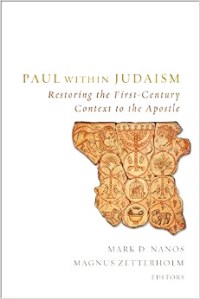
Paul within JudaismIn real estate, the predominant credo is “location, location, location.” In Biblical exegesis, it’s “context, context, context”. Our traditional view of Paul relative to Judaism and circumcision (and most other things) tends to disregard that context, that is, the first century Jewish context in which the Apostle wrote, taught, and lived.

According to Nanos, viewed and read within that context, alongside “similarly qualified statements made by other Jews,” Paul always remained properly observant to the Torah of Moses and upheld circumcision of Jewish males as a continued sign of the Abrahamic covenant between the Jewish people and God.

If Paul opposed circumcision, it was specifically regarding the proselyte ritual to convert a non-Jew to Judaism, as was the tradition of his day (and ours).

I should make clear that, as Nanos writes, Paul did not object to non-Jewish practicing Judaism alongside ethnic Jews and converts, or at least he didn’t object to them behaving “Jewishly” within a Jewish social and community context. This did not require these Gentile disciples to become obligated to the Torah mitzvot in the manner of the Jewish people. Rather, for the sake of social discourse with their Jewish mentors as well as elevating the non-Jews’ spirituality and moral/ethical behavior to the level Hashem expects of those who were created in His Image, they behaved, as I have just said, “Jewishly,” or in a way that an outside observer might believe is “Jewish”.

Nanos slowly builds his arguments (which are too long to cite in detail here) regarding how we can read Paul and how the Apostle uses the term “circumcision,” “circumcised” (for a Jew), and “foreskinned” (for Gentiles including Gentile Yeshua disciples) to show that Paul supported (male) Jewish disciples being circumcised but not so the Gentile believers. Paul only was against circumcising Gentile Yeshua-disciples and fully supported the circumcision only of Jewish Yeshua disciples along with all other Jewish males.

The gospel’s chronometrical claim creates the basis for Paul’s resistance to circumcision of Christ-following non-Jews. He believes that now they must represent those from the other nations turning to the One God of Israel, and thus, that they must not become Israelites…

Nanos turns to a story related by Josephus, the narrative about the circumcision of the non-Jew Izates, King of Adiabene. Rather than attempt to familiarize you with that story from Nanos’s full rendition, you can find a summary of the life and significant experiences of Izates, specifically his familiarity with and eventual conversion to Judaism, at Wikipedia (not the best of sources, but it will get you started…feel free to Google Izates for more).

In short, Izates, who was a contemporary of Paul, encountered a Jewish advisor named Ananias, who familiarized the young King with Judaism, so much so, that even without converting, Izates took on a number of “Jewish” behaviors and, to a casual observer, could have been mistaken for acting “Jewishly” if not being “Jewish”.
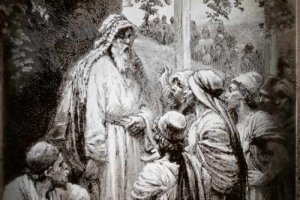
Ancient Rabbi teachingAnother advisor, Eleazar, told Izates that it was improper for him to study Torah without converting. Izates greatly desired to convert, but Ananias believed the King’s subjects would not accept the rule of a Jewish King (how ironic, since one day, the whole world will be ruled by a Jewish King, King Messiah).

Even uncircumcised, that is, as a Gentile, Izates (as well as his mother) were practicing a form of Judaism without being Jewish. And while the advice of Eleazar won out and the King did indeed convert, Nanos makes the point that both Paul and Ananias held quite similar points of view, that it was unnecessary for a non-Jew to convert in order to worship “[sebein; literally , ‘honor,’ ‘respect,’ or ‘fear’] God without circumcision…”

Here’s an important point Nanos made:

…Izates had not yet given up his desire to become circumcised: thus Eleazar “urged him [Izates] to accomplish ‘the work’ [or ‘the rite,’ ton ergon].” Eleazar is a Jew from the Galilee, and likely a Pharisee…

Terms such as “the act,” “deed,” or “work” as we find in Paul’s writings on “the works of the law” (see Galatians 3:2 for example) specifically refer to the Apostle’s disapproval of Gentiles undergoing ritual circumcision for the purpose of conversion in order to be justified before God. Again, Paul’s “works of the law” had nothing to do with forbidding Jewish Yeshua-disciples from being circumcised nor was Paul preaching against Torah observance for the Jewish followers of Messiah.

Nanos quotes Josephus (quoting Eleazar) as outright stating that one must be a Jew in order to be obligated to the commandments of the Torah of Moses. In Eleazar’s case, the only way to resolve the conflict of a non-Jew even voluntarily observing some of the mitzvot was for him to “complete the act,” “rite,” “work” of conversion through circumcision.

Ananias, on the other hand, like Paul, saw devotion to God and observing a life of moral and ethical excellence as a Gentile was Izates’ proper response “apart from becoming a Jew, and thus, apart from becoming under Torah on the same terms as a Jew (a distinction that people of his [Itazes] kingdom are represented as grasping…).”

Nanos dovetails off of Josephus to re-engage Paul, stating:

Moreover, this raises interesting comparisons with Paul’s insistence that faith(fullness) for Christ-following non-Jews requires abstaining from becoming Jews through circumcision, while at the same time insisting that they turn away from cults associated with familial and civic gods, which would be expected to apply to themselves in most Jewish groups…

synagogueSo Paul expected that Gentiles as Gentiles behave “Jewishly” but not become Jewish. However behaving “Jewishly” does not mean they became Jews without a bris and were in any manner obligated to the 613 commandments as were/are the Jewish people, either born or converted.

Further:

Such unorthodox behavior creates for them [Yeshua-believing Gentiles] an anomalous identity leading to sociopolitical marginalization, both from Jews, who do not share their chronometrical gospel claim to be neither guests nor proselytes but full members alongside of Jews, and, for different reasons, from their non-Jewish families and neighbors. If even those who become proselytes may be regarded with suspicion as atheists and traitors, then likely all the more threatening would be those who remained non-Jews if they simultaneously claimed the right to abstain from honoring their fellow non-Jewish people’s gods and lords.

I suppose a brief explanation of the term “chronometrical gospel” is in order. As I understand it, the term refers to a time-based event in the overarching salvational plan of God for Israel and the nations, whereby with the first advent of Messiah ben Joseph, Gentiles were granted, for the first time in human history, the opportunity to be equal partakers in the blessings of the New Covenant (Jer. 31, Ezek. 36) without becoming Gerim as was required in the time of Moses, and having the third generation of their offspring being accepted as an Israelites (thus partaking in the Sinai covenant), or in first century (and later) times by undergoing the rite of the proselyte and converting to Judaism.

From the life, death, resurrection, and ascension onward, non-Jews were provided a new and better path by which we can swear fealty to God through the faithfulness of the Jewish Messiah King.

We also see from the above-quoted passage, that Yeshua-believing Gentiles were accepted as social equals and sharers of the New Covenant blessings of the Holy Spirit and the promise of the resurrection, not only without being required to first convert, but without the identical obligation to perform the Torah mitzvot, an obligation that remains exclusive to born-Jews and proselytes.

Nanos brings up something especially relevant to the role of the “Messianic Gentile” today, the matter of identity ambiguity. Just like our first century counterparts, we modern Gentiles in Messiah, when within (Messianic) Jewish communal space, are not Jews but are also not allied with our former identities as non-believers. We are expected to take the moral high road, so to speak, and particularly in Jewish space, we say Jewish prayers (although our prayers are sometimes adapted due to us not being Israel), attend prayer services with Jews, attend the Torah service with Jews, eat kosher food when we dine with Jews, cover our heads when davening with Jews, and committing many other acts that look pretty “Jewish,” even though we are not Jews.

identityIn many ways, we are neither fish nor fowl, and the question of just what Messianic Gentile behavior actually is supposed to look like is often a matter of spirited debate.

Changing the discourse about Paul by adding a contextual tag to virtually every statement made about his standing on Jewish matters, such as the circumcision of non-Jews, is a good place to begin for those who are attempting to conceptualize Paul within Judaism…

It would be nice if our Bibles contained such “tags” to make Paul appear more within his own context to those of us reading him thousands of years later in a religious, cultural, and conceptual environment definitely outside of his original context.

Sadly, no such Bible exists (to the best of my knowledge), but Nanos does attempt to give us examples:

In the shortest sense, this could consist of no more than adding the phrase “…for Christ-following non-Jews” to statements made about them in order to avoid universalizing the matter under discussion.

And…

…such as, “for non-Christ-following Jews”

And again…

…by adding “for Christ-following non-Jews who are participating in Jewish communal life”

Or even…

“…who practice Judaism according to the teachings of Paul”

Or even better…

policy changes toward these non-Jews, hence… “for Christ-following non-Jews who practice Judaism according to the chronometrical claim of the gospel proclaimed by Paul and the other apostolic leaders of this Judaism.”
messianic judaism for the nationsYou get the idea. What would have been understood as a matter of course by the original readers of Paul’s epistles almost completely eludes lay-person, clergy, and Christian scholar (or most of them) twenty centuries later in our American churches, seminaries, and universities.

Getting back to the role of the ancient Messianic Gentile who was not expected to observe many/most of the mitzvot in the manner of the Jews, what God did (and does) expect of them (us)…?

…and Paul regarding what signifies faith(fulness) alone for non-Jews is striking…

Or in more detail:

This reasoning parallels Paul’s argument about Abraham’s becoming circumcised as a “sign” of his faithfulness (based upon Gen. 17:11); yet Abraham for Paul illustrates why faith(fulness) for Christ-following non-Jews is shown [specifically] by their [our] not becoming circumcised (Rom. 3:27-4:25; Gal. 3:1-4:7; passim). Paul insists that these non-Jews represent the children promised to Abraham from the other nations before he was circumcised…

…they [we] must remain non-Jews, that is, must not become members of Israel.

That, in a nutshell, so to speak, is the particular path of the ancient and modern Messianic Gentile. The evidence of our faith is to deliberately not become circumcised, that is, to avoid converting to Judaism, within the Messianic community or otherwise, and to fulfill our destiny as the children from the nations called by His Name, thus fulfilling the promise God made to Abraham about his gaining (faithful) children from the nations…that is, us.

By either converting, or unjustly claiming full obligation to the Torah as if we were converts without a bris, we are making a mockery of God’s promise to Abraham, and denying our own role as non-Jews in Messiah, further throwing God’s prophetic word back in His Face (as it were).

In contrast, Paul argues for faith(fulness) alone exclusive of circumcision as the decisive action for the Christ-following non-Jews he addressed, even though it came at the price of marginalization.

In other words, if you’re a Messianic Gentile and you at least sometimes feel marginalized, both in the Messianic Jewish world and in the Church among more traditional Christians (and I know what that feels like), that’s normal.
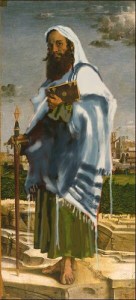
The Jewish PaulBut Nanos believes Paul was not seeking to bifurcate faith for the Gentile vs. actions/deeds for the Jews. Both Jews and Gentiles are saved by faith(fulness), but what is required by the faithfulness of the Gentiles does not include an identity transformation by becoming Jews and/or Israel. That identity is reserved and the faithful Jews are assigned obligations and duties not incumbent upon the Gentiles in Messiah.

Or as Nanos puts it…

Paul appeals to principle, not expedience. He defines the principle as faith(fulness) according to what is appropriate for them as non-Jews, which can be different in specific ways from that faith(fulness) might consist of for those who are Jews.

Bingo.

Hopefully, I’ve captured the essence of Nanos’ arguments. He tends to approach his core points from numerous different directions, and adding a great deal of detail that sometimes defies my ability to succinctly review him. Nevertheless, there are two major takeaways from this essay as I see it:

  1. Any statements made by Paul that appear to devalue or require the elimination of Torah observance and circumcision by all Yeshua-believers, when read within Paul’s original first century Jewish context, only apply to his non-Jewish audience, the Yeshua-believing non-Jews in the Messianic ekkelsia.
  2. Any statements made by Paul that appear to require full observance of the Torah commandments and circumcision by all Yeshua-believers, when read within Paul’s original first century Jewish context, only apply to his Jewish audience, the Yeshua believing Jews in the Messianic ekkelsia (although they would also apply to Jews who were not Yeshua-believers since all Jews have Jewish identity, being Israel, and obligation to the Torah of Moses at the core of their being Jews).

I’ll continue with my reviews as time allows.

Note: Edited at Portland International Airport using PDX’s free wifi and free electrical power in their business courtesy room.

How Can Any Gentile Survive Without the Sabbath?

Speak to the Children of Israel and say to them: The appointed times of Hashem, that you are to designate as holy convocations; these are My appointed times.

Vayikra (Leviticus) 23:2

The Sabbath is a special, Divine gift, given to us so we elevate ourselves above the physicality of the days of the workweek. Indeed, the fact that it comes every week is part of its special nature: Who among us has not wondered how the non-Jews can survive without the Sabbath! We must strive to treat the Sabbath with the same delight and anticipation that we do any of the festivals. (emph. mine)

-from “A Mussar Thought for the Day,” p.140
Tuesday’s commentary for Parashas Emor
A Daily Dose of Torah

That is the $64,000 question, isn’t it. There certainly isn’t one, straightforward reply. The author of the above quoted mussar proposes the question but not the answer. Apparently, there is no Rabbinic response to God’s provision for the Goyim (or lack thereof) relative to Shabbat or any sort of occasion whereby a non-Jew can elevate him or herself and draw nearer to God. Perhaps it’s one of the many reasons why the ancient Gentile disciples of Messiah divorced themselves from the Jewish communities originally created by Paul and founded their (our) own Gentile-based religion called “Christianity”.

Actually, the “Mussar Thought for the Day” does have a response to Gentiles and the Sabbath:

A non-Jew is forbidden to observe the Sabbath; the Torah describes the Sabbath as: “…between Me and the Children of Israel it is a sign forever (Shemos 31:17).”

-ibid, p.141

The Church solved this problem by creating their own weekly Holy Day on Sunday, and until relatively recently in history, treated Sunday in a manner similar to how Jews observe a Saturday Sabbath.

However, the past 50 years or so has seen, particularly in the Western nations, a diluting of Sunday “Sabbath” observance whereby Christians go to church Sunday morning and then go out to lunch just prior to playing a few rounds of golf. The day is only special for the few hours they are in church, and even then, social encounters and conversations can largely be made up of secular material.

I’m not saying there aren’t a lot of Jewish people who only marginally observe a Shabbat or observe it not at all. My daughter goes to work on Saturday and my wife, while she does attend shul in the mornings and into the early afternoon, will resume her regular weekday behaviors upon returning home.

I’m not speaking ill of my spouse, of any other Jew, or for that matter, any Christian. It’s just that how we see the Sabbath and our relation to this day as well as to God is highly variable.

Derek Leman
Derek Leman

Is the answer to how a Gentile should, at least in an ideal sense, respond to the Jewish Shabbat to be found in Messianic Judaism? What makes you think that among the various “Messianic Judaisms” currently in existence, there is a unified response?

In his blog post Reading the Bible Realistically, or rather, in the blog post’s comments section, Derek made a few relevant statements when responding to one of his readers:

Your view that God is supremely upset about which day people choose to worship on is very un-Jewish. Shabbat is about rest and is not a prescribed day of worship. This is an error lying at the root of your entire theory. It is also an erroneous view of God, as if one of the great sins has to do with which day of the week people hold worship services on. I strongly encourage you to reexamine your views which come up short in terms of biblical interpretation and which sound a lot more like they are influenced by Ellen G. White than Torah and Gospel.

-from 05/05/2015 at 9:26 am

And…

non-Jews were never commanded to observe Shabbat (Exod 31:13, it is between Israel and God and Romans 10 agrees). And the majority of Christians keep no Sabbath (Sunday is not a Sabbath for most).

-from 05/05/2015 at 9:57 am

As well as…

I do not think any of the Ten Commandments were addressed to non-Jews.

05/05/2015 at 2:56 pm

So although Derek is the Rabbi of a Messianic Jewish congregation which presumably has a significant number of non-Jewish attendees, and also that he has spoken at many Christian churches and similar non-Jewish venues on topics related to Messianic Judaism and its relationship to believing Gentiles, he also seems to hold a point of view quite similar to the Orthodox Jewish authorities. He doesn’t say that Gentiles are forbidden to observe Shabbat, just that, as a Torah commandment, it doesn’t apply to us in the slightest.

Now let’s contrast that with the following:

It is not uncommon to hear people refer to the appointed times as the Jewish festivals. This is true in that God gave His appointed times to the people of Israel. He told the Israelites, “The LORD’s appointed times which you shall proclaim as holy convocations—My appointed times are these” (Leviticus 23:2). The Jewish people are the wardens of God’s calendar.

However, God does not refer to them as Jewish festivals. He refers to them as “my appointed times.” They are God’s holy days. Paul asks, “Is God the God of Jews only? Is He not the God of Gentiles also? Yes, of Gentiles also” (Romans 3:29). The Bible never offered Gentile Christians any alternative festival days. To say that Gentile believers are not expected to keep God’s appointed times is the same thing as saying that Gentile believers are not supposed to have any holy days or days of worship. Neither the Gospels nor the Epistles grant the Gentile believers their own special festivals.

In the days of the Apostles, both Jewish and Gentile believers observed God’s appointed times together. They met in the synagogues and in the Temple on the Sabbath and festival days to celebrate and observe God’s holy days. When Gentile Christianity left the cradle of Judaism, the Gentile Christians began to neglect the appointed times. The Sabbath day was replaced with Sunday observance. The timing of Passover was changed. The other festivals fell into disuse. Is this what God intended for believers?

-from “The LORD’s Appointed Times”
Commentary on Torah Portion Emor
First Fruits of Zion (FFOZ)

D. Thomas Lancaster
D. Thomas Lancaster

Since this is taken from the Torah Club subdomain of FFOZ, I have to assume it was written (though I could be wrong) by D. Thomas Lancaster, the spiritual leader at Beth Immanuel Sabbath Fellowship which touts itself as “Messianic Judaism for the Nations.” Mr. Lancaster is also the primary contributor to FFOZ’s Torah Club content.

I’ve written a fair amount on Gentiles (and particularly me) and their (our/my) relationship with Shabbat, such as in The Shabbat Project for the Gentiles, Messianic Jewish Shabbat Observance and the Gentile, My Shabbat that Wasn’t, and The Shabbat that Was.

The last three blog posts were not only part of my review of Aaron Eby’s book/siddur First Steps in Messianic Jewish Prayer (also an FFOZ publication) which was written by Eby specifically for a non-Jewish Messianic and Christian audience, but my chronicle outlining my own efforts to truly (or as truly as is possible for me) observe Shabbos using Eby’s book as a guide.

I can’t say I did a very good job of it, but part of that has to do with a lack of practice. One properly observes Shabbat by having many months or years (or a lifetime) of practice observing Shabbat, ideally in the company of people who know what they’re doing.

So we have the Orthodox Jewish perspective that Gentiles are actually forbidden from observing the Shabbat accompanied by astonishment in how we Gentiles manage to survive without it.

Then we have Rabbi Leman’s viewpoint that the Shabbat simply isn’t relevant to non-Jews, even those within the Messianic community, and further, that “Shabbat is about rest and is not a prescribed day of worship.”

We also have FFOZ’s opinion that God is not just a God of the Jews but of the nations as well, and that at least Gentiles are allowed to observe the Moadim, presumably including the Shabbat.

The previously quoted FFOZ blog post ends with:

It is true that the Apostles never commanded the Gentile believers to keep the appointed times, but neither did they tell them not to. They were silent on the matter. In those days, the idea of not keeping the appointed times simply had not occurred to anyone.

pathsPerhaps if there had been no schism between the Jews and Gentiles nearly twenty centuries ago, the issue would be moot. Halachah would have been developed regarding “Messianic Gentile” observance of Shabbat, the Appointed Festivals, and a great many other things we call “Jewish,” and then the halachah would have been refined over the centuries so that today’s expressions of Messianic Judaism would each have their own traditions and practices defined for Gentile members.

But such is not the case.

However, maybe the issue isn’t all that important, at least on a global scale. The churches have their answer to “The Lord’s Day,” and each Messianic community that includes Gentile members or attendees has their official policies regarding non-Jews and Sabbath.

Ultimately, lacking a clear Biblical directive, each of us has to negotiate his or her relationship with God, and each non-Jew has to decide how he or she (or if he or she) should address the puzzling issue of a Shabbat for the Nations.

I wrote quite recently that if it came down to a choice, it’s more important for Jews to observe Shabbos than for Gentiles. In the microcosm of my family, that’s how it works today (however imperfectly).

Of course there are those who want to have their cake and eat it too, but I’m not convinced you can solve knotty problems such as these by saying “the (Torah) rules are all the same for everyone, end of story,” and this narrative can appear a little unusual from time to time (I like comic books too, but this comparison caught me by surprise).

Even setting aside larger, normative Christianity’s opinion on the matter, authorities within Messianic Judaism let alone the wider realm of Jewish thought differ in how or if Shabbat applies to the Gentile, whether a disciple of the Master or not.

I decided to write this “meditation,” even though it may seem that I’m beating a well and truly dead horse, because of the simple statement I quoted at the top of this blog post:

Who among us has not wondered how the non-Jews can survive without the Sabbath!

So, given all of the benefits of Shabbat observance for the Jewish people, how do the rest of us survive?

Each Sabbath refreshes anew the special bond that Hashem has with His people, and affords every Jew the chance to turn away from the weekday world and bask in the radiance of the Shechinah. Thus, every Sabbath is a festival; but rather than commemorating a single event, it serves to strengthen and nurture the connection between the Jews and their Father in Heaven.

-from “A Mussar Thought for the Day,” p.141

Oh, as far as the Shabbat being primarily about rest rather than worship:

It is all too easy to fall into the trap of regarding the Sabbath simply as a day of rest, and to use it only as a chance to catch one’s breath before heading back into the grind of the following week. The folly of this approach, too, is highlighted by the location of the Sabbath among the festivals. Nobody makes the mistake of looking at Pesach or Succos as times of rest! These festivals are clearly identified as times to celebrate the closeness and special care that Hashem has demonstrated toward His people.

-ibid

shabbaton
Aaron Eby

So if we accept Derek’s assertion that Shabbat is not specifically a day of worship, we can also say that, at least in Orthodox Judaism, it’s not primarily just a rest day either. Like the Appointed Festivals, it’s a time of celebration, a day to rejoice in drawing nearer to God, at least for the Jewish people.

But among the varying and madding opinions of the relevant pundits, how do we non-Jews survive without a Sabbath or, like our First Century counterparts, the Gentile disciples Paul made in the diaspora, can we too somehow join Jewish community and simply enjoy the blessings of their Shabbat observance even if, as a matter of covenant, it is not also ours?

I know someone is going to bring up Isaiah 56 as “proof” that everyone everywhere is commanded to keep the Shabbat in the current age, but are we to behave like partisans, freedom fighters representing a (sort of) “King in Exile,” obeying the laws he will establish once he returns as if they are already in effect? Remember, in Messianic Days, King Messiah will not only rule over Israel, but the Gentile countries as well, as we will be vassal nations under the authority and protection of Israel’s Monarch. In those days, the will of the Master will be unequivocal.

Today however, Biblical hermeneutics being what it is, there is room for doubt and multiple conflicting learned opinions, and as I said above, that leaves it up to each of us, our conscience, and our relationship with God, to decide how to navigate the rather murky waters of Gentiles and Shabbat. How can we presume to observe it? How can we survive without it?

The Torah for the Nations of the World

Question:

Why is Judaism so intolerant of idolatry? I don’t mean massive temples with human sacrifices. What about a civilized idolater, in the privacy of his own home. With a job, a family, a mortgage, donates to the World Hunger Fund and Greenpeace — and instead of one G-d, he just happens to have two or three or even several dozen, all lined up on the dashboard of his car. Why does Judaism make a cardinal sin of it, demanding total eradication of idolatry in every corner the world? As long as it doesn’t hurt anyone else, what’s so terrible?

Answer:

There are many ways to answer this, but let’s take a historical perspective. Historians agree that our current standard of ethics stems from the Jewish ethic. Yes, the Greeks gave us the natural sciences, philosophy and art; the Romans gave us governmental structure and engineering; from the Persians we have poetry and astronomy; from the Chinese, paper, printing, gunpowder, acupuncture and more philosophy, and so on. But the historical fact is that all those cultures (and all the other unmentioned cultures) sustained and even glorified attitudes and behaviors that today we universally find abhorrent. Today, if you dispose of your unwanted infants, practice pederasty, set humans to kill each other for sport, ignore the rights of those lower than you on the social ladder and refuse to acknowledge any social responsibility to the poor and the unhealthy, and can’t wait to run to war against the nation next door, you are a barbarian. You may have made a wonderful citizen of Athens or Rome, but today, no club will take you.

Where did those values come from? There’s only one source historians can point to: Torah.

-Rabbi Tzvi Freeman
“What’s So Terrible About Idolatry?”
Commentary on Parshah Acharei-Kedoshim.
Chabad.org

Sorry to be such a “Chatty Cathy” and post two missives in one day, but when I read the paragraphs above, they seemed to spell out something a lot of non-Jewish believers operating in the Messianic Jewish and Hebrew Roots spaces have been puzzling over if not actively struggling with. Is there some sort of “universalism” to the Torah? That is, does the Torah apply to everyone and not just to the Jewish people?

The answer to that question is enormously complex, even though some people seem to believe the answer is an incredibly simple “yes.”

Toby Janicki
Toby Janicki

I’ve written on this topic at length including in my original review of Toby Janicki’s article The Gentile Believer’s Obligation to the Torah of Moses as well as my revisiting that material sometime later. I’ve also written of the Torah and Gentiles in my “in a nutshell” explanation of Torah and Christians and in Torah and the Gentile Believer. Hopefully, I’ve rendered a consistent message across those different blog posts that studying the Torah is appropriate for a non-Jewish believer for a wide variety of reasons, but stating that we share an identical obligation to observe the mitzvot with the Jewish people in a manner identical to theirs, and claiming that the Torah and being “grafted in” also makes Gentiles “Israel” is way over the top.

That’s not to say that we “Messianic Gentiles,” and arguably the mainstream Christian Church don’t have special obligations and duties. It’s just that the duty of Messianic Gentiles and Christians isn’t to observe the mitzvot but to encourage and support Jews to observe the mitzvot.

That said, I do think there is a universal aspect to the Torah, one that applies to every man, woman, and child who has lived throughout history and one that applies to all of us across the world today.

It’s spelled out in Rabbi Freeman’s answer to the question about idolatry.

We tend to think of application of Torah as an either/or sort of thing. Either it applies in exactly the same way to everyone, or it applies to no one at all. There’s no such thing in the minds of certain people as differentiation of application, or the idea that Torah is received by the Jews in one way and by the Gentiles in a different manner.

How the Torah applies to the world, even the world of people belonging to different religions or no religion at all, is in how it has shaped our world ethically and morally. American criminal and civil law, as well as many of our social mores, is based on the Torah.

This isn’t a religious application. Heck, you don’t even have to believe in God. You can be an atheist and still live in a world where the basic moral and ethical structure is based on the “blueprint” of the Torah.

Torah at SinaiRabbi Freeman in his somewhat lengthy answer says that while many peoples, nations, and civilizations have come and gone across the vast corridor of time, only the Jewish people have remained.

Why is that? For one thing, for the entire existence of the people of Israel, since Hashem gave the Torah at Sinai, the Jewish people have kept and preserved the Torah. If Israel had been wiped out by some ancient enemy and the Torah lost forever, upon what would the world have built its ethics and morals? As Freeman states, in ancient times (and maybe in modern ones), if you didn’t like the ethics of a particular “god,” you simply worshiped another one. After all, without the knowledge of a single, all-powerful, all-encompassing, creative God, morals and ethics are relative and impermanent.

The single greatest gift the Jewish people have given the world is the Torah. No, not the obligation to obey Torah on the level of the individual commandments in a way identical to the Jews, but as the broader basis of civilization. According to Freeman, what we think of as civilization wouldn’t exist without the Torah.

Today, we are witnessing the most dramatic results of Abraham’s strategy in action: Our progress in the last 500 years, to the point of the current empowerment of the consumer with technology and information, only became possible through the rise of this ethic. In a polytheistic world, this could never have occurred. It was only once the people of Europe began actually reading the Bible and discussing what it had to say to them, that the concepts of human rights, social responsibility, the value of life, and eventually the ideal of world peace took a front seat in civilization’s progress. And it is only such a world that could have developed public education and health care, old age pension, telephones, fax machines, personal computers, the Internet, environmental design and nuclear disarmament.

I’ve read other articles from Jewish sources stating that the Torah has applications for the whole world, but I never quite grasped what they meant. I guess it was because of the continuing debates we have on the web between Messianic Judaism(s) and various aspects of the Hebrew Roots movement regarding the question of how much of the mitzvot a Gentile should take upon himself or herself that blinded me to a wider perspective.

It’s about the people of the nations creating and then living in “a world that values life, world peace, individual rights, freedom of expression, literacy, knowledge and compassion for those who have less…” That’s the universal quality of the Torah. That’s the Torah for the nations.

The moral and ethical principles are identical for the Jews as they are for the rest of us. The only difference is that there are many additional instructions that only have to do with the Jewish people.

the crowdYou and I as non-Jews participate and “observe” the Torah every day, at least if we’re reasonably ethical, moral, and are law-abiding citizens. For those of us who are believers, this evidence of Torah in our lives becomes all the more apparent, but the larger reality is that untold millions of people everyday also live out the Torah just by committing acts of compassion, by sending their children to school, by obeying the highway speed laws, by upholding the rights of the disadvantaged, and in a thousand other ways.

The answer of how the Torah can be universal seems so elusive until you look at it from the perspective Rabbi Freeman brings in his online article. Once seen from that viewpoint however, everything becomes clear.

Book Review of Paul Within Judaism, “The Question of Assumptions: Torah Observance in the First Century”

Much of the debate about whether Paul was a representative of first-century Judaism has centered on the question of his relationship to Jewish “law,” that is, Torah. Although a majority of proponents of the traditional view presume that following his “conversion” Paul no longer attributed an intrinsic value to Jewish identity and no longer considered Torah to be binding, adherents of the Paul within Judaism perspective generally maintain that Paul remained a Torah observant Jew throughout his life.

Karin Hedner Zetterholm
from the beginning of her essay
“The Question of Assumptions: Torah Observance in the First Century”
Paul within Judaism: Restoring the First-Century Context to the Apostle (Kindle Edition)

For me, it’s a foregone conclusion that Paul followed a Pharisaic lifestyle all of his life and that the revelation of Messiah was not a “conversion” from Judaism to Christianity (and I remind you that in the First Century, there was no such thing as Christianity), but the next step (quantum leap actually) into the understanding and lived experience of God’s redemptive plan for Israel and the Jewish people.

Nothing in the revelation of Messiah or becoming his disciple and the emissary to the Gentiles required Paul to change anything about his observance. Well, OK, he most likely developed a more liberal halachah regarding associating with Gentiles, but in terms of his obligation to Hashem, God of his fathers, to the Torah mitzvot, to davening at the set times of prayer, to returning (if at all possible) to Jerusalem for the moadim, to continuing to eat kosher and observe the rest of the commandments, he need change nothing at all.

In fact, if he did, he would be diminishing his relationship with God by not being faithful to the Sinai covenant, even as the Master, Yeshua (Jesus) was faithful to the covenant.

But that’s hardly the traditional Christian understanding of Paul. The Church believes Paul converted to Christianity, replaced the law with grace, and taught both Jews and Gentiles that the law was done away with and need not be followed any longer.

Not that the Gentiles were the least bit concerned about the law since they/we have never been subject to the Sinai covenant, but the accusation that Paul had turned away from the Torah, the Temple, and was teaching other Jews to do the same would have been devastating. In fact, it was:

“You see, brother, how many thousands there are among the Jews of those who have believed, and they are all zealous for the Law; and they have been told about you, that you are teaching all the Jews who are among the Gentiles to forsake Moses, telling them not to circumcise their children nor to walk according to the customs. What, then, is to be done? They will certainly hear that you have come.

Acts 21:20-22 (NASB)

And…

When the seven days were almost over, the Jews from Asia, upon seeing him in the temple, began to stir up all the crowd and laid hands on him, crying out, “Men of Israel, come to our aid! This is the man who preaches to all men everywhere against our people and the Law and this place; and besides he has even brought Greeks into the temple and has defiled this holy place.”

Acts 21:27-28

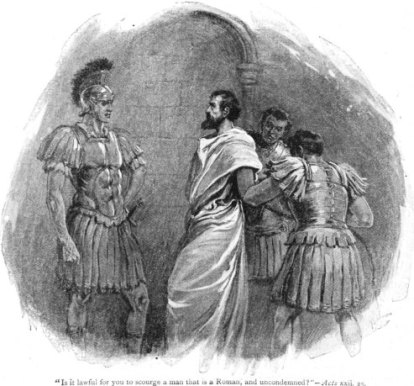
Paul in chainsEven though Paul vigorously denied these allegations under oath during a number of legal proceedings, both Jewish and Roman, most Christians believe that Paul really did the things he was accused of, and it’s OK with the Church because they believe Jesus wanted Paul to do all of these things.

But then, was Paul lying all those times he denied teaching against the Torah of Moses? If he was, why should we trust anything he wrote that’s recorded in the Apostolic Scriptures? Frankly, if we can’t trust Paul, most common Christian theology disintegrates since, oddly enough, most of what we understand about Christian faith in the Church comes from Paul, not Jesus.

Zetterholm in her article, proposes to show us that Paul remained a Torah observant Jew throughout his lifetime. Let’s have a look.

The first point she lands on is that Torah observance is not a distinct set of well-defined behaviors and that it “means different things to different groups and people, and, accordingly, different people define violation of Torah observance differently.”

She then cited different examples from the various branches of modern Judaism, comparing in one case, her Israeli friend who defines himself as “liberal Orthodox” to another friend who is a Conservative Jew. In referring to the latter friend:

In his view, he was not “breaking the law,” but interpreting it, or rather, applying the interpretation of the denomination to which he belongs.

Zetterholm further states:

Since Jewish law is the result of an ongoing collective interpretation and extension of injunctions and principles laid out in the Hebrew Bible, disagreements over their correct understanding are bound to develop.

Actually the matter of how Torah is understood and halachah applied between the different Judaisms of our day is enormously complex, and Zetterholm’s essay wouldn’t even begin to do this discussion justice if, for no other reason, than the fact that it’s simply not long enough. This is a book-length conversation at least.

I found myself disagreeing with her somewhat, since I know that an Orthodox Jew would not consider a Reform Jew, for example, to be Torah observant at all. The Orthodox aren’t terribly approving of Conservative observance, either. From an Orthodox Jew’s point of view, only they are observing Torah correctly. It gets even more complicated when you consider the different Chasidic Jewish movements exist, all of which are generally considered Orthodox.

However…

The Qumran literature and the New Testament provide ample evidence that there was no consensus on this issue or in other areas of Jewish law in the first century. The Qumran community disagreed with the Pharisees on which activities were prohibited on the Sabbath…

Don't ArgueCertainly both the differing streams of ancient and modern Judaism debate, disagree, and outright argue regarding how Torah is applied, and yet they must also agree that Torah is being applied and the mitzvot are being observed, even as they may disagree in the halachah of how the mitzvot should be observed. We see examples of Yeshua (Jesus) doing this on a number of occasions in the Gospels, particularly on proper observance of the Shabbat:

At that time Jesus went through the grainfields on the Sabbath, and His disciples became hungry and began to pick the heads of grain and eat. But when the Pharisees saw this, they said to Him, “Look, Your disciples do what is not lawful to do on a Sabbath.” But He said to them, “Have you not read what David did when he became hungry, he and his companions, how he entered the house of God, and they ate the consecrated bread, which was not lawful for him to eat nor for those with him, but for the priests alone? Or have you not read in the Law, that on the Sabbath the priests in the temple break the Sabbath and are innocent? But I say to you that something greater than the temple is here. But if you had known what this means, ‘I desire compassion, and not a sacrifice,’ you would not have condemned the innocent.

Matthew 12:1-7

This isn’t the Master informing this group of Pharisees that he canceled the Sabbath or any of the mitzvot related to observing Shabbat. This is a passionate discussion between two poskim debating proper halachah for Shabbos.

That said, I think it goes too far to say all Judaisms may be equally valid in their interpretation of Torah and leaving it at that, but perhaps for the sake of time and word count, as I mentioned above, Zetterholm couldn’t drill down into the details. As I said, the topic is highly complex and nuanced and, not being an expert in Torah, Talmud, and halachah, I’m not particularly qualified to explain beyond a certain elementary point.

But what does any of this have to do with whether or not Paul was Torah observant?

So far, Zetterholm is laying the groundwork for her readers, and she has to assume that some, many, or most of them do not have a firm understanding of Torah observance among differing Jewish groups. I get that. She takes a number of pages to solidify her argument before moving on to what Torah observance may have looked like in Paul’s time.

In addition to the general factors pertaining to Torah observance outlined above, a discussion of Paul’s relation to the Torah is further complicated by the fact that we know very little about halakic observance in the first century.

We do know that the Pharisees, Sadducees, the Qumran community, and other Jewish streams differed in their halachic systems, but there’s more we don’t know about those details than we do.

Hillel and ShammaiHowever, we do, for example, know about the famous schools of Hillel and Shammai as they existed a generation before Yeshua. A number of their arguments are well documented. And yet, Zetterholm states that “both seem to have been associated with the Pharisaic movement…” It’s likely for Rabbis within the same stream of Judaism but from differing schools, to debate halachah while still considering each other as “observant.”

Our knowledge of how Torah observance was considered among the first century Judaisms is incomplete, but we don’t have to know all of the details to understand if Paul was observant or not. We have his own testimony about it:

If anyone else has a mind to put confidence in the flesh, I far more: circumcised the eighth day, of the nation of Israel, of the tribe of Benjamin, a Hebrew of Hebrews; as to the Law, a Pharisee; as to zeal, a persecutor of the church; as to the righteousness which is in the Law, found blameless.

Philippians 3:4-6 (emph. mine)

I don’t know what the Greek text says, but the English translation as the NASB presents it indicates Paul speaking of himself in the present tense (apart from his being a persecutor of the church at that time). These are things he considered himself as he was writing this letter, not things he was before he “converted to Christianity.”

The next question then is did Paul teach anyone to not observe the mitzvot, Jew or Gentile?

To answer this query, Zetterholm uses 1 Corinthians 10:23-30 as the foundation for her response. I won’t go into all of her arguments, but here’s what she said in part:

For instance, is Paul’s permission in 1 Corinthians 10:25 to eat food purchased at the market in Corinth and to eat whatever is served when invited to dine with “an unbeliever” (10:27) really evidence that he no longer considered Jewish law binding, as scholars commonly claim, or is it better understood as an expression of first-century Jewish Diaspora halakah for Jesus-oriented gentiles, as others have suggested?

In her discussion of 1 Corinthians 8-10, she answers that question, but in brief, she concludes that Paul was specifically developing halachah as it applied to Jesus-oriented Gentiles. This was not Paul abandoning the Torah or abrogating the commandments for himself or for other Jews, but adapting halachah for the needs of Gentiles, in this case, in the city of Corinth.

Ancient Rabbi teachingActually, Zetterholm wasn’t saying that Paul felt it was proper for Gentile disciples of Yeshua to eat meat sanctified to the pagan gods as such. If the Gentiles in question realized that these “gods” were wholly fictional and not “gods” at all, then whether or not foods were sacrificed to them would be meaningless and no harm is done in eating it.

Only if these Gentiles were in the presence of other non-Jews, either pagans, or Gentile believers who may have been “newly minted” or otherwise weak in their faith, should they abstain from such meat, lest they give the impression that they were approving of pagan worship.

Expressed another way:

Paul’s argument here bears a resemblance to the rabbinic idea of mar’it ‘ain, the principle according to which one must refrain from acts that are permitted but inappropriate because they may lead a less knowledgeable Jew to draw false conclusions and cause him or her to do something that is not permitted.

One example of this she gives is a Jew who puts a piece of cheese on a vegetarian “hamburger”. Although this is not mixing meat and dairy, another Jew who casually observed the event might get the wrong idea.

Zetterholm goes into the “nuts and bolts” of her argument using the 1 Corinthians 8-10 example in much more detail than I have room for here. For the complete answer, you’ll have to get a copy of the book and read what she’s written.

The bottom line is:

Far from declaring Jewish law null and void, Paul is engaged either in establishing a halakah concerning idol food for Jesus-oriented gentiles, or teaching them an existing local Corinthian Jewish halakah.

In either case, Paul is clearly not abrogating Torah observance for Jews, he’s adapting or creating halakah specifically for his non-Jewish students because such halakah wasn’t necessary before there were Gentile disciples of the Jewish Messiah operating in community with other Gentiles and with Jews in a Jewish religious movement.

She also said:

Far from “breaking the law,” Paul seems to be engaged in the process of applying it….establishing a rule of law for Jesus-oriented gentile, Paul was engaged in the balancing act involved in establishing halakah…

This also addresses (again) the matter of how Gentiles were to relate to the Torah in general, and Pharisaic halachah in particular. In this example, Paul was not teaching the Gentiles to observe the Torah and perform the mitzvot in a manner identical to the Jewish believers. He was adapting or inventing halachah that was specific to Gentiles but not necessarily applicable to Jews.

The Jewish PaulThis is probably why, referring back to Acts 21, some of the Jews in Jerusalem had the idea Paul was teaching against the Torah. He was teaching Gentiles that their obligations were different and certainly not as stringent as those of the Jews. Somehow the information was twisted, deliberately or not, to be interpreted that Paul was teaching Jews that they were not obligated to the mitzvot and did not have to circumcise their infant sons on the eighth day.

In her conclusion, Zetterholm wrote:

We have no means of knowing whether other Jews regarded Paul as lenient or strict, but in light of the complex nature of Torah observance in general and rabbinic legislation on idolatry in particular, nothing in his reasoning seems to indicate that he had abandoned Jewish law.

Derek Leman had written the first part of a two-part article for the now defunct AncientBible.net site called “Paul Was Too Jewish for the Synagogue.” I reviewed it here on my blog about sixteen months ago. It was Derek’s opinion that Paul may have been too strict in his observance for many diaspora synagogues, indicating the Apostle’s devotion to the Torah of Moses was rather high.

In addition to Leman, I think Zetterholm makes a compelling case for concluding that Paul was indeed a Torah observant Jew throughout his life, even as he was also an emissary to the Gentiles at the command of the Master.

I’ll post the next part of my review of the Nanos/Zetterholm volume soon.