Tag Archives: Judaism

Reflections on Romans 3

For indeed circumcision is of value if you practice the Law; but if you are a transgressor of the Law, your circumcision has become uncircumcision. So if the uncircumcised man keeps the requirements of the Law, will not his uncircumcision be regarded as circumcision? And he who is physically uncircumcised, if he keeps the Law, will he not judge you who though having the letter of the Law and circumcision are a transgressor of the Law? For he is not a Jew who is one outwardly, nor is circumcision that which is outward in the flesh. But he is a Jew who is one inwardly; and circumcision is that which is of the heart, by the Spirit, not by the letter; and his praise is not from men, but from God.

Romans 2:25-29 (NASB)

Pour yourself a big cup of coffee and relax. This one is long.

It may seem a little odd to start a commentary on Romans 3 by quoting from Romans 2, but remember that I previously stated that my “reflections” on Romans series was an attempt to describe my impressions of this epistle as a complete unit, that is, a letter intended to be read all at once, rather than slicing and dicing it up into little sound bytes. The context of what Paul writes in the third chapter of this book (and remember, for Paul, this wasn’t a “book” nor did he actually divide his letter into chapters) spills over from what has come before it.

As a refresher, here’s how I ended my commentary on Romans 2:

If a Jew fails to perform a mitzvah, does he stop being a Jew? Does he become “uncircumcised?” This used to puzzle me. The whole “For he is not a Jew who is one outwardly, nor is circumcision that which is outward in the flesh” thing has been used to justify calling Christians “spiritual Jews” and to support the old, tired theology of supersessionism. But I don’t think that’s what Paul is saying.

Paul is trying to inspire zeal for the Torah and for faith in Messiah in his non-believing Jewish brothers in Rome. How would he do that by insulting them and rejecting them? Worse, how would he do that by denigrating the Torah? He couldn’t.

But he could be saying that a Jew is justified before God if he is outwardly a Jew, that is, if he is obedient to the commandments, and if he is inwardly a Jew, that is, if he has faith in God and that faith is the motivation for obedience. The two go together…faith and works.

Paul, in my opinion, is saying that a Jewish person devoted to Hashem must be a Jew in his or her inward faith and also outwardly a Jew in behavior, in performance of the mitzvot. The two are inseparable to a complete Jewish identity.

And, if the Jewish person is boasting based on ethnicity and being a recipient of the promises but not also living a life of faith and obedience to God, then…

So if the uncircumcised man keeps the requirements of the Law, will not his uncircumcision be regarded as circumcision? And he who is physically uncircumcised, if he keeps the Law, will he not judge you who though having the letter of the Law and circumcision are a transgressor of the Law?

Romans 2:26-27 (NASB)

So if a Gentile who is not circumcised, that is, who is not a Jew, nevertheless behaves as if he has a circumcised heart, that is, is obedient to God through faith in Messiah, then sees a Jewish person who is hypocritical, boasting in their ethnic identity but not “walking the walk,” so to speak, won’t that Gentile be justified in “pushing back” when the less-than-faithful Jew attempts to assert some sort of religious superiority over the Gentile based just on being ethnically Jewish?

And that’s where we start chapter 3:

Then what advantage has the Jew? Or what is the benefit of circumcision? Great in every respect. First of all, that they were entrusted with the oracles of God. What then? If some did not believe, their unbelief will not nullify the faithfulness of God, will it? May it never be! Rather, let God be found true, though every man be found a liar, as it is written,

“That You may be justified in Your words,
And prevail when You are judged.”

Romans 3:1-4 quoting Psalm 51:4 (NASB)

PaulRemember, Paul created no chapter divisions, so he’s simply continuing his point from the previous portion of his letter.

So is Paul saying that being ethnically Jewish in and of itself meaningless? Are people who are ethnically Jewish but not obedient to the mitzvot or even imperfect in their attempts to be observant cut off from God? What advantage is there in being (just) ethnically Jewish, simply born into a covenant relationship with God?

“Great in every respect.”

In other words, being born into a covenant relationship with God all by itself still has great advantages and still orients the Jewish person, regardless of their behavior, to God, both as the focus of His love and, if they are disobedient, the focus of His discipline as outlined in the conditions (listed in the Torah) of the Sinai covenant.

Then Paul lists one of the advantages: “entrusted with the oracles of God.” That word “oracles” is also translated as “words,” “revelation,” “utterances,” and “truth”. This means (to me) that at a time when the entire world was worshiping idols of wood and stone and passing their infants through fire as some sort of fertility rite, only the Israelites were trusted to possess and commit themselves to the words of God, which we can interpret as the Torah, Prophets and the Writings, the Tanakh or the entire canonized Bible as it existed when Paul was writing to the Romans.

The Bible records many periods when Israel was faithful to God and many periods when she wasn’t. And yet, through it all, God was faithful and the Israelites remained His people, entrusted with his statues and ordinances.

Then Paul says, “So what if some Jewish people are unfaithful? Do you think that means God is going to stop being faithful to the Jews and abrogate his covenant promises? Absolutely not!”

So even if “every human being [is] a liar, God it true.” Then Paul quotes from Psalm 51:4, which is King David’s famous confession and plea to God after his sin with Batsheva. This is David’s admission of sinning against God alone and because he has sinned, David knows God is justified in judging him and God’s verdict against David is true.

To me, this says a couple of things. The first is that, because God and Israel are in a covenant relationship with each other, and that covenant relationship lists consequences if Israel, or any individual Jew such as David is faithless, then God is justified in disciplining the nation or the individual based on that relationship. This is what happened to David and I believe Paul is saying that individual Jews in his time would also receive consequences from God for faithlessness and sin specifically because they are in a covenant relationship with God.

JudaismIn other words, just because God disciplines individual Jews or the entire nation of Israel doesn’t mean God has abandoned them and ended His covenant with them. Quite the opposite. It means that God is fully engaged with national Israel right down to the lives and behavior of each individual Jewish person. We Gentiles (Christians) have no right at all to say that God abandoned Israel in favor of “the Church.” Too bad “the Church” hasn’t read this passage of Romans in that particular light over the past nearly two-thousand years.

Was Paul concerned that Jesus-believing Gentiles were somehow “lording it over” Jews who were less than faithful or less than observant? According to Mark Nanos in his book The Mystery of Romans, Paul was admonishing the Jesus-believing Gentiles for parading their “freedom” (being “grafted in” to the blessings of the New Covenant promises without the requirement of undergoing the proselyte rite and being obligated to the full yoke of the Torah mitzvot) in front of the non-believing Jews with whom they were associating (along with Jesus-believing Jews) in a common synagogue setting and/or a common Jewish community context.

It may be (and this is just my “reflection”) that the Gentiles were encountering some Jewish non-believers who, not at all happy that Gentiles were being afforded equal social status and inclusion in Jewish community without converting to Judaism, were being boastful that they were ethnically Jewish, possessors of the “oracles of God,” and thus were to be accorded a superior status. The Gentiles to whom Paul is addressing may have been rather vocally stating that these Jews were indeed Jews “in the flesh” but their behavior in Torah observance and obedience to God was (in the Gentiles’ opinion) coming up short.

Paul then is telling these Gentiles not to be “knuckleheads” and “so what” if these Jewish non-believers aren’t perfect. They still have many advantages. Don’t rub their noses in the fact that Gentiles in Messiah are considered (at least by Paul) as equal co-participants in the covenant blessings and in Jewish worship and communal space.

But if our unrighteousness demonstrates the righteousness of God, what shall we say? The God who inflicts wrath is not unrighteous, is He? (I am speaking in human terms.) May it never be! For otherwise, how will God judge the world? But if through my lie the truth of God abounded to His glory, why am I also still being judged as a sinner? And why not say (as we are slanderously reported and as some claim that we say), “Let us do evil that good may come”? Their condemnation is just.

Romans 3:5-8 (NASB)

I may not be getting everything Paul is trying to communicate here, but my sense is that Paul is saying, even though the Jews have many advantages just by being born Jewish, God is still justified in judging unrighteousness among them, even as He promised He would in the Torah. God “inflicting wrath” does not mean He’s unrighteous, that is, does not mean (as I said before) that God is abandoning His relationship with Israel. When any one in Israel is judged by God to have sinned, God is justified in inflicting discipline.

In verse 9, Paul says that relative to judgment for sin, the Jews do not have an advantage over the Gentiles due to their covenant relationship with God, because God is justified in condemning anyone who sins. No one is perfect. Everyone sins. Everyone can be under the “power of sin” (Romans 3:9 NIV).

In Romans 3:10-18, Paul weaves a number of different scriptures into his “none are righteous” part of the chapter, including Psalms 14:1-3; 53:1-3; Eccles. 7:20; Psalm 5:9; Psalm 140:3; Psalm 10:7 (see Septuagint); Isaiah 59:7,8 and Psalm 36:1.

Now we know that whatever the Law says, it speaks to those who are under the Law, so that every mouth may be closed and all the world may become accountable to God; because by the works of the Law no flesh will be justified in His sight; for through the Law comes the knowledge of sin.

Romans 3:19-20 (NASB)

This continues Paul’s point that even if Jews are obedient to the mitzvot, obedience without faith does not justify one before God. Only faith and obedience. The whole world is accountable to God. Does that mean the whole world is obligated to the Torah mitzvot in the manner of the Jews? Some might conclude that we are based in this single verse. On the other hand, taking the larger Biblical narrative into account, we know that Israel was to be a light to the world, and up to the time of Messiah’s first advent, that light hadn’t been producing a lot of illumination.
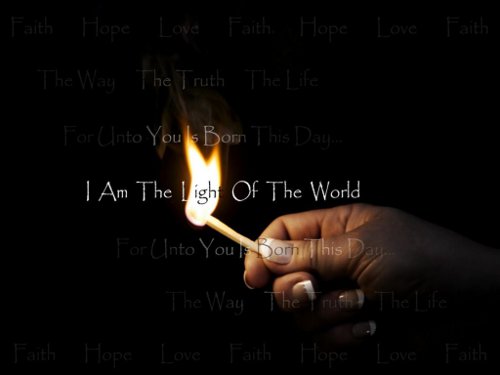
light-of-the-worldBut it’s by Israel’s light that the world was intended to be informed of God and His blessings, as well as be informed of what constituted both righteousness and sin. The Torah, among its many other purposes, defines what it is to disobey God and thus be condemned. But even an awareness of the Law and being behaviorally compliant is insufficient if there is no Kavanah or intension, sometimes expressed as “direction of the heart”.

Although Jews and the Gentiles in Messiah had different (overlapping) behavioral obligations, they were all judged based, not necessarily on the perfection of their performance, but on the presence or absence of faith, devotion, and motivation. All have sinned and fallen short of God’s expectations, but if a man like King David who sinned greatly with the affair and impregnation of the married woman Batsheva, the murder of her husband Uriah, and attempting to cover it all up by quickly marrying Batsheva after the mourning period for her husband’s death had passed, could still repent and be considered “a man after God’s own heart” (1 Samuel 13:14) specifically because of the quality of David’s kavanah, then so could the less than perfect Jews Paul was referencing in his letter.

But now apart from the Law the righteousness of God has been manifested, being witnessed by the Law and the Prophets, even the righteousness of God through faith in Jesus Christ for all those who believe; for there is no distinction; for all have sinned and fall short of the glory of God, being justified as a gift by His grace through the redemption which is in Christ Jesus; whom God displayed publicly as a propitiation in His blood through faith. This was to demonstrate His righteousness, because in the forbearance of God He passed over the sins previously committed; for the demonstration, I say, of His righteousness at the present time, so that He would be just and the justifier of the one who has faith in Jesus.

Romans 3:21-26 (NASB)

We might condense the above-quoted statement to say something like, “But now apart from the Law the righteousness of God has been manifested through faith in Jesus Christ.” That makes it seem as if faith in Christ has replaced the Law (Torah observance) as a means of being considered righteousness. Except that Torah observance was never considered a means of righteousness. Only faith.

Then he believed in the LORD; and He reckoned it to him as righteousness.

Genesis 15:6 (NASB)

Abraham was considered righteous by God because of his faith, long before the Torah was given at Sinai and even before the commandment of circumcision as a sign of God’s covenant with Abraham. Thus it is faith that is the common denominator across all populations, Jewish and Gentile, that reckons anyone as righteous before a Holy God.

That seems to explain part of what Paul is saying in Romans 3:21-26, but what about faith in Jesus Christ, in Yeshua HaMashiach? Up until now, faith in Hashem, God of the Heavens was required. What changed?

The second elementary teaching of the Messiah in Hebrews 6:12 is called “faith toward God,” but how is this distinct from other first-century sects of Judaism? Even the Sadducees believed in God. Find out how Yeshua transformed the faith of his followers, and get a fresh handle on what it means to “believe in Jesus” and to be “born again.”

-D. Thomas Lancaster
Sermon Twenty: Faith Toward God
Originally presented on June 15, 2013
from the Holy Epistle to the Hebrews sermon series

That is exactly the question D.T. Lancaster answers in the above-quoted sermon in his “Hebrews” series, which I reviewed a number of weeks ago. I also mentioned this topic in a related blog post called Why No One Comes To The Father Except Through The Son.

What changed? Why was devotion solely to Hashem no longer the target to be aimed at for a devout Jew? Actually, that’s not what changed. As mentioned in both of my commentaries on Lancaster, the Jesus-believing Jews of “the Way” and the Pharisees had almost exactly the same set of beliefs about God. There was only a slight variance between them and you could almost call Paul and the other Jesus-believing Jews “Pharisees with a Messianic twist.”

AbrahamYou might say that God’s plan for the ultimate redemption of Israel had been progressing forward in time since Abraham. If you look at the pattern of the covenants, you’ll see God building, step by step, on His plan, establishing the promises with Abraham, carrying them out through Isaac, and Jacob, the exile of Jacob’s family to Egypt where they grew into a great multitude, the raising up of Moses and Aaron, leading them out of Egyptian slavery and on their many journeys, and culminating at Sinai with the establishing of the Mosaic covenant and the giving of the Torah, forming the nation of Israel as the light to the world.

But it didn’t end there. Even after possessing the Land, national Israel struggled. Their history is clear. Did God’s plan fail? Did Israel fail? No. The plan was incomplete. It was never meant to encompass just Israel, but the whole world through Israel.

That’s why the New Covenant was prophesied through Jeremiah, Ezekiel, Isaiah, and many other prophets. The New Covenant would be written, not on scrolls or tablets, but on the Jewish heart, so that Israel could finally perfectly observe the mitzvot with absolute kavanah and without sin.

Messiah, among other things, was the herald of the New Covenant. He brought the beginning of the inauguration of that Covenant with his birth into the world, receiving the Holy Spirit, his ability to heal, his correct teachings, his death and resurrection, and his promise to return.

He was the messenger of the next logical, Biblical, evolutionary step in God’s redemptive plan, his Good News to the nation of Israel, and through Israel’s redemption, the salvation of the world as well.

At each step in the plan, the Jewish people could continue to have faith in God or not. Many did. Some didn’t. The Bible records their fate. Messiah came not to say “believe in me instead of God” but “believe in me because of God for I am His messenger and through my message you can come fully and completely, in a way never before realized by any living Jew, to God the Father, Master of Legions, Author of Life.”

Another step and a really big one in God’s plan. Accept or reject. Faith or faithlessness. You choose.

new heartThe choice was given to Gentiles for the first time since the establishment of the Israelite nation. No longer would a non-Jew have to undergo the proselyte ritual and convert to Judaism. No longer would a Gentile be required to affiliate with a tribe or clan of Israel (as they did in the days of Moses). Now, because of the New Covenant promises and how they include the Abrahamic blessings to the nations, all people of every nation, tribe, and tongue can, through Messiah, come alongside Israel, just as it was prophesied, and take part in the covenant blessings of God by being grafted into the root.

Where then is boasting? It is excluded. By what kind of law? Of works? No, but by a law of faith. For we maintain that a man is justified by faith apart from works of the Law. Or is God the God of Jews only? Is He not the God of Gentiles also? Yes, of Gentiles also, since indeed God who will justify the circumcised by faith and the uncircumcised through faith is one.

Romans 3:27-30 (NASB)

Paul might be saying, so, having said all that, do Jews get to brag that they are justified and made righteous by being born Jews or even by observance of the mitzvot? No. Yes, being born Jewish and having the Torah has terrific advantages as I said, but ultimately, no one is justified by being born a Jew or by being physically circumcised. Justification, for a Jew or Gentile, comes only through a faith like Abraham’s.

I can see Paul really needing to make this point to the Gentile Jesus-believers reading the letter. I can see how they could be really confused in the face of non-believing Jews telling them that justification and righteousness comes only through being Jewish. Paul needed to set them straight and orient them and their Jewish counterparts, to the reality of the “law of faith”. God is a God of the Jews and a God to the Gentiles so both the Jews and Gentiles have their hope in Him through Messiah’s Good News.

But Paul has to be particularly careful. In emphasizing faith, he can’t be seen to diminish the reality and the vital importance of the Torah or of Jewish identity. Remember, the Jews still have many great advantages over the Gentiles (sorry, but it’s true) as possessors of the words of God. Israel was the original recipient of Torah, and is the total and complete object of the Abrahamic, Mosaic, and New Covenants. It’s only through Israel that the rest of us have any hope of salvation at all, so let’s not get cocky.

That explains the last verse in the chapter:

Do we then nullify the Law through faith? May it never be! On the contrary, we establish the Law.

Romans 3:31 (NASB)

Especially according to the entire context of the letter as it has been presented so far, Paul’s statement couldn’t be plainer. Faith does not nullify, do away with, fulfill (in the sense of abolish), abolish, replace, or complete (in the sense of abolish) the Law. Faith establishes the Law!

That is, through a completeness of Jewish faith, in this context, in God through Messiah, the Law is established, fully founded in a way never conceived or before or if conceived of, never accomplished before in Jewish lives.

Remember, we have to view all of this through the New Covenant. Jesus was bringing the New Covenant into our world. The evidence was the fact that even the Gentiles were receiving the Holy Spirit (see Acts 10) just as the Jews had (Acts 2). The New Covenant was going to radically change the relationship between the Jewish people, the Holy Spirit, and observance of the mitzvot:

“But this is the covenant which I will make with the house of Israel after those days,” declares the Lord, “I will put My law within them and on their heart I will write it; and I will be their God, and they shall be My people. They will not teach again, each man his neighbor and each man his brother, saying, ‘Know the Lord,’ for they will all know Me, from the least of them to the greatest of them,” declares the Lord, “for I will forgive their iniquity, and their sin I will remember no more.”

Jeremiah 31:33-34 (NASB)

Moreover, I will give you a new heart and put a new spirit within you; and I will remove the heart of stone from your flesh and give you a heart of flesh. I will put My Spirit within you and cause you to walk in My statutes, and you will be careful to observe My ordinances.

Ezekiel 36:26-27 (NASB)

When the New Covenant reaches fruition, God will write the Torah on the heart, and each Jewish person (and ultimately the rest of us) will have an apprehension of God that is so complete, that they/we will know God, as the prophets knew Him, as Moses knew Him, with complete intimacy, and all Israel’s sins (and the Gentiles’ attached to Israel through Messiah) will be forgiven.
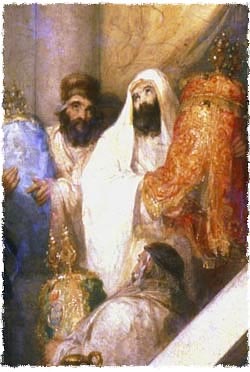
the-divine-torahFurther, a completeness of the Holy Spirit will be poured out so that it will be possible for Israel to totally observe all of the Torah ordinances perfectly and without sin.

This is what it means when Paul says, Do we then nullify the Law through faith? May it never be! On the contrary, we establish the Law.

The Torah will be established in the New Covenant era in a way that it never could have been at any other time in history, for the conditions of God’s covenant with Israel will no longer be limited to being recorded on scrolls but will, in some mysterious manner, be written on the Jewish heart and soul, and Israel will be enabled by the Holy Spirit to finally, perfectly be in obedience to God as God requires through the Torah.

And we Gentiles who come to faith in the God of Israel through Messiah will be grafted in and be sharers of the covenant blessings, living in the resurrection under the reign of King Messiah in perfect peace and knowledge of Israel’s God.

“Run to pursue even a minor mitzvah and flee from a transgression.”

-Ben Azzai, Pirkei Avot 5:2

Next up: Reflections on Romans 4.

Shabbat Shalom.

Is There More Than One Right Way To Be An Observant Jew?

Shabbat Shalom, everyone. And I know that the Orthodox way has its charm, its appeal, but the cost of living like the old days in this postmodern world is very high. This article is about the real price of being Orthodox in Atlanta and completely following the traditions.

-Derek Leman
as quoted from Facebook

I don’t mean to be unkind to Derek, but my impression of the above-quoted comment is that keeping an Orthodox lifestyle is “quaint, ” impractical, and largely unnecessary for Jewish living. Maybe I’m getting Derek all wrong, but I think he’s missing the point.

But first things first. Derek is commenting on an article written by Asher Elbein for Tablet Magazine called Grappling With the Rising Cost of Being Orthodox.

Here’s a sample:

For Orthodox Jews everywhere, the cost of being observant has always been high; day schools, kosher food, and housing have always been expensive. But those costs have risen dramatically in recent years. And for residents of Toco Hills (a Modern Orthodox enclave near Atlanta, GA), where housing costs have climbed even as the recession has lowered people’s incomes and reduced their savings—and many breadwinners have lost their jobs—the costs have become a major burden. According to Rabbi Ilan Feldman, leader of Congregation Beth Jacob, a grand shul at the center of the community, 100 of the 600 families living here are on federal or local assistance, a number that has risen gradually but consistently since 2010.

The article highlights Tzivia Silverstein, an Orthodox Jew and an unemployed single mother.

Her mother is helping out, Silverstein says, and she’s getting some child support from her husband, but making ends meet is a continuous struggle. Most of her time is now spent looking for work, preferably something steady, like bagging or cashiering at a local grocery store. But finding a position that doesn’t require weekend time has been difficult. “That’s been a classic challenge of American Jewry, you know?” she said. “Do you work on Shabbat or not? You have trouble earning money because you can’t work on Saturday, and you have to take off for holidays.”

In the Facebook conversation regarding this article, Derek commented that Conservative Judaism “is a good middle ground,” but is this really such an easy choice, like choosing which food items to put on your plate at the local Golden Corral restaurant? Although Tzivia was born into a Reform home, many Jews are born and raised in Orthodox Judaism. It is, for them, more than a “lifestyle.” It’s a life.

The Orthodox Jewish community has a certain mystique.

Whether it’s because we look, act or believe differently, people are intrigued by stories about the Orthodox Jewish community. Media outlets often oblige but whenever I read these stories, they don’t quite resonate with me. They don’t look like the Orthodox community I know. So I’d like to share a few things that happened to me over the last year that give a more accurate insight into the real Orthodox Jewish community.

-Shimon Rosenberg
“The Orthodox Community I Know”
Aish.com

Even in other branches of Judaism, the Orthodox (and there’s more than one expression of Orthodox Judaism, from Modern to Chasidic) are looked at somewhat askance. They are seen as rigid, judgmental, archaic, and even uneducated. Many hold to a very literal understanding that the Earth is 5,774 years old (the current year on the Jewish religious calendar is 5774).

Orthodox JewsOn top of that, the Orthodox are considered the most “rule heavy” expression of Judaism and, as the Tablet Mag article attests, being Orthodox and strictly observant is very expensive.

Contrary to popular belief, not all Jews are wealthy or even comfortably middle-class. Some Jews, like Tzivia Silverstein, are barely making it. But what else is Orthodox Judaism? Let’s return to Shimon Rosenberg’s answers:

My wife and I have experienced fertility problems. We thankfully had been blessed with two children but as they grew older we had been trying for some time to have another child to no avail. One day I was speaking with my rabbi about our situation and I conveyed to him that my wife and I wanted to pursue fertility treatments but because of the steep cost, we were having second thoughts. A few days later my rabbi said that he spoke with an anonymous individual with means in the Jewish community who had agreed to sponsor fertility treatment for young Jewish couples if they could not afford it. He would not know who we were and we would not know who he was. He was motivated purely out of a sense of loyalty to the continuity of the Jewish People.

That’s the Orthodox community I know.

I’ll admit to experiencing a certain amount of dissonance between the Tablet Mag and Aish articles, since you’d think Rosenberg’s Orthodox Judaism would somehow step in and help out Silverstein to the degree that she could acquire a job with an adequate income and not struggle so hard to make ends meet.

I also experienced the same dissonance with how Sue Fishkoff described the Chabad in her book The Rebbe’s Army in relation to some of the experiences my wife has had with the local Chabad Rabbi and Rebbitzen (no, they’re not bad people, but they are human, not the morally and ethically superhuman people Fishkoff often described in her book).

But the costs involved in living Orthodox in Toco Hills continue to rise and there’s only so much help available for lower-income Jewish families:

Many Orthodox families, especially those on the lower end of the economic ladder, simply can’t keep up with the prices. So, they turn to underground charities like Yad L’Yad, an Atlanta-based organization that works exclusively with the area’s Jewish community. According to Esther Pranskey, the organization’s head, the number of recipient families more than doubled when the recession struck and has continued to rise steadily. More than 30 families—including the Silversteins—currently receive provisions of flour, rice, pickles, and other essentials. While basic, the deliveries help ease the pressure. The Silversteins rarely go out to eat, and their meals aren’t extravagant affairs, but they stay fed and they stay kosher.

shabbosBut as Rosenberg attests in his continuing chronicle of his daughter’s birth, there are other occasional helpers:

The excitement began early Friday morning and as the day progressed I started thinking about Shabbat. What would we eat? How would I recite Kiddush? Light candles? I remembered hearing about an organization called Bikkur Cholim which means “visiting the sick.” It’s a volunteer-driven charity that looks after the needs of people in hospital. I called them and within a couple of hours someone came to our hospital room with literally bags of food, grape juice for Kiddush, electric candles to serve as Shabbat candles, even spices for havdallah. The food is free and the person delivering it is a volunteer. In the few moments I had to speak with him I learned that he was just a regular guy — an accountant — who takes off Fridays from work to volunteer for Bikkur Cholim. I asked him why he does it and he replied simply that it’s what God wants of us.

That’s the Orthodox community I know.

The Tablet Mag article doesn’t exactly end on an up beat, but it does describe why being Orthodox isn’t just a casual choice:

“I know it’s not the smart thing to do,” Wittenberg said. “I’d love to sell my house and move out somewhere cheaper. There’s not a day goes by when my wife and I don’t talk about it. But I’m a baal teshuvah. I’m choosing to be observant. And if I’m going to struggle through this Torah, then my kids need to have friends. They need to be in the community.”

For Silverstein, it comes down to value instead of cost. In terms of personal and spiritual fulfillment, she says, the neighborhood pays for itself. As heavy as the expenses are, they are necessary sacrifices for belonging to the community. “I see maybe one movie a year,” she said. “I choose to put my kids through religious school instead of buying a nicer car. It’s astounding, the amount of money that other people have, to spend on things like renovating their house or buying a bigger TV. To me, my most important relationship is with God. The material world is a means to an end.”

I’d love to copy and paste all of Rosenberg’s write-up here but I’ll restrain myself to its ending as well:

After two weeks in the hospital, the doctors told us we could go home. In the end, they said they would monitor her condition, but over time it would likely go away on its own.

Our two kids at home were delighted at the return of their baby sister. They helped her and cared for her and nurtured her. As a parent, there’s no better feeling than seeing your children care for one another. Likewise, when God watched how my community took care of my family in our time of need, I think He too had that parental pleasure, so to speak.

I wish I could thank my community publicly for everything that they’ve done but I am writing this under a pseudonym to protect the privacy of my family. But I know that my community doesn’t want a public thank you. They were just doing what they do.

That is the Orthodox community I know.

Derek Leman
Derek Leman

Getting back to the Facebook commentary, why would being Orthodox seem to be such as casual selection (and I apologize if I’m mischaracterizing the motives or intent of Derek and the others dialoging in the thread)?

One person made the following comment:

I think Yeshua will be a conservative Jew. Orthodoxy is more interested in keeping Torah( or the rabbinical interpretation of Torah) with rigidity. Creating it to be a burden, and simple works that do not bring us closer to Hashem . Reform is too liberal, and mostly a social club than a house of worship. I believe all Jews want to serve Hashem,they just have different interpretations on how to do it. The MJ I attend leans towards the conservative tradition.

I suppose we all have our own theories on what sort of Judaism Yeshua (Jesus) will advocate and teach upon his return (although Christians probably don’t imagine he’ll practice Judaism at all), but we are operating in a vacuum. We don’t know that Messiah will formally support a currently existing branch of Judaism. But if you read Matthew 23:1-3 as I do, you see Jesus not only agreeing with the teachings of the Pharisees but stating that they had the right to issue binding halachah (legal rulings) for their community, which apparently included Yeshua’s disciples.

That would at least hint that in the future Messianic Age, he will support a more strictly observant lifestyle which probably will include a variety of traditions such as Netilat Yadayim (ritual hand washing). That’s a guess, but I hope it’s an educated guess.

Of course modern Messianic Judaism, like all of the other more normative Judaisms, doesn’t represent a single, overarching identity or philosophy. Derek is affiliated with the Union of Messianic Jewish Congregations (UMJC) which he describes as “the oldest (and best) network of Messianic Jewish congregations in the U.S.” If you go to the Introduction page of the Standards section of the Messianic Jewish Rabbinical Council, which provides the oversight for the training and ordination of UMJC Rabbis such as Derek, you can find a PDF document called Standards of Observance which outlines in some detail the “worship, ethics, education, (and) halakhic standards” established by this body. Without going into exquisite detail, those standards seem largely to be Reform with some elements of Conservative Judaism.

I don’t doubt that those particular standards were selected with the majority Gentile attendance of UMJC synagogues in mind. Although I know more than a few non-Jewish people who have basically run out of their churches and into a Messianic Jewish lifestyle of one sort or another, almost all of them are not observing halachah to the level of an Orthodox Jew or anywhere near it.

Messianic Judaism is even now just beginning to emerge into its own as an authentically Jewish expression of Yeshua-faith, but it has a long way to go. As a relatively new branch of Judaism (I realize I’m going to receive a lot of “push back” by calling Messianic Judaism a Judaism at all), it’s still trying to “find its feet,” so to speak. UMJC is only one organization representing Messianic Judaism and its codified standards only apply to the affiliated Rabbis and synagogues under the UMJC banner. Other Messianic Jewish groups (as opposed to One Law/One Torah, Two House, Ephraimite, or Sacred Name groups) may follow different standards, either established by a different umbrella organization or at the level of the individual synagogue/congregation.

Even within those groups, Jewish individuals and families may hold to varying degrees of observance, some more stringent and some less than their faith communities. I’ve found that to be true of many of the Jewish families who attend the local Reform/Conservative shul. I’ve heard some people there comment that they think the Rabbi is “too religious”.

Modern IsraelI say all this not to be unkind to Derek, anyone who has conversed with him on Facebook, the UMJC in particular or Messianic Judaism in general. I am saying that religious Jews all over the world make decisions about what being observant means to them and what their duties to Hashem are in this world.

Both Wittenberg and Silverstein in the Tablet Mag article say they’ve made their choices and that being Orthodox, though sometimes a terrific financial struggle, is worth it to them. They seem to join with Rosenberg in saying that the community life of Orthodox Judaism is woven not just across the collective community, but in each of their individual lives, binding one Jew to another.

Even watching my Jewish wife, who has a fairly relaxed observance, particularly compared to Chabad, relate to other Jews and to the Jewish community (regardless of synagogue affiliation) testifies to this bond between Jews, a bond I can’t be a part of and admittedly don’t really understand. Although my wife wasn’t raised even as a secular/cultural Jew (long story), the “Jewish connection” seems to come from her very DNA and is firmly anchored to her soul. It just needed an expression which my wife has since discovered.

So while I can recognize, at least on the outside (far, far outside) looking in, that living as an Orthodox Jew can be a struggle, I can also see that it has many rewards. I certainly don’t see the justification in criticizing a Jewish person’s decision about how to be a Jew. I know if I tried that with my spouse, she’d promptly explain to me in no uncertain terms that she didn’t need my advice or permission on how to be Jewish (that happened exactly once and I’ll not cross that boundary again).

I apologize if I’ve ruffled feathers, but we must admit that in the present world, there seems to be more than one acceptable manner by which an observant Jew can live as a Jew. When Moshiach comes and teaches Torah, then we will know more.

In the meantime, we should not criticize the level of a Jewish person’s observance, especially if it’s more strict than our own (or rather than another Jew’s observance). The world, including the Christian world, has tried for thousands of years to destroy the Jewish people and Judaism using many and varied means. The current method of choice is assimilation by reducing the Jew’s observance and sense of Jewish identity to zero or close to it, thereby turning that Jewish person into a Gentile with Jewish genes.

I know no one has suggested this, but it’s the natural result of telling a Jew not to be so “religious.”

Utilize every opportunity to become aware of the Almighty’s kindness. This awareness will motivate you to emulate the Almighty and make the attribute of kindness an integral part of your personality.

-Rabbi Zelig Pliskin

Reflections on Romans 1 and 2

For I am not ashamed of the gospel, for it is the power of God for salvation to everyone who believes, to the Jew first and also to the Greek. For in it the righteousness of God is revealed from faith to faith; as it is written, “But the righteous man shall live by faith.”

Romans 1:16-17 (NASB)

When I was preparing for last week’s Sunday school class for the study on Romans 10:1-13, I decided to read the entire Epistle to the Romans. I’ve studied Romans before, principally using the Mark Nanos book The Mystery of Romans, but there’s something to be said for just reading the Bible and letting it speak to you.

I prefer, when I can, to read entire books in the Bible rather than just a few verses at a time. Imagine reading your favorite novel three or four sentences at a time, then putting the book down for four days, picking it up and reading another few sentences.

First of all, it would take you forever to get through the novel and secondly, you probably would have a tough time keeping the book’s overarching narrative in your mind as a complete story.

But we think nothing of treating the Bible or any of the books it contains as if it were a large collection of “sound bytes”.

Paul wrote each of his letters to be read as a whole, including Romans. Why don’t we read them that way? The impression we get of the epistle (or any other single book in the Bible) will probably be different and perhaps yield a more complete impression in the mind of the reader.

Alas, I can’t review the whole epistle to the Romans in a single blog post, so I’ll have to break my own rule. But I can use a series of blog posts to communicate my overall impression of Romans a few chapters at a time? Hopefully, that will be sufficient.

None of this is scientific or scholarly. I don’t read Biblical Greek and I didn’t use any references or other study aids while reading Romans. I just read Romans and took notes on the margins of the pages as I was reading. That’s what I’m going to share with you.

Oh, these are just impressions. Little bits and pieces that I picked up in my overall read of the letter. I’m not going to comment on all the verses in each chapter. Just what prompted me to write a note down.

Take it for what it’s worth.

The first thing I noted in my reading of Romans was the above-quoted verses. Paul was not ashamed of the Good News of Messiah. That good news is the “power of God for salvation to everyone who believes, to the Jew first and also to the Greek.”

What is “salvation?” We like to think that it’s as simple as being saved from the consequences of our sins and being reconciled to God, but remember, for Jesus and for Paul, based on the New Covenant promises, having your sins forgiven is only the first step.

The New Covenant promises are aimed solely at the Jewish people and the nation of Israel, and include restoring national Israel to its former glory and elevating her as the head of all the nations of the world. It’s the promise that Israel’s Messiah King will rule with justice and mercy, not over just Israel, but the nations of the Earth. It’s the promise that Messiah will completely end the Jewish exile and return all Jews to their nation. It’s the promise to rebuild the Temple and to restore the sacrificial system in accordance to the commandments. It’s the promise to defeat all of Israel’s enemies and bring them (us) under subjugation. It’s the promise to establish a reign of worldwide peace and tranquility. It’s the promise of the resurrection for the just, that they (hopefully, we) will live in the resurrection under Messiah’s reign, for that is the hope of our faith. It is the promise…

You get the idea.

So when Paul says something as simple as “power of God for salvation to everyone who believes, to the Jew first and also to the Greek,” he’s really saying all of the stuff I put into the previous, large paragraph. That’s why it’s first to the Jew. Because promises were made to the Jewish people. Gentiles, by God’s mercy and favor, get to come along for the ride…but I’ll get to that in a subsequent blog post.

For even though they knew God, they did not honor Him as God or give thanks, but they became futile in their speculations, and their foolish heart was darkened.

Romans 1:21 (NASB)

balaam_israelI read this the same weekend I read Torah Portion Pinchas and hopefully you’ll see the connection. After Israel was spared being cursed and was in fact blessed by the Gentile prophet Balaam, Balaam had the “brilliant” suggestion to have Moabite and Midianite women seduce the men of Israel sexually to incite them to worship their (foreign) gods.

It worked. If not for the zeal of the Kohen Pinchas (Phinehas), the plague of Hashem might have consumed the whole nation:

The Lord spoke to Moses, saying, “Phinehas, son of Eleazar son of Aaron the priest, has turned back My wrath from the Israelites by displaying among them his passion for Me, so that I did not wipe out the Israelite people in My passion. Say, therefore, ‘I grant him My pact of friendship. It shall be for him and his descendants after him a pact of priesthood for all time, because he took impassioned action for his God, thus making expiation for the Israelites.'”

The name of the Israelite who was killed, the one who was killed with the Midianite woman, was Zimri son of Salu, chieftain of a Simeonite ancestral house. The name of the Midianite woman who was killed was Cozbi daughter of Zur; he was the tribal head of an ancestral house in Midian.

The Lord spoke to Moses, saying, “Assail the Midianites and defeat them—for they assailed you by the trickery they practiced against you—because of the affair of Peor and because of the affair of their kinswoman Cozbi, daughter of the Midianite chieftain, who was killed at the time of the plague on account of Peor.”

When the plague was over…

Numbers 25:10-19 (JPS Tanakh)

The Israelites knew God but they did not honor Him.

There’s also the corresponding Psalm for this Torah Portion:

But to the wicked God says,
“What right have you to tell of My statutes
And to take My covenant in your mouth?
“For you hate discipline,
And you cast My words behind you.
“When you see a thief, you are pleased with him,
And you associate with adulterers.
“You let your mouth loose in evil
And your tongue frames deceit.
“You sit and speak against your brother;
You slander your own mother’s son.
“These things you have done and I kept silence;
You thought that I was just like you;
I will reprove you and state the case in order before your eyes.
“Now consider this, you who forget God,
Or I will tear you in pieces, and there will be none to deliver.
“He who offers a sacrifice of thanksgiving honors Me;
And to him who orders his way aright
I shall show the salvation of God.”

Psalm 50:16-23 (NASB)

Even in the condemnation of the faithless and the wicked, God still offers a path back to salvation and redemption.

Or not…

And just as they did not see fit to acknowledge God any longer, God gave them over to a depraved mind, to do those things which are not proper, being filled with all unrighteousness, wickedness, greed, evil; full of envy, murder, strife, deceit, malice; they are gossips, slanderers, haters of God, insolent, arrogant, boastful, inventors of evil, disobedient to parents, without understanding, untrustworthy, unloving, unmerciful; and although they know the ordinance of God, that those who practice such things are worthy of death, they not only do the same, but also give hearty approval to those who practice them.

Romans 1:28-32 (NASB)

teshuvahGod always offers a way back, but you have to be willing to take it. You can only access the path of teshuvah and return to God if you repent of your sins. If you don’t, if you are guilty of what the above-quoted verses state, if you fail to acknowledge God, then God, according to how I read Paul, will give you enough rope to hang yourself with.

Or do you think lightly of the riches of His kindness and tolerance and patience, not knowing that the kindness of God leads you to repentance?

Romans 2:4 (NASB)

God doesn’t always “drop the hammer” the minute we stray from the path of light and into darkness. In fact, often he just lets us do what we want to do, and it’s easy to take that as a sign that God doesn’t seem to mind. No, that’s not it. He’s giving us the rope with which to hang ourselves, but he’s also giving us time to realize how badly we’ve messed up. He’s giving us time to repent. For when our time is up, then and only then will it be too late.

He thereupon says to them, “Permit me to go repent!” And they answer him and say, “You fool! Do you know that this world is like the Sabbath and the world whence you have come is like the eve of the Sabbath? If a man does not prepare his meal on the eve of the Sabbath, what shall he eat on the Sabbath?”

-from Ruth Rabbah 3:3
quoted by Young in
Chapter 15: Death and Eschatology: The Theology of Imminence, pp 281-2
The Parables: Jewish Tradition and Christian Interpretation

I quoted this yesterday and for the same reason. To illustrate that we have lots and lots of time, at least as humans measure time (but maybe not as much time as we think), but in the end, God’s justice prevails. Don’t take God’s patience lightly.

There will be tribulation and distress for every soul of man who does evil, of the Jew first and also of the Greek, but glory and honor and peace to everyone who does good, to the Jew first and also to the Greek. For there is no partiality with God.

Romans 2:9-11 (NASB)

I found this rather sobering. God puts the Jew first in both good and evil. If the blessings of the New Covenant come to the Jew first, so does tribulation and distress. There’s a definitely negative aspect to being at the center of God’s attention. I read “no partiality” both as God delivering consequences equally upon the Jew and Greek and as God not being partial to Israel giving her only good but not evil.

For all who have sinned without the Law will also perish without the Law, and all who have sinned under the Law will be judged by the Law…

Romans 2:12 (NASB)

under-law-torahIt seems that Jews will be held to a higher standard than Gentiles. But was Paul writing to believing and unbelieving Jews and to pagan Gentiles when he said “under the Law” and “not under the Law”? Paul was writing to the “church” in Rome, which Nanos said was more likely to the believing and non-believing Jews and the believing Gentiles in the synagogue. Paul had no audience with the pagans and his letter wasn’t addressed to them. So who is under the Law and not under the Law? Were the believing Gentiles under the Law?

…for it is not the hearers of the Law who are just before God, but the doers of the Law will be justified. For when Gentiles who do not have the Law do instinctively the things of the Law, these, not having the Law, are a law to themselves, in that they show the work of the Law written in their hearts, their conscience bearing witness and their thoughts alternately accusing or else defending them, on the day when, according to my gospel, God will judge the secrets of men through Christ Jesus.

Romans 2:13-16 (NASB)

This is getting very close to something like having the law “written on hearts,” for how would Gentiles who were not given the Law at Sinai “instinctively” know to do the things of the Law? And what did they do? Did Gentiles “instinctively” put tzitzit on their garments and lay tefillin? Did they “instinctively” start observing the Shabbat and keeping kosher? Or is being kind, gracious, and compassionate a more “instinctive” response in doing the Law?

If Paul is talking about Gentiles who are already disciples of Jesus, then they would possess the Holy Spirit and the finger of God would be just beginning to write the Law upon their hearts.

But the Jewish believers (and non-believers) already had the Law.

But if you bear the name “Jew” and rely upon the Law and boast in God, and know His will and approve the things that are essential, being instructed out of the Law, and are confident that you yourself are a guide to the blind, a light to those who are in darkness, a corrector of the foolish, a teacher of the immature, having in the Law the embodiment of knowledge and of the truth, you, therefore, who teach another, do you not teach yourself?

Romans 2:17-21 (NASB)

Is it possible to take a gift for granted. Were there Jews who relied on outward behavior alone to justify them before God. Yes, it is the “doer” of the Law who is made righteous, but only by faith. Performing the mitzvot without faith is not effective. See Psalm 50 above if you don’t believe me.

Hopefully, a believing Jew would not take the Torah for granted, but if Nanos is right, Paul was also writing to Jews who were not believers in Jesus as the Messiah, and some of them may have strayed from their faith, relying on behavior and ethnic identity alone to justify them before Hashem. This is Paul’s dire warning to his brothers.

…you, therefore, who teach another, do you not teach yourself? You who preach that one shall not steal, do you steal? You who say that one should not commit adultery, do you commit adultery? You who abhor idols, do you rob temples? You who boast in the Law, through your breaking the Law, do you dishonor God? For “the name of God is blasphemed among the Gentiles because of you,” just as it is written.

Romans 2:21-24 (NASB)

Hypocrisy? Jesus accused his brothers among the Pharisees of hypocrisy more times than I can count.

Then Jesus spoke to the crowds and to His disciples, saying: “The scribes and the Pharisees have seated themselves in the chair of Moses; therefore all that they tell you, do and observe, but do not do according to their deeds; for they say things and do not do them.”

Matthew 23:1-3 (NASB)

PhariseesI’ve quoted Noel S. Rabbinowitz’s paper Matthew 23:2-4: Does Jesus Recognize the Authority of the Pharisees and Does He Endorse Their Halakhah (PDF) more than once to illustrate while Jesus accused at least some of the Pharisees of not practicing what they taught, he confirmed that what they taught was correct, and that they had the proper authority to be teachers in Israel.

Applying that forward to Paul, he may well have accused some of the Jews in the Roman synagogues of hypocrisy but at the same time acknowledged what they taught was correct and that they had the authority to teach in the synagogues. Thus, Paul was criticizing the hypocritical practices of some of his audience, not their validity as Jews nor the validity of the Torah as a continued covenant obligation for Jews.

But someone may well say, “You have faith and I have works; show me your faith without the works, and I will show you my faith by my works.” You believe that God is one. You do well; the demons also believe, and shudder. But are you willing to recognize, you foolish fellow, that faith without works is useless? Was not Abraham our father justified by works when he offered up Isaac his son on the altar? You see that faith was working with his works, and as a result of the works, faith was perfected; and the Scripture was fulfilled which says, “And Abraham believed God, and it was reckoned to him as righteousness,” and he was called the friend of God.

James 2:18-23 (NASB)

Faith and works are required. They come as a set. You cannot properly separate them. Faith without works is dead but so is works without faith.

Make no mistake though. God fully intended (intends) for Jews to observe the mitzvot.

“For this commandment which I command you today is not too difficult for you, nor is it out of reach. It is not in heaven, that you should say, ‘Who will go up to heaven for us to get it for us and make us hear it, that we may observe it?’ Nor is it beyond the sea, that you should say, ‘Who will cross the sea for us to get it for us and make us hear it, that we may observe it?’ But the word is very near you, in your mouth and in your heart, that you may observe it.

Deuteronomy 30:11-14 (NASB)

That completely shoots down any Christian argument that God gave the Jews the Law to prove how impossible it would be to keep, thus showing them that they could only be “saved” by faith and grace alone, apart from the Torah.

For indeed circumcision is of value if you practice the Law; but if you are a transgressor of the Law, your circumcision has become uncircumcision. So if the uncircumcised man keeps the requirements of the Law, will not his uncircumcision be regarded as circumcision? And he who is physically uncircumcised, if he keeps the Law, will he not judge you who though having the letter of the Law and circumcision are a transgressor of the Law? For he is not a Jew who is one outwardly, nor is circumcision that which is outward in the flesh. But he is a Jew who is one inwardly; and circumcision is that which is of the heart, by the Spirit, not by the letter; and his praise is not from men, but from God.

Romans 2:25-29 (NASB)

If a Jew fails to perform a mitzvah, does he stop being a Jew? Does he become “uncircumcised?” This used to puzzle me. The whole “For he is not a Jew who is one outwardly, nor is circumcision that which is outward in the flesh” thing has been used to justify calling Christians “spiritual Jews” and to support the old, tired theology of supersessionism. But I don’t think that’s what Paul is saying.

Paul is trying to inspire zeal for the Torah and for faith in Messiah in his non-believing Jewish brothers in Rome. How would he do that by insulting them and rejecting them? Worse, how would he do that by denigrating the Torah? He couldn’t.

JewishBut he could be saying that a Jew is justified before God if he is outwardly a Jew, that is, if he is obedient to the commandments, and if he is inwardly a Jew, that is, if he has faith in God and that faith is the motivation for obedience. The two go together…faith and works.

I had intended to cover Chapter 3 as well in this first “reflection” but I can see this “meditation” is long enough as it is.

This is an experiment of sorts, so let me know what you think. Should I continue writing my reflections of Romans for the entire epistle?

Next up: Reflections on Romans 3.

The Servant Prepares for the Sabbath

In 1922 the highly respected Jewish scholar Joseph Klausner claimed that any sound methodology critically examining the historical Jesus must meet at least two requirements. First, critical research must place Jesus believably among the Jewish people in first-century Israel. Second, the historical analysis should explain how the church and the synagogue parted ways, resulting in the formation of the new Christian religion. In 1985 Sanders upheld the validity of these foundational principles in his widely acclaimed book, Jesus and Judaism. Since one-third of the recorded sayings of Jesus appear in parables, these Gospel illustrations have the potential to solve a number of mysteries surrounding the nascent faith. Who is Jesus of Nazareth and how did Christianity originate? How has the presence of Jewish traditions in the parables of Jesus influenced Christianity?

-Brad H. Young
Epilogue: Jesus, the Parables, and the Jewish People, pg 297
The Parables: Jewish Tradition and Christian Interpretation

I sometimes (often) think that last question should read, “Do the presence of Jewish traditions in the parables of Jesus influence Christianity at all?” Even in the church I currently attend which is “Jewish-friendly” and “pro-Israel,” I’d have to say, “not very much.” Here’s what I mean:

He thereupon says to them, “Permit me to go repent!” And they answer him and say, “You fool! Do you know that this world is like the Sabbath and the world whence you have come is like the eve of the Sabbath? If a man does not prepare his meal on the eve of the Sabbath, what shall he eat on the Sabbath?”

-from Ruth Rabbah 3:3
quoted by Young in
Chapter 15: Death and Eschatology: The Theology of Imminence, pp 281-2

In this rabbinic parable, two wicked men have associated together in doing evil in this world for many years. Before they die, one repents and the other does not. The man who did not repent sees his friend who did repent standing among the righteous while he stands among the wicked. He “reasons” that a wicked man can repent and appeals to the company of the righteous but is rejected, for he failed to repent while still alive.

This compares well to Jesus’ parable of the Wise and Foolish Maidens (Matthew 25:1-13) as well as to the following:

“Now there was a rich man, and he habitually dressed in purple and fine linen, joyously living in splendor every day. And a poor man named Lazarus was laid at his gate, covered with sores, and longing to be fed with the crumbs which were falling from the rich man’s table; besides, even the dogs were coming and licking his sores. Now the poor man died and was carried away by the angels to Abraham’s bosom; and the rich man also died and was buried. In Hades he lifted up his eyes, being in torment, and saw Abraham far away and Lazarus in his bosom. And he cried out and said, ‘Father Abraham, have mercy on me, and send Lazarus so that he may dip the tip of his finger in water and cool off my tongue, for I am in agony in this flame.’ But Abraham said, ‘Child, remember that during your life you received your good things, and likewise Lazarus bad things; but now he is being comforted here, and you are in agony. And besides all this, between us and you there is a great chasm fixed, so that those who wish to come over from here to you will not be able, and that none may cross over from there to us.’ And he said, ‘Then I beg you, father, that you send him to my father’s house—for I have five brothers—in order that he may warn them, so that they will not also come to this place of torment.’ But Abraham said, ‘They have Moses and the Prophets; let them hear them.’ But he said, ‘No, father Abraham, but if someone goes to them from the dead, they will repent!’ But he said to him, ‘If they do not listen to Moses and the Prophets, they will not be persuaded even if someone rises from the dead.’”

Luke 16:19-31 (NASB)

the-teacher2This illustrates that the parables of the Master compared favorably with other rabbinic parables. His audience would have known well what he was communicating since what Jesus taught was similar to the topics and methods employed by other teachers in late second-temple period Israel (and remember what I’ve said before about repentance and eternal judgment).

But what you may have missed earlier is the comparison of the current life to the eve of Shabbat and the life of the world to come to the Shabbat.

Particularly in Orthodox Judaism, Friday afternoon can be a rush to get everything ready before Shabbat arrives at sundown. All the meals that will be consumed during Shabbat must be prepared ahead of time, the Shabbat table must be set, special clothes should be laundered and ready to wear, everything that must be purchased and organized before the Shabbat has to be taken care of, all with an eye on the lowering Sun and the purpose for all the labor…the Shabbat rest and the drawing near to God.

This is a pattern that happens every week. For one-seventh (and a little more) of the week, observant Jews experience a foretaste of the world to come, of the Messianic Era of peace and tranquility when the problems of the world and regular life are set aside and a greater apprehension of God through the Torah study, prayer, and worship becomes available.

But day-to-day life is just like the afternoon prior to Shabbat. We have our work, our labors, our worries, our concerns. What we are working for makes a difference. If we are working just to accumulate wealth and the illusion of material security, when the “Sabbath” comes, when we die, when we are judged, we finally realize that all of our work has been wasted.

If, on the other hand, we are working to authentically prepare for “Shabbat,” that is, to prepare our lives and our souls for an encounter with God in a life beyond this one, after the resurrection, in the face of Divine judgment, then our work is not in vain and will be rewarded. We will have prepared our home in the Kingdom.

But if you’re a Christian who has no true understanding of a Jewish Sabbath, all of this will be missed in reading the parables of Jesus. What a pity.

But there’s more we’re missing:

It is like a consort who had a Cushite maidservant. The consort’s husband went off to a foreign province. All night the maidservant said to the consort: I am more beautiful than you. The king loves me more than he loves you. The consort replied: Let morning come,and we will know who is more beautiful and whom the king loves.

Similarly, the nations of the world say to Israel: Our deeds are more beautiful, and we are the ones whom the Holy One, blessed be He, desires. Therefore Israel says: Let morning come, and we will know whom the Holy One, blessed be He, desires — as it is said, “The watchman replied, Morning comes” (Isa. 21:12): Let the world to come, which is called morning, arrive, “and you shall come to see the difference between the righteous and the wicked” (Mal. 3:18).

-See Midrash Tanchuma, ed. Buber (Num. Rab. 16:23); trans. Stern, Parables in Midrash, 116
quoted by Young, pg 286

Roger Waters
Roger Waters

This parable can be applied in a number of ways, not the least of which is how arrogantly western nations, the mainstream news media, and the sadly deluded BDS crowd believe they are so much more “righteous” than “apartheid” Israel. However, at least historically, this parable also tells us a tale about the Church and how Christianity has viewed itself in comparison with Judaism and the Jewish people. Classic supersessionism is illustrated in the above-quoted parable, with the Church believing itself more beautiful than Israel and more loved than Judaism, as if the maidservant would ever be able to replace the consort in the heart of the King.

Imagine this to be the result of the arrogance of such a belief:

“Not everyone who says to Me, ‘Lord, Lord,’ will enter the kingdom of heaven, but he who does the will of My Father who is in heaven will enter. Many will say to Me on that day, ‘Lord, Lord, did we not prophesy in Your name, and in Your name cast out demons, and in Your name perform many miracles?’ And then I will declare to them, ‘I never knew you; depart from Me, you who practice lawlessness.’

Matthew 7:21-23 (NASB)

I’ve previously applied this parable to those disciples of Jesus who failed to count the cost of following him and thus failed to commit the effort required to serve the great King of Israel. However, as part of being the King’s slave, we must be prepared to serve what he deems as his first love, Israel. If we place ourselves as Gentile servants higher than the Jewish nation, are we not committing lawlessness? For after all, even the Master said “Salvation comes from the Jews” (John 4:22) [to the nations], not the other way around.

And He began speaking a parable to the invited guests when He noticed how they had been picking out the places of honor at the table, saying to them, “When you are invited by someone to a wedding feast, do not take the place of honor, for someone more distinguished than you may have been invited by him, and he who invited you both will come and say to you, ‘Give your place to this man,’ and then in disgrace you proceed to occupy the last place. But when you are invited, go and recline at the last place, so that when the one who has invited you comes, he may say to you, ‘Friend, move up higher’; then you will have honor in the sight of all who are at the table with you. For everyone who exalts himself will be humbled, and he who humbles himself will be exalted.”

Luke 14:7-11 (NASB)

hagar_and_sarahThere are still many Christians who believe because they “have Christ,” they are inherently better than Jewish people, sometimes even those Jews who are considered “Messianic”. If you believe God replaced Israel with the Church, then you believe you deserve the bridegroom’s place at the head of the banquet table. And you believe you, the maidservant, are more beautiful and better loved by the King than the consort.

And you are wrong.

But if some of the branches were broken off, and you, being a wild olive, were grafted in among them and became partaker with them of the rich root of the olive tree, do not be arrogant toward the branches; but if you are arrogant, remember that it is not you who supports the root, but the root supports you. You will say then, “Branches were broken off so that I might be grafted in.” Quite right, they were broken off for their unbelief, but you stand by your faith. Do not be conceited, but fear; for if God did not spare the natural branches, He will not spare you, either. Behold then the kindness and severity of God; to those who fell, severity, but to you, God’s kindness, if you continue in His kindness; otherwise you also will be cut off. And they also, if they do not continue in their unbelief, will be grafted in, for God is able to graft them in again. For if you were cut off from what is by nature a wild olive tree, and were grafted contrary to nature into a cultivated olive tree, how much more will these who are the natural branches be grafted into their own olive tree?

Romans 11:17-24 (NASB)

See how all this fits together? How can we believe anything else except what Jesus taught and what Paul wrote about?

But some of you reading this may think that I’m saying Christian faith is meaningless because we are not Jewish, we are not Israel. I’m saying nothing of the kind. I just don’t want you to “reverse causality.” It is through the covenant promises God made to Israel that the people of the nations even have a shot at repentance, redemption, and salvation, through faith in King Messiah, the King who is in a far off land but who will soon return.

Let the morning come and show who the King loves, but let us put our hearts and lives in order, as if we were preparing our homes for the coming Shabbat. Then we will be ready when the bridegroom arrives.

In many ways, the Gospel parables belong to the rich cultural heritage and folklore traditions of the Jewish people. No one will grasp the meaning of Jesus’ parables without an extensive knowledge of ancient Judaism. Christian interpretations have tended to sever the parables from their cultural roots and apply them to new situations. In the destiny of humankind, the transcendence of the colorful illustrations goes beyond a single interpretation at one time and place in history.

-Young, pg 298

I sometimes encounter words and phrases such as Sola Scriptura, “let scripture interpret scripture,” and “Biblical sufficiency” as indicators that we only need a Christian reader and a Bible to fully and completely derive all of the meaning of the teachings of Jesus. I hope that I (and Young) have been successful in bringing into question the validity of such a simple equation.

We want the Bible to be easy to understand because otherwise, it would take a lot of time and effort to even begin to comprehend the parables in a similar manner to the original first-century Jewish audience. We want to think that when Jesus was speaking, he was speaking to us…to 21st century American Christians.

He wasn’t. Not even close.

jewish-davening-by-waterNo, I’m not saying that his teachings don’t apply to our lives today, but in order to see just how they apply, we must attempt to grasp how they were understood and applied to Jewish lives nearly twenty centuries ago in a land, culture, and linguistic context far removed from our own.

I can only say that the more I study, the more I’m convinced that in order to understand Jesus, you have to understand the Judaism in which he lived and taught. You have to study ancient and arguably modern Judaism. It is said that a disciple is a student who learns from doing, from imitating his or her Master. We are disciples and we are slaves. Our Master is a great teacher and a King. Learning through imitation isn’t a matter if cheap pantomime or cosplay where we play “dress up” and attempt to superficially mimic our Master, it’s drawing near to his every wish, desire, and command in order to deeply comprehend his meaning and intent in all things. Only then can we apply this to our lives and behave in obedience in every aspect of our daily existence.

Only then will we be worthy of his praise when he says to us, “Well done, good and faithful slave” (Matthew 25:21). Only then will we be properly prepared for the Sabbath. Let the morning come.

Seeking Treasure and Pearls

“The kingdom of heaven is like a treasure hidden in the field, which a man found and hid again; and from joy over it he goes and sells all that he has and buys that field. Again, the kingdom of heaven is like a merchant seeking fine pearls, and upon finding one pearl of great value, he went and sold all that he had and bought it.”

Matthew 13:44-46 (NASB)

Are the parables concerned about the cost of discipleship or the cost of the kingdom? This is one of the most complex and difficult questions of Gospel scholarship. It is a crucial issue that must be resolved in order to understand the teachings of Jesus.

-Brad H. Young
“Chapter 11: The Find,” pp 220-1
The Parables: Jewish Tradition and Christian Interpretation

I didn’t want to review Young’s book piece by piece, but taking each of the parables in turn, something new keeps turning up in my perception of the Master’s teachings and I feel compelled to share.

The scripture from which I quoted above is actually considered two separate but related parables: The Parable of the Hidden Treasure and the Parable of the Pearl of Great Price. Christian commentators, theologians, clergy, and the average “believer in the pews” believe they have this one figured out.

Christian interpretations of the parables of the Hidden Treasure and the Pearl of Great Price show a strong christological interest. Irenaeus taught that the treasure is Christ. Such an allegorical approach has been rejected, however, by the consensus of modern scholars.

To imagine that the historical Jesus told a parable in which he himself appears as the great treasure accidentally discovered…is nonsense. Even though Matthew suggests that these parables were taught to the disciples in private, the Jesus of history did not ordinarily speak about his person in such a way…

Origen, too, understood the treasure and the pearl as referring to Christ, but took the allegorical method one step further when he discussed the meaning of the field in light of salvation history. The field represents the Scriptures and the treasure is Christ. The Jews rejected him, hence the treasure has been passed on to the Christians.

-Young, pp 200-1

Frankly, that all sounds horrible. I know from a 21st century church perspective, it may seem “obvious” and easy to come to such conclusions, but when you fit these words back into their original context, coming out of the Master’s mouth, and that his audience was his Jewish inner-circle of disciples, then it seems ridiculous to believe he was teaching such supersessionism.

Young goes on:

As a kingdom parable, its message is closely tied to other teachings of Jesus in the Gospels. For instance, Flusser properly understands “selling all” as an allusion to “seeking first the Kingdom,” which means that these illustrations are connected to Jesus’ teachings concerning the reign of God (Flusser, “Gleichmisse,” 129-33).

-ibid, pg 202

treasureNow, at least for me, things are starting to make sense. If the “hidden treasure” and the “costly pearl” represent the coming Kingdom of God, then “seeking first the kingdom” can be linked to searching for that “treasure” and selling all we own, that is, making all of our other priorities and concerns subordinate to the Kingdom.

However, Young also compares the treasure and the pearl to the cost of being a disciple, although, as we see, he believes we must make a choice between the two interpretations:

The cost of discipleship is actually a secondary theme supporting the theme of overriding passion for God’s reign. Jesus is consumed with a passion to see God’s rule realized. The kingdom is above all.

-ibid, pg 221

As a brief aside, I should mention that in Young’s opinion, it is the Kingdom, not the Church that is Christ’s “overriding passion” and the Kingdom is inexorably tied to the primacy of Israel in the redemptive and salvational plan of God.

So we must choose an interpretation for these parables: the value of the Kingdom or the cost of discipleship. Young has come to his conclusion but in the immortal words of Yogi Berra, “When you come to a fork in the road, take it.” In other words, is it too much to ask for both?

Yes, I’m suggesting (though not demanding) that Jesus could have inserted more than one meaning into his parables. However, based on other material Young included in his chapter, there may be even more going on in these parables.

The parables of the Hidden Treasure and the Pearl of Great Price have a rich background in Jewish tradition when viewed in the context of Torah learning. Accepting the kingdom meant entering into obedience to God and searching the deeper meaning of his revelation in Torah. The Gospels portray Jesus as a dynamic teacher; who raises up his disciples for total commitment in the kingdom of heaven. In Jewish thought, the recital of the Shema was the acceptance of the yoke of the kingdom, because one was making a declaration that one has chosen the LORD to the exclusion of all other gods, and God’s way of living life. Praying the Shema opened up communion with the one true God. Such devotion to God and God’s revelation in Torah was not without sacrifices.

-ibid, pg 206

ShemaThis paragraph is pregnant with possibilities. The plain meaning, as I take it, is that we can find both the value in Torah study as a means of learning obedience to God’s commandments and by performing them, gain entry into the kingdom, and the cost of discipleship and Torah study relative to the sacrifices one makes as a student of the Master and a servant of God.

In this regard, the story of R. Johanan is of interest, even though it first appears in sources from the Amoraic period. Rabbi Johanan and R. Chaya bar Abba were traveling from Tiberias to Sepphoris. As they passed through some of the most fertile land in the entire country, R. Johanan began to recall how he sold certain plots of land in order to finance his studies. The talmudic legend stresses R. Johanan’s sacrifice for Torah. Rabbi Chaya bar Abba is concerned that his friend will not have the resources necessary for his old age. But R. Johanan is filled with joy because he learned Torah. The exchange was well worth the sacrifice.

-ibid, pg 208

Rabbinic commentary is replete with examples of self-sacrifice for Torah study, with revered sages being depicted as living frugally if not in abject poverty, all for the sake of studying Torah. But these tales tend to give the impression, at least to the outsider, that Torah study was for its own sake rather than for the higher purpose of performing the mitzvot which would be pleasing to God. After all, if all one did was study without putting their knowledge into practice, is a person complete?

While I think we can reasonably infer that Jesus, as a teacher, expected his students to study and learn his teachings within the larger context of the Torah, he also expected them to go and do, spreading knowledge of the Kingdom of God among the lost sheep of Israel and afterward, the nations of the world (Matthew 28:19-20).

I know this once again brings up the question of Gentile disciples and the Torah. Certainly we are not forbidden study of the Torah nor even obligation to the mitzvot, but it is an obligation that has its own distinctive nature and indeed, we Gentiles in the ekklesia of Messiah have a distinct role that we must not abandon if the purposes of God are to be fulfilled through us.

I recently read an article that stated in part, “My friend Aaron just called “Messianic”, Messi-Antics. When I have said Messianic in the past, I mean someone that (sic) believes the Torah is God’s way of sanctifying His elect unto Himself, whether Jew or Gentile,” implying that there is only a single method of obedience to God through the Torah, and that Jew and Gentile were offered the self-same behavioral path of sanctification.

But it’s not performance of the mitzvot that makes us holy, especially mitzvot that are not apportioned to us. Above all else, if we don’t consider ourselves as separated from the values of the world by our faith, our repentance, our turning to God with a pure heart, our steadfast walk in continually desiring an encounter with God in prayer, then donning a tallit and laying tefillin won’t make much of a difference, even for a Jew. Nor will it matter if we call ourselves a “Messianic,” a “Christian,” or anything else. What we value isn’t a name, a label, or a brand, but rather sanctifying the Name of God.

Helping the HomelessYes, obedience, as I said above, is part and parcel with that sanctification of God’s Name and seeking first His kingdom, but obedience isn’t complicated. Most of the  time, it’s not even specific to role:

As a person who wants for nothing, it hit me pretty hard this morning to hear Homeless Shelter’s (name changed for privacy) plea for donations to help the homeless beat the heat. The Shelter believes that every person has a right to safe and adequate shelter and they’ve been sheltering, supporting, and advocating for homeless adults and children since 2005.

Donations are down this time of year because people think, “Hey, it’s warm out. They’re fine.” But as you know, triple-digit temperatures cause many problems. That is especially true for homeless adults and children. And it’s not just discomfort, but heat exhaustion and other serious illnesses.

So because we are a responsible company who likes to give back to our community, we’re collecting donations to help the Sanctuary help those in need.

By next Friday, July 18, please leave with the receptionist any of these much-needed supplies that we may take for granted.

I received that in a company email at my “day job” yesterday as a request for donations to a local homeless shelter. The person who wrote it wasn’t a manager but a regular employee who approached the charitable contributions committee where I work and asked if they would help her in fulfilling what she felt was a personal commitment to help the homeless. Fortunately, my employer is very community minded and thus, we’ve all been prompted to make various donations in cash or goods for the sake of people who have far less than we.

For when Gentiles who do not have the Law do instinctively the things of the Law, these, not having the Law, are a law to themselves, in that they show the work of the Law written in their hearts…

Romans 2:14-15 (NASB)

What is of value to God? Don’t we in some ways already know what to do to please Him, to obey Him?

This isn’t to negate Torah (Bible) study, since it is by study that our “instincts” to do good are refined and honed and we can not only feel but know what is right to do.

jewsSo far, all of the “different” interpretations of the parables in question seem to fit together. If the overarching commitment is to seek first the kingdom, that hidden treasure, that pearl of great price, then the means to do so is to study the Bible, to enter into discipleship, to subordinate all of our wants and needs to those goals, to perform acts of lovingkindness and mercy to our fellow human beings, even as God has been abundantly gracious and merciful to us. I’m less concerned about “looking Jewish” or having the wrong “religious label” than I am with buying a case of bottled water and various sun protection products and donating them to my local homeless shelter.

But beyond all of that, there is still another treasure to consider.

Clearly, these two parables (See Mekilta Derabbi Yishmael on Exod. 14:5) have a different reality behind their word-pictures than the Gospel parables of the Hidden Treasure and the Pearl of Great Price. Nevertheless, the images used in the colorful dramas as well as the action of the plot in each story are quite similar. The rabbinic parables illustrate the undiscovered treasure of the people of Israel, while the Gospel texts portray the intrinsic value of the kingdom and the cost associated with obtaining it.

The people of Israel became the precious treasure of God while the pharaoh of Egypt failed to comprehend the intrinsic value of the great nation he had released. By the same token, the disciple should recognize the intrinsic worth of the incomparable kingdom of God as he or she surrenders all to obtain it.

-Young, pp 212-13

Young compares the more traditional rabbinic parable of the treasure as the people/nation of Israel to the value of the kingdom of God and the cost of discipleship, but I want to take that comparison a step further. I want to say that we can bind these interpretations of value together, seeking first the kingdom, study of Torah, the cost of discipleship, and the preciousness of Israel. I think they’re interdependent. I don’t think you can separate them out into self-sustaining components.

For if you toss even one of those elements onto the trash heap, the rest will go with it.

Consider the recent abandonment of Israel by Evangelicals. Consider what I wrote about Yom Hashoah in the church. There is more than just human compassion in praying for the peace of Jerusalem. Even the Master said, “Salvation comes from the Jews” (John 4:22).

How can we seek first the kingdom? How can we search out the hidden treasure and then sell all we own to possess the pearl of great price? The kingdom isn’t just Torah study, nor is it just performance of the mitzvot (however we choose to interpret what “performance” means). It is also loving your fellow human beings and particularly loving and supporting your Jewish fellow human beings and the Jewish nation of Israel. That is the physical seat of the Throne of David and the center of Messiah’s Kingdom.

In order to assert that value, we “join the army,” so to speak, by making a commitment to Messiah as his disciples. We are students who learn by studying and by doing. We apply what we have learned by showing to others the mercy and kindness God has shown to us. Above all other nations, God has chosen to love Israel, so in that too, we must emulate the Almighty.

We are partisans or freedom fighters, declaring fealty to our Lord, holding our ground, defending his Land as he even now is on the journey to return and to re-claim that which is his own.

hopeAll of this constitutes the hidden treasure, the costly pearl. Am I saying in absolute terms that Jesus meant to imbue his two parables with the meaning I am assigning to them? No, of course not. How could I?

I am saying that a parable can contain more than one literal meaning. I am also saying that parables can be inspirational. Interpreting a parable is like interpreting a poem or an artistic painting. The reader or observer can often extract meaning from these works that the writer or painter never meant to convey. But the meaning is just as real and, in this case, I think, just as Biblical.

It’s what I hope to do with these “meditations” I write. I’m not just out to make some sort of theological point. I want what I write to inspire someone to do what they might not have done before, to entertain a thought that had never occurred to them before.

It’s quite possible that the Bible contains far more than we’ve given it credit for. I don’t mean to manufacture false interpretations or to add my own words to the Bible. However, I believe that the Spirit is with us when we read the parables of Jesus and the inspiration we feel when we consume his teachings goes far beyond just a series of words printed on paper, which is what they are without the Spirit.

Seek first the kingdom by seeking first the treasure beyond which all other treasures pale by comparison. Seek first God. His Spirit will provide all the wealth we will ever need.

Pray for the peace of Jerusalem and learn the true origins of the current (and historic) conflict between Jewish Israel and the Palestinian Arabs.

What I Learned in Church Today: Christianity is Jewish

Get past the title. Get past the title. Just keep reading.

Is Christianity a Judaism? I think most Christians and most Jews would say “no,” but last Sunday morning in church, Pastor Randy said it was. In fact, it was the second Sunday he’s said such a thing.

Christianity is a Judaism?

I was kind of surprised that he said that. He also said that when Jesus returns, it will be as a Jewish King, the Messiah and he will still be Jewish.

You might be thinking “oh duh, of course he’ll be Jewish,” but there are a lot of Christians out there who believe his being Jewish died on the cross with him and that Jesus was resurrected as someone more “generic” in terms of ethnicity.

The last few times when Pastor has spoken with me at church, practically the first words out of his mouth as we’re shaking hands is, “I’ve been reading your blog.” He hasn’t said much else to me lately, so I’ve tended to take that as a message meaning he’s not really happy about what I’ve been writing. But now I wonder.

I’ve certainly been hammering away at the Jewishness of the ekklesia of the Messiah and how the Christian Church, as it exists today, won’t be what the ekklesia will be like in Messianic days.

As I was quickly taking notes on the sermon (Acts 25:23-26:32), I continued to reflect on the implications of Pastor’s words. Although I have no problem with any of the statements he made, I wondered how the rest of the congregation was taking it. No one mentioned it in Sunday school, although we were studying Ephesians 4 rather than Pastor’s message, so there wasn’t a natural opportunity to bring up the subject.

In speaking on Acts 26:4-18, Pastor referred to it as “A Conversion Story” but oddly enough, he defined “conversion” as making a “u-turn,” turning away from darkness and turning to light, to God.

That sounds more like teshuvah than conversion and in any event, as Dr. Larry Hurtado mentioned in a comment to me on his blog:

In any case, Paul didn’t undergo a “conversion” to “Christianity.” He refers to his experience as a prophet-like “calling” (e.g., Gal. 1:13-15), and there was no “Christianity” (as a separate religion) to which he could “convert” as a Jew. We could describe the former “pagans” (gentiles) that formed his churches as “converting” from the worship of their various ancestral deities to the God of the Bible/Israel.

paul-on-the-road-to-damascusSo Dr. Hurtado would call it “A Prophet-Like Calling Story” while using Pastor’s own definition, I could call the Acts 9 event “A Teshuvah Story”.

No, Paul wasn’t repenting of being Jewish or of practicing Judaism. Far from it. However, we could say that he had to make teshuvah relative to his disbelief in Yeshua as the Messiah and opposing God’s plan of using the ekklesia of “the Way” to bring Jews and Gentiles to Hashem and inaugurate the New Covenant in our world.

“So then, all Jews know my manner of life from my youth up, which from the beginning was spent among my own nation and at Jerusalem; since they have known about me for a long time, if they are willing to testify, that I lived as a Pharisee according to the strictest sect of our religion. And now I am standing trial for the hope of the promise made by God to our fathers; the promise to which our twelve tribes hope to attain, as they earnestly serve God night and day. And for this hope, O King, I am being accused by Jews. Why is it considered incredible among you people if God does raise the dead?”

Acts 26:4-8 (NASB)

I’m pulling a lot of my interpretation of this section of scripture, not only from D. Thomas Lancaster’s lectures on the New Covenant, but his sermon series The Holy Epistle to the Hebrews.

Paul continues to identify himself as a Pharisee, living in the strictest sense of that stream of Judaism, and that he has the “hope of the promise made by God to” his “fathers”, the hope of the resurrection, of life from the dead. He even asks his Roman audience as well as King Agrippa why they should find it so difficult to believe that the God who created the universe could also raise the dead back to life, thus extending the promise beyond just the Jewish people and making it a hope for all human beings.

Apostle Paul preachingIt may have seemed that Paul was the prisoner, but he appears to have made a captive audience of his jailers and accusers in delivering the message of the Good News.

I did have the opportunity to discuss part of Pastor’s sermon with one young fellow in Sunday school. After class let out, he had some questions about a part of Ephesians he’d been studying and thought for some reason I could help answer his queries.

In the course of our conversation, I realized part of the problem many late second temple period Jewish groups had with accepting Yeshua (Jesus) as the Messiah.

So when they had come together, they were asking Him, saying, “Lord, is it at this time You are restoring the kingdom to Israel?” He said to them, “It is not for you to know times or epochs which the Father has fixed by His own authority; but you will receive power when the Holy Spirit has come upon you; and you shall be My witnesses both in Jerusalem, and in all Judea and Samaria, and even to the remotest part of the earth.”

Acts 1:6-8 (NASB)

Even Yeshua’s disciples believed that the Messiah would first raise Israel as the head of all the nations, defeat her enemies, and ascend the Throne of David, and only afterward reconcile the Gentiles to God. Saying that the Messiah died, was resurrected, and ascended into Heaven to sit at the Father’s right hand and that before he returned to take the throne, the Gentiles would be brought alongside Israel in the worship of Hashem was reversing the expected order of things.

For a lot of Jews, it must have seemed pretty bogus to say that Gentiles could be brought into the ekkelsia, into a Jewish community and worship space, as equal co-participants while the Messiah was not yet physically ruling as King over Israel and over the rest of the world.

Paul knew the truth but he had a special insight. He had received two visions of the Messiah (Acts 9:3-8, Acts 22:17-22) and was caught up to the third heaven (2 Corinthians 12:2-4) and taught inexpressible words that he was not permitted to speak. For those Jews and Gentiles who believed, they did so from a profound sense of faith, since even though Paul could be persuasive, his words were not always convincing to every one who listened.

King Agrippa, do you believe the Prophets? I know that you do.” Agrippa replied to Paul, “In a short time you will persuade me to become a Christian.” And Paul said, “I would wish to God, that whether in a short or long time, not only you, but also all who hear me this day, might become such as I am, except for these chains.”

Acts 26:27-29 (NASB)

When Agrippa said “become a Christian,” the term “Christian” was not used in the same sense as we understand it today, because, as I’ve mentioned on numerous previous occasions, faith in Messiah Yeshua was not a religious stream distinct from Judaism at that point in history. Agrippa might have just as well said “make me a disciple of the Way”. And it was well-known that Agrippa was hardly devout and pious though he doubtless had some education in the traditions of his fathers (for Paul knew Agrippa believed the Prophets).

The Jewish PaulDoes that bring us back to thinking of Christianity as a Judaism, or am I the one getting things reversed?

During his lifetime, Paul obviously considered faith in Yeshua as Messiah King to be the next, natural, logical extension in the development of God’s plan for Israel. Yeshua was and is the beginning of God’s starting to fulfill the New Covenant promises to Israel, but those promises include bringing the Gentiles into worship of Hashem by coming along side Israel and becoming attached to her. Messiah was the doorway for the Gentiles to enter that forward-progressing stream of God’s plan for Israel, not by making Gentiles into Jews through the proselyte rite, but allowing them (us) to remain of the nations and yet, as was prophesied, enjoying the blessings of the spirit and the hope of the resurrection into the age of peace and tranquility.

I’d like to believe that some of the things I’ve written lately have been positively received by Pastor Randy, but that’s probably arrogant presumption on my part. However, his sermon last Sunday did seem to speak to many of the themes I write about on my blog. I not only found myself in general agreement with Pastor’s sermon but found myself learning some things I hadn’t noticed before in my reading of this part of Luke’s “Acts”.

Is Christianity a Judaism? In its current form, we can say that it owes a great deal to its Hebrew or Jewish roots, but there’s a lot about that “Judaism” the Church as left by the wayside. But as Pastor said, the return of Jesus is the return of the Jewish Messiah King to the Throne of David in the City of David.

With Jewish devotees cheering and Gentile disciples alongside them crying out in joyous approval, Messiah will raise Israel up as the most exalted of all nations, rebuild the Temple, return the Jewish exiles to their Land, rule the world with a rod of iron, and bring peace to all peoples.

What will the ekklesia be then? It will be Jewish, but it should be remembered that “every knee shall bow” (Isaiah 45:23, Romans 14:11), not just of the Jews but of everyone, the whole world.