Tag Archives: Judaism

Why I am a Messianic Gentile, Part Two

And Korach, the son of Yitzhor, the son of K’hos, the son of Levi, took …

Numbers 16:1

Rashi explains that the key reason for Korach’s rebellion against Moshe was that he was envious of another relative who received honor while he didn’t.

Envy is destructive. It prevents a person from enjoying what he himself has. When you focus on the success of another person and feel pain because of it, you are likely to do things that are highly counterproductive. Envy is one of the three things that totally destroy a person (Pirke Avos 4:28). The downfall of Korach was because of this trait. Not only did he not get what he wanted but he lost everything he already had.

-Rabbi Zelig Pliskin
Commentary on Torah Portion Korach, pg 332
Growth Through Torah

I mentioned in Part One of this two-part series, that I have many good reasons for being a student and disciple of Yeshua (Jesus) within a Messianic Jewish context. And while the status I have accepted upon myself may make me appear as a “second-class citizen” within the ekkelsia of Messiah and the Kingdom of Heaven, in fact, who I am and where I stand has been defined for me by God. Even if I sometimes chafe at that position based on my personality flaws, that does not change the will of God for my life. Any reaction that leads me to envy of the Jewish people for their distinctiveness and unique role in the plan of the Almighty will also lead to my “destruction” (though I probably won’t be incinerated or fall into a pit).

The blessings of God in my life are great. Far be it from me to cause God to take them all away:

While they were listening to these things, Jesus went on to tell a parable, because He was near Jerusalem, and they supposed that the kingdom of God was going to appear immediately. So He said:

“A nobleman went to a distant country to receive a kingdom for himself, and then return. And he called ten of his slaves, and gave them ten minas and said to them, ‘Do business with this until I come back.’ But his citizens hated him and sent a delegation after him, saying, ‘We do not want this man to reign over us.’ When he returned, after receiving the kingdom, he ordered that these slaves, to whom he had given the money, be called to him so that he might know what business they had done. The first appeared, saying, ‘Master, your mina has made ten minas more.’ And he said to him, ‘Well done, good slave, because you have been faithful in a very little thing, you are to be in authority over ten cities.’ The second came, saying, ‘Your mina, master, has made five minas.’ And he said to him also, ‘And you are to be over five cities.’ Another came, saying, ‘Master, here is your mina, which I kept put away in a handkerchief; for I was afraid of you, because you are an exacting man; you take up what you did not lay down and reap what you did not sow.’ He said to him, ‘By your own words I will judge you, you worthless slave. Did you know that I am an exacting man, taking up what I did not lay down and reaping what I did not sow? Then why did you not put my money in the bank, and having come, I would have collected it with interest?’ Then he said to the bystanders, ‘Take the mina away from him and give it to the one who has the ten minas.’ And they said to him, ‘Master, he has ten minas already.’ I tell you that to everyone who has, more shall be given, but from the one who does not have, even what he does have shall be taken away. But these enemies of mine, who did not want me to reign over them, bring them here and slay them in my presence.”

Luke 19:11-27 (NASB)

Rabbi Levi Yitzchok of Berditchev (Kdushas Levi) commented that a truly righteous person’s main goal in all that he does is to give pleasure to the Almighty. To such a person there is no difference if he or another righteous person causes that pleasure.

But if a person’s main focus is on his personal reward, he wants to do everything himself. Therefore, our verse states that Korach took. He wanted to take for himself and therefore felt resentment about the attainment of others.

-R. Pliskin, pp 332-33

coinsWe not only see the dire consequences of envy leading a person to self-aggrandizement, but that such a person has lost their focus on what is to be the true motivation of a servant of God, to please God rather than their own human desires.

If God has assigned a specific role, function, and purpose for the Jewish people, then it is foolish for we non-Jewish disciples of the Master to seek their place and their role. In having those desires and particularly in acting them out, we are rebelling against God and seeking our own personal pleasure. Not only that, we are actually denying ourselves the pleasure of fulfilling the role God assigned to us, one that really would be pleasing to God.

And they gathered against Moshe and Aharon. And they said to them, “You have taken too much power for yourselves. The entire congregation is Holy, and the Almighty is in their midst. Why do you take leadership over the congregation of the Almighty?”

Numbers 16:3

Remember that the Sages say that when a person finds fault with others he frequently is just mentioning his own faults which he can wrongly assume someone else has. Be very careful not to accept negative information about others as the truth without careful examination.

-R. Pliskin, pg 334

mirrorIt is not uncommon for people to sometimes project their own worse character traits onto another person and then blame that other person for what they don’t like about themselves. The irony is that this attribution can happen below the level of consciousness. That is, the person may truly not be aware of their negative character trait but attribute it to someone they don’t like or with whom they disagree. It’s as if they are using their adversary as a mirror to reflect their own behavioral and emotional flaws.

So, if I am to take R. Pliskin’s advice and apply it to every time I’m criticized for my stance as a Messianic Gentile, one way to interpret their criticism (though it might not be true in every case) is that the critic may be assigning me traits or motivations they themselves possess. I guess that’s why it’s a good idea for me to always be aware of what I’m doing and why I’m doing it, so I don’t start believing things about who I am and my behavior that are not true. I must also be careful in my assessment of others to make sure I’m not guilty of projecting my own flaws upon them.

That has always been the normative view of Judaism, enunciated in the rabbinic principle that “one who performs a deed because it is commanded is deemed more praiseworthy than one who does it voluntarily” (Bavli Kiddushin 31a). Actions that come instinctively fail to stretch us. Growth results from reaching beyond ourselves.

-Ismar Schorsch
“Reaching Beyond Ourselves,” pg 534, June 22, 1996
Commentary on Torah Portion Korach
Canon Without Closure: Torah Commentaries

If one desires or even covets obligation to the full yoke of Torah as a Gentile, where is the “stretch”? How are we participating in growth if we not only are doing what we want, but performing mitzvot that do not belong to us? However, if we recognize the legal structure that defines Gentile inclusion in Messianic Judaism (Acts 15) and obey those commandments, we are not only pleasing God, we are participating in our own spiritual growth and elevation (see the ancient Jewish/Christian document The Didache and D. Thomas Lancaster’s latest book Elementary Principles for more).

Going back to what R. Pliskin said about pleasing God by allowing another righteous person to perform mitzvot that are commanded of them, to encourage Jewish believers to perform mitzvot such as davening with a minyan or observing Shabbos is what fulfills our function as righteous Gentiles in Messiah. For only Jewish Torah observance will bring Messiah’s return nearer, therefore, by encouraging Jewish Torah fidelity within the Messianic community, we are helping others to be righteous, participating in our own growth as disciples, and blessing the heart of God.

At least that’s how I see myself as a Messianic Gentile (in an ideal state, and I can say, that I’m hardly an ideal person).

The arrogant person thinks, “If I honor this person, what will people think of me? Will it raise or lower my stature in the eyes of others?” But the humble person makes no calculations of this kind. He treats each person according to the Torah ideals of how people should be treated. Ultimately this only elevates a person’s true stature regardless of how other people might react.

-R. Pliskin, pg 336

HumbleI’ve met very few truly arrogant people, that is people who really think they’re the “greatest thing since the invention of sliced bread.” Most people who appear arrogant and self-assured are actually the opposite. They feel threatened and insecure when others experience success or if put in a situation where they must give deference to another. While I can hardly call myself truly humble, if I strive in that direction as a goal, then acknowledging Jewish “specialness” in covenant relationship with God does not diminish me or reduce my stature in the eyes of others. If someone else believes I am being reduced by recognizing Jewish covenant status, then that is their projection and perhaps their own personal fear.

Imagine how Gentile Christians will react when, upon Messiah’s return, they realize to their chagrin that the Church is not the center of the Kingdom of God, it is Israel. This may be at the core of why many Christians have difficulty with Messianic Judaism and the continuation of Jewish Torah observance within the Jesus-believing Jewish community. It illustrates how, over the long centuries of Church history, Christianity has reversed causality in placing itself above and before God’s covenant people, Israel.

Also your brethren the tribe of Levi, the tribe of your father, shall you draw near with you, and they shall be joined to you and minister to you. You and your sons with you shall be before the Tent of the Testimony. They shall safeguard your charge and the charge of the entire tent…

Numbers 18:2-3

After the death of Korach and the rebels, the Levites especially among the Children of Israel were demoralized and terrified. They felt their own worth and stature was lower than ever after the failed rebellion. Yet God was kind and reminded the Levites that they had a special status and duty to Hashem above the other Israelites and that they also were of the tribe of Levi, just as were Aaron and his sons, the Kohenim.

That’s what I think is missing every time someone believes that I’ve allowed myself to be put at the back of the bus in the Messianic community; the lack of realization that Messianic Gentiles have a highly important role that cannot be fulfilled by the Jewish people. Messianic Jews and Gentiles are interdependent and the Messianic Jewish ekklesia cannot achieve wholeness unless we join together in our complementary roles. We need each other.

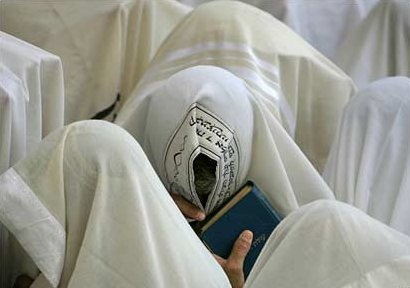
So the next time I find myself missing donning a tallit in prayer or being present at the lighting of the Shabbos candles, I must remind myself of everything I’ve just written. Because the minute I give in to the attitude of I want to be like them” or worse, “I deserve to be like them,” not only have I insulted God and betrayed the Jewish people in Messiah, I’ve lost my way and forgotten my God-assigned purpose in life. A righteous person serves God, not his own desires. May God grant me humility and peace. May He grant this to all of us who call ourselves Messianic Gentiles.

Final note: Last year, I also wrote a two-part series on Korach and what this rebellion tells us about who we are today.
Why I am A Messianic Gentile, Part One

I consider myself a Christian in the sense that I am a disciple of Jesus Christ but more specifically, I am a student of Messianic Judaism because I believe that discipline represents a perspective on the Bible, the Good News of Messiah, the New Covenant, and Israel that is scripturally sound and that describes the Bible as the single, unified expression of God’s desires, intent, and plan, first for Israel, and then, by Israel’s light, for the rest of the world.

And yet, to do that, I have learned to accept a few things that other people, that is, Christians, don’t like. I accept that the New Covenant was made exclusively with the House of Israel and the House of Judah (Jeremiah 31:31) and not with humanity in general. Further, I accept that when God, through the prophet, says “the House of Israel and the House of Judah,” He is referring specifically to the physical descendents of the Israelites who stood before God at Mt Sinai and accepted the covenant relationship between God and Israel (Exodus 20) in perpetuity (Jeremiah 31:35-36), who are today the Jewish people, and that the eternal inheritance of the Jews is the nation of Israel, which we have with us now.

I accept that the Gentiles are to be attracted to Israel as a light (Deuteronomy 4:5-8, Isaiah 49:6) with the strongest light being King Messiah, Son of David (John 8:12) as God’s emissary, agent, and deliverer of the promises God has made, causing the New Covenant age to be inaugurated with his death and resurrection, that the Jews might believe God will deliver on His promises to them, and that the Gentiles might be grafted into the blessings of those promises, taking the fringes of a Jewish man and going with him, for God is with him (Zechariah 8:23).

I’ve heard it said that the Jewish man in question is not just any Jewish person, but specifically is Messiah. That we from the nations approach God and His holiness by attaching ourselves to Israel through Messiah and going up with him to Jerusalem, to the House of Prayer for all the peoples (Isaiah 56:7).

So what’s wrong with all of that? Apparently, plenty.

From a Christian’s point of view, which includes some in the Hebrew Roots movement who say they disdain the Church, God made a covenant with Israel at Sinai that had effect and potency until the birth, death, and resurrection of Jesus. Then everything changed. The Jewish people no longer were automatically included in the Sinai covenant (although the Abrahamic covenant remained in force) and in order to re-enter a covenant relationship with God, they had to enter into the New Covenant, represented by a brand new entity wholly divorced from Judaism called “the Church”.

From Christianity’s point of view, this means Jewish people remain Jewish but must surrender Judaism and convert to Christianity, along with the Gentiles, and live, for all intents and purposes, a Gentile Christian lifestyle free of “the Law” and solely under grace (as if the two are mutually exclusive). There must be absolutely no distinction between Jew and Gentile in the Church.

beth immanuelFrom a Hebrew Roots perspective, this means Jewish people remain Jewish and continue practicing Judaism, but the “one new man” entity they must join requires that all Gentile disciples are totally and completely the same as their Jewish counterparts, and must observe the identical set of Torah commandments as the Jew. There must be absolutely no distinction between Jew and Gentile in Hebrew Roots congregations, many of which inaccurately call themselves “Messianic Judaism.”

But the Messianic Judaism I study and adhere to has a different perspective, one that recognizes a specific distinctiveness between Jews and Gentiles within the ekklesia of Messiah, such that each group in the body serves different, although sometimes overlapping functions.

I accept, for instance, that it would be inappropriate for me to claim an obligation to don tzitzit and lay tefillin when praying, to keep kosher in the manner of the Jews, to observe, in the present age, a Shabbat, and to say that it would be a sin if I did not perform any of those mitzvot.

That isn’t to say, especially being married to a Jewish wife, that I’m forbidden to keep kosher or observe the Shabbat (though at present, I only keep “kosher-style” and both my wife and I have elected to work on the Shabbat — may the day come when our observance is more faithful). I even know Gentile Messianics who choose to don tzitzit and lay tefillin privately in prayer, but who do not declare that they are obligated to do so.

I also accept that the New Covenant was made only with the Jewish people and that my only access is through faith in Messiah, not because of any inherit worth I have ethnically or nationally as a non-Jew.

MessiahMy understanding of the Jewish covenant relationship with God is that it extends continually from Exodus 20 forward in time and into the modern age. While Jesus inaugurated the New Covenant with his death and resurrection, getting the ball rolling, so to speak, it won’t reach any sort of fruition until his second coming, when he destroys all of Israel’s enemies, making the Gentile survivors vassal nations under Israel’s sovereignty, and establishing a unprecedented world-wide reign of peace. Then the Jewish people will be restored to their Land, to Israel, and the Gentiles who are called by His Name will come alongside Israel and serve her King, for he is our King, and worship God on the Temple Mount.

No new body is created in Acts 2, it’s an extension of the all of the previous covenants God made with Israel including the New Covenant, and the precursor to the ultimate fulfillment of God’s promises to Israel and to the nations. A subset of all the Jewish people in existing in the first century accepted the Good News of Messiah, and they represent an unbroken stream that goes all the way back to the Exodus and even to Abraham. And the Jewish people who did not accept the Good News remain under the Sinai covenant and in God’s love and compassion, and as God declares in the New Covenant:

“I will put My law within them and on their heart I will write it; and I will be their God, and they shall be My people. They will not teach again, each man his neighbor and each man his brother, saying, ‘Know the Lord,’ for they will all know Me, from the least of them to the greatest of them,” declares the Lord, “for I will forgive their iniquity, and their sin I will remember no more.”

Jeremiah 31:33-34

One day, God will forgive Israel’s sins, and the Jewish people will make teshuvah and return.

“Jerusalem, Jerusalem, who kills the prophets and stones those who are sent to her! How often I wanted to gather your children together, the way a hen gathers her chicks under her wings, and you were unwilling. Behold, your house is being left to you desolate! For I say to you, from now on you will not see Me until you say, ‘Blessed is He who comes in the name of the Lord!’”

Matthew 23:37-39

Israel will one day say “Blessed is He who comes in the name of the Lord” and on that day, the Gentiles will join with Israel at feast of Abraham, Isaac, and Jacob (Matthew 8:11).

the crowdDoes that make me and all the non-Jewish disciples of Messiah who study Messianic Judaism into second-class citizens in the Kingdom of God? To be honest, there are days when I think so. I suppose it’s my innate attraction to Jewish worship and scholarship that periodically has me longing to be able to join a minyan or to be called to the bema for an aliyah (not that I speak or read Hebrew). I sometimes see Jews in Messianic synagogues worshiping and praying the prayers and wish I could be a part of them. Sometimes I feel I should leave any sort of affiliation to Messianic Judaism behind and just keep my peace silently, communing only with God, because I feel I can never truly be part of Jewish people in Jewish community.

But I don’t fit in at church either, so that cannot be my sole connection to fellowship. Also, I must admit that any issues I may have feeling any disconnection with Messianic Judaism are my personal issues and hardly the fault of Jewish needs or requirements in community, since after all, the “chosenness” of Israel is a decision of God, not of man, and I must obey God before the will of any human being, even (especially) my own will (Acts 5:29).

That is why I call myself a “Messianic Gentile” and choose to study within a Messianic Jewish framework. That is why it is OK, even if I am a “second-class citizen” (which I’m actually not), because my citizenship is in the Kingdom of God, among the ekklesia, both ancient and modern, in the tradition of every Gentile who has ever come alongside Israel because we have heard God is with them, from the days of Moses to the days of the apostle Paul.

And Korach, the son of Yitzhor, the son of K’hos, the son of Levi, took …

Numbers 16:1

Rashi explains that the key reason for Korach’s rebellion against Moshe was that he was envious of another relative who received honor while he didn’t.

-Rabbi Zelig Pliskin
Commentary on Torah Portion Korach, pg 332
Growth Through Torah

Rabbi Zelig Pliskin
Rabbi Zelig Pliskin

If I were to allow envy of the obligations and privileges of the Jewish people in the Messianic community to affect me, I would be as Rashi characterized Korach and his band: rebellious. May it never be.

Rabbi Pliskin’s Torah commentaries speak more to me about my own state as a Gentile studying and learning within a Jewish context, being attached to but not the same as the Jewish co-participants in the body of Messiah. In Part Two of this series, I’ll discuss more of my perspective using R. Pliskin’s missives as a foundation.

For more on the Korach rebellion, which was last week’s Torah portion, read “The Importance of Unity” at ProjectGenesis.org.

When Jesus Returns, Will We Go To Church?

Let us rejoice and be glad and give the glory to Him, for the marriage of the Lamb has come and His bride has made herself ready.” It was given to her to clothe herself in fine linen, bright and clean; for the fine linen is the righteous acts of the saints.

Revelation 19:7-8 (NASB)

Who or what exactly is the “bride” of “the Lamb”? It’s presumed to be “the Church,” that is, the collection of individual Jews and Gentiles who came to faith in Jesus (i.e. converted to Christianity) prior to the great tribulation and the rapture to Heaven. Under this presumption, anyone converting to Christianity after the rapture is considered a believer, but not part of the Church. They can never be part of the Church. Only the Church goes up to Heaven with Jesus and only the Church returns with him.

And I saw heaven opened, and behold, a white horse, and He who sat on it is called Faithful and True, and in righteousness He judges and wages war. His eyes are a flame of fire, and on His head are many diadems; and He has a name written on Him which no one knows except Himself. He is clothed with a robe dipped in blood, and His name is called The Word of God. And the armies which are in heaven, clothed in fine linen, white and clean, were following Him on white horses.

Revelation 19:11-14 (NASB)

According to Pastor Randy, the head Pastor at the church I attend (and if I’m remembering this wrong, I hope he’ll let me know), the “armies” returning with Jesus is the Church, who becomes the bride of Christ (“the Lamb”).

The idea of “the Church” has bothered me for quite some time. I finally gave my concerns a voice last April in a “meditation” called Notes on the Church from an Insomniac and followed it up with When is Church not Church, based on D. Thomas Lancaster’s article “Before the Church Was Called the Church”, published in the Spring 2014 issue of Messiah Magazine.

In the first century CE, faith in and worship of Jesus of Nazareth, Yeshua ben Yosef, HaMoshiach, was a fully recognized branch of Judaism along with other branches such as the Pharisees, Sadducees, Essenes, and so forth (although “the Way” was most closely related to Pharisaism, and except for the realization of Yeshua as Messiah and it’s rather liberal attitude toward admitting Gentiles, was likely indistinguishable from Pharisaism).

Obviously, much has changed in the intervening twenty centuries or so, especially starting in the second century when Gentile Jesus-believers radically separated from their Jewish mentors and any Jewish practice, in order to form a completely divergent religion for Gentiles called “Christianity”.

But now that the Church has been created, has it replaced Judaism in all of the New Covenant promises God made with Israel (for instance, in Jeremiah 31:27-40)? With the Church as the “Bride of Christ,” what becomes of Israel and the Jewish people?

Let’s take a giant step backward. First of all, the concept of “the Church” isn’t presupposed in the Bible. Did I just shock you? What about all of those references to “the Church” in the New Testament? Did I just miss all of the times the word “church” is printed (in English) in my Bible?

synagogue_arkAs I’ve mentioned before, the Greek word “ekklesia” cannot directly be translated as “church”. In fact, the word “church” didn’t really come into being until many centuries after the New Testament canonization. Generations of Jesus-believers lived and died before anyone actually thought of or said the word “church”.

So, does “ekklesia” mean the same thing theologically and conceptually as “church”? That’s the $64,000 question and the answer might not be in the New Testament.

Thus says the Lord,
“Preserve justice and do righteousness,
For My salvation is about to come
And My righteousness to be revealed.
“How blessed is the man who does this,
And the son of man who takes hold of it;
Who keeps from profaning the sabbath,
And keeps his hand from doing any evil.”
Let not the foreigner who has joined himself to the Lord say,
“The Lord will surely separate me from His people.”
Nor let the eunuch say, “Behold, I am a dry tree.”
For thus says the Lord,

“To the eunuchs who keep My sabbaths,
And choose what pleases Me,
And hold fast My covenant,
To them I will give in My house and within My walls a memorial,
And a name better than that of sons and daughters;
I will give them an everlasting name which will not be cut off.
“Also the foreigners who join themselves to the Lord,
To minister to Him, and to love the name of the Lord,
To be His servants, every one who keeps from profaning the sabbath
And holds fast My covenant;
Even those I will bring to My holy mountain
And make them joyful in My house of prayer.
Their burnt offerings and their sacrifices will be acceptable on My altar;
For My house will be called a house of prayer for all the peoples.”
The Lord God, who gathers the dispersed of Israel, declares,
“Yet others I will gather to them, to those already gathered.”

Isaiah 56:1-8 (NASB)

“For I know their works and their thoughts; the time is coming to gather all nations and tongues. And they shall come and see My glory. I will set a sign among them and will send survivors from them to the nations: Tarshish, Put, Lud, Meshech, Tubal and Javan, to the distant coastlands that have neither heard My fame nor seen My glory. And they will declare My glory among the nations. Then they shall bring all your brethren from all the nations as a grain offering to the Lord, on horses, in chariots, in litters, on mules and on camels, to My holy mountain Jerusalem,” says the Lord, “just as the sons of Israel bring their grain offering in a clean vessel to the house of the Lord. I will also take some of them for priests and for Levites,” says the Lord.

Isaiah 66:18-21 (NASB)

“Thus says the Lord of hosts, ‘It will yet be that peoples will come, even the inhabitants of many cities. The inhabitants of one will go to another, saying, “Let us go at once to entreat the favor of the Lord, and to seek the Lord of hosts; I will also go.” So many peoples and mighty nations will come to seek the Lord of hosts in Jerusalem and to entreat the favor of the Lord.’ Thus says the Lord of hosts, ‘In those days ten men from all the nations will grasp the garment of a Jew, saying, “Let us go with you, for we have heard that God is with you.”’”

Zechariah 8:20-23 (NASB)

Then it will come about that any who are left of all the nations that went against Jerusalem will go up from year to year to worship the King, the Lord of hosts, and to celebrate the Feast of Booths. And it will be that whichever of the families of the earth does not go up to Jerusalem to worship the King, the Lord of hosts, there will be no rain on them. If the family of Egypt does not go up or enter, then no rain will fall on them; it will be the plague with which the Lord smites the nations who do not go up to celebrate the Feast of Booths. This will be the punishment of Egypt, and the punishment of all the nations who do not go up to celebrate the Feast of Booths.

Zechariah 14:16-19 (NASB)

“It will come about after this
That I will pour out My Spirit on all mankind;
And your sons and daughters will prophesy,
Your old men will dream dreams,
Your young men will see visions.
“Even on the male and female servants
I will pour out My Spirit in those days.

“I will display wonders in the sky and on the earth,
Blood, fire and columns of smoke.
“The sun will be turned into darkness
And the moon into blood
Before the great and awesome day of the Lord comes.
“And it will come about that whoever calls on the name of the Lord
Will be delivered;
For on Mount Zion and in Jerusalem
There will be those who escape,
As the Lord has said,
Even among the survivors whom the Lord calls.”

Joel 2:28-32 (NASB)

Sorry for the lengthy series of quotes. I wanted to present a representative collection of scriptures (though hardly exhaustive) illustrating how the Old Testament depicts Gentile involvement in the “end times” and/or Messianic Age, coming alongside Israel and turning toward God.

RestorationIf I were to set aside the New Testament and concentrate on the scriptures in the Prophets, the image of Gentile worship of God becomes radically different from what we’ve been typically taught by the Church. There are a number of references to “survivors” of the Gentile nations who went up against Israel and who were defeated. There’s at least the suggestion of some sort of judgment against these Gentile nations and consequences for their behavior.

We also see Gentiles being gathered to witness the glory God bestows upon Israel and particularly Jerusalem, as well as statements illustrating Gentile observance of a weekly Shabbat, New Moon Festivals, and the Moadim (appointed times, sometimes referred to as the “Jewish festivals”) for those of us who have held tightly to His Covenant.

But where is “the Church?”

The Christian theology of Progressive Revelation states that from the past to the future in Biblical history, God revealed progressively more about Himself. This means the newer sections of the Bible contain much more information about God and His plan for Israel and humanity than earlier sections. This would lead most of us to conclude that we can “trust” the New Testament more than the Old, thus as Christians, our primary source of information about what to expect from God in the present and future should be the apostolic scriptures.

And yet, just yesterday, I reviewed an article written by Paul Meier called “Christian Theology and the Old Testament” published in Messiah Journal which solemnly described the severe dangers of taking a low view of the Old Testament and relying on the New Testament as our primary source for theology and doctrine. A low view of the Old Testament results in a low view of the Jewish people and the Jewish nation, Israel.

And yet, we rely a great deal on the New Testament to help us interpret and clarify many things we don’t understand about the Old Testament, including our understanding of how the New Covenant is being and will be applied to Israel and the nations. But are the New Testament scriptures really the problem, or is it merely how we choose to treat them relative to the Old Testament and the overarching message of the entire, unified Bible?

Progressive revelation teaches us that later parts of the Bible are more important, clearer, and better than the Older scriptures, but they are all Hebrew scriptures and the later parts cannot stand alone. They must be supported on the foundation of the earlier scriptures and later writings cannot and must not contradict earlier parts.

That’s where we have our problem.

The Old Testament is unequivocally clear that God has had a covenant relationship with Israel for many thousands of years and never has intended to abrogate that relationship. God may discipline Israel from time to time for disobedience, but the New Covenant language is extremely plain in its intent to create an environment within the Jewish heart and spirit that will result in individual Jews and corporate Israel being able to perfectly obey God through the Torah mitzvot and to know God, from the lowest to the highest Jewish person, in the manner of the Biblical prophets.

Unless God changed His mind or He’s a duplicitous liar (and God doesn’t change and doesn’t lie for He is truth), then anything in the New Testament that contradicts what I said in the previous paragraph must be erroneous interpretation on the part of the Church.

prayingSo what do we have? In the Old Testament, we have many, many examples of Gentiles from the nations choosing to join alongside Israel to go up to Jerusalem because the Jewish people are well-known to be close to God. Therefore, a Gentile can also become close to God by attaching themselves to Israel (which makes us “attached” or “grafted in” but not Israel itself).

But how do we do that and why does it work?

We know that based on one particular aspect of the Abrahamic covenant (Genesis 12:1-3, Galatians 3:15-16, Ephesians 3:1-13), by faith in the “seed of Abraham,” that is Messiah, Son of David, the people of the nations can also benefit from the New Covenant blessings (holding fast to the Covenant), and through adoption, be called “Sons”, and enjoy forgiveness of sins, redemption, salvation, entrance into the Kingdom of God, resurrection, and life-everlasting in the World to Come at the end of all things.

That’s pretty terrific.

However, if you’re a Christian, there’s a problem. Where does “the Church” come in?

What is the Church, or more to the point, what is the ekklesia of Messiah? In the first century, it was a Jewish religious stream whereby, through the inauguration of the New Covenant era by the death (blood) and resurrection of Jesus (Yeshua), as a promise of things to come, Gentiles who came to faith in the God of Israel through discipleship in Messiah, were able to receive the Spirit of God (starting in Acts 10) as did the Jewish disciples and apostles (Acts 2), receive legal standing as equal co-participants in the Jewish stream of “the Way” (Acts 15) and in this ekklesia, form “one new man” (Ephesians 2) made up of Israel, the Jewish people, and the “people of the nations who are called by My name” (Amos 9:12).

It is said that in Messianic days, God will establish a reign of peace and that the whole world will be united together, Jew and Gentile alike (Micah 4:1-5, Isaiah 11:1-10). I see the ekklesia of Messiah, especially in the first century, as an example of that Kingdom of unity and peace in microcosm. The so-called “Church” was supposed to be an example, a picture, and foretelling of what is to come in the Age of Messiah, when Jews and Gentiles really will have peace with one another under the rule of King Messiah, with Israel as the head of all the nations, and Jerusalem as the Holy City, raised high above all other cities and nations (so imagine how I see true Messianic Jewish synagogues, such as Beth Immanuel, with Jewish and Gentile members worshiping together, relative to a prophetic, Messianic future).

Thus the first century ekklesia wasn’t just another Judaism or some sort of expression of a new theology, it was, and I think will be again, the ultimate realization of God’s overarching plan for Israel and the entire world, to return the planet and everyone and everything on it to complete obedience and consistency with the nature and character of the God of Creation, the way it was in Gan Eden (the Garden of Eden) before the fall.

That means it is impossible for “the Church” to represent a subset of humanity all sanitized of their distinctions, especially distinctions that define Jewish Israel, because in the end, there will only be one body of people: Jews and Gentiles, one-hundred percent of humanity, all devoted to God.

But wait a minute. What about “survivors” and those people who went up against Israel and God, who are to be judged, and who will have consequences delivered upon them? That hardly describes “one humanity” under God.

True. There will be many, many Gentiles (or maybe just a few considering they’re called “survivors”) who up until the point where Messiah and Israel win and the rest of the world is subjugated under an Israel ruled by Messiah, are not of God’s people. They have chosen to be apart. But does that mean they can never join the ekklesia, the vast collection of Jews (Israel) and Gentiles (the rest of the nations everywhere on Earth)?

Why would it mean that? Is teshuvah limited? Under Messiah’s rule, can no one repent? Is that the hard line in the sand?

praying at the kotelAnd what will that world-wide ekklesia look like? It makes sense, based on more prophecies in the Tanakh than I can count, that the Jewish people still in exile will all be returned to and live in the physical nation of Israel. The majority of the human race who are also part of the ekklesia, the vassal nations all aligned with Israel as their head, will periodically go up to Jerusalem for festivals, to pay homage to the King, to pray at the Temple, but we’ll still live in our homes in the nations of the world.

How many religions will there be? If it’s still possible for people to willfully disobey God, there could still be a lot of religions and a lot of denominations within individual religious, but there will be one and only one way to worship God. It is said that one of the things Messiah will do in the Messianic Age is to teach the correct interpretation of Torah and even teach the hidden things of Torah, that which we cannot perceive or understand in the present age. I conclude based on that understanding, that Messiah will show Jews and Gentiles the proper way of prayer, worship, and devotion for Jews and for Gentiles.

I imagine there’ll be a lot of overlap between those two general populations who are under Israel’s God, but I also imagine that there will be distinctions, not the least of which is the fact that Israel will finally, truly be a wholly Jewish nation.

What will that body or religion (or will the term “religion” have much meaning when Messiah is King and we all “know God” because the Spirit has been fully “poured out on all flesh”?) look like? My personal opinion is that it will not be called “Church,” crosses will no longer be prominently displayed by Gentile devotees of God, Sunday will no longer be the primary day of worship, and if I read the Tanakh correctly, pork and shellfish will no longer be on our menus, we all will rest on Shabbos, observe New Moon festivals, and plan our vacations around the Moadim so we can present sacrifices and pray at the Temple in Jerusalem.

That sounds a lot more like a Judaism than any form of Christianity.

I’ve been planning on writing something like this for quite some time, but got a little push yesterday (today, as I write this), by reading an article written by Caleb Hegg at the TorahResource Blog and reblogged by Judah Himango at Kineti L’Tziyon called “Is Messianic Judaism Really a Part of Modern Judaism?”

I tend to take a different view on things than Mr. Hegg, and although I don’t possess the same background as he does, I must disagree regarding whether or not Messianic Judaism can be qualified as a modern Judaism. I know. A lot of people, both Christians like Mr. Hegg and most Jewish people, religious and otherwise, disagree with me. That’s to be expected. I haven’t done much in the way of research on this topic, so I can only guess folks will come along and attempt to poke holes in my arguments.

shabbosBut I’ve written not of what Messianic Judaism is today, but what I believe the world-wide, multi-national ekklesia will be in the days of King Messiah. As I mentioned above, if you have to assign a “religious” designation to that future ekklesia, given the Biblical prophetic record of the Messianic Age and the realization of the New Covenant as it reaches fruition, it will not be the Church. If we have to call it anything at all, it will be a Judaism.

The word “Messianic” is not simply a Hebrew-based way to say “Christian.” Messianic Judaism is the Judaism of the Messianic Era, practiced today.

-Aaron Eby
as quoted from Facebook

As a non-Jewish member of the ekklesia of Messiah, and summoning the future Kingdom of God, at least a little bit, into our present world, I wish you all a Good Shabbos, which also foreshadows the Kingdom to come.

Addendum: A few months ago, I wrote a blog post somewhat similar to this one called The Church When Jesus Returns, but I didn’t take my point as far as I have on the current “meditation.” I still think they “fit” together, though.

Review of Messiah Journal: Christian Theology and the Old Testament

I’ve slowly been reading through the various articles in the latest issue of Messiah Journal (issue 116/Summer 2014) but haven’t had the time to comment on it before this. While there are many good and worthy articles contained therein (as always), I was most taken with the one written by Paul E. Meier called “Christian Theology and the Old Testament” (pp 76-94).

First, a little background:

Paul Meier and his wife, Inge, spent over three decades as Bible translators with Wycliffe Bible Translators and SIL International in Nigeria before retiring in 1996. Meier and his wife heard Messianic Jewish pioneer Abram Poljak in Switzerland in the 1950s and, since 2000, have worked with friends who knew Poljak to preserve his writings in an online archive at www.abrampoljak.net. To learn more about their experiences in Bible translation, visit their website at www.israel-pro.org.

-from the article’s introduction, pg 76

I’ve spent almost no time on either website mentioned above. I want to focus on Meier’s article and what it means to me both generally and in terms of recent issues in my little corner of the blogosphere.

Meier compares the Bible to a structure with two stories. Access to that structure is on the main floor. To understand the structure as a whole, a visitor must start with the first room on the first floor, visit each room in turn, and only then proceed to the second floor and visit all of those rooms in turn. Upon completing the visits to all of the rooms, the visitor then returns to the first floor, exits the building, and contemplates the experience as a whole to gain insights as to what the structure means.

The first floor is what Christianity calls the Old Testament and the second floor is the New Testament. The building is locked, so to gain entrance to the main lobby, you need a key. This key is “interpretation”. In many Christian churches, the main agent of interpreting the Bible is the Holy Spirit.

But…

If we believe that God inspired the books of the Bible, we must also accept that God had an overarching plan and purpose as he inspired these various texts. Yet if this is the case, we need to ask, why are there so many extant interpretations of these same texts? Why do so many interpreters arrive at different conclusions? How can they all claim to have been led to these disparate conclusions by the same Holy Spirit?

-Meier, pg 77

Meier “hooked” me at “overarching plan and purpose.”, because I believe the Bible is a holistic document describing the historically sweeping panorama of God’s plan for Israel and the world, not something to be carved and sliced like a Thanksgiving turkey (“I only like the drumsticks”). I have asked the exact same question that Meier posed above to Pastors and online religious pundits, and their answers have ranged from “sin” to “not trusting the Holy Spirit” to “being influenced by the interpretations of men.” None of these responses have been particularly satisfying, since you’d expect some subset of Christians who are truly receiving interpretive revelations from the Spirit to all share an identical perception and understanding of the Bible.

And that body does not exist. Instead, we have churches upon churches upon churches and many other congregational groups that all have their individual “take” on the Bible, and even within a single congregation, it’s common to encounter many different individuals who have their own way of looking at different areas of scripture. I think I’m getting a headache.

Meier’s answer makes as much sense as any other one and perhaps more sense than most:

Scripture points out that the understanding of individual believers is fragmental; each one of us has been granted a different degree of insight (1 Corinthians 13:9-10). The dimensions of God’s love are so vast that the whole body of believers is needed in order to comprehend them (Ephesians 3:18). God may give more insight to some than to others; he gives to each one according to the measure of his grace (Romans 12:3, Ephesians 4:7).

-ibid

In other words, not all believers are created equal in terms of how the Holy Spirit will speak to them of the Bible, nor are all believers identical as far as their innate cognitive, perceptual, and interpretive skills sets relative to the Bible. We are each granted the gifts God has provided “according to the measure of his grace” which may have something to do with why we all see the message of the Bible differently.

That doesn’t explain why many of us have contradictory perceptions of the Bible, but what can and does get in the way is our own humanity, our needs, our wants, our “I’ve got to have it this way”. This may also explain why it’s better for us to congregate in somewhat diverse groups rather than go it alone in Bible study or only study with people who think and believe exactly as we do.

Think of it as a group of people all trying to put a jigsaw puzzle together. But the pieces of the puzzle aren’t loosely collected in a central box, they’re loosely collected in the pockets of the different people building the puzzle. First, these people have to come together and be willing to cooperate by sharing their pieces with the others. Ideas of how the pieces fit together will vary, sometimes widely, but (and this is where I think the Holy Spirit comes into my little analogy) finally with all the pieces on the table, one by one, the group begins to see a pattern starting to emerge.

puzzleBut what if you go to a Baptist church, and the person who holds some of the vital pieces to the interpretive puzzle attends a Messianic synagogue thousands of miles away? Interesting problem. We might have to expand our understanding of Biblical hermeneutics to realize that it’s not just the particular method we employ in our interpretive process, it’s the people we have on our team, the necessary talent that they possess and we lack, that will make the difference.

A second principle to keep in mind is the fact that the different texts that comprise the Bible were written in diverse literary styles; furthermore, they were composed over hundreds of years, and each text reflects a then-current understanding of the past, present, and future. Different parts of the story were revealed at different times; God alone sees the entire story from beginning to end.

-ibid

This will likely appeal to dispensationalists and progressive revelationists, and Meier does believe that God progressively revealed himself in history. On the other hand, most dispensationalists believe that the text of the Bible becomes more important and relevant as time passes, leaving the older sections of the Bible to decay and finally become obsolete. This leads most Christians to possess a very high view of the New Testament and a lower to very low view of the Old Testament, with some church Pastors almost never referring to the Old Testament at all in their sermons and classes.

As Meier says (pg 78), the “Christian aversion to the Old Testament is not a modern phenomenon.”

Meier spends some time on the “church fathers,” introducing Marcion (the Heretic) who we tend to dismiss but who nevertheless has an echo of influence on the modern Church. And then there’s this:

Marcion’s contemporary Justin Martyr was one of the first to articulate a position of replacement theology, also known as displacement, transfer, or supersessionist theology. Avner Boskey succinctly described this theological stream as “an expression of Gentile triumphalism in the early church.”

-ibid, pg 81

churchThis hasn’t subsequently gone away. Any church that teaches “the Church” is the primary body of Messiah and the center of God’s attention and relegates national Israel and the corporate body of Jewish people to playing second fiddle is an inheritor of “Gentile triumphalism.” And lest you are tempted to include Jews in “the Church,” I must remind you that the price of admission a Jewish person must pay for entry into “the Church” is a surrender of most if not all that makes that individual a Jew, apart from a string of DNA, including any view of the Torah that has the mitzvot remaining relevant and obligatory for a Jew.

If you are thinking the “men of the Reformation” corrected all of the errors that came in before them, think again:

The great reformers Calvin and Luther modified their inherited filter and read the Old Testament in fresh light; unfortunately, they were not able to overcome their inherited tendency to interpret many Old Testament prophecies allegorically.

-ibid, pg 84

Thus the history of the (Gentile) Church, from its very inception in the second century CE into the modern age, has inherited interpretive traditions and structures that are so integrated into general Christian theology and doctrine as to be indistinguishable from actual “God-breathed” scripture itself. My own attempts to summarize Gentile involvement in the New Covenant, which depart from standard Christian fare, illustrate how tightly bound are inherited interpretive tradition in Christianity to what the Bible does and doesn’t say.

If I could give the Meier article to each person reading this review, I would, because it’s just that important to how Christians interpret and (often) misinterpret the Bible. I can’t describe everything Meier wrote, but I can point to a few important matters related to how we generally devalue the Old Testament and build our New Testament “castle” in the clouds with practically no foundation at all.

The Old Testament is a record of the history of the Hebrew people, the history of Israel. A theology in which Israel has no prophetically significant role in the future is a theology in which Israel has no significant role in the present.

-ibid, pg 79

I point you to recent events in Israel to illustrate Christianity’s (or some of its representatives) disdain for the Jewish people as a result of the devaluation of Israel’s history, the Old Testament.

Further:

If all prophecies concerning Israel have been fulfilled in Christ and all that remains to be accomplished is the establishment of the new heaven and the new earth, then there is no difference left between Israel and the church or between Israel and the nations. (emph. mine)

-ibid

Messiah JournalThis is the classic error in much of Christianity including some portions of the Hebrew Roots movement, and their requirement for this lack of distinction between Jews and Gentiles in the body of Messiah necessitates them making artificial, interpretive shifts in their viewpoint of the Bible, particularly the Old Testament, to justify their position.

If Israel has been replaced by the church, either through having been deprived of its original identity or else through having been set aside during the so-called church age, then all the prophecies concerning the future of Israel must be divorced from the context in which they were delivered — the context of the greater story of Israel as told by the Old Testament. (emph. mine)

-ibid

Do you see where this is going? Regardless of whether Israel’s original identity as a unique and especially chosen nation, the Jewish nation, is removed (Hebrew Roots/One Law) and/or replaced with a fused Jewish/Gentile identity, or it is set aside during the “church age” (Christianity), the result is exactly the same, and the cause is a misunderstanding and misapprehension of the content and significance of the Old Testament in being the chronicle of God’s covenant relationship with Israel.

When we do not understand the Old Testament on its own terms, it becomes difficult if not impossible to understand God’s nature, plan, and purpose. We find it difficult to explain why God chose one nation through which to reveal his being to the rest of mankind and to express his desire to bring salvation, because we fail to acknowledge the historical reality that Israel and God have been in covenant for millennia and that God chose to reveal the texts of the Old Testament within the context of this covenant relationship.

-ibid, pg 80

And yet, many, many Christians put the New Testament at a far more exalted level than the Old Testament, ironically enough, cutting themselves (or the true understanding of salvation and the Good News of Messiah to Israel and then the nations) off at the knees.

A third problem is that many Christians believe that the Old Testament must be understood through the eyes of the New Testament.

-ibid, pg 82

Abrahamic CovenantI’ve spoken with Christians, both in person and online, who do not believe that any rendition of living relationships and events in the Old Testament have any intrinsic value or meaning, but only exist as “types and shadows” of Jesus and the Church. Some don’t even believe that the people we see in the Old Testament were real people, only “stories” pointing to Jesus. From their perspective, Abraham and Sarah never existed as actual individuals. Neither did Boaz and Ruth. They were mere representatives of Christian redemption and salvation. Only the Church matters, just “me and Jesus”.

An interesting variant of supersessionism is brought out by Meier, one that I hadn’t considered before. Typically, I have run into a replacement theology that says the Church has taken the place of Israel and the Jewish people in all of the covenant promises and blessings. But something else has emerged:

As a result, he now incorporates, as N.T. Wright has put it, “Israel-in-person.” This type of “fulfillment” theology is merely a new incarnation of replacement theology, regardless of what exactly was fulfilled in the life of Jesus…

-ibid, pg 83

I ran into this “Israel-in-person” theology just the other day in the Jesus-believing blogosphere which illustrates that even with the best intentions, and even with believers who have a strongly stated love for Israel and the Jewish people, it is still quite possible to let a deeply underlying tradition and multi-generational history of how we view the Old Testament and consequentially, the Jewish people, distort the reality of God’s New Covenant plan for Israel (and for Gentile Christians), present and future.

You may be thinking that I’m (again) removing the Gentiles from any connectedness to the New Covenant, for it is only through the blessings of that covenant that we may be saved, but look at this:

Jesus stated that he was sent only to the house of Israel, yet he came to prepare that house to carry God’s message to all humanity. This plan was described throughout the Old Testament (for instance, Psalm 87, Isaiah 49;6).

-ibid, pg 85

JudaismThe plan and purpose of Messiah in relation to Israel, the New Covenant, and inclusion of Gentiles can only be properly understood by taking a high view of the Old Testament and being willing to make the Old Testament the foundation of your understanding of the Bible, reading scripture from earlier to later rather from Paul backward. Otherwise, you end up with what Meier calls a “Christianized Jesus” rather than Moshiach, Son of David, the Jewish King.

One of the key points Meier made was:

God revealed his nature and his intentions progressively across the history of Israel. Yet later revelations do not replace earlier ones; rather, they build upon them.

-ibid, pg 86

If you remove the earlier covenants and their conditions in order to “make room” for later ones, you are removing the foundation and framework of the house in order to put on the siding and the roof. You end up with a structure that cannot possibly stand.

Of all the different forms of replacement theology Meier described, I found the following most illuminating as it describes my current church experience:

On the other end of the spectrum, the most conservative scholars take an overly restrictive stance, teaching that one must rely on these kinds of typological interpretations only when the New Testament explicitly confirms them.

-ibid, pg 88

Have you ever heard a Christian Pastor or lay teacher say that commandments in the Old Testament only remain valid for Christians if confirmed in the New Testament? I have. It’s like saying the “sacrament” of marriage remains valid because it was confirmed by Jesus in the New Testament (Matthew 19:5, Mark 10:8) but keeping Kosher is not, presumably because of Mark 7:19 and Acts 10:15.

Really, who made that rule up? Obviously someone who didn’t believe “all scripture is God-breathed” (2 Timothy 3:16-17). For if all scripture comes from God, and the only Bible Paul had when he wrote those words was the “Old Testament,” then whatever we have in those ancient scriptures can stand on its own “legs” and doesn’t need the writings of the apostles to support it.

sefer torahThere’s a lot more I wish I could share with you about Meier’s article, but this blog post is long enough as it is. I may write one more “meditation” on something Meier said about how much we do (or don’t) translate sections of the Old Testament into the languages of people in other cultures who have never been exposed to the Bible before. How much of the Bible do we really teach them in their own language, and what impact on their understanding of the true Jesus Christ do missionaries impart who not only distort the Old Testament due to their devaluing it, but who actually leave out much or most of the Old Testament books in their work with new disciples of the Master?

I don’t believe Meier is attributing bad motives to Christians who take a low view of the Old Testament. After all, they (we) are doing what Christians have been taught to do for hundreds and hundreds of years, by a tradition that goes back to the early church fathers and was then inherited and re-enforced by the men of the Reformation.

But a low view of the Old Testament means a low view of Israel in God’s past, present, and future plans, and a low view of Israel fragments the foundation upon which the redemption and salvation of Gentile Christianity is supposed to rest. When we disdain the Old Testament and set aside the centrality of Israel, we not only insult God, we destroy our own future in the Kingdom.

This is why I keep on writing as I do. I cannot allow so many believers to innocently, unknowingly face a supposed salvation in which they feel utterly secure, but in reality, one that is constructed firmly on shifting sand.

Is It For His Glory?

There is to be one law and one ordinance for you and for the alien who sojourns with you.

Numbers 15:16

The Torah says there is to be only one law for both Jews and aliens sojourning with the Jewish people. On the surface, this appears to be a simple statement, but when we dig deeper into biblical studies and interpretations, it becomes a complicated issue.

“One Law and the Gentiles”
Commentary on Torah Portion Shelach
First Fruits of Zion (FFOZ)

Be careful not to become involved in quarrels with your friends. Arguments will only create distance between you and others.

The most effective approach to avoid needless arguments is to master the ability to remain silent. You don’t have to say everything you think of saying. At times there is an actual need to clarify a specific point and it’s appropriate to speak up. But a large percentage of arguments come from making comments that don’t need to be made.

-Rabbi Zelig Pliskin
quoted at Aish.com

When I read the commentary at FFOZ about “One Law and the Gentiles”, I immediately wanted to jump on it as yet another classic example of the ongoing debate within various branches of Messianic Judaism, Hebrew Roots, and Evangelical Christianity. Then I thought about how such debates can be damaging and when I should ignore such temptations. Then again, I’ve also learned that sometimes you have to speak up for what you believe is right.

The trick is to find the right topic and the right timing. That isn’t always easy and in fact, there are times when no matter how well you craft your message, it’s going to provoke a hostile if not violent response:

“And when the blood of Your witness Stephen was being shed, I also was standing by approving, and watching out for the coats of those who were slaying him.’ And He said to me, ‘Go! For I will send you far away to the Gentiles.’”

They listened to him up to this statement, and then they raised their voices and said, “Away with such a fellow from the earth, for he should not be allowed to live!”

Acts 22:20-22 (NASB)

Of course, this is a pretty extreme example. Most of our online debates, arguments, and trolling don’t come anywhere near actual riot conditions. On the other hand, why do we fight at all?

A couple of weeks ago I spoke to several pastors and asked them, “How many of you have received a nasty email in the last six months?” Every single person in the room raised their hand—including me.

Let me be clear; I believe the majority of people are civil and respectful in their online dialogue. However, there remains a vocal minority who insist on remaining unpleasant both in tone and word. And these unkind words come from many who self-identify as Christians, who somehow believe that malice is an acceptable form of communication.

Which raises a question: Why do so many Christians persist in being mean?

-Pastor Michael Hidalgo
“When Did Christians Get So Mean?” June 9, 2014
Relevant Magazine

Pastor Hidalgo went on to say:

Many of us have the luxury of not having to look beyond the small world we create for ourselves. We attend churches, listen to talk radio and watch news programs that only serve to affirm our previously held beliefs. We have fallen asleep in the insulated comfort of accepted, collective thinking. We live among those who think like us, look like us, talk like us, and we assure ourselves we are right and others are wrong.

It may do us well to break out of these enclaves we create for ourselves.

churchI worship in an “enclave” where my “previously held beliefs” are not at all affirmed, so I can’t expect to be insulated within a comfortable cocoon as the Pastor suggests most Christians may be. In fact, I’ve tried to nudge some of my fellow-Christians out of that cocoon, and while they haven’t “gotten mean” or anything like it, some didn’t really understand that there could a life for a believer outside of their own highly-specific context, especially a valid and sustainable Christian life.

More’s the pity.

I think that’s what triggers a lot of the “yelling” online, because the blogosphere isn’t a cocoon, it’s the wild, wild west, where anything can and usually does happen, and any opinion can be expressed with impunity.

But an opinion may or may not be “truth”:

We forget that every venomous word we speak or write to others is an assault on the heart of a man or a woman made in the image and likeness of the Almighty.

Some, no doubt, believe they need to stand up for truth. A few believe standing up for truth demands they attack those who seek to distort the truth. But this is not the case. If the truth is spoken without grace it is not true at all. It turns out we can be right about a lot of things, but if we do not have love we are dead wrong.

So on the one hand, we must stand up for truth, but on the other hand, the way we do it is very important, for even if we are actually “right” about what “truth” is once in a while, if he have to do a hatchet job on another human being to defend that truth, then we’ve defended truth at the cost of denigrating a person created in God’s image.

Pastor Hidalgo suggests that our first response to another person with whom we disagree is to listen. That’s not easy to do when, particularly on the web, upon detecting something “wrong,” we’ve been conditioned to stop receiving information and to start sending it in abundance. We’ve been taught that we have free speech rights and that we possess the truth, and we have not only the right but the responsibility to shove that truth down everyone else’s throat until they choke on it.

Then we’ve won.

Hooray.

But why are we really supposed to share the truth of the Bible? To sanctify the Name of God, to spread His Name throughout all the earth, to illuminate people with the Good News of Messiah.

But as I said, Paul found out on an endless number of occasions, that no matter how you listen and how well you craft your message, there will always be times when you and your message will be rejected, and there will always be people who are so convinced of the truth and rightness of their own message, that they cannot possibly give you a fair hearing. In fact, the minute you start saying anything contrary to their version of truth, they’ll start bombarding you with their own, and eventually when they realize you’re never going to change your mind and agree with them, they’ll boot you out and start “badmouthing” you to all their (virtual) “friends”.

Well, that’s the classic scenario anyway. It doesn’t describe all of the possible responses to disagreements in the world of religious blogging, so please don’t start taking all this personally. I’m probably not even thinking about you at all.

graceThis is obviously a continuation of what I’ve been writing about for the past week or so. What is the answer to surviving not only a community of faith in the local church but the extended world of faith on the Internet? I’m sure there must be an answer. Pastor Hidalgo summarizes that answer with a single word: “grace.” I think in the ideal, that’s probably the right answer, but most of us aren’t “ideal”. That’s why this life is a journey of struggle, exploration, and experience, not just reading the Bible and being programmed to be Christ’s perfect little disciple.

The Bible isn’t a record of how people got “perfect” once they heard about God, it’s a chronicle of how God was and is gracious with a whole planet full of damaged, imperfect, grumpy human beings across thousands upon thousands of years of history. God has promised us a better way to be human beings, but dangles “perfection” in front of us like a carrot, with the guarantee of a good meal only if we faithfully hang on long enough:

“Behold, days are coming,” declares the Lord, “when I will make a new covenant with the house of Israel and with the house of Judah, not like the covenant which I made with their fathers in the day I took them by the hand to bring them out of the land of Egypt, My covenant which they broke, although I was a husband to them,” declares the Lord. “But this is the covenant which I will make with the house of Israel after those days,” declares the Lord, “I will put My law within them and on their heart I will write it; and I will be their God, and they shall be My people. They will not teach again, each man his neighbor and each man his brother, saying, ‘Know the Lord,’ for they will all know Me, from the least of them to the greatest of them,” declares the Lord, “for I will forgive their iniquity, and their sin I will remember no more.”

Jeremiah 31:31-34 (NASB)

This stuff hasn’t happened yet, no matter how much some Christians believe it has (or wish it had). We are imperfect people living in an imperfect world. We want to “know God” perfectly and to have His Word written on our hearts (and not just in our Bibles), but the finger of God has only just started moving, and it’s having to chisel through lots of stone in order to get at the heart that’s supposed to be tender flesh.

The problem is, we don’t want to be tender, we want to be stony. Tenderness can be hurt but rocks are pretty tough. We like being tough. We like being right. We like making the other poor, dumb fool be wrong. It makes us feel better about ourselves.

No, I’m not saying you shouldn’t take a stand. I take a stand often enough, both here on this blog and at church in Sunday school. But it matters how you take your stand. If expressing truth, however you understand it, involves insulting or embarrassing another person, you’re probably doing it wrong. I know. I’ve gotten it wrong often enough, including quite recently.

light-in-my-graspI actually agree with FFOZ’s commentary on One Law and how Torah does and doesn’t apply to Gentile believers. I even agree that the FFOZ author wrote the article in a measured and respectful manner. I know that regardless of all that, the message will cause “all the wheels to fall off the cart,” so to speak, for a number of folks who have a very different opinion on the matter, and for some of them, their self-esteem and self-image are tightly dependent on believing their opinion is universally correct.

But that’s how most of us operate. We personalize disagreement and conflict rather than realizing God hasn’t called us to be the best bloggers in the religious world. He’s called us to be the best representatives of His Good News to the world, religious and otherwise. How do we do that? By arguing? By being right all the time? Most of us are wrong most of the time.

Truth is knowing when to speak and when to be silent. Truth is knowing when to talk and when to listen. Truth is the ability to hang on at the right times and to know when to let go.

Professor Henry Jones (Sean Connery): Junior, give me your other hand! I can’t hold on!

Indiana Jones (Harrison Ford): I can get it. I can almost reach it, Dad…

Professor Henry Jones: Indiana. Indiana… let it go.

Professor Henry Jones: Elsa never really believed in the grail. She thought she’d found a prize.

Indiana Jones: And what did you find, Dad?

Professor Henry Jones: Me? Illumination.

-from Indiana Jones and the Last Crusade (1989)

Professor Jones’ quest to discover the resting place of the Holy Grail ended up in the loss of the grail, yet he didn’t consider it a loss at all. What he found wasn’t a treasured object, a valued prize, or even immortality (by drinking water from the grail). He found illumination from God.

Yes, this is fiction and there was never such a thing as the “Holy Grail” but besides being a good adventure story, there’s a lesson in values here.

Kazim (Kevork Malikyan): [to Indy] Ask yourself, why do you seek the Cup of Christ? Is it for His glory, or for yours?

That should be a question we all ask ourselves before we speak up in Sunday school class, or put our fingers on the keyboard to either write a blog or respond to someone else’s.

Rabbi Avraham Mordechai of Gur explained that the nature of a person with humility is not to be stubborn about his own opinions and wishes. He is compliant and will easily give in to the opinions and wishes of others. The other spies were all very distinguished and important men. Moshe feared that Yehoshua might concede to their opinions and be swayed by them even though he felt differently. Therefore, Moshe especially prayed for Yehoshua not to be negatively influenced by the others.

Rabbi Zelig Pliskin
Rabbi Zelig Pliskin

When a question of Torah ideals is involved, one must not budge. That is when it is appropriate to resist. When dealing with basic principles, remain steadfast and do not allow others to sway you. One needs wisdom to know the difference between situations when it is proper to give in to others and when it is not. For this we need the Almighty’s assistance.

Dvar Torah for Torah Portion Shelach
based on Growth Through Torah by Rabbi Zelig Pliskin
quoted by Rabbi Kalman Packouz on Shabbat Shalom Weekly
Aish.com

Addendum: Yesterday, I read a commentary about Pastor John MacArthur’s parenting advice to a Christian parent of a gay child. In tomorrow’s “morning meditation,” I respond.

Putting a New Face on Sunday School

In verses 22-23 of Acts 22, Give the details of the “hissy fit” Paul’s Jewish audience threw when he used the “G” word.

Have you or I ever felt or expressed similar emotions when we didn’t get out way in church? (The “no” word) How does submission allow the Lord to bring about spiritual growth in our worthy walk with Him?

-from the Sunday school study notes
on Acts 22:22-29 for June 8th

My Sunday school teacher has a tendency to compare apples with oranges and believe he is actually comparing apples to apples. For instance:

“And He said to me, ‘Go! For I will send you far away to the Gentiles.’”

They listened to him up to this statement, and then they raised their voices and said, “Away with such a fellow from the earth, for he should not be allowed to live!” And as they were crying out and throwing off their cloaks and tossing dust into the air, the commander ordered him to be brought into the barracks, stating that he should be examined by scourging so that he might find out the reason why they were shouting against him that way.

Acts 22:21-24 (NASB)

Teacher was comparing a near-riot situation not only to a “hissy fit” (which Urban Dictionary defines as a “sudden outburst of temper, often used to describe female anger at something trivial”) but to any relatively minor situation a person might experience in church that would cause them unhappiness or displeasure.

Either he thinks people’s problems in church border on crowd violence or he grossly minimizes the angst, frustration, fear, pain, and anger of the Jewish people whose land has been occupied by a pagan foreign army and who were highly sensitized to any offense by Gentiles during a moed such as Shavuot.

Since I published my previous blog post which merely anticipated last Sunday’s class, people have been asking me how class actually went. This is the answer.

Apostle Paul preachingI decided I could not remain completely silent and let what I considered to be unfair or inaccurate statements about Paul’s situation in particular or Christianity’s attitude about Judaism and Jewish people in general go unanswered. While I chose to ignore the “hissy fit” comment (though I was surprised at the number of people in class who agreed that the Jews in the above-quoted passage were merely “throwing a childish fit”), I did zero in on the humanity and the group dynamics of the situation.

I pointed out that presumably, some “Jews from Asia” (Acts 21:27) had been spreading rumors in Jerusalem that Paul had been “teaching all the Jews who are among the Gentiles to forsake Moses, telling them not to circumcise their children nor to walk according to the customs” (Acts 21:21), and also that he had “even brought Greeks into the temple and [had] defiled [the] holy place.”

It only takes a few agitators to stir up a large crowd and start a riot. Jerusalem’s population had swelled to millions of Jews in preparation of Shavuot, and it was always during the moadim that emotions ran especially high. Any upset or offense at all, particularly the thought that a pagan Gentile would be taken into the Temple by a Jew who was presumed to be sympathetic to pagans if not a Roman collaborator, would be cause enough for disaster.

Now the Passover and Unleavened Bread were two days away; and the chief priests and the scribes were seeking how to seize Him by stealth and kill Him; for they were saying, “Not during the festival, otherwise there might be a riot of the people.”

Mark 14:1-2 (NASB)

We see even the Romans (not to mention the chief priests and scribes) could not execute the Master with impunity for fear of the crowds. In fact, in Acts 22, the Roman military authorities are doing all they can to prevent such a mass disturbance.

riotingSince none of that qualifies as a “hissy fit,” I decided to toss my two cents into the hat, so to speak, and explain all of this to the class. My teacher was in totally agreement and no one spoke up to suggest otherwise, though I can’t possibly know what anyone was thinking. My one regret was that the individual who previously made the Anti-Gentilism remark wasn’t present to either respond or not respond. But that was probably for the best since I can be more sure that my motivations were clear of the desire to make my own “response” to this person.

Earlier that morning, Pastor was extremely careful to point out that Paul’s troubles weren’t what we might consider in modern times to be “Jews persecuting a Christian.” At that moment in history, in Jerusalem, all of the people involved, apart from the Romans, are Jesus-believing Jews and Jews from other religious streams. The most accurate picture, in my personal opinion, we can paint, is that differing or opposing Jewish religious sects were engaged in “passionate” disagreement up to and including violent outbursts.

But perceiving that one group were Sadducees and the other Pharisees, Paul began crying out in the Council, “Brethren, I am a Pharisee, a son of Pharisees; I am on trial for the hope and resurrection of the dead!” As he said this, there occurred a dissension between the Pharisees and Sadducees, and the assembly was divided. For the Sadducees say that there is no resurrection, nor an angel, nor a spirit, but the Pharisees acknowledge them all. And there occurred a great uproar; and some of the scribes of the Pharisaic party stood up and began to argue heatedly, saying, “We find nothing wrong with this man; suppose a spirit or an angel has spoken to him?” And as a great dissension was developing, the commander was afraid Paul would be torn to pieces by them and ordered the troops to go down and take him away from them by force, and bring him into the barracks.

Acts 23:6-10 (NASB)

Last week in one of my reviews of D. Thomas Lancaster’s Holy Epistle to the Hebrews sermon series, I wrote that Lancaster taught that the Pharisees and the Messianic Jewish believers all had virtually identical theology and doctrine. They both believed in the world to come, they both believed that God rewarded good and punished evil, both in this world and the world to come, they both believed in the resurrection of the dead, and they both believed in the Holy Spirit and in angelic beings.

But the Sadducees believed in none of that, which is what, according to Lancaster, resulted in the Sadducees barring the Messianic believers from the Temple prompting the Hebrews letter-writer to pen his epistle, and why the Sadducees and Pharisees sitting on the Sanhedrin argued so strenuously, putting Paul’s safety and even his life in danger.

That’s not the same as one religion persecuting another, dissimilar religion.

The Jewish PaulIn fact, in verse 6, Paul said, I am a Pharisee, a son of Pharisees…,” and Pastor pointed this out, not I was a Pharisee. There was nothing inconsistent with being a Pharisee and coming to the realization that Yeshua was the Messiah, Son of God. Yeshua-devotion seems to have been the natural, logical, Biblical extension of Pharisaism in late second-Temple Judaism.

So we might even say (though I could be stepping out on a limb here), that modern Messianic Judaism, in some sense, is the inheritor of first century Pharisaic/Messianic Judaism.

As Sunday school class ended, a gentleman who looked familiar to me, but not in that context, approached me and introduced himself. Actually, he reminded me that he’s the father of my son Michael’s best friend. Apparently, he and his wife had attended this church some years back but left to plant another church in the community. They’ve returned, presumably for some time, so it’s become a more interesting situation.

I recall the few times I’ve spoken with this person before. He’s always been personable and interactive. Very much a “traditional Christian” but willing to listen and discuss my “Jewish” ideas.

No one else in class (or in church) has any connection to my family or my family’s history (my son has known this gentleman and his family for well over a decade, though I’ve only met them just a few times over the years) so I wonder how or if this will affect my future contributions? The situation certainly puts a new face on Sunday school.

One more thing. Pastor did talk about Christians who are being persecuted in the world today, and specifically Pastor Sergey Kosyak of Donetsk in the Ukraine. Please pray for him and for all the Christians who are authentically in danger, being injured, being incarcerated, being murdered for the sake of their faith in Jesus Christ. May God be with them and protect them all.