Those who go down to the sea in ships, who do their work in great waters. They have seen the deeds of Hashem, and His wonders in the watery deep. He spoke and raised the stormy wind and lifted its waves. They rise heavenward, they descend to the depths, their soul melts with trouble. They reel, they stagger like a drunkard, and all their wisdom is swallowed up. Then they cried out to Hashem in their distress, and He would take them out from their straits. He would halt the storm to restore calmness, and their waves were stilled. And they rejoiced because they were quiet, and He guided them to their desired boundary. Let them give thanks to Hashem for His kindness, and His wonders to the children of man. Let them exalt Him in the assembly of people, and praise Him in the session of the elders.
–Psalm 107:23-32 (Stone Edition Tanakh)
He went down to the boat, and his disciples went down with him. There was a great storm on the sea, to the point where the waves would cover the boat, but he was sleeping. His disciples approached him and woke him, saying, “Save us, our master. We are perishing!” He said to them, “Small ones in faith, why are you afraid?” He got up, reprimanded the winds and the sea, and there was a great silence. The men were amazed and said, “Who is he, then, that even the winds and the sea listen to him?”
I wonder if, at any point after Yeshua (Jesus) ended the storm, did the disciples think of the portion of Psalm 107 that I quoted above? When I read that psalm as part of my devotionals last Shabbat, I immediately thought of the passage from Matthew 8. But as I made the connection from earlier to later in the Bible, I wondered if the first century Jewish readers of the Gospel of Matthew, when coming upon the sequence where the Master caused the storm to cease…if they saw the relationship between these events in scripture and connected the acts of Jesus with the acts of Hashem, the God of Israel? Could this linkage have been intentional on Matthew’s part? Did he leave a rather obvious (if you’re a first century Jew) clue as to the Master’s identity and nature here to which we Christians, nearly twenty centuries later, would be oblivious?
If so, then it wouldn’t be the first time.
Last summer, I wrote a review of a sermon given by First Fruits of Zion (FFOZ) Founder and President Boaz Michael that he presented some years earlier which he titled “Moses in Matthew”. You can read my review The Jewish Gospel, Part 1 and Part 2 for the details. But it seems to me, perhaps thanks to the Spirit of God (and hopefully not because of my own wishful thinking), that I have made one of those little links in scripture that are so “Jewish” and that further establish the Bible as a single, unified document. I believe this is another example that the Bible is the complete Word of God, a revelation that we can accept as a total and seamless gift, not something to be sliced and diced as Christianity sometimes does, so that the Bible artificially points to an earlier God and a later Jesus, as if the two have almost nothing to do with one another, as if the Old Testament and the New Testament form two separate plans of God in how He will be among His people, and as if God changed His mind on who He decided His people were to be.
God speaks to us from the Bible. The Spirit of God whispers to us as we read. Most of the time, we aren’t even conscious of His presence, but every so often, something “clicks” as it did for me last Shabbos.
May God continue to graciously open our eyes and ears and minds to His Word and reveal the face of Messiah to those of us who call ourselves disciples, and to all to cry out to God for mercy and compassion. May He calm our storms that we too may give thanks and rejoice, and that we might declare the Name of God as great among our assemblies.
Recently a number of leaders in the Protestant community of the United States have urged the endorsement of far-reaching and unilateral political commitments to the people and land of Israel in the Israeli-Palestinian conflict, citing Holy Scripture as the basis for those commitments. To strengthen their endorsement, several of these leaders have also insisted that they speak on behalf of the seventy million people who constitute the American evangelical community.
It is good and necessary for evangelical leaders to speak out on the great moral issues of our day in obedience to Christ’s call for his disciples to be salt and light in the world. It is quite another thing, however, when leaders call for commitments that are based upon a serious misreading of Holy Scripture. In such instances, it is good and necessary for other evangelical leaders to speak out as well. We do so here in the hope that we may contribute to the cause of the Lord Christ, apart from whom there can never be true and lasting peace in the world.
At the heart of the political commitments in question are two fatally flawed propositions. First, some are teaching that God’s alleged favor toward Israel today is based upon ethnic descent rather than upon the grace of Christ alone, as proclaimed in the Gospel. Second, others are teaching that the Bible’s promises concerning the land are fulfilled in a special political region or “Holy Land,” perpetually set apart by God for one ethnic group alone. As a result of these false claims, large segments of the evangelical community, our fellow citizens, and our government are being misled with regard to the Bible’s teachings regarding the people of God, the land of Israel, and the impartiality of the Gospel.
In what follows, we make our convictions public. We do so acknowledging the genuine evangelical faith of many who will not agree with us. Knowing that we may incur their disfavor, we are nevertheless constrained by Scripture and by conscience to publish the following propositions for the cause of Christ and truth.
-from the introduction to
“An Open Letter to Evangelicals and Other Interested Parties:
The People of God, the Land of Israel, and the Impartiality of the Gospel”
Also known as the “Knox Seminary letter”
found at BibleResearcher.com
A few days ago, I had a private email conversation with someone over a number of issues and the name of a well-known Evangelical Christian Pastor came up in connection with the letter I quoted above (he’s supposed to be one of the later — but not one of the original — signatories). The association wasn’t complementary and having looked up and read the letter after finishing the email dialog, I can understand why.
From an Evangelical Christian point of view, when you read the ten points listed plus the rest of this letter’s content, you probably wouldn’t bat an eye. Nothing would seem amiss in the text of the letter and you’d probably think of it as standard, Evangelical Christian doctrine.
Sadly, it is standard Evangelical Christian doctrine and thereby hangs a tale.
I’m writing this “meditation” several days before you’ll read it. I’ve set it to publish automatically early (in my time zone) on Sunday morning, when millions of Christians across the country are getting ready to go to church. Today is also Purim, the celebration that is commanded of the Jews of Ahashuerus’ ancient Persian Kingdom, ”their descendants and all who joined them…” (Esther 9:27 – NRSV).
”All who joined them” is an interesting phrase because it seemingly refers to the objects of the following statement:
In every province and in every city, wherever the king’s command and his edict came, there was gladness and joy among the Jews, a festival and a holiday. Furthermore, many of the peoples of the country professed to be Jews, because the fear of the Jews had fallen upon them. (emph. mine)
–Esther 8:17 (NRSV)
I mentioned before that we aren’t quite sure exactly what that statement means except that obviously many non-Jews became strongly affiliated, perhaps even to the point of conversion, with the Jewish people. They were the ones who ”joined them” and thus they, along with all their descendants, have received a commandment to perpetually celebrate two days of Purim each year.
The descendants of the Jews in that ancient Persian land are considered today to be all Jews everywhere, but what about the descendants of the Gentiles who joined with the Jews? If they were only converts to Judaism, then their descendants are also Jews. If ”professing to be Jews” however, meant pretending to be Jewish or perhaps coming alongside the Jewish people in fellowship and solidarity, then they are something else. Modern day Iranians perhaps, since King Ahasuerus’ kingdom realm is part of modern-day Iran? Those Gentile descendants could have traveled far and wide in the thousands of years since Esther (Hadassah) and Mordechai walked the earth. Today, they could be anyone.
I don’t think I can expand the concept so far as to “command” all Gentiles everywhere to celebrate Purim (although, why not, since it’s such a fun holiday?). So assuming we’re not just talking about born-Jews and proselytes today, who joins or comes alongside the Jews today?
The most obvious answer are the Gentiles participating in the various streams of Messianic Judaism and Hebrew Roots. None of the Gentile populations in the numerous branches of those two movements directly claims to be Jewish (with the exception of adherents to Two-House Theology) but all have an affiliation with the Jewish people and Israel to one type and degree or another. In my little corner of Messianic Judaism, it is common to say that Gentiles have come alongside Israel, we have joined them, not as Jews, but maybe like the Gentiles in Shushan.
Then it’s obvious that we non-Jews who are in some way among Jews in Jewish communities (or primarily Gentile communities who affiliate with Jewish or Hebrew practices in the case of Hebrew Roots) are, along with the Jews, commanded to celebrate Purim. And again, as I said before, I think there are excellent reasons for all Christians everywhere to celebrate Purim as well.
But obviously not all Christians will agree with that statement. Probably most Christians won’t agree with that statement, and certainly the original and later signatories of the aforementioned open letter would absolutely not agree with me.
I was tempted to go over each point of the letter and write a rebuttal, but since that letter has been around since 2002, plenty of other rebuttals already exist, including an article at pre-trib.org and the Rapture Ready discussion forum (not that I’m likely to agree with all the points or perspectives of either population, but I do want to illustrate that not all “normative” Christians go along with the Knox Seminary letter).
Just a few days ago, as I’m writing this, Tim at the Onesimus Files blog, wrote a short but powerful article with accompanying links in support of Israel as remaining in God’s promises and refuting that the Gentile Church has replaced “earthly Israel” as the “spiritual” or “new Israel.” A day or so later, Judah Himango at his blog Kineti L’Tziyon wrote Purim: 5 unusual lessons for Yeshua’s disciples (and for those of you who may not know, “Yeshua” is the original Hebrew name for “Jesus”).
I don’t always agree with either Tim’s or Judah’s perspectives on certain things, but we do agree that God has not done away with the centrality of Israel in God’s prophetic, Messianic promises, and that the non-Jewish people of the world must come alongside the Jewish people by becoming disciples of “the King of the Jews,” who came once as Yeshua ben Yosef and who will return in power as Yeshua ben David, and through the worship of the God of all, the One God, Israel’s God.
I will bless those who bless you, and the one who curses you I will curse; and in you all the families of the earth shall be blessed.
–Genesis 12:3 (NRSV)
That’s God speaking to Abram (later named Abraham) and blessing him with an eternal blessing that applies to all of his descendants through Isaac and Jacob who today are the Jewish people. God not only promises to bless the nations who bless Abraham and his descendants and to curse those who curse them, but He inserts a veiled promise that all the families, the nations of the earth shall be blessed by Abraham’s seed, Messiah.
Now the promises were spoken to Abraham and to his seed. He does not say, “And to seeds,” as referring to many, but rather to one, “And to your seed,” that is, Christ.
–Galatians 3:16 (NASB)
So we non-Jewish disciples of the Jewish Messiah come alongside Israel through Messiah, the seed of Abraham through whom the entire world will ultimately be blessed.
Roger Waters
We can say that those people who are not Jewish and who have not come to faith in Jesus Christ have no obligation to observe Purim. However some atheists and agnostics and people of other religions do “bless” or support the right of Israel to exist as a Jewish state and who think well of the Jewish people, though it’s popular in secular society worldwide to refer to Israel as an “apartheid state” and to demand a boycott of Israel’s products and services, thus bringing themselves under a curse (they don’t believe the God of Israel exists and thus that the curse exists, but the Messiah hasn’t returned yet).
But are any authentically believing and faithful Christians under the same curse?
Bad Christian theology regarding the “Holy Land” contributed to the tragic cruelty of the Crusades in the Middle Ages. Lamentably, bad Christian theology is today attributing to secular Israel a divine mandate to conquer and hold Palestine, with the consequence that the Palestinian people are marginalized and regarded as virtual “Canaanites.” This doctrine is both contrary to the teaching of the New Testament and a violation of the Gospel mandate. In addition, this theology puts those Christians who are urging the violent seizure and occupation of Palestinian land in moral jeopardy of their own bloodguiltiness. Are we as Christians not called to pray for and work for peace, warning both parties to this conflict that those who live by the sword will die by the sword? Only the Gospel of Jesus Christ can bring both temporal reconciliation and the hope of an eternal and heavenly inheritance to the Israeli and the Palestinian. Only through Jesus Christ can anyone know peace on earth.
-from point ten of the Knox Seminary “open letter”
This is in direct contradiction to God’s giving the land of Israel to the Jewish people in perpetuity (see Genesis 15:18 and 17:8 … also see ”The Bible on Jewish Links to the Holy Land” at Jewish Virtual Library).
The quote from the “open letter’s” point ten reminds me of something called Christ at the Checkpoint which, according to their About Us page, exists:
To Challenge Evangelicals To Take Responsibility To Help Resolve the Conflicts in Israel-Palestine By Engaging With the Teaching of Jesus on the Kingdom of God.
That sounds very nice, except under About Us/Manifesto, one of the twelve points listed states:
Any exclusive claim to land of the Bible in the name of God is not in line with the teaching of Scripture.
I have no idea how any Christian who reads and understands the Bible can make such a statement, but I said before that recent news articles report Evangelicals pulling away from supporting a Jewish Israel. Sadly, it actually makes sense for Evangelical Christians to turn a cold shoulder toward Israel and the Jewish people. It took Hitler’s ghastly Holocaust to shock the Christian church out of centuries of anti-Semitism and supersessionism, but World War Two ended nearly seventy years ago, and if I know one thing about human beings, we’re very shortsighted and of limited memory.
Those who don’t know history are destined to repeat it.
-Edmund Burke
It seems that even those who (probably) do know the history of the Holocaust are (unfortunately) destined to repeat it as well, at least to the degree of denying that Israel is a Jewish state in accordance to the promises of God, and agreeing that it is not only reasonable but Biblical to carve up Israel into Israel and “Palestine.”
I will bless those who bless you, and the one who curses you I will curse…
–Genesis 12:3 (NRSV)
Uh-oh.
The Rosh Pina Project has been running a rather lengthy series on the 2014 Christ at the Checkpoint (CaTC) event (which ended on Friday the 14th) from a Messianic Jewish perspective. Several authors on this blog have posted detailed commentaries and multiple videos of this year’s event, so if you want to learn more, the Rosh Pina Project is the place to go.
I find it ironic that the image in the banner at the CaTC homepage quotes Matthew 6:10, ”Your Kingdom Come.” I can only imagine that the folks at Bethlehem Bible College and the other CaTC supporters and allies believe that when God’s Kingdom comes upon the return of Jesus, the way they, and the folks who signed the Knox Seminary open letter, view God’s Kingdom lines up with the complete elimination of Jewish possession of Israel. The fact that point nine of the open letter states, The entitlement of any one ethnic or religious group to territory in the Middle East called the “Holy Land” cannot be supported by Scripture. In fact, the land promises specific to Israel in the Old Testament were fulfilled under Joshua,” is, to me, a clear indication that the letter’s writers and signatories have no idea what God has promised Israel or what “Thy Kingdom Come” means.
I realize that makes me sound arrogant beyond belief. All of the signatories are Pastors and theologians with doctorate degrees up the wazoo, and I’m just one guy with no doctorate degrees and just a heck of a lot of chutzpah (and with chutzpah in mind, I invite anyone who agrees with the Knox Seminary letter and/or CaTC’s mission to watch The First Fruits of Zion episode Thy Kingdom Come for a bit of illumination).
I know it seems strange to say that there are Christians, well-known Christian Pastors even, who could be cursed by God because these well-known (and probably lots of not well-known) Christians believe ”the land promises specific to Israel in the Old Testament were fulfilled under Joshua,” and that ”bad Christian theology is today attributing to secular Israel a divine mandate to conquer and hold Palestine.” Really. They should just join the BDS Movement and be done with it. I bet they’re big fans of Roger Waters’ vile opinions on Israel.
If these Christians are banking on ”He who has believed and has been baptized shall be saved,” (Mark 16:16) they should remember Jesus also said:
“Not everyone who says to me, ‘Lord, Lord,’ will enter the kingdom of heaven, but only the one who does the will of my Father in heaven. On that day many will say to me, ‘Lord, Lord, did we not prophesy in your name, and cast out demons in your name, and do many deeds of power in your name?’ Then I will declare to them, ‘I never knew you; go away from me, you evildoers.’”
–Matthew 7:21-23 (NRSV)
Remember the parable of the sheep and the goats (Matthew 25:31-46). I used to think it was about being judged by how we do or don’t show kindness and compassion to others, especially strangers, but a year or so ago, I heard an alternative interpretation from a teacher at the church I attend, that Jesus is specifically addressing those Gentile believers who did not care for the disadvantaged, the hungry, thirsty, or naked of Israel, the Jewish people.
Imagine that.
I really hate to say this since I know it will hurt a lot of people’s feelings and make a lot of Christians mad at me, but the only conclusion I can pull out of all of this is that the “Spirit of Haman” not only roams the Islamic mosques and madrassas (seminaries) but that “Spirit” can also be found in some of our churches and seminaries. It breaks my heart to say that because there are a lot of good people in the church who indeed to love Israel and believe it is for the Jews only, but the evidence has been mounting that much of Christianity is turning away in the “Spirit of Haman” and bringing upon themselves the curse promised in the Abrahamic covenant, and the curse of Haman and his ten sons.
I wish I could have written a light, comedic “meditation” for today as a celebration of life and joy, but I discovered I’m not a comedy writer. I’m just a voice in the wilderness calling the churches of the nations back from where they’ve wandered off, pleading with them to repent of their ways, begging them to return to God before it’s too late.
John was a prophet in the wilderness and he called many Jews back to repentance in his day. I’m just a guy with a blog and I’m no prophet at all.
My friend Dan Hennessy is building an educational venture using “smart technology” to inform secondary and college-age students about the Holocaust. He’s developed a slogan for this “underground operation:”
“Education is resistance. Support the resistance.”
In our recent conversation, I countered with a quote from the film Terminator Salvation (2009) spoken by John Connor (actor Christian Bale) in the film’s trailer:
Humans have a strength that cannot be measured. This is John Connor. If you are listening to this, you are the resistance.
Like the scattered remnants of humanity all but decimated by the machines in John Connor’s fictional future world, I’m just a man alone or among a small group of partisans, fighting against a much larger and imposing force. But, like those celluloid (though movies aren’t on celluloid film anymore) resistance fighters, I’m just listening to a contraband radio set, so to speak, listening to words of freedom that have been all but forgotten, cherishing allies that have been thrown under the bus of “Christian political correctness.”
But I can hear a voice and because I’m listening, I am the resistance. Learn about Purim. Learn why the Knox Seminary open letter and Christ at the Checkpoint are tragically wrong about what the Bible says. I did so by becoming a student of Messianic Judaism but that’s not the only way. Become part of the resistance by blessing Israel and not cursing it, for surely we will all be judged by how we have treated Christ’s “little ones.”
If I forget you, O Jerusalem, let my right hand wither! Let my tongue cling to the roof of my mouth, if I do not remember you, if I do not set Jerusalem above my highest joy.
–Psalm 137:5-6 (NRSV)
And I say with some irony, Chag Sameach Purim. Have a joyous Festival of Purim.
Heaven forbid we should tell a child an untruth! It is a Jewish custom, and a Jewish custom is also Torah—the Torah of truth. Everything the child is told is true: Those who throw the candies are doing it on behalf of the archangel Michael, the angel who seeks out the merits of the Jewish people. The sweetness of the candies is the sweetness of Torah as it descends and clothes itself in a physical object.
An adult won’t accept this, because he sees that he, and not an angel, is the one throwing the candies. When a child is older, we can explain to him that this is only a garb for something much higher. But when he is a three-year-old child just beginning his education, we tell him these things clothed in a story, and he has no problems with any of it. Nevertheless, when he grasps the outer clothing, the child grasps the archangel Michael, and the sweetness of Torah, and all the truth that is within that clothing!
-Rabbi Menachem M. Schneerson
from talks of Shabbat Parshat Pinchas 5734 and 8th day of Chanukah 5739
(translated, combined and abridged)
If you’ve been following this series, by now you should know that when you come across a fabulous story from the Midrash, you need to peel back the covers to discover what it’s trying to tell you. The stories are all true stories—just not necessarily the way things were able to unfold in our physically limited realm. This reality is not the ultimate expression of truth.
-Tzvi Freeman and Yehuda Shurpin
Limitless Truth for the Limited Mind
Part 4 of “Is Midrash For Real?” Chabad.org
In the first quote above, the Rebbe is describing the traditional custom of celebrating a small child’s first day attending cheder (A Jewish schoolroom) by throwing candies at him from behind and then telling him it was the archangel Michael who had thrown them.
I suppose from an outsider’s point of view, it seems as innocent as the stories we tell our children about Santa Claus and the Tooth Fairy, which of course they believe at the time, but realize are mere fictions as they grow older.
But the Rebbe declares, “Heaven forbid we should tell a child an untruth!” Anyone who has pretended with their child that there really is a Santa Claus or Tooth Fairy doesn’t think they’re lying. They think they’re upholding a family and cultural tradition, just as the Rebbe states that attributing thrown candy to the archangel Michael is a Jewish custom.
OK, so far, so good. But then he says, “It is a Jewish custom, and a Jewish custom is also Torah—the Torah of truth. Everything the child is told is true…” Most parents outside of Orthodox Judaism aren’t going to extend their customs and say they operate as truths on some other level, and yet the Rebbe calls this custom (and many other Jewish customs) “Torah…the Torah of truth.”
This is a continuation of last week’s article and review and so far, I am no more illuminated now than I was then. Although I know there is a difference between the truth and a fact, I can’t see saying that Michael threw the candies represents an actual intent operating in the angelic realm that Michael expects this sort of action to occur. Does the tradition compel a change in angelic reality or do the Sages imagine that every tradition generated by the great Rabbis must originate from on high?
It is considered inappropriate to relate the midrashim to those who are unable to tell the difference between literal facts and an underlying or supernal truth, but here we have an example of doing so with a three-year old child who absolutely takes his elders’ word about candies and the archangel Michael as both truth and fact.
Historically, that just hasn’t been the case. Many, if not most of these midrashim are collections from sermons of popular rabbis of past generations. To whom were they sermonizing? To whoever came and listened: men, women and children—most of them simple folk.
So historically, most of the Rabbis most of the time compounded this problem by speaking the midrashim in sermons to simple folk who also, like small children, may not have been able to differentiate between the literalness of an event and an underlying truth, even on the level of metaphor. Why isn’t this a problem?
Truth doesn’t grow where falseness is planted. We must say that even as they are understood on their most basic level, each of these stories is absolute truth.
But how is that so? Either fine clothes will be growing on trees when Moshiach comes, or they will not. Can we say that for the small child they will do so literally, while for the sophisticated adult they will do so only figuratively?
Good question.
The question is not on midrashic aggadah alone. The Hebrew Bible is filled with anthropomorphism—G‑d’s eyes and hands, His wrath, His disappointment and His love, G‑d as king, G‑d as father—all understood by innocent and simple people exactly as stated.
Oh no you don’t. There’s a world of difference in describing certain attributes of God by metaphor, for after all, God doesn’t really have physical qualities like a human being, and juxtaposing that with some of the fantastic tales we find in midrash. I have to cry “foul” on this example.
Nevertheless, the question remains: How could the Torah—a Torah of truth—mislead the innocent reader of simple faith?
Again, good question.
Indeed, Rabbi Abraham ben David (known as Raavad) criticized Maimonides for making this ruling. He himself agreed that G‑d has no form, physical or otherwise. What he could not bear is the condemnation, as he writes, of “many who were better than him [meaning Maimonides (!)] who believed such things due to their innocent reading of the text.”
This is something of a side topic, but as I read the two paragraphs above, I couldn’t help but think of the struggles we have in Christianity with Biblical interpretation, especially when it collides headlong with some of the alternate interpretations I find in different corners of Messianic Judaism and what has been called the new perspective on Paul.
From my point of view, many in the church have “believed” Christian interpretive traditions “due to their innocent reading of the text,” while from my (and other’s) point of view, that tradition and innocent reading of the text is based on a two-thousand year old mistake that does not reflect the true Gospel message of the Bible.
But this speaks of differences in how to interpret the Biblical text. Midrash is something else and is understood differently, even as it is addressed to the written Torah.
“Better than him,” writes Rabbi Abraham. Even though they believe something about G‑d that he himself agrees is utterly false! What is so wonderful about people who cannot fathom a formless G‑d?
To answer that question, we need to readjust our thinking about several issues: about Torah, about reality, and about human language.
OK, buckle up and get ready for the ride.
R. Menachem Azariah was concerned with a statement of the Talmud, that the Torah sometimes exaggerates.
R. Menachem Azariah writes, “Heaven forbid that the Torah should exaggerate! Everything in the Torah is truth—even the lies the characters of the Torah tell are truth. For in a Torah of truth, there is no room for inaccuracies, never mind exaggeration.
One of the supposed exaggerations in Talmud has to do with the report of the spies who were sent into Canaan to scope out the land (Deuteronomy 1:28) stating that the cities were “fortified up to the heavens” (Talmud, Chullin 90b and Tamid 29a).
Like last week’s example explaining why it is true in midrash that Moses was fifteen feet tall and yet in the written record we have in Torah, there’s no indication that Moses was seen as unusually tall, the description of impossibly high boundaries around the great cities is rationalized as a way of saying how the external ministering angels could not enter the boundaries of the land (Rabbi Menachem Azariah of Fano, Asarah Maamarot, Maamar Chikur Din, part 3, chapter 22).
In other words, Talmud does not exaggerate (Heaven forbid), it simply reveals greater truths about the observations of the spies in Canaan than are revealed in a plain reading the written Torah text (don’t forget the four “departments” or PARDES).
Ramban
I feel like I’m running around in the same circle I was while I was writing last week’s review. Nothing new to see here. Really. I’m sorry. I’m just not convinced. I’ll buy that Talmud doesn’t exaggerate, at least for the sake of exaggeration, but it can employ metaphor to describe just how daunting and impenetrable the great cities of Canaan seemed to be to the Israelite spies. That’s not an untruth, it’s a poetic description to communicate an important point to the audience. This is a perfectly legitimate literary device to use, even when describing actual events.
Unfortunately, the Rabbinic commentary completely flips things around.
To R. Menachem Azariah, that itself is the meaning of exaggeration in Torah—not an inflation of the facts, but a statement of a higher truth that cannot be expressed in our physical world. Torah, however, speaks only secondarily about our physical world—and in a world higher than our own, there is certainly some very real manifestation of this truth.
The “higher truth” of which the Torah primarily speaks is also the “higher reality,” and actual, observable, factual events are relegated to playing second fiddle in the mystic Jewish tapestry of God’s interactions with Israel, at least as understood by some of the sages.
I think I like Ramban better than Azariah.
Ramban (Nachmanides) had written that the Torah speaks about earthly matters and alludes to spiritual ones.
The great Kabbalist Rabbi Moshe Cordovero presented a unique understanding…
This is a radically original way of thinking of metaphor in Torah: all that exists in our reality is nothing more than an analogy derived from the true reality to which it points. As the Rebbe, Rabbi Menachem M. Schneerson, explained this view, G‑d gave us a hand and eyes and ears so that we could understand the true hand and eyes and ears as they are above. And the same with all that we find in our world. The whole world is one big parable, a crystallized analogue of the real thing.
So it is our physical, observable reality that is the parable, and the parables of midrash that represent true and higher reality. Rather than saying God has arms or eyes by way of analogy, describing and indescribable God in terms mere mortals can comprehend, the “arms” and “eyes” of God represent “divine verbs,” so to speak, indications of His activity, while we are given physical equivalent body parts as a way to “understand” something about God.
Freeman and Shurpin are right. This is “a radically original way of thinking of metaphor in Torah.” One that my western, Gentile mind doesn’t want to accept. I feel like Neo (Keanu Reeves) in the film The Matrix (1999) where everything I ever thought was real turned out to be a complex illusion and “reality” exists almost completely outside my experience.
Morpheus (Laurence Fishburne): Unfortunately, no one can be told what the Matrix is. You have to see it for yourself.
However in the case of midrash, everyone can be told what “the Matrix” is, the chore is understanding and accepting without seeing it for ourselves, that is, experiencing the “reality” that the midrashic Sages expect us to comprehend beyond the simple meaning of metaphor.
Can a metaphor be a truth, not just in telling of some moral or ethical principle, but can it have a life of its own, so to speak, an independent heavenly meaning that transcends the mere symbolic representation between metaphor describing an event and the event itself? How can metaphor come from “above” and why should we not understand midrash as a product of a Rabbi’s fertile imagination in attempting to communicate a complex topic in simple, easy to digest terms?
Except we have an equation that I cannot resolve. Jewish tradition is Torah and Torah is always truth.
In my past conversations with Pastor Randy at the church I attend, he has asked me repeatedly “what is Torah” and the answer has always seemed elusive. Perhaps, if anything labeled “Torah,” no matter how outrageous, must always be truth, and many, many things beyond the written text are labeled, “Torah,” then I can see the source of his confusion, and admittedly, mine.
All of this will become clearer if we examine this metaphor of the metaphor: clothing. Why do ideas need clothing?
An author wishes to communicate an idea, an ethic or a perspective on life. If he would spell it out in the raw, the point won’t come across. He needs something that will carry his audience from their perspective to his, so that they will see that which is currently imperceptible to them. He can’t pick them up and take them there, and he can’t plop his mind into their brains.
I think the Rabbis are clothing the midrash and the definition of metaphor in an unnecessarily complicated way. Something can be “truth” and “not fiction” and still not have to be fact on any plane of existence and still function as a teaching tool and a guide. I know mystics are defining a lot of these concepts and I make a lousy mystic, but in order to assign mysticism a validity, you must subscribe not only to the existence of a supernatural world, which we do as religious Christians and Jews, but that Rabbinic Sages can peel back the covering over the written word in the Bible and uncover an objective, mystical reality underneath, much as one might remove the clothing from one’s beloved to reveal her greater beauty.
It’s all very poetic and even compelling, but I recently read a commentary by an Aish Rabbi saying that Christianity is a religion of (blind) faith, while Judaism is a religion of word, documentation, and truth. I’d like to get the Aish Rabbi and Rabbis Freeman and Shurpin together and listen to them engage in a frank discussion of their viewpoints.
Actually, my metaphor of unclothing a beautiful lover to reveal even greater beauty may not be correct.
But what he can do is find clothing that fits the subject and makes it presentable, that hides whatever is distracting them and brings out the highlights he wants to point out. As good clothing brings out the natural beauty of the subject, so a good parable brings out a depth otherwise ineffable. Paradoxically, both do so through concealment—concealment for the sake of revealing a deeper beauty.
Are we removing clothing, the outer material world, to reveal a greater beauty beneath, or is the metaphor, the midrash, clothing in which we dress the material world in order to show a more majestic appearance?
Bruno Bettelheim is best known for his classic work of child psychology, “The Uses of Enchantment: The Meaning and Importance of Fairy Tales.” He criticizes the “narrow-minded rationalists” who object to telling children fantasies, pointing out the value children receive from these stories in dealing with the emotions and turmoil of life. As for the unrealism, he writes that this is “an important device, because it makes obvious that the fairy tales’ concern is not useful information about the external world, but the inner process taking place in an individual.” In short, “The child intuitively comprehends that although these stories are unreal, they are not untrue . . .”
The Rebbe, Rabbi Menachem M. Schneerson, seems to be going beyond this. When a small child is told that the archangel Michael threw candies at him, that is very real to him. He imagines the angel there in the room, and the candies become very precious candies. And yet it is not a lie.
Most cultures have some sort of tradition of fables or folk tales that serve important purposes in educating their population, both children and adults. Usually the more industrially and technologically advanced a culture, the less room there is for folk tales that have any semblance of seeming “true” (Do kids even learn about “Paul Bunyan” or “Pecos Bill” in grade school anymore?). In the western world right now, many of our folk heroes are characters from 1960s comic books who are being brought to life in films such as The Avengers (2012) and Man of Steel (2013) (with Captain America: The Winter Soldier being released to theaters in less than a month).
But no one is suggesting that Superman or Captain America have a “reality” of their own that not only operates as a metaphor for our real world but that represents the best and truest form of our world. No one really believes that we are only a shadow of that higher existence of heroes, superpowers, and fantastic worlds that we see in film and television.
Midrash, even though we encounter it outside of its original, aged and ancient places of origin, meeting it here in the modern world, nevertheless demands that we accept it on its own terms.
I think the central message I’m getting here is that the very manner in which Freeman and Shurpin (and Orthodox Judaism) describe Midrash and metaphor is by way of metaphor. They rewrite how we understand the words “midrash, “Torah,” “reality,” and “language” in order to support a mystic vision of metaphor that lies in neither this world nor the next, but somewhere in-between.
In his introduction to the 1963 episodes of the Twilight Zone television series, Rod Serling said in part, “You’re moving into a land of both shadow and substance, of things and ideas…” (the text of Serling’s now-classic introduction to this series changed a bit over time). This seems to be not only where we cross over into the Twilight Zone but where we meet the realm of midrash as well.
I don’t mean to sound unkind or disrespectful in my descriptions. I’m only illustrating how I understand what is being presented in this article as I encounter it. I really do feel I’m being asked to enter into a space that sits on a fence between my world and someplace else, evaluating a “fairy tale” as fanciful metaphor and ethical principle wrapped up in the gossamer fabric of Jewish lived experience.
Some are stuck with a very pedestrian view of the Talmud and Midrash as nothing more than a repository of teachings from various teachers—teachers they imagine to be much like themselves, prone to exaggeration for the sake of making a point. Such a view is sorely insufficient at explaining Jewish practice and belief.
Unfortunately, that describes me to a “T”. I’m willing to admit that I may be at fault here and that it is my human, Goyishe limitations that prevent me from seeing midrash as it’s being presented to me, but as inadequate as the Rabbis would believe me to be, I find it difficult to cast off my tethers to the world around me and enter their’s without so much as a safety net or even a soft pillow to cushion my eventual fall.
Next week’s article is called “Death by Secrets” and the title alone is worth the price of admission. It’s the last article in the series. Will Freeman and Shurpin be able to pull off an eleventh hour save and convince me that midrash actually does exist beyond just imagination?
Or should I, like last week, believe that midrash is the Chabad’s answer to Yann Martel’s novel Life of Pi and accept that the better story is also the more “real” story?
The kingdom of heaven prior to the final redemption can be likened to a partisan movement, such as Robin Hood and his men or the European freedom fighters that fought in Nazi occupied territory. The Partisans is a teaching on Hebrews 2 in light of Psalm 8 and the parable of Luke 19:12ff concerning all things in subjection to the Son and the revelation of the kingdom.
Lancaster’s sermons on Hebrews are always fascinating, but I really think he outdid himself with this one.
His goal for this sermon was to make it all the way through Hebrews 2. Last week we saw how Messiah is higher than the angels, and this week we explore, among other things, how Jesus had to be temporarily made a little lower than the angels, just as the rest of humanity is, in order to be elevated so that all things are put under his feet.
Lancaster cites this chapter as well as portions of 1 Corinthians 15 as something of a midrash on Psalm 8 and 110. In fact, Psalm 8 (I provided the link for your convenience) is a very significant quote used by the writer of Hebrews here:
For He did not subject to angels the world to come, concerning which we are speaking. But one has testified somewhere, saying,
“What is man, that You remember him?
Or the son of man, that You are concerned about him?
“You have made him for a little while lower than the angels;
You have crowned him with glory and honor,
And have appointed him over the works of Your hands;
You have put all things in subjection under his feet.”
For in subjecting all things to him, He left nothing that is not subject to him. But now we do not yet see all things subjected to him.
–Hebrews 2:5-8 (NASB)
Along with Psalm 110, we see that literally everything has been placed under King Messiah’s control and authority, everything in Heaven, on Earth, and in the age to come. There are no exceptions and further, that Messiah’s Kingship and authority are not to be realized in the future, but they exist in the present (at the time of the writing of Hebrews), that is, right now.
OK. That’s incredibly cool. Jesus is King. I hear that a lot in hymns at church. Problem is, as I look around, I don’t see a world ruled by the Messiah King. I don’t see all of Israel’s enemies defeated, all the Jewish people returned to their Land, a world-wide reign of total peace, a Temple of God in Jerusalem, the Spirit of God poured out on all flesh, or any of the other things the Prophets of old said would accompany the Kingship of Messiah.
So how can everything already be under Messiah’s authority if the Earth is still such an awful mess?
Parable time:
While they were listening to these things, Jesus went on to tell a parable, because He was near Jerusalem, and they supposed that the kingdom of God was going to appear immediately. So He said, “A nobleman went to a distant country to receive a kingdom for himself, and then return. And he called ten of his slaves, and gave them ten minas and said to them, ‘Do business with this until I come back.’ But his citizens hated him and sent a delegation after him, saying, ‘We do not want this man to reign over us.’ When he returned, after receiving the kingdom…
…But these enemies of mine, who did not want me to reign over them, bring them here and slay them in my presence.”
–Luke 19:11-15, 27 (NASB)
You’ll probably want to read all of Luke 19:11-27 to get the full parable, but for the sake of the length of this missive, I quoted only the most relevant portions.
Jesus is speaking a parable about Herod, who escaped ancient Israel after being on the wrong end of a dispute, and ran off to Rome, and then due to circumstances you can learn in Lancaster’s sermon, was made King of Israel. Now he was King and given all authority as such while in Rome, but the people in Israel had no idea and they believed they were subject to their current pretender King.
D. T. Lancaster
Of course, as Lancaster said, Rome would have sent a dispatch ahead of Herod’s return announcing his Kingship and authority, but there would certainly be people who would not want to accept him. If it wouldn’t be more or less suicidal, the rebels could have sent a dispatch back saying, we don’t want to accept him as King. But the parable says that’s what happened.
Now Lancaster says we can apply this parable to Jesus as well. When he ascended, he sat at the right hand of the Father and at that point in time, everything was placed under his authority as King. But, he was (and is) still in a far away place, but he’s returning. It is also true that a “dispatch” has been sent to his Kingdom, that is, the world, saying that Jesus has been made King and that he already has authority, but people have responded that they want the current King and do not want the King who is currently far away and who will return only later (or as many atheists say, a King who does not exist at all).
The population under a not present Herod was divided into those who were loyal to the current King and those who were loyalist to the King who would return.
We are like that, too. Plenty of people, probably most people worldwide, are loyal to the current King of our world, but we who are believers are loyalists to the one we know is truly King and who will one day return.
Lancaster used the metaphor of Robin Hood and his Merry Men who were the Partisans or members of the Resistance movement of their day, working against the current King John but remaining loyal to the true King Richard, who one day would return. Only when King Richard returned would Robin and the loyalists be rewarded. Until that time, they were in constant danger.
And so it is with us. Actually, I was thinking of the Resistance movement in Nazi occupied France during World War 2 who were always in hiding, covertly committing acts of sabotage, struggling to make the way for the Allied invasion, and remaining loyal to the true authority over France. They were physically in a Nazi occupied land, living among them, eating, doing business, interacting with the occupiers, but they did not collaborate and were not of the subjects of the false “King”.
And so it is with us. Lancaster made great points about being slaves to the material world if you are a slave to the current King . But servants of the true King are free of the traps of the material world and fear of death in our loyalty to the King who has authority over Heaven, Earth, and the Messianic Age. Yet the Messianic Age is only a doorway to the furthest extent of Messiah’s Kingdom, the life in the world to come…eternity.
Being a “resistance fighter” is what it is to be a believer. We are loyalists to the coming King. We oppose the current King, who is the master of death, HaSatan, the adversary, “the devil.”
Therefore, since the children share in flesh and blood, He Himself likewise also partook of the same, that through death He might render powerless him who had the power of death, that is, the devil, and might free those who through fear of death were subject to slavery all their lives.
–Hebrews 2:14-15 (NASB)
Some midrashim equate HaSatan with the angel of death and others do not, but according to Lancaster, the writer of Hebrews spoke of the two as the same. If you thought this world was it and there was nothing else, then death is death and when you die, that’s it. Your reward is confined to this world so you might as well “eat, drink, and be merry, for tomorrow we all die.” Of course, that doesn’t mean all atheists are totally materialistic or can’t lead moral lives, but they are subjects only of the present world, so this is all they’ve got.
If we aren’t subjects of the King of this world but of the true King who has authority over everything, not just the Earth, and who is promised to return to deliver a Kingdom that is much finer and more just, a Kingdom of absolute peace and knowledge of God, then we don’t have to be afraid of or limited by the threat of death. We don’t accept death. Death is the enemy. Death can be personified. We oppose death.
Lancaster covered the Biblical rationale for why Jesus was made King and exalted over all, and it’s not just because he’s the Son of God and the Divine Logos. Believe it or not, he actually had to do something and he had a choice about whether or not to do it…that is he had to die. You can listen to the recording to get all the details and I highly recommend that you do, for it shows that in his victory over death, by dying for us all, we, as believers, also conquered and more, we became brothers (I’ll say more on that in a moment).
So the two interrelated themes of most of Hebrews 2 as Lancaster sees them, are that we, as believers, are loyalists to the coming true King and not the current pretender on the Throne, and that the defeat of death by Messiah not only was a choice on his part, but granted those of us who are his subjects eternal life. It was that conquest by Messiah that merited him a name above all names and his being granted authority over all things in existence right now, even though we can’t currently see his full control in our present world.
Lancaster delivered a fabulous interpretation of both themes and I strongly recommend that you listen to this sermon to get the full details.
What Did I Learn?
Although Christianity applies everything written in the New Testament as automatically applying to the Church, that is the body of Gentile believers that includes those Jewish people who have converted and assimilated into Gentile Christianity, Lancaster reminds us that the writer of the epistle to the Hebrews was Jewish and he was writing to an entirely Jewish audience.
When the writer of Hebrews says Messiah refers to his followers as “brothers” (verse 12) and “children” (verse 13), he was talking about Israel, the Jewish people. There’s no direct connection that says he was applying those words to Gentile believers as well. Lancaster believes this ultimately includes all non-Jewish disciples of the Master as “brothers,” but I don’t think it’s that simple.
John 20:17 is one of the verses that shows Jesus referring to the disciples as “brothers” after his resurrection, so there was something in his death and resurrection that changed his relationship to the Jewish people, something the Jewish believers received as a result of Messiah’s trial in dying. However, Jesus and the writer of Hebrews are talking to Jewish people.
I’ve been having a conversation with a Jewish believer in the discussion thread on another of my blog posts about the role and relationship between believing Jews and Gentiles in the Messianic Jewish synagogue context. He believes in distinctiveness in identity, but that Gentiles should have equal access to resources and honors (aliyot, for instance) in the Messianic Jewish community. Others have commented that even if Jews and Gentiles should attend the same Messianic group, it would be justifiable for a separation (something like how men and women are separated in Orthodox synagogues, mirroring the court of the women in Herod’s temple) between Jews and Gentiles to exist.
My view is that Messianic Judaism, like the present and coming Kingdom of God, is a process, not a point event. There is going to be variability between different congregations based on tradition and history, at least until the coming of Messiah, just like there will be a slow revelation of evidence of Messiah’s Kingship, starting in the Gospels and ultimately culminating only with the King’s return.
Some months ago, I read Yann Martel’s novel Life of Pi, which I thoroughly enjoyed. At the point when Pi (you’ll have to have read the novel or have seen the film to understand what I’m about to say) realizes he’s sharing a small lifeboat with an adult Bengal Tiger, he realizes how unsafe this is (a huge understatement) and rapidly forms a small, makeshift raft, tying it to the lifeboat, and then launching it behind the larger vessel. This becomes his haven from the Tiger until he eventually learns how to “convince” the Tiger they can co-exist on the lifeboat.
I sometimes see that as the current relationship between Jews and Gentiles within the very specific context of Messianic Judaism. We are struggling with many things as “resistance fighters” in an unholy Kingdom and one of our struggles is how the different populations in the body of Messiah are supposed to interact, especially with the centuries long history of enmity between Jews and Christians. One way is to expect one population to assimilate into the other.
Historically, Gentile Christianity has demanded Jews to assimilate into them as a consequence of worship of the Jewish Messiah. In much more recent times, certain groups organized under “Hebrew Roots” have expected Gentiles to “assimilate” into a quasi-Jewish religious and cultural body (with varying degrees of “Jewishness”) becoming a single identity.
Other more Jewish aspects of Messianic Judaism, in partial reparation for past injuries, require a wholly Jewish environment in which to live and be Messianic Jews. Gentiles are welcome, but with the understanding that they are entering a Jewish environment as Gentiles. No compromises, no assimilation.
Pi on the raft and the Tiger in the lifeboat…for now.
The writer of Hebrews didn’t account for the presence of Gentiles at all in his sermon and we should do the same. But while this sermon clarifies a good many things for us, well “me” anyway, it doesn’t paint a portrait of Jewish/Gentile relationships in Messiah. Israel is Messiah’s brother, and the Jewish people are his children. It is only faith that allows me to take some small comfort that as a Gentile disciple and subject of the Messiah King, for he has dominion over everything including all the Gentile nations, that I may be called a “brother” and “child” too, though not in the same way as Israel, for Messiah is Israel’s first-born from the dead.
Not quite as dramatic or heroic as being a partisan, a resistance fighter, or one of Robin Hood’s Merry Men, but I’ll accept whatever seat at the table I’m offered. As Marcus Brody (Denholm Elliot) said in the film Indiana Jones and the Last Crusade (1989), “At my age, I’m prepared to take a few things on faith.”
I haven’t thought much about Purim in awhile. It’s not something we observe in our home and I tend to think of Purim as being primarily for children, dressing in costume, playing games, telling jokes, that sort of thing. Back in the day, the congregation I used to attend observed Purim with a children’s play, which often took on some sort of Star Wars or other fantasy theme. But those days are gone, my children are grown, and my grandson isn’t even aware of Purim.
I received an audio CD from First Fruits of Zion (FFOZ) a number of days ago, but I didn’t get a chance to listen to it until I was weeding the backyard over the weekend. It’s interesting trying to pull weeds out of muddy plant beds, listening to D. Thomas Lancaster lecture about Purim to the congregation at Beth Immanuel Sabbath Fellowship, and periodically grab my pen and notebook to quickly jot down an important note or two. Fortunately, the sermon was just under thirty minutes, but it was frustrating not being able to actually start writing my commentary until after I finished getting rid of those pesky weeds (which took significantly longer than thirty minutes).
The sermon was originally delivered in 2008 but I can say that everything I heard was news to me.
As you most likely know, Purim is a holiday taken from the Megillah (Scroll) of Esther. To quote from MyJewishLearning.com:
Though Purim is a joy-filled holiday, its story might appear somber at first glance: It tells of the near-destruction of the Jewish people as decreed by Haman, an advisor to the Persian King Ahashuerus.
However, Ahashuerus’ newly crowned queen, Esther–who replaced Vashti when she was thrown out of the kingdom–is secretly a Jew. Due to her courage and her eventual role in saving the Jews, the story of Purim is known as “Megillat Esther,” or the Scroll of Esther.
Lancaster, in his sermon called “Purim 1946,” stated what most of us know, that it is the one book in Biblical canon that doesn’t mention God at all, and yet the mercy of God is quite evident. He also said what most traditional Jews and Christians agree upon, that this is a uniquely Jewish celebration. What the heck are Gentiles at Beth Immanuel or anywhere else, particularly Christians, doing celebrating Purim?
I’ll get to that.
The terrible events we read in the Book of Esther have been applied across all of Jewish history, for the evil that Haman did was perhaps the first recorded act of anti-Semitism, particularly with the goal of Jewish genocide. Across all the inquisitions, pogroms, persecutions, Talmud burnings, and even mass murder, we find the “Spirit of Haman” repeatedly returning to finish the job he started those many thousands of years ago. This “Spirit” is likened by Lancaster to a demonic force, and even the great dragon we find in Revelation 12.
The most obvious expression of this Spirit in recent history is in the person of Adolf Hitler and his bloody Holocaust, and I don’t think we’ve seen the last of such evil, especially with the rise in anti-Semitism we see in the world today, particularly in Muslim nations.
But the Scroll of Esther contains a secret, something hidden, as the presence of God was hidden in the text of the story.
But I will surely have concealed My face on that day because of all the evil that it did, for it had turned to gods of others.
–Deuteronomy 31:18 (Stone Edition Tanakh)
Lancaster points out that the Hebrew word for “concealed” or “hidden” uses the same letters as the name “Esther,” so he believes there is a connection.
This won’t be obvious in Christian Bibles but you would see it in an actual Scroll of Esther and it’s even evident in my Tanakh.
In Esther 9:6-10 a list of the names of the ten sons of Haman appears, but in the actual scrolls which are read on Purim in synagogues, the names are listed in columns with the name of a son on one side, and the word “and” on the opposite side of the page or portion of the scroll. The significance of this isn’t in the arrangement of the names in the list, but that in the actual scroll and in my Tanakh, there are three Hebrew letters that are printed smaller than the rest: TAV, SHIN, ZAYAN. However, they don’t seem to spell any word in ancient Hebrew.
Hold onto that thought. I’ll return to it.
Lancaster points out a rather odd detail I’ve never noticed before. The names of Haman’s sons are listed as I explained above, indicating that they were among those who were killed by the Jewish people, and yet, just a few verses later, Esther makes the following request of King Ahasuerus, a second request after she asked that the Jewish people be allowed to defend themselves:
Esther replied, “If it pleases the king, let tomorrow also be given to the Jews who are in Shushan to act as they did today, and let Haman’s ten sons be hanged on the gallows.”
–Esther 9:13 (Stone Edition Tanakh)
Wait a minute. The ten sons of Haman are already dead. What’s the point of hanging their dead bodies on the gallows? The answer is simple and rather gruesome. The ancient “gallows” isn’t the same thing we think about when we see a hanging in some film about the old American West. She wanted the dead bodies of Haman’s sons to be impaled on stakes and displayed, probably as a warning against anyone who would dare to rise up against the Jewish people.
This request is why Purim is celebrated by Jewish people for two days if they live in a walled city. But there’s a midrash about Esther’s use of the word “tomorrow.” The midrash says that there are two kinds of “tomorrow,” the tomorrow that is now, that is, the literal day that comes after today, and a tomorrow that is in the future, which is at some far but perhaps unknown point in the future.
Now we return to the three Hebrew letters that appear smaller than the rest in Jewish texts of Esther. You can’t read them as a word, but you can read them as a date, since each Hebrew letter has a numeric value. In this case the date is the year 5707. Remember that Hebrew years aren’t counted the way we do in the modern era. The New Year on the Hebrew Calendar is on the Festival of Rosh Hashanah, literally “head of the year,” which most recently was observed from September 4th to September 6th in 2013. The current year on the Jewish calendar is 5774. Do the math. The Jewish year 5707 is 1946 on modern calendars.
The Nuremberg Trials were a series of military tribunals, held by the Allied forces after World War II, most notable for the prosecution of prominent members of the political, military, and economic leadership of Nazi Germany. The trials were held in the city of Nuremberg. The first, and best known of these trials, described as “the greatest trial in history” by Norman Birkett, one of the British judges who presided over it, was the trial of the major war criminals before the International Military Tribunal (IMT). Held between 20 November 1945 and 1 October 1946, the Tribunal was given the task of trying 23 of the most important political and military leaders of the Third Reich.
On October 1st, the first verdicts were handed down, the death sentences of twelve Nazi war criminals, including a man named Julius Streicher:
[He] was a prominent Nazi prior to World War II. He was the founder and publisher of Der Stürmer newspaper, which became a central element of the Nazi propaganda machine. His publishing firm also released three anti-Semitic books for children, including the 1938 Der Giftpilz (“The Toadstool” or “The Poison-Mushroom”), one of the most widespread pieces of propaganda, which purported to warn about insidious dangers Jews posed by using the metaphor of an attractive yet deadly mushroom.
Of the twelve men sentenced to death, one of them was not present during the verdict and through a legal circumstance, was not executed. Another man committed suicide the night before the hangings (the Tribunal deemed these men unworthy of being extinguished by firing squad as would have been the case in a traditional military execution).
Julius Streicher
The hangings took place on October 16th, 1946. Streicher was defiant to the end and seconds before he was hung, Streicher venomously cried out, “Purimfest 1946!”
It was nowhere near the festival of Purim, which is usually in late winter or early spring, but it was Hoshanna Rabbah, the seventh day of Sukkot, which is also called “The Great Salvation.”
But of the twelve men sentenced to die on the gallows, only ten of the most vile and hateful Nazis, including the great anti-Semite Julius Streicher, died as did the ten sons of Haman so many thousands of years before. There are indeed two tomorrows, if you’ll accept it. There is a tomorrow that is now and a tomorrow that is in the future. The tomorrow Esther spoke of was the next day, but based on the Hebrew letters written smaller than the others in the list of Haman’s sons (and I have no idea how the tradition began), the tomorrow of the future was October 16th 1946.
I wonder if this is the last time though that we’ll face such heinous persecution of the Jews with the result of more “sons of Haman” dying on the gallows as payment for their crimes?
A date hidden in the Scroll of Esther with a prophetic message, much as the face of God is hidden in the Megillah. But according to Lancaster, that’s not the only hidden prophesy:
Mordechai left the king’s presence clad in royal apparel of turquoise and white with a large gold crown and a robe of fine linen and purple; then the city of Shushan was cheerful and glad. The Jews had light and gladness and joy and honor. And in every province, and in every city, every place where the king’s word and his decree reached, the Jews had gladness and joy, a feast and a holiday. Moreover, many from among the people of the land professed themselves Jews, for fear of the Jews had fallen upon them.
–Esther 9:15-17 (Stone Edition Tanakh)
Read literally, we see the victory of the Jews in that ancient land we know today as Iran, where Mordechai, the uncle of Esther (her Hebrew name was Hadassah) was elevated very high and made very great in the Kingdom, and the Jewish people, at that point in history, knew peace, gladness, and joy, and they had light and honor in every province under the rule of the King.
But…
But if you expand the scope of these verses to contain the Messianic Age, if the King is King Messiah, and the Jews are not just the Jews in King Ahasuerus’ kingdom, but the Jews from all over the world, who have been returned, all of them, from exile to their land, the Land of Israel, then you see a perfect picture of the Messianic Kingdom and described in numerous other prophesies in the Tanakh.
Except for one thing. What about the latter part of verse 17?
Moreover, many from among the people of the land professed themselves Jews, for fear of the Jews had fallen upon them.
I’ve heard this verse interpreted to mean that many Gentiles in the land converted to Judaism. Others have said they only pretended to be Jews for fear of retribution. Still, another way of looking at this sentence is that many people threw in their lot with the Jewish people, not taking on Jewish identity as such, but being overtly supportive of the Jewish people and Jewish practices.
But if this too is a prophesy as Lancaster suggests, what does it mean for believing Gentiles today? For Lancaster personally, it means pursuing the worship of Hashem, God of the Hebrews, through the study and practice of Messianic Judaism. Remember, the Bible says that in the last days, many nations will rise up against Israel, and the Holy Nation will almost be defeated, that is, until God comes to defend Israel and the Jewish people.
Once again, and for the final time, Israel will almost be wiped out and in the last moments, when all hope seems lost, God will once again save His people and destroy their enemies. And just as in ancient Persia, those people who are not Jewish will likely fear being taken also as the enemies of the Jews. What better way to be known to be a friend of the Jewish nation and an ally of Israel than to come alongside them right now, before the trouble starts or at least before the last war starts? That is what Lancaster seems to be doing right now.
I’m not saying that we all have to join Messianic Judaism, but consider this. Lancaster didn’t touch on this topic, but how many “sons of Haman” in the last nearly two-thousand years have been part of the Church of Jesus Christ? How many pogroms, persecutions, maimings, and murders have been engineered by people calling themselves “Christians”. You can justify it by saying they weren’t really “Christians” but the fact remains that normative Christianity in a variety of forms has been deeply involved in harassing the Jewish people and attempting to eradicate Judaism by destroying volumes Talmud, scores of Torah scrolls, and innumerable synagogues.
The darkest moments of the history of the Church are just as stained with the blood of Jews as was the soul of Julius Streicher, or the Spirit of Haman.
Just a few short years ago, Evangelical Christianity was a great supporter of Jewish Zionism, the belief that the nation of Israel is a Jewish nation. But recent stories in The Blaze, Charisma News and other Christian media outlets seems to show that Evangelicals are distancing themselves from supporting Israel. This is also true of Palestinian Evangelicals, and some of these groups seem to be instead backing those who could be the modern-day equivalents of the sons of Haman.
I can see I’ve made a mistake in thinking of Purim as primarily a children’s holiday. This year, Purim is observed from sundown on Saturday, March 15th until sundown on the following day. Listening to Lancaster’s sermon and realizing the implications as I was on my hands and knees pulling weeds out of the mud, I saw Purim as warning and cautionary tale. We in the Christian church, in its many denominations and expressions, cannot afford to take the prophesies Lancaster says are in the Scroll of Esther for granted.
I don’t believe October 16th, 1946 is the last time we’ll see “sons of Haman” publicly executed for crimes against humanity and especially the Jewish people. I believe there will come a day when God will fight for His people, the Jewish people, and Israel will be victorious, and the survivors of the nations who were enemies of the Jews will be very, very afraid, and they will be ordered by God to send representatives to Jerusalem to observe Sukkot each year, and to give glory and honor to Israel’s ruler, King Messiah (Zechariah 14:16).
We in the Church need to decide which side of Biblical prophesy we want to be on. Do we want to be for the Jews or against them? Will we come alongside the Jewish people in the final war, or will we learn to fear them because we pulled away from Israel?
I’ve already declared myself as a Gentile who studies Messianic Judaism, but Lancaster’s sermon gave me more reasons to believe that this decision is the correct one. No, I’m not telling everyone in all your local churches that you have to be like me. But then again, I’m a Gentile who studies Messianic Judaism and who attends a Baptist church. Maybe the proper response to Purim this year for Christians is to study the Scroll of Esther, consider the prophesies it contains, and make a choice about which side you’re on, Mordechai’s or Haman’s. I believe my church supports Israel and the Jewish people to the best of their ability and understanding, but we can be better. It wouldn’t hurt as you practice Christianity in the church and in your lives to maybe study from a Messianic Jewish perspective…just a little bit.
You can go to the Beth Immanuel audio page to listen to Purim 1946. I strongly recommend it. Purim is coming soon. So is the Messiah.
He who testifies to these things says, “Yes, I am coming quickly.” Amen. Come, Lord Jesus.
Even a fool will be considered wise if he is silent; when he seals his lips [he will be considered] understanding.
–Proverbs 17:28 (Stone Edition Tanakh)
There are instances when it takes courage to remain silent. It would be easier to speak up, but the right thing to do is to be silent.
Someone insults you. You can easily say something in return that would be the equivalent of a devastating knockout punch. You don’t say a word. Your silence is an expression of courage.
After a short absence, Pastor Randy picked up his sermons on the Book of Acts today and Sunday School resumed its usual schedule. The sermon and topic in Sunday School was on Acts 19:23-41. You wouldn’t think a riot in Ephesus (the featured image above is supposed to be a riot) over the teachings of Paul and his associates on “the Way” and how the result of those teachings were cutting into the prophets of the idol-making silversmiths would provide me with much theological or doctrinal angst. Really, it should all be pretty straightforward stuff.
But there’s always something.
I provided the quotes above to illustrate how often I choose being silent rather than actually speaking my mind in Sunday School, because I might end up starting a small riot of my own. Not that I really want to, but because my opinions are so at odds sometimes with the people around me in church.
There was actually quite a lot I agreed with in how Pastor Randy framed his sermon. I think people of faith are at their best when the society around them/us challenges us, and we are often at our worst in a culture or nation that completely accepts us (we tend to get lazy and assimilate into the politically correct realm). Christians aren’t really persecuted in the United States. Try being a Christian in an African nation dominated by Muslims and then you’ll see what persecution is really like. Just because someone disagrees with you and calls you names doesn’t mean you’re being persecuted. That’s the limit of “persecution” most Christians in America experience today.
But then as Pastor was speaking and later on in Sunday School, I got to thinking about who I am in the midst of the local church. Pastor Randy and I had lunch about a week and a half ago, and in the course of discussing my recent blog posts, he asked me how I can call him “my Pastor” when I disagree with just about everything he says.
Actually, I’d been thinking about that, too. I don’t really disagree with 100% of what he says and I really do learn a lot, especially about Christian history, in what he says and teaches. But it is true that even my understanding of the core of the gospel message isn’t exactly the same as how it is taught by most Pastors, including Randy (To learn more, see my review of FFOZ TV’s episode The Gospel Message, as well as what I have to say about Scot McKnight’s book The King Jesus Gospel: The Original Good News Revisited).
Of course, during a sermon, one keeps quiet by definition but in Sunday School, I have to work on it. I know I’m risking being seen as a fool (and who knows, maybe I am) by even writing this when I should just keep my hands off the keyboard, but I don’t know if anyone else like me is recording their own Tent of David experience, and I figure someone should. So here I am.
There were a lot of good things that came out of both the sermon and the Sunday School teaching. But I did catch the Sunday School teacher engaging in what I might call “Christian Midrash” by his applying the phrase “the way” as recorded in Genesis 3:24 and Psalm 1:6 to how it’s used to formally describe the community of disciples of the Master in Acts 19:23. After all, the term “the Way” used to describe followers of Christ didn’t appear in the Bible until Acts 9:2. I spoke to the teacher before class to ask about his method of constructing his lessons and he gave me permission to bring the matter up during class. Not really sure it was worthwhile, but if we are to be critical of people in Messianic Judaism inserting meaning on one part of scripture based on earlier texts where it might not really fit, shouldn’t we extend the same “courtesy” inside the local church?
But the really big deal was the discussion on idolatry. Of course there would be tension between the ever-growing body of believers in and around Ephesus and the community that was supported by the worship of the goddess Artemus (Diana), and of course it makes sense to apply this topic to modern times and discuss the idols (anything we have in our lives that is more important than God) that we let rule our lives, but having just finished reading and reviewing Dr. Roy Blizzard’s book Mishnah and the Words of Jesus, I naturally thought of the following quote which I’ve previously cited:
Jesus has become an idol, if you will, our focus of attention, our focus of worship, and it seems that very few think of God anymore. Seldom do we hear anyone speak of the glory of God, his grandeur and mercy, the holiness of God, and the other many attributes and characteristics of God.
But remember, Blizzard also said this:
Please understand that I am not trying to lessen the importance of Jesus. What I am trying to do is emphasize that, in all the teachings of Jesus recorded for us in the gospels, his focus is not upon himself, what he is, what he is doing, or what he is to become. Additionally, Jesus has very little to say about God and, in particular, the Worship of God.
My point is that, in the teachings of Jesus, there is not all that much emphasis upward.
It seems in the process of promoting devotion to God through the Messiah, we’ve focused our entire attention on the Messiah, the doorway (“no one comes to the Father but through Me,” from John 14:6) and forgotten that the object was to “come to the Father.”
However, can we really say there are any other “idols” in the church? That seems like an odd question to ask. I suppose you might think of the Catholic Church or the Greek Orthodox Church, both of which use iconic symbols in their worship, but as Pastor Randy pointed out, anything that we put ahead of God in our lives can be considered an idol. Can Jesus be considered an idol if we focus exclusively on him and ignore God the Father? I don’t know. Some Christian songs that focus only on Jesus kind of bother me. The exclusive focus of some churches on the gospel as a plan of personal salvation without any thought to what else the gospel message says about what you are supposed to do with a “saved” life (the focus on Dr. Blizzard’s book relative to tzedakah) or the roles of Jewish and Gentile believers in preparing the world for the coming Messianic Age (often taught by the ministry First Fruits of Zion)…can any of that be considered an “idol?” Could “getting saved” and “getting other people saved” as our sole purpose in life actually result in our missing out of serving God in the other ways He actually intends?
The church I’m at right now is very study and very service oriented, but a lot of other churches aren’t. Am I supposed to bring stuff like that up in Sunday School? If I chose to introduce Blizzard’s or McKnight’s or Boaz Michael’s perspectives (as I understand them) to the discussion at hand, what would actually happen? Probably nothing good. And so, I keep silent, except in the one place I can claim any sort of ownership over which is this blog.
One of the questions in today’s Sunday School study notes asked:
How can God’s Word have a similar irritating effect on you or me, when the Holy Spirit uses it to affect us materially, or in our religious beliefs, or our pride?
The intended answer is “when the Holy Spirit uses the scriptures to convict us of our sins,” but my immediate response (which I never uttered) was, “when we find out the Bible says something different about God and people that church doctrine never teaches.”
No, I won’t be giving that answer. I only write about it here.
But doesn’t that defeat the entire purpose of having a Tent of David experience? Probably, but offending people isn’t going to be very helpful in convincing people of an alternative point of view, so I suppose keeping quiet is the better part of valor. Pastor Randy reads my blogs so he’s quite familiar with my beliefs. I don’t doubt that I frustrate him terribly. I’m not trying to go out of my way to do so, but am I supposed to surrender my personal convictions on what I believe the Bible is saying or at least never write about them in a public forum such as the blogosphere?
I admit not knowing what to do. This form of communication helps me process the stuff that’s going through my head. I did allow myself to make one minor comment on exegesis and eisegesis in Sunday School (not calling it that, of course) and otherwise kept my mouth shut for the majority of class.
My opinion is that Pastor Randy is frustrated with me, in part, because he believes I’m an intelligent person but that I still don’t agree with how he teaches what the Bible is saying on a number of important subjects.
I’m sorry, I really am. I’m not trying to be a troublemaker. That’s why I have to remind myself of what the Proverbs say about silence and wisdom and how that’s reinforced in the comments of Rabbi Pliskin. I also have to remind myself that being considered intelligent by someone is a far cry from being considered wise. It might be better to practice silence in order to learn wisdom (a lesson I desperately need to apprehend). It would be ironic if that were my sole purpose in the local church, but then who knows what really goes on in the mind of God when He directs His attention to your life or mine?
"When you awake in the morning, learn something to inspire you and mediate upon it, then plunge forward full of light with which to illuminate the darkness." -Rabbi Tzvi Freeman







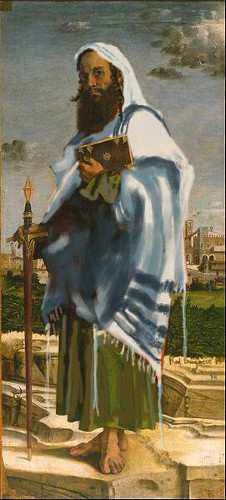







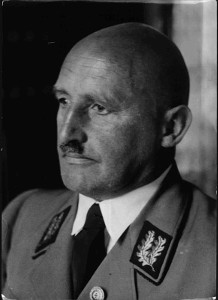




 Morning Meditations