Tag Archives: Judaism

FFOZ TV Review: Keys to the Kingdom

ffoz_tv16startEpisode 16: Jesus tells Peter that he gives him the keys to the kingdom of heaven. These words of Messiah have caused confusion and debate for almost two thousand years. Episode sixteen seeks to bring clarity to this controversy by examining the keys to the kingdom within their proper Jewish context. Viewers will discover that the keys to the kingdom are Jesus’ teachings about entering the kingdom and the revelation that he is the messiah. With these keys we can begin not only to prepare for the coming Messianic Era but we can begin walking in that kingdom right now.

-from the Introduction to FFOZ TV: The Promise of What is to Come
Episode 16: Keys to the Kingdom

The Lesson: The Mystery of The Keys to the Kingdom

Like many people addressing a large audience, First Fruits of Zion teacher and author Toby Janicki starts out with a joke. Actually, in this case, he starts out by describing a joke: the classic joke we see in many comics of a person who has just died standing at the gates of Heaven waiting for “Saint Peter” to use his keys to open up the gates…or not.

Interestingly enough, and you may already know this, the basis for this type of joke is actually in scripture:

And I also say to you that you are Petros, and upon this rock I will build my community, and the gates of she’ol will not overpower it. I will give you the keys of the kingdom of Heaven, and all that you forbid on earth will be forbidden in heaven and all that you will permit on earth will be permitted in heaven.

Matthew 16:18-19 (DHE Gospels)

Before going on to discover what the “Kings of the Kingdom” are, Toby tells us why Jesus gave them to Peter.

Shim’on Petros answered and said, “You are the Mashiach, the son of the living God!”

Matthew 16:16 (DHE Gospels)

It was because Peter was the one who correctly identified Jesus as the Messiah that Jesus gave Peter the Keys to the Kingdom. But what are these keys or for that matter, what is The Kingdom of Heaven?

Toby has told us in more than one prior episode that the phrases “Kingdom of Heaven” and “Kingdom of God” really mean the Messianic Age, the period of time when Messiah will rule, not only in Israel, but over the whole world. This is also our first clue.

Clue 1: Kingdom of Heaven does not mean “Heaven.”

The scene quickly shifts to teacher and translator Aaron Eby in Israel who tells us about the word “Heaven” in Hebrew: Shamayim. It took me a few moments to realize that this segment has been in a previous episode of FFOZ TV. Aaron gave us this “word study” before. I can only guess that someone at FFOZ made the decision that repurposing the “Shamayim segment” fit the requirements for this episode as well as a past one, or something else happened that prevented a unique segment of Aaron teaching from Israel to be videotaped.

The folks at FFOZ may also not be assuming everyone will be watching the episodes in order, and so all of the material that for me seems repeated or that comes across as a review, will be completely fresh and new to others. If Aaron’s teaching on “Shamayim” meaning “Heaven” and “Malkhut Shamayim” meaning “Kingdom of Heaven” is unfamiliar to you, watch the episode to get all of the details.

Back in the studio with Toby, we continue to get a review of the meaning of Kingdom of Heaven meaning God’s reign on earth, as opposed to Heaven as God’s supernatural realm or the court of Heaven.

ffoz_tv16_tobySo if the Keys to the Kingdom mean the keys to the Messianic Age, is it possible to be “locked out,” so to speak and to need a set of keys in some sense in order to gain entry? In previous episodes such as Seek First the Kingdom, Toby certainly gave the impression that even those people who are saved by grace can be locked out of entrance to the Kingdom, though I still don’t quite understand how that would work.

But in this case, that’s not what Toby’s talking about. The Keys to the Messianic Age, the keys that Jesus gave Peter, was the power and authority to pass on the teachings of Jesus to others, including subsequent generations. This dovetails into the central message of Jesus which is “repent, for the Kingdom of Heaven is at hand” and the core teachings of a number of other recent FFOZ TV episodes. You won’t really understand a lot of what Toby teaches unless you’ve seen those shows.

Up until now, I experienced almost everything in the episode as repeated information or a quick review of what has been taught before, but with the second clue, the show took on a very different direction.

Clue 2: The Key of David.

The key of what?

“And to the angel of the church in Philadelphia write:

He who is holy, who is true, who has the key of David, who opens and no one will shut, and who shuts and no one opens, says this:

‘I know your deeds. Behold, I have put before you an open door which no one can shut, because you have a little power, and have kept My word, and have not denied My name. (emph. mine)

Revelation 3:7-8 (NASB)

I’ve read the Book of Revelation just recently, but I never picked up on the key of David and certainly never made the connection to the Keys of the Kingdom. As Toby was talking, I thought again about where these connections in scripture come from. How do Toby and the other teachers at FFOZ arrive at some of their conclusions and associations? It would be helpful to have that information on tap, especially in order to study more in-depth.

But this isn’t enough to understand what these keys are supposed to be, especially relative to the second clue. To drill down further, Toby says we need to consult the ancient Jewish sages, something most Christians aren’t comfortable in doing. On the other hand, this is the third and final clue:

Clue 3: The traditional Jewish interpretation of Isaiah 22:22.

But what does this scripture say?

I will place the key to the House of David on his shoulder; he will open and no one will close, he will close and no one will open.

Isaiah 22:22 (Stone Edition Tanakh)

ffoz_tv16_aaronSo in Revelation 3:7-8, Jesus is quoting what Isaiah had to say about the Messiah and the Keys of David. In my Tanakh, there’s a note about this verse that simply says, “i.e. the affairs of the royal house will be arranged through him.” However, Toby cites a thousand-year old Jewish commentary (which he doesn’t specifically name, unfortunately) that reveals other details:

A teacher opens a discussion of scripture to fulfill that which is said in Isaiah 22:22.

This is interpreted to mean that the keys of the House of David are actually the power to teach God’s Word with authority, something that Jesus did and it was noticed more than once:

When Yeshua finished saying these words, the crowd was astonished by his teaching, for he was teaching them as a man of authority, and not like the scholars.

Matthew 7:28-29 (DHE Gospels)

Apparently, it was Jesus’s desire to pass that authority along to one of his disciples, Peter. That actually makes sense. In first century Judaism, the primary job of a disciple was to memorize the teachings of his Master in order to pass them along to the next generation and beyond. This job was specifically given to Peter, although all of the Master’s disciples would share in the responsibility.

How did Peter fulfill this task and wield the Keys of the Kingdom?

The most noteworthy answer is that Peter’s disciple John Mark wrote down everything Peter had to say about the teachings of Jesus. This is what comes down to us as the Gospel of Mark, which some Christian scholars say was the first Gospel written and the source for the Gospels of Matthew and Luke. Peter also used the Keys in other important ways:

  1. To be the first to preach the Gospel to Jews (Acts 2).
  2. To be the first to preach the Gospel to Gentiles (Acts 10).
  3. To participate in making important decisions for the body of believers (Acts 15).

Peter isn’t a gatekeeper passing in or locking out people from the Messianic Age. He was the first one responsible for passing on the teachings of Jesus. He was given power and authority to perform this task by receiving the Keys of the Kingdom from Jesus. It’s a task, Toby tells us, that all of us as believers must share; to learn, memorize, and teach what Jesus taught. Through the Holy Spirit, we too have been given power and authority…and responsibility.

What Did I Learn?

Pretty much everything from the second clue on was news to me. I’d have never made the association between Matthew 16:18-19, Revelation 3:7-8, and Isaiah 22:22. I also wouldn’t have known about the traditional Jewish interpretation of Isaiah 22:22 that folds back into what Jesus said to Peter and then later to John in Revelation.

I never thought of Peter as the major player in the New Testament much beyond the Gospels. Paul figures so prominently in so much of the Apostolic Scriptures, that the other apostles and disciples almost pale by comparison. Pretty much after his involvement in Acts 10 and Acts 15, Peter fades from the scene and Paul dominates the “passing on” of the teachings of Jesus, acting very much like he is the one to possess the Keys of the Kingdom of Heaven. Also, Paul’s rebuke of Peter recorded in Galatians 2:11-21 seems to even elevate Paul above Peter, at least in terms of an understanding of how the Gentiles were to integrate into the Jewish religious movement of “the Way.”

Toby showed me how important Peter’s early contributions were in setting the stage for everything that followed.

heurmenutic-keySomething else was made apparent to me (though of course, I always suspected it) in this episode as evidenced by the third clue. In using the traditional Rabbinic Jewish interpretation of Isaiah 22:22 (as opposed to the plain reading of the verse), part of what I think FFOZ is saying is that, in order to understand the Jewish perspective on the teachings of Jesus, the New Testament, as well as the rest of scripture, we have to be willing not only to look through that Jewish lens and accept what we see as accurate, we also must be willing to accept the whole of Judaism as a valid perspective in a Christian understanding of the Bible.

I know that would probably get the attention of my Pastor, and not in a positive way. He has a deep respect for the place of the Jewish people in history, prophesy, and in the future age of Messiah and beyond, but not necessarily modern Judaism with layer upon layer of Rabbinic custom, interpretation, and practice that seem, from his Christian point of view, to stray far and wide away from the text of the Bible. He believes the actual scriptures are the final authority as we can understand them through accepted exegesis, but factoring in traditional Judaism and it’s interpretation of that text by the Rabbis may be too far for him, and many Fundamentalists and Evangelicals to go.

I am drawn to and even fascinated by the Rabbinic sages and find many of their commentaries to be compelling guides to understanding God and a life of Holiness, but I will also be the first to urge caution in accepting all Rabbinic commentary as being unerring in its understanding and presentation of God and human beings.

It has been said to me before not to seek Christianity and not to seek Judaism, but to seek an encounter with God. It is with God that all truth resides. It is because human beings see so imperfectly that we require various lenses in order to examine God’s truth and God’s Word. I very much enjoy and appreciate looking through a Jewish lens in order to view Messiah better, but I will still use critical judgment in examining anyone’s commentary on Messiah and God, including the revered Jewish sages.

When Will Being A Christian Be Enough?

onfire.jpgStrange Fire by John MacArthur is basically an attack on anything and everything related to the charismatic movement and the various movements descended from it, as if the whole of it were composed of one monolithic set of doctrines and practices that all of us espouse. It invalidates anything that smacks of the supernatural or of emotion freely expressed in God’s presence.

-R Loren Sandford
“Real Holy Spirit Fire Out”
CharismaNews.com

For Thursday’s “morning meditation,” I’m going to publish my own commentary on John MacArthur’s recent Strange Fire conference in Sun Valley, California, or rather, the implications of such activities when one member of the body of Christ apparently attacks another. It’s like my liver wants to eat my pancreas because my liver doesn’t think my pancreas is an authentic member of my body.

Hey! Don’t I have anything to say about it? After all, I need all those organs inside of me so I can stay alive and healthy. Doesn’t my liver have enough to do processing all of the toxic junk that enters my body through the environment (including what I eat) without going after all the other stuff inside my body that keeps me alive?

But enough about MacArthur, Strange Fire, and all that…at least in detail. What I want to know is why being “a Christian” isn’t enough?

Recently I became aware of the buzz surrounding a new book, soon to be released, by a prominent cessationist who has been around for a long time.

Reading MacArthur, you’d think all charismatics espouse prosperity teaching. We do not. You’d think we are all Word of Faith adherents when, in fact, they constitute a small minority and promote a doctrine many of us oppose.

-Sandford

Oh yuk! More divisions and doctrines.

Before now, I’d never heard of the debate between Cessationism vs. Continuationism. I have heard of Prosperity Theology (and am not impressed), but I had to look up Word of Faith to figure out what all that’s supposed to mean.

I’ve written before about how different religious streams are basically Systems human beings use as an interface between themselves and the Bible as well as between themselves and God. We use this sort of interface, like the Graphical User Interface (GUI) of your computer, to help us talk to and understand what otherwise would be inaccessible to us. You use the GUI of your computer to interact with the computer’s software and hardware. You use your religious systems to interact with the Bible and with God.

But as anyone who has used a computer can tell you, the interface isn’t a perfect environment and it has inherit limitations. So does any religious system, even yours.

christian-devotionI’ve talked with my Pastor before about the various Christian denominations and why he’s attracted in a certain denominational direction. Obviously, I lean in my own direction, though it’s far from the fundamentalist world of my Pastor. I’ve also lamented as to whether or not I’ll make a good Christian, but what I’m really saying is that I wonder if I’ll ever make a good and true “demominationalist.”

I know, you probably think of my “denomination” as “Messianic Judaism,” but that has a few problems (I’m going to write on related topics pretty soon), not the least of which is whether or not a Gentile Christian can practice Messianic Judaism or any other Judaism. With apologizes to Toby Janicki and his classic introduction of himself on the FFOZ TV show A Promise of What is to Come, I have my doubts.

On the other hand, Toby could be right, at least in the sense of the future, Messianic Kingdom. My Pastor tells me that “the Church” was formed in Acts 2 and although it started as a completely Jewish religious entity, with the addition of Gentiles and finally, when Gentiles became the “majority stockholders,” so to speak, it became separate from the rest of Israel and developed into its own “thing.”

I disagree.

The Jewish religious stream of “the Way” in the first century CE was the culmination of everything that came before it in Jewish and Biblical history, the apex of a dream, where Gentiles could join a Jewish religious stream in a way that resulted in reconciliation and justification before God without the Gentiles having to convert to Judaism or take on the Torah in the manner of Jewish people. In that sense, “the Church” wasn’t a new thing but it did a new thing…allowing the Gentiles in as equal members without necessarily equal Torah responsibilities.

It’s not that way now, thanks to all kinds of terrible things that happened in the decades and centuries to follow the destruction of Herod’s Temple, but I firmly believe it will be that way again for all of us when Messiah returns. There will be one, valid, thriving, religious stream that has evolved from Abraham, from Sinai, from the life of Messiah, that was always Jewish and will again be Jewish that we, the people from the nations who are called by His Name, are allowed to join, in a manner defined by Jewish authorities with the approval of the Holy Spirit (Acts 15) and commanded by Messiah (Matthew 28:19-20).

But it won’t look much or anything like “the Church” looks like right now.

prophetic_return1Fundamentalism, Charismatics, Word of Faith, Prosperity Theology, Calvinism, yada, yada, yada, will all be swept away from the lived experience of any approved believer and disciple of the Jewish Messiah when he establishes his throne in Jerusalem.

I can imagine there will be Christians and Jews who will resist the Kingship of Messiah in those days. I can imagine there will be a lot of people who will have great difficulty surrendering their pet theologies, doctrines, and dogmas, all of which have been invented in the last two-thousand years, and most of which have been invented only in the past several centuries (or even decades).

It will be enough to be a disciple of the Master. Put in “church-friendly” language, it will be enough to be a Christian.

Religious Jews practice Judaism by definition. In those days (and maybe as a foreshadowing, even today), Gentiles who are disciples and worshipers of the Jewish Messiah King will also “practice Messianic Judaism” in the manner defined for us by Messiah.

And it will be enough.

So try not to become too attached to all of that stuff we argue about now in the blogosphere, on websites, at conferences, in books we write and publish, stuff preached from the pulpit, discussed at the bema, taught in Sunday school, yada, yada, yada.

Learn to accept the idea that someday you may have to let go of most or all of your much-vaunted doctrines and dogmas, because being a disciple of Messiah as he desires us to be will be enough.

It will be enough.

cropped-cropped-jerusalem-snow.jpgDayenu.

Transmissions from Church: The Missionaries

acts_isaac_maryAfter some days Paul said to Barnabas, “Let us return and visit the brethren in every city in which we proclaimed the word of the Lord, and see how they are.” Barnabas wanted to take John, called Mark, along with them also. But Paul kept insisting that they should not take him along who had deserted them in Pamphylia and had not gone with them to the work. And there occurred such a sharp disagreement that they separated from one another, and Barnabas took Mark with him and sailed away to Cyprus. But Paul chose Silas and left, being committed by the brethren to the grace of the Lord. And he was traveling through Syria and Cilicia, strengthening the churches.

Acts 15:36-41 (NASB)

I’m debating about whether or not to make “Transmissions from Church” a series, basically my “voice” about my experiences in Church worship and Bible study. I’ll make up my mind by the by, I suppose.

The above-quoted scripture was the basis for Pastor’s sermon last Sunday and the teaching in Sunday school. It’s always very interesting to me to see how Pastor can take a few verses that don’t seem to communicate a great deal theologically, and speak on them for ninety minutes.

But the sermon isn’t the first thing that happened in church last Sunday. The first thing that happened “officially” at the start of the announcements was an update about a missionary family that’s been serving in Papua New Guinea (PNG). What got my attention the most was the interaction the missionary had with one of the local Pastors, a man with only an elementary school education who on one Sunday, baptized twenty-two people. This Pastor lived and served in the mountains, a two-day walk from the nearest town. More than anything, he asked and even begged for more missionaries and more Pastors to speak the word of Christ to those people in the remotest parts of PNG who had never heard of Jesus.

I believe the Pastor’s name was David Livingston Tila. He was a man of great Spirit but his valiant heart was weak and he died not to long ago at too young an age.

I sometimes live in a very sheltered world in terms of my faith, and especially in terms of my theology and doctrine. I have a very narrow focus as far as what the Bible is trying to say, the identity of the Messiah, and how what God is trying to pass along to us may best be comprehended when viewed through a Jewish lens.

I was reminded recently that one of the primary functions of a disciple is to memorize the teachings of his Master and then pass those teachings along to the next generation, usually when that disciple has started to make his own disciples.

That’s also what missionaries do. They pass along the teachings of Jesus Christ to people who have never heard of Jesus before.

acts_messiah_ferret_visit_05Who are the missionaries? Except for A.C.T.S. for Messiah, the vast, vast majority of them are traditionally Christian Pastors and teachers, sent out by traditionally Christian churches and other organizations.

Within my own small set of connections across the blogosphere and occasionally in person, we debate about how movements such as Hebrew Roots and Messianic Judaism see things like the “message of salvation,” the identity of the Jewish Messiah, and what life will be like when the Son of David once again rules in Jerusalem.

I promise you that on a planetary scale, most people are not learning those things in the way Hebrew Roots and Messianic Judaism teaches them. They are learning those things the way the Church (big “C”) teaches them.

If you’re involved in Hebrew Roots or Messianic Judaism, that should make you feel kind of small.

Well, maybe not. I know that First Fruits of Zion (FFOZ) manages to get around, not only in the United States, but in the Middle East and South Africa (and probably other places I don’t know about). The most recent eye-opening announcement from FFOZ is that they will soon be going to Hong Kong. Bet you didn’t see that one coming. I know I didn’t.

My opinion is that stuff like this happens when Messianic Judaism approaches the Christian Church with an olive branch and an offer to partner on the mutual imperative (since we all serve one Messiah, and One God) to tell the world of the Messiah and make disciples of all nations.

But we have a long way to go.

Going back to last Sunday’s sermon, Pastor said that “the Church” in Antioch commended Paul and Sirus on their trip back to the churches in Galatia (no, there was no such thing as a “church” yet as we think of it in modern times). In Sunday school, it was noted that at one point Paul referred to himself as a “Father” to some of his disciples, and also that Peter called Mark his “son.” While everyone felt this expressed the love that Paul and Peter had for the “churches” and “Christians” they made, I reflected (silently) that it is common for a Rabbi to be considered the father of his disciples.

churchesA few weeks back, I wrote a blog post called The Christianization of Acts 15. I haven’t been to church again since I wrote that blog post until last Sunday. I had a legitimate reason on one Sunday, but on the other, I was just tired and I needed a break. I was even a little nervous about going back, but it all worked out. I even saw someone I hadn’t visited with in a long time. He was only there for that Sunday and I would have missed him if I hadn’t decided to go to services.

And I was reminded that the Church is still in charge of the Gospel of Jesus Christ, no matter what the Hebrew Roots and Messianic Jewish movements may think about that. As I write this, it is quite possible that Pastor David’s plea for Pastors and missionaries to be sent to the remote areas of PNG is being fulfilled by the Holy Spirit, and that men and women living in these areas, who have little education and who live very hard lives, are being taught about Jesus for the very first time. You and I can walk down any street in America and we can ask anyone we meet if they know who Jesus was and what a Christian is. Even if they are atheists, they’ll be able to give us an answer.

In PNG and many places on Earth like it, Pastors and missionaries are talking to people who have no idea who Jesus is but are more than eager to learn.

Pastor David baptized twenty-two people on a single Sunday. They worship in a church with no walls and they use wooden boards to sit on. Their biggest need until recently, was building materials so they could make a roof to keep out the rain.

In Acts 15:36-41, Paul and Barnabas, men who were friends and who had served God together for years, came to sharp disagreement, a violent argument, over whether or not Barnabas’s nephew John Mark should accompany them. The argument had an explosive ending when Paul chose Silas to go with him in his return trip to Galatia and Barnabas left with Mark for Cyprus.

Who was right and who was wrong? The “Church” in Antioch commended Paul and Silas, not Barnabas and Mark. Paul was always the point man for the mission to take the Gospel to the Gentiles, the function of any good disciple. Barnabas was in the background, supporting and encouraging Paul in his trials. Here, he supported Mark and the result was a splitting with Paul.

But something about that situation must have worked out. We learn later that Paul amended his opinion of Mark and considered him a valuable co-worker, helpful, and a comfort (Col. 4:10-11, 2 Tim 4:11, Philemon 1:24). Mark became Peter’s disciple and Peter (1 Peter 5:13) called Mark his “son.” And as Peter’s disciple, it was Mark’s responsibility to memorize everything Peter said about the teachings of Jesus (since Peter had been Messiah’s disciple), and he wrote everything down, which is where we get the Gospel of Mark.

We see that even situational arguments that seemingly end in disaster can have a good end, in part perhaps because of the situational arguments and other disasters.

broken-crossHow too is the body of Messiah currently carved up like a turkey on Thanksgiving, dark meat and light, giblets and gravy, drumsticks and wings, so many parts. On the one hand, we’re arguing and disagreeing on what we think the Bible is telling us and emphasizing why we’re right and the other folks are wrong (regardless of who “we” are and who the “other folks” are). On the other hand, we can see from Acts 15:36-41 and from the other scriptures I mined from my “church experience” last Sunday, that things didn’t turn out so bad for Mark down the road. Sure, he was accused of deserting Paul (in Acts 13:13) but for reasons we do not know, was able to restore himself in the community of “the Way” and specifically with Paul.

In the end for us, I don’t doubt that those problems we now have with each other, that we view as insurmountable barriers, will be smoothed down (or violently torn down) in Messiah’s reign, and every knee will bow to the King.

Some of those knees currently belong to people who live in the most remote areas of Papua New Guinea, who were brought to Christ as disciples by the now deceased Pastor David Livingston Tila, who are hungry to hear any Word of the Lord from whoever is willing to come as missionary or Pastor. The Master said, “the harvest is plentiful, but the workers are few.” (Matthew 9:37). That’s because too many workers are still arguing with each other over theologies and doctrines instead of actually working.

Without Faith and Grace

leaving_edenJudaism and Christianity parted company over how to read these few spare chapters in universal history. For the Church, the Garden of Eden became the soil for the doctrine of original sin. In their waywardness, Adam and Eve, and all their descendants, fell hostage to the domain of the devil. The narrative bespoke the immutably depraved condition of human nature. To know the Torah was not sufficient to do it. In the words of Paul, “In my inmost self I delight in the law of God, but I perceive that there is in my bodily members a different law, fighting against the law that my reason approves and making me a prisoner under the law that is in my members, the law of sin.” (Romans 7:22-23) Not human willpower then but divine grace alone in the person of God’s own Son who had died on the cross could hope to break this vicious cycle of human malice.

-Ismar Schorsch
“Teshuvah in Place of Original Sin,” pp 34-35 (October 16, 1999)
Commentary on Torah Portion Noah
from the book Canon Without Closure: Torah Commentaries

I know we’ve already read Torah portion Noah this year, but as I’ve been working through the commentaries in Schorsch’s book each week, I’ve been taking notes of the more compelling articles. For each Torah Portion, there is a small but powerful collection of Schorsch’s writings which he composed over a number of different years. Going over this collection is like opening his mind and listening to Schorsch musing on how he encountered each Parashat across each annual reading cycle over time.

I’m also grateful that this book includes his thoughts on Christianity and comparisons to Judaism, not because I’m trying to “shoot down” Christianity (or necessarily Judaism), but it’s helpful to have an intelligent mind discuss my faith from the “outside.” Like my conversations with my Pastor, it hones my ability to look at my own beliefs, especially when they’re challenged, and discover if I truly know and can explain why I have the faith I possess in Jesus as Messiah.

It’s a steep learning curve sometimes and I can hardly claim to have all of my ducks in a row, so to speak. However, I can say that the ducks are lining up in a somewhat more orderly fashion than they have in past years.

Original sin vs. the Jewish understanding of “the Fall” makes for interesting reading. Judaism in all its different modern streams, is not going to consider the need for a spiritual savior (though Moshiach is considered the redeemer of national Israel in Jewish thought, generally speaking). The Torah is accepted as sufficient, and always has been, to negotiate the Jewish relationship with a perfect God.

That’s hard for me to believe since no man can obey the commandments perfectly, and the Tanakh is a blatant record of that fact. The New Covenant promised in Jeremiah 31 starting in verse 27 promises that the covenant once written on stone tablets and scrolls made of animal skin will, in future times, be written on the heart, thus the “disconnect” between the desire for Holiness in man and the imperfection of living out that Holiness will cease to exist. Man and God will have a far more intimate relationship in those days than we enjoy in the present, or at any point in the past.

Gateway to EdenBut for Christianity, Jesus is the arbiter of that covenant, the gatekeeper, the doorway, and only by a profession of faith in him and the resultant transformed life, can man access the New Covenant of God. After that perfect writing of the Torah on a circumcised and human heart of flesh, can man perform the mitzvot with complete fidelity and with true justice and righteousness. Prior to that event, Christian or Jew, no man obeys God in the manner God desires, or for that manner, even in the manner we ourselves would wish.

In my own approach to a closer walk with God, I find myself slowly moving in a direction, but then, the tether that binds me to the habits of the past snaps me back like a rubber band that has been stretched just a little too far…and it stings.

It is not until we come to the late and marginal Book of Jonah that we first confront in full view the idea of teshuvah, repentance, as efficacious. Nor is it an accident that we read all of it in the synagogue on Yom Kippur afternoon, for Jonah encapsulates the essence of the day: that atonement, resolve, and initiative can get us beyond the impediments of our past and ourselves.

-Schorsch, pg 35

For all of the prophets of Israel we see in the Tanakh (Old Testament) who implored that nation of God to abandon her sin (which she regularly failed to do), only the Gentile city of Nineveh heeded a reluctant prophet and turned away God’s “evil decree.” It wasn’t permanent, of course, and later down history’s road, Nineveh sinned and fell, but consider how many times (if you can) that Israel too listened to the words of the prophets and averted disaster.

“Jerusalem, Jerusalem, who kills the prophets and stones those who are sent to her! How often I wanted to gather your children together, the way a hen gathers her chicks under her wings, and you were unwilling. Behold, your house is being left to you desolate! For I say to you, from now on you will not see Me until you say, ‘Blessed is He who comes in the name of the Lord!’”

Matthew 23:37-39 (NASB)

The Master’s commentary on the matter is plain and dismaying. And yet, I heard one person tell me that if Israel had turned away from their sins and returned to Torah and God in the days that Jesus walked the earth, the Messianic Age would have come and flourished even in that very instant.

The world is waiting for Israel’s national repentance, without it, Messiah will not come and both Israel and the nations continue to suffer from our own folly.

Schorsch would say that the story of Jonah and Nineveh tells us that human beings can, in and of ourselves, hear the warnings of God, repent in sincerity, and the result is that God’s promise of destruction will be averted. But without Messiah, how were Nineveh’s sins forgiven? They certainly weren’t Israelites. History doesn’t record that they sent representatives to Jerusalem to offer the appropriate sacrifices for guilt and sin (and we know that the sacrifices of Gentiles were accepted in the Temple, even in the days of Jesus).

Jonah's KikayonOnly God’s grace can explain why Nineveh survived when they repented. God is an “either-or” engine or sorts. “Either you repent and I will spare you, or you keep sinning and I will destroy you.”

This may also explain why, when they were faithful, when they did obey God, when they did perform the mitzvot, however imperfectly, and offered the required sacrifices, that is required by God, in the Temple in atonement for that imperfection, God chose to respond to sacrifices and the blood of goats and bulls, by sparing Israel, forgiving the apple of His eye, cherishing His often wayward bride.

On the basis of this small book, the Rabbis softened their understanding of the divine-human relationship with a large dose of compassion. God stood ready to forgive and humans had the capacity to grow. Thus Rabbi Eliezer ben Hyrcanus in the early second century proclaimed:

“Repent one day before your death.” When his students asked him how one might know that day, he replied: “Then repent today for you might die tomorrow.” (Avot DeRabbi Natan, ed. Schechter, page 62)

In other words, each and every day, and not just Yom Kippur, was suitable for repairing one’s ties to God.

-Schorsch, pp 35-36

Such is true of the Christian as well, and more so, since we do not have a traditional day in our religious calendar set aside specifically for repentance and “repairing one’s ties to God.” If anything, we are rather casual about the whole affair, for we are taught that once we were saved at some altar call or camp meeting, our place in Heaven is assured. We can never again fall from God’s hand.

My sheep hear My voice, and I know them, and they follow Me; and I give eternal life to them, and they will never perish; and no one will snatch them out of My hand. My Father, who has given them to Me, is greater than all; and no one is able to snatch them out of the Father’s hand. I and the Father are one.”

John 10:27-30 (NASB)

That’s quite a promise, but I still say we should not rest on our laurels so comfortably, for the Master also said this:

“Then they will deliver you to tribulation, and will kill you, and you will be hated by all nations because of My name. At that time many will fall away and will betray one another and hate one another. Many false prophets will arise and will mislead many. Because lawlessness is increased, most people’s love will grow cold. But the one who endures to the end, he will be saved.

Matthew 24:9-13 (NASB)

FallingTo “fall away” means we must have some place to fall from, in this case, from our faith in God (and I didn’t fail to notice that those “falling away” did so during the great tribulation). This does not seem to be the illusion of faith or describing those people who are not among the elect (for the Calvinists among you), but those who were in the Father’s hand at one point, who will fall away because lawlessness increased, their love grew cold, and they listened to false prophets.

We must always be alert and cautious. Like Nineveh, when we see the warning signs and hear the voice of God calling to us to beware lest we perish, we should respond immediately and “don sackcloth and ashes,” so to speak, declare a time of fasting and mourning, even if it is only with our own individual soul, and turn back to God, rather than risk falling from His hand down to the depths of despair.

In short, the rabbinic concept of teshuvah rested on deeds rather than on faith, on the discipline of Torah rather than on divine grace. Its implicit optimism about the correctability of human nature tempered the near fatalism that darkened the original meaning of Genesis.

-Schorsch, pg 36

I couldn’t disagree more.

First of all, Nineveh was redeemed for a specific time, but we have no indication whatsoever that it never returned to sin (and knowing the nature of human beings, I believe it must have returned to that dark place) and was forever redeemed as a city before God. Repentance, teshuvah, is not a single act that once accomplished, is accomplished forever. We have Christ’s warning that we can fall away. True, no one can snatch us out of the Father’s hands, but that doesn’t mean we can’t “bail out” on our own accord. We cannot be dragged unwillingly from the presence of God, but we can wantonly walk out of our own free will, thumbing our nose at the Divine in a suicidal gesture right before our final exit.

Schorsch says that human beings have pull themselves up by their own bootstraps and effectively refrain from sin, but again, the Tanakh is the witness against him (and against us all). Also, if the Covenant of Moses was sufficient forever in an unratified form, why does God promise a New Covenant, with the Torah not written externally, but inscribed internally across the fabric of our hearts (and please keep in mind that the content of the previous covenant remains unchanged, only the “material” upon which it is written does)?

I don’t know if I completely buy the classic Christian interpretation of the events in Eden, but I do believe that no amount of human effort, all by itself, will ever pay the debt we owe to God for our willful rebellion. From Adam in the beginning and down across each generation, we have failed God, and laughed at God, and denied God again and again. Even the best among us falls short, as Paul said (referencing Psalms 14 and 53), there is no one righteous, not even one of us…ever (Romans 3:10-12), apart from the Master himself.

dust-and-ashesWith much respect to Schorsch and his commentaries, which I enjoy very much, we cannot possibly walk the walk without both faith of the heart, and the grace of a most merciful God. Without both faith and grace, our repentance would be a faint and temporary glimmer in the dark, and we would all meet the ultimate fate of historical Nineveh well passed Jonah’s intervention, and the fate of all the “great cities” that have risen and crumbled to dust across the vast corridors of time.

Divine grace is certainly necessary, and no human being can even come close to “meeting God halfway,” so to speak. But we are still required to change directions, to face away from our sin and to turn toward God. Once that’s accomplished, often with God’s insistent “prodding,” then and only then do we have life, and the will to live it in obedience.

The Face of the King

lion-in-the-stormThe sticks on which you write will be in your hand before their eyes. Say to them, ‘Thus says the Lord God, “Behold, I will take the sons of Israel from among the nations where they have gone, and I will gather them from every side and bring them into their own land; and I will make them one nation in the land, on the mountains of Israel; and one king will be king for all of them; and they will no longer be two nations and no longer be divided into two kingdoms. They will no longer defile themselves with their idols, or with their detestable things, or with any of their transgressions; but I will deliver them from all their dwelling places in which they have sinned, and will cleanse them. And they will be My people, and I will be their God.

Ezekiel 37:20-23 (NASB)

Tales of the Messianic Era series

This is a time yet to come. This is a time when God will restore all of the Jewish people to the Land of Israel as a single, united people. The kingdoms will not be divided as they were in days of old. One Israel under One God.

“My servant David will be king over them, and they will all have one shepherd; and they will walk in My ordinances and keep My statutes and observe them. They will live on the land that I gave to Jacob My servant, in which your fathers lived; and they will live on it, they, and their sons and their sons’ sons, forever; and David My servant will be their prince forever. I will make a covenant of peace with them; it will be an everlasting covenant with them. And I will place them and multiply them, and will set My sanctuary in their midst forever. My dwelling place also will be with them; and I will be their God, and they will be My people. And the nations will know that I am the Lord who sanctifies Israel, when My sanctuary is in their midst forever.”’”

Ezekiel 37:24-28 (NASB)

More over, united Israel will be ruled by One King, King Messiah, Son of David. But look at this. Messiah, the King of Israel and Ruler of the World will be their prince forever.

That would be pretty hard to do if Messiah were merely mortal. Of course, in the Messianic age, many will be resurrected, never to die again, so we could say the same of Messiah. But as a Christian, I must believe that Messiah is more.

God also says that the people of Israel, the Jewish people, will “walk in My ordinances and keep My statutes and observe them.” I know I recently wrote about all this, but I’m going through my notes on my recent reading of the latter portion of Ezekiel, so I thought this would be a good time to try to pull them together. I hope I can avoid repeating myself too much.

One puzzling thing I found was this:

Then I heard one speaking to me from the house, while a man was standing beside me. He said to me, “Son of man, this is the place of My throne and the place of the soles of My feet, where I will dwell among the sons of Israel forever.

Ezekiel 43:6-7 (NASB)

I checked a large number of translations of Ezekiel 43:7 and all except one said that the Divine Presence would inhabit Ezekiel’s Temple, the Temple of the Messianic Era, forever (Young’s Literal Translation says “to the age”). You can read the larger context of that chapter to confirm that God is speaking of inhabiting the Temple of Jerusalem in the Messianic age forever. Why is this such a big deal?

I saw no temple in it, for the Lord God the Almighty and the Lamb are its temple.

Revelation 21:22 (NASB)

This describes events after the arrival of the New Jerusalem, after the thousand-year reign of Messiah, after all that had to come to pass has come to past. Humanity is restored in the Garden as such, and God dwells with His people as He did in the beginning.

temple_jerusalemSo how can God dwell in Ezekiel’s temple forever if in the New Jerusalem there is no temple. More to the point, God and the Lamb are the temple. I’m not even sure what that means. I posed the question to a friend of mine and he suggested that as human history ends and we all move into eternity, maybe “forever” ends, too. After all, Messiah said that the Torah wouldn’t pass away until heaven and earth passed away (Matthew 5:18). At some point, heaven and earth, as we understand them, must pass away and something eternal must come in their stead.

Still, one of the things I’m trying to accomplish on this “mission” is to discover any dissonance between how the Tanakh (Old Testament) and the New Testament depict the Messiah and the age to come. The above definitely seems to qualify.

Alas, you who are longing for the day of the Lord,
For what purpose will the day of the Lord be to you?
It will be darkness and not light…

Amos 5:18 (NASB)

We all want the Messiah to come to rescue and repair our broken world, but we also forget that it won’t be *poof* Messiah comes and instantly everything is fixed. There is going to be terrible war against Israel’s enemies which probably will include everyone. It won’t be pretty. Good thing the Church will be raptured up to Heaven for those seven years (I say this somewhat tongue-in-cheek).

Then one of the elders answered, saying to me, “These who are clothed in the white robes, who are they, and where have they come from?” I said to him, “My lord, you know.” And he said to me, “These are the ones who come out of the great tribulation, and they have washed their robes and made them white in the blood of the Lamb.

Revelation 7:13-14 (NASB)

Wait a minute. Who is coming out of the tribulation?

Verse 14 doesn’t identify these people beyond saying that they are the ones who came out of the great tribulation, but they can’t be the Church, at least from a Christian point of view, since the last we see of the Church on earth is in Chapters 4 and 5. Everything in Chapters 6 through 19 is about the tribulation which the Church misses…

…or do they (we)?

It was also given to him to make war with the saints and to overcome them, and authority over every tribe and people and tongue and nation was given to him. All who dwell on the earth will worship him, everyone whose name has not been written from the foundation of the world in the book of life of the Lamb who has been slain. If anyone has an ear, let him hear. If anyone is destined for captivity, to captivity he goes; if anyone kills with the sword, with the sword he must be killed. Here is the perseverance and the faith of the saints. (emph. mine)

Revelation 13:7-10 (NASB)

What are “saints” doing on earth during the tribulation and undergoing such harsh conditions for the perseverance of their faith? Of course, they could be people who came to faith after the Church was raptured, but would they be called “saints?” Usually people in the Church are called “saints.”

waiting-for-mannaThe doctrine of the Rapture didn’t come along until the 17th century, so it wasn’t as if the concept most Christians are pinning their hopes and dreams on has been around since the beginning. In fact, Googling “rapture doctrine” returns a series of links, many of which lead to web pages (of unverified validity) that criticize this very recent Church doctrine.

2 Thessalonians 2:3 speaks of apostasy or “falling away” of the faithful that will occur when many are deceived by the “man of lawlessness.” I can’t directly tie any “falling away” to Christians expecting a rapture to Heaven that never arrives, but I could very well believe that a lot of Christians will indeed fall away once the tribulation starts and they’re still here during the war between Messiah and Israel’s enemies. Why weren’t we given the break and free passage to Heaven we were promised from the pulpit?

I’m not saying all this to be mean-spirited but as a cautionary tale. What if Amos 5:18 is talking to believers, explaining to us that we shouldn’t be so quick to desire the coming of Messiah because it will be “the great and terrible day of the Lord.”

“I kept looking in the night visions,
And behold, with the clouds of heaven
One like a Son of Man was coming,
And He came up to the Ancient of Days
And was presented before Him.
“And to Him was given dominion,
Glory and a kingdom,
That all the peoples, nations and men of every language
Might serve Him.
His dominion is an everlasting dominion
Which will not pass away;
And His kingdom is one
Which will not be destroyed.”

Daniel 7:13-14 (NASB)

This is obviously a vision of Messiah’s coming, but I’ve always wondered why Daniel phrased it “one like the Son of Man?” Here we have a description of the Son of Man’s Kingdom never being destroyed, we have a vision of him coming on clouds of heaven (as opposed to just being born and being a great but totally human Jewish leader as most of Judaism believes of the Moshiach), and we get the sense that he is more than human.

Renowned Talmud scholar Daniel Boyarin wrote a book called The Jewish Gospels: The Story of the Jewish Christ, which I reviewed on more than one occasion. Boyarin, who is Jewish and not a believer, makes a credible case for why a large number of first century Jews in Israel and the diaspora came to faith in Yeshua (Jesus) as Messiah. Part of his evidence for why Yeshua would be seen as a legitimate candidate for Messiah comes from Daniel 7.

This classic and mysterious Jewish text by a well-known but possibly not a well understood prophet may be one of the keys to unlocking the identity of Moshiach. I sometimes receive criticism from Jewish people for my continuing faith, but somewhere between traditional Christian evangelism and Jewish anti-missionaries, may be an unbiased truth in the reading of the Bible. We must seek it out in order to escape our “religious blinders” about Messiah, so that we can see him as he truly is, not as how one doctrine or another imagines him to be.

And the children of Zion, rejoice and jubilate with the Lord your God, for He gave you the teacher for justification, and He brought down for you rain, the early rain and the late rain in the first month.

Joel 2:23

the-teacher2I had to go to Chabad.org to find a translation that describes Messiah as a teacher. Most Christian Bible translations render “He gave you the teacher” as something like “He has given you the early rain…” (NASB translation).

The Douay-Rheims Bible says “he hath given you a teacher of justice,” and Young’s Literal Translation says “He hath given you the Teacher for righteousness.”

The Jewish understanding of Messiah is that, among other things, he will come to teach us what we need to know of his ways and how we should serve him. Christianity expects a warrior, a priest, and a King, but we miss how he will teach us the Torah of justice and righteousness, tzedakah if you will (see my review of the FFOZ TV episode Seek First the Kingdom for a more detailed description of the relationship between tzedakah [charity] and justice and righteousness).

So what can we conclude from my brief (and hardly comprehensive) review of Messianic prophesy?

  • Messiah will come as the One and eternal King of Israel, return the exiled Jews to their Land, the Land of Israel, and unite them as a one people in one Kingdom ruled by one King Messiah forever.
  • The “law of the land” (Israel) will be Torah, and the Jewish people will walk in God’s statues and ordinances as in days of old, but with the Torah written on their hearts rather than on scrolls.
  • The Divine Presence will once again inhabit the third and final Temple in Jerusalem forever (though we have difficulty reconciling this with Rev. 21).
  • There will be “saints” going through the tribulation who suffer and who are killed for the sake of their faith, drawing into sharp dispute the accuracy of the modern doctrine of “the Rapture,” which states “the Church” will be literally removed from earth and into Heaven for the entire length of those troubled days.
  • The Messiah is the Son of Man and the Prince, who seems to be more than a man, who will reign eternally, who will come on the clouds of heaven, possibly in direct contradiction of modern Jewish religious thought (for the most part) which states Messiah will be completely human with no supernatural (and certainly no Divine) nature.
  • Of his many roles in the age to come, Messiah will be a teacher of justice and righteousness.

Who is the King in the age to come? Who is Messiah, Son of David, Son of God?

Christians know him as Jesus Christ. Most religious Jews see him as King Messiah. Any similarity between the two is faint at best and at worst, nonexistent.

But if you believe in a Messiah at all as either Christian or Jew, you have a duty to set aside your preconceptions and what you have been taught (and what has been assumed by your religious stream for hundreds of years) and investigate for yourself what the scriptures say. In my case, this is paying close attention to any dissonance that may occur between the Old and New Testaments. Messiah is an objective being, apart from our need to paint his portrait one way or the other. Instead of seeking his portrait, I need to see his face.

Vayeira: Those Whom God Has Blessed

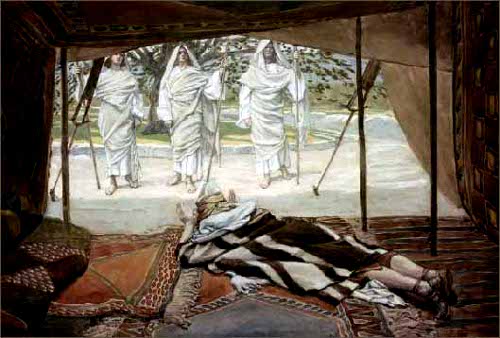
abrahams visitorsThe Lord appeared to him by the terebinths of Mamre; he was sitting at the entrance of the tent as the day grew hot.

Genesis 18:1 (JPS Tanakh)

The Lord took note of Sarah as He had promised, and the Lord did for Sarah as He had spoken. Sarah conceived and bore a son to Abraham in his old age, at the set time of which God had spoken. Abraham gave his newborn son, whom Sarah had borne him, the name of Isaac. And when his son Isaac was eight days old, Abraham circumcised him, as God had commanded him.

Genesis 21:1-4 (JPS Tanakh)

In this week’s Torah portion, Avraham is recovering from Bris Mila. Later, Isaac is born and has a Bris Mila. So, I thought to share a few insights on … Bris Mila!

-Rabbi Kalman Packouz
“Shabbat Shalom Weekly”
Commentary on Torah Portion Vayeira
Aish.com

The vast majority of people in the Church don’t imagine that baby boys born into Christian families must receive a ritual circumcision, called a Bris or Brit Milah, on the eighth day of life. It’s one of those things that we think of as uniquely “Jewish.”

But if we who are in the body of Christ are called the spiritual Sons of Abraham (Romans 9:8), and if we are “one body and one Spirit, just as you were called to one hope when you were called; one Lord, one faith, one baptism; one God and Father of all,” (Ephesians 4:4-6), then why are we too not obligated to be circumcised?

Then after an interval of fourteen years I went up again to Jerusalem with Barnabas, taking Titus along also. It was because of a revelation that I went up; and I submitted to them the gospel which I preach among the Gentiles, but I did so in private to those who were of reputation, for fear that I might be running, or had run, in vain. But not even Titus, who was with me, though he was a Greek, was compelled to be circumcised. But it was because of the false brethren secretly brought in, who had sneaked in to spy out our liberty which we have in Christ Jesus, in order to bring us into bondage.

Galatians 2:1-4 (NASB)

Paul came also to Derbe and to Lystra. And a disciple was there, named Timothy, the son of a Jewish woman who was a believer, but his father was a Greek, and he was well spoken of by the brethren who were in Lystra and Iconium. Paul wanted this man to go with him; and he took him and circumcised him because of the Jews who were in those parts, for they all knew that his father was a Greek.

Acts 16:1-3 (NASB)

A great deal has been made about why Paul did not have Titus circumcised but he did so for Timothy. The only obvious difference between them in scripture is that Timothy’s mother was Jewish but both parents of Titus were Greek (presumably, since Luke refers to Titus as “a Greek” in Acts 16).

Brit_MilahToday, it is common in the various streams of Judaism to consider anyone Jewish who was born of a Jewish mother, regardless of whether or not the father was Jewish. In the days of Paul, this may not have necessarily been the case, but if Timothy wasn’t Jewish, we are at a loss as to why Paul made such a distinction between he and Titus.

But getting back to what I was saying before, should any distinction be made between Jews and Gentiles in the body of Christ. Aren’t we all one in Messiah with ethnic differences swept away by the hand of God as a scorching sirocco sweeps over the desert sands?

But wait a second.

The Almighty commanded Abraham, “… My covenant you shall keep — you and your descendants after you for all generations. This is my covenant which you shall keep between Me and you and your descendants after you — circumcise all males. And you shall circumcise the flesh of the foreskin and it shall be the sign of the covenant between Me and you. And at eight days old every male shall be circumcised throughout all of your generations … My covenant shall be in your flesh for an everlasting covenant” (Genesis 17:9-13).

-Rabbi Packouz

This is the “ethnic” part of God’s covenant with Abraham and his physical descendants through Isaac, Jacob, the Children of Israel, and beyond. I previously said that in this portion of the covenant ratified by God with Abraham…

God promises to make Abraham a father of many nations and of many descendants and the land of Canaan as well as other parts of Middle East will go to his descendants. God declares that circumcision is to be the sign of the covenant for Abraham and all his male descendants and that this will be an eternal covenant.

But the blessings of the earlier portion of the Abrahamic covenant God makes with Abram are significant because that portion can be applied outside the ethnic, genetic, biological stream of Abraham and his offspring.

And I will bless those who bless you, and the one who curses you I will curse. And in you all the families of the earth will be blessed.”

Genesis 12:3 (NASB)

We have to access Paul’s midrash on Abraham to make better sense of this.

Now the promises were spoken to Abraham and to his seed. He does not say, “And to seeds,” as referring to many, but rather to one, “And to your seed,” that is, Christ. What I am saying is this: the Law, which came four hundred and thirty years later, does not invalidate a covenant previously ratified by God, so as to nullify the promise.

Galatians 3:16-17 (NASB)

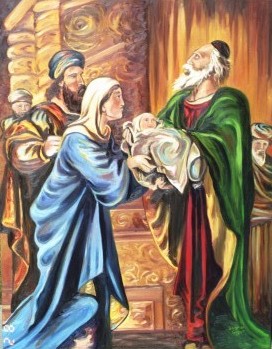
infant-jesus-templeThe “seed” is Messiah, Christ. He is the blessing, and this promise and blessing was established before the covenant was ratified and God required circumcision of Abraham and his offspring through Isaac, and through Jacob, and through all of Jacob’s offspring, and so on across the ethnic linkage that ultimately becomes the Jewish people.

In his letter to the churches in Galatia, Paul is strongly discouraging the Gentile disciples from being circumcised because, by that point in history, circumcision was the “shorthand” expression for ritual conversion to Judaism. If the Gentiles, through the blessings of Abraham’s seed (singular) and faith in Messiah, were already justified before God, and received the one Spirit, just as the Jews received that same Spirit, then for the purposes of justification, nothing else is required of the Gentile disciples.

Therefore I, the prisoner of the Lord, implore you to walk in a manner worthy of the calling with which you have been called, with all humility and gentleness, with patience, showing tolerance for one another in love, being diligent to preserve the unity of the Spirit in the bond of peace. There is one body and one Spirit, just as also you were called in one hope of your calling; one Lord, one faith, one baptism, one God and Father of all who is over all and through all and in all.

Ephesians 4:1-6 (NASB)

One body, one Spirit, one justification, one salvation, a unity of Spirit still doesn’t have to mean a uniformity of identity.

There’s a saying that goes, “everyone’s unique but no one is special,” but I don’t know if I can buy into that. I’m all for equal access to job opportunities and equal pay for equal work, but God did some really unique things. He chose the ethnic Jewish people, that is, those who were physically descended from Abraham, and Isaac, and Jacob, and Jacob’s sons, and the children of Jacob’s sons, who were all of the people led by Moses to Mount Horeb in the Sinai to receive the covenant and ultimately all of the promises, including the Land of Israel.

We can discuss the “mixed multitude” who eventually assimilated into the tribes after several generations and disappeared from the face of history, a process that cannot be anachronistically applied to modern times or even the time of James, Peter, and Paul. We can discuss ritual conversion to Judaism which existed in the time of James, Peter, and Paul and which exists today. I agree that you can’t “convert” to a tribal affiliation (which is why the ancient “gerim” in Torah were not converts). Judaism has long allowed for a few, select outsiders to join them, not because of ancestry, but by choice. But then, one choses to go “all the way,” so to speak, not retaining Gentile identity while living as a Jew. If we accept that God granted the Jewish community the authority to establish legally binding customs since antiquity, then we can accept Jewish converts.

But according to Paul and ultimately the Jerusalem Council (Acts 15), circumcision (conversion) is not required of the Gentile disciples of Messiah. We are one in Spirit and “co-inhabit” the body of Messiah. The body of Messiah is like the human body, which has different organs and structures, all of which are required for a healthy living person, and just like the body of Messiah, actually requires different parts.

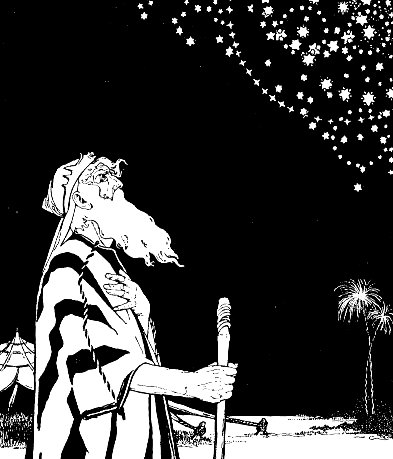
abraham1All of this was set into motion thousands of years ago with Abraham and it is a blessing that the whole world isn’t required to convert to Judaism in order to be reconciled to God. No stream of Judaism I’m aware of requires conversion and circumcision in order to be right with God. The Bible and God have always presupposed a world made up of Jews and Gentiles who are reconciled before our Creator. Messianic Judaism is the living example of a Judaism that recognizes the spiritual equality of Jews and Gentiles in Messiah without compelling circumcision and full Torah observance upon the Gentiles in the body (not that we can’t take on board more of the mitzvot voluntarily).

I know this won’t satisfy the Hebrew Roots Gentiles who believe in uniformity in the Messianic body, nor the traditional Christians who also require uniformity. But those alternatives either rob the uniqueness God gave to the Jewish people through circumcision, the Torah, and Israel by having Gentiles say “it belongs to us too,” or strips that uniqueness away, defying God’s will by Christians telling Jewish people they must cease their ethnic and religious uniqueness and performance of the mitzvot if they wish to worship Moshiach, requiring that Jewish believers live like the Gentiles in the Church.

Why has this mitzvah survived in strength while so many other mitzvot have fallen to the wayside by otherwise minimally observant Jews? Perhaps the answer is found in the 2,000 year old words of Rabbi Shimon ben Gamliel, “Every mitzvah that they (the Jewish people) accepted upon themselves with joy … they still perform with joy.” (Talmud, Shabbos 130a). Deep in our collective psyche we know that the Jewish people is eternal, that we have a mission to be a “Light Unto the Nations” and to perfect the world, that the Almighty loves us and watches over us — and that it is our great joy and privilege to be a part of that Covenant!

-Rabbi Packouz

However you choose to view this in terms of being Gentile members of the body of Christ, the creation of “the Church” didn’t eliminate the promises God made to Israel. Paul said (Galatians 3:17) that “the law, introduced 430 years later, does not set aside the covenant previously established by God and thus do away with the promise.” So too the work of Messiah did not annul the covenants previously established by God, but rather, Messiah was and is the crystallization of prophesy, the perfect expression of all of the covenants, the doorway allowing both people who are uniquely Jewish and those of us who are uniquely Gentile, to enter into relationship with God, co-inhabitants in a body that does require the heart, liver, lungs, spleen, stomach and many other organs, as opposed to being a single body, with a single organ, and a single identity, and a single function. A human being with only a stomach and no other parts couldn’t possibly live, so demanding absolute uniformity and canceling diversity within the body of Messiah kills the body.

Rabbi Packouz says the Jewish people are eternal. Circumcision is one of the signs of that eternal and unique existence before God. Opposing this is opposing God’s will. We can only be one in Messiah and possess the One Spirit of God by living in accordance with that One Spirit and that One God.

Therefore Jesus answered and was saying to them, “Truly, truly, I say to you, the Son can do nothing of Himself, unless it is something He sees the Father doing; for whatever the Father does, these things the Son also does in like manner.

John 5:19 (NASB)

I’ve often heard that we should imitate our Master, but I don’t think in this case it means so much what we eat or what we wear, but rather, how we treat those who God has uniquely blessed. If we bless the Jewish people, we too are blessed by Israel and by Messiah. Of course, there is the converse.

Good Shabbos.