Tag Archives: Messiah

Vayechi: The King’s Scepter

LionLast week I shared with you four Torah prophecies charting Jewish history: 1) that the Jewish people will be eternal though 2) we will be few in number and 3) scattered to the four corners of the earth and that 4) the host nations were ultimately inhospitable to us. This week, 2 more prophecies!

One would think, if the Jewish people were so reviled to be persecuted and killed, that we would have little impact upon those nations persecuting and killing us. Yet, the Torah prophesies that we will be…

-Rabbi Kalman Packouz
“Shabbat Shalom Weekly”
Commentary on Torah Portion Vayechi
Aish.com

You may be wondering what this has to do with this week’s Torah portion, with the blessings Jacob confers on his children and his grandchildren and his subsequent death, or with the burial of Jacob in Canaan, or with the death of Joseph and the end of the book of Genesis. Consider the following:

The scepter shall not depart from Judah, nor the ruler’s staff from between his feet; so that tribute shall come to him and the homage of peoples be his.

He tethers his ass to a vine, his ass’s foal to a choice vine; he washes his garment in wine, his robe in blood of grapes. His eyes are darker than wine; his teeth are whiter than milk.

Genesis 49:10-12 (JPS Tanakh)

These are the blessings Jacob set upon Judah before Jacob’s death. From a Christian standpoint, we see an obvious image of the Messiah, of Jesus in this blessing.

But now we have to find the connection I’m making between Rabbi Packouz’s commentary and the Torah reading:

“I will make you into a great nation. I will bless you and make your name great. You shall become a blessing. And I will bless those who bless you, and curse those who curse you. Through you all the communities of the earth shall be blessed” (Genesis 12:2-3). The prophet Isaiah (42:6) states, “I, the Lord, have called you in righteousness, and will hold your hand and keep you. And I will establish you as a covenant of the people, for a light unto the nations.”

Which, of course, reminds Christians of this:

Then Jesus again spoke to them, saying, “I am the Light of the world; he who follows Me will not walk in the darkness, but will have the Light of life.”

John 8:12 (NASB)

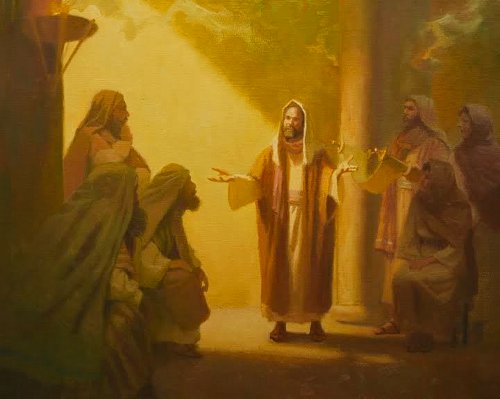
Immediately after the Master said these words, the Pharisees he was speaking to objected and accused him of false testimony. These men could not have failed to recall the prophecy of Isaiah that it was Israel who was the light to the nations. How could this one man claim to be such a thing, to represent all of Israel as it were, unless he were their King?

Interestingly enough, Rabbi Packouz referenced Genesis 12:2-3 which ends with, “through you all the communities of the earth shall be blessed.” All the nations of the earth are blessed through Abraham’s seed, through Messiah (Galatians 3:16), through the light to the nations, the firstborn son of Israel.

And so Jacob passed on the blessings to his sons, including the Messianic blessing onto Judah, the scepter shall not depart from Judah, nor the ruler’s staff from between his feet.” Judah’s descendant is Messiah, the ruler, the King, the light, and as he was born into humility as Yeshua ben Yosef, he will return in power and might as Yeshua ben David, and ascend the throne of David in Jerusalem, and rule with justice and with peace over his people Israel, and over the entire population of the world.

In next week’s “Shabbat Shalom Weekly,” Rabbi Packouz will finish his series with “the final prophecy — the return from Exile — and what does it all mean.”

As you might have guessed, today’s Torah commentary is an extension of the one I wrote last week, the “cautionary tale” to the Christian Church to not take the ancient Messianic Jewish prophecies too lightly, and especially not to refactor them in such a way that favors the Gentile Christians over God’s chosen people and nation.

Many peoples and strong nations shall come to seek the Lord of hosts in Jerusalem and to entreat the favor of the Lord. Thus says the Lord of hosts: In those days ten men from the nations of every tongue shall take hold of the robe of a Jew, saying, ‘Let us go with you, for we have heard that God is with you.’”

Zechariah 8:22-23 (ESV)

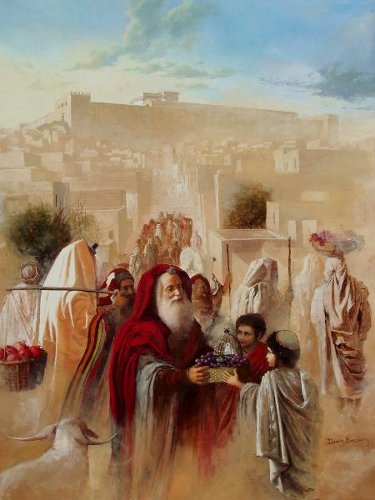
up_to_jerusalemFirst Fruits of Zion (FFOZ) author and teacher Toby Janicki, in the episode Fringes of the Garment of the television series The Promise of What is to Come said that the Jewish man in question is the Messiah, as he interprets this verse.

Toby further said that those ten men from the nations were not just a random group of non-believing Gentiles, but are Gentile believers from “the Church” who, in my estimation, must recognize the Savior as the Jewish Messiah King, fully the King of Israel and the Jewish people, and that grasping his tzitzit, as it were, is a recognition of that fact, a representation of the profound paradigm shift required by Christians in order to even recognize Yeshua ben David as our “Jesus,” and the desperate attempt to heal the tremendous wound that separates Christianity from the Jewish Messiah.

If Toby’s interpretation of Zechariah is correct, and my interpretation of Toby is correct, then many in the Church today are laboring under a needless burden placed upon our shoulders by a long history of misunderstanding, anti-Semitism, and supersessionism. Much was lost after the apostolic era ended and the Gentile majority of the Messianic followers took over and reformed the “Church of Christ.” We have a lot of work to do to repair the damage and prepare the road for the return of the King.

But why wait for Messiah to return to take hold of his tzitzit? Let’s do it now by humbling ourselves before the King and studying his ways as expressed through the Jewish prophets and the Jewish apostles.

For from Zion shall come forth the Torah…

Isaiah 2:3

Salvation is from the Jews.

John 4:22

For Moses from ancient generations has in every city those who preach him, since he is read in the synagogues every Sabbath.

Acts 15:21

Come, let us go up to the mountain of Hashem, and to the house of the God of Jacob.

Peace and Good Shabbos.

The Mystery of Romans: Who are the “Weak” and the “Strong”?

Apostle-Paul-PreachesWelcome those who are weak in faith, but not for the purpose of quarreling over opinions. Some believe in eating anything, while the weak eat only vegetables. Those who eat must not despise those who abstain, and those who abstain must not pass judgment on those who eat; for God has welcomed them. Who are you to pass judgment on servants of another? It is before their own lord that they stand or fall. And they will be upheld, for the Lord is able to make them stand.

Some judge one day to be better than another, while others judge all days to be alike. Let all be fully convinced in their own minds. Those who observe the day, observe it in honor of the Lord. Also those who eat, eat in honor of the Lord, since they give thanks to God; while those who abstain, abstain in honor of the Lord and give thanks to God.

We do not live to ourselves, and we do not die to ourselves. If we live, we live to the Lord, and if we die, we die to the Lord; so then, whether we live or whether we die, we are the Lord’s. For to this end Christ died and lived again, so that he might be Lord of both the dead and the living.

Why do you pass judgment on your brother or sister? Or you, why do you despise your brother or sister? For we will all stand before the judgment seat of God. For it is written,

“As I live, says the Lord, every knee shall bow to me,
and every tongue shall give praise to God.”

So then, each of us will be accountable to God.

Romans 14:1-12 (NASB)

I’ve just finished reading the third chapter in the Mark D. Nanos book The Mystery of Romans: The Jewish Context of Paul’s Letters. Yes, it did take me a long time and for two reasons. Nanos is quite erudite in his writing, packing each page densely with information. I have to take copious notes on all points of interest while I’m reading. Thus reading and writing while I’m reading makes for slow going.

But I’ve gotten through the eighty pages of “Chapter 3: Who Were the ‘Weak’ and the ‘Strong’ in Rome?” Hint: they aren’t who you think they are, at least according to Nanos.

But first things first.

There is almost universal agreement (it appears to be an almost unquestioned fact) that the “weak” were Christian Jews who still practiced the Law and Jewish customs (with most maintaining that this group would have included “God-fearing” gentiles as well), and that the “strong” were Christian gentiles (as well as Christian Jews like Paul who have supposedly abandoned Jewish practices).

-Nanos, Chapter 3, pg 87

Mark NanosIn my previous review of Chapter 1 of this book, I noted that Nanos takes a high view of Jewish Torah observance and a Gentile “Torah-respecting” lifestyle, meaning that, from a Pauline perspective (according to Nanos), Gentiles in the ancient Messianic Jewish communities were expected to support and uphold Jewish Torah observance while at the same time, conforming to the application of Torah to the Gentile believers as defined by the halakhic decision made by James and the Elders and Apostles in Acts 15 (which was probably supported and expanded by an oral teaching that accompanied the “Jerusalem letter,” the Didache being one possibility).

I mention this, because it must be taken into account in the current conversation, for this position is the template for everything that follows in Nanos’ analysis of Paul’s famous letter to the Romans.

Let’s cut to the chase:

Paul was not concerned with distinguishing between Christian Jews/gentiles who practiced (“weak”) or did not practice (“strong”) the Law and customs, with the hope that all would eventually abandon the Law and customers as they grew stronger in their faith in Christ. His concern was rather that all the non-Christian Jews (“stumbling” in faith toward Christ) in Rome would recognize that Jesus was the Christ of Israel, their Savior, and that they would thus believe in Christ and become Christians (“able” to have faith toward Christ) — Christian Jews. As Christian Jews they would indeed continue to be Jews in that they continue to practice the Law and Jewish customs in faith, not in order to justify themselves, but because they are Jews justified by the Jewish Savior/Messiah/Christ, thus joining with gentiles who are Christians in giving glory with “one accord” and thus “one voice” to the One Lord: “the God and Father of our Lord Jesus Christ” (15:6).

-Nanos, pp 154-5

In order to make that explanation work, the believing Gentiles and believing Jews must share a common synagogue or synagogues in Rome with the non-believing Jews. This isn’t as incredible as you might think. Most people assume that whenever Jews and Gentile God-fearers came to faith in Messiah, they left the synagogue and formed their own house churches. Sometimes that was true, but not always. Nanos and the resources he cites (you’ll have to see the book for the entire bibliography) support the idea that the believing body of Jews and Gentiles in Rome remained in their synagogue communities once they came to faith.

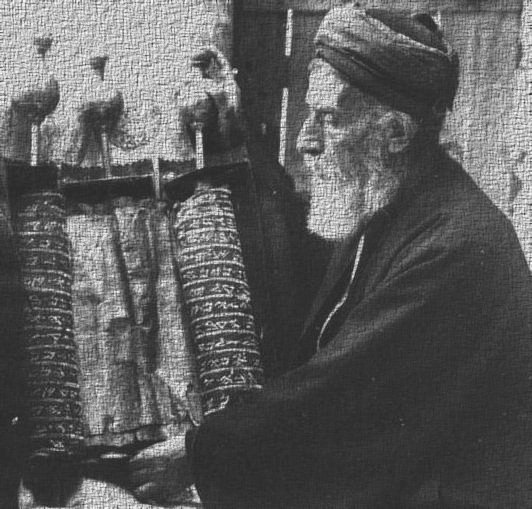
ancient-torahFor the Jewish believers, this probably seemed like a no-brainer at the time, since coming to faith in Yeshua as Messiah in the mid-first century was not particularly strange, and it certainly didn’t mean that the believing Jew was converting to a different religion as it would mean today if a Jew came to faith in Jesus and started going to Church (and for Messianic Jews today, they remain within Judaism as did Paul and the other Jewish believers in the apostolic era).

Also, Gentile God-fearers were commonly found in diaspora synagogues and although they had no covenant status reconciling them with God (unless some pre-Rabbinic status of “Noahide” were conferred upon them), nevertheless, they had come to believe that the God of Israel was the God over all. Once these Gentiles came to faith in Messiah, their was no requirement that their worship practices should change for after all, they were disciples of the Jewish Messiah King. Where else should they be but among Messiah’s people Israel? In fact, James and the Apostles in Jerusalem made this very point:

Therefore I have reached the decision that we should not trouble those Gentiles who are turning to God, but we should write to them to abstain only from things polluted by idols and from fornication and from whatever has been strangled and from blood. For in every city, for generations past, Moses has had those who proclaim him, for he has been read aloud every sabbath in the synagogues.”

Acts 15:19-21 (NASB)

Once coming to faith in Messiah, in order to fully comprehend and practice his teachings, it was necessary to continue accessing his “source material,” which, according to the ruling of the Council, were to be found in the Torah and the Prophets.

Those Jews and Gentiles in the local Roman synagogues who came to faith while davening and worshiping within those communities would still be attached to those communities, to their friends, to the Rabbis. And since Yeshua-worship wasn’t inherently “non-Jewish,” Nanos suggests the believing Gentiles and Jews would have remained in their original synagogues.

Why should we care about this?

Because we have several populations co-mingling within a single religious and community setting: non-believing Jews, believing Jews, and believing Gentiles.

Now this next point is important. As Gentile God-fearers, the non-Jews who regularly attended synagogue would have been observing a set of behaviors that would allow them to co-participate in the community without violating the requirements of Torah observant Jews. They would eat the same foods, probably pray the same prayers or prayers modified for non-Jewish people, and otherwise not interfere with the Jewish “ascendency” in their own synagogue.

In other words, they wouldn’t make waves.

But once the God-fearers became believers and realized, through Paul as well as through the halakhic ruling of the Apostles, that they were not obligated to convert to Judaism and take on the full yoke of Torah but they were still fully equal co-participants in salvation and justification before God, they got a little cocky.

ancient_jerusalemIn Paul’s letter to the Galatians, the primary problem population (say that three times real fast) were “judaizers,” Jews or Jewish converts who were attempting to convince the Gentile population in the Galatian faith-communities that they had to convert to Judaism to be saved (and probably to re-enforce the idea among the Jewish population that being ethnically Jewish and Torah observant was what justified them before God, not faith in Messiah). The target population of Paul’s letter to Rome had the opposite problem: “gentilizers.”

The believing Jews wouldn’t bat an eye about continued Torah observance. For them, it would be a given, and of course, for the non-believing Jews in the synagogue, why should they change the observance given to them by their forefathers? But for the believing Gentiles, who didn’t have the same set of standards (although they definitely had standard of obedience as disciples), they started to “bug” the non-believing Jews about how now the believing Gentiles were “equal” without having to conform to the full body of Torah mitzvot.

And Paul was taking these Gentiles, the so-called “strong,” to task for disrespecting the “weak” who he felt in time, would also come to faith in Messiah. By their behavior, the Gentile believers were actually in danger of inhibiting Jews from coming to faith in their own Messiah (the parallels between this situation and the modern Christian Church are undeniable).

Let us therefore no longer pass judgment on one another, but resolve instead never to put a stumbling block or hindrance in the way of another. I know and am persuaded in the Lord Jesus that nothing is unclean in itself; but it is unclean for anyone who thinks it unclean. If your brother or sister is being injured by what you eat, you are no longer walking in love. Do not let what you eat cause the ruin of one for whom Christ died. So do not let your good be spoken of as evil. For the kingdom of God is not food and drink but righteousness and peace and joy in the Holy Spirit. The one who thus serves Christ is acceptable to God and has human approval. Let us then pursue what makes for peace and for mutual upbuilding. Do not, for the sake of food, destroy the work of God. Everything is indeed clean, but it is wrong for you to make others fall by what you eat; it is good not to eat meat or drink wine or do anything that makes your brother or sister stumble. The faith that you have, have as your own conviction before God. Blessed are those who have no reason to condemn themselves because of what they approve. But those who have doubts are condemned if they eat, because they do not act from faith; for whatever does not proceed from faith is sin.

Romans 14:13-23 (NASB)

Nanos asks his readers to look at this passage in sort of the opposite direction than the way we’ve been taught. Also keep in mind that, just like the situation we see in Galatians 2, the issue is table fellowship and offensive treatment, not food. If your brother or sister (here, Paul has to be relating believing Gentiles to non-believing Jews as “brothers and sisters,” perhaps because they attend the same synagogue community) stumbles (in their faith) because you, as a Gentile, are not obligated to keep the kosher laws, you are no longer walking in love.

While the Gentiles were “mere” God-fearers, they were in a “one-down” position in the synagogue because of legal status and let’s face it, it is a Jewish synagogue. Once they became co-participants in salvation because of Abrahamic faith, the Gentile believers became a tad bit obnoxious to the non-believing Jews and stopped “walking in love.”

There’s a lot Nanos says about the halachah of “walking in love” and the two greatest commandments of Jesus (Matthew 22:36-40) that applies here. You can’t really love God if you are taunting your neighbor who is “weak” in faith and has not yet become reconciled to Messiah.

I have great sorrow and unceasing anguish in my heart. For I could wish that I myself were accursed and cut off from Christ for the sake of my own people, my kindred according to the flesh.

Romans 9:2-3 (NASB)

stuart_dauermannPaul was desperate to share the “good news” to every Jew and he desired, above all else, that his own people should come to faith and redemption. So much so, that he was willing to surrender his own salvation if it would save some of his non-believing Jewish brothers and sisters. Clearly, Paul didn’t see himself, as a believing Jew, in any way disconnected from the larger community of non-believing Jews in Israel or the diaspora or national Israel as a whole. In other words, to reference Rabbi Dr. Stuart Dauermann, all Jewish people for Paul were Us, not Them.

I had a tough time with this chapter. I knew that Nanos was going to reframe the “weak vs. strong” argument in Romans 14, 15, but his build up to even stating his point took a long time. I finally had to jump back to the last pages of the chapter so I’d have some idea of what Nanos was getting at. Once I did, I found it easier to make it through the intervening pages.

According to Nanos, the “strong,” the believing Gentiles in the synagogue, should have known better than to try to “gentilize” the non-believing Jews and thus damaging relationships not only with them, but with the believing Jews who were also continuing to observe Torah and the Jewish customs. The Gentiles were cheapening their own “freedom” in Yeshua-faith by suggesting that the Torah devotion of non-believing Jews was a “weakness” on their part. However, Paul was actually saying that where they were weak was not in their faith in God and observance of the mitzvot, but their faith in Yeshua as Messiah. The Gentile “strong” were greater in that faith but ironically, they weren’t that strong either, for they became arrogant in their new status and in lacking love, I suspect they were also “weak” themselves.

Nanos makes such a complex argument, I don’t know that I can completely apprehend all of the nuances in just one reading, but I don’t really have the time to pour weeks more of study into a single chapter. The Mystery of Romans is such a compact container for such a large amount of data that I have no doubt I’ll have to read it a second time (or more) to tease out additional understanding and meaning. For now, I’m willing to entertain the idea that the “weak” and the “strong” can conform to an alternate meaning and in fact, they must if Paul is to remain consistent as a personality and in his theology throughout his letters and as depicted by Luke in Acts.

Addendum: Having just finished Chapter 4, a number of the points Nanos made about “weak” and “strong” are clearer, especially in relation to Gentile behavioral responsibilities toward Jewish people in general (both believing and non-believing). My next “meditation” on the Nanos book should be a great deal more coherent.

FFOZ TV Review: Fringes of the Garment

FFOZ TV Episode 22Episode 22: In the gospel story of the woman with the hemorrhage of blood, she is healed by touching the fringe of Jesus’ cloak. By touching Jesus’ fringe, the woman was acting upon the prophetic nature of an important biblical commandment. Episode twenty-two will introduce the commandment in Numbers for Jewish men to put fringes on the corners of their garments to remind them of God’s instructions. Viewers will then see how this all ties into the prophetic words of Zechariah about ten men from the nations grabbing a hold of the fringe of a Jew.

-from the Introduction to FFOZ TV: The Promise of What is to Come
Episode 22: Fringes of the Garment (click this link to watch video, not the image above)

The Lesson: The Mystery of Fringes of the Garment

This is a particular mystery I originally thought I had a pretty good handle on and one that traditional Christians would generally find missing in their educational database. What First Fruits of Zion teachers Toby Janicki and Aaron Eby presented was at least a little different from I expected. Parts of the lesson were considerably different.

But first things first.

Today’s “Biblical mystery” originates in the following text:

And behold, a woman who had suffered from a discharge of blood for twelve years came up behind him and touched the fringe of his garment, for she said to herself, “If I only touch his garment, I will be made well.” Jesus turned, and seeing her he said, “Take heart, daughter; your faith has made you well.” And instantly the woman was made well.

Matthew 9:20-22 (ESV)

Toby used the English Standard Version of the Bible for his reading. While I tend to prefer the New American Standard Version, after comparing the two translations of this scripture side-by-side, I understood why he made the selection he did (besides the fact that FFOZ defaults to the ESV translation as a matter of course). I also realized why Toby didn’t use the Delitzsch Hebrew Gospels for the reading, since it would have given away too much too fast.

Why did the woman with the “discharge of blood” seek healing specifically by touching “the fringe of his (Jesus’) garment?” What made her think that would stop years of bleeding? Was it just some sort of anomalous or random choice on her part? As it turns out, she wasn’t the only one to believe that touching “fringes” would produce a healing result:

And wherever he came, in villages, cities, or countryside, they laid the sick in the marketplaces and implored him that they might touch even the fringe of his garment. And as many as touched it were made well.

Mark 6:56 (ESV)

As it turns out, a lot of Jewish people believed that touching the fringe of Jesus’ garment would heal them. I’d completely missed this on my numerous read-throughs of the Bible and am grateful to Toby for pointing this out.

But most Christians wouldn’t understand the significance of the “fringes” of the clothing of a Jewish man in the late Second Temple era (or today, for that matter). “Fringes” makes it sound like people were touching a hem or edge of whatever Jesus was wearing. Why would that heal?

This is where even a little understanding of the Law of Moses comes in handy.

Speak to the Children of Israel and say to them that they shall make themselves tzitzis on the corners of their garments, throughout their generations. And they shall place upon the tzitzis of each corner a threat of turquoise wool. It shall constitute tzitzis for you, that you may see it and remember all the commandments of Hashem and perform them; and not explore after your heart and after your eyes after which you stray. So that you may remember and perform all My commandments and be holy to your God.

Numbers 15:38-40 (Stone Edition Tanakh)

Toby JanickiWhile Toby continued to use the ESV translation, I’m using a much more Jewish source for this scripture. The original Hebrew word for what we read translated in the New Testament as “fringes” is “tzitzit” (“tzitzis” in the Ashkenazi pronunciation). When we get to Aaron Eby’s portion of the program, we’ll learn what tzitzit are, but at this point in the show, Toby tells us that these “fringes” were a response to the commandment in Numbers 15 and that being on a Jewish man’s garment did two things:

  1. The fringes served as a reminder to the Jewish wearer of all of the commandments of God.
  2. The fringes served as a reminder to anyone seeing the wearer that this person was a Jew who was obedience to the God of Israel, since no other people were given the commandment of tzitzit or the Torah of Moses.

And lest you think that the fringes on Jesus’ garments weren’t really tzitzit because that commandment wasn’t being observed by Jewish men in that age, consider this:

For they widen their tefillin and lengthen their tzitziyot.

Matthew 23:5 (DHE Gospels)

“Tzitziyot” is the plural of “tzitzit” in Hebrew, and here we see Jesus criticizing some of the Pharisees for dramatically displaying the length of their fringes as well as the straps of their tefillin or phylacteries (the wearing of tzitzit and tefillin is still practiced by observant Jewish men today).

This brings us to our first clue in solving today’s Biblical mystery:

Clue 1: Jesus had fringes on the corners of his garment in obedience to the Numbers 15 commandment.

Now the scene shifts to Aaron Eby in Israel for a brief Hebrew language lesson on the Hebrew words for “fringe” and “corner.”

Aaron EbyAs I mentioned above, the word translated as “fringe” or “tassel” in some English Bibles is actually the Hebrew word “tzitzit” (plural: “tzitziyot”, although as Aaron says, English speakers use “tzitzit” often for both singular and plural).

The Hebrew word for “corner” in the context of a garment, is “kanaf.” Tzitzit are cords of wool (usually). The string of blue colored thread (sometimes translated as “turquoise”) was made from a very specific process that is thought by most observant Jews to be lost (which is why most tzitzit today are completely white), although some Jewish people think it has recently been rediscovered.

In ancient times, a man’s garment would be like a sort of “poncho” and had four actual corners on the bottom. On each corner, tzitzit would be tied. Today, men’s garments lack this structure, so most Jewish men wear what Christians call a “prayer shawl” and what Jews call a Tallit Gadol (large tallit). Most, if not all, observant Orthodox Jews will wear an undergarment throughout the day called a Tallit Katan (small tallit) in addition to donning a Tallit Gadol during worship and prayer in order to be obedient to the Numbers 15 commandment and for the same reasons I listed above.

Aaron said that according to Deuteronomy 22:12, the tzitzit must be on the corners of the garment. No other location on a Jewish man’s clothing is in obedience to the commandment of God. Thus, some non-Jewish men in certain areas of the Hebrew or Jewish Roots movement who choose to tie tzitzit on their belt loops are actually in scriptural error (not to mention that the commandment was specifically given to the Israelites and their modern-day descendants, the Jewish people).

What was more interesting to me was Aaron’s explanation of the word “Kanaf.” It can mean both “corner” as in the corner of a man’s garment, or “wings”.

He said, “Who are you?” And she answered, “I am Ruth, your servant. Spread your wings over your servant, for you are a redeemer.”

Ruth 3:9 (ESV)

Since Boaz didn’t likely have actual bird’s wings, Ruth was more likely asking (assuming she was being literal) that Boaz spread some portion of his cloak over her, protecting her from sight (though it could also be understood in a more general sense as a request for protection since she referred to him as “redeemer”).

Aaron said that Kanaf could be understood not only as the corner of a cloak or other garment, but specifically the attachment point of the tzitzit and the garment’s corner. This leads to the idiomatic meaning of “touching the corner” (kanaf) as “touching the tzitzit,” which is probably what the woman in Matthew 9:20-22 was actually doing.

Back in the studio, Toby provides the next clue:

Clue 2: Fringes are called tzitzit and the Hebrew word for corner is kanaf.

But we still have our mystery. Why would anyone believe that touching the tzitzit on Jesus’ garment would cause healing to occur?

But for you who fear my name, the sun of righteousness shall rise with healing in its wings.

Malachi 4:2 (ESV)

MessiahThat’s “sun” s-u-n, not “son” s-o-n, and yet this prophesy about the coming Messianic age is really discussing the Messiah. There are other portions of scripture that refer to the Messiah with the term “Sun” including Revelation 1:16, and Malachi specifically states that Messiah shall rise with healing in its (his) wings.”

Toby concludes that when the woman with the issue of blood and all the others touched the Master’s tzitzit and expected to be healed, they were considering the prophesy of Malachi 4:2 and displaying their faith in Jesus as Messiah. When Jesus told the woman who had moments before stopped bleeding, that her faith had healed her, in this interpretation, he wasn’t referring to her faith in God as such, but her specific faith in him, in Jesus as the Messiah.

Toby went on to reference another important Messianic scripture:

Many peoples and strong nations shall come to seek the Lord of hosts in Jerusalem and to entreat the favor of the Lord. Thus says the Lord of hosts: In those days ten men from the nations of every tongue shall take hold of the robe of a Jew, saying, ‘Let us go with you, for we have heard that God is with you.’”

Zechariah 8:22-23 (ESV)

Toby should have made this part of a fourth clue, since it doesn’t directly reference the theme of the other three (and I don’t mind departing from the format of three clues per mystery from time to time), and it says something very important. In fact, in order to teach this part of the lesson, Toby twice had to say that it was a specific belief and teaching of the First Fruits of Zion ministry, so a viewpoint that might not be found in general Christian doctrine or even in other expressions of Messianic Judaism.

Toby said that the ten men of the nations specifically represented believers from all the (non-Jewish) nations of the earth, “the Church,” (this point is important and I’ll explain it further in a minute), grasping (metaphorically) the tzitzit, not just of any Jewish man, but of one specific Jewish man, Messiah. The number of men is also significant since, in Judaism, ten men (almost always ten Jewish men) form a minyan or a quorum. A minyan must be present for any group to engage in davening during the set times of prayer or for the ark to be opened and the Torah to be carried out for reading during a Shabbat service.

Here, Toby tells us that this is a prophesy and a sign of Christian belief and faith in the God of Israel and a desire to become a part of the Messianic Kingdom.

What Did I Learn?

Actually, I learned the most from Toby’s “fourth clue.” I had always understood the passage from Zechariah as a prophesy that the people of the nations (not necessarily Christians, but unbelievers who were coming to faith) would turn to Jewish people for an understanding of God and to come to faith in the Messianic Age, going up to Jerusalem to pay homage to King Messiah, to Jesus. The scripture specifically mentions “ten men from the nations,” which indicates only Gentiles and no Jews, but Toby said that the prophesy references “the Church” turning to the Jewish Messiah.

moshe_tzitzitMy Pastor defines “the Church” as the Gentile and Jewish people who have come to faith in Jesus, so logically, Toby can’t be correct in equating “the Church” with only Gentile Christians, that is, unless he is saying that he (and First Fruits of Zion) defines the Church as only Gentile Christians, and Jews in Messiah, Messianic Jews, as another entity, more a Judaism than a Christianity.

I know that Messianic Judaism does typically support distinctions between Jews and Gentiles in the Body of Messiah, but the Body must still be unified in Messiah. Toby’s brief statement is pregnant with implications, and some of them rather daunting, that FFOZ may consider Messianic Judaism as completely detached from Gentile Christianity.

I find this difficult to believe, since I’ve heard FFOZ President and Founder Boaz Michael speak at length about the Jewish and Gentile unity in the Body of Messiah, and maybe I’m reading far more into Toby’s statement than I should. Maybe he misspoke himself when he said “the Church” and he meant “Gentile Christians.” I don’t know. I know that whenever I post a link to one of my FFOZ TV reviews on Facebook, Toby “likes” it, but I don’t know if he ever reads my reviews. If he does, I would hope he’d chime in on some social networking venue and correct any misunderstanding I may have about what he was teaching.

One way I could interpret this part of his teaching is that Toby was trying to say that by having ten men from the nations (Gentile Christians) grasping the tzitzit of Messiah, we Christians would be making a fundamental paradigm shift from traditional Church theology and doctrine, to one more in line with a Messianic Jewish perspective, looking through a Jewish lens in order to read the Bible and to see Messiah for who he really is: the Jewish Messiah King.

Although I rarely mention it in my reviews, during each episode of this series, there is a segment promoting First Fruits of Zion’s FFOZ Friends program, a series of support channels anyone can sign up for to provide a specific level of contribution to the ministry in exchange for access to hardcopy and online learning resources.

This time, I listened to this part of the program with rapt attention, especially the words (I’m paraphrasing):

Teachings that have been lost since the time of the apostles.

That’s part of how FFOZ promotes its educational materials and its general understanding and perspective on the Bible. That connects back to what I said above about Zechariah 8 and the sign that in the Messianic Era, Christianity would experience a significant shift in perspective from its current theological and doctrinal positions to one more aligned with Messianic Judaism.

If all this is true, then FFOZ is gently trying to promote the beginnings of such a shift in the Church now through its FFOZ TV: The Promise of What is to Come television program. I know from my own experiences in my local church, that such an effort is easier said than done and truly may require the Messiah’s second coming to accomplish.

prophetic_return1One thing Toby might have missed in his Malachi reference is that the “healing” we’ll experience as “the Church” in the Messianic Age may be the nearly two-thousand years of enmity and schism between Christianity and Judaism. I think Toby was a little quick to jump from the single verse in Malachi 4:2 and assign it a specific meaning in the late Second Temple period, since it seems to mean so much more. I know that prophesy can be applied to more than one event, but the link from Malachi to Matthew and Mark was pretty abrupt and I would have preferred a longer trail and more explanation supporting that link.

I take more from Toby’s “fourth clue” that someday, “the Church,” or rather, the Gentiles therein (and the “gentilized” Hebrew Christians who are missing out on the blessings of Torah observance), will have their eyes opened and realize that their faith in Jesus is actually the devotion of the people of the nations to the God of Israel and the Jewish King who will one day rule forever in Jerusalem. We will gather on that day, we, the people of the nations who are called by His Name, alongside God’s treasured and splendorous people, the Jewish people, bend our knee to the King, and worship Israel’s God in spirit and in truth.

Vayeshev: The Blessing and the Curse of the Presence of God

Joseph in prison“And it happened after these things that the cupbearer of the king of Egypt and the baker transgressed against their master, the king of Egypt.”

Genesis 40:1

“I have set God before me always…”

Psalm 16:8

Rashi brings the Midrash that the cupbearer was imprisoned because a fly was found in Pharaoh’s goblet of wine; the baker was imprisoned because a small pebble was found in the king’s bread.

Our tzaddikim (righteous ones) never lost sight of being in God’s presence. Everything that transpired was contemplated as to how it applied to their service of God. The story is told of one such tzadik, the Alter (Elder) of Kelm who once found a small chip of wood in his bread. This immediately brought to mind the story of the king of Egypt’s baker who was imprisoned for allowing a pebble to be in the king’s bread. The Alter cogitated, “A defect in a person’s bread is hardly grounds for so severe a punishment. No one will be punished for this chip of wood in the bread, especially since it was totally accidental. Why, then, was the king’s baker punished so harshly?”

Dvar Torah on Vayeshev
based on Twerski on Chumash
by Rabbi Abraham J. Twerski
quoted by Rabbi Kalman Packouz at Aish.com

A tzaddik is a holy or righteous person who, as Rabbi Packouz states, does not lose sight of being in the presence of God. There’s a reason most of us aren’t tzaddikim or “righteous ones.” It is extremely difficult (forgive me for saying this) to keep our thoughts on being in the presence of God every waking hour. Even if it is our most heartfelt desire, sooner or later our concentration will waver, our mind will wander, and we’ll start thinking and then doing things without an awareness that God is also present with us.

This is what separates someone like Joseph from you and me. Even when he was alone and knew he would not be caught, he still refused to take advantage of very appealing opportunities. For even if his human master was away, he was always in the presence of the Master of the Universe.

After a time, his master’s wife cast her eyes upon Joseph and said, “Lie with me.” But he refused. He said to his master’s wife, “Look, with me here, my master gives no thought to anything in this house, and all that he owns he has placed in my hands. He wields no more authority in this house than I, and he has withheld nothing from me except yourself, since you are his wife. How then could I do this most wicked thing, and sin before God?” And much as she coaxed Joseph day after day, he did not yield to her request to lie beside her, to be with her.

One such day, he came into the house to do his work. None of the household being there inside, she caught hold of him by his garment and said, “Lie with me!” But he left his garment in her hand and got away and fled outside. When she saw that he had left it in her hand and had fled outside, she called out to her servants and said to them, “Look, he had to bring us a Hebrew to dally with us! This one came to lie with me; but I screamed loud. And when he heard me screaming at the top of my voice, he left his garment with me and got away and fled outside.” She kept his garment beside her, until his master came home. Then she told him the same story, saying, “The Hebrew slave whom you brought into our house came to me to dally with me; but when I screamed at the top of my voice, he left his garment with me and fled outside.”

Genesis 39:7-18 (JPS Tanakh)

Of course, Joseph wasn’t always a tzaddik.

At seventeen years of age, Joseph tended the flocks with his brothers, as a helper to the sons of his father’s wives Bilhah and Zilpah. And Joseph brought bad reports of them to their father.

Genesis 37:2 (JPS Tanakh)

DescendingAs his father’s favorite son, Joseph could get away with almost anything, so much so, that his brothers learned to hate him and finally conspired to kill him. Thus began the long descent of Joseph from favored son to slave and the finally to prisoner in Egypt.

It is said in some circles of Judaism:

Before a person experiences a miracle – נס – , he is given a trial – ניסיון. There is no ascent (aliyah) without a prior descent (yeridah). The lower the descent, the higher the potential ascent.

And so it was for Joseph.

But what about you and me? Remember, while we have more than a few Biblical examples of people who started out in difficult circumstances only to rise mightily by the hand of God, there is also a certain amount of midrash involved in the commentaries I’m using. Can we say that for every difficulty or misfortune we encounter, we will ultimately spring back with the same force or greater, ascending exalted heights for the glory of God?

Probably not. The apostle Paul, while a highly respected Rav and tzaddik in his own right, died a cruel and unrecorded death among pagan Gentiles in Rome at the hand of Caesar. How many righteous ones, both Jewish and Christian, have suffered and died with no reward in this world? How many never thought of a reward in this present life, but only looked to Heaven?

For I am already being poured out as a drink offering, and the time of my departure has come. I have fought the good fight, I have finished the course, I have kept the faith; in the future there is laid up for me the crown of righteousness, which the Lord, the righteous Judge, will award to me on that day; and not only to me, but also to all who have loved His appearing.

2 Timothy 4:6-8 (NASB)

Paul too was a man who was always aware of being in the presence of God, standing before the Throne of the Master of the Universe. It was being in His Presence that was most rewarding to the apostle, much more than any reward he could ever receive in mortal life. His crowns are in Heaven.

Rabbi Packouz concludes his commentary like this:

The Alter concluded, “It was because when one serves or relates to the king, the standard of perfection is much greater than when relating to other people. One must exercise much greater caution to prevent any defects. In serving the king, even a small defect is a major offense!”

“I am in the service of the King of kings,” continued the Alter. “Is my behavior before Him without defect? Have I been cautious enough to avoid even accidental infractions?”

On the surface, we might wish always to be in the presence of God, but consider this. God watches every move and every mood. You cannot so much as twitch without God noticing. Then too, if you are always in His presence, that includes when you drive to work, when you discipline your children, when you talk to your neighbor, when you talk about your neighbor behind their back, and particularly when you are alone, for no one displays more of who they really are than when they’re alone and they think no one is watching.

The only difference between a tzaddik and the rest of us is that the tzaddik knows he or she is in the presence of God constantly. The rest of us are also constantly in God’s presence, but we aren’t always aware of that fact, or we don’t want to always be aware of it.

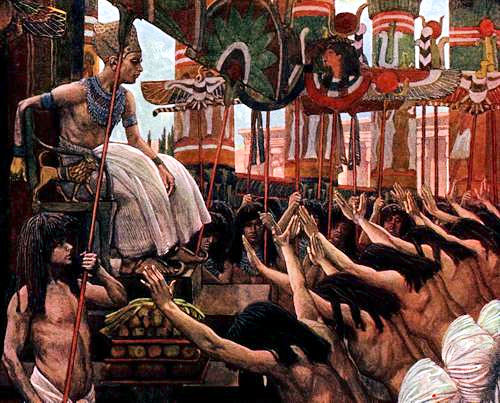
Joseph of EgyptJoseph became Prince of Egypt, second only to Pharaoh in power and majesty in that ancient land. But this was only after suffering great trials, and in those trials, always being aware he was in God’s presence. Only when he didn’t succumb to the temptations of lust, anger, and despair was he elevated to great heights, but even then, only for the glory of God and to serve the desperate and the starving…and only to ensure the continuation of Jacob and the Children of Israel.

Nearly two years ago, for Torah Portion Vayigash. I wrote something similar as related to our Master, to Messiah. Jesus also suffered many trials in his mortal lifetime as a humble teacher who could have risen to King, but in the presence of God, allowed himself to be degraded, crucified, and murdered.

But he rose to the most exalted place at the right hand of the Father, to be glorified and with the promise of one day returning as King to defeat Israel’s enemies, restore the Holy Land to glory, return the exiles to their nation, and to rule us all in justice and peace.

Any one of us may be called upon to serve the King at any moment, not in exalted glory, but as a humble and even humiliated servant. How we respond to suffering, hardship, and shame in the presence of God may determine how we will be allowed to continue to serve Him…or if we will be allowed to do so.

When you believe you are living inside of an unobserved and unguarded moment, that is the time to realize the truth. You are never alone. God is always there. You are always before the Throne. That can either be a blessing or a curse, depending on how you choose to use that moment.

Good Shabbos.

The Unchanging Changing God

Leah and RachelSo Jacob did so and he completed the week for her; and he gave him Rachel his daughter to him as a wife. And Laban gave Rachel his daughter Bilhah his maidservant — to her as a maidservant. He consorted also with Rachel and loved Rachel even more than Leah; and he worked for him another seven years.

Jacob’s anger flared up at Rachel, and he said, “Am I instead of God Who has withheld from you fruit of the womb?” She said, “Here is my maid Bilhah, consort with her, that she may bear upon my knees and I too may be built up through her.”

When Jacob came from the field in the evening, Leah went out to meet him and said, “It is to me that you must come for I have clearly hired you with my son’s dudaim.” So he lay with her that night.

Genesis 29:28-30, 30:2-3, 16 (Stone Edition Chumash)

So Jacob marries two women, and sisters no less, and “consorts,” not only with his two wives, but with both of their maidservants as well. By today’s standards, even in progressive, secular society, this is beyond scandalous. And yet, in the ancient near east, what Jacob was going and how he was building up a family was considered perfectly acceptable.

But we don’t consider that acceptable today, and certainly not in the Christian church. Did Jacob deviate from God’s plan? Did he commit some horrible sin, some dire mistake as did his grandfather Abraham when Abraham “consorted” with Sarah’s slave Hagar (Genesis 16:1-4)? Ishmael went on to father the Arab nations, who have been a thorn in Israel’s side across history and into the present day. Did Jacob’s actions with his wives and concubines represent the same error?

Apparently not, since without the children produced by all four of these women, there would be no twelve tribes of Israel and their descendants, the Jewish people.

But how is this possible? If God is eternal and His morality is eternal and unchanging, then how can the relationship Jacob had with two wives and two concubines be approved of by God and yet be considered morally wrong and sinful today?

He answered them, Have you not read that from the beginning the Maker “created them male and female,” and it says, “Therefore a man shall leave his father and mother and cling to his wife, and the two will become one flesh”? If so, they are not two any longer, but one flesh. Thus, what God has joined, man must not divide.

Matthew 19:4-6 (DHE Gospels)

One FleshJesus quotes from an even older story in the Bible to define what is marriage (and what is divorce) to the questioning Pharisees, but conspicuous in his answer is the absence of Jacob, his two wives, and his two concubines. Certainly, every Jewish person hearing the words of the Master and even Jesus himself, owed their very existence to Jacob and his offspring who he sired with four women, only two of whom he had formally married. But what about “two becoming one flesh?”

And what about this?

And it was when about three months had passed, that Judah was told, “Your daughter-in-law Tamar has committed harlotry, and moreover, she has conceived by harlotry.”

Judah said, “Take her out and let her be burned.”

As she was taken out, she sent word to her father-in-law, saying, “By the man to whom these belong I am with child.” And she said, “Identify, if you please, whose are this signet, this wrap, and this staff.”

Judah recognized; and he said, “She is right; it is from me, inasmuch as I did not give her to Shelah my son,” and he was not intimate with her anymore.

Genesis 38:24-26 (Stone Edition Chumash)

If not for this rather scandalous act on both the part of Tamar and Judah, she would not have given birth to the twins Perez and Zerah, and Perez is an ancestor of the Messiah.

How ironic that the one son of Jacob who found his wife among the Canaanite inhabitants of the land was none other than Judah, whose name would eventually denote the progeny of Jacob that survives. In the phrase “About that time Judah left his brothers,” the verb “left” suggests not only a physical departure, but also a violation of family mores (see Genesis 38:1-2).

-Ismar Schorsch
Commentary on Torah Portion Vayetze
“Setting Aside Our Abhorrence of Canaanites,” pg 105
Canon Without Closure: Torah Commentaries

All of this suggests, even if we agree God’s morality and ethics are eternal and unchanging, that He is willing to “work with” our current traditions and customs as a means of accomplishing His plan. Otherwise, how can we explain such apparently outrageous behavior by some of the greatest men in the Bible?

Later in the same commentary, Schorsch goes on to say:

The language implies an expansion of the notion of excluded nations. It is not ethnicity that defines the seven original settler nations of Israel, but cultural mores.

-ibid, pg 106

abraham1This makes a great deal of sense, especially in the case of Abraham, who was distinguished from even his close relatives in his homeland, not by ethnicity or genetics, but by a moral and ethical code received from God as the result of “faith counted as righteousness” (Genesis 15:6).

As the family of Abraham progressed forward in time, it began to be distinguished and then defined by families, clans, and tribes descended from the twelve sons of Israel. Who Israel was to each other and to God was set against the national backdrop of the people groups surrounding them. But then, time continues to pass and circumstances radically change.

By the time the Pharisees and Rabbis, Ezra’s spiritual heirs, came to power after the destruction of the Second Temple, Judaism had become a missionizing world religion, constituting as much as one-tenth of the population of the Roman Empire. To maintain the deuteronomic legacy, especially in Palestine, would have severely impeded access to Judaism for prospective converts in a world turned cosmopolitan. Who could be sure that an interested gentile was not a descendant of one of the proscribed nations?

-ibid

I know people in the community of Jesus faith who discount the validity of conversion to Judaism because it is not presupposed in the Torah, as if closure of Torah canon constitutes closure of the will of God. My recent commentaries on Pastor John MacArthur’s Strange Fire Conference have shown me (not that I was unsure of MacArthur’s opinions before this) that he closes Biblical canon with a bang at the end of the Book of Revelation and declares that the Holy Spirit isn’t in the business of working miracles or even talking to people anymore.

And yet, even within the Biblical canon, we see time and time again how God, unchanging and eternal God, seems willing to adapt how He interacts with human beings across the varied mosaic of history in order to accomplish His ultimate goal of reconciling man to Himself and ushering in the Messianic age.

I’ve been struggling more than a little with trying to reconcile the Jewish Torah, Prophets, and Writings, which Christians call collectively, the “Old Testament,” with the later Christian scriptures or the “New Testament.” Even though the books of the Tanakh represent a widely diverse set of writing styles and writers, it yet preserves an overall Jewish “flow” of prophesy aimed at the national redemption of Israel, and the restoration of God’s physical rule on Earth and among all the nations. The Christian interpretation of the later writings shifts the focus away from national Israel and the Jewishness of Yeshua faith, and makes it all a story about God’s plan for personal salvation of all people in a single, homogenized group called “the Church.”

But “the Church” is never mentioned in the Tanakh. If the Bible is supposed to be a unified document, Torah, Prophets, Writings, Gospels, Epistles, Apocrypha, then I would expect that overarching Jewish flow of prophesy to be seamless and unbroken across the “Testaments.”

But it isn’t.

DHE Gospel of MarkHowever, is the fault the document we have that we call the Bible, or is it how different groups interpret it? Certainly Christians see the “Old Testament” in a radically different light than Jews see the Tanakh.

Is my search for Biblical reconciliation and the face of the One, Living God across all history doomed to failure? Is there no way to understand an adaptive God and yet find Him eternal and unchanging in all of the pages of the Bible?

Frankly, one of the only places I’ve been gaining traction so far in my quest is by watching and reviewing the different episodes of First Fruits of Zion’s (FFOZ) television series (available for free viewing online) A Promise of What is to Come. That’s because this program is written and formatted to present familiar concepts in Christianity, such as the Gospel Message, the meaning of the title “Messiah,” repentance, and the parables of Jesus, all from an exclusively Jewish perspective.

The key to understanding the Bible, all of it, is to put yourself in the place of the original writers and especially of the original audience. What were the first century Jewish readers of Matthew’s Gospel supposed to take away from his message? What is “the Good News” from an ancient Jewish point of view? Is the Jesus Christ of the Christian Church really the Jewish Messiah, Son of David we see prophesied by Isaiah, Ezekiel, and Zechariah? Is there some way to make sense of how God seems to change His methods and motives based on changes in ancient (and modern?) cultural mores, and still to recognize that He is One God, a single, unified, creative, entity?

In an ultimate sense, the great Ein Sof God of the Universe is entirely unknowable. How can the small and finite know the limitless infinity?

And yet, God gave us a Bible written in human languages by inspired human beings to other human beings in need of inspiration so that we can know Him. God wants us to know Him and to draw close to Him. We read how Abraham drew close to God. We read how the God of his father became the “Dread” of Isaac. We can see how God turned the fugitive son Jacob into Israel, the father of an empire.

And we can read how one, lone, itinerant teacher changed the course of the world through his teachings, his death, his resurrection, and his ascension to the right hand of Glory.

walkingThe search for God is not a search for an ultimate answer that once we possess it, we may rest in our knowledge and sit assured in our complacency. It is a never-ending process, a trail winding through the mountains, a sea without a shore, a lifelong journey of ever greater discoveries and an ever closer walk with our God.

There is an answer, just as there is a final peace, where each man will sit under his vine and under his fig tree, and no one will make him afraid (Micah 4:4). But that time has yet to come. And until he comes again, we remain a traveler without a home, a bird without a nest, eternally walking, eternally in flight, until home comes to us in the Kingdom of God.

May Messiah come soon and in our day.

The Next Reformation of the Church

reformation_sundayNearly five centuries ago in Central Europe, an unknown Augustinian monk decided to nail 95 theses to a church door, sparking a religious revolution felt to the present day.

Reformation Day, the anniversary of when Martin Luther began the Protestant Reformation, is an observance remembered by hundreds of American churches in the modern day. While the exact date of Luther’s call to theological debate was Oct. 31, or the Eve of All Saints’ Day, many Protestant congregations choose to observe the occasion on the last Sunday in the month. This year, Reformation Sunday will fall on Oct. 27, with Protestant denominations such as Lutherans, Presbyterians, and Baptists drawing attention to the past.

by Michael Gryboski, Christian Post Reporter
“Churches Remembering Martin Luther With Reformation Sunday Observance,” October 27, 2013
ChristianPost.com

Yesterday I had the pleasure of celebrating Reformation Day at a wonderful inner-city Anglican church in Melbourne, St. Matt’s Prahan, speaking on Rom 3:21-26.

It’s a great day to get your Luther on, unleash your inner Calvin, channel some Bucer, reconnect with your “sola” power panels, thank God for Tyndale, and play with your Ridley and Latimer action figurines. But such a day does lead to a question or two. Is Reformation Sunday a bit like commemorating a divorce, vindicate the violence between Protestants and Catholics, reinforce old prejudices, rent further apart the already fractured body of Christ, become an exercise in Roman Catholic bashing, and Anabaptist drowning?

by Michael F. Bird
“Reformation Sunday Reflection”
Patheos.com

I’d never even heard of “Reformation Sunday” until Sunday before last when my Pastor briefly mentioned it from the pulpit. Last Sunday, Reformation Sunday, he gave a short presentation about this day during the “announcements” portion of the service. I didn’t take notes but near the end of his presentation, Pastor said something that sounded like the Church needing a Reformation again.

I can see his point.

We had recently discussed my viewpoint on John MacArthur’s conference Strange Fire. I know Pastor, in last Sunday’s evening service, delivered a sermon called “Should We Put Out Strange Fire?” (I’ll have to listen to the recording when it’s posted online).

I don’t want to rehash all that, but I do want to use the topic as a jumping off point for why the Church (big “C”) needs another reformation. Yes, I agree with my Pastor, but I think the direction and form of that reformation is a lot different in my eyes than they are in his.

Last Sunday, my Pastor preached on Acts 16:1-5. It’s just amazing how much insight and information he can draw from a simple five verses in scripture. For instance, one of the things Pastor said by way of introduction (I’m working from my notes, here) is that Paul always visited the synagogue when he arrived at any location. By the time he left, he had founded a separate church and believing Jews would leave the local synagogue and join the church, presumably with Gentile believers.

Naturally I chafed at this summary, as it depicts the Jewish worship and devotion to the Jewish Messiah as not Jewish at all, but rather a “Christian” activity wholly divorced from Judaism…and that’s an important distinction.

Burning-Star-of-DavidThe information he presented did not denigrate the Jewish people in the slightest, but it was still designed to separate the Jewish believer from Judaism. This has been the source of more than a few debates between us.

The “sister” blog post to this one is called What Church Taught Me About Jews and the Torah, and ironically, uses portions of Pastor’s sermon to fill in the gaps of my argument supporting Jewish continuing observance of Torah within the body of Messiah.

As I write this, he hasn’t read that blog post, nor have we been able to discuss it. I know that no matter how logical an argument I make, and no matter how well I think I’ve supported it in scripture, theologian that he is, Pastor will find numerous other scriptures to use to refute my opinion.

And yet, for me, the “Jewishness” and the “Judaism” of Jewish faith in Messiah is inescapable. Pastor sees the Church as a new entity that separated itself from Judaism, sort of like the train of God’s plan extending forward from Torah and the Prophets “jumped the tracks” at Acts 2 and took a whole different trajectory into the future, leaving the original path (and the covenant requirements, blessings, and promises along with them) abandoned. I can’t read the way most Christians see the development of the faith back into the Tanakh.

That’s why the general viewpoint of Messianic Judaism, including the perspective of Postmissionary Messianic Judaism makes more sense to me than Fundamentalist Christianity and Progressive Revelation. In order to celebrate Reformation Sunday as a significant holiday in the church, I have to conclude that the idea of Progressive Revelation must extend into the post-Biblical period and was active as recently as five hundred years ago, if we are required to see the Reformation as a Revelation of God.

And if it’s not a revelation from God, then it’s just another set of theologies and doctrines created by human beings who are trying to understand the Bible, God, and who we are as Christians.

You can’t have it both ways.

I could write a whole other blog post (and I probably will at some point) about whether or not the Holy Spirit continues to be manifest in our world or not (Pentecostals say “yes,” Fundamentalists say “not so much”). But for the moment, let me assume that God didn’t abandon us all for the past two-thousand years with only various translations and copies of copies of copies of the Bible to speak for Him. Let’s assume God actually cares about us enough to whisper in an ear or two from time to time.

And let’s assume that such whispers might even contain instructions for the periodic “course correction” of the great ship of the oceans called “the Church.” Obviously the authors of the Reformation felt the ship was off course and made efforts to steer her in a better direction. Obviously, they wouldn’t have made such changes if they didn’t believe it was within the will of God. Otherwise, they’d just be a bunch of guys reading what they wanted to in the Bible and acting out of their interpretations.

But then, it’s not like people don’t do stuff like that sometimes.

Yes, I believe God’s Presence still makes itself felt in our world. I don’t think we can put God in a box. Oh yes, we can make our boxes and say we’ve put God inside because it’s a perfect fit, but I think God has other ideas about Himself. He said that the tabernacle was not truly His home, since all the Earth is His footstool, so to speak. What makes us think we can make a theological box that is big enough to “fit” God yet small enough for us to carry around with us?

I can’t argue with history. Good, bad, or indifferent, the Reformation happened and it sent ripples across the timeline that still rock our boats today.

prophetic_return1But the Church (and all of its little churches, hundreds of them, thousands of them, all the little denominations, movements, and streams) has gotten really static. Even suggesting a paradigm shift meets with strong resistance. Inertia can be such a difficult thing. So hard to push start the truck on a cold morning when all it wants to do is to stay in its nice, comfy garage.

I really do think that the Church needs another Reformation. I think that by the time Messiah gets back, it will go through a whopping big one, whether we’re ready for it or not. I think that the beginnings of such a Reformation are already evidenced in our world. I write about those beginnings all the time. I wrote about one just recently and will continue to do so.

I can’t prove what I’m about to say, but I believe it’s a credible suggestion. I believe the next big Reformation for the Church is the restoration of Messianic Judaism. The Church was artificially carved from Judaism probably in the second and third centuries of the Common Era. Before that, it was one of a number of functioning Judaisms in occupied Israel and the Diaspora. I think Paul was instrumental in spreading this Judaism to both Jews and Gentiles in the Roman empire of his day. I think that he, like the ancient prophets of the Tanakh who came before him, intended that the Messianic promise should move forward in history as Israel’s path of redemption and restoration, with Israel as the light and Messiah as the light bearer, attracting the people of all the nations to that light to join in Messiah’s body…a Jewish body…a Judaism.

The next Reformation for the Church is for the Church to stop seeing itself as a separate thing and to stop seeing Judaism as dead. The next Reformation of the Church is to come alongside the resurrected Judaism of Messianic Judaism, the reborn Jewish faith stream of “the Way,” and to cease requiring Jews to become Christians and to leave being Jews and being part of Judaism and Israel and instead, for the Gentile Christians to realize that we must join them, not them joining us.