Tag Archives: Messiah

The Loving Nazirite

john-the-naziriteAfter this, Paul stayed many days longer and then took leave of the brothers and set sail for Syria, and with him Priscilla and Aquila. At Cenchreae he had cut his hair, for he was under a vow.

Acts 18:18-19 (ESV)

In the days of the Temple, if a man or woman desired to take a special vow of separation to the LORD, he or she could take a Nazirite vow. The Torah lays out the specifications in Numbers 6. People undertook Nazirite vows for a variety of reasons, including healing, safe return, prayer for another, and simply to observe a time of sanctification. Rabbinic literature attests to the popularity of the vow in the late Second Temple period. The Mishnah dedicates an entire tractate to the subject. Nazirites were not uncommon among the disciples of Yeshua. John the Immerser and James the brother of the Master were lifelong Nazirites. Later in the book of Acts, Paul completes a second Nazirite vow along with four other disciples.

-D. Thomas Lancaster
Ki Tisa (“When you take”)
Commentary on Acts 18:11-23, pg 539
Torah Club Volume 6
First Fruits of Zion (FFOZ)

I know that over the years, there have been many commentaries written about the meaning of Paul’s vow and whether or not it was a Nazirite vow. Lancaster seems to think so and he has plenty of company. But why should you care and why am I writing about this now?

A lot of Christians are invested in de-coupling Paul and the early Jewish apostles from Judaism and Jewish practices. I think it’s important to “re-couple” the first century Jews in the Messiah with their Judaism and Jewish practices and then ask ourselves why would the next generation of “Messianic Jews” give up being Jews? The answer is, they wouldn’t. Why should they? Although Paul was accused of preaching against the Torah of Moses (Acts 21:28), it was a total lie. Paul never did such a thing (contrary to some theologies running around out there) and he certainly never admitted to doing so. We also don’t find Paul saying that his Jewish contemporaries were to keep Torah but their children and grandchildren would give it up.

But then again, we have this:

In speaking of a new covenant, he makes the first one obsolete. And what is becoming obsolete and growing old is ready to vanish away.

Hebrews 8:13 (ESV)

You could certainly spin that into saying the Jews were in the process of giving up their “obsolete” practices and replacing them with ones based on the New Covenant. The problem is, the New Covenant primarily reaffirms and expands upon all of the previous covenants God made with the Jews, including the Sinai covenant. If anything, the New Covenant should have strengthened Torah observance among the Jews, not deleted it.

So why does Christianity fight that interpretation and fight the idea that Paul could have possibly taken a Nazirite vow?

Many writers argue against Paul taking a Nazirite vow on the basis that the vow required the Nazirite to make animal sacrifices. These teachers are reluctant to think about Paul bringing a lamb, a ewe, and a ram as burnt offerings, sin offerings, and peace offerings. Contrary to that objection, James the brother of the Master later encourages Paul to complete his own Nazirite vow and pay the expenses of four other disciples in order to demonstrate that he walked “orderly, keeping the Torah” (Acts 21:24).

-Lancaster, pp 539-40

Sounds pretty Jewish to me.

Of course, post-Temple, there is no way to take a Nazirite vow or to perform the sacrifices, so many of the Torah mitzvot are unable to be observed by Jews today. We know that the Torah was originally given as a sort of “national constitution” of ancient Israel, defining all of the laws, social mores, and traditions of the Israelites in the Land. We know that when Messiah returns and builds the next Temple, that at least some of the Torah commandments related to the Temple sacrifices will be restored.

But what is the purpose of the Torah in Judaism in the meantime?

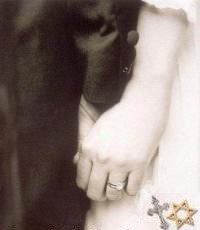
That’s like asking, what’s the purpose of a marriage license between a couple when the couple have to endure a lengthy physical separation say because of military service. Just because they can’t be together for a period of months or even years doesn’t mean they aren’t still married. It doesn’t mean that their marital obligations are completely done away with, even though some aspects of the relationship cannot be performed while they’re apart. The relationship endures between one period of togetherness and the next. Both husband and wife continue to wear their wedding rings. They both still refer to the other as “husband” and “wife.” They both stay faithful and do not enter into intimate relationships with other people.

Yes, I’m describing a pretty ideal situation relative to a separated married couple, but let’s look at the analogy. If a married couple who are forced to be apart, even for an extended period of time, are expected to remain faithful to one another and to practice specific behaviors based on their marital faithfulness, how much more should the Jewish people continue to remain faithful to God and to practice specific behaviors, the Torah mitzvot that can be performed in this day and age, based on their faithfulness to God?

The surest way to lose a skill or a relationship is to not practice it. The surest way for a Jew to lose faithfulness to God is to not practice the mitzvot, even though they can only practice a limited set of mitzvot due to “temporary separation.”

one-of-ten-virgins-oilBut the “couple” are getting closer again. Since 1948, there has been a Jewish homeland, Israel, in existence. Jews can make aliyah. They can return home. Yes, the Temple isn’t there yet. The Priesthood isn’t there yet. But then again, the bridegroom hasn’t returned home yet. When he does, he’ll rebuild the house, and the couple will move back in. But under certain provisions of the Abrahamic covenant that have been enhanced by the New Covenant, the “bride” won’t be only the Jewish people.

The analogy gets pretty hard to maintain at this point, but there’s a reason that the body of unified believers is called “the bride of Christ.” There’s a reason why the Gospels are full of “Jesus as bridegroom” imagery. Some of the details are still a little fuzzy, but we know that the bride and groom, who have been apart for so very long, are coming back together again.

The Jewish bride and the Jewish bridegroom will once again take up housekeeping. They have been faithful in their vows and faithful in performing all of the acts related to their marriage that were possible to keep while the house has lain in ruins. When the house is rebuilt, when David’s fallen sukkah, the Temple, is reconstructed by Messiah on the Holy Temple Mount in Jerusalem, the world will see just how vital the Torah of Moses is in the lives of the Jewish people, and the Torah will be perfect as taught and practiced by the perfect Messiah.

But until then, the Jewish bride does what she can to faithfully keep the mitzvot and to show her Jewish husband that she loves him with all her heart.

The Jesus Covenant, Part 10: Hebrews and the Covenant Mediator

rabbi_child_and_sefer_torahThere still seems to be some confusion between the Torah delivered at Mt. Sinai and the covenant made with Israel.

The Torah is not to be surrendered by anyone who is born of the Ruach and is now a child of YHWH through faith in Messiah Yeshua. I’ve not said that and I haven’t read here where anyone else has made that assertion either.

As far as following through on “their end of the bargain”, they, Israel, didn’t. Which is why a new covenant was promised to be cut with both houses of Israel. And holding onto a covenant which cannot be accomplished due to the weakness of the flesh while trying to affirm the operational specifics of the current covenant would cause some tension to say the least.

Maybe someone could provide a detailed explanation of what a child of YHWH should look and act like so we can all see what it means to be a son or a daughter of our Father in Heaven. Perhaps then we could cease from making so much noise about who is pretending to be a part of one culture group or another.

And by the way it was not “their covenant with God”. It was His covenant with them. His terms His conditions. I did not say that He replaced that covenant, He did. I’m just agreeing with the text of scripture. Now if someone wants to seek their justification through that covenant they are welcome to do so. But they will come up empty. Of course, if someone was trying establish something else through that covenant I would have to wonder what their motive might be. And what their ultimate objective was.

-Russ
from a comment on one of my blog posts

This is the tenth part of my series on trying to understand what the “New Covenant” is, how it relates to the previous covenants we see God making with humanity (and specifically with the Children of Israel) in the Bible, and what it’s supposed to mean today.

I’ve neglected this series terribly, mainly because it’s so hard to write. Part 9: The Mysterious 2 Corinthians 3 was published last October which will give you some idea of how long I have left this one alone. It’s not that I’ve come to any satisfactory resolution to my problem. It’s just that sometimes trying to understand all this has the same effect as repeatedly smashing my forehead against a brick wall.

But then Russ’s comment reminded me that the New Covenant is still sitting out there taunting me; daring me to try to comprehend it. Russ seems fully convinced that he understands its meaning and that it must mean something about creating a people who are born of the Spirit and (perhaps) relegating Jewish identity to that of a “culture group”.

Did God obliterate all His previous covenants with His people Israel because they were unfaithful? That sort of sounds like God tried plans A, B, and C and they didn’t work out, and then he devised Plan D: writing it on their hearts, which couldn’t fail. If covenants are replaced because covenant members are defective (which God should have known all along) and God has to (finally) create a covenant they can’t because it’s written on the heart, why couldn’t He have started out with the unbreakable covenant and avoided a lot of pain and anguish?

I don’t know, but it sounds like a set up for God to make a covenant with Israel at Sinai knowing that they were going to break it, and knowing that the consequences for breaking it was forfeiting their unique relationship with God as a distinct people and nation.

Oh, if you haven’t read through the “Jesus Covenant” series or you haven’t read through it in a while, it might be a good idea to at least scan through it again, starting with Part 1: The Foundation, just to get up to speed.

But as it is, Christ has obtained a ministry that is as much more excellent than the old as the covenant he mediates is better, since it is enacted on better promises. For if that first covenant had been faultless, there would have been no occasion to look for a second.

Hebrews 8:6-7 (ESV)

Therefore he is the mediator of a new covenant, so that those who are called may receive the promised eternal inheritance, since a death has occurred that redeems them from the transgressions committed under the first covenant. For where a will is involved, the death of the one who made it must be established. For a will takes effect only at death, since it is not in force as long as the one who made it is alive. Therefore not even the first covenant was inaugurated without blood. For when every commandment of the law had been declared by Moses to all the people, he took the blood of calves and goats, with water and scarlet wool and hyssop, and sprinkled both the book itself and all the people, saying, “This is the blood of the covenant that God commanded for you.” And in the same way he sprinkled with the blood both the tent and all the vessels used in worship. Indeed, under the law almost everything is purified with blood, and without the shedding of blood there is no forgiveness of sins.

Hebrews 9:15-22 (ESV)

shekhinaThis is where I left off last time. These verses were to be the last step in my investigation into the New Covenant. I seriously doubt that I’m going to reach any useful conclusion here, but at least I’m continuing on the trail.

In reading these verses from Hebrews, it certainly seems as if God has tossed the Covenant He made with Israel into the trash can (and Israel along with it) and created a New Covenant replacing the Old using the blood of Jesus Christ. Of course, I can’t read Biblical Greek, so the mystery of what the oldest texts from Hebrews is trying to tell me remains a mystery. I can of course read the various commentaries on Hebrews 8:6 when I scroll down the page, but there’s not exactly a cohesive explanation telling me what I need to know.

But Gill’s Exposition of the Entire Bible for this verses does say something interesting:

…which was established upon better promises; which are not now delivered out as before, under the figure of earthly and temporal things; nor under a condition to be performed nor confined to a particular people and nation…

I can accept the fact that the Sinai covenant was made specifically between the God and the Children of Israel and that the New Covenant has provisions that include all of humanity through Christ. If the New Covenant didn’t function in such a manner, then no one outside of Israel could be saved. I can accept the fact that the blood of animals could never take away sins (Hebrews 10:4) and that salvation for all human beings must be through Messiah.

But where does it say that the Jews as a people must surrender being Jews in order to enter into the New Covenant? Sorry, but whenever I hear “the Old Covenant has been replaced” language, I wonder how do you do that and still keep the people who were attached to it as a people?

The days are coming,” declares the Lord, when I will make a new covenant with the people of Israel and with the people of Judah.

Jeremiah 31:31 (ESV)

Waitaminute! God is saying He will one day make a New Covenant with the people of Israel and the people of Judah. Doesn’t say anything about the people from the nations who are gathered together and called by His Name through the Messiah. Of course, there are a lot of Christians who see themselves as the new “spiritual Israel” and so they write themselves into the script that way. Others believe that the Jewish people are “Judah” and that in some manner or fashion, the Gentiles who are attracted to God, the Torah, or Christ become (or in some fashion are) the lost tribes of Israel (see the book Twelve Gates: Where Do the Nations Enter for the much more likely explanation that representatives of “the lost ten tribes” actually did return, intermarried, and were eventually assimilated into Judah and Benjamin…thus, modern day Jews contain the descendants of all the Tribes of Israel).

Now try to understand the following within that context.

Therefore say to the house of Israel, Thus says the Lord God: It is not for your sake, O house of Israel, that I am about to act, but for the sake of my holy name, which you have profaned among the nations to which you came. And I will vindicate the holiness of my great name, which has been profaned among the nations, and which you have profaned among them. And the nations will know that I am the Lord, declares the Lord God, when through you I vindicate my holiness before their eyes.

Ezekiel 36:22-23 (ESV)

In that sense, it’s easy to see that Israel: the Jewish people, are very much written into God’s plan for the future and they have not been discarded and dissolved as a people or a nation by God. The mystery that I was trying to investigate when I started this series was not what happens to Israel, which seems a given, but how in the world do we from among the nations get added in to this covenant? Certainly, the Abrahamic Covenant includes the nations, but we are not mentioned again in subsequent covenants until the New Covenant, and our inclusion isn’t made clear until we see Paul make his commentaries on the meaning of Messiah for the rest of us (remember, the oldest texts we have of Jesus and the “Last Supper” don’t include the word “new” when he talks about the covenant in this body and blood…we have to assume that’s what he means).

Throne of GodBut the passages I quoted from Hebrews do give the impression that what was old is being replaced with what is new. Is that a completed act, though? I don’t know. Messiah has yet to return. He has not yet completed his work. There is no new Temple built by him. There is no worldwide peace as far as I can tell. Israel is not at the head of the nations yet and she is still being threatened on all sides by numerous adversaries.

We know that the New Covenant is inexorably tied to the Jewish Messiah and he is the inescapable mediator and motive force of the New Covenant with Judah and Israel and even with the nations. All I can suggest at this point is that the New Covenant hasn’t simply been flipped on like a light switch if, for no other reason, than we aren’t really acting like the Word is written on our hearts. If it were, would we in the body of believers still be so defective, and cranky, and flawed? What if the enactment of the New Covenant is a long process, not a sudden event? After all, the many and numerous conditions and enactments of the Sinai covenant weren’t “turned on” all at once, probably because many of those conditions required the Israelites to live in the Land, and for forty years, they were wandering in the desert.

And what about this?

And I saw no temple in the city, for its temple is the Lord God the Almighty and the Lamb. And the city has no need of sun or moon to shine on it, for the glory of God gives it light, and its lamp is the Lamb. By its light will the nations walk, and the kings of the earth will bring their glory into it, and its gates will never be shut by day—and there will be no night there.

Revelation 21:22-25 (ESV)

I’ll be the first one to admit that I don’t understand what’s going on and how all this is supposed to work, but it seems like there’s a sequence of events that have not yet been completed. Will the Law, what defines the significantly unique relationship God has with Israel, the “Jewishness” of Jewish people, and the holiness of Jerusalem be eliminated from existence or meaningfulness until everything that God has said He will do has been accomplished?

I seriously doubt it but the secrets of the Bible continue to elude me. This doesn’t preclude my pursuit of a holy and meaningful life, but it does make it difficult to respond to anyone who wants the New Covenant to land on the Jewish people like a ton of lead, mashing them flat, and leaving a completely new “product” in their place.

I don’t know if I’m going to write a “Part 11: Conclusions” blog post, at least not right way. There’s still so much more to try to comprehend. But as my friend Carl said, maybe it’s the struggle that matters, not what we may come up with as a result.

I am not suggesting that there is a chaos of interpretation and no absolute truth, but that interpretation is part of the human condition, our relationship with all texts (and people, for that matter). The Holy Spirit helps us but it does not erase our humanity. In fact, your blog can be considered in large part a struggle to find an interpretive approach to the Bible that is coherent, satisfying, and works for you.

TrustI wish we could all dial things down just a bit concerning truth-claims. We have been told that love endures but knowledge is partial. That would include my knowledge (or interpretation) of the Bible. I hold a certain interpretive approach to the Bible (in common with a number of others) that I believe to be coherent and satisfying even though I know that it is limited and hope to learn from other approaches until the day I die..

I guess what I am saying is that “we know in part . . . but when the perfect comes, the partial will be done away.” Since we are finite and the perfect is infinite, it makes sense that our knowing is partial until will are face to face.

Finally though, we can’t ignore this:

I will never break my covenant with you.

Judges 2:1 (ESV)

Israel may have been unfaithful on many occasions, but God never let them go. Instead, He made it possible for others to come to Him as well, all through His son.

The Jewish Girl Who Saved Her Children

intermarriageSome of my friends began dating non-Jews. I stopped socializing with them in silent protest, after a more outspoken effort had failed. I self-righteously concluded that we had nothing in common, since they were prepared to give their Jewish identity the backseat. I was sitting firmly in the driver’s seat with mine, so much so that I became the leader of a Zionist youth movement, and started to mix with an idealistic new crowd.

In Ethics of Our Fathers, Rabbi Hillel warns us that we should be careful not to judge another person until we have stood in their place. And I was going places…

I don’t remember making conversation, but apparently I must have mumbled something, since the next morning the host of the party told me that Mr. Attractive had inquired after me. As I was catching my breath, she casually mentioned, “Oh, I told him you don’t date non-Jews, and he’s fine with that. He just wants to meet you. He really liked you.”

This was a delicate situation, to say the least. Here I was, being pursued by a bona fide heartthrob with absolutely no strings attached. He was an advertising executive. Flutter. He had a motorbike. Swoon. And, if that wasn’t enough for my ego, he was a commercial pilot.

Help!

-Jennifer Cooper
“My Non-Jewish Boyfriend”
Aish.com

You’ll never realize how many blog posts I don’t write just because I don’t have time. I’ll read something or hear a snippet of conversation, and my mind pursues it and I begin to internally construct a short essay on the topic between 1500 and 3000 words. I never mean to write as much as I do, which includes this story about the girl who would never intermarry. It just happens.

In Christianity, this is yet another thing about Judaism that simply doesn’t register with us. What’s the big deal exactly? OK, among many Christians, there’s the idea that it’s not a good thing to be “unequally yoked” and I suppose the equivalent quandary would involve a young Christian woman dating a handsome, talented, and very romantic atheist guy. Look out. Danger up ahead.

But there’s something more operating here. There’s a lot more operating here.

I’ve written many times before about intermarriage and part of this blog’s mission is to address the challenges and dynamics of Christians and Jews being married. You can see the angst and the ecstasy expressed in missives such as Opting Out of Yiddishkeit and Cherishing Her Yiddisher Neshamah. If my wife had been observant when we met or even if she had been raised in a secular Jewish home, we might never have gotten married since I am a goy (we were both atheists when we met and her parents were also intermarried).

I’ve been spending some blog time lately struggling to define why it’s important for believing Jews to continue to live as halalaic Jews. If Jesus saves, what difference does it make if a Jewish person lives a Jewish life or not?

Plenty, as Cooper’s story reminds me.

The next day I found myself in the car with my father. We parked in the driveway. There we sat for a good few minutes, lost in our separate worlds. I, in my bubble of optimistic self-gratification, and my father – mourning the potential loss of future generations. Finally, I broke the heavy silence.

“Dad, why is it so important that Jews marry Jews?”

“Because it’s important that we preserve our unique heritage.” he replied, surprised by this basic question coming from me.

I wasn’t buying it.

“Yes, but what’s so special about our heritage, I mean, why is it SO important that there be Jews in the world?” I challenged.

“Because we are supposed to be a light among the nations,” he stressed, wondering where this was going. I pressed on, going for the jugular.

“So, Dad, if our heritage is so special, and we have to be a light among the nations, and my entire future depends on it, why do I eat McDonalds, and why on earth don’t we keep Shabbat?!”

More silence. This time, it was my father that spoke. “I don’t know. I guess I never thought that far,” he admitted, somewhat ashamed.

For the first time ever, I had stumped my brilliant lawyer father. But he still had one last trick up his sleeve.

broken-marriageI’ve heard it said you can’t choose who you fall in love with, but Jennifer had a problem. Without intending to, she had fallen in love with a non-Jew and all of her determination to never “marry out” was fast evaporating. Her parents were culturally but not religiously Jewish, but you can’t dismiss the importance of Jewish identity based on lack of religious observance. Something deeper was in operation here and it was enough to turn Jennifer and her father into emotional pretzels, turned and twisted and trying to straighten out again.

My heart was heavy with respect for my parents and the desire to please them. I felt the weight of my Jewish identity on my fragile shoulders. What exactly was I trying to preserve and protect? After all, I was not religious. Why had it been so fundamentally clear to me that I would marry a Jew? And what had happened to that clarity?

I had been taking my Jewishness for granted. Jewish day school, Jewish friends, a traditional Jewish home. There had been no challenge, no threat, no temptation. No chance to think or look outside the box. But now my exclusive Jewish education and traditional upbringing was on trial. Was it enough to save me?

I took the witness stand. For the first time in my life, I consciously thought about, and decided, who I was, what I wanted to be, and what was truly important. I was first and foremost a Jew. My heritage mattered. I wanted it to continue to be a part of my life. And it was vitally important that my future husband feel the same.

The Verdict: A strong Jewish identity saves Jews.

It wasn’t so difficult after that. A short, tense phone call ended what would have been the mistake of a lifetime. I never saw or spoke to him again, although I cried for days. I don’t really know why, but I think it had something to do with my soul.

There’s something more to being Jewish than just a string of DNA or whether or not you eat McRibs at McDonalds. It’s not just the cultural aspects of Judaism because films like My Big Fat Greek Wedding (2002) have shown us that cultural differences can be bridged (Nia Vardalos wrote and starred in the film and in real life, she is a Greek woman married to a non-Greek man…Ian Gomez, who plays “Mike” in the film).

No, there’s more than just genetics, religion, and culture going on with Jennifer and with Jewish people in general, but you have to go back to Abraham, Issac, and Jacob to find it. You have to go back to Moses and Sinai to find it. You have to look into a pillar of cloud by day and a column of flame by night and deep inside you’ll see the God who molded, formed, fashioned, and defined the Jewish people to be a unique and special people before Him for all time.

And every intermarriage, particularly where the intermarried Jew does not maintain their identity and pass that identity along to the next generation removes not just one more Jew from eternity, but that Jew and all of his or her descendents. Yes, if Jennifer had married her handsome, charming goyishe suitor, her children would have been halachically Jewish, but how would they have been raised and how strongly would they cherish their own Jewish identity?

Memories and regrets are part of what it is to being human, and if I had it all to do over again, I would still have married my wife and had our children, but I would have fought tooth and nail to instill a strong Jewish identity in all of them.

But that ship has sailed and here I am standing at the dock watching it slip over the horizon and into the distance and darkness beyond.

We want our children to care about the meaning of being Jewish. We need to nurture their Jewish identity to the point that it becomes innate. Our homes are where we nurture, and where our children learn to care. Our homes are where we show our children what it is important to care about.

A lot of people feel that they need to make a great sacrifice to live out their Jewishness. It is an even greater sacrifice not to. We can’t be complacent for lack of funding, knowledge, the right address or social circle. The good news is, caring is not a sacrifice. It’s fun, and it’s far-reaching.

How do we put a little Yiddishkeit into our homes? If you ask anyone that grew up with it, they will tell you the same thing: it’s the simple rituals that have the greatest impact. Lighting Shabbat candles, decorating a sukkah or eating matzah on Passover, putting up mezuzahs on every doorway, laying some Jewish books proudly out on the coffee table, saying Shema Yisrael with our children, hanging out an Israeli flag on Israel’s Independence Day. These are the definitive moments that can carve a caring Jew out of the stoniest backdrop of threatened assimilation.

Our Torah and Jewish calendar are filled with a veritable treasure trove of tradition and meaningful ritual, enabling us to live uniquely enhanced lives filled with memorable moments of celebration and wisdom, all with that inimitable Jewish flavor.

These are the moments that kept me in the fold. They can impact you and your children, too.

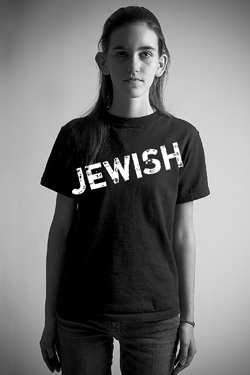
jewish-t-shirtI can’t change the past, but I can tell you that I will not be responsible for separating even one more Jewish person from his or her God-given identity. I can’t change the past but I can learn from it, and more than that, I can teach from it. I can pass my knowledge on to whoever cares to read these words and explain that this is why it is not only important but absolutely vital that Jews who are Messianic must establish and maintain a strong Jewish identity, must observe the mitzvot, must walk in the footsteps of their Fathers and actively live out the wisdom of their sages.

I can’t tell you the right and wrong of every single mitzvot and the amazingly intricate details of each little item of halachah within each of the Judaisms in our world today, but I can tell you that without them, without all of the behaviors and the activities that define a person as a Jew, not only are the Jewish people in danger of disappearing from the face of the earth (although I believe God would never allow this), but that Jews who come to Jesus will vanish into the mass of Gentile Christians in the church, never to be seen or heard from again. Only God will know that Jews ever stood among the disciples of the Jewish Messiah in these latter days of history.

But it all starts with one Jewish person who realizes that his or her identity as a Jew is more important than almost anything because that identity comes directly from God. And we in the church must also learn to cherish Jewish uniqueness, to support it, to uphold it, to esteem it, for our Master said that “salvation comes from the Jews.” (John 4:22)

The story Jennifer Cooper relates occurred almost twenty years ago, but the heartbreaking actions of one young Jewish girl saved not only her, but her children, and future generations of children who would not otherwise be Jewish or value who God made them all to be. The Good Shepherd will come and seek out all of his sheep…those of the Gentile pen, but also those who know his voice from the sheep of Israel. God forbid that when he returns, he discovers that none of them survived.

The Divine Path to Taking Out the Garbage

shhhhOne who degrades another person is a fool, and a man of understanding will make himself deaf to his words.

Proverbs 11:12

When people feel good about themselves, they have no need to enhance their self-evaluation by berating others. Those who do so are exposing their own poor self-worth and to what extremes they will go in order to achieve any feeling of worth.

-Rabbi Abraham J. Twerski
“Growing Each Day, Shevet 13”
Aish.com

I don’t mind people disagreeing with me, but it’s when they do so behind my back that I take a certain amount of offense. When I read Rabbi Twerski’s commentary from which I just quoted, I had an ugly feeling I’d need it in a day or so. Although he is giving a lesson on gossip (lashon hara), I find that it applies to those who choose to call others out by name and denigrate them just because they can.

Rabbi Twerski is correct in saying that when someone employs such tactics, it reveals more about them than the person they’re attempting to malign. Nevertheless, I feel we are not to respond by using the same tactics (and so my critic will remain anonymous) and we must even do our best to forgive the victim.

In another article, Rabbi Twersky quotes Ecclesiastes 7:9 in support of his dedication to…

…try to avoid erupting in anger when I feel offended and at least delay an angry response until I have more thoroughly evaluated the situation.

That’s not easy, since we are all human and, when slapped in the face, our first response is to want to slap back. I can understand that my critic may take this particular blog post as my taking a “shot at him,” but consider this.

May no person be made to suffer on my account.

-Siddur, Prayer on Retiring

Although the Torah does not require people to love their enemies, it does demand restraint, in the sense of not seeking revenge (Leviticus 19:18). The Talmud extends this concept to forbid not only the act of revenge, but even a prayer that God should punish our enemies. “If someone is punished on account of another person, the latter is not admitted to the Divine Presence, for as Solomon says in Proverbs (17:16), ‘For the righteous, too, punishment is not good’ “(Shabbos 149b).

When Rabbi Levi Yitzchok of Berdichev’s adversaries expelled his family from town during his absence, his colleagues asked Rabbi Wolf of Zhitomir to invoke the Divine wrath upon them for their heinous deed. “I cannot do anything,” Rabbi Wolf said, “because Rabbi Levi Yitzchok has anticipated us and is now standing before the open Ark, praying fervently that no harm come to them.”

Actions like this incident may appear to be the ultimate of magnanimity, but it is not necessarily so. To the contrary, they can also be understood as helping one’s own interests. If we pray that another person be punished for his or her misdeeds, we become vulnerable ourselves (see 3 Kislev), for the Divine sense of justice may then bring our own actions under greater scrutiny. After all, is it not reasonable to expect a high standard of personal conduct in someone who invokes harsh treatment of his neighbors?

Consequently, it is wiser to seek forgiveness for others and thereby merit forgiveness for ourselves than to pray for absolute justice and stern punishment for others’ misdeeds and thereby expose ourselves to be similarly judged.

Today I shall…

…try to avoid wishing harm to anyone, even to those who have greviously offended me.

-Rabbi Abraham J. Twerski
“Growing Each Day, Shevet 17”
Aish.com

Kind of reminds me of some lessons taught by other wise Jewish sages.

And Jesus said, “Father, forgive them, for they know not what they do.”

Luke 23:34 (ESV)

Beloved, never avenge yourselves, but leave it to the wrath of God, for it is written, “Vengeance is mine, I will repay, says the Lord.” To the contrary, “if your enemy is hungry, feed him; if he is thirsty, give him something to drink; for by so doing you will heap burning coals on his head.” Do not be overcome by evil, but overcome evil with good.

Romans 12:19-21 (ESV)

ForgivenessI suppose Paul, in quoting from Proverbs 25:22, might be the more appropriate scripture, since Jesus is asking God to forgive his executioners, and not just a few people (who in this case are a blogger and a few of his friends who cheer him on) who have “badmouthed” him. Nevertheless, we have a clear principle to not retaliate against someone, whether they’re another believer or not (though it’s sad when a believer should actually create such a situation in the first place).

I just read a blog post written by Rabbi Dr. Stuart Dauermann called Stumbling Towards Shalom. In part, this article says:

I remember years ago helping at a wedding of a friend. This bride, at her rehearsal, was standing on the platform when her bad knee (with an untended to bad ligament) went out of its socket. I still remember seeing that. It meant she had to hobble in order to meet her bridegroom.

Will the same be true for all of us, as we prepare to meet our Bridegroom? Will we be stumbling and falling because of matters untended to?

How are we doing? And what are the prospects for our movement if we do not do better than we are? The author of the letter to the Hebrews leaves us with a final word about our ligament of peace and how we are walking. . . or not walking well together:

Therefore lift your drooping hands and strengthen your weak knees, and make straight paths for your feet, so that what is lame may not be put out of joint but rather be healed. Strive for peace with everyone, and for the holiness without which no one will see the Lord (Hebrews 12:12-14).

While Rabbi Dr. Dauermann is specifically addressing division and unity within the Messianic Jewish movement, I believe it is appropriate to apply his words to the wider context of Christianity and the body of both Jewish and Gentile believers.

The body of Messiah will never achieve its goals while we continue to take pot shots and cheap shots at each other in an attempt to add supports to our own flagging egos. The cause of Christ is not our cause or something we invented out of our own righteousness, it’s God’s. We can either choose to sanctify the Name or desecrate it with our words and deeds.

I used to think that all forgiveness first required repentance, and in terms of our relationship with God, I believe that’s true. And yet I want you to notice something.

Now as he went on his way, he approached Damascus, and suddenly a light from heaven shone around him. And falling to the ground he heard a voice saying to him, “Saul, Saul, why are you persecuting me?” And he said, “Who are you, Lord?” And he said, “I am Jesus, whom you are persecuting. But rise and enter the city, and you will be told what you are to do.” The men who were traveling with him stood speechless, hearing the voice but seeing no one. Saul rose from the ground, and although his eyes were opened, he saw nothing. So they led him by the hand and brought him into Damascus. And for three days he was without sight, and neither ate nor drank.

Acts 9:3-9 (ESV)

In his conversation with Ananias (see Acts 9:15), the Lord calls Saul “a chosen instrument of mine,” and yet in the encounter between Messiah and Saul, at no time do we see that Saul ever repented or asked for forgiveness. Of course Luke may have simply omitted these overt statements assuming his readers would understand that such actions are implied. After all, Saul’s life does dramatically change almost immediately as he turns away from his former persecution of the Master and his servants and turns toward God. But there’s still a lesson here for me to learn.

clean-upI have no choice but to respond with a forgiving heart, even though it’s not in my human desire to do so. I have prayed for my adversary when he has asked it (in a general request on his blog and not to me specifically). I will continue to do so, for I desire no harm should come to any critic of mine or to their families. I recently said that we will all have to give an accounting to God as to how we lived our lives. I’m not suggesting that I am focused on my critic’s encounter with God but rather my own. If I don’t forgive, if I allow anger or the desire for retribution to rule me, when I am facing my God, what will I have to say about it?

Everyone has his share of “not good.” It’s impossible that a physical being should be devoid of faults. The point is not to flee or hide from them. Nor is it to resign yourself to it all. It is to face up to the fact that they are there, and to systematically chase them away.

Recognizing who you are and gradually cleaning up your act—it may look ugly, but it is a divine path.

-Rabbi Tzvi Freeman
“Cleaning Up”
Based on letters and talks of the Rebbe
Rabbi M. M. Schneerson
Chabad.org

It is better to forgive others, to let go of grudges and hurts and allow God to take care of such matters, than to have to explain to God why you bore a vengeful heart and intent toward someone He loves as much as He does you…and me. I admit by even writing this blog post that it still “smarts” to be taken to task, particularly when I am being honest, forthright, and transparent, but as Rabbi Freeman says, I’m striving to recognize the “ugly” in me and to take the “divine path” toward cleaning up my garbage.

I hope to meet the others I have contended with on that path as well someday.

“In youth we learn; in age we understand.”

-Marie von Ebner-Eschenbach, Austrian writer

Messiah and the Temple of God

tallit_templeThe re-building will begin when the Messiah comes. This Third Temple will be on the Temple Mount, exactly where it previously stood. In fact, Maimonides writes that one sign that the Messiah is the real Messiah (and not an imposter) will be when he re-builds the Temple on the Temple Mount.

“Rebuilding the Temple”
Commentary on Tisha B’ Av
Aish.com

Belief in the coming of the Messiah has always been a fundamental part of both Judaism and Christianity. The Hebrew word for Messiah, Mashiach or Moshiach, means anointed, as does the Greek word, christos. Thus in Christianity, Christ is just another word for the Messiah. Much has been written about Jesus as the Messiah within the Christian realm, but little information has been publicized to the uninformed Jewish community concerning the coming of a Messiah, whom all we know about is that he will be a direct descendant of king David. Although Jesus has been proposed by Christianity to be such a descendant, Judaism does not accept Christ as their savior or king. Because the Messiah cannot be separated from God’s Third Temple and because God’s Third Temple is destined for all people…

“Coming of the Messiah”
ThirdTempleInfo.org

“For thus says the Lord: David shall never lack a man to sit on the throne of the house of Israel, and the Levitical priests shall never lack a man in my presence to offer burnt offerings, to burn grain offerings, and to make sacrifices forever.”

Jeremiah 33:17-18 (ESV)

In some parts of religious Judaism, one of the very strongly held beliefs is that when the Messiah comes, he will rebuild the Temple on its original site in Jerusalem. In fact, Jewish “anti-missionaries” use the current lack of the Jerusalem Temple as “proof” that Jesus couldn’t have been the Messiah (since if he was, he would have rebuilt it 2,000 years ago).

More than that, according to the Judaism 101 website, the Messiah will do many important things.

The mashiach will bring about the political and spiritual redemption of the Jewish people by bringing us back to Israel and restoring Jerusalem (Isaiah 11:11-12; Jeremiah 23:8; 30:3; Hosea 3:4-5). He will establish a government in Israel that will be the center of all world government, both for Jews and gentiles (Isaiah 2:2-4; 11:10; 42:1). He will rebuild the Temple and re-establish its worship (Jeremiah 33:18). He will restore the religious court system of Israel and establish Jewish law as the law of the land (Jeremiah 33:15).

Also, according to AskNoah.org, Gentiles will be able to worship in the rebuilt Temple.

Torah Law holds that Gentiles are allowed to bring burnt offerings to G-d in the Temple when it is standing in Jerusalem. There is a specific commandment to let us know that an animal (sheep, goat or bullock) offered in the Temple by a Gentile must be unblemished, to the same degree as the offering of a Jew. (Leviticus 22:25)

The same website citing the prophet Isaiah, declares that in the days of the Third Temple, Gentiles will be able to take on a greater role than in previous eras.

“And it will come to pass at the end of days that the mountain of G-d’s House will be firmly established, even higher than the peaks, and all the peoples will flow toward it as a river. And many nations will go and will cry, ‘Let us go up toward the mountain of G-d’s House, to the House of the L-rd of Jacob, and we will learn from His ways and walk in His paths, for out of Zion goes forth Torah and the word of G-d from Jerusalem.’ ”

Isaiah 2:2-3

But why am I writing about this?

It’s come up on more than one occasion at the church I attend, that certain things have changed because of Jesus. Since I’m kind of sensitive to the spectre of supersessionism (also called “replacement theology” or “fulfillment theology”), what has and hasn’t changed always gets my attention. Both in the Pastor’s message and in Sunday school, one piece of information I’ve heard is that before Jesus came, worship of God was confined to the Holy Temple in Jerusalem, and after the resurrection and ascension of Jesus, worship of God was no longer confined to a specific, geographic location.

You can see that this might present a problem if you also believed the Messiah was supposed to rebuild the Temple upon his return. Would that mean a step backward? Would our “freedom” to worship anywhere be revoked and Jerusalem once again become the locus for religious control and sacrifice to God?

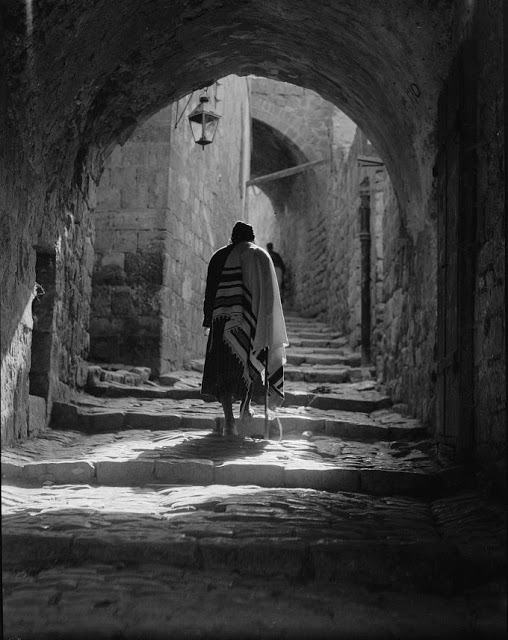
old-city-jerusalemWell, yes and no. Frankly, it’s not that clear cut. We know that even during the Second Temple era, synagogues and centers for prayer (not always the same things) were available for Jews. After all, Jewish people were scattered not only all over Israel in those days, but across the civilized portions of the Earth. Recall the Ethiopian eunuch (Acts 8:26-40) who likely was a Jew on a pilgrimage to Jerusalem. It would have been difficult for most of world’s Jewish population to travel to the Jerusalem Temple every time they wanted an encounter with God. It was very likely that there was provision for both individual and communal prayer for Jews, so the Temple wasn’t literally the only place of worship.

Of course to obey the mitzvot, Jews were obligated to travel to Jerusalem on certain occasions including the moadim and particularly for Rosh Hashanah and Yom Kippur, but while extremely important, it wouldn’t have been possible for all Jews because it would require leaving home and undertaking lengthy journeys several times a year. While we don’t have much information on him, it’s likely that the Jewish Ethiopian had made only one 1,200 mile long trip between his country to Jerusalem when Philip encountered him. In those days, a trip of such length over land could have taken up to two months, so it wasn’t the “quick dash” it would be by car or plane in our day and age.

Also, looking forward, we have this.

Then everyone who survives of all the nations that have come against Jerusalem shall go up year after year to worship the King, the Lord of hosts, and to keep the Feast of Booths. And if any of the families of the earth do not go up to Jerusalem to worship the King, the Lord of hosts, there will be no rain on them. And if the family of Egypt does not go up and present themselves, then on them there shall be no rain; there shall be the plague with which the Lord afflicts the nations that do not go up to keep the Feast of Booths. This shall be the punishment to Egypt and the punishment to all the nations that do not go up to keep the Feast of Booths.

Zechariah 14:16-19 (ESV)

It would be very difficult for the representatives of all of the nations of the world to observe Shavuot (Feast of Booths) in Jerusalem if there were no existing Temple.

It is true that John writes in Revelation 21:22 that he saw no Temple in the city, presumably New Jerusalem, but there are vast periods of time being described in his recording of his vision, so we can’t use that one verse as evidence that the Third Temple will never be built by Messiah after his coming (return).

So what’s the big deal?

Only that the birth, life, death, resurrection, and ascension of Jesus the Messiah may not have (permanently) changed as much as we might think it did. The church may ultimately have to integrate a more Jewish perspective of Messiah than we previously have. Yes, many of us think we’ve done a pretty good job at “rediscovering the Jewish Jesus,” but I don’t think the majority of us have truly engaged the reality of what that actually means.

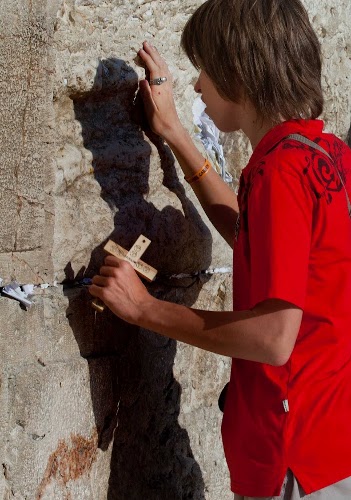
I’m not criticizing Pastor Randy or anyone at the church I attend (and I know Pastor Randy sometimes reads my blog), but I am suggesting that at least in this one area, Christ may not have changed what we think he changed. Unfortunately, many Christians take the idea of what Jesus did to Judaism a little too dogmatically and treat Jews, Judaism, and Jewish Holy sites quite poorly, as this commentary I received on Facebook attests.

I have been at the Wall, Jews Holiest Place, and seen bus loads of tourist arrive. Even I cringed at the sight of shorts, halter tops, men with out shirts, cameras and water bottles in tow. I have seen the garbage left behind. I have heard the ‘chatter’ at the Face of the Wall and observed the frivolity of trying to place a paper prayer ‘for a friend’ in the highest unreachable crack. (a paradise for rock climbers). I have heard prayers for ‘the Jews to be saved”….I have stood by women ‘claiming the place in the name of Jesus”.

Jerusalem, to include the Wall, is not an International place of holiness. Once the sacredness of the place is removed it becomes one more place to be trashed. The fact that the Reform movement, Women at the Wall and other such groups are irritated that ‘they’ can not make the rules and regulations simply indicates their dislike for the Ultra-Orthodox. One side may be Extreme but the otherside opens the door to Liberal attitudes and the slippery slope to “so what, this is just another wall!”

christian-at-the-kotelThe analysis seems kind of harsh but then again, it’s probably justified given how casually and callously some people treat this Jewish Holy place.

To you and me, the Kotel may not have the same meaning, but for most religious Jews (and Jesus and all his apostles were and are religious Jews), it is all that’s left of where once the Divine Presence of God dwelt among His people Israel. It is also a symbol of hope in the coming of Messiah, the redemption of Israel (which doesn’t mean quite the same thing in Judaism as it does in Christianity), and the return of hope, life, and peace for the Jewish people and in fact, for all the nations of the Earth.

If it also happens to be the site of where the Christ will rebuild the Temple and establish his reign as our King, shouldn’t we at least try to respect it’s holiness? I know that in Christianity, we consider each believer to be a “Temple” containing the Holy Spirit, and we tend to look at ourselves as replacements for the physical Temple, but this “human Temple” imagery doesn’t preclude the future existence of a Third Temple. We tend to think that something is either this or that, left or right, one or the other, as if we are computers communicating in binary language, but since we’re dealing with God here, is it too difficult to believe we can be (metaphorically) a “Temple” and the physical Temple will one day be rebuilt by Messiah? Is it too much to ask for both?

Message to the Sons of Solomon

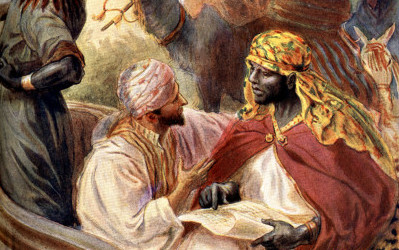
philip_and_the_ethiopianAnd King Solomon gave to the queen of Sheba all that she desired, whatever she asked besides what was given her by the bounty of King Solomon. So she turned and went back to her own land with her servants.

1 Kings 10:13 (ESV)

Now an angel of the Lord said to Philip, “Rise and go toward the south to the road that goes down from Jerusalem to Gaza.” This is a desert place. And he rose and went. And there was an Ethiopian, a eunuch, a court official of Candace, queen of the Ethiopians, who was in charge of all her treasure. He had come to Jerusalem to worship…

Acts 8:26-27 (ESV)

The Ethiopian history described in the Kebra Negast, or “Book of the Glory of Kings,” relates that Ethiopians are descendants of Israelite tribes who came to Ethiopia with Menelik I, alleged to be the son of King Solomon and the Queen of Sheba (or Makeda, in the legend) (see 1 Kings 10:1-13 and 2 Chronicles 9:1-12). The legend relates that Menelik, as an adult, returned to his father in Jerusalem, and then resettled in Ethiopia, and that he took with him the Ark of the Covenant.

-Budge, Queen of Sheba, Kebra Negast, chap. 61.
quoted from Wikipedia

I’ve written before about the section of Acts 8 that chronicles the encounter between Philip and the Ethiopian eunuch in relation to D. Thomas Lancaster’s commentary in Volume 6 of the Torah Club: Chronicles of the Apostles. Today (as I write this “church report”), it was Pastor Randy’s turn to teach us his perspective during Sunday services where I go to church.

It was also Charlie’s turn to discuss it in Sunday school and it was interesting. I already knew that Charlie believed the Ethiopian was Jewish but as Pastor started delivering his message, he shared with us that he just that week had changed his opinion about the Ethiopian and now believes that he must have been a Jew! Interesting.

I’m torn between whether to write about the history of the Ethiopian Jews, which is a topic of some controversy and speculation, or if I should focus on why God found it necessary to send an angel to tell Philip to find the Ethiopian (Acts 8:26). I think I’ll focus on the latter.

Let me explain.

In teaching the Sunday school lesson, Charlie remarked more than once how unusual he thought it was for God to send “an angel of the Lord” to tell Philip to stop everything he was doing in Samaria and travel south on the desert road to find one man who was returning to his native Ethiopia after a pilgrimage to Jerusalem. Why was this one man so important?

From a traditional evangelical Christian point of view, converting a high-ranking official of a foreign country to faith in Jesus Christ is a great way to spread the gospel message to all of the other high-ranking government officials in that country as well as to the general body of citizens. But I don’t think we can exactly map 21st Century evangelical strategies to First Century CE Jewish devotion to the sect of “the Way.” Charlie thought, given how the message of Christ was transmitted first to the Jews, then to the Samaritans, and finally to the rest of the nations, that God believed the Jewish population in Ethiopia was close to the heart of their Creator, and that the “Good News” of Messiah was a message God intended for all Jews to embrace. After all, much of the New Testament text addresses the spread of the Gospel into Europe, Asia, and the Near East. What about the Jews to the south?

This is all speculation of course, and only one part of a single chapter in the New Testament is devoted to transmitting such a message in that particular direction, but what Charlie also said more than once got my attention. He said that God wanted to make sure all of the Jews got the message that God had changed the rules.

What? What rules?

(I should say at this point, when Charlie made his comment about “changing rules” I was seriously considering what I should say or do in response. I chose not to say or do anything, but given my sensitivity to the matter of supersessionism in the church, I was afraid that I would have to defend against such a theology at the cost of my budding relationship among these fellow believers. Fortunately, it didn’t come to that.)

Actually, something important did change thanks to Christ.

Go therefore and make disciples of all nations, baptizing them in the name of the Father and of the Son and of the Holy Spirit…

Matthew 28:19 (ESV)

While Israel had always been intended to be a “light to the nations” (Isaiah 49:6), this is the first indication that the Messiah wanted people from all of the nations, and not just from Israel, to become disciples of the Master and grafted in sons and daughters of God. As we progress forward and especially attending to Acts 10 and beyond, we see that God’s intent was not to require the Gentiles to convert to Judaism or abandon their own national and ethnic uniqueness in order to become disciples. The Holy Spirit was just as available to the Gentile disciple as to the Jew.

Walking TogetherIn this specific sense, something had changed. Prior to this moment in time, if a Gentile wanted to worship the God of Israel in a covenant relationship, he or she had to embrace Judaism (that’s more or less an exact quote from Pastor Randy). With the command of Christ, which the church calls “the great commission,” anyone from anywhere could worship God in a covenant relationship without converting to Judaism (the concept of conversion is complicated…it probably didn’t exist as such during the days of Moses or David, but it was a recognized practice during the late Second Temple period and beyond).

Did God want Philip to tell the Ethiopian that God changed the rules? A plain reading of the text doesn’t suggest such a thing. From my point of view, what God wanted Philip to tell the Jewish Ethiopian was the good news of the Messiah who had come and will come again, as revealed by Isaiah 53. Why God wanted this event to occur is up for grabs, but what the Ethiopian carried back with him to his land and to his people was the gospel message, or as much of it as Philip was able to transmit in the time they were together and related to the passages from Isaiah. What fruit resulted upon the eunuch’s homecoming and in the years and centuries to follow, we cannot know.

But if God changed anything, it wasn’t His “rules” or His Torah but rather access. God opened up covenant access to Himself for all peoples. There are two portions to the good news of Christ. Of course, there is the good news for the Gentile, that we can now come to God in covenant through the blood of His son. However, Christianity rarely considers the good news of Christ to the Jew who already had such a covenant relationship (which would include the Jews in Ethiopia), that the Messiah had come, the King of Israel had been born, that he died and rose and sits at the Father’s right hand, and that at the proper time, Messiah would cause a scattered Israel to be gathered together as a nation and one day, the King would rule from Jerusalem (I’m not suggesting two, separate paths of salvation, one for Gentiles and one for Jews, but because of Israel’s special unique relationship with God, the Messiah has more and different good news for the Jews in addition to the good news he has for the Gentiles).

On Friday May 24, 1991: Over the course of 36 hours, a total of 34 El Al Hercules c-130s – with their seats removed to maximize passenger capacity – flew non-stop.

14,325 Ethiopian Jews came home to Israel, to be greeted by thousands of Israelis who gathered at temporary absorption centers, hotels and hostels to welcome their brethren.

Operation Solomon saw the rescue of twice the number of Ethiopian Jews in Operations Moses and Joshua put together.

-from bluestarpr.com

A Christian group said Tuesday, June 7, it would help organize “the return of the last 8,700 Ethiopian Jews to Israel” by sponsoring what are known as “Aliyah” flights, the coming months.

“Last Ethiopian Jews to Return to Israel, Christian Group Says”
-from worthynews.com, June 8, 2011

I know I’m stringing together bits and pieces of scripture, news, and commentary in a less than rock-solid structure, but consider for a moment that Jews from all across the nations have been returning to Israel and are being gathered to their people. God has never forgotten them nor will He ever forsake them. Perhaps that’s why He made it a point to send an angel to Philip and to insure that the message of the Messiah would reach all of his people, including the Jewish Ethiopians.

Just a thought.