Tag Archives: Messiah

After the Meal of the Messiah has Ended

Now I rejoice in my sufferings for your sake, and in my flesh I do my share on behalf of His body, which is the ekklesia, in filling up what is lacking in Messiah’s afflictions. Of this ekklesia I was made a minister according to the stewardship from God bestowed on me for your benefit, so that I might fully carry out the preaching of the word of God, that is, the mystery which has been hidden from the past ages and generations, but has now been manifested to His saints, to whom God willed to make known what is the riches of the glory of this mystery among the Gentiles, which is Messiah in you, the hope of glory. We proclaim Him, admonishing every man and teaching every man with all wisdom, so that we may present every man complete in Messiah. For this purpose also I labor, striving according to His power, which mightily works within me.

For I want you to know how great a struggle I have on your behalf and for those who are at Laodicea, and for all those who have not personally seen my face, that their hearts may be encouraged, having been knit together in love, and attaining to all the wealth that comes from the full assurance of understanding, resulting in a true knowledge of God’s mystery, that is, Messiah Himself, in whom are hidden all the treasures of wisdom and knowledge. I say this so that no one will delude you with persuasive argument. For even though I am absent in body, nevertheless I am with you in spirit, rejoicing to see your good discipline and the stability of your faith in Messiah.

Therefore as you have received Messiah Yeshua the Lord, so walk in Him, having been firmly rooted and now being built up in Him and established in your faith, just as you were instructed, and overflowing with gratitude.

Colossians 1:24-2:7 (NASB – adj)

I’m temporarily interrupting my reviews of the Nanos and Zetterholm volume Paul within Judaism: Restoring the First-Century Context to the Apostle in order to address a conversation I had with my friend over coffee last Sunday. Yes, this is the same friend who previously issued the pesky challenge (I say that tongue-in-cheek) of considering a return to church or some such congregation for the sake of fellowship.

Last Sunday, the challenge was to consider all that Messiah has done for me.

No, it’s not like I don’t have a sense of gratitude, but the way he put it, it’s like I am to consider only two beings in existence: Messiah and me.
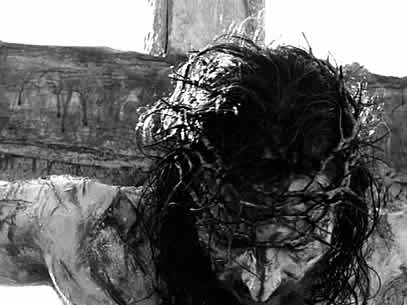
The Death of the MasterSo often in the Church, over and over again, I’d hear “It’s just me and Jesus” like the rest of the human population of this planet didn’t matter. It also sounds like God’s overarching redemptive plan for Israel, and through Israel, the world, wasn’t important. All that’s important is the individual Christian and Jesus.

I look at Messiah through the lens of the entire Biblical narrative and what his death and resurrection means in terms of that narrative. I think of Messiah less as dying for me the individual, and more as dying and being resurrected as a definitive confirmation of God’s New Covenant promise to Israel; His promise of Israel’s personal and national resurrection and the life in the world to come. Messiah’s resurrection is definite proof of the resurrection for the rest of us. It certainly was to the direct witnesses of “the risen Christ,” and by their testimony, was accepted as evidence by many other Jews and Gentiles who through faith, became disciples of the Master.

I have a problem pulling Messiah out of that context, isolating his death and resurrection from God’s global redemptive plan, and making it all about “saving” me. When Paul wrote about “salvation,” he was talking about reconciling humanity with the God of Israel, not saving my one little soul so I could go to Heaven and live with Jesus when I die. Paul was “preaching” the New Covenant promises and their blessings to the Gentiles, who needed to do considerable catch-up work not having the benefit of even a basic Jewish education.

I think that’s what he’s saying in the above-quoted block of scripture. He’s writing to Gentiles. They/we who were once far off (Ephesians 2:13) and who had/have been brought near to the promises of God through the faithfulness of Messiah.

There’s no denying that without Messiah, the Gentiles are totally cut off from the God of Israel. The Jews were already near based on being born into the Sinai covenant. Yes, even they could be cut off (Romans 11:20) due to unbelief, but since they are natural branches, think of how much more easily can they be reattached to the root.

My friend said that those who deny Messiah, Jew and Gentile alike, are cut off from God. This at least suggests if not outright demands that God’s presence be manifest only with those Jews and Gentiles who have become disciples of Yeshua and He is apart from everyone else.
working handsI don’t believe that. For the Jews, I believe there’s close and closer. No, it’s not like there is no benefit for Jewish faith in Messiah. I outlined how unbelieving Jews can still be close to God and how believing Jews have a great benefit in being disciples of the Master in my review of D. Thomas Lancaster’s sermon The Holy Epistle to the Hebrews: Faith Toward God. Mark D. Nanos characterizes the text of Romans 11:25 as unbelieving Jews being temporarily “callused” against Messiah. But the text continues:

For I do not want you, brethren, to be uninformed of this mystery—so that you will not be wise in your own estimation—that a partial hardening has happened to Israel until the fullness of the Gentiles has come in; and so all Israel will be saved; just as it is written,

“The Deliverer will come from Zion,
He will remove ungodliness from Jacob.”
“This is My covenant with them,
When I take away their sins.”

From the standpoint of the gospel they are enemies for your sake, but from the standpoint of God’s choice they are beloved for the sake of the fathers; for the gifts and the calling of God are irrevocable.

Romans 11:25-29

Paul, in part, is referring to this irrevocable promise of God to Israel:

They will not teach again, each man his neighbor and each man his brother, saying, ‘Know the Lord,’ for they will all know Me, from the least of them to the greatest of them,” declares the Lord, “for I will forgive their iniquity, and their sin I will remember no more.”

Jeremiah 31:34

So how do I understand my friend’s statement that all people, Jews and Gentiles, are alienated from God if they do not have faith in Messiah? Am I to believe that God abandoned the Jewish people at the cross?

I can’t do that.

I can believe, based on God’s faithful promises to His people Israel, that although many Jews temporarily do not see Yeshua for who he truly is as Messiah, one day everything will be revealed, and then they will all receive the promise of forgiveness of sins and thus “all of Israel will be saved.”

I have no problem believing that all means ALL! In fact, I’m counting on it.

However, God made no such promise to the Gentile nations of the world. We don’t directly benefit from those promises, though as Paul tells us, we do benefit from their blessings through faithfulness. In His mercy, God allows not just Israel, but also the Gentiles to receive the blessings of the resurrection, the indwelling of the Spirit of God, and the promise of life in the Messianic Age and beyond as members of the Master’s ekklesia and vassal subjects of the King.

But in my struggle to reframe the traditional Christian narrative into one that takes into greater account the first century Jewish context of Paul’s letters as they relate back to the promises God, I’ve gotten “stuck” with my panoramic view of the Messiah’s role in Biblical and human history.

Restoration
Photo: First Fruits of Zion

My fight has always been to communicate this Judaic view of ALL scripture, including the Apostolic Writings, as Jewish and centered on national redemption of Israel, and then through Israel, the nations.

Admittedly, I’m having a tough time changing my focus and allowing myself the “conceit” of realizing that there is (or could be) a personal relationship between me and the Master. Frankly, I don’t see why that shouldn’t intimidate the living daylights out of anyone, especially me. How can the King of the future Messianic Era also be, as many Christians might say, my “best friend?”

The presence of Mashiach is revealed on Acharon Shel Pesach, and this revelation has relevance to all Israel: Pesach is medaleg,1 “skipping over” (rather than orderly progress), and leil shimurim,2 the “protected night.” In general the mood of Pesach is one of liberty. Then Pesach ends, and we find ourselves tumbling headlong into the outside world. This is where Mashiach’s revealed presence comes into play – imbuing us with a powerful resoluteness that enables us to maintain ourselves in the world.

-Compiled by the Lubavitcher Rebbe; Translated by Yitschak Meir Kagan
Chabad.org

I too find myself “tumbling headlong” into unprotected territory. It’s become very easy for me to relate to Yeshua as a lowly subject relates to a King. But how can (or should) this “Messianic Gentile” gain an apprehension of a one-on-one relationship with my Master Yeshua?


1. Shir HaShirim 2:8. Midrash Raba on that verse describes the Exodus as medaleg, “skipping over” calculations and rationales for redemption, bringing Israel out of exile regardless of their merit, regardless of the length of the exile. Later in that section the Midrash applies the verse to Mashiach.

2. Sh’mot 12:42, as Rashi notes, the night destined for redemption.

One Perspective on Messianic Judaism

Long-time commentator ProclaimLiberty (PL), in response to Chaya, another of my enduring readers, has framed a detailed outline of his perspective on the Messianic Jewish viewpoint on God, Messiah, and the Bible. After a bit of editing on his part, he’s asked me to post it here, and I agreed. From here to the end is what PL has crafted. The comments section is open. Since I didn’t author what you’re about to read, please direct any specific questions to PL. Thank you.

—————————————————

@Chaya — You wrote:
“@James, @PL and others, I would like to know what you view as the, “MJ viewpoint,” because, according to my understanding, there are many viewpoints and the situation continues to evolve/change.”

I would answer that I see two possible ways of trying to envision what is “the MJ viewpoint”. One would be some sort of aggregate summary of whatever those who claim to represent MJ seem to be expressing. Since there seem to be a great many conflicting expressions extant, I suggest that this method is intractable. It lacks a coherent objective model by which to qualify the various subjective views and how well or badly they actually reflect “genuine” MJ. The other method, which I believe to be more accurate and much easier to define, is a theoretical or philosophical construct or model. Hence I would answer that the definition of “the MJ viewpoint” may be stated simply, though its ramifications can be elaborated broadly. I would like to outline it thusly:

Orthodox JewsPoint 1. Messianic Judaism (“MJ”), or Jewish messianism, begins and ends with Jews and Jewish behavior and outlook. It is, however, the nature of HaShem’s choice of the Jewish people that they affect all of humanity because ultimately all humans are one Adamic (or even Noa’hide) family. Nonetheless, Jewish messianists must define themselves within Judaism and the Jewish people; and their lifestyle must reflect the traditions that are definitive of the Jewish people and their (our) four millennia of developing civilization. MJs must not view themselves as factional separatists (“minim”) at odds with other Jews.

An MJ organization in the USA called “Hashivenu” (@ hashivenu.org) expressed this as one of their core principles with the phrase: “The Jewish people are ‘us’, not ‘them’.”. They elaborated it, with a degree of perspective developed from prior Hebrew-Christian experiences, as follows:

Like a boat that had drifted from its moorings, we were not cognizant of what was happening to us until a key event, conversation, or combination of factors jolted us awake to the realization that we were farther from our Jewish moorings than we had realized.

For most of us, experience in evangelical contexts taught us to look at Jews only as people to whom we ought to witness. For us, the subtext of every family gathering became “How can I bring the subject up?” and the objective in our relationships with Jewish family, friends and acquaintances became “How can I witness to them without their closing the door on the Gospel and on me?” As important as these issues are, we realize now how wrong it was for these evangelistic concerns to be the sole axis of measurement of relationship with other Jews, even our own family members. We became church-culture chameleons, adept at blending in, showing that even though we were Jews, “we weren’t like the other Jews”: we were real Christians, too. More often than we were prepared to admit, though, we felt ourselves uneasy strangers in a strange land of potluck suppers, hallelujahs, and obligatory right-wing politics. But we had been taught, “You can’t go back to what you were. This sense of distance from the Jewish people, Jewish ways, and from family is the cost of discipleship, the cross you are called to gladly bear. Rejoice and be exceedingly glad.” One day we discovered that we had become habituated to speaking of the Jewish community in third person. We awoke with a start.

Now we know we can go home again. In fact, we must go home again for, truly, there is no place like home. And home for Jews is Jewish life. No doubt, we will have to remodel that home a bit to properly accommodate Yeshua, our Messiah, but better to remodel our own home than to be a permanent guest at someone else’s address.

We dare to believe that among the many mansions prepared for Yeshua’s people, some have mezuzot on the doors. We dare to believe that by rediscovering and reclaiming our own identity as Jews, we will be better brothers and sisters to Gentiles who love our Messiah. In all aspects of life, we want to live in a Jewish neighborhood socially, culturally, conceptually so that we and our children and our children’s children will not only call Yeshua Lord but also call the Jewish people “our people” and Jewish life “home.”

MessiahPoint 2. MJ is a Jewish messianism that views Rav Yeshua ben-Yosef ben-David as a valid candidate for the position of the ultimate Jewish King Messiah, on the basis of his teachings, his example, his piety, and his resurrection from death. His qualifications are derived from the Tenakh and elaborated in later Jewish literature. The qualifications for Messiah cited by the RamBam focus on only a portion of overall messianic qualifications, which are termed the “ben-David” Messiah who will restore the Jewish kingdom and rule therein as the “conquering king”. His rather “Johnny-come-lately” perspective on the Messiah neglects other messianic qualifications that have been described as a separate messiah-figure termed the “ben-Yosef” Messiah who suffers and dies because of the sins of Israel and on our behalf. Without benefit of a resurrection, it would be rather difficult for a single messiah to fulfill the entire set of qualifications. While it can be argued that Rav Yeshua has not yet fulfilled most of the requirements for the conquering king ben-David Messiah, hence the prophecy and expectation of his return to do so at the proper time, he has fulfilled the purposes of the ben-Yosef suffering servant Messiah admirably well, and he has been suitably positioned via resurrection and ascension to enable such a return and task-completion. Meanwhile a proper understanding of the Torah perspectives he taught enables would-be Jewish disciples to pursue a form of ‘Hasidut that would demonstrate the validity of his messiah-ship.

Point 3. MJ derives its view of Rav Yeshua from the writings of his disciples who were commissioned to teach his perspective on how to apply Torah toward Jewish living. These disciples were all Jews (though one may have been a convert, or at least a former Hellenist). Rav Yeshua’s teachings were essentially Pharisaic in character, particularly with regard to their interpretive methodology. From a much later Jewish perspective we would describe him as a ‘Hasidic “admor” and “tzaddik”. However, these “apostolic writings” were adopted and preserved by non-Jews who professed to follow their teachings; and these non-Jews, who called themselves Christians, were excessively influenced by political influences by which they distorted the interpretations of the apostolic testimony to exclude its particularistic Jewish application and perspective, and to denigrate Jews and Judaism — even creating a fictitious Greek-styled demigod, known today in English as “Jesus”, in place of the original Israeli rabbi Yeshua in his natural context. Nonetheless, MJs have identified and continue to research correspondences between the apostolic writings and other Jewish literature in order to re-develop their native Jewish character and improve general understanding of what Rav Yeshua and his apostles actually intended and taught. Their exegesis is not derived from traditional Christian doctrines but from the Jewish text and its context.

Point 4. Because of historical persecutions of Jews by Christians during at least 15 centuries (some would say as much as 18 or 19), Jews in general resist any involvement with Rav Yeshua or the apostolic writings, and mistakenly assume that anyone who does so must be some sort of a Christian or to have joined forces with them against Jews. Regrettably, there are well-known historical examples of just such treachery by Jewish converts to Christianity. Hence MJs who attempt to reclaim and restore the original Jewish character of the apostolic literature about Rav Yeshua frequently are required to assert that they are not Christians, and that neither they nor the writings are anti-Jewish. However, since some modern Christians have learned to eschew the anti-Semitism of past Christian tradition, and even to become ardent supporters of Jews and Israel, MJs do interact positively and cooperatively with them when possible.

Rabbi Isaac Lichtenstein

Point 5. Among the implications in the Jewish apostolic literature is a view of how Jewish redemption can be extended to the rest of non-Jewish humanity, which is the basis on which the non-Jewish religion of Christianity began (before it became directed against Jews and Judaism). Therefore, many non-Jews seeking the authentic roots and origins of faith in Rav Yeshua have turned to MJs for help in their parallel quest to understand the Jewish context of the apostolic writings. However, for MJs such assistance must be prioritized as secondary to MJ re-development and restoration of Jewish praxis and knowledge, without which there is little or nothing meaningful to offer that can support the non-Jewish request for help. Regrettably, this left somewhat of a vacuum during the initial decades of MJ development, which has become filled with a wild mixture of notions that falsely claim an MJ or related label.

The Hashivenu website offers a few additional core values elaborating its statements of MJ principles. Though their formulation is, at this stage, somewhat dated, I would still recommend them as worthwhile reading. I suspect that “the MJ viewpoint” described above is not much different from the views of Rabbi Isaac Lichtenstein in 19th-century Hungary, a century prior to the formulation of the MJ paradigm of the 1970s in the USA and just as different from the HC viewpoint as it was from the 19th-century views of the Jewish Christian Feivel (Paul Phillip) Levertoff. Consequently I would not place much credence in the notion that “there are many viewpoints and the situation continues to evolve/change”. I see two basic models, which I would associate with “MJ” (Lichtenstein) and “HC” (Levertoff), respectively, and which have persisted for more than a century. The MJ model re-emerged in the 1970s, but still it has been overshadowed by the HC model, despite the latter’s adoption of terminology more suited to MJ. The strength of HC has been its appeal to Jews who wish to maintain a semblance of Jewish culture and identity within an otherwise foreign Christian religious environment. A weakness of MJ (in terms of popular perspective and appeal) has been its somewhat insular Jewish perspective and its more demanding requirement to conform with Torah-based Jewish culture that differs from the surrounding mainstream environment and which is therefore often denigrated or disdained. Perhaps we should also consider a form of the perspective mentioned in statement #5 above, which may be termed the gentile seekers of “Hebrew Roots” (“HR”). While this is not at all a part of MJ, in some ways it resembles HC, adopts MJ terminology, and associates itself with MJ. That might offer an appearance that the “MJ movement” (so-called) comprises three perspectives and a lot of developmental confusion. However, much of HR suffers from effects derived from the supercessionism developed by earlier versions of Christianity. HR tends not to recognize continuing Jewish distinctiveness and validity, as it focuses on trying to distinguish itself otherwise from traditional Christianity by trying to act in some manner that it perceives to be Jewish in some first-century sense. It suffers from the lack of clear MJ guidance cited above in statement #5, because it is true that MJ is still challenged by the need to develop itself by elaborating an otherwise stable MJ viewpoint into stable, well-defined, and wide-spread praxis.

A significant consideration in current discussions of “Judaism” is the notion of “continuity”, which is a reflection of a primary reason mentioned in Torah for why HaShem so favored Avraham Avinu (in addition to his extraordinary faith). He, as the primary of three visitors to Avraham, in Gen.18:19, is quoted as “saying”: “For I have known him, so that he will command his children and his household after him, that they may keep the way of the LORD, to do righteousness and justice; so that the LORD may bring upon Abraham that which He hath spoken of him.”. It is well-recognized that various forms of Orthodox Judaism have diligently continued the practice of teaching Jewish children thoroughly to perform both private and communal aspects of Judaism, generation after generation. The modernized halakhah practiced by Conservative Judaism has only been tested for a few generations so far, and there is some question about whether it can successfully maintain itself or whether it will succumb to assimilationist pressures and the effects intermarriageof intermarriage with non-Jews. Reform Judaism has been through a cycle of recognizing that many aspects of Jewish practice that they previously discarded left their children with little by which to distinguish themselves as Jews or with which to identify, which has contributed to their assimilation, their intermarriage with non-Jews, and their loss to the Jewish people. Within the current generation they have re-adopted some of the distinctive forms, within religious contexts rather than lifestyle ones, in order to stem this loss. Even newer forms of so-called Judaism have arisen within the current generation, and these have not been tested for their ability to maintain Jewish continuity. Messianic Judaism has included examples of multi-generational families that have maintained at least as much Jewish identity as the Reform or Conservative movements, even among those whose praxis and theology is more like that of Hebrew-Christians, but the movement still faces assimilationist and intermarriage pressures arising from close association with Christians of one sort or another who still don’t quite grasp or support the Jewish responsibility to remain a distinct people. It has been stated in various places that if the Jewish people does not maintain its communal distinctiveness, thus ceasing to exist as an identifiable people, then Hitler wins a posthumous victory. Some would note that such a victory also belongs to the spirit of Amalek, and to HaShem’s ancient adversary known as HaSatan. Regardless of whether anyone grants credence to such pessimism, I would insist that a proper response is to ensure that no actions taken by any Jew should ever contribute toward such an outcome – and we might extend such a principle to apply it to anyone who seeks HaShem’s favor. Therefore I would like to reiterate from my defining statement #1 above that MJs should conduct themselves as Jews, preserving Jewish tradition in their actions and in their teaching to their children (and to anyone else who may care to listen). Incidentally, we can see from Rav Yeshua’s observation in Mt.5:19 that this is also a recipe for greatness in the kingdom of heaven. May it be so for all MJs, and for the gentiles who affiliate with us (and let us say, “Amen”).

—————————————————

Up to Jerusalem

Pondering the Birth Pangs of Mashiach

Update: I was going to publish this last Friday morning but as you all know by now, certain events have resulted in me making a rather drastic change in my comments policy as well as my writing schedule. I decided to go ahead and let this blog post publish since I already had it ready to go. What happens after this, I really don’t know.

I’ve received a lot of emails that were very encouraging and I want to thank everyone who took the time to reach out to me with such kind remarks. I have other projects that I can pursue and who knows what the future may bring. Blessings.

In these days especially, when by G-d’s kindness we stand at the threshold of redemption, we must make every conceivable effort to strengthen every facet of our religion. Mitzvot must be observed b’hidur, with “beauty,” beyond minimal requirements. Customs must be kept scrupulously, nothing compromised. It is a Mitzva and duty of every Rabbi in Israel to inform his congregation that the current tribulations and agonies are the “birth-pangs of Mashiach.” G-d is demanding that we return to Torah and mitzvot, that we not hinder the imminent coming of our righteous Mashiach.

“Today’s Day”
for Tuesday, Sh’vat 8, 5703
Compiled by the Lubavitcher Rebbe; Translated by Yitschak Meir Kagan
Chabad.org

This is exactly what I was trying to say yesterday. This is the idea communicated in Ezekiel 36:27:

I will put My Spirit within you and cause you to walk in My statutes, and you will be careful to observe My ordinances.

This is a direct link between the New Covenant promises God made “to the house of Judah and the House of Israel” (Jeremiah 31:31), Israel’s observance of Torah, and Israel’s apprehension of the Divine Spirit.

And as we see, this also illustrates a link to the “current tribulations and agonies” of our times, which are defined as the “birth-pangs of Mashiach.”

But those words should also be familiar to most Christians:

And Yeshua (Jesus) answered and said to them, “See to it that no one misleads you. For many will come in My name, saying, ‘I am the Mashiach,’ and will mislead many. You will be hearing of wars and rumors of wars. See that you are not frightened, for those things must take place, but that is not yet the end. For nation will rise against nation, and kingdom against kingdom, and in various places there will be famines and earthquakes. But all these things are merely the beginning of birth pangs.”

Matthew 24:4-8 (NASB -adapted)

Seems to be a close parallel to what you read in the quote at the top of this blog post. Here’s something more:

Rab said: The son of David will not come until the [Roman] power enfolds Israel [2] for nine months, as it is written, Therefore will he give them up, until the time that she which travaileth hath brought forth: then the remnant of his brethren shall return unto the children of Israel. [3]

‘Ulla said; Let him [The Messiah] come, but let me not see him. [4]

Rabbah said likewise: Let him come, but let me not see him. R. Joseph said: Let him come, and may I be worthy of sitting in the shadow of his ass’s saddle. [5] Abaye enquired of Rabbah: ‘What is your reason [for not wishing to see him]? Shall we say, because of the birth pangs [preceding the advent] of the Messiah? [6] But it has been taught, R. Eleazar’s disciples asked him: ‘What must a man do to be spared the pangs of the Messiah?’ [He answered,] ‘Let him engage in study and benevolence; and you Master do both.’

Sanhedrin 98b (emph. mine)

Talmud Study by LamplightI’m periodically accused of misusing Jewish writings and I can see how some folks may see me playing fast and loose with ancient and modern Rabbinic commentary. On the other hand, I don’t see any other valid lens by which to view and comprehend my faith. Chances are I’m getting at least something wrong, and perhaps a good many things in the details. But it’s the only way for me to read the Bible and understand the plan of God as a single unit rather than a “Plan A” shifting to “Plan B” some time around Acts 2, or worse, as the Almighty pulling the world’s biggest “bait and switch” with His people Israel.

The New Covenant promises and prophesies (Jeremiah 31, Ezekiel 36) God made with Israel must come true, otherwise, not only does Israel have no hope but the rest of the nations of the world (i.e, Gentiles and particularly Christians) are hopeless as well.

You worship what you do not know; we worship what we know, for salvation is from the Jews.

John 4:22 (NASB)

That’s the Master speaking to a Samaritan woman and he might as well have been speaking to all the Gentile nations, that is, to us.

For nearly two-thousand years, Gentile Christianity and devout Judaism have charted divergent paths through history, pulling apart starting in the late first century and extending into the second, and traveling many light years away from each other ever since.

But I think that’s changing, at least a little. One of the “birth pangs” I see happening (and this is just my personal opinion), is the dialog and debate occurring between Judaism and Christianity or more specifically between mainstream/normative Judaism and Messianic Judaism, including with those of us who identify as “Messianic Gentiles.”

It almost seems like a (well-mannered) battle at times.

But at least we’re talking.

I mentioned before that Jewish Torah observance is a requirement for the return of the Messiah and particularly for Jewish disciples of Yeshua. We have historical records of individuals and small communities of Jews who were Yeshua disciples and who lived wholly religious and observant Jewish lives. This is also beginning to happen today, although such communities are small and far apart.

There are accusations that the number of Jews in the Messianic movement is actually decreasing. I can’t speak to that except to say if true, this is also part of the birth pangs as I understand them. It’s supposed to get darker, more bleak, and look more hopeless as the “birth pangs” continue. The gate is supposed to be narrow.

“Enter through the narrow gate; for the gate is wide and the way is broad that leads to destruction, and there are many who enter through it. For the gate is small and the way is narrow that leads to life, and there are few who find it.

Matthew 7:13-14

Of course that’s less than an opinion. It’s just a belief that God will call as many as who will listen to Him. I’ve been reminded recently that how God calls people, particularly Jewish people to Him, can be seen in at least a couple of different ways. I think I know just a tiny bit how a Jew might feel being proselytized by a Christian when just about everything I write is challenged from an Orthodox Jewish point of view (Hi, Gene).

pregnantBut I truly believe what I’ve written. I believe that supporting Jewish Torah observance is part of the requirement for the return of Messiah and the establishment of the Messianic age. I just don’t know how to get that point across without both Christians and Jews more or less quarreling with me, forging an unwilling partnership for the sake of my personal growth (as Rabbi Zelig Pliskin would put it).

I guess you could say this is part of the personal “birth pangs” we go through when different individuals and factions are involved and presenting their particular theologies and doctrines. Somehow, I think it’s important to survive with my relationship with God intact, for in the end, I won’t be judged in the religious blogosphere, but in the court of the God of Heaven, in spite of (or maybe because of) the “current tribulations and agonies.” So will we all.

There are questions to which G-d says to be quiet, to be still, to cease to ask.

-Rabbi Tzvi Freeman
“Be Quiet”
Based on letters and talks of the Rebbe, Rabbi M. M. Schneerson
Chabad.org

Sounds like good advice and maybe I’ll take it for awhile. We’ll see.

Oh, if you are looking for me, I’ll be over here. No “religious” comments allowed.

Footnotes

2. I.e., the whole world in which Israel is scattered.
3. Micah V, 2: ‘therefore will he give them up’ is interpreted as meaning to a foreign — viz., the Roman — power, and the duration of their servitude is fixed by ‘until the time etc.’ i.e., nine months, the period of pregnancy.
4. V. n. 7.
5. [Following the reading in Yalkut (v. Levy,) [H]. Our texts read: [H], ‘dung’.]
6. These troubles are generally referred to as birth pangs, being the travail which precedes the birth of a new era.

In the Image of God

And yet there is something in the world that the Bible does regard as a symbol of God. It is not a temple nor a tree, it is not a statue nor a star. The symbol of God is man, every man. God created man in His image (Tselem), in His likeness (Demuth). How significant is the fact that the term tselem which is frequently used in a damnatory sense for a man-made image of God, as well as the term demuth, of which Isaiah claims (40:18), no demuth or likeness can be applied to God — are employed in denoting man as an image and likeness of God.

-Abraham Joshua Heschel
from “Man the Symbol of God,” p.124
Man’s Quest for God

He is the image of the invisible God, the firstborn of all creation.

Colossians 1:15 (NASB)

Yes, I know. They don’t quite match. Heschel is talking about every human being as being made in the image (tselem) of God, even though that Hebrew word is typically used to describe detestable man-made images of gods. I’m hardly a language expert, so I have to wonder if Paul in calling Yeshua (Jesus) the “image of the invisible God” was thinking of the same word for “image” as Heschel mentions.

The reason I bring this up is that one of the more traditional Jewish arguments against Jesus-worship is that we are worshiping an “image” based on Colossians 1:15. Yet if each individual human being in general can be considered a symbol for and image of God, how much more can Messiah, the unique human presence on Earth, the mediator of the New Covenant, be considered the symbol for and image of God?

Kind of makes you wonder.

For He spoke, and it was done; He commanded, and it stood fast.

Psalm 33:9

In the beginning was the Word, and the Word was with God, and the Word was God. He was in the beginning with God. All things came into being through Him, and apart from Him nothing came into being that has come into being.

And the Word became flesh, and dwelt among us, and we saw His glory, glory as of the only begotten from the Father, full of grace and truth.

John 1:1-3, 14

It is understood that God actually “spoke” the world into existence with His Word. In human terms, our words emanate from us, we generate speech and it exits our mouths. If others are around us, they can hear what we say. So I can only imagine that the Word emanates from God, but in His case, His Word does so much more than just make sound or even language.

I really don’t have that much more to say on the topic. I’m wrapping up the last few notes I took while reading Heschel’s book (I have to get it back to the library) and wanted to make sure I didn’t lose track of the information. It’s part of my continuing process of trying to “get a handle” on the nature of Messiah and also on the nature of man.

And in this sense, Hillel characterized the body as an “icon” of God, as it were, and considered keeping clean one’s own body an act of reverence for its Creator (citing Leviticus Rabba 34, 3; also see Midrash Tehillim, 103).

-Heschel, ibid

And what is more, Biblical piety may be expressed in the form of a supreme imperative: Treat yourself as a symbol of God. In the light of this imperative we can understand the meaning of that astounding commandment: “You shall be holy, for I the Lord your God am holy” (Leviticus 19:2).

-ibid, p.126

This may add some dimension to another equally astounding commandment:

Therefore you are to be perfect, as your heavenly Father is perfect.

Matthew 5:48

To be holy and perfect because our Father in Heaven is holy and perfect. It doesn’t seem like such a tall order if we are to consider ourselves symbols for God and images of God. The “Word became flesh” and sojourned among us so that he could be perfectly human and yet the perfect image of God, a living example, our High Priest, but only in the Heavenly Court, who was tempted but did not sin.

Not that we can perfectly refrain from sinning ourselves, but we can be better symbols and images of our God, just as the Master illustrated.

But all may be guided by the words of the Baal Shem: If a man has beheld evil, he may know that it was shown to him in order that he learn his own guilt and repent; for what is shown to him is also within him.

-Heschel
from “The Meaning of this Hour,” p.148

If what we are shown is also within us, what if we’re shown good and not evil? What if we’re shown a perfect symbol and image of God in seeming contrast to our own imperfection as symbols and images? If being shown evil teaches us to repent, shouldn’t being shown good inspire us to draw nearer to the Source of that good?

From that time Jesus began to preach and say, “Repent, for the kingdom of heaven is at hand.”

Matthew 4:17

Inner lightI don’t think we can accept any longer the argument that Yeshua is not worthy of glory, honor, and devotion because he is considered the “image” of God, because we too are “images”. Each human being is, in some sense, representative of our Creator, and in a greater sense, Messiah is even more representative. How all this works is highly mystical and as such, I can’t explain it, but the “imagery” (pun intended) is compelling.

Our Master is the living embodiment, encased in flesh and blood, of what we should be or at least of what we should be attempting to be: holy and perfect representations of our Creator in human bodies. To do that, we must be in a constant state of repentance before God for nothing that is holy is compatible with sin.

Good Shabbos.

Why Do the Jews Hate Jesus?

I know this is a rather controversial title for today’s “morning meditation,” but it came to me as I was reading through the Gospel of John and I thought I’d share what I’ve been pondering.

And He said to them, “What man is there among you who has a sheep, and if it falls into a pit on the Sabbath, will he not take hold of it and lift it out? How much more valuable then is a man than a sheep! So then, it is lawful to do good on the Sabbath.” Then He said to the man, “Stretch out your hand!” He stretched it out, and it was restored to normal, like the other. But the Pharisees went out and conspired against Him, as to how they might destroy Him.

Matthew 12:11-14 (NASB)

“If the world hates you, you know that it has hated Me before it hated you. If you were of the world, the world would love its own; but because you are not of the world, but I chose you out of the world, because of this the world hates you.”

John 15:18-19

So why did the Jews hate Jesus (Yeshua)? Actually, that’s a misleading question since not all Jewish people hated Jesus. In fact, a lot of Jewish people during the “earthly ministry” of Jesus really liked him and thought he was a prophet and some even believed he was the Messiah.

When He had entered Jerusalem, all the city was stirred, saying, “Who is this?” And the crowds were saying, “This is the prophet Jesus, from Nazareth in Galilee.”

Matthew 21:10-11

When the chief priests and the Pharisees heard His parables, they understood that He was speaking about them. When they sought to seize Him, they feared the people, because they considered Him to be a prophet.

Matthew 21:45-46

Some of the people therefore, when they heard these words, were saying, “This certainly is the Prophet.” Others were saying, “This is the Christ [Messiah].” Still others were saying, “Surely the Christ [Messiah] is not going to come from Galilee, is He? Has not the Scripture said that the Christ [Messiah] comes from the descendants of David, and from Bethlehem, the village where David was?” So a division occurred in the crowd because of Him. Some of them wanted to seize Him, but no one laid hands on Him.

John 7:40-44

As you can see, particularly from the last quote, opinions about who Jesus was were mixed, but clearly a lot of Jewish people thought well of Jesus and thought he was a prophet, a Holy Man from God. So not all the Jews hated Jesus. In fact, probably relatively few Jewish people actually hated Jesus, and most of those were invalid priests and corrupt Pharisees and scribes (though not all Pharisees and scribes were corrupt) who experienced the Master’s teachings as upsetting their own apple cart, so to speak.

ancient-rabbi-teachingThere were also probably a number of well-meaning Pharisees who opposed Jesus because they authentically disagreed with how Jesus interpreted the mitzvot, particularly the laws about Shabbat (see Matthew 12:1-7 for example). On the other hand, there were also Pharisees who were at least intrigued by if not devoted to Jesus (John 3:1-21, John 19:38-42).

But if this was true during the first earthly ministry of Jesus, what about after his death, resurrection, and ascension?

When the Gentiles heard this, they began rejoicing and glorifying the word of the Lord; and as many as had been appointed to eternal life believed. And the word of the Lord was being spread through the whole region. But the Jews incited the devout women of prominence and the leading men of the city, and instigated a persecution against Paul and Barnabas, and drove them out of their district. But they shook off the dust of their feet in protest against them and went to Iconium.

Acts 13:48-51

This is only one small example of how some Jewish populations, particularly synagogue leaders, opposed Paul’s teachings of Jesus being the Messiah. But remember earlier in this scenario, the born Jews and righteous converts couldn’t get enough of Paul’s teaching:

As Paul and Barnabas were going out, the people kept begging that these things might be spoken to them the next Sabbath. Now when the meeting of the synagogue had broken up, many of the Jews and of the God-fearing proselytes followed Paul and Barnabas, who, speaking to them, were urging them to continue in the grace of God.

Acts 13:42-43

However…

The next Sabbath nearly the whole city assembled to hear the word of the Lord. But when the Jews saw the crowds, they were filled with jealousy and began contradicting the things spoken by Paul, and were blaspheming.

Acts 13:44-45

What happened? Well, crowds and crowds of Gentiles were consuming space within Jewish community, and unlike the Gentile God-fearers and converts, these Gentiles were straight up pagans who might well walk all over Jewish customs relative to kosher and ritual purity…and this guy Paul was the cause of it all.

So, get rid of Paul, get rid of the Gentiles, and the Jewish leadership once again retains control over their communal space. Of course eventually the teachings of Jesus as Messiah and the influx of Gentiles into Jewish community became so linked that many Jewish communities in the diaspora learned to reject both Jesus and the Gentiles out of hand.

Magnus Zetterholm
Magnus Zetterholm

In fact, according to my review of the works of Mark Nanos and Magnus Zetterholm, even within the early Messianic movement, there was quite a bit of confusion and disagreement about how or even if the Gentiles should be integrated into Jewish communal and social life. This ultimately led to a rather messy divorce between Jesus-believing Jews and Gentiles, and for a time, there were two parallel religions: Pharisaic Messianic Judaism and Gentile Christianity. Eventually the former dissolved and the latter attained prominence, first in the Roman Empire and then eventually throughout the world.

And the Church, for most of its history, never learned to “share and play nice” with the Jewish people and religious Judaism:

I had made up my mind to write no more either about the Jews or against them. But since I learned that these miserable and accursed people do not cease to lure to themselves even us, that is, the Christians, I have published this little book, so that I might be found among those who opposed such poisonous activities of the Jews who warned the Christians to be on their guard against them. I would not have believed that a Christian could be duped by the Jews into taking their exile and wretchedness upon himself. However, the devil is the god of the world, and wherever God’s word is absent he has an easy task, not only with the weak but also with the strong. May God help us. Amen.

-Martin Luther
Excerpt from Luther’s work entitled “The Jews & their Lies”
quoted at Jewish Virtual Library

Even mentioning a partial inventory of the history of enmity between Christianity and Judaism far exceeds the scope of this one, small article. To get the full flavor of how at least one Jewish source sees this history, visit the page on “Christianity” at Jewish Virtual Library. Also see the website for the “anti-missionary” group Jews for Judaism.

So do Jews hate Jesus? It might be more accurate to say that Jews resent the long history of abuse they’ve historically had to suffer at the hands of the Christian Church and various Christian nations. They also resent any attempt to convert Jews to Christianity because of the threat of the destruction of the Jewish people, not by violence in the modern era so much as by assimilation.

It’s never been as simple as “the Jews hate Jesus” or “the Jews killed Jesus”. The Bible tells a story of how certain groups within Judaism, corrupt groups or corrupt individuals, opposed Jesus either on religious, political, or financial grounds. On the other hand, much of the common populace in ancient Israel and not a few religious leaders supported him and believed him to be a prophet, with some few recognizing him as Messiah.

After the ascension and into Paul’s mission, the reasons for opposing Jesus changed and were largely based on the liberal inclusion of unconverted Gentiles into Jewish space as equal co-participants of religious and social community. This was something not easily accepted because of a misunderstanding as to just how a Gentile could participate in the New Covenant blessings as well as the general feeling that close association with Gentiles might render a Jew “unclean” in some sense (although there was little actually basis for this in Torah).

Unfortunately, this spilled back onto anything Paul had to say and teach about Jesus, so it took some dedication for Jewish audiences to overcome their concerns and accept what Paul taught, then accept discipleship under Jesus as Messiah.

The Gentiles, for their part, ate it up with a spoon, so to speak, at least at first, but as I mentioned above, eventually the attempt to meld the two communities became unsustainable and the “experiment” flew apart like autumn leaves in a strong wind.

Rabbi Isaac Lichtenstein

But it’s not all bad. The 19th century saw many Jewish luminaries who discovered the identity of the Messiah in Jesus, and more recently in history, the modern Messianic Jewish movement, represented by groups such as the Messianic Jewish Alliance of America (MJAA) and the Union of Messianic Jewish Congregations (UMJC) have become increasingly active, attracting Jewish people to the Messiah within a wholly Jewish ethnic and religious context.

So it’s pretty unfair to say that “the Jews hate Jesus” when after all, Jesus loved and loves his people, the sheep of his pasture.

“I am the good shepherd; the good shepherd lays down His life for the sheep. He who is a hired hand, and not a shepherd, who is not the owner of the sheep, sees the wolf coming, and leaves the sheep and flees, and the wolf snatches them and scatters them. He flees because he is a hired hand and is not concerned about the sheep. I am the good shepherd, and I know My own and My own know Me, even as the Father knows Me and I know the Father; and I lay down My life for the sheep. I have other sheep, which are not of this fold; I must bring them also, and they will hear My voice; and they will become one flock with one shepherd.”

John 10:11-16

As you can see, in addition to his Jewish “sheep,” the Master has “other sheep” in another fold that he intends to bring to himself.

The situation appears to have been reversed, at least temporarily, since the shepherd’s flock seems to have a whole lot more Gentile sheep than Jewish at the moment. But that will change:

He will also restore the royal dynasty to the descendants of David. He will oversee the rebuilding of Jerusalem, including the Third Temple. He will gather the Jewish people to the Land of Israel.

-Rabbi Aryeh Kaplan
“All About the Messiah”
Aish.com

I don’t doubt there will be skeptics among both Jews and Christians as to the authenticity of Jesus as Messiah upon his return, but at least for the Jews, as they see him fulfilling prophesies such as the ones listed above, they will believe.

“I will pour out on the house of David and on the inhabitants of Jerusalem, the Spirit of grace and of supplication, so that they will look on Me whom they have pierced; and they will mourn for Him, as one mourns for an only son, and they will weep bitterly over Him like the bitter weeping over a firstborn.”

Zechariah 12:10

Ultimately, as the Jewish exiles are all returned to their land and as their hearts are turned in teshuvah, the sins of the entire nation of Israel will be forgiven, and through their forgiveness, so too the rest of the people of the nations who have believed and remained faithful:

They will not teach again, each man his neighbor and each man his brother, saying, ‘Know the Lord,’ for they will all know Me, from the least of them to the greatest of them,” declares the Lord, “for I will forgive their iniquity, and their sin I will remember no more.”

Jeremiah 31:34

That last part I wrote about the Gentiles is a bit of a stretch, since the text regarding the New Covenant only mentioned the House of Judah and the House of Israel, but my rather exhaustive research into this covenant assures me that we sheep from another fold will also benefit from the blessings of redemption and the resurrection to come.

tallit-prayerSo the Jews don’t “hate” Jesus. They may be hesitant or even fear some of his disciples based on the history between Judaism and the Church, and they may mistakenly blame Jesus as well as Paul for that history, but Christians have taught Jews to read the Apostolic Scriptures in the same distorted and flawed manner for centuries, an interpretation so anti-semitic and so supersessionistic that it can no longer be separated from the real meaning of the text in most Christian minds.

If we want the Jews to stop “hating Jesus,” then we have to live lives that say we do truly love the people and nation that Jesus loves. That’s one of the roles of the Messianic Gentile, and I hope it will be a mission that the mainstream Church one day adopts.

Gentiles Studying Torah for the Sake of Doing

Although the word “chassid” is generally translated to mean exceedingly pious or devout, conjuring up visions of fasting, prayer, and religious zeal, its origin is in the concept of “chesed,” giving freely of oneself for the benefit of others. It is a quality practiced by Hashem, as described in many verses, and which we are encouraged to emulate as part of the obligation to follow in Hashem’s ways.

-from “A Closer Look at the Siddur,” p.158
Friday’s commentary on Parashas Vayigash
A Daily Dose of Torah

“Serve the Almighty with joy, come before Him with singing” (Psalms 100:2).

The verse is recited daily in the morning prayers. But we have to internalize its message. Repeat this verse as often as possible, while thinking about what it means and how you can apply it.

This is especially important for a person with a tendency towards sadness. A sad person mentally repeats hundreds of sad messages a day. Repeating a verse with a positive, joyous message will serve as a good counter-balance.

(see Rabbi Pliskin’s “Gateway to Happiness,” p.110)

-Rabbi Zelig Pliskin
from Daily Lift #207 “Worth Repeating”
Aish.com

I sometimes envy devout Jewish people. At least in my studying Torah and the Jewish writings, their lives of devotion to God through the prayers and the mitzvot seem so ordered and unambiguous. Although living according to the requirements of Orthodox or Conservative Judaism has great complexity, it seems as if a Jewish person’s path is predictable and comprehensible with no gray areas within which they struggle.

Of course, that’s an illusion and I have no doubt that observant Jews struggle with their faith as much as anyone, even me. Still, there is such purpose in studying Torah, not for the sake of studying or acquiring knowledge, but to learn what God expects of us and then to do it.

However, that understanding isn’t limited to the Jewish people. All of us who are considered disciples of the Master, whether we’re called “Christians” or “Messianic Gentiles” have a duty to God and arguably to the Jewish people. We study the Bible, not just to learn the Word of God, but to put that Word into action in the world around us and in our everyday lives.

This point can be lost for many who are associated with Messianic Judaism or Hebrew Roots. For decades, the emphasis for Gentiles exiting “the Church” and entering Messianic synagogues or Hebrew Roots congregations has been Torah, Torah, Torah. We have gotten into the bad habit of getting hung up on how to properly tie tzitzit, lay tefillin, and styles of kippot to place on our heads that we’ve forgotten about the weightier matters of Torah:

“Woe to you, scribes and Pharisees, hypocrites! For you tithe mint and dill and cummin, and have neglected the weightier provisions of the law: justice and mercy and faithfulness…”

Matthew 23:23 (NASB)

PhariseesThe verse goes on with the Master instructing his Pharisaic audience to perform the weightier matters without neglecting the others (tithing mint, dill, and cumin), but then, he was speaking to Jewish Pharisees, not Gentile disciples.

Still, it’s a lesson that applies to us. Messianic Gentiles and Hebrew Roots Christians revel in their/our Torah knowledge but what do we do with it? If “knowing” is the full extent of our studies, then we know nothing. Only in doing, and I don’t mean tying tzitzit, are we fulfilling the mission to which God has assigned us.

But what is that mission?

He has told you, O man, what is good;
And what does the Lord require of you
But to do justice, to love kindness,
And to walk humbly with your God?

Micah 6:8

I sometimes say there’s more than a bit of overlap in the mitzvot that apply to both Jewish and Gentile disciples of the Master and I would say that doing justice, loving kindness, and walking humbly before God definitely qualifies as part of that overlap.

I was reminded of this during my visit with my parents this week. My Dad had cancer treatments (thanks, he’s doing much better) in Salt Lake City just before Christmas (it’s not a dirty word) but because his vision was compromised by the treatments and my Mom’s vision is not so good, my folks asked me to fly down to SLC and drive them back home to their place about five or six hours away.

Of course I did and I’m staying with them for a week to make sure they’re doing OK.

So I’m away from home and my regular routine and doing what I can to be of service to my parents, both of whom are still quite independent minded though in their early eighties.

Putting the needs and desires of others ahead of our own is what God wants above all else. Though my “observance” is rather minimal these days, I still maintain a particular level of dietary and other practices that aren’t exactly compatible with how my parents live. But whose needs am I here to meet though, mine or theirs?

I know some people will pop off and respond that the requirements of God (Shabbat observance, dietary laws) trump even the needs of one’s parents, but I respectfully disagree:

“Honor your father and your mother, that your days may be prolonged in the land which the LORD your God gives you.”

Exodus 20:12

Children, obey your parents in the Lord, for this is right. Honor your father and mother (which is the first commandment with a promise), so that it may be well with you, and that you may live long on the earth.

Ephesians 6:1-3

ShabbatThe commandment in Torah directed toward the Israelites and coupled with their living long in the Land of Promise is interpreted by Paul to be applied to the Gentiles as a condition of having long lives, or so it seems from the dual quotes above.

If given a choice between honoring my parents and the rote lighting of candles or what “work” one does on Shabbos, I’ll accept doing love and kindness to my folks as the higher commandment; the weightier matter of the Law. I don’t believe God will condemn me for honoring them.

But that leads to the larger mission for Messianic Gentiles which has a very particular focus. Although I can’t find the exact quote, a Messianic Jew mentioned in a Facebook discussion (in a closed group, so I can’t pass on the link) that one of the roles of the Messianic Gentile is to serve in supporting Messianic Jews in greater observance of Torah.

Actually, I’ve written before on the duty of Messianic Gentiles to the Jewish people, as well as why I’m a Messianic Gentile (Part One and Part Two). I believe we have a duty to preserve the Jewish people as Jewish and to assist in any way to support their covenant fidelity to God. This is a duty routinely abandoned by the Church and we Messianic Gentiles must take it back and uphold it:

The problem of Jews assimilating with the nations while in exile is an existential danger that is discussed by many commentators throughout Tanach. Meshech Chochmah, commenting on the verse: “God spoke to Yisrael in night visions…and said…have no fear of descending to Egypt, for I shall establish you as a great nation there (Bereishis 46:2,3), notes that only with respect to Yaakov do we find the description of a prophecy as “night vision.”

-from “Mussar Thought for the Day,” p.165
Commentary on Shabbos for Parashas Vayigash
A Daily Dose of Torah

The Christian Church in well-meaning but mistaken efforts, has believed that the only way to “save the Jews” was to have them convert to (Goyishe) Christianity, effectively destroying the Jewish people as Jews, decoupling them from the covenants, and assimilating them into the Gentile world as “Hebrew Christians”.

Messianic Gentiles, in my opinion, are specifically assigned by God with the duty to serve the Jewish people in maintaining and increasing their level of observance to the mitzvot. Gentiles acting like Jews does nothing. Gentiles encouraging and supporting Jews in greater covenant fidelity does much and may even hasten the return of Moshiach.

The Church, in attempting to separate Jews from the covenants, has been destroying Christian salvation, because only through the promises God made to Israel can God’s redemptive plan for Israel, as mediated by Messiah, be extended to the nations of the Earth.

Also, those who assume that there is “One Law for the Jew and the Gentile” inhibit or even fail the Gentile mission to the Jews by usurping Jewish covenant uniqueness (I’ve said this many times before in numerous ways, so I’m sure this message is familiar to my regular readers). If I, as a Gentile, were to don a tallit gadol and lay tefillin, it might make me feel good but it accomplishes nothing. If I encourage a “Hebrew Christian” to return to the mitzvot (or take them up for the first time) and thus don a tallit and lay tefillin, I have done much:

He said, “I have come to realize that as a Jew, I am called to live out the Torah.” Goldberg explained that the prophetic-kingdom promise of the new covenant in Jeremiah 31 had revealed to him that the Torah is part of the new covenant: “I will put my law within them, and I will write it on their hearts” (Jeremiah 31:33). Moreover, he had come to realize that the Jerusalem Council of Acts 15 which exempted Gentiles from circumcision and obligation to the Torah’s Jewish identity markers said nothing at all about exempting Jews from any aspect of the Torah. Since the Jerusalem Council did not address Jews in their ruling, he deduced that they intended Jewish believers to remain faithful to Torah.

-Boaz Michael
from The Director’s Letter: “Four Different Views on Messianic Judaism,” p.10
Messiah Journal, issue 118/Winter 2014/5775

prayer-hitbodedutI’ve quoted the words of Alec Goldberg before and I guess you can say this current “meditation” is an extension of the previous one, because it addresses somewhat the definition of Messianic Judaism and particularly the role of the Gentile within such a Jewish framework.

I quoted the “Daily Lift” above because it speaks of internalizing what we study and the message of the morning prayers. So too must we internalize what the Bible teaches us about a Gentile’s duty to Jewish Israel and the needs of individual Jewish people:

“Then the King will say to those on His right, ‘Come, you who are blessed of My Father, inherit the kingdom prepared for you from the foundation of the world. For I was hungry, and you gave Me something to eat; I was thirsty, and you gave Me something to drink; I was a stranger, and you invited Me in; naked, and you clothed Me; I was sick, and you visited Me; I was in prison, and you came to Me.’ Then the righteous will answer Him, ‘Lord, when did we see You hungry, and feed You, or thirsty, and give You something to drink? And when did we see You a stranger, and invite You in, or naked, and clothe You? When did we see You sick, or in prison, and come to You?’ The King will answer and say to them, ‘Truly I say to you, to the extent that you did it to one of these brothers of Mine, even the least of them, you did it to Me.’”

Matthew 25:34-40

I learned a new interpretation of these verses from a wise Sunday School teacher in church about two years ago. I used to think this was a description of our general duty as believers to attend to the needy in general, but he pointed out that he understands this scripture to describe the duty of Christians to the needy among Israel.

Do you see how all this is playing out? Our duty speaks of subduing our personal needs for the greater good of, in this case, Jewish Israel and specifically Messianic Jews. If Messianic Gentiles have any role in the Messianic Jewish synagogue, it is to facilitate and encourage Torah observance of the Jewish disciples of the Master. This means setting our own wants, needs, and desires to one side and doing the “Torah” that is applied to we non-Jewish disciples.

I’ve known this for some time, but was reminded of it again in my visit with my aging parents. We do kindness out of love and we learn love from Torah (Bible) study. The Torah teaches us to honor our fathers and mothers, but I also believe Messiah teaches we Gentiles to honor Israel for only through her comes salvation for the world (John 4:22).

MessiahNo one comes to the Father except through the Son and only Messiah Yeshua is the keystone of our faith. If we wish to serve our Master, we must continually set aside ourselves and serve the least of his brothers, the Jewish people.

This is who we are as Gentile disciples and this is why we study Torah. So we can do.

For more on the duty of Gentiles to the Jewish people and the relationship this is supposed to forge, please read Rabbi Dr. Stuart Dauermann’s article Everlasting Love: The Continuing Election of The Jewish People.