Tag Archives: messianic judaism

Separating the Wheat from the Chaff: Where are the Scholars?

Separating-the-Wheat-from-ChaffLast week a friend pointed me to a web site where a guy, claiming expertise in something else (cryptography, I think, but it doesn’t matter) also claimed to have established beyond dispute and for the first time in modern scholarly studies the “true” meaning of a particular Greek word used by Paul. Moreover, on this basis the guy claims a radically different understanding of what Paul had to say on the topic with which this Greek word is associated. So, what did I think?

Well, I have to say that it’s curious that someone with no training in a given field, lacking in at least some of the linguistic competence required (both relevant classical language and key modern scholarly languages), thinks himself able to find something that has eluded the entire body of scholars in that field who labor year-upon-year to try to discover anything new and interesting. It’s also curious that, as is typical, the guy doesn’t submit his findings to scholarly review for publication in peer-reviewed journals or with a peer-reviewed publisher, but flogs his thinking straight out on his web site, complete with bold claims about its unique validity. We mere scholars in the field, by contrast, do submit our work for critique by others competent in the subject. We present at symposia and conferences where other scholars can engage our views. We strive to get published in peer-reviewed journals and with respected publishers. Even after publication, we hope for critical engagement by other scholars.

-Larry Hurtado
“Expertise and How to Detect It”
Larry Hurtado’s Blog

I was reading the various articles and blogs I use for morning studies and came across this piece by Hurtado. It brought to the forefront something that Messianic Judaism and particularly the large number of Hebrew Roots bloggers seem to struggle with. There are a great many pundits in the religious blogosphere and, as Dr. Hurtado points out, not all of them are scholars in a strictly defined sense. And yet, like the individual Hurtado describes, that doesn’t stop most people from presenting an opinion as fact without any significant scholarly or educational basis.

Before continuing, I want to say that I don’t describe myself as an expert or scholar in religious studies. The purpose of my blog is not to lay down doctrine and theology as if I’m a teacher or instructor of any kind. My blog is simply an expression of my thoughts and feelings on any given morning. I ask more questions than I provide answers and even when I seem to present conclusions, they are my opinions and often, I publish them on the web to inspire conversation so that I can learn more from my readers. I do not fit Dr. Hurtado’s definition of a scholar nor would I ever claim to.

But what about scholarship in the Messianic Jewish and Hebrew Roots spaces (I separate the two movements because to me, they don’t represent the same emphasis, at least in terms of population)?

I believe there is a growing scholarly expression existing within Messianic Judaism. Educational organizations such as The New School for Jewish Studies and The Messianic Jewish Theological Institute kinbaroffer the promise of an organized educational basis for producing scholars in this specific area of religious studies. I’ve not taken any courses from either school so I can’t personally attest to their quality, but there is at least an effort being made to build a valid, intelligent, and organized teaching framework from which to produce teachers and researchers within the Messianic Jewish space.

I’m less familiar with any organized group of teaching institutes within the wider collection of Hebrew Roots groups. The only two that immediately come to mind are TorahResource.com, which was founded by Tim Hegg and TNNOnline.net which seems to be edited by someone named J.K. McKee (I should say that I’ve met Hegg on several occasions and, while he and I may not always agree, I more than acknowledge his educational and scholarly background, however I’ve never met McKee and don’t know what he brings to the table, so to speak).

Dr. Hurtado continues:

Now, of course, I believe in freedom of speech and thought, and I wouldn’t press for a gag on the sort of dubious stuff that I criticize here. But in scholarly life the peer-testing of claims/results is absolutely crucial, and it’s really considered rather unscholarly (and so of little credibility) to present as valid/established claims that haven’t gone through such testing. People (specifically those not clearly qualified in a field) have always been able to make bold claims about a subject of course, asserting their idiosyncratic “take” over against whatever view(s) is/are dominant in the subject. But before the World Wide Web I guess it was much more difficult to get such unqualified opinion circulated. Now, however, ”the Web” and the “Blogosphere” make it so easy.

But, frankly, when I’m shown something that hasn’t been through the rigorous scholarly review process (often, it appears, peer-review deliberately avoided), and comes from someone with no prior reputation for valid contributions in the subject, I’m more than a bit skeptical. If the work is really soundly based, then why not present it for competent critique before making such claims?

Obviously, Hurtado sets some very specific standards for information he’s willing to take seriously, which makes about 99% of the blogosphere unacceptable as sources of theological scholarship. But the question we must ask ourselves is whether or not either the Messianic Jewish or Hebrew Roots movements have any process in place for a “rigorous scholarly review process” and have access to writers with “prior reputation for valid contributions in the subject(s)” being addressed in their respective areas (I’m not being snarky here, I’m asking a serious question).

I do know based on my ten plus years of history within Hebrew Roots that it tends to be a magnet for just about anyone with an opinion. Some of the individuals presenting information are well-meaning and are trying to work through both intellectual and personal issues in regard to how they see Christianity and Judaism. Others, unfortunately, have theological axes to grind and produce vast amounts of dreck designed to provide religious “thrills and chills” but which have absolutely no basis in fact or scholarly research.

For example, I’ve heard people claim that the lost ark of the covenant was hidden underneath the crucifixion site of Jesus and that his blood “anointed” it. I’ve heard people say that the “lost years of Jesus” were spent with the young Yeshua traveling through India at the side of his “uncle” Nicodemus. I’ve heard some folks claim to have possession of the lost original Hebrew manuscript of the Gospel of Matthew. I even read one individual say on a blog that the reason the Temple in Jerusalem was destroyed was that the Jewish priests failed to share the pronunciation of the Tetragrammaton with the nations of the world, thus preventing the Torah from going forth from Zion (see Isaiah 2:3 and Micah 4:2).

All of that stuff is baloney, but it’s important to remember that Hebrew Roots is an extremely wide container and its contents are enormously varied.

yeshiva1I more or less regularly read a few blogs in the Hebrew Roots space, not because I agree with their opinions but so I can be aware of them. I absolutely avoid the kind of “crazy” material posted on the web that makes claim to the sort of “hidden truths” I listed above.

Mainstream Christian and Jewish educational and research foundations have a long, world-wide history and are well established, but the Messianic Jewish and Hebrew Roots movements are in their infancy. I place Messianic Judaism as an entity in a rather narrow field in order to exclude the more “loosely defined” collections of non-Jewish folks out there who have shall we say, rather unusual and unsubstantiated statements to make. Unfortunately, that puts them in the same container as others in Hebrew Roots who are sincerely attempting to study and research the Bible in a manner that will provide illumination within their own context.

But at this point, I’m asking a question because I don’t know. Given the brief set of statements made by Dr. Hurtado (I provided a link to his blog post above), do either Messianic Judaism or Hebrew Roots in its various forms, have or are they building an educational and scholarly system that would provide the same level of peer review and well researched papers as Hurtado describes from his own experiences as an educator and researcher?

One of the books produced by those I would consider established scholars in Messianic Judaism is Introduction to Messianic Judaism. Do you think this book would meet Dr. Hurtado’s expectations for scholarly and peer-reviewed work? Are there other books and papers that would do so within Messianic Judaism? What about Hebrew Roots? Do the writings of Hegg and McKee fit the bill? Are there others doing similar work within that space?

The Internet is a wild west show with no oversight and anyone can create a blog and start publishing anything they want within minutes. It’s important to be able to separate the wheat from the chaff. In order to do so, where do we begin?
If Paul Had Circumcised Gentiles

under-law-torahWe are Torah Submissive, meaning that we try to obey to the divine instructions revealed in the Pentateuch. We recommend Torah observance for Christians (= believers in Messiah Yeshua) as the proper way of sanctification of their lifestyle. We do not believe however that eternal salvation is merited or gained by performing specific commandments. In other words, we are not legalists.

-from the Doctrinal Position page
at Messianic613’s Weblog

I once read a comment written by the author of the above-quoted statement on someone else’s blog saying that a “One Law” position seemed the most likely consequence of the requirement to integrate Gentiles into the first century Jewish movement called “the Way.” This was based on that author’s personal understanding of the New Testament record and the Bible as a whole.

I wish I could find the original comment but it’s lost in the vast wasteland of the blogosphere and I wouldn’t know how to retrieve it. Still, I hate not being able to adequately cite my source when crafting a response. (I also want to say at this point, that although I don’t agree with all of said-author’s opinions, I find this person to be intelligent and reasonable in all comments and rebuttals.)

Given all that, I found myself wondering this morning what was the easiest thing for Paul to do as Christ’s (Messiah’s) chosen emissary to the Gentiles. In the Book of Acts, Luke records in the first six or seven chapters how “the Way” was being established in Jerusalem and Judea. The Spirit was given to the Apostles in Acts 2:1-4 and afterward, Peter spoke boldly for the Messiah. Many Jews in Jerusalem, both native and visiting from the diaspora for Shavuot, became disciples (Acts 2:37-42). Peter began teaching at Solomon’s Portico (starting at Acts 3:11), the early Messianic community among the Jews was formed (starting at Acts 4:32), and in spite of persecution from the ruling Jewish authorities, the Messianic disciples did not cease in their work (Acts 5:41-42).

Acts 8 shows us how the gospel message of the Messiah began to spread out from Jerusalem and Judea, extending into other parts of Israel and into Samaria. Philip encounters the Ethiopian Eunuch (a study unto itself) which results in that message being taken south, at least to the descendants of those Jews who journeyed to that land in the time of Solomon. But God had further plans for the good news of Messiah than to have it shared only with Jews and Samaritans.

The Lord said to him, “Get up and go to the street called Straight, and at the house of Judas look for a man of Tarsus named Saul. At this moment he is praying, and he has seen in a vision a man named Ananias come in and lay his hands on him so that he might regain his sight.” But Ananias answered, “Lord, I have heard from many about this man, how much evil he has done to your saints in Jerusalem; and here he has authority from the chief priests to bind all who invoke your name.” But the Lord said to him, “Go, for he is an instrument whom I have chosen to bring my name before Gentiles and kings and before the people of Israel; I myself will show him how much he must suffer for the sake of my name.”

Acts 9:11-16 (NRSV)

Saul (Paul), the persecutor of Jewish disciples of “the Way” was chosen specifically by Messiah as his instrument to take the name of Messiah before the Gentiles as well as before kings and the people of Israel.

But what did it mean to take the name of Messiah before the Gentiles?

Woe to you, scribes and Pharisees, hypocrites! For you cross sea and land to make a single convert, and you make the new convert twice as much a child of hell as yourselves (emph. mine).

Matthew 23:15 (NRSV)

When the meeting of the synagogue broke up, many Jews and devout converts to Judaism followed Paul and Barnabas, who spoke to them and urged them to continue in the grace of God (emph. mine).

Acts 13:43 (NRSV)

These two, quick quotes tell us that it wasn’t particularly unusual for non-Jews to convert to sects of Judaism. We also know from Acts 10:1-2 and Acts 13:16 that Gentiles who were called “God-fearers” also attended synagogue and were devout but not necessarily on a “track” to convert, and God-fearing Gentiles, although they likely shared some religious and lifestyle practices with the Jewish people, were not considered Jewish or members of the covenants as were born Jews or the “devout converts to Judaism.”

Paul was specifically selected to fulfill the following mandate:

Go therefore and make disciples of all nations, baptizing them in the name of the Father and of the Son and of the Holy Spirit, and teaching them to obey everything that I have commanded you.

Matthew 28:19-20 (NRSV)

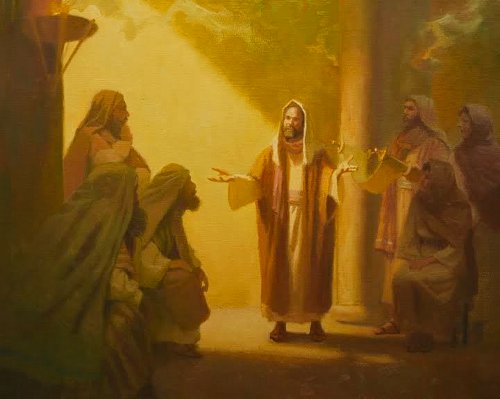
Apostle-Paul-PreachesBut how was he supposed to do that, exactly? I know, based on your understanding of the Bible and the last two-thousand years of Christian and Jewish history, you think the answer is obvious (although that answer isn’t the same for everyone), but it wasn’t actually that clear-cut back in the day.

Then certain individuals came down from Judea and were teaching the brothers, “Unless you are circumcised according to the custom of Moses, you cannot be saved.” And after Paul and Barnabas had no small dissension and debate with them, Paul and Barnabas and some of the others were appointed to go up to Jerusalem to discuss this question with the apostles and the elders.

Acts 15:1-2 (NRSV)

There seemed to be a disagreement, even among the Jewish disciples within the Way, as to just how to integrate the Gentiles. As we can see here, there were some Jewish people who advocated for the Gentiles to become devout converts to Judaism. Paul and Barnabas disagreed with that opinion. It took a decision by James and the Council of Apostles in Jerusalem to settle the matter, but even then, it wasn’t really settled (It was before God but not, apparently, before men).

When they heard it, they praised God. Then they said to him, “You see, brother, how many thousands of believers there are among the Jews, and they are all zealous for the law. They have been told about you that you teach all the Jews living among the Gentiles to forsake Moses, and that you tell them not to circumcise their children or observe the customs. What then is to be done? They will certainly hear that you have come. So do what we tell you. We have four men who are under a vow. Join these men, go through the rite of purification with them, and pay for the shaving of their heads. Thus all will know that there is nothing in what they have been told about you, but that you yourself observe and guard the law. But as for the Gentiles who have become believers, we have sent a letter with our judgment that they should abstain from what has been sacrificed to idols and from blood and from what is strangled and from fornication.”

Acts 21:20-25 (NRSV)

“After I had returned to Jerusalem and while I was praying in the temple, I fell into a trance and saw Jesus saying to me, ‘Hurry and get out of Jerusalem quickly, because they will not accept your testimony about me.’ And I said, ‘Lord, they themselves know that in every synagogue I imprisoned and beat those who believed in you. And while the blood of your witness Stephen was shed, I myself was standing by, approving and keeping the coats of those who killed him.’ Then he said to me, ‘Go, for I will send you far away to the Gentiles.’”

Up to this point they listened to him, but then they shouted, “Away with such a fellow from the earth! For he should not be allowed to live.”

Acts 22:17-22 (NRSV)

up_to_jerusalemAs we can see, even after the declaration by the Council about the status of Gentiles in the Jewish Yeshua (Jesus) movement, it appeared to be very confusing to even thousands of Jewish believers, all zealous for the Torah, just exactly what Paul was teaching to the Jewish and Gentile disciples in the diaspora. Was he teaching Jews to abandon Torah? Was he teaching uncircumcised Gentiles to observe Torah like the Jews? Paul appears to deny both allegations. Jews didn’t have a problem with what Paul taught about the Torah and Messiah. They only had a problem with the Gentiles being included without being circumcised and made to convert to Judaism!

It seems that the easiest thing for Paul to have done and the least dangerous way for him to fulfill his mission, was to enact the Matthew 28:19-20 mandate by converting Gentile disciples to Judaism! It would have solved all or at least most of his problems among the Jewish people. It would have been completely consistent with the practices of other branches of Judaism in his day. No one would have batted an eye.

So why didn’t he do that?

While Peter was still speaking, the Holy Spirit fell upon all who heard the word. The circumcised believers who had come with Peter were astounded that the gift of the Holy Spirit had been poured out even on the Gentiles, for they heard them speaking in tongues and extolling God. Then Peter said, “Can anyone withhold the water for baptizing these people who have received the Holy Spirit just as we have?” So he ordered them to be baptized in the name of Jesus Christ. Then they invited him to stay for several days.

Acts 10:44-48 (NRSV)

If Peter thought that Cornelius and his Gentile household should be made to convert in order to enter into the Messianic movement, between the Gentiles receiving the Spirit and baptism by water, the males should have been circumcised. But he didn’t order this to be done. We have no record in the Bible that this was ever done to Cornelius, the males in his household, or any of the male Gentile disciples of the Messiah (you may disagree based on Timothy, but remember that Titus was a specific example of a Gentile not being circumcised, see Galatians 2:3).

Peter presented his experiences with Cornelius as legal testimony in the Acts 15 proceedings.

The apostles and the elders met together to consider this matter. After there had been much debate, Peter stood up and said to them, “My brothers, you know that in the early days God made a choice among you, that I should be the one through whom the Gentiles would hear the message of the good news and become believers. And God, who knows the human heart, testified to them by giving them the Holy Spirit, just as he did to us; and in cleansing their hearts by faith he has made no distinction between them and us. Now therefore why are you putting God to the test by placing on the neck of the disciples a yoke that neither our ancestors nor we have been able to bear? On the contrary, we believe that we will be saved through the grace of the Lord Jesus, just as they will.”

Acts 15:6-11 (NRSV)

Peter saw first hand how Gentiles had their hearts cleansed by faith and received the Holy Spirit, even as the Jews did, but were not required to be circumcised and take on the full weight of the Torah in the manner of the Jews (for my opinion on the full implications of the Acts 15 decision on the Gentile disciples, see my multi-part Return to Jerusalem series).

john-the-naziriteMost Christians believe that what Paul did was to abandon the Torah and teach other Jews to do so, as well as teaching the Gentiles that grace replaced the Law. Paul denied this during multiple legal hearings and I don’t believe he was lying. Some people believe that Paul obligated the Gentile disciples to the full weight of the Torah mitzvot in the manner of the Jews without requiring them to convert, but my understanding of the NT record makes this unlikely as well (For more on this, see The Evidence of Luke and The Evidence of Acts 15).

It is also apparent, although it would have been the easiest option for Paul to use, that he did not require the Gentiles to convert to Judaism in order to become members of “the Way.” If that were his tactic, then I seriously believe very few Gentiles would have gone that route, which would have severely inhibited if not stopped cold dead the spread of the good news of the Jewish Messiah among the Gentiles.

Go to Acts 15:30-31 to find the statement supporting how the Gentiles felt about not having to be circumcised and not being obligated to take on the full weight of the Law which, as Peter said, was “a yoke that neither our ancestors nor we have been able to bear.” To force the full yoke of Torah upon the Gentile disciples, Peter said, would be “putting God to the test.” which, as we’ve already learned, is a “no-no.”

Jesus answered him, “It is said, ‘Do not put the Lord your God to the test.’”

Luke 4:12 (Deut. 6:16)

It might have been easier on Paul and easier on the Jewish people involved in “the Way” to have accepted a message of the good news that included Gentiles actually converting to Judaism, but I don’t think that’s what God wanted. From what I can tell, it would have severely inhibited mass Gentile adoption of faith in Messiah, if circumcision of the males and full adherence to the Law were necessary. It’s interesting to note that if those were indeed requirements, we probably wouldn’t have anything called “Christianity” today and we might even have (although this is debatable) a branch of Judaism that continued to worship a first century Rabbi/Prophet as Moshiach. If that were the case, Gentiles would be welcome to join that faith only if they were willing to convert, but otherwise, they would not be considered full members.

Given how few Gentiles convert to Judaism in the world today, how would the whole world be taught the good news of Messiah, come to faith, and believe? How would the Matthew 28:19-20 mandate be fulfilled?

Struggles in Diversity

Apostle-Paul-PreachesAs early as the Jerusalem church, there was linguistic diversity, as likely reflected in the Acts depiction of ‘Hebrews’ and ‘Hellenists,’ terms which probably designate respectively those Jews in the Jerusalem church whose first language was Aramaic and those whose first/primary language was Greek. Also, Paul’s deployment of the little ‘Marana tha’ formula in 1 Corinthians 16:22 is commonly taken as reflecting his acquaintance with Aramaic-speaking circles of Jewish believers, as distinguished from the Greek-speaking (gentile) congregations to whom he wrote.

Moreover, remarkably early there was also a trans-local diversity. In Acts we have reports of the young Christian movement quickly spreading from Jerusalem other sites in Jewish Palestine, to Damascus, Antioch and Samaria, and through the activities of Paul and others (often anonymous) spreading through various locations in Asia Minor, Greece, Rome and elsewhere. Though the historicity of some features of Acts has been challenged, it is commonly accepted that there was an early and rapid trans-local spread of the young Christian movement to locations such as these. It is to be expected that this remarkably rapid spread of the Christian movement would have been accompanied by diversity, Christian circles taking on something of the character of the various locales, and also the varying ethnic groups and social classes from which converts came.

Larry Hurtado
from pre-publication typescript of his article Interactive Diversity (PDF), pp 7-8
As published in Journal of Theological Studies.
“Interactive Diversity: A Proposed Model of Christian Origins.”
The Journal of Theological Studies 2013; doi: 10.1093/jts/flt063

I tend to think of the early Messianic (Christian) movement as having started out as a single, unified entity and then at some point, splitting into divergent trajectories. I just found out, thanks to reading the above-referenced Hurtado essay, that there is a “‘trajectories’ model of early Christian developments introduced by James Robinson and Helmut Koester.” I think it’s what many Christians think about when they consider the origin and development of our faith from the first century CE forward.

In the Abstract of his essay (pg 1), Hurtado states:

The earliest model of Christian origins appears in certain ancient church fathers, who posited an initial and unified form of Christianity from which a subsequent diversity then flowed, including alleged heretical divergences from the putatively original form.

That sounds terrifically familiar.

But it isn’t necessarily so.

As the quote from Hurtado at the top of the page states, we can expect a certain diversity between Aramaic/Hebrew and Greek speaking Jews was established from the very beginning (see Acts 6:1). Hurtado also brings out how there very well could have been “trans-local” variations in the Christian populations in the diaspora based on ethnicity and social class as well as language and nationality. However I’m interested in exploring one slice of the pie, so to speak:

On the other hand, there are also indications of far more adversarial interactions as well, and at a very early date. Paul’s letter to the Galatians will serve to illustrate this. Exegetes are agreed that this epistle reflects Paul’s exasperation over unidentified other Christians (probably Jewish) who have visited the Galatian churches calling into question the adequacy of Paul’s gospel and urging his gentile converts to compete their conversion by circumcision and a commitment to Torah-observance. Paul represents these people as proclaiming ‘a different gospel . . . confusing you and seeking to pervert the gospel of Christ’ (Gal 1:6-7), and he thunders an anathema on anyone who proclaims a gospel contrary to that which he preached (1:9).

-Hurtado, pp 10-11

jewish-sand-paintingThis is actually a key point that my Pastor and I regularly discuss. His opinion is that Paul had been teaching both the Jewish and Gentile disciples in the Galatian area against circumcision and Torah observance, while my position is that Paul did not require circumcision and Torah observance for the Gentile believers, but they were a “given” for the Jewish disciples.

We can see a few things from Hurtado. One is that he (and other “exegetes” or textual interpreters of the Galatians scriptures) believes that certain people, which Paul identifies as “false brothers” (probably Jewish) were invading the churches in Galatia and questioning the validity of Paul’s teaching. The second point is that said-false brothers were encouraging the Gentile disciples that they had to be circumcised and take on board full observance of the Torah, and Paul refers to that teaching as a “different gospel,” one this is “contrary to the gospel of Christ.”

The specific focus upon the Gentiles by the false brothers and Paul’s response tells us that in not being circumcised (i.e. having converted to Judaism), the Gentile believers were not obligated to the full weight of Torah obligation. It also tells us by contrast, that the Jewish disciples (born Jews and those Gentiles who previously converted to Judaism) were obligated to observe the mitzvot. Paul defines this “diversity” between the Jewish and Gentile believers he’s addressing in his letter as the “gospel of Christ” and any attempt to change that relationship, Paul says is a perversion of Christ’s gospel.

(As an aside, I recently read a criticism stating that Gentile conversion to Judaism is not supported Biblically and is an extra-Biblical anomaly introduced by the later Rabbis. However, a quick reading of Acts 13:43 shows how Paul and Barnabas encountered such converts in the synagogue at Pisidian Antioch [they probably found converts to Judaism in any synagogue they visited, but this is the first example I could find]. To the degree that Luke doesn’t record any displeasure or complaint by Paul at meeting with the converts in this verse, and I don’t believe we see Paul objecting to the authenticity of “righteous converts” to Judaism elsewhere in the New Testament [the exception is in Galatians, when Paul objects to Gentiles converting to Judaism specifically in order to be justified], we cannot automatically infer that either he or “the Bible” object to or invalidate such a practice.)

The diversity of Jewish and Gentile believers relative to Torah observance and related issues are points I’ve been attempting to assert, both in my personal interactions with my Pastor and here on my blog. I bring Hurtado’s work into the mix as a way of illustrating that this discussion exceeds the bounds of what we call “Messianic Judaism” or any interest in a Hebraic interpretation of the New Testament, and is of scholarly interest in the far wider arena of general Christian studies.

(I should say at this point that this isn’t the first time I’ve mentioned Hurtado and Galatians on my blog.)

I’ve never been convinced that the Jewish and Gentile disciples ever “cemented” into a single, unified body of worship, at least not on a large scale. I believe that the “Jesus movement” was too young and was forming in too turbulent a world to allow for a widespread integration of populations. In just a tiny march of years after Paul wrote his Galatian letter, he would be arrested, testify at multiple legal hearings, eventually be transported to Rome, and ultimately  be executed. Jerusalem would fall and the Temple would be razed. The Jewish people, including disciples of Jesus, would be scattered. The troubled and frail unity between the Jewish and Gentile disciples of the Master would crumble like ash in such an inflammatory environment.

The diversity of the early Jesus movement was based on a significant number of differences between varying bodies of disciples. Not all believing Jews supported Gentile entry into the way without conversion (see Acts 15:1-2 for example). Even after the halachah issued by James and the Council of Apostles (Acts 15), divisiveness continued. Many Jews said Paul could not be trusted and that he did not support and affirm the Torah of Moses for the diaspora Jews (Acts 21:21). There were even accusations that he was taking Gentiles past the Court of the Goyim into the Temple (Acts 21:28-29).

paul-editedWhile Paul fought strenuously to keep the fragmented and unstable populations within the body of Messiah together, it was a losing battle. He even admitted that Israel would be calloused because of the Gentiles for a significant period of time (Romans 11:25), and Hurtado points to Romans 14:1-15:6 as Paul’s attempt to address the social and ethnic differences between varying groups of Jesus believers, trying to draw them alongside each other.

I know I’m painting a rather dismal picture of Jewish/Christian relations, both past and present. In his letter to Rome, Paul was writing of a temporary separation between Jewish and Gentile believers. Temporary means that one day, we will draw closer to each other again (or for the first time). I see some evidence of that today, but it’s only the beginning. I don’t doubt that Messiah will come and it will be he who finishes the work that was started so many centuries before.

But my message for today is that a certain amount of diversity between Jewish and Gentile believers is by design. The gospel taught by Paul supported Jewish continuance in Torah observance but did not require Gentiles to convert, which would have made them obligated to the Law (the implication is that Gentile disciples in the Way were not so obligated). Any teaching imposing circumcision and Torah observance on Gentile disciples was vehemently criticized and opposed by Paul.

Hurtado doesn’t attempt to predict the mechanism of how the diversity will be resolved and for the moment, neither will I. I simply write this to offer further evidence that such diversity between the Jewish and Gentile believers did exist and that it is substantiated not only within Messianic Jewish studies but within mainstream Christian scholarship as well.

Addendum: I wrote this meditation before last night’s (Wednesday, June 26th) conversation with my Pastor. I’ll blog about our discussion including how it may impact what I said above in a subsequent missive.

What I Know About the Purpose of Torah So Far

Path of TorahThe Torah, or Jewish Written Law, consists of the five books of the Hebrew Bible – known more commonly to non-Jews as the “Old Testament” – that were given by G-d to Moses on Mount Sinai and include within them all of the biblical laws of Judaism. The Torah is also known as the Chumash, Pentateuch or Five Books of Moses. The word “Torah” has multiple meanings including: A scroll made from kosher animal parchment, with the entire text of the Five Books of Moses written on it; the text of the Five Books of Moses, written in any format; and, the term “Torah” can mean the entire corpus of Jewish law. This includes the Written and the Oral Law.

-from “The Written Law – Torah”
Jewish Virtual Library

Tonight, I’m having my usual Wednesday evening meeting with Pastor Randy. Our agenda includes discussing Chapter Eight of D. Thomas Lancaster’s book The Holy Epistle to the Galatians, “The Antioch Incident: Galatians 2:11-14”.

Here’s the relevant scripture:

But when Cephas came to Antioch, I opposed him to his face, because he stood condemned. For prior to the coming of certain men from James, he used to eat with the Gentiles; but when they came, he began to withdraw and hold himself aloof, fearing the party of the circumcision. The rest of the Jews joined him in hypocrisy, with the result that even Barnabas was carried away by their hypocrisy. But when I saw that they were not straightforward about the truth of the gospel, I said to Cephas in the presence of all, “If you, being a Jew, live like the Gentiles and not like the Jews, how is it that you compel the Gentiles to live like Jews?

Galatians 2:11-14 (NASB)

That’s going to be interesting since, on the surface, it seems as if Paul is accusing Peter of being two-faced in his observance of Torah, living “like the Gentiles” when among Gentiles (which is commonly interpreted as Peter scarfing down plates of ham and shellfish with the goyim), but pulling back from his Gentile friends when “certain men from James” (probably Jewish believers sent to Antioch by James, the leader of the Jerusalem Council and who likely didn’t approve of Gentile inclusion into “the Way”) came around to see what was going on.

However, there is an underlying issue involved in our discussion of Galatians. What is the purpose of Torah in New Testament Judaism? I’ve spent some time this past week looking into that question in three separate blog posts (so far, not including this one) and they have elicited some interesting responses. It’s those responses, more than anything I’ve written, that are helping me begin to pull together some sort of answer.

Today, I want to gather some loosely associated points or statements that point in the direction of an answer. I don’t want to say that they are the answer, but perhaps they form the container in which the answer resides. Although this should be an easy topic to address, in fact, it is enormously difficult to grasp and define.

Here’s what I’ve got so far. I’m going to mine the comments I’ve received on all three blog posts more or less in the order they were submitted.

Starting with the comments in Part 1:

According to Rabbi Carl Kinbar, the Christian tendency to separate the Torah into ritual/ceremonial law and moral law originated with the church fathers and was perpetuated by the reformers, but does not have a basis within the Bible itself. That is, the Bible doesn’t categorize the Torah mitzvot into those two containers. They are a convenient method of defining why the “ceremonial” laws were killed by Jesus but why Christians must still maintain the “moral” laws.

altruistico suggests that the Torah, which for him includes all of the authoritative and sacred texts in Judaism, has functionally preserved Judaism as an entity and the Jewish people as a unique and distinct people group for the last two-thousand years or so, particularly in the absence of the Jewish homeland, Temple, Priesthood, Sanhedrin court system, and Messiah King. Without Torah observance on some level and a halachic lifestyle (although many Jews today are non-observant and non-responsive to such), the Jewish people and Judaism would have gone the way of the Hittites and the Canaanites long ago.

ProclaimLiberty (PL) says that the purpose of Torah is very simply expressed and contained in Psalm 19 and that the teachings of Jesus as well as his death, resurrection, and ascension have changed none of that purpose for the Jewish people, Messianic or otherwise. Jesus himself said that until Heaven and Earth passed away, the Torah would remain, as stated in Matthew 5:17-18. In fact, PL says that verses 19 and 20 illustrate the Messiah’s encouraging better performance of the mitzvot for his Jewish listeners.

Proceeding to the comments in Part 2:

rabbis-talmud-debateCarl Kinbar says that as a Messianic Jew who studies the Rabbinic writings every day, he finds them “illuminating and nurturing” but presents the opposite side of the coin in saying that he weeps “over the gaping absence of the Master from their pages.”

ProclaimLiberty and Carl Kinbar engage in a lengthy discussion in the comments section of this blog post regarding how the Rabbinic writings should be considered by Messianic Jewish people. PL seems to have a more traditional viewpoint about the authority and binding nature of Rabbinic rulings, and while Carl Kinbar also esteems the Rabbis, he notes that their viewpoint would discount the reality of Yeshua as Messiah, even if a Divine Voice from Heaven should declare the truth.

I know you are probably thinking at this point that I’ve strayed from my original question, but for observant Jewish people, except in rare circumstances, one does not separate Talmud from Torah and in fact, studying Talmud is studying Torah. It would be best for you to review the full text of PL’s and Kinbar’s conversation, since any attempt to condense it here would likely do them both an injustice.

Moving on to Part 3:

At my request, Carl Kinbar gave me his understanding of how Matthew 23:2-4 can be interpreted relative to the Noel Rabinowitz paper (see the body of the blog post for the link or go to my Books page). In his series of comments, Kinbar specifically addresses the legal aspects of Torah which are not easily, if at all, enacted in the modern world due to the lack of an appropriate Sanhedrin or other court body. Except in Orthodox Jewish contexts, there are no judges to rule on matters of halachah and to issue judgments binding on the Jewish people involving such legal cases.

However, Kinbar did offer one other nugget for consideration that addresses the variability we see in both ancient and modern Jewish practice. One of the problems in defining what “Torah” is and how it is observed is the inconsistency across different Jewish communities (Reform, Conservative, Orthodox, Reconstructionist, and so on). Kinbar notes that in ancient times including during the “earthly ministry” of Jesus, Judaism had a common core (common Judaism), which was defined as the basics of Torah observance according to the prevailing customs of the time, but that different communities, synagogues, sects kept their own unique set of “specifics.” Most synagogues did not have a centralized leadership and did not recognize the authority of other sects (including the Pharisees) to impose other laws on their groups.

It is my contention that even within the Messianic Jewish sect of “the Way,” there were sub-groups that disagreed with the halachah issued by the leadership of the Jerusalem Council, principally around the mechanism of allowing Gentiles entry into their Jewish religious space.

Whether in ancient or modern times, it seems clear that there has been a long-standing pattern within the overarching entity we call “Judaism” of many individual communities operating off of a varying religious and cultural praxis, all of them considered “Jewish,” and yet with no one group having any influence on the observance or behavior of any other group. Many communities within both ancient and modern Judaism do not even have a centralized leadership, allowing for variability between the practice of different synagogues occurring within the same sect of Judaism.

Thus the “function” of Torah or rather how (or in some cases “if”) it is lived out, differs across the variety of Jewish communities in the ancient and modern worlds. This includes how Torah functions within modern Messianic Judaism. No one group has the corner market in defining what “Torah” is and how it works.

I do want to point to a few additional details.

reading-of-the-torahOne function of Torah from a Christian perspective, is to point to the Messiah. It has been a tutor or custodian of the Jewish people, keeping them “contained” within a certain moral/ethical boundary (Galatians 3:23-25) until such time as the Messiah arrived. However, if we do away with the Torah as custodian or pointer after the first generation of Jews is born post-ascension, what is left to point subsequent generations of Jews to Moshiach, especially those who do not have an awareness of Jesus as Messiah? I know Christians would say “the church” is the new pointer, but seeing as we have the majority of Jews defining themselves as Jewish primarily because they don’t believe in Jesus, we might want to reconsider our position. We should let the Torah be the pointer for the majority of Jews on Earth, allowing Torah to continually fulfill this purpose.

Even setting Talmud aside for the moment, nothing defines the Jewish people more than the Torah. We can indeed see that during every exile, the Jewish people have maintained their identity and distinction because of their religious and cultural observances as defined and provided by Torah. Without Torah observance, the Jewish people would long ago have assimilated into the cultures among which they were exiled. It’s always a danger and is a particular threat in the modern world where so many Jews are secular. Only a slender thread of DNA and a few ethnic leftovers prevent a person now known as a “Jew” from vanishing, if not from the sight of God, then at least from the human cultural consciousness.

So much for the entire Sinai event and the promises God made to Abraham, Isaac, Jacob, and every subsequent generation of Jews as spoken by the Prophets that a Messiah would come to restore the Jewish people, restore Israel as a nation, and inspire unprecedented zeal for the Torah.

That’s what I’ve got so far. No definitive answers, just a list of important points to consider. Most of them can’t even be said to be “the inspired word of God,” at least not as how Christianity would see it.

You need not, like withered leaves, fall away from your ancient stock, or deny parents or nationality; you need not be unfaithful to the God of your fathers, on account of reverence rendered to the Son, for only when you do him homage are you a true Jew, a genuine son of Abraham, not only after the flesh, but after the Spirit.

-Rabbi Isaac Lichtenstein
from “Points of Contact between Evangelical and Jewish Doctrine” (1895)
as quoted in “The Story of Rabbi Issac Lichtenstein”
by D. Thomas Lancaster, pg 32
The Everlasting Jew: Selected Writings of Rabbi Isaac Lichtenstein

If you want to add anything to this summary before tonight, now would be a good time.

FFOZ TV Review: The Good News

ffoz_tv1Episode 01: Most Christians believe that the gospel message of Jesus is that he died for our sins and if we have faith in him we will be given the gift of eternal life. While certainly this is a major component of the gospel, it is not the whole story. In episode one viewers will learn that the concept of the gospel wasn’t invented by Jesus or the disciples, but rather was prophesied in the Hebrew Scriptures. The “Good News” was the promise of the coming messiah and that he would bring redemption to the children of Israel.

At the First Fruits of Zion (FFOZ) Shavuot conference last spring, I told FFOZ President Boaz Michael that I’d like to spread the “good news” of their television ministry through my blog by reviewing one episode of their TV show per week. Obviously, I’ve fallen down on the job. My life has been busy and there have been so many things I’ve wanted to write about. A few months ago, I did write a review about the FFOZ TV series as a whole, and watched a few episodes to get a “flavor” of how the show is organized. But that doesn’t impart the nature of the message each show offers its audience.

Today (as I write this), I’ve revisited my promise and watched the first episode, The Good News. This is actually about the “mystery” of the good news or gospel, since what Christians believe about the gospel message is only part of the story.

The Lesson: What is the Good News?

Toby Janicki is the main speaker and teacher for this and every episode and he asks the question, “what is the gospel message?” Christians think we know the answer. The gospels are the books of Matthew, Mark, Luke, and John and the gospel message is that Jesus died for our sins and was resurrected. Through his atoning work, anyone who believes in Christ will have their sins forgiven, receive eternal life, and go to heaven when they die.

Toby doesn’t deny any of that for a second but tells us that it is only part of the message of the gospel or “good news.”

This episode, like the entire TV series itself, encourages the viewer to look at the New Testament from its original First Century CE Jewish context. What would the Jewish people in the time of the apostles have heard and understood when Jesus spoke? How the church presents the gospel today does not carry forward that context and what we hear preached every Sunday is only a portion of the message. That’s the value of this television series to its defined audience, traditional Christian believers. Know Christ better by learning to understand the Jewish Jesus.

Jesus and the apostles were teaching the gospel or good news message long before the crucifixion and it wasn’t “Jesus will die for your sins.” In fact, Jesus spoke the good news in the very beginning:

The Spirit of Hashem is upon me in order to anoint me to bring good news to the humble. He has sent me to care for the brokenhearted, to proclaim freedom for the exiles, and for the blind an opening release … to send the oppressed free … to proclaim a year of favor for Hashem.

Luke 4:18-19 (DHE Gospels)

I used the Delitzch Hebrew Gospels translation for these verses, which Toby also reads from on the show when he quotes from the gospels. It imparts a greater sense of the Hebrew message by “retro-translating” the Greek text into Hebrew and is very helpful in drawing the mind of the Christian reader into the Jewish world of the Messiah.

You may also know that, in the above-quoted verses, Jesus was reading Isaiah 61:1-2 in the synagogue and he was speaking about himself. That scripture, along with several others from Isaiah, will provide valuable source information later in the show that is used to define “good news”.

So who are exiles, the blind, and the oppressed and what do they have to do with the gospel message?

The fact that the apostles didn’t seem to understand that Jesus had to die, and when he did, the shock, disappointment, and fear they experienced before his resurrection, as well as the surprise they felt after he was, tells us that they did not realize the good news had anything to do with the death and resurrection of the Messiah. What then did they think they were preaching to Israel and what was this “good news?”

Then Yeshua traveled around in all the Galil. He taught in their synagogues, he proclaimed the good news of the kingdom, and he healed every sickness and every disease among the people.

Matthew 4:23 (DHE Gospels)

It’s interesting that Toby notes Jesus never defines what the good news is to either the apostles or to anyone he preaches to. He assumes they already know what the gospel message is. But if even the apostles didn’t realize it meant that Jesus was to die, what were they supposed to know?

In this and the other FFOZ TV episodes, Toby presents information and then summaries it as clues, in this case three clues. The first is that the gospel or good news is actually the “good news of the Kingdom” as stated in the above-quoted passage from Matthew. This was a message specifically meant for the Jewish people in Israel and it was good news they were wanting to hear, a message of something they had been waiting for.

To understand what the gospel message is, the scene switches from Toby in the studio to FFOZ teacher and translator Aaron Eby in Israel. He provides the Hebrew language background for each lesson including this one.

ffoz-teaching-teamAaron takes us through a series of passages from the book of Isaiah including Isaiah 40:9, 52:7, 60:6, and of course, 61:1. In each case the good news is the message of the Messianic mission, the redemption of Israel, that is, physical, national Israel, as well as the entire world, when the Messiah comes to reign as King. The Hebrew word for “good news” is related to the Greek word and its variants that we translate into English as “evangelism” and “gospel”. It’s easy to see how the church has historically understood the message in one sense, but missed its larger meaning.

The scene shifts back to Toby who gives us the second clue: there is a gospel message in the Old Testament. That also takes us to clue 3: the gospel in the Old Testament is the promise of the coming of Messiah and the redemption of Israel, the Jewish people.

We can clearly see that the apostles expected this after the resurrection:

So when they had come together, they were asking Him, saying, “Lord, is it at this time You are restoring the kingdom to Israel?” He said to them, “It is not for you to know times or epochs which the Father has fixed by His own authority; but you will receive power when the Holy Spirit has come upon you; and you shall be My witnesses both in Jerusalem, and in all Judea and Samaria, and even to the remotest part of the earth.”

Acts 1:6-8 (NASB)

Notice that Jesus doesn’t rebuke the apostles for desiring national redemption and self-rule, he just says they don’t have the right to know when it will occur. He does say that before his return and the establishment of the Messianic Kingdom, they will receive power from the Holy Spirit to be Messianic witnesses “in Jerusalem, and in all Judea and Samaria, and even to the remotest part of the earth,” which is exactly what we see in the rest of the book of Acts and the New Testament.

Toby then takes the audience through a more detailed examination of each of the previously identified passages in Isaiah, closely drawing the meaning of the good news out and illustrating for us repeatedly how the Jewish audience in the time of the apostles would have understood the good news of Jesus as the coming of the Messiah and the redemption and restoration of Israel, and a reign of peace throughout the entire world.

Who are the exiles? Who are the blind? Who are the persecuted? Exiled and persecuted Israel, temporarily blinded to the Messiah for the sake of the Gentiles:

For I would not, brethren, that ye should be ignorant of this mystery, lest ye should be wise in your own conceits; that blindness in part is happened to Israel, until the fulness of the Gentiles be come in.

Romans 11:25 (KJV)

The Greek word most Bibles translate as “hardening” or some variant, is sometimes rendered as “blindness,” such as the King James Bible does. Read in a Jewish context and heard through a Jewish consciousness, when Jesus recited the words of the Prophet Isaiah in Luke 4:18-19, he was saying that he was the Messiah who had come to bring the good news to Israel and to one day redeem and restore her as a physical Kingdom on Earth.

Toby said something interesting about one of the Isaiah prophesies I want to share:

An abundance of camels will envelop you, camel colts of Midian and Ephah, and all of them will come from Sheba; gold and frankincense will they bear, and they praises of Hashem will they proclaim.

Isaiah 60:6 (Stone Edition Tanakh)

Toby relates that according to the Jewish sages, this describes the Gentile nations coming to Jerusalem to pay tribute to King Messiah. However, we have already seen something similar in the Magi of the East coming with gifts to pay tribute to the newborn Jesus. Of course, it is quite possible that Isaiah’s prophesy may have more than a single application. And it’s important to know the relationship between Gentile Christianity, the redeemed Israel, and the Jewish Messiah King.

The other interesting thing that Toby brought up (and I never realized this before) is that Jesus is actually speaking in Isaiah 61:1. Notice the text says (as translated in the Stone Edition Tanakh) that “the spirit of my Lord, Hashem/Elohim, is upon me, because Hashem has anointed me to bring tidings to the humbled; He has sent me to bind up the brokenhearted…

The emphasis is obviously mine and I include it to illustrate that it is the Messiah who is directly speaking in these verses, the voice of Yeshua bringing hope to Israel in the pages of the Old Testament.

When Christians read about the redemption of Israel in Isaiah, they often interpret the prophesy to mean “spiritual Israel” or “the church.” And yet, the Jewish hearers of Jesus and the Jewish readers of the gospels of the apostles would have understood the message much differently. They would have understood that the good news of Jesus is the promise of the coming Messiah and the redemption and restoration of national, physical Israel as a Kingdom on Earth.

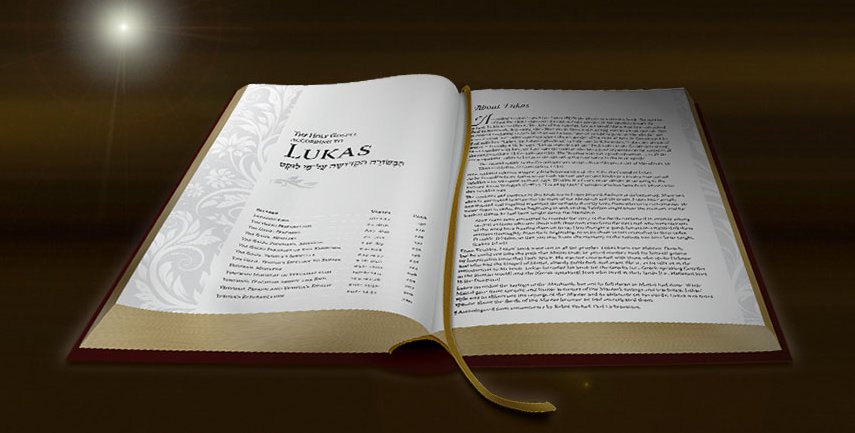
dhe_lukas

This does not unwrite or replace the fact that Jesus died for our sins and that in his resurrection, we have forgiveness and an eternal place in the world to come if we believe. However, we Gentiles are grafted in to the commonwealth of Israel, as Toby teaches. We don’t replace Israel, we come alongside her and partakers of the promises, and as subjects and servants of the Jewish Messiah King.
What Did I Learn?

I’ve consumed a great deal of this material at FFOZ conferences or from their audio CD lectures as well as reading it in their printed material, but this television episode titled “The Good News” helped me organize that information into something that is easier for me to remember and transmit to others, a message to my Christian reading audience (and I am a Christian among them) that we have only been taught part of the story of the good news.

Toby Janicki, Aaron Eby, and the rest of the FFOZ ministry have “solved” the mystery of the gospel and clued us in on the rest of the message: Jesus came to die for our sins and to deliver the promise of everlasting life for all who believe. But, and this is extremely important, as Messiah King, he came to deliver the promise of good news to all of Israel that when he returns, he will release the captives in exile, restore sight to the temporarily blinded, free the oppressed Jewish people, and proclaim freedom for Israel, the year of favor from the Lord.

If you found this message of the true good news of Jesus Christ interesting and illuminating, I highly encourage you to watch the complete episode The Good News, which is the first in the series, at tv.ffoz.org. It is First Fruits of Zion: A promise of what is to come.

I hope to review the next episode very soon.

The Purpose of Torah in New Testament Judaism, Part 3

world-to-comeRabbi Simeon said: If a man looks upon the Torah as merely a book presenting narratives and everyday matters, alas for him! Such a torah, one treating with everyday concerns, and indeed a more excellent one, we too, even we, could compile. More than that, in the possession of the rulers of the world there are books of even greater merit, and these we could emulate if we wished to compile some such torah. But the Torah, in all of its worlds, holds supernal truths and sublime secrets…

Thus the tales related in the Torah are simply her outer garments, and woe to the man who regards that outer garb as the Torah itself, for such a man will be deprived of portion in the next world.

-Zohar, III.152 as quoted in
The Garments of Torah by Michael Fishbane
Chapter 3: The Garments of Torah – Or, to What May Scripture be Compared?, pg 34

(If you haven’t done so already, please read Part 1 and Part 2 of this series.)

I mentioned previously that there is a strong temptation to take the Torah into mystical and spiritual realms since it seems that’s where it comes from. I also previously mentioned that Pastor Randy believes there is a pure and perfect Word of God that exists in the Heavenly Court and that the Bible we possess in our world, while it contains the Word of God, is not, in fact, the Word of God (ProclaimLiberty commented that indeed this isn’t a correct way to look at the Torah, though). As the Zohar states, we may consider our Bible to be merely a garment, an outer covering, but not the essence of its Holy contents.

Fishbane, in Chapter 3, compares and contrasts Torah as mystic vs. mundane, if I can apply such a word to Torah. This is his response to the current trend in Bible studies to address and consider the Biblical texts from a purely literary perspective. This is the sort of viewpoint we find in Richard Elliott Friedman’s book Who Wrote the Bible?.

Friedman carefully sifts through clues available in the text of the Hebrew Bible and those provided by biblical archaeology searching for the writer(s) of, primarily, the Pentateuch. He does so with clarity and engaging style, turning a potentially dry scholarly inquiry into a lively detective story. The reader is guided through the historical circumstances that occasioned the writing of the sources underlying the Five Books of Moses and the combining of these diverse sources into the final literary product. According to Friedman, the most controversial part of his case is the identification of the writer and date of the Priestly source. This book is neither comprehensive nor unduly complex, making it a good introductory text for beginners and nonspecialists. Recommended for all academic libraries. –Craig W. Beard, Harding Univ. Lib., Searcy, Ark.

Copyright 1987 Reed Business Information, Inc. –This text refers to an out of print or unavailable edition of this title.

-as quoted from Amazon.com

Many modern Bible scholars are in love with the “JPED” theory of Old Testament (Tanakh) authorship, but in this approach, said-scholars all but remove God from the equation and reduce the Bible to a book written for political, religious, and personal motivations, rather than to impart the history and message of God’s interaction with human beings.

However, mysticism is an equally difficult realm in which to thrust the Bible as it far exceeds mere “inspired Word of God” and goes into structures of comprehension that are supposed to transport us into the upper chambers of the Almighty. I personally know some people in the Hebrew Roots movement who immediately become offended and incensed at the mere mention of the “K-word” (Kabbalah) and the quote from the Zohar above is not likely to earn me any points with them.

I’ve admitted before that I’m not mystic. I appreciate and enjoy some of the Jewish mystic writings as metaphors for certain spiritual truths, but I don’t take them as literal experiences. In fact, in an effort to understand something of the Christian mystical perspective, I recently read John A. Sanford’s book Mystical Christianity: A Psychological Commentary on the Gospel of John, however Sanford’s attempt to analyze this gospel from the perspective of Carl Jung and Jungian psychology seemed anachronistic and distracting rather than spiritually revealing.

I do agree though, that if we look at the Bible just as a book, even a Holy and inspired book, and see only the nuts and bolts narrations, our understanding of the message God is trying to deliver to humanity will be extremely limited. The problem is, digging any deeper than the literal meaning of the text presents the danger of getting lost in either mystical byways or just our own imaginations.

I started writing this series as an effort to explain what “keeping the Torah” means to the Jewish disciples of Yeshua (Jesus) but the “question behind the question” is “What is Torah?” That’s an amazingly difficult question to answer.

But if we lack wisdom by considering a mitzvah as just a text on paper narrative (the commandment to visit the sick) or as a simple behavioral act (visiting a sick friend in the hospital), do we gain wisdom and insight and the deeper meaning of Torah by considering the study and performance of a mitzvah as a transcendent act that intimately connects us to God?

“Such a man,” says another Zoharic text (II.99a-b). “is…a ‘bridegroom of the Torah’ in the strictest sense…to whom she (divinity as beckoning Bride) discloses all her secrets, concealing nothing.”

-Fishbane, pg 35

transcendent-shechinahHere, I see a poetic image of the Torah in her “garments,” chaste before her bridegroom, and approaching the act of intimacy, she sheds her clothing, revealing herself to her beloved and finally, she holds back no secrets from the spirit of her cherished one. Fishbane, in discussing the bride, presents both the narrative or legal form of the Torah, the bride in her garments, and the expression of divinity, the inward truth of God, the veiled body of the bride in the process of disrobing as the groom not merely studies Torah but occupies himself (“osek”) fully in Torah:

Said Rabbi Joshua the son of Levi: Every day, an echo resounds from Mount Horeb, proclaiming and saying: “Woe is to the creatures who insult the Torah.” For one who does not occupy himself in Torah is considered an outcast, as is stated “A golden nose-ring in the snout of a swine, a beautiful woman bereft of reason.” And it says: “And the tablets are the work of G-d, and the writing is G-d’s writing, engraved on the tablets” ; read not “engraved” (charut) but “liberty” (chairut)—for there is no free individual, except for he who occupies himself with the study of Torah. And whoever occupies himself with the study of Torah is elevated, as is stated, “And from the gift to Nahaliel, and from Nahaliel to The Heights.”

-Pirkei Avot (Ethics of Our Fathers) 6:2

As Fishbane progresses in his writing, he temporarily sets aside the mysticism of Torah to “put matters in a fuller historical and hermeneutic perspective.” (pg 36) Fishbane characterizes the Torah being viewed in ancient Israel as “the divine voice” spoken directly or indirectly through a number of “filters” (Prophets or more indirect signs and wonders). God’s revelations are expressed in the text as legal and ethical teachings presented across an epic narrative of the history of Israel and her relationship with God.

However, if the text is treated too much like “text,” there is a danger of swinging the pendulum too far in the other direction and stripping the Torah of its divine origins and worse, reducing it to a set of anachronistic tribal laws that do not “travel well” going forward in time.

Of considerable importance in the sanctification of Scripture is that the prestigious literary canon of divine teachings had become a “closed literary corpus” – one culturally reopened only through human textual exegesis.

-Fishbane, pg 37

This leads us to Fishbane’s commentary on the early Pharisees and their comprehension of the “paradoxical and dialectical” nature of the scriptures. According to Fishbane, their resolution to the ambiguities presented in the Bible and in an effort to prevent Torah from becoming a “dead letter,” was to search the text “in every possible way for every possible prolongation of the original divine teachings in new times,” thus making “the old written Torah (into) a ‘living Torah.'”

So we stand between preserving the divinity of scripture as a romanticized mystical text and hermeneutically extending the Torah in order to adapt its divine truths to a constantly changing environment.

I can imagine that neither perspective will be particularly appealing to most readers.

I once criticized John MacArthur because I mistakenly believed he said that, in defining “Biblical sufficiency,” the Bible was literally the only book anyone would ever need to understand any topic.

I’ve since learned that “sola scriptura” doesn’t quite work that way, though I’m still not a big fan of this method of considering the Bible. Fishbane however, explains that Rabbinic commentary takes the idea of “the Bible contains all there is” to a level that would make even MacArthur balk.

…the early Pharisees revealed unexpected possibilities in the original divine communication. It was gradually claimed that “all is in it” (Mishna Abot v.25) – or better, that all could be recovered from it if one but had the appropriate hermeneutic key.

-ibid, pg 38

heurmenutic-keyIn considering my commentary on Boaz Michael’s teaching “Moses in Matthew,” I can only believe that under the inspiration of the Holy Spirit, the apostle Matthew “had the appropriate hermeneutic key” in extracting and applying portions of the Torah, Prophets, and Writings to the life of Messiah in ways that had not originally been presupposed (Hosea 11:1 to Matthew 2:15 for instance). However, unless we assume that the Pharisees and the later Rabbinic Sages also had access to the same influences of the Spirit, can we believe that their “hermeneutic key” is just as “appropriate” as Matthew’s, and that it unlocked the same doors?

I previously wrote a multi-part commentary based on the paper “Matthew 23:2-4: Does Jesus Recognize the Authority of the Pharisees and Does He Endorse their Halakhah?” written by Noel Rabbinowitz for the Journal of the Evangelical Society (PDF). In his paper, Rabbinowitz concluded that not only did Jesus recognize the halachah of the Pharisees but he acknowledged that they had the authority to establish valid halachah in Israel!

This may be a bit of a stretch for most of you reading this, but if we allow Matthew 23:2-4 to act as a bridge between the inspired authority of the gospel and other New Testament writers and the subsequent Rabbinic authorities in Judaism, we may somewhat reasonably conclude that halachah established after the New Testament canon was closed was still tacitly approved from Heaven.

This interpretation has tons and tons of problems (Rabbi Carl Kinbar posted a wonderfully insightful comment on this matter), not the least of which are the pronouncements of the Rabbis which are in direct opposition to Jesus and faith in him as Messiah, however dismissing this perspective out of hand denies not only the stated word of Messiah in the Bible, but the opportunity to view post-exile Judaism as possessing leaders who indeed did speak to and hear from God (which is historically what Christianity has done in the development of supersessionism for the past nearly twenty centuries).

Returning to Fishbane and connecting him (temporarily) with Matthew, I believe that Matthew “encoded” certain information in his gospel that could only be decoded or unpackaged by an audience with the “appropriate hermeneutic key,” one that provided the traditional associations and interpretations to older sections of the Holy text. In addressing scripture, the Pharisees and the Jewish sages who followed them attempted to continue to unlock the pages of the scriptures using (inspired?) hermeneutic keys and amazingly, Fishbane acknowledges that Christianity has done the same thing.

Surely you will have caught here more than a faint Jewish echo of the well-known “interpretatio Christiana,” by means of which Virgil and other pagans were accommodated by the Church Fathers into the normative Christian fold insofar as their writings were shown to “anticipate” the real good news — albeit through a glass darkly.

-ibid, 39

OK, so it doesn’t sound like that much of a compliment, but it does compare the interpretative activities and methods of the Pharisees to the early church fathers conferring, if only by inference, the authority to said-church fathers to develop valid Biblical interpretations. Of course, I have to deliver the same caveat for some of their hermeneutic gymnastics (especially those that discount Israel and denigrate the Jews) as I do certain conclusions, rulings, and pronouncements by the Rabbinic sages that discount the Messiahship of Yeshua.

So where does all this leave us?

…and thus to regard the uniqueness of Scripture as its capacity to teach simultaneously at various cognitive levels; the esoteric tradition of Judaism was concerned to encounter the presence of God, and thus to see the special sanctity and uniqueness of Scripture in its being at once a hieroglyph of the divine Logos and divine Reality itself. God is not merely present in Scripture through a kind of verbal displacement. God and Scripture are, in fact, one mysterious and inseparable Truth.

-ibid, pg 42

simhat-torahWhat is Torah and how is it applied in the lives of New Testament Jews, both in the first century CE and today? The answer seems to travel in different directions. Torah is a bride and the Jewish people are the bridegrooms, and at the intimate urgings and involvement of the bridegroom, the bride begins to doff her garments and reveal her deeper mysteries and truths. Torah is a multi-layered, encapsulated, encoded set of pronouncements that at once present the details of moral, ethical, and legal standards and that, properly read, reveal the divine meaning lurking behind the words on the page, allowing the performance of each mitzvah not simply to be a “good deed” but an act of loving intimacy and devotion of the Jewish people to God.

Mystic or hermeneutic pathways both leading to the same goal: the desire to draw nearer to the Creator.

In this, I don’t mean to say that only Jews desire intimacy with God or that Christians cannot deeply occupy themselves in Torah and benefit from the experience, but the focus of this series has to do with the purpose of Torah in the lives of the Jewish disciples of Messiah. Thus, my focus must be on Torah as applied specifically to Jewish people.

Part 4 of this series should return to this topic and confront something a little less “mystical.”