Tag Archives: messianic judaism

Where Would Noahides Go If There Were No Synagogues?

Messiah’s community is a single community expressed in diverse forms within the Jewish community and among the nations. All are called to a dedicated life of worship, neighborly service, and public testimony to Yeshua. Unity and love throughout the entire community confirm Yeshua’s role, as the One sent by the Father, and God’s purpose in Messiah for Israel and the Nations. (John 17:20-21; Acts 21:20; Gal. 2:7-8)

-from the Union of Messianic Jewish Congregations (UMJC) Statement of Faith

I came across this link somewhat at random, and it reminded me of a question I wanted to ask the Internet.

Typically non-Jewish believers in Rav Yeshua (i.e. Christians) become aware of movements such as Messianic Judaism or Hebrew Roots through a sense of dissatisfaction with the Church, the feeling that something is missing. I remember having that sense early on in my “Christian walk”. My wife, who is Jewish, also felt something was lacking in our church experience, and when we encountered a local Hebrew Roots group (this was many years ago), she was immediately “hooked”.

It took me longer to get onboard, but eventually, as I started learning more, I began to realize that what the Bible actually said about the Jewish people, Judaism, and Israel wasn’t what was being preached and taught in most churches.

two pathsMy wife and I have since journeyed on separate trajectories relative to our faith and I respect her decision. She’s Jewish and she needs to be in Jewish community and to embrace Jewish identity.

My identity is less traditional and I’ve gone through a sometimes convoluted developmental process, finally arriving where I am today (though I don’t think God is finished with me yet).

Someone recently said (Don’t make me regret posting this link, Peter) that “Judaism is a communal faith and not designed to be practiced in isolation.” So is Christianity. The ideal is to find a like-minded community of fellow believers and to “fellowship” with them.

Over the years, I’ve transitioned between numerous communities, starting with a Nazarene church, then a Hebrew Roots/One Law congregation, then to a Bible study/home fellowship, then (eventually) back to Hebrew Roots, and most recently, I attended a Baptist Church for two years (and have since left). There were times in that history when our family was just alone in our faith, and times, including the present, when I am alone as an individual.

No, I’m not revisiting the idea of community for myself. As nearly as I can tell, that door is closed for more reasons than I can list in this brief blog post. However, it did occur to me that there are very few paths to community for someone, particularly a non-Jew, who generally believes in the tenets of faith as described by the UMJC (no, I’m not affiliated with them, and no I’m not specifically advocating for them — they just happen to be a handy example).

Even if there were a Messianic Jewish community in my area, and even if I felt I’d be welcome there, I probably wouldn’t attend out of respect for my wife’s sensitivities on the matter.

But what about other non-Jews who have my point of view?
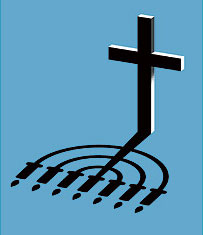
cross and menorahThere are plenty of Gentile-only Hebrew Roots One Law/One Torah congregations out there of various sizes and configurations. Some have a few Jewish worshipers, but they almost always were not raised in a Jewish home nor had the benefit of growing up in Jewish social and religious community. Those Hebrew Roots groups are also almost always run by non-Jews, although their leaders may wear a tallit and kippah and even call themselves “Rabbi”.

But there are also a number of non-Jews who have a more “Messianic Jewish-like” perspective on the Bible, the centrality of Israel, the primacy of the Jewish Messiah King, and how all that relates to the people of the nations. A view I advocate here on my blog.

If they don’t live within reasonable distance of a Messianic Jewish congregation established and operated by Jews as a Jewish community which graciously also admits non-Jews, where do they go?

It would be like being a traditional Noahide and not having a nearby Jewish synagogue to attend. I know of intermarried couples who attend both our local Chabad and the Conservative/Reform group here in my area, and the non-Jewish spouses are Noahides in Jewish community, not unlike how I think of non-Jews in Messianic Jewish community.

But what if there were a group of Noahides who lived nowhere near a synagogue? What if they weren’t intermarried to Jewish spouses, but through some other process, came to the realization that being a Noahide was what the Bible required of them in order to worship Hashem?

Apply those questions to those of us who are “Judaicly-aware” non-Jewish disciples of Rav Yeshua. Where would such a group of Gentiles go to find worship and community? Could a group of Gentiles band together to practice something analogous to “Messianic Judaism?” What would you call it, “Messianic Gentilism?”
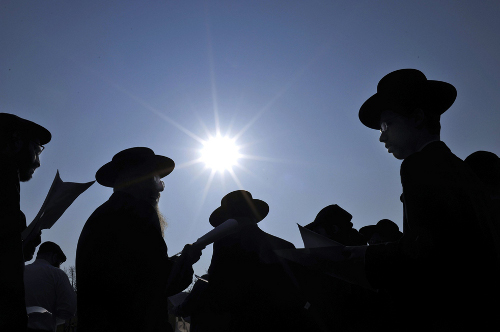
Orthodox JewsI was wondering if those organizations that generally call themselves “Messianic Judaism” (such as the aforementioned UMJC) have established any guidelines for non-Jews who want to come alongside them but who geographically are too far away from a Messianic Jewish congregation to attend. For that matter, that group of Gentiles may not even have a skilled teacher or leader among them. They probably could use a lot of assistance and guidance.

Although the community in ancient Antioch (Acts 13:1; 15:1-2), to the best of my understanding, had both Jewish and non-Jewish members, the Apostle Paul (Rav Sh’aul) also founded many Gentile-only communities, the one described in his epistle to the Galatians being the one that immediately comes to mind. Paul “kept tabs” on these various groups, when he couldn’t visit them, through his correspondence, but the vast majority of the time, for day-to-day operations, they were run by the local members.

What did a Gentile-only “Messianic” community look like in those days? We don’t really know. Probably they looked at least somewhat “Jewish,” if for no other reason than because that was the only communal model available to them.

But this is nearly two-thousand years later and a lot has changed. Yes, ultimately the Gentiles broke away from their Jewish base and invented Gentile-only (unless a Jew wanted to leave Judaism and convert) Christianity, which almost completely rewrote how the Bible was to be understood.

Judaism too has gone through a great deal of development, and what we think of as Rabbinic Judaism today (which, in my opinion, includes at least some Messianic Jewish groups) is not the same as the Judaism(s) practiced during the late Second Temple period.

rainbowSo theoretically, if a collection of “Noahide” Judaicly-aware non-Jews wanted to pursue a community consistent with how we think of Gentiles coming alongside their Messianic Jewish counterparts, is there anything or anyone they could contact to help them? What resources should they consult so they wouldn’t just be “shooting from the hip?”

And no, I’m not thinking of starting such a community here, but I’m thinking that this is an area where others like me in the world are underserved and, left on their own, are perhaps forming groups and fellowships that might be less than optimal. I think they could use some help. I’m just wondering if such help exists and if it is even possible to create viable, sustainable congregations of Gentiles who worship and live consistently with how Messianic Judaism envisions Gentiles in Messiah.

How Is The World Blessed By The Offspring of Abraham?

I was sitting in the airport in Dallas reading my daily page of the Talmud when an elderly priest, readily identifiable by his collar, stopped by my seat and asked me a question. “I hope you don’t mind my interrupting you. I see you are reading a Hebrew book and you are wearing a hat. Are you by any chance a Rabbi?”

When I responded that indeed I am, he continued, “I hope you don’t think I’m out of place but all my life I’ve been hoping that someday I might meet a Rabbi. You see, although I’m a priest I’ve always felt that Jews are the people of The Book and enjoy an especially close relationship with God. You are God’s chosen people and as a Rabbi you are one of their spiritual leaders. I’ve always wanted to ask a Rabbi for a blessing. Would it be possible now for me to ask that you honor me with that favor?”

I cannot convey in words how moved I was by that request. I gave him the priestly benediction from the Torah and recited it to him in the original Hebrew. He was moved to tears. In all humility, I understood that for him I was the link to the original Torah. Whatever theological beliefs might separate us – and there are surely many – he clearly recognized the unique role of Judaism, in the words of Isaiah, to serve as “a light unto the nations.” Jews are the direct descendants of Abraham, Isaac and Jacob, the nation that stood at the foot of Mount Sinai and received the Torah to transmit from generation to generation. Jews were “chosen” not to claim superiority but to accept the responsibility to convey God’s messages to the rest of mankind.

-Rabbi Benjamin Blech
“5 Greatest Gifts of Being a Jew”
Aish.com

birchas-kohanimThere may be some of you when reading the paragraphs above who will be taken aback by a Catholic Priest (or any Christian clergy) asking a Rabbi for a blessing. There may be others among you who will cringe at the idea that Rabbi Blech not only responded to the request by conferring a blessing, but that he used the Birkat Kohanim, the priestly blessing.

Historically, Judaism and Christianity have had a somewhat “uncomfortable” relationship (I say that using tremendous understatement) and at least vestiges of that remain in the modern era.

But I found the transaction between R. Blech and the Priest to be rather heartwarming. Nearly twenty centuries of enmity between Christians and Jews was simply swept aside, a Christian (a Catholic Priest no less) openly recognized the special and unique relationship a Jew has with God, and a Jew (a Rabbi no less) blessed not just a Goy, and not just a Christian, but a Catholic Priest, and was happy to do so.

In your seed all the nations of the earth shall be blessed, because you have obeyed My voice.

Genesis 22:18 (NASB)

Indeed, the offspring of Abraham, Isaac, and Jacob are to be a blessing to the people of the nations, and in R. Blech’s case, it became both fact and truth.

But then again, we have this:

Now the promises were spoken to Abraham and to his seed. He does not say, “And to seeds,” as referring to many, but rather to one, “And to your seed,” that is, Christ.

Galatians 3:16

From a Christian point of view, that blessing from the offspring (“seed”) of Abraham could be considered specifically issuing from one Jew, our Rav Yeshua (Jesus), as opposed to Jewish people in general. However, I don’t have a problem assigning multiple meanings and applications to the aforementioned blessing.

Rabbi Benjamin Blech

Drilling down into R. Blech’s quote, let’s take a look at the following:

Whatever theological beliefs might separate us – and there are surely many – he clearly recognized the unique role of Judaism, in the words of Isaiah, to serve as “a light unto the nations.” (emph mine)

A Catholic Priest, who, by definition, believes that Jesus Christ is the Jewish Messiah King who will redeem the world, also recognized that modern Jewish people, including and especially Rabbis, have a unique role to play relative to God and to humanity.

How much more should we “Judaicly-aware” disciples of our Rav also recognize that unique role of Jews in general and Jews who share our understanding of the revelation of Rav Yeshua in particular, whether we choose to call ourselves members of Hebrew Roots, “Messianic Gentiles,” or anything else?

In his article, R. Blech listed the 5 greatest gifts of being a Jew as:

  1. Our Unique Mission
  2. The Torah
  3. Progress
  4. Optimism
  5. The Gift of Others

Although the Torah does not apply to the rest of mankind, even the Gentile disciples of our Rav, in the same way it applies to Jewish people, it does define a general pattern of ethical and moral behavior along with the establishment of monotheism, the realization of One God, Hashem, Creator of Existence. Without the Jewish people and the Torah, there would not be such revelations, and certainly, there would be no plan of redemption for our world.

JerusalemUnder “Progress,” R. Blech cites Irishman Thomas Cahill’s book The Gifts of the Jews: How a Tribe of Desert Nomads Changed the Way Everyone Thinks and Feels to illustrate the impact of Jews and Judaism on the entire planet.

In it he credits the Jews not only for monotheism and the idea of a personal relationship with God; it is these concepts, he reminds us, that led us to the understanding that we have a personal responsibility for ourselves and our relations with our neighbors, as well as to our respect for history itself.

While the Church likes to think history began with the birth of Christ, in fact, while the coming of Rav Yeshua certainly was and is an apex in human history, everything in the Torah, the Prophets and the Writings had to occur to set the stage for our Rav’s entry, including the existence of Israel and the Jewish people.

Under “Optimism,” Blech states:

To be a Jew is to know that the world has not yet reached its divinely ordained end. God has a plan for us and eventually it will be fulfilled. No matter how long it takes, Jews remain the eternal optimists.

Golda Meir put it this way: “Jews cannot afford the luxury of pessimism.” Ben Gurion reminded us that in Israel “In order to be a realist, you must believe in miracles.” And Maimonides included the belief in messianic redemption at the end of days as one of the thirteen Cardinal principles of our faith.

jerusalem dayWe non-Jewish devotees also wait for the Messiah, though some of us have a radically different idea of what that means than most Jews. Social media has made it easy to complain about practically everything, and conservative Christians complain about everything from A to Z, which is why it would be helpful if we would learn optimism as Blech describes it.

Finally, under “The Gift of Others,” while R. Blech is describing the relationship Jews have with each other, we “Judaicly-aware” Goyim might want to set aside any “Torah-envy” we may experience ,and approach our Jewish brethren in Yeshua (as well as Jewish people in general) in the same manner as the Priest who approached Rabbi Blech in a Dallas airport as described at the top of this article.

At the very start of his write-up, R. Blech said:

Albert Einstein once startled an audience when he announced, “I’m sorry I was born a Jew.” The people were shocked. How could this great man make such an outlandish statement? With a smile, Einstein then impishly continued, “Because it deprived me of the privilege of choosing to be a Jew.”

As a tenth generation Rabbi, I did not choose to become a Jew; it was my natural birthright. But with the wisdom of age and the perspective of worldly experience I have come to recognize that my identity conferred precious divine gifts that we should never take for granted.

MessiahJews, whether religious or secular, are the only people who are born into a covenant relationship with God. The rest of us have to choose to become associated with God and arguably, we have no covenant relationship (long story…start reading this five-part review for the answer, or if you’re pressed for time, this short summary) apart from the Noahide Covenant God made with all living things in Genesis 9.

But we are allowed and even encouraged to choose God. We just need to remember that it was through the Jewish people, the nation of Israel, and the (Jewish) Moshiach that we are redeemed, not through the power of our choosing alone.

“You worship what you do not know; we worship what we know, for salvation is from the Jews.”

John 4:22

What Can Non-Jews Learn From Jewish Shabbos Observance?

Shabbat is a time to re-connect with family and friends, a time to bring sanctity and peace into our lives. But the real secret of Shabbat is that we can bring its gifts into the rest of the week. Here are seven lessons Shabbat can teach us that have the power to transform our weekdays.

-Sara Debbie Gutfreund
“No More Monday Blues”
Aish.com

mondayLike a lot of people who have a traditional Monday through Friday work week, I dislike Mondays. It’s tough readjusting from being able to sleep in and having a more relaxed day on Saturday and Sunday to waking up and driving to work while it’s still dark out. So I was intrigued when I read the title of Gutfreund’s article.

Then when I started reading the content, I was confused. How can you leverage Shabbat, a unique day in the Jewish seven-day week, to do away not only with “Monday blues,” but the frustrations of all of the days of the typical work week?

After all, observant Jews refrain from many activities on Shabbat that they freely partake of the other six days of the week. You can’t have Shabbat for the full seven days, can you?

You can click the link above to read Gutfreund’s short article and see how (or if) she makes her point, but the general idea is to take elements or principles from Shabbat observance and apply them to your day-to-day life (well, Jewish day-to-day life since she’s writing to a Jewish audience).

And while we non-Jews don’t have a specific commandment to observe Shabbat (at least in the manner of Jews, depending on how you interpret certain portions of Scripture), it may not be too much of a stretch to say that some of what Gutfreund’s article suggests might have more universal applications.

First things first: If Shabbat is a time to draw closer to our family and to God, we can still do that during the rest of the week, at least at specific moments. Even if we are too busy (travel for work for example), we can still keep the importance of family and God close to our hearts and realize they are the priority…they are why we are working in the first place, so we can devote our resources to them.

Elevate the physical: This is a rather contra-Christian perspective since the Church emphasizes the Spiritual and tends to minimize the physical. On the other hand, we live in a physical world and everything we need in a material sense, comes from the hand of God. We can choose to recognize the presence and provision of God in everything around us any day of the week.

shabbosShare with others: I suppose this should be a no-brainer and certainly not limited to a single day of the week.

Be in the moment: Pay attention to what’s really important in your environment on a moment-by-moment basis. This is pretty hard to do since, during work, you have responsibilities, some important, but others you just think are important. However, we can still take breaks in our routine to re-connect with the presence of God.

Gratitude: Again, this should be a no-brainer and it goes back to the realization that everything we have at any moment issues from the Almighty. How can we not be grateful daily?

Learning: While an observant Jew may have more time for Torah study during Shabbat, many Jews study on a daily basis, when they first get up, on their lunch hour, or in the evening. Since many Christians also understand the value of daily devotionals, this shouldn’t be difficult for religious non-Jews to grasp.

Unity: Of course Gutfreund means Jewish unity, which, as non-Jews, does not include us, but we can take these principles and apply them to a sense of unity we have with all disciples of Yeshua (Jesus). We can also recognize that we can stand in solidarity with Israel and the Jewish people, and particularly Messianic Jews, since we not only share these general principles with them, but also recognize the living revelation of our Rav and anticipate the return of Moshiach.

Some non-Jews in Messiah choose to observe or guard a Saturday Shabbat in one manner or another. While we, by definition, cannot actually fulfill the mitzvah of observing Shabbos the way a Jewish person can, it is still possible to perform many of the practices associated with Shabbat and allow a measure of rest and reconnection to penetrate our lives as well.

jewish prayer shabbosIf my wife observed Shabbat in a more traditional manner in our home, then I would as well, but as the Jewish member of our marriage, she would need to take the lead. I’m very pleased that on most Saturdays, she goes to shul, even though that’s not something she chooses to share with me. I’ve said before that one of the roles of non-Jews is to assist Jewish people in performing greater levels of observance. If my not sharing her worship with her frees her to have more affiliation with local Jewish community and to draw nearer to Hashem on Shabbos, then perhaps that’s a mitzvah that I, as a non-Jew, can uniquely fulfill.

Recently, the discussion on this blog post focused on methods of deriving mitzvot for non-Jews from the Apostolic Scriptures. I don’t know if we could find a commandment directing Gentiles to facilitate greater Torah observance in Jewish friends and family members, but I’m satisfied that I am performing a duty for my spouse in accordance with Hashem’s wishes for Jews to worship on Shabbos.

Non-Jews and the Mitzvot: A Brief Commentary On One Orthodox Jewish Perspective

Moshe also does not need me to clarify for him. Nonetheless, I think his point is unexpected and worth considering, in that he is saying that many mitzvot aren’t inherently valuable, they’re only valuable as part of a particular relationship with Hashem. It’s not that he objects or is bothered by non-Jews doing them, he’s saying that in these areas, the differences between Jews and non-Jews are such that these actions are literally meaningless for them.

-Rabbi Dr. Gidon Rothstein
“Do Non-Jews Get Reward for Mitzvot?”
Torah Musings

Now before anyone flips out, I want to say that I found a link to this article on Facebook, and that “Torah Musings” is an Orthodox Jewish venue, so please take that perspective into consideration. In fact, their About states in part:

Torah Musings is a window into the Orthodox Jewish intellectual’s world, providing sophisticated but popular textual studies, important news stories and associated commentary from the perspective of an Orthodox Judaism that is intellectually open and halakhically conservative.

rothstein
Rabbi Dr. Gidon Rothstein

Further, the disclaimer at the very bottom of Rabbi Rothstein’s article says:

The opinions and facts here are presented solely by the author. Torah Musings assumes no responsibility for them. Please address religious questions to your rabbi.

Again, please keep in mind that the contents of this write-up, including the portions quoted here on my blog, are crafted within the conceptual and intellectual confines of Orthodox Judaism and are the educated opinions of R. Rothstein specifically.

So don’t lynch me or hang me in effigy just for reporting something I find interesting and, I believe, relevant.

Almost three months ago, in an effort to distance myself from some of the angst we find in certain corners of Messianic Judaism regarding Gentiles, identity, and mitzvot, I wrote and published What’s Yours is Yours. Really, if a Gentile in Jewish space is a problem, I’ll bow out.

Among other related articles, I also subsequently published Should Non-Jews Study the Torah and I concluded “yes,” with the proviso that studying Torah did not make one automatically obligated to perform each and every possible mitzvah described therein.

But having, to the best of my understanding and ability, examined the Messianic Jewish viewpoints (yes, there are more than one) as well as Hebrew Roots’ and Christianity’s opinions on the topic, how can I resist investigating how this Orthodox Jewish Rabbi answers the question he has asked?

As you can see from the above-quoted paragraph, R. Rothstein, in examining the “original responsum, Iggerot Moshe Orach Chayyim 6;2,” states that Moshe’s opinion would be that while we are not forbidden from performing the mitzvot, because many or most of them are directly linked to the (Sinai) covenant relationship Hashem has with the Jewish people, laying tefillin, wearing tzitzit, or building and living in a sukkah are simply meaningless to us relative to actually fulfilling these mitzvot, because non-Jews, even those living as Noahides, are not part of that covenant.

solomon's templeIs that the final word?

R. Rothstein reviewed the opinions of multiple authorities and they all differ somewhat in how strict they rule in this area.

1. Schepansky had noted that Rambam, in his Mishnah Commentary to Terumot 3;9, explained that even though non-Jews are not obligated in giving terumah, they still get reward for doing so, which is why the terumah they designate qualifies as actual terumah.

2. Moshe labels it one of the exceptions, donations to hekdesh (anything having to do with the Temple) and charity, examples he proves from the Talmudic assumption that Balak is rewarded for his sacrifices and Baba Batra 4a’s view that Nevuchadnezzar’s giving charity was effective. Non-Jews are also rewarded for appropriate speech, as Rashi says on Bereshit 19;39, where Lot’s younger daughter was more circumspect about her son’s paternity. Nevuchadnezzar also gets rewarded for the three steps he takes to hear the word of Hashem.

Those are all examples of non-Jews taking intuitively decent and good actions. When it comes to that which the Torah nonintuitively legislates for Jews, such as Shabbat, holidays, tefillin, tzitzit, sukkah, lulav, shofar, kosher, shatnez and anything like that, R. Moshe reverts to his view that these mitzvot only have value as a Jewish response to Hashem’s command.

This suggests that certain mitzvot might actually have meaning when performed by non-Jews, such as making an offering at or donations to the Temple (which currently does not exist), or other actions that any reasonable person would intuitively understand are morally good or right. On the other hand, those mitzvot that we would not intuitively realize are good, such and laying tefillin or donning a tallit gadol when praying, actions that are specifically associated with the Jewish people and their (Sinai) covenant relationship with Hashem, simply mean nothing to Hashem when we perform them, because we non-Jews stand outside the (Sinai) covenant.

Orthodox JewsI know pretty much who is going to object to all this, but please remember that these opinions are coming from an Orthodox Jewish source, so you can’t necessarily hang blame either on me or on any authorities existing within Messianic Judaism.

You’ll need to click the link I provided above to get the full gist of what R. Rothstein has composed, but he does cite other authorities who believe a non-Jew may receive a reward for performing mitzvot voluntarily, although this probably doesn’t include the previously mentioned observances specifically associated with Judaism. Some have even suggested that the non-Jew may receive a greater reward, but this is a minority opinion and possibly considered erroneous by the majority of authorities.

The article concludes:

In that sense, R. Moshe is actually being more lenient towards non-Jews, in that in his view they are not missing out on a good. For R. Moshe, a non-Jew who keeps the Noahides is doing all s/he should do, not just all the Torah happened to let him or her know about. It’s not that they are too benighted to know the wonders of our mitzvot, it’s that those mitzvot don’t apply to them, unless and until they decide to convert.

In other words, it is understood that Gentiles may recognize the beauty of all of the mitzvot once we study Torah and become aware of them, however that recognition goes not make us obligated unless we choose to convert to Judaism.

This is more or less what I’d expect given an Orthodox Jewish perspective, and is actually more liberal than I would have previously imagined.

Now the question is, from the viewpoint of disciples of Rav Yeshua and my understanding of our graciously being allowed to partake in some of the blessings of the New Covenant by Hashem’s mercy and through the symbolic sacrifice of our Rav, does this change anything as far as non-Jewish disciples, the mitzvot, and their significance?

That’s the $64,000 question.

And it’s one that A) I’ve answered before, and B), that I don’t intend to hash out again in this blog post.

rainbowI am writing this “mediation” and providing links to the source material because I find it fascinating that Orthodox Judaism would even pose the question for serious, scholarly debate. If it’s a question that Orthodox Jewish authorities find necessary to ask, given that they see non-Jews as subject only to the covenant Hashem made with Noah (see Genesis 9), how much more so should it be a question within Messianic Judaism, given that Hashem has allowed even the non-Jew to become a disciple of Yeshua by mercy and grace?

You can read other articles Rabbi Rothstein has written for Torah Musings as well as at the Orthodox Union (OU) and The Times of Israel to gain greater insights into his perspectives.

I know this will probably ruffle someone’s feathers, but really, I’m just publishing this as a matter of interest as to how wider Judaism considers a matter that is, from my point of view, highly relevant to non-Jews who are “Judaicly aware” and who are or have been involved in either the Messianic Jewish or Hebrew Roots communities.

Should Non-Jews Study the Torah?

“Therefore it is my judgment that we do not trouble those who are turning to God from among the Gentiles, but that we write to them that they abstain from things contaminated by idols and from fornication and from what is strangled and from blood. For Moses from ancient generations has in every city those who preach him, since he is read in the synagogues every Sabbath.”

Acts 15:19-21 (NASB)

So, should non-Jews who are “Judaicly aware” and seek to honor the centrality of Israel and the primacy of the Jewish people in Messiah study the Torah?

For most of you, the answer probably seems like a no-brainer. After all, the Torah, at least in one sense, is the first five books of the Bible, and Christians study the Bible every day.

On the other hand, should we study the Bible using Jewish, including Messianic Jewish, published materials?

Again, that might seem like a ridiculous question to most of you. After all, there are Messianic Jewish publishing groups that produce a vast amount of Torah study materials aimed right at the non-Jew. At least some of these works are designed to reach traditional Christians in their churches and illuminate them regarding the aforementioned centrality of Israel, and how King Messiah will come first to redeem Israel (and not “the Church”) and through Israel and the Jewish people, the people of the nations of the world.

But then we enter the “blurry” area of the status of a non-Jew within Jewish religious and community space through the use of Jewish produced (though some of it is written by non-Jews working for Jewish publishers) educational materials.

Let me get something out of the way first. I frequently read and quote from articles at Aish.com and Chabad.org and both of these websites provide information that is exclusively written by and for Jews.

Nevertheless, I find the insights provided by both these organizations to be helpful from time to time, but again, I am not unmindful of the fact that they are not intended to be consumed by a non-Jewish audience, namely me.

So let us return to the above-quoted passage from Acts 15 with which I began this missive. It’s part of the larger “Jerusalem letter,” the legal edict issued by the Council of Leaders and Elders of the Jewish Messianic sect once known as “the Way”. It was meant to be a formal and binding decision of the status of Gentiles within Jewish communal and covenantal space, outlining, albeit briefly and with little detail, a Gentile’s responsibilities within that context.

Over two-and-a-half years ago, I covered the content and my understanding of this legal decision in my multi-part series Return to Jerusalem (you can start at part 1 and click through to part 6 for the details).

Rolling the Torah ScrollOf specific interest for this “meditation” is the rather mysterious meaning of verse 21, which I touched upon in Part 5 of the “Jerusalem” series:

“For Moses from ancient generations has in every city those who preach him, since he is read in the synagogues every Sabbath.”

Acts 15:21

Although generally the Hebrew Roots movement interprets this single verse to mean that Gentiles should study the Torah and obey all of the mitzvot in the manner of the Jews, it’s not that easy to derive a definite and concrete interpretation from a single sentence.

Let’s consider not the Gentile God-fearers of that day who already were spending much time hearing Torah read and taught in their local synagogues, but the person who is a pagan Greek and who has just heard the good news of redemption though the Jewish Messiah. Many would have absolutely no background or appropriate context to even begin to fathom the teachings of Rav Yeshua or the Jewish apostles and disciples. They’d be clueless.

After all, it was in Lystra, where the population was largely ignorant of Jewish teachings, that Paul was considered to be Hermes and Barnabas Zeus because they did miracles. To counter this, Paul quickly gave the crowd a crash-course in ethical monotheism (see Acts 14:8-18), hoping to get them to see the light, so to speak.

To even begin to understand anything about what Paul was preaching, it was first necessary to have some sort of background in Judaism and the Torah. In fact, we see this example in the proselytes and Gentile God-fearers who heard Paul’s teachings on Messiah in the synagogue at Pisidan Antioch (see Acts 13:13-43).

Further, rather than just take Paul or any other Jewish teacher at his or her word, a knowledge of the scriptures was not only necessary, but vital. The Bereans (Acts 17:10-15) are the classic model of this principle. Of course, verse 10 does say that Paul and Silas went into “the synagogue of the Jews,” however verse 12 states “…many of them [Jews] believed, along with a number of prominent Greek women and men,” so it appears these prominent Greek women and men were at the synagogue, either studying the scriptures or listening to the Jewish Bereans do so, and thus benefiting from the study of Torah, including coming to faith because of these scriptural proofs.

But as I said above, Christians study the Bible every day, and yet (in my opinion) they do not always employ the correct hermeneutics that would render an interpretation of scripture largely consistent with what Paul intended to teach (or as close as we can get to it some two-thousand years later).

That’s why, like the Greeks in the Berean synagogue, it is not only helpful but necessary to study Torah with more knowledgable teachers who are familiar with a (again, my opinion) Messianic Jewish view of the Bible.

pathsBut Messianic Judaism isn’t a single entity. There are many different streams, and I’m not even including Hebrew Roots when I say this.

In the past, I’ve referenced quite a number of resources that the “Judaicly aware” Gentile may access including the MessianicGentiles.com website, so all you really have to do is search my blog and or click the link I just provided in order to get started.

But what about a non-Jew who has been studying from that perspective for a number of years and wants to dig a little deeper? After all, when an Orthodox Jew speaks of “studying Torah,” he or she is actually meaning “studying Talmud.” Is it permissible for a Gentile to study Talmud? While it’s not illegal, immoral, or even fattening, is there a benefit for us to study Talmud, especially when the sages wrote against Yeshua being Messiah and in some cases, wrote against Yeshua-believers?

The prohibitions against a Gentile studying Talmud (Torah) are from more traditional Jewish sources and not necessarily from any of the Messianic Jewish groups. Still, I found an interesting discussion on the topic in a closed group on Facebook (I can’t post a link both because you have to be invited to join and I don’t have the permission of the participants to do so).

Unless you are already a qualified scholar and have studied Talmud previously with a qualified scholar, you are going to get a very limited understanding from Talmud. Also, unless the tractates being read are speaking to the non-Jew, it’s again a matter of reading material written by Jews for Jews. In other words, even if you are at the educational level to comprehend what you are reading (which usually also requires fluency in Hebrew), the Talmud, for the most part, has nothing to do with you.

Of course, you could say that about the vast majority of the Bible, since most of it was written by Jews for Jews, but going back to the examples I’ve already presented from Luke’s “Acts of the Apostles,” we see that some form of study of the Jewish scriptures is absolutely necessary in order to understand the teachings of Rav Yeshua and of the Apostle Paul and how they apply to we non-Jewish disciples.

So although in-depth study of Talmud for the Gentile may be somewhat up in the air depending on education, circumstances, and communal context, more general study of all of the Jewish scriptures (and even the Apostolic Scriptures should be considered Jewish scriptures, although they include significant mention of Gentile initiates and disciples) seems not only warranted, but absolutely required.

So we’re back at what to do with a Gentile who finds it necessary to learn in a Messianic Jewish context? How is said-Gentile to be integrated, and more importantly, how does that Gentile not get swept up in Jewish practice and identity, but instead is able to establish and maintain an identity of their own, one that does not result in self-denigration or diminished esteem?

That is a question that has been under discussion for years, probably decades, and as far as I can tell, has no current, practical resolution. The emphasis in Messianic Judaism on Judaism, the centrality of Israel, and the primacy of the Jewish people in God’s redemptive plan is good and correct, but it contains the problem of what to actually do with the majority of the world’s population.

praying aloneWhich is why Gentiles need to find a way to study the Bible through a Messianic lens, so to speak, but also find a way to learn how and why we are important and loved by God, too.

I know this must seem like I’m beating the proverbial dead horse, but to the degree that non-Jews do sometimes feel alienated in Messianic Jewish space, to the degree that some factions of Messianic Judaism find it necessary to be a movement by and for Jews, and to the degree that some Gentiles become so confused between the goals of Judaism and the Messianic Kingdom that they choose to abandon Yeshua and convert to (usually Orthodox) Judaism to resolve their dissonance, I think the issue is significant.

Gentiles need to find a way to study the Bible in a manner honoring to the Jewish people and Israel and at the same time, one that renders a message of the value of non-Jews in God’s redemptive plan as well.

Ultimately, we can’t let a movement define who we are to God. We need to study the Bible and find out what we mean to God from Him…if we can.

Lessons in Christian Repentance on Yom Kippur

Adam trudged past the gates of Eden, his head low, his feet heavy with remorse and pain.

Then he stopped, spun around and exclaimed, “Wait a minute! You had this all planned! You put that fruit there knowing I would eat from it! This is all a plot!”

There was no reply.

Without failure, we can never truly reach into the depths of our souls. Only once we have failed can we return and reach higher and higher without end.

Beyond Eden.

“Failure”
-Rabbi Tzvi Freeman
Based on letters and talks of the Rebbe, Rabbi M. M. Schneerson
Chabad.org

I previously said that in examining what the Bible says about how we non-Jews are to relate to God, I’d be staying mainly in the Apostolic Scriptures, since righteous Gentiles in the Tanakh (Old Testament) aren’t specifically oriented to Yeshua (Jesus).

However, since I’m writing this just before the start of Yom Kippur, and given that Adam, the first man, could not be considered Jewish but had a direct relationship with Hashem, I thought I’d write a little about how we Gentiles can fail and then return to God.

According to the above-quoted statement from Rabbi Freeman, God planned for Adam and Havah (Eve) to fail. Well, maybe He did and maybe He didn’t. However, if we believe God knows everything and is not bound by time or causality, then certainly before He “laid the foundations of the Earth,” He knew Adam and Havah would partake of the one thing in Eden that was forbidden to them.

So from Adam’s point of view, maybe it’s true that God “planned” for them to fail.

exileI can only imagine that, since they had nothing else to compare it to, Adam and Havah rather took their relationship and intimacy with God for granted…that is until it was severely damaged by their fall.

Is God as concerned about the sins of the Gentiles and their potential for repentance as He is for the Jews? A traditional Christian would automatically answer “yes,” but what would a Jew think? My opinion, based on a lot of years of study, tells me that most observant Jews would believe that God is more concerned about the spiritual state of the Jewish people than of Gentiles (and particularly Christians).

But is this true?

In an absolute sense, unless we can read God’s mind, so to speak, we can’t know.

However, we can take an educated guess and Yom Kippur sets the stage for this.

A day or so ago, I read an article called Jonah and the Whale: Why the Book of Jonah is Read on Yom Kippur. The question is why is this particular book read on Yom Kippur, the most Holy Day of the Jewish year?

The Book of Jonah is read in the synagogue on the afternoon of Yom Kippur, the holiest day in the Jewish calendar, the sacred Day of Atonement. Why, of all books in the Bible, this book this most holy day?

The answer is clear. The major themes of the book are singularly appropriate to the occasion—sin and divine judgment, repentance and divine forgiveness.

What is remarkable is that the work is not at all about Israel. The sinners and penitents and the sympathetic characters are all pagans, while the anti-hero, the one who misunderstands the true nature of the one God, is none other than the Hebrew prophet. He is the one whom God must teach a lesson in compassion.

JonahIt’s actually an astonishing revelation when you think about it. Almost without exception, only Jews observe Yom Kippur in any fashion at all, and yet, we see in the reading of the Book of Jonah, that the main objects of God’s concern for repentance, redemption, and reconciliation are a large group of pagan Gentiles. Further, the only Jew involved is reluctant to be an agent of redemption for these Gentiles, so much so that he literally “jumps ship” in attempting to get away from his responsibilities.

The brief article goes on to say:

It is precisely these aspects of this sublime prophetic allegory, and in particular the subthemes of the book, that inform Yom Kippur. These motifs attracted the ancient Jewish sages and led them to select Jonah as one of the day’s two prophetic lectionaries (The other is Isaiah 57:14–58:4). Its universalistic outlook; its definition of sin as predominantly moral sin (The “evil” of Jonah 1:2 is defined as injustice in Jonah 3:8); its teaching of human responsibility and accountability; its apprehension that true repentance is determined by deeds and established by transformation of character (Jonah 3:10), not by the recitation of formulas, however fervent; its emphasis on the infinite preciousness of all living things in the sight of God (Jonah 4:10–11); and, finally, its understanding of God as “compassionate and gracious, slow to anger, abounding in loving-kindness” (Jonah 4:2)—all these noble ideas of the Book of Jonah constitute the fundamentals of Judaism and the quintessence of Yom Kippur.

The “universalistic outlook” to how sin is defined as primarily moral, human responsibility and accountability to God, and how repentance is accessible to everyone through deeds and established by transformation of character.

So for the Gentile as well as the Jew, God is “compassionate and gracious, slow to anger, abounding in loving-kindness.”

While the essay’s author Nahum Sarna states that “these noble ideas of the Book of Jonah constitute the fundamentals of Judaism and the quintessence of Yom Kippur,” we also see (apparently) that these “noble ideas” are equally applied to Gentile repentance and reconciliation to God.

As I said some months ago, we aren’t so much chopped liver after all. Although God sent a Jewish prophet (yes, in the Bible, we do find a few non-Jewish prophets) to redeem Gentile Nineveh, God’s primary purpose was to redeem Gentile Nineveh.

And guess what? Everyone, from the King down to the lowliest commoner, mourned, fasted, and repented and were subsequently forgiven by God.

I was explaining to someone at work, a Christian (we were discussing Yom Kippur), how the process of repentance and forgiveness of willful sin was the same in the Tanakh (Old Testament) and in the days of the Temple as it is today. There was no sacrifice for willful sin. Psalm 51 teaches us that how we are to repent hasn’t changed over time.

praying aloneThe Book of Jonah teaches us that a Gentile is of just as much concern to God as a Jew and that He seeks repentance from all.

For God so loved the world, that He gave His only begotten Son, that whoever believes in Him shall not perish, but have eternal life.

John 3:16 (NASB)

The Lord is not slow about His promise, as some count slowness, but is patient toward you, not wishing for any to perish but for all to come to repentance.

2 Peter 3:9 (NASB)

So non-Jewish disciples of the Jewish Messiah can take heart and realize we too have our hope in the God of Israel, because, no matter how special Israel is to God, all people, even the lowliest from the nations, are special to Him (though probably not in the same way as Israel) as well.

One of the unintentional messages I think some non-Jews think they hear from Messianic Judaism is that in Israel’s specialness to God, we non-Jews who are “Judaically aware” are pretty non-special as well. I think that’s why some Gentiles have chosen to leave Messianic Judaism and either transition to Hebrew Roots, which they may see as more egalitarian, or return to Church, which is very much a “pro-Gentile” environment.

It’s also probably one of the reasons some Gentiles who have been involved in Messianic Judaism, have rejected Messiah and converted to (usually) Orthodox Judaism.

Jonah's KikayonHowever, the non-Jewish believer, whether they are Judaically aware or not (although such awareness gives we Gentiles, in my opinion, a better and more accurate understanding of the Bible), even isolated from community on some metaphorical deserted island, can be comforted by the fact that God wants us to return to Him, too.

In creating the whole of existence, G‑d made forces that reveal Him and forces that oppose Him—He made light and He made darkness.

One who does good brings in more light. One who fails, feeds the darkness.

But the one who fails and then returns transcends that entire scheme. He reaches out directly to the Essential Creator. Beyond darkness and light.

And so, his darkness becomes light.

“Returning Light”
-Rabbi Tzvi Freeman
Based on letters and talks of the Rebbe, Rabbi M. M. Schneerson
Chabad.org