Tag Archives: mitzvot

The Mitzvah of Loving a Jew

The Alter Rebbe repeated what the Mezritcher Maggid said quoting the Baal Shem Tov: “Love your fellow like yourself” is an interpretation of and commentary on “Love Hashem your G-d.” He who loves his fellow-Jew loves G-d, because the Jew has with in himself a “part of G-d Above.” Therefore, when one loves the Jew – i.e. his inner essence – one loves G-d.

from “Today’s Day”
Friday, Menachem Av 12, 5703
Compiled by the Lubavitcher Rebbe; Translated by Yitschak Meir Kagan
Chabad.org

Of course, the scripture to love God and to love your fellow (Deut. 6:5 and Lev. 19:18 respectively) is rendered very “Jewish-oriented” by Chabad, but it made me ask myself that if one Jew loving another Jew is considered a mitzvah, what about a Gentile loving a Jew? No, not a Gentile Christian loving another Gentile Christian or generic human being, but specifically a Jew…is it a mitzvah?

I can’t find any Biblical corroboration except perhaps for the following:

“Then the King will say to those on His right, ‘Come, you who are blessed of My Father, inherit the kingdom prepared for you from the foundation of the world. For I was hungry, and you gave Me something to eat; I was thirsty, and you gave Me something to drink; I was a stranger, and you invited Me in; naked, and you clothed Me; I was sick, and you visited Me; I was in prison, and you came to Me.’ Then the righteous will answer Him, ‘Lord, when did we see You hungry, and feed You, or thirsty, and give You something to drink? And when did we see You a stranger, and invite You in, or naked, and clothe You? When did we see You sick, or in prison, and come to You?’ The King will answer and say to them, ‘Truly I say to you, to the extent that you did it to one of these brothers of Mine, even the least of them, you did it to Me.’

Matthew 25:34-40 (NASB)

At first blush, that seems to be a directive for us to love people in need, feeding the hungry, giving water to the thirsty, and so on, but early in my return to church, Charlie, who is on the Board of Elders at the church I attend was teaching Sunday school one day, and he interpreted that scripture specifically as what Christians are supposed to do for the needy of Israel.

Up until that day, it had never occurred to me to read that passage in such a manner, but now it makes perfect sense. I read the Master’s words as a commandment to assist the hungry and thirsty and needy among the Jewish people.

Of course, Jesus (Yeshua) was talking to a completely Jewish audience, so from that perspective, he was issuing the commandment of one Jew to love another Jew, even as we see it from the Chabad’s point of view. But we also have this:

“A new commandment I give to you, that you love one another, even as I have loved you, that you also love one another.”

John 13:34 (NASB)

Here again we have Jesus speaking to his Jewish disciples, so we can interpret this command as we have the one we have in Matthew 25, but I also believe we can extend the intent to include how we Gentile disciples are supposed to love other disciples, both Jewish and Gentile, with a love like the Master’s, with a love that includes the willingness to give our lives for our fellows in Messiah.
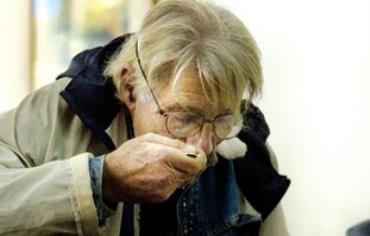
jewish charity
Photo: Reuters

But that doesn’t absolve us from our duty to love the Jewish people as well, particularly those who are in need, those who are suffering.

In my case, having a Jewish wife and children, I automatically fulfill the mitzvah on a daily basis, but that’s not an excuse to remove myself from loving the larger Jewish population, the people and nation of Israel.

Related to the recent observance of Tisha B’Av, Aish.com dedicated an article to the challenge of one Jew loving another. Jewish people come in all shapes and sizes and dispositions, and as you might imagine, it isn’t always easy for one Jewish individual to indiscriminately love all other Jewish people everywhere.

How much more difficult it is for us, who are not Israel and not Jewish, and especially we who in the Church have a history of disagreement and even enmity with the Jewish people, to express that indiscriminate love?

In trying to research the “mitzvah” of Gentiles loving Jews, I came across this:

I love the Jewish people and have enjoyed reading the many spiritual thoughts on your website. I want to draw closer to God, but from what I’ve read it is a very big commitment to convert. I don’t think I am up for this at this stage in my life. Is there some way to tap into the Torah wisdom without being part of the Jewish people?

-from Ask the Rabbi
“Seven Laws of Noah”
Aish.com

One of the ways that some non-Jews express their love for the Jewish people and Israel is to become Noahides, or people of the nations who observe the Seven Noahide Laws. This is about the best way to express such a love and attraction from a Jewish point of view, since it has the full support of Orthodox Judaism and allows Gentiles to enter into Jewish worship and community space, albeit with a radically different status than the Jewish leaders, mentors, and participants.

Of course, you have large groups of Evangelicals who love Jews and love Israel, but that love isn’t always returned. To be fair, sometimes Christian love for Israel is pretty shallow and very conditional, so Jews have a right to be hesitant about returning all the “love and support”.

in gratitude and hope
Photo: Aish media

There are, of course, those non-Jews who show love to Jewish people, even at great risk to themselves such as an Arab family protecting Jews during the Holocaust. Given the current world-wide criticism of Israel (and by inference all Jewish people) relative to Hamas and its terrorist attacks (and Israel’s response), it may come to a point, even very soon, when any non-Jew who supports the Jewish people will risk at least a verbal or print backlash if not actual violence. If not now, then eventually I believe it will come to that.

But what is it to love the Jewish people? Is it just a warm and fuzzy feeling? Is it giving money to Jewish causes and charities? Is it wearing t-shirts supporting the IDF? I suppose it could be all those things. But what about supporting Judaism?

What’s the difference between supporting Jewish people and causes and supporting Judaism? A big, fat, whopping one for some folks.

There are a lot of people in a great many religious venues who say they love the Jewish people. I’ve already mentioned Noahides and Evangelical Christians, but what about Gentiles in Messianic Judaism (Messianic Gentiles) and Gentiles in one of the expressions of the Hebrew Roots movement (One Law/One Torah, Two House, Sacred Name, and so on)?

That can get a little more dicey. Relative to Hebrew Roots, there, I believe, is an authentic love of the Jewish people and national Israel, but sort of a love-hate relationship with Rabbinic Judaism (no, there isn’t any other kind, even Messianic Judaism is Rabbinic Judaism). There’s a love of Torah as it is understood, and a love of the “roots of our faith” which is usually expressed in some sort of modern Jewish religious practice (wearing a tallit and kippah, praying from a siddur in Hebrew, reading from the Torah, practicing a form of Shabbat rest, and so on), but there is also often a disdain for Talmud, for the authority of the Sages in ordering how to perform the mitzvot, and how Torah is continually interpreted and reinterpreted across time to apply to later generations.

I was re-reading Dr. Rabbi Stuart Dauermann’s article The Problem With Hebrew Roots, or, It’s Good to be a Goy. It actually kind of reminded me of something Aaron Eby said on this Vine of David video about the unique calling of the Messianic Gentile:

We at Vine of David have composed an alternate form of the second paragraph of Kiddush for Messianic Gentiles that reflects their unique identity and relationship to the Sabbath. The blessing was culled from the most ancient strata of the prayers of early believers. This form of Kiddush is affirming, beautiful, and ancient, and represents a radical rebound from centuries of replacement theology. Messianic Gentiles would do well to use such prayers in order to instill in their children a sense that their identity and mission as Messianic Gentiles are important and meaningful.

jewishThe identity structures of Messianic Jews and Messianic Gentiles is, by definition, complementary and even vaguely reminiscent of the relationship between Orthodox Jews and Noahides in the synagogue.

However, the latter relationship can’t really be compared to the former, because in the former, at the end of the day, we are all disciples of the Master and we all share equal co-participation in the blessings of the resurrection and the life in the Messianic Age in accordance with the same covenant, the New Covenant. Of course there’s also differentiation because Jews additionally come under the Sinai Covenant, but relative to Noahides and Judaism, they have no common Covenant relationship with God at all.

That complementary relationship between Jew and Gentile in Messiah requires mutual respect, which includes respecting each other’s space. A comment and R. Dauermann’s response on his aforementioned blog post drew my attention:

Glenn – July 31, 2014
Splendidly written, Stuart! It is so in concert with Paul’s exhortation in 1 Cor. 7, and the larger message of Isaiah 56.

But I am a bit perplexed. On the very principle you articulate, shouldn’t we absolutely discourage the practice of converting Gentiles to Messianic “Jews”? It was my understanding that you support such conversions.

As always, thanks for your time!
Glenn

Stuart Dauermann – August 2, 2014
Well, Glenn, I so much appreciated your question that I devoted another blog to it. See it here: http://www.interfaithfulness.org/?p=2040

So I visited the link R. Dauermann posted, which led me to an article called Conversion, Yes; Confusion, No.

While Dauermann actually supports Gentile conversion specifically within Messianic Judaism on very rare occasions, he also made a number of statements relevant to the point I’m trying to make:

The problem nowadays is that Gentiles are being made to feel like second class citizens, or feel themselves to be second class citizens in the Kingdom of God because they are not Jewish. This is WRONG! Gentiles are NOT second class citizens and in no manner whatsoever do they or can they improve their citizenship in the Kingdom of God through “discovering their Jewish roots,” through deciding they are part of the lost tribes of Ephraim and Manasseh, or any such thing. In other words, not only are Gentiles not second class citizens, they also do not become in some manner super-citizens through discovering or creating some sort of Jewish identity.

This is pretty common of Christians who, for whatever reasons, have left formal church attendance and entered some form of Messianic Judaism or Hebrew Roots. I’ve attended some Hebrew Roots groups that were downright disrespectful of Christianity and used quite abusive language when referring to Churches. There was a real drive to do anything possible to separate themselves from anything having to do with “the Church” (i.e. “Babylon” or a thousand other insulting labels).

Beth Immanuel ShavuotAlong with that need to separate was the requirement to create a new identity, but since Judaism is the general template for Hebrew Roots, any statement that pointed to Jewish exclusiveness in the covenants tended to elicit two related reactions: a feeling of inferiority and a response of hostility (I should point out here that not all Hebrew Roots people exhibit this dynamic, particularly the Hebrew Roots congregation in which I once worshiped, but it’s been sadly common in my previous experience with other people and groups I’ve encountered). As R. Dauermann pointed out, Gentiles are not inferior to Jews. I’ve read many (non-Messianic) Jewish commentaries stating that Jews do not (ideally) see themselves as better or superior to Gentiles, just different.

The same is true in Messianic Judaism. The distinctions particular to Jews are not really rights so much as responsibilities and duties. Think how much more difficult it is to attend to the mitzvot as a Jew than those duties assigned to the Gentile in Messiah (Christian in Jesus). Is faith in Jesus supposed to be about our “rights?” Does God owe us rights? Does He owe us anything?

Even Paul called himself a slave (see Romans 1:1 for example). He didn’t complain about his rights.

Many people act like the Torah is a book they may apply any way they choose, and that by doing so, they are being more faithful to God than those who do not bother to do so. Some even imagine that by doing so, they become in some manner Jewish. Such people are naïve and in error.

The Torah is not a book we happened to find and which we may interpret as we choose, but rather it is the national constitution of a people. It must be understood as the community property of the Jewish people, and must be understood and interpreted in keeping with millennia of Jewish discussion and practice. It is not like the Koran, which allegedly came down entire from heaven, or like the Book of Mormon, allegedly found on golden plates hidden in the Hill Cumorah in Palmyra, New York. No, Torah is the way of life of the Jewish people, it enshrines the decorum appropriate to the Jewish people as a Kingdom of Priests and a Holy Nation, the way of life appropriate to this people serving in the courts of the King of Kings.

-R. Dauermann

This is where love of Jews and love of Judaism, particularly the Judaism(s) observed within the context of Messiah, begins to separate for some.

In my opinion, being a disciple of the Master and attaching ourselves to the God of Israel is not a matter of rights but a matter of service. We have duties and obligations and we have unique roles and identities that define those obligations. God made us who we are, and although He gave us free will, He didn’t give the leopard the ability to change his spots.

Nevertheless, each person should live as a believer in whatever situation the Lord has assigned to them, just as God has called them. This is the rule I lay down in all the churches. Was a man already circumcised when he was called? He should not become uncircumcised. Was a man uncircumcised when he was called? He should not be circumcised. Circumcision is nothing and uncircumcision is nothing. Keeping God’s commands is what counts. Each person should remain in the situation they were in when God called them.

1 Corinthians 7:17-20 (NASB)

And by “Keeping God’s commands is what counts,” my interpretation is keeping the commands as they apply to the person, which isn’t the same for a Jewish believer as it is for a non-Jewish believer.

As both R. Dauermann said on this blog and Dr. Mark Nanos said in a recent paper, while Paul generally opposed Gentiles in Messiah converting to Judaism, he didn’t absolutely forbid it. He just felt (and rightly so) that converting to Judaism would not have any sort of impact on the person’s justification before God. You don’t become a better person by converting to Judaism, you just become Jewish.

If you feel a strong need and desire to live as a Jew and to observe the mitzvot as a Jew, then conversion is probably the right thing for you (there are a lot of other factors to consider that are beyond the scope of this blog post, but it’s not as simple as all that).

Restoration
Photo: First Fruits of Zion

However, as I mentioned, conversion isn’t necessary to serve God, because God expects the whole world to serve Him, both Israel and the nations. How we serve God is dependent on who we are, Israel or the nations. Rejecting this definition is where you may feel you love Jewish people and Israel, but it actually means you’re rejecting how they define themselves and frankly, you’re rejecting how God defines the Jews and Israel.

Judaism isn’t perfect, but it can be argued that Judaism, that is Rabbinic Judaism including Mishnah, Talmud, halachah, and the whole meal deal is what God gave the Jewish people to enable them to survive the last two-thousand years of exile, and to make it possible to re-establish the modern state of Israel.

You can’t love the Jewish people and the nation of Israel and also throw the Rabbis and their volumes of Talmud under a bus. You can’t say “I love you but I deny you the right to define yourself.”

That isn’t love. I don’t even know what to call that sort of behavior.

If it’s a mitzvah for a Christian and/or Messianic Gentile to love the Jewish people and Israel, you can’t hate Judaism at the same time. You can’t hate someone’s identity as it was assigned to them by God but say that somehow, you love that person anyway.

I know the people who need to hear this the most will reject it out of hand, but this message is the natural and logical extension of exploring the mitzvah of loving Jews. In order to love the Jewish people, we cannot hate ourselves. The mitzvah of loving our neighbor as we love ourselves (Lev. 19:18; Matthew 22:39) means we must love both our neighbor and ourselves. If we hate being a Gentile because we think (or have been taught) that it is inferior or pagan or some other ridiculous thing, then we have no basis or platform for loving someone else, anyone else, really.

Love starts with loving God (Deut. 6:5; Matthew 22:37), then (in my opinion), loving ourselves as God made us since we are created in His image (Gen. 1:27). Only then, realizing that God loves us with a powerful love and realizing we are lovable just as we are (which in my case is a Gentile), can we love another person. Only then can we love a Jew because God made the Jew just the way he or she is including the Jewish person’s covenant identity, which includes unique roles and responsibilities.

Once you are confident in God’s love for you, no matter who you are, then you have no reason to feel inferior to someone else and you should have no desire to covet their status and assume that it is your “right” to do so.

It’s only at that point where you are capable of fulfilling the mitzvah as a Gentile disciple of the Master of loving the Jewish people, Judaism, and Israel. God loves them. So should we.


Why I am a Messianic Gentile, Part Two

And Korach, the son of Yitzhor, the son of K’hos, the son of Levi, took …

Numbers 16:1

Rashi explains that the key reason for Korach’s rebellion against Moshe was that he was envious of another relative who received honor while he didn’t.

Envy is destructive. It prevents a person from enjoying what he himself has. When you focus on the success of another person and feel pain because of it, you are likely to do things that are highly counterproductive. Envy is one of the three things that totally destroy a person (Pirke Avos 4:28). The downfall of Korach was because of this trait. Not only did he not get what he wanted but he lost everything he already had.

-Rabbi Zelig Pliskin
Commentary on Torah Portion Korach, pg 332
Growth Through Torah

I mentioned in Part One of this two-part series, that I have many good reasons for being a student and disciple of Yeshua (Jesus) within a Messianic Jewish context. And while the status I have accepted upon myself may make me appear as a “second-class citizen” within the ekkelsia of Messiah and the Kingdom of Heaven, in fact, who I am and where I stand has been defined for me by God. Even if I sometimes chafe at that position based on my personality flaws, that does not change the will of God for my life. Any reaction that leads me to envy of the Jewish people for their distinctiveness and unique role in the plan of the Almighty will also lead to my “destruction” (though I probably won’t be incinerated or fall into a pit).

The blessings of God in my life are great. Far be it from me to cause God to take them all away:

While they were listening to these things, Jesus went on to tell a parable, because He was near Jerusalem, and they supposed that the kingdom of God was going to appear immediately. So He said:

“A nobleman went to a distant country to receive a kingdom for himself, and then return. And he called ten of his slaves, and gave them ten minas and said to them, ‘Do business with this until I come back.’ But his citizens hated him and sent a delegation after him, saying, ‘We do not want this man to reign over us.’ When he returned, after receiving the kingdom, he ordered that these slaves, to whom he had given the money, be called to him so that he might know what business they had done. The first appeared, saying, ‘Master, your mina has made ten minas more.’ And he said to him, ‘Well done, good slave, because you have been faithful in a very little thing, you are to be in authority over ten cities.’ The second came, saying, ‘Your mina, master, has made five minas.’ And he said to him also, ‘And you are to be over five cities.’ Another came, saying, ‘Master, here is your mina, which I kept put away in a handkerchief; for I was afraid of you, because you are an exacting man; you take up what you did not lay down and reap what you did not sow.’ He said to him, ‘By your own words I will judge you, you worthless slave. Did you know that I am an exacting man, taking up what I did not lay down and reaping what I did not sow? Then why did you not put my money in the bank, and having come, I would have collected it with interest?’ Then he said to the bystanders, ‘Take the mina away from him and give it to the one who has the ten minas.’ And they said to him, ‘Master, he has ten minas already.’ I tell you that to everyone who has, more shall be given, but from the one who does not have, even what he does have shall be taken away. But these enemies of mine, who did not want me to reign over them, bring them here and slay them in my presence.”

Luke 19:11-27 (NASB)

Rabbi Levi Yitzchok of Berditchev (Kdushas Levi) commented that a truly righteous person’s main goal in all that he does is to give pleasure to the Almighty. To such a person there is no difference if he or another righteous person causes that pleasure.

But if a person’s main focus is on his personal reward, he wants to do everything himself. Therefore, our verse states that Korach took. He wanted to take for himself and therefore felt resentment about the attainment of others.

-R. Pliskin, pp 332-33

coinsWe not only see the dire consequences of envy leading a person to self-aggrandizement, but that such a person has lost their focus on what is to be the true motivation of a servant of God, to please God rather than their own human desires.

If God has assigned a specific role, function, and purpose for the Jewish people, then it is foolish for we non-Jewish disciples of the Master to seek their place and their role. In having those desires and particularly in acting them out, we are rebelling against God and seeking our own personal pleasure. Not only that, we are actually denying ourselves the pleasure of fulfilling the role God assigned to us, one that really would be pleasing to God.

And they gathered against Moshe and Aharon. And they said to them, “You have taken too much power for yourselves. The entire congregation is Holy, and the Almighty is in their midst. Why do you take leadership over the congregation of the Almighty?”

Numbers 16:3

Remember that the Sages say that when a person finds fault with others he frequently is just mentioning his own faults which he can wrongly assume someone else has. Be very careful not to accept negative information about others as the truth without careful examination.

-R. Pliskin, pg 334

mirrorIt is not uncommon for people to sometimes project their own worse character traits onto another person and then blame that other person for what they don’t like about themselves. The irony is that this attribution can happen below the level of consciousness. That is, the person may truly not be aware of their negative character trait but attribute it to someone they don’t like or with whom they disagree. It’s as if they are using their adversary as a mirror to reflect their own behavioral and emotional flaws.

So, if I am to take R. Pliskin’s advice and apply it to every time I’m criticized for my stance as a Messianic Gentile, one way to interpret their criticism (though it might not be true in every case) is that the critic may be assigning me traits or motivations they themselves possess. I guess that’s why it’s a good idea for me to always be aware of what I’m doing and why I’m doing it, so I don’t start believing things about who I am and my behavior that are not true. I must also be careful in my assessment of others to make sure I’m not guilty of projecting my own flaws upon them.

That has always been the normative view of Judaism, enunciated in the rabbinic principle that “one who performs a deed because it is commanded is deemed more praiseworthy than one who does it voluntarily” (Bavli Kiddushin 31a). Actions that come instinctively fail to stretch us. Growth results from reaching beyond ourselves.

-Ismar Schorsch
“Reaching Beyond Ourselves,” pg 534, June 22, 1996
Commentary on Torah Portion Korach
Canon Without Closure: Torah Commentaries

If one desires or even covets obligation to the full yoke of Torah as a Gentile, where is the “stretch”? How are we participating in growth if we not only are doing what we want, but performing mitzvot that do not belong to us? However, if we recognize the legal structure that defines Gentile inclusion in Messianic Judaism (Acts 15) and obey those commandments, we are not only pleasing God, we are participating in our own spiritual growth and elevation (see the ancient Jewish/Christian document The Didache and D. Thomas Lancaster’s latest book Elementary Principles for more).

Going back to what R. Pliskin said about pleasing God by allowing another righteous person to perform mitzvot that are commanded of them, to encourage Jewish believers to perform mitzvot such as davening with a minyan or observing Shabbos is what fulfills our function as righteous Gentiles in Messiah. For only Jewish Torah observance will bring Messiah’s return nearer, therefore, by encouraging Jewish Torah fidelity within the Messianic community, we are helping others to be righteous, participating in our own growth as disciples, and blessing the heart of God.

At least that’s how I see myself as a Messianic Gentile (in an ideal state, and I can say, that I’m hardly an ideal person).

The arrogant person thinks, “If I honor this person, what will people think of me? Will it raise or lower my stature in the eyes of others?” But the humble person makes no calculations of this kind. He treats each person according to the Torah ideals of how people should be treated. Ultimately this only elevates a person’s true stature regardless of how other people might react.

-R. Pliskin, pg 336

HumbleI’ve met very few truly arrogant people, that is people who really think they’re the “greatest thing since the invention of sliced bread.” Most people who appear arrogant and self-assured are actually the opposite. They feel threatened and insecure when others experience success or if put in a situation where they must give deference to another. While I can hardly call myself truly humble, if I strive in that direction as a goal, then acknowledging Jewish “specialness” in covenant relationship with God does not diminish me or reduce my stature in the eyes of others. If someone else believes I am being reduced by recognizing Jewish covenant status, then that is their projection and perhaps their own personal fear.

Imagine how Gentile Christians will react when, upon Messiah’s return, they realize to their chagrin that the Church is not the center of the Kingdom of God, it is Israel. This may be at the core of why many Christians have difficulty with Messianic Judaism and the continuation of Jewish Torah observance within the Jesus-believing Jewish community. It illustrates how, over the long centuries of Church history, Christianity has reversed causality in placing itself above and before God’s covenant people, Israel.

Also your brethren the tribe of Levi, the tribe of your father, shall you draw near with you, and they shall be joined to you and minister to you. You and your sons with you shall be before the Tent of the Testimony. They shall safeguard your charge and the charge of the entire tent…

Numbers 18:2-3

After the death of Korach and the rebels, the Levites especially among the Children of Israel were demoralized and terrified. They felt their own worth and stature was lower than ever after the failed rebellion. Yet God was kind and reminded the Levites that they had a special status and duty to Hashem above the other Israelites and that they also were of the tribe of Levi, just as were Aaron and his sons, the Kohenim.

That’s what I think is missing every time someone believes that I’ve allowed myself to be put at the back of the bus in the Messianic community; the lack of realization that Messianic Gentiles have a highly important role that cannot be fulfilled by the Jewish people. Messianic Jews and Gentiles are interdependent and the Messianic Jewish ekklesia cannot achieve wholeness unless we join together in our complementary roles. We need each other.

So the next time I find myself missing donning a tallit in prayer or being present at the lighting of the Shabbos candles, I must remind myself of everything I’ve just written. Because the minute I give in to the attitude of I want to be like them” or worse, “I deserve to be like them,” not only have I insulted God and betrayed the Jewish people in Messiah, I’ve lost my way and forgotten my God-assigned purpose in life. A righteous person serves God, not his own desires. May God grant me humility and peace. May He grant this to all of us who call ourselves Messianic Gentiles.

Final note: Last year, I also wrote a two-part series on Korach and what this rebellion tells us about who we are today.

Why the Torah is the Tree of Life

I also raised My hand [in oath] against them in the Wilderness to scatter them among the nations and to disperse them among the lands, because they did not fulfill my laws, they spurned My decrees, desecrated My Sabbaths, and their eyes went after the idols of their fathers. So I too gave them decrees that were not good and laws by which they could not live.

Ezekiel 20:23-25 (Stone Edition Tanakh)

In a moment of great pique, God has the prophet Ezekiel tell his exiled brethren of the relentless misdeeds of their fathers, which brought about their loss of the land. God insists at one point: “Moreover, I have them laws that were not good and rules they could not live by.” The import of these harsh words is that God might just be the author of inadequate or even malevolent law, a proposition that flies in the face of God’s goodness, love, and perfection.

-Ismar Schorsch
“Divine Music in a Human Key,” pg 468 (May 14, 1994
Commentary on Torah Portion Bamidbar (Numbers)
Canon Without Closure: Torah Commentaries

The twenty-fifth verse in Ezekiel 20 relates a startling admission on the part of God through the prophet, that God gave Israel “decrees that were not good and laws by which they could not live.”

When reading those words, I was immediately reminded of the traditional Evangelical Christian reasoning about why God gave the Torah to Israel at Sinai in the first place. I mean, if God was going to cancel the Law with the death and resurrection of Jesus, or at least have it pass into obsolescence to be replaced by the much more “livable” grace of Christ, by what rationale did God require and demand that the Israelites keep the Torah mitzvot?

The answer, and I was also startled when I first heard the Pastor at the church I attend present it to me, is that God wanted to illustrate that no one could possibly keep the law and that we all need God’s grace to save us from sin.

So God sets forth a lengthy set of conditions associated with the Sinai covenant between Hashem and Israel, with a generous collection of blessings for obedience to God’s Torah (Deuteronomy 28:1-14) and an abundant list of curses for disobedience (Deuteronomy 28:15-68).

God, being faithful to His Word, has indeed blessed Israel when they cleaved to His Torah and cursed them when they strayed from obedience.

The haftarah reading for Bamidbar, Hosea 2:1-22, chronicles the course of God’s response to His covenant people, from wrath in response to Israel’s faithlessness when she “played the harlot” (v 7) by abandoning her “husband” (God) and chasing after foreign lovers (idols), to the promise of renewing the intimate relationship between Hashem and Israel when they returned to Him in obedience:

And I will espouse you forever: I will espouse you with righteousness and justice, and with goodness and mercy, and I will espouse you with faithfulness; then you shall be devoted to the Lord.

Hosea 2:21-22 (JPS Tanakh)

Laying TefillinAfter all of that, with generation after generation of Jews all striving, sometimes succeeding and often failing to willfully keep the commandments, yet in their heart, always loving and revering the Torah, they never suspected that God was just setting them up for a huge fall. And then, during the Roman occupation, just a few decades before the destruction of Herod’s Temple, God was going to yank it all away from them and abruptly declare that He had planned to have Israel fail and fail miserably all along, in some sort of demented preparation for the coming the Messiah and “the law of grace.”

I enjoy reading mystery books that have a creative and unanticipated plot twist to keep things interesting, but God, according to Evangelicals, is the undisputed master if “I didn’t see that one coming,” the ultimate jumping of the tracks where the train carrying all the exiled Jews back to Jerusalem becomes the carriages transporting endless hoards of formerly pagan Gentiles to Rome.

Ezekiel 20:25, especially when read out of its immediate context and outside the overarching plan of God for Israel, could be interpreted as supporting this “double-dealing” motivation of God except for this:

But note what has been accomplished by this exegetical twist: The holiness of the text has been preserved. Whatever blemish we may detect has nothing to do with the original power and beauty of the Torah, but derives solely from inferior mediation. Not the author, but the interpreter is at fault.

-Schorsch, pg 469

It is said that Biblical interpretation starts with translation but it obviously doesn’t end their. The value of our Holy Scriptures rises and falls with the correct understanding of what we’re reading. Putting on the supersessionism-colored glasses forged by the Gentile “Church Fathers” and polished by the men of the Reformation, we indeed do read the Bible “through a glass darkly” (1 Corinthians 13:12) rather than accessing the plain sight of God.

But how can man see with God’s vision? We probably can’t, though we are experts at saying we really can, and in saying that, we reveal ourselves to be deluded or liars.

This thing you call language though, most remarkable. You depend on it for so very much. But is any one of you really its master?

-Spock/Kollos (Leonard Nimoy)
Is There in Truth No Beauty? (1968)
Star Trek: The Original Series

Leonard Nimoy
Leonard Nimoy

The above quote references a “mind-meld” between Mr. Spock and a non-humanoid being named Kollos, an ambassador for his planet who is non-verbal and who can only communicate with people through telepathy. He experiences “humanity” for the first time seeing the world (or the bridge of the Enterprise) through Mr. Spock’s senses and communicating through spoken language which he never had done before. You and I like to think we are familiar and even (as I said above) “experts” on understanding the Bible, but an outside observer, if they could access our point of view, might accuse us of what Kollos accused the people on the Enterprise, depending on language for so very much without truly being its master.

We depend on the Bible for so very much, but who can say if anyone can be the master of a document that, while scripted in this world by human beings, was inspired by the mind and spirit of God?

But it’s just about all we’ve got, just like language is just about all we’ve got to communicate with one another, to learn about one another. We only have the Bible to teach us about God.

But no one of us being its master, how dare we say that any part of the Bible, down to even the tiniest jot or tittle, in any way has been cancelled, annulled, eliminated, replaced, folded, spindled, or mutilated?

“Do not think that I came to abolish the Law or the Prophets; I did not come to abolish but to fulfill. For truly I say to you, until heaven and earth pass away, not the smallest letter or stroke shall pass from the Law until all is accomplished. Whoever then annuls one of the least of these commandments, and teaches others to do the same, shall be called least in the kingdom of heaven; but whoever keeps and teaches them, he shall be called great in the kingdom of heaven.

Matthew 5:17-19 (NASB)

It is a Tree of Life for those who cling to it, and happy are those who support it.”

Proverbs 3:18

It’s not just a matter of poorly interpreting the Bible but in selectively reading it. Christians can “cherry pick” those scriptures that seem to support a classic supersessionist view of an expired Torah, but they can’t explain those portions that support a high view of Torah, a continued zealous observance of Torah by multitudes of believing Jews in New Testament times (when Acts 21:20 speaks of “how many thousands there are among the Jews of those who have believed, and they are all zealous for the Law,” the Greek word we translate into English as “thousands” is literally “tens of thousands,” and that Greek word is the basis for the English word “myriads,” telling us that vast numbers of Jesus-believing Jews were completely over-the-top zealous for the Torah), and since the Bible (in my opinion…and the Epistle to the Hebrews notwithstanding) doesn’t speak of the Torah expiring like an aging carton of milk in the back of the fridge, then I have no reason to believe that God intended to annul the Sinai Covenant and its conditions for the sake of the inaugurated but not yet arrived New Covenant…not until after Heaven and Earth pass away.

Tree of LifeUntil then, the Torah is a Tree of Life, first to the Jew and also to the Gentile, defining, among other things, who we are in relation to God and who we are to each other, Jewish believers remaining wholly and completely Jewish in identity, role, and responsibility, and grafted in Gentile believers taking on, not a Jewish role, but one that uniquely defines us as the people of the nations who are called by His Name, who have a calling that is not Israel but that supports Israel, for our salvation comes from the Jews (John 4:22).

The one mystery I have struggled with up until recently was why, after the crucifixion, resurrection, and ascension, is worshiping God “not enough” anymore?

Many, many years ago, long before my wife and I became religious, we attended a Passover Seder at a friend’s home. At one point during the reciting of the Haggadah, he stood up and joyously cried out, “No one comes between a Jew and his God!” Even as a non-believer, it was quite obvious to me that he was referring to Jesus and Christianity, perhaps viewing Jesus as a layer of abstraction that was thrust between people (or Jews) and God when no such separation existed before.

We can debate whether or not the Temple and sacrifices separated Jewish people from God or actually brought them closer and say that Jesus draws Jews (and everyone else who will believe) closer still rather than further away, but from a Jewish point of view (I can only assume, not being Jewish), being told you now can only come to God through Jesus rather than praying to Him directly with no intermediary, makes it seem as if the rules have changed and a brand new player was added to the game, one that the Jewish people never needed before.

“For this commandment which I command you today is not too difficult for you, nor is it out of reach. It is not in heaven, that you should say, ‘Who will go up to heaven for us to get it for us and make us hear it, that we may observe it?’ Nor is it beyond the sea, that you should say, ‘Who will cross the sea for us to get it for us and make us hear it, that we may observe it?’ But the word is very near you, in your mouth and in your heart, that you may observe it.

“See, I have set before you today life and prosperity, and death and adversity; in that I command you today to love the Lord your God, to walk in His ways and to keep His commandments and His statutes and His judgments, that you may live and multiply, and that the Lord your God may bless you in the land where you are entering to possess it.”

Deuteronomy 30:11-16 (NASB)

The Torah is the Tree of Life, the source of everything that is good and is from God for a Jew. It was never too far away and it was never intended to be impossible to observe. God did intend for the Jewish people to observe the mitzvot and by obedience, they would draw closer to God and receive good life and prosperity in the Land. Why would that ever change? Not through Jewish disobedience, because God always provided Israel a way back through repentance. Not because of the coming of Messiah, but I’ll get into that at a later time (see below).

the-joy-of-torahSo far we’ve seen that Judaism is a religion of joy, and hopefully, I’ve shown that this joy emanates from observance of the mitzvot and study of the Torah, and that the Tree of Life brings a Jew (and realistically, all of us who embrace the Word of God) nearer to God. But where does Jesus fit in?

I know that’s an odd question and I know many of you think you know the answer. In my next meditation, I’ll see if I can show you a new answer (new to me, anyway) and why God didn’t change the rules, just as the New Covenant was never intended to replace the Sinai Covenant. God doesn’t destroy anything He has created, but He does continually reveal Himself to us across the history of the Bible.

It’s revelation I’ll speak of next time.

Why Judaism is a Religion of Joy

Before discussing how the Baal Shem Tov revolutionized the Jewish view on joy, it must be mentioned that happiness was never foreign to Judaism. As King David declared: “Serve G‑d with joy!” Indeed, the Talmud states that “One should not stand up to pray while dejected…but only while still rejoicing in the performance of a mitzvah.”

The concept of simcha shel mitzvah, the “joy of a mitzvah,” has always been part and parcel of Jewish teachings. After all, can there be a greater privilege than serving the King of kings? As such, mitzvot must be executed with joy.

-Baruch S. Davidson and Naftali Silberberg
“Perpetual Joy:
The Baal Shem Tov’s Revolutionary Approach to Joy”
Chabad.org

I’ve been thinking about my role in church lately, as well as the Biblical and historic perspective ancient (and modern) Judaism had (has) regarding “doing” as opposed to “believing.”

It’s not that the Church doesn’t believe in doing good works, but the incredible phobia some Christians have against even appearing as if there’s a connection between salvation and what we do, makes the Church hold their good deeds pretty much at arm’s length, including repentance. Worse, the Church tends to judge all forms of Judaism but particularly Orthodox Judaism, as a “dead works based religion” with no foundation in faith or spirituality.

I suppose there could be some truth to the accusation, particularly if performance takes on a life of its own to the degree that there is no apprehension of God. What’s the point if observance is just a list of arduous duties that impinge on a person’s relationship with God rather than enhancing it? I’ve heard stories of Jews who feel virtually bound and gagged by the Torah commandments, which is how most Christians see “the Law”. Of course, as we see from the quote above, there’s a flip side to a traditional Jewish life.

Every mitzvah should be performed with joy. One aspect of “mitzvah joy” is to do the good deed with all your energy and ability.

For example: Rather than offer a needy person a morsel of food, serve him a hearty meal!

-Rabbi Zelig Pliskin
Do Mitzvahs with Joy

A person who feels joy when performing mitzvahs will forget all his suffering and misfortunes. In comparison to becoming closer to the Almighty, of what import is pettiness and trivialities?

A person who experiences joy in doing good deeds will feel greater joy than a person who finds a large sum of money. Why should a person expend his efforts trying to find happiness in areas where the basis is transient and ultimately meaningless, when he has a far better alternative?

-R. Pliskin
Joy in Mitzvahs Greater than this World

Granted, Rabbi Pliskin’s viewpoint may not represent all Orthodox Jews everywhere, but I consider his perspective, as well as the Baal Shem Tov’s, to be the ideal that Jewish people shoot for or should shoot for. I’ve repeatedly heard people at the church I attend express joyfully how they are so glad we are no longer “under the Law” (even though Gentiles were never “under the Law”) and are free in Christ, as if performing even the slightest commandment from the Bible (such as loving God with all your resources or not considering things like bacon, shrimp, or catfish as food) in obedience to God would be an incredibly difficult thing.

Tell me Christians, if God asked you to do something like, oh, I don’t know, help someone who was beaten by robbers and left for dead, a person who you may not even like, getting them medical attention, and paying for it all out of your own pocket (Luke 10:25-37), would you tell God “no” because that would be “dead works” (and I’ve written about the true meaning of dead works before)?

Hopefully, you’d respond to my question by saying of course you’d obey God’s commandment to love your neighbor as yourself (Leviticus 19:18, Matthew 22:39, Mark 12:31).

But it’s a commandment and one rooted in the Law (Torah). Of course they’re all rooted in the Torah, the instructions, the conditions God gave the Israelites at Sinai when He made His covenant with them. Granted, how the Torah is applied to grafted in Gentile disciples of the Master (Jesus) is different than how Torah was and is applied to Jewish people (including Jewish disciples of the Master), but we are still obligated to obey God in all that He desires in our lives.

How can you even question that?

The key to obeying God is joy.

Now this I say, he who sows sparingly will also reap sparingly, and he who sows bountifully will also reap bountifully. Each one must do just as he has purposed in his heart, not grudgingly or under compulsion, for God loves a cheerful giver.

2 Corinthians 9:6-7 (NASB)

Paul’s statement wouldn’t be out-of-place in any Jewish context, ancient or modern, and I think even the Baal Shem Tov would have agreed with him.

Charismatic prayerBut this is a part of scripture that Pastors often preach from when they’re asking for an increase in tithes from their congregations, especially if the church elders have approved of a special project, an expansion of the church building, or if the church’s income is falling behind what they projected in their annual budget.

I agree that anyone who consumes a church’s resources should provide for the church’s income but how many people give tithes or increase their giving out of a sense of obligation, guilt, or even sometimes, intimidation? How many Christians give to their local church and other worthy causes out of sheer joy?

I can’t answer that last question, but hopefully, quite a lot. But my knowledge of human nature tells me that a Pastor who preaches that their congregation should give more when they tithe because of the sense of joy they’ll experience and that tithing will bring them closer to God might not see a resulting increase in congregational giving.

But that’s exactly the approach that should work if Christians obeyed all that God asks of them/us with joy.

Rabbi Joseph Albo, the 15th century author of the classic work Sefer Haikarim, writes: “Joy grants completion to a mitzvah, only through it does the mitzvah achieve its intended objective.” Similarly, Rabbi Elazar Azkari, 16th century Safedian scholar and author of the work Charedim, writes: “The main reward for a mitzvah is for the great joy in it.” “The reward is commensurate to the joy [with which the mitzvah is performed].”

Indeed, the 16th century Kabbalist, Rabbi Isaac Luria, known as the Arizal, once said that all that he achieved – the fact that the gates of wisdom and divine inspiration were opened for him – was a reward for his observance of mitzvot with tremendous, limitless joy!

-Davidson and Silberberg

But what’s the connection between obedience and joy? We don’t obey the traffic laws because it will increase our joy, we obey laws because we have to and we’ll be punished (by getting a traffic ticket, for instance) if we disobey (and are caught).

One of the most common misconceptions deals with the word “sacrifice.”

We often think of sacrifices in the Temple in terms of buying off an angry deity with lots of blood and guts.

Alas, these pagan ideas show how much our thinking has been influenced by other cultures. God is not lacking anything and does not need our sacrifices — animal or any other kind.The offerings that were brought in the Temple, like all the commandments, were not done for God. They were done for us.

In fact, the Hebrew word for sacrifice, korban, comes from the root korav meaning to “come close,” specifically, to come close to God. The offering was meant to bring someone who was far near once again.

To understand something of the intense, elevating experience that bringing an offering must have been, let’s take a look at a typical offering: the peace offering.

-Rabbi Shmuel Silinsky
Understanding the Sacrifices

Most Christians and even a lot of Jews, think of the ancient Temple sacrifices as bloody, horrible, messes that they’re glad don’t happen anymore. Many Christians and even many Jews don’t believe a third Temple will ever be built and are relieved that God never again will require anyone to offer animal sacrifices in Jerusalem. But if you click the link I provided and read all of Rabbi Silinsky’s commentary, you’ll see they are missing the point.

TempleWe Christians (most of us) also miss the point about joyfully performing the mitzvot and even actively looking for ways to perform a mitzvah. Could you imagine a Christian waking up one morning and the first thing that popped into his or her head was, “I can’t wait to find ways to serve my Lord today!”

OK, there probably are some Christians like that out there, but I suspect they aren’t all that common. I know that the first thing I think of in the morning is my getting my first cup of coffee.

Well, that’s not quite true.

I gratefully thank you living and existing King for returning my soul to me with compassion. Abundant is your faithfulness.

Modeh Ani

That’s the first blessing an observant Jew will recite upon awaking in the morning. I memorized it (in English) and when I first wake up, even before throwing the covers off and getting out of bed, this is what I say.

Since coming to the conclusion a few years back, that Torah observance looks differently when performed by a Gentile than by a Jew (it’s a complicated topic), I severely scaled back on any behaviors that could appear “Jewish” (not that my observance was really, authentically Jewish). I didn’t do so because I think Torah observance is bad or that the mitzvot are a burden, but out of respect and honor to those special chosen people of God who received the Torah of Moses at Sinai, the Jewish people. Of course, being married to a Jewish wife was quite a motivator as well, since in no way do I desire to diminish or demean what it is for her to be a Jew.

But even if the rest of my day turns to doggie-doo, the very first thought I have is of God and being grateful to Him. Am I always truly grateful each morning? That is, do I feel a sensation, an emotional experience of gratitude? No, not always, and probably not most of the time. My brain is still foggy moments after I wake up. On the other hand, I do realize that I’m alive and that it’s because of God.

The last thing I think about before turning off the light and going to sleep is also of God.

A song of ascents. Praiseworthy is each person who fears Hashem, who walks in His paths. When you eat the labor of your hands, you are praiseworthy and it is well with you. Your wife shall be like a fruitful vine in the inner chambers of your home, your children like olive shoots surrounding your table. Behold! For so shall be blessed the man who fears God. May Hashem bless you from Zion, and may you gaze upon the goodness of Jerusalem all the days of your life. And may you see children born to your children, peace upon Israel!

Tremble and sin not. Reflect in your hearts while on your beds, and be utterly silent. Selah.

Master of the universe, Who reigned before any form was created, At the time when His will brought all into being — then as ‘King’ was His Name proclaimed. After all has ceased to be, He, the Awesome one, will reign alone. It is He Who was, He Who is, and He Who shall remain, in splendor. He is One — there is no second to compare to Him, to declare as His equal. Without beginning, without conclusion — He is the power and dominion. He is my God, my living Redeemer, Rock of my pain in time of distress. He is my banner, and refuge for me, the portion in my cup on the day I call. Into His hand I shall entrust my spirit when I go to sleep — and I shall awaken! With my spirit shall my body remain, Hashem is with me, I shall not fear.

Bedtime Shema

bedtimeshemaThis is only part of the full Bedtime Shema. I recite only this portion because, as a Gentile, I want my observance to not precisely mirror the performance of the mitzvah by a Jew. I must also admit that by this time of night, my brain isn’t working so well, and I have a difficult time concentrating on anything, including God, as I should, so a shorter form of this blessing seems more suitable. And yet I take comfort that as I surrender my consciousness, I’m also surrendering to God.

From a Jewish point of view, between the Modeh Ani and the Bedtime Shema blessings, is a world of opportunity to serve God by performing as many of the mitzvot as can be encountered in a single day and as Hashem offers them in their lives.

Lebisch: Rabbi! May I ask you a question?

Rabbi: Certainly, Lebisch!

Lebisch: Is there a proper blessing… for the Tsar?

Rabbi: A blessing for the Tsar? Of course! May God bless and keep the Tsar… far away from us!

Fiddler on the Roof (1971)

I didn’t remember that dialog correctly. In my memory, I had the Rabbi respond, “My son, there is a blessing for everything,” and then he gave his humorous blessing about the Tzar.

But particularly in Orthodox Judaism, there is a blessing for everything. Just look at the table of contents of a siddur (Jewish prayer book). There are as many variations of the siddurim (plural for siddur) in Judaism as there are hymnals in Christianity. I just found an Ashkenaz online siddur at Chai Lifeline so you can have a look at the different blessings right now. And in a pinch, if a Jew did not have his or her siddur present but did have a device that could hit the Internet, they could still daven.

In the Church, we can choose to believe that all religious Jews are bound to a sterile, dead, spiritless set of archaic and meaningless laws that are designed to enslave them and that come straight from Satan and the pit of Hell. But that’s not the truth. It wasn’t true in the days when Jesus walked in Judea, it wasn’t true when Paul brought scores of Gentiles to faith in the Jewish Messiah, and it isn’t true today.

I can’t speak for every observant Jewish person and judge the intent of their hearts when performing the mitzvot anymore than I can speak for every Christian and judge their hearts when going to church, praying, visiting sick people in the hospital, and doing all those things they believe make up a good Christian life. Maybe some Jews pass up a BLT sandwich out of obligation rather than in joyful obedience to God, and maybe some Christians visit a sick relative in the hospital out of obligation rather than joyful obedience to Jesus.

But that doesn’t mean Judaism or Christianity are bad or worthless just because not all Jews or Christians don’t live up to the ideals set before them…before us by God. And when we do find a Jew or Christian who does live up to that ideal, a true tzaddik or saint, then it’s an amazing inspiration for the rest of us to try harder and do better at being the sort of person God designed us to be.

The animal has actually become a korban, a way of helping its owner to come closer to God. Eating this meal is now a very spiritual experience. It is being raised from the level of animal to that of human, by actually becoming a part of the consumer and by being the vehicle for the entire process.

One can easily see how a meal like this can be a focal point of holiday observance.

-R. Silinsky

Until Messiah comes and rebuilds the Temple, no animal sacrifices will be offered in Jerusalem. For the past nearly two-thousand years, Jews have considered prayer, Torah study, and performance of the mitzvot, as many as can be observed without a Temple, without a priesthood, and without a Sanhedrin, especially outside of Israel, as the substitutes for the sacrifices.

Christians believe that the crucifixion of Jesus substituted for all of the sacrifices rendering them obsolete and meaningless, right along with the rest of the Torah and observant Judaism.

the-joy-of-torahThe Church cannot imagine that anyone, Jew or Christian, can actually draw closer to God through any sort of action since behavioral obedience to God in any fashion is considered “dead works.”

But how can you ignore a life driven by the desire to serve God by serving other human beings? How can you deny a life motivated each day by looking forward to serving God in as many ways as you can, and even going out of your way to find opportunities to do good just for the sake of doing good?

I know calling joy a reward makes performance of the mitzvot seem self-serving rather than God-serving, but the joy isn’t in the doing, but the drawing nearer to God. Sure, we can pray, “God, please come nearer to me,” but why not demonstrate your desire by actually doing what God wants you to do? The “sacrifice of praise?” Sure. But we can praise God not just with our lips, but with our hearts, and our hands, and our feet, and our strength, and our compassion.

This people honors me with their lips but their heart is far away from me.

Matthew 15:8 (NASB) quoting Isaiah 29:13

Anyone, Jew or Christian, can lifelessly go through the motions of obedience to God. That doesn’t invalidate either observant Judaism or Christianity. That doesn’t invalidate the intent of God for our lives. You can’t point to a Jew and say their less than stellar performance of the mitzvot, or even their complaints about said-observance, are proof that Judaism, including Messianic Judaism, is not God’s desired response of a Jewish life, anymore than you could invalidate Christianity based on the life of a lackluster Christian (and plenty of atheists try to invalidate Christianity by judging such Christians).

Praise God with your lips, just make sure your praise is backed up with your heart’s desire and the joy of serving your Master and His creations, all of humankind. Then you will draw nearer to God through His teachings.

The Torah of Hashem is perfect, restoring the soul; the testimony of Hashem is trustworthy, making the simple one wise; the orders of Hashem are upright, gladdening the heart; the command of Hashem is clear, enlightening the eyes; the fear of Hashem is pure, enduring forever; the judgments of Hashem are true, altogether righteous. They are more desirable than gold, than even much fine gold; and sweeter than honey, and drippings from the combs. Also, when Your servant is scrupulous in them, in observing them there is great reward. Who can discern mistakes? Cleanse me from unperceived faults. Also from intentional sins, restrain Your servant; let them not rule over me, then I shall be perfect; and I will be cleansed of great transgression. May the expressions of my mouth and the thoughts of my heart find favor before You, Hashem, my Rock and my Redeemer.

Psalm 19:8-15 (Stone Edition Tanakh)

For more, see Why the Torah is the Tree of Life.

Don’t Argue

“What is the point of arguing with a Jew? Every Jew has a mitzvah with which he feels an affinity. Find that mitzvah and assist him with it.”

-Rabbi Tzvi Freeman
“Each One’s Mitzvah”
Chabad.org

I know that Rabbi Freeman was addressing a Jewish audience when he wrote this, encouraging one Jewish person to help other Jewish people with their special mitzvot, but consider this.

In her article for Messiah Journal, First Fruits of Zion (FFOZ) contributor and translator Jordan Levi referred to the Gentiles who help Jewish people find and assist with their mitzvot as “the Crowning Jewels of the Nations.” If I take the thoughts of Rabbi Freeman and Jordan Levi and put them together, then the Rabbi’s message is just as appropriately addressed to Gentile believers, that is, Christians, as it is to Jewish people.

Am I crazy? Christians helping Jews to find and perform their special mitzvot? Christians don’t even believe in mitzvot because the vast majority of them believe the “Law” is dead as a doornail, killed when the church was born in Acts 2

If you’ve been reading my blog for any period of time, you know I don’t believe that last part for even a second. I believe that we non-Jewish believers have a special duty, assigned to us by God, to be part of the restoration of Israel by helping Israel raise David’s fallen tent (Amos 9:11-12). We people of the nations are to be drawn to the Jewish people because they are close to God (Zechariah 8:23), and we desire to go up with them to the Temple of God in Jerusalem because we know it is the House of Prayer for all peoples (Isaiah 56:7, Micah 4:2).

I recently posted two articles on my blog about the Gentile relationship to Messianic Judaism, specifically within the Messianic Jewish worship context, Twoness and Oneness: From the Sermons of David Rudolph and Oneness, Twoness, and Three Converts. This was an attempt on my part to describe what it is to be a member of the “crowning jewels of the nations” “on the ground,” so to speak, worshiping and associating among believing and observant Jews.

As you might imagine, my commentaries were not well received within certain venues, specifically some Hebrew Roots groups where the message of Gentiles having a critical role in uplifting and supporting a return to Torah for the Jewish people without usurping the Jewish role for ourselves is not well understood or perhaps simply considered unacceptable.

But then I read Rabbi Freeman’s brief missive from this morning and the message clicked into place again. “What is the point of arguing with a Jew?” That’s what I’d like to ask some of these folks. And yet they insist on arguing with Jewish people over ownership of the Torah of Sinai rather than getting on with the job we were assigned by Hashem. “Find that mitzvah a Jew feels an affinity for and assist him with it.”

Let me spell it out to you again in case you’ve missed this message in previous blog posts. We have a duty to provoke the Jewish people to Zealousness for the Torah (see the link I just provided for the details). By doing so, we bring the time of Messiah’s return that much closer, summoning the Messianic Age, which is the true gospel message of the Bible.

The FFOZ television series episode The Good News which I reviewed last summer, also illustrates that the gospel message of Jesus is far, far more than a simple plan of personal salvation.

Why are there non-Jewish believers in Messiah Yeshua worshiping alongside Jewish believers in Messianic Jewish synagogues? Why are there individuals or small groups of Christians who self-identify as “Messianic Gentiles” in traditional churches attempting to softly, gently deliver an understanding that the greatest part of the gospel message is our role in assisting Israel to bring about the future Messianic Age?

Rabbi Tzvi FreemanRabbi Freeman answered the first question in the quote at the top of the page. Boaz Michael, in his book Tent of David, answered the second question by stating we must help the Church to realize its true role in Israel’s future redemptive history, pointing them to the small lesson that Rabbi Freeman presented so succinctly.

When men like Pastor John MacArthur say that “In the character of the book of Acts, the church is born, and Judaism in God’s eyes is a dead issue…,” he is not only saying something terribly wrong about God’s intent toward Israel, he’s directly denying the Church’s role to assist Israel in bringing the return of Jesus Christ through the process of the Church coming alongside Israel as a partner, standing ready to restore David’s fallen sukkah.

“What is the point of arguing with a Jew? Every Jew has a mitzvah with which he feels an affinity. Find that mitzvah and assist him with it.”

Until we, the people of the nations who are called by God’s Name, we Christians are willing to put our traditions, our egos, and our fear of change aside, and do what God commands us to do, the Church and any other groups of Christians, including Hebrew Roots groups, are going to be highly limited in our service to God.

Until we stop either dismissing the Torah as yesterday’s trash or coveting the Jewish role in Torah observance for ourselves, we may still “win souls for Christ,” but we will be stifling the fulfillment of the greatest revelation of God to the world, the return of the Messiah King, the establishment of his rule on the Throne of David in Jerusalem, and the establishment of a reign of peace for all the world, so that everyone “will sit under his vine And under his fig tree, With no one to make them afraid, For the mouth of the LORD of hosts has spoken,” (Micah 4:4).

Chayei Sarah: The Days of the Years of Life

abrahamic-covenantAnd these are the days of the years of the life of Avraham which he lived; a hundred years and seventy years and five years. And Avraham expired and he died in a good age, mature and satiated and was gathered to his people.

Genesis 25:7-8

Reb Avraham, the son of the Vilna Gaon, testifies about his father:

“For over fifty years he never slept more than half an hour at a time…Even when his health began to fail, he did not set aside his holy learning. Immediately, he would rise like a lion, in fear and dread of his Creator, wash his hands, and recite his morning blessings with a joy and awe which is beyond description. Afterwards, he would stand on his feet from before midnight until the first light of dawn learning Gemora and Poskim in a beautiful and awesome voice…Whoever heard it was moved with deep feelings of holiness.”

Arriving in Jerusalem, one summer, I immediately made contact with my good friend and study partner, Reb Reuven, and we agreed to get busy the next morning studying an hour or more before Davening. The next morning I made it on time but I was suffering from jet lag, sleeplessness, and exhaustion. I commented to my friend that I don’t know how the Vilna Gaon did it. I can’t imagine what it means to only sleep at half hour intervals four times per day for the course of a lifetime. He told me, “It’s not true!”

-Rabbi Label Lam
“Today!”
Commentary for Torah Portion Chayei Sarah
Torah.org

I periodically suffer from insomnia. Some nights are better than others. In extreme cases, I walk around like a zombie the next day, barely able to think. All the coffee in the world doesn’t turn me back into a human being. Yesterday (as I write this) was such a day. I finally collapsed into bed at 7:30 p.m. and fitfully drifted off. Only to wake up on several occasions during the night. Fortunately, on each occasion, I was able to go back to sleep. I chose not to go to the gym this morning in order to spend an extra hour in bed, finally getting up at a few minutes after five.

I feel much better today. I have my brain back.

Rabbi Lam’s commentary helps me realize though that it’s not just the number of hours you are awake or asleep, but how you use them. I was disappointed that, even in my dreams last night, I was focused on the mundane and ordinary rather than anything more lofty. The previous day, I could hardly concentrate on anything except what I absolutely had to get done, which tends to be mundane and ordinary.

Which was too bad, because I received some rather inspiring reading material that I wanted to dig into, but fatigue argued with my desire and fatigue won.

Vilna-Gaon-207x300I don’t know how the Vilna Gaon did it either. It seems like a physical impossibility. I’ve learned to take such tales of the great sages with a grain of salt, so to speak, which probably wouldn’t endear me to many in Orthodox Judaism. On the other hand, these tales often act as an inspiration for a more important principle that is to be grasped and applied to our day-to-day experiences.

Rabbi Lam comments:

How are living “the days of years of the life” different than living just the “years of the life”? What is the great advantage of living in units of days? It’s a nice aphorism, “One day a time!” but how does that translate into daily life? What does it mean to live each day as if it was the only day?

Which reminds me of this.

And He went a little beyond them, and fell on His face and prayed, saying, “My Father, if it is possible, let this cup pass from Me; yet not as I will, but as You will.” And He came to the disciples and found them sleeping, and said to Peter, “So, you men could not keep watch with Me for one hour? Keep watching and praying that you may not enter into temptation; the spirit is willing, but the flesh is weak.”

Matthew 26:39-41 (NASB)

This was perhaps the most important night in the Master’s short, human life, and his closest disciples and companions couldn’t keep their eyes open for even one small hour.

I know the feeling, although last night was hardly the most important night for anything in particular.

Or was it?

He told me, “It’s not true!” I insisted I had read an authenticated biography of the Gaon and that it was certainly true that he only slept two hours in total each day. He told me again that it was not true and so I argued my case again only to be countered with the “not true” claim. Eventually Reuven explained and I realized how right he was. He told me, “It’s not true that the Vilna Gaon only slept two hours each day! He learned Torah twenty-two hours each day!” I understood that he was not into sleep deprivation as we imagine but rather the sublime joy of learning Torah.

It’s not true that the Vilna Gaon slept only a total of two hours a night. It is true that he studied Torah twenty-two hours a day.

Well, maybe not. He had to eat sometime, and I don’t doubt that various biological, family, social, and other demands may have consumed some portion of those twenty-two hours.

intimate-prayerBut this is still an important lesson to be learned. It’s not the amount of time you have that’s so important but what you do with it. What are your priorities? For that matter, what are my priorities? It is true that the spirit is willing but the flesh is weak, but what about when you are well rested and the flesh is strong (or stronger)? Do you spend your time in Torah study or in watching TV? Do you spend your time in prayer or in surfing the web? Do you spend your time in service to others or by serving yourself?

I’m not saying that you shouldn’t enjoy life and indulge yourself as you are able to (within the will of God), but I am saying that how you spend your time, day by day, hour by hour, defines your priorities. If you pray to God to be of greater service to Him but spend most of your time being of service only to yourself, you betray what and who is really important to you.

“Beware of the false prophets, who come to you in sheep’s clothing, but inwardly are ravenous wolves. You will know them by their fruits. Grapes are not gathered from thorn bushes nor figs from thistles, are they? So every good tree bears good fruit, but the bad tree bears bad fruit. A good tree cannot produce bad fruit, nor can a bad tree produce good fruit. Every tree that does not bear good fruit is cut down and thrown into the fire. So then, you will know them by their fruits.

Matthew 7:15-20 (NASB)

It’s nice to have space and a little slack time to relax and appreciate life instead of being on the go, go, go, but space is there so you (and I) can grow into it. It’s like when I was a kid and my parents bought me shoes half to a full size bigger than my feet because they knew I’d rapidly grow into that space.

That is why we have the mitzvot, prayer, Bible study, volunteering for charitable services, visiting those who are sick. It’s what we do to fill the space and time God gives us in our lives.

Rabbi Lam asks, How are living “the days of years of the life” different than living just the “years of the life”? Each day of our life is a lifetime within itself.

Today I shall learn to better spend my time in the service of God, with Bible study, in prayer, in meditation on His Word, in seeking an encounter with the Divine.

Good Shabbos.