Tag Archives: Rabbi Zelig Pliskin

Dealing with the Heresy Hunters

Saul understood the disciples of Yeshua as a dangerous sect of Judaism that needed to be silenced before it spread any further. In Saul’s day Judaism contained a variety of sectarian movements. The word “sect” translates the Greek word “hairesis.” It is the same word for “choice,” or “opinion.” Over time, as Christianity battled against the deviant hairesis of Gnosticism, the meaning of the word evolved into the new concept of “heresy.” In the days of the apostles, however, the word primarily referred to a faction of thought and practice within a larger group. For example, the book of Acts refers to the “sect of the Sadducees” (Acts 5:17) and the “sect of the Pharisees” (Acts 15:5), which was “the strictest sect of [the Jews’] religion” (Acts 26:5 NASB). It also refers to the disciples of Yeshua as the “sect of the Nazarenes” (Acts 24:5).

The first-century Jewish historian Josephus used the word hairesis to describe “schools of thought” within the Jewish people: Pharisees, Sadducees, Zealots, and Essenes. In Josephus’ writings the word hairesis only means a faction within the broader religion of Judaism. It does not imply heresy.

-D. Thomas Lancaster
from “Damascus Road Encounter,” pp.15-16
Messiah Magazine issue 8, Winter 2015/5775

I find I can’t read Luke’s “Acts of the Apostles” anymore without thinking about the church I used to attend and the reasons I left. The head Pastor during the two years I attended, was working his way through the Book of Acts in his sermon series, preaching on it verse by verse.

During the first year I was at this church, I was studying Lancaster’s Torah Club Volume 6: “Chronicles of the Apostles,” which is a detailed analysis of Acts from a Messianic Jewish point of view (based on the theology and doctrine espoused by First Fruits of Zion). Between Pastor’s weekly sermons and my Torah Club studies, I became very familiar with Acts, perhaps more so than any other single book in the Bible. So now, when I read Acts, I think both of Pastor’s sermons and of Lancaster’s teachings.

FFOZ’s Messiah Magazine is a less “scholarly” publication compared to Messiah Journal and is written, in my opinion, for people with a more traditional Christian mindset who are interested in what I call “Messianic Judaism 101.”

That’s not a bad thing. When encountering Messianic Judaism for the first time, it’s helpful to have an elementary point of entry that speaks to someone not familiar with that perspective. I guess I’ve been studying too long to be challenged by entry-level material.

But I found myself wishing this (Sunday) morning that I could share Lancaster’s article with the folks at the Sunday School class I used to attend. It’s a vain hope. For two years, I tried to make a positive impression on the class regarding Messianic Jewish thought and perspective on the Bible, and while some people found some of what I said compelling, ultimately, for two years, I was spinning my wheels. Paradigms are not easily shifted, and sometimes they are so cemented into place, that it becomes all but impossible (at least for human beings) to shift them perceptibly. Any doctrine outside of what is taught by the local church is considered heresy.

Which brings me to the quote from Lancaster’s article.

We experience now, as did the Jewish people in the days of Saul/Paul, a number of different “sects,” both within Christianity and Judaism. If we take all this within the context of the original meaning of the word “hairesis,” then we can consider the different denominations of Christianity and the different branches of Judaism as different factions, or schools of thought and practice, within their broader respective religions.

But where does that leave modern Messianic Judaism and her (somewhat) parallel sister movement Hebrew Roots? Can we consider them two different “sects,” and valid “schools of thought and practice” within a larger religious context?

I’ve been following a number of different blogs over the past week or so and monitoring a series of “differences of opinion” (to put it mildly in some cases) that would seem to belie that thought.
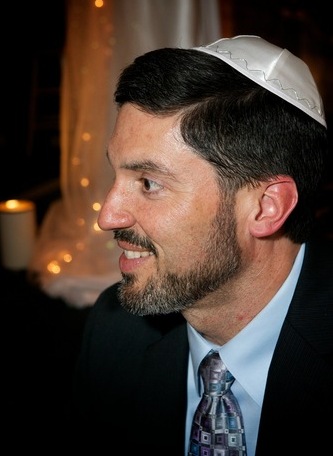
Derek Leman
Derek Leman

For instance, on Derek Leman’s Messianic Jewish Musings, there is a lively debate between Messianic Jews (and Gentiles) and an Orthodox Jewish person about the validity of Christianity as a religion, including Messianic Judaism, which this fellow (Hi, Gene) believes to be a subset of Christianity rather than a “school of thought” within Judaism.

Pete Rambo issued a rather provocative challenge on his blog by “offering a $10,000 reward to the person who can prove unequivocally, from Scripture alone, that God changed the Sabbath day from Saturday, the seventh day, to Sunday the first day.” Naturally, a “spirited debate” ensued, although there only seems to be one person attempting to “collect the reward.”

And then, on Peter Vest’s blog, he proposes the interesting idea that the later Rabbis of the Talmud rejected what Peter believes was the “One Law” teachings of the Second Temple era Rabbis. There’s no particular argument going on in the comments section of that blog (yet), but it nevertheless presents another variant opinion on what the Bible teaches us about Jewish and Gentile interactions in the first-century Jewish “stream of thought” of “the Way.”

I must say that adherents to these various “sects,” in these blog discussions, can express quite a bit of “passion” in defending their particular opinions, but sometimes it (seemingly) goes beyond that.

I haven’t watched the YouTube video yet (and I probably never will), but according to Peter on his blog, a couple of gentlemen in some sort of One Law radio talk show outright said that Peter was a “liar” relative to his statements about Judaism and the validity of the Oral Torah.

Now I can’t state strongly enough that I haven’t watched the video and so I don’t directly know what was or wasn’t said. I do know that it’s not unheard of to misinterpret someone’s opinion of you, especially if that opinion is at all critical. I don’t know what the people Peter mentions said or didn’t say, so what I’m writing here isn’t a matter of taking sides or calling anyone out.

However, if we, for the moment, accept Peter’s allegations at face value, then we have encountered a problem. All of us in our various “sects” of Christianity, Judaism, or whatever, actually have the same core goal: drawing nearer to God. However, each of us within our own specific “streams of thought” imagine the details of just how to accomplish that task rather differently. And yet, in spite of the fact that we know there have been multiple differing “streams of thought and practice” about the Bible and God for well over two-thousand years, significantly predating the existence of anything called “Christianity,” we still insist that whatever religious stream in which we find ourselves is the only one with “the truth.”

Everyone else is wrong and we have a duty and obligation to go online and, by golly, prove it.

It is one thing to disagree with someone else, to believe their particular interpretation of the Bible is in error, that the person is (Heaven forbid) wrong, mislead, or even deluded. It’s another thing entirely to believe another person’s difference of opinion indicates that the individual is a willful liar. I hope that’s not what’s going on here, because it would be a sad commentary on two people who are professed disciples of Yeshua (Jesus),  but as I said, I don’t really know.

And that brings us back to Lancaster’s article and “Saul, the Heresy Hunter” (I say that somewhat tongue-in-cheek).

Christian teaching emphasizes the story of the conversion of Saul the Jew, a persecutor of the early church, into Paul the Christian, as a pattern for Jewish believers to follow. Just as Saul renounced Judaism and even changed his name to Paul, so too, Jewish believers should renounce their old allegiances and embrace their new identity in Christ. A careful reading of the story of Saul’s Damascus road encounter, however, does not indicate a conversion from Judaism to Christianity, nor does it indicate a change in name from Saul to Paul.

-Lancaster, p.15

You’ll have to read Lancaster’s full article (only four pages long) to see how he defends his opinion (successfully from my point of view), but it indicates a couple of things. First, that Saul was wrong about his persecution of the Jewish members of “the Way,” and that he was rather dramatically forced to face his mistakes by an encounter with the Master of that movement, Yeshua (Jesus) of Nazareth. Second, we discover that (in my opinion and Lancaster’s) Christian interpretive tradition is wrong about what happened to Saul, what sort of “conversion” he underwent, and why he had two names.

Saul did undergo a radical transformation of the heart, soul, and mind. One might say that he experienced a spiritual conversion — something the Master called being “born again.” His life would never be the same. Compared with the “surpassing value of knowing Messiah Yeshua,” Saul counted all his prestigious heritage and achievements in Judaism as mere rubbish (Philippians 3:8 NASB). Yet that change in priority did not indicate a change in religious affiliation. Saul encountered the Messiah on the way to Damascus, but he did not abandon his Jewish identity or his loyalty to the Torah, the Jewish people, or Jewish practice.

-ibid, p.18
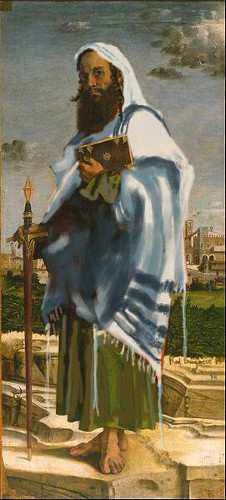
The Jewish PaulIf I said something like that in at least some churches, I would likely encounter strong and passionate counter arguments that anything “Jewish” did not survive in Paul after his Acts 9 encounter with Jesus. Nevertheless, that’s how I (and Lancaster, and many others) read the life of Paul in the Apostolic Scriptures.

So as we’ve seen, there have been multiple sects of Judaism that predated the earthly ministry of Jesus by quite a bit, and there have been multiple sects of Christianity from pretty much the point when the term was first used.

What do we do about that, especially in the volatile environment of the religious blogosphere?

View people you are likely to quarrel with as your partners in personal growth. They are likely to make you more aware of your vulnerabilities, limitations, and mistakes. Don’t let this get you down. Rather, let it serve as your coach. You now have more awareness of what you need to strengthen, fix, and keep on developing.

(from Rabbi Zelig Pliskin’s book: Harmony with Others, p.36, http://www.artscroll.com)

-Rabbi Zelig Pliskin
from Daily Lift #236: “My Partner in Personal Growth”
Aish.com

If you’re religious in any sense of the word (I know that some Christians say their faith is a “relationship, not a religion” but go with me on this one) then other people are going to disagree with you. Get used to it. If you are going to discuss your religious beliefs on a blog and allow others to comment on your blog, people will comment and some will disagree with you. Others will write their own blog posts disagreeing with you, sometimes in the most caustic and “unChristian” like manner.

If we are to believe what Rabbi Pliskin says, all of our opponents are our partners in personal growth. Without them, we might never discover weaknesses, vulnerabilities, and limitations in our own character as well as our knowledge. They force us to constantly stretch ourselves so that we will be more aware of our strengths and deficits tomorrow than we are today. As one motivational statement I’ve seen at my gym says, “If it doesn’t challenge you, it doesn’t change you.”

Consider it all joy, my brethren, when you encounter various trials, knowing that the testing of your faith produces endurance. And let endurance have its perfect result, so that you may be perfect and complete, lacking in nothing.

James 1:2-4 (NASB)

It seems that Rav Shaul (otherwise known as Paul the Apostle) and Rabbi Pliskin agree on something.


Why I am a Messianic Gentile, Part Two

And Korach, the son of Yitzhor, the son of K’hos, the son of Levi, took …

Numbers 16:1

Rashi explains that the key reason for Korach’s rebellion against Moshe was that he was envious of another relative who received honor while he didn’t.

Envy is destructive. It prevents a person from enjoying what he himself has. When you focus on the success of another person and feel pain because of it, you are likely to do things that are highly counterproductive. Envy is one of the three things that totally destroy a person (Pirke Avos 4:28). The downfall of Korach was because of this trait. Not only did he not get what he wanted but he lost everything he already had.

-Rabbi Zelig Pliskin
Commentary on Torah Portion Korach, pg 332
Growth Through Torah

I mentioned in Part One of this two-part series, that I have many good reasons for being a student and disciple of Yeshua (Jesus) within a Messianic Jewish context. And while the status I have accepted upon myself may make me appear as a “second-class citizen” within the ekkelsia of Messiah and the Kingdom of Heaven, in fact, who I am and where I stand has been defined for me by God. Even if I sometimes chafe at that position based on my personality flaws, that does not change the will of God for my life. Any reaction that leads me to envy of the Jewish people for their distinctiveness and unique role in the plan of the Almighty will also lead to my “destruction” (though I probably won’t be incinerated or fall into a pit).

The blessings of God in my life are great. Far be it from me to cause God to take them all away:

While they were listening to these things, Jesus went on to tell a parable, because He was near Jerusalem, and they supposed that the kingdom of God was going to appear immediately. So He said:

“A nobleman went to a distant country to receive a kingdom for himself, and then return. And he called ten of his slaves, and gave them ten minas and said to them, ‘Do business with this until I come back.’ But his citizens hated him and sent a delegation after him, saying, ‘We do not want this man to reign over us.’ When he returned, after receiving the kingdom, he ordered that these slaves, to whom he had given the money, be called to him so that he might know what business they had done. The first appeared, saying, ‘Master, your mina has made ten minas more.’ And he said to him, ‘Well done, good slave, because you have been faithful in a very little thing, you are to be in authority over ten cities.’ The second came, saying, ‘Your mina, master, has made five minas.’ And he said to him also, ‘And you are to be over five cities.’ Another came, saying, ‘Master, here is your mina, which I kept put away in a handkerchief; for I was afraid of you, because you are an exacting man; you take up what you did not lay down and reap what you did not sow.’ He said to him, ‘By your own words I will judge you, you worthless slave. Did you know that I am an exacting man, taking up what I did not lay down and reaping what I did not sow? Then why did you not put my money in the bank, and having come, I would have collected it with interest?’ Then he said to the bystanders, ‘Take the mina away from him and give it to the one who has the ten minas.’ And they said to him, ‘Master, he has ten minas already.’ I tell you that to everyone who has, more shall be given, but from the one who does not have, even what he does have shall be taken away. But these enemies of mine, who did not want me to reign over them, bring them here and slay them in my presence.”

Luke 19:11-27 (NASB)

Rabbi Levi Yitzchok of Berditchev (Kdushas Levi) commented that a truly righteous person’s main goal in all that he does is to give pleasure to the Almighty. To such a person there is no difference if he or another righteous person causes that pleasure.

But if a person’s main focus is on his personal reward, he wants to do everything himself. Therefore, our verse states that Korach took. He wanted to take for himself and therefore felt resentment about the attainment of others.

-R. Pliskin, pp 332-33

coinsWe not only see the dire consequences of envy leading a person to self-aggrandizement, but that such a person has lost their focus on what is to be the true motivation of a servant of God, to please God rather than their own human desires.

If God has assigned a specific role, function, and purpose for the Jewish people, then it is foolish for we non-Jewish disciples of the Master to seek their place and their role. In having those desires and particularly in acting them out, we are rebelling against God and seeking our own personal pleasure. Not only that, we are actually denying ourselves the pleasure of fulfilling the role God assigned to us, one that really would be pleasing to God.

And they gathered against Moshe and Aharon. And they said to them, “You have taken too much power for yourselves. The entire congregation is Holy, and the Almighty is in their midst. Why do you take leadership over the congregation of the Almighty?”

Numbers 16:3

Remember that the Sages say that when a person finds fault with others he frequently is just mentioning his own faults which he can wrongly assume someone else has. Be very careful not to accept negative information about others as the truth without careful examination.

-R. Pliskin, pg 334

mirrorIt is not uncommon for people to sometimes project their own worse character traits onto another person and then blame that other person for what they don’t like about themselves. The irony is that this attribution can happen below the level of consciousness. That is, the person may truly not be aware of their negative character trait but attribute it to someone they don’t like or with whom they disagree. It’s as if they are using their adversary as a mirror to reflect their own behavioral and emotional flaws.

So, if I am to take R. Pliskin’s advice and apply it to every time I’m criticized for my stance as a Messianic Gentile, one way to interpret their criticism (though it might not be true in every case) is that the critic may be assigning me traits or motivations they themselves possess. I guess that’s why it’s a good idea for me to always be aware of what I’m doing and why I’m doing it, so I don’t start believing things about who I am and my behavior that are not true. I must also be careful in my assessment of others to make sure I’m not guilty of projecting my own flaws upon them.

That has always been the normative view of Judaism, enunciated in the rabbinic principle that “one who performs a deed because it is commanded is deemed more praiseworthy than one who does it voluntarily” (Bavli Kiddushin 31a). Actions that come instinctively fail to stretch us. Growth results from reaching beyond ourselves.

-Ismar Schorsch
“Reaching Beyond Ourselves,” pg 534, June 22, 1996
Commentary on Torah Portion Korach
Canon Without Closure: Torah Commentaries

If one desires or even covets obligation to the full yoke of Torah as a Gentile, where is the “stretch”? How are we participating in growth if we not only are doing what we want, but performing mitzvot that do not belong to us? However, if we recognize the legal structure that defines Gentile inclusion in Messianic Judaism (Acts 15) and obey those commandments, we are not only pleasing God, we are participating in our own spiritual growth and elevation (see the ancient Jewish/Christian document The Didache and D. Thomas Lancaster’s latest book Elementary Principles for more).

Going back to what R. Pliskin said about pleasing God by allowing another righteous person to perform mitzvot that are commanded of them, to encourage Jewish believers to perform mitzvot such as davening with a minyan or observing Shabbos is what fulfills our function as righteous Gentiles in Messiah. For only Jewish Torah observance will bring Messiah’s return nearer, therefore, by encouraging Jewish Torah fidelity within the Messianic community, we are helping others to be righteous, participating in our own growth as disciples, and blessing the heart of God.

At least that’s how I see myself as a Messianic Gentile (in an ideal state, and I can say, that I’m hardly an ideal person).

The arrogant person thinks, “If I honor this person, what will people think of me? Will it raise or lower my stature in the eyes of others?” But the humble person makes no calculations of this kind. He treats each person according to the Torah ideals of how people should be treated. Ultimately this only elevates a person’s true stature regardless of how other people might react.

-R. Pliskin, pg 336

HumbleI’ve met very few truly arrogant people, that is people who really think they’re the “greatest thing since the invention of sliced bread.” Most people who appear arrogant and self-assured are actually the opposite. They feel threatened and insecure when others experience success or if put in a situation where they must give deference to another. While I can hardly call myself truly humble, if I strive in that direction as a goal, then acknowledging Jewish “specialness” in covenant relationship with God does not diminish me or reduce my stature in the eyes of others. If someone else believes I am being reduced by recognizing Jewish covenant status, then that is their projection and perhaps their own personal fear.

Imagine how Gentile Christians will react when, upon Messiah’s return, they realize to their chagrin that the Church is not the center of the Kingdom of God, it is Israel. This may be at the core of why many Christians have difficulty with Messianic Judaism and the continuation of Jewish Torah observance within the Jesus-believing Jewish community. It illustrates how, over the long centuries of Church history, Christianity has reversed causality in placing itself above and before God’s covenant people, Israel.

Also your brethren the tribe of Levi, the tribe of your father, shall you draw near with you, and they shall be joined to you and minister to you. You and your sons with you shall be before the Tent of the Testimony. They shall safeguard your charge and the charge of the entire tent…

Numbers 18:2-3

After the death of Korach and the rebels, the Levites especially among the Children of Israel were demoralized and terrified. They felt their own worth and stature was lower than ever after the failed rebellion. Yet God was kind and reminded the Levites that they had a special status and duty to Hashem above the other Israelites and that they also were of the tribe of Levi, just as were Aaron and his sons, the Kohenim.

That’s what I think is missing every time someone believes that I’ve allowed myself to be put at the back of the bus in the Messianic community; the lack of realization that Messianic Gentiles have a highly important role that cannot be fulfilled by the Jewish people. Messianic Jews and Gentiles are interdependent and the Messianic Jewish ekklesia cannot achieve wholeness unless we join together in our complementary roles. We need each other.

So the next time I find myself missing donning a tallit in prayer or being present at the lighting of the Shabbos candles, I must remind myself of everything I’ve just written. Because the minute I give in to the attitude of I want to be like them” or worse, “I deserve to be like them,” not only have I insulted God and betrayed the Jewish people in Messiah, I’ve lost my way and forgotten my God-assigned purpose in life. A righteous person serves God, not his own desires. May God grant me humility and peace. May He grant this to all of us who call ourselves Messianic Gentiles.

Final note: Last year, I also wrote a two-part series on Korach and what this rebellion tells us about who we are today.

Why I am A Messianic Gentile, Part One

I consider myself a Christian in the sense that I am a disciple of Jesus Christ but more specifically, I am a student of Messianic Judaism because I believe that discipline represents a perspective on the Bible, the Good News of Messiah, the New Covenant, and Israel that is scripturally sound and that describes the Bible as the single, unified expression of God’s desires, intent, and plan, first for Israel, and then, by Israel’s light, for the rest of the world.

And yet, to do that, I have learned to accept a few things that other people, that is, Christians, don’t like. I accept that the New Covenant was made exclusively with the House of Israel and the House of Judah (Jeremiah 31:31) and not with humanity in general. Further, I accept that when God, through the prophet, says “the House of Israel and the House of Judah,” He is referring specifically to the physical descendents of the Israelites who stood before God at Mt Sinai and accepted the covenant relationship between God and Israel (Exodus 20) in perpetuity (Jeremiah 31:35-36), who are today the Jewish people, and that the eternal inheritance of the Jews is the nation of Israel, which we have with us now.

I accept that the Gentiles are to be attracted to Israel as a light (Deuteronomy 4:5-8, Isaiah 49:6) with the strongest light being King Messiah, Son of David (John 8:12) as God’s emissary, agent, and deliverer of the promises God has made, causing the New Covenant age to be inaugurated with his death and resurrection, that the Jews might believe God will deliver on His promises to them, and that the Gentiles might be grafted into the blessings of those promises, taking the fringes of a Jewish man and going with him, for God is with him (Zechariah 8:23).

I’ve heard it said that the Jewish man in question is not just any Jewish person, but specifically is Messiah. That we from the nations approach God and His holiness by attaching ourselves to Israel through Messiah and going up with him to Jerusalem, to the House of Prayer for all the peoples (Isaiah 56:7).

So what’s wrong with all of that? Apparently, plenty.

From a Christian’s point of view, which includes some in the Hebrew Roots movement who say they disdain the Church, God made a covenant with Israel at Sinai that had effect and potency until the birth, death, and resurrection of Jesus. Then everything changed. The Jewish people no longer were automatically included in the Sinai covenant (although the Abrahamic covenant remained in force) and in order to re-enter a covenant relationship with God, they had to enter into the New Covenant, represented by a brand new entity wholly divorced from Judaism called “the Church”.

From Christianity’s point of view, this means Jewish people remain Jewish but must surrender Judaism and convert to Christianity, along with the Gentiles, and live, for all intents and purposes, a Gentile Christian lifestyle free of “the Law” and solely under grace (as if the two are mutually exclusive). There must be absolutely no distinction between Jew and Gentile in the Church.

beth immanuelFrom a Hebrew Roots perspective, this means Jewish people remain Jewish and continue practicing Judaism, but the “one new man” entity they must join requires that all Gentile disciples are totally and completely the same as their Jewish counterparts, and must observe the identical set of Torah commandments as the Jew. There must be absolutely no distinction between Jew and Gentile in Hebrew Roots congregations, many of which inaccurately call themselves “Messianic Judaism.”

But the Messianic Judaism I study and adhere to has a different perspective, one that recognizes a specific distinctiveness between Jews and Gentiles within the ekklesia of Messiah, such that each group in the body serves different, although sometimes overlapping functions.

I accept, for instance, that it would be inappropriate for me to claim an obligation to don tzitzit and lay tefillin when praying, to keep kosher in the manner of the Jews, to observe, in the present age, a Shabbat, and to say that it would be a sin if I did not perform any of those mitzvot.

That isn’t to say, especially being married to a Jewish wife, that I’m forbidden to keep kosher or observe the Shabbat (though at present, I only keep “kosher-style” and both my wife and I have elected to work on the Shabbat — may the day come when our observance is more faithful). I even know Gentile Messianics who choose to don tzitzit and lay tefillin privately in prayer, but who do not declare that they are obligated to do so.

I also accept that the New Covenant was made only with the Jewish people and that my only access is through faith in Messiah, not because of any inherit worth I have ethnically or nationally as a non-Jew.

MessiahMy understanding of the Jewish covenant relationship with God is that it extends continually from Exodus 20 forward in time and into the modern age. While Jesus inaugurated the New Covenant with his death and resurrection, getting the ball rolling, so to speak, it won’t reach any sort of fruition until his second coming, when he destroys all of Israel’s enemies, making the Gentile survivors vassal nations under Israel’s sovereignty, and establishing a unprecedented world-wide reign of peace. Then the Jewish people will be restored to their Land, to Israel, and the Gentiles who are called by His Name will come alongside Israel and serve her King, for he is our King, and worship God on the Temple Mount.

No new body is created in Acts 2, it’s an extension of the all of the previous covenants God made with Israel including the New Covenant, and the precursor to the ultimate fulfillment of God’s promises to Israel and to the nations. A subset of all the Jewish people in existing in the first century accepted the Good News of Messiah, and they represent an unbroken stream that goes all the way back to the Exodus and even to Abraham. And the Jewish people who did not accept the Good News remain under the Sinai covenant and in God’s love and compassion, and as God declares in the New Covenant:

“I will put My law within them and on their heart I will write it; and I will be their God, and they shall be My people. They will not teach again, each man his neighbor and each man his brother, saying, ‘Know the Lord,’ for they will all know Me, from the least of them to the greatest of them,” declares the Lord, “for I will forgive their iniquity, and their sin I will remember no more.”

Jeremiah 31:33-34

One day, God will forgive Israel’s sins, and the Jewish people will make teshuvah and return.

“Jerusalem, Jerusalem, who kills the prophets and stones those who are sent to her! How often I wanted to gather your children together, the way a hen gathers her chicks under her wings, and you were unwilling. Behold, your house is being left to you desolate! For I say to you, from now on you will not see Me until you say, ‘Blessed is He who comes in the name of the Lord!’”

Matthew 23:37-39

Israel will one day say “Blessed is He who comes in the name of the Lord” and on that day, the Gentiles will join with Israel at feast of Abraham, Isaac, and Jacob (Matthew 8:11).

the crowdDoes that make me and all the non-Jewish disciples of Messiah who study Messianic Judaism into second-class citizens in the Kingdom of God? To be honest, there are days when I think so. I suppose it’s my innate attraction to Jewish worship and scholarship that periodically has me longing to be able to join a minyan or to be called to the bema for an aliyah (not that I speak or read Hebrew). I sometimes see Jews in Messianic synagogues worshiping and praying the prayers and wish I could be a part of them. Sometimes I feel I should leave any sort of affiliation to Messianic Judaism behind and just keep my peace silently, communing only with God, because I feel I can never truly be part of Jewish people in Jewish community.

But I don’t fit in at church either, so that cannot be my sole connection to fellowship. Also, I must admit that any issues I may have feeling any disconnection with Messianic Judaism are my personal issues and hardly the fault of Jewish needs or requirements in community, since after all, the “chosenness” of Israel is a decision of God, not of man, and I must obey God before the will of any human being, even (especially) my own will (Acts 5:29).

That is why I call myself a “Messianic Gentile” and choose to study within a Messianic Jewish framework. That is why it is OK, even if I am a “second-class citizen” (which I’m actually not), because my citizenship is in the Kingdom of God, among the ekklesia, both ancient and modern, in the tradition of every Gentile who has ever come alongside Israel because we have heard God is with them, from the days of Moses to the days of the apostle Paul.

And Korach, the son of Yitzhor, the son of K’hos, the son of Levi, took …

Numbers 16:1

Rashi explains that the key reason for Korach’s rebellion against Moshe was that he was envious of another relative who received honor while he didn’t.

-Rabbi Zelig Pliskin
Commentary on Torah Portion Korach, pg 332
Growth Through Torah

Rabbi Zelig Pliskin
Rabbi Zelig Pliskin

If I were to allow envy of the obligations and privileges of the Jewish people in the Messianic community to affect me, I would be as Rashi characterized Korach and his band: rebellious. May it never be.

Rabbi Pliskin’s Torah commentaries speak more to me about my own state as a Gentile studying and learning within a Jewish context, being attached to but not the same as the Jewish co-participants in the body of Messiah. In Part Two of this series, I’ll discuss more of my perspective using R. Pliskin’s missives as a foundation.

For more on the Korach rebellion, which was last week’s Torah portion, read “The Importance of Unity” at ProjectGenesis.org.

Vayigash: Are You Willing to Save Someone’s Life?

joseph-and-pharaoh“Now when the news was heard in Pharaoh’s house that Joseph’s brothers had come, it pleased Pharaoh and his servants.”

Genesis 45:16

Pharaoh was delighted when he heard that Joseph’s brothers had come to Egypt. He immediately made provision to bring the entire family to Egypt so they could survive the famine in safety and comfort. He provided wagons for the move. He promised them the best of the land of Egypt.

Pharaoh’s warm welcome of Joseph’s brothers reveals an important detail about Joseph’s time in Egypt.

“What Pharaoh Heard”
Commentary on Torah Portion Vayigash
First Fruits of Zion (FFOZ)

This commentary from FFOZ comes with the following “Thought for the Week:”

When we are wronged by someone, it is natural to tell others about it. We want to tell others about how it happened to garner their sympathy and support. Somehow it makes us feel better to know that others are aware of the injustice committed against us. We seek out sympathy and commit a small act of retaliation.

It’s very human that when we feel we’ve been wronged by someone, to want to get even in some way. Usually, we get even by doing the same to them as we believe they’ve done to us (whether the damage the other person has done to us is real of just perceived makes no difference apparently).

I write periodically on something called Lashon Hara or the Jewish concept of wronging someone in speech (which can be spoken, written, or any other form of communication). I’ve even based the Comments Policy for this blog on that principle.

As the FFOZ commentator writes, what we say and how it is perceived can have hurtful and even dire consequences:

Joseph loved his brothers and his family so much that he could not bear the thought of having them defamed. He did not want Egyptians saying to one another, “Did you hear about the nasty thing that Joseph’s lowlife brothers did to him?” Joseph kept the entire episode to himself. The only thing he ever said about his past was the vague explanation, “I was in fact kidnapped from the land of the Hebrews” (Genesis 40:15). His love for his brothers compelled him to protect their reputation.

Instead of emulating Joseph, who was concerned about protecting the dignity of his loved ones, it seems we do just the opposite. A husband and wife are eating out at a restaurant when the husband drops his cup, spilling his beverage on the table. Embarrassed, the wife rolls her eyes and says to the stranger sitting at the next table, “He is such a klutz.” A man is out with his friends when they begin discussing the foils of marriage. All in good fun, the man complains to the guys about his wife’s bad habits. Everyone laughs. Why would we sell out the people we love like this? The wife shows more concern for the opinion of a stranger in a restaurant than she does for the dignity of her husband. The husband has higher regard for a few laughs from his buddies than he does for the reputation of his wife.

It’s one thing to read about a “Bible principle” and another thing entirely to behave out of that principle with unerring consistency. Reading about Joseph and his brothers makes a nice story, but most of the time, we don’t think to apply what we’ve learned to our day-to-day living. Reading the story of the wife casually defaming her husband in public brings the principle home. If anyone you’ve loved has embarrassed you in front of your friends, family, or strangers, even if what they said is true about you, then you know what I mean.

Here’s another example:

“The Torah ideal is to greet each and every person with a pleasant facial expression.” (Tomar Devorah, ch.2) When you greet someone in a friendly way, you never know what a positive effect you will have. A certain individual who greeted everyone with a smile and kind words was approached by someone and told, “You saved my life.” The person went on to tell how he’d suffered a number of serious setbacks and was contemplating suicide. He felt totally alone and depressed and felt that no one cared about him. Then this fellow greeted him with a sincere smile and a cheerful voice. This immediately lifted up his spirits and he was resolved to continue living.

-Rabbi Zelig Pliskin
Quoted from Gateway to Happiness, pg 26
Found at Aish.com

whispererI don’t know what Joseph felt about his brothers or why he didn’t “spill the beans” about their attempt to kill him to Pharaoh, King of Egypt, or anyone else in his sphere of Egyptian companions. Maybe he really did continue to have love for them in his heart, in spite of how they felt about him. Perhaps he just didn’t want the Egyptians to harbor any more disdain for the Hebrews than they already did. Regardless of the reason, even though Joseph would have been telling the truth if he revealed the terrible acts of his brothers to Pharaoh, he chose not to do it, keeping the matter to himself, and even forgiving his brothers, though they hardly deserved it.

When a spouse says something to revealing about his or her “other half,” depending on what it is, the person being spoken of can at least feel embarrassed if not ashamed or humiliated. As we see from Rabbi Pliskin’s example, how we treat another person, even if it’s simply greeting a stranger with a smile, can make a tremendous impact.

There are more than enough “moral police officers” on the web and particularly in the blogosphere who choose to point accusing fingers at others rather than greeting them (virtually speaking) with a “smile.” Especially since we cannot actually face the people we address on the Internet, we have no idea what good or evil we are doing to them and how they will respond. Most of the time, all we know is that they remain silent or they “bark back” at us if we have insulted or embarrassed them in some way.

But like the man in Rabbi Pliskin’s commentary, we don’t know how far we can push someone, especially if they are already on an emotional brink. We can knock someone over or we can pull them back, just by how we speak to them or about them.

James, the brother of the Master, said (James 3:8) that the tongue is “a restless evil and full of deadly poison'” We have been given the gift of speech (and writing, and other forms of communication) to bless and not to curse. Paul said (1 Thessalonians 5:11) that believers should “encourage one another and build up one another”, and New Testament scholar and author Mark Nanos, in his book The Mystery of Romans said Paul expressed his heartfelt desire that believing Gentiles should support and encourage even the non-believing Jews in the synagogue, rather than denigrate them for being “weak” and “stumbling” in faith.

If it is true that we have a duty to support even unbelievers so that they should come to faith, then what we say and what we do becomes incredibly important. We can not only save someone’s life in this world by how we greet them, we can be an instrument to bless or curse their souls.

The FFOZ commentary for this week’s Torah portion ends this way:

A woman was having a hard time at the Messianic synagogue she attended in the southern United States. She was involved in a heated conflict with some other members. This went on for some time. Frustrated with her congregation, she told her unbelieving friend about the problems she was having. Eventually the leadership arbitrated the situation. She made peace with the people. Some time later, she invited her unbelieving friend to attend a service. Her friend said, “Are you crazy? After the way you talked about those people and that place, I wouldn’t set foot in there.”

Joseph never told the Egyptians about the incident with his brothers because it was none of their business. By maintaining discretion, he was protecting the name and reputation of God in Egypt. Had he told his sad story to everyone, the Egyptians would have had cause to say, “If that’s how the followers of your God behave, I want nothing to do with Him or your religion.”

FallingI’ve heard it said that “you can’t unring a bell.” Once you have said or done something harsh or hurtful to another human being, you can never take it back. Just imagine all of the regret buried within you for all of the things you’ve said and done to sin against other people and against God over the years.

Fortunately, God is in the business of forgiving, but it’s not certain that all of the people you and I have hurt in our lifetimes will be willing or able to forgive us. But while we can’t change the past, we can make a new future starting right now. Have a care what you say and what you do. Greet others with a smile. Withhold a harsh criticism, even if what you could say is factual. Consider that God loves even the sinner and the apostate.

You may never know whose life you may save by either speaking a good word or withholding one that is evil. One day we will all have to give an accounting for how we’ve lived our lives and every action we have committed. What will you say to the King when it’s your turn? Will you attempt to justify hurting others, or be blessed by him for your kindness and compassion?