Tag Archives: religion

The Torah Without Judaism?

The article got me thinking; why don’t we create a 30-Day Challenge for Jewish things like mitzvot to help Jewish people undertake a new level of commitment? After all, Judaism is not an all or nothing religion. Whatever steps a person takes to follow the mitzvot, no matter what level or station of life they are at, that is always a plus and to be applauded and celebrated. If you don’t observe Shabbat but decide to light candles, then good for you! That’s a great positive step. Doing that one thing is better than doing nothing. Judaism is a journey that is taken one step at a time.

-Rabbi Tzvi Nightingale
“The 30-Day Jewish Challenge”
Aish.com

It’s Friday afternoon at the McGillis School in Salt Lake City, and students from the third through fifth grades are gathered for the weekly Shabbat celebration.

They read and discuss a passage about humility by former British Chief Rabbi Jonathan Sacks. Then a blond girl with braided hair prepares to light the candles. A hush falls over the room as the flames are kindled, and the students recite the practiced benediction in unison:

“As we bless this source of light, the warmth these candles bring reminds us of times we gave light and received light,” they sing, followed by a recitation of the traditional Shabbat candle-lighting blessing in Hebrew.

The ceremony is not dissimilar from weekly Shabbat celebrations held in Jewish schools across America.

Except for one thing: The student lighting the candles isn’t Jewish. Nor is the one who follows her to recite the kiddush blessing over grape juice. Nor the one after that who recites Hamotzi over the challah bread.

-Uriel Heilman
“With 75% non-Jewish students, Utah’s Jewish school seeks to universalize Judaism”
Jewish Telegraphic Agency (JTA)

I had a good conversation with a friend of mine over coffee last Sunday. However, things became a bit “pointed” when the discussion turned to “Judaism vs. Torah.” I know that’s a strange thing to say, but bear with me.

I actually haven’t talked with anyone on this topic in quite some time…maybe for years. It’s the same old saw I used to see wheeled out when I was active in the Hebrew Roots movement; the idea that one can be obedient, or subservient, or compliant to the written Torah without having any sort of involvement with the Talmud or otherwise, the “oral Law”.

My friend referenced two groups of Jews in Israel he has some familiarity with…well, he’s familiar with one group more than the other.

synagogueHe says one group is active in encouraging Messianic Jews in the Land to start attending synagogue services within normative (probably Orthodox) Judaism as opposed to meeting with Messianic Jewish congregations. I don’t know how true this is since I’m getting it third hand, but it’s something to consider.

The other group (I’m purposely not naming names), the one my friend is more familiar with, are Messianic Jews who live their lives observing the written Torah and only the written Torah as they understand it.

Granted, from an outsider’s point of view, many of the customs of say, the Breslovers may seem archaic and odd, but I just don’t see how one can observe the mitzvot without consulting the Rabbis, at least to some degree. This is because the written portion of the Torah doesn’t always describe how to perform the mitzvot. Apart from the Karaites, all religious Jews rely on Rabbinic rulings and traditions to help them navigate the Torah, although according to the Wikipedia page I just referenced:

Karaite Jews do not object to the idea of a body of interpretation of the Torah, along with extensions and development of non-Rabbinic Halakha (Jewish law) that strives to adhere to the Tanakh’s straightforward meaning. Several hundred such books have been written by various Karaite Ḥakhamim (sages) throughout the movement’s history, although most are lost today.

This begs the question of whether or not modern Rabbinic Judaism is an absolute requirement for Jewish (or non-Jewish) Torah observance. I’ll get back to that in a minute.

My friend has certain problems with modern Judaism, such as why the majority of religious Jews aren’t trying to be a light to the nations.

He says, “It is too small a thing that You should be My Servant To raise up the tribes of Jacob and to restore the preserved ones of Israel; I will also make You a light of the nations So that My salvation may reach to the end of the earth.”

Isaiah 49:6 (NASB)

I did mention that The Chabad Rebbe, Rabbi Menachem Mendel Schneerson, actively promoted Noahidism among the Gentiles. Granted, this probably isn’t what my friend meant when he said Israel is commanded to be a light to the nations, but from the Rebbe’s point of view, that’s exactly what he was doing.

The RebbeOn the other hand, the article published by the Jewish Telegraphic Agency shows at least one Jewish school being that light:

“We have Muslims, Buddhists, atheists, Presbyterians, Lutherans and LDS students,” said head of school Matt Culberson, using the acronym for Latter-day Saints, or Mormons. “But this school takes Jewish culture as its foundational point. We start with Judaism first.”

The outgrowth of a JCC early childhood program that morphed into an independent K-8 school about 15 years ago, McGillis may be the only American Jewish school of its kind. The vast majority of its students – 75 percent – are not Jewish, by the administration’s reckoning. And though McGillis teaches Jewish values, Jewish holidays and Hebrew, it does not teach Judaism as a religion.

And what are Jewish values without the Jewish religion as such?

Practically everywhere you turn, identical blue posters advertise the school’s guiding Jewish values: tzedakah (translated as “giving to others”); tikkun olam (“repairing the world”); gemilut hasadim (“doing good and kind deeds”); derech eretz (“having respect for all”); limud l’shma (“learning for the sake of learning”), and kehillah (“our community”). Students, teachers and administrators constantly reference these values, albeit sometimes straining to pronounce the Hebrew.

Yes, I can certainly see those values being universal in scope and not restricted to the Torah, the Jewish people, and Judaism, although these values are exemplified in Judaism.

They probably are in Christianity as well, at least most of them, but I’m sure Christians would have different names for those values and activities.

And I did tell my friend that if he believes Judaism is a poor reflection of the Torah as it was originally understood and lived out by the ancient Israelites, then Christianity is just as poor a reflection of the teachings of Rav Yeshua (Jesus) and his emissary to the people of the nations, Rav Shaul (the Apostle Paul).

So should we attempt to reconstruct the Torah observance of the ancient Israelites and the devotion to Rav Yeshua of the very early non-Jewish disciples? I’m not sure how we could do it with any hope of accuracy. Too many Hebrew Roots people who think they have done so marshal a whole lot of chutzpah and much too little respect, and occasionally march into synagogues to tell the Rabbi that he is doing it all wrong.

I have a rather unique view of my local Jewish community through the eyes of my wife, so I’m quite aware of how Jewish people take to such bold intrusions into their space.

PogromI tried to explain to my friend that after nearly two-thousand years of persecution, pogroms, maimings, and murder committed upon the Jewish people by their non-Jewish neighbors (most often Christians), I can see why Jews aren’t falling all over themselves to share their version of the “good news” of the Torah with the rest of the world. Jewish insularity and Talmud have gone a long way to preserve the Jewish people and Judaism, when the rest of us were trying to wipe both from the face of the Earth.

He reminded me that there have been groups of Christian missionaries who have been wiped out by indigenous people in far off corners of the world, at least historically, who have then been followed by more missionaries, risking their own lives, who eventually did share the salvation of Christ with the folks who had butchered their predecessors.

And while I admire the courage of these missionaries, and do not in the slightest demean their accomplishments, it’s one thing for a single, isolated people group to kill one party of missionaries, and another thing entirely for the vast majority of this planet’s population to continually attempt genocide against the Jewish people as a religion and a race.

And if God intends on judging the Jewish people along with the rest of us, that’s God’s privilege, not mine.

Apart from small groups of Messianic Jews (or non-Jews) who believe they can disregard Rabbinic Judaism out of hand and practice a greater fidelity to the Torah and to God by doing so, the majority of religious Jews, Messianic and otherwise, observe the mitzvot and serve Hashem within the religious, cultural, social, and historical context of Judaism.

As we saw in the JTA article, Judaism can successfully transmit universal moral values to non-Jews without necessarily transmitting Judaism as a religious construct.

When brings me back to Rabbi Nightingale’s 30-Day Jewish Challenge, as well as to the idea of a Torah observance without Judaism.

Whether you care to admit it or not, your worship of God operates within a specific religious, social, cultural, and community context. Even if you are alone in your faith as I am, you get your understanding and interpretation of the Bible from somewhere, and your praxis was probably not invented just by you.

Some sort of organized body or bodies imparted all that upon you, and you continue with it because it makes sense to you, even if your religion and practices don’t always make sense to others.

Within the various streams of mainstream Judaism, Judaism makes sense to religious Jews. The same can be said for the numerous denominations of Christianity. That an outside observer can criticize and point to portions of the Bible that seem to contradict the activities within those branches and denominations, doesn’t mean it’s seen the same way from the inside.

McGillis School
Head of School Matt Culberson says the McGillis School tries to inculcate the school’s guiding Jewish principles across the curriculum. (Uriel Heilman)

No system is perfect, and a lot of systems are dysfunctional, but when you say that Judaism is broken because it treats the Talmud as more authoritative than the Torah, you are making that statement from inside some system, not from a 100% objective understanding of the Torah.

If you say that Judaism is biased in a particular way, so are you. We all are. No one exists without bias, without a perspective, without an interpretation.

I’m not in any shape to be tilting at windmills. I’ve got enough to deal with in my own life. Sure, sometimes I take a stab at religious criticism, but I don’t like to make a habit of it.

If I have to judge, I guess I’ll start with myself. If, in any sense, I can be successful in practicing charity, repairing the world, doing good and kind deeds, having respect for all, and learning for the sake of learning (I don’t have a kehillah or community, so that one’s out), then maybe I’m not doing so bad (although a 30-day challenge or some other form of “upping my game” wouldn’t hurt).

If I look at other communities and they’re doing the same thing, maybe they’re not doing so bad either.

Final word. In case you’re wondering, I’m not trying to bang away at my friend. We don’t always agree on everything, but we do get along, and I cherish our relationship. He’s a kind, intelligent person who I believe is close to the Spirit of God and who walks in the footsteps of our Rav.

May it be that way for all of us.

If Your Religion is Boring, It’s Because of You

“It is customary to blame secular science and anti-religious philosophy for the eclipse of religion in modern society. It would be more honest to blame religion for its own defeats. Religion declined not because it was refuted, but because it became irrelevant, dull, oppressive, insipid. When faith is completely replaced by creed, worship by discipline, love by habit; when the crisis of today is ignored because of the splendor of the past; when faith becomes an heirloom rather than a living fountain; when religion speaks only in the name of authority rather than with the voice of compassion – its message becomes meaningless.”

-Rabbi Abraham Joshua Heschel

I originally found the meme on Facebook but it led to James F. McGrath’s blog (which is at Pathoes and thus cluttered with too many ads that slow the blog page from loading in the browser) where he doesn’t say that much more about it. All McGrath commented on was this:

The quote was circulating on social media recently, and so I thought it should be turned into a meme. I made the one above and scheduled the post. Then yesterday I saw that Christians Tired of Being Misrepresented had made their own meme with (a truncated version of) the quote. And so I am including that one too, below. I am glad Heschel’s words are getting this much attention just in time for Evolution Weekend, for which they seem especially appropriate.

See also Jim Kidder’s post on the attempt of the Discovery Institute to do precisely what Heschel criticizes.

For some reason, this reminded me of articles such as Millennials leaving church in droves, study finds and 5 Things Millennials Wish the Church Would Be.

The former article begins:

At its core, Christian life is set of sacred traditions linking generations of sacraments and Sunday school lessons, youth ministry morals and family gatherings sanctified by prayer. An unbroken circle, in the words of an old hymn.

netflixMaybe that’s the problem, assuming it’s true. If the rituals, sacraments, and Sunday school lessons don’t connect to anything but the life you lead on Sunday morning and evaporate immediately afterward, then religion is no more relevant to your day-to-day existence than watching an hour-long television show once a week. In fact, given how much attention entertainment is given in our culture, that TV series may actually be more relevant, since it has a much wider audience, thus giving you more people to relate to through the show.

In the latter story, the first question it says millenials are asking is “Is our church real or relevant?”

I guess the question I’d respond with is “Are you real or relevant?”

OK, that was a tad snarky, but hear me out.

In any human endeavour, it can be said that you will get out of it what you put into it. I think that extends to the world of religion and faith as well. If you want a “relevant” relationship with God, you have to seek it out. It’s not just going to happen.

Sure, God can do anything including override your free will, but experience and the Bible teach me that He’s not going to do that. He requires much, and we only find relevancy and a sense of our faith being real when we respond, not just for a few hours on Sunday (or on Saturday if you’re Jewish or otherwise attend a synagogue), but for seven days a week during each waking moment.

I know, I know. Easier said than done, and I’ll be the first one to admit that I don’t attend to the desires and requirements of God every time I take a breath. It’s too easy to get distracted by our jobs, home life, taking kids to soccer practice, dozens and dozens of mundane tasks where, in order to be mindful of the living God, we must make the extra effort to turn to Him, even as He’s waiting for us to do that.

I think the problem with the perceived lack of relevance of religion in modern life is the misunderstanding on what religion is. Yes, part of it has to do with ritual, and particularly for observant Jews, set times for prayer, gathering with a minyan, blessings upon donning a tallit and laying tefillin, blessings before eating, different blessings depending on what you’re eating, blessings after eating, blessings over lighting the Shabbos candles, blessings over…

DaveningI’m making Judaism sound rather cumbersome, but only to make a point.

If that’s your total vision and understanding of your religion, it’s going to eventually get either really boring or a less-than-mindful habit that you practice by rote. Perhaps comforting, but ultimately meaningless.

Christians do this too, it just isn’t called “ritual”. Go to church, get greeted at the door, chit-chat with a Bible in one hand and a cup of coffee in the other until the service starts, go through the ritual of the service, listening to announcements, standing and sitting, singing, greeting the people around you when you’re told, putting money in a plate, more music, listening to the sermon (maybe even taking notes but more often than not just zoning out), going to Sunday school (or not because it’s boring and you have better things to do), agreeing with the standard party line during class and not asking questions that you don’t already know the answers to…

That’s really tedious as well. No wonder there’s a mad rush to leave for Sunday brunch afterwards and then maybe get in a quick game of golf.

I know you’ve heard this before and I know I’ve said this before in a number of different ways, but it’s one of those messages I believe needs to be repeated often.

Because if decades ago, Rabbi Heschel could recognize this problem, and in this day and age, the problem seems worse than ever, just dropping the message into a single blog post and walking away isn’t going to have much (or any) impact.

Is your church or synagogue boring, not real, irrelevant? Maybe that’s because you are. If you want something more out of your religion, start putting more into it. Stop acting like religion is something you’ve just added to your pre-existing life, and start acting like you can’t live without an active, pulsating, moment-by-moment encounter with God.

Easier said than done, I know.

I can’t tell you exactly how to do all that. I’m still figuring it out for myself. This is as far as I can take you, assuming this is territory you want to explore.

I know what I’m about to say is full of trap doors, but your relationship with God isn’t wholly dependent on ritual and religious celebrations. It’s more about stopping whatever you’re doing right now and turning toward God. Then it’s about doing that again as often as you can.

Helping the HomelessIt’s about seeing human needs all around us as opportunities to serve God in a real, meaningful, and relevant way. Donate food to a food bank and your old clothing to a homeless shelter. Visit a sick friend at their home or in the hospital. Comfort the widow who has just lost her husband. Donate clothing, toys, and any other necessary items to foster children.

If you want your religion to be real and relevant, live a real and relevant life. I said I didn’t know how to take you any further, but all of the suggestions I made in the previous paragraph are based on what the Bible says God wants us to do.

If your religion is boring, it’s because of you. If you’re religion is relevant, same answer. All you have to do is listen to God and your faith will never be boring again.

Our problem is we don’t always listen. For some of us, we listen so infrequently that we’ve forgotten (or never learned) what God’s voice sounds like.

What Are We Looking For From God?

I recently blogged about a Christian turned Noahide who I accidentally discovered on the blogspot The Torah Way. In describing this person’s “journey” away from faith in Jesus (Rav Yeshua) to a traditional Noahide or “Righteous Gentile” viewpoint and praxis, I neglected to examine what they wrote on their other blog Cozy Kitchen Chats believing it was more or less a collection of recipes and other food related articles.

As it turns out, this is an older blog and contains a lot more detail about this woman’s (one of the things I discovered) spiritual travels.

I’m not trying to pick on her or demean her in any way. I do, however, find that what she’s been through over the past several years is illuminating, because she comes from a place that should be familiar to many of my readers.

Let’s go to the beginning, the very first blog post from July 17, 2014:

To formally introduce you to my Cozy Kitchen, I absolutely need to share with the you the Foundation of my world, Jesus Christ, the Son of God, my soon coming KING. I had always been brought up in the church, although I had bounced around from church to church seeking and hungering for something deeper. I tried small town churches, large Mega churches, Pentecostal churches, Baptist churches, even Catholic churches. Each had amazing truths and amazing people, but nothing felt comfortable to me. My heart was always drawn to the Church described in the Book of Acts.

This is a person devoted to Jesus as Savior and King in search of a church that reflects the Biblical “prototype” church, the ideal church where one can draw close to the Spirit of Jesus. Apparently, she couldn’t find it.

All I know is that I personally needed to walk away from everything I knew about the modern day church. I spent two years aggressively seeking God to show me the Truth, regardless what it may cost me, I wanted to know that I know Him and that I am following Him wholeheartedly. I read everything I could about the religions most commonly found in the United States. I set aside all that I knew, wiped away all the prejudice that I held and explored each asking the Holy Spirit to show me the Truth.

This part is funny in an ironic way, given where she’ll end up.

…at first I honestly didn’t like the Jesus I was learning about. Oh, I loved how others in the Bible would describe Him, but when I read His words, I thought they were harsh, aggressive and difficult to understand. I really liked Paul much more than Jesus, Paul’s teaching were soft and easy, Salvation by Grace alone, no actions or responsibility, once saved, always saved. Paul was much more appealing.

MessiahShe goes on to say that in order to learn more from Jesus, she set aside Paul’s writings so she could sit at the feet of her Master. That’s how she started out her blog.

I am here exclusively to show the Love of God to you and to serve you and others in anyway I can. Opening up my Cozy Kitchen Chats with you, I will share with you the Gospel of Jesus, how to have a thriving Christian home, how to serve your community and how to make YOUR own Cozy Kitchen your personal mission field.

But less than three months later:

I know this is topic that can really set some “believers” off balance, since there has always been a belief that the Torah or the Life Teaching and Instruction of God, given to Moses was done away with at the resurrection of Yeshua (Christ)

Nowhere in the Prophets nor in the instruction that was given to Moses was it ever mentioned that the Law would be done away with. During Yeshua’s time on earth, He never mentioned that the Law or the Word would be dismissed. He actual said the following.

First, she described a general dissatisfaction with all of the churches and Christian denominations she experienced and was determined to study the Bible at the feet of Jesus and gain wisdom from the Holy Spirit alone.

Then she discovered the Torah, started calling Jesus “Yeshua,” and described her understanding in terms more familiar with someone who was just introduced to either the Messianic Jewish or Hebrew Roots movements.

Based on a link she posted, her source material came, at least in part, from 119 Ministries (as of this writing, there’s a JavaScript pop-up that asks if you’re new and you have the option to click “Yes” or “No”. However, the box doesn’t go away when you click either button, so website content is blocked unless you edit the URL to go to the home page — Addendum: This problem has apparently been fixed, although the site still has connection difficulties).

Subsequently, she started writing about kosher foods, her opinion of the Christian Church and of Pastors continued to decline, she became focused on Sacred Name theology, and she decided that Christmas was pagan, thanks to 119 Ministries, and stopped celebrating it.

I don’t know if she actually started donning tzitzit, but it looks like she wanted to. Shabbat became important to her.

The Jewish PaulA really critical point though, is that her attitude about the Apostle Paul (Rav Shaul) changed remarkably. Remember, at the very beginning, she loved Paul’s teachings, but thought Jesus was too harsh and aggressive.

Don’t allow the mindless teaching of man separate you from the TRUTH. The Pharisees over taught the law with man made regulations to overwhelm man so he would not honor it, then the new Pharisees (Paulines, followers of Paul’s teaching rather than Jesus’) discounted the Sabbath with man made doctrines so men would not follow it. Seek God’s instruction to find the Truth.

Here, she’s reversed her original position and now sees the teachings of Paul in opposition to those of Jesus. Ironically (again), she denigrates the “man-made laws “of the “new Pharisees” and believes only in seeking God’s instructions of truth in Jesus. I say ironically because when she became a Noahide, she had to accept the validity of the teachings of the Rabbinic sages and their authoritative interpretations of Torah, which most Christians call “man-made laws”.

And most Christians consider the Sages to be something like “the new Pharisees”.

Here’s a little more:

A husband that truly LOVES his wife will catch on. Believers that are TRULY following, TRULY LOVING Him, TRULY READING Him will catch on. They will start to step away from Paul’s teaching or rather “un-teaching” and will seek to find out what the WILL of the Father is and what is meant by the “Word of God.” it’s an exciting time! An Awakening!

I’m emphasizing this because abandoning Paul is usually a major step in leaving Christianity, Hebrew Roots, and Messianic Judaism for a non-Jewish believer, since so much of our understanding of how to apply Torah to the Gentile and to live a life as devoted disciples of Rav Yeshua, depends on what he wrote.

She found this to be the best teaching on Paul she ever heard. I had a difficult time following the link and managed to navigate to the 119 Ministries video teachings page and found the correct video by searching for the lesson’s title: “The Deuteronomy 13 Test.”

I thought I should investigate what she was listening to in order to discover what was influencing her thinking and beliefs. The textual introduction to the “Deuteronomy 13 Test” states:

Have you ever considered why the Jews reject the Jewish Messiah, our Lord and Savior…What if it was because many today misunderstand Paul…Millions of Jews reject the Christian presentation of Jesus and Paul, alarmingly, because the Word of God says to. Sadly, if the misunderstanding continues, Jews are forever prevented from not only not knowing their Jewish Savior, but also from experiencing the blessings of the New Covenant. This teaching exposes the gap in the misunderstanding, and takes a first step into building a bridge…

119 video
Screen Capture: 119 Ministries

The video (about 41 minutes long) wasn’t exactly what I expected. It seemed, at the beginning, to be both very pro-Jesus and pro-Paul. The video instructor said that although Jesus and Paul didn’t teach against the Torah of Moses, but they did teach against the Oral Traditions, what is known today, according to this “teacher,” as the Talmud.

This instructor’s first mistake was defining the traditions and praxis of the Pharisees in the late second Temple period as the Talmud, which would not actually exist for centuries (Mishnah c. 200 CE, Gemara c. 500 CE)

This is very much an anti-Judaism (including Messianic Judaism) lesson. I needed to understand a little more about 119 Ministries itself. According to their site’s About page:

Our purpose is to seek and bring the truth to all nations, unlearn false doctrines and traditions of men, and to equip the body to live and practice the Word as God originally intended.

We find that continuously examining the Scriptures (in the same Hebraic first century context and perspective in which they were written and understood) reveals to His people much more understanding, as opposed to the more common Greek mindset that is a couple thousand years removed.

Sounds pretty much the same as when a Fundamentalist church says their doctrine is the only “sound doctrine.”

It’s difficult to tell if 119 Ministries is specifically “One Law” or “Two House,” but their Faith Statement says in part:

Another purpose of Yeshua was to begin calling back the scattered 10 tribes of Israel that were divorced, scattered, and became Gentiles.

This at least suggests a Two House theology, although it’s hardly conclusive.

Frankly, in listening to the above-mentioned anti-Judaism video teaching, it’s amazing that this woman finally became a Noahide, since as far as I can tell from her blogspot, 119 Ministries was her primary and possibly her only source of information relative to Hebrew Roots.

Listening to the 119 teacher was hard for me since his lesson was not only almost totally opposed to my personal beliefs, but it was thinly disguised anti-Jewish rhetoric which not-so-subtly was also a presentation of supersessionism, misappropriating the Torah from the Jewish people and denying observant Jews the right to establish their own interpretation of Torah.

Orthodox JewsAbout halfway through the video, the teacher started hammering away against modern observant Jews. To be fair, he seemed just as prejudiced against normative Christianity.

The 119 Ministries video teacher says he wants to bring Jewish people to faith in Yeshua, but his attitude toward observant Jews is so poor that I can’t imagine any Jewish person wanting to listen to this fellow. In this, his concept of Jewish people who “reject Jesus” is pretty much that of normative Christianity, at least in its worst expression.

This teacher is a great example of how a person who continually quotes from the Bible (and he did so, scripture after scripture) can still grossly misrepresent the intent of Hashem, Rav Yeshua, and Rav Shaul (In doing some subsequent research, I discovered that the people behind 119 Ministries are well-meaning and kind, but I still have to disagree with almost all of their conclusions).

Toward the end of the video, the teacher cited Romans 11, Ephesians 2 and Numbers 15:15-16 as “proof” that the Law of Moses was meant to be observed by, not just the Children of Israel and their descendants, but by all humanity, so he tips his hand, so to speak, and reveals that his ministry supports One Law. He does it however, in a really easily refuted way, so I readily set it aside.

(I found this half-hour long YouTube video of an interview with the two guys who founded and operate 119 Ministries, Steve and John. They seem like really nice guys. If you want to get to know who they are and why they started their organization, click the link).

The bulk of this blog’s content was written between July and December of 2014. The last blog post of 2014 was published on December 15th. The next missive, the last one here, was from January 24, 2016, and is simply a link to her article Leaving Christianity at The Torah Way.

There’s a gap of over a year where something must have happened, where her fascination with 119 Ministries and what they teach must have waned in the extreme. She would never have become a Noahide if she was listening to their anti-Judaism, anti-Jewish people diatribes.

interfaithI wonder if she and her family (she’s married with two children) went through something like this:

Jewish Values vs. Other Faiths

I am struggling with the sense that on one hand I want to instill Jewish beliefs in my children, but on the other hand I feel this would be diminishing the value of other faiths. I feel that love, harmony and happiness are the most important values, and that we need to be accepting of everyone’s beliefs. People are different, so isn’t truth relative for each individual?

The Aish Rabbi Replies:

This is an important question, one that I think goes to the heart of today’s society.

If you think about it, you’ll realize that “truth” cannot simply be everything that everyone wants.

from the “Ask the Rabbi” column
Aish.com

I think this blog writer held on to the love and truth of Torah she discovered early on, but for some reason, everything else had to give way. Maybe she finally figured out that the video teachings she was consuming ultimately didn’t hold water and actually disrespected the Jewish people who are the sole human objects of the Sinai Covenant.

I don’t know. She took the path of many Christians who become disillusioned with the Church and find Hebrew Roots as an alternative. Eventually, it becomes too difficult to balance love of Torah but not of Judaism and Jews, as well as seeing Yeshua and Shaul being depicted as somehow against their own people.

Granted, a life either in Hebrew Roots or Messianic Judaism isn’t easy. If you’re a believing Gentile, being a Christian is the path of least resistance, and if you are an observant Jew, then Orthodox Judaism is probably a more understandable option.

But if you’re a Gentile who comes to doubt first Paul and finally Yeshua, and who believes normative, observant Judaism to be true, what do you do?

Jewish ConversionYou either convert to Judaism or become a Noahide.

I don’t know if these individuals finally end their search for truth (or TRUTH as the subject of today’s “meditation” likes to write it). We all want to know who we are from Hashem’s perspective, and what His purpose is for our lives. We all want the easy, pre-programmed answer, where we don’t have to think, we don’t have to doubt, and we don’t have to be anxious.

We all want to settle down and relax, secure in the knowledge that we are finally “right” about everything and we have nothing else left to search out and study, and no other questions to ask that we might not find ready-made answers for.

Good luck with that.

Not to say that there aren’t plenty people in houses of worship all around the world who don’t feel settled and secure and who have stopped asking all but the most elementary of questions. But I think that a sense of insecurity, at least a little bit, is built into our relationship with God.

If we finally come to the point where we have no more questions, then we are saying that there’s a limit to God and His relationship with us.

I can accept a person who goes through a developmental process in their faith, exploring and seeking to understand what the Bible is really saying. I’ve gone through that process and am still progressing along that path. I probably never will arrive at a “settled” place, though there are a few things I accept in my understanding now.

But there’s a difference between that and moving around from one faith discipline to another seeking a “TRUTH” that answers “everything”. A human being’s relationship with Hashem is more “edgy” than that. Just look at anyone in the Bible who was close to God. Abraham wasn’t settled and comfortable, neither was Moses. None of the Prophets had peaceful lives. Paul certainly didn’t. If anything, when Rav Shaul was introduced to Yeshua, his life became remarkably “unpeaceful”.

Why should our lives be any different?

A final word. Paul’s life was unsettled and violent and yet in his relationship with Messiah, he said he found “the peace of God, which surpasses all comprehension” and that guards “your hearts and your minds in Christ Jesus” ( Philippians 4:7 NASB).

peaceThere’s a peace that goes beyond our day-to-day lives, and even beyond our occasional crisis of faith as we continue to study the Bible. There’s a peace we only find if we lay aside our doubts and turn to Him in trust, knowing He desires that we draw close to Him. All the religious pundits in the churches, synagogues, on streaming video, and in the blogosphere don’t hold a candle to authentic trust in Hashem and the peace that He brings to our troubled souls.

I hope the anonymous woman whose journey I’ve attempted to chronicle finds peace in God.

But I also hope she never stops asking questions.

Calm Down and Sanctify the Name of God

I saw the B.C. comic strip and it reminded me of the angst that is often expressed by both secular and religious people this time of year. “Christmas is pagan!” “Christmas is offensive!” “I celebrate Kwanzaa and Christmas offends me!” “I celebrate Festivus and everything offends me!”
holidays
As my long-suffering wife might say, “Oy!”

This is more a blog post about memes than any extended narrative or profound commentary. A message to the easily offended in the secular and religious blogosphere…chill out.

I’ve been monitoring a couple of conversations on various blogs, basically debates between Jewish and non-Jewish disciples of Yeshua and a Jewish anti-missionary who is on a mission, so to speak.

Then there’s what the Vatican had to say about the Jews and Jesus and how that’s stirred up a virtual firestorm in the digital realm. Dr. Michael Brown finally composed his formal response, which of course is critical of the Pope. Numerous Orthodox Rabbi’s signed what amounts to a response statement issued by the Center for Jewish-Christian Understanding and Cooperation, and others have commented as well.

In the midst of all this, I’m pondering the recent death of six U.S. troops in Afghanistan, killed by a suicide bomber. I’m pleasantly surprised that a McDonald’s restaurant in Nashville has received such a positive response to painting a nativity scene on its windows. No, I don’t eat fast food nor do I celebrate Christmas, but I believe others have the right to do so.

keep calmI also believe those six soldiers had the right to live, but that was taken from them because they are at war. If any of their families celebrate Christmas, then this year, there will be grief and mourning adorning their trees instead of lights and ornaments. Christmas dinner will be ashes rather than turkey or goose.

I hadn’t actually realized this, especially after Hamas took control, but there’s been a Christian community in Gaza for nearly 2,000 years which only now is disappearing, being driven extinct by relentless terrorism.

You may think your faith traditions are threatened by other religious holidays, by secularism, by the government, or whoever you want to blame. Try being a Christian in Gaza. I can only imagine it’s a bit more of a struggle than the “problems” we face as people of faith in the U.S.

Christmas, whatever you think of it, arrives on Friday this year. A little over a week later, most folks will start taking their festive lights down and they’ll deposit their evergreen trees by the curb for orderly disposal.

Christmas, along with every other December holiday, will fade along with 2015 and the buzz about the latest Star Wars movie, and we’ll move on to other topics that offend us.

braceEvery year at about this time, the Aish website runs a story called The Christmas Tree. It’s relatively short and a wonderful illustration of how best to react when we confront a religious holiday that isn’t compatible with us for whatever reason. I’d like to think we are mature enough to respond to each other’s differences and distinctiveness the way the Rabbi in the story reacted to the loving but mistaken act of kindness bestowed upon the Rav’s family by their Irish maid.

When we can not only understand but practice sympathy instead of anger and offense, then we will truly have learned what it is to be a Kiddush Hashem, to sanctify the Name of the Almighty.

Yesterday when I was making a small purchase at a local store, the cashier wished me “Merry Christmas.” I returned the sentiment. How could I be offended at her sincere well wishes toward me? If “Merry Christmas” offends you, then I graciously invite you to deal with it.

Broken Religious Community: The Flip Side to Hope and Chanukah

I’ve outgrown the furrowed-browed warnings of a sky that is perpetually falling.
I’ve outgrown the snarling brimstone preaching that brokers in damnation.
I’ve outgrown the vile war rhetoric that continually demands an encroaching enemy.
I’ve outgrown the expectation that my faith is the sole property of a political party.
I’ve outgrown violent bigotry and xenophobia disguised as Biblical obedience.
I’ve outgrown God wrapped in a flag and soaked in rabid nationalism.
I’ve outgrown the incessant attacks on the Gay, Muslim, and Atheist communities.
I’ve outgrown theology as a hammer always looking for a nail.
I’ve outgrown the cramped, creaky, rusting box that God never belonged in anyway.

Most of all though, I’ve outgrown something that simply no longer feels like love, something I no longer see much of Jesus in.

John Pavlovitz
“My Emancipation From American Christianity”
John Pavlovitz: Stuff That Needs To Be Said

At today’s meeting of the Cincinnati City Council law and public safety committee, Council Member Chris Seelbach “will propose an ordinance that would impose a $200-a-day fine on a therapist or counselor practicing the therapy that aims to “change” lesbians, gay men, bisexuals or transgender people from their sexual orientation or gender identity,” according to Cincinnati.com.

According to the article it will likely be a done deal on Wednesday of this week. Seelbach is confident that he has the necessary votes both to make it out of committee tonight and to pass it as law on Wednesday. Although a few states have passed similar laws, no major city has done so, and Cincinnati.com is exultant in claiming that Cincinnati is leading the way in such wickedness.

Why “wickedness”? Because this law is nothing less than a denial of the biblical doctrine of sanctification, threatening fines of $73,000 per year to a counselor that uses 1 Corinthians 6:9-11 to help those caught in sin: “Or do you not know that the unrighteous will not inherit the kingdom of God? Do not be deceived; neither fornicators, nor idolaters, nor adulterers, nor effeminate, nor homosexuals, nor thieves, nor the covetous, nor drunkards, nor revilers, nor swindlers, will inherit the kingdom of God. Such were some of you; but you were washed, but you were sanctified, but you were justified in the name of the Lord Jesus Christ and in the Spirit of our God.” (1 Corinthians 6:9-11).

Joseph Bayly
“Providing biblical counsel to homosexual youth soon illegal in Cincy…”
(originally titled “Quoting Bible illegal in Cincinnati starting this Wednesday…”)
Christ Church

christians-vs-gaysThese two Pastors represent the opposite end of the scale along the single topic of homosexuality, specifically as applied to the presence of representatives of the LGBTQ community in the Church.

I’ve written my opinions about Pastor Pavlovitz before, particularly about the absence of the requirement of repentance, which was Jesus’s (Rav Yeshua’s) central message, relative to what he has “outgrown,” so I won’t belabor my points regarding his opinions.

As far as Pastor Bayly is concerned, he wildly misrepresents the pending law he objects to so strongly. You can click on the link to his blog post (and in my quoting him, I included a link to his source material so you can acquire further context) to see the specifics, but in short, The City of Cincinnati has proposed a law that would make it a crime for mental health professionals (religious or otherwise) to provide conversion therapy, also called “reparative therapy” or any other therapeutic model designed to change a person’s sexual orientation or gender identity, to anyone under the age of 18 (it would not be illegal to offer such therapy to adults).

Pastor Bayly states that the law specifically forbids Christian counselors from quoting the Bible, as if that’s the law’s main thrust. However, according to the news article he’s citing:

Passage apparently would make Cincinnati the first major U.S. city to ban reparative or conversion therapy. The Movement Advancement Project, an LGBT organization in Denver that tracks legislation nationwide on reparative therapy, has no record of a city passing an ordinance that would ban the practice.

And the reason Cincinnati is making such a move is because:

Nearly a year after the death by suicide of local transgender teenager Leelah Alcorn, Cincinnati again stands to become a national leader in LGBT rights, with debate scheduled Monday on a measure that would ban reparative or conversion therapy for LGBT youth.

The law, as far as I can tell, does not make it illegal to offer conversion therapy to anyone age 18 or older and does not, in general, make it illegal for Christian counselors to quote from the Bible. If it passes, it would make it illegal to offer or apply conversion therapy to anyone under the age of 18 (and presumably identifying as part of the LGBTQ community). Also as far as I can tell, there are already ethical standards in place in the various psychiatric, psychological, social work, and counseling bodies that provide state licensing for mental health professionals designed to inhibit or forbid the use of conversion therapy, so in addition to professional censure for unethical behavior (including possible lose of licensing), a therapist can also be fined by the city for violating the proposed law.

conversion therapy
Photo: soc.ucsb.edu

I’m not writing all this to complain about what Cincinnati is proposing, about the matter of the use or lack of use of conversion therapy, or to support or oppose the LGBTQ community. I’m writing this because both Pastor Pavlovitz and Pastor Bayly, from my point of view, seem to be paying more attention to their personal priorities than they are to the issues at hand, and particularly, the teaching of our Rav.

I’ve already mentioned that I’ve commented at length regarding Pastor Pavlovitz. And in response to my comment to Pastor Bayly on his blog, he stated:

“Except that, again, it has nothing to do with quoting the Bible or scripture. It has everything to do with the use of a particular type of psychotherapy”

Wrong. I changed the title, but you are just wrong about what the law says. It doesn’t limit it to a particular type of psychotherapy. Here is the applicable text from the law, which I finally have:

““Conversion therapy” means any treatment that aims to change sexual orientation from homosexual to heterosexual or to convert an individual who identifies with a gender other than the gender assigned at birth to the originally assigned gender.”

So tell me again, would a counselor be able to quote that verse?

He’s focusing on using Bible quotes during the course of conversion therapy with minors rather than on the fact that if the law passes, he wouldn’t be able to legally offer such a therapeutic model to minor children in the first place. He changed the original title of his blog post since I had pointed out it was misleading (and I wasn’t the only one), but he didn’t seem to “get it”. He can provide multiple counseling techniques to treat a wide variety of emotional and mental disorders. He can even quote the Bible in doing so. He can even offer conversion therapy. He just can’t offer it to minors.

A commentator on Bayly’s blog post had this to say to me:

Well James, I guess you seem to think that a Christian is to follow every law that is contrary to the written Word of God. I guess Peter and John thought differently and spent time in jail telling the “law makers” that they would obey God rather then man.

Actually, depending on how you interpret the Apostle Paul (Rav Shaul), maybe we should obey civil law:

Every person is to be in subjection to the governing authorities. For there is no authority except from God, and those which exist are established by God. Therefore whoever resists authority has opposed the ordinance of God; and they who have opposed will receive condemnation upon themselves.

Romans 13:1-2 (NASB)

justiceI know that New Testament scholar Mark Nanos interprets this passage as specifically directing non-Jewish believers in synagogues to obey the authority of the synagogue leaders, but more widely, the passage is understood as a directive for believers to be compliant with the laws of the nations in which we live.

Of course, this is problematic under specific circumstances. Consider those Christians who concealed Jews from their Nazi executioners during the Holocaust. The matter of obeying or disobeying civil and penal codes is certainly complex, though I don’t think it gives us license to break any law we feel like just because.

However, the person I quoted above was comparing apples and oranges.

When they had brought them, they stood them before the Council. The high priest questioned them, saying, “We gave you strict orders not to continue teaching in this name, and yet, you have filled Jerusalem with your teaching and intend to bring this man’s blood upon us.” But Peter and the apostles answered, “We must obey God rather than men.”

Acts 5:27-29

Peter wasn’t flaunting civil law in a diaspora nation or rebelling against the Roman Empire, he was engaging in a disagreement on whether or not to accept the revelation of the coming of Messiah in Rav Yeshua with Jewish religious authorities in Jerusalem. Further, the priesthood was compromised in those days and not truly representative, in many cases, of the authority of Hashem. He wasn’t issuing a blanket statement that gives modern Christians the right to disobey any law if we believe it violates the imperatives of our faith. Christian counselors can’t simply kidnap teenage gay people and compel them to admit their sin of homosexual sex, then repent, receive forgiveness, and live happily ever after.

I know that Pastor Bayly and his supporters feel their rights are being trod upon by this particular law, and that they are being inhibited from following Biblical instructions, specifically those issued in 1 Corinthians 6:9-11, however, when he misrepresents the nature of his objections, as he did with the original blog title as well as in parts of his content, and then continues to support that misrepresentation when it is pointed out to him, he not only damages the credibility of Christians and their/our faith to the general public, he desecrates the Name of Hashem (my opinion, of course).

Adding all this up, both Pastor Pavlovitz and Pastor Bayly, who together represent a large number if not the vast majority of churches in America, drive me nuts. This is largely the reason that I stopped attending a local church and have no interest in formal Christian community (I do have other reasons, though).

But it doesn’t stop there:

For this, he is subject to a very harsh bio in the Jewish Telegraph Agency, as if Thalasinos himself were the murderer, rather than the victim. The post attracted a host of hostile comments from Orthodox Jews against the very concept of a Messianic Jew, trying to argue we are all fraudsters. Meanwhile, Jewish-born Messianic Jews are pointing out that Thalasinos wasn’t born Jewish. Anti-missionary Bat Zion Susskind-Sacks wants to assure us that Thalasinos himself never claimed to be Jewish, and never claimed to convert.

-Dudi
“Let Nicholas Thalasinos’ family mourn in peace”
Rosh Pina Project

thalasinos
Photo: L.A. Times

A Chabad Rabbi states in the comments section of the Jewish Telegraph Agency (JTA) article:

So JTA is now faling for the missionary line? messianic Jew is a cover for “Christians trying to convert Jews to Christianity”. I have nobeef with christians, but if you believe in Jesus, you are a Christian, not a “Messianic Jew”. The fact that Jesus was Jewish is meaningless, so was Karl Marx and Meyer Lansky, and it does not bestow truth on their persona.

Further, some Jewish commentators on this blog post also spend a great deal of time lambasting Thalasinos for his faith and how he chose to express it.

For the record, I probably wouldn’t have agreed with at least some of Thalasinos’s beliefs, but the point is moot. The man is dead. He was murdered in a terrorist attack that took the lives of 14 people. As the folks over at the Rosh Pina Project state, let his family grieve in peace. How does it further the mission of God for human beings to repair our broken world by continuing, in our own various ways, to break it further?

Do you see why I have a problem with religious people, and why I have, for the most part, lost my faith in them?

If you happen to attend a church, synagogue, or other religious community that is filled with loving, caring people, and your Pastor or Rabbi isn’t crazy or misguided or fueled by his/her personal agenda disguised as “sound doctrine,” then I’m happy for you. But it makes my skin crawl to imagine myself sitting in a pew in either Pastor Pavlovitz’s and Pastor Bayly’s church, or for that matter, being a Gentile in that particular Chabad Rabbi’s synagogue, and being judged because I don’t conform to their particular interpretation of the intent and purpose God has for human beings, both Jews and non-Jews.

Which is why I would never enter those churches and why I’ve accepted I have no place in Jewish community either.

My wife and daughter attended the local Chabad Chanukah menorah lighting at the statehouse last night. My wife and daughter are Jewish and I’m glad they went. They’re Jewish. They need to be in Jewish community. I wasn’t invited, which is fine, even though I’m sure there were a lot of non-Jews present for the event (this is Idaho…there are only about 1,500 Jews in the entire state). There are just some places I don’t belong.

After they got home and lit our own little hanukkiyah (both of them, actually), I found myself staring at my computer monitor and pondering all of this. I have a lot of reasons for not being part of religious community, and I’ve written about them at length in various blog posts, but now I have another reason. A lot of religious communities and their leaders are either plain nuts, disingenuous, misguided, or have some sort of ax to grind, usually from the pulpit and/or in the blogosphere.

Granted, there is no such thing as a perfect congregation where everyone loves each other and even the disenfranchised outliers such as myself are tolerated if not accepted and given a voice. I know that.

abandoned churchBut it’s not a matter of religious community just being imperfect. A lot of them can be downright arrogant and even hostile given the provocation.

I used to think I could go to church and even be a small part of healing the rift between current Christian doctrine on things like Judaism and the Torah and how I understand God’s plan of redemption for Israel, even though I was afraid of church at the same time.

I was wrong.

I suppose it’s mainly my problem, since the churches and other institutions I’ve mentioned don’t seem to have a problem with themselves. I’ll never be a good Christian if it means espousing specific moral, social, and political viewpoints.

Many/most religious communities aren’t just imperfect, they’re broken. I only hope Messiah comes back in time to heal at least some of us.

End rant.

Review of Loving God When You Don’t Love the Church, Part Five

“They didn’t want to talk about it.”

“They said there’s really no point in meeting to discuss it.”

“I guess it’s best if we just move on.”

-Pastor Chris Jackson
from Chapter 9: Your Pastor
Loving God When You Don’t Love the Church: Opening the Door to Healing (Kindle Edition)

Continued from Part Four of this review.

Pastor Jackson attributes the above quoted statements to “hurting church members who failed in their attempts to discuss their grievances with the church’s leadership.” Jackson further states that people typically don’t experience conflict with other church members but “with the leadership of the church.”

I suppose that’s what happened to me. My relationship with the church’s head Pastor reached a tipping point when, in a sermon, he discounted the foundations of my understanding of the Bible, calling it a “misuse of the Law.” He also laid that at the feet of more normative Judaism as well as Seventh Day Adventists, so it wasn’t solely aimed at me.

As far as airing my grievances, I did that. I made the mistake of doing so on my blog instead of phoning or meeting with the Pastor, and that just made a difficult situation even worse. I left the church not because I had been kicked out, and not because I was so offended, I left in a huff, but because I was incompatible with church and particularly with the church leadership. I don’t think anyone was sorry to see me go.

The next highlight I have in this chapter is Jackson citing the film adaptation of C.S. Lewis’s The Lion, the Witch and the Wardrobe in which the fox says of Aslan:

“He’s everything we hoped he would be.”

Jackson continues:

Unfortunately, the opposite of this sentiment is sometimes true in church.

We all have expectations of those around us. If people were truly unpredictable, our lives would be chaos. We couldn’t make plans with anyone. We have to have some sort of grasp of how our families and friends and the leaders and people in our houses of worship will react under certain circumstances.

I think a Pastor and church leadership have a certain expectation of what a person believes and stands for if they voluntarily attend their church week after week. If we choose a church or other sort of congregation, we probably do so because we expect that the leaders and members of the church think, believe, teach, and act in a certain way. It would be tough to drop a Messianic Gentile like me in the midst of a Fundamentalist Baptist church in Southwestern Idaho.

Oops.

But since this is a chapter on Pastors, let me be quick to say that none of my leaving church was the leadership’s fault. They were behaving and teaching as was expected by the vast majority of the people attending that church. I was the square peg vainly attempting to fit into a round hole, or conversely, trying to convince the round pegs to at least consider the benefits of thinking and studying like square pegs.

Ah, this next point is important:

What do good spiritual leaders look like? Spiritual leaders are very important for our spiritual growth and maturity so it’s important for us to know what to look for in one. I’m very selective and protective about the people I let speak to my wife…

wolf in sheep's clothingWhat I’m about to say wasn’t exactly Jackson’s point, but it relates. One of a Pastor’s jobs is to protect the flock from wolves. In spite of the fact that Randy spent nearly two years meeting with me individually and attempting to convince me of the correctness of his “sound doctrine,” in the end, I was a rogue wolf in the fold.

After a number of discussions with a young man in the Sunday school class we attended, I suggested he borrow my audio CDs of D. Thomas Lancaster’s sermon series What About the New Covenant. He did. He listened to them. He seemed at least confused if not shocked. He asked to keep them a while longer so he could listen to the lessons again.

And when the Pastor found out about it, he was pretty unhappy with me. Based on our reading and discussing Lancaster’s book The Holy Epistle to the Galatians together, Pastor came to the realization that he disagreed with Lancaster on just about everything. So my lending one of his flock CDs containing Lancaster’s teachings (even though Pastor had never listened to those sermons) exposed that particular “sheep” to “danger.”

As much as I disagree with his opinions on Lancaster, Pastor’s doing his job. He’s protecting the flock.

Jackson, in describing the ideal Pastor says, “First of all, he loves you.” Yes, the Pastor loves his flock and out of that love (just as Jackson loves his wife), he’s protective and will defend them.

Jackson’s point in mentioning this love is that it’s healing. A hurting believer having the Pastor notice and love them will help heal that hurt. But going back to what I said earlier, the basic theology and doctrine of Pastor and church goer must be what the other expects and desires.

Jackson also describes the ideal Pastor as transparent. He must be approachable and human rather than someone who dwells on high in an ivory tower dispensing holy decrees. Yes, Pastor was approachable and probably as transparent as a human being can be and still have healthy boundaries. I wouldn’t say he was nonjudgmental, as Jackson would have us believe of ideal Pastors. Not that he beat people over the head with his Bible, but he definitely had a firm sense of right and wrong doctrine, and he stuck to his guns.

An ideal Pastor, according to Jackson, “sees the greatness in you.” I think Pastor saw potential in me, but doing anything about it was contingent upon being convinced of his “sound doctrine” so that I’d be safe within the fold. So although Jackson says the ideal Pastor is not controlling, it’s tough to exercise your role as protective shepherd without maintaining control of who has access to them and under what conditions.

This next statement I thought was a bit over the top:

When he speaks, it is as if God Himself was speaking to you.

I think Jackson means the ideal Pastor is “Christ-like” in his love, compassion, and understanding of the people in his flock, not that he’s all-seeing, all-knowing, and commands one hundred percent of everyone’s respect and obedience.

That said:

…there is no human leader who can fully provide all that we need as growing disciples of Jesus. We need Him.

“Him,” in this context, is God.

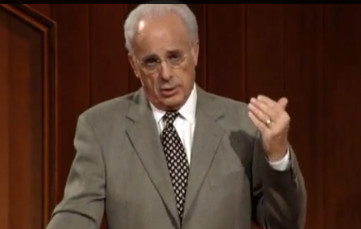
John MacArthur
Rev. John MacArthur

And so Jackson urges his readers to realize that Pastors are also human, what he calls “tools of destiny,” and he wants us to know that someday, some of us may be in church leadership, which will further help us understand the responsibilities faced by our Pastors. Jackson also said that, given this, he urges reconciliation with church leaders when there’s a problem, and outlines the steps for his readers. Ultimately, it’s a call to forgive leaders who may have hurt us. Just for giggles, I included a photo of John MacArthur because to me, he exemplifies the sort of Pastor who generates a lot of “hurt” among people. But that’s just my opinion. What do you do when a well-known and influential Pastor has the ability to potentially hurt thousands?

The only end of chapter question I have highlighted is:

Are you looking for them (church leaders) to provide something that can only come from Jesus?

At this stage in the game, I don’t think I’m looking for a church Pastor to provide anything at all. How can they when my presence in almost any church (at least if I opened my mouth) would be a monkey wrench in the machinery?

In Chapter 11: The Cup of Misunderstanding (sounds like a little-known additional cup at a Passover seder), Jackson speaks of this metaphorical cup containing something that tastes bitter, tastes like injustice, and “those who drink it must do so alone.” He also says that this cup is usually received by “innocent people,” and is particularly harsh when “delivered to you by a brother or sister in Christ.”

Jackson compares being misunderstood and judged by someone in the church to the pain of betrayal suffered by Christ at the crucifixion.

I felt the comparison was a bit much. After all, human misunderstandings aren’t confined to the church, they happen in every human corporate venue, from the family to the workplace.

Jackson says this pain is intensified if the person you are trying to reconcile with makes it abundantly clear they have no intention of mending fences.

Someone once said, “You must embrace the cross if you would carry it with dignity.” The same is true of this cup.

I think what Jackson is saying is that being misunderstood, judged, and cut loose requires the Christian to be “Christ-like,” to bear the burden and the pain as Jesus did on the cross. Sounds pretty dramatic, but then, human conflict can elicit a lot of drama.

One of the end of chapter questions is:

Do you have a friend who can stand with you in your struggle?

In spite of my friend’s concerns about me and the issues Jackson addresses in his book, I don’t know that I’m really struggling, at least in relation to community or my lack thereof.

Jackson asks: “Are you passing the test? As you do, you’ll begin to look more like Him.” If the test is forgiving the Pastor, first of all, I doubt he thinks he needs my forgiveness. Nevertheless, I have forgiven him. After all, he’s only doing what he believes is right, and within his church’s context, it is the right thing to do.

In Chapter 12: Death by Religion, Jackson discusses watching an infomercial for Chuck Norris’s Total Gym product. The bottom line is that in spite of the seemingly fantastic claims made in the marketing of this all-in-one piece of exercise equipment, Jackson says if used as indicated, and if you eat a proper diet, the claims are all true.

Please forgive this sacrilegious comment, but I’ve noticed that in some ways, the Church is a lot like that infomercial–we’re touting a product that really works.

And by that he means:

A life devoted to His service is the only way to ensure our eternal salvation and to experience the life we were created to live.

norris and brinkleyBut while a very fit Chuck Norris and Christie Brinkley sell their product on TV, Jackson says, by comparison, those Christians promoting a better life through Jesus are more like “a flabby, middle-aged guy who thinks he looks good in spandex.”

In other words, many believers promoting a better life through Christ don’t look or act like they’re participating in that life. They look like they’re participating in a marathon dining session at McDonald’s.

We’re selling relationship, but what they see is religion…and religion is killing our sales pitch.

I’ve mentioned this artificial split between these concepts in a previous blog post. It’s really the traditional Christian rant against their misconception of Judaism:

Religion breeds death because it is limited to man’s ability to comply with its codes and regulations.

If Jackson had my understanding of the New Covenant, he’d (hopefully) understand why his opinion is completely out of the ball park.

But I don’t have time or space to go into all that again in this rather lengthy series of book reviews.

Religion is easier to control than a relationship.

You may have noticed that Jackson has shifted his emphasis from the individual’s relationship with other Christians in church or their relationship with the Pastor and church leadership, and is now focusing on the person’s relationship with Christ.

…after all, we’re all under grace and God doesn’t get ticked if we skip a day of devotions.

I’m not sure what God does or doesn’t think about an individual being hit and miss on living a life of holiness, not that any one of us is perfect at it.

Jackson then proceeds to bash the Pharisees, even though (he probably doesn’t see this) Jesus lived a life consistent with the basic tenets of Pharisaism, and as a matter of fact, so did Paul.

In describing “religious systems,” he says they operate like “spiritual frat houses”. They have their secret handshakes, inside jokes, matching jackets, and the like. Yes, I’ve experienced cliques in church. People who were ‘in’ and people who were ‘out’, though to be fair, I didn’t experience them at the last church I attended (at least for the most part).

However, Jackson could have been describing how some people experience certain individuals and congregations involved in the Hebrew Roots and the Messianic Jewish movements.

I’ve mentioned before Derek Leman’s blog post Gentiles Who Feel Left Out which addresses this matter. If you feel you are “in”, then being in contributes to your sense of identity, according to Jackson. You may, again, as Jackson says, experience a sense of being among the elite by being in.

This next point is important:

Spiritual fraternities do not welcome different opinions or viewpoints.

I’ve experienced that in spades, but I think that a lot of religious communities are like this, based on a mutually accepted sense of “rightness” of their doctrine. Anything that contradicts their doctrine is automatically wrong. These congregations state, using Jackson’s words:

We want your input and opinions–as long as they agree with ours.

This goes back to what I said before about expectations within the group. Jackson also says such “frat houses” are full of cliques, difficult to fit into (again, I know what that’s like), and Jackson says the only way to combat this is to “make sure that our hearts are free from religion.”

And yet, I could probably speak to Jackson for less than an hour and elicit a very protective and “religious” (as he defines it) response from him, just by disagreeing with how he interprets the Bible’s message of the good news. Actually, all he’d have to do is read my reviews of his book.

Only two of the end of chapter questions seemed relevant:

Are you managing a religion or living in a relationship?

Has your religious experience become a duty or a delight?

passover-artConvincing Jackson of the beauty of the mitzvot, particularly with Passover and the family seder coming up in a few days, all the preparations, all of the ceremony, and the retelling of the Exodus, would be a lost cause if I were to make the attempt. I suspect all he’d see is “religion,” missing how the seder brings a Jewish family closer to God.

Of course, I wonder how he’s managing the “relationship” of the upcoming Easter Sunday service at his church, which usually involves a multi-media presentation and tons and tons of preparation and ceremony?

So far, having reviewed about half of Jackson’s book in a fair amount detail, I have two preliminary conclusions. The first is that I don’t think he’s speaking to my situation. The second is that my opinion of my being incompatible with “church” is being re-enforced. I find it impossible to review his book as related to my current status of being apart from “community” without being critical of his theology and doctrine.

I just can’t seem to put our obvious differences aside and simply listen to what he has to say on a human level. This is my fault. I have a friend who tells me I need to be more patient and to speak out less.

Probably true.

One last story.

I had coffee with my friend last Sunday. On the drive home, he mentioned that his congregation had a guest speaker from Africa on the previous Shabbat. Among other things, this speaker talked about lions and how they hunt only the sick, the weak, the old, and those who wander off and are alone.

Not-so-subtle point received, my friend. *grin*