Tag Archives: shabbat

Bless the Lord, Oh My Soul

I have a question concerning playing music on Shabbat. My uncle is a wonderful guitar player and singer. He writes many songs and aspires to share his music with the world one day. On a recent Shabbat, we were at a friend’s house where many people were singing. I asked him to play, but he declined, saying it was against Jewish law.

I feel this may be stretching the restrictions. For me, I believe that Shabbat is a time to share joy with family and friends. Music is a wonderful way to do this.

I am not seeking to criticize my uncle. I just want to get a better grasp on the concepts, so that I can discuss this point with him in a more educated manner.

From the “Ask the Rabbi” column at
Aish.com

It’s not the question that I’m so much interested in as the detailed answer conveyed by the Aish Rabbi. It speaks very much to my Shabbos Project and the associated feelings of insecurity I’ve been experiencing as the days pass by. The Rabbi’s answer, although not directly addressing non-Jews observing the Shabbat, does tell a beautiful story toward the end, and at the beginning of his response, he explains why Jews observe Shabbat the way that they do. It’s a helpful reply to those who criticize the Jewish people for “man-made traditions.”

I’m copying the Rabbi’s entire response here so you get the full experience of his words. I’ll italicize the quote to make it more readable rather than putting it between “blockquote” tags. Also, as I write this, the Aish website seems to default to “mobile=yes”, so if you’re not on a smartphone or tablet and click the link I provided, the text on their web page will look a little odd.

The Aish Rabbi Replies:

I appreciate the sincerity of your question. Of course there are many beautiful aspects of Shabbat — the candles, the challah, the wine, and the opportunity for family and friends to be together.

Yet these aesthetic elements must not obscure the essence of Shabbat. It is a commemoration of the Creation of the world. Since God created the world in six days and rested on the seventh, in our effort to emulate God we likewise work for six days and rest on the seventh.

The Talmud (Shabbat 73a) describes 39 categories of “creative acts” which we refrain from on Shabbat. These are the 39 powers of creation that exist in the world, corresponding to those acts performed by God (so to speak) in creating the world. Just as God refrained from creative activity on the seventh day, we do likewise. And when we refrain from that which is prohibited on Shabbat, we are, in the truest sense, being God-like.

The job of protecting the Shabbat (as well as other mitzvot) was entrusted to the wisest and most dedicated leaders of the Jewish people, the members of the Sanhedrin. These leaders made certain enactments to protect the uniqueness of the Shabbat experience. One enactment is to not play a musical instrument on Shabbat. This is due to a concern that playing an instrument on Shabbat could lead to fixing an instrument in a way that infringes on one of the 39 types of activity.

If these laws are not respected, then the Shabbat experience is ultimately diminished. And since Shabbat is a cornerstone of Jewish life, this measure was taken to ensure that observance of Shabbat is maintained for all. Further, the enactment was approved and accepted by the entire Jewish nation.

Further, the Sages made no distinction between string and wind instruments. Frequently the Sages will enact a decree that way, because otherwise many people would get confused about what is permitted and what is not.

Music that involves only the body — e.g. singing and whistling — are permitted on Shabbat. All instruments are not.
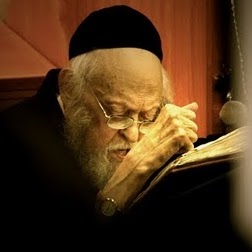
NishmatI would like to share with you a story from pre-War Europe:

In the city of Dinov, Rabbi Tzvi Elimelech would sing the Shabbat morning prayers. As he would sing, he would gaze through the window and see the lush green rolling hills, the flowers splashing color against the deep blue sky. All this would move him to sing with great emotion the “Nishmat” prayer:

“If our mouths were filled with song like the sea is full of water, and our tongues as full of joyous song as the sea has waves, and our lips as full of praise as the breadth of the heavens, our eyes as brilliant as the sun and the moon, and our hands as outspread as eagles of the sky, and our feet swift as hinds — we still could not thank You sufficiently.”

Week after week, the non-Jewish shepherds would hear this song wafting over the country plain. They would stop their work to listen attentively, and many would even walk to the synagogue to hear the rabbi sing.

When the rabbi died, the congregation felt a rupture in their hearts. All week long they mourned, but on Shabbat, which is a time for happiness, they tried to restrain themselves. Yet the cantor, when he reached the “Nishmat” prayer, stopped to swallow a tear.

Suddenly, the entire congregation heard the rabbi’s melody filling the synagogue! Everyone looked out the window to see the non-Jewish shepherds singing the rabbi’s song. (from “Tales of the Chassidic Soul”)

Indeed, music is a great part of Shabbat. That’s why there is a rich heritage of Jewish melodies which add to the Shabbat atmosphere. Many of these songs are printed in the standard Siddur. So while you may miss your uncle’s guitar playing one day a week, remember that he is keeping the Shabbat experience fully alive, as Jews have done, for thousands of years.

I don’t know how to access “Tales of the Chassidic Soul,” but if the story shared by the Aish Rabbi is any indication, it must be a wonderful work and I’d love to get a hold of a copy (Googling and searching Amazon produced nothing).

The effect of Rabbi Tzvi Elimelech singing the Nishmat prayer on the non-Jewish shepherds is, I believe, the exact response many Christians have when hearing the Hebrew prayers, and certainly it speaks to my soul. I remember the first time I visited Beth Immanuel Sabbath Fellowship during their annual Shavuot conference. I arrived early for the event one morning and heard from the rooms in the back, beautiful Hebrew singing. I felt myself drawn to the voices and realized that the men were davening the Shacharit or “morning prayers” in one of the upstairs rooms. I found myself standing beneath the room just listening, not understanding the language, but letting the prayers wash over my spirit. In some ways, it was the highlight of my entire Shavuot celebration that year.

ShabbatThat’s what I’m hoping will happen in some small measure as I attempt to observe a proper Shabbat. As I’ve said elsewhere, I have no command of the Hebrew and I sing like a frog, so I can’t produce anything like the same result as that one morning in Hudson, Wisconsin, but in the absence of any talent on my part, I’m hoping God will fill what is missing inside of me, even as the singing of Rabbi Elimelech filled something inside the shepherds toiling outside the synagogue in Dinov.

The soul of every living being shall bless Your Name, Hashem our God, the spirit of all flesh shall always glorify and exalt Your remembrance, our King.

-from the Nishmat prayer

My Personal Shabbos Project

This past Shabbat, thousands of people experienced the beauty of Shabbat for their first time. I’m sure many were touched, perhaps transformed by the experience. But it will fade unless we transform the inspiration into action.

-Sara Debbie Gutfreund
“After the Shabbat Project”
Aish.com

My husband and I spent the Shabbos Project in Venice. It was great to see a different community. Tali’s enthusiasm was great. Attached is a picture from candle lighting…

-Batsheva Jassinowsky, Johannesburg
from the Shabbos Project’s website

This is just a sample of the many commentaries available about last weekend’s Shabbos Project which I previously blogged about. I took some online criticism from well-meaning but less than compassionate individuals who believe that everything in the covenant conditions God gave to Israel at Sinai now belongs to any non-Jew who is a disciple of Yeshua (Jesus), including the Shabbat.

Of course, as I said before, I think there’s a certain amount of justification for non-Jews observing the Shabbat in some fashion based both on Genesis 2 in honoring God as Creator, and Isaiah 56 which predicts world-wide Shabbat observance in the Messianic Kingdom. Additionally, based on D. Thomas Lancaster’s interpretation of The Holy Epistle to the Hebrews, we disciples of the Master can and perhaps should behave as if the Messianic Era is already upon us, even though our world is still ruled by darkness; we can behave as partisans or freedom fighters, holding onto our own until the return of the King.

Thus there seems to be more than sufficient support for Gentiles in the present world participating in Sabbath observance. My personal caveat is that if you are not observing Shabbat in a Jewish environment by invitation or are not part of a Jewish family, as a Gentiles, please try not to behave in a heavy-handed manner and claim “all your Sabbaths belong to us,” to borrow from a popular meme.

I know a convenient excuse for anti-Semitism used by some folks is that the Bible says we don’t have to be respecters of men but only of God (Acts 4:19, 5:29). But we also know from the Master’s teaching not to usurp the place of honor at the banquet, but rather, we should wait to be invited before we are elevated and esteemed (Luke 14:7-15).

However, I’m not writing this to be (deliberately) provocative today. I have a unique opportunity in early November when I will be “home alone” for two Sabbaths. That means, among other things, that I can make 100% of the decisions about how I spend my time on those occasions, and I’ve decided to conduct a small, personal, “Shabbos Project” of my very own.

shabbatIt may surprise you to know that I’ve never really observed a proper Shabbat sundown to sundown, Friday to Saturday. My (Jewish) family has never been very observant, so about the best they do is lighting the Shabbos candles and even that doesn’t happen every week.

When we were all doing “Hebrew Roots” many years ago, even then, none of us were as observant as we liked to believe. We drove to the Hebrew Roots congregation, and while we often used crock pots for our food, a certain amount of turning on electrical devices occurred. Naturally, we turned lights on and off, we opened and closed refrigerator doors (causing the light to go on and off), we wrote, and no doubt we participated in some or most of the other thirty-nine melachah or types of work forbidden on the Shabbat.

It’s sort of like our “keeping kosher” was. We avoided specific types of food but that was that. The so-called “Biblical commandments” without the “man-made” interpretations of said-commandments.

But I wonder what it would be like, for me, the goy, to actually attempt to approach observing Shabbat for real. I have two weekends to try it out. I won’t be part of a “project” and in fact, I’ll be the opposite. Where the Shabbos Project attempted to bring together as many Jews as possible from all over the world, I’ll be flying solo, just me and the Shabbat.

I’m not a baker, so Challah will have to be purchased, and I think there’s a couple of local stores that sell it. Wine is not problem obviously since I can buy that anywhere. We’ve got plenty of Shabbat candles and the candlesticks on hand, and I have copies of The Sabbath Table and First Steps in Messianic Jewish Prayer to study in preparation.

This means no driving, no cooking, no watching TV, no using the computer (thus, no Internet), no opening the fridge (which will be interesting since I’ll probably need to keep some of the food I plan on eating cold), timing whatever cooking I do for Friday night such that it’s all done in time and there’s no clean up (or I can tolerate a mess until Saturday night).

It also means planning out my Friday night and Saturday. There are no services within walking distance of my house and in any event, I don’t think it would be appropriate to inflict myself on one of the two synagogues in town. That means I can stay at home and still pray the Sabbath prayers, read the Torah portion (which I do anyway), read Torah commentaries (which I do anyway) and so on.

I don’t read Hebrew and I sing like a cement mixer, so the prayers will be in English and I won’t be singing Shabbos songs after Erev Shabbat dinner.

Then there’s Havdalah to consider. I don’t have one of “those” candles lying around but I guess I can perform the rest of the rituals (assuming I can remember them, it’s been years).

I’m probably missing a lot. I could “Google” something like “how to observe Shabbos” and come up with the basics. In reading A Daily Dose of Torah, some sections mention the melachah, but the commentary seems so involved that I don’t think I could memorize all of the specifics. I think you have to live a lifetime of that level of observance to really “get it down” and as far as I know, there may be times when even a highly observant Jew misses a step or two.

Shabbat candlesOf course, as a goy, I don’t have to observe Shabbat to the level of an Orthodox Jew, so there’s no real pressure to do so. On the other hand, I would like to approach this and accomplish something I’ve never done before, not because I think it would make me a “big deal” and not because I’m somehow claiming my “rights” or “heritage,” but for the reasons I mentioned before, because I want to spend at least one Shabbat honoring God as Creator and summoning, at least in some tiny fashion, a taste of the Messianic future.

If you’ve got any ideas, now’s the time. I’ll have two shots at this. The first can be a trial run to help me work out all the kinks, so I can have a better Shabbat a week later. As you read this, I have about ten days until my first go at it. Suggestions?

Addendum: Relative to the differences in obligation to the mitzvot of Jews and non-Jews in Messiah (and this seems relevant given the topic is Shabbat observance), I found this excellent commentary at Aish.com:

Imagine two people who are very different from each other. This needn’t be a source of conflict. Rather, if each one focuses on how to help the other, then the differences between them will actually make their personalities complementary.

Not only will they like each other despite their differences, but rather, because of them. They will even become closer, because their differences provide more opportunities to be of service to each other.

Contrast this to those who focus on what he can take from the other. They will quarrel frequently and eventually end up hating one another.

(see Rabbi Eliyahu Eliezer Dessler – Michtav MaiEliyahu, vol.3, pp.33-4; Rabbi Pliskin’s “Consulting the Wise”)

Premeditated Acts of Kindness

One winter Friday evening after services, I happened to walk home in the company of a talkative Seminary student. As we made our way down Broadway, we passed a weary and emaciated man whispering for some spare change. On Shabbat I pay less heed to such heartrending pleas because I don’t have any money with me. Neither did my young companion. Yet he politely interrupted our animated conversation and asked the man whether he would like a sandwich. When he responded with evident joy that he would, the student pulled out a neatly wrapped sandwich from his plastic bag and gave it to him. Obviously, unlike me, the student did not allow Shabbat to prevent him from aiding the homeless who crowd the sidewalks of Broadway in the midst of the academic acropolis known as Morningside Heights. Though we met no more homeless before we parted company, for all I knew my companion still had another sandwich or two left in his bag to feed the hungry. His unobtrusive display of forethought and compassion stirred me deeply, as it filled me with pride.

-Ismar Schorsch
“A Stitch in Time” (pg 441, May 20, 1995)
Commentary on Torah Portion Behar
Canon Without Closure: Torah Commentaries

I read Schorsch’s commentaries on the weekly Parashat as a matter of devotion each Shabbat morning, but this time I was almost startled at the parallel between the incident he reported and the Gospel reading for Behar as recommended by First Fruits of Zion (FFOZ) (Each year near the beginning of the Torah cycle, FFOZ provides a list of the parashat readings for the coming year on PDF for anyone who cares to download it).

Here’s what I had read just minutes before:

On that day of Shabbat, he was teaching in a certain synagogue. A woman in whom there was a spirit of disease for eighteen years was bent over and unable to stand with a straight posture. Yeshua saw and called to her. He said to her, “Woman, be freed from your disease.” He placed his hands upon her, and instantly she arose and stood upright and praised God. The leader of the synagogue became upset that Yeshua had healed her on Shabbat, so he responded and said to the people, “There are six days on which you may do labor. Come and be healed on them, but not on the day of Shabbat!”

The Master answered and said to him, “Hypocrite! Will not any one of you untie his ox or donkey from the stable on Shabbat and lead him to get a drink? But here we have a daughter of Avraham whom the satan has bound for these eighteen years. Will she not be released from what binds her on the day of Shabbat?

When he said these words, all who were standing against him were ashamed, and all of the people rejoiced about all of the wonders there were performed by him.

Luke 13:10-17 (DHE Gospels)

I suppose you can’t compare the supernatural miracle of healing a woman who had suffered an affliction for eighteen years with simply giving a starving, homeless man a sandwich you are carrying with you, but they both speak of a willingness not only to feel compassion but to actively express it for the benefit of another, even (apparently) flying in the face of devoted Shabbat observance.

Teaching of the TzadikimYeshua (Jesus) was accused by the local synagogue leader of violating the prohibition of working on the Shabbat by healing the disabled woman. From the point of view of the leader of the synagogue, his interpretation of the laws of Shabbos was correct and obviously, based on the reaction of the rest of the people present, that opinion was the majority viewpoint in that stream (and probably all streams) of Judaism in that day.

Even today, while it is permissible in Orthodox Judaism to render medical treatment in the cause of saving a life, routine medical matters (this woman had survived her ailment for eighteen years, so Yeshua could have waited another day before healing her) are attended to on the other six days of the week.

For many Bible readers, this distinction may be too obscure, but if missed, the reader also misses the message of all the Sabbath stories in the Gospels. The essential message is not that Jesus has cancelled the Sabbath or that the rabbinic interpretation of Sabbath is illegitimate. The Sabbath-conflict stories instead communicate that acts of compassion and mercy performed to alleviate human suffering take precedence over the ritual taboo. The miraculous power by which Jesus performs the healings only serves to add God’s endorsement to Jesus’ halachic, legal rationale.

Did Jesus’ disciples break the Sabbath in the grain fields? Yes. But they were justified in doing so because their need took precedence over the Temple service, and the Temple service took precedence over the Sabbath. Therefore Jesus declared them guiltless and told the Pharisees, “If you had known what this means, ‘I desire mercy, and not sacrifice,’ you would not have condemned the guiltless” (Matthew 12:7).

Did the Master break the Sabbath when he healed on the Sabbath day? Yes. Would fixing a car break the Sabbath? Of course it would, and by the same standard so does fixing a human body. Nevertheless, the Master justified doing so because compassion for his fellow man took precedence over the Sabbath.

-D. Thomas Lancaster
“Chapter Seven: At Dinner with the Sages,” pg 61
The Sabbath Breaker: Jesus of Nazareth and The Gospels’ Sabbath Conflicts

It is Lancaster’s opinion that Yeshua did indeed “break the Shabbat” as it is literally understood, and performed one of the types of work or melachah (plural: “melachot”) that is forbidden to do on the Sabbath. But Lancaster believes that the needs and dignity of human beings who are created in the image of God have a higher priority than mechanically performing a list of “dos” and “don’ts”.

I don’t mean to cast Shabbat observance or any performance of the other mitzvot in a negative light, far from it. I do want to point out something about human nature, though.

Ismar SchorschIsmar Schorsch, whose writings I greatly admire and who was the sixth Chancellor of the Jewish Theological Seminary (JTS) for nineteen years (he retired on June 30, 2006), wrote, on “Shabbat I pay less heed to such heartrending pleas because I don’t have any money with me.” It wasn’t that Schorsch lacked compassion or didn’t care about the dire needs of other people, but the traditional practice on Shabbat is not to handle any form of currency or to engage in any type of commerce. Naturally, he didn’t have any money on him, and neither did his sandwich-carrying companion.

But get this:

The Mishnah divides the landscape into “domains”: the private domains of individual houses, the public domains of streets and markets, and shared areas like alleys and courtyards that are not quite public and not quite private. The prohibition of carrying is violated when one removes an object from one domain to another [M. Shabbat 1:1, 2:1; M. Eruvin passim]. The Mishnah goes even further in eliminating the notion of “burden” from this prohibition. It declares that the prohibition is violated only if the object that has been carried is an object that people in general, or at least its carrier, value or use or keep; if it has no value or if it is too small to be used or if it is not worth keeping, then it does not qualify as an “object” for the purposes of this prohibition. A Torah-fearing Jew would not remove even such a nonobject from one domain to another on Sabbath, but incurs no liability for having done so [M. Shabbat 7:3-8:6, 9:5-10:1].

-Shaye J.D. Cohen
“Chapter 6: Judaean Legal Tradition and Halakhah of the Mishnah,” pg 136
The Cambridge Companion to the Talmud and Rabbinic Literature
Edited by Charlotte E. Fonrobert and Martin S. Jaffee

Since it appears a sandwich has value (especially to a hungry man) and is definitely big enough to use (eat), Schorsch’s companion could not be excused for carrying food items from one domain (presumably he made this sandwich before Shabbat and at his home, which is a different domain than the street) to another. Of course, the Mishnah may be more strictly observed by Orthodox Jews than Conservative Jews (Schorsch is affiliated with Conservative Judaism and presumably so are the students at the Jewish Theological Seminary, including the student in question), but I have to wonder.

shabbat walkI have to wonder if both Schorsch and the Seminary student were aware of the prohibition of “carrying,” which was another reason that they both had no money in their possession, since money obviously has value, but they saw a higher value requiring attention. The statement made by Schorsch from which I quoted above, indicates that it was quite common on Broadway to encounter homeless people who would typically ask for spare change or some other form of charity, even on Friday evening. Schorsch saw no way to assist them while observing the Shabbat but the student didn’t let that stop him.

Did the student violate Shabbat by carrying sandwiches from one domain to the next, even for the purpose of committing “a premeditated act of kindness” (Schorsch, pg 443)? Schorsch’s own reaction of pride, not even questioning the apparent violation of performing “work”, seems to answer from his point of view.

We can compare this to the reaction of the synagogue leader and the others attending Shabbat services after hearing Yeshua’s response to their criticism of his healing a non-life threatening disability on Shabbat:

When he said these words, all who were standing against him were ashamed…

Luke 13:17

The people who had initially criticized Yeshua’s act of kindness and compassion on Shabbat felt ashamed when they understood that it is common and permitted to relieve the suffering of another living being on Shabbat, whether a thirsty farm animal or a woman under a debilitating disability. Schorsch felt pride at recalling his student’s “unobtrusive display of forethought and compassion.”

I don’t believe that either Yeshua or the anonymous student violated the Shabbat. I believe they acted in the highest principle of Sabbath observance, even if it seems they “broke” the observance of the literal meaning of the melechot involved in each incident.

“The Sabbath does not ‘do away’ with sadness and sorrow,” writes Pinchas H. Peli in The Jewish Sabbath, “it merely requires that all sadness be ‘tabled’ for one day so that we may not forget that there is also joy and happiness in the world and acquire a more balanced and hopeful picture of life.”

-from “Keeping Sabbath – Ways to Practice”
Practicing Our Faith

“Oneg,” or the traditional meal eaten at the end of Shabbat services at synagogue, literally means “joy”. Regardless of the trials and difficulties we may encounter during the rest of the week, or no matter what else may be troubling us, Shabbat is a time to set all that aside and to live as if the Kingdom of God had already arrived, as if Messiah were already enthroned in Jerusalem, and as if he already reigns over a world filled with peace and the glory of God.

So to alleviate the suffering of even one person or any other living thing is to assist them in some small manner in entering Shabbat and a foretaste of the Kingdom.

MessiahIn any way we think we are obeying the will of God, let’s not forget that there is a higher principle involved that summons the future Messianic Age. What we say, think, and do now, on one level, is temporary and will not last, so we sometimes tend to dismiss this life in anticipating the next. But we must never forget for a single instant, and especially on Shabbat, that kindness, compassion, charity, and raising the level of the dignity of another person, even for a moment, are eternal principles and the loftier and weightier matters of Torah, and they speak more of loving God and loving others (for the two are inseparable) than the matter of committing a “forbidden” act of melachah here or there as the situation arises.

Yeshua rejects all those who do not give food to the hungry, give drink to the thirsty, and clothe the naked of even “the least” of his “brothers,” but welcomes those who are “blessed of his Father.”

Then the king will say to those standing on his right, “Come, those who are blessed of my Father, and possess the kingdom prepared for you from the foundation of the world. For I was hungry, and you fed me. I was thirsty, and you gave me a drink. I was traveling, and you took me in; naked, and you covered me; sick, and you visited me. I was in prison, and you came to me.”

The righteous will answer and say, “Our master, when did we see you hungry and sustain you, or thirsty and give you drink? When did we see you traveling and take you in, or naked and cover you? When did we see you sick or in prison and come to you?”

Then the king will answer and say to them, “Amen, I say to you, what you have done for one of these young brothers of mine, you have done for me.”

Matthew 25:34-40

Sermon Review of the Holy Epistle to the Hebrews: A Sabbath Rest Remains

The Sabbath represents the Messianic Era and the menuchah of the world to come. In Hebrews 3:7-4:11, the holy epistle to the Hebrews compares this present world to the work week of preparation, and he warns us to prepare ourselves now for the kingdom and the world to come. This important message demonstrates that Hebrews 4 should not be used to justify a spiritual interpretation of the Sabbath that makes actual Sabbath observance obsolete.

-D. Thomas Lancaster
Sermon Eleven: A Sabbath Rest Remains
Originally presented on March 16, 2013
from the Holy Epistle to the Hebrews sermon series

Lancaster spent about the first half of his sermon reviewing the previous sermon. Remember we were left with a cliffhanger? What is God’s rest? Is it…

  1. The Sabbath?
  2. The Land of Israel?
  3. The Messianic Kingdom/The World to Come?

We are told a number of stories in today’s sermon, most from the Talmud, such as one found in Tractate Sanhedrin 98a, of Rabbi Joshua ben Levi who, while meditating near the tomb of Rabbi Shimon Bar Yohai, met the Prophet Elijah.

Rabbi ben Levi asked Elijah, “When will the Messiah come?” asked Joshua. “Ask him,” replied the Prophet. “The Messiah is at the gates of Rome, sitting among the poor, the sick and wretched. Like them, he changes the bindings of his wounds, but does so one wound at the time, in order to be ready at a moment’s notice.”

The Rabbi traveled to Rome, found the Messiah, and greeted him with ”Peace upon you, my Master and Teacher, to which the Messiah replied, ”Peace upon you, son of Levi.” When the Rabbi asked Messiah when he would come, Messiah replied, ”Today!”

But by the time Rabbi ben Levi returned to Elijah, the Messiah had not come. Messiah had lied…or did he?

Elijah explained “This is what he said to thee, To-day, if ye will hear his voice”, a reference to Psalms 95:7, making his coming conditional with the condition not fulfilled.

You should remember Psalm 95 from last week’s review, since it figured heavily in laying the foundation for our “mystery” of what is meant by “God’s rest” or for that matter, the mystery of “What is today?”

Before continuing, as Lancaster said, Hebrews 3 and 4 are frequently used by many Christian Pastors to prove that a literal Saturday Shabbat has been done away with and that it has been spiritually “converted” into Christ. Our Sabbath rest is Jesus Christ. Problem is, this letter was written by a Jewish writer to a Jewish audience who were still keeping the Sabbath. While Gentiles may not have been placed under that aspect of Torah obedience, these Jews were still Jews and were still performing all of the mitzvot including observing Shabbos.

But these guys were tired. They’d been waiting for the return of the Messiah for thirty years and their faith and patience were wearing thin. They either had been barred from the Temple because of their Messianic faith or were about to be. As we learned last week, the writer of Hebrews was adjuring them to keep their faith in Messiah or risk the fate of that faithless generation in the desert who disobeyed God and did not enter the Land of Canaan to take it as their possession. They did not enter God’s Sabbath rest.

But again, what is God’s rest?

Therefore, while the promise of entering his rest is still open, let us take care that none of you should seem to have failed to reach it.

Hebrews 4:1 (NRSV)

Apparently it was something that the readers of Hebrews could still attain since ”his rest is still open.” If Lancaster is right, then it can’t be the literal Saturday Sabbath, because they were already keeping that. It couldn’t be literally the Land of Israel, because they were already there.

…again he sets a certain day—“today”—saying through David much later, in the words already quoted, “Today, if you hear his voice, do not harden your hearts.”

Hebrews 4:7 (NRSV)

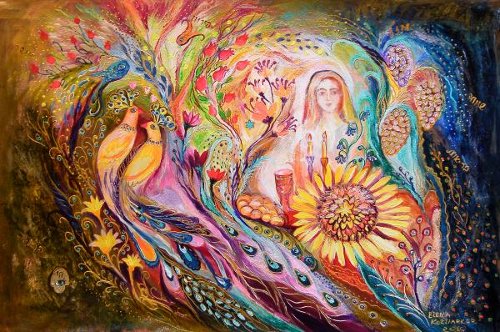
shabbat-queen-elena-kotliarkerLancaster went through a rather lengthy explanation of what “today” means, which includes literally this very day, that is, right now. But from our perspective, it’s always “right now” or “today.” Part of what the Hebrews writer is saying, according to Lancaster, is that as long as you are still alive, “hear (heed) his voice, do not harden your hearts, ” but repent and return to God.

But “today” is also idiomatic language for the Shabbat. I just got done saying this wasn’t about a literal Shabbat on Saturday, but what were the Hebrews risking by a lack of faith? And why did Lancaster tell the story of Rabbi Joshua ben Levi, Elijah, and Messiah?

The object of the Midrashic story from Talmud was to say Messiah would come today if Israel would repent. The Jewish readers of the Hebrews letter will enter God’s rest if they repent. If the coming of Messiah is linked here to God’s rest, then what is to be entered is the Messianic Kingdom.

The Sages liken the Shabbat to the Kingdom of Heaven and the World to Come. It’s as if the days of the week and Shabbat represent the different ages of creation with the seventh day, the end of time, being a grand, millennial Shabbat, an age of great rest, and our weekly Sabbaths are merely a periodic reminder, down payment, or foretaste of that ultimate rest in Moshiach.

This seems to resolve Lancaster’s mystery or cliffhanger, but in fact, he states that it was a trick question. Since the Messianic Age is future oriented, then Hebrews 3 and 4 are not only a rendition of history but prophetic. It may surprise you to realize that all of the prophesies in the Bible have to do with Israel and Jerusalem and for all prophesies to be fulfilled, there must be an Israel and Jerusalem. No Israel, no fulfillment of prophesy.

So a literal Sabbath, a literal Land of Israel, and the Messianic Age to Come all figure into God’s rest and the object of Lancaster’s sermon for the past couple of weeks.

He says some interesting things about work and rest:

Let us therefore make every effort to enter that rest, so that no one may fall through such disobedience as theirs.

Hebrews 4:11 (NRSV)

one-of-ten-virgins-oilWhy do we work to enter God’s rest? I thought we were saved by grace. Lancaster says we must do all that is necessary to get ready for the Messiah’s return, even though it will never be enough. It’s like if you keep a traditional Shabbat. On Friday you work and work and work to get ready, but even if you don’t get everything done in time, Shabbat comes and then you stop, you are quiet, there is peace, and there is rest…

…whether you’re ready or not.

Jesus said “It is finished” on the cross (John 19:30) and in the past, I’ve said that it can’t mean literally all of Messiah’s work is finished. If it did, then he wouldn’t have to return. But in another sense, besides Messiah’s suffering, something else was finished, which was the inauguration of the Messianic Age. It started with the death and resurrection, so that part’s finished, but everything will not be completed until all of Israel (according to Lancaster) repents:

“Jerusalem, Jerusalem, the city that kills the prophets and stones those who are sent to it! How often have I desired to gather your children together as a hen gathers her brood under her wings, and you were not willing! See, your house is left to you, desolate. For I tell you, you will not see me again until you say, ‘Blessed is the one who comes in the name of the Lord.’”

Matthew 23:37-39 (NRSV)

I should say that Rabbinic opinions differ on this point, with some saying that Messiah will come when all Israel repents, and others saying that Messiah will come when Israel is wholly corrupt and about to fall. Lancaster apparently is taking the former view.

So does “get ready” and “strive” and “work” mean “shore up your faith?” I can see why Lancaster says we’ll never be ready because no one’s faith will ever be perfect. Of course, we have the Parable of the Ten Virgins (Matthew 25:1-13) that says there are things to be done, preparations to make, to be ready for the coming of the bridegroom (Messiah), with the oil in their lamps representing perhaps our faith and devotion to God.

And yet without God’s grace, nothing we do could ever be enough all by itself to merit the Messianic Age and a life in the world to come, which is part of what Joshua ben Levi wanted to know from Messiah. But being faithful and obedient, by grace, we shall enter God’s rest if we persevere to the end (see 2 Timothy 4:7).

What Did I Learn?

I think I’ve been learning this lesson for a while now. I wrote a little bit about it nearly two years ago, and it also seems associated with something I wrote more recently.

Beyond that, someone commented about one of my blog posts on Facebook not too long ago. I’ll withhold his name unless he allows me to use it, but here’s what he said:

A.) There’s 6,000 years of linear-time human history since Adam & Chava ‘stepped out of Gan Edan into the physical world of existence.’

B.) For the sake of Israel, G-d will deduct ‘time served in the captivity of Egypt’ from the 6000 years. Consensus opinion is 210 years.

C,) Mashiach comes and ushers in a 1,000 year earthly kingdom with Israel as head of the nations

D.) At the end of this 1000 year “shabbat hagadol” the earth is ‘recreated’ and existence as we know it ends and begins in a new reality – THIS is the time of the New Covenant, as outlined in the Tenakh, the writings of the sages and the final chapters of the book of Revelation.

E.) The New Covenant existence is one of no more ‘evil,’ no more ‘free will,’ no more ‘choice,’ no more ‘sin,’ no more consequence of sin, i.e., death, suffering, sadness, etc.

Of course, the eye-catcher in all that is the 210 year idea and how it relates to the Jewish calendar. We are presently in 5774 which would mean another 226 years maximum to go (Messiah can come any time in a 40-year window before this but no later.) Now, deducting the 210 years for ‘time served in Egypt’ we have a year that corresponds to 2030 on our western calendars. This is not some modern nonsense to sell books. It is primarily from the Zohar first published in the 13th century. Rabbi Pinchas Winston has some interesting stuff on this.

This will all make more sense if you listen to Lancaster’s forty minute sermon on A Sabbath Rest Remains, since I hardly have related everything he taught. This is just a review. Also remember that taking midrash and mysticism too much to heart is a lot like playing with matches. It’s dangerous and you could get burned. Just saying.

practicing_faithAs I conclude this eleventh sermon in a series that is still ongoing over a year after it started, I find I could easily get lost. There is so much detail involved, so many sources and references, both inside and outside of the Bible, to consult and connect, that it’s hard for my mind to apprehend and hold in focus everything all at once.

OK, I admit it. I can’t keep everything Lancaster’s taught so far in my head in “active memory,” so to speak, all at the same time.

So, like most people, I have to reduce a lot of talking and studying into a small, manageable point. Faith is an active and even physical process. It may start with intellectual ascent of the existence of God and a spiritual awareness of the presence of the Creator, but that means nothing unless it also encompasses a lived obedience to God.

For the generation who died in the desert (except for a very few such as Joshua and Caleb), even the physical awareness of the Divine Presence with them for over forty years on a daily basis was not enough for them to merit entry into the Land of Israel or into the Messianic Kingdom. They failed to obey. They failed to fulfill the promise of God to Abraham, Isaac, and Jacob by entering the Land, going to war, and taking possession of Israel.

For the readers of the letter of Hebrews, like the generation in the desert standing on the eastern bank of the Jordan, they too stand on the threshold, risking everything, risking the fate of the faithless generation of Israelites, should they also test God as did that generation of their Fathers. Intellectual knowledge and spiritual awareness are not enough. Lived, active obedience to God in the continuation of their faith in Messiah as the future King who is coming but who already rules is an absolute requirement.

The readers of the letter had waited thirty years and their faith was wavering. We’ve waited almost two-thousand years. What about us?

For more about a traditional Jewish perspective on Messiah, the world today, and the world to come, see Moshiach and the World Today.

May He Calm Our Storms

Those who go down to the sea in ships, who do their work in great waters. They have seen the deeds of Hashem, and His wonders in the watery deep. He spoke and raised the stormy wind and lifted its waves. They rise heavenward, they descend to the depths, their soul melts with trouble. They reel, they stagger like a drunkard, and all their wisdom is swallowed up. Then they cried out to Hashem in their distress, and He would take them out from their straits. He would halt the storm to restore calmness, and their waves were stilled. And they rejoiced because they were quiet, and He guided them to their desired boundary. Let them give thanks to Hashem for His kindness, and His wonders to the children of man. Let them exalt Him in the assembly of people, and praise Him in the session of the elders.

Psalm 107:23-32 (Stone Edition Tanakh)

He went down to the boat, and his disciples went down with him. There was a great storm on the sea, to the point where the waves would cover the boat, but he was sleeping. His disciples approached him and woke him, saying, “Save us, our master. We are perishing!” He said to them, “Small ones in faith, why are you afraid?” He got up, reprimanded the winds and the sea, and there was a great silence. The men were amazed and said, “Who is he, then, that even the winds and the sea listen to him?”

Matthew 8:23-27 (DHE Gospels)

I wonder if, at any point after Yeshua (Jesus) ended the storm, did the disciples think of the portion of Psalm 107 that I quoted above? When I read that psalm as part of my devotionals last Shabbat, I immediately thought of the passage from Matthew 8. But as I made the connection from earlier to later in the Bible, I wondered if the first century Jewish readers of the Gospel of Matthew, when coming upon the sequence where the Master caused the storm to cease…if they saw the relationship between these events in scripture and connected the acts of Jesus with the acts of Hashem, the God of Israel? Could this linkage have been intentional on Matthew’s part? Did he leave a rather obvious (if you’re a first century Jew) clue as to the Master’s identity and nature here to which we Christians, nearly twenty centuries later, would be oblivious?

If so, then it wouldn’t be the first time.

Last summer, I wrote a review of a sermon given by First Fruits of Zion (FFOZ) Founder and President Boaz Michael that he presented some years earlier which he titled “Moses in Matthew”. You can read my review The Jewish Gospel, Part 1 and Part 2 for the details. But it seems to me, perhaps thanks to the Spirit of God (and hopefully not because of my own wishful thinking), that I have made one of those little links in scripture that are so “Jewish” and that further establish the Bible as a single, unified document. I believe this is another example that the Bible is the complete Word of God, a revelation that we can accept as a total and seamless gift, not something to be sliced and diced as Christianity sometimes does, so that the Bible artificially points to an earlier God and a later Jesus, as if the two have almost nothing to do with one another, as if the Old Testament and the New Testament form two separate plans of God in how He will be among His people, and as if God changed His mind on who He decided His people were to be.

God speaks to us from the Bible. The Spirit of God whispers to us as we read. Most of the time, we aren’t even conscious of His presence, but every so often, something “clicks” as it did for me last Shabbos.

May God continue to graciously open our eyes and ears and minds to His Word and reveal the face of Messiah to those of us who call ourselves disciples, and to all to cry out to God for mercy and compassion. May He calm our storms that we too may give thanks and rejoice, and that we might declare the Name of God as great among our assemblies.

Amen.

Snow and Shabbos

shoveling-snowMaimonidies explains our midrash by reference to the related instance of rabbinic religious psychology: “God’s presence is never felt in a state of sadness or lethargy or levity or conversation or distractedness, but only amid the joy of performing a mitzvah.”

-Ismar Schorsch
quoting Bavli Shabbat 30b.
“The Seedbed of Prophecy,” pg 165 (December 21, 1996)
Commentary on Torah Portion Vayigash
Canon Without Closure: Torah Commentaries

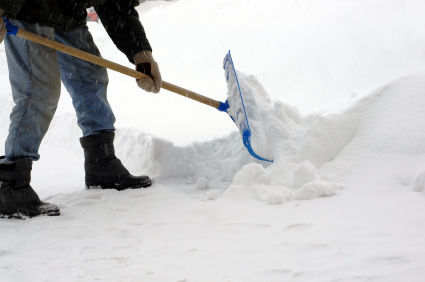
I read this on Shabbat after shoveling snow off of my driveway and sidewalk. Actually, I also shoveled the snow off of the sidewalks of my two next door neighbors. It was a mitzvah of a sort. I try to do a little more than required because I know it’s the right thing to do. I think it’s something God built into me for some reason.

But I was performing one mitzvah (I don’t think the Bible says to specifically shovel your neighbor’s sidewalk, but it does say to love your neighbor, so I figure helping them with shoveling snow qualifies as “love”) but I was breaking another, well, sort of. It depends on whether or not you believe that non-Jewish believers are obligated to observe Shabbos in the manner of the Jews. I know that the Didache, an early document dated to the second or even first centuries and purportedly used to train new Gentile disciples of the Jewish Messiah entering the Jewish religious stream of “the Way,” states that even a Gentile may keep the entire “yoke of the Lord” (i.e. Torah commandments) if they (we) are able, but if not, to keep what we can, so keeping the Sabbath in some manner is on my radar screen as an option.

On the other hand, the two Jewish members of my household (and the other two Jewish family members who have their own households) don’t observe Shabbos, though I believe they are obligated to do so.

But I’m not the religious police. Each person must negotiate their own relationship with God. Past efforts of mine suggesting to my family that they take a more observant path have resulted in a rebuke and a reminder that they themselves must make those sorts of decisions.

And so they must. My remaining option for the sake of peace in the family is to pray and to rely on God to lead His own back to Him, even as Messiah will lead all the Jewish exiles back to redemption in the Land of Israel.

In reading the quote from Schorsch (and Maimonidies), I tried to recall if I felt joy when shoveling snow and if I felt the Presence of God. I have to admit that I didn’t experience either state. There was a sense of satisfaction at the realization that I was exceeding my property lines and doing what wasn’t expected of me, but I can’t say I had any sort of religious revelation. I don’t think living a life before God or doing the right thing is magic. I think it’s just what we’re supposed to do.

I also believe that no one “does it” perfectly, and I’m a living example of that.

If anything, I have a greater sense of the presence of God when I reading the Bible, when I’m studying the Torah Portion, when I’m contemplating a Psalm, even when I’m writing a blog post about God and the mitzvot.

I know people (online) who do a much better job at observing Shabbos. Some of them live in places like Colorado and Wisconsin, places that get a lot of snow. What do they do on the Shabbat when it’s snowing, just let it sit on their driveways and sidewalks?

I live in a suburban neighborhood that has a homeowner’s association (whether I like it or not) and the association has a covenant which states that each homeowner is responsible for keeping the sidewalks in front of their homes free (reasonably) of snow. We are also legally responsible if we fail to do so and a pedestrian falls and is injured as a result. So I have a duty to protect my neighbors by keeping my sidewalks clean, even on the Shabbat.

I know some people who would be rather rigid and dictatorial about such a suggestion, saying God’s commandment to observe Shabbat trumps any law or other responsibility assigned by human beings, but let’s look at that. I have a duty to love my neighbors which could be interpreted as protecting them from harm. I know there’s a Torah commandment that specifies if you see someone drowning in a body of water and you do nothing to help save their life, you have sinned against that person and against God (Rabbinic interpretation does say however, that if you are a poor swimmer and would be likely to drown too, you are absolved of this responsibility).

So what’s the higher duty, to perform an act on the Shabbat that at least in potential, could prevent a neighbor from being harmed, or to observe the Shabbat and ignore my neighbors by playing the “I’m keeping the Shabbat, look at how holy I am” card?

It’s an interesting question.

Of course, returning to my lack of actual obligation to observe a strict Shabbat, at least in the present age, I am not in quite the same bind as a Jewish person. I also believe the commandment to love one’s neighbor is universal, particularly since we see it occurring not only in Leviticus 19:18, but issuing from the mouth of Jesus (see Matthew 22:39, Mark 12:31).

I know there is a part of Shabbat observance that is also universal, since such observance acknowledges God’s Creative Sovereignty, but I will have to be satisfied with acknowledging God’s creation of human beings by doing something, even on Shabbat, that is of service to some of those “creations.”

I try to spend most of my Saturdays in prayer, in study, in recording my contemplations on God, but it’s not perfect. In fact, it’s very far from perfect. But what I desire and am unable to accomplish today, may God grant me a life in the world to come where I may observe His peace and His perfection.

And as I write this, it’s still snowing outside.