Tag Archives: Toby Janicki

FFOZ TV Review: Raising Disciples

ffoz_tv12_startEpisode 12: Everyone knows that Jesus had twelve disciples but many would be surprised to find out that the institution of discipleship existed centuries before the time of the apostles. In episode twelve viewers will gain a better understanding of what it means to be a disciple from the understanding of Judaism in the days of Messiah. Jesus tells us that “Every disciple fully trained will become like his teacher.” Indeed, to be a Christian means to be a disciple of Jesus, a student responsible for learning and becoming like one’s rabbi.

-from the Introduction to FFOZ TV: The Promise of What is to Come
Episode 12: Raising Disciples

The Lesson: The Mystery of the Meaning of Discipleship

Whenever we consider being disciples of Christ, most of us in the church probably think that means being believers in Jesus. However, according to First Fruits of Zion (FFOZ) teacher and author Toby Janicki, it’s really much more. But how much more? What does it really mean to be a disciple of Jesus?

Toby first spends a lot of time in this episode showing the audience what discipleship meant in Judaism in the late Second Temple period; during the earthly lifetime of Jesus:

The disciples of Yochanan and the disciples of the Prushim would often fast, and they came and said to him, “Why do the disciples of Yochanan and the disciples of the Prushim fast, but your disciples do not fast?”

Mark 2:18 (DHE Gospels)

Here we see that not only did Jesus have disciples but that John the Baptist and the Pharisees had disciples. In fact, all of the teachers or Rabbis in all of the streams of Judaism in that day had disciples. But we still need to understand what it is to be a disciple in general and a disciple of Jesus of Nazareth in particular.

To me, a lot of the information presented about discipleship wasn’t a great revelation since I’ve been exposed to it before, but it may be that some Christians believe only Jesus had disciples and that he only had twelve of them. This, of course, is not correct:

After this the Lord appointed seventy-two others and sent them on ahead of him, two by two, into every town and place where he himself was about to go.

Luke 1:10 (ESV)

While some translations say that seventy were sent out and others say seventy-two, Toby says that from the context in the rest of this chapter, those sent out were also disciples of Jesus. This illustrates how common disciples were in that day and age. He also cites Acts 9:36 to illustrate that women were disciples, Acts 6:1 and 6:7 to illustrate how there were many, many disciples, and Acts 11:26 to show that there were both Jewish and Gentile disciples of Jesus.
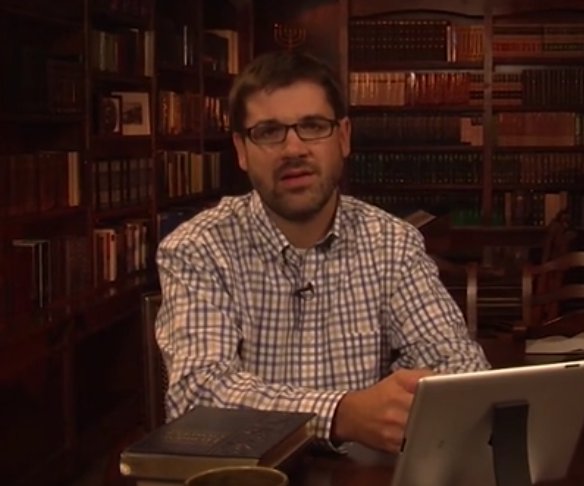
ffoz_tv12_tobyAccording to Toby, the word “Christian” is used only three times in the Bible, but the words “disciple” and “disciples” relating to followers and students of Jesus were used many times. Perhaps it’s more accurate to call ourselves disciples of Christ rather than Christians. But then again, that would depend on the meaning of disciples and discipleship. Which brings us to our first clue:

Clue 1: All early believers of Jesus were called disciples.

But going back to the question I just asked and the question Toby repeatedly asks, we need to understand how Christ’s original Jewish audience and the first Jewish readers of the Gospels would have understood discipleship. To get the answer, we turn to FFOZ teacher and translator Aaron Eby in Israel.

Aaron provides a great deal of background information on early Jewish discipleship including the fact that discipleship predates Jesus by quite a bit. Discipleship was considered the primary method of higher Jewish education, but it wasn’t just a matter of going to school and studying different subjects. A disciple was a student but specifically, a student of a Torah teacher. In the days of Jesus and before, when a young man thought he wanted a life of Torah learning, he would apprentice himself to a Torah master, however, this apprenticeship might not be what you imagine.

A disciple was to be a learner/imitator. He would memorize all of his Master’s teachings, learn to imitate his Master’s style of dress, mannerisms, inflections of speech. The disciple in some ways considered himself a servant or even a slave to his Rabbi, his “great one.” In some ways, he thought of himself as a son to a Father, but the Rabbi was considered greater than the disciple’s biological Father. Disciples were tremendously devoted to their Masters, more so than to their own families or even their own lives. And so it was with the disciples of Jesus, their Master and ours.

Back in the studio, Toby describes the concept of discipleship as a job description.

A pupil is not above his teacher; but everyone, after he has been fully trained, will be like his teacher.

Luke 6:40 (NASB)

That the disciples of Jesus were imitators of their Master and memorized his teachings is the reason why we have the Gospels today.

Be imitators of me, just as I also am of Christ.

1 Corinthians 11:1 (NASB)

Here we see that Paul considered himself a disciple of Christ as his imitator, and he suggests to the readers of his letter that they should imitate Paul. Were they then Paul’s disciples? I’ll answer that in a bit, but we have arrived at our second clue:

Clue 2: The primary job of a disciple was to be like his teacher.

Even the Pirkei Avot or “Ethics of our Fathers,” a set of Jewish teachings that predated Jesus says, “Raise many disciples.”
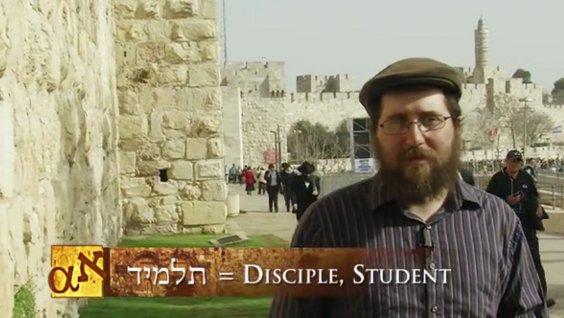
ffoz_tv12_aaronA Rabbi’s job was to create a new generation of disciples who would learn everything from the Rabbi and about the Rabbi and then, when they were fully trained, the disciples would become Rabbi’s themselves, raising up their own generation of disciples in order to preserve the Torah teaching and wisdom of their own Master. This process would be repeated from one generation to the next with the goal of creating an unbroken line of discipleship, generation by generation, that would preserve the teachings of Torah for each Teacher, often by establishing great schools such as the Houses of Study of Shammai and Hillel. This maps well to Matthew 28:19-20 where Rabbi Yeshua instructed his Jewish disciples to raise up a generation of disciples from the people of the nations, which the Church often refers to as “the great commission.” However, as we’ve seen, the idea of “the great commission” hardly does justice to what Jesus was actually commanding.

Now we have arrived at the third and final clue:

Clue 3: The job of a disciple was to raise up more disciples.

But here Toby introduces a strong caveat:

But do not be called Rabbi; for One is your Teacher, and you are all brothers. Do not call anyone on earth your father; for One is your Father, He who is in heaven. Do not be called leaders; for One is your Leader, that is, Christ. But the greatest among you shall be your servant. Whoever exalts himself shall be humbled; and whoever humbles himself shall be exalted.

Matthew 23:8-12 (NASB)

This set of verses has often been misunderstood or just not understood at all. Does this mean we shouldn’t have respect for our Bible teachers and Pastors? Here’s where having a Jewish perspective on the New Testament comes in especially handy. According to Toby, this is Jesus defining the difference between the relationship of Jewish disciples to the Sages and disciples of Jesus, our Master, to himself.

Remember, the purpose of discipleship was to learn all there was to learn from your Master and then to establish your own House of Study in your name passing on what you originally learned. Your disciples would be taught in your name, not in the name of your own Master, and your disciples would teach in their own names, not in yours (actually it was more like, “I teach you in the name of my Master, who taught in the name of his Master,” and so on).

Jesus said his disciples would be different. Each Torah Master would eventually age and die, but his teachings would be preserved in his disciples and in each generation of disciples that followed. Jesus is alive! We hear this enthusiastically declared every Easter or Resurrection Day in Church. James, Peter, and Paul were not to set up their own houses of study and teach in their own names by making their own disciples (in spite of what we saw relative to Paul in 1 Corinthians 11:1). They were not to raise up disciples for themselves but instead, they were and we are to raise up disciples for our Master, our one and only Master, Jesus the Messiah, Yeshua HaMashiach.

What Did I Learn?

I learned the meaning behind Matthew 23:8-12 which I tended to ignore in the past because I couldn’t figure it out. It makes a lot of sense now. I used to think that we inherited a broken system of discipleship since the teachings of Jesus were never transmitted generation to generation in the manner we have seen described in this FFOZ TV episode. Now I realize that it was by design, since we were never intended to be the students of any Master except Jesus. He is our only teacher, our only Torah Master. This does not mean we shouldn’t respect any Bible teacher or Pastor in our Church, but we must always remember that none of them take the place of Jesus. If we see a group of believers who esteem their Pastor or spiritual leader as anything approaching our true Master, then there is something wrong (and sadly, such situations make an appearance the news media from time to time, usually as scandals involving some highly public and popular religious leader).
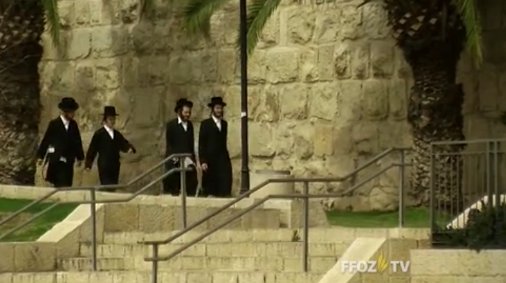
ffoz_tv12_extra2I also thought of some questions as I was watching this episode and in fact, I was reminded of some of the narratives of Toby from other episodes that involve how he commonly introduces himself. He says that he isn’t Jewish but rather a Gentile who practices Messianic Judaism. It isn’t always apparent, but he usually wears a kippah while on camera (A kippah is a head covering typically worn by religious Jews either just in synagogue or during their waking hours, depending on their level of observance).

What is the difference between being a Gentile who practices Messianic Judaism and a Gentile who practices Christianity? More importantly, how do these two “states” relate to being a disciple of Christ, our Master? Since this television show was created to present the Gospels and Jesus Christ to a more traditional Christian audience by introducing a more Jewish perspective and interpretation, what does that say about the level of discipleship and imitation of our Master relative to “Messianic Gentiles” and Christians?

This question is especially important to me, since it factors into how I think of myself as a disciple of the Master by calling myself a Christian and attending Church. One of the motivations for me to return to Church after an absence of many years was the book Tent of David: Healing the Vision of the Messianic Gentile written by FFOZ president and founder Boaz Michael. Have I become a better imitator of my Master by following this template of church attendance and Christian affiliation or a worse one? At some point in the near future, as the one year anniversary of my returning to Church comes near, I plan to write one or more “meditations” on the application of Boaz’s Tent of David in my life and the results I see so far.

Closely related to this situation, Toby also didn’t drill down into something that I think it’s vital to know. When we say that a disciple of Christ is an imitator or Christ, just exactly what are we imitating? This isn’t an idle question. Many in the Hebrew Roots movement insist that discipleship means imitating the Jewish Jesus in every aspect of his Judaism, including wearing kippot (plural of kippah) and tallitot (plural of tallit) and to otherwise look and act in a manner identical to modern religious Jews (in spite of the fact that Jesus isn’t a “modern religious Jew,” but rather, he was an ancient Jewish Rabbi and he is the Jewish Messiah King).

The clue that may lead to an answer was provided at the end of this episode by Boaz Michael who appeared on camera and said that next week (episode 13), the topic would be how the Torah is the foundation of Messiah Yeshua’s instructions to his disciples. How can the Torah be applied to both the Jewish and Gentile disciples of our Master?

I’m hoping my review next week will help answer these questions.

Today is Hoshana Raba, the last day of Sukkot. Lord, please abundantly save us. Candle lighting for Shmini Atzeret is tonight at sundown. God, continue to be with us.

Day Zero.



FFOZ TV Review: None Greater Than John

ffoz_tv11_1Episode 11: Jesus tells his disciples that the least in the kingdom of heaven is greater than John the Immerser. Does that mean that the worst Christian is better than John? Episode eleven will clear up the confusion over this passage by putting terms back into their proper Hebraic context. It will be shown that Jesus meant that the most insignificant prophets of the Messianic Era will be superior to the greatest prophets of our era. One day soon we will all be like prophets, all mankind will have revelation, and through the gospel we can take ahold of this now.

-from the Introduction to FFOZ TV: The Promise of What is to Come
Episode 11: None Greater Than John

The Lesson: The Mystery of Least in the Kingdom

This episode departs from the discussion of atonement and restoration of national Israel and the world, which we viewed in the previous series of five or six episodes including repentance and the Messianic Kingdom is now, and explores something very specific about John the Baptist.

Amen, I say to you, none among those born of a woman has arisen greater than Yochanan the Immerser; yet the smallest in the kingdom of Heaven will be greater than he.

Matthew 11:11 (DHE Gospels)

First Fruits of Zion (FFOZ) teacher and author Toby Janicki tells the audience that traditionally in Christianity, this verse has been used to say that even the worst New Testament Christian is better than the best Old Testament Jew. He also describes a form of dispensationalism, the Old Testament dispensation of the Law, in which John was the greatest prophet of his time, and the New Testament dispensation of grace, where believers in Jesus are even greater than John.

This belief has fueled a long history of replacement theology in the church as well as a great deal of blatant anti-Semitism. Strangely enough, some Christians have even interpreted this verse to mean that John the Baptist will not be in the Messianic Kingdom, even though Jesus already said that Abraham, Isaac, and Jacob will be in the Kingdom (Matthew 8:11). How can this be? Well, it can’t be. There’s no logic in excluding John from the Kingdom, particularly if Abraham, Isaac, and Jacob will be there, and here we see the danger in taking a single verse from the Bible and developing an entire theological position on it. As this television program has repeatedly stated, you must engage the original Jewish context of scripture and try to comprehend how the audience of Matthew’s gospel would have understood his words.

You also have to link the various relevant portions of the Bible together to add context and meaning to what you are studying, such as the following:

Truly I say to you, among those born of women there has not arisen anyone greater than John the Baptist!

Matthew 11:11 (NASB)

Since that time no prophet has risen in Israel like Moses, whom the Lord knew face to face, for all the signs and wonders which the Lord sent him to perform in the land of Egypt against Pharaoh, all his servants, and all his land, and for all the mighty power and for all the great terror which Moses performed in the sight of all Israel.

Deuteronomy 34:10-12 (NASB)

ffoz_tv11_tobyEven among modern observant Jews, Moses is revered as the greatest prophet who ever lived. He was greater than any prophet who came before or since and certainly, he could be considered the greatest prophet of his generation. But in comparing the passages we read in Deuteronomy to Matthew, Toby tells us that what Jesus was actually saying is that John the Baptist was the greatest prophet of his generation, just as Moses was the greatest prophet of his generation.

Compare: “no prophet has arisen” to “there has not arisen anyone,” and you’ll see the linkage Jesus was using to paint a picture to his listeners of who John was in their day.

How was John great? He was the greatest prophet in his generation. Here we arrive at Toby’s first clue in our attempt to solve the Mystery of the Least in the Kingdom:

Clue 1: John was the greatest prophet alive in his generation, just as Moses was the greatest prophet alive in his generation.

But we won’t get very far if we don’t understand the Hebrew words and meanings behind the words “least” and “greatest” in our English Bibles. To take the next step, we visit FFOZ teacher and translator Aaron Eby in Israel.

Aaron tells us that in Hebrew, the words Great and Least or Big and Little are “Gadol” and “Katan” or to say “little one,” “Katone.” Gadol isn’t just “big,” it can mean “great,” “older,” “more significant,” “mighty,” worthy,” and so forth. Katan can mean “little,” “younger,” “less significant,” “weak,” “unworthy,” and so forth. For instance, in Jeremiah 10:6, God is referred to as “great” (gadol) and His Name is “great” (gadol).

To describe katan or katone, Aaron cites the following scripture:

At that time the disciples came to Jesus, saying, “Who is the greatest in the kingdom of heaven?” And calling to him a child, he put him in the midst of them and said, “Truly, I say to you, unless you turn and become like children, you will never enter the kingdom of heaven. Whoever humbles himself like this child is the greatest in the kingdom of heaven.

“Whoever receives one such child in my name receives me, but whoever causes one of these little ones who believe in me to sin, it would be better for him to have a great millstone fastened around his neck and to be drowned in the depth of the sea.

Matthew 18:1-6 (ESV)

ffoz_tv11_aaronHere, Jesus is using children as an example of significance or worthiness of people in the Kingdom of Heaven or the Messianic Era. He’s also, according to Aaron, talking about how disciples of ancient Jewish Rabbis were considered. An experienced and learned disciple was called “great” or “gadol,” but an inexperienced and unlearned disciple was called “least” or “little one,” which in Hebrew are katan and katone. So the “little ones” being referred to in the above verse aren’t literally children, but disciples of Jesus who were inexperienced, vulnerable, and uneducated. If you caused one of these inexperienced disciples, these “little ones,” to sin, it would be very, very bad for you.

Back in the studio, Toby pulls together Aaron’s language lesson to give us our second clue:

Clue 2: Great meant high-ranking, experienced, prestigious, while Least meant low-ranking, inexperienced, insignificant.

But we still don’t understand how Jesus could say that even the least or most inexperienced believer (who could be Jewish or Gentile) in the Messianic Age could be greater than the prophet John the Baptist. One more clue is needed to unravel the rest of the mystery.

To do that, Toby takes us back to the prophets in the Tanakh (Old Testament):

They will not teach again, each man his neighbor and each man his brother, saying, ‘Know the Lord,’ for they will all know Me, from the least of them to the greatest of them,” declares the Lord, “for I will forgive their iniquity, and their sin I will remember no more.”

Jeremiah 31:34 (NASB)

“It will come about after this
That I will pour out My Spirit on all mankind;
And your sons and daughters will prophesy,
Your old men will dream dreams,
Your young men will see visions.
“Even on the male and female servants
I will pour out My Spirit in those days.”

Joel 2:28-29 (NASB)

Both prophets are talking about the Messianic Age, and Toby interprets their words to mean that everyone in the Kingdom, from the least to the greatest, will receive an overwhelming outpouring of prophesy, so much so, that by comparison, they all will have greater command of prophesy in that age than the degree of prophesy John possessed nearly two-thousand years ago at the close of the Second Temple period. This is the third and final clue.

Clue 3: In the Messianic Era, everyone will be a prophet.

The idea is that from the least of the prophets in the Kingdom to the greatest, the level of prophesy and apprehension of God they experience will still be greater than what John the Baptist experienced in his generation. This isn’t excluding John from the Kingdom and it isn’t saying that New Testament Christians are better than Old Testament Jews (or any Jewish person today), it’s saying that in the Messianic Era, God’s Spirit will be poured out to such a degree that an unprecedented surge of prophetic power will be possessed by literally everyone in the Kingdom.

What Did I Learn?

ffoz_tv11_childrenA lot. First of all, I didn’t even consider how Matthew 11:11 could be interpreted in isolation to support anti-Semitic thought and replacement theology in Christian history (and probably in some churches even today). I also didn’t fully capture the picture of the Messianic Era as being full of prophets, nor did I see the linkage between the different passages in the Bible that both Toby and Aaron referenced. I also had no idea that Matthew 18:1-6 referred not specifically to children but to the status of inexperienced and experienced disciples of a Rabbi, and specifically disciples of Rabbi Yeshua (Jesus).

When Toby mentioned Joel 2:28-29, I remembered a teaching he presented at the First Fruits of Zion (FFOZ) Shavuot conference at Beth Immanuel Sabbath Fellowship in Hudson, Wisconsin last spring. He gave me my final “clue” to solve my own mystery of how Gentiles are connected to God in a covenant relationship while retaining our status as people from the nations who are called by His Name. I wrote about that experience nearly four months ago, and I invite you to read it as an extension of the material I’m presenting here today, as well as providing additional details to the television teaching of Toby’s and Aaron’s.

For me, this was a fascinating and eye-opening episode. I tend to think of myself as experienced enough in the Hebrew Roots and Messianic Jewish realms to be beyond the “Messianic Judaism 101” stage, but I guess I’m not, at least in this area. I do wonder about Toby’s source material though, especially in connecting Matthew 11:11 back to Deuteronomy 34:10-12. I don’t doubt Toby’s word and I have no reason not to believe he isn’t correct, but information doesn’t come out of thin air. One of the things I wish for this television series is a set of “digging deeper” links or even just a Bibliography of the sources used to construct the lessons provided in each episode.

I’ll review another episode next week.

FFOZ TV Review: The Kingdom is Now

tv_ffoz10_1Episode 10: The gospel message says “Repent, the kingdom of heaven is at hand,” but after two thousand years, where is the kingdom? Episode ten will examine this conundrum by looking at these words of Jesus from a Jewish perspective. Viewers will learn that the kingdom did not arrive in Jesus’ day because Israel did not repent. However, all followers of Messiah can receive a foretaste of the kingdom now by repenting and attaching to the king now as they eagerly await his second coming.

-from the Introduction to FFOZ TV: The Promise of What is to Come
Episode 10: The Kingdom is Now

The Lesson: The Mystery of the Kingdom at Hand

This episode continues to build on the previous ones having to do with exile and redemption, the ingathering of Israel, the Gospel message, and Jewish repentance. First Fruits of Zion (FFOZ) teachers Toby Janicki and Aaron Eby answer a question that has been of special importance to me. How can the Kingdom of Heaven, that is, the Messianic Era, be on the brink of arrival or at hand, and yet not have arrived in the past 2,000 years?

This is the “mystery” that Toby presents to his audience and solving the mystery hinges on understanding the meaning of the phrase often translated in our Bibles as “at hand.”

These twelve Jesus sent out after instructing them: “Do not go in the way of the Gentiles, and do not enter any city of the Samaritans; but rather go to the lost sheep of the house of Israel. And as you go, preach, saying, ‘The kingdom of heaven is at hand.’”

Matthew 10:5-7 (NASB)

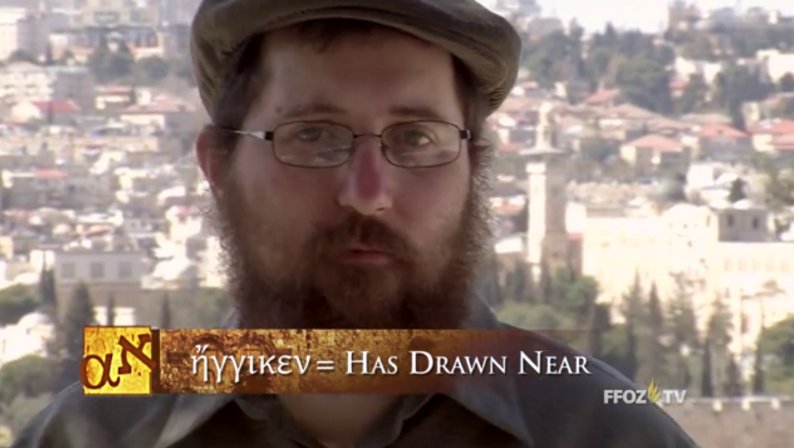
The pacing of this episode runs a bit differently than previous ones. Even before Toby introduces his first clue in solving the mystery, the scene shifts to Aaron Eby in Israel and the Greek word used to impart the meaning that the Kingdom of Heaven is “at hand.” This word, Aaron tells us, more literally says “it has drawn near” or “it has drawn close,” which seems to indicate something came and has already passed by.

19th century translator Franz Delitzsch “retro-translated” the Greek back into the most likely form in Hebrew, which would be the idiom we would understand in English as “drawn near to come.” It gives the sense of something that is poised to enter, like a man standing outside your front door, close enough to ring the doorbell. However, that man hasn’t yet arrived until he is invited inside and goes through the doorway. If he hadn’t yet rung the doorbell or knocked on the door, even though he is literally close enough to touch, you wouldn’t even know he was there at all.

Aaron says something important. The Kingdom of Heaven being “near” isn’t about time or proximity, but rather, accessibility and potential. The Kingdom wasn’t only sort of near 2,000 years ago and slowly coming closer with the passage of time. In a very real way, it’s always like the man standing just on the other side of your front door. He could knock at any second. But what’s stopping him?

One of the scribes came and heard them arguing, and recognizing that He had answered them well, asked Him, “What commandment is the foremost of all?” Jesus answered, “The foremost is, ‘Hear, O Israel! The Lord our God is one Lord; and you shall love the Lord your God with all your heart, and with all your soul, and with all your mind, and with all your strength.’ The second is this, ‘You shall love your neighbor as yourself.’ There is no other commandment greater than these.” The scribe said to Him, “Right, Teacher; You have truly stated that He is One, and there is no one else besides Him; and to love Him with all the heart and with all the understanding and with all the strength, and to love one’s neighbor as himself, is much more than all burnt offerings and sacrifices.” When Jesus saw that he had answered intelligently, He said to him, “You are not far from the kingdom of God.” (emph. mine)

Mark 12:28-34 (NASB)

ffoz_tv10_aaronWait a minute. How can Jesus say that the scribe wasn’t far from the Kingdom of God if “far” and “near” are a matter of the timing of Christ’s return in glory and power? It has to do with the heart of the scribe and his true understanding of the Torah. That, in and of itself, should be a bit startling to a Christian audience, since being close to the Kingdom is linked to both a repentant heart and correct understanding of the Torah of Moses.

Aaron also refers to several different parts of Isaiah to re-enforce his interpretation including Isaiah 56:1:

Thus says the Lord, “Preserve justice and do righteousness, for My salvation is about to come.”

According to Aaron, deliverance is on the threshold of being revealed. It is here and accessible at any moment. The person or people involved just have to become aware of it and then touch it.

Back in the studio, Toby compares this to what we read in Revelation 3:20

Behold, I stand at the door and knock; if anyone hears My voice and opens the door, I will come in to him and will dine with him, and he with Me.

As I said above, the Kingdom is at the door poised to knock and is already knocking. All we have to do is open the door and it will arrive. All we need is to have the right heart and the right understanding of what God is telling us in the Bible. And here’s our first clue.

Clue 1: “At hand” means God’s Kingdom, the Messianic Era, was on the brink of being revealed.

I’m trying not to give too much away in advance of the other two clues, but the revelation of the Kingdom is something that Jewish people have been waiting for longer than there has been anything called “Christianity.” Even in Jesus’s day, once he was resurrected, his disciples expected the Kingdom to arrive immediately. They even asked him about it.

So when they had come together, they were asking Him, saying, “Lord, is it at this time You are restoring the kingdom to Israel?”

Acts 1:6 (NASB)

up_to_jerusalemIt was puzzling when Jesus didn’t summon the Kingdom right away. Yet not only did Messiah’s disciples expect the Kingdom to arrive right then, so did Jesus. Toby says that it was Messiah’s intent to bring the Kingdom to the generation in which he lived. What stopped the Kingdom’s arrival?

Truly I say to you, all these things will come upon this generation. “Jerusalem, Jerusalem, who kills the prophets and stones those who are sent to her! How often I wanted to gather your children together, the way a hen gathers her chicks under her wings, and you were unwilling. Behold, your house is being left to you desolate! For I say to you, from now on you will not see Me until you say, ‘Blessed is He who comes in the name of the Lord!’”

Matthew 23:36-39 (NASB)

It is said in some branches of Judaism that if all of Israel were to repent at a single moment, it would summon the arrival of Messiah. Toby says something very similar. He teaches that the arrival of the Kingdom of Heaven is contingent upon the repentance of the generation, and although he didn’t make this explicit, the generation of Jewish people. In other words, if all of Israel, the Jewish people, were to repent as a single body, the Messiah would come.

But remember, as we saw in last week’s episode, Jewish repentance does not mean simply coming to faith in Jesus Christ, and it definitely doesn’t mean forsaking the Torah of Moses and becoming goyishe Christians. It means repenting of sins, returning to the Torah, and having a profound faith in God. With Yom Kippur just days away, this message is extremely well timed. Perhaps Messiah will come one year during the Days of Awe, when all of Israel makes teshuvah and returns to God.

Why didn’t the Messianic Age arrive with the first coming of Messiah? Some Jewish people repented, but Toby says most didn’t. They weren’t ready. As Toby was talking, I started to think of that first generation of Israelites Moses liberated from Egypt. They had been redeemed but they too were not ready to enter into the Land. Only the generation after them was ready, and they were the ones who received the promises.

Which generation of Jews will be the ones to usher in the Kingdom of God and Messiah’s reign?

Thus we have arrived at the second clue:

Clue 2: The Messianic Era requires repentance.

tv_ffoz12_tobyAgain, I believe this is specifically Jewish repentance, and I believe the unique role of the Gentile Christians, the people of the nations who are called by God’s Name, is to encourage and support Jewish return to God and the Torah within a Messianic framework. Only then will the Messianic Era arrive.

But will that ever happen? The necessary repentance hasn’t occurred in the last twenty centuries. Can the Kingdom of God be near to people now as it was to the scribe to correctly interpreted Torah with Jesus?

Now having been questioned by the Pharisees as to when the kingdom of God was coming, He answered them and said, “The kingdom of God is not coming with signs to be observed; nor will they say, ‘Look, here it is!’ or, ‘There it is!’ For behold, the kingdom of God is in your midst.”

Luke 17:20-21 (NASB)

Christians are used to “beating up” the Pharisees, and believe they are nothing but hypocrites and liars, but here, Toby tells us they were asking a sincere question about the coming Messianic Age. Jesus gave them a sincere answer. Like the scribe, if they turned to God and Torah with a repentant heart, they would benefit from the blessings of the Messianic Era right now. They, and all believers, become a foretaste of the Kingdom in the present age. In that sense, anytime that believers in Jesus exist, some part of the Messianic Age of Jesus is always present.

Here’s the final clue:

Clue 3: Followers of Jesus who heed the message of the good news and repent are the Kingdom in the current age.

Toby describes the Kingdom as the Land and the People under the rule of the King. While we have a foretaste of the Kingdom in our lives as believers and we thus can share the Kingdom with others, it won’t arrive as a physical reality until Messiah arrives and rules as King in our world.

Think of the first coming of Jesus as his planting a seed. The seed is underground. It’s present. It’s real. It’s close enough to touch, but it’s still out of sight. If you didn’t know it had been planted, you wouldn’t know it existed at all. We believers are here as gardeners to nurture the seed and to help it grow.

But like a tiny mustard seed becomes a great tree, the reality of the Kingdom won’t burst forth from the seed, escape the bonds of the earth, and reach for the sky in magnificence until the Messiah’s second coming.

What Did I Learn?

Yom Kippur prayersI believe I’ve written about this before, but what Toby and Aaron taught confirmed something that never occurs to most Christians. The arrival of the physical Kingdom of God, the Messianic Age, is contingent upon human beings, and specifically the Jewish people. It matters not at all if or how well Gentile Christians, including devotees in the Hebrew Roots movement, observe and perform the Torah mitzvot, even with great and utter faith in Messiah. It matters absolutely if Jewish people return to God and Torah and practice a life of faith and obedience. Only when corporate repentance occurs in Israel will Messiah return, and then ” they will look on him whom they have pierced, they shall mourn for him, as one mourns for an only child, and weep bitterly over him, as one weeps over a firstborn.” (Zechariah 12:10 ESV)

As I’ve said previously, this is a little hard to take, because if the timing of the arrival of the physical Messianic Kingdom is totally in the control of the Jewish people and their repentance, then, depending on when they repent (or repented if it happened in the past), the understanding of these realities may or may not have been or be available to the people of the world’s nations.

But of that day and hour no one knows, not even the angels of heaven, nor the Son, but the Father alone.

Matthew 24:36 (NASB)

Jesus could be saying that the Father knows the exact time of the return, even though it is in the hands of the free will of the Jewish people.

Certainly, if I accept the FFOZ understanding of the coming of the Kingdom, then it sets a specific course for we who are believers in Jesus now. We can wait and wait and wait for Jesus to return and experience the foretaste of the Kingdom in our present lives, but Jesus will never return in the sky in power and glory until Israel repents. All this means that we Christians have a duty to support and nurture the Jewish people in their faith in God and in the study and performance of Torah so that they can arrive at repentance.

But as my Pastor often asks me, what exactly is the Torah, relative to the many traditions and customs of the different streams of Judaism in our day? What exactly must we do to encourage Jewish repentance so that the King will return and take up his throne?

Acts 15 and the Didache: A Brief Exploration

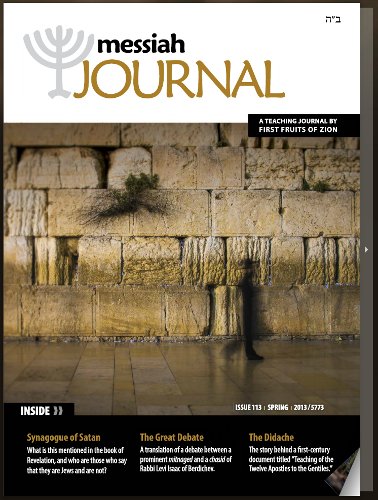
messiah-journal-113Tony Jones aptly calls the Didache “the most important book you’ve never heard of.” It offers an unparalleled look into the day-to-day community of the earliest disciples of Rabbi Yeshua. It is therefore an invaluable document for all students of the Jewish background of Christianity.

The title Didache means “teaching” and is taken from the first word of the book. The work is also known by the longer title, “Teaching of the Twelve Apostles” or the still longer “Teaching of the Lord to the Gentiles by the Twelve Apostles” which is the complete first line of the book.

-Toby Janicki
“The Didache: An Introduction”
from Messiah Journal issue 113, pg 42

I keep meaning to read the Didache, but there are so many other books around that it’s hard to find the bandwidth. Then I received an audio CD in the mail from First Fruits of Zion (FFOZ) that contained a recording of Toby reading his Didache article, published last spring in issue 113 of Messiah Journal.

My son, who is normally my commuting companion five days a week, took some time off of work, so one morning last week, I popped the CD into the player in my car and listened to Toby as I drove to my job. The recording was just the right length so that I could listen to everything Toby had to say from home to work. Then I discovered on the packaging that the content could also be found in text format in Messiah Journal. So here I am.

Most scholars generally agree that the Didache was written either in the location of Egypt, Syria, or Israel sometime between the late first to early second century. Some speculate it may have been written as early as 50 CE. This would mean that the Didache is actually older than the canonical Gospels and was written during the generation after the Master’s death.

-Janicki, pg 44

Admittedly, there’s a lot of guess-work about the Didache, who wrote it, when it was written, but generally it’s agreed that the intended audience was the newly-minted Gentile disciples of the Jewish Messiah, of Jesus. Toby paints a portrait of the Didache as a sort of “learner’s primer” presented to new Gentile disciples who needed some guidance into their day-to-day practices and responsibilities. Toby also makes a point that the style and simplicity of the text seems markedly Jewish and represents early Jewish religious instruction common in the late 1st century period.

The longest title of the Didache, “Teaching of the Lord to the Gentiles by the Twelve Apostles” would have us believe that the Didache contains instructions that were transmitted by the apostles through the halachic authority that was invested to them by the Master himself. While scholars debate which if any of these titles were originally used when the Didache was composed, this raises the question then of whether or not the Didache actually dates back to the original twelve apostles. Did the teaching of the Didache actually emerge from the oral halachah of the Jerusalem Council? The suggested early date of the compositions, coupled with their contents, makes this a high probability. Jonathan Draper writes, “The earlier the date for this text is pushed, the more likely it was associated from the beginning with, or even originated from, the twelve apostles in Jerusalem, as its title states.” As we will see, the Didache becomes a natural outgrowth of the Jerusalem Council’s rulings in Acts 15.

-ibid, pg 45

I’ve written a great deal on the impact of Acts 15 on Gentile believers in the late Second Temple period and beyond in my Return to Jerusalem series and other blog posts such as The Evidence of Acts 15. One of the criticisms leveled against the “Four Prohibitions” recorded by Luke in that chapter, is that they are woefully insufficient instructions for new Gentile disciples, especially relative to the vast compilation of mitzvot collected in the Torah of Moses and required for the Jewish people. It’s a common argument in parts of the Hebrew Roots movement supporting their belief that the full length of Torah commandments were intended to be observed by both Jewish and Gentile believers.

But what if…just what if the Didache represented the oral halachah that was to accompany the Jerusalem Letter to the Gentile disciples and that it “fleshed out” the letter’s contents.

So when they were sent away, they went down to Antioch; and having gathered the congregation together, they delivered the letter. When they had read it, they rejoiced because of its encouragement. Judas and Silas, also being prophets themselves, encouraged and strengthened the brethren with a lengthy message (emph. mine).

Acts 15:30-32 (NASB)

the-didacheIt’s very likely that there was a rather long and involved explanation about the contents of the letter delivered to the different communities of Gentile believers. Luke only hit the high points, so to speak, and didn’t write down literally everything Paul and the other Jewish apostles and disciples had to say by way of instruction to the Gentiles. What if the Didache was the written version of those instructions, at least to some degree?

No, I can’t say that it is or it isn’t. There’s a lot of mystery shrouding the Didache, and no one is able to make many definitive statements about it. However, Toby writes that it nearly was made Biblical canon and for various reasons, fell out of favor. Still, it is acknowledged that the Didache is an important written work in early Christianity, albeit obviously coming from a strong Jewish source.

Once I get the opportunity to read and study the Didache, I’ll revisit my suggestions and see if they at all seem credible. If they do, that still doesn’t mean Christians today should follow their instructions to the letter, but it may mean we already have a more complete set of documents advising us of the intent of the Apostolic Council in terms of the requirements for Gentile disciples in the body of Messiah. And remember, the Acts 15 letter wasn’t just the idea of human beings.

“Therefore we have sent Judas and Silas, who themselves will also report the same things by word of mouth. “For it seemed good to the Holy Spirit and to us to lay upon you no greater burden than these essentials… (emph mine)”

Acts 15:27-28 (NASB)

I can’t claim Divine inspiration for the Didache the way I can for canonized scripture, but it may represent an important and long absent link between the Acts 15 letter and how it was supposed to be lived out “on the ground,” so to speak, by the earliest Gentile disciples.

This may, in the end, also tell us something about who we are in Christ today.

FFOZ TV Review: Repentance

tv_ffoz9_1Episode 09: Jesus did not tell his disciples “Believe in me, the kingdom of heaven is at hand” but rather “Repent, the kingdom of heaven is at hand.” In this episode viewers will discover the direct connection between the kingdom of heaven and repentance. Since throughout the Bible sin leads to exile, it is also true that repentance leads to redemption. Followers of Jesus can help prepare the way for Messiah’s final redemption by walking in a life of repentance now.

-from the Introduction to FFOZ TV: The Promise of What is to Come
Episode 9: Repentance

The Lesson: The Mystery of Repentance

You wouldn’t think there’d be much of a mystery about repentance, but as this episode unfolds, a lot of details are unpackaged that I don’t think most Christians are conscious of. Today’s episode, “Repentance,” is a direct sequel of last week’s episode, The Gospel Message. It is a refactoring of the understanding of the desires of God and the work of Jesus Christ from a wholly Jewish point of view, and strives to communicate that the “good news” isn’t just about “me and my personal redemption.” Christianity seems to focus on “me and Jesus,” while Judaism, and specifically Messianic Judaism for our purposes, has a wider field of view.

From this time on, Yeshua began calling out to proclaim and say, “Repent, for the kingdom of Heaven is on the brink of arrival.”

Matthew 4:17 (DHE Gospels)

This was Messiah’s message to the Jewish people and the nation of Israel, but why didn’t he say “believe in me” rather than “repent?” FFOZ Author and Teacher Toby Janicki calls us to start thinking outside the box of “me and my personal salvation.” Repentance and Kingdom are national concepts, not just personal directives. We’re talking about a message relevant to the entire nation of Israel and the whole of the Jewish people. I know that probably makes Gentile Christians feel a little insecure, but there’s more that we need to understand about who Jesus is and exactly the function of his mission.

Toby says that Jesus did NOT say “believe in me for the kingdom of Heaven is at hand.” He said “repent.” So did someone else:

Now in those days John the Baptist came, preaching in the wilderness of Judea, saying, “Repent, for the kingdom of heaven is at hand.”

Matthew 3:1-2 (NASB)

The following scripture adds more detail:

Now after John had been taken into custody, Jesus came into Galilee, preaching the gospel of God, and saying, “The time is fulfilled, and the kingdom of God is at hand; repent and believe in the gospel.”

Mark 1:14-15 (NASB)

This breaks down into three points:

  • The Kingdom of God is at hand.
  • Repent.
  • Believe in the gospel.

This is all very similar to the content of last week’s episode, and Toby makes the point that belief goes hand in hand with repentance. As he was speaking, I recalled that there are certain teachings in Judaism that say if all of Israel were to repent at the same moment, it would summon the coming of the Messiah. There are also contradictory teachings but the gist is that Jewish faith and repentance have a direct connection to when the Messianic Era, that is, the Kingdom of God arrives.

This is radically different from what most Christians believe, since we have been taught the return of Jesus will be on some fixed but unknown date on the calendar. We can neither make it come sooner or delay it from happening.

Here comes the first clue to solving our mystery:

Clue 1: The gospel message carries the imperative message, “repent for the Kingdom of God is at hand.”

It’s a call to action. We must do something, that is repent, because the Messianic Era is on the verge of arriving.

tv_ffoz9_aaronBut what is it to repent? Toby tells us that if we believe the gospel message, we will change…not like changing our minds, but changing our lives. My Pastor calls it living a transformed life. Toby says that repentance is a return to God’s Law, the Torah.

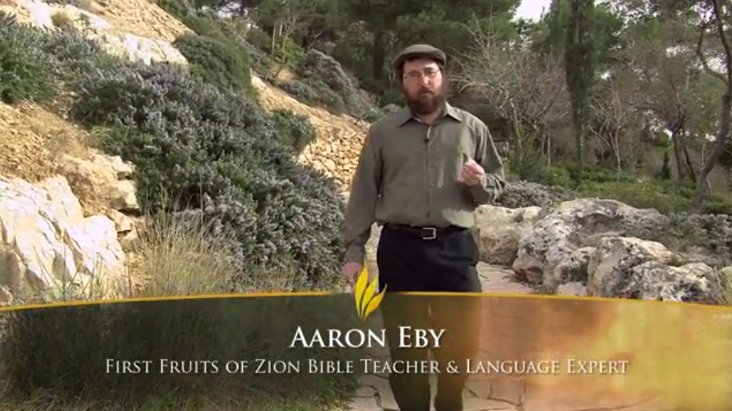
The scene shifts to Israel where FFOZ Teacher and Translator Aaron Eby explains the Hebrew word “Teshuvah” to the audience. He tells us the word gives the meaning of turning around and returning. It’s as if God’s desire for people is for us to walk in His ways, literally, walking God’s path. Sinning is like straying off the path and repentance is turning back or returning to the path.

So you shall observe to do just as the Lord your God has commanded you; you shall not turn aside to the right or to the left. You shall walk in all the way which the Lord your God has commanded you, that you may live and that it may be well with you, and that you may prolong your days in the land which you will possess.

Deuteronomy 5:32-33 (NASB)

The timing of this review couldn’t have been better, since not only are we about to enter the High Holy Days on the Jewish calendar which emphasize repentance and return for the Jewish people, but last week’s Torah portion included the following passage:

“So it shall be when all of these things have come upon you, the blessing and the curse which I have set before you, and you call them to mind in all nations where the Lord your God has banished you, and you return to the Lord your God and obey Him with all your heart and soul according to all that I command you today, you and your sons, then the Lord your God will restore you from captivity, and have compassion on you, and will gather you again from all the peoples where the Lord your God has scattered you.”

Deuteronomy 30:1-3 (NASB)

The “mechanics” of repentance involves a literal ceasing of a specific sin, a deep regret for ever having sinned, verbal confession to God, and making life changes, such as repairing the damage you did to others by sinning, and even giving to charity as a way to compensate for any inability to pay back what you took or heal the hurts you caused. Returning to God’s path.

But this also illustrates that, for the Jewish people, and remember Christ’s primary audience were (and are) Jews and Israel, the only way to repent was (and is) to return to the ways of Torah. If the message of Jesus is as true today as it was nearly two-thousand years ago, then we cannot ask Jewish believers to stop observing the Torah mitzvot, nor can we in the church say that the Torah was meant to be temporary. To do so would be to deny the Jewish people any ability to obey God and repent of their sins. We’d be condemning them to permanent exile, and condemning ourselves to living outside of God’s will for the Gentiles.

Toby gives us the second clue:

Clue 2: Repentance is turning away from sin and towards God’s Law.

The rest of the mystery involves the linkage between repentance and redemption. As mentioned above, when Israel sins, she is exiled from her Land, but Moses in Deuteronomy 30:1-3 also promises that whenever Israel repents, she is redeemed and returned to the Land of Israel. This is the original template for what all of the subsequent prophets in Israel would say, not only about the historic exiles and returns, but the final redemption in the Messianic age.

…and My people who are called by My name humble themselves and pray and seek My face and turn from their wicked ways, then I will hear from heaven, will forgive their sin and will heal their land.

2 Chronicles 7:14 (NASB)

Toby rightly mentions that typically, we’ve heard sermon after sermon applying this verse to Christians in whatever nation we happen to be living in, which in my case, is America. But taken in context, this was being addressed to King Solomon and to Israel. This is not about Christianity and “saving America” as a “Christian nation,” but about the central message of every Jewish prophet in the Old Testament. God intends to heal Israel. Christians can’t afford to be so self-focused that we miss what the Bible is really saying. It’s not all about us and Jesus, it’s about the intent of God toward Israel. It’s about the redemption of national Israel, not individual Gentile souls.

Clue 3: Repentance is a prerequisite to redemption.

It’s almost like Toby is saying that if we all really repent, only then will Messiah return…or is he saying only if Israel repents…?

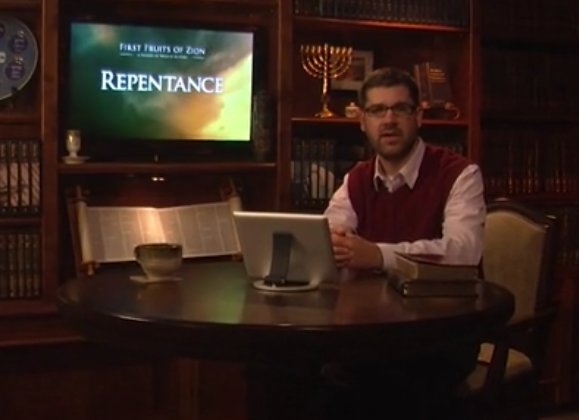
tv_ffoz9_tobyBut what about us? What about Christians. Does this television episode write us out of the plan of God and the salvation of Christ? Not at all.

Toby says we can be a part of the redemption by living lives of continual redemption. Living such a life is like being part of a sort of “mini-Messianic age.” We experience a foretaste of what is to come when Jesus returns, the time when all of Israel will repent and the Messiah will come in power and glory, bringing redemption to the Jewish people and the world. But none of this happens for Gentile Christians unless Israel repents and is redeemed, so it is in our best interests to support and encourage Jewish observance of Torah.

This lesson has at least strongly implied if not boldly declared that Israel can’t repent unless they return to the specific behavioral path God has provided for them, the Torah. We in the church dare not inhibit this, for Israel’s sake and for our own.

What Did I Learn?

I learned that the timing of the return of Jesus is variable. It isn’t a fixed date on the calendar. According to something FFOZ President and Founder Boaz Michael said at the close of this episode, if Israel had repented at the first coming of Messiah, the Kingdom of God would have been established at that moment.

That’s a rather radical thought, because I always believed that the final redemption was “delayed” to allow time for the gospel message to be transmitted to all the nations of the Earth, to all of the Gentiles. If Israel had repented immediately after the resurrection and the Messianic Era was then established, the vast majority of the world would never have heard of Israel, of Messiah, and they certainly wouldn’t have had a clue that Israel was supposed to be the head of the nations and Israel’s King was the King of the entire planet.

After two-thousand years, if Messiah should return at this very moment, even though many would still disagree with who he is and what he is supposed to do, almost none of us could say that we never heard of Jesus, Israel, the Bible, and what Christians and Jews believe it all means.

Did Jesus truly expect for Israel to have repented long, long ago?

He who testifies to these things says, “Yes, I am coming quickly.” Amen. Come, Lord Jesus.

Revelation 22:20 (NASB)

John wrote these words near the close of the first century CE and it certainly seems as if he expected the return of Messiah soon, perhaps within his own lifetime (and he was quite elderly when he penned this part of our Bible). Is it humanity’s fault that he hasn’t come yet? Is our lack of repentance and hardness of heart to blame?

It’s the mystery for next week.

FFOZ TV Review: The Gospel Message

tv_ffoz8_1Episode 08: The gospel message of Jesus is often simplified down to believe in Christ and your sins will be forgiven and you will go to heaven when you die. In episode eight this common misconception will be challenged. Viewers will discover that the main message of the gospel is one of repentance and entering into the kingdom of heaven. The kingdom of heaven is not the place we go to when we die but rather God’s kingdom coming down here on earth. The gospel message is about preparation for the Messianic Age.

-from the Introduction to FFOZ TV: The Promise of What is to Come
Episode 8: The Gospel Message

The Lesson: The Mystery of the Gospel

This episode seemed to cover a lot of previous material, not in the details, but in the theme. It is most closely related with Episode 1: The Good News since gospel means good news. There’s also a close link to Episode 7: Exile and Redemption and Episode 8: Ingathering of Israel. The television series now seems to be stringing individual episodes together to paint a much larger panoramic picture of the prophecies about and the coming of the Messianic Era.

Of course, probably all Christians think they know what the good news or the gospel message is: Jesus died for our sins and if we believe in him, we go to Heaven when we die. And while that’s good news, as previous episodes have told us, that’s not the extent of the gospel message. In fact, most Christians have been given a truncated gospel or an incomplete idea of that the good news really means. To get the whole picture, you have to look at what the gospel message means through a Jewish lens.

The definition of the gospel message of Jesus is actually really easy to find:

After Yochanan was arrested, Yeshua came to the Galil and proclaimed the good news of the kingdom of God. He said, “The time is fulfilled, and the kingdom of God has drawn near. Repent and believe the good news.”

Mark 1:14-15 (DHE Gospels)

FFOZ Author and Teacher Toby Janicki tells us that Jesus was just beginning his ministry at this point and that these verses provide us with the first clue in solving the Mystery of the Gospel:

Clue 1: The Gospel Message means we should repent for the kingdom of Heaven is at hand.

But what does that mean exactly? What is the “Kingdom of Heaven” and what is “at hand?” The phrase “at hand” is sometimes also translated as “near”. Jesus was saying to his listeners that they should repent because the Kingdom of God or the Kingdom of Heaven was really close and about to happen or occur.

Jewish people in the late Second Temple period, particularly because their nation was occupied by the Roman Empire, were especially waiting for the Kingdom of Heaven to arrive and to their ears, it certainly was good news or the gospel message that Jesus was preaching. It was a message that we find repeatedly in the Gospels.

Now in those days John the Baptist came, preaching in the wilderness of Judea, saying, “Repent, for the kingdom of heaven is at hand.”

Matthew 3:1-2 (NASB)

We also find examples of this message in Matthew 4:17 and Matthew 10:7. But we also find that the good news is sometimes referred to as the “Kingdom of God” while other times, it’s the “Kingdom of Heaven.” Toby tells us that the term “Kingdom of Heaven” is closer to the correct phrase in Hebrew. The word translated as “Heaven” is the Hebrew word “Shamayim.” Does that mean that Jesus was talking about Heaven, where God is and where we’re going to go when we die?

Not according to the Jewish understanding. That’s not how Jesus’s disciples and listeners would have interpreted his message.

The scene shifts to FFOZ Teacher and Translator Aaron Eby in Israel for a better understanding of “Kingdom of Heaven” or in Hebrew, “Malkut Shamayim.”

“Shamayim” can mean just “sky” in Hebrew, but that’s not how it’s understood in the phrase “Malkut Shamayim.” Aaron explains the concept of circumlocution, or avoiding using the Tetragrammaton, the most Holy and personal name for God, the name God revealed to Moses at the burning bush. Jewish people use many other names for God to avoid the offense of taking His most holy name lightly. Names such as “Hashem,” “Holy One,” “Creator,” or “Our Father.”

Another circumlocution for God’s most holy name is “Shamayim” or “Heaven.” You see it often in Talmudic writings, but it’s even in the Bible.

And in that it was commanded to leave the stump with the roots of the tree, your kingdom will be assured to you after you recognize that it is Heaven that rules (emph. mine).

Daniel 4:26 (NASB)

Daniel, using the Aramaic equivalent of “Shamayim,” is not saying that literally Heaven, a place, rules, but that God rules. He was merely using a circumlocution for God’s most holy name.

tv_ffoz8_aaronAaron tells us that the phrase “Kingdom of Heaven” isn’t God’s Kingdom that is located in a place called Heaven, but it actually means the rule and dominion of God on Earth.

Why do we then sometimes see this phrase rendered “Kingdom of God?” In the thoughts of the gospel writers in Hebrew, they would have used “Malkut Shamayim,” but then translating that phrase into Greek, what words should they have used? Matthew, who was writing primarily to a Hebrew speaking Jewish audience, chose to translate the Hebrew phrase literally as “Kingdom of Heaven.” However, Mark and Luke, who were writing primarily for Greek speaking Jews and non-Jews, translated the phrase idiomatically as “Kingdom of God.” Either way, they were saying the same thing.

Back to Toby and the studio, we have our second clue.

Clue 2: Kingdom of Heaven is not Heaven in the sky but God’s rule and reign on Earth.

Look up the Lord’s prayer and you’ll even find it in how Jesus taught his disciples to pray.

What is God’s rule on Earth? The Messianic Era. The time when Jesus will return and establish his rule as King in Jerusalem, establishing an age of peace, not just in Israel but in the entire world.

Toby solved most of the mystery, but one more clue is needed to answer a final question. Why is the Messianic Era good news?

Isaiah 11:1-4 tells of the prophesy that King Messiah will indeed rule Israel and the world from his throne in Jerusalem. Isaiah 11:6-8, 10 further tells us that Messiah’s reign will be one of complete and total peace. The portrait of such peaceful animals is poetic language describing such a peace. Complete tranquility and bliss, such as was experienced in Eden, long before there was any such thing as war and strife among human beings.

And when such peace comes upon all the earth from Israel, the Gentiles in the nations of the world will see and they will repent and turn to God, inaugurating an age of total, worldwide revival.

But it won’t be totally peaceful:

Then it will happen on that day that the Lord will again recover the second time with His hand the remnant of His people, who will remain, from Assyria, Egypt, Pathros, Cush, Elam, Shinar, Hamath, and from the islands of the sea. And He will lift up a standard for the nations and assemble the banished ones of Israel, and will gather the dispersed of Judah from the four corners of the earth.

They will swoop down on the slopes of the Philistines on the west; together they will plunder the sons of the east; they will possess Edom and Moab, and the sons of Ammon will be subject to them.

Isaiah 11:11-12, 14 (NASB)

We see that Messiah ingathers the exiles of the Jewish people from all the nations of the world and returns them to live in complete peace in their Land, in Israel. God Himself delivers justice to all the nations who have been enemies of Israel, vanquishing them, thus insuring Israel’s continual peace.

Now we have the final clue:

Clue 3: Kingdom of Heaven is about Messiah’s reign on Earth.

Toby recaps the lesson, summing up the three clues and solving the mystery. He describes a time when the Jewish people will live under their King in peace and return to the Torah, the law of God. I can only hope that future episodes will flesh out how this actually works relative to both Jewish and non-Jewish people, but that wasn’t the point of the episode.

What Did I Learn?

As I mentioned before, a lot of this material was addressed from other perspectives in previous episodes and I’ve learned about it from other sources as well. What Toby didn’t mention was that, by Jesus teaching that he was the fulfillment of Messianic prophecy and calling the Jewish people to repentance as preparation for the soon to arrive Kingdom of Heaven, it explains why the apostles and his disciples were so incredibly devastated when he was crucified. All of them were expecting that he was going to overthrow the Romans at any minute and assume the Throne of Israel as the promised Messianic King.

tv_ffoz8_tobyWhen he died, it must have seemed as if they were completely mistaken about him, that he couldn’t have been the Messiah, that he must have been just another of a long line of pretenders to the throne who came before him. It’s how most Jews see Jesus today, another would-be Messiah among the many who have since come and gone in Jewish history.

But then, when he was resurrected, so was hope, only there’s a problem of sorts:

So when they had come together, they were asking Him, saying, “Lord, is it at this time You are restoring the kingdom to Israel?” He said to them, “It is not for you to know times or epochs which the Father has fixed by His own authority; but you will receive power when the Holy Spirit has come upon you; and you shall be My witnesses both in Jerusalem, and in all Judea and Samaria, and even to the remotest part of the earth.”

Acts 1:6-8 (NASB)

Given that Jesus had said, “The Kingdom of Heaven is at hand” or “near,” once he was resurrected, it made perfect sense to his disciples that he was now ready to ascend the throne. Except he didn’t. He left instead and the disciples waited.

“Truly I say to you, there are some of those who are standing here who will not taste death until they see the Son of Man coming in His kingdom.”

Matthew 16:28 (NASB)

Many believed, based on these words of the Master, that although Jesus wasn’t going to immediately establish his kingdom, it would be within a human lifetime, just a matter of decades. But when the last apostle, John, died of extreme old age, sometime in the last years of the first century CE, the disciples must have felt a keen disappointment again. Messiah had not come to restore his kingdom. Where is he? How long, O’ Lord, how long?

I generally don’t mention this in my reviews, but at the very end of each episode FFOZ President and Founder, Boaz Michael appears on camera to give the audience a brief peek at the next episode. At the end of this episode, Boaz explained that the next episode would pick up the same theme and describe more in detail the process of repenting to prepare for the kingdom and to believe. But Jesus didn’t say “believe in me” he said “believe in the gospel.” What does that mean?

It’s the mystery for next week.