Tag Archives: Toby Janicki

FFOZ TV Review: Messiah

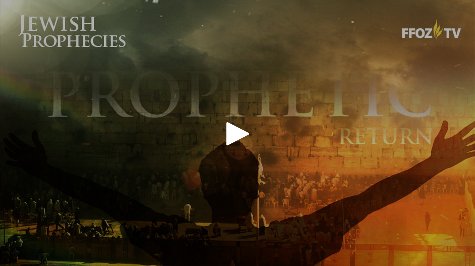
ffoz_tv2Episode 02: The term Christ is one of the most important terms in all of Scripture and yet is seldom fully understood by followers of Jesus. In episode two we will explore the prophecies of the Hebrew Scriptures and learn about the Jewish people’s expectation of the coming messiah. We will study the Hebrew Scriptures and learn that they speak of a coming anointed one, a king who will come to redeem mankind, defeat Israel’s enemies, and set up his kingdom.

The Lesson: What Does Messiah Mean?

In Episode 2: Messiah, the First Fruits of Zion (FFOZ) television series A Promise of What is to Come takes the audience through what to me was like “The Name of Christ 101.” I don’t mean to be flippant or disrespectful in saying it that way, but I guess I didn’t realize that there were so many Christians in the world today who still labor under a lack of comprehension of the meaning of the title “Christ”.

FFOZ teacher and narrator Toby Janicki starts off this episode correcting what most of us probably believed as children, if we were believers as children, that “Christ” is not simply the last name of Jesus. It’s a title and more than that, probably the most important concept in the Bible, particularly to the Jewish people. It not only tells us what Jesus did but what he is going to do.

Let’s look at two ways we can view Peter’s revelation that Jesus is “the Christ.”

And he asked them, “But who do you say that I am?” Peter answered him, “You are the Christ.”

Mark 8:29 (ESV)

He asked them, saying, “And you, what do you say about me — who am I?” Petros answered and said to him, “You are the Mashiach!”

Markos 8:29 (DHE Gospels)

By reading this verse using two different translations, Toby illustrates how the declaration of Peter can be viewed in two quite different ways. I find it interesting that Toby used the ESV translation, since in my Pastor’s opinion, it is actually one that promotes more of a supersessionistic or replacement theology viewpoint. Obviously, the Delitzsch Hebrew Gospels are designed to “retro-translate” the Greek into Hebrew and then translate that Hebrew forward into English to give the reader a more Jewish context for understanding the gospel message.

As in other episodes, information is cast as a mystery and we are provided with three clues in order to solve the mystery. Today, we confront the Mystery of Christ.

Toby uses John 1:41 and especially the text, “We have found the Messiah” (which means Christ) in order to show us the relationship or equivalency between the English words “Messiah” and “Christ.” This text was written for the sake of what John anticipated was a mixed Jewish and non-Jewish audience but as Toby points out, the original readers of this gospel weren’t provided with a definition of the term “Messiah.” That means the Jewish people involved, including Andrew and Simon Peter, already knew what “Messiah” meant. Yeshua (Jesus) did not invent a new role, “the Christ” but came to fulfill a pre-existing role: “Messiah.”

This gives us Clue 1:

The Title “Christ” was not new.

aaron-ebyThe scene shifts to Aaron Eby in Israel who provides the audience with a language lesson about the meaning of “Messiah” or rather, the Hebrew word “Moshiach.” He tells us that the Hebrew word “Mashach” means “to smear with oil.” We have examples in the Old Testament of both Kings and High Priests being inaugurated into office by literally having oil poured or smeared all over them.

For instance:

Then Samuel took the flask of oil, poured it on his head, kissed him and said, “Has not the Lord anointed you a ruler over His inheritance?

1 Samuel 10:1 (NASB)

So he said to his men, “Far be it from me because of the Lord that I should do this thing to my lord, the Lord’s anointed, to stretch out my hand against him, since he is the Lord’s anointed.”

1 Samuel 24:6 (NASB)

The “one who is anointed” or “anointed one” is “Moshiach” in Hebrew. When this Hebrew word had to be translated into Greek, the Greek word for “smeared with oil” was used, “Christos.” When the Greek was translated into English, rather than render it as “anointed one” or even “Messiah,” translators created a brand new word in English: “Christ.”

The scene returns to Toby for the rest of the message and we arrive at the final two clues.

Clue 2:

Messiah = Anointed One

And Clue 3:

Old Testament prophesies talk about the anointed one.

No one in the days of Jesus had to define what “Messiah” meant because every Jewish person already knew.

Philip found Nathanael and said to him, “We have found Him of whom Moses in the Law and also the Prophets wrote—Jesus of Nazareth, the son of Joseph.”

John 1:45 (NASB)

Messiah had been written about in the Torah of Moses and in the Prophets. Toby provides some key texts citing an anointed King such as David or Solomon and linking them to the anointed King: Messiah. He also reminds us of the two roles that Messiah fulfills, being both King, which we have already seen, and High Priest:

He became to all those who obey Him the source of eternal salvation, being designated by God as a high priest according to the order of Melchizedek.

Hebrews 5:9-10 (NASB)

In addition to quoting from Psalm 2 and Psalm 132, Toby relates the Messianic prophesies from Daniel 9:25, where we learn that Messiah will come to rebuild the ruins of Jerusalem, and Isaiah 61:1-3 where Messiah speaks in his own voice through the prophet. This is also the scroll that Jesus read in the synagogue as he declared himself as Moshiach before his people.

The scroll of Yeshayah the Prophet was given to him, and he opened the scroll and found the place where it is written:

The spirit of HaShem is upon me in order to anoint me to bring good news to the humble. He has sent me to care for the brokenhearted, to proclaim freedom for the exiles, and for the blind an opening release … to send the oppressed away free … to proclaim a year of favor for HaShem.

When he rolled up the scroll, returned it to the chazzan, and sat, the eyes of all who were in the synagogue were focused on him. He began saying to them, “Today this passage is fulfilled in your hearing.”

Lukas 4:17-21 (DHE Gospels)

But all is not fulfilled. The Messiah came once but, as we saw in the previous episode The Good News, the Messiah has yet to establish Israel as the head of all nations, redeem her people, and bring peace to Israel and the nations.

As we Christians wait for his return, Jews all over the world wait also for Messiah, as it is said:

I believe with great faith in the coming of Messiah, and even though he may delay, nevertheless, I still believe every day that he will come.

the twelfth declaration of faith

ffoz-tv-messiah
Maimonides, also known as the Rambam, wrote that declaration over a thousand years ago, and still Jews all over the world await the Messiah in great and perfect faith.

And so do we.

What Did I Learn?

Not to put too fine a point on it, I have heard most or all of this information about the meaning of “Christ” and “Moshiach” before. I guess you don’t have to spend too much time in the Hebrew Roots or Messianic movements before the subject comes up. Also, I believe this information is (or should be) largely available in most churches.

If I learned anything new, it was that, by creating this specific episode, the content planners at FFOZ must believe that this is new and valuable information for a traditionally Christian television audience. If that’s the case, then many Christians must have a great need for even the most basic information about the “Jewish Jesus” or Yeshua HaMoshiach.

If you found this message about the true meaning of the title “Christ” interesting and illuminating, I highly encourage you to watch the complete episode and all of the other episodes available at tv.ffoz.org. It is First Fruits of Zion: A promise of what is to come.

I hope to review the next episode very soon.
FFOZ TV Review: The Good News

ffoz_tv1Episode 01: Most Christians believe that the gospel message of Jesus is that he died for our sins and if we have faith in him we will be given the gift of eternal life. While certainly this is a major component of the gospel, it is not the whole story. In episode one viewers will learn that the concept of the gospel wasn’t invented by Jesus or the disciples, but rather was prophesied in the Hebrew Scriptures. The “Good News” was the promise of the coming messiah and that he would bring redemption to the children of Israel.

At the First Fruits of Zion (FFOZ) Shavuot conference last spring, I told FFOZ President Boaz Michael that I’d like to spread the “good news” of their television ministry through my blog by reviewing one episode of their TV show per week. Obviously, I’ve fallen down on the job. My life has been busy and there have been so many things I’ve wanted to write about. A few months ago, I did write a review about the FFOZ TV series as a whole, and watched a few episodes to get a “flavor” of how the show is organized. But that doesn’t impart the nature of the message each show offers its audience.

Today (as I write this), I’ve revisited my promise and watched the first episode, The Good News. This is actually about the “mystery” of the good news or gospel, since what Christians believe about the gospel message is only part of the story.

The Lesson: What is the Good News?

Toby Janicki is the main speaker and teacher for this and every episode and he asks the question, “what is the gospel message?” Christians think we know the answer. The gospels are the books of Matthew, Mark, Luke, and John and the gospel message is that Jesus died for our sins and was resurrected. Through his atoning work, anyone who believes in Christ will have their sins forgiven, receive eternal life, and go to heaven when they die.

Toby doesn’t deny any of that for a second but tells us that it is only part of the message of the gospel or “good news.”

This episode, like the entire TV series itself, encourages the viewer to look at the New Testament from its original First Century CE Jewish context. What would the Jewish people in the time of the apostles have heard and understood when Jesus spoke? How the church presents the gospel today does not carry forward that context and what we hear preached every Sunday is only a portion of the message. That’s the value of this television series to its defined audience, traditional Christian believers. Know Christ better by learning to understand the Jewish Jesus.

Jesus and the apostles were teaching the gospel or good news message long before the crucifixion and it wasn’t “Jesus will die for your sins.” In fact, Jesus spoke the good news in the very beginning:

The Spirit of Hashem is upon me in order to anoint me to bring good news to the humble. He has sent me to care for the brokenhearted, to proclaim freedom for the exiles, and for the blind an opening release … to send the oppressed free … to proclaim a year of favor for Hashem.

Luke 4:18-19 (DHE Gospels)

I used the Delitzch Hebrew Gospels translation for these verses, which Toby also reads from on the show when he quotes from the gospels. It imparts a greater sense of the Hebrew message by “retro-translating” the Greek text into Hebrew and is very helpful in drawing the mind of the Christian reader into the Jewish world of the Messiah.

You may also know that, in the above-quoted verses, Jesus was reading Isaiah 61:1-2 in the synagogue and he was speaking about himself. That scripture, along with several others from Isaiah, will provide valuable source information later in the show that is used to define “good news”.

So who are exiles, the blind, and the oppressed and what do they have to do with the gospel message?

The fact that the apostles didn’t seem to understand that Jesus had to die, and when he did, the shock, disappointment, and fear they experienced before his resurrection, as well as the surprise they felt after he was, tells us that they did not realize the good news had anything to do with the death and resurrection of the Messiah. What then did they think they were preaching to Israel and what was this “good news?”

Then Yeshua traveled around in all the Galil. He taught in their synagogues, he proclaimed the good news of the kingdom, and he healed every sickness and every disease among the people.

Matthew 4:23 (DHE Gospels)

It’s interesting that Toby notes Jesus never defines what the good news is to either the apostles or to anyone he preaches to. He assumes they already know what the gospel message is. But if even the apostles didn’t realize it meant that Jesus was to die, what were they supposed to know?

In this and the other FFOZ TV episodes, Toby presents information and then summaries it as clues, in this case three clues. The first is that the gospel or good news is actually the “good news of the Kingdom” as stated in the above-quoted passage from Matthew. This was a message specifically meant for the Jewish people in Israel and it was good news they were wanting to hear, a message of something they had been waiting for.

To understand what the gospel message is, the scene switches from Toby in the studio to FFOZ teacher and translator Aaron Eby in Israel. He provides the Hebrew language background for each lesson including this one.

ffoz-teaching-teamAaron takes us through a series of passages from the book of Isaiah including Isaiah 40:9, 52:7, 60:6, and of course, 61:1. In each case the good news is the message of the Messianic mission, the redemption of Israel, that is, physical, national Israel, as well as the entire world, when the Messiah comes to reign as King. The Hebrew word for “good news” is related to the Greek word and its variants that we translate into English as “evangelism” and “gospel”. It’s easy to see how the church has historically understood the message in one sense, but missed its larger meaning.

The scene shifts back to Toby who gives us the second clue: there is a gospel message in the Old Testament. That also takes us to clue 3: the gospel in the Old Testament is the promise of the coming of Messiah and the redemption of Israel, the Jewish people.

We can clearly see that the apostles expected this after the resurrection:

So when they had come together, they were asking Him, saying, “Lord, is it at this time You are restoring the kingdom to Israel?” He said to them, “It is not for you to know times or epochs which the Father has fixed by His own authority; but you will receive power when the Holy Spirit has come upon you; and you shall be My witnesses both in Jerusalem, and in all Judea and Samaria, and even to the remotest part of the earth.”

Acts 1:6-8 (NASB)

Notice that Jesus doesn’t rebuke the apostles for desiring national redemption and self-rule, he just says they don’t have the right to know when it will occur. He does say that before his return and the establishment of the Messianic Kingdom, they will receive power from the Holy Spirit to be Messianic witnesses “in Jerusalem, and in all Judea and Samaria, and even to the remotest part of the earth,” which is exactly what we see in the rest of the book of Acts and the New Testament.

Toby then takes the audience through a more detailed examination of each of the previously identified passages in Isaiah, closely drawing the meaning of the good news out and illustrating for us repeatedly how the Jewish audience in the time of the apostles would have understood the good news of Jesus as the coming of the Messiah and the redemption and restoration of Israel, and a reign of peace throughout the entire world.

Who are the exiles? Who are the blind? Who are the persecuted? Exiled and persecuted Israel, temporarily blinded to the Messiah for the sake of the Gentiles:

For I would not, brethren, that ye should be ignorant of this mystery, lest ye should be wise in your own conceits; that blindness in part is happened to Israel, until the fulness of the Gentiles be come in.

Romans 11:25 (KJV)

The Greek word most Bibles translate as “hardening” or some variant, is sometimes rendered as “blindness,” such as the King James Bible does. Read in a Jewish context and heard through a Jewish consciousness, when Jesus recited the words of the Prophet Isaiah in Luke 4:18-19, he was saying that he was the Messiah who had come to bring the good news to Israel and to one day redeem and restore her as a physical Kingdom on Earth.

Toby said something interesting about one of the Isaiah prophesies I want to share:

An abundance of camels will envelop you, camel colts of Midian and Ephah, and all of them will come from Sheba; gold and frankincense will they bear, and they praises of Hashem will they proclaim.

Isaiah 60:6 (Stone Edition Tanakh)

Toby relates that according to the Jewish sages, this describes the Gentile nations coming to Jerusalem to pay tribute to King Messiah. However, we have already seen something similar in the Magi of the East coming with gifts to pay tribute to the newborn Jesus. Of course, it is quite possible that Isaiah’s prophesy may have more than a single application. And it’s important to know the relationship between Gentile Christianity, the redeemed Israel, and the Jewish Messiah King.

The other interesting thing that Toby brought up (and I never realized this before) is that Jesus is actually speaking in Isaiah 61:1. Notice the text says (as translated in the Stone Edition Tanakh) that “the spirit of my Lord, Hashem/Elohim, is upon me, because Hashem has anointed me to bring tidings to the humbled; He has sent me to bind up the brokenhearted…

The emphasis is obviously mine and I include it to illustrate that it is the Messiah who is directly speaking in these verses, the voice of Yeshua bringing hope to Israel in the pages of the Old Testament.

When Christians read about the redemption of Israel in Isaiah, they often interpret the prophesy to mean “spiritual Israel” or “the church.” And yet, the Jewish hearers of Jesus and the Jewish readers of the gospels of the apostles would have understood the message much differently. They would have understood that the good news of Jesus is the promise of the coming Messiah and the redemption and restoration of national, physical Israel as a Kingdom on Earth.

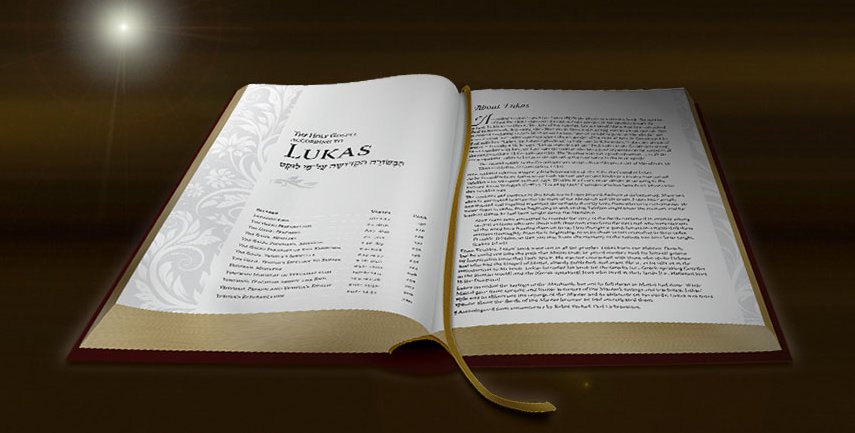
dhe_lukas

This does not unwrite or replace the fact that Jesus died for our sins and that in his resurrection, we have forgiveness and an eternal place in the world to come if we believe. However, we Gentiles are grafted in to the commonwealth of Israel, as Toby teaches. We don’t replace Israel, we come alongside her and partakers of the promises, and as subjects and servants of the Jewish Messiah King.
What Did I Learn?

I’ve consumed a great deal of this material at FFOZ conferences or from their audio CD lectures as well as reading it in their printed material, but this television episode titled “The Good News” helped me organize that information into something that is easier for me to remember and transmit to others, a message to my Christian reading audience (and I am a Christian among them) that we have only been taught part of the story of the good news.

Toby Janicki, Aaron Eby, and the rest of the FFOZ ministry have “solved” the mystery of the gospel and clued us in on the rest of the message: Jesus came to die for our sins and to deliver the promise of everlasting life for all who believe. But, and this is extremely important, as Messiah King, he came to deliver the promise of good news to all of Israel that when he returns, he will release the captives in exile, restore sight to the temporarily blinded, free the oppressed Jewish people, and proclaim freedom for Israel, the year of favor from the Lord.

If you found this message of the true good news of Jesus Christ interesting and illuminating, I highly encourage you to watch the complete episode The Good News, which is the first in the series, at tv.ffoz.org. It is First Fruits of Zion: A promise of what is to come.

I hope to review the next episode very soon.
Gifts of the Spirit Poured Out On All Flesh

Pouring waterAnd it shall come to pass afterward, that I will pour out my Spirit on all flesh; your sons and your daughters shall prophesy, your old men shall dream dreams, and your young men shall see visions. Even on the male and female servants in those days I will pour out my Spirit.

And it shall come to pass that everyone who calls on the name of the Lord shall be saved.

Joel 2:28-29, 32

“I will pour out my spirit on all flesh.”

That’s a pretty exciting statement when taken at face value, and it filled in a gap in my understanding of how non-Jews are supposed to fit into the New Covenant God made (is making, will make) with Israel.

I’ve spent a great deal of time trying to follow the threads from the covenant God made with Noah, to the one He made with Abraham, to the one He made with Isaac, to the one He made with Jacob, to the one He made with Moses and the Children of Israel, to the New Covenant language recorded in Jeremiah 31 and Ezekiel 36, to the language of Messiah in Luke 22:14-23, and so on.

Classic replacement theology in Christianity has historically made the New Covenant fit but it must grossly misread the text in order to accomplish its goal. Instead of replacing Israel with “the church,” God has renewed and amplified His covenants with Israel in the New Covenant language and is in the process of or is yet to actually write the Torah upon the heart of Israel and to redeem her to Himself.

Only Messiah’s declaration faintly hints that somehow the Gentiles might be involved as well, and I’ve had to satisfy myself with that “slender thread” using more than a little faith and hope, because it’s not all that clear in the Bible just how Gentiles are attached to God through Israel. Oh, we have plenty of evidence that we are. Paul made considerable effort to engage Gentiles and to bring them into the faith after his encounter with Messiah in Acts 9. Then there’s Peter’s encounter with Cornelius and his entire Gentile household and the astonishing event of all those non-Jews actually receiving the Holy Spirit, just as the Jews had in Acts 2, which completely blew the socks off Peter and his Jewish companions (no, they didn’t really wear socks).

But let’s back up a step.

I’m referencing a presentation given by Toby Janicki at the First Fruits of Zion (FFOZ) Shavuot conference at Beth Immanuel Sabbath Fellowship in Hudson, Wisconsin. The name of his teaching was Spirit on all Flesh, and it was one of the few presentations when I addressed the speaker (Toby) afterward with both a question and a thank you.

One of the things Toby established was that there was a movement of the Spirit prior to Acts 2. It’s hard to believe anyone could not know that since the Spirit is all over the Tanakh (Old Testament), but I guess some Christians have a rather myopic view of the Bible. After all, whose Spirit was it that was hovering over the waters? (Genesis 1:2) In Acts 2:2-3, a sound like a mighty rushing wind filled the entire house where they were sitting. And divided tongues as of fire appeared to them and rested on each one of them.

tape-over-mouthIt is further said that after the Spirit rested on them, each of the apostles could speak foreign languages that they did not know. This ability allowed them to be united with many other Jews from the various nations in the diaspora. But if language can unite, where do we see it breaking unity?

Come, let us go down and there confuse their language, so that they may not understand one another’s speech.” So the Lord dispersed them from there over the face of all the earth, and they left off building the city. Therefore its name was called Babel, because there the Lord confused the language of all the earth. And from there the Lord dispersed them over the face of all the earth.

Genesis 11:7-9

According to the beginning of this chapter, the “whole earth had one language,” and they used this ability to unite in arrogance against God. God confused their languages into, according to midrash, the seventy languages among the nations, and thus was scattered mankind.

Now when all the people saw the thunder and the flashes of lightning and the sound of the trumpet and the mountain smoking, the people were afraid and trembled, and they stood far off and said to Moses, “You speak to us, and we will listen; but do not let God speak to us, lest we die.” Moses said to the people, “Do not fear, for God has come to test you, that the fear of him may be before you, that you may not sin.” The people stood far off, while Moses drew near to the thick darkness where God was.

Exodus 20:18-21

The word of God was pronounced on Mount Sinai in seventy languages (Shab. 88a; Ex. R. v.; comp. Acts ii. 5). The Torah was written in seventy languages in order that the nations should not be able to plead ignorance as their excuse for rejecting it (Tosef., Soṭah, viii.). Among the seventy languages the most noble is Hebrew, for in it was pronounced the creative word of God (Gen. R. xviii., xxxi.; Yalḳ., Gen. 52). The Jewish law required that every member of the Sanhedrin should have sufficient knowledge of the seventy languages to be able to do without an interpreter (Sanh. 17a; comp. Meg. 73b; Men. 65a).

“The Seventy Nations and Languages”
JewishEncyclopedia.com

It is said in midrash that seventy tongues of fire issued forth from the mountain and that the people could actually see the sound of God’s voice, and it was as if God had spoken the Torah in all seventy languages in a single utterance. And that God had spoken in the languages of all the nations of the earth because the Torah was given to all mankind.

Hebrew FireIf you couple this imagery with Acts 2 and then with Acts 10, you can see God reversing what he did in Genesis 11 providing a source of unity rather than division.

But it’s not as if the Spirit never encountered non-Israelites prior to Acts 10. In Toby’s presentation, he asked how Rahab (Joshua 2:16) knew that the Jewish spies could hide in the mountains and that their pursuers would stop looking for them after three days? Why not two, or four, or six? Midrash suggests that the Spirit rested upon Rahab and she prophesied. Certainly, the Gentile magician Baalam also had access to the Spirit, for he could even speak to God. In fact, Judaism considers that there were seven prophets among the Gentiles, although they were not as elevated as the prophets of Israel.

But when Peter and his companions saw the Spirit descending upon Cornelius and the Gentiles, they must have thought that the Messianic Age prophesied by Joel had come and indeed, that the Spirit had been poured out on “all flesh.” I don’t doubt that prior to that event, few if any Jews believed that a Gentile could receive the Spirit and thus forgiveness of sins.

For the Gentiles, who were once far off from Israel and the promises, had been brought near (Ephesians 2:13) by the blood of Christ and their faith in the Messiah, and the Gentiles too received the Spirit and forgiveness. Thus Jew and Gentile became one in Messiah (Galatians 3:28) upon receiving the Spirit, with both being included in the body of Jesus and both having a place in the life of the world to come by the Master’s merit.

Receiving the Spirit is a sign of repentance. Although Luke doesn’t record Cornelius making teshuvah, he must have in order for Peter to witness the Spirit resting upon the Gentiles in the Roman’s home. Once Peter related what he and the other Jewish witnesses saw, the Council of Apostles and the elders praised God (Acts 11:18) that He showed no distinction and gave the Spirit and forgiveness of sins to all who repented, both the Jews and the people of the nations. What a wonderful gift.

For me, Joel 2:28-32 is the necessary linkage between Jeremiah 31 and Ezekiel 36 and binding the New Covenant prophesies to Luke 22:14-23, Acts 2, Acts 10, and finally Acts 15. I know from various sources, including John W. Mauck’s book Paul On Trial: The Book Of Acts As A Defense Of Christianity, that it was always God’s plan to include the Gentiles in a relationship with Him through Messiah.

…that the church’s disruption of the social/religious status quo (allowing Gentiles to become full members of the faith without circumcision and observance of the Torah)…

When I put all this together with everything I’ve learned so far about the connection between the covenants and all the material I’ve gathered about the meaning of the Acts 15 declaration, the relevance of Gentiles as members of the Kingdom becomes increasingly clear.

creative-torahThe Jewish people have been the keepers of the Torah, the Shabbat, and the knowledge of One God for thousands of years, while the people of the nations were worshiping figures made of stone and wood. But it was always God’s plan to include us as equal members in the Kingdom of Heaven, and the unique purpose of the Messiah was to allow us to come along side the Jewish people as equal sharers of the Spirit of God and of salvation, in order to give glory and honor to the King of Israel, the Holy One of Heaven.

God indeed has united all of His people among Israel and the people of the nations who are called by His Name. Just as God is One, we are One in Spirit and in the Kingdom, the Jew first and then also the Gentile. The Kingdom isn’t here yet because the Torah has yet to be written on our hearts. Peace has not arrived. We continue to struggle. But now there is hope. Now there is a path for the rest of us to follow. May the Lord of Heaven grant us wisdom and grace so that we can help in repairing our broken world and straightening the now crooked road upon which the King will walk when he returns to Israel and his throne in Holy Jerusalem.

Thanks for the good news, Toby.

Addendum: This ties up the end of my “Jesus Covenant” series called Building My Model and the other parts that came before it.

121 days.

Reviewing FFOZ.TV: A Promise of What is to Come

ffoz-tvThe First Fruits of Zion television program delivers a high-energy, professional presentation of the prophetic aspects of the Gospel message from a Messianic Jewish perspective. Every episode opens new insights into the teaching of Jesus of Nazareth with end-times implications. Kingdom-focused and Jesus-centered, this is Messianic Jewish teaching at its best. It will encourage Christians to go deeper in their personal relationship with the Jewish Messiah.

The program tagline, “A Promise of What is to Come,” acknowledges that there is something greater taking place than just learning and understanding the bible in a new way.

We are part of a restoration and a return predicted by Moses, the prophets, Yeshua (Jesus) and the apostles. The modern state of Israel and the messianic Jewish revival we see today is only the first blossoming of the great, final redemption, which will usher in the kingdom of messiah.

-from “Welcome to FFOZ TV”
tv.ffoz.org

Messianic Jewish educational ministry First Fruits of Zion (FFOZ) launched its own television series earlier this year with an eye on reaching Christian television networks and reaching Christians. Boaz Michael and Toby Janicki were recently interviewed by God’s Learning Channel (GLC) about FFOZ.tv, and GLC is the first Christian TV network to begin broadcasting the FFOZ TV series. My understanding is that FFOZ.tv is currently targeting other Christian television venues for their program in order to “spread the word.”

But what about their program?

Boaz Michael, Founder and President of FFOZ asked me to review the program on my blog. I’ve been aware of FFOZ.tv for about a year now, having viewed an early version of the first episode at last year’s FFOZ Shavuot conference. I’ve seen a few clips of the show since then, but I’m not a big television watcher, so I didn’t go out of my way to take a look at the finished product.

Overview

For my review, I chose to sample two episodes: episode 4, Jewish Prophesies, originally aired on March 17, and episode 5, Son of David, originally aired on March 24 (the full episode list is available for those shows that have already aired and they can be viewed freely online).

Structure and Format

Each show is approximately thirty minutes long and follows a standard format. Toby Janicki is the primary host of the program, presenting the issue to be examined during the broadcast, taking the audience through the scriptures to examine the topic, say Messianic prophesies, and then breaking the information down into three major “talking points.” Mid-show, the scene shifts to FFOZ teacher Aaron Eby speaking from Israel and explaining aspects of Judaism and the Hebrew language as they apply to the subject being discussed. The scene then shifts back to Toby in the studio, where he brings the program and the topic to a conclusion. At the very end, Boaz Michael makes a brief appearance, wrapping up the broadcast and introducing the topic for next time.

Content

The show is written for a Christian audience that knows little or nothing about Messianic Judaism and Judaism in general. For those of us who are familiar with the subjects involved, the content seems elementary most of the time, though therewere “tidbits” of information I found new or at least that were clarified for me. The show is definitely designed to be “Messianic Judaism 101” and its most obvious purpose is to gently bring mainstream Christians into a beginning familiarity with the Jewishness of Jesus, the continued meaning of the Jewish people and the nation of Israel in the present world and the Kingdom of God, and how the future of Christianity must always look to Jewish redemption for the people and nation of Israel as the goal.

ffoz-teaching-teamThere are twenty-six episodes “in the can” for the first season of the FFOZ.tv series. Each episode builds upon one another, so while each individual broadcast is a self-contained show, the audience won’t gain access to the complete Gospel message being presented from a Messianic Jewish perspective unless they view all of the episodes. Presumably, if the series is successful, the first twenty-six episodes will only be the beginning.

In the two shows I viewed, Toby regularly introduces himself as a Gentile who “practices Messianic Judaism.” This appears to be included to re-enforce Toby’s connection with his Gentile Christian audience but also connect him back to Messianic Judaism as a practitioner and teacher. Aaron’s portion, by contrast, is set in Israel, with his interviews being done “on the streets” to give a definite “Jewishness” to his content.

Look and Feel

Production values for the show are high and are at or near the levels of commercial television programs. The primary studio presents a “den” or “office” setting in rich earth tones, low lighting, and with numerous Jewish artifacts in the background to communicate warmth, approachability, and of course, Judaism. The music seems a little dramatic at times and for a couple of moments (during the HaYesod ad I think…I’m getting to that), I felt like I was getting ready to blast off into space. However, I noticed the tendency toward dramatic music and imagery on GLC when I watched the introduction to the Michael/Janicki interview, so maybe it’s an expected element of Christian television.

As I mentioned, Aaron’s part of the program is always filmed “on the streets of Israel” (presumably Jerusalem) so that the background views are universally recognizable as Jewish and Israeli. Aaron’s portions seem to create a bridge between the audience and Israel, supporting the overarching message of FFOZ.tv that Christianity is Jewish and irrevocably tied to Israel and Judaism.

Marketing

FFOZ is a non-profit organization and their primary “product” is the educational materials they produce. The purpose of FFOZ is to create and disseminate specific data to both Christian and Jewish audiences (see Vine of David for a list of materials specifically designed for Jewish people). The real “product” of FFOZ then is information which is packaged in a variety of forms including books, magazines, programs such as HaYesod and Torah Club, and of course, television.

However, in order to inform potential audiences of the material that is available, you have to market it. That’s another component of FFOZ.tv. The very first scripture that Toby reads in any program (of the two I viewed, anyway), is from the Delitzsch Hebrew Gospels. The rest of the time, he uses the ESV Bible. As Toby is reading from the Delitzsch version, a phone number and website URL appear at the bottom of the screen telling the audience how to purchase a copy.

About half to three-quarters of the way through the broadcast, the program content breaks for an ad about HaYesod, featuring mostly the FFOZ teaching staff presenting information on this learning program (which seems to have evolved quite a bit since I sat in a HaYesod class a decade or so ago).

Near the end of the broadcast, another commercial came on, this time describing the FFOZ Friends program, which allows people who subscribe to donate monthly to the ministry and describes, depending on which tier they choose, which products and services they’ll receive.

On the one hand, this all seemed a little distracting to me, but on the other hand, since at my “day job,” I directly report to the Vice President of Marketing, I have a deep understanding of the necessity and purpose of marketing any product that is for public consumption. You can’t buy and learn from something if you don’t know it exists.

Conclusion

resources-studyFFOZ.tv is made to introduce Christian audiences to Messianic Judaism, Judaism, and Israel. Although the Christian faith has its origins in first century Judaism and the Jewish Messiah, we have diverged from them significantly in the past twenty centuries, until the “Jewishness of Jesus” and the Hebraic beginnings of our faith are only a dim memory. FFOZ.tv is attempting to gently guide its Christian audience in a friendly and approachable atmosphere, back to some of the key concepts that define Messianic Judaism in order to realign Christian thoughts and feelings back toward our “Jewish roots.” The television program is also a “jumping off” platform for the audience to use in acquiring and exploring other FFOZ products, which will then (ideally) re-enforce and deepen the information base of Christians on Messianic Judaism, the absolute requirement of Israel’s national redemption in the Kingdom of God, and the vital role of the church in bringing about Jewish primacy and restoring Israel to its former glory, all in anticipation of the return of King Messiah.

If one picture is worth a thousand words, then what is television? In this case, television is entrance for any believer who watches Christian television or who is most likely to accept information in a video format, to the message of the Gospels from the perspective of Messianic Judaism. It provides and easy to access and easy to absorb doorway for the Christian to begin to encounter the Jewish Messiah King and the promise of what is to come.

Please visit First Fruits of Zion: A Promise of What is to Come and view any or all of the episodes available (seven as I write this but more are coming). Watching a single episode will only take thirty minutes of your time and you can judge for yourself whether or not if FFOZ.tv has a message that is speaking to you.

Messiah Journal: Excerpt from “Origins of Supersessionism in the Church, Part 2”

Before I launch into the second part of my series on supersessionism in the church, I want to make a point of saying that I am not hanging the full weight of replacement theology of all Christian churches everywhere. I know, especially from my comments in Part 1, that it appears as if Christianity has much to answer for in its treatment of the Jews across history, but I haven’t forgotten that the church has also done an enormous amount of good in the world as the representatives of the Messiah for nearly 2,000 years. The specific scholars and theologians I’ve selected who represent supersessionism don’t represent all of Christianity. I’m not writing this series to drive a wedge between Christians and Jews (and since I’m a Christian, I have no motivation to do so), but to point out a legacy that we have inherited from our fathers and that we need to search out and continue to correct. To any Christian who feels I have treated them unfairly in my previous article, I apologize. Unfortunately, I have to point out some uncomfortable facts, so that we can recognize them for what they are. Once we’ve done that, we can move forward as disciples of the Master and stand side-by-side with our Jewish brothers in the faith before the throne of God.

-from the introduction to
“Origins of Supersessionism in the Church, Part 2”
by James Pyles
Messiah Journal, issue 110, pg 13

I sometimes “accuse” First Fruits of Zion (FFOZ) of “stealth marketing.” Issue 110 of Messiah Journal (MJ) was on display last week at FFOZ’s product table at the Shavuot conference I attended. Several other attendees told me they had already received the current issue in the mail before the conference. By the time I got home after the conference, my copy had arrived in the mail. But on FFOZ’s most recent issues web page for MJ, Issue 109 is listed as the current issue.

I love the people at FFOZ a lot but…Oy.

As you may recall, Part 1 of my Supersessionism series covered the historical origins of supersessionism from Biblical times to the present or at least the “near-past.” Part 2 covers the theological underpinnings of supersessionism in the church as it applies to three critical areas:

  1. Salvation
  2. Eschatology
  3. Religious Festivals

I know that there’s a lot more I could have written about, but when I was discussing how best to approach this part of the series with Boaz Michael, he suggested that these three areas were the most important. Also, I have a word count limit to observe, so I have to zero in on the most informative areas of each article’s main topic.

Salvation, relative to supersessionism, addresses the mechanism by which Jews must be saved. Christianity not only requires that a Jew come to faith in the Jewish Messiah, but that he or she completely give up any Jewish lifestyle or religious observance as a condition of that salvation.

Eschatology involves what most people think of as “the end times” (cue scary thunder and lightning noises, please). First of all, will Jews even be there and second of all, what will be their role? Who are the “144,000 sealed from every tribe of the sons of Israel?” (Revelation 7:4 ESV). Many Christians aren’t convinced they are literally members of the twelve tribes but some spiritual representation of Israel held by (Gentile) Christians.

Religious Festivals has to do with what Jews celebrate vs. what the church celebrates. Why was Easter created as a Christian observance and were Christians actually barred from any observance of Passover by the early church? Were all Jewish festivals considered invalid for Christians and how does that affect church celebrations today?

How conscious are these ideas in the church today? Do people actually think about the role (or lack thereof) of Jews in their relationship with God and in terms of these three topic areas, or are these wholly assumed and therefore beneath the lived Christian awareness?

To find out the answers to these questions and more, contact First Fruits of Zion and ask to purchase a copy of issue 110 of Messiah Journal.

Oh, and by the by, I’ll be reviewing other selected articles from this same issue, so you’ll get an inside glimpse of what writers such as Russ Resnik, Aaron Eby, and Toby Janicki have to say about a number of interesting and even critical subjects in the realm of Messianic Judaism.

Stay tuned.

Toby’s Story and Mine

I promise. I’m running out of Shavuot conference stories. It won’t be long now until I’m tapped out. Be patient.

I mentioned in my recent review of Toby Janicki’s book God-Fearers: Gentiles and the God of Israel that I was just a tad disappointed that he didn’t describe anything about his personal journey in transitioning away from One Law. I kind of expected that he would have included some of those details, because he told a lot of his personal story at the conference last week.

I promised to share one of those stories with you (I have Toby’s permission to do so). I don’t think I’ll be able to tell it as well as Toby did. Certainly, I’ve forgotten a lot of the little details by now. In fact, since I’m telling all of this from memory, doubtless my story will contain just a ton of errors. Hopefully, I’ll still be able to get the main point across. Then I’ll tell you a story of my own.

But Toby’s story first.

Toby talked about visiting what sounds like some sort of upscale food store in the Denver area several years ago. He was wearing a talit katan under his shirt with the four tzitzit extending out into public view. He apparently was very satisfied with the tzitzit being the correct halakhic length and with the proper blue for the techelet threads. His observance of the mitzvot of the tzitzit was just flawless.

As Toby was approaching the check out line, he heard a man’s voice from behind him, “Excuse me.”

Toby paused and turned as the man continued to speak.

“Are you Jewish?”

At this point in Toby’s story, I can imagine him freezing momentarily in a sort of “deer in the headlights” pose.

Toby said, “No.” This prompted the other fellow, who was Jewish, to ask Toby a number of questions. Why would someone who wasn’t Jewish wear tzitzit, and particularly pay such fine attention to the relevant halachah? Toby most likely answered each of this Jewish person’s questions and I don’t doubt it would have been a fascinating conversation to watch and hear. I somehow believe that the Jewish gentleman never quite understood the whole concept of “One Law” and why anyone who wasn’t Jewish would desire such an experience. On the other hand, he may full well have understood the implications of people who were not Jewish entering into behaviors that, on the surface, made them seem as if they were.

It’s what I would call an epiphany event for Toby. The light bulb went off over his head. He realized something that had never occurred to him before on a very fundamental level.

That’s the best I can do about Toby’s story but before getting to my own, I want to share another one I heard at the conference.

A non-Jewish fellow at the conference described how he once went into a church, not his home church by any means, wearing a kippah and carrying a talit gadol over his arm. He elicited a lot of questions from the other Christians there, particularly, “Are you Jewish?” Of course, the answer had to be no, but the fellow in question felt that dressing as he did would be a witness to the Christians and allow him to speak about the Jewishness of Jesus. Perhaps in that one church it did, but what does it say when someone who is not Jewish dresses in a manner that seems to say he is a Jew? Toby’s encounter was accidental. This other gentlemen deliberately presented a confusing message about his identity.

What are we really saying to the Jews and Christians around us when we create the impression that we are someone we really aren’t?

Praying with tefillinNow to my story. It’s not a single event, but I’ll pretend it is so this blog post won’t go on too long.

Like most people who live in a suburban home, my house’s master bedroom has a walk-in closet. It used to be my habit to pray in that closet in the mornings. I would take my siddur with me and reciting the proper blessings, don my talit and lay tefillin (I want to thank my friend Baruch Hopkins for teaching me the proper manner of laying tefillin, particularly since being left handed, my technique must be different from most other people). My Hebrew is terrible (as many people at the conference I recently attended can attest), but I prayed from my heart and my humble devotion to God. I believed that, imperfect though my prayers were, imperfect though my Hebrew was, and imperfect as my performance of the relevant halachah was, I was doing my best. I hoped God would understand.

And I didn’t want my Jewish wife to walk in on me during my prayers. I tried to time everything so she’d either be asleep or already gone to work when I’d pray. I know it may sound silly to you, but I had a couple of important reasons.

The first was that I wanted to be able to completely focus on my prayers. I didn’t want to be interrupted or to have to worry about being interrupted during prayer. I wanted and needed to have a private time when I could connect to God.

The second reason was that I was embarrassed. It wasn’t just that I have no command of Hebrew and that I don’t really know how to don a talit, although that’s embarassing, too. It’s that she’s Jewish and I’m not. Although she wasn’t raised in a Jewish home and for many years, did not have a lived cultural and religious experience, she has overcome many barriers and worked extremely hard to connect and integrate with the Jewish community. She has finally become a member of our local Jewish community and her habits, viewpoint, and even thought processes have become increasingly Jewish.

I certainly can’t say the same thing for me, and yet there I was, wearing a kippah, wearing tzitzit, binding tefillin on my arm and on my forehead, and trying to pray in bad Hebrew from a siddur.

When Toby was telling his story and how he felt when he was speaking with a Jewish man about why a Gentile Christian should be dressing like a Jew, I wondered if he felt even half as uncomfortable as I did when I just imagined how my wife pictured me. Toby’s encounter was with a stranger he probably never saw again. I had the same encounter but with my wife who I see all the time.

Toby’s encounter was probably only one of the steps he took on his journey which resulted in him re-evaluating his One Law beliefs. My “quasi-Jewish prayer life” was only one of the steps in my journey. But they’re both examples of our realizing that there is some part of the One Law assumption that just doesn’t “feel” right. When we put it into practice outside of our cloistered little groups, we have experiences that help us realize, however unintentionally, that we are putting on a mask when we wear tzitzit in public. As Gentiles, we are telling the world that we are a person who we really aren’t. Regardless of our intent, we are saying we’re Jewish when we know we’re not.

One SoulAnd when we do that, what do we do to the Jewish people around us? That’s a question I had to ask myself. What was I telling my wife about her Jewishness when I behaved in a manner that is unmistakably Jewish? What was I saying about how I viewed her unique choseness by the God of her fathers? Was I cheapening that specialness by adopting Jewish prayer behaviors? My prayers were in private. No strangers could have been offended. But if I don’t choose to respect my own Jewish wife and instead, I insist I have a right to wear tzitzit and tefillin, what commandments am I “obeying”…and which ones have I just shattered?

Therefore a man shall leave his father and his mother and hold fast to his wife, and they shall become one flesh. –Genesis 2:24 (ESV)

I’ve probably made a mess of Toby’s story and want to apologize to him and to everyone else for getting most of it wrong. However, I can tell you that I got my own story “spot on.” I’m not telling anyone out there what to do. I can only tell you why I stopped doing many things I still cherish and put away my tallit and tefillin. The siddur still sits on my night stand, but often it is abandoned. I still talk to God, but I’ve removed the “Jewish” elements.

When I was at the Shavuot conference, I arrived early on Friday morning. As I sat in the sanctuary, I heard the faint sound of praying from the direction of the library. I followed the sound and discovered that a number of men had met in an upper room for shacharit prayers. The Hebrew was beautiful, but it wasn’t just the language. Although Hebrew will always be a challenge for me and most likely beyond my grasp, these prayers speak to my heart in a way no other type of prayer can. I really miss it. I can’t explain why, but I really do.

In fiction, a story has a beginning, a middle, and an end. In real life, the story continues as long as we can draw a breath. My heart is still beating and my lungs still take in air, so my story is still moving forward. I still have no idea how it will end.

The only thing I can do is keep writing my story one blog post at a time and see what happens next.