First Impressions of the Didache

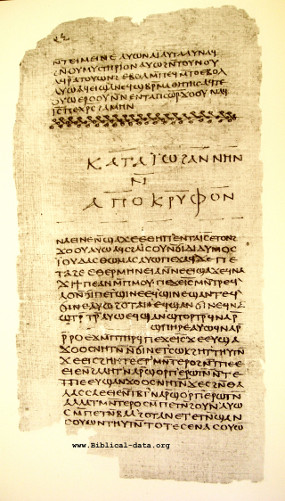
Didache CodexThe Didache represents the preserved oral tradition whereby mid-first-century house churches detailed the step-by-step transformation by which gentile converts were to be prepared for full active participation in their assemblies. As an oral tradition, the Didache encapsulated the lived practice by which non-Jews were initiated into the altered habits of perceiving, judging, and acting characteristic of one branch of the Jesus movement during the mid-first century.

-Aaron Milavec
from the Introduction, pg ix of his book
The Didache: Text, Translation, Analysis, and Commentary

“Since we have heard that some of our number to whom we gave no instruction have disturbed you with their words, unsettling your souls, it seemed good to us, having become of one mind, to select men to send to you with our beloved Barnabas and Paul, men who have risked their lives for the name of our Lord Jesus Christ. “Therefore we have sent Judas and Silas, who themselves will also report the same things by word of mouth. “For it seemed good to the Holy Spirit and to us to lay upon you no greater burden than these essentials: that you abstain from things sacrificed to idols and from blood and from things strangled and from fornication; if you keep yourselves free from such things, you will do well. Farewell.”

So when they were sent away, they went down to Antioch; and having gathered the congregation together, they delivered the letter. When they had read it, they rejoiced because of its encouragement.

Acts 15:24-31 (NASB)

I’ve often wondered about the instructions imparted to the non-Jewish disciples of the Master in the so-called “Jerusalem letter.” They’ve always seemed rather anemic to me. I mean, there certainly had to have been more to the training of new disciples who had no clue about the God of Israel, the Messiah, and the role of Gentile believers in a Jewish religious stream.

When I read that the Gentile response to the letter’s delivery in Antioch was that “they rejoiced because of its encouragement,” I ponder about what they found encouraging. Certainly the fact that the men and boys didn’t have to be circumcised would have been encouraging. Also, I imagine it was encouraging that they didn’t have to convert to Judaism and learn to perform the humongous list of instructions found in the Torah and accompanying commentary and halachah.

But a mere four essentials hardly seems an adequate substitute.

Of course, there is the mysterious Acts 15:21: “For Moses from ancient generations has in every city those who preach him, since he is read in the synagogues every Sabbath.” There is a minority opinion among some modern Gentile believers that it was the Council’s intention for the ancient Gentile believers to also be required to follow the Torah mitzvot in the manner of the Jews, in spite of Peter’s testimony that the Torah was “a yoke which neither our fathers nor we have been able to bear.”

The issue at hand during the Acts 15 legal hearing was how to integrate the Gentiles into the Jewish religious stream of “The Way.” The supposition brought forth (Acts 15:1) was that Gentiles must convert to Judaism (be circumcised and obligated to the full yoke of Torah) in order to be justified before God. The Council’s ruling, after much testimony and due deliberation over scripture, was that Gentiles did not have to convert. It would have been silly to say they didn’t have to be circumcised and convert to Judaism, but in all other ways, they still had to act, relative to Torah, exactly like the Jewish disciples.

But if that is true and if the four essentials of the Jerusalem letter are far too sparse to constitute a functional set of behavioral requirements, where do we find more? How does the Acts 15:21 statement fit in?

I have a working theory (and it’s just a theory) that the Didache is the answer or part of the answer. My working theory is that a set of oral traditions accompanied the Jerusalem letter and perhaps even developed over time, evolving into a formal halachah for the Gentiles.

I can’t prove any of this of course, but I hope to present a compelling suggestion.

In the process of writing this blog post, I consulted my previous article on this topic, including the notes I took of First Fruits of Zion (FFOZ) teacher and author Toby Janicki’s article “The Didache: An Introduction,” published in Messiah Journal issue 113.

Most scholars generally agree that the Didache was written either in the location of Egypt, Syria, or Israel sometime between the late first to early second century. Some speculate it may have been written as early as 50 CE. This would mean that the Didache is actually older than the canonical Gospels and was written during the generation after the Master’s death.

-Janicki, pg 44

There is some speculation that the Didache was composed by the Apostles themselves or those close to the Council. The further back in time we place its origin, the more authoritative becomes its teachings to the Gentiles. Aaron Milavec, who wrote the commentary for my copy of the Didache, believes its origin to be sometime in the mid-first century. This would allow for the material to be initially orally transmitted, and then soon thereafter, codified and documented for “discipling” new Gentile adherents to “the Way.”

Milavec's DidacheMilavec’s opinion is that the Didache material was a sort of training guide used by mentors to bring up novice Gentile disciples. Milavec’s book presents the Greek and English versions of the text side-by-side. I can’t read the Greek, so I have to trust that the English translation is reasonably accurate. This is my first go-round with the Didache, so all I’ve got are first impressions.

For the most part, I experienced the Didache text (it’s rather brief) as a compilation of teachings gleaned from the Gospels and the Torah. This is interesting if the Didache were composed prior to the Gospels, especially the Gospel of Matthew upon which some say the Didache was founded, because it would mean that the oral traditions passing along the Master’s teachings were incorporated into the early formal training of Gentile believers.

Actually, I can only imagine that both Jewish and Gentile disciples in the Diaspora would benefit from training in the Master’s teachings, but of course, Torah would be known by the Jews and long-term Gentile God-fearers, but be a mystery for the Gentiles just coming out of paganism.

I also found this:

1:2 [A] On the one hand, then, the way of life is this:
[1] first: you will love the God who made you;
[2] second: [you will love] your neighbor as yourself.
[B] On the other hand [the way of life is this]:
as many [things] as you might wish not to happen to you, likewise, do not do to another.

-Milavec, pg 3

This section of the Didache leverages what we know as the Golden Rule as spoken by Jesus, but also the teachings of Hillel, a Jewish sage who lived a generation before the Master (I recently reviewed this material). So we see that older Rabbinic lessons were included to accompany the teachings of the Yeshua.

2:2: You will not murder,
you will not commit adultery,
you will not corrupt boys,
you will not have illicit sex,
you will not steal,
you will not practice magic,
you will not make potions,
you will not murder offspring by means of abortion,
(and) you will not kill [him/her] having been born,
you will not desire the things of [your] neighbor.

-ibid, pg 5

While not exactly direct quotes, this section seems very much taken from the Torah and thus links back to the instruction we find in Acts 15:21. This supports the verse that says the Gentile disciples were to learn the Law of Moses in the synagogue as it applies to them. Here, we see such application.

I’m not sure how to interpret the instruction not to kill children by abortion, since no direct reference to abortion appears in the Bible, and I’m unaware of such a practice in Biblical times (but then, I’m no history major). This is one time I wish I could consult the Greek to see what word is being translated as “abortion.”

I also don’t have any idea what “not corrupt boys” refers to, though it does come right before the instruction against illicit sex.

So, at first blush, the Didache’s instructions to the newly minted Gentile disciples provides a liberal dose of Gospel teachings and Torah teachings, with a smattering of other early Rabbinic lessons.

This is pretty much what I expected and the Didache doesn’t disappoint.

The text goes along presenting additional information from those sources along with what seem like quotes or adaptations from the Proverbs. Here’s an example:

3:5 My child, do not become false,
since falsehood is the path leading to theft;
nor a lover of money,
nor a seeker of glory,
for, from all these, thefts are begotten.

-ibid, pg 9

I’m not going to do a “copy and paste” of large blocks of the Didache into this “meditation,” but I found a few additional sections revealing.

6:2 For, on the one hand, if you are able to bear
the whole yoke of the Lord, you will be perfect;
but if, on the other hand, you are not able,
that which you are able, do this.

-ibid, pg 19

King Priest TorahThe term “yoke” tends to be a reference to Torah in Biblical language. Since we know the Didache is a training manual for Gentile disciples of Yeshua, it seems as if the author is permitting any Gentile disciple to observe the entire body of Torah mitzvot if he or she is able, but if that person is not able, it is acceptable to do anything that they can observe.

I’m sure most other Christians would disagree with how I’m interpreting “yoke,” but to me, it certainly sounds like the mid-first century to mid-second century Gentile disciples in the Jewish Yeshua movement were permitted but not required to keep all or some portion of the Torah commandments, though if they were able to keep all of it, they would be “perfect.”

Just a thought.

7:2 and 7:3 address baptism and 7:2 specifies that flowing water should be used, recalling the mikvah, with a pattern of immersing the head three times, once for the Father, once for the Son, and once for the Spirit. There seems to be a number of options available. It is preferable to immerse in flowing water and preferable to immerse in cold water, but still water as well as warm water may be substituted if the former are unavailable. It seems mandatory though that the person to be immersed should fast one or two days prior to immersion.

9:1-9:5 mentions the eucharist which involves a cup of wine and broken loaf, and that only someone who has been baptized into the community of the Lord may drink and eat of it (there doesn’t seem to be a direct connection to Passover here).

Many of the blessings the Gentiles are instructed to recite bear great similarity to Jewish blessings for various occasions.

Blessing over wine from the Didache:

We give you thanks, our Father,
for the holy vine of your servant David
which you revealed to us through your servant Jesus.
To you [is] the glory forever.

The traditional modern Jewish blessing over wine:

Blessed are You, Lord our God, Ruler of the universe, who creates the fruit of the vine.

The Didache blessing over bread:

We give you thanks, our Father,
for the life and knowledge
which you revealed to us through your servant Jesus.
To you [is] the glory forever.

The traditional modern Jewish blessing over bread:

Blessed are You, Lord our God, Ruler of the universe, who brings forth bread from the earth.

I just want to point out that the Gentile disciples are being taught to pray to God (the Father) in the name of God’s “servant Jesus,” not to Jesus himself. Jesus never commanded his disciples to pray to him, only to the Father in his name, so that seems consistent with scripture, though not always with modern Christian practice.

Sections 10:1-7 seem to read like an early rendition of Grace After Meals and I can only believe that common Jewish blessings utilized at various points in a person’s day, life-cycle were used or adapted for the training of Gentile disciples, and thus included in the Didache.

This also interested me:

11:3 And concerning the apostle-prophets, in accordance with the decree of the good news, act thus…

This portion of the Didache instructs the Gentile disciples to expect apostles and/or prophets and describes the manner in which the disciples should treat such people. That means, apparently, that apostles still existed when the Didache was composed, which dates it in the mid to late first century, and that there were still actual prophets in the land.

The ProphetThe flip side to this teaching is that if the Didache was composed in the second century, or even later, then we have to accept the idea that apostles, however that term would have been defined given that the original apostles were all dead by then, and prophets, actual prophets of God, continued to exist, in spite of John MacArthur and Strange Fire. Of course, this is all speculation on my part, but fascinating nonetheless.

Speaking of MacArthur and the Holy Spirit:

11:7 [A] And every prophet speaking in Spirit
you should not put on trial and not judge;
for every sin will be forgiven
but this sin will not be forgiven.

-pg 29

The section goes on to describe true and false prophets and how not everyone who speaks in Spirit is a prophet, but these early instructions to new Gentile believers certainly tells them to expect prophets and even others who speak “in Spirit.” Again, depending on the timing of the authorship of the Didache, this has interesting implications for our world of faith today.

13:3 [A] So, every first fruits of the products of the wine vat and the threshing floor, both of cattle and sheep, [1] you will give the first fruits to the prophets; for they themselves are your high priests.
13:4 [2] (But) if you should not have a prophet, give [it] to the beggars.

-pg 33

The language seems to reference the Temple service and the sacrificial system, although the specifics require the “first fruits” of the Gentile disciples to either be given to prophets, if they are available, or beggars (the poor) if they are not. Again, this is very “Jewish” in language and concept, although I suppose Gentiles who were former idol worshipers were accustomed to making offerings in pagan temples.

Here’s a few more points I thought were important.

On page 17 of Milavec’s book, 5:1 and 5:2 lists “the Way of Death,” or that which is evil and “full of accursedness.” Among these “ways” are what you’d expect from Torah: murder, adultery, lust, illicit sexual acts, theft, and so on.

On page 19, 6:3 says the following:

(And) concerning eating, [1] bear that which you are able, [2] from the food, on the other hand, sacrificed to idols, very much keep away, for it is worship of dead gods.

The only definite instruction being given to new Gentile disciples about food is to avoid food sacrificed to idols. There is no direct commentary on whether or not the Gentile is commanded to “keep kosher,” though I don’t know what “bear that which you are able” is supposed to mean.

On page 21, 8:2 is a repetition of “the Lord’s Prayer,” (Matthew 6:9-13), and 8:3 states, “Three times within the day pray thus,” suggesting that Gentiles were also to observe the fixed times of prayer.

The last part of the actual Didache text speaks of the end times, but I won’t go into any of that because Milavec offers an interesting commentary on this topic, one that doesn’t entirely match up with the modern Christian view based on Revelation, but then, if Milavec is right, the Didache as an oral tradition (but not a written document) would have been used to train Gentile disciples years or even decades before John had his vision on the island of Patmos.

I can’t tell you what to believe. At this point, I’m not sure myself what to believe about the Didache. My Pastor said it was seriously considered for canonization, that is, being made part of our Bible as the inspired Word of God, but in the end, it didn’t make the cut. However, even my Pastor quotes from it, and my understanding is that the Didache is taken seriously as an early Christian text.
Talmud StudyIf it’s early enough, it could be considered the possible basis for the oral instructions that accompanied the Jerusalem letter, or if not, then a supplement that was developed by the apostles or those in authority to augment the original Acts 15 instructions.

If my personal theory is right (and it’s just a theory), we have in our grasp something tangible from the mid-first to mid-second century of the common era that tells us the first Gentile disciples had their own “Torah” as it were, that overlapped portions of the Jewish Torah but was in fact not identical; a set of separate behavioral expectations of the Gentile disciples of Jesus that only somewhat mirrored the Torah of Moses. This may be the bridge between the Acts 15 letter and the actual, lived experience of the earliest Gentile disciples of Jesus in the original Messianic Jewish religious stream.

We also see, as I noted above, that according to the Didache (if my little theory is correct), Gentile believers were permitted to take on board as much of the yoke of the Lord (Torah) as they could handle up to and including full observance, but Gentile Torah observance was not mandatory.

Certainly something to think about and discuss. I’ll write more when I get through Milavec’s commentaries.

Vayishlach: The Good Fight

wrestlingIn this week’s parsha, our father Yaakov, fresh from his successful escape from Lavan, prepares to encounter his brother and sworn enemy, Eisav. He sends malachim to deal with Eisav before he will actually meet with him face to face. The word malachim signifies two different meanings. One is that it means agents, messengers, human beings who were sent on a particular mission to do Yaakov’s bidding. The other meaning is that the world malachim signifies angels, supernatural messengers of God who were sent to Yaakov to help him in his fateful encounter with his brother.

Rashi cites both possible interpretations in his commentary. When Rashi does so, he is teaching us that both interpretations are correct at differing levels of understanding the verse involved.

-Rabbi Berel Wein
“Human Effort and Supernatural Help”
Commentary on Torah Portion Vayishlach
Torah.org

A plain reading of the text suggests (at least to me) that Jacob sent human beings as messengers to his brother Esau rather than supernatural angels. It makes the most sense given the context. However, there is another encounter Jacob has with the supernatural that bears scrutiny.

Jacob was left alone. And a man wrestled with him until the break of dawn. When he saw that he had not prevailed against him, he wrenched Jacob’s hip at its socket, so that the socket of his hip was strained as he wrestled with him. Then he said, “Let me go, for dawn is breaking.” But he answered, “I will not let you go, unless you bless me.” Said the other, “What is your name?” He replied, “Jacob.” Said he, “Your name shall no longer be Jacob, but Israel, for you have striven with beings divine and human, and have prevailed.” Jacob asked, “Pray tell me your name.” But he said, “You must not ask my name!” And he took leave of him there. So Jacob named the place Peniel, meaning, “I have seen a divine being face to face, yet my life has been preserved.” The sun rose upon him as he passed Penuel, limping on his hip. That is why the children of Israel to this day do not eat the thigh muscle that is on the socket of the hip, since Jacob’s hip socket was wrenched at the thigh muscle.

Genesis 32:25-33 (JPS Tanakh)

A man comes out of nowhere in the middle of the night, encounters Jacob and starts wrestling with him. Amazingly, both fighters have the strength and stamina to sustain their combat for many hours until dawn nears. The intruder then pleads with Jacob to release him because the sun is coming up, but rather than demanding who the person is and why he attacked him, Jacob asks his fellow combatant to bless him.

At least from this translation, we only learn that the “person” who attacked Jacob was supernatural when we arrive at verse 31:

So Jacob named the place Peniel, meaning, “I have seen a divine being face to face, yet my life has been preserved.”

It is commonly believed that Jacob wrestled with an angel of God, but some believe is was some form of incarnate God Himself, while others believe it may have been a “pre-incarnate Jesus.”

Who knows?

But from Rabbi Wein’s commentary, we can assume, at least on the surface, that the mysterious fellow could either have been human or an angel.

Who was Jacob wrestling with? If it was an angel, why couldn’t the angel defeat a mere moral? When the attacker couldn’t defeat Jacob, why did he injure Jacob’s hip? Why did the “angel” attack Jacob in the first place?

Our problem is that if Jacob is truly alone, who can be wrestling with him? One possible answer is — no one! Jacob is actually wrestling with himself. This would explain the ambiguity in the passage. However, by solving the textual problem (if indeed we are correct), we have raised an even greater problem: Why would a sane man wrestle with himself? A careful reading of the text may give us some insight.

The “man” is referred to in Hebrew as an ish. And we find another verse — a great deal less enigmatic — in which it is apparent that the ish is clearly Jacob.

-Rabbi Ari Kahn
“Vayishlach: The Struggle of Jacob”
from M’oray Ha’Aish: Advanced-level Commentaries on the Weekly Parasha
Aish.com

OK, you’re probably not buying that, but I think the interpretation has merit, even as a metaphor. However, this isn’t the only way to look at this encounter:

Who is this man with whom Jacob wrestled? According to the Sages, he is the “angel of Esau,” and their struggle, which “raised dust up to the Supernal Throne,” is the cosmic struggle between two nations and two worlds — the spirituality of Israel and the materiality of Edom (Rome). The night through which they wrestled is the long and dark galut (“exile”), in the course of which Jacob’s descendants suffer bodily harm and spiritual anguish, but emerge victorious.

-Rabbi Yanki Tauber
“Wrestling with Angels”
Chabad.org

shoahSo, in this interpretation, the guardian angel of Esau attacks Jacob but is unable to defeat him, presumably because of the blessings of God that rest upon Jacob but not Esau.

I suppose it makes more sense, especially when considering that Jacob realized he had been wrestling with a divine being. This operates as another metaphor and even on a prophetic level. The descendants of Jacob will be attacked by the descendants of Esau and although the Children of Israel, the Jewish people, will be injured, sometimes terribly, and carry the marks of their injury forward through history, they will ultimately prevail.

But let’s get back to the immediate situation Jacob was facing:

The messengers returned to Jacob, saying, “We came to your brother Esau; he himself is coming to meet you, and there are four hundred men with him.” Jacob was greatly frightened; in his anxiety, he divided the people with him, and the flocks and herds and camels, into two camps

Genesis 32:7-8 (JPS Tanakh)

Courage is resistance to fear, mastery of fear — not absence of fear.

-Mark Twain (Samuel Clemens)

Fictional heroes may face danger and death without fear, but real men and women are afraid all the time. Jacob had a lot of good reasons to be afraid. In fact, fear was one of his primary motivations for leaving his home in Canaan and seeking refuge, such as it was, in the home of his kinsman Laban.

For twenty years, Jacob labored under extremely difficult conditions, married, raised a family, went from being in poverty to becoming very wealthy. He, his family, his servants, and his livestock had all just survived the pursuit and threat of destruction represented by Laban, but now Jacob must face his oldest foe and his greatest adversary: his brother Esau.

Jacob's-Ladder1Jacob had done everything he could think of, everything humanly possible to appease Esau and to create a circumstance between them that wouldn’t immediately result in armed conflict when they finally met, but Jacob had a bigger enemy than Esau: this own fear and perhaps even guilt.

No matter which way you look at it, Jacob not only removed Esau’s birthright and blessing from him, on both occasions, he had done so by guile and trickery, even to the point of deceiving his own father Isaac. Such a thing for the grandson of the sage and tzaddik Abraham to do. One dream about angels at his exit from Canaan, and he’s gone.

What results from Jacob’s fight with the stranger in the dark?

  • Jacob is permanently disabled, walking with a limp for the rest of his days.
  • Jacob is blessed with the name “Israel” because he combatted with the divine and was victorious.
  • Jacob not only survived the encounter with Esau, but was welcomed by his brother back into Canaan.

And [Esau] said, “Let us start on our journey, and I will proceed at your pace.” But he said to him, “My lord knows that the children are frail and that the flocks and herds, which are nursing, are a care to me; if they are driven hard a single day, all the flocks will die. Let my lord go on ahead of his servant, while I travel slowly, at the pace of the cattle before me and at the pace of the children, until I come to my lord in Seir.”

Then Esau said, “Let me assign to you some of the men who are with me.” But he said, “Oh no, my lord is too kind to me!” So Esau started back that day on his way to Seir. But Jacob journeyed on to Succoth, and built a house for himself and made stalls for his cattle; that is why the place was called Succoth.

Genesis 33:12-17 (JPS Tanakh)

Alright, Jacob also didn’t trust his brother Esau as far as he could throw him, so he lied. Instead of following Esau at a slower pace, he detoured to Succoth, avoiding any future meeting with his brother.

All night long, Jacob struggles with his success. His spiritual self and his physical self collide as he tries to determine his true identity. But Jacob is unable to resolve this conflict.

In the resolution that is finally achieved, the physical realm is forced to yield. Laws, like that of the hip tendon, Gid HaNashe, will create spiritual boundaries within physical experience, making possible the elevation of the physical world to a spiritual plane.

-Rabbi Ari Kahn

Rabbi Kahn sees the struggle as the conflict between the physical and spiritual forces within Jacob. Would he join with his brother Esau and combine wealth, denying his spiritual destiny as the inheritor of Abraham and Isaac, or would he defeat his baser self, and become the true father of Israel?

Kahn says the outcome is obvious and reflected in Jacob’s refusal to accompany Esau and rather, to pursue a higher destiny.

Rabbi Tauber sees the victory a little bit differently:

It is a long and difficult struggle till dawn. But in the end we triumph over men and prevail over the divine as well. For this is the essence of Israel.

Rabbi Tauber sees Jacob defeating both the forces of evil that Esau’s angel represents and the divine itself, illustrating that it will always be Israel’s destiny to contend, even with God. This may sound like a bad thing, but it has merits.

A relationship with God always involves struggle. The worst thing a person of faith can do, even worse than becoming an apostate, is to take faith for granted and become apathetic.

I know your deeds, that you are neither cold nor hot; I wish that you were cold or hot. So because you are lukewarm, and neither hot nor cold, I will spit you out of My mouth. Because you say, “I am rich, and have become wealthy, and have need of nothing,” and you do not know that you are wretched and miserable and poor and blind and naked, I advise you to buy from Me gold refined by fire so that you may become rich, and white garments so that you may clothe yourself, and that the shame of your nakedness will not be revealed; and eye salve to anoint your eyes so that you may see.

Revelation 3:15-18 (NASB)

coastSometimes it takes a crisis to shake us out of apathy. Like the church at Laodicea, Jacob had become rich. He was in danger of taking God’s blessings for granted. The angel of Jacob delivered the same message as the angel to the church in Laodicea (although the message of the Master may have been delivered by a human messenger rather than an angelic being). Do not be lukewarm. It would be better if you were cold than lukewarm. Do not let your material wealth fool you. You are miserable, poor, blind, and naked. Only through God can you be rich with true riches.

So what was the ultimate achievement attained by Israel’s struggle with God?

God appeared again to Jacob on his arrival from Paddan-aram, and He blessed him. God said to him, “You whose name is Jacob, you shall be called Jacob no more, but Israel shall be your name.”

Thus He named him Israel.

And God said to him, “I am El Shaddai. Be fertile and increase; a nation, yea an assembly of nations, shall descend from you. Kings shall issue from your loins. The land that I assigned to Abraham and Isaac I assign to you; and to your offspring to come will I assign the land.”

Genesis 35:9-12 (JPS Tanakh)

It may seem disrespectful and even dangerous to struggle against or contend with God, but remember, in the example we have with Jacob, God started it. Jacob was alone in the dark. He was afraid. He was uncertain. He did everything humanly possible to deal with his fears and to protect his family, but he didn’t know what was going to happen.

God knew all of this and challenged Jacob. It doesn’t look like Jacob had much of a choice. He could either fight off his attacker or surrender. Jacob chose to fight. He couldn’t afford to be “lukewarm” in this situation. He fought back and he won, not because he literally defeated God, but he defeated the challenge God set before him, the one Jacob had to defeat in order to overcome his fears; in order to become Israel, father of a nation, patriarch of an empire.

poured_outMost of us aren’t going to be the father or mother of a nation, but that doesn’t mean we don’t have challenges we must overcome in order to advance God’s plan and to grow spiritually. We can take from Jacob’s example that our challenges aren’t always easy. We can also see that God doesn’t always step in and overwhelm our challenges for us and in fact, sometimes He is the challenge, and we must contend against Him.

Even when we don’t escape such struggles unscathed, in the end, if we persevere, the injuries are worth the blessing.

For I am already being poured out as a drink offering, and the time of my departure has come. I have fought the good fight, I have finished the course, I have kept the faith; in the future there is laid up for me the crown of righteousness, which the Lord, the righteous Judge, will award to me on that day; and not only to me, but also to all who have loved His appearing.

2 Timothy 4:6-8 (NASB)

Good Shabbos.

The Challies Chronicles: Conrad Mbewe and the End of the First Day

Conrad-MbeweConrab [sic] Mbewe is a man who wears many hats and who fulfills many different responsibilities, but above all else he is a preacher of God’s Word. MacArthur introduced him by explaining that he wished to have Mbewe at the event because the charismatic movement has done devastating damage in Africa and he wanted an insider’s perspective. Mbewe titled his message “The African Import of Charismatic Chaos.” Here are some brief notes.

Mbewe decided to provide a brief overview of the charismatic movement in Africa. It is a movement he has observed for over thirty years and one that is of great concern to him. This is not something he has learned about by reading books, but something he comes across literally every day. He warned that some of what he would say would be somewhat foreign to a Western mindset, but he felt it necessary to speak from his African background.

-Pastor Tim Challies
“Strange Fire Conference: Conrad Mbewe,” October 17, 2013
Challies.com

Note: This was written before my meeting with my Pastor last night. More on this as developments occur.

I’ve been trying to figure out the logic of why certain presenters were scheduled and why their presentations were ordered as they were. I’m sure it was purposeful, but I don’t know enough about MacArthur and how he conceives of things to understand what the first day of the three-day Strange Fire conference was supposed to communicate beyond the obvious message that the Charismatic movement is undesirable and even dangerous.

Conrad Mbewe was the last of the speakers for the first day of the conference and he illustrated something for me that I’ve heard before. I used to think that when missionaries were sent to “the foreign field,” they transmitted a more or less generic message about Christianity to the unsaved in the various places on our planet. Now I realize that there is a sort of struggle between denominations and movements in Christianity to possess the minds and hearts of the people in all these nations and regions of the Earth. According to Mbewe, the Pentecostals pretty much “own” most of Africa.

As an African, there is a whole world in his mind that this invariably floods into. The word “breakthrough” is really saying to the common African man that if you are struggling in your marriage or struggling to conceive or struggling to maintain a job (and so on), it is because between you and God there are other layers that need to be dealt with. One of those layers is that of angels and demons and the other is that of your ancestral spirits. Until those layers are broken through, you will not get what you want. This is what the charismatic movement has taken on when dressed in African attire. The language that has already been there for centuries in Africa is given a thin veneer of Bible verses. You can understand, then, that if men and women are running in throngs to the witch doctor, they will rush in throngs to these so-called churches because it boasts the same power they are looking for.

I suspect that throughout the history of the Church, missionaries have encountered circumstances where what they preached, rather than replacing local beliefs and customs, have been integrated into existing beliefs, so that a sort of fusion occurs, as described above. The Pentecostal presentation of the power of the Spirit has been fused with local beliefs of ancestral spirits and witch doctors (or witch doctor substitutes), at least as far as what I can tell from this summary.

He proposes, “What’s to stop someone like me from coming up with irrational ideas because I’ve been empowered to do so?” He has counseled many, many people who are caught in these scandals—sexual scandals about spiritual husbands and wives, where a messenger from God, a pastor, steps in to be sexual partner with someone because of the authority that they have from God. These people keep God’s Word closed.

charismatic-prayerIf these events are indeed taking place, then serious abuse is occurring. The question is, should all Charismatics everywhere carry the blame, or only the people in those specific locations who are authoring this confusion? We have Mbewe’s commentary on what he’s witnessed in his area of the world. This is MacArthur’s building a case against Pentecostalism one brick at a time.

In no way do I defend the heinous practices Mbewe describes, and I can certainly support returning to scripture as a guide for right living. It very much seems, based on Mbewe’s report, that what many African people believe is “Christianity,” is a highly skewed and twisted version that has been heavily abused, to the detriment of many people. Unfortunately, that’s also a description of most of the history of Christianity, pre and post-reformation.

Sanctify them in the truth; Your word is truth.

John 17:17 (NASB)

He went to John 17:17 and said the charismatic chaos we see would never have been the case if this verse had been taken seriously.

As much as MacArthur and his peers, including Mbewe, tout the sufficiency and even primacy of scripture, I was a little surprised to see that Mbewe used only a single verse from John to support his presentation. It’s also true that all incarnations of Christianity (and most other religions) lay exclusive claim to “truth,” so isolating John 17:17 and serving it up can actually serve both sides of this debate.

His final remarks expresed [sic] his relief to see the Reformed movement growing on the African continent, though it is still in its infancy there. He exhorted us all: We have got to pray and get back to the Bible! Today we are not saying enough that this book is sufficient. It is sufficient!

This isn’t just a conference designed to expose the flaws and dangers MacArthur and others believe the Charismatic movement represents, but one that markets and promotes the Reformed movement as a replacement. The simple message I’m getting from the conference so far is that, “The Charismatic movement is wrong and I’m/We’re (MacArthur/Reformed movement) right.”

Challies wrote a separate summary of the first day of the conference which outlines the presenters and their messages, as well as the overarching message of that day. How Challies ended his summary told me how it was all impacting him, which showed he that he wasn’t entirely expecting to agree with everything being warmed up over this strange fire:

Until the day of the event, and really until the end of MacArthur’s opening address, I was unsure of whether or not I would give a lot of attention to the event. But I am glad I chose to blog about it as it really does seem to be making a big splash in the Evangelical world and especially among the Reformed crowd that tends to read this site. Like you, I am very interested to know what will come today and tomorrow.

What remains to be seen, and what may take quite a long time to see, is whether this event will call Christians to work to find greater agreement on the issue of the miraculous gifts, or whether it will polarize the camps even further. It is fast becoming my prayer that one way or another the Lord will see fit to use this event to bring greater maturity and greater unity to his church.

I’m reminded of the political polarization that has taken place in our nation, especially during the current Presidential administration. I’m also reminded of a prize-fight. I remember being very young and visiting my grandfather at his house in Omaha. I remember him watching professional boxing matches on a small, black and white television while smoking his pipe. I was more focused on visiting grandpa and my aunts and uncle than really watching the boxing, but it still left an impression.

boxing-matchYou have two sides battling it out, although the battle is actually happening in the blogosphere (it’s not happening in the conference because only one “boxer” is doing the swinging).

But is seeking truth and the Word and Will of God supposed to be combat? I suppose “spiritual warfare” sounds pretty dramatic and even heroic, but I don’t think MacArthur has that terminology in mind. If this were a legal case in court, then both parties would have a chance to present their evidence before a judge. There’s no way to truly burn away the dross and produce a pure product without all of the elements being present. A legal court has been called a crucible of fact. MacArthur is attempting to construct a crucible of truth.

But all of his critics, the “defendants,” are stuck outside the courthouse, looking in through the windows, with the Internet as their only means of response. Do the Charismatics ever get their “day in court?”

Where Romans and Galatians Meet: Analysis by Mark Nanos

Mark NanosBut when Cephas came to Antioch, I opposed him to his face, because he stood condemned. For prior to the coming of certain men from James, he used to eat with the Gentiles; but when they came, he began to withdraw and hold himself aloof, fearing the party of the circumcision. The rest of the Jews joined him in hypocrisy, with the result that even Barnabas was carried away by their hypocrisy. But when I saw that they were not straightforward about the truth of the gospel, I said to Cephas in the presence of all, “If you, being a Jew, live like the Gentiles and not like the Jews, how is it that you compel the Gentiles to live like Jews?”

Galatians 2:11-14 (NASB)

Table-fellowship, particularly in the context of gentile participation, was a significant concern among Diaspora Jews. The many laws and customs that made it necessary generally to separate from association in gentile meals, or from the eating of many gentile foods whether in the company of gentiles or not, made table-fellowship a notable issue. Jews often avoided meat and wine, for it was necessarily tainted by idolatry in Diaspora cities, unless special provisions had been made. However, Jews did eat with gentiles, given proper circumstances. And in the context of “righteous gentiles” attending synagogue this matter became a regular necessity.

Gentiles attending synagogue and participating in the lifestyle of the Jewish community, or visiting Jewish homes, were expected to adopt minimal Jewish practices. This behavior demonstrated respect not only for Jewish sensitivities, but in the mind of the Jews at least, it represented respect for the righteousness of God that would be expected to accompany the faith of the “righteous gentile” — for God is holy.

-Mark D. Nanos
“Chapter 2: The Historical Backdrop and Implied Audience,” pg 56
The Mystery of Romans: The Jewish Context of Paul’s Letters

No, I haven’t stopped reading this book, but the demands on my discretionary time plus the dense commentary in the Nanos book have slowed me down considerably. I just finished Chapter 2 (as I write this) but decided to take a detour into “Summary and Appendix 1: Peter’s Hypocrisy (Gal. 2:11-21) in light of Paul’s Anxiety (Rom. 7).” Given my lengthy and sometimes frustrating review of the Book of Galatians with my Pastor, I felt it necessary to get in some additional reading beyond Lancaster’s The Holy Epistle to the Galatians: Sermons on a Messianic Jewish Approach (although it seems my conversations on Galatians have reached a premature end).

I must admit, I too have had a difficult time fitting “Peter’s hypocrisy” and Paul’s criticism into my overall understanding of Paul’s relationship with the Torah as a Jew and an Apostle of Messiah. In a little over thirty pages though, Nanos managed to clear things up for me. It never occurred to me to look at that passage from the point of view Nanos presents.

In the first part of Appendix 1, Nanos reviews the traditional interpretation of Galatians 2:11-21, that Peter had been living like a Gentile, that is, not observing a Torah or Jewish lifestyle and eating all manner of non-kosher food at the same table as the Gentile disciples in Antioch. Then Torah observant Jews from James came to visit, and as a result of peer pressure, Peter separated himself from the Gentiles and resumed a Torah lifestyle, inducing others including Barnabas to do likewise. Paul calls Peter out for his hypocrisy, that he could live a Torah-free life with the Gentiles one minute, and then, weakening to pressure applied by more traditional Jews, back off from his “freedom” from Torah and rejoin the “circumcision party.”

But Paul says something else in verse 14:

…how is it that you compel the Gentiles to live like Jews?

The Mystery of RomansWe tend to miss that part of the verse but it may hold the key to understanding everything Paul is saying about Peter.

But first, lets take a look at how Nanos describes a mixed Jewish/Gentile synagogue in the city of Rome:

That is, the early Roman Christian communities were functioning as subgroups within the larger synagogue communities at the time of Paul’s letter, and Paul hoped that they would hear (shema) his epideictic message in a manner that would enhance their adherence to righteousness and the worship of the One God of Israel as the One God of the world even before his arrival. They would then be found fulfilling the eschatological expectation of Israel: gentiles declaring the Shema in the midst of the congregation of Israel to the glory of God, the One God of all.

-Nanos, “Summary and Appendix 1: Peter’s Hypocrisy (Gal. 2:11-21) in light of Paul’s Anxiety (Rom. 7),” pg 338

Nanos paints a portrait of Jews and Gentiles worshiping within a subset of larger Judaism and the larger Jewish synagogue community in Rome, with Jewish believers continuing to live Jewish lifestyles, including Torah observance, and Gentile believers living in respect of the Torah lifestyle of their Jewish mentors, and living within the behavioral constructs of the Noahide laws (Genesis 9) and the Apostolic Decrees (Acts 15). They enjoyed table fellowship with the Gentiles either consuming food totally acceptable to the Jewish believers or with the Jews restricting their diet to vegetables and water while sharing a table with gentiles.

So what’s Peter’s problem or for that matter, Paul’s? In the context of Galatians 2 not only does Paul say that Peter is living like a Gentile, but it is implied that Paul is too. Did both of these Jewish men apostate from Judaism and convert to Gentile Christianity? Like much of Christian doctrine teaches, did Christ turn Jewish believers into Gentiles?

The argument of the Church is that the disagreement is about food, that is, Peter was eating “trief” like a Gentile, having abandoned a kosher diet and presumably everything else about the Law. How like the misunderstandings most Christians have about Acts 10 and Peter’s vision. Was that about food, too?

I most certainly understand now that God is not one to show partiality, but in every nation the man who fears Him and does what is right is welcome to Him.

Acts 10:34 (NASB)

peters-vision-doug-jaquesPeter’s vision is recorded by Luke in verses 9-16 and verse 17 testifies that Peter did not know what the vision meant. We see that Peter finally figured it out by verse 34. The vision wasn’t about food, it was about equality. God was telling Peter that the Gentiles had equal access to justification before God through faith, just as the Jews have. He even testifies of that equality in a legal hearing in Jerusalem some time later (See Paul on Trial by John W. Mauck for more detailed information about the nature of the legal hearing in Acts 15):

And God, who knows the heart, testified to them giving them the Holy Spirit, just as He also did to us; and He made no distinction between us and them, cleansing their hearts by faith.

Acts 15:8-9 (NASB)

On pages 342-3 of his appendix, Nanos says this about the Church and Galatians 2:

The traditional assumption is of course that Paul opposed Peter in Antioch because of Peter’s change of behavior with respect to food.

But just as food wasn’t the issue in Acts 10, neither is it the issue in Galatians 2 according to Nanos.

Nanos goes on to say that if the traditional Christian interpretation of these verses is correct, then Paul had to have been saying there are no Jews in Christ, because to set aside the Law and live like Gentiles would make the Jewish believers no longer Jews. There would be only Gentiles (born Gentiles and formerly Jewish Gentiles) in Christ.

This contradicts the Bible on so many different levels it makes my head spin (although even an apostate Jew is still Jewish…you can’t become “unJewish”). You’d have to completely ignore all of the Messianic prophesies in the Tanakh (Old Testament) to make that interpretation work.

As already mentioned, the traditional interpretation of Paul’s rebuke of Peter turns on the issue of food. Although the balance of the letter is read with respect to the issue of justification by faith in Christ, and the explicit use of justification language in Galatians is concentrated around this incident, yet the traditional interpretation obscures the focus on justification in verse 14. I suggest that the language of Paul’s rebuke centers on the same justification language as the surrounding context, namely the position of one justified, that is, living “in Christ” by faith, whether “Jews by nature” (“even we” of 2:16) or “gentile sinners,” as equals. It is thus Peter’s withdrawal, not food, that is at issue in Antioch; what was eaten or how it was eaten was not the reason for Peter’s withdrawal. The issue entirely concerned those with whom he had been eating and then withdrawn; his exclusion of gentiles was because they were gentiles, not because they ate offensive food or in offensive ways.

-Nanos, pp 347-8

Apostle-Paul-PreachesGalatians 3:28 famously declares that there are no Greeks or Jews, no men or women, no slaves or freemen, but all of them are one in Christ. But just as women don’t have to turn into men to become saved in Messiah, neither do Gentiles have to turn into Jews or Jews turn into Gentiles to become disciples of Messiah. The “oneness” is as equal co-participants in the community with equal access to justification and the blessings of God.

What Peter was doing was indeed responding to peer pressure and as a result withdrawing from close association from the Gentile disciples, but it had nothing to do with Peter’s eating habits or Jewish vs. Gentile lifestyle. His hypocrisy had to do with accepting Gentiles as co-participants previously, and then treating them like second-class citizens by withdrawing from them when Jews from James showed up.

The issue of Galatians 2:11-21 was the same issue as the rest of the book of Galatians: Gentiles do not have to become circumcised and convert to Judaism, taking on board the full yoke of Torah in order to be justified before God and equal co-participants in the community of faith. Look at verse 14 again:

…how is it that you compel the Gentiles to live like Jews?

Peter was putting up the dividing wall that Paul was trying so hard to break down by saying Jews had a superior position in Christ and in justification and that only by compelling the Gentile disciples to live like Jews (convert to Judaism) would they be saved, undoing all of the blessings of Christ upon the world.

No wonder Paul was furious. Peter just slapped him and all of the Gentile disciples in the face by his withdrawal and worse, he compelled other faithful Jewish disciples, including Barnabas, to do the same.

Nanos wrote this appendix because of the apparent conflict, especially in light of his interpretation of Romans, between Romans 7 and Galatians 2. I’m only summarizing what he has to say. To get all of the details, you’ll need to read the Nanos book.

In Romans, Paul is encouraging Torah observance for the Jewish believers and respectfulness for the Torah and for Jewish observance from the Gentiles. However, much of Galatians, including Galatians 2, seems to contradict this. Nanos wrote this summary and appendix to set the record straight, or at least to give his readers something to think about.

Hopefully, this has given some of my readers something to think about as well.

God’s Shadow

love-in-lightsGod is your shadow at your right hand.

Psalms 121:5

The Baal Shem Tov taught that God acts toward individuals accordingly as they act toward other people. Thus, if people are willing to forgive those who have offended them, God will similarly overlook their misdeeds. If a person is very judgmental and reacts with anger to any offense, God will be equally strict. The meaning of, God is your shadow, is that a person’s shadow mimics his or her every action.

At a therapy session for family members of recovering alcoholics, one woman told the group that she had experienced frustration from many years of infertility and tremendous joy when she finally conceived. Her many expectations were shattered, however, when the child was born with Down’s syndrome.

“I came to love that child dearly,” she said, “but the greatest thing that child has done for me is to make me realize that if I can love him so in spite of his imperfections, then God can love me in spite of my many imperfections.”

If we wish to know how God will relate to us, the answer is simple: exactly in the same way we relate to others. If we demand perfection from others, He will demand it of us. If we can love others even though they do not measure up to our standards and expectations, then He will love us in spite of our shortcomings.

Today I shall…

…try to relate to people in the same manner I would wish God to relate to me.

-Rabbi Abraham J. Twerski
“Growing Each Day, Kislev 3”
Aish.com

I just reviewed the First Fruits of Zion television program episode The Golden Rule, which illustrates that principle of “do unto others” from a first century Jewish perspective.

I’ve also been reviewing a series of blog posts written by Pastor Tim Challies recording his impressions of John MacArthur’s Strange Fire conference, which is MacArthur’s commentary and warning about Pentecostalism and the Charismatic movement.

In reading the concluding summary (yes, I read ahead), it wasn’t the information or the scriptures presented by MacArthur and company that bothered me. I didn’t feel the real argument was about whether Pentecostalism was better or Reformed theology was better. For me, the issue was whether or not God would have handled the situation the same way MacArthur did.

Who knows, maybe He would have (and you may also believe that MacArthur is God’s tool to do just that).

Then I read messages like the one I quoted from Rabbi Twerski. I guess I’m just a soft and “mushy” inspirational Christian as opposed to one who sees God as perpetually wielding a club and who is ready to bludgeon us the minute we get out of line.

God knows we’re imperfect. God knows we’re messed up. God knows that, all things being equal, we’d mess up a free lunch…which is what most of us have done with the blessings and gifts He’s provided us.

“I came to love that child dearly,” she said, “but the greatest thing that child has done for me is to make me realize that if I can love him so in spite of his imperfections, then God can love me in spite of my many imperfections.”

I know the hardcore “justice” fans on the blogosphere will say that’s no excuse for not standing up to error and proceeding forward with the sword of truth to smite everyone who has drifted from the “true” path…uh, but doing it in “love,” of course.

If all you are as a person of faith is someone who has to fix the mistakes or others, the errors in theology and doctrine (or at least those things you perceive as errors), then you’re basically a mechanic who is always using a wrench and a hammer to hunt down that funny noise the car’s engine makes periodically.

Or, like the woman Rabbi Twerski talks about, we can be like a mother of a child who will always be imperfect, but not beyond improving. We don’t beat such a child, we shouldn’t beat any child, just because they’re imperfect. We influence and promote change by loving, not condemning.

Before we relate to any other human being regardless of the experience, if we could imagine how we would want God to relate to us under similar circumstances, maybe we’d be better people of faith. If we want God’s love and forgiveness, we have to be loving and forgiving. If we are harsh and judgmental, even if we’re being technically and scripturally correct, how will God judge us? How will God treat us?

Forgive us as we forgive others.

Matthew 6:12 (God’s Word Translation)

By the standard we use to treat others…that is the standard God will use on us.

FFOZ TV Review: The Golden Rule

ffoz_tv19_mainEpisode 19: Jesus instructs us “Do unto others as you would have them do unto you.” This is the Golden Rule. But why does he add at the end “For this is the law and prophets”? Episode nineteen will explore the words of other rabbis who also distilled down the commandments in a similar way to Jesus. The Golden Rule is the practical application of the Leviticus commandment “You shall love your neighbor as yourself” and thus is the baseline of kingdom ethics and a prophetic picture of the peace of the Messianic Era.

-from the Introduction to FFOZ TV: The Promise of What is to Come
Episode 19: The Golden Rule (click this link to watch video, not the image above)

The Lesson: The Mystery of the Golden Rule

I didn’t think I’d get much out of this episode, so I was surprised when the material covered by First Fruits of Zion (FFOZ) teachers Toby Janicki and Aaron Eby folded into several blog posts I’ve written recently, all touching on how we treat our fellow human beings.

The “Golden Rule” is often rendered as “Do unto others as you would have them do unto you.” Here’s the Biblical source:

So then, whatever you want sons of men to do to you, do the same to them, for this is the Torah and the Prophets.

Matthew 7:12 (DHE Gospels)

Here’s a more familiar version of the same text:

In everything, therefore, treat people the same way you want them to treat you, for this is the Law and the Prophets.

Matthew 7:12 (NASB)

I guess I’m always a little surprised when I hear how some Christians understand certain parts of the Bible. It would never occur to me to think that Jesus was supposed to be replacing the Torah and the Prophets, that is, the Old Testament, with a new, “one size fits all” law that is simple, easy to understand, and (in theory) easy to accomplish. But apparently, that’s what a lot of Christians have been taught.

They’ve also been taught that Jesus invented “The Golden Rule” and that it is a wholly New Testament concept.

Except, that’s not true.

Toby pulls a story from Talmud commonly referred to as Hillel, Shammai, and the Three Converts. I won’t render the entire tale here, but the core statement, when the Rabbinic Sage Hillel is confronted with a demand by a would-be convert to teach him the Torah while the man stood on one foot (and no one can keep their balance on one foot for very long), is the response, “What you dislike, do not do to your friend. That is the basis of the Torah. The rest is commentary; go and learn!”

ffoz_tv19_tobyThis statement is a variation of what Jesus said to his listeners in Matthew 7:12 and communicates the same thought. But the Rabbinic sages Hillel and Shammai lived and taught a full generation before Jesus began his ministry, so Jesus couldn’t have invented this teaching. Further, both Jesus and Hillel say that “the Golden Rule” is the basis of the Torah and the Prophets, which is often misinterpreted by Christians to mean that this rule replaces the Torah.

We’ll get to that in a minute, but Toby also tells his audience that Hillel didn’t invent the Golden Rule either:

…you shall love your fellow as yourself — I am Hashem.

Leviticus 19:18 (Stone Edition Chumash)

Both Hillel and Jesus are drawing directly from a commandment in the Torah, and this is the first clue in solving our mystery:

Clue 1: The Golden Rule is a paraphrase of Leviticus 19:18.

At this point, the scene shifts to Aaron in Israel and he reads a related passage from scripture to us:

A certain sage among them asked him a question to test him, saying “Rabbi, which is the greatest mitzvah in the Torah?” Yeshua replied to him, “Love Hashem your God with all your heart, with all of your soul, and with all of your knowledge.” This is the greatest and first mitzvah. But the second is similar to it: “Love your fellow as yourself.” The entire Torah and the Prophets hang on these two mitzvot.

Matthew 22:35-40 (DHE Gospels)

The first commandment, Aaron tells the audience, is taken from Deuteronomy 6:5 and is part of the Shema, the most holy prayer in Judaism, which observant Jews recite twice daily. The second, as noted before, is from Leviticus 19:18

Aaron introduces a concept called “equal decrees,” which is a Jewish interpretative method used in Jesus’s day and one that Jesus was using in the above-quoted scripture. This method says that if two sections of scripture use the same and unusual words, which in this case are “And you shall love” or “ve’ahavta” in Hebrew, then they are considered related and equal to each other. Jesus is saying that there’s a relationship between Deuteronomy 6:5 and Leviticus 19:18, that they are linked and that they are equal in some manner.

Aaron also drew out that all of the Torah commandments and teachings of the Prophets hang on these two verses. In other words, all of the Torah commandments are dependent upon loving God with all of your resources and loving your fellow as yourself. Instead of replacing the Torah and the Prophets with the Golden Rule, Jesus was upholding and affirming the Torah and the Prophets, just as Hillel was (and who would ever accuse the great sage Hillel of trying to replace the Torah with a simple rule commanding kindness to others?).

ffoz_tv19_aaronIt occurred to me as I listened to Aaron, that anyone who claimed to be “Torah observant” but who didn’t treat others the same way as they would want to be treated, could not actually say to be obeying the Torah of Moses, since all of the commands in Torah are utterly dependent upon loving God and loving others.

Of course, we have to consider the question, “who is my neighbor?”

But we’ll get to that in a minute.

Returning to Toby in the studio, we receive the next clue:

Clue 2: The Golden Rule summarizes the commandments of the Torah.

Now we’ll begin to address who is our neighbor or our fellow.

Then a certain sage arose to test him and said, “Teacher, what should I do to take possession of eternal life?” He said to him, “What is written in the Torah? How do you read it?” He answered and said, “Love Hashem your God with all of your heart, with all of your soul, and with all of your strength, and with all of your knowledge — and your fellow as yourself.” He said to him, “You have answered well. Do this and live.”

He desired to justify himself so he said to Yeshua, “Who is my fellow?”

Luke 10:25-29 (DHE Gospels)

Here, Luke reverses who speaks the two greatest commandments, having the sage who is testing Jesus state them. Jesus says something interesting and something I think should make Christians a little nervous. He says to the sage that if he loves God with all of his resources and his fellow as himself, if he observes these Torah mitzvot, he will live, that is, he will gain eternal life. In “Christianese,” Jesus is telling him that he will be saved if he observes the two greatest mitzvot.

This is very revealing because Jesus didn’t say “believe in me, in Jesus” or even “believe in God” but rather, you will gain salvation if you love God with everything you’ve got and if you love your fellow as yourself.

But what about this neighbor/fellow stuff?

In Luke 10:30-37, Jesus responds to the sage’s query by relating what we know as “the Parable of the Good Samaritan.” In other words, Jesus defines a neighbor not just as one’s fellow Jew, but even as someone who you don’t like very well, someone who isn’t even Jewish.

Which of these three do you think proved to be a neighbor to the man who fell into the robbers’ hands?” And he said, “The one who showed mercy toward him.” Then Jesus said to him, “Go and do the same.”

Luke 10:36-37 (NASB)

Ah, mercy. I’ve had a lot to say on mercy lately. Mainly because of a few people in the blogosphere who lead with their sense of “justice” while dumping mercy into the gutter.

sad-childJesus is saying that the second of the two greatest commandments, a mitzvah upon which all of the other Torah mitzvot depend, is loving any other human being, showing that person the exact same compassion that we ourselves would want to be shown. Since the second commandment is considered equal to the first, one cannot love God if that person does not show mercy to his fellow human being, any fellow human being. It doesn’t matter if that’s a fellow Jew or not (assuming you’re Jewish) or a fellow believer or not (assuming that you’re a believer). The Golden Rule, the second of the two greatest commandments, must apply to everyone you encounter, regardless of who they are. Otherwise, your love of and faith in God, as well as your much vaunted observance of Torah, means absolutely nothing.

This is also the third and final clue:

Clue 3: The Golden Rule applies universally.

Toby says that the Golden Rule is also a foretaste of the Messianic Era, an age of universal love and peace, when everyone will treat each other with compassion, kindness, and mercy. These are the ethical principles of the Messianic Age, and we can apprehend some of that age now if we just embrace the Golden Rule and live it out.

What Did I Learn?

I surprised myself in that I have been urging my own small audience on my blog to observe the Golden Rule without even realizing it. In spite of how I’m sometimes criticized for leaning a bit more toward mercy than justice in my messages, according to this FFOZ TV teaching, I seem to be on the right track. But what does that say for those out there in the Church and the Hebrew Roots movements, and all their variations, who lean more toward justice, a lot more, and barely give mercy a passing nod?

According to Jesus, both love of God and mercy toward your neighbor, who can be and in fact is everybody, is required in order to acquire eternal life, a place in the world to come, otherwise known as salvation. This is the viewpoint of the Bible that conflicts with the standard Christian version, which says all you have to do is believe in order to be saved. No behavior is required.

According to Ismar Schorsch in his book Canon Without Closure: Torah Commentaries, in one commentary on Torah Portion Vayeitze (“No Aversion to Wealth,” pg 108):

The Torah is indifferent to the nature of the afterlife, offering but slight comfort to the individual victim of oppression. What it does unflinchingly is to rail against those who pervert the principles and practices that enhance human life.

I get a very “Old Testament” feel from the teachings of Messiah as presented in this episode of FFOZ TV, The Golden Rule. Jesus is saying that our relationship with God, the true meaning of our faith and trust, isn’t what we think, and it’s not a warm and fuzzy feeling. Rather, it’s what we do. The nature and character of our love of God is directly reflected in how we treat other human beings, not just people who are like us, but also those who are unlike us, even those who are opposed to us.

For instance, how a believer, whether he thinks of himself as “Christian,” “Hebrew Roots follower,” or “Messianic,” speaks of and treats someone he considers an apostate, tells us more about that believer than it ever will tell us about the apostate.

No matter how much you tell yourself that you are “right” because you are quoting scripture, stating facts, stating truth, and upholding justice, if you also do not have the same mercy that the Samaritan had for the man who had been victimized by robbers, you have nothing at all from God.

A review and a cautionary tale from today’s “morning meditation.”