Category Archives: Uncategorized

Larry Hurtado on “A Muslim Reads Galatians”

paul-editedIn the course of the presentation, he drew contrasts between the more negative and even caustic references to “the circumcision party”, “Judaizers” and the Torah in Galatians (and also Philippians), and the more positive references to “Israel” and the Jewish people in Romans (esp. chaps. 9-11). But, of course, as I pointed out in the ensuing discussion, in Galatians (and Philippians too) Paul seems to be critical of fellow Jewish Christians, not because they were Jews, but because they were apparently seeking to impose Torah-observance (including male-circumcision) on Paul’s (former pagan) converts as an additional requirement for full recognition as co-religionists with them. It was this “Judaizing” stance, i.e., the view that baptized pagans had to become Jewish, that Paul opposed, and his opponents (I repeat) were Jewish believers in Jesus. So, because their stance seemed to Paul to call into question the sufficiency of Jesus, and because it also represented to him an interference in his gentile-mission (the terms of which he believed he had received directly from God), he went at the matter with full force (and in places some serious vituperation).

But in Romans (esp. 9-11), his subject is the Jewish people and their future in God’s redemptive plan, an altogether different subject.

-Larry Hurtado
Scholar of the New Testament and Christian Origins
“Paul, ‘Judaizers’ and Jews” (February 13, 2013)
from Larry Hurtado’s Blog

I don’t know what I can add to what Dr. Hurtado wrote on his blog yesterday (today, as I write this). I wanted to share it because it confirms everything I believe about what Paul was trying to say to us, especially in Romans and Galatians. Long time readers of my blog know that I am a staunch critic of traditional supersessionism in the church (also called “replacement theology,” “completion theology,” and “covenant theology”), and believe that the church did not replace Israel in God’s covenant promises, but rather that Israel and the Jewish people continue to have a vital role in God’s plan for humanity, both in this world and the world to come.

I also believe that God never intended the “grafted in” Gentile Christians to ever take on a Jewish identity by converting to Judaism (or to “Israel” if you prefer) en masse, and thus being compelled to perform the full list of Torah mitzvot in a Jewish manner as God requires of His people Israel.

PrayingDr. Hurtado, in the above-mentioned blog post, was describing a presentation he attended recently entitled, “A Muslim Reads Galatians,” given by Dr. Shabbir Akhtar (read Dr. Hurtado’s blog for the details). I suppose I should thank Dr. Akhtar in addition to Dr. Hurtado for providing a short and concise description of Paul’s views on the distinctions between Jewish and Gentile believers relative to conversion, Judaism as a religious practice, and Torah observance. Traditionally, Christians have believed that Paul abandoned Torah observance and encouraged both Jews and believing Gentiles (not that believing Gentiles had a history of Torah observance prior to coming to faith in Jesus) to abandon Torah as well. Hebrew Roots Christians (at least in some variants of the tradition) believe the opposite, that Paul continued to observe Torah, and encouraged both Jews and Gentile believers to observe the full yoke of Torah, and that all Christians today are obligated to Torah observance.

Dr. Hurtado ends his brief blog post with this statement:

Paul’s only critique of the Torah (Jewish Law) was when some fellow Jewish believers tried to impose it as an additional requirment (sic) for salvation upon his pagan converts. He had no problem with fellow Jews observing Torah, Jewish Christians included, so long as they didn’t try to impose full Torah-observance upon baptized pagans. He certainly seems to have insisted that Jews as well as pagans must recognize Jesus as God’s Son/Messiah, and held that Jewish failure to do so was a kind of unbelief and “hardening”. But he also believed that God would ultimately deliver fellow Jews from this stance (Romans 11:25-32), showing “mercy” to all, both pagans and Jews.

Wow! Hurtado, commenting on Akhtar, states that “he (Paul) had no problem with fellow Jews observing Torah, Jewish Christians included, so long as they didn’t try to impose full Torah-observance upon baptized pagans.” That’s exactly what I’ve been saying for a while now. That’s what much of Messianic Judaism (especially the articles and books published by First Fruits of Zion [FFOZ]) have been saying for years.

HeavenBoth Hurtado and Akhtar agree that Paul’s letter to the Romans (esp. Chapters 9-11) addresses God’s redemptive plan and the future of the Jewish people, which is not the same subject as Paul’s objections to “Judaizers” attempting to induce formerly pagan Gentiles to convert to Judaism and be bound to the full yoke of Torah as a condition of salvation. Paul held out a bright hope for Israel’s future redemption for the “fullness” of “all Israel.” We should grasp onto that hope as well.

I can’t think of a better way to start my day, especially after the last few days on the blogosphere, than to read this message of hope and encouragement for both Jewish and Gentile believers, including our roles and identities in God’s plan for the present and future, written in a blog post by this eminent New Testament scholar.

Kudos Dr. Hurtado and thank you.

“Try not to become a man of success but rather to become a man of value.”

-Albert Einstein

Afraid of Church

leaving-the-churchNot a word is said in the “olive tree” passage (see Romans 11:11-24) or anywhere else in Scripture about splitting the promises into earthly ones for the Jews and heavenly ones for the Church. However, God has made two kinds of promises. In regard to the promises which relate to individual salvation, there is neither Jew nor Gentile (Galatians 3:28), no distinction between them (Romans 10:12), no dividing wall of hostility (Ephesians 2:14-19). On the other hand, there remain promises to national Israel, the Jewish people, in which Gentile nations corporately and Gentile believers individually have no direct share – although it is worth noting that there are also promises to certain Gentile nations…

-David H. Stern, Ph.D
Restoring the Jewishness of the Gospel: A Message for Christians
Chapter 2: “Restoring the Jewishness of the Gospel,” pg 25.

The only reason I’m reading this book is because one of the Associate Pastors at my church asked me to read it and evaluate it for him. He’s obviously read it a number of times himself, because there is evidence of a great deal of note taking and underlining in its pages, so he must know its contents well. And yet, this charming, older gentleman from Oklahoma asked me if I’d read Stern’s small book and give him my opinion on how we can restore the Jewishness of the Gospel. Of course, I told him I’d be glad to.

But I was a little worried. My first introduction to Dr. David Stern was through his best known work, The Complete Jewish Bible and it was presented to me as a “real” Jewish Bible (New Testament, actually) within a Hebrew Roots (advertising itself as Messianic Judaism) congregation. I didn’t know any better and so I was thoroughly enthralled with what I read. Real “Hebrew” words were sprinkled among the English. Later, I found some Yiddish also anachronistically inserted within its pages. Ultimately though, I discovered that I desired a Bible that focused on accurate translation with no specific audience in mind.

Don’t get me wrong. I understand what Dr. Stern was trying to do, but there were already a number of New Testaments translated into Hebrew and many other Christian Bibles in English that would have served as well. Also, since I have separated myself from the “One Law” expression of the Hebrew Roots movement, Stern’s “Complete Jewish Bible” is a painful reminder of how incredibly naive I was once upon a time.

So in approaching Restoring, I was a little timid and figured what I was going to be reading would be “old school” Hebrew Roots at its finest.

Wow, was I surprised. The book is about 76 pages long, minus an appendix or two and I’m just on page 26 so far, but I was completely impressed. The writing and teaching is basic (but after all, Stern was trying to reach the widest possible Christian audience), but the ideas he documents are very close to what I’ve been trying to express. Given that I associate him with “One Law” and that his New Testament translation is still well-regarded in some Hebrew Roots circles, I just naturally believed his stance was in support of Hebrew Roots Christians rather than Messianic Jews.

Man, was I wrong.

I’m not writing this in any way as my response to the aforementioned Pastor, since he probably isn’t interested in this aspect of Stern’s book, but in recent conversations on Acts 15 commentary and why I go to church, I’ve entered a debate or two on why I believe (though it’s not as if I haven’t stated my reasoning many times before) that there are fundamental differences between Jewish and Gentile believers in Christ relative to identity and covenant obligation.

But theologically, the Jews are unique because God chose them as the vehicle for bringing salvation to the world. The entire Hebrew Bible attests to that, as does the New Testament (see Yochanan [John] 4:22; Romans 3:2, 9:4-5). The Jews are God’s people in a sense that applies to no other people on earth. Because of this, the New Testament abounds with theological Scyllas and Charybdis rocky places that offer dangerous passage. What other people is faced with Galatians 3:28 (“there is neither Jew nor Greek”) or Ephesians 2:11-22 (“the middle wall of the partition”)?

-Stern, pp 12-13

praying_jewNotice what Stern doesn’t say. He doesn’t say that the Jews are theologically unique and identical to the Gentile Christians who have joined their ranks. He doesn’t obliterate Jewish identity and, from the quote above, Stern supports a view that God made unique promises to the Jews that are not shared with Gentile believers just because Christ performed a unique service in the plan of God and allowed the Gentiles to also be saved.

Some of the debates I’ve been having in the comments sections of some of my other blog posts lately have to do with the following:

But many believers feel uneasy about restoring Jewishness to the Gospel and encouraging Messianic Jews to express their Jewish identity. They fear an elitism will arise in which Gentile Christians will be made to feel like second-class citizens of the Kingdom. This is a real pitfall, and Scripture warns against division between Jew and Gentile in the Body of the Messiah. However, the New Testament also gives assurance that both are one in Yeshua, serving one God by one Spirit. Therefore, let all believers, both Jewish and Gentile, work together to avoid invidious comparisons, which only serve the Adversary. Let every Messianic Jew and every Gentile Christian demonstrate in his own life those elements of Jewishness which arise from his own spiritual consciousness and identity, without feeling condemned for expressing either too much or too little.

-Stern, pg 14

That last paragraph might seem ambiguous in terms of how Stern sees the differences between believing Jews and Gentiles, but put together with the other quotes, we see his opinion develop. Both Jews and Gentiles are unique in God’s plan but not in identical ways. They are united in salvation but do not share a uniform identity. There is danger in forgetting the uniqueness of the Jews, especially in light of how some Christians interpret scriptures such as Galatians 3:28 and Ephesians 2:11-22, as if the aforementioned uniqueness of the Jews was cast aside. Jewish believers must be allowed and encouraged to express a wholly lived Jewish identity by we Gentile Christians. To do that, we Christians must set aside our fears that the Jews will “take over” somehow, and cast the Gentiles out of their midst and “back into the churches.” Stern doesn’t seem to object to both Jews and Gentiles expressing “elements of Jewishness” (which should be a given for Jewish believers) but that which arise from “his own spiritual consciousness and identity (emph. mine).”

Recently I was chastised for my support of Boaz Michael’s book Tent of David (TOD), particularly as it inspired my own return to church. One of my (and Boaz Michael’s) especially passionate critics is Judah Himango, a long time blogger in the Messianic Judaism and Hebrew Roots space.

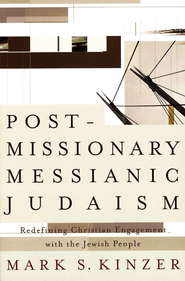
My interpretation of his response to me and particularly to Michael’s TOD book seems to be precisely what Stern predicts when he says, “…they fear an elitism will arise in which Gentile Christians will be made to feel like second-class citizens of the Kingdom.” Coupling TOD with the philosophy of “bilateral ecclesiology” presented in Mark Kinzer’s book Postmissionary Messianic Judaism: Redefining Christian Engagement with the Jewish People, a portrait of a Messianic Judaism that is plotting the expulsion of all Gentile Christians from their ranks disguised as a benign attempt to reconnect “Messianic” non-Jewish believers to their counterparts in the “Church” begins to emerge.

Or is it what Stern wrote about in 1988 and earlier; that the fear of Jewish elitism by Gentile Christians in the Messianic/Hebrew Roots realm, is still very much alive and kicking (and I’ve got the metaphorical boot prints on my backside to prove it)?

But do Hebrew Roots Christians really have anything to be afraid of?

Yes and no.
kinzer-postmissionaryOK, let’s be fair. The people and groups within the expression of Messianic Judaism I’m discussing very much support Jewish unique identity and distinction within the larger body of Messiah. Much of Stern’s book addresses this in an attempt to help its Christian audience understand that when a Jew becomes a disciple of Jesus, they are not only allowed, but obligated to remain a Jew relative to Torah and halachah (although again, to be fair, Stern hasn’t addressed halachah as of page 26). Messianic Judaism walks a fine line in terms of Stern, because on the one hand, he encourages Jews to continue living as Jews and as having the right to be a unique people chosen by God, but on the other hand, he is insistent that uniqueness and distinction absolutely not get in the way of unity between Jewish and Gentile believers.

So far, he hasn’t outlined his vision for how believing Jews and Gentiles are supposed to be separate and unique and yet also united, except to say that we share equality in salvation but the Jews are unique in certain national promises from God.

I’m not offering this as a solution, but as an explanation and a reminder that this problem has been around for at least a few decades and it’s not going away anytime soon. But we are talking about relationships and identity that are based on fear and on who your group is opposed to and struggling against. Both Hebrew Roots and Messianic Judaism feel victimized by the other. Hebrew Roots fears Jewish elitism and that the Jewish believers will seize sole possession of the Torah mitzvot, and Messianic Jews see the encroachment of Gentile Christians who demand a “Jewish identity” identical to the Jews as a form of replacement resulting in the obliteration of everything it means to be Jewish.

It’s fear that is at the very heart of Hebrew Roots opposition to Michael’s TOD book, as if somehow elitist Messianic Judaism will “force” or “trick” the Hebrew Roots Christians back into their “church ghettos.”

I’m not afraid because I’ve already come to terms with who I am in Christ and what it all means. I have also come to terms with what (to the best of my ability to comprehend) it means for a Jew to possess a unique Jewish identity and role, mainly just because I live with a Jewish wife and have three Jewish children (although their apprehension of their lived Jewish identity varies from one child to the next). I’ve learned what it is to be a Christian living with Jews without having to worry about the distinctions between their identity and mine. I can go to church and not lose anything and in fact, I actually gain quite a bit…and I still get to live with my Jewish family…and they still get to be Jews…and my Christianity doesn’t have to inhibit or interfere with that in any way.

What some of the “fine bloggers” who are deeply concerned with the implication of Michael’s TOD book are missing are the myriads of voices across the Internet who here and there are saying that TOD is changing their lives for the better. TOD is helping people overcome their “fear of church.” People who I’ve known for years and who I never thought would see the inside of a church again are seeking out Christian Bible studies and worship services…largely because they read or are reading TOD and listening to the voice of reconciliation and restoration.

David Stern speaks of restoring the original Jewishness of the Gospel so that both Jews and Christians can hear the voice of the Jewish Messiah King. Boaz Michael speaks of healing the vision of the “Messianic Gentile” or the Christian who has become or is in the process of becoming aware of the “Jewishness of the Gospel;” Stern’s primary message to us. Michael may as well have written the sub-title of his book as restoring the vision of the Christian and the Church. If minds and hearts and relationships really, really are being healed because of this book and the overarching vision it presents, who are you or I to say that’s a bad idea. People are perfectly free to reject the message of healing if they so choose because of fear, because of prejudice against Christians (and sometimes against Jews), or for whatever reason.

But for every blogger who protests, how many people who we may never see or hear from are beginning a journey that will transform isolation, loneliness, broken fellowship, and sometimes, broken families, into a path leading to reunification and reconciliation? Most likely (though I only have anecdotal information to go by), a lot more of them are out there than there are bloggers who oppose those Christians and their mission.
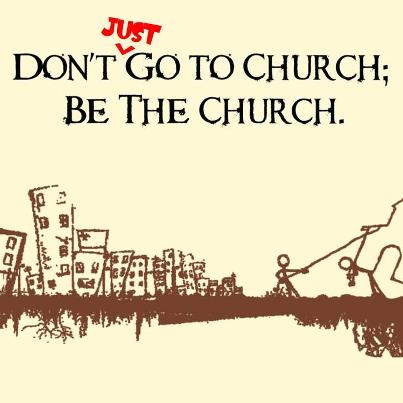
dont-go-to-churchI’ve said this before, but I’ve seen that it’s gone unnoticed, so I’ll repeat the message. Author Boaz Michael and his wife Amber are “walking the walk,” so to speak. For the past several years, Boaz and Amber have been attending a small Baptist church in their community in Missouri. To the best of my knowledge, this church is their only regular worship venue, so they infrequently are able to visit a Messianic (or otherwise) Jewish synagogue. Again, to the best of my knowledge, Boaz and Amber haven’t lost a thing by attending this church, and in fact they’ve gained fellowship and belonging and have shared their unique vision with the Church.

If they aren’t afraid of losing who they are by “going to church,” how should the rest of us feel? I suppose anyway we want. But if we are afraid of church, then we should be honest and ask ourselves why. I was certainly afraid of what returning to church would mean to me, but with a lot of help, I set those feelings aside. And in returning to church, I found that I could also encounter God within its walls and with other Christians. That doesn’t have to be you if you don’t want it to be, but please, don’t let it be fear, animosity, or hostility that stops you from walking that path or causes you to disdain those of us who do.

If you are confident that G‑d will help you, why is anxiety written all across your face? If you are truly confident, show it and celebrate!

-Rabbi Tzvi Freeman
“Celebrate”
Based on letters and talks of the Rebbe
Rabbi M. M. Schneerson
Chabad.org

Oh, and I’ll let you know how the rest of Stern’s book turns out.

Beckoning the God of Peace

in-the-face-of-the-stormPrepare yourself with this meditation, and when you feel anger overcoming you, run through it in your mind:

Know that all that befalls you comes from a single Source, that there is nothing outside of that Oneness to be blamed for any event in the universe.

And although this person who insulted you, or hurt you, or damaged your property, is granted free choice and is held culpable for his decision to do wrong — that is his problem. That it had to happen to you — that is between you and the One Above.

-Rabbi Tzvi Freeman
“Advice on Anger”
Based on letters and talks of the Rebbe
Rabbi M. M. Schneerson
Chabad.org

I’ve spent the past several days monitoring some disturbing and less than “Godly” attitudes on the Internet (No Judah, your not one of them). I suppose it’s obvious that hostile and critical people and organizations should express themselves in an environment as open as the World Wide Web, but it’s always disappointing when the sources of such poor behavior are those who claim the cause of Christ (though they may not call him by that title). I won’t give honor to either of the two specific sites/blogs to which I’m referring by linking to them on my blog, but suffice it to say that they both (apparently) desire to denigrate Jews and Judaism in general, and specific individuals in the Messianic Jewish movement in particular.

There’s more than a little irony happening here. First off, both of the sources I am speaking of advertise themselves as being educated and scholarly, in addition to being holy and honorable. And yet, how can what they say about themselves be true when the results of their “scholarship” and “reviews” are a widespread (relative to the scope of the Internet but perhaps not their readership) reiteration of classic hatred of Jews, a further expression Christian supersessionism, and a great outpouring of comments about individuals bordering on character assassination?

After Shabbat had ended on Saturday night, in a fit of pique, I wrote this on Facebook:

There’s so much injustice masquerading as scholarship and that reduces the history of Jewish people to a subject that’s examined under a microscope. How far do I go to challenge people who think they are defending the cause of Christ but who actually are walking in the footsteps of everyone who has authored a pogrom and constructed a holocaust?

I found myself sorely tempted to respond to the sources of my frustration via email, blog comments, and twitter, basically to (proverbially) give them a piece of my mind. Fortunately, I stopped myself. It’s hardly taking the moral high road when another can provoke you to descend to their level. On the other hand, is this blog post any better?

In all my days I have never had to look behind me before saying anything.

-Shabbos 118b

Lashon hara (gossip or slander) is not necessarily untruthful. The Torah forbids saying something derogatory about a person even if it is completely true.

One of the best guidelines to decide what you should or should not say is to ask: “Does it make a difference who might overhear it?” If it is something that you would rather someone not overhear, it is best left unsaid.

Sometimes the information need not be derogatory. A secret may not be saying anything bad about anyone, but if someone has entrusted you with confidential information, and you have this tremendous urge to share the privileged communication with someone else, you should ask yourself: “Would I reveal this if the person who trusted me with this information were present?”

Sometimes people want to boast. They may even fabricate their story to those who have no way of knowing that it may not be true. Still, they would be ashamed to boast in the presence of someone who knew that their statement was false.

Volumes have been written about what is proper speech and about what constitutes an abuse of this unique capacity to verbalize with which man was endowed. But even if one does not have time to master all of the scholarly works on the subject, a reliable rule of thumb is to ask, “Do I need to look behind me before I say it?” If the answer is yes, do not say it.

Today I shall…

…monitor my speech carefully, and not say anything that I would not wish someone to overhear.

-Rabbi Abraham J. Twerski
“Growing Each Day, Shevat 30”
Aish.com

Let’s look at the first two sentences of Rabbi Twerski’s commentary on “lashon hara” again:

Lashon hara (gossip or slander) is not necessarily untruthful. The Torah forbids saying something derogatory about a person even if it is completely true.

That’s very difficult for most of us to do, especially when we have free access to the Internet and the ability to create and edit websites and blogs we have created or to make comments on the blogs and discussion boards of others. The web is full of harsh criticisms aimed at others and yes, some of those criticisms are true. And yet, and this is especially focused at those folks who claim to observe the Torah of Moses whoever they may be…to publish comments regarding specific individuals for the express purpose of destroying their reputation or causing them personal and emotional harm, cannot be construed in any manner as actually serving God.

peace-of-mind1I’m not unmindful that such individuals are responding in anger, and that they even feel justified due to the belief that they are fighting against what they see as some sort of “injustice” they think was perpetrated against them or their own cause or tradition, but is such a response really the right thing to do? I know that I’m struggling with my own anger at such behavior, but in doing so and in writing this blog post, I’m walking the edge of the very abyss I believe they have already fallen into.

But what is Rabbi Freeman’s advice on anger? If anyone has insulted you or done you wrong, it is a problem that they possess. It’s only the problem of the person insulted (in this case, me) if they (I) allow the insult to affect them (me). Thus, the individuals who are behaving rather poorly on the web are only a problem to me if I let them affect me. That I’m even writing this “meditation” means I must confess that I have allowed this to happen. In that case, my conversation must not engage those who have behaved in an insulting matter, but to the degree that they have entered my life with their discordant behavior, I must take the matter to God. How I feel and how I must respond is between Him and me alone.

To apply Rabbi Twerski’s commentary on what I’ve been saying, in addition, I must monitor my own “speech,” which includes anything I post online. I’m glad I didn’t give in to temptation last Saturday, otherwise I would have failed in that area as well.

(Unfortunately, I did give in to temptation on Google+ Monday morning and I am now living with that regret. The resulting comments on my recent Return to Jerusalem blog post were actually stimulating, but the “comments storm” that occurred on my Why I Go to Church missive were troubling and disappointing for the most part..though thankfully only from a single individual.)

Where do I go from here?

We cannot think two thoughts at the same time. Consequently, when negative thoughts arise, you do not need to fight them. Make an effort to think positive thoughts, and the negative thoughts will disappear.

(see Rabbi Nachman of Breslov; Likutai Aitzos: machshovos, no.11)

-Rabbi Zelig Pliskin
Daily Lift #727
“Fill Your Mind with Positive Thoughts”
Aish.com

There is a much older “midrash” on this topic in which I can also take comfort.

Finally, brothers, whatever is true, whatever is honorable, whatever is just, whatever is pure, whatever is lovely, whatever is commendable, if there is any excellence, if there is anything worthy of praise, think about these things. What you have learned and received and heard and seen in me — practice these things, and the God of peace will be with you.

Philippians 4:8-9 (ESV)

Not only think of what is honorable, just, pure, lovely, and commendable, but practice these things, and the God of peace will be with you.

candleIt is not unexpected that we in the body of faith at one time or another, will turn to God in our anguish and ask Him to quiet our minds and our lives, to shield us from the turmoil that comes from the world and from inside of ourselves. And yet, if we want the “God of peace” to reside with us, Paul says that we must choose to focus our thoughts on peace and then to practice peace.

As Rabbi Twerski might say:

Today I shall…

…strive to practice peace by embracing peace within my thoughts, so that the God of peace will be with me and guide me in His ways, and so that no other person may suffer for anything I say or do.

“The only man I know who behaves sensibly is my tailor; he takes my measurements anew each time he sees me. … The rest go on with their old measurements and expect me to fit them.”

-George Bernard Shaw, Irish playwright

Why I Go To Church

afraid-of-churchI’m actually enjoying going to church. When I came to that realization last Sunday, no one was more surprised than I was.

Wait! Let me explain.

Starting last October, I created a “Days” series that was a countdown to the end of the year. I was planning to make a decision, both about whether or not to go back to church and whether or not to continue to blog in the “Christian” or “Messianic” or “religious” space, given the endless contention occurring in the blogosphere. I started at 78 days and worked my way down to zero. It should be obvious that I continued blogging after January 1st, and I not only continued to go to church regularly, but frequently meet with the Head Pastor.

Eleven months to the day before I published “Day Zero,” I wrote and published an article called Why I Don’t Go To Church. This was in response to both my internal angst (my favorite theme) and to Pastor Jacob Fronczak’s blog post Why I Go To Church. Even back then, I had returning to church in mind, but was undergoing what I’d consider classic approach-avoidance conflict (I was a psychotherapist and family counselor back in the day).

I’ve overcome my “fear of flying,” so to speak, but I was afraid that once I started attending church, I’d find not “niche” of my own and end up being bored. While it’s true, I don’t go to my particular church for the music, I am experiencing many other benefits and even on some small level, beginning to give back just a tad. What added momentum to my journey happened just five days before my countdown was to end. I was reminded that seeking fellowship with God’s people is seeking an encounter with God.

And in church, I have encountered Him.

Today, I did something I shouldn’t have done. There’s a “community” within Google+ called “Messianic Judaism” (for all I know, there could be more than one, but this is the one I belong to). Access is by invitation only, so posting a link to it wouldn’t let you see inside, but someone in the community posted a link to a book review and asked for opinions. Unfortunately, it struck a nerve, and even though I had already determined I wouldn’t address the review and what I believe it represents, I shot off my big mouth (figuratively speaking) and now I’m regretting it.

But the transaction had an interesting side effect. It (or rather someone) challenged my going back to church and further, criticized the church in a manner that resulted in my feeling defensive. Me? Really?

I’ve maintained a relationship with blogger Judah Himango for the past few years, and that relationship has, on occasion, been quite stormy. We still talk online periodically, and today was one of those “talks.” But what he said got under my skin. Here’s part of what he posted to me.

My concerns with Tent of David are that it purports to “heal the vision of the Messianic gentile” by sending them back to the church, which will inevitably lead to assimilation.

I asked, “assimilation into what?” and he responded:

Assimilation into the doctrines of the Church. Sabbath is done away with, the Church has replaced Israel, any non-moral mitzvah is no longer applicable to anyone.

Unfortunately (mea culpa) I missed a part of what Judah had said before I rapidly posted my reply (I think I need to switch to decaf):

There are indeed folks called to the church. But for many others, we’re called to Hebraic Roots congregations or Messianic congregations.

I certainly don’t advocate compelling people to “go to church” if they feel called elsewhere, but on the other hand, I do object to the church being seen as “inferior” or “anti-Biblical” compared to non-Jewish Christians who feel called to worship within a more “Jewish” framework. I’ve been one of those people before and for reasons too lengthy to relate here, I needed to seek my community of faith elsewhere.

Why do I go to church?

First of all, thanks to Boaz Michael and (my advanced reading of) his book Tent of David (TOD) and other influences, not the least of which is my Mom, I summoned the courage to overcome my own personal prejudices and start attending church again.

communityI was welcomed by lots and lots of people, but you’d kind of expect that in an authentic Christian setting. But what happened next, was unanticipated…I started making connections. I’ve had several interesting and compelling conversations with the Head Pastor and just last Sunday, I spent an hour talking to one of the Associate Pastors (when I should have been in Sunday School) in the church library. Not only that, but a number of people actually seem authentically glad to see me, not just because I’m a warm body showing up a church, but because of me as the person I am (or at least as they perceive me to be). In fact, I’m stunned that some of these connections have occurred so quickly and that I’m now even feeling a sense of belonging.

People have offered to pray for me. I’ve seen genuine caring and concern for the hungry, the sick, and the dying. They offer tangible, material support for the needy and for missionaries in many countries. There is a genuine heart for Israel and a desire for her posterity. It’s not just the occasional person, but to the best of my ability to tell, the human community within the church’s walls does look to Christ as Messiah and Israel’s King for salvation and sustenance.

In my talks with Pastor Randy (and they’re really quite candid), we don’t always see eye to eye, but you can’t believe what an incredible pleasure it is, even to disagree with someone and still have the encounter be illuminating, positive, refreshing, and friendly. Try doing that on the Internet!

I don’t know where all this is going to lead me, but for the first time in a long time, I not only have hope that I will find a place in the church and among the community of believers, but that the church itself is turning in a direction that will indeed be part of the healing between the Jewish and non-Jewish disciples of the Master.

I feel that I’ve failed in my comments on Google+ today and allowed my emotions to overcome my common sense. I could delete my comments, but they’ve already been read and responded to, so I might as well leave them up. In any event, God knows what I’ve said and done, so removing my annoyed comments won’t repair my relationship with Him.

But the realization, thanks to Judah’s statements (though he probably didn’t intend them the way I’ve taken them), that there really is hope for Christianity and a way forward in being part of “rebuilding David’s fallen tabernacle” is encouraging. It’s even better now that I realize it’s possible for me to have a small part in that “project” within the community of Christianity.

I don’t particularly mind if people don’t agree with my going back to church, and I understand that whenever you write and publish a book (such as Boaz Michael has), especially in such an emotionally explosive realm as religion, people are going to write critical book reviews. The only thing I mind about some of the criticism being leveled against Tent of David (and yes, I’ve read the reviews), is that it simply misses the overall vision Boaz is trying to communicate. I can appreciate people who have an eye for detail, and who may feel certain specific terms or other content wasn’t used with as much accuracy as they could have been, but look at the big picture.

In between the Gentile Christians going to church and those who have found a home in either a Hebrew Roots or Messianic Jewish congregation are just tons and tons and tons of people with little or no fellowship at all. Maybe they attend small home Bible studies or maybe they just worship with their families. Some, like me, may even seek fellowship over the Internet (which is problematic at best). But remember, seeking fellowship is seeking an encounter with God, and in my experience, many people who think of themselves as “Messianic Gentiles” are disconnected and isolated from other believers and, Heaven forbid, from the God who loves their souls.

symmes_chapel_churchThrough bad teaching, bad leadership, or bad experiences, they’ve become convinced that “the Church” (whatever you imagine the term to mean) is bad, evil, awful, pagan, lost, apostate, anti-Law, and so on…I mean all Christian churches everywhere. And, for whatever reasons, they haven’t found an alternative or the alternative that they’ve found may be a group that defines itself solely on being “anti-Christian,” as opposed to a community dedicated to discipleship under Jesus Christ and a sincere desire to meet with God.

If even some of those people can find in Tent of David what I have, then maybe they don’t have to be alone, either. I don’t think you have to agree with each and every thing Boaz set forth in TOD, but you can embrace the vision and let it take you where God wants you to go.

I am beginning to “fit in” with this church. I probably wouldn’t fit in at most other churches in my area. The fact that a set of unlikely occurences led me to this church as the first stop in my search for community I believe indicates the hand of God at work in my life.

You don’t have to like the fact that I go to church. You don’t have to go to church if you don’t want to. Really, no one is holding a gun to your head. However, I’d like you to consider two things. The first is that there might be a reason God wants me to go to church. The second is that God might have a plan for you that you don’t agree with Him about. That was me once upon a time. Could it be you, too?

That’s not all about why I go to church…but it’s a start.

Return to Jerusalem, Part 6

strangers-in-israelThis is the sixth and final part of the Return to Jerusalem series where I’ve been examining the Torah Club, Vol. 6 commentary on Acts 15. I trust you’ve been following along since Part 1, but if not, please go back and read the previous submissions including Part 5 before continuing here.

Last time I asked, so what are the four prohibitions for Gentiles in the apostolic decree and what are their implications for the Christians in ancient times and today? To try to render a complete and detailed answer would invite simply copying and pasting everything in Lancaster’s lesson into this blog which, as I’ve said before, I’m not prepared to do. However, and this is particularly interesting to me, Lancaster borrows the status of the “resident alien” (“Ger” in Hebrew) from various portions of the Torah and applies it to the “resident alien” Gentile disciples worshiping the Messiah and the God of Israel in the midst of the Jewish community.

If indeed it is the case that in Christ these Gentiles have a portion in [Israel’s covenant membership and national eschatology], i.e. that they are saved as Gentiles, then it suffices to apply to them the same ethical principles that would in any case apply to righteous Gentiles living with the people of Israel, i.e. resident aliens.

-Markus Bockmuehl
“Jewish Law in Gentile Churches:
Halakhah and the Beginning of Christian Public Ethics”
(Grand Rapids, MI: Baker Academic, 2000), 165

But in citing Bockmuehl, Lancaster reintroduces a problem that flies in the face of his and FFOZ‘s official theological stance on Gentiles and the Torah. While the gerim in the days of Moses were not Israelites as such and did not obtain full membership status in the nation due to lack of tribal affiliation, they did observe a large number (majority? nearly-full obligation?) of the Torah mitzvot in the days of Moses and beyond. The argument of some branches of the Hebrew Roots movement is that the gerim status can be wholly transferred to the Gentile disciples of Jesus and be used to justify Gentile Christian obligation to the full yoke of Torah. Lancaster has spent considerable effort in his commentary to illustrate how James and the Council exempted the Gentiles from the full yoke of Torah because they were not born Jews or converts. Now, he apparently brings in an element in explaining the four prohibitions that could reverse his argument.

It doesn’t help that he explains the four prohibitions, which go well beyond the confines of the Noahide laws, as derived from Leviticus 17-18.

In those chapters, the Torah describes the sins of the Canaanites, warns the people of Israel against imitating their ways, and prescribes four prohibitions which both the Israelite and the stranger who dwells among the nation much keep. “These correspond to the four prohibitions of the apostolic decree, in the order in which they occur in the apostolic letter.” [Richard Bauckham, “James and the Jerusalem Church,” in “The Book of Acts In Its Palestinian Setting, (Grand Rapids, MI: Wm. Eerdmans Publishing Co., 1995), 459]

-D. Thomas Lancaster
Torah Club, Volume 6: Chronicles of the Apostles
from First Fruits of Zion (FFOZ)
Torah Portion Mishpatim (“Judgments”) (pg 461)
Commentary on Acts 15:20-31

How was this all supposed to be lived out by the Gentile disciples of that day and what are the implications for modern Christians? As I’ve said in previous parts of this series, you’ll have to access the Torah Club (Vol. 6) studies relevant to Acts 15 for the full details, but it seems as if the four prohibitions were a significant subset of the Torah that was to be applied to Gentile believers above and beyond the Noahide laws of their day. That said, there is another source besides Lancaster who also discusses the same material and provides further illumination.

Toby Janicki wrote an article called The Gentile Believer’s Obligation to the Torah of Moses for issue 109 of Messiah Journal (Winter 2012), pp 45-62, and it provides a great amount of detail on the application of the four prohibitions.

I reviewed Toby’s article over a year ago and at the time, I recall being quite surprised when he suggested that our (i.e. Christians) obligation to the Torah of Moses went much further than I imagined, based on his analysis of the aforementioned prohibitions of the apostolic decree.

Toby’s article is still available in full in either print or PDF versions of Messiah Journal, 109 and I consider it required reading when attempting to delve into an understanding of the message of the Council to the Gentiles among the disciples of Messiah, both in the days of the Council and now.

As I’ve said, this message and how it was arrived at, remains very controversial in Christian/Hebrew Roots circles, but before attempting any sort of conclusion to today’s “meditation” and to this series, I want to remind you of how the Gentiles of that day received the “Jerusalem Letter” (Acts 15:22-29).

So when they were sent off, they went down to Antioch, and having gathered the congregation together, they delivered the letter. And when they had read it, they rejoiced because of its encouragement. And Judas and Silas, who were themselves prophets, encouraged and strengthened the brothers with many words.

Acts 15:30-32 (ESV)

the-joy-of-torahIn other words, it was really good news from the point of view of the Gentile God-fearing disciples. After what some of the Gentile believers may have experienced as “mixed messages” from different factions within “the Way” and/or between “the Way” and other sects of Judaism, it must have been a relief to have a final, definitive decision rendered by the Apostolic authority. Further, assuming we can accept Lancaster’s interpretation, it must also have been a relief to the Gentiles that they were not automatically required to convert to Judaism (some may have done so but many or most obviously did not) and thus come under the full weight of Jewish Torah observance and halachah. James had established a halachah for the Gentiles that “raised the bar” as far as behavioral expectations and observances of the Gentile believers, and was well above what was expected of the God-fearers who were not disciples of Messiah or members of universal humanity, but that bar was still not as high as the one God had set for the Jews that, according to Peter’s testimony, “neither our fathers nor we have been able to bear.”

One of the functions of the four prohibitions acted to allow Jewish/Gentile fellowship and interaction within the Messianic community of believers “by abolishing the law of commandments expressed in ordinances.” (Ephesians 2:15) Jewish believer Gene Shlomovich puts it this way:

“Where in the written Torah does it prohibit Jews from eating with Gentiles?”

Nowhere! However, many of the Torah laws, including kashrut, were designed, in part, to make Israelites “kadosh”, “separated” or “set aside” from the nations. Since nations all around them ate “treif” or idol-sacrificed food, no devout Israelite would sit down with idol worshippers at the same table, if only because of the appearance of sin. Not only that, eating with idolaters implied fellowship with them, and perhaps taking on their customs and even religions.

However, with the coming of Messiah, G-d reached out to the Gentiles without requiring them to take on the full Yoke of Torah and live in the manner of Jews. Jews, for their part, had to overcome their Torah and culture ingrained aversion to sharing (no doubt still kosher) food with former idolaters-turned followers of the Jewish Messiah. It is said that the leader of the Jerusalem community and brother of Jesus, Yaakov (James) never drank wine or ate meat, but only ate vegetables. This may be because he wanted to fellowship with Gentile disciples of Jesus around their tables without violating the laws of kashrut, to which Gentiles were not obligated nor were expected to be versed in.

I can’t say that Gene has “solved” the conundrum of Ephesians 2 and how the Messiah created “one new man” out of two (without obliterating the Torah and Jewish identity), but it is a nice summary that seems to lead in an interesting direction. We are “one in Christ,” just as men and women, and just as slaves and freemen are “one in Christ,” though obviously still possessing many differences.

If Jesus did reconcile the Jewish and Gentile believers “to God in one body through the cross, thereby killing the hostility,” (Ephesians 2:16) then the apostolic decree of James delivered to the body of faithful disciples of Messiah from among the Gentiles by letter and by emissaries, may have been the means to bring down “the dividing wall.”

The net result of my study of Acts 15 using the Torah Club, Vol 6 materials seems to be that we Gentile Christians owe a great debt to our Jewish “forefathers” and share a great heritage with our believing Jewish brothers and sisters. The most exciting part though, is that we are walking side-by-side together toward a future where we are united by a resurrected and returned Messiah King who will finish what we have been commanded to start: rebuilding the fallen tent of David, and restoring the glory of God on earth among both the Jews and the nations.

white-pigeon-kotelHow do we resolve the matter of the ancient Ger as applied to the late Second Temple Gentile God-fearing disciple? Lancaster doesn’t make that clear, but based on my own reading, particularly of Cohen, the full role of a Ger as it existed in the days of Moses was to allow a non-Israelite to live among the people of God as permanent resident aliens without being able to formally become national citizens due to lack of tribal affiliation. After the Babylonian exile, a tribal basis for Israelite society was lost and affiliation by clan was emphasized. By the time of Jesus, this clan affiliation basis was too lost, and thus the rationale for the status of Ger as it was originally applied no longer was valid. A Gentile in the days of Jesus or later, who wanted to join the community of Israel, in most cases, would convert to Judaism, since becoming a Ger was not an option.

I can only conclude that James (and this is speculation), in establishing halachah for Gentile entry into the Way as Gentiles and equals to the Jewish disciples, was taking some aspect of the Ger status as the best method available to forge an identity of “alien” Gentile disciples living and worshiping among the Jews in their religious sect. I realize your opinion (and for all I know, Lancaster’s) may vary.

The Jewish role in serving God as we see it in the Bible seems all too clear, but we in the church must always remember that our blessings only come by fulfilling our own unique role as “Gentiles called by His Name.” We are not Jews and we are not expected to “act Jewish,” at least to the degree that we appear to be what we’re not. In fact, we rob ourselves of the path God has laid before us by adopting an identity that is not our own. Acts 15 was the starting point on that path and the beginning of that journey for the early Gentile disciples. It is also where we begin today to understand who we are as Christians and what we must do if we are to be considered faithful disciples of our Master and worthy sons and daughters of God.

I know this series has been challenging for some, largely because going against established doctrine (regardless of the doctrine to which you’re adhered) suggests change and nobody likes change. Maybe none of this will result in anyone thinking any differently, but I hope I at least got some people to think about what they believe and consider that there may yet be something new we can discover about ourselves in the Bible.

“If you want to make enemies, try to change something.”

-Woodrow Wilson, 28th U.S. president

So concludes the series Return to Jerusalem. I hope you enjoyed it. Please feel free to (politely) tell me what you think.

Blessings.

Return to Jerusalem, Part 5

apostles_james_acts15The majority of Jewish believers in 49 CE did not accept Paul’s gospel of Gentile inclusion. They challenged the Pauline message by telling the God-fearing Gentile believers, “Unless you are circumcised according to the custom of Moses, you cannot be saved” (Acts 15:1). They contended, “It is necessary to circumcise [the Gentile believers] and to direct them to observe the Torah of Moses” (Acts 15:5).

The Jewish believers calling for circumcision and conversion did not object to God-fearing Gentiles who wanted to learn about Judaism and Yeshua of Nazareth. God-fearers could be found in any Jewish community – not just among believers. Paul’s opponents objected to elevating the status of God-fearing disciples of Yeshua to that of co-heirs with Isarel and fraternity with the Jewish people. Rabbi [Yechiel Tzvi] Lichtenstein [Commentary on the New Testament: The Acts of the Apostles (Unpublished, Marshfield, MO: Vine of David, 2010), on Acts 15:7; originally published in Hebrew: Beiur LeSiphrei Brit HaChadashah (Leipzig: Professor G. Hahlman, 1897)] explains, “Paul and Barnabas said that the brothers among the Gentiles did not need to be circumcised and keep the [whole] Torah of Moses, but they were still full brothers in Israel and shared in their inheritance.”

-D. Thomas Lancaster
Torah Club, Volume 6: Chronicles of the Apostles
from First Fruits of Zion (FFOZ)
Torah Portion Mishpatim (“Judgments”) (pg 457)
Commentary on Acts 15:20-31

Continued from Part 4 of this series. Make sure you’ve read the previous parts  before proceeding here.

It’s hard to believe that any Christian, regardless of denomination or variant sect, could possibly object to such a bright promise as the one Lancaster interprets from the text of Acts 15, but as we’ve seen from some of the comments folks have made in previous parts of this series, such a promise is hotly contested. Traditional Christians tend to balk at the suggestion that the Jewish disciples of Christ never intended to “cancel” the Torah for Jews, and certain branches of the Hebrew Roots movement are dead set against the idea that all Christians everywhere aren’t fully obligated to the Torah mitzvot. It seems that full co-heir status with Israel in the Kingdom of Heaven and in all of the Messianic promises just isn’t enough.

But if Lancaster is correct and James and the Apostles never intended full Torah obligation on the Gentiles (unless some of them chose to convert to Judaism), then what does this mean?

Therefore my judgment is that we should not trouble those of the Gentiles who turn to God, but should write to them to abstain from the things polluted by idols, and from sexual immorality, and from what has been strangled, and from blood. For from ancient generations Moses has had in every city those who proclaim him, for he is read every Sabbath in the synagogues.”

Acts 15:19-21 (ESV)

The four prohibitions (v 20) aren’t always easy to pick out in inline text, so here they are in list form:

  1. abstain from the things polluted by idols
  2. from sexual immorality
  3. from what has been strangled
  4. from blood

But of all the prohibitions James could have applied to the Gentile God-fearing believers, why these four? What was so special about them? Was he imposing some version of the Seven Noahide Laws on the non-Jewish disciples?

These seven laws, developed centuries after the lifetime of James, Peter, and Paul, are based on what we find here:

And God blessed Noah and his sons and said to them, “Be fruitful and multiply and fill the earth. The fear of you and the dread of you shall be upon every beast of the earth and upon every bird of the heavens, upon everything that creeps on the ground and all the fish of the sea. Into your hand they are delivered. Every moving thing that lives shall be food for you. And as I gave you the green plants, I give you everything. But you shall not eat flesh with its life, that is, its blood. And for your lifeblood I will require a reckoning: from every beast I will require it and from man. From his fellow man I will require a reckoning for the life of man. “Whoever sheds the blood of man, by man shall his blood be shed, for God made man in his own image. And you,[plural in Hebrew] be fruitful and multiply, increase greatly on the earth and multiply in it.”

God said to Noah, “This is the sign of the covenant that I have established between me and all flesh that is on the earth.”

Genesis 9:1-7, 17 (ESV)

While there may be some superficial similarities, it doesn’t seem reasonable to say that James’s four essential prohibitions were directly lifted from the covenant God made with all of humanity through Noah. Also, and this is important, if some version of the Noahide laws were already understood within late Second Temple Judaism, wouldn’t the Jews have already considered all Gentiles bound by these laws? Why would James bother to simply re-state them and how would it have made any sort of distinction between the Gentile disciples of Jesus and the rest of mankind?

Are these four laws of the apostolic decree the only commandments of the Torah enjoined upon the Gentile believers? No. Judaism already taught a minimum standard to which the Torah held all God-fearing Gentiles. The sages taught that certain commandments of the Torah apply universally to all human beings. If not, how could God have punished the Gentiles in the story of Noah? For what did He punish the people of Sodom and Gomorrah? Why did He drive out the Amorites and Canaanites in the days of Joshua? – As Paul says, “Sin is not imputed when there is no Torah” (Romans 5:13).

Based on this line of reasoning, the rabbis derived a list of seven universal commandments. The earliest version of the list appears in the Tosefta (see t.Avodah Zarah 8:4-6).

-Lancaster, pg 459

D.T. LancasterI know what you’re thinking. I (and Lancaster) am being anachronistic. How can the Noahide laws, which I’ve already said were codified many centuries after James, have been applied to humanity and understood as such by James and the Jerusalem Apostles?

Some critics argue that, since the rabbis formulated the list of seven laws subsequent to the days of the apostles, those laws are not relevant to the context of Acts 15. On the contrary, the apocryphal “Book of Jubilees” (c. 150 BCE) demonstrates that the theological concept behind the laws of Noah already existed well before the days of the apostles:

Noah began to command his grandsons with ordinances and commandments and all the judgments which he knew. And he bore witness to his sons that they might do justice and cover the shame of their flesh the one who created them and honor father and mother, each one love his neighbor and preserve themselves from fornication and pollution and all injustice … [And he said], “No man who eats blood or sheds the blood of man will remain upon the earth … You shall not be like one who eats [meat] with blood, but beware lest they should eat blood before you. Cover the blood … You shall not eat living flesh …” (Jubilees 7:20-32)

That is not to say that the apostles considered observance of the laws of Noah or the four laws of the apostolic decree as sufficient for attaining salvation. The laws of Noah offered Gentiles a baseline for ethical, moral conduct, but salvation came to the God-fearing Gentile believers “through the grace of the Master Yeshua.”

-Lancaster, pp 459-60

I know. Jubilees isn’t canonized Bible, but the plain history of the document tells us that the Jewish people were aware of an application of the laws of Noah over a century and a half before James made his pronouncement that Luke recorded in Acts 15. There was already a Jewish consciousness that God held humanity to a certain set of universally applied standards. And the apostolic decree thus was not a simple restatement of the universal laws of Noah. As we see, Lancaster doesn’t believe that obeying any combination of laws actually “saves” anyone, and the message of James confirms that for Jews and Gentiles, salvation is from the Jews through Jesus Christ.

In today’s “meditation,” I’ve defined the four prohibitions by what they aren’t (the Noahide laws) rather than what they are. So what are the four prohibitions for Gentiles in the apostolic decree and what are their implications for the Christians in ancient times and today? For the answer to that question and more, you’ll have to read the sixth and final part of this series. I had intended to write only five parts rather than six, but when I tried to include all of my material in a single blog post, it was well over 3,000 words long. I’d rather write shorter missives that are easier to read and digest.

See the conclusion of Return to Jerusalem in Part 6.

Blessings.